V.S.Rashmi Priyem
Ultra’s BEST Dental Science College
 Non-Collapsible
Membrano-Cartilaginous
Tube forming the Beginning
of Lower Respiratory
Passage
Rashmi Priyem Saravanan
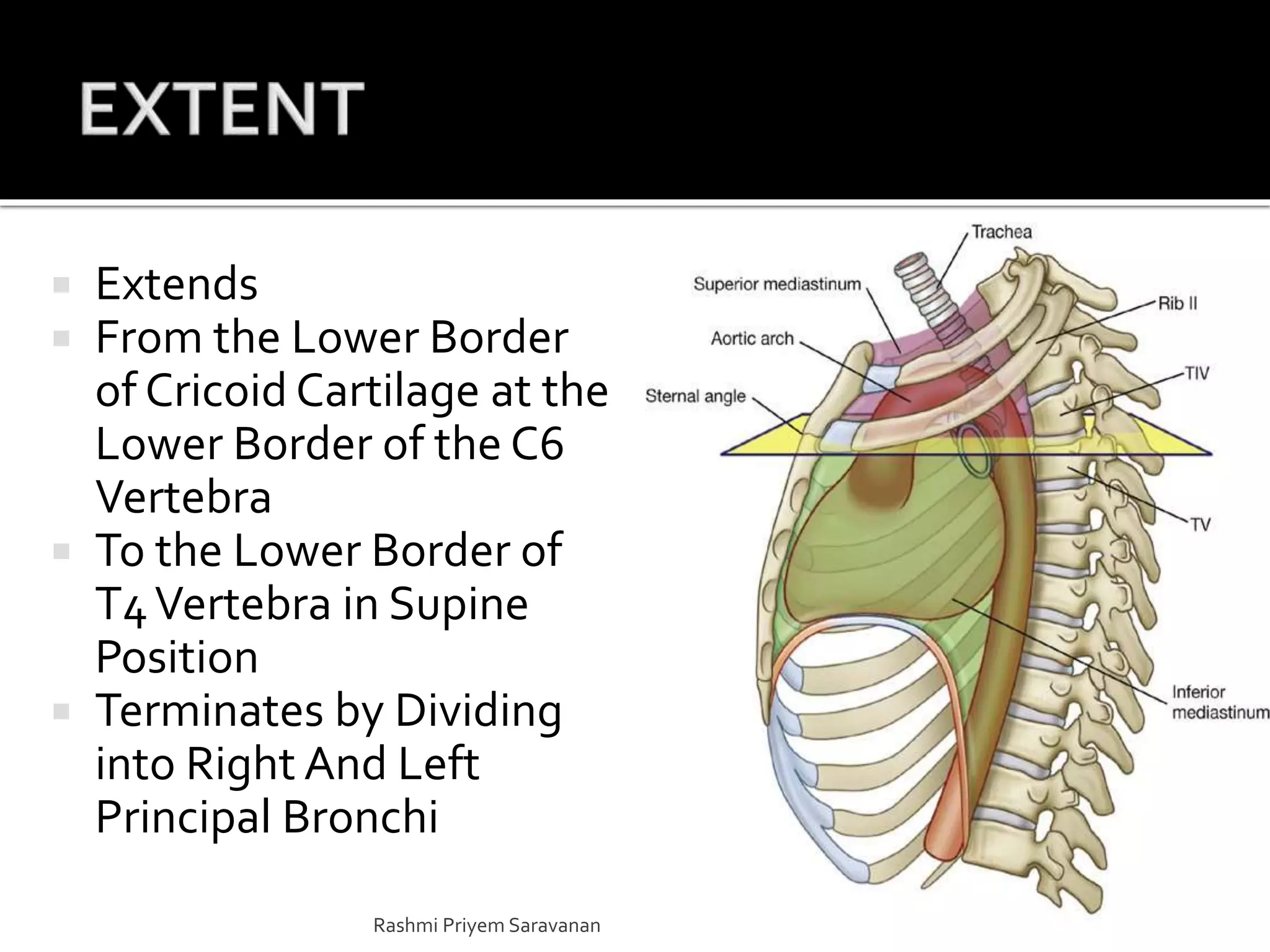
 Extends
 From the Lower Border
of Cricoid Cartilage at the
Lower Border of the C6
Vertebra
 To the Lower Border of
T4Vertebra in Supine
Position
 Terminates by Dividing
into Right And Left
Principal Bronchi
Rashmi Priyem Saravanan
 4–6 inch (10–11 cm) LongTube
 The External Diameter ofTrachea is 2 cm in
Males and 1.5 cm in Females
 It is about 3 mm in Newborns and Remains so
up to the IIIYear of life
 ThereafterThe Lumen Increases by 1 mm
EachYear UpTo 12Years, AfterWhich It
Remains Fairly Constant
Rashmi Priyem Saravanan
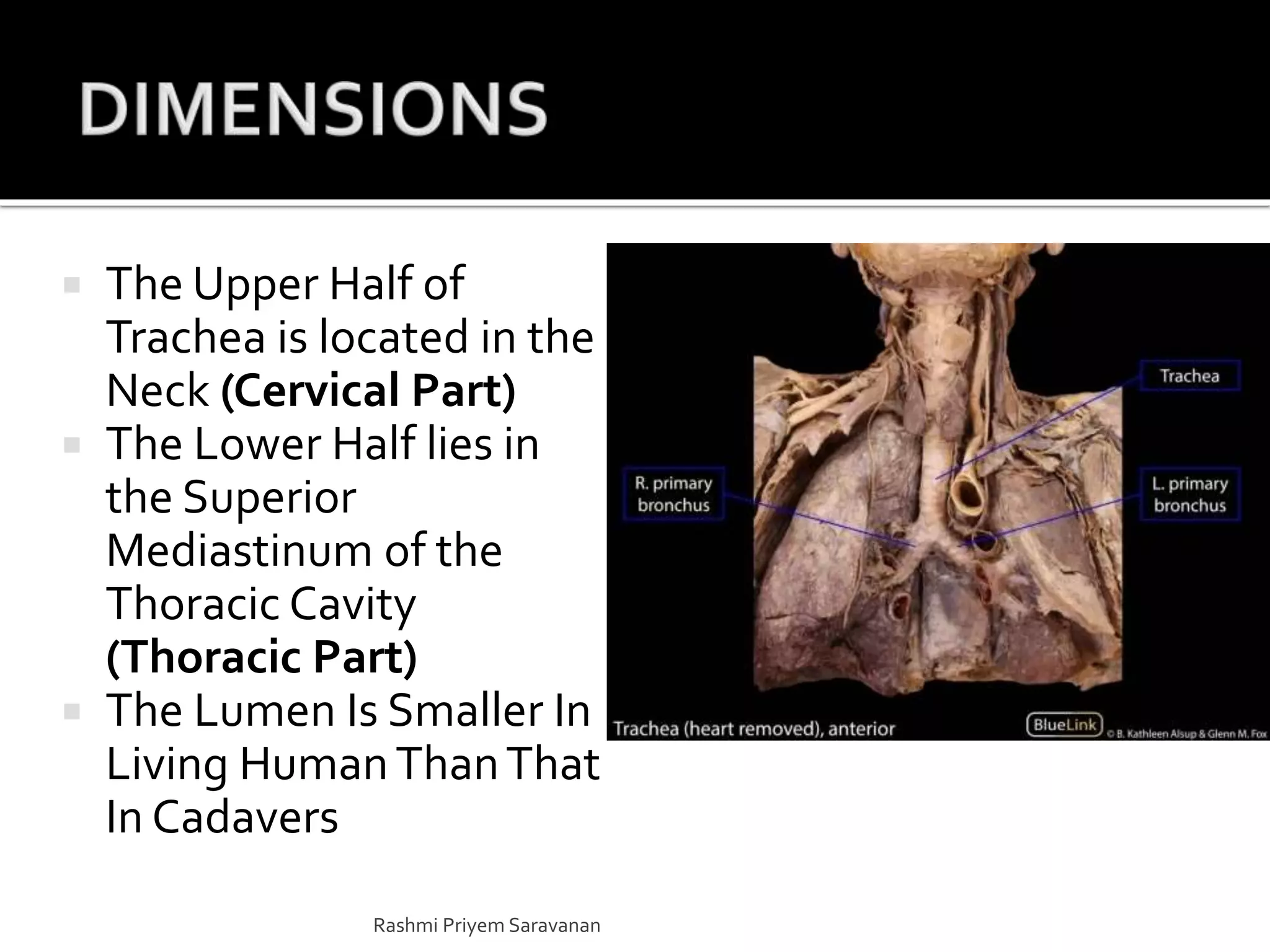
 The Upper Half of
Trachea is located in the
Neck (Cervical Part)
 The Lower Half lies in
the Superior
Mediastinum of the
Thoracic Cavity
(Thoracic Part)
 The Lumen Is Smaller In
Living HumanThanThat
In Cadavers
Rashmi Priyem Saravanan
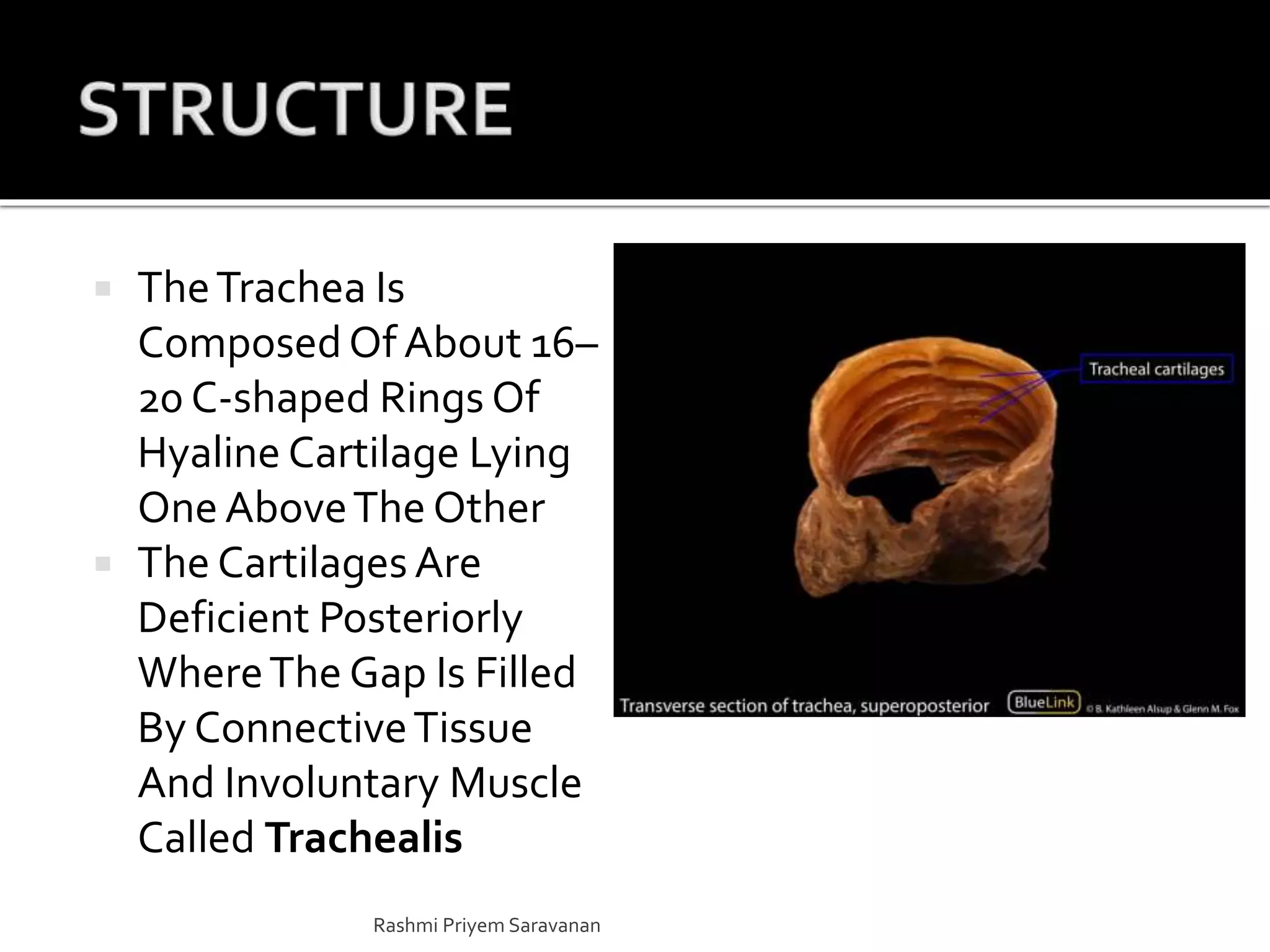
 TheTrachea Is
ComposedOf About 16–
20 C-shaped Rings Of
Hyaline Cartilage Lying
One AboveThe Other
 The Cartilages Are
Deficient Posteriorly
WhereThe Gap Is Filled
By ConnectiveTissue
And Involuntary Muscle
Called Trachealis
Rashmi Priyem Saravanan
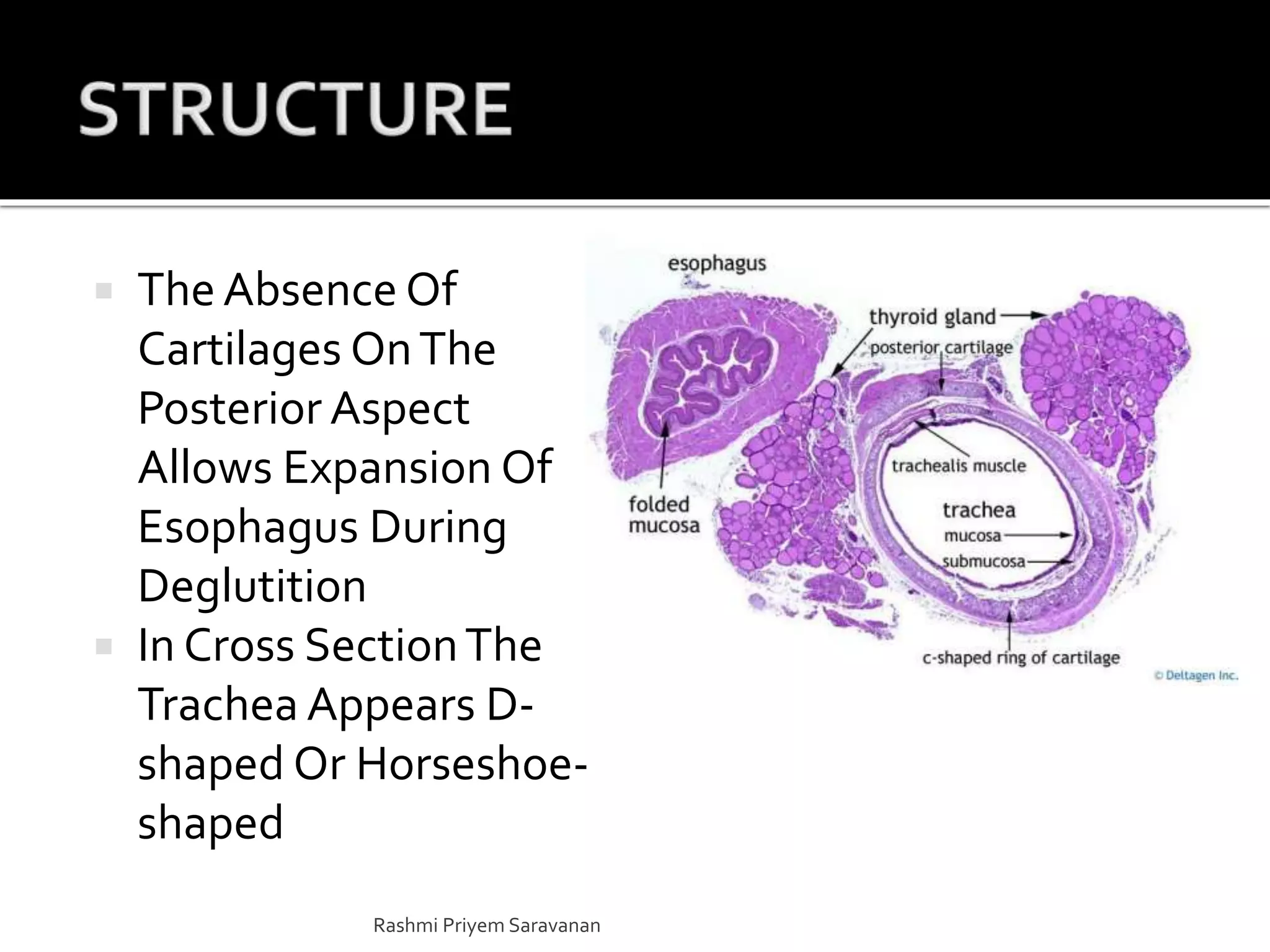
 The Absence Of
Cartilages OnThe
Posterior Aspect
Allows Expansion Of
Esophagus During
Deglutition
 In Cross SectionThe
Trachea Appears D-
shaped Or Horseshoe-
shaped
Rashmi Priyem Saravanan
 About 7 cm In Length
 Extends FromThe
Lower Border Of
Cricoid CartilageTo
The Upper Border Of
Manubrium Sterni
 Extends Downwards
And Slightly
Backwards In Front Of
The Esophagus
Following Curvature Of
The Cervical Spine
 EntersTheThoracic
Cavity InThe Median
Plane With Slight
Deviation OnThe Right
Side
Rashmi Priyem Saravanan
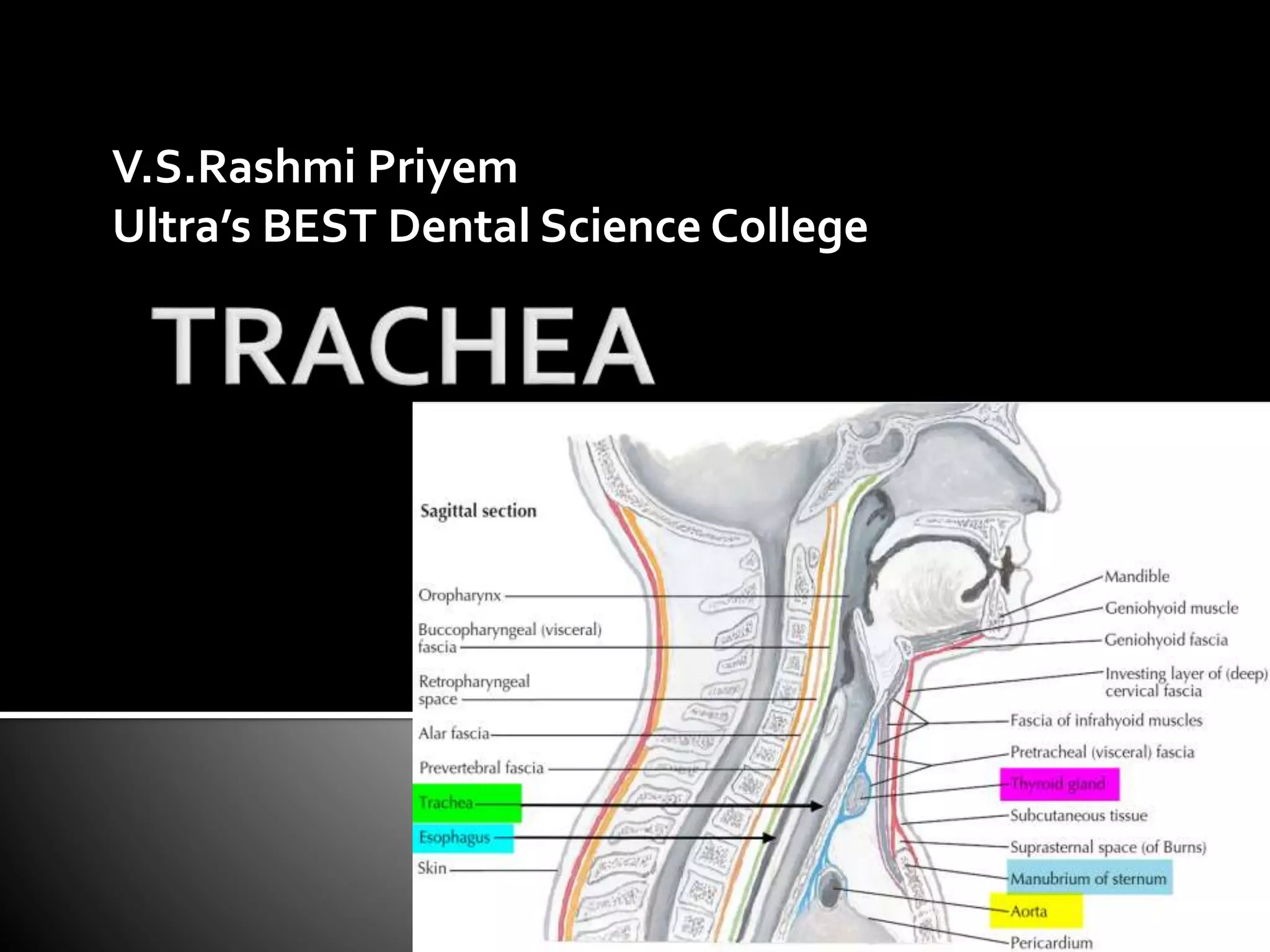
(A) Skin
(B) Superficial Fascia
Containing Anterior
JugularVeinsAnd
JugularVenousArch
(C) Investing Layer Of Deep
Cervical Fascia
(D) SternothyroidAnd
Sternohyoid Muscles
(E) Isthmus OfThyroid
Gland In Front OfThe
2nd, 3rd, And 4th
Tracheal Rings,
Rashmi Priyem Saravanan
(F) InferiorThyroidVeins
And ArteriaThyroidea
Ima (Occasional)
(G) Left Brachiocephalic
Vein In Children May
Rise InThe Neck
(H)Thymus Gland (In
Children)
(I) Brachiocephalic Artery
(Sometimes) In
Children
Rashmi Priyem Saravanan
(A) Esophagus
(B) Recurrent Laryngeal
Nerve InThe
Tracheoesophageal
Groove (On Each Side)
Rashmi Priyem Saravanan
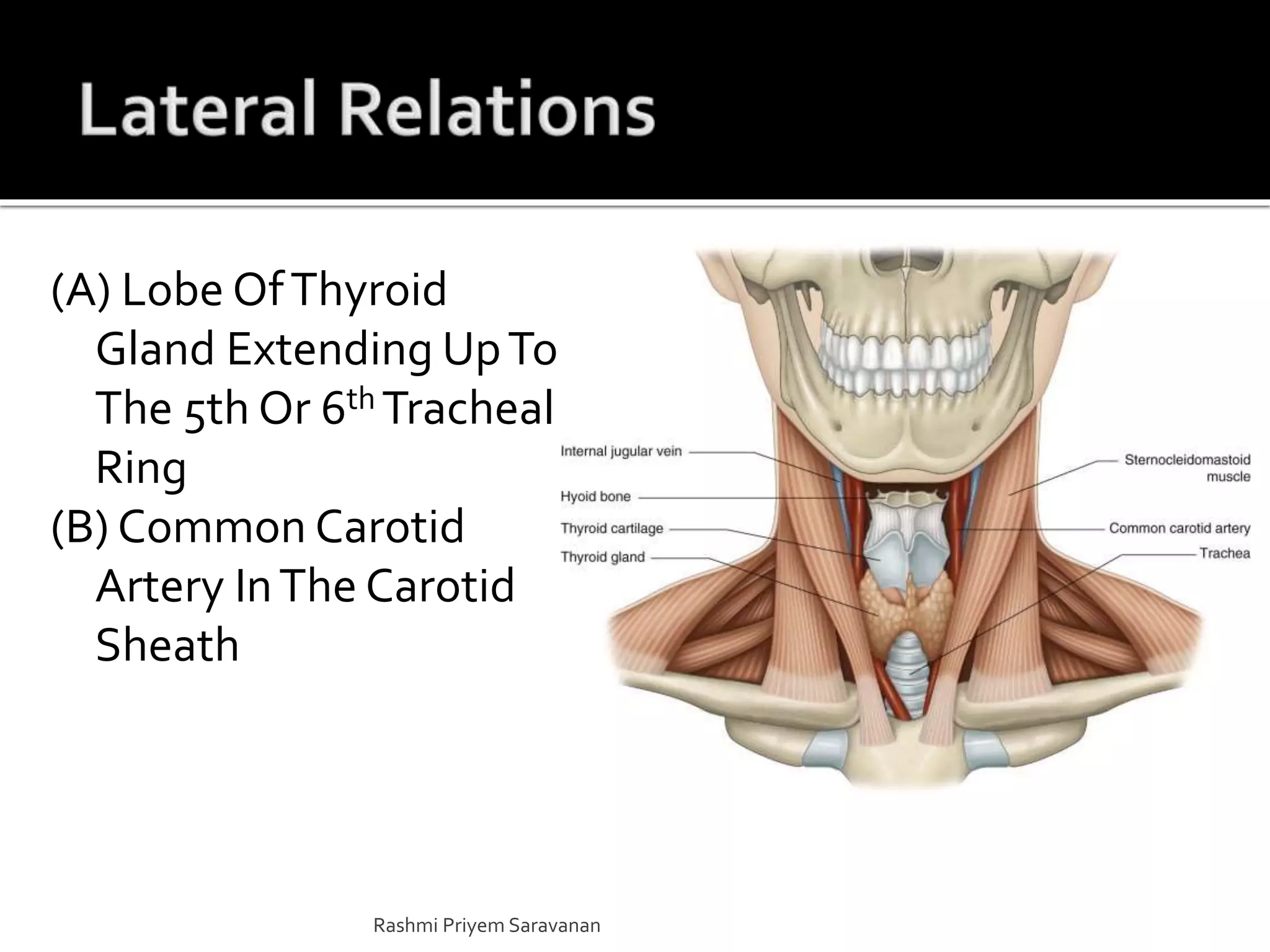
(A) Lobe OfThyroid
Gland Extending UpTo
The 5th Or 6th Tracheal
Ring
(B) Common Carotid
Artery InThe Carotid
Sheath
Rashmi Priyem Saravanan
 The Arterial Supply Of
The Cervical Part Of
Trachea Is Derived
Mainly From Branches
OfThe Inferior
Thyroid Arteries
Rashmi Priyem Saravanan
 TheVeins From
Trachea Drain IntoThe
Left Brachiocephalic
Vein
Rashmi Priyem Saravanan
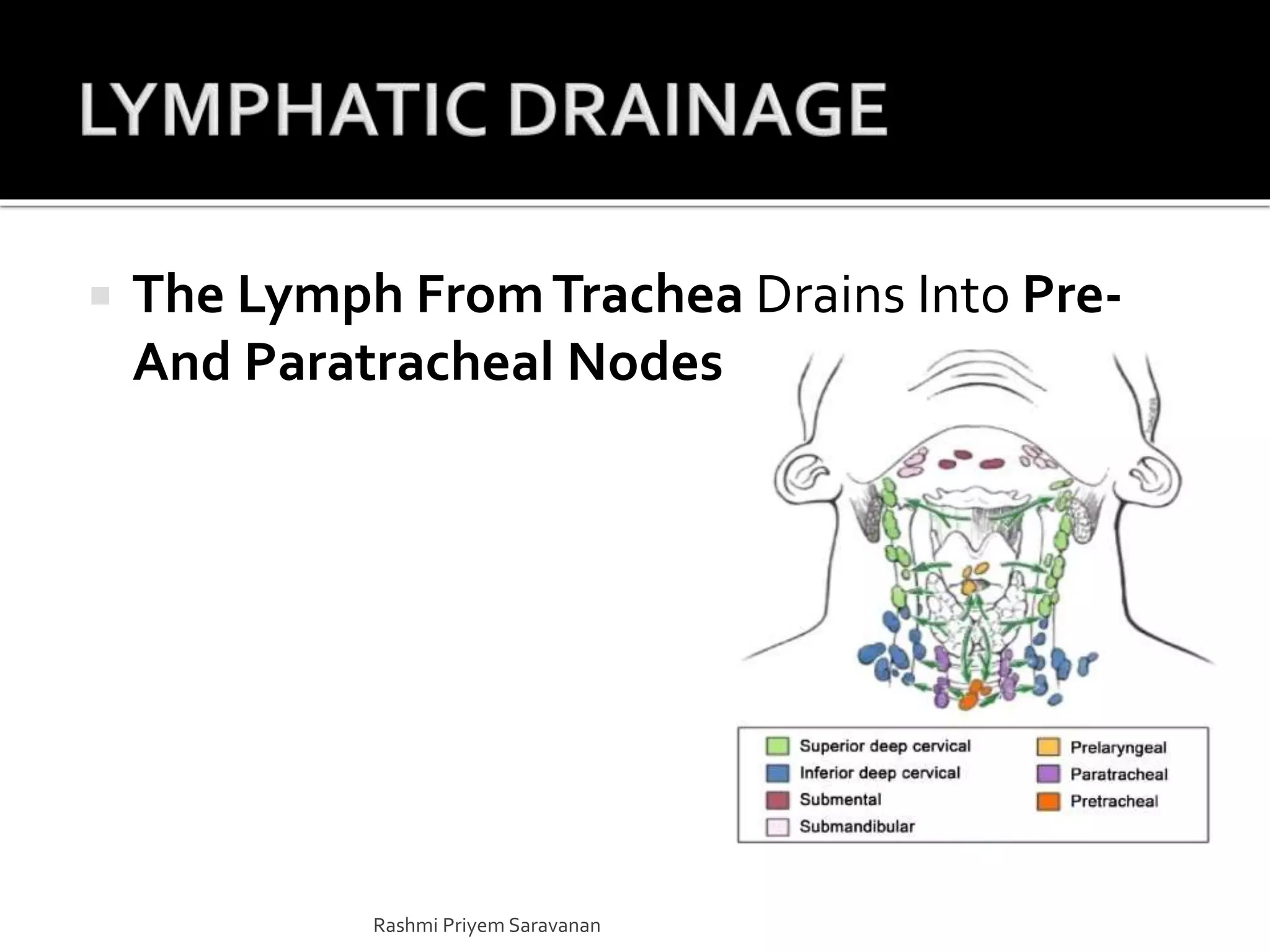
 The Lymph FromTrachea Drains Into Pre-
And Paratracheal Nodes
Rashmi Priyem Saravanan
 The Parasympathetic
Fibres Are Derived
FromVagus Through
The Recurrent
Laryngeal Nerve
 They Are
Secretomotor
 SensoryToThe Mucus
Membrane
 MotorToTheTrachealis
Muscle.
Rashmi Priyem Saravanan
 The Sympathetic Fibres Are Derived From
Middle Cervical Sympathetic Ganglion
 TheyAreVasomotor
Rashmi Priyem Saravanan
 It Is A Life-saving Surgical Procedure Done In
Cases Of Laryngeal Obstruction
 Commonly Done InThe Retrothyroid Region
After DisplacingThe Isthmus OfTheThyroid
Gland Upwards Or Downwards
 After DisplacingThe IsthmusTheTrachea Is
Opened By A Vertical Incision InThe Region Of
The 3rd And 4th Or 2nd And 3rdTracheal Rings.
 This IsThen Converted Into Circular Opening
AndTracheostomyTube Is Inserted.
Rashmi Priyem Saravanan

Trachea

  • 1.
    V.S.Rashmi Priyem Ultra’s BESTDental Science College
  • 2.
     Non-Collapsible Membrano-Cartilaginous Tube formingthe Beginning of Lower Respiratory Passage Rashmi Priyem Saravanan
  • 3.
     Extends  Fromthe Lower Border of Cricoid Cartilage at the Lower Border of the C6 Vertebra  To the Lower Border of T4Vertebra in Supine Position  Terminates by Dividing into Right And Left Principal Bronchi Rashmi Priyem Saravanan
  • 4.
     4–6 inch(10–11 cm) LongTube  The External Diameter ofTrachea is 2 cm in Males and 1.5 cm in Females  It is about 3 mm in Newborns and Remains so up to the IIIYear of life  ThereafterThe Lumen Increases by 1 mm EachYear UpTo 12Years, AfterWhich It Remains Fairly Constant Rashmi Priyem Saravanan
  • 5.
     The UpperHalf of Trachea is located in the Neck (Cervical Part)  The Lower Half lies in the Superior Mediastinum of the Thoracic Cavity (Thoracic Part)  The Lumen Is Smaller In Living HumanThanThat In Cadavers Rashmi Priyem Saravanan
  • 6.
     TheTrachea Is ComposedOfAbout 16– 20 C-shaped Rings Of Hyaline Cartilage Lying One AboveThe Other  The Cartilages Are Deficient Posteriorly WhereThe Gap Is Filled By ConnectiveTissue And Involuntary Muscle Called Trachealis Rashmi Priyem Saravanan
  • 7.
     The AbsenceOf Cartilages OnThe Posterior Aspect Allows Expansion Of Esophagus During Deglutition  In Cross SectionThe Trachea Appears D- shaped Or Horseshoe- shaped Rashmi Priyem Saravanan
  • 8.
     About 7cm In Length  Extends FromThe Lower Border Of Cricoid CartilageTo The Upper Border Of Manubrium Sterni  Extends Downwards And Slightly Backwards In Front Of The Esophagus Following Curvature Of The Cervical Spine  EntersTheThoracic Cavity InThe Median Plane With Slight Deviation OnThe Right Side Rashmi Priyem Saravanan
  • 9.
    (A) Skin (B) SuperficialFascia Containing Anterior JugularVeinsAnd JugularVenousArch (C) Investing Layer Of Deep Cervical Fascia (D) SternothyroidAnd Sternohyoid Muscles (E) Isthmus OfThyroid Gland In Front OfThe 2nd, 3rd, And 4th Tracheal Rings, Rashmi Priyem Saravanan
  • 10.
    (F) InferiorThyroidVeins And ArteriaThyroidea Ima(Occasional) (G) Left Brachiocephalic Vein In Children May Rise InThe Neck (H)Thymus Gland (In Children) (I) Brachiocephalic Artery (Sometimes) In Children Rashmi Priyem Saravanan
  • 11.
    (A) Esophagus (B) RecurrentLaryngeal Nerve InThe Tracheoesophageal Groove (On Each Side) Rashmi Priyem Saravanan
  • 12.
    (A) Lobe OfThyroid GlandExtending UpTo The 5th Or 6th Tracheal Ring (B) Common Carotid Artery InThe Carotid Sheath Rashmi Priyem Saravanan
  • 13.
     The ArterialSupply Of The Cervical Part Of Trachea Is Derived Mainly From Branches OfThe Inferior Thyroid Arteries Rashmi Priyem Saravanan
  • 14.
     TheVeins From TracheaDrain IntoThe Left Brachiocephalic Vein Rashmi Priyem Saravanan
  • 15.
     The LymphFromTrachea Drains Into Pre- And Paratracheal Nodes Rashmi Priyem Saravanan
  • 16.
     The Parasympathetic FibresAre Derived FromVagus Through The Recurrent Laryngeal Nerve  They Are Secretomotor  SensoryToThe Mucus Membrane  MotorToTheTrachealis Muscle. Rashmi Priyem Saravanan
  • 17.
     The SympatheticFibres Are Derived From Middle Cervical Sympathetic Ganglion  TheyAreVasomotor Rashmi Priyem Saravanan
  • 18.
     It IsA Life-saving Surgical Procedure Done In Cases Of Laryngeal Obstruction  Commonly Done InThe Retrothyroid Region After DisplacingThe Isthmus OfTheThyroid Gland Upwards Or Downwards  After DisplacingThe IsthmusTheTrachea Is Opened By A Vertical Incision InThe Region Of The 3rd And 4th Or 2nd And 3rdTracheal Rings.  This IsThen Converted Into Circular Opening AndTracheostomyTube Is Inserted. Rashmi Priyem Saravanan
  • 19.
  • 20.