ARCH OF AORTA
ARCH OF AORTA
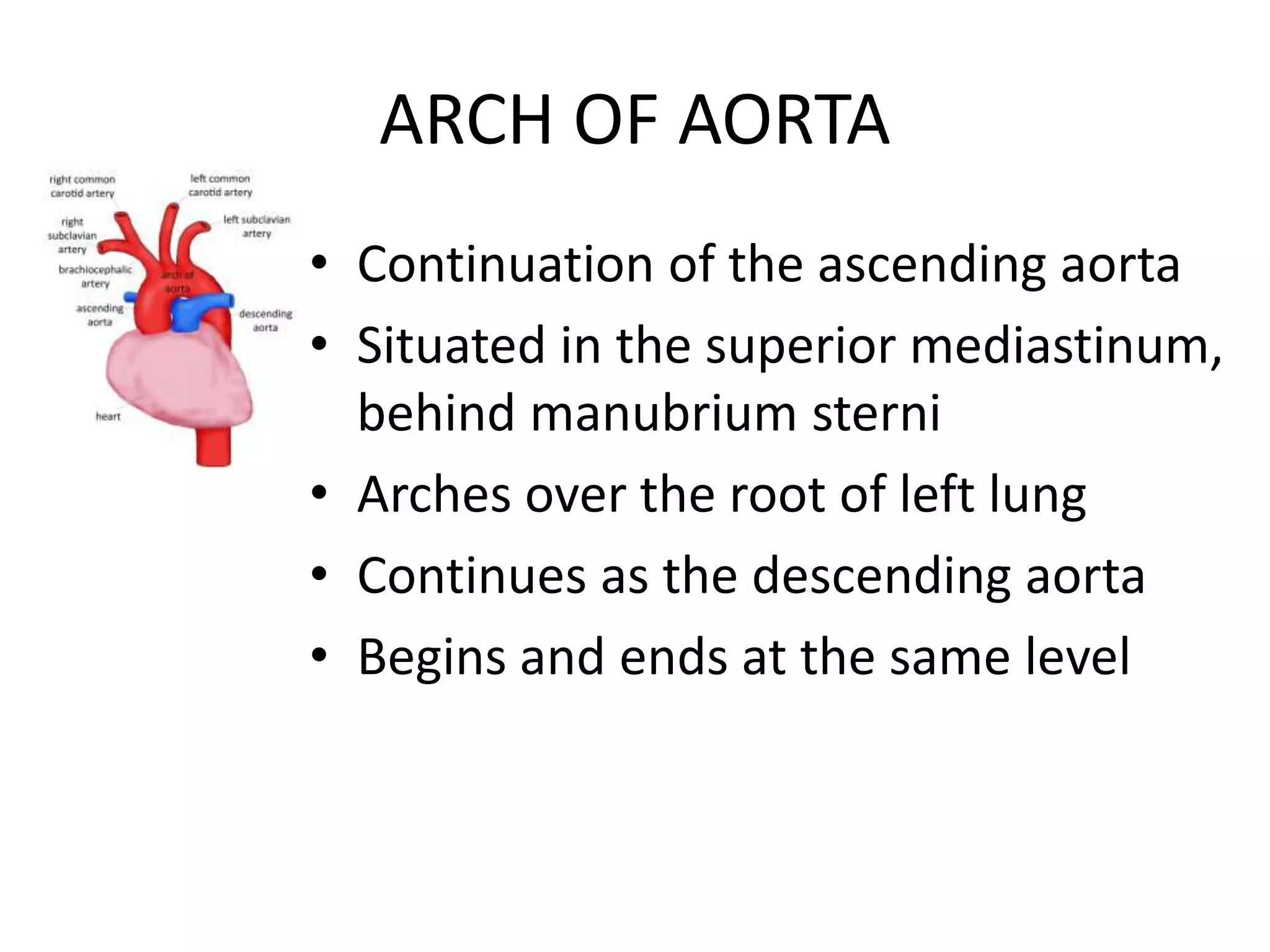
• Continuation of the ascending aorta
• Situated in the superior mediastinum,
behind manubrium sterni
• Arches over the root of left lung
• Continues as the descending aorta
• Begins and ends at the same level
COURSE
• Begins behind the upper border of 2nd Right
sternochondral joint
• Runs upwards, backwards and to the left across
the left side of the bifurcation of trachea
• Passes downwards behind the left bronchus and
on the left side of the body of 4th thoracic
vertebra
• Arches the root of the left lung
• Ends at the lower border of 4th thoracic vertebra
RELATIONS
A. Anteriorly and to the left
1. Four nerves (from before backwards)
• Left phrenic
• Lower cervical cardiac branch of left vagus
• Superior cervical cardiac branch of sympathetic chain
• Left vagus
2. Left superior intercostal vein, deep to phenic
nerve and superficial to vagus
3. Left lung and its pleura
4. Remains of thymus
B. Posteriorly and to the right
 Trachea with the deep cardiac plexus and the
tracheobronchial lymph nodes
 Oesophagus
 Left recurrent laryngeal nerve
 Thoracic duct
 Vertebral column
C. Superior
Branches of arch of aorta
• Brachiocephalic trunk
• Left common carotid
• Left subclavian
All these are crossed by the left brachiocephalic
vein, close to their origin
D. Inferior
Bifuraction of pulmonary trunk
Left bronchus
Ligamentum arteriosum with superficial cardiac
plexus on it
Left recurrent laryngeal nerve
BRANCHES
MAIN BRANCHES
• Brachiocephalic trunk
• Left common caritid
• Left subclavian
OCCASIONAL BRANCHES
• Left vertebral artery
• Arteria thyroidea ima
• Inferior thyroid artery
• Internal thoracic artery
• Left bronchial artery
• Right subclavian artery
DEVELOPMENT
• Three major sources of development
– Left limb of the aortic sac (truncus arteriosus)
• Forms the part between the brachiocephalic trunk and
the left common carotid artery
– Left fourth aortic arch
• Forms the part between left common carotid and left
subclavian artery
– Left dorsal aortic arch
• Forms the rest of the arch of aorta up to the
descending aorta
DEVELOPMENTAL ANOMALIES
1. Right sided aortic arch
– Due to persistence of right dorsal aorta below
the 7th intersegmental artery
– Disappearance of left dorsal aorta
– Common in birds
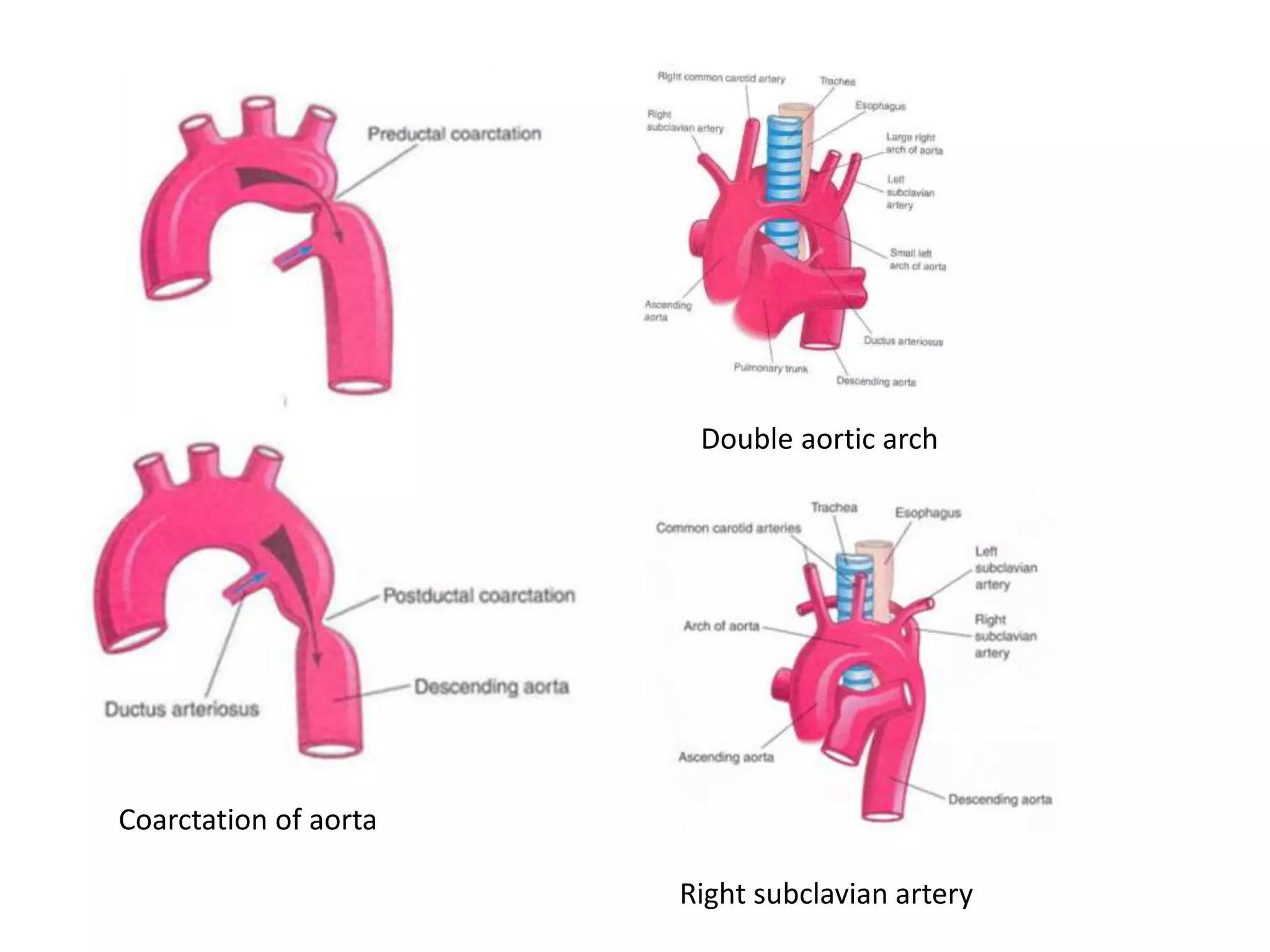
2. Double aortic arch
– Due to persistence of both the aortic arches
3. Origin of Right subclavian artery from the
junction of aortic arch and descending aorta
– Due to persistance of right dorsal aorta below 7th
intersegmental artery and
– Disappearance of fourth aortic arch
4. Coarctation of aorta
– Due to stenosis or atresia of arch of aorta distal
to the origin of left subclavian artery
– May be of
• Preductal – ductus arteriosus remains patent
• Postductal – ductus arteriosus is obliterated
Coarctation of aorta
Double aortic arch
Right subclavian artery

Arch of aorta

  • 1.
  • 2.
    ARCH OF AORTA •Continuation of the ascending aorta • Situated in the superior mediastinum, behind manubrium sterni • Arches over the root of left lung • Continues as the descending aorta • Begins and ends at the same level
  • 3.
    COURSE • Begins behindthe upper border of 2nd Right sternochondral joint • Runs upwards, backwards and to the left across the left side of the bifurcation of trachea • Passes downwards behind the left bronchus and on the left side of the body of 4th thoracic vertebra • Arches the root of the left lung • Ends at the lower border of 4th thoracic vertebra
  • 4.
    RELATIONS A. Anteriorly andto the left 1. Four nerves (from before backwards) • Left phrenic • Lower cervical cardiac branch of left vagus • Superior cervical cardiac branch of sympathetic chain • Left vagus 2. Left superior intercostal vein, deep to phenic nerve and superficial to vagus 3. Left lung and its pleura 4. Remains of thymus
  • 5.
    B. Posteriorly andto the right  Trachea with the deep cardiac plexus and the tracheobronchial lymph nodes  Oesophagus  Left recurrent laryngeal nerve  Thoracic duct  Vertebral column
  • 6.
    C. Superior Branches ofarch of aorta • Brachiocephalic trunk • Left common carotid • Left subclavian All these are crossed by the left brachiocephalic vein, close to their origin
  • 7.
    D. Inferior Bifuraction ofpulmonary trunk Left bronchus Ligamentum arteriosum with superficial cardiac plexus on it Left recurrent laryngeal nerve
  • 8.
    BRANCHES MAIN BRANCHES • Brachiocephalictrunk • Left common caritid • Left subclavian OCCASIONAL BRANCHES • Left vertebral artery • Arteria thyroidea ima • Inferior thyroid artery • Internal thoracic artery • Left bronchial artery • Right subclavian artery
  • 9.
    DEVELOPMENT • Three majorsources of development – Left limb of the aortic sac (truncus arteriosus) • Forms the part between the brachiocephalic trunk and the left common carotid artery – Left fourth aortic arch • Forms the part between left common carotid and left subclavian artery – Left dorsal aortic arch • Forms the rest of the arch of aorta up to the descending aorta
  • 10.
    DEVELOPMENTAL ANOMALIES 1. Rightsided aortic arch – Due to persistence of right dorsal aorta below the 7th intersegmental artery – Disappearance of left dorsal aorta – Common in birds 2. Double aortic arch – Due to persistence of both the aortic arches
  • 11.
    3. Origin ofRight subclavian artery from the junction of aortic arch and descending aorta – Due to persistance of right dorsal aorta below 7th intersegmental artery and – Disappearance of fourth aortic arch 4. Coarctation of aorta – Due to stenosis or atresia of arch of aorta distal to the origin of left subclavian artery – May be of • Preductal – ductus arteriosus remains patent • Postductal – ductus arteriosus is obliterated
  • 12.
    Coarctation of aorta Doubleaortic arch Right subclavian artery