THE HEART
MAJ DR POONAM SINGH
DEPT OF ANATOMY
NAIHS
Chambers of the HEART
RT ATRIUM
Right Atrium of heart
 Quadrilateral
chamber situated
behind & to rt of
Rt Ventricle
 Forms entire rt
border, part of
ant surface and
1/3 of base of
heart
 Extent- orifice of
SVC to that of IVC
External Features
1. Sulcus Terminalis
2. Rt Auricle:- margins
are notched
3. Rt AV groove – Rt
coronary artery,
small cardiac vein
Rt auricle
AV groove
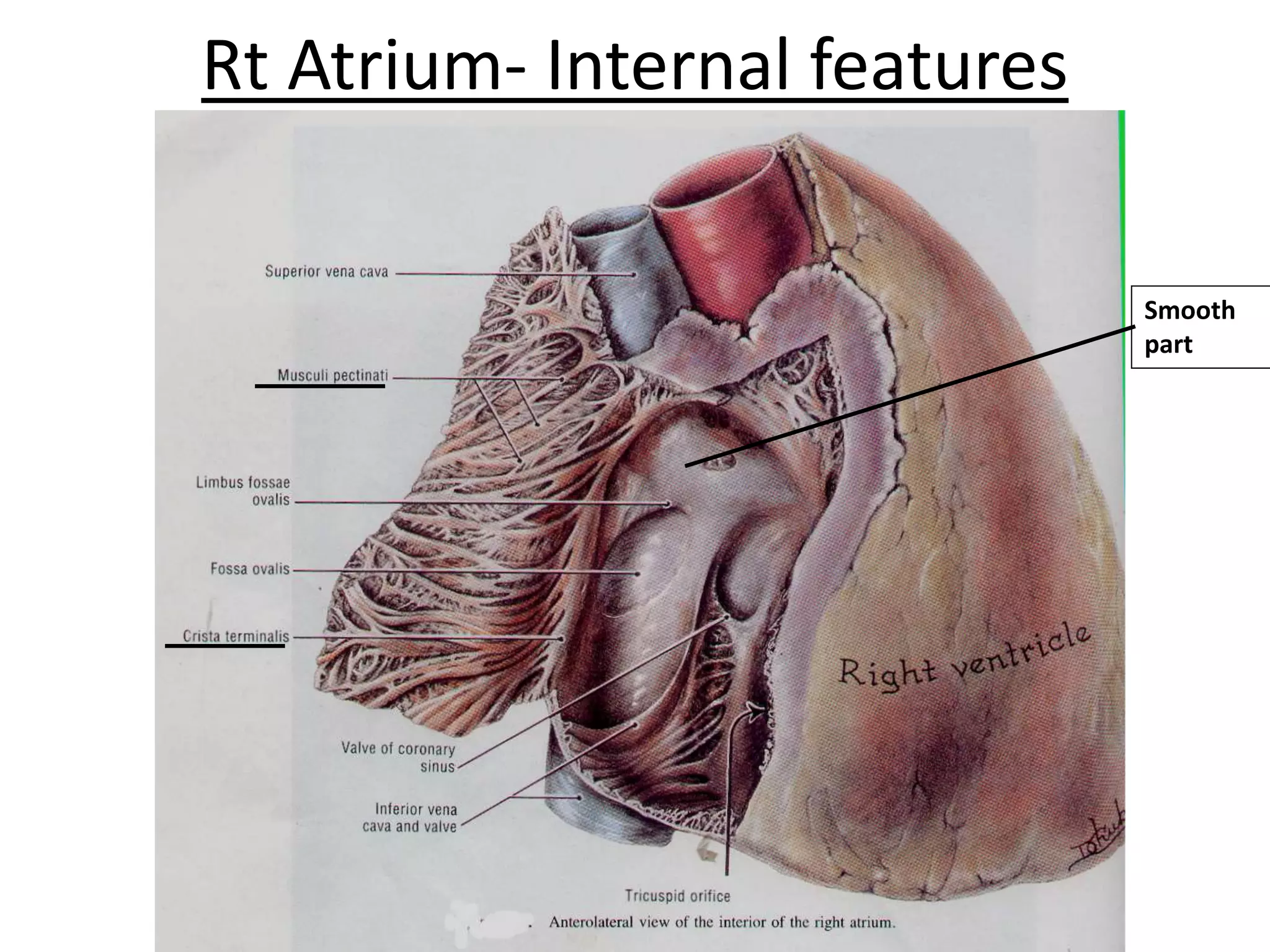
Rt Atrium- Internal features
Smooth
part
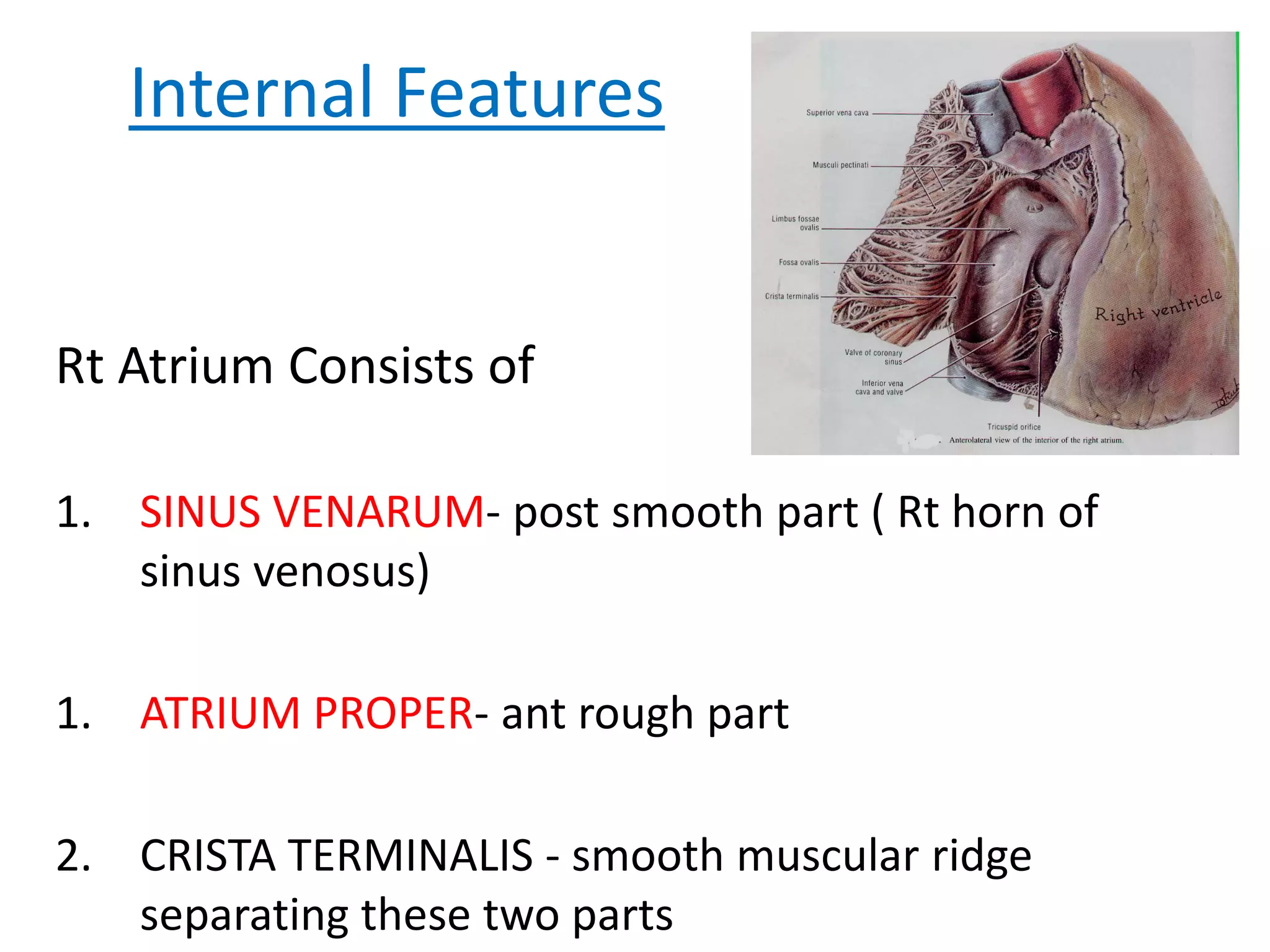
Internal Features
Rt Atrium Consists of
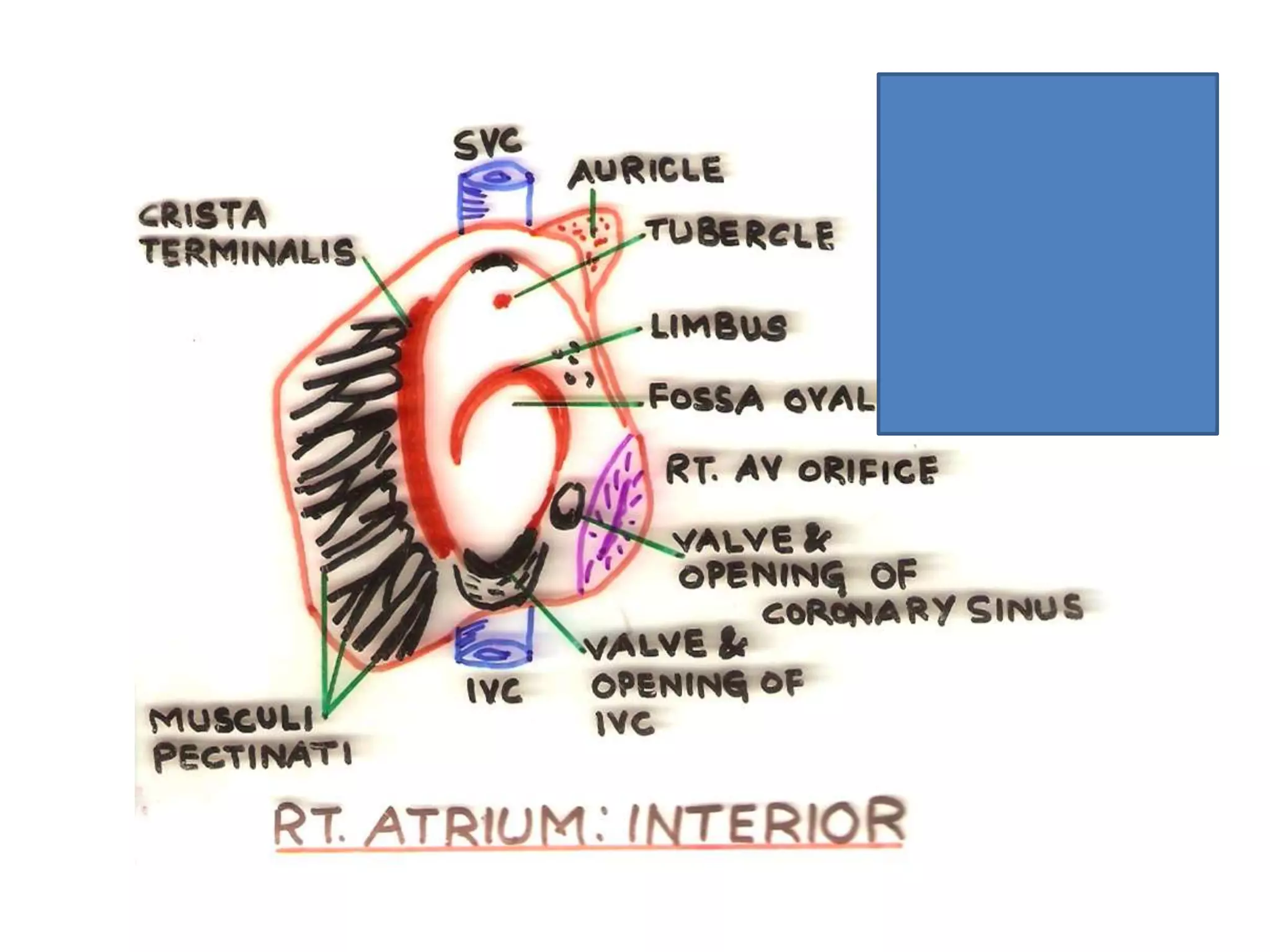
1. SINUS VENARUM- post smooth part ( Rt horn of
sinus venosus)
1. ATRIUM PROPER- ant rough part
2. CRISTA TERMINALIS - smooth muscular ridge
separating these two parts
SINUS VENARUM
 Posterior smooth part
 FEATURES
1. Opening of SVC
2. Opening of IVC
- Eustachian valve -semilunar  NONFUNCTIONING
3. Opening of Coronary Sinus
- In lower part of atrial septum
- Thebesian valve-semi-circular valve
4. Foramina Venarum Minimarum
- openings of venae cordis minimae/ Thebesian veins & ant
cardiac veins
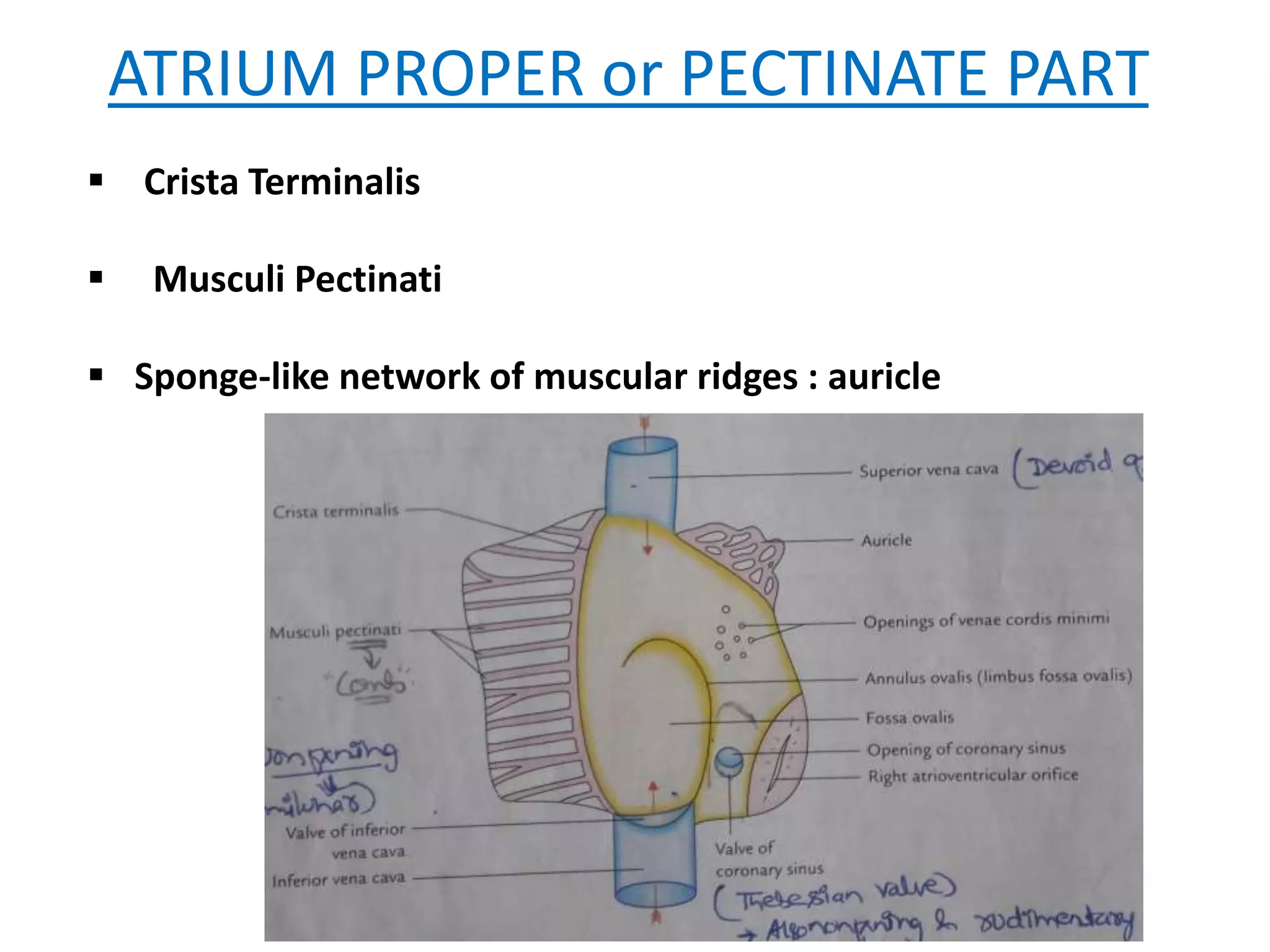
ATRIUM PROPER or PECTINATE PART
 Crista Terminalis
 Musculi Pectinati
 Sponge-like network of muscular ridges : auricle
INTERATRIAL SEPTUM
 Separates rt & lt atrium
 Features:
-Fossa Ovalis
-Limbus fossa ovalis or annulus ovalis
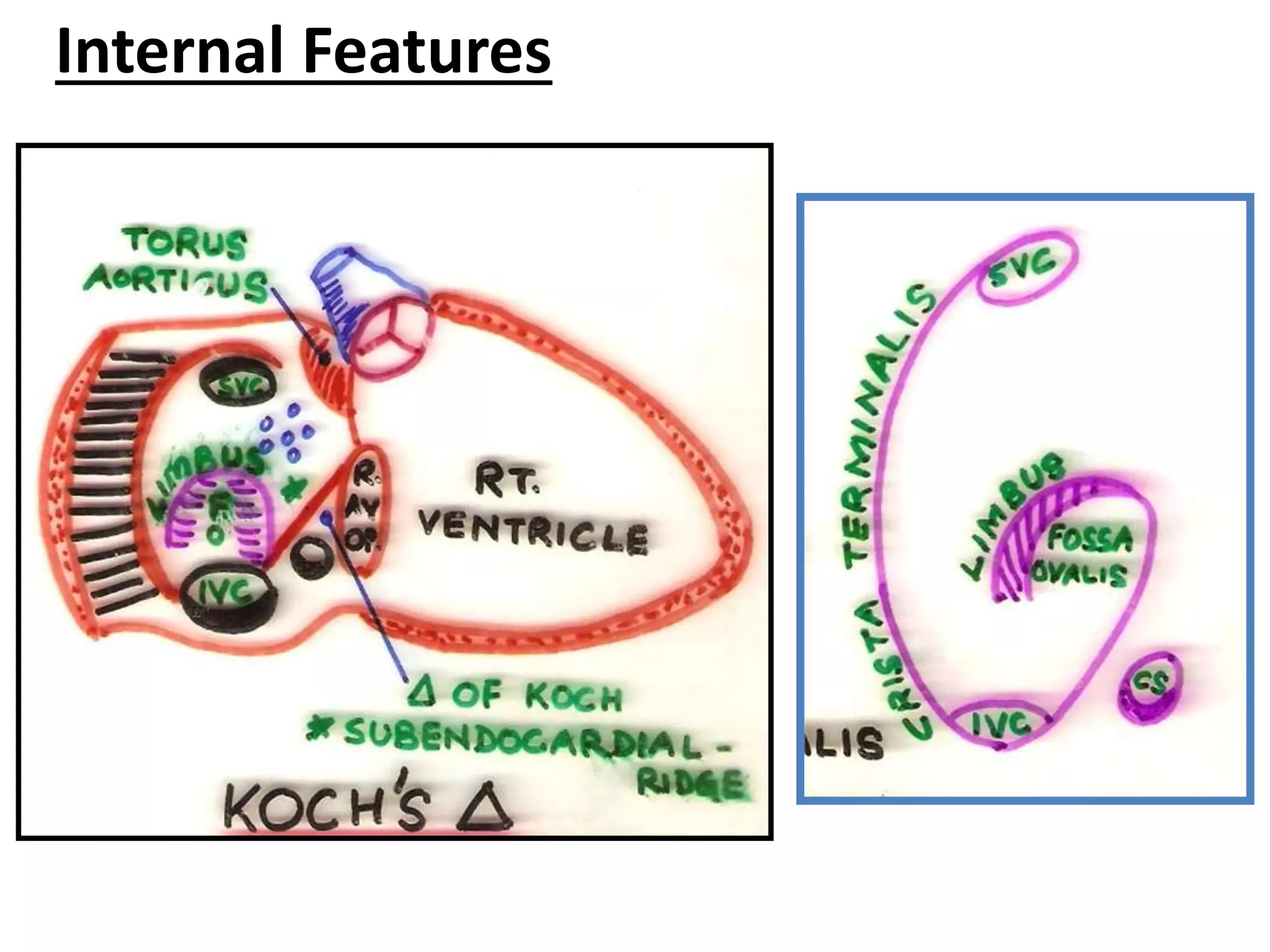
-Triangle of Koch –lodges AV node
Antly-base of septal leaflet of tricuspid valve
Postly-opening of coronary sinus (its anteromedial margin)
Suply-tendon of Todaro
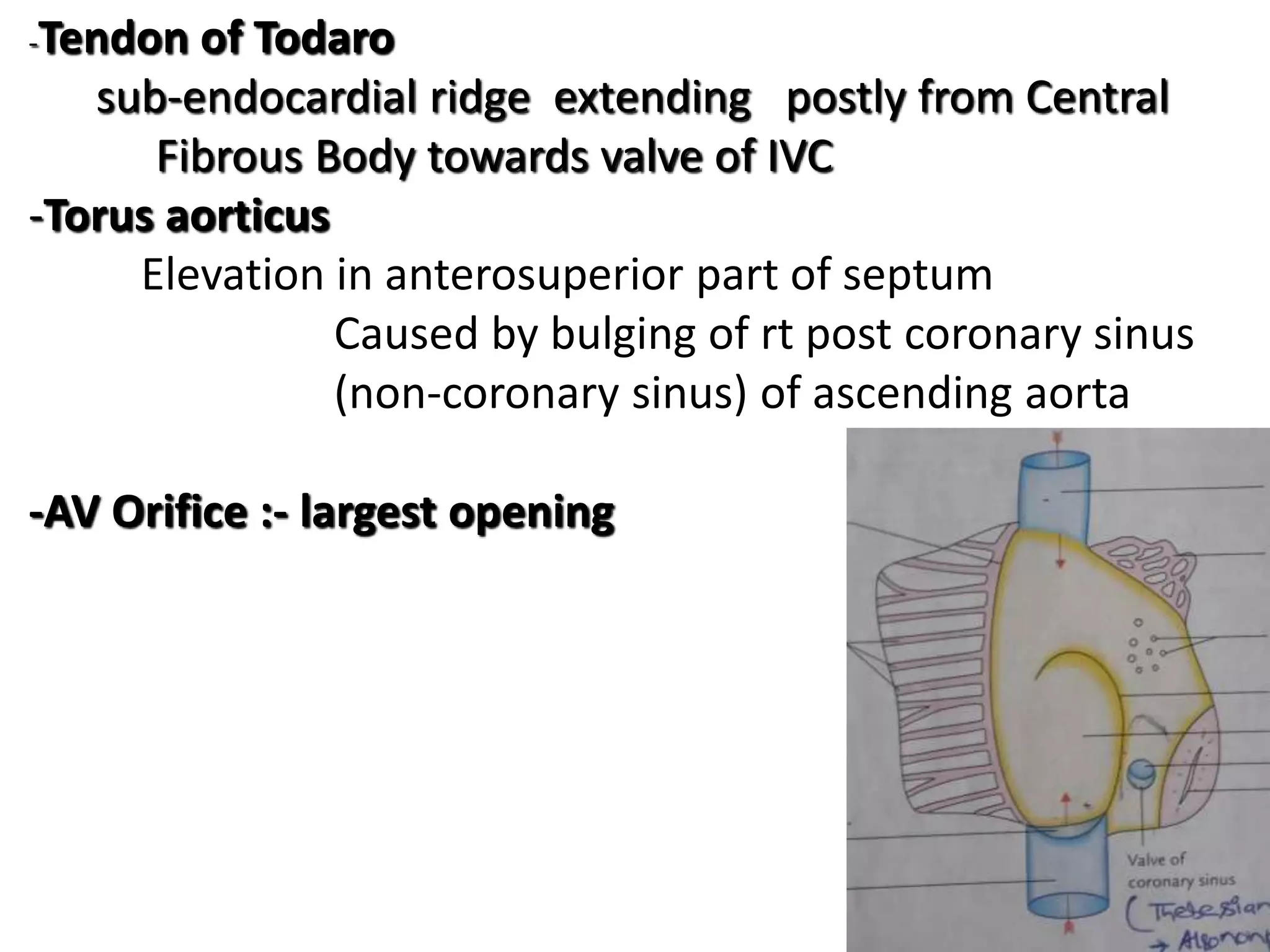
-Tendon of Todaro
sub-endocardial ridge extending postly from Central
Fibrous Body towards valve of IVC
-Torus aorticus
Elevation in anterosuperior part of septum
Caused by bulging of rt post coronary sinus
(non-coronary sinus) of ascending aorta
-AV Orifice :- largest opening
Internal Features
Devt of rt atrium
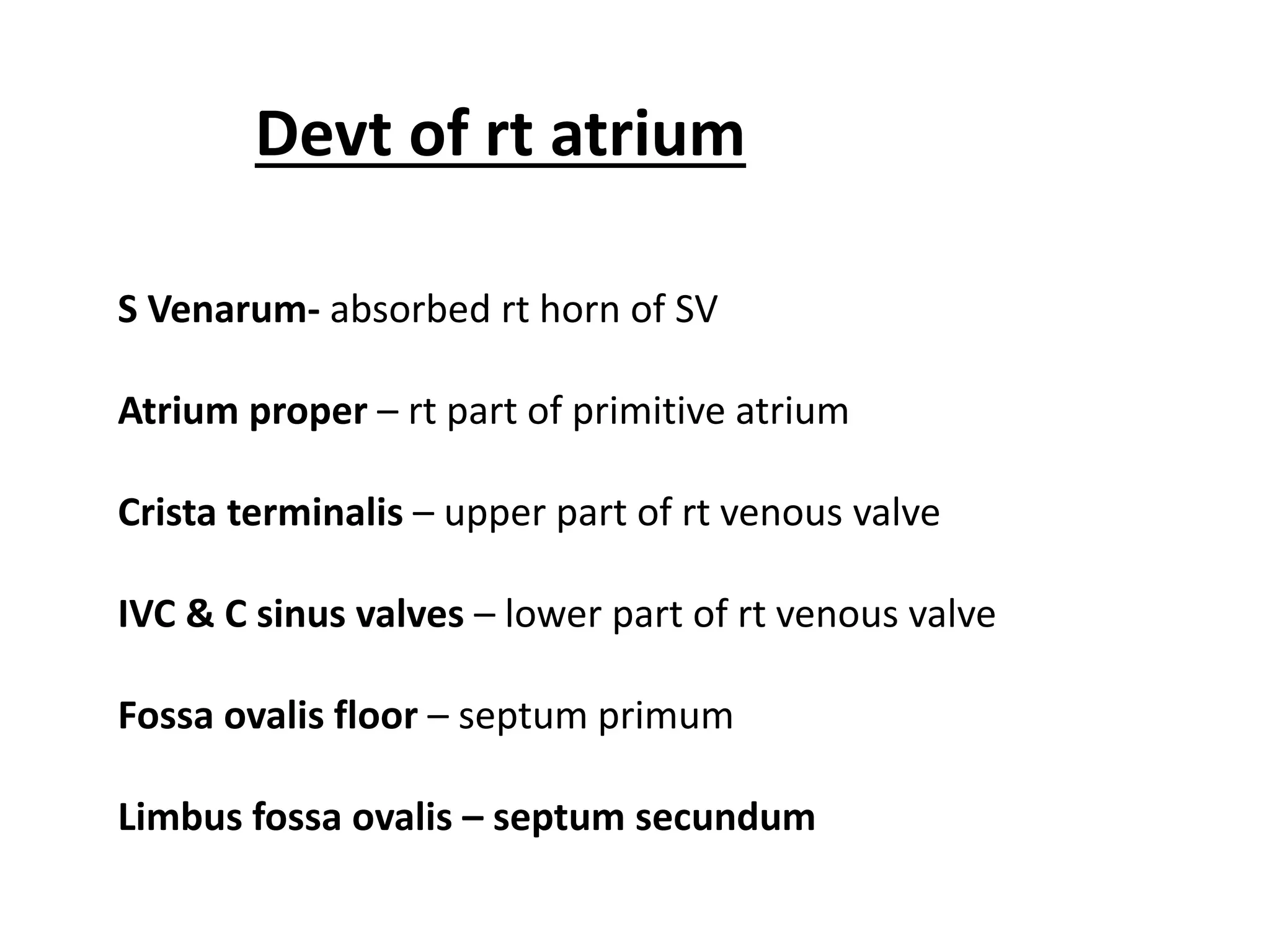
S Venarum- absorbed rt horn of SV
Atrium proper – rt part of primitive atrium
Crista terminalis – upper part of rt venous valve
IVC & C sinus valves – lower part of rt venous valve
Fossa ovalis floor – septum primum
Limbus fossa ovalis – septum secundum
APPLIED ANATOMY
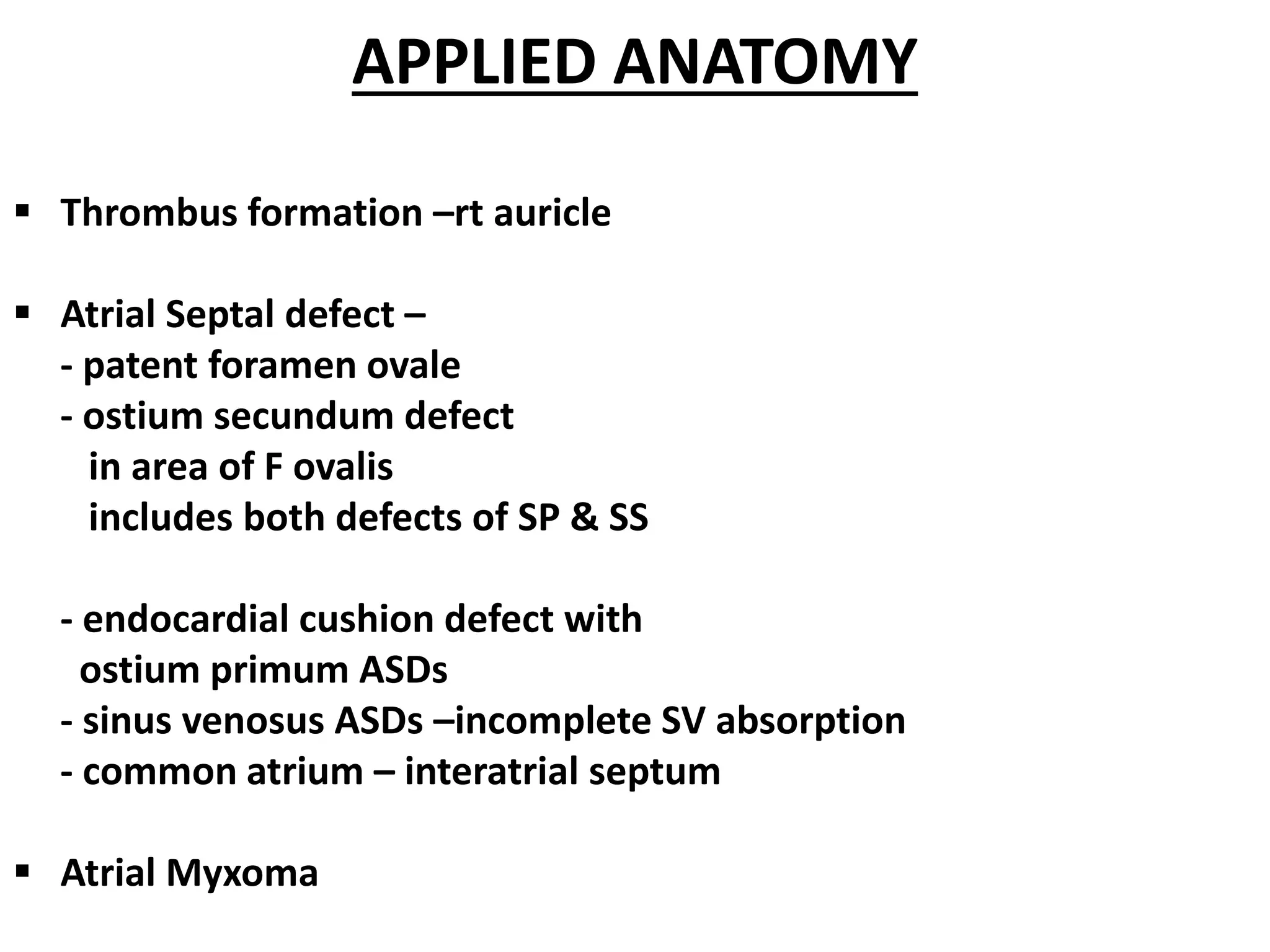
 Thrombus formation –rt auricle
 Atrial Septal defect –
- patent foramen ovale
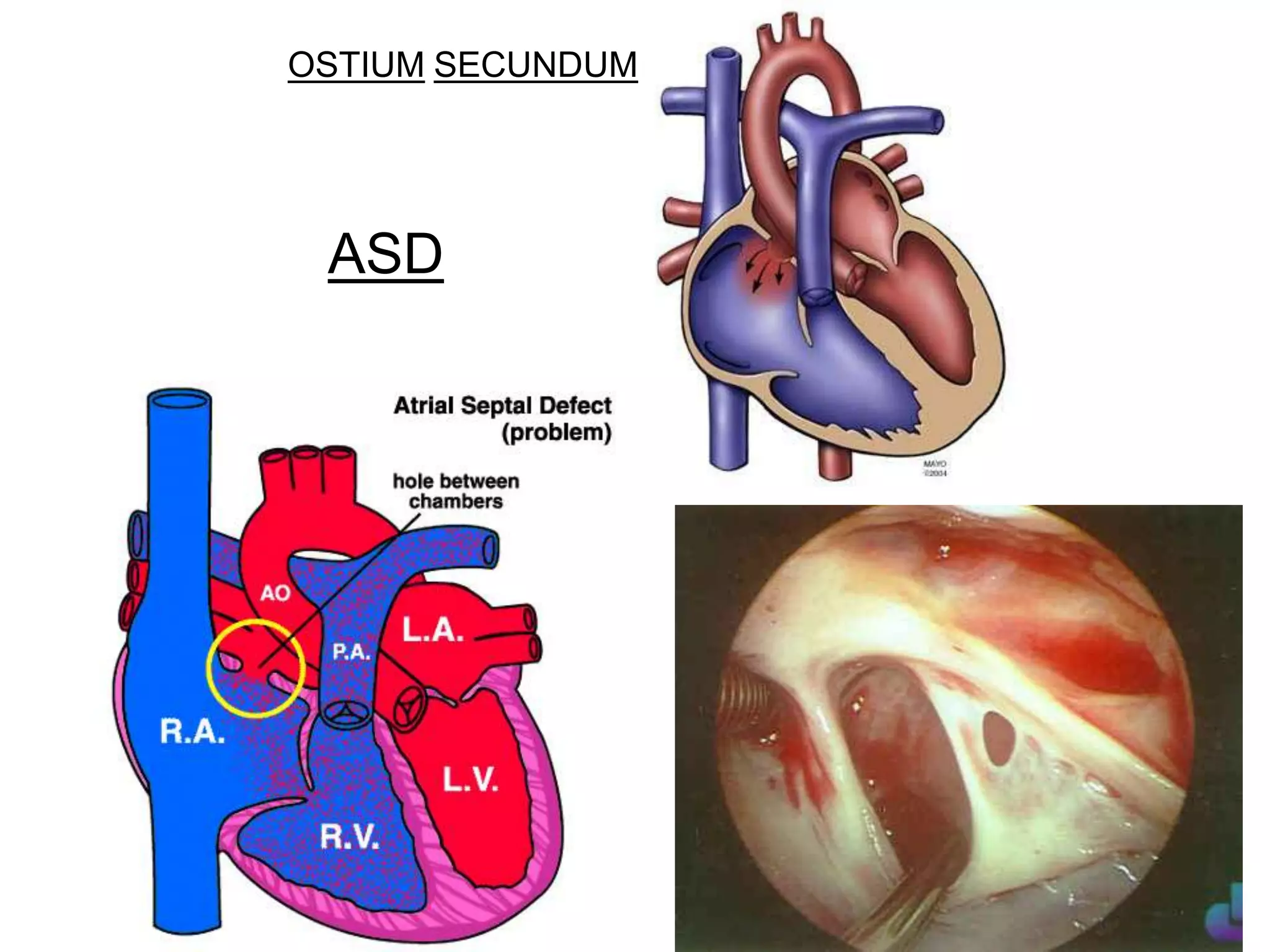
- ostium secundum defect
in area of F ovalis
includes both defects of SP & SS
- endocardial cushion defect with
ostium primum ASDs
- sinus venosus ASDs –incomplete SV absorption
- common atrium – interatrial septum
 Atrial Myxoma
OSTIUM SECUNDUM
ASD
Right ventricle
RIGHT VENTRICLE
• Thick –walled triangular chamber
• Internal features:-
1. Large lower rough inflowing part
2. Small upper outflowing part Infundibulum
3. Infundibulo-ventricular crest/ supraventricular
crest
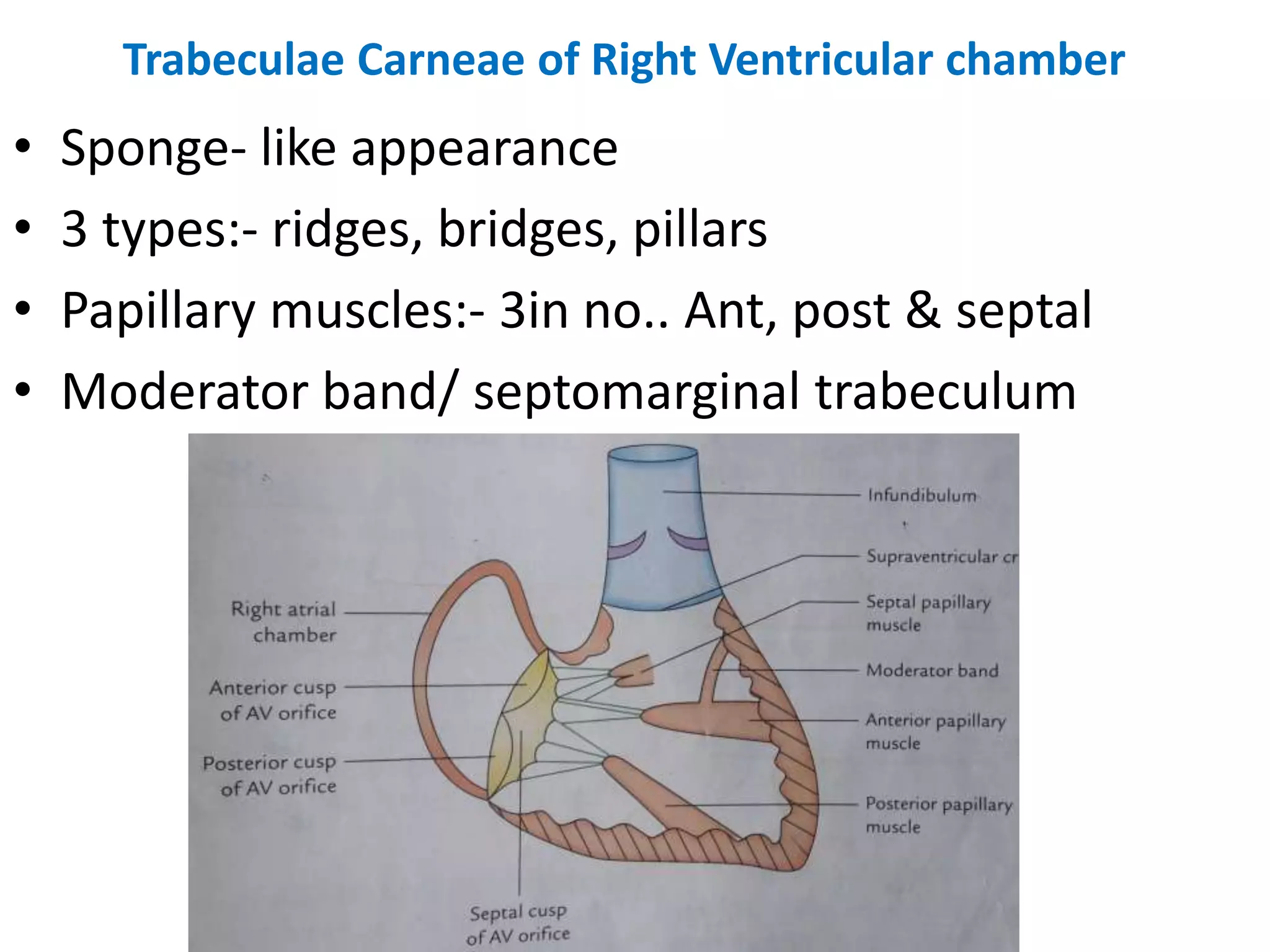
Trabeculae Carneae of Right Ventricular chamber
• Sponge- like appearance
• 3 types:- ridges, bridges, pillars
• Papillary muscles:- 3in no.. Ant, post & septal
• Moderator band/ septomarginal trabeculum
Left atrium
Internal features of left atrium
• Smooth
• Lt auricle muscular ridges
• Ant wall of left atrial cavity presents Fossa
lunata
• Openings:-
1. Four pulmonary veins no valves
2. Venae cordis minimae
3. Left atrioventricular orifice
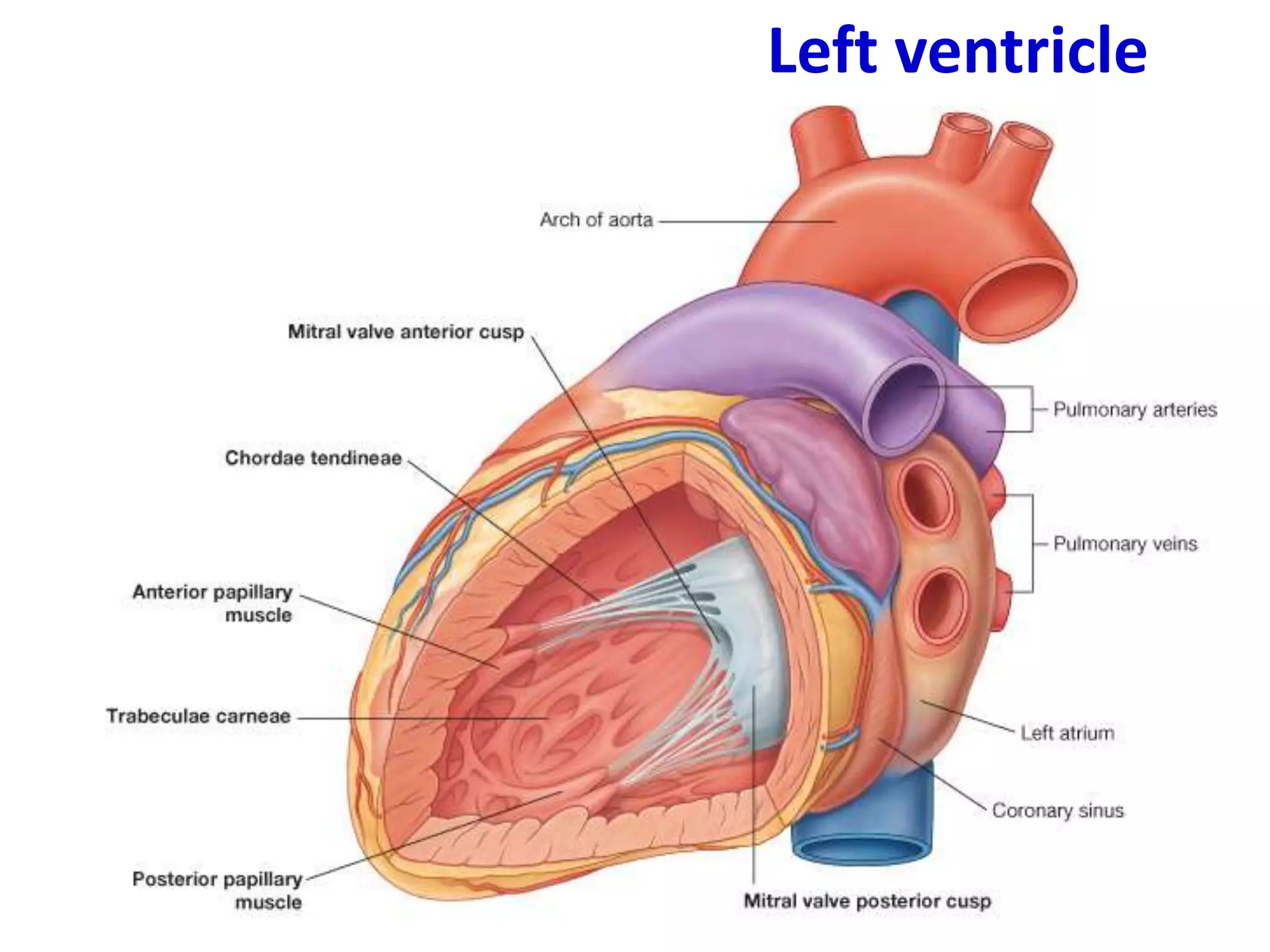
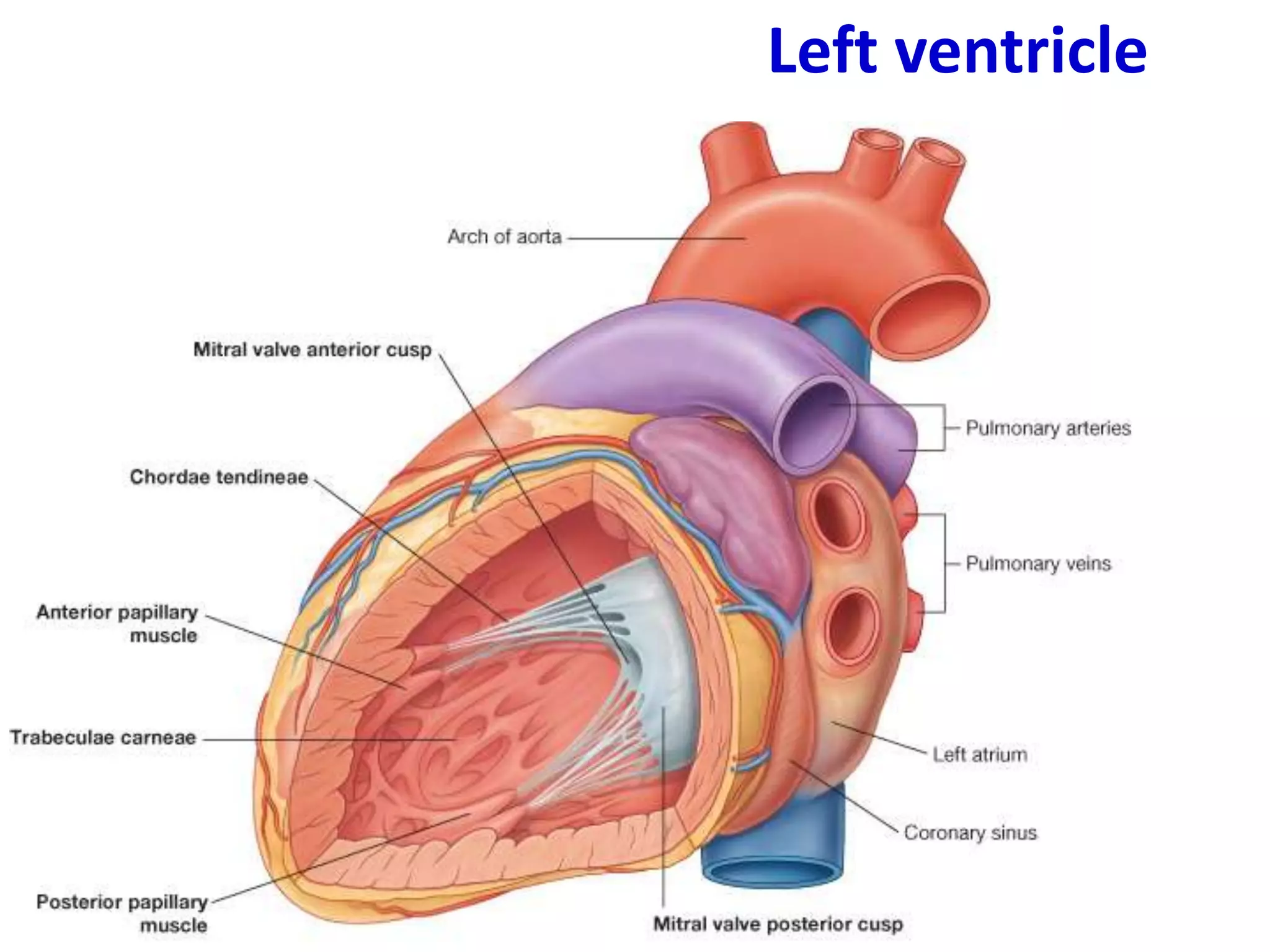
Left ventricle
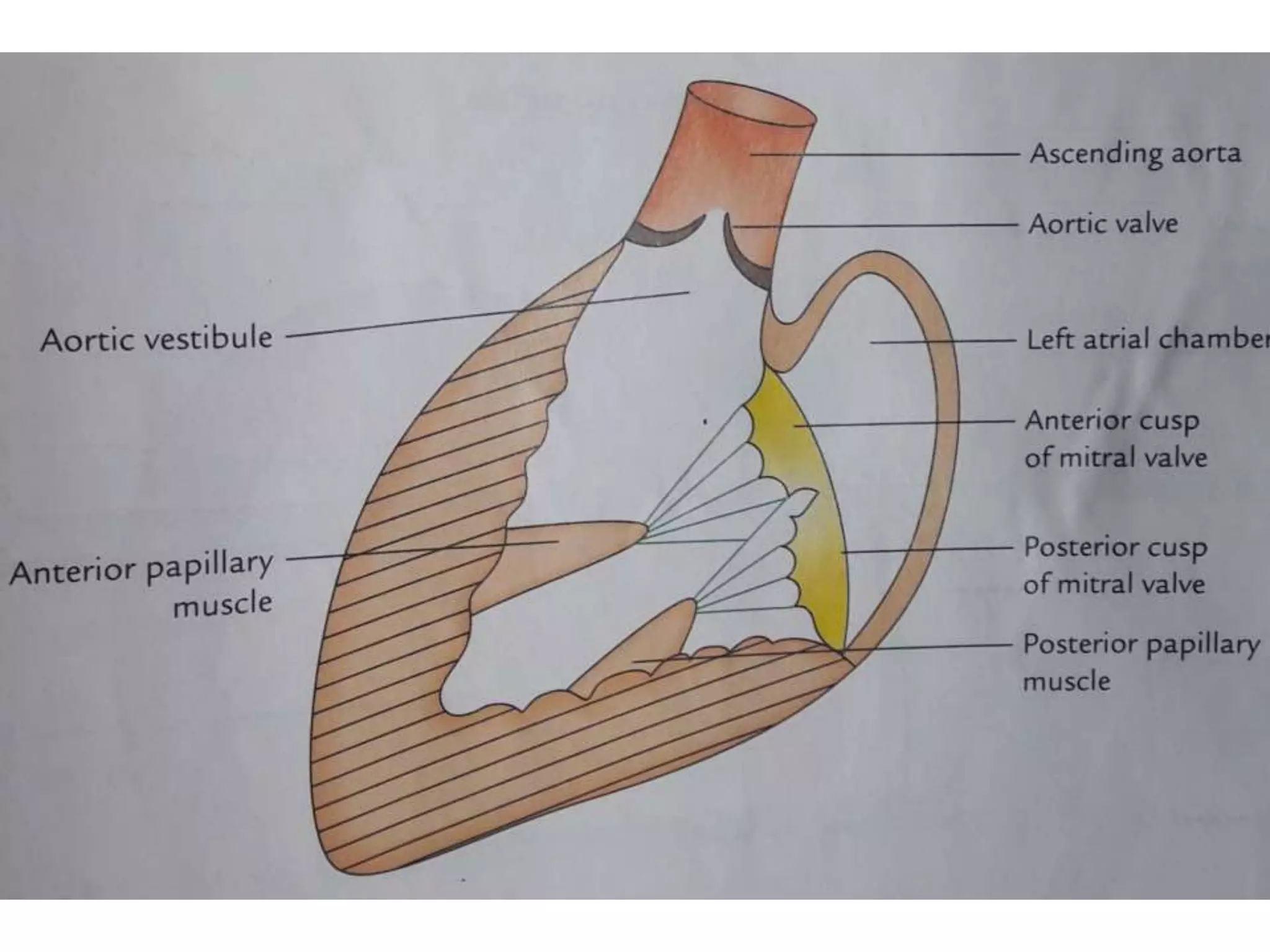
• Thick- walled triangular chamber
• Internal features:-
1. A large lower rough inflowing part ( primitive
ventricle)
2. A small upper smooth outflowing part aortic
vestibule ( bulbus cordis)
• Trabeculae carneae
• 2 papillary muscles:- Ant & post
• Openings:-
1. Left AV orifice
2. Aortic orifice
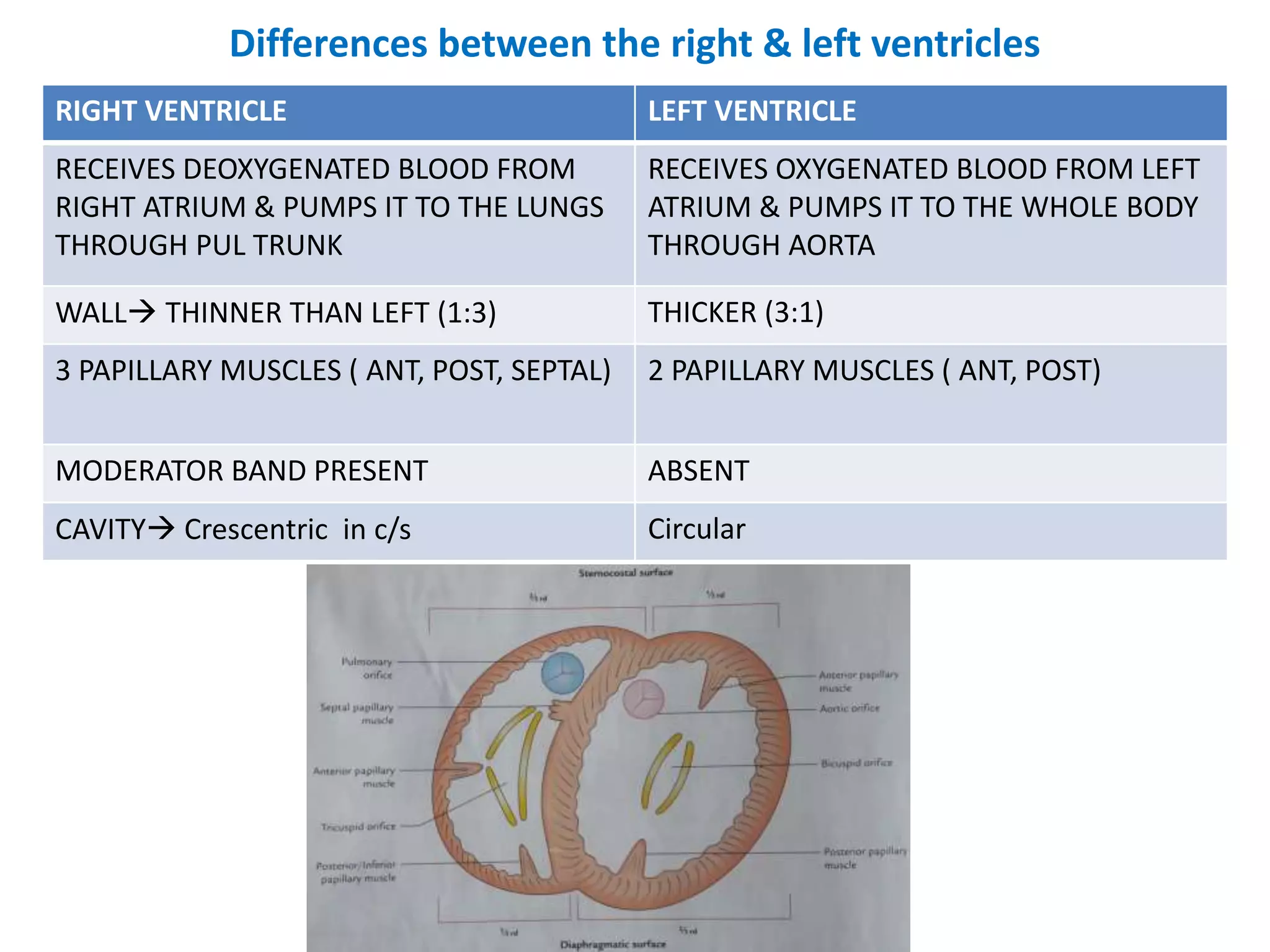
Differences between the right & left ventricles
RIGHT VENTRICLE LEFT VENTRICLE
RECEIVES DEOXYGENATED BLOOD FROM
RIGHT ATRIUM & PUMPS IT TO THE LUNGS
THROUGH PUL TRUNK
RECEIVES OXYGENATED BLOOD FROM LEFT
ATRIUM & PUMPS IT TO THE WHOLE BODY
THROUGH AORTA
WALL THINNER THAN LEFT (1:3) THICKER (3:1)
3 PAPILLARY MUSCLES ( ANT, POST, SEPTAL) 2 PAPILLARY MUSCLES ( ANT, POST)
MODERATOR BAND PRESENT ABSENT
CAVITY Crescentric in c/s Circular
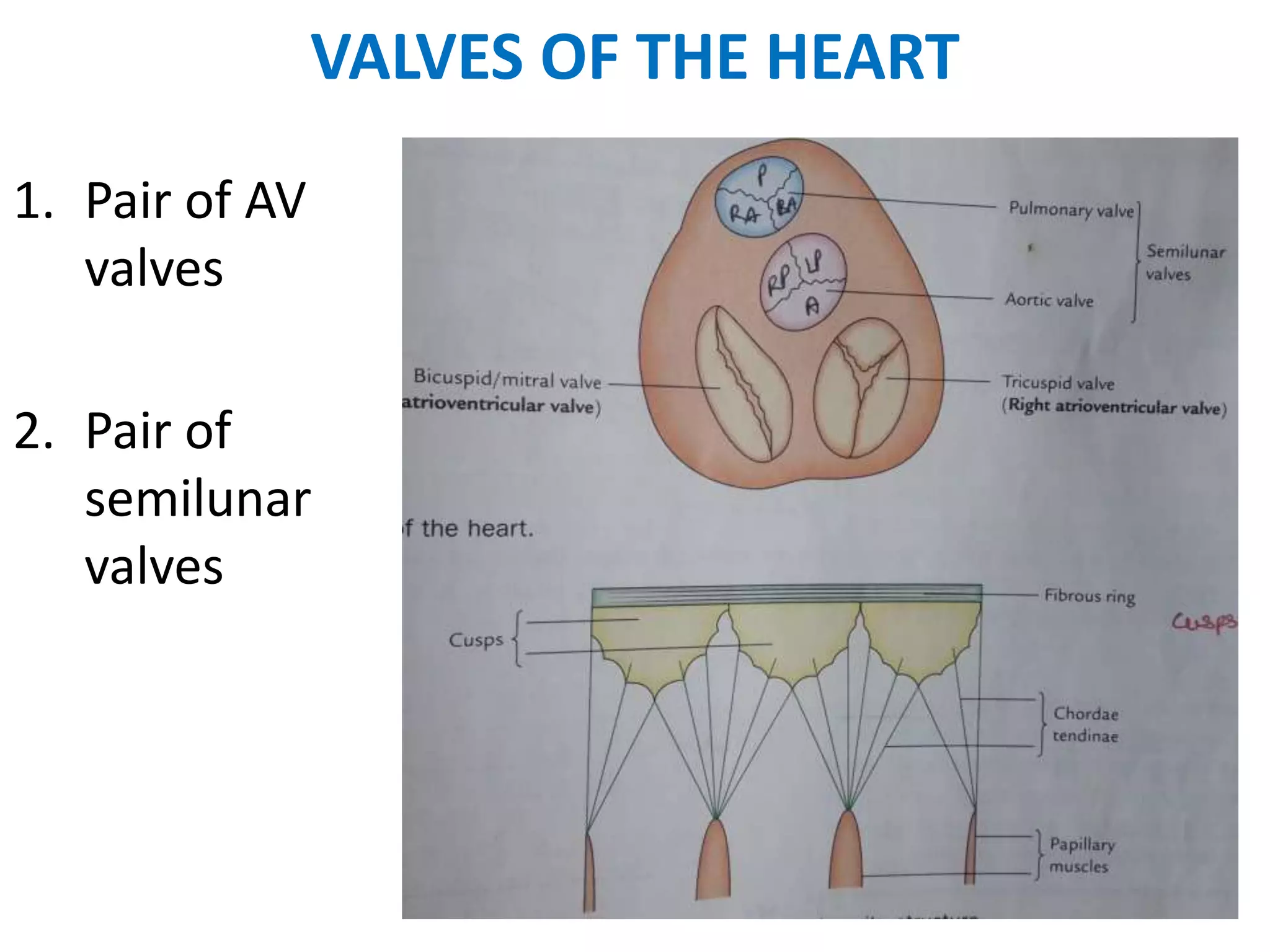
VALVES OF THE HEART
1. Pair of AV
valves
2. Pair of
semilunar
valves
SEMILUNAR VALVES
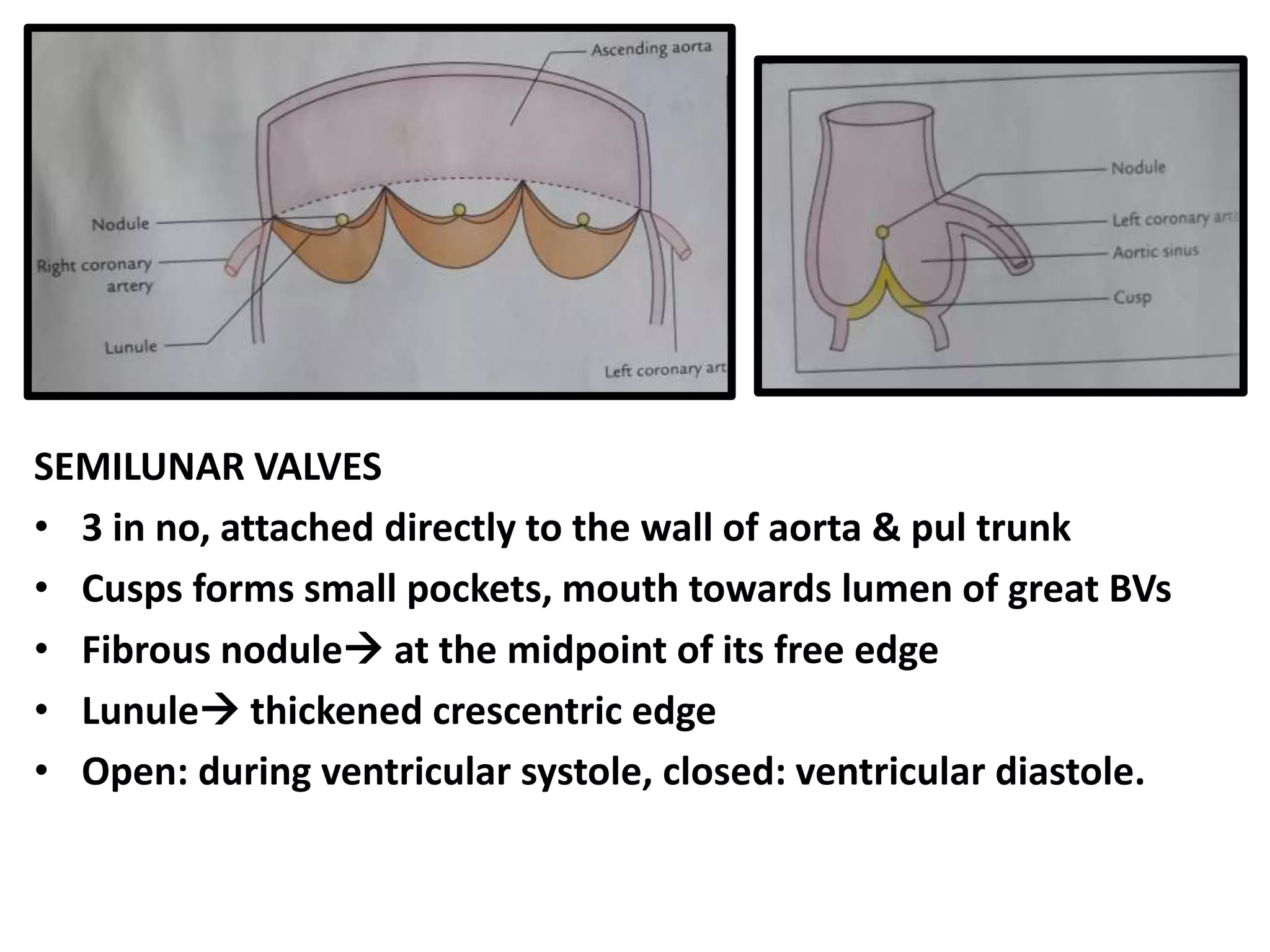
• 3 in no, attached directly to the wall of aorta & pul trunk
• Cusps forms small pockets, mouth towards lumen of great BVs
• Fibrous nodule at the midpoint of its free edge
• Lunule thickened crescentric edge
• Open: during ventricular systole, closed: ventricular diastole.
Positions of cusps in the pul & aortic
valves
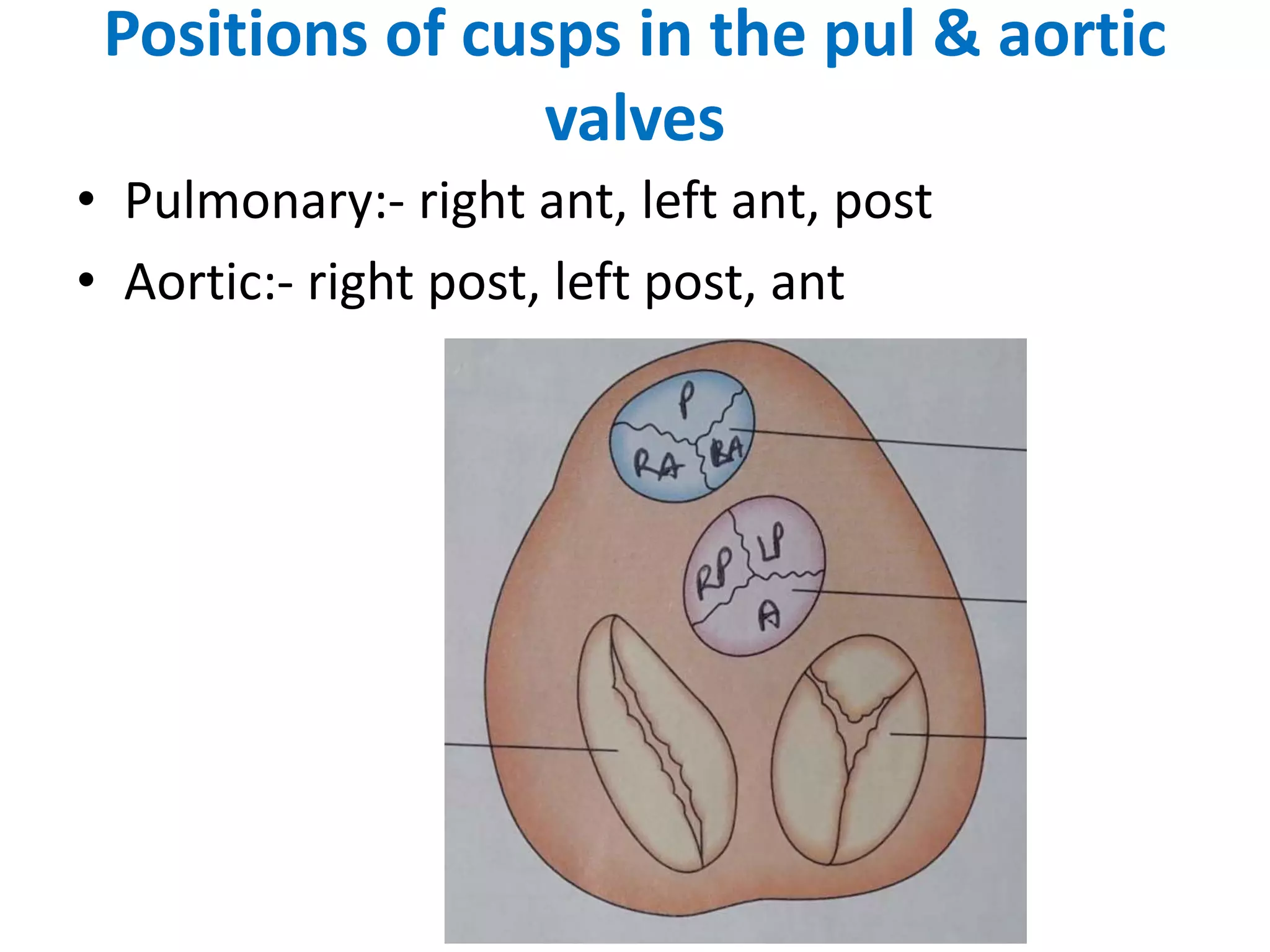
• Pulmonary:- right ant, left ant, post
• Aortic:- right post, left post, ant
CONDUCTING SYSTEM
1. External features, location, shape, sulci &
grooves
2. Chambers of the heart
3. Fibrous skeleton of the heart
4. Conducting system
5. Blood supply
Right atrium
Left atrium
Right ventricle
Left ventricle

3 internal features of the heart

  • 1.
    THE HEART MAJ DRPOONAM SINGH DEPT OF ANATOMY NAIHS
  • 2.
  • 4.
  • 5.
    Right Atrium ofheart  Quadrilateral chamber situated behind & to rt of Rt Ventricle  Forms entire rt border, part of ant surface and 1/3 of base of heart  Extent- orifice of SVC to that of IVC
  • 6.
    External Features 1. SulcusTerminalis 2. Rt Auricle:- margins are notched 3. Rt AV groove – Rt coronary artery, small cardiac vein Rt auricle AV groove
  • 7.
    Rt Atrium- Internalfeatures Smooth part
  • 8.
    Internal Features Rt AtriumConsists of 1. SINUS VENARUM- post smooth part ( Rt horn of sinus venosus) 1. ATRIUM PROPER- ant rough part 2. CRISTA TERMINALIS - smooth muscular ridge separating these two parts
  • 9.
    SINUS VENARUM  Posteriorsmooth part  FEATURES 1. Opening of SVC 2. Opening of IVC - Eustachian valve -semilunar  NONFUNCTIONING 3. Opening of Coronary Sinus - In lower part of atrial septum - Thebesian valve-semi-circular valve 4. Foramina Venarum Minimarum - openings of venae cordis minimae/ Thebesian veins & ant cardiac veins
  • 10.
    ATRIUM PROPER orPECTINATE PART  Crista Terminalis  Musculi Pectinati  Sponge-like network of muscular ridges : auricle
  • 11.
    INTERATRIAL SEPTUM  Separatesrt & lt atrium  Features: -Fossa Ovalis -Limbus fossa ovalis or annulus ovalis -Triangle of Koch –lodges AV node Antly-base of septal leaflet of tricuspid valve Postly-opening of coronary sinus (its anteromedial margin) Suply-tendon of Todaro
  • 12.
    -Tendon of Todaro sub-endocardialridge extending postly from Central Fibrous Body towards valve of IVC -Torus aorticus Elevation in anterosuperior part of septum Caused by bulging of rt post coronary sinus (non-coronary sinus) of ascending aorta -AV Orifice :- largest opening
  • 13.
  • 15.
    Devt of rtatrium S Venarum- absorbed rt horn of SV Atrium proper – rt part of primitive atrium Crista terminalis – upper part of rt venous valve IVC & C sinus valves – lower part of rt venous valve Fossa ovalis floor – septum primum Limbus fossa ovalis – septum secundum
  • 16.
    APPLIED ANATOMY  Thrombusformation –rt auricle  Atrial Septal defect – - patent foramen ovale - ostium secundum defect in area of F ovalis includes both defects of SP & SS - endocardial cushion defect with ostium primum ASDs - sinus venosus ASDs –incomplete SV absorption - common atrium – interatrial septum  Atrial Myxoma
  • 17.
  • 18.
  • 19.
    RIGHT VENTRICLE • Thick–walled triangular chamber • Internal features:- 1. Large lower rough inflowing part 2. Small upper outflowing part Infundibulum 3. Infundibulo-ventricular crest/ supraventricular crest
  • 20.
    Trabeculae Carneae ofRight Ventricular chamber • Sponge- like appearance • 3 types:- ridges, bridges, pillars • Papillary muscles:- 3in no.. Ant, post & septal • Moderator band/ septomarginal trabeculum
  • 21.
  • 22.
    Internal features ofleft atrium • Smooth • Lt auricle muscular ridges • Ant wall of left atrial cavity presents Fossa lunata • Openings:- 1. Four pulmonary veins no valves 2. Venae cordis minimae 3. Left atrioventricular orifice
  • 23.
  • 24.
    • Thick- walledtriangular chamber • Internal features:- 1. A large lower rough inflowing part ( primitive ventricle) 2. A small upper smooth outflowing part aortic vestibule ( bulbus cordis) • Trabeculae carneae • 2 papillary muscles:- Ant & post • Openings:- 1. Left AV orifice 2. Aortic orifice
  • 26.
    Differences between theright & left ventricles RIGHT VENTRICLE LEFT VENTRICLE RECEIVES DEOXYGENATED BLOOD FROM RIGHT ATRIUM & PUMPS IT TO THE LUNGS THROUGH PUL TRUNK RECEIVES OXYGENATED BLOOD FROM LEFT ATRIUM & PUMPS IT TO THE WHOLE BODY THROUGH AORTA WALL THINNER THAN LEFT (1:3) THICKER (3:1) 3 PAPILLARY MUSCLES ( ANT, POST, SEPTAL) 2 PAPILLARY MUSCLES ( ANT, POST) MODERATOR BAND PRESENT ABSENT CAVITY Crescentric in c/s Circular
  • 27.
    VALVES OF THEHEART 1. Pair of AV valves 2. Pair of semilunar valves
  • 28.
    SEMILUNAR VALVES • 3in no, attached directly to the wall of aorta & pul trunk • Cusps forms small pockets, mouth towards lumen of great BVs • Fibrous nodule at the midpoint of its free edge • Lunule thickened crescentric edge • Open: during ventricular systole, closed: ventricular diastole.
  • 29.
    Positions of cuspsin the pul & aortic valves • Pulmonary:- right ant, left ant, post • Aortic:- right post, left post, ant
  • 30.
  • 31.
    1. External features,location, shape, sulci & grooves 2. Chambers of the heart 3. Fibrous skeleton of the heart 4. Conducting system 5. Blood supply
  • 32.
  • 33.
  • 34.
  • 35.