MEDIA
DISCOURSE
.
Overview:
• Definition of Discourse
• Critical Discourse Analysis
• Media Discourse
Two primary types
• Media Focus
• In NEWS
• Discourse Influences on Micro and Macro
levels
• In newspaper
• Media Interaction & Casual Conversation
• Exchange structures
• Pragmatics markers
• Hedging
• Discourse markers
• Response tokens
• Vague Language
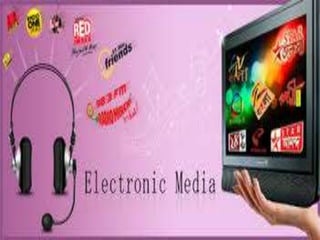
• Electronic media
• Background
• Criteria
Form
Content
Technique
• Genre
Drama
Talk shows
Songs
News
What is discourse?
Discourse is the use of language
both in written and spoken.
Discourse is neither absolutely
homogenous nor absolutely
heterogeneous.
Discourse
• Discourse is a group of sentences which link
one proposition to another one and makes a
coherent unit of the sentences.
Critical Discourse Analysis
Critical Discourse Analysis aims to help reveal
some of the hidden and ‘out of sight’ values,
positions, and perspectives.
CDA explores the connection between the use
of language and the social and political
contexts in which it occurs
Media Discourse
Media discourse refers to interactions that take
place through a broadcast platform, whether
spoken or written, in which the discourse is
oriented to a non-present reader, listener or
viewer.
Two primary types :
Written:
of written texts include newspapers and
magazines
Spoken:
Radio and television, News broadcasts, Drama
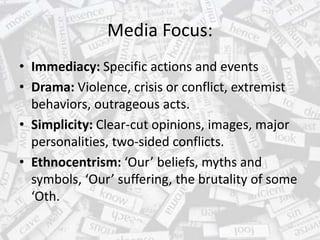
Media Focus:
• Immediacy: Specific actions and events
• Drama: Violence, crisis or conflict, extremist
behaviors, outrageous acts.
• Simplicity: Clear-cut opinions, images, major
personalities, two-sided conflicts.
• Ethnocentrism: ‘Our’ beliefs, myths and
symbols, ‘Our’ suffering, the brutality of some
‘Oth.
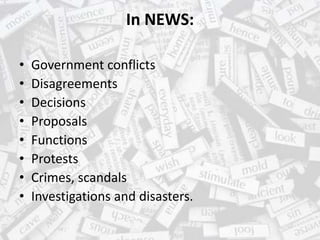
In NEWS:
• Government conflicts
• Disagreements
• Decisions
• Proposals
• Functions
• Protests
• Crimes, scandals
• Investigations and disasters.
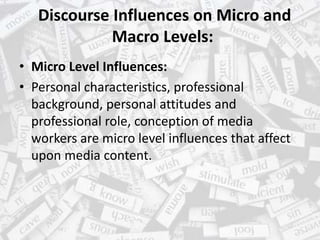
Discourse Influences on Micro and
Macro Levels:
• Micro Level Influences:
• Personal characteristics, professional
background, personal attitudes and
professional role, conception of media
workers are micro level influences that affect
upon media content.
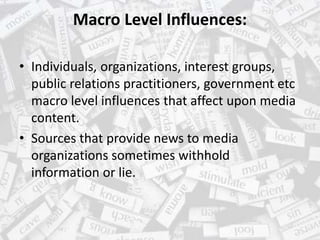
Macro Level Influences:
• Individuals, organizations, interest groups,
public relations practitioners, government etc
macro level influences that affect upon media
content.
• Sources that provide news to media
organizations sometimes withhold
information or lie.
In newspaper:
• Based on the editor’s own experiences,
attitudes, and expectations.
• Journalists sometimes follow their personal
agenda that influences on the content.
• The selection or rejection of stories..
Media Interaction & Casual
Conversation
• When a presenter or guest or interviewee interact on
television or radio they do so with the knowledge
not only that they have been over heard but also
they are having a conversation in front of audience.
• Involvement of audience.
• Institutional setting
• Turn taking rights
• Includes host, interviewer, interviewee, presenter,
guests and callers
Exchange structures
• Both media interaction and casual talk
comprise:
• speaker turns
• make up exchange structure
• Two types of exchange:
1. initiation and response
2. initiation, response and feedback
.
In media discourse but two way exchange
method is more common i.e.
initiation and response.
Pragmatics markers:
• Pragmatic markers can be described as those
constructions, such as you know, I mean, you see,
well, yeah, that are present in speech to support
interaction but do not generally add any specific
semantic meaning to the message.
• In media discourse these are use widely to
explain certain points.
Hedging
• We use hedges to soften what we say or write.
• an important part of polite conversation.
• They make what we say less direct
• It involves:
• tense and aspect,
• modal expressions
• modal verbs and adverbs
• vague language such as sort of, any kind of, like and
some verbs.
Discourse markers
• Discourse marker is a word or phrase that is
relatively syntax-independent and does not
change the truth conditional meaning of the
sentence.
• For example: oh", "well", "now", "then", "you
know", and "I mean", and the connectives
"so", "because", "and", "but", and "or".
Response tokens
• Response tokens are the interjection that an
addressee makes in response to the speaker
utterances.
• Examples are mm, ummhmm, yeah, o really,
wow, that’s right, absolutely,
Vague Language
• It means one is not using precise language.
Vague language is basically unclear and not
giving a full picture
• For example:
You write 'I walked across the road'. This is
vague. Precise would be 'I
sprinted/trotted/trudged/jogged across the
road‘.
• Electronic Media Discourse
Electronic media
• Electronic media are media that use
electronics or electromechanical energy for
the end user to access the content.
Background
• The Pakistan Electronic Media Regulatory
Authority was formed in 2002.
• The first television station began broadcasting
from Lahore in November 1963.
• The government-owned Pakistan Broadcasting
Corporation (PBC) was formed on 14 August
1947.
• At independence, Pakistan had radio stations in
Dhaka, Lahore, and Peshawar. A major
programmed of expansion saw new stations open
at Karachi and Rawalpindi in 1948.
Criteria of electronic media discourse
• Form:
• -external appearance of a clearly defined area
• Content:
• -the subjects or topics covered
• Technique -
method of performance; way of accomplishing
.
Genre in electronic media discourse
• Drama
• Talk shows
• Songs
• news
Drama
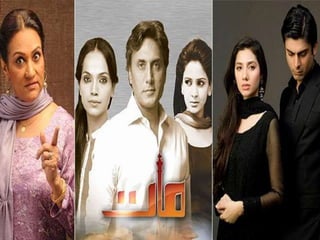
• Depiction of society
• Represent whatever audience wants to hear
and watch
• Likeness differ on the basis of gender, age and
social class.
• FEMALES – musicals, love story/romance
• Kids– Animations, animals etc
• MALES- action/adventure, gangster, war
Themes
• Marriage
• Wealth
• Money
• Love stories
• Necromancy
• Inferiority complex in women
Examples of discourse in Pakistani
dramas
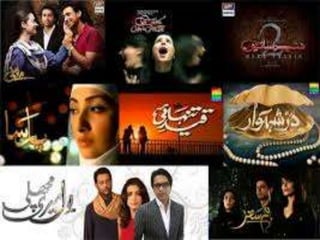
• Titles of dramas are deceptive. For example
• “band kirkion ka pechy” and “ mery mehrban”.
• Criticism on society
• typical quarrel between mother in law and
daughter in law.
• “Tum bhut manhoos ho.”
• It also shows
1. hate.
2. violence.
3. social class.
4. police oppression.
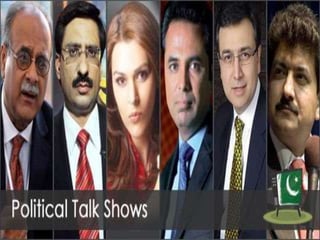
Talk shows
• Pakistani talk shows deal
1. politically mostly
2. violence
3. police
4. social affairs
5. corruption
6. religion
• Opening of show with the subject line such as
• “seyasi aasman par bad’gumanion key badal
kab ghaiyab hongey?”
• The skilled and bold personality of anchor
person raises people’s voice and clearly asks
the real point of the crisis.
• Aap Batain-e-na Qom Sunna Chahti hai…
• The ruling feels shame while speaking bluff in
live shows before the millions of the citizens.
When they are not able to give logic or
reason.
• Main aap ko kal bataaon ga… iska jawab nahi
de sakta….naam nahi bata sakta…
• Politicians gave answers of their questions in a
very logical way. They deal people technicaly.
They also uses proverbs in their disscussions.
For example
• “ ount ka mun me ziry wali bat”
ask burning questions to politicions.
• “Fauzia Wahab sahiba aapkey colleague
kehty hein key muamla abhe nahi nimta….”
News
• The topics of news on TV channels are mostly
deals with
1. inner city news
2. gang culture
3. drugs
4. guns
5. violence
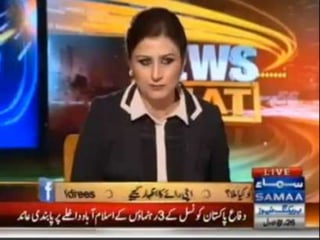
6. political affairs and international news
• The headlines of news are burning and anchors
speak in a very satirical tone. For example
• “Police ihalcar tez doop or lo me jalty ry”
• Titles stand alone; no explanation is given for
example
• “iltaf hussain ka mulk bar me darny katam krny
ka ilan”
• “mulk bhar me garm havaon or shadeed garmi
ka raj”
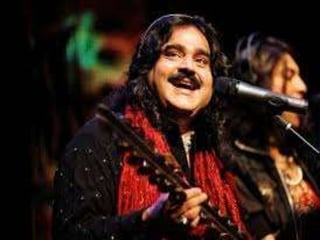
Music
• The themes of Pakistani music are
• love
• marriage
• pleasure
• fun
• In Pakistani music we have
• tappe
• sufiana kalam
• maiaye
classical songs.
Examples
• “chalo koi gal nai chalo koi gal nai”
• “jugni”.
Media discourse

Media discourse

  • 1.
  • 2.
    Overview: • Definition ofDiscourse • Critical Discourse Analysis • Media Discourse Two primary types • Media Focus • In NEWS • Discourse Influences on Micro and Macro levels • In newspaper
  • 3.
    • Media Interaction& Casual Conversation • Exchange structures • Pragmatics markers • Hedging • Discourse markers • Response tokens • Vague Language
  • 4.
    • Electronic media •Background • Criteria Form Content Technique • Genre Drama Talk shows Songs News
  • 5.
  • 6.
    Discourse is theuse of language both in written and spoken.
  • 7.
    Discourse is neitherabsolutely homogenous nor absolutely heterogeneous.
  • 8.
    Discourse • Discourse isa group of sentences which link one proposition to another one and makes a coherent unit of the sentences.
  • 9.
    Critical Discourse Analysis CriticalDiscourse Analysis aims to help reveal some of the hidden and ‘out of sight’ values, positions, and perspectives. CDA explores the connection between the use of language and the social and political contexts in which it occurs
  • 10.
    Media Discourse Media discourserefers to interactions that take place through a broadcast platform, whether spoken or written, in which the discourse is oriented to a non-present reader, listener or viewer.
  • 11.
    Two primary types: Written: of written texts include newspapers and magazines Spoken: Radio and television, News broadcasts, Drama
  • 12.
    Media Focus: • Immediacy:Specific actions and events • Drama: Violence, crisis or conflict, extremist behaviors, outrageous acts. • Simplicity: Clear-cut opinions, images, major personalities, two-sided conflicts. • Ethnocentrism: ‘Our’ beliefs, myths and symbols, ‘Our’ suffering, the brutality of some ‘Oth.
  • 13.
    In NEWS: • Governmentconflicts • Disagreements • Decisions • Proposals • Functions • Protests • Crimes, scandals • Investigations and disasters.
  • 14.
    Discourse Influences onMicro and Macro Levels: • Micro Level Influences: • Personal characteristics, professional background, personal attitudes and professional role, conception of media workers are micro level influences that affect upon media content.
  • 15.
    Macro Level Influences: •Individuals, organizations, interest groups, public relations practitioners, government etc macro level influences that affect upon media content. • Sources that provide news to media organizations sometimes withhold information or lie.
  • 16.
    In newspaper: • Basedon the editor’s own experiences, attitudes, and expectations. • Journalists sometimes follow their personal agenda that influences on the content. • The selection or rejection of stories..
  • 17.
    Media Interaction &Casual Conversation • When a presenter or guest or interviewee interact on television or radio they do so with the knowledge not only that they have been over heard but also they are having a conversation in front of audience. • Involvement of audience. • Institutional setting • Turn taking rights • Includes host, interviewer, interviewee, presenter, guests and callers
  • 18.
    Exchange structures • Bothmedia interaction and casual talk comprise: • speaker turns • make up exchange structure • Two types of exchange: 1. initiation and response 2. initiation, response and feedback
  • 19.
    . In media discoursebut two way exchange method is more common i.e. initiation and response.
  • 20.
    Pragmatics markers: • Pragmaticmarkers can be described as those constructions, such as you know, I mean, you see, well, yeah, that are present in speech to support interaction but do not generally add any specific semantic meaning to the message. • In media discourse these are use widely to explain certain points.
  • 21.
    Hedging • We usehedges to soften what we say or write. • an important part of polite conversation. • They make what we say less direct • It involves: • tense and aspect, • modal expressions • modal verbs and adverbs • vague language such as sort of, any kind of, like and some verbs.
  • 22.
    Discourse markers • Discoursemarker is a word or phrase that is relatively syntax-independent and does not change the truth conditional meaning of the sentence. • For example: oh", "well", "now", "then", "you know", and "I mean", and the connectives "so", "because", "and", "but", and "or".
  • 23.
    Response tokens • Responsetokens are the interjection that an addressee makes in response to the speaker utterances. • Examples are mm, ummhmm, yeah, o really, wow, that’s right, absolutely,
  • 24.
    Vague Language • Itmeans one is not using precise language. Vague language is basically unclear and not giving a full picture • For example: You write 'I walked across the road'. This is vague. Precise would be 'I sprinted/trotted/trudged/jogged across the road‘.
  • 25.
  • 26.
    Electronic media • Electronicmedia are media that use electronics or electromechanical energy for the end user to access the content.
  • 28.
    Background • The PakistanElectronic Media Regulatory Authority was formed in 2002. • The first television station began broadcasting from Lahore in November 1963. • The government-owned Pakistan Broadcasting Corporation (PBC) was formed on 14 August 1947. • At independence, Pakistan had radio stations in Dhaka, Lahore, and Peshawar. A major programmed of expansion saw new stations open at Karachi and Rawalpindi in 1948.
  • 29.
    Criteria of electronicmedia discourse • Form: • -external appearance of a clearly defined area • Content: • -the subjects or topics covered • Technique - method of performance; way of accomplishing .
  • 30.
    Genre in electronicmedia discourse • Drama • Talk shows • Songs • news
  • 31.
    Drama • Depiction ofsociety • Represent whatever audience wants to hear and watch • Likeness differ on the basis of gender, age and social class. • FEMALES – musicals, love story/romance • Kids– Animations, animals etc • MALES- action/adventure, gangster, war
  • 33.
    Themes • Marriage • Wealth •Money • Love stories • Necromancy • Inferiority complex in women
  • 34.
    Examples of discoursein Pakistani dramas • Titles of dramas are deceptive. For example • “band kirkion ka pechy” and “ mery mehrban”. • Criticism on society • typical quarrel between mother in law and daughter in law. • “Tum bhut manhoos ho.”
  • 36.
    • It alsoshows 1. hate. 2. violence. 3. social class. 4. police oppression.
  • 37.
    Talk shows • Pakistanitalk shows deal 1. politically mostly 2. violence 3. police 4. social affairs 5. corruption 6. religion
  • 39.
    • Opening ofshow with the subject line such as • “seyasi aasman par bad’gumanion key badal kab ghaiyab hongey?” • The skilled and bold personality of anchor person raises people’s voice and clearly asks the real point of the crisis. • Aap Batain-e-na Qom Sunna Chahti hai…
  • 40.
    • The rulingfeels shame while speaking bluff in live shows before the millions of the citizens. When they are not able to give logic or reason. • Main aap ko kal bataaon ga… iska jawab nahi de sakta….naam nahi bata sakta…
  • 41.
    • Politicians gaveanswers of their questions in a very logical way. They deal people technicaly. They also uses proverbs in their disscussions. For example • “ ount ka mun me ziry wali bat” ask burning questions to politicions. • “Fauzia Wahab sahiba aapkey colleague kehty hein key muamla abhe nahi nimta….”
  • 42.
    News • The topicsof news on TV channels are mostly deals with 1. inner city news 2. gang culture 3. drugs 4. guns 5. violence 6. political affairs and international news
  • 44.
    • The headlinesof news are burning and anchors speak in a very satirical tone. For example • “Police ihalcar tez doop or lo me jalty ry” • Titles stand alone; no explanation is given for example • “iltaf hussain ka mulk bar me darny katam krny ka ilan” • “mulk bhar me garm havaon or shadeed garmi ka raj”
  • 45.
    Music • The themesof Pakistani music are • love • marriage • pleasure • fun
  • 47.
    • In Pakistanimusic we have • tappe • sufiana kalam • maiaye classical songs.
  • 48.
    Examples • “chalo koigal nai chalo koi gal nai” • “jugni”.