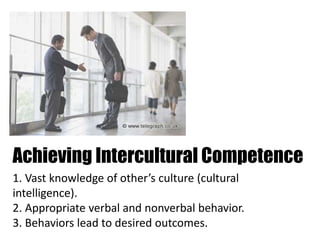
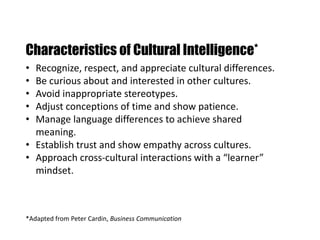
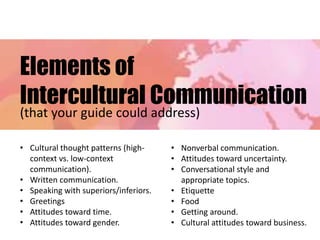
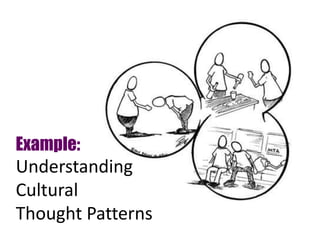
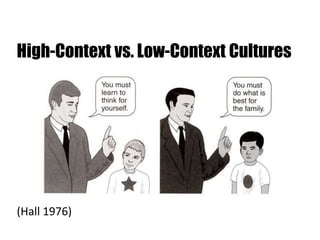
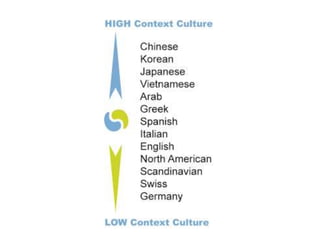
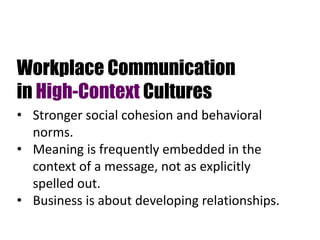
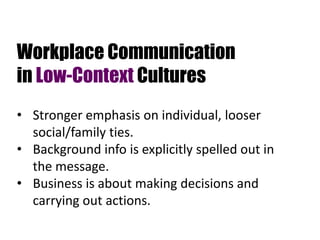
This document discusses intercultural communication in the workplace. Effective intercultural communication requires cultural intelligence, including understanding cultural differences in communication styles, verbal and nonverbal behaviors, and attitudes toward areas like time and gender. Achieving intercultural competence involves recognizing and appreciating cultural differences, avoiding stereotypes, establishing trust, and approaching interactions with an open mindset. The document provides examples of how thought patterns, attitudes, and workplace communication differ between high-context and low-context cultures.