Rachael Bailey, HermonBrhane,
           Sandra Peck,
Serenity Buie, and Brittany Wengert
 1- From whence doth it come?
 2- Watch CAT explained in a work environment!
 3- Convergence
 4- Divergence
 5- Over-Accommodation
 6- Maintenance
 7- In groups and Out Groups
 8- Self Handicapping
 9- Social Identity
 10- Norms
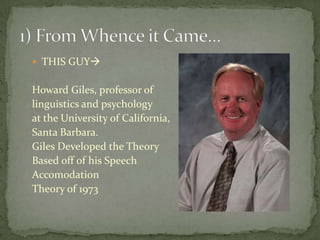
 THIS GUY


Howard Giles, professor of
linguistics and psychology
at the University of California,
Santa Barbara.
Giles Developed the Theory
Based off of his Speech
Accomodation
Theory of 1973
CLICK HERE to watch a video of communication
  accommodation explained by example of a workplace!
  {This video thoroughly explains
the theory and how it applies to
real-life scenarios, making it
easier to understand as an
applicable theory in life.}
 This term refers to the processes whereby two or more
 individuals alter or shift their speech to resemble that
 of those they are interacting with. There is a tendency
 for people to become more alike in terms of linguistic,
 prosodic or non-verbal features, including
 pronunciation, utterance length, pauses, speech rates,
 vocal intensities, as well as facial expressions and the
 "intimacy of their self-disclosures"
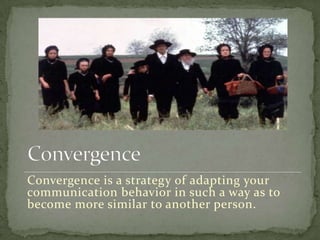
Convergence is a strategy of adapting your
communication behavior in such a way as to
become more similar to another person.
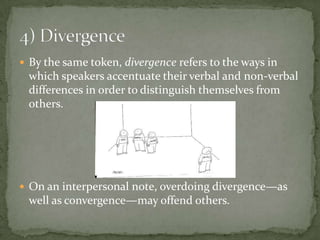
 By the same token, divergence refers to the ways in
 which speakers accentuate their verbal and non-verbal
 differences in order to distinguish themselves from
 others.


 On an interpersonal note, overdoing divergence—as
 well as convergence—may offend others.
 a communication
 strategy of accentuating
 the differences between
 yourself and another
 person. It reflects a desire
 to emphasize group
 distinctiveness in a positive
 manner and it usually takes
 places when an individual
 perceives interaction as an
 intergroup process rather
 than an individual one.
 Where one attempts to over do efforts in regulating,
 modifying or responding to others while trying to
 accommodate their communication style.
 Persisting in your original communication style
  regardless of the communication behavior of the
  other.
 Similar, yet different from divergence.
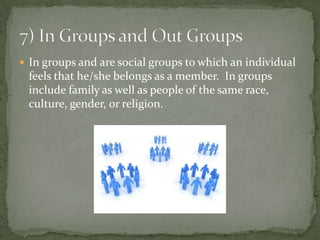
 In groups and are social groups to which an individual
 feels that he/she belongs as a member. In groups
 include family as well as people of the same race,
 culture, gender, or religion.
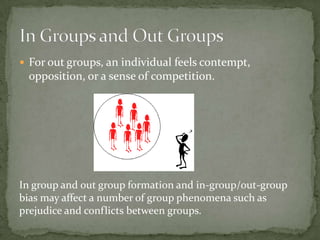
 For out groups, an individual feels contempt,
 opposition, or a sense of competition.


In group and out group formation and in-group/out-group
bias may affect a number of group phenomena such as
prejudice and conflicts between groups.
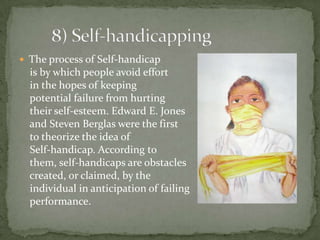
 The process of Self-handicap
  is by which people avoid effort
  in the hopes of keeping
  potential failure from hurting
  their self-esteem. Edward E. Jones
  and Steven Berglas were the first
  to theorize the idea of
  Self-handicap. According to
  them, self-handicaps are obstacles
  created, or claimed, by the
  individual in anticipation of failing
  performance.
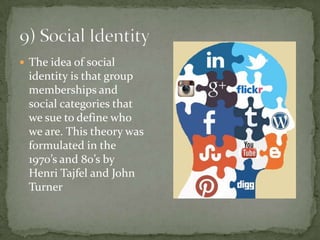
 The idea of social
  identity is that group
  memberships and
  social categories that
  we sue to define who
  we are. This theory was
  formulated in the
  1970’s and 80’s by
  Henri Tajfel and John
  Turner
 Social norms are
 the expectations
 about behavior that
 members of a
 community feel
 should occur about
 a particular
 situation.
 We accommodate our communication styles to match
 those around us. At times, we lack this skill and create
 obstacles for ourselves. In all it is important to
 remember

Communication Accommodation Theory

  • 1.
    Rachael Bailey, HermonBrhane, Sandra Peck, Serenity Buie, and Brittany Wengert
  • 2.
     1- Fromwhence doth it come?  2- Watch CAT explained in a work environment!  3- Convergence  4- Divergence  5- Over-Accommodation  6- Maintenance  7- In groups and Out Groups  8- Self Handicapping  9- Social Identity  10- Norms
  • 3.
     THIS GUY HowardGiles, professor of linguistics and psychology at the University of California, Santa Barbara. Giles Developed the Theory Based off of his Speech Accomodation Theory of 1973
  • 4.
    CLICK HERE towatch a video of communication accommodation explained by example of a workplace! {This video thoroughly explains the theory and how it applies to real-life scenarios, making it easier to understand as an applicable theory in life.}
  • 5.
     This termrefers to the processes whereby two or more individuals alter or shift their speech to resemble that of those they are interacting with. There is a tendency for people to become more alike in terms of linguistic, prosodic or non-verbal features, including pronunciation, utterance length, pauses, speech rates, vocal intensities, as well as facial expressions and the "intimacy of their self-disclosures"
  • 6.
    Convergence is astrategy of adapting your communication behavior in such a way as to become more similar to another person.
  • 7.
     By thesame token, divergence refers to the ways in which speakers accentuate their verbal and non-verbal differences in order to distinguish themselves from others.  On an interpersonal note, overdoing divergence—as well as convergence—may offend others.
  • 8.
     a communication strategy of accentuating the differences between yourself and another person. It reflects a desire to emphasize group distinctiveness in a positive manner and it usually takes places when an individual perceives interaction as an intergroup process rather than an individual one.
  • 9.
     Where oneattempts to over do efforts in regulating, modifying or responding to others while trying to accommodate their communication style.
  • 10.
     Persisting inyour original communication style regardless of the communication behavior of the other.  Similar, yet different from divergence.
  • 11.
     In groupsand are social groups to which an individual feels that he/she belongs as a member. In groups include family as well as people of the same race, culture, gender, or religion.
  • 12.
     For outgroups, an individual feels contempt, opposition, or a sense of competition. In group and out group formation and in-group/out-group bias may affect a number of group phenomena such as prejudice and conflicts between groups.
  • 13.
     The processof Self-handicap is by which people avoid effort in the hopes of keeping potential failure from hurting their self-esteem. Edward E. Jones and Steven Berglas were the first to theorize the idea of Self-handicap. According to them, self-handicaps are obstacles created, or claimed, by the individual in anticipation of failing performance.
  • 14.
     The ideaof social identity is that group memberships and social categories that we sue to define who we are. This theory was formulated in the 1970’s and 80’s by Henri Tajfel and John Turner
  • 15.
     Social normsare the expectations about behavior that members of a community feel should occur about a particular situation.
  • 16.
     We accommodateour communication styles to match those around us. At times, we lack this skill and create obstacles for ourselves. In all it is important to remember