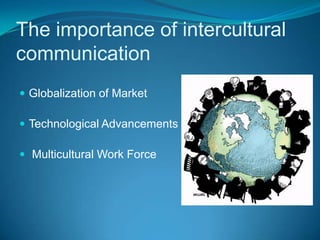
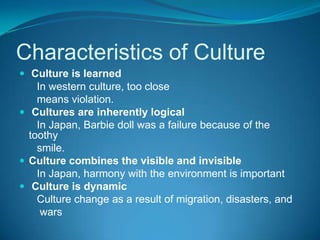
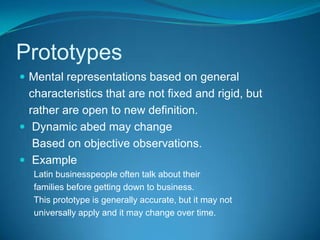
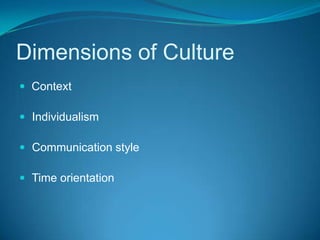
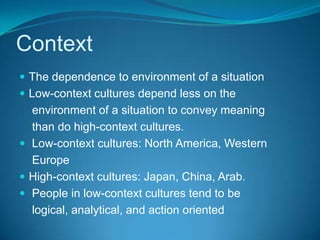
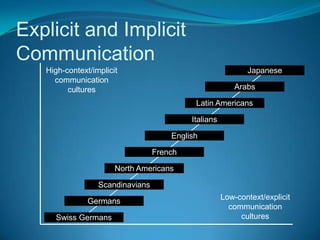
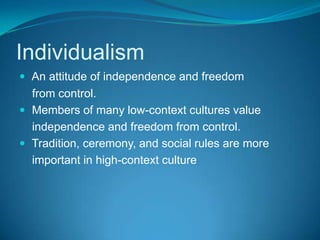
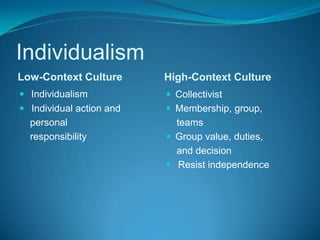
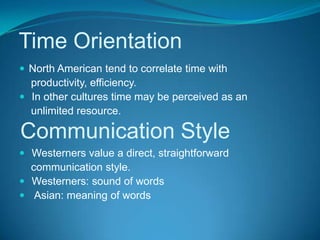
This document discusses communicating across cultures. It notes the importance of intercultural communication due to globalization and multicultural workforces. It describes culture as a complex, learned system that is both visible and invisible, combining values, traits, and customs. Cultures are inherently logical yet dynamic and change over time. Prototypes represent general characteristics of cultures that may change based on new information. Key dimensions of culture discussed are context, communication style, individualism, and time orientation. The document provides tips for improving intercultural communication such as avoiding ethnocentrism, bridging cultural gaps through empathy and patience, and adapting to different communication norms.


![Global Marketing Chapter 3 : Cultural Foundations [Elegant (V)]](https://cdn.slidesharecdn.com/ss_thumbnails/elegantvglobalmarketing-130328123049-phpapp02-thumbnail.jpg?width=640&height=640&fit=bounds)


