




Presented by- Divya Choudhary
Class- M A
Semester- 3
Paper no.- 12
paper name – ELT
Batch Year- 2015-17
Enrolment No.- PG15101007
Email id- choudharydivya400@gmail.com
Submitted to- Smt. S B Gardi Department
of English
Maharaja Krishnakumarsinhji Bhavnagar
University
Definition
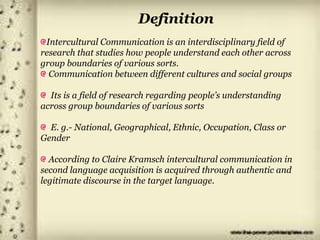
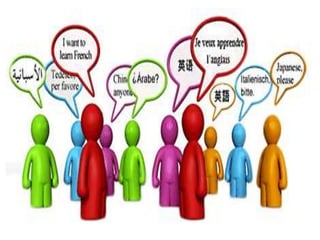
Intercultural Communication is an interdisciplinary field of
research that studies how people understand each other across
group boundaries of various sorts.
Communication between different cultures and social groups
Its is a field of research regarding people’s understanding
across group boundaries of various sorts
E. g.- National, Geographical, Ethnic, Occupation, Class or
Gender
According to Claire Kramsch intercultural communication in
second language acquisition is acquired through authentic and
legitimate discourse in the target language.
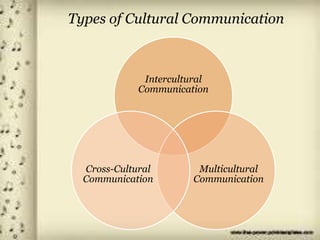
Types of Cultural Communication
Intercultural
Communication
Multicultural
Communication
Cross-Cultural
Communication
Background
“Culture is communication and
communication is culture” (The Silent
Language-Hall)
The principles of intercultural
communication developed by Hall
He discussed the concept of “high-context
communication” and “low-context
communication” (The Hidden Dimensions)
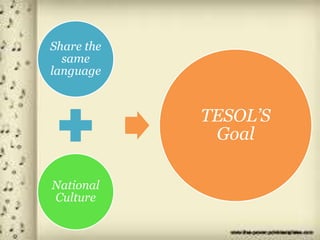
Share the
same
language
National
Culture
TESOL’S
Goal
United States = It has traditionally
been related to the behavioral
sciences, psychology and
professional Business training.
Europe = It has anthropology
mostly associated with and the
language science.
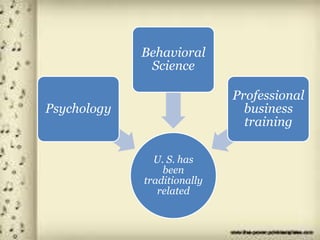
U. S. has
been
traditionally
related
Psychology
Behavioral
Science
Professional
business
training
Researchers generally view
intercultural communication as
a problem created by
differences in behaviors and
world views among people who
speak different languages and
who belong to different cultures.
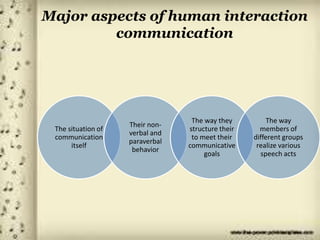
Major aspects of human interaction
communication
The situation of
communication
itself
Their non-
verbal and
paraverbal
behavior
The way they
structure their
to meet their
communicative
goals
The way
members of
different groups
realize various
speech acts
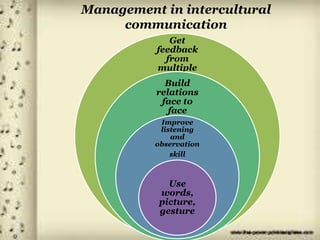
Management in intercultural
communication
Get
feedback
from
multiple
parties
Build
relations
face to
face
Improve
listening
and
observation
skill
Use
words,
picture,
gesture
TESOL has always Goal the facilitation
of communication among people who do
not share the same language and
national culture.
After the second world war, the rise of
linguistics and of the social science .
Demands of market economics , gave
prominence to spoken language and
communication across culture in
situations.
w
The Situation of communication itself.
The stereotypes they entertain of each other, as
individuals and as members of a social group
Non-verbal and paraverbal behavior.
The way they save their own and each other’s face.
The way they structure their discourse to meet their
communicative goals.
The attitudes, Values and beliefs (Discourse) they
share with the social group they belong to.
The way their language reflects these deeper
discourses.
The way members of different groups realize various
speech acts
Problems in Intercultural
communication
Problem in message transmission
The message that the receiver
interprets may be very different from
what the speaker intended
Unable to find understanding
Urgent problems and conflict .
Conclusion
Intercultural communication will have
to deal with shifting identities and cross-
cultural networks rather than with
autonomous individuals located in
stable and homogeneous national
cultures
Thank you…Thank you…

Intercultural Communication

  • 1.
    Presented by- DivyaChoudhary Class- M A Semester- 3 Paper no.- 12 paper name – ELT Batch Year- 2015-17 Enrolment No.- PG15101007 Email id- choudharydivya400@gmail.com Submitted to- Smt. S B Gardi Department of English Maharaja Krishnakumarsinhji Bhavnagar University
  • 2.
    Definition Intercultural Communication isan interdisciplinary field of research that studies how people understand each other across group boundaries of various sorts. Communication between different cultures and social groups Its is a field of research regarding people’s understanding across group boundaries of various sorts E. g.- National, Geographical, Ethnic, Occupation, Class or Gender According to Claire Kramsch intercultural communication in second language acquisition is acquired through authentic and legitimate discourse in the target language.
  • 3.
    Types of CulturalCommunication Intercultural Communication Multicultural Communication Cross-Cultural Communication
  • 5.
    Background “Culture is communicationand communication is culture” (The Silent Language-Hall) The principles of intercultural communication developed by Hall He discussed the concept of “high-context communication” and “low-context communication” (The Hidden Dimensions)
  • 6.
  • 7.
    United States =It has traditionally been related to the behavioral sciences, psychology and professional Business training. Europe = It has anthropology mostly associated with and the language science.
  • 9.
  • 10.
    Researchers generally view interculturalcommunication as a problem created by differences in behaviors and world views among people who speak different languages and who belong to different cultures.
  • 11.
    Major aspects ofhuman interaction communication The situation of communication itself Their non- verbal and paraverbal behavior The way they structure their to meet their communicative goals The way members of different groups realize various speech acts
  • 12.
    Management in intercultural communication Get feedback from multiple parties Build relations faceto face Improve listening and observation skill Use words, picture, gesture
  • 13.
    TESOL has alwaysGoal the facilitation of communication among people who do not share the same language and national culture. After the second world war, the rise of linguistics and of the social science . Demands of market economics , gave prominence to spoken language and communication across culture in situations.
  • 15.
    w The Situation ofcommunication itself. The stereotypes they entertain of each other, as individuals and as members of a social group Non-verbal and paraverbal behavior. The way they save their own and each other’s face. The way they structure their discourse to meet their communicative goals. The attitudes, Values and beliefs (Discourse) they share with the social group they belong to. The way their language reflects these deeper discourses. The way members of different groups realize various speech acts
  • 17.
    Problems in Intercultural communication Problemin message transmission The message that the receiver interprets may be very different from what the speaker intended Unable to find understanding Urgent problems and conflict .
  • 19.
    Conclusion Intercultural communication willhave to deal with shifting identities and cross- cultural networks rather than with autonomous individuals located in stable and homogeneous national cultures
  • 20.