Intentional Conversation
Mini-Workshop
Bukal Life Care
Presented by
Robert Munson, ThD
Communication
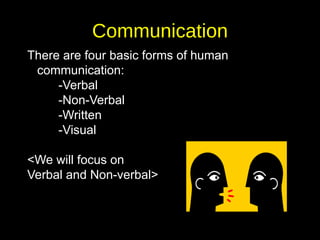
There are four basic forms of human
communication:
-Verbal
-Non-Verbal
-Written
-Visual
<We will focus on
Verbal and Non-verbal>
Intentional Conversation?
Definition: A crucial conversation is a discussion
between two or more people where
(1) stakes are high
(2) opinions vary
(3) emotions run strong.
(Patterson)
In these situations, there is a desire
of one to change the mind of
the other or gain understanding
(of the other or from the other).
Intentional Conversation?
Definition: A crucial conversation is a discussion
between two or more people where
(1) stakes are high
(2) opinions vary
(3) emotions run strong.
(Patterson)
In these situations, there is a desire
of one to change the mind of
the other or gain understanding
(of the other or from the other).
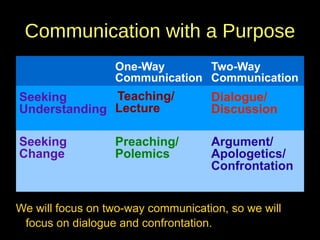
Communication with a Purpose
One-Way
Two-Way
Communication Communication

Teaching/
Seeking
Understanding Lecture

Dialogue/
Discussion

Seeking
Change

Argument/
Apologetics/
Confrontation

Preaching/
Polemics

We will focus on two-way communication, so we will
focus on dialogue and confrontation.
When is an Intentional
Conversation needed?
Whenever you
-feel uncomfortable,
-have second thoughts, or
-try to avoid saying what you need to say,
what you aren’t saying is your hard
conversation. (Abrams)
What if we need to have an intentional
conversations but don't?
-Our beliefs and our actions are not aligned
-We experience a high level of tension,
discomfort, stress.
-We give support to what is wrong through
silence and inaction.
-Our trustworthiness can be questioned.
-Relationships we want to protect become
strained and damaged.
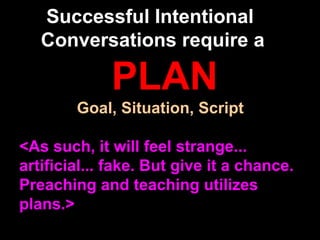
Successful Intentional
Conversations require a

PLAN
Goal, Situation, Script
<As such, it will feel strange...
artificial... fake. But give it a chance.
Preaching and teaching utilizes
plans.>
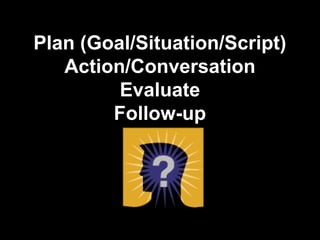
Plan (Goal/Situation/Script)
Action/Conversation
Evaluate
Follow-up
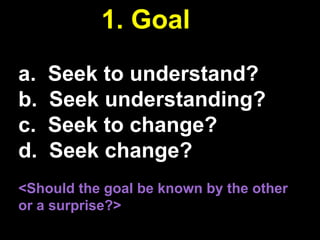
1. Goal
a.
b.
c.
d.

Seek to understand?
Seek understanding?
Seek to change?
Seek change?

<Should the goal be known by the other
or a surprise?>
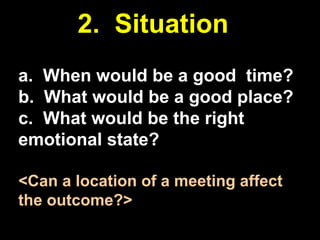
2. Situation
a. When would be a good time?
b. What would be a good place?
c. What would be the right
emotional state?
<Can a location of a meeting affect
the outcome?>
3. Script
a. Semi-structured
b. Thought through
c. Practiced
<Should one use notes?>cc
Intentional Dialogue
This is for gaining understanding.
Typically, the need for dialogue is related more
to understanding of values and feelings more
than about facts.

v

Typically, the need is to focus more on
perceptions than “truth” or blame.
Intentional Dialogue
<See Handout. Divide into groups and then into
2s. Others can critique.>





“A” share a BIG moment (happy or sad).
“B” Mirror
v
“B” Validate
“B” Empathize
Intentional Confrontation
Guidelines (Maxwell)
-Confront ASAP (right time and place)
-Separate the person from their actions
-Only confront what the person can change
-Give person the benefit of the doubt
v
-Be specific
-Avoid sarcasm
-Avoid words like ‘always’ and ‘never’
-Express feelings
-Give a “game plan”
-Affirm the person
Intentional Confrontation
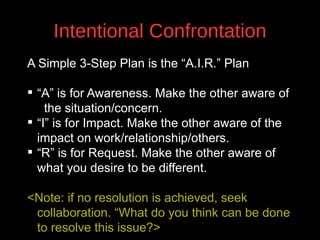
A Simple 3-Step Plan is the “A.I.R.” Plan
 “A” is for Awareness. Make the other aware of
the situation/concern.
 “I” is for Impact. Make the other aware of the
v
impact on work/relationship/others.
 “R” is for Request. Make the other aware of
what you desire to be different.
<Note: if no resolution is achieved, seek
collaboration. “What do you think can be done
to resolve this issue?>
Intentional Confrontation
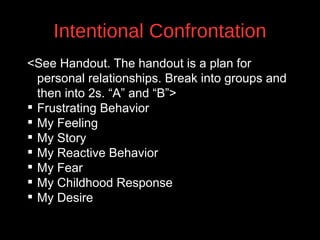
<See Handout. The handout is a plan for
personal relationships. Break into groups and
then into 2s. “A” and “B”>
 Frustrating Behavior
 My Feeling
v
 My Story
 My Reactive Behavior
 My Fear
 My Childhood Response
 My Desire
Intentional Confrontation
If you simply want to attack or blame... you don't
need intentional communication/ confrontation.
Intentional communication in confrontation is
beneficial when the goal is correction and
v
reconciliation.
Is Intentional Conversation
Always Successful?
NO!!!
-Intentional dialogue requires mutual respect.
-Intentional confrontation requires a willingness
for both parties to grow and reconcile.
(Mediation may be required).

v

Other types of intentional conversation can also
fail (ask any salesman... no words can
guarantee results).
All one can do is plan for success.
References
-Leverington, John and Becky. Marriage
Encounter Training Handouts. October 2012.
Narramore Christian Foundation. Chiang Mai,
Thailand.
-Maxwell, John. “Developing the Leaders
Around You.”
-Maybin, Sarita. “If You Can’t Say Something
Nice, What Do You Say?”
-”courageousintentionalconversations.ppt” at
http://2011e1690.wikispaces.com.

Intentional Conversation

  • 1.
    Intentional Conversation Mini-Workshop Bukal LifeCare Presented by Robert Munson, ThD
  • 2.
    Communication There are fourbasic forms of human communication: -Verbal -Non-Verbal -Written -Visual <We will focus on Verbal and Non-verbal>
  • 3.
    Intentional Conversation? Definition: Acrucial conversation is a discussion between two or more people where (1) stakes are high (2) opinions vary (3) emotions run strong. (Patterson) In these situations, there is a desire of one to change the mind of the other or gain understanding (of the other or from the other).
  • 4.
    Intentional Conversation? Definition: Acrucial conversation is a discussion between two or more people where (1) stakes are high (2) opinions vary (3) emotions run strong. (Patterson) In these situations, there is a desire of one to change the mind of the other or gain understanding (of the other or from the other).
  • 5.
    Communication with aPurpose One-Way Two-Way Communication Communication Teaching/ Seeking Understanding Lecture Dialogue/ Discussion Seeking Change Argument/ Apologetics/ Confrontation Preaching/ Polemics We will focus on two-way communication, so we will focus on dialogue and confrontation.
  • 6.
    When is anIntentional Conversation needed? Whenever you -feel uncomfortable, -have second thoughts, or -try to avoid saying what you need to say, what you aren’t saying is your hard conversation. (Abrams)
  • 7.
    What if weneed to have an intentional conversations but don't? -Our beliefs and our actions are not aligned -We experience a high level of tension, discomfort, stress. -We give support to what is wrong through silence and inaction. -Our trustworthiness can be questioned. -Relationships we want to protect become strained and damaged.
  • 8.
    Successful Intentional Conversations requirea PLAN Goal, Situation, Script <As such, it will feel strange... artificial... fake. But give it a chance. Preaching and teaching utilizes plans.>
  • 9.
  • 10.
    1. Goal a. b. c. d. Seek tounderstand? Seek understanding? Seek to change? Seek change? <Should the goal be known by the other or a surprise?>
  • 11.
    2. Situation a. Whenwould be a good time? b. What would be a good place? c. What would be the right emotional state? <Can a location of a meeting affect the outcome?>
  • 12.
    3. Script a. Semi-structured b.Thought through c. Practiced <Should one use notes?>cc
  • 13.
    Intentional Dialogue This isfor gaining understanding. Typically, the need for dialogue is related more to understanding of values and feelings more than about facts. v Typically, the need is to focus more on perceptions than “truth” or blame.
  • 14.
    Intentional Dialogue <See Handout.Divide into groups and then into 2s. Others can critique.>     “A” share a BIG moment (happy or sad). “B” Mirror v “B” Validate “B” Empathize
  • 15.
    Intentional Confrontation Guidelines (Maxwell) -ConfrontASAP (right time and place) -Separate the person from their actions -Only confront what the person can change -Give person the benefit of the doubt v -Be specific -Avoid sarcasm -Avoid words like ‘always’ and ‘never’ -Express feelings -Give a “game plan” -Affirm the person
  • 16.
    Intentional Confrontation A Simple3-Step Plan is the “A.I.R.” Plan  “A” is for Awareness. Make the other aware of the situation/concern.  “I” is for Impact. Make the other aware of the v impact on work/relationship/others.  “R” is for Request. Make the other aware of what you desire to be different. <Note: if no resolution is achieved, seek collaboration. “What do you think can be done to resolve this issue?>
  • 17.
    Intentional Confrontation <See Handout.The handout is a plan for personal relationships. Break into groups and then into 2s. “A” and “B”>  Frustrating Behavior  My Feeling v  My Story  My Reactive Behavior  My Fear  My Childhood Response  My Desire
  • 18.
    Intentional Confrontation If yousimply want to attack or blame... you don't need intentional communication/ confrontation. Intentional communication in confrontation is beneficial when the goal is correction and v reconciliation.
  • 19.
    Is Intentional Conversation AlwaysSuccessful? NO!!! -Intentional dialogue requires mutual respect. -Intentional confrontation requires a willingness for both parties to grow and reconcile. (Mediation may be required). v Other types of intentional conversation can also fail (ask any salesman... no words can guarantee results). All one can do is plan for success.
  • 20.
    References -Leverington, John andBecky. Marriage Encounter Training Handouts. October 2012. Narramore Christian Foundation. Chiang Mai, Thailand. -Maxwell, John. “Developing the Leaders Around You.” -Maybin, Sarita. “If You Can’t Say Something Nice, What Do You Say?” -”courageousintentionalconversations.ppt” at http://2011e1690.wikispaces.com.