Chaplaincy and Pastoral
Counseling Certification
CPSP-Philippines
Introduction
• CPSP-Philippines is an organization
that establishes and maintains standards
for clinical chaplaincy, pastoral
counseling, and CPE supervision in the
Philippines.
• It provides certification for individuals
and accreditation for Training Centers.
CPSP-Philippines

CPSP-Philippines stands for “Collegium
of Pastoral Supervision & Psychotherapy
—Philippines, Inc.

CPSP-Philippines is recognized by, and
adheres to, a Memorandum of Agreement
with CPSP, based in the United States.
CPSP is one of the largest certifiers and
accreditors of pastoral counseling, clinical
chaplaincy, and CPE supervision in the
world.
CPSP-Philippines

Established formally in 2011, in
partnership with Dr. Raymond
Lawrence, the General Secretary of
CPSP.

It is headquartered in Baguio City,
Philippines, with primary branches in
Baguio, Manila, and Iloilo City.
Certifications

Clinically Trained Minister

Associate Clinical Chaplain

Associate Pastoral Counselor

Clinical Chaplain

Pastoral Counselor
Additional Programs

Supervisor-in-Training Program

Diplomate Supervision in Clinical
Pastoral Education/Training

Accreditation program for CPE and
CPO Training Centers
Accreditation

Training Centers for CPE have a
Diplomate or Supervisor-in-Training
running it. It also must abide by the
standards of CPSP-Philippines, and
have services in place for practical
training, and materials for didactic
training.
Accreditation

Training Centers for CPO (Clinical
Pastoral Orientation) must have
someone who is certified Associate
Clinical Chaplain or higher. It
normally would be associated with a
Bible school or hospital.
Standards Committee
• The Standards Committee of CPSP-
Philippines establishes the standards for
certification, accreditation and training
programs.
• The Committe ensures that the standards
are contextualized to the Philippine
context, while also making sure that
there is equivalency of standards to
CPSP, in line with our agreement.
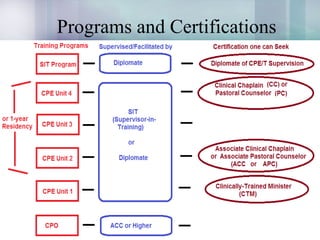
Programs and Certifications
Residency
• Residency is a one-year program of serving as
a chaplain in an established training
institution such as a hospital.
• Residency is equivalent to accomplishing four
(4) units of CPE.
• CPSP-Philippines does not have any
residencies programs at this time, but CPSP-
Philippines can apply to residency programs
in other countries.
What is the Difference between
Certifications and Licenses
• Certifications are
recognitions by
Private
Organizations that
certain standards are
met.
• May or may not be
recognized by other
groups.
• Licenses are
established and
maintained by
government
agencies.
• May or may not
be recognized
outside of the
government's
jurisdiction.
Certification
Prerequisites

Member of CPSP-Philippines

Recommended by one's local
chapter

Completed required training/CPE
Units

Turned in required paperwork (such
as autobiography, cases, and
theological integration)

Pass Review Board
Diplomate Supervisors of CPE/T
Philippines
• Dr. Cal Sodoy
• Dr. Sim Dang-
Awan Jr.
• Dr. Paul Tabon
• Ms. Celia Munson
CPSP Mentors
• Dr. Raymond
Lawrence
• Dr. Doug Dickens
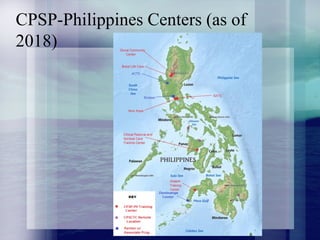
CPSP-Philippines Centers (as of
2018)
Any Questions?
CPSP-Philippines
at Philippine Baptist Theological
Seminary
19 Tacay Road
Guisad 2600 Baguio City
www.cpspp.org

CPSP-Philippines Chaplaincy and Pastoral Care Programs

  • 1.
    Chaplaincy and Pastoral CounselingCertification CPSP-Philippines
  • 2.
    Introduction • CPSP-Philippines isan organization that establishes and maintains standards for clinical chaplaincy, pastoral counseling, and CPE supervision in the Philippines. • It provides certification for individuals and accreditation for Training Centers.
  • 3.
    CPSP-Philippines  CPSP-Philippines stands for“Collegium of Pastoral Supervision & Psychotherapy —Philippines, Inc.  CPSP-Philippines is recognized by, and adheres to, a Memorandum of Agreement with CPSP, based in the United States. CPSP is one of the largest certifiers and accreditors of pastoral counseling, clinical chaplaincy, and CPE supervision in the world.
  • 4.
    CPSP-Philippines  Established formally in2011, in partnership with Dr. Raymond Lawrence, the General Secretary of CPSP.  It is headquartered in Baguio City, Philippines, with primary branches in Baguio, Manila, and Iloilo City.
  • 5.
    Certifications  Clinically Trained Minister  AssociateClinical Chaplain  Associate Pastoral Counselor  Clinical Chaplain  Pastoral Counselor
  • 6.
    Additional Programs  Supervisor-in-Training Program  DiplomateSupervision in Clinical Pastoral Education/Training  Accreditation program for CPE and CPO Training Centers
  • 7.
    Accreditation  Training Centers forCPE have a Diplomate or Supervisor-in-Training running it. It also must abide by the standards of CPSP-Philippines, and have services in place for practical training, and materials for didactic training.
  • 8.
    Accreditation  Training Centers forCPO (Clinical Pastoral Orientation) must have someone who is certified Associate Clinical Chaplain or higher. It normally would be associated with a Bible school or hospital.
  • 9.
    Standards Committee • TheStandards Committee of CPSP- Philippines establishes the standards for certification, accreditation and training programs. • The Committe ensures that the standards are contextualized to the Philippine context, while also making sure that there is equivalency of standards to CPSP, in line with our agreement.
  • 10.
  • 11.
    Residency • Residency isa one-year program of serving as a chaplain in an established training institution such as a hospital. • Residency is equivalent to accomplishing four (4) units of CPE. • CPSP-Philippines does not have any residencies programs at this time, but CPSP- Philippines can apply to residency programs in other countries.
  • 12.
    What is theDifference between Certifications and Licenses • Certifications are recognitions by Private Organizations that certain standards are met. • May or may not be recognized by other groups. • Licenses are established and maintained by government agencies. • May or may not be recognized outside of the government's jurisdiction.
  • 13.
    Certification Prerequisites  Member of CPSP-Philippines  Recommendedby one's local chapter  Completed required training/CPE Units  Turned in required paperwork (such as autobiography, cases, and theological integration)  Pass Review Board
  • 14.
    Diplomate Supervisors ofCPE/T Philippines • Dr. Cal Sodoy • Dr. Sim Dang- Awan Jr. • Dr. Paul Tabon • Ms. Celia Munson CPSP Mentors • Dr. Raymond Lawrence • Dr. Doug Dickens
  • 15.
  • 16.
    Any Questions? CPSP-Philippines at PhilippineBaptist Theological Seminary 19 Tacay Road Guisad 2600 Baguio City www.cpspp.org