Download to read offline

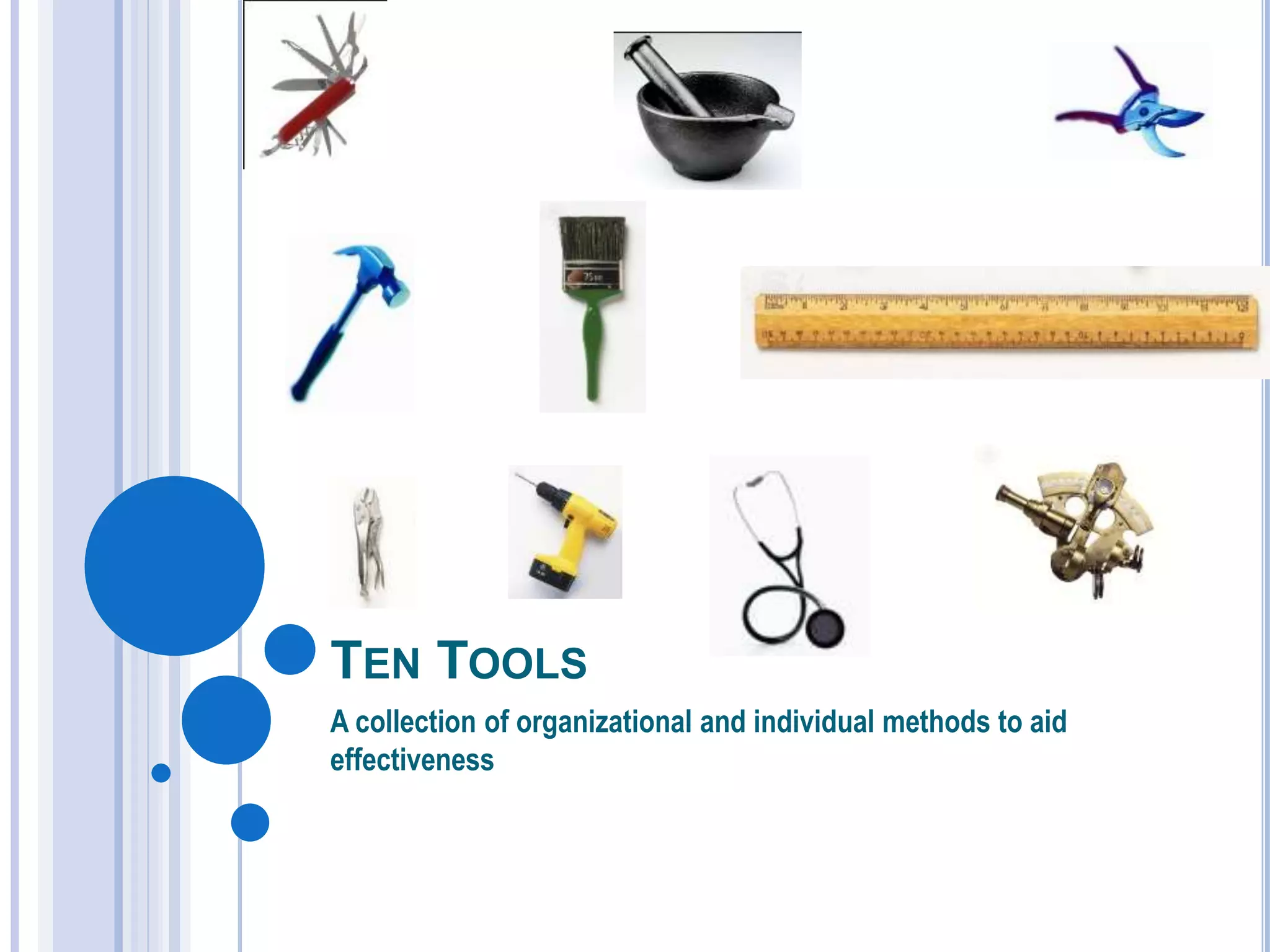
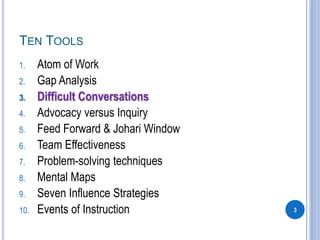
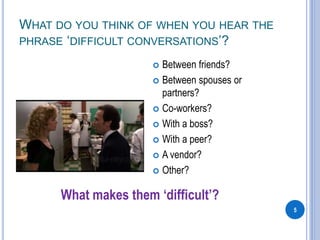

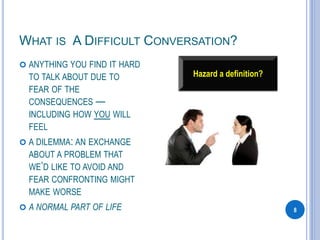
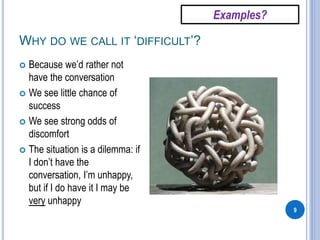

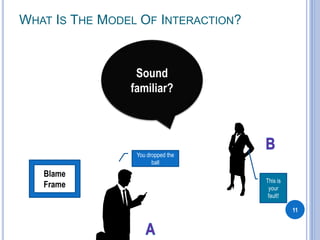
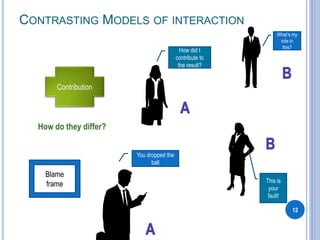


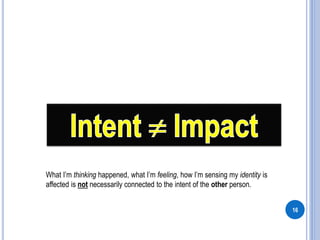

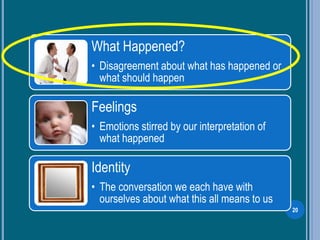
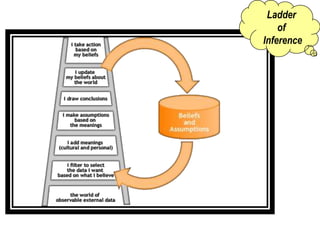

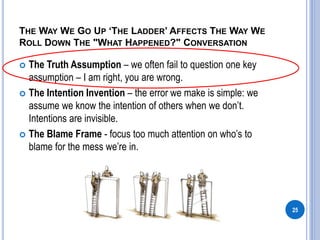
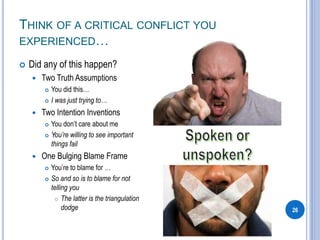
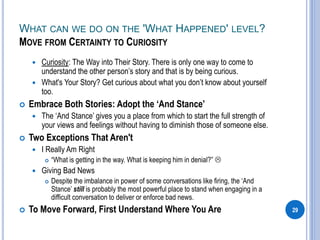
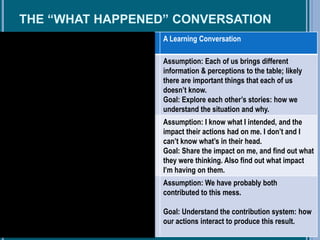
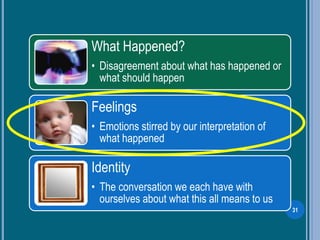
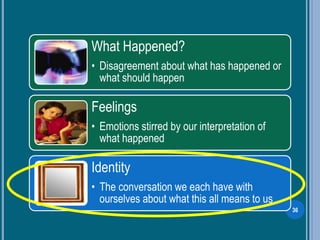

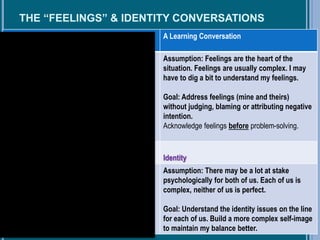
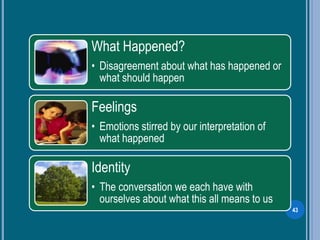
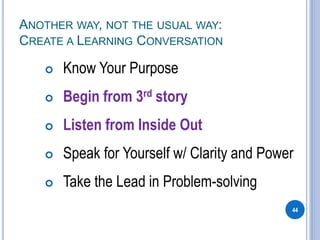
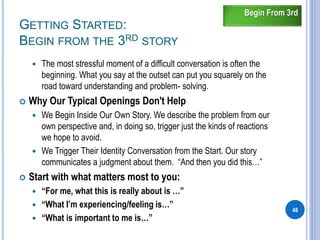
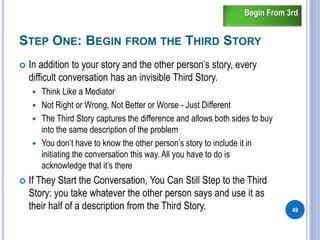
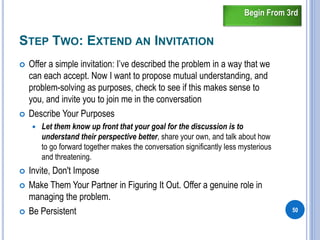

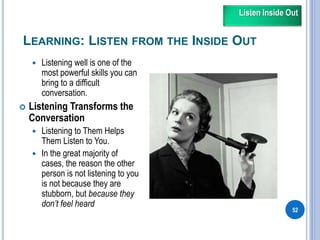
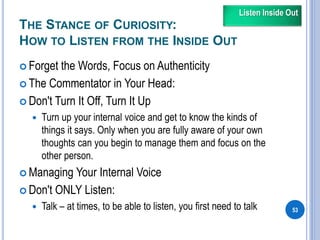
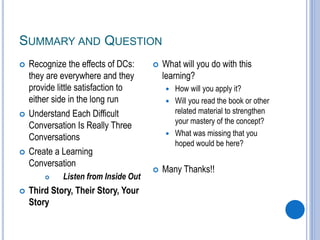

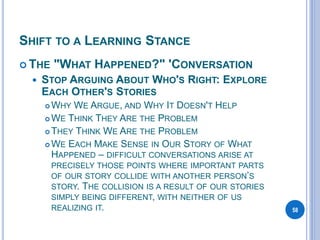
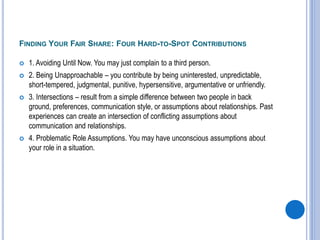
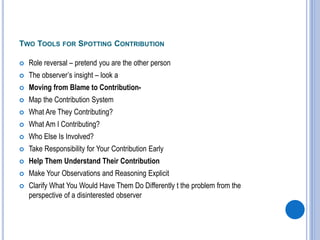
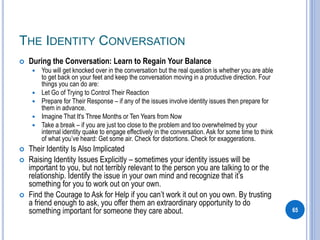
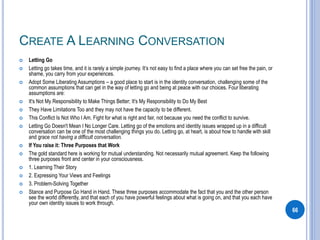
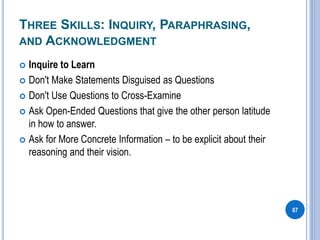
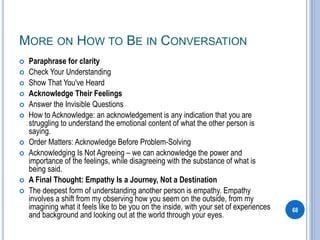

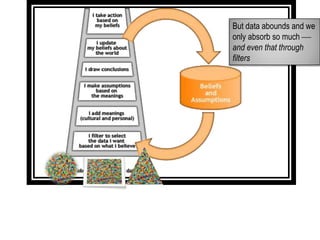


The document discusses tools and techniques for having difficult conversations. It covers three key aspects of difficult conversations: what happened, feelings, and identity. For the "what happened" conversation, it recommends moving from certainty to curiosity, disentangling intent from impact, and adopting an "and" stance that acknowledges both perspectives. For feelings, it suggests paying attention to emotions, accepting them as normal, and expressing feelings without judgment. For identity, it advises grounding your sense of self by accepting mistakes and complex intentions rather than clinging to an all-or-nothing view of competence. The overall aim is to have a learning conversation rather than an exchange focused on blame.


