Instructional Technology: Then, Now, and the FutureDavid Wicks
What the heck is Instructional Technology?“The problem analysis, solution design, development, implementation, management, and evaluation of instructional processes and resources to improve learning and performance in education and at work.”Reiser, R., (2001). A History of Instructional Design & Technology: Part I: A History of Instructional Media. Educational Technology Research & Development, Vol. 49, No. 1, p. 53-64
Another Definition“Integration of teacher and student use and knowledge of tools and techniques to improve student learning.”One more:“The Association for Educational Communications and Technology (2001) currently defines instructional technology as “the theory and practice of design, development, utilization, management, and evaluation of processes and resources for learning.”Smaldino,, Lowther & Russell, (2011). Instructional Technology and Media for Learning. 10th Edition, p. 1-2.Johnson, K. & Manning, S, (2011). The Technology Toolbelt for Teaching. Kindle Highlight Loc. 480-81
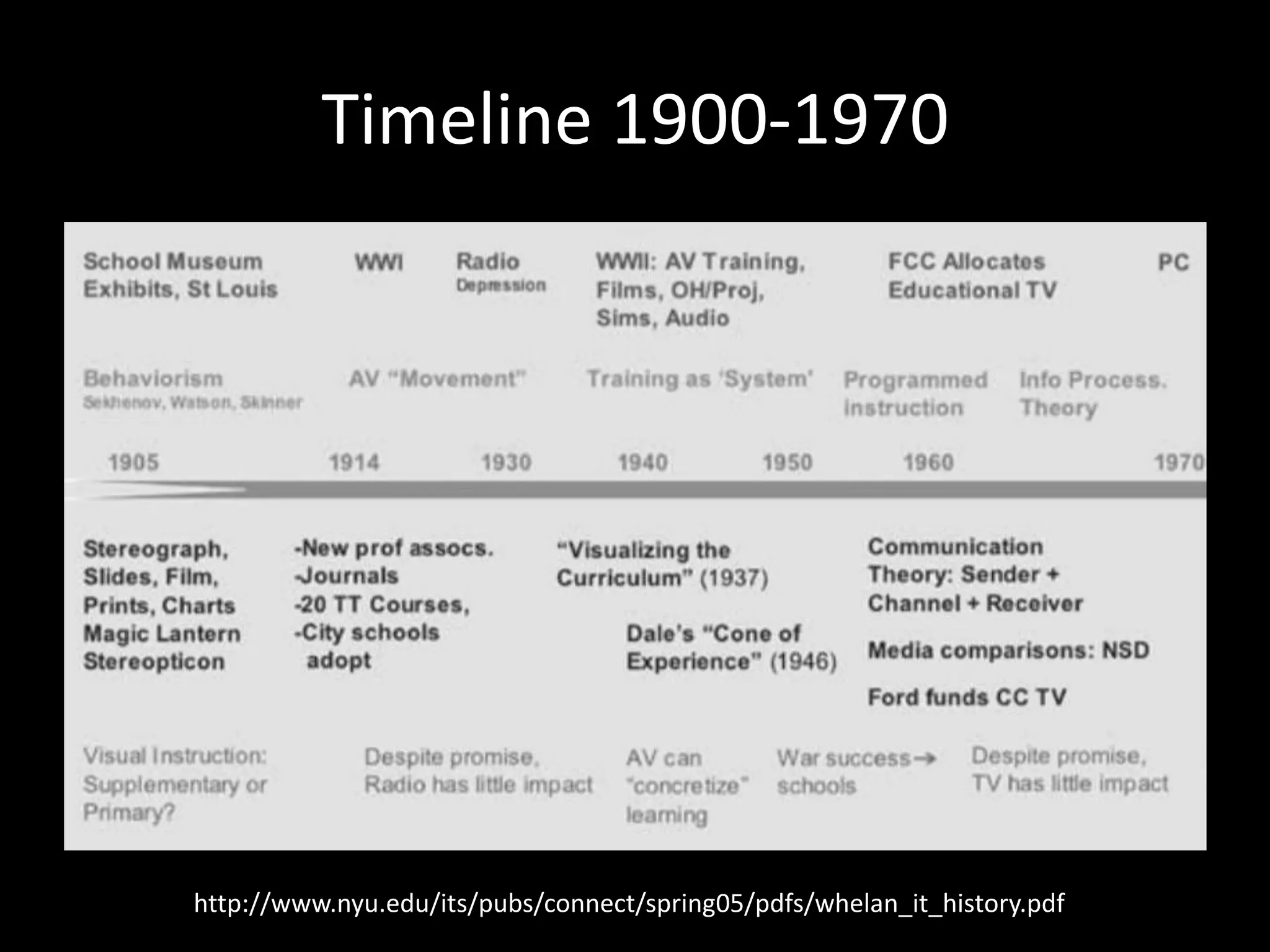
Timeline 1900-1970http://www.nyu.edu/its/pubs/connect/spring05/pdfs/whelan_it_history.pdf
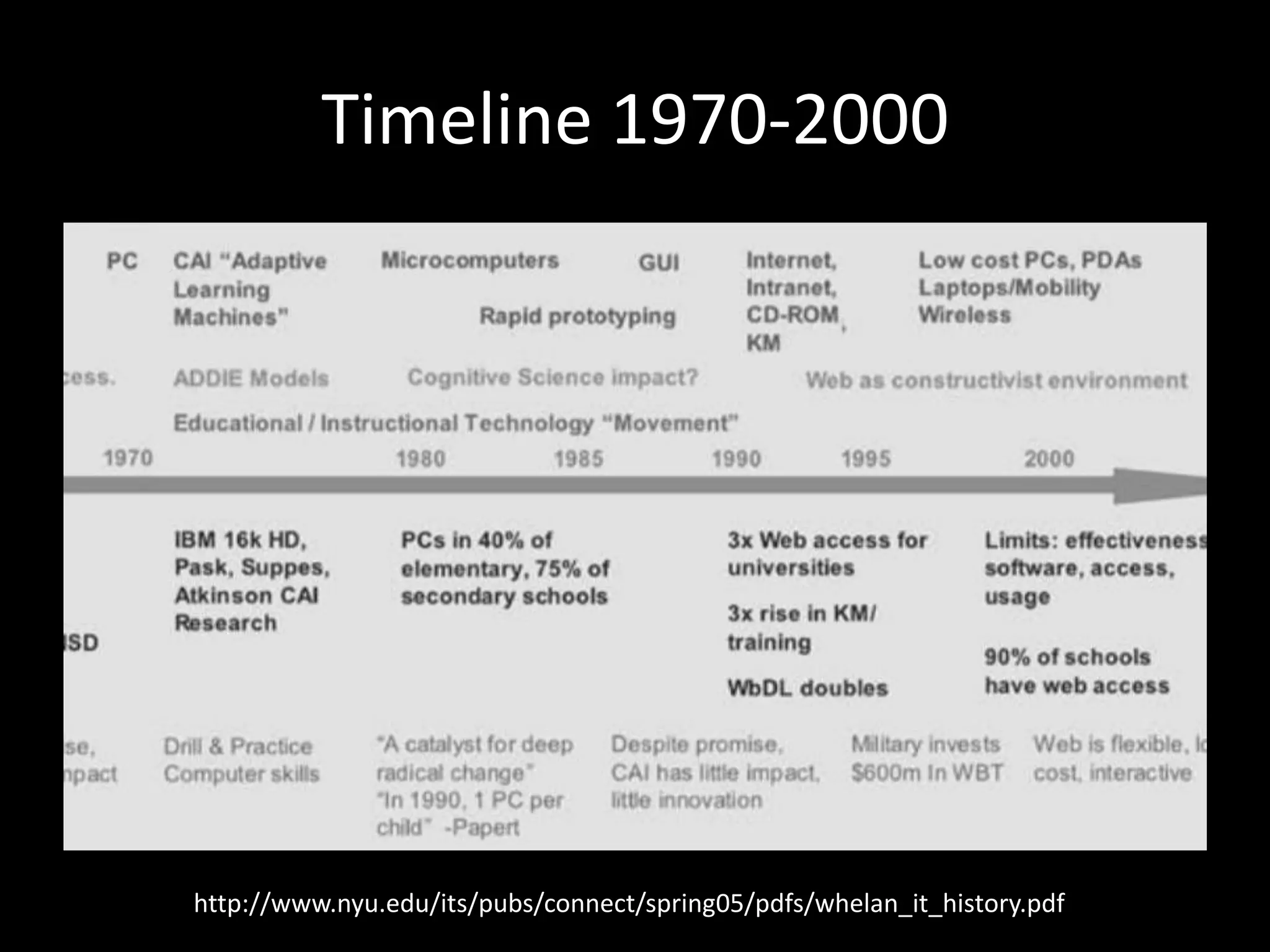
Timeline 1970-2000http://www.nyu.edu/its/pubs/connect/spring05/pdfs/whelan_it_history.pdf
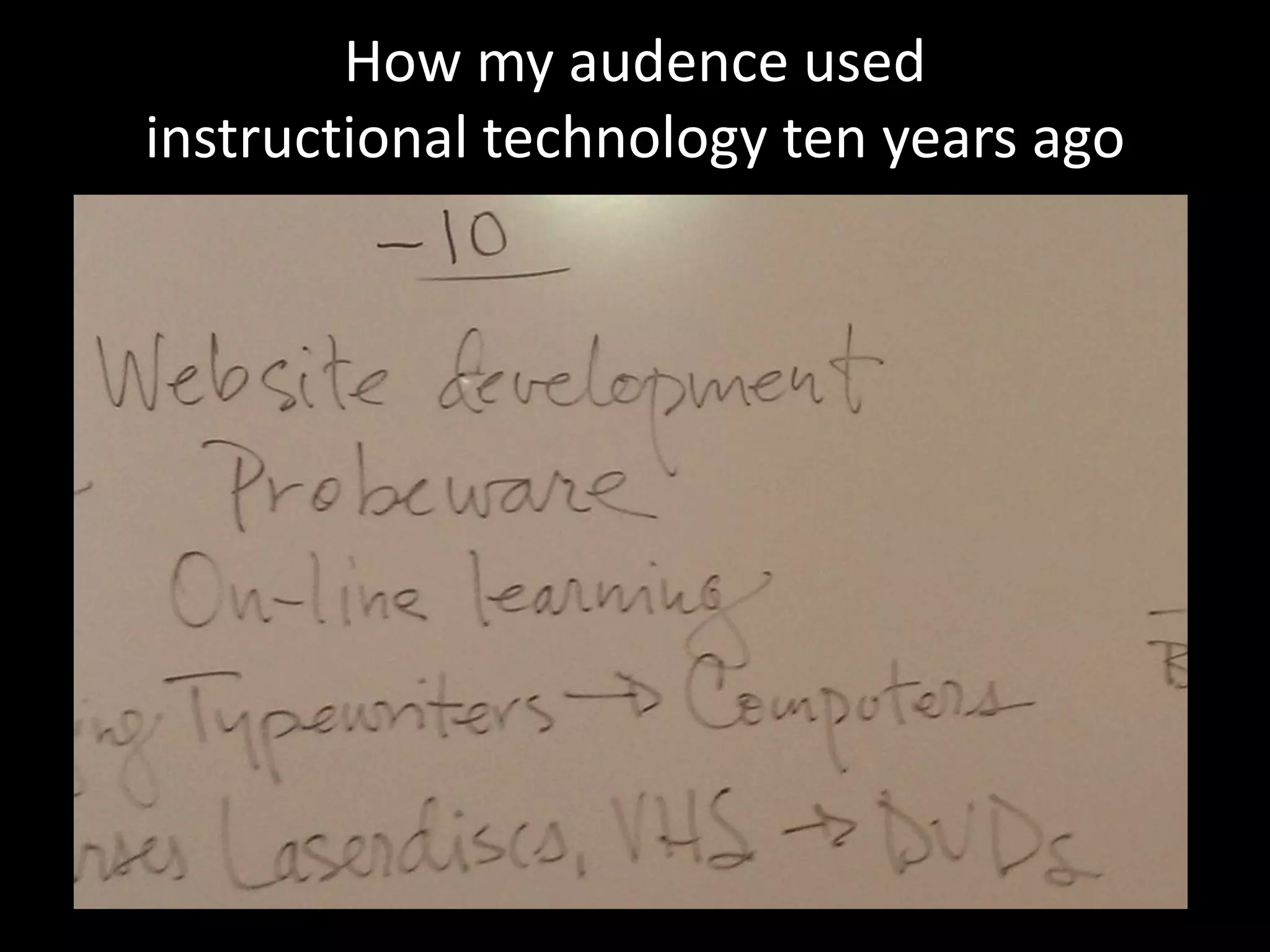
How my audence used instructional technologytenyears ago
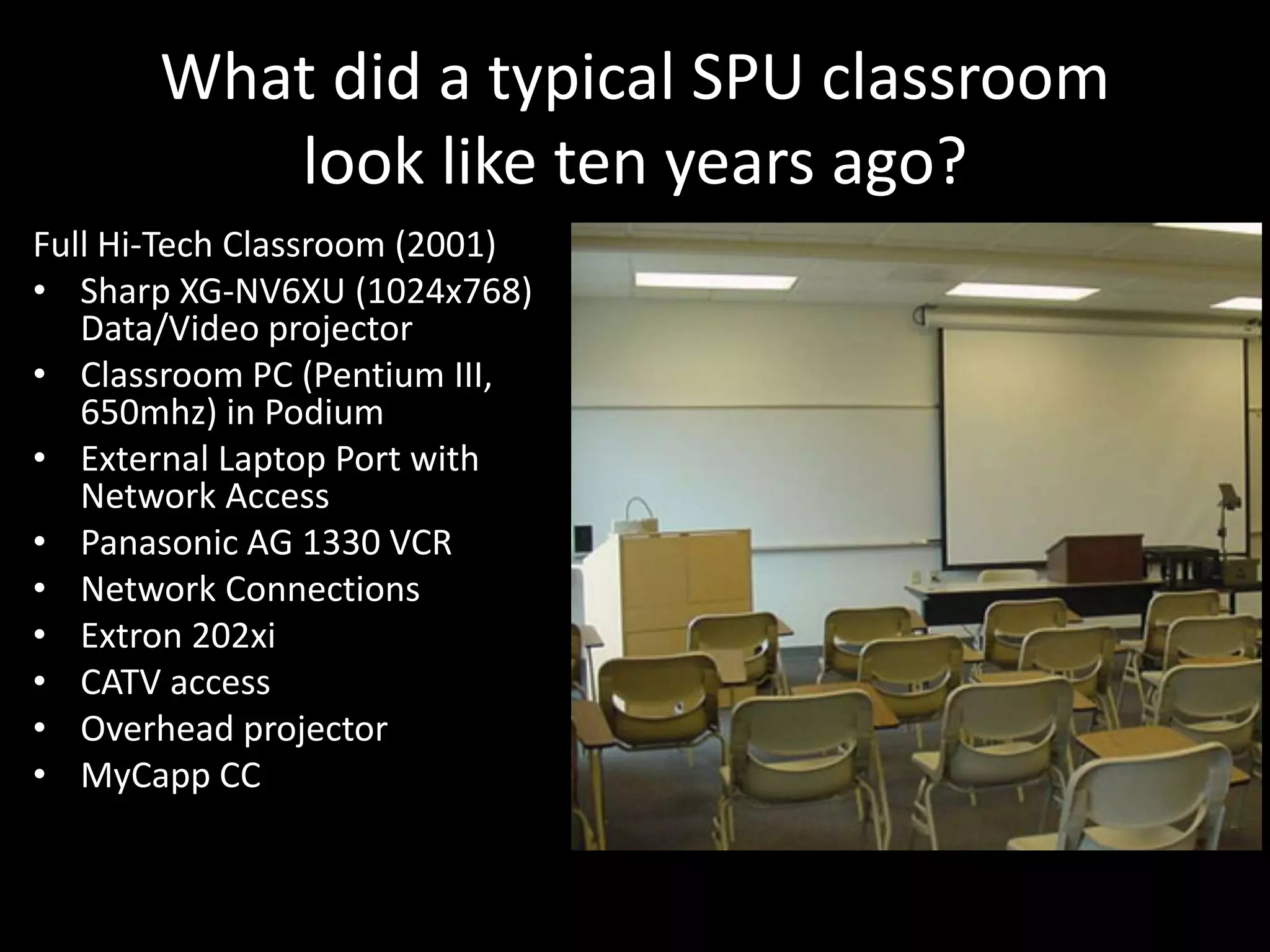
What did a typical SPU classroomlook like ten years ago?Full Hi-Tech Classroom(2001)Sharp XG-NV6XU (1024x768) Data/Video projectorClassroom PC (Pentium III, 650mhz) in PodiumExternal Laptop Port with Network AccessPanasonic AG 1330 VCRNetwork ConnectionsExtron 202xiCATV accessOverhead projectorMyCapp CC
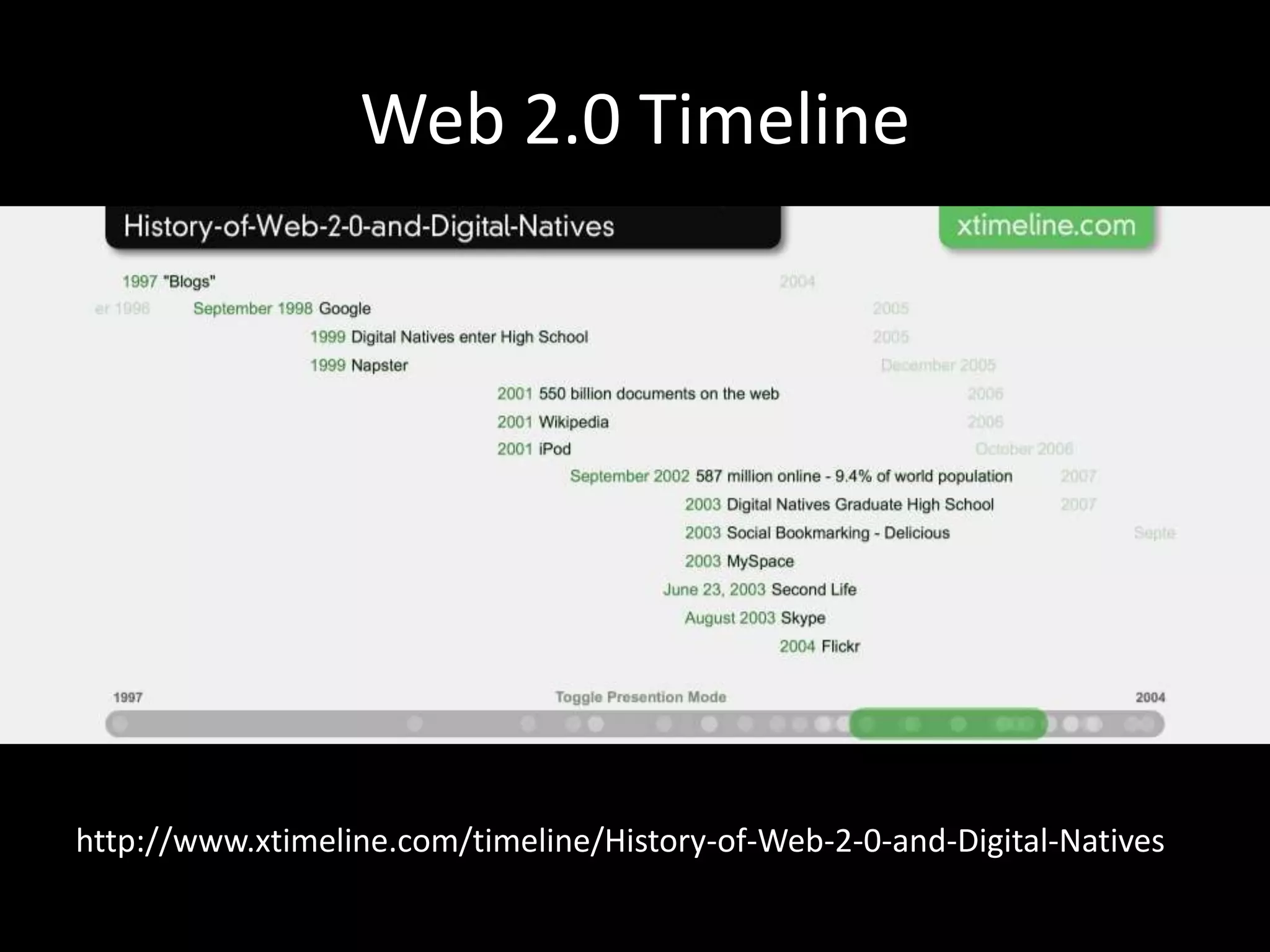
Web 2.0 Timelinehttp://www.xtimeline.com/timeline/History-of-Web-2-0-and-Digital-Natives
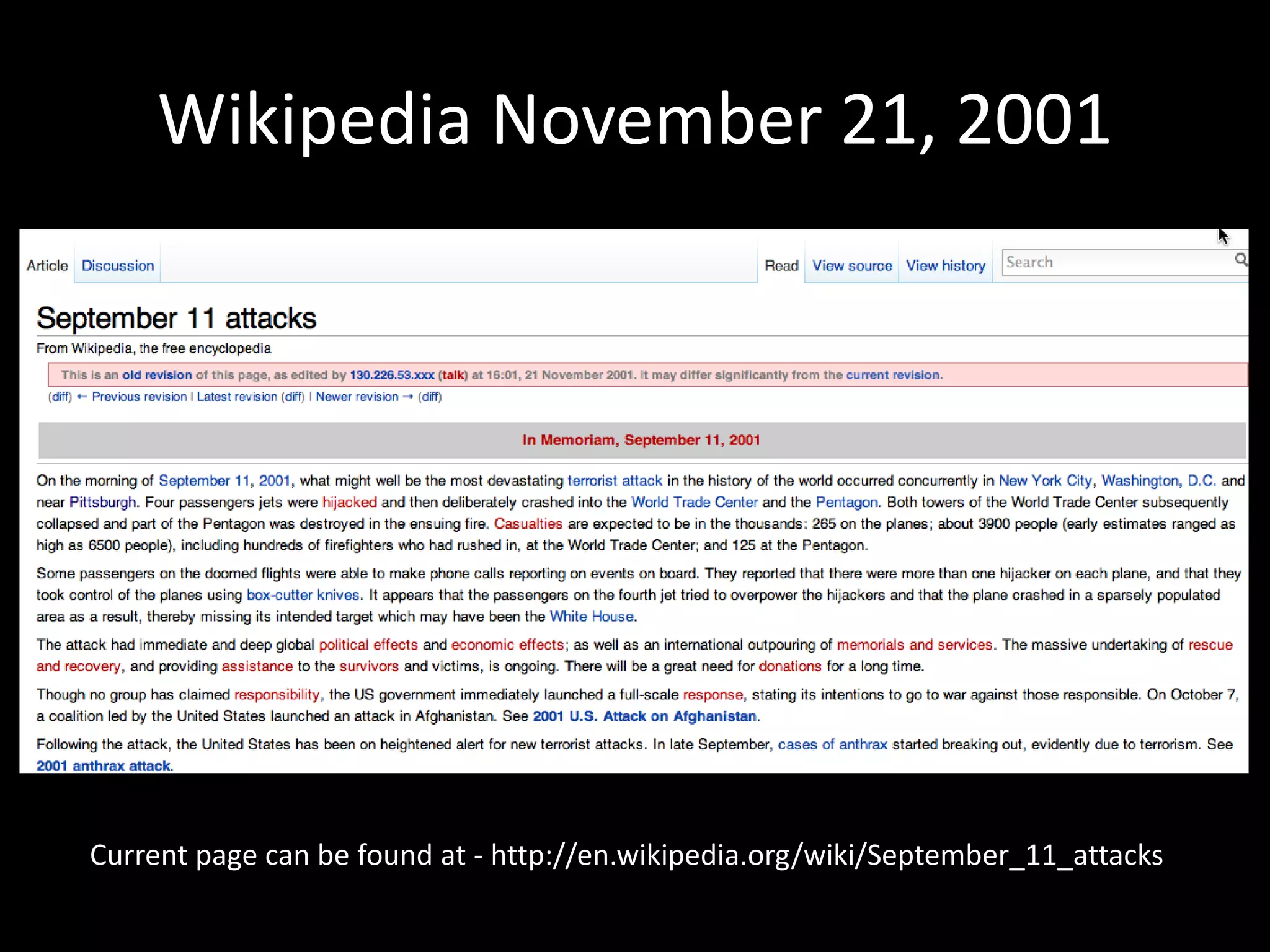
Wikipedia November 21, 2001Current page can be found at - http://en.wikipedia.org/wiki/September_11_attacks
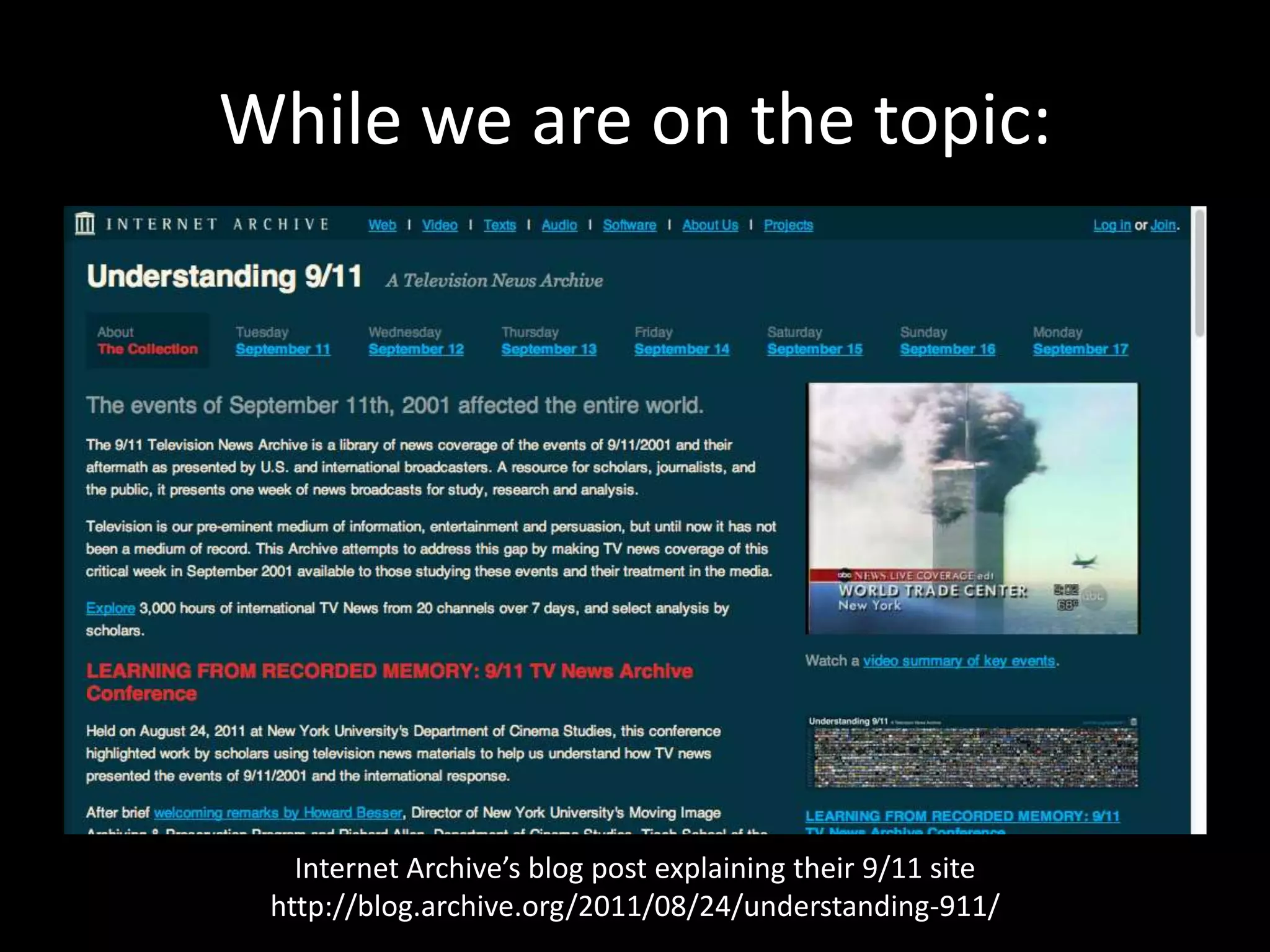
While we are on the topic:Internet Archive’s blog post explaining their 9/11 sitehttp://blog.archive.org/2011/08/24/understanding-911/
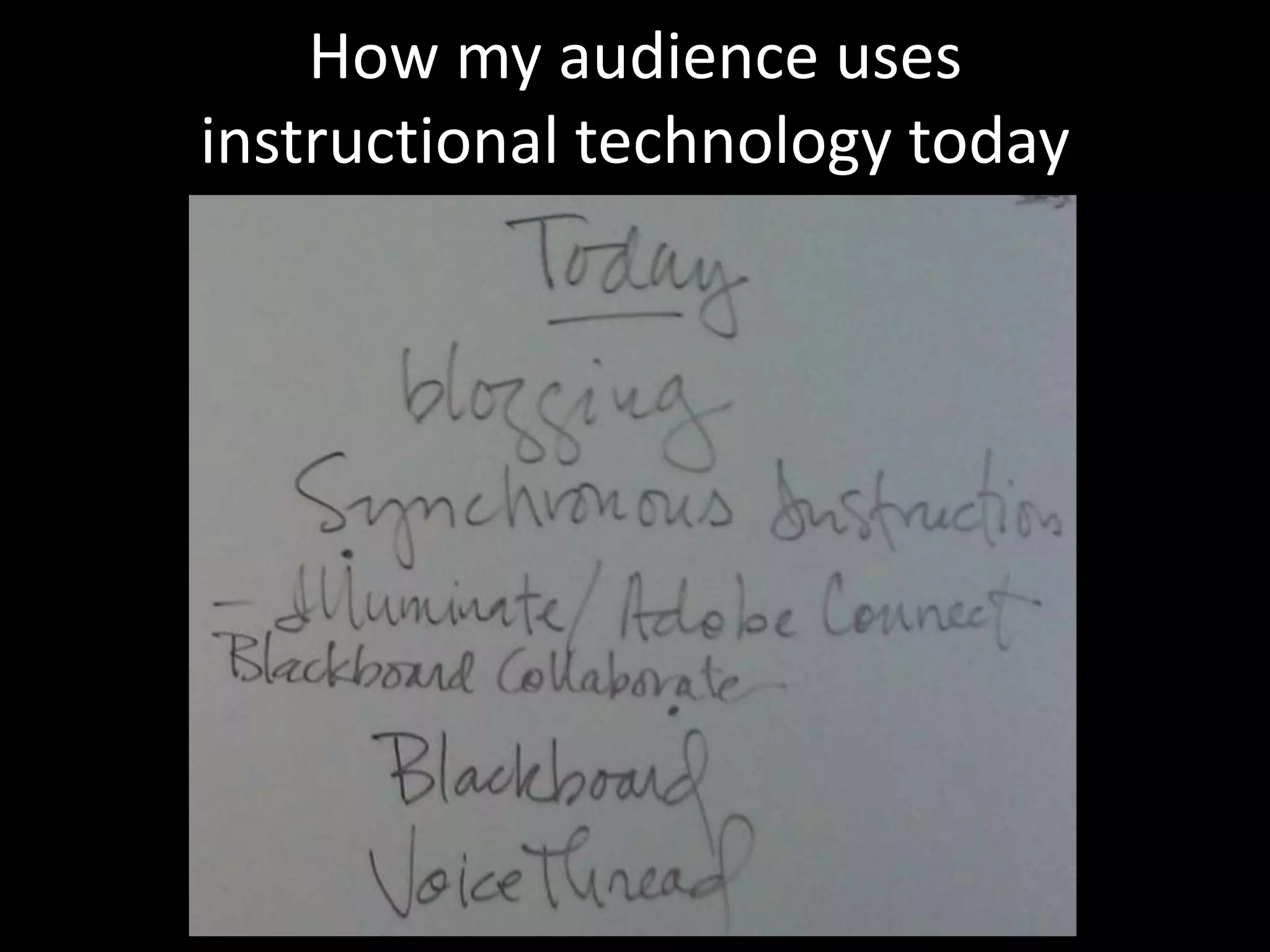
How my audience usesinstructional technology today
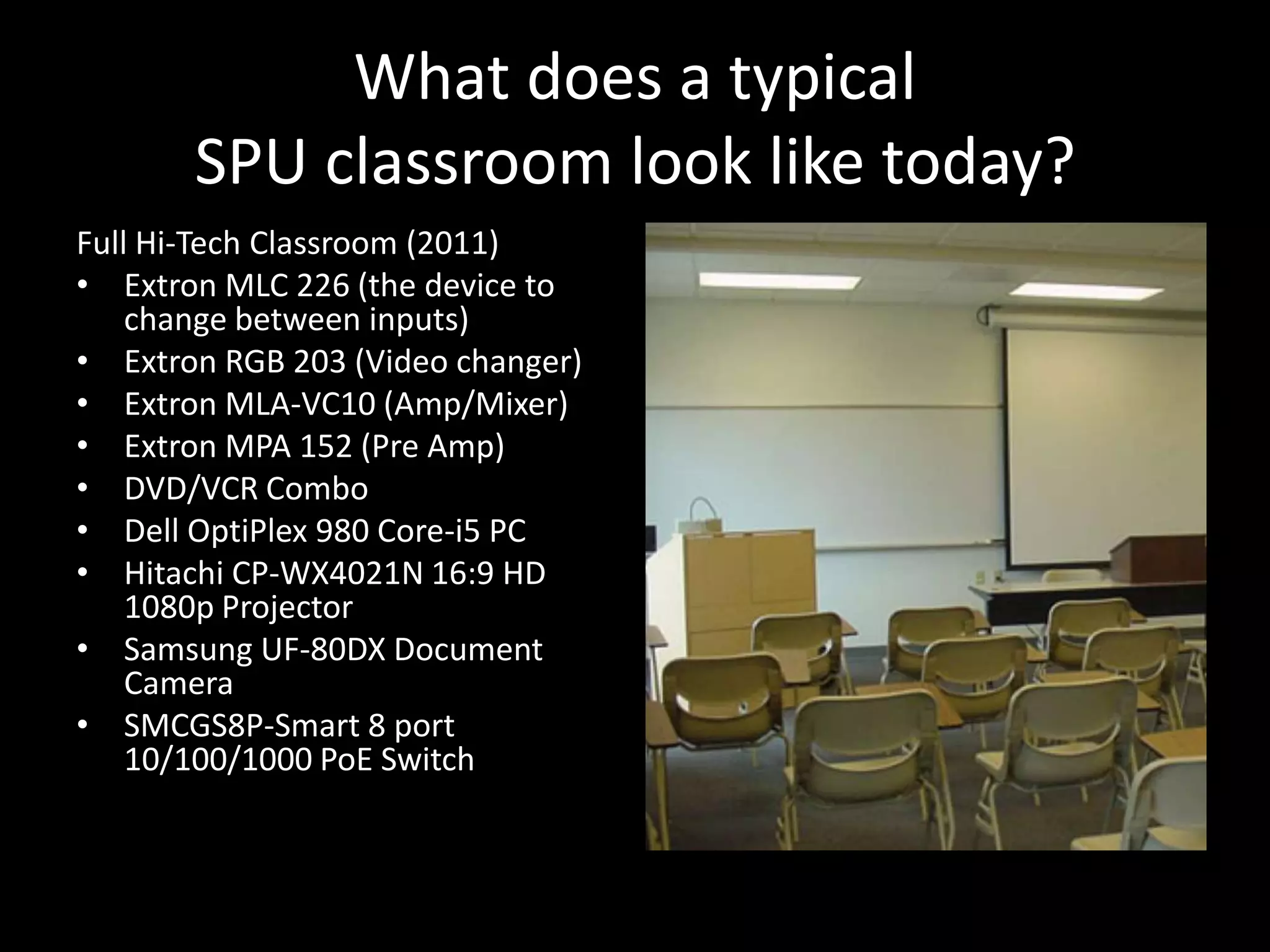
What does a typical SPU classroom look like today?Full Hi-Tech Classroom (2011)ExtronMLC 226 (the device to change between inputs)Extron RGB 203 (Video changer)Extron MLA-VC10 (Amp/Mixer)Extron MPA 152 (Pre Amp)DVD/VCR ComboDell OptiPlex 980 Core-i5 PCHitachi CP-WX4021N 16:9 HD 1080pProjectorSamsung UF-80DX Document CameraSMCGS8P-Smart 8 port 10/100/1000 PoE Switch
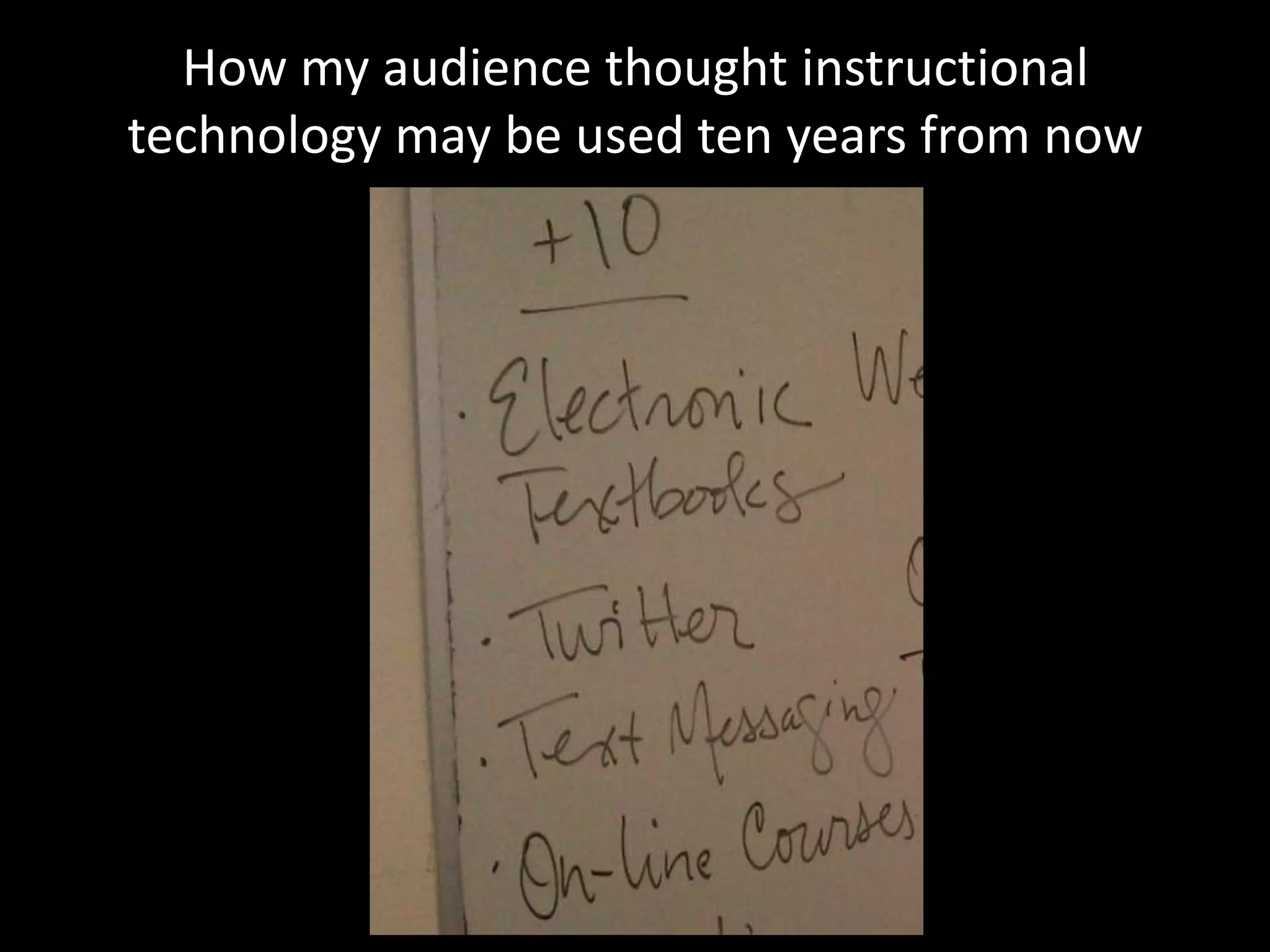
How my audience thought instructional technology may be used ten years from now
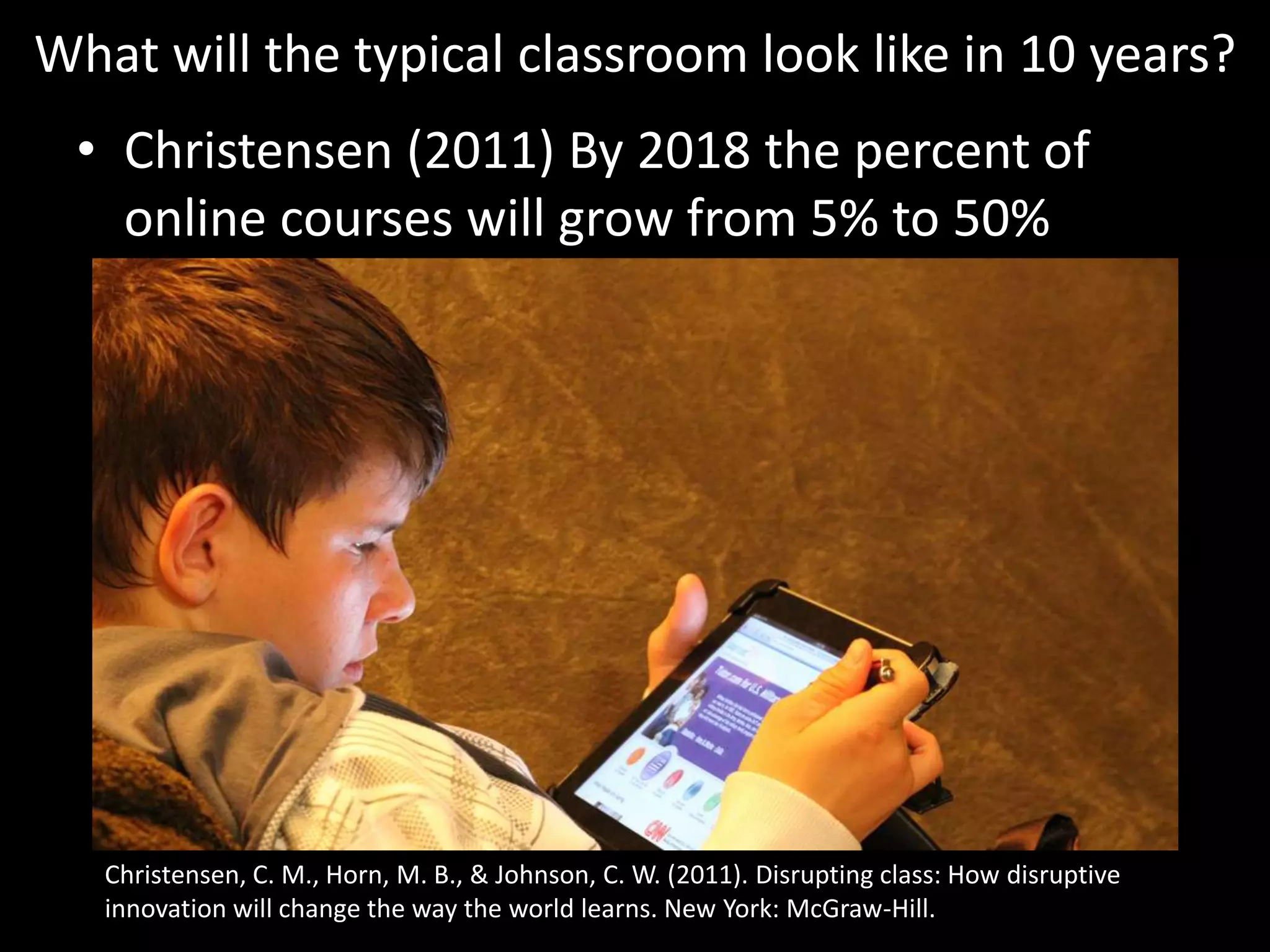
What will the typical classroom look like in 10 years?Christensen (2011) By 2018 the percent of online courses will grow from 5% to 50%http://www.flickr.com/photos/familymwr/5322740412/Christensen, C. M., Horn, M. B., & Johnson, C. W. (2011). Disrupting class: How disruptive innovation will change the way the world learns. New York: McGraw-Hill.
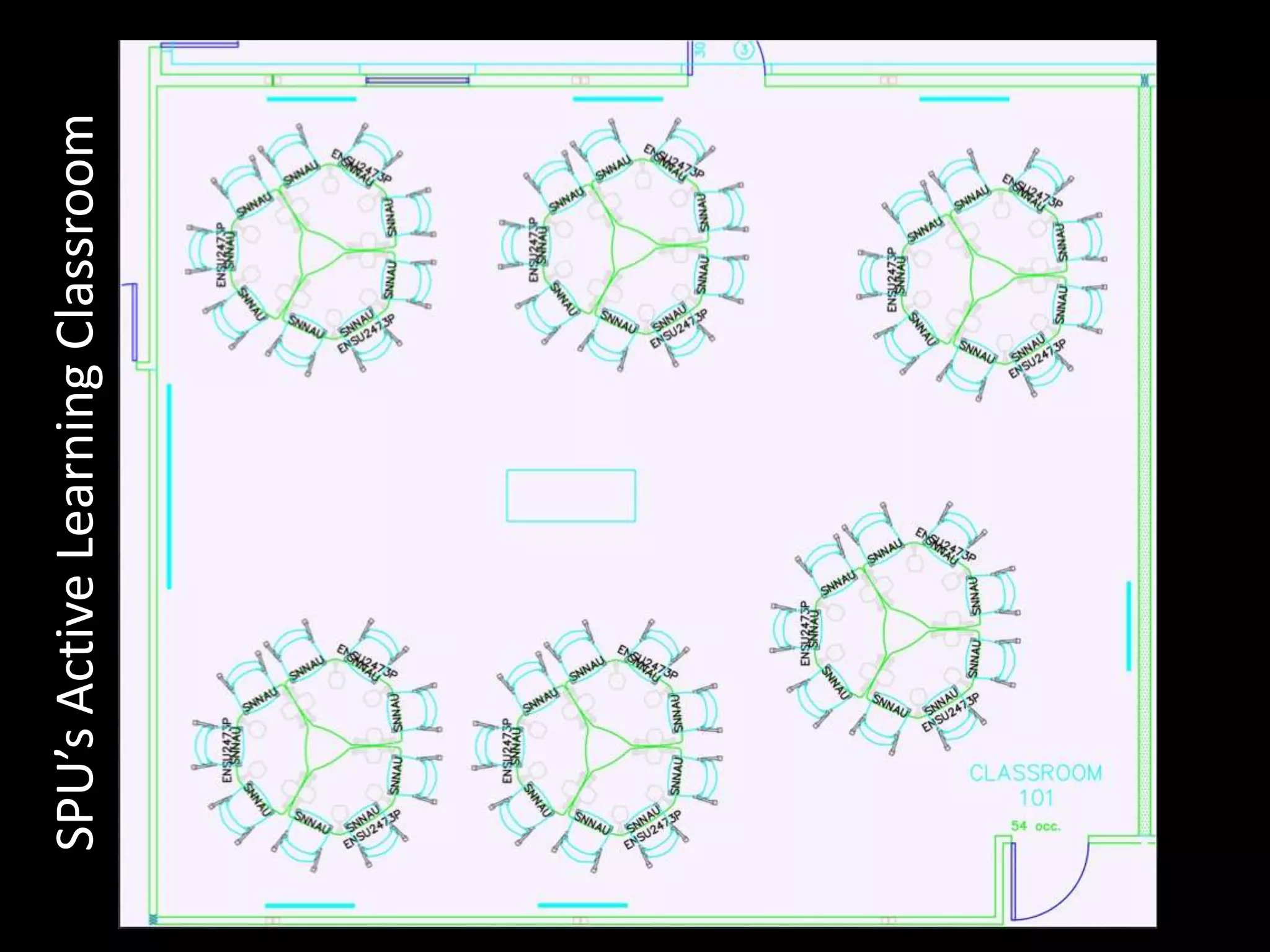
SPU’s Active Learning Classroom
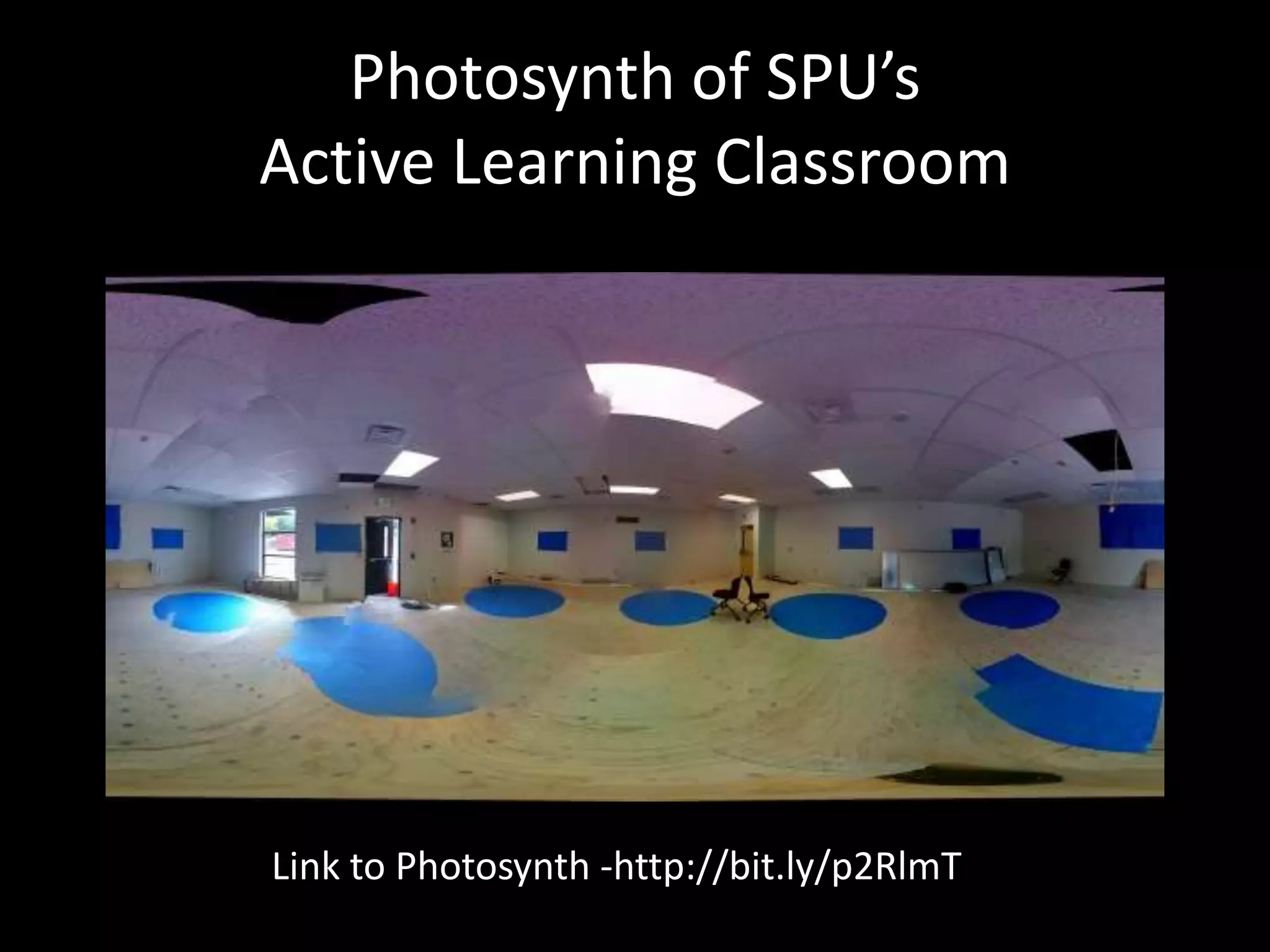
Photosynth of SPU’s Active Learning ClassroomLink to Photosynth -http://bit.ly/p2RlmT
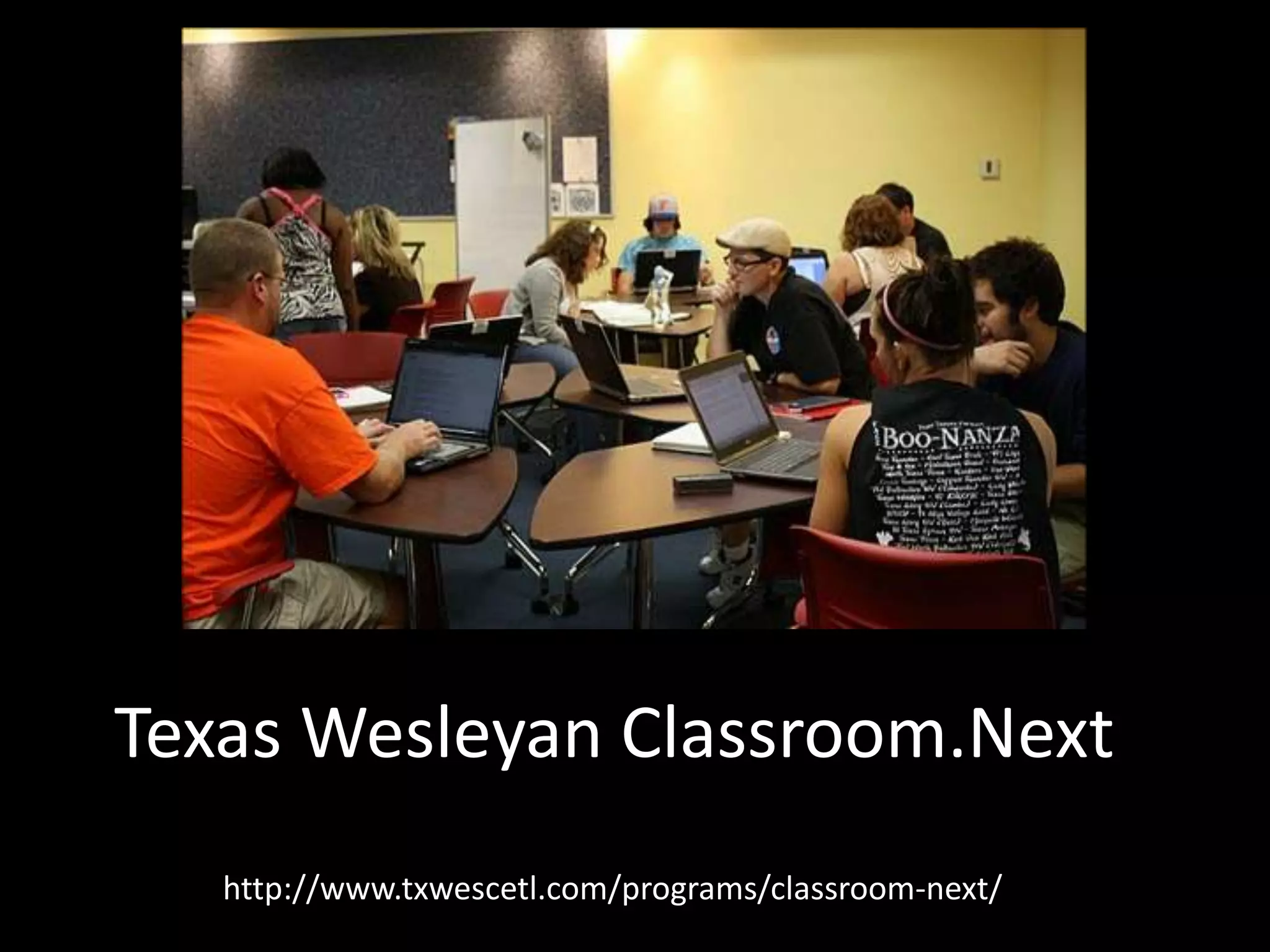
Texas Wesleyan Classroom.Nexthttp://www.txwescetl.com/programs/classroom-next/
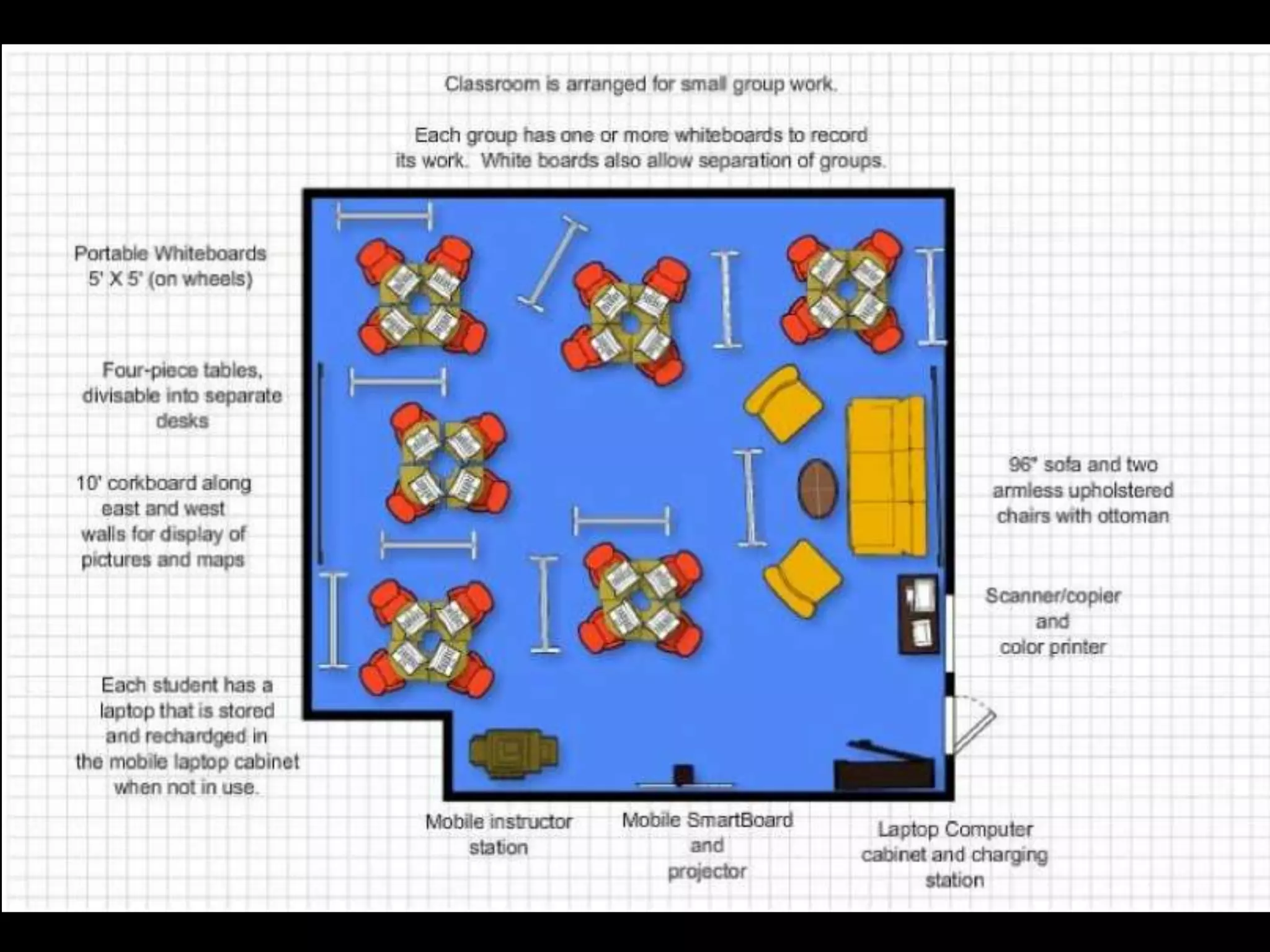
Texas Wesleyan Classroom.Next Small Groups
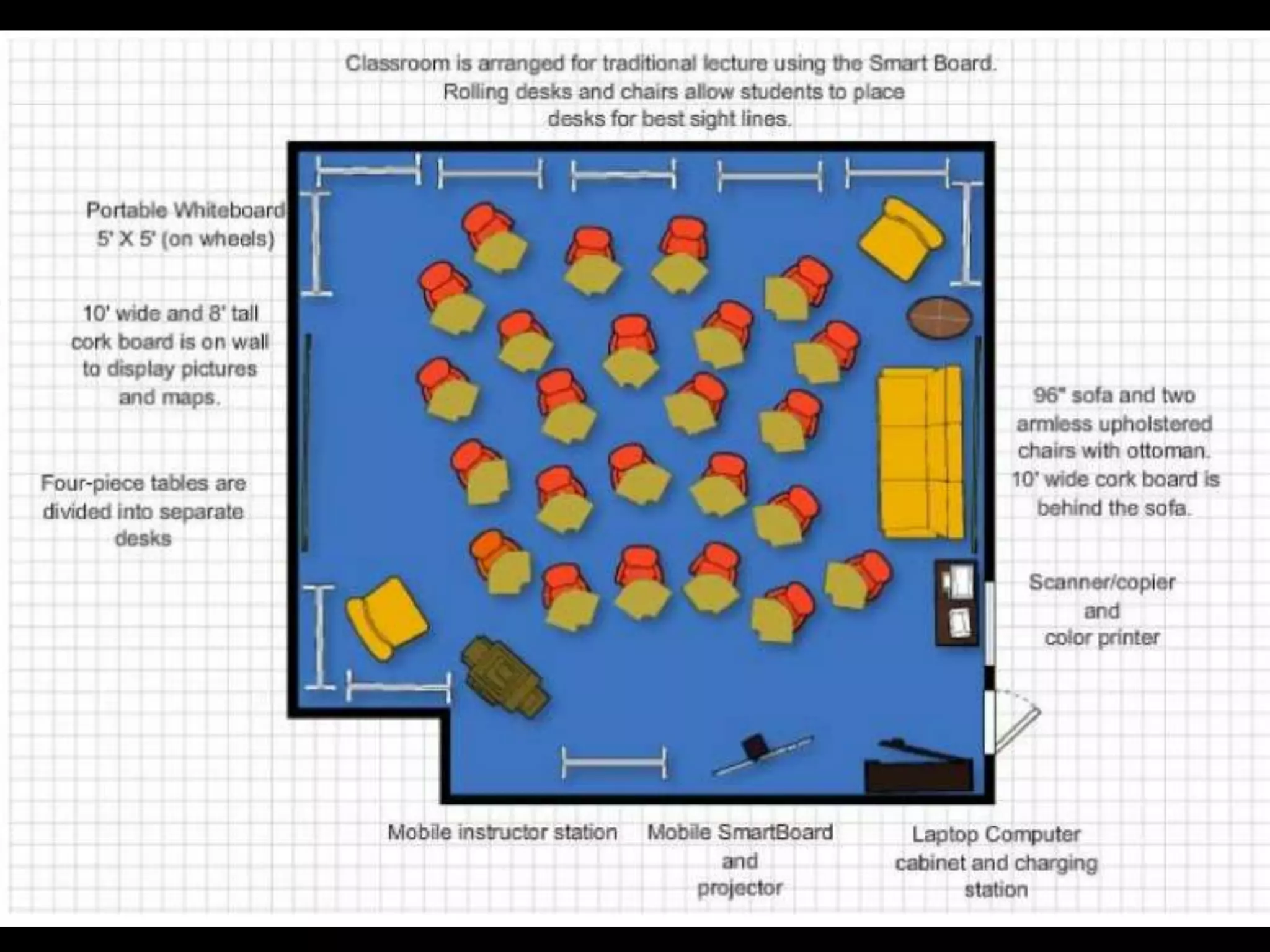
Texas Wesleyan Classroom.Next Lecture
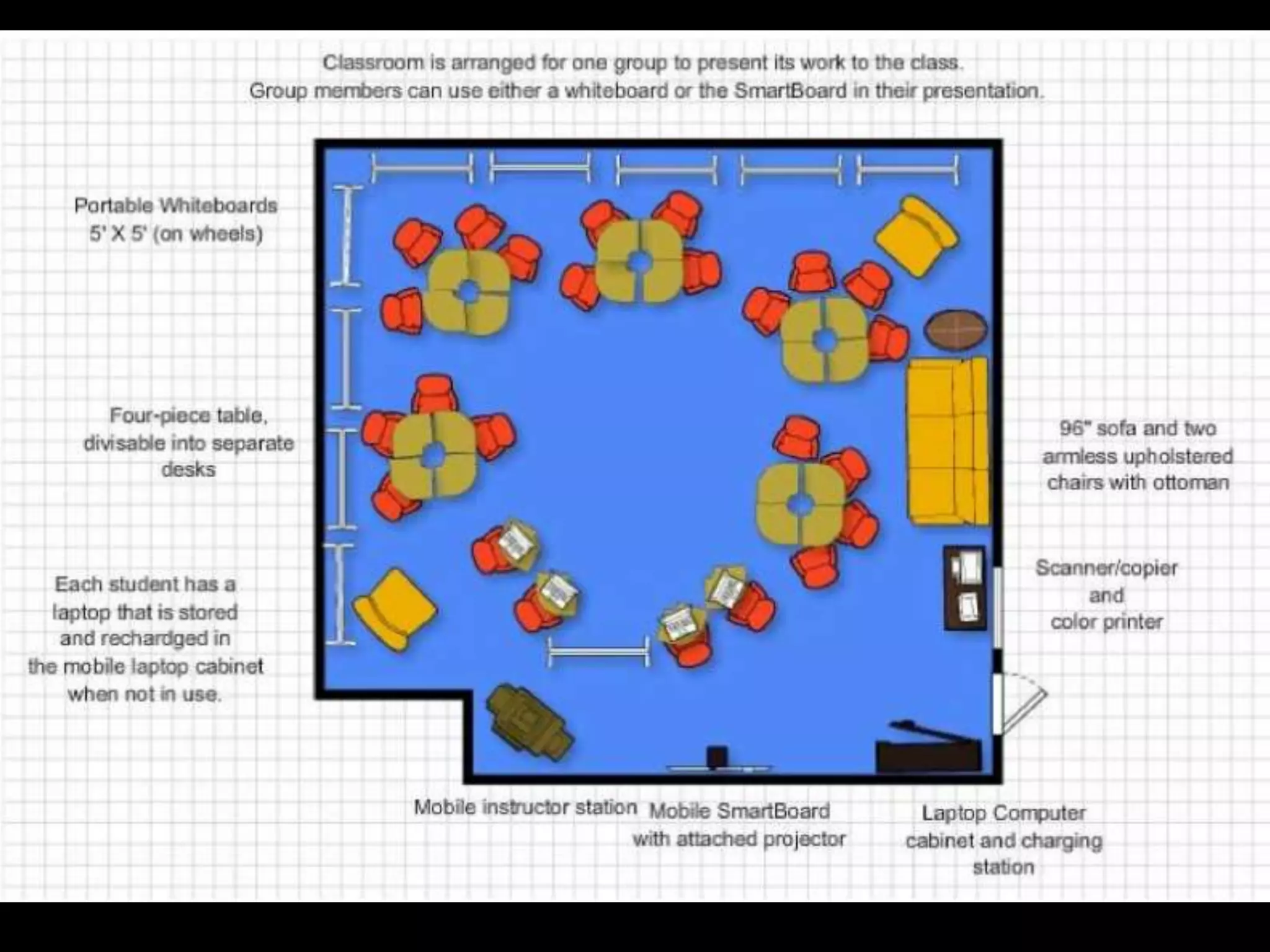
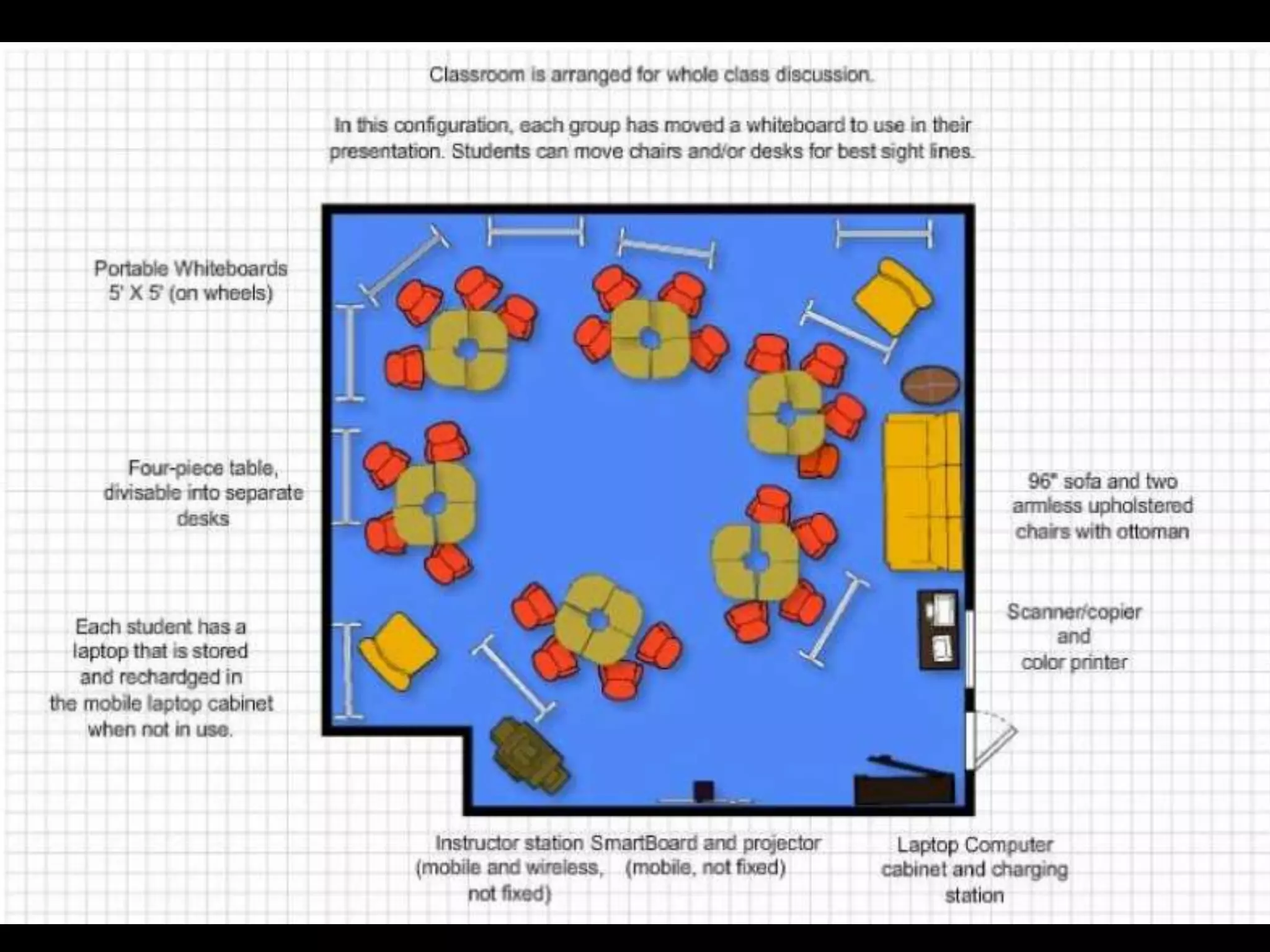
Texas Wesleyan Classroom.Next Group Presentation
Texas Wesleyan Classroom.Next Class Discussion
What about Blackboard?
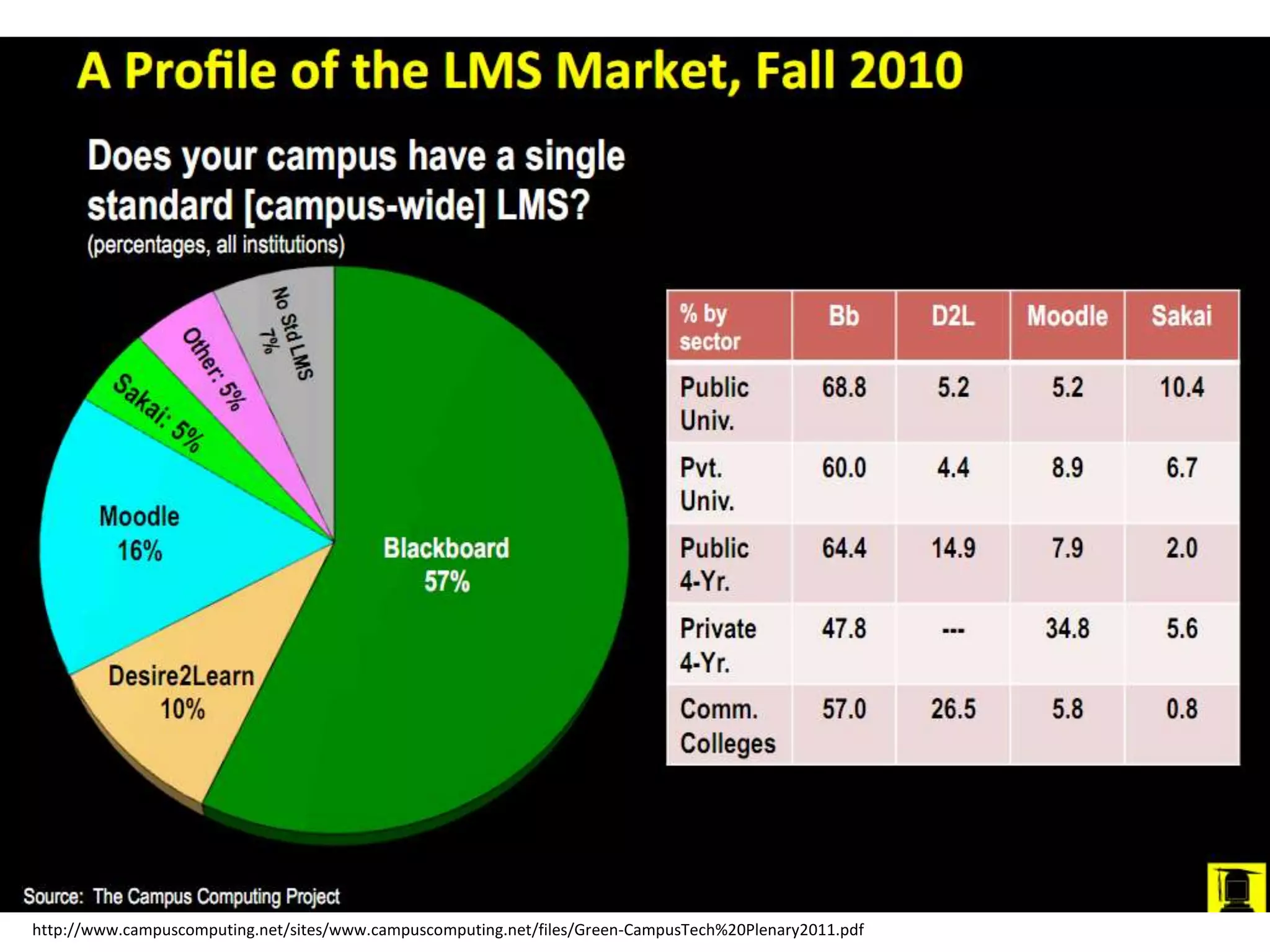
LMS Todayhttp://www.campuscomputing.net/sites/www.campuscomputing.net/files/Green-CampusTech%20Plenary2011.pdf
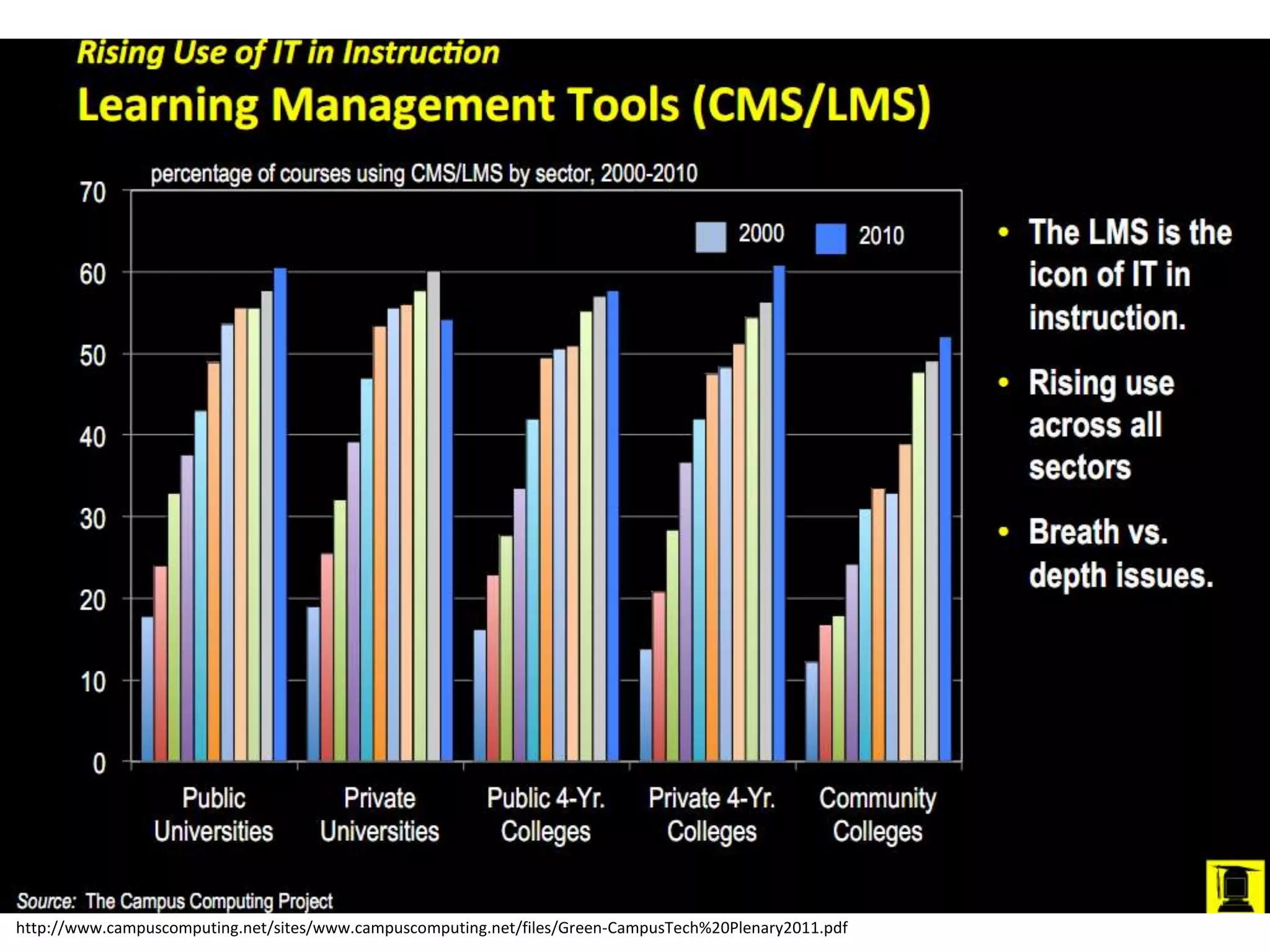
LMS (2000-2010)http://www.campuscomputing.net/sites/www.campuscomputing.net/files/Green-CampusTech%20Plenary2011.pdf
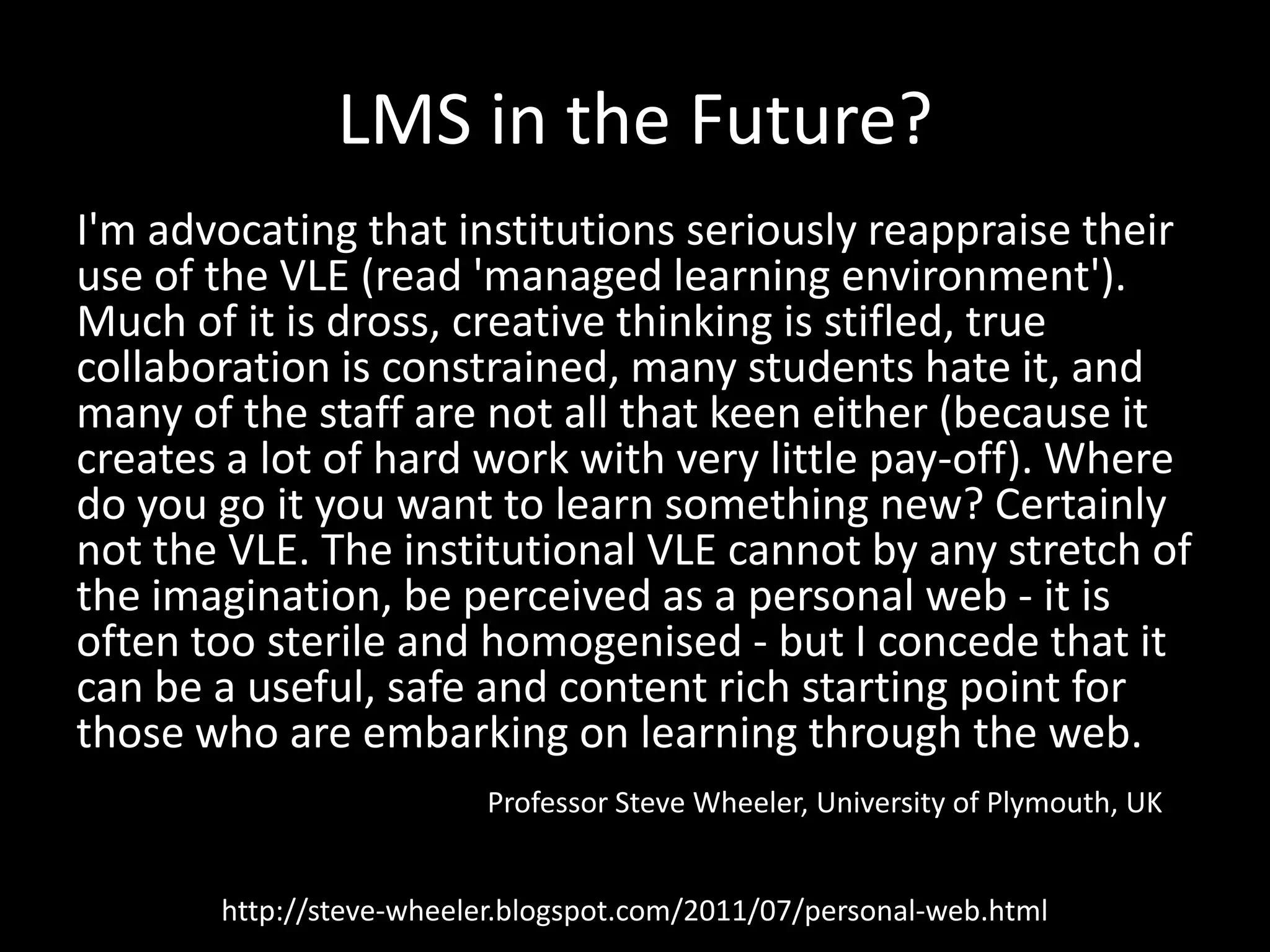
LMS in the Future?I'm advocating that institutions seriously reappraise their use of the VLE (read 'managed learning environment'). Much of it is dross, creative thinking is stifled, true collaboration is constrained, many students hate it, and many of the staff are not all that keen either (because it creates a lot of hard work with very little pay-off). Where do you go it you want to learn something new? Certainly not the VLE. The institutional VLE cannot by any stretch of the imagination, be perceived as a personal web - it is often too sterile and homogenised - but I concede that it can be a useful, safe and content rich starting point for those who are embarking on learning through the web.Professor Steve Wheeler, University of Plymouth, UKhttp://steve-wheeler.blogspot.com/2011/07/personal-web.html
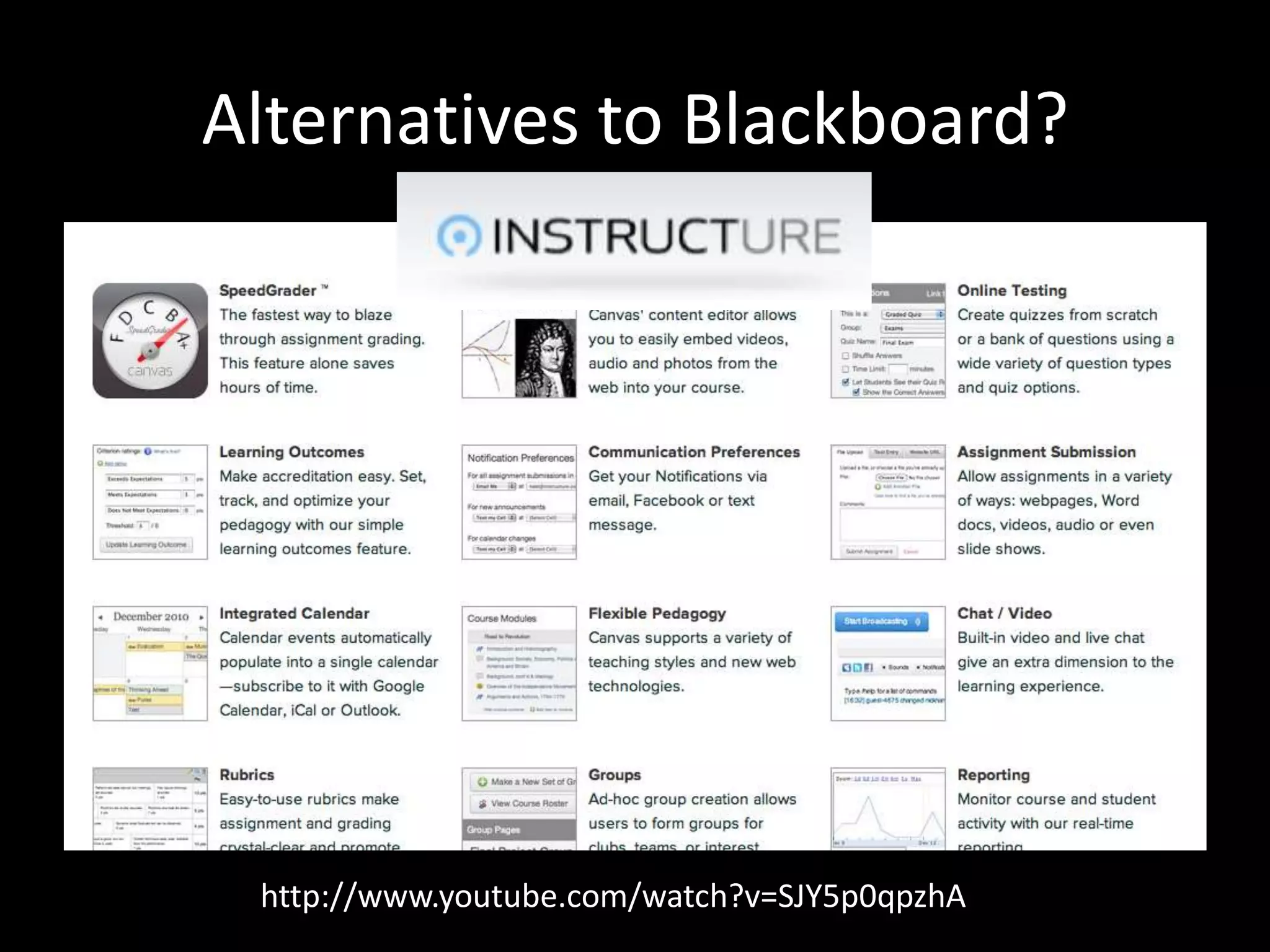
Alternatives to Blackboard?http://www.youtube.com/watch?v=SJY5p0qpzhA
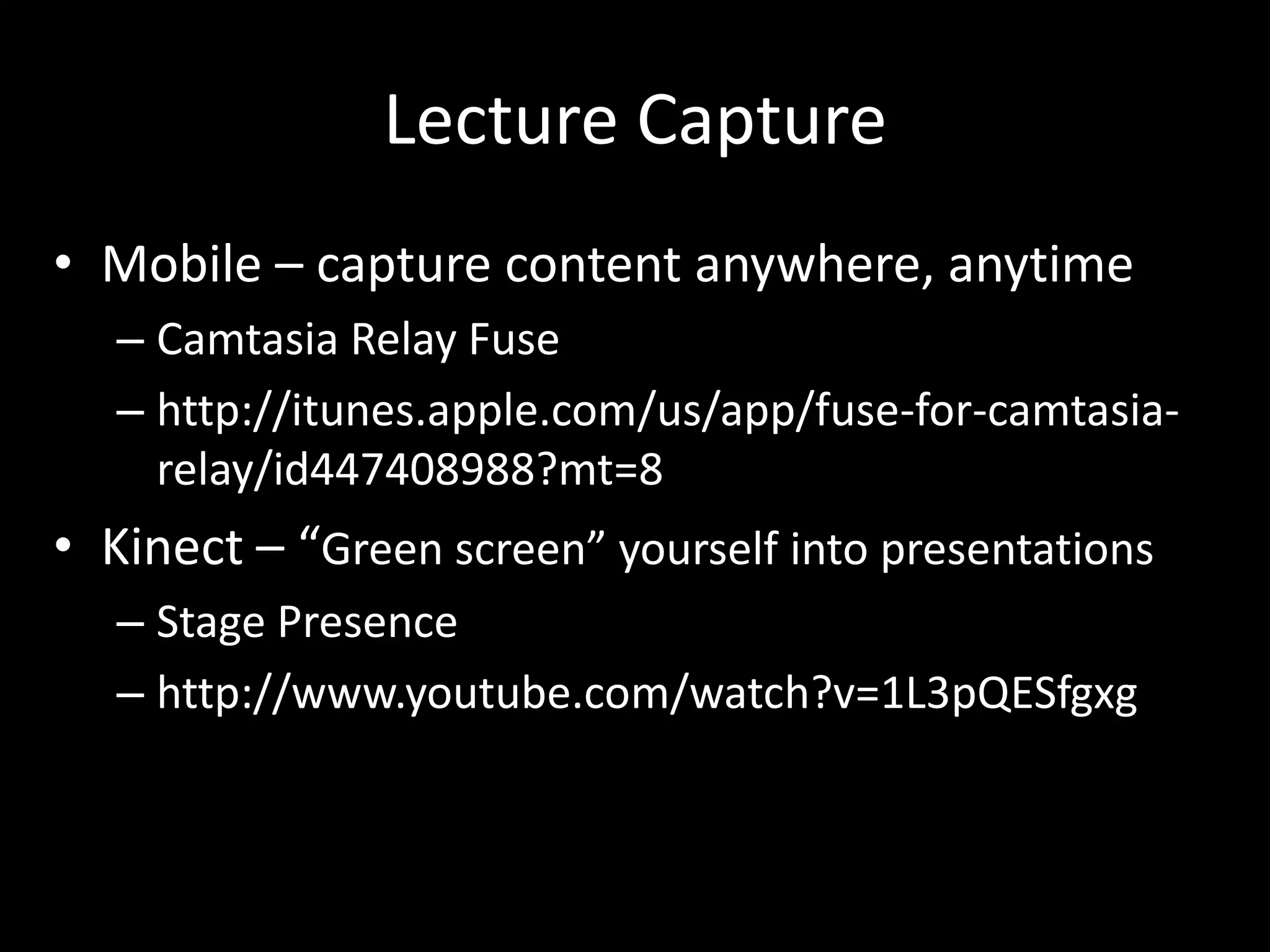
Lecture CaptureMobile – capture content anywhere, anytimeCamtasiaRelay Fusehttp://itunes.apple.com/us/app/fuse-for-camtasia-relay/id447408988?mt=8Kinect – “Green screen” yourself into presentationsStage Presencehttp://www.youtube.com/watch?v=1L3pQESfgxg
28Comments or Questions?David WicksDirector, Instructional TechnologySeattle Pacific Universitydwicks@spu.eduTwitter: dwicksspu206.281.2290This work is licensed under the Creative Commons Attribution-Share Alike 3.0 United States License. To view a copy of this license, visit http://creativecommons.org/licenses/by-sa/3.0/us/  or send a letter to Creative Commons, 171 Second Street, Suite 300, San Francisco, California, 94105, USA.28

Instructional technology, then, now, and in the future

Editor's Notes

  • #9 The power of the Web is in its universality. Access by everyone regardless of disability is an essential aspect. Tim Berners Lee
  • #12 Smart Phone – Android, iPad, Laptop, Kindle
  • #13 What’s new? Digital Reader Board, DVD Player, What’s missing? cable TV, overhead projector
  • #15 Happening through disruptive innovation. a term of art coined by Clayton Christensen, describes a process by which a product or service takes root initially in simple applications at the bottom of a market and then relentlessly moves ‘up market’, eventually displacing established competitors.www.claytonchristensen.com/disruptive_innovation.html
  • #27 Moodle? Sakai? Moodle – Blackboard 97% the sameWhat about Instructure?