Instructional Technology Past, Present, & Future
Abstract Past influences Present issues in integrating technology Changes needed Future implications
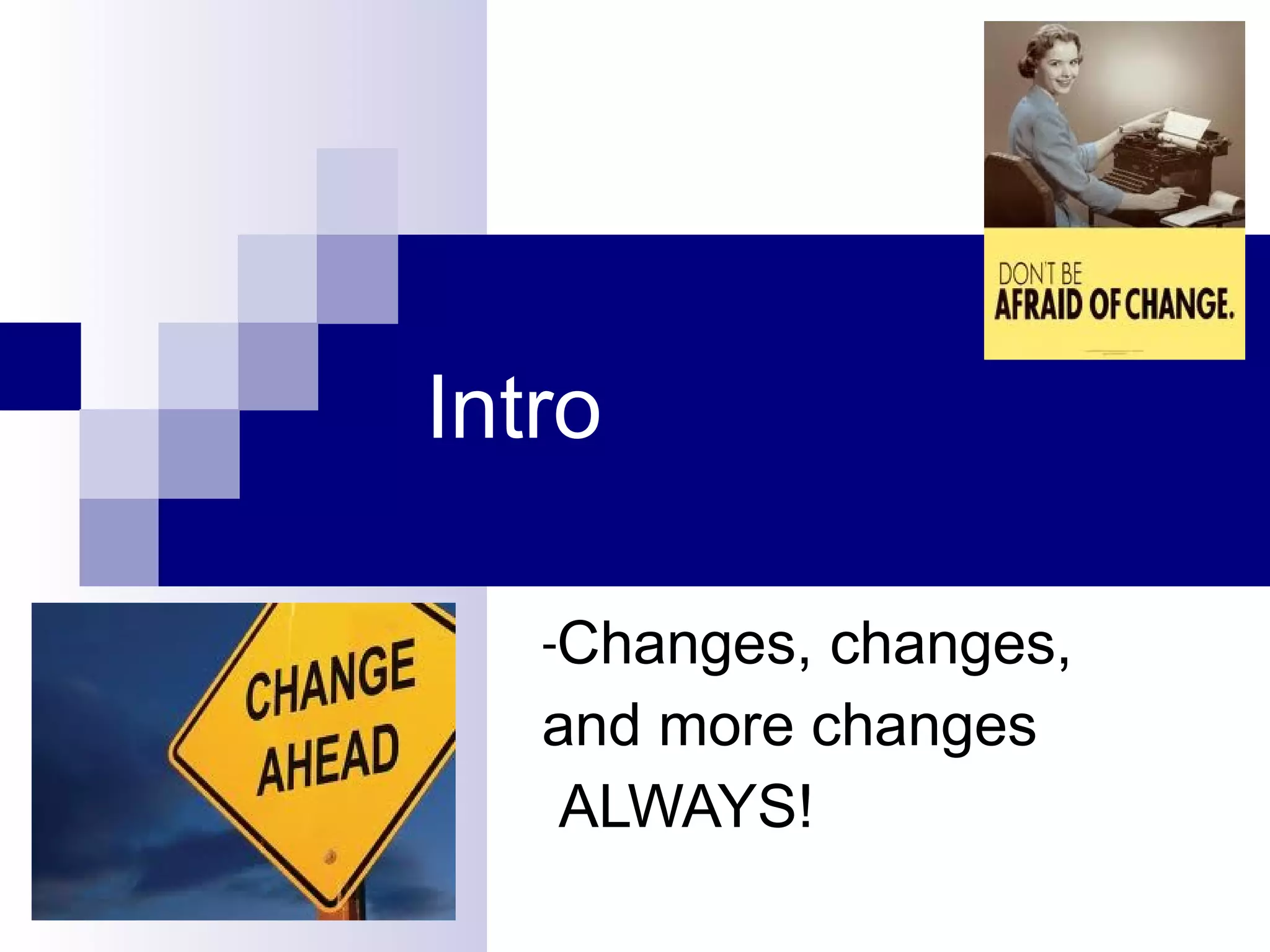
Intro Changes, changes,  and more changes ALWAYS!
What is instructional technology? Instructional technology = Educational technology GOAL = to learn Always Improve
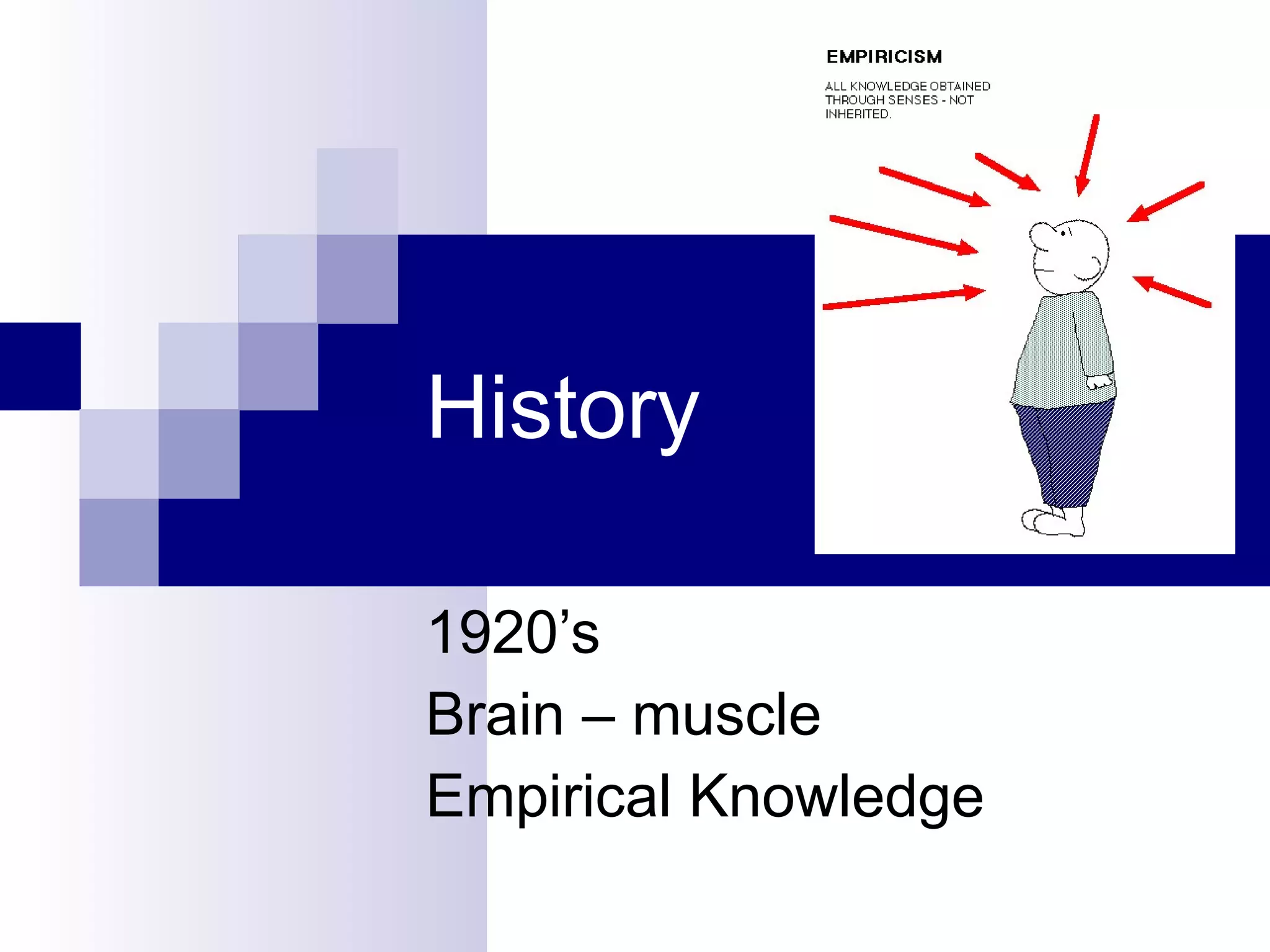
History 1920’s Brain – muscle Empirical Knowledge
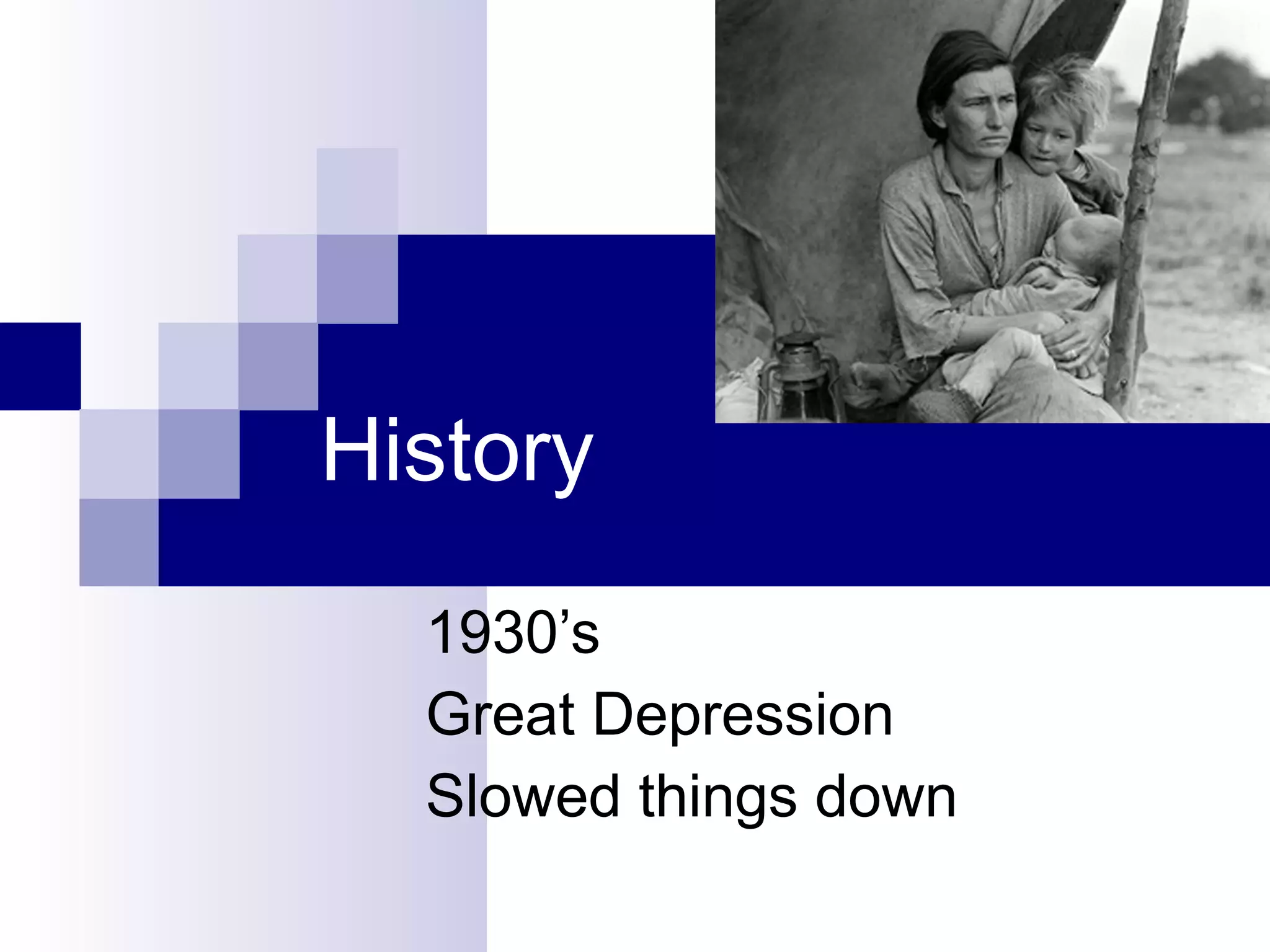
History 1930’s Great Depression Slowed things down
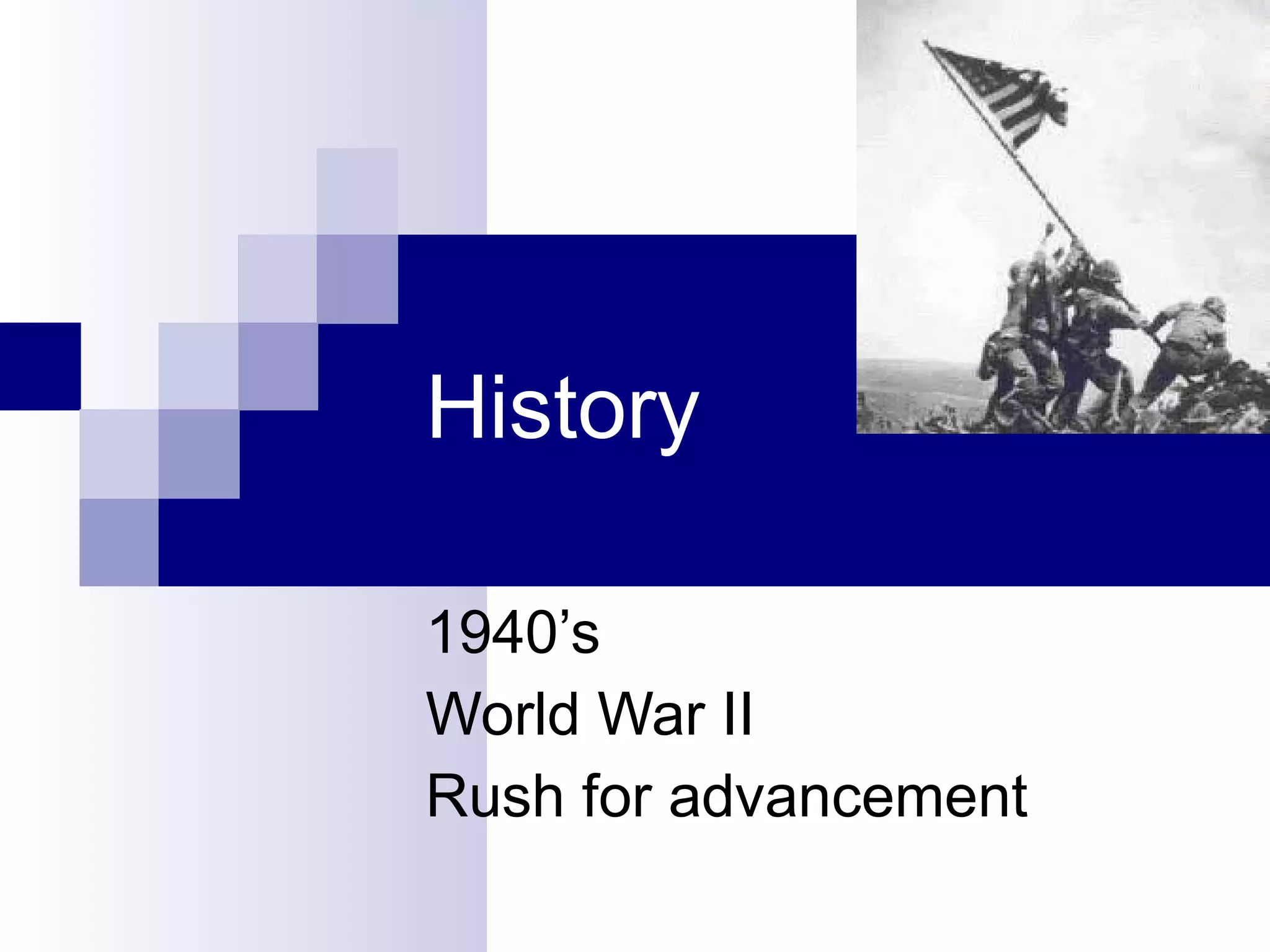
History 1940’s World War II Rush for advancement
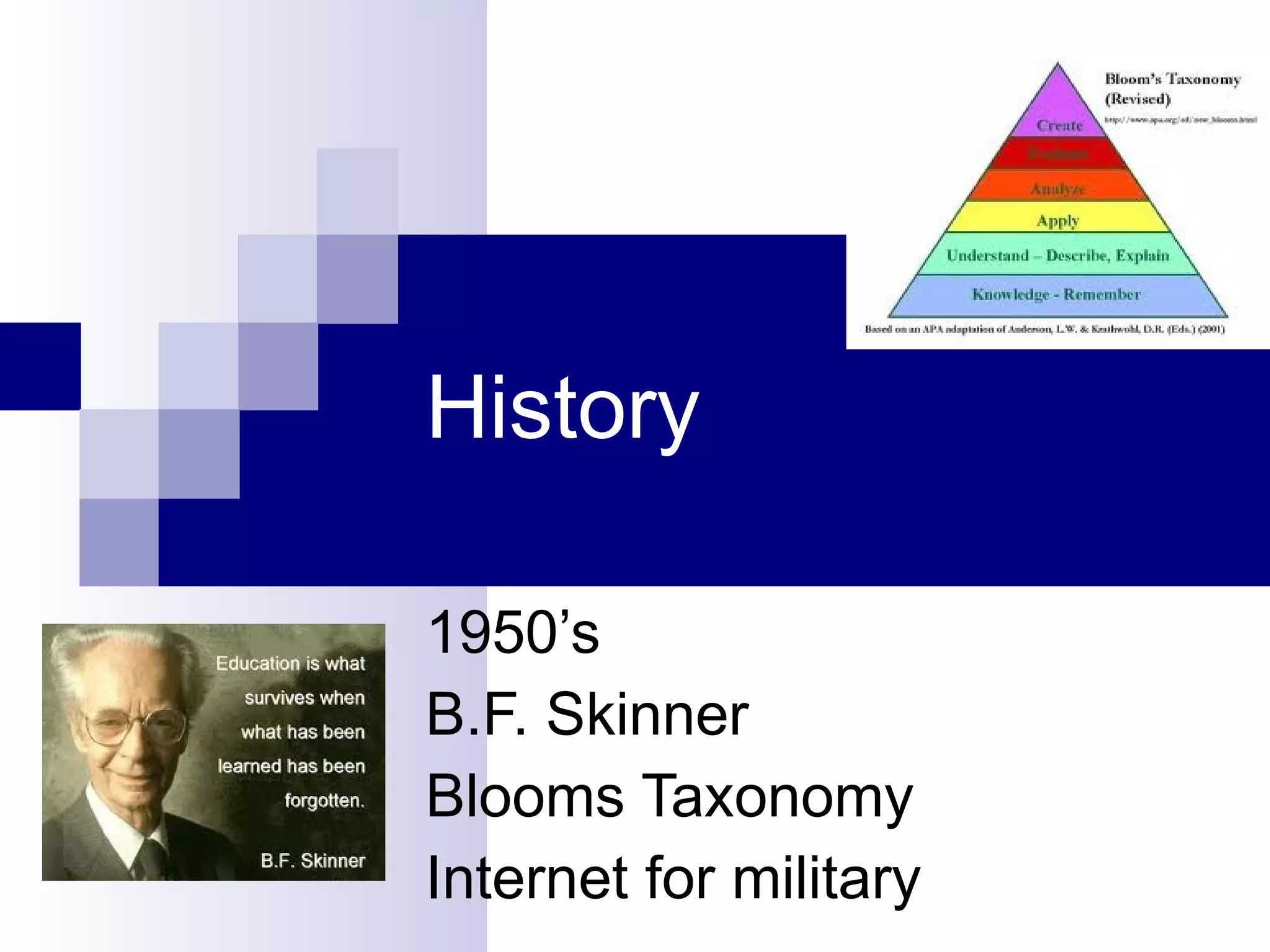
History 1950’s B.F. Skinner Blooms Taxonomy Internet for military
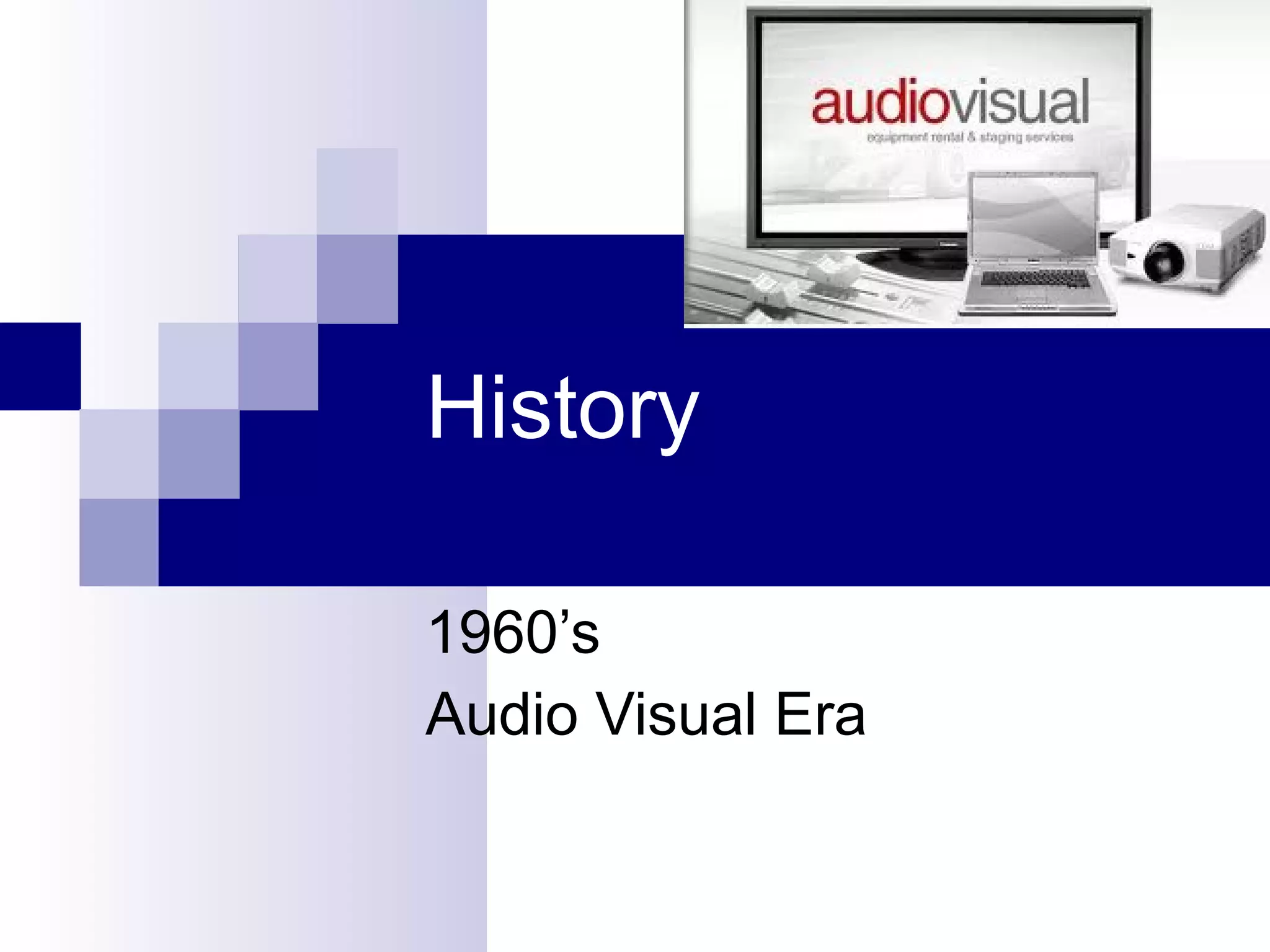
History 1960’s Audio Visual Era
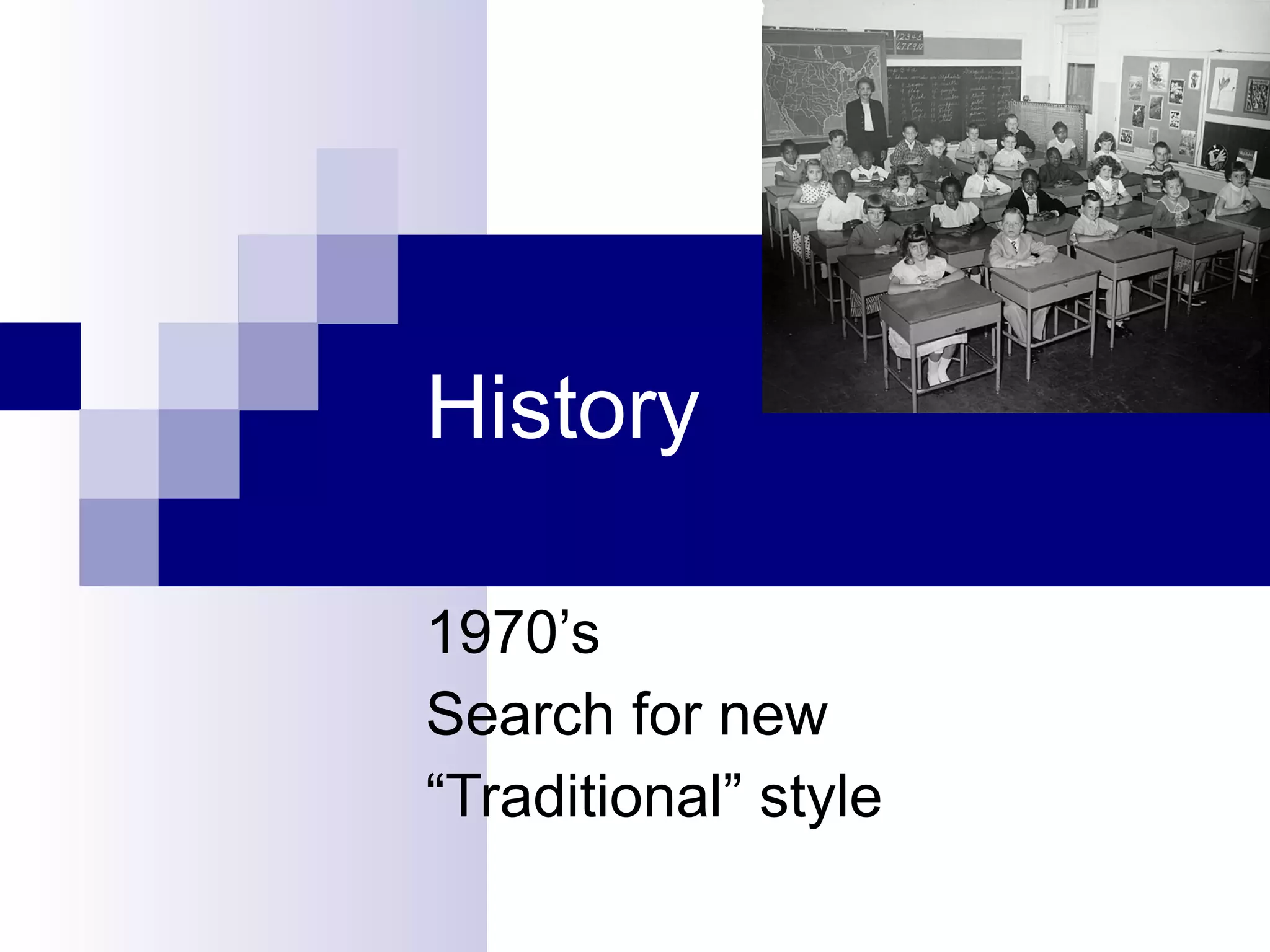
History 1970’s Search for new  “ Traditional” style
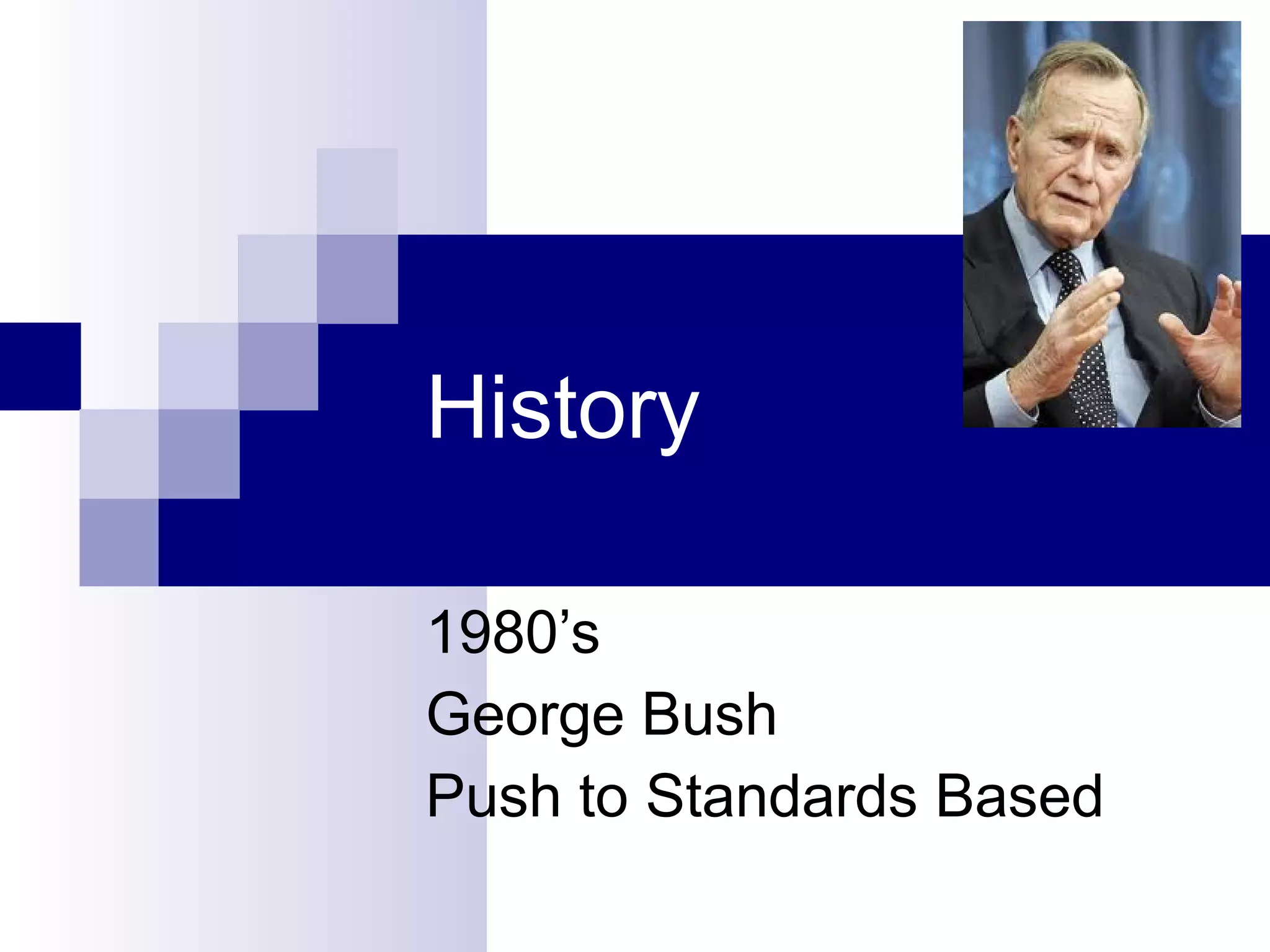
History 1980’s George Bush Push to Standards Based
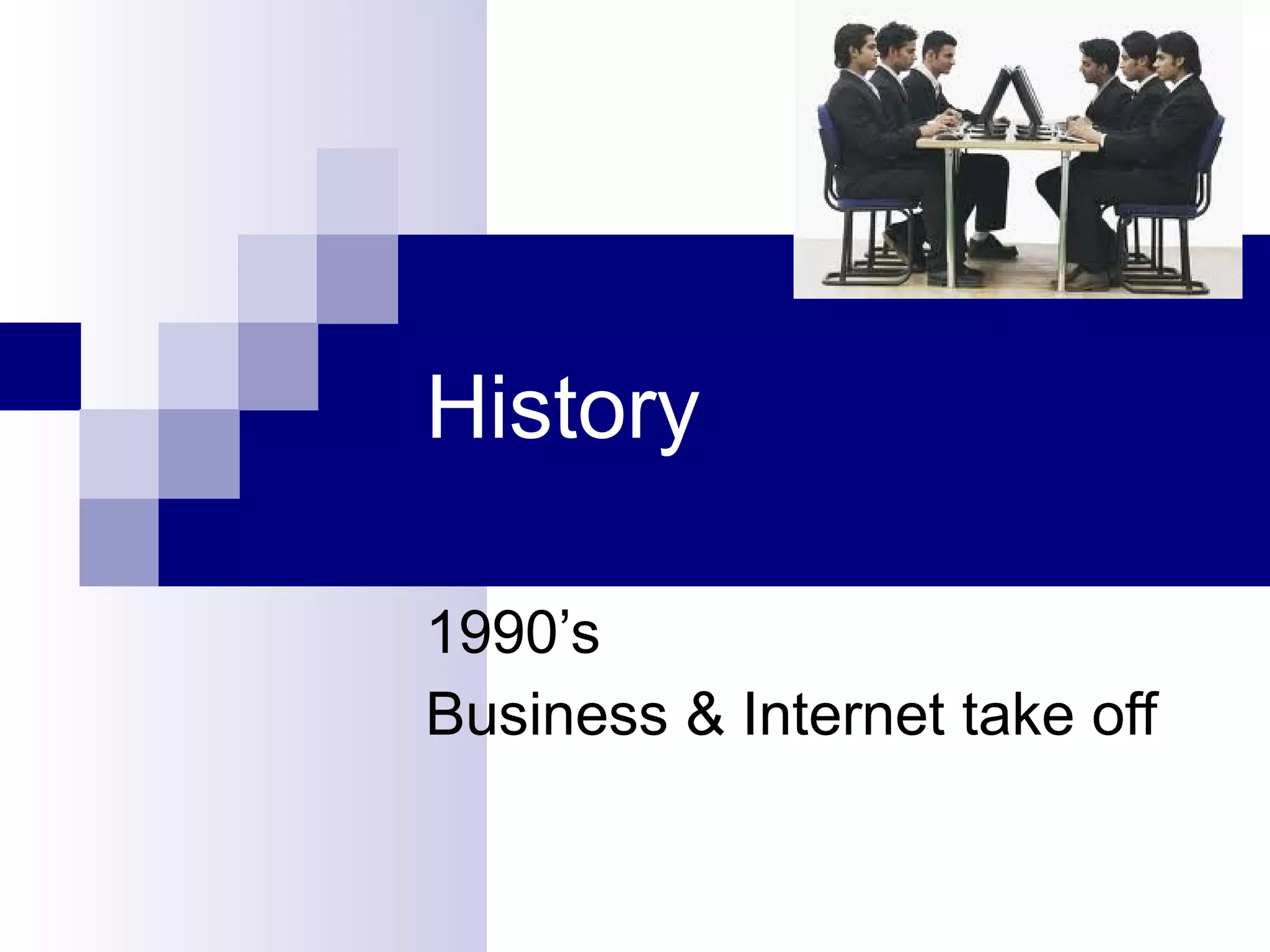
History 1990’s Business & Internet take off
History Print Press Internet MAJOR CHANGES NOW
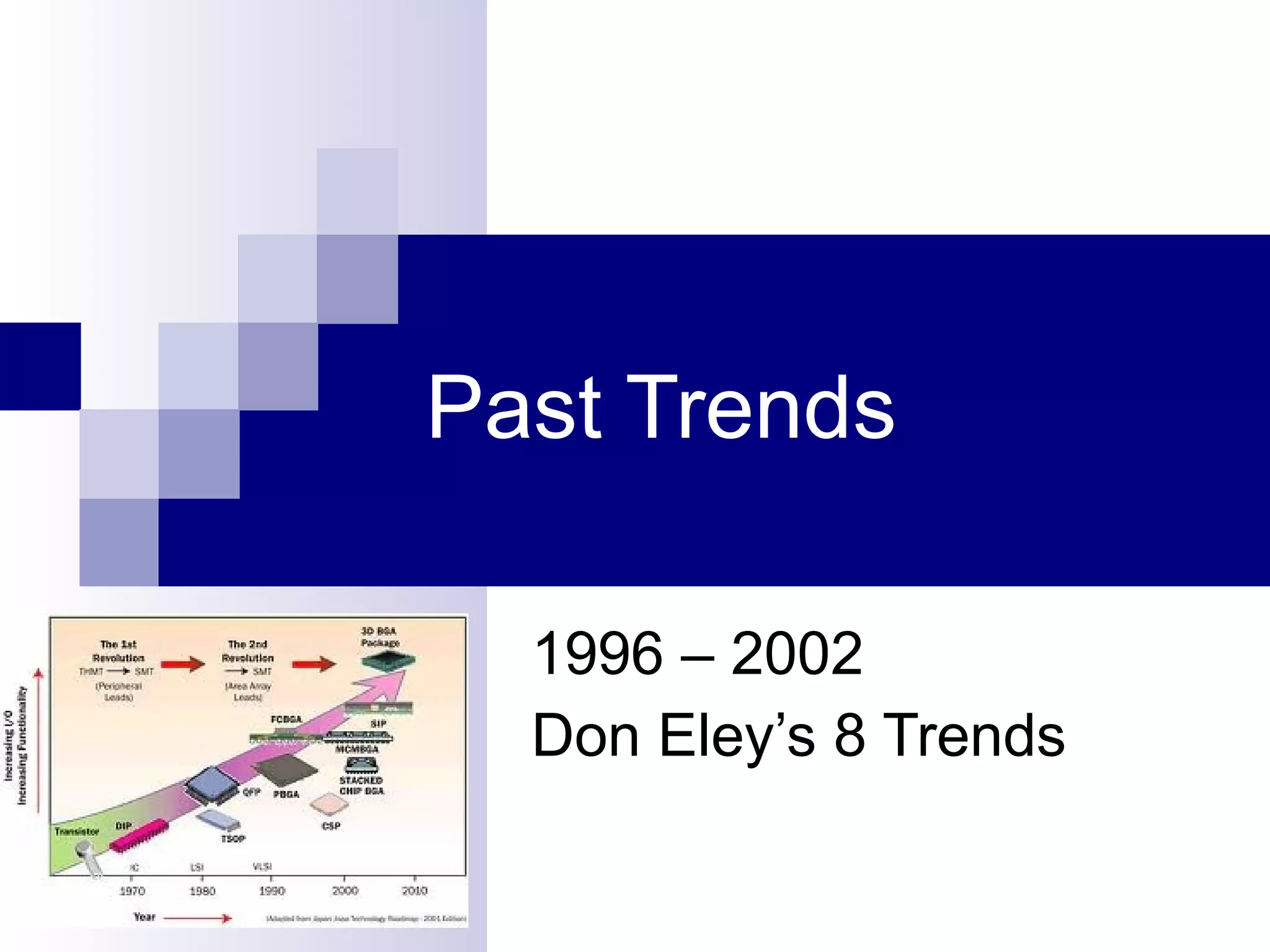
Past Trends  1996 – 2002 Don Eley’s 8 Trends
Present Situation “ Need to be Connected”
Present Situation Collaboration
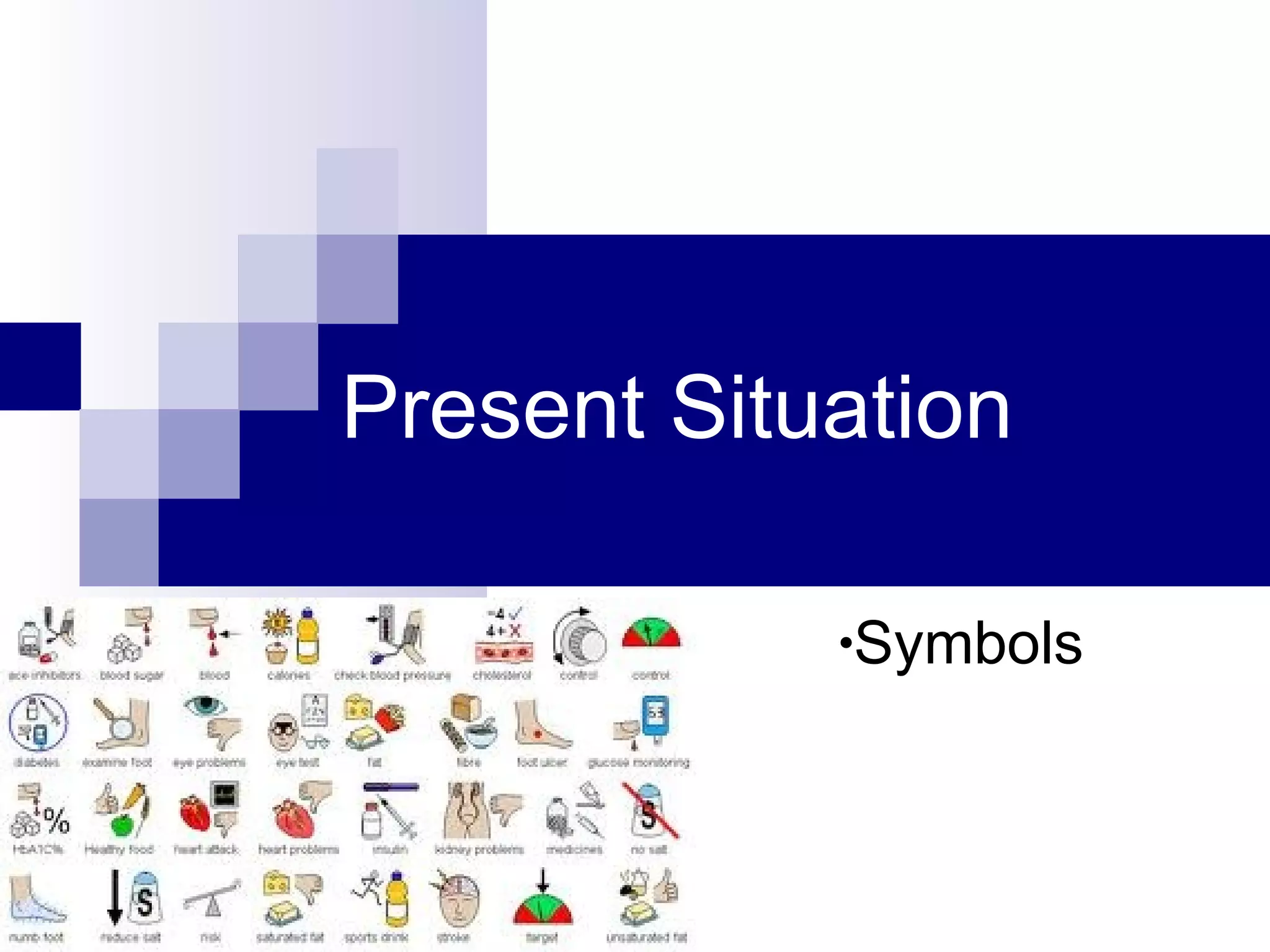
Present Situation Symbols
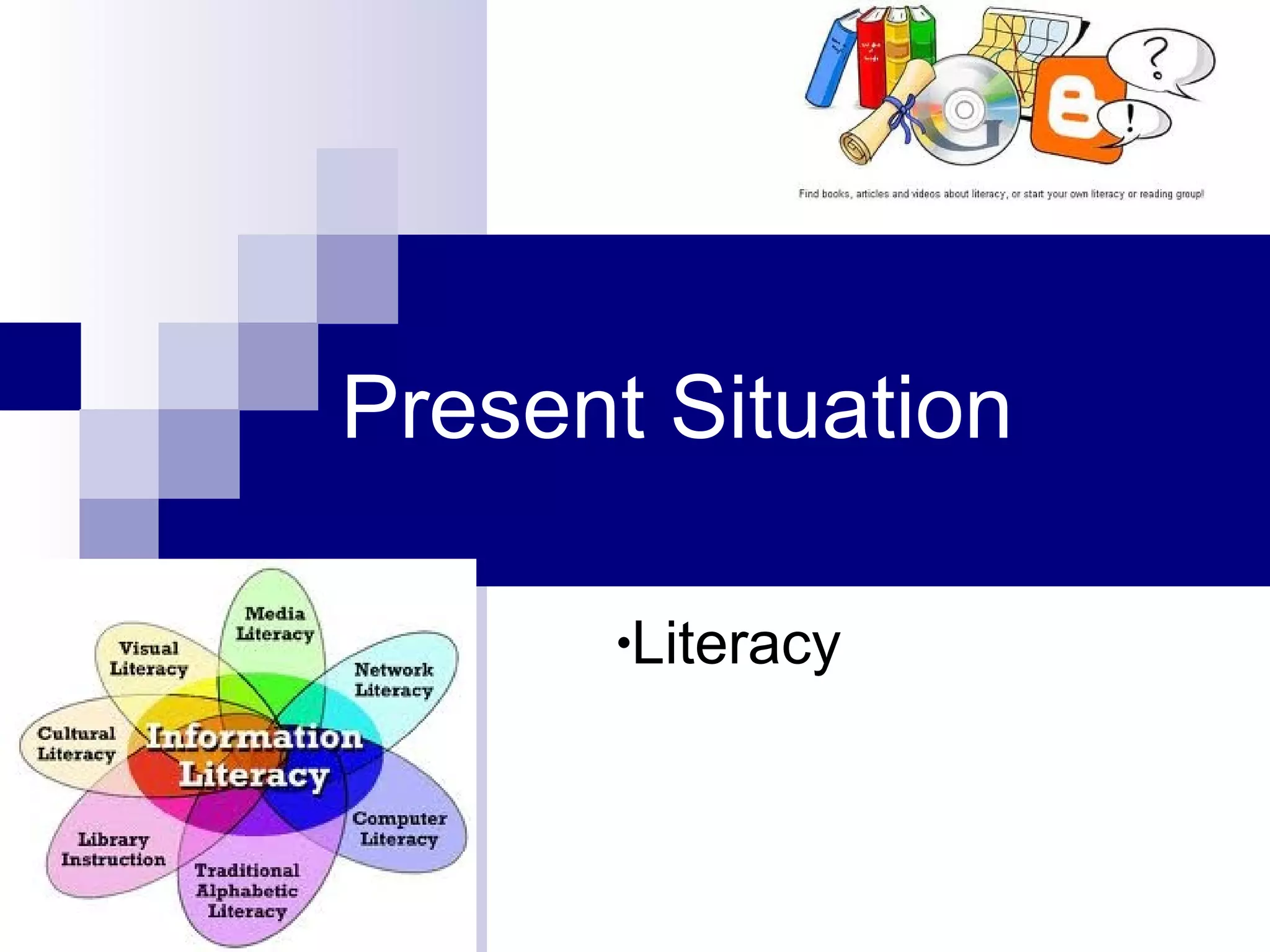
Present Situation Literacy
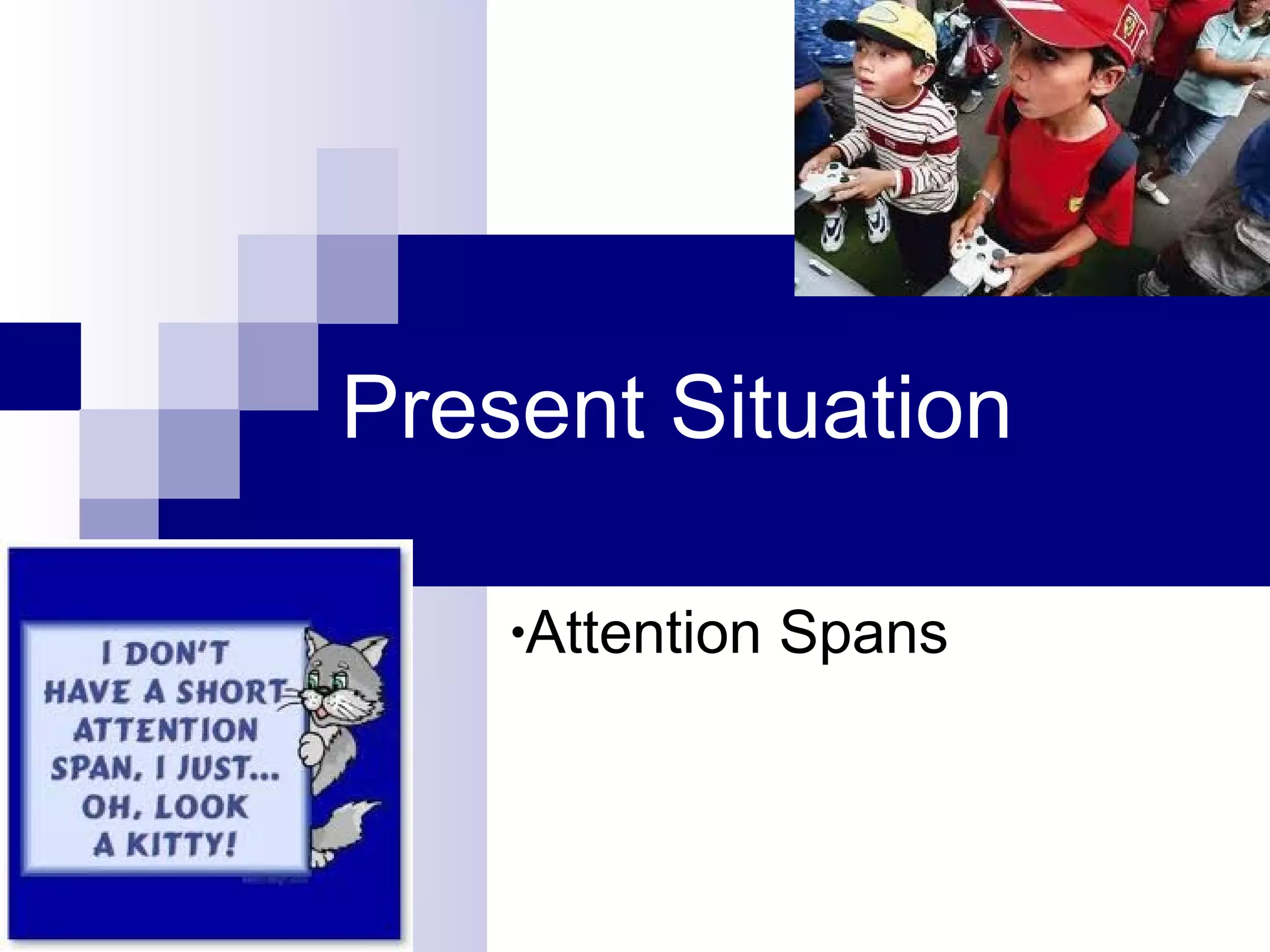
Present Situation Attention Spans
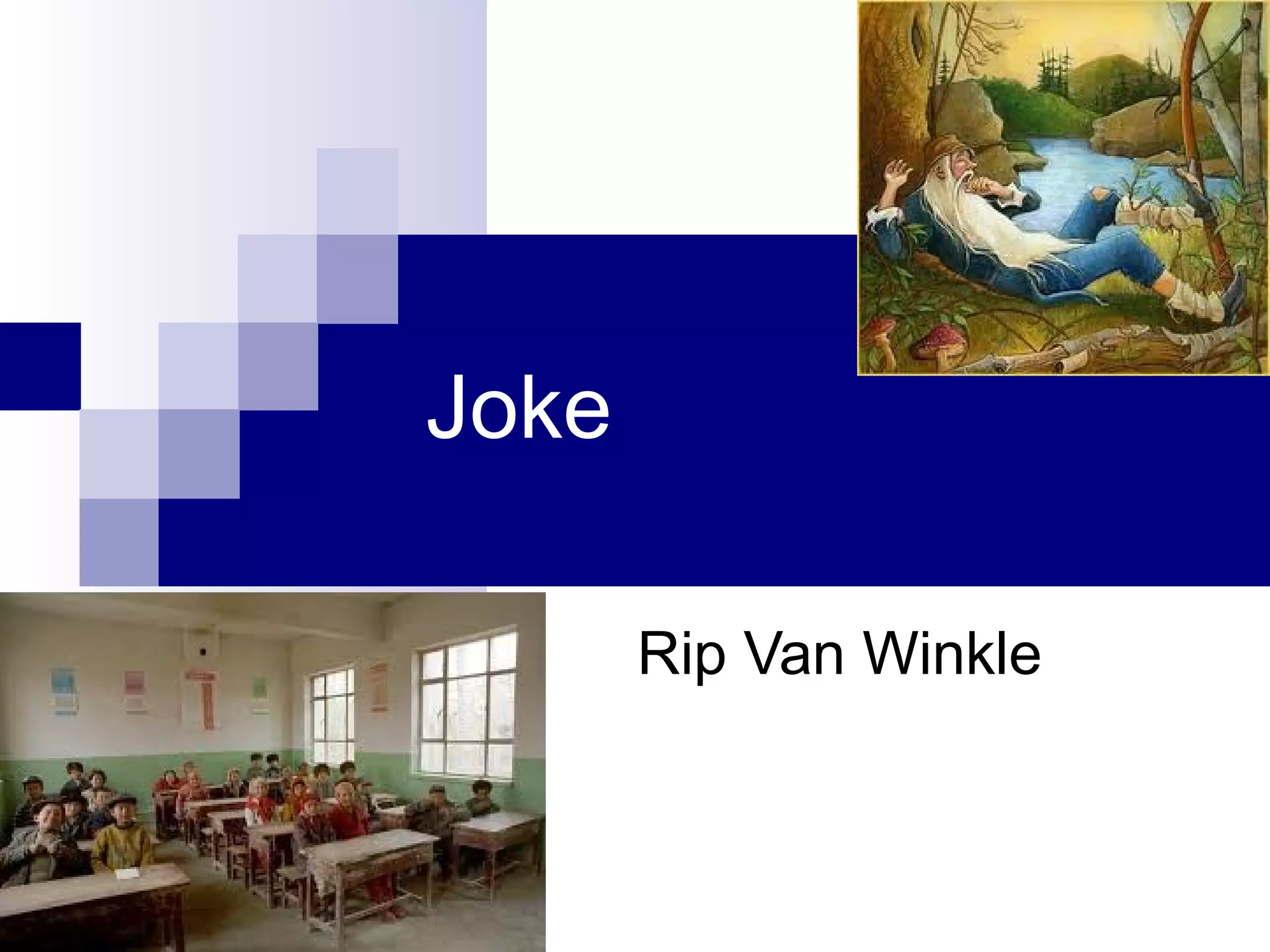
Joke Rip Van Winkle
We are different LEARN different = TEACH different Change is needed!
Future Prepare for success and nothing less!
Implications United States –  3 rd  world country soon?
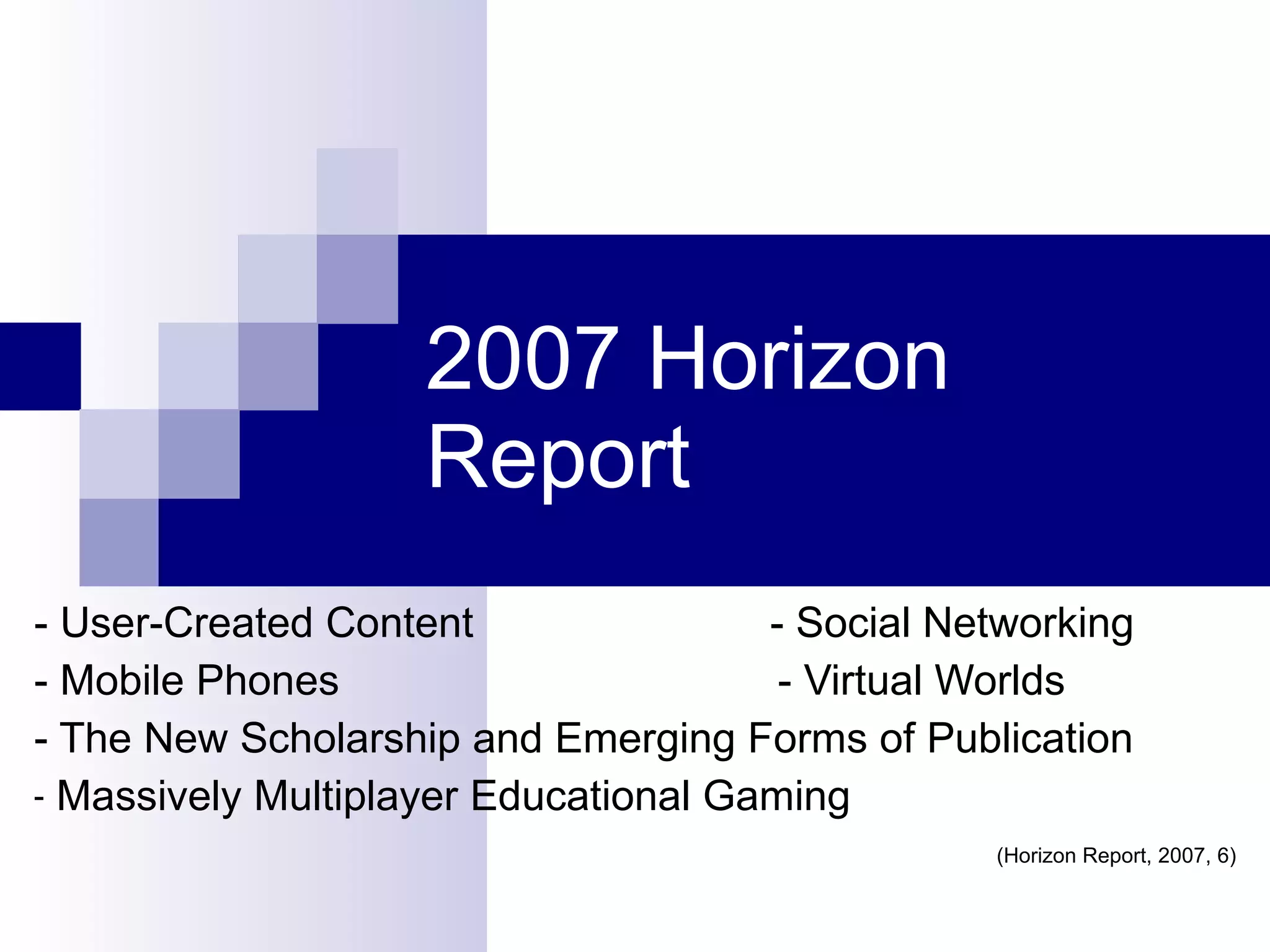
2007 Horizon Report - User-Created Content  - Social Networking - Mobile Phones  - Virtual Worlds - The New Scholarship and Emerging Forms of Publication Massively Multiplayer Educational Gaming  (Horizon Report, 2007, 6)
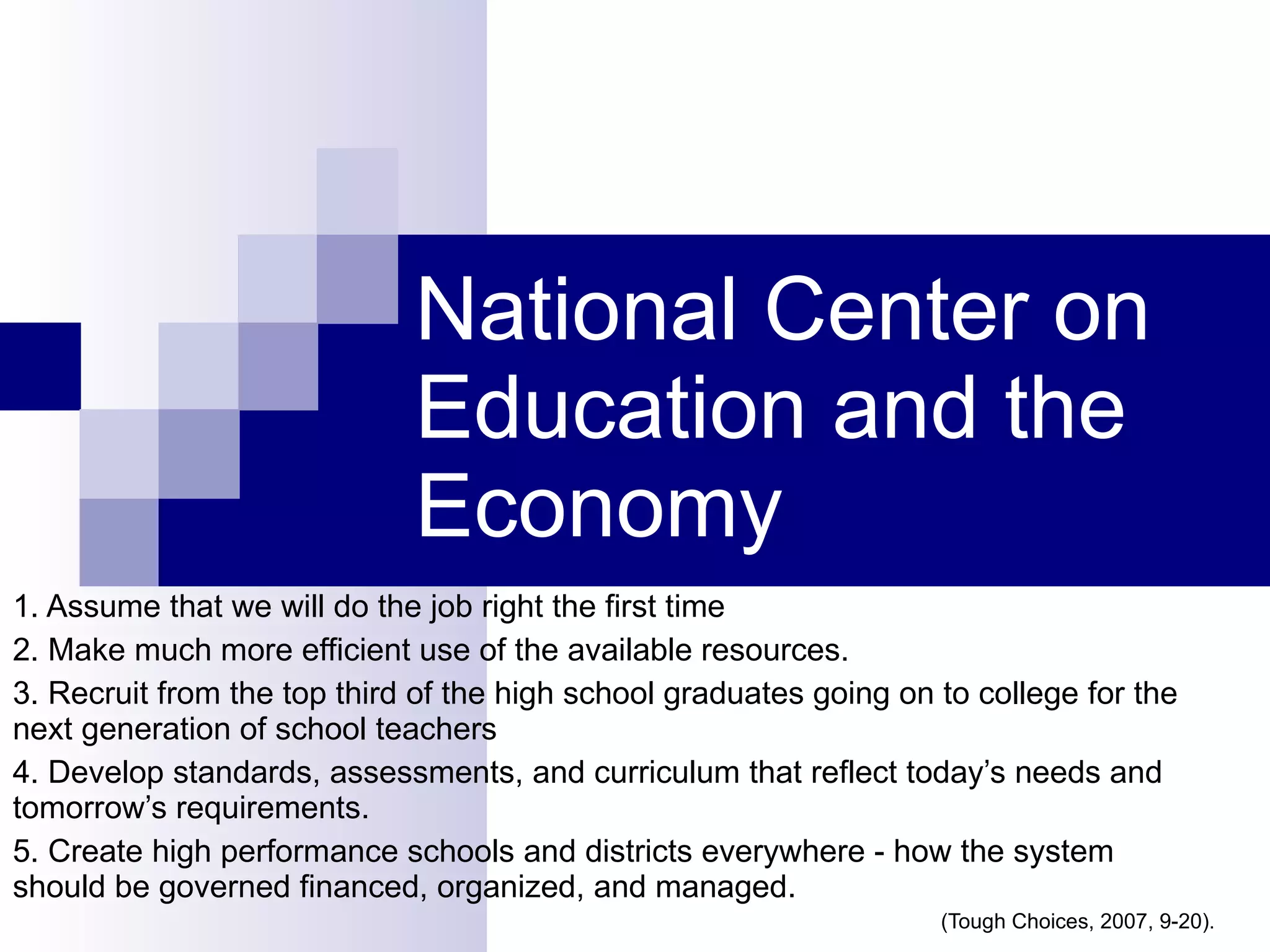
National Center on Education and the Economy 1. Assume that we will do the job right the first time 2. Make much more efficient use of the available resources. 3. Recruit from the top third of the high school graduates going on to college for the next generation of school teachers 4. Develop standards, assessments, and curriculum that reflect today’s needs and tomorrow’s requirements.  5. Create high performance schools and districts everywhere - how the system should be governed financed, organized, and managed. (Tough Choices, 2007, 9-20).
6.  Provide high - quality universal early childhood education. 7. Give strong support to the students who need it worst. 8. Enable every member of this adult workforce to get the new literacy skills. 9. Create personal competitiveness accounts – a GI Bill for our times. 10. Create regional competitiveness authorities to make America competitive (Tough Choices, 2007, 9-20). National Center on Education and the Economy
Conclusion - Change is inevitable - The sooner the better
References Davis, M. (2008, June 25). NEA, AFT report outlines ed-tech problems.  Education Weeks Digital Directions,  2(1).  Del, S. (2004, September). The merging of literacy and technology in the 21 st  century: a bonus for gifted education.  Gifted Child Today,  27(2), 32-35. Retrieved July 12, 2010, from Ebscohost. Educause Learning Initiative, New Media Consortium. (2007).  The 2007 horizon report . Stanford, CA: The New Media Consortium. Ely, D.P. (2002).  Trends in educational technology . (Report No. IR-113). Washington, DC: Department of Education. (ERIC Document Reproduction Service No. ED-99-CO-0005)
References Grzondziel. H., Hillebrandt, D., Schott, F. (2001). What kind of instructional theory do we need for instructional technology in the 21 st  century?  Journal of Structured Learning & Intelligent Systems,  14, 371-383. Miranda, C.A., Steptoe, S., & Wallis, C. (2006, December 18). How to bring our schools out of the 20 th  century.  Time,  168(25), 50-56. Retrieved June 10, 2010, from Ebscohost. National Center on Education and the Economy. (2007).  Tough choices tough times . Washington, DC: National Center on Education and the Economy. O’Day, D.H. Howto make pedagogically meaningful animations for teaching and research using PowerPoint & Camtasia. Mississauga, ON. Canada: University of Mississauga, Department of Biology.
References P21 Framework definitions . (2009, December).  Partnership for 21 st  century skills. 1-9. Prensky, M. (2001, October). Digital natives, digital immigrants.  On the Horizon, 9(5).  Prensky, M. (2001, December). Do they really think differently?  On the Horizon,  9(6). Regan, B. (2008, July 1). Why we need to teach 21 st  century skills – and how to do it.  MultiMedia & Internet @ Schools.  Retrieved June 21, 2010, from http://www.mmischools.com/Articles/PrintArticle.aspx?ArticleID=61011 Shrock, S.A. (1995).  A brief history of instructional development . Carbondale, Illinois: Southern Illinois University, Curriculum and Instruction. Technology. (2010). In Merriam-Webster Online Dictionary. Retrieved July 5, 2010, from http://www.merriam-webster.com/dictionary/technology  Woolman, D. C. (2002, January). The quest for international understanding in united states education, 1920 – 1939.  Social Alternatives,  21(1), 23-26.  Yildiz, M.N. (2002, November 2).  Semiotics of digital media in education . New Jersey, NJ: William Paterson University.
Credits All images from Google Images Music from  www.royalteefree  music. Kevin McLeod “Sunshine”

Edtc6320 kknisely project5

  • 1.
  • 2.
    Abstract Past influencesPresent issues in integrating technology Changes needed Future implications
  • 3.
    Intro Changes, changes, and more changes ALWAYS!
  • 4.
    What is instructionaltechnology? Instructional technology = Educational technology GOAL = to learn Always Improve
  • 5.
    History 1920’s Brain– muscle Empirical Knowledge
  • 6.
    History 1930’s GreatDepression Slowed things down
  • 7.
    History 1940’s WorldWar II Rush for advancement
  • 8.
    History 1950’s B.F.Skinner Blooms Taxonomy Internet for military
  • 9.
  • 10.
    History 1970’s Searchfor new “ Traditional” style
  • 11.
    History 1980’s GeorgeBush Push to Standards Based
  • 12.
    History 1990’s Business& Internet take off
  • 13.
    History Print PressInternet MAJOR CHANGES NOW
  • 14.
    Past Trends 1996 – 2002 Don Eley’s 8 Trends
  • 15.
    Present Situation “Need to be Connected”
  • 16.
  • 17.
  • 18.
  • 19.
  • 20.
  • 21.
    We are differentLEARN different = TEACH different Change is needed!
  • 22.
    Future Prepare forsuccess and nothing less!
  • 23.
    Implications United States– 3 rd world country soon?
  • 24.
    2007 Horizon Report- User-Created Content - Social Networking - Mobile Phones - Virtual Worlds - The New Scholarship and Emerging Forms of Publication Massively Multiplayer Educational Gaming (Horizon Report, 2007, 6)
  • 25.
    National Center onEducation and the Economy 1. Assume that we will do the job right the first time 2. Make much more efficient use of the available resources. 3. Recruit from the top third of the high school graduates going on to college for the next generation of school teachers 4. Develop standards, assessments, and curriculum that reflect today’s needs and tomorrow’s requirements. 5. Create high performance schools and districts everywhere - how the system should be governed financed, organized, and managed. (Tough Choices, 2007, 9-20).
  • 26.
    6. Providehigh - quality universal early childhood education. 7. Give strong support to the students who need it worst. 8. Enable every member of this adult workforce to get the new literacy skills. 9. Create personal competitiveness accounts – a GI Bill for our times. 10. Create regional competitiveness authorities to make America competitive (Tough Choices, 2007, 9-20). National Center on Education and the Economy
  • 27.
    Conclusion - Changeis inevitable - The sooner the better
  • 28.
    References Davis, M.(2008, June 25). NEA, AFT report outlines ed-tech problems. Education Weeks Digital Directions, 2(1). Del, S. (2004, September). The merging of literacy and technology in the 21 st century: a bonus for gifted education. Gifted Child Today, 27(2), 32-35. Retrieved July 12, 2010, from Ebscohost. Educause Learning Initiative, New Media Consortium. (2007). The 2007 horizon report . Stanford, CA: The New Media Consortium. Ely, D.P. (2002). Trends in educational technology . (Report No. IR-113). Washington, DC: Department of Education. (ERIC Document Reproduction Service No. ED-99-CO-0005)
  • 29.
    References Grzondziel. H.,Hillebrandt, D., Schott, F. (2001). What kind of instructional theory do we need for instructional technology in the 21 st century? Journal of Structured Learning & Intelligent Systems, 14, 371-383. Miranda, C.A., Steptoe, S., & Wallis, C. (2006, December 18). How to bring our schools out of the 20 th century. Time, 168(25), 50-56. Retrieved June 10, 2010, from Ebscohost. National Center on Education and the Economy. (2007). Tough choices tough times . Washington, DC: National Center on Education and the Economy. O’Day, D.H. Howto make pedagogically meaningful animations for teaching and research using PowerPoint & Camtasia. Mississauga, ON. Canada: University of Mississauga, Department of Biology.
  • 30.
    References P21 Frameworkdefinitions . (2009, December). Partnership for 21 st century skills. 1-9. Prensky, M. (2001, October). Digital natives, digital immigrants. On the Horizon, 9(5). Prensky, M. (2001, December). Do they really think differently? On the Horizon, 9(6). Regan, B. (2008, July 1). Why we need to teach 21 st century skills – and how to do it. MultiMedia & Internet @ Schools. Retrieved June 21, 2010, from http://www.mmischools.com/Articles/PrintArticle.aspx?ArticleID=61011 Shrock, S.A. (1995). A brief history of instructional development . Carbondale, Illinois: Southern Illinois University, Curriculum and Instruction. Technology. (2010). In Merriam-Webster Online Dictionary. Retrieved July 5, 2010, from http://www.merriam-webster.com/dictionary/technology Woolman, D. C. (2002, January). The quest for international understanding in united states education, 1920 – 1939. Social Alternatives, 21(1), 23-26. Yildiz, M.N. (2002, November 2). Semiotics of digital media in education . New Jersey, NJ: William Paterson University.
  • 31.
    Credits All imagesfrom Google Images Music from www.royalteefree music. Kevin McLeod “Sunshine”