What Is Injection Moulding?
 Injection moulding is a manufacturing
process for producing parts by injecting
material into a mould. Injection moulding can
be performed with a host of materials mainly
including metals, glasses, elastomers,
confections, and most commonly thermoplastic
and thermosetting polymers. Material for the
part is fed into a heated barrel, mixed, and
forced into a mould cavity, where it cools and
hardens to the configuration of the cavity.
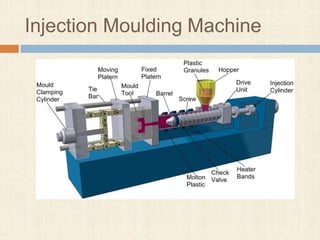
Injection Moulding Machine
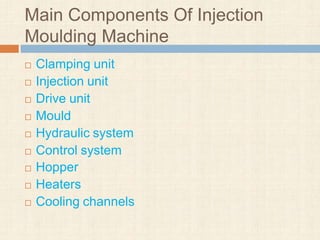
Main Components Of Injection
Moulding Machine
 Clamping unit
 Injection unit
 Drive unit
 Mould
 Hydraulic system
 Control system
 Hopper
 Heaters
 Cooling channels
Injection Moulding Process -
Resources
 Material
 Machine
 Mould
 Manpower
Most Commonly Used Materials
 PVC
 ABS(Acrylonitrile Butadiene Styrene)
 Polypropylene
 Polystyrene
 HDPE( High density poly ethylene)
 LDPE(Low density poly ethylene)
 Rubber Thermoplastic
 Epoxy
Injection Moulding Process
 Material preparation
 Feeding into hopper
 Injection
 Mould holding and cooling
 Ejection
Injection Moulding Machine
Process
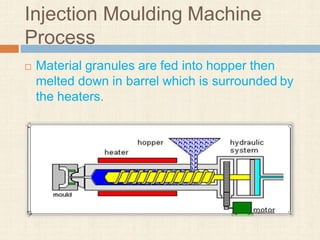
 Material granules are fed into hopper then
melted down in barrel which is surrounded by
the heaters.
Injection Moulding Machine
Process
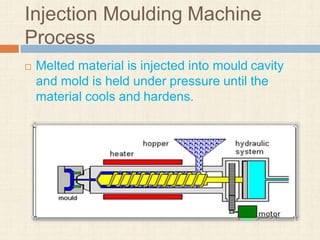
 Melted material is injected into mould cavity
and mold is held under pressure until the
material cools and hardens.
Injection Moulding Machine
Process
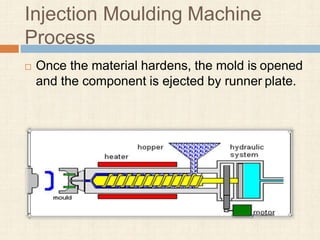
 Once the material hardens, the mold is opened
and the component is ejected by runner plate.
Injection Moulding Machine
Process
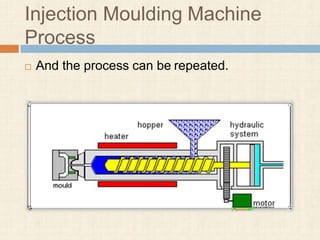
 And the process can be repeated.
Injection Moulding Machine
Process
Mould
 Moulds are the common terms used to describe
the tool used to produce components in moulding.
 Moulds are constructed from hardened steel, pre-
hardened steel, aluminium, beryllium-copper alloy.
 In general, steel moulds cost more to construct,
but their longer lifespan will offset the higher initial
cost over a higher number of parts made before
wearing out.
 The moulds can be manufactured either by CNC
machining or by using electrical discharge
machining processes.
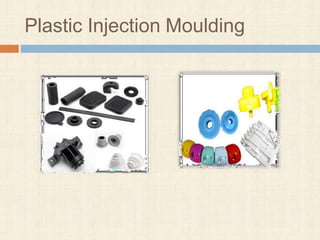
Plastic Injection Moulding
 It is a manufacturing process for producing
components by injecting polymer material into
a mould.
 Thermoplastic and Thermosetting plastic
material are used.
 Thermoplastic materials are reusable.
Plastic Injection Moulding
Applications
 Writing instruments components ( pen barrel,
cap, bush etc)
 Computer Electronics
 Automative Components
 Aerospace Components
 Electronic Components
 Toys etc.
Rubber Injection Moulding
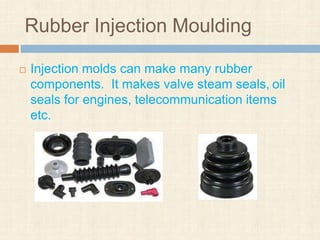
 Injection molds can make many rubber
components. It makes valve steam seals, oil
seals for engines, telecommunication items
etc.
Metal injection moulding
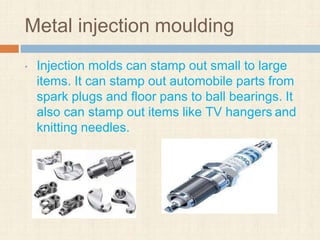
• Injection molds can stamp out small to large
items. It can stamp out automobile parts from
spark plugs and floor pans to ball bearings. It
also can stamp out items like TV hangers and
knitting needles.
Applications Of Injection
Moulding
 Injection moulding is used to create many
things such as Cups, Containers, tools,
Mechanical parts (Including gears).
 Injection moulding is the most common
modern method of manufacturing parts. It is
ideal for producing high volumes of the same
object.

Injection moulding

  • 1.
    What Is InjectionMoulding?  Injection moulding is a manufacturing process for producing parts by injecting material into a mould. Injection moulding can be performed with a host of materials mainly including metals, glasses, elastomers, confections, and most commonly thermoplastic and thermosetting polymers. Material for the part is fed into a heated barrel, mixed, and forced into a mould cavity, where it cools and hardens to the configuration of the cavity.
  • 2.
  • 3.
    Main Components OfInjection Moulding Machine  Clamping unit  Injection unit  Drive unit  Mould  Hydraulic system  Control system  Hopper  Heaters  Cooling channels
  • 4.
    Injection Moulding Process- Resources  Material  Machine  Mould  Manpower
  • 5.
    Most Commonly UsedMaterials  PVC  ABS(Acrylonitrile Butadiene Styrene)  Polypropylene  Polystyrene  HDPE( High density poly ethylene)  LDPE(Low density poly ethylene)  Rubber Thermoplastic  Epoxy
  • 6.
    Injection Moulding Process Material preparation  Feeding into hopper  Injection  Mould holding and cooling  Ejection
  • 7.
    Injection Moulding Machine Process Material granules are fed into hopper then melted down in barrel which is surrounded by the heaters.
  • 8.
    Injection Moulding Machine Process Melted material is injected into mould cavity and mold is held under pressure until the material cools and hardens.
  • 9.
    Injection Moulding Machine Process Once the material hardens, the mold is opened and the component is ejected by runner plate.
  • 10.
    Injection Moulding Machine Process And the process can be repeated.
  • 11.
  • 12.
    Mould  Moulds arethe common terms used to describe the tool used to produce components in moulding.  Moulds are constructed from hardened steel, pre- hardened steel, aluminium, beryllium-copper alloy.  In general, steel moulds cost more to construct, but their longer lifespan will offset the higher initial cost over a higher number of parts made before wearing out.  The moulds can be manufactured either by CNC machining or by using electrical discharge machining processes.
  • 13.
    Plastic Injection Moulding It is a manufacturing process for producing components by injecting polymer material into a mould.  Thermoplastic and Thermosetting plastic material are used.  Thermoplastic materials are reusable.
  • 14.
  • 15.
    Plastic Injection Moulding Applications Writing instruments components ( pen barrel, cap, bush etc)  Computer Electronics  Automative Components  Aerospace Components  Electronic Components  Toys etc.
  • 16.
    Rubber Injection Moulding Injection molds can make many rubber components. It makes valve steam seals, oil seals for engines, telecommunication items etc.
  • 17.
    Metal injection moulding •Injection molds can stamp out small to large items. It can stamp out automobile parts from spark plugs and floor pans to ball bearings. It also can stamp out items like TV hangers and knitting needles.
  • 18.
    Applications Of Injection Moulding Injection moulding is used to create many things such as Cups, Containers, tools, Mechanical parts (Including gears).  Injection moulding is the most common modern method of manufacturing parts. It is ideal for producing high volumes of the same object.