PRESENTED BY
GAUTAM KUMAR
MTECH 1ST YEAR (14RT60R07)
RUBBER TECHNOLOGY
 INTRODUCTION
 INJECTION MOLDING MATERIALS
 INJECTION MOLDING SYSTEM
 WORKING OF INJECTION MOLDING
 SCREW AND MOLD DESIGN
 THE MOLDING CYCLE
 ADVANTAGE & LIMITATION OF INJECTION
MOLDING
 REFERENCES
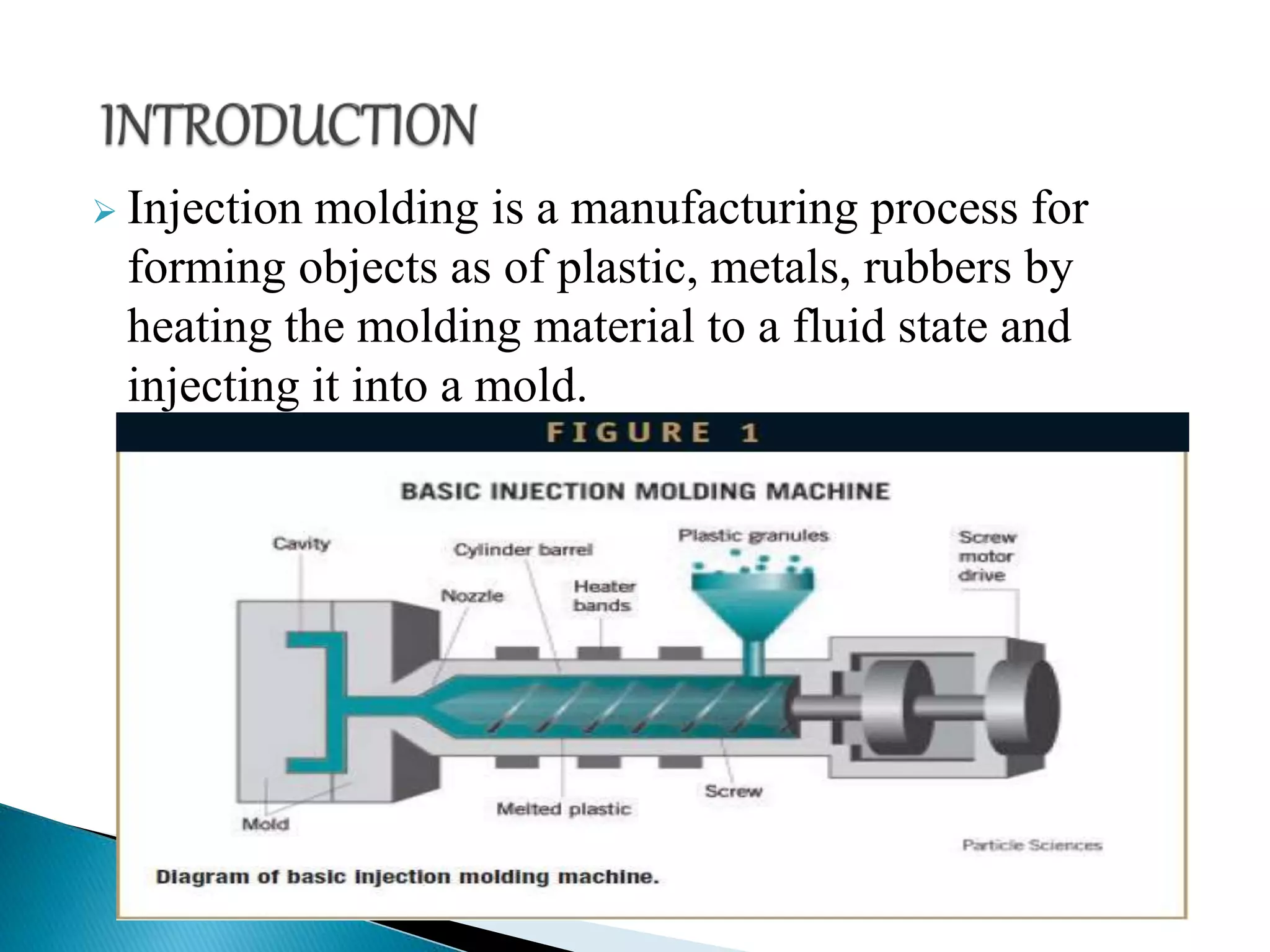
 Injection molding is a manufacturing process for
forming objects as of plastic, metals, rubbers by
heating the molding material to a fluid state and
injecting it into a mold.
 Polymers that are capable of being brought to a state
of fluidity can be injection molded.
 Injection molding is suitable processing method for
following materials:
 Thermoplastics
 Elastomers
 Rubbers
 Thermosets
 Composites
Components of injection molding system:
1. injection unit
2. clamp unit
3. mold
 The injection unit has two functions:
1. to melt pellets or powder
2. to inject the melt into a mold.
 Most widely used types of injection units:
1. conventional units: consists of a cylinder and a
plunger.
2. reciprocating screw units: a barrel and a screw
that rotates to melt & pump the plastic mix from
hopper to end of screw and then moves forward to
push the melt into mold.
 Clamp unit has three functions:
1. open and close mold halves
2. eject the part
3. After closing hold mold with sufficient force to
resist melt pressure inside mold as it is filled
 Magnitude of initial opening force required depends
on:
1. packing pressure
2. Material
3. part geometry (depth and draft)
Functions of a mold:
1. impart the desired shape to the plasticized
polymer
2. cool the molded part
A mold is made up of:
1. the cavities and cores
2. The material used for making mold is either
steel or aluminium
Mold basically consists of two parts:
1. a stationary half (cavity plate)
2. a moving half (core plate)
Parting line: separating line between the two
mold halves
The injected material is transferred through a
central feed channel, called the sprue.
 Order data: Part design,quantity,molding material,
tolerance etc.
 Molding machine ---number of cavities
 Type of mold ----selection of parting surface
 Incorporation of feed system (sprue, runner, gate)
 Incorporation of ejection system
 Alignment of mold
 Arrangement for mold lifting & clamping
 Shrinkage factor
 Stages of injection molding:
1. injection or filling
2. cooling
3. ejection and resetting
 Parts can be produced at high production rates.
 Parts require little or no finishing.
 Close dimensional tolerances can be maintained.
 Parts can be molded with metallic and non metallic
inserts.
 The inherent properties of the material give many
advantages such as high strength-weight rates,corrosion
resistance.
 Mold costs are high.
 Molding machinery and auxiliary equipment
costs are high.
 Lack of knowledge about the fundamentals of
the process causes problems.
 Injection Molding Technology & fundamental-by
James L.white,4th edition,2009,ISBN-978-3446-4185-7
 Technical manual on Plastics Processing-by
CIPET,Chennai,1st edition,2007
 Technical manual on Plastics Mold design-by
CIPET,Chennai,1st edition,2007
Injection molding

Injection molding

  • 1.
    PRESENTED BY GAUTAM KUMAR MTECH1ST YEAR (14RT60R07) RUBBER TECHNOLOGY
  • 2.
     INTRODUCTION  INJECTIONMOLDING MATERIALS  INJECTION MOLDING SYSTEM  WORKING OF INJECTION MOLDING  SCREW AND MOLD DESIGN  THE MOLDING CYCLE  ADVANTAGE & LIMITATION OF INJECTION MOLDING  REFERENCES
  • 3.
     Injection moldingis a manufacturing process for forming objects as of plastic, metals, rubbers by heating the molding material to a fluid state and injecting it into a mold.
  • 4.
     Polymers thatare capable of being brought to a state of fluidity can be injection molded.  Injection molding is suitable processing method for following materials:  Thermoplastics  Elastomers  Rubbers  Thermosets  Composites
  • 6.
    Components of injectionmolding system: 1. injection unit 2. clamp unit 3. mold
  • 7.
     The injectionunit has two functions: 1. to melt pellets or powder 2. to inject the melt into a mold.  Most widely used types of injection units: 1. conventional units: consists of a cylinder and a plunger. 2. reciprocating screw units: a barrel and a screw that rotates to melt & pump the plastic mix from hopper to end of screw and then moves forward to push the melt into mold.
  • 8.
     Clamp unithas three functions: 1. open and close mold halves 2. eject the part 3. After closing hold mold with sufficient force to resist melt pressure inside mold as it is filled  Magnitude of initial opening force required depends on: 1. packing pressure 2. Material 3. part geometry (depth and draft)
  • 9.
    Functions of amold: 1. impart the desired shape to the plasticized polymer 2. cool the molded part A mold is made up of: 1. the cavities and cores 2. The material used for making mold is either steel or aluminium
  • 12.
    Mold basically consistsof two parts: 1. a stationary half (cavity plate) 2. a moving half (core plate) Parting line: separating line between the two mold halves The injected material is transferred through a central feed channel, called the sprue.
  • 13.
     Order data:Part design,quantity,molding material, tolerance etc.  Molding machine ---number of cavities  Type of mold ----selection of parting surface  Incorporation of feed system (sprue, runner, gate)  Incorporation of ejection system  Alignment of mold  Arrangement for mold lifting & clamping  Shrinkage factor
  • 14.
     Stages ofinjection molding: 1. injection or filling 2. cooling 3. ejection and resetting
  • 16.
     Parts canbe produced at high production rates.  Parts require little or no finishing.  Close dimensional tolerances can be maintained.  Parts can be molded with metallic and non metallic inserts.  The inherent properties of the material give many advantages such as high strength-weight rates,corrosion resistance.
  • 17.
     Mold costsare high.  Molding machinery and auxiliary equipment costs are high.  Lack of knowledge about the fundamentals of the process causes problems.
  • 18.
     Injection MoldingTechnology & fundamental-by James L.white,4th edition,2009,ISBN-978-3446-4185-7  Technical manual on Plastics Processing-by CIPET,Chennai,1st edition,2007  Technical manual on Plastics Mold design-by CIPET,Chennai,1st edition,2007