PRESENTED BY
B.Avanthi.
11421T0003.
1
OVERVIEW
Definition
Epidemiology
Etiology
Pathophysiology
Clinical presentations
Extra intestinal manifestations
Complications
Investigations
Classification
Treatment
Prevention
2
Inflammatory Bowel Disease (IBD) is commonly used to
describe 2 idiopathic diseases of GIT with closely related
presentations, these diseases are ULCERATIVE
COLITIS(UC) and CROHN’S DISEASE(CD)
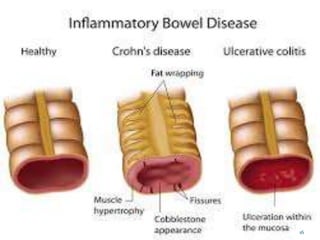
Ulcerative colitis is a Chronic inflammation condition of
GIT mucosa and is primarily found in rectum and colon
where as Crohn’s Disease is a transmural inflammation
of GI mucosa and can be found throughout the GIT from
mouth to the anus and normally CD affects the small
bowel and colon
COMPREHENSIVE PHRARMACY REVIEW ,7TH EDITION , P g.no 1143
3
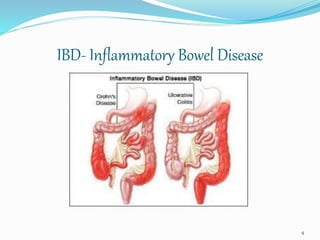
IBD- Inflammatory Bowel Disease
4
Epidemiology
Ulcerative colitis
 Age:15-40 yrs (Young adults)
 Sex: No variation between men and women or
between socioeconomic group
 High incidence areas: USA and northern-western
Europe
Clinical medicine, kumar and clarks
5
contd..
CROHN’s disease
 Age:1st peak 15-30 years of age, 2nd peak around 60
years
 Sex Marginally more common in females
 High incidence areas: North America, UK,northern
Europe
Clinical medicine, kumar and clarks
6
etiology
• DIET:
• Fat intake
• Fast food ingestion
• Milk and fibre consumption
• Total protein and energy intake
• DRUGS:
• NSAIDS: DICLOFENAC
• Antibiotics: may precipitate the relapse
• Oral contraceptives increase the risk of developing CD
• Smoking is protective against UC but increases the risk
of CD
Clinical pharmacy and therapeutics, roger walker and cate whittlesea
7
CONTD..
GENETICS:
• If a patient has IBD, the lifetime risk that a first-degree
relative will be affected is ~15%.
• If two parents have IBD, each child has a 36% chance
of being affected.
• In twin studies , 58% of monozygotic twins are
concordant for CD and 6% are concordant for UC,
whereas 4% of dizygotic twins are concordant for CD
and none are concordant for UC.
• Mutations of gene CARD15/NOD2 on chromosome 16
is associated with SI CD 2 other genes – OCTN1,
DLG5
ETHNIC: Jews are more prone to IBD than non jews.
STRESS: Increase the relapse of IBD
Clinical pharmacy and therapeutics, roger walker and cate whittlesea 8
CONTD..
INFECTION:
Mycobacterium paratuberculosis : CD
Diarrhoea :Ulcerative colitis
Clinical pharmacy and therapeutics, roger walker and cate whittlesea
9
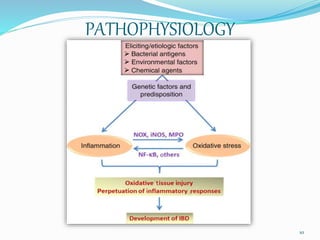
PATHOPHYSIOLOGY
10
11
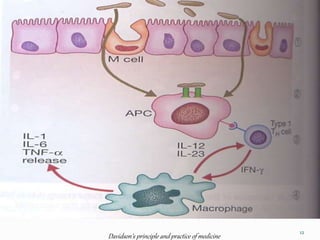
Davidson’s principle and practice of medicine
12
13
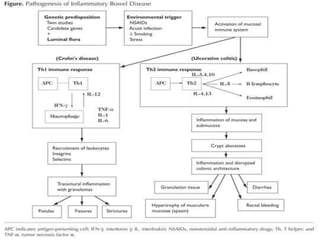
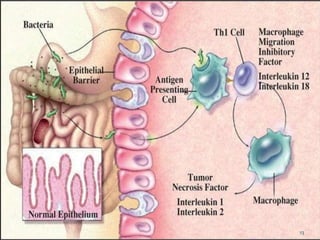
Bacterial antigens are taken up by specialized M cells, pass
between leaky epithelial cells or enter the lamina propria
through ulcerated mucosa
After processing they are presented on type 1 T-helper cells by
antigen presenting cells (APC) in the lamina propria.
T-cell activation and differentiation results in Th1 T cell
mediated cytokine response
With the secretion of cytokines including gamma interferon
(IFNƴ)
14
Further amplification of T cells perpetuates the inflammatory
process with activation of non immune cells and release of the
important cytokines.
Eg: IL-12, IL-23, IL-1, IL-6 and tumor necrosis factor (TNF)
These pathways occur in all normal individual exposed to
inflammatory insults and this is self limiting in healthy subjects
In genetically predisposed persons, dysregulation of innate
immunity may trigger inflammatory bowel disease.
15
16
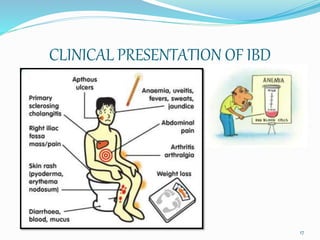
CLINICAL PRESENTATION OF IBD
17
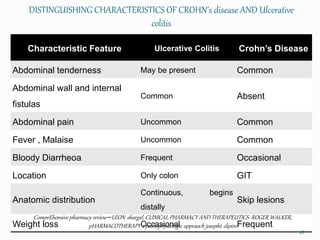
DISTINGUISHING CHARACTERISTICS OF CROHN’s disease AND Ulcerative
colitis
Characteristic Feature Ulcerative Colitis Crohn’s Disease
Abdominal tenderness May be present Common
Abdominal wall and internal
fistulas
Common Absent
Abdominal pain Uncommon Common
Fever , Malaise Uncommon Common
Bloody Diarrheoa Frequent Occasional
Location Only colon GIT
Anatomic distribution
Continuous, begins
distally
Skip lesions
Weight loss Occasional Frequent
ComprEhensive pharmacy review –LEON shargel, CLINICAL PHARMACY AND THERAPEUTICS- ROGER WALKER,
pHARMACOTHERAPY a pathophysiologic appraoch josepht. dipiro
18
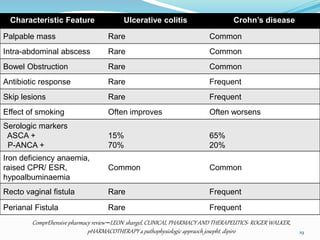
Characteristic Feature Ulcerative colitis Crohn’s disease
Palpable mass Rare Common
Intra-abdominal abscess Rare Common
Bowel Obstruction Rare Common
Antibiotic response Rare Frequent
Skip lesions Rare Frequent
Effect of smoking Often improves Often worsens
Serologic markers
ASCA +
P-ANCA +
15%
70%
65%
20%
Iron deficiency anaemia,
raised CPR/ ESR,
hypoalbuminaemia
Common Common
Recto vaginal fistula Rare Frequent
Perianal Fistula Rare Frequent
ComprEhensive pharmacy review –LEON shargel, CLINICAL PHARMACY AND THERAPEUTICS- ROGER WALKER,
pHARMACOTHERAPY a pathophysiologic appraoch josepht. dipiro 19
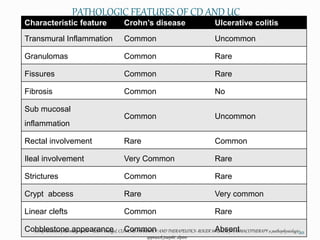
PATHOLOGIC FEATURES OF CD AND UC
Characteristic feature Crohn’s disease Ulcerative colitis
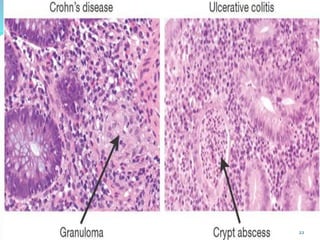
Transmural Inflammation Common Uncommon
Granulomas Common Rare
Fissures Common Rare
Fibrosis Common No
Sub mucosal
inflammation
Common Uncommon
Rectal involvement Rare Common
Ileal involvement Very Common Rare
Strictures Common Rare
Crypt abcess Rare Very common
Linear clefts Common Rare
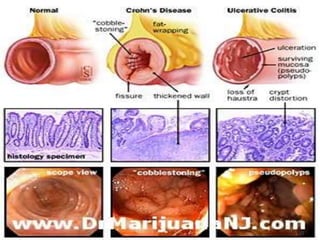
Cobblestone appearance Common AbsentComprEhensive pharmacy review –LEON shargel, CLINICAL PHARMACY AND THERAPEUTICS- ROGER WALKER, pHARMACOTHERAPY a pathophysiologic
appraochjosepht. dipiro
20
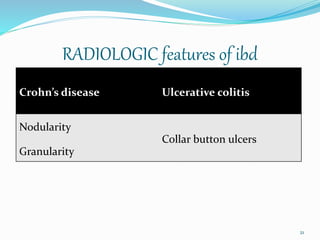
RADIOLOGIC features of ibd
Crohn’s disease Ulcerative colitis
Nodularity
Granularity
Collar button ulcers
21
22
23
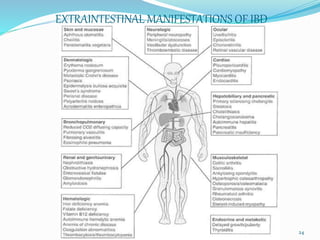
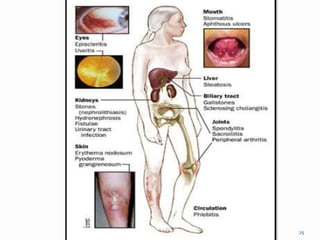
EXTRAINTESTINAL MANIFESTATIONS OF IBD
24
25
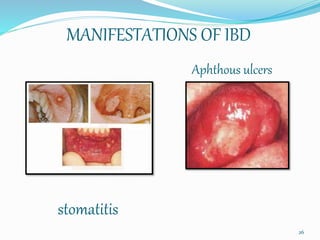
stomatitis
Aphthous ulcers
MANIFESTATIONS OF IBD
26
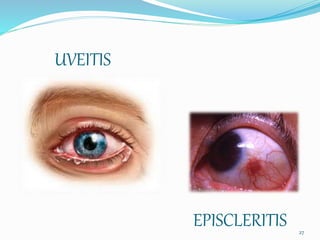
UVEITIS
EPISCLERITIS 27
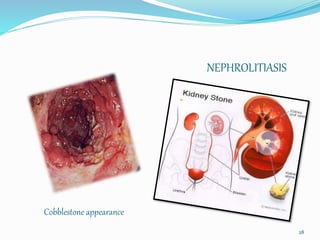
Cobblestone appearance
NEPHROLITIASIS
28
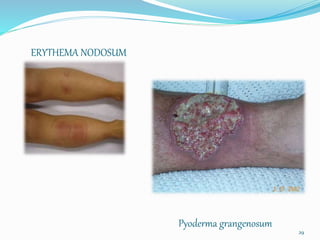
Pyoderma grangenosum
ERYTHEMA NODOSUM
29
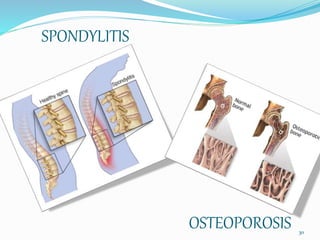
SPONDYLITIS
OSTEOPOROSIS 30
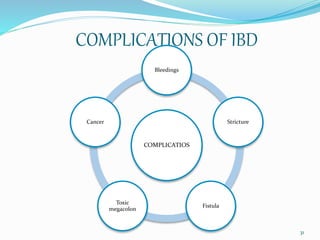
COMPLICATIONS OF IBD
COMPLICATIOS
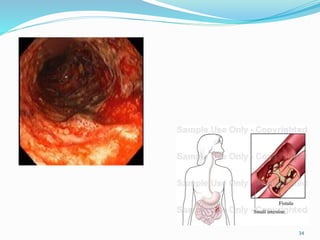
Bleedings
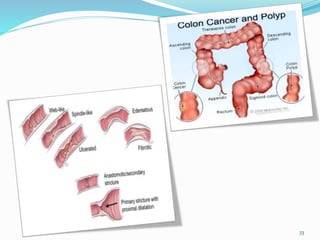
Stricture
Fistula
Toxic
megacolon
Cancer
31
32
33
34
INVESTIGATIONS
35
INVESTIGATIONS
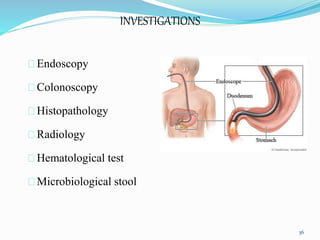
Endoscopy
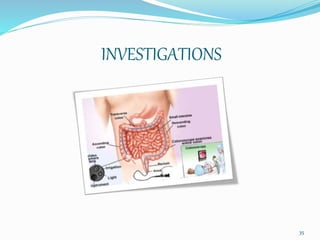
Colonoscopy
Histopathology
Radiology
Hematological test
Microbiological stool
36
INVESTIGATIONS
Crohn’s disease Ulcerative colitis
Blood Test
•CP with morphology: Normocytic
normocromic anemia of CROHNic disease
•Serum B12 level may be low.
•Raised ESR, CRP and raised WBC count.
•Hypo albuminaemia.
•Blood culture in septicaemia.
•Fe deficiency anemia
•Raised white cell and platelet count
•Raised ESR, CRP
•Hypo albuminaemia
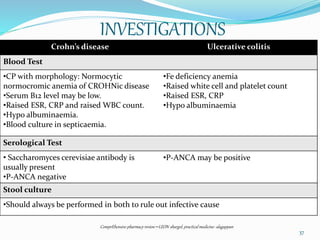
Serological Test
• Saccharomyces cerevisiae antibody is
usually present
•P-ANCA negative
•P-ANCA may be positive
Stool culture
•Should always be performed in both to rule out infective cause
ComprEhensive pharmacy review –LEON shargel, practicalmedicine- alagappan
37
CONTD..
Crohn’s Disease Ulcerative Colitis
Radiography
Plain ABD. X-ray:
•Loss of haustral markings and shortening of
bowel Is seen in sever lession.
•Narrowing of bowel lumen is seen
Ultrasound:
•Thickened small bowel loops and mesentery
or abscess
•Thickening of colonic wall and presence of
free fluid in abdominal cavity
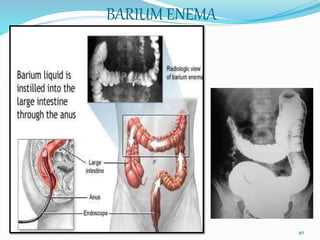
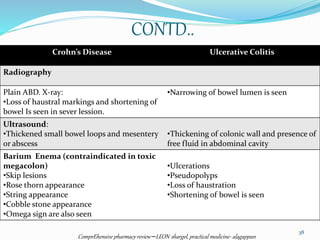
Barium Enema (contraindicated in toxic
megacolon)
•Skip lesions
•Rose thorn appearance
•String appearance
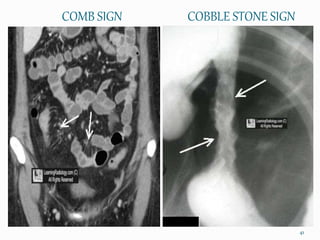
•Cobble stone appearance
•Omega sign are also seen
•Ulcerations
•Pseudopolyps
•Loss of haustration
•Shortening of bowel is seen
ComprEhensive pharmacy review –LEON shargel, practical medicine- alagappan
38
CONTD..
Crohns disease Ulcerative colitis
Instant Barium enema
•Patchy sup. Ulceration to wide spread deep
•Cobble stone appearance and narrowing
•Superficial ulcers
•Shortened and narrowed colon in long
standing disease
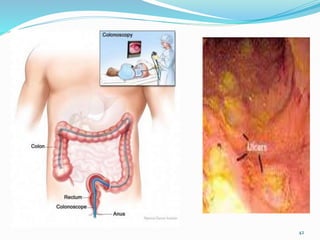
Colonoscopy
•Fissures and fistulae •Pseudopolyps
•Mucosal granularity and hyperemia
High resolution USG. And spiral CT
•Radionuclide scan with gallium labeled
polymorphs or indium or technetium
labeled leucocytes
•Capsule imaging of the gut.
•Radionuclide scan used to assess colonic
inflammation
Stricture evaluation and dilation
complicated Lesser complicated
ComprEhensive pharmacy review –LEON shargel, practical medicine- alagappan
39
BARIUM ENEMA
40
COMB SIGN
41
COBBLE STONE SIGN
42
CLASSIFICATION OF ulcerative colitis and
CROHN’s disease
43
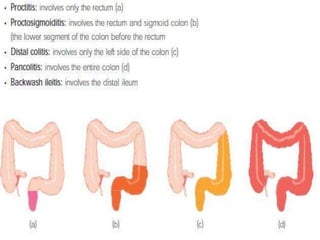
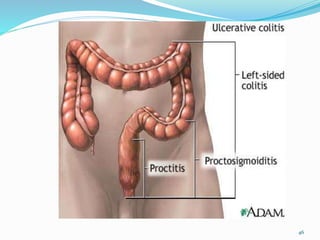
Anatomical classification of ulcerative colitis
and CROHN’s disease
ULCERATIVE COLITIS CROHNS DISEASE
Proctitis
Proctosigmoiditis
Left sided colitis
Pancolitis
Backwash ileitis
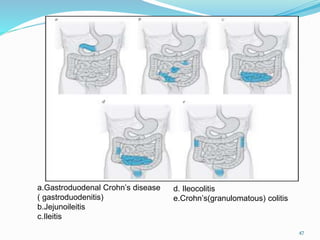
Gastro duodenal Crohn’s
disease( gastroduodenitis)
Jejunoileitis
Ileitis
Ileocolitis
Crohn’s (granulomatous)
colitis
ComprEhensive pharmacy review –LEON shargel
44
45
46
a.Gastroduodenal Crohn’s disease
( gastroduodenitis)
b.Jejunoileitis
c.Ileitis
47
d. Ileocolitis
e.Crohn’s(granulomatous) colitis
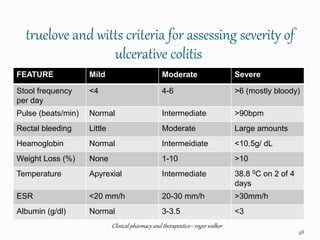
truelove and witts criteria for assessing severity of
ulcerative colitis
FEATURE Mild Moderate Severe
Stool frequency
per day
<4 4-6 >6 (mostly bloody)
Pulse (beats/min) Normal Intermediate >90bpm
Rectal bleeding Little Moderate Large amounts
Heamoglobin Normal Intermeidiate <10.5g/ dL
Weight Loss (%) None 1-10 >10
Temperature Apyrexial Intermediate 38.8 0C on 2 of 4
days
ESR <20 mm/h 20-30 mm/h >30mm/h
Albumin (g/dl) Normal 3-3.5 <3
Clinical pharmacy and therapeutics– roger walker
48
Mild ulcerative colitis
Gradual onset
Infrequent diarrhoea (<4movements/day)
Intermittent rectal bleeding
Stool may be formed or too loose in consistency
Fecal urgency ,tenesmus,left lower quadrant pain
relieved by defecation
NO significant abdominal tenderness
ComprEhensive pharmacy review –LEON shargel
49
Moderate ulcerative colitis
More severe diarrhoea with frequent bleeding
Abdominal pain & tenderness but not severe
Mild fever , anemia & hypoalbuminemia,
tachycardia.
ComprEhensive pharmacy review –LEON shargel
50
Severe ulcerative colitis
Severe diarrhoea with >6-10 bloody bowel
movements per day
Severe anemia , hypovolemia ,imparied nutrition &
hypoalbuminemi,ELEVATED esr
Abdominal pain & tenderness
FULMINANT COLITIS:
Subset of severe disease with rapidly worsening
symptoms & signs of toxicity
ComprEhensive pharmacy review –LEON shargel
51
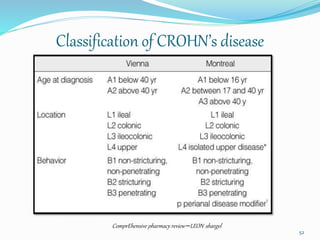
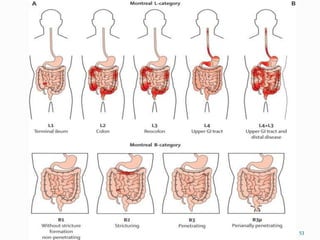
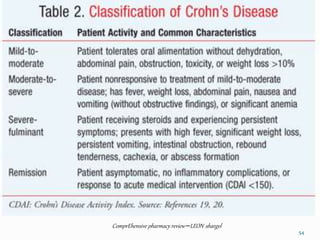
Classification of CROHN’s disease
ComprEhensive pharmacy review –LEON shargel
52
53
ComprEhensive pharmacy review –LEON shargel
54
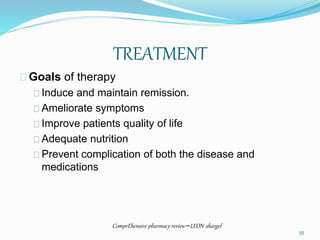
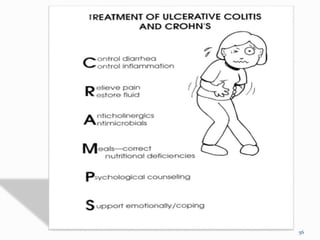
TREATMENT
Goals of therapy
Induce and maintain remission.
Ameliorate symptoms
Improve patients quality of life
Adequate nutrition
Prevent complication of both the disease and
medications
ComprEhensive pharmacy review –LEON shargel
55
56
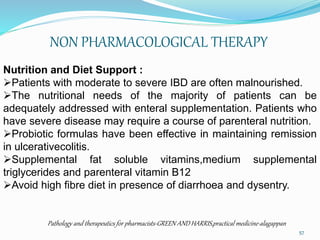
NON PHARMACOLOGICAL THERAPY
Nutrition and Diet Support :
Patients with moderate to severe IBD are often malnourished.
The nutritional needs of the majority of patients can be
adequately addressed with enteral supplementation. Patients who
have severe disease may require a course of parenteral nutrition.
Probiotic formulas have been effective in maintaining remission
in ulcerativecolitis.
Supplemental fat soluble vitamins,medium supplemental
triglycerides and parenteral vitamin B12
Avoid high fibre diet in presence of diarrhoea and dysentry.
Pathology and therapeutics for pharmacists-GREEN AND HARRIS,practical medicine-alagappan
57
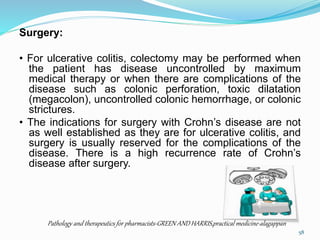
Surgery:
• For ulcerative colitis, colectomy may be performed when
the patient has disease uncontrolled by maximum
medical therapy or when there are complications of the
disease such as colonic perforation, toxic dilatation
(megacolon), uncontrolled colonic hemorrhage, or colonic
strictures.
• The indications for surgery with Crohn’s disease are not
as well established as they are for ulcerative colitis, and
surgery is usually reserved for the complications of the
disease. There is a high recurrence rate of Crohn’s
disease after surgery.
Pathology and therapeutics for pharmacists-GREEN AND HARRIS,practical medicine-alagappan
58
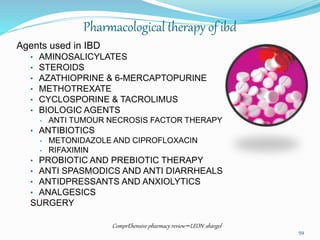
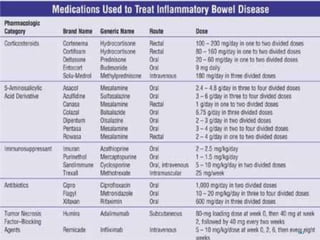
Pharmacological therapy of ibd
Agents used in IBD
• AMINOSALICYLATES
• STEROIDS
• AZATHIOPRINE & 6-MERCAPTOPURINE
• METHOTREXATE
• CYCLOSPORINE & TACROLIMUS
• BIOLOGIC AGENTS
• ANTI TUMOUR NECROSIS FACTOR THERAPY
• ANTIBIOTICS
• METONIDAZOLE AND CIPROFLOXACIN
• RIFAXIMIN
• PROBIOTIC AND PREBIOTIC THERAPY
• ANTI SPASMODICS AND ANTI DIARRHEALS
• ANTIDPRESSANTS AND ANXIOLYTICS
• ANALGESICS
SURGERY
ComprEhensive pharmacy review –LEON shargel
59
Management of ibd
Agents used in IBD
• AMINOSALICYLATES
• STEROIDS
• AZATHIOPRINE & 6-MERCAPTOPURINE
• METHOTREXATE
• CYCLOSPORINE & TACROLIMUS
• BIOLOGIC AGENTS
• ANTI TUMOUR NECROSIS FACTOR THERAPY
• ANTIBIOTICS
• METONIDAZOLE AND CIPROFLOXACIN
• RIFAXIMIN
• PROBIOTIC AND PREBIOTIC THERAPY
• ANTI SPASMODICS AND ANTI DIARRHEALS
• ANTIDPRESSANTS AND ANXIOLYTICS
• ANALGESICS
SURGERY
60
AMINOSALICYLATES
SULFASALAZINE(Salazar,Salazopyrin)
MESALAZINE( Coolgut,Cosacol)
OLSALAZINE(Dipentum)
BALSALAZINE(Balacol, Colorex)
MECHANISM OF ACTION: Salicylic acid moiety released
is absorbed and has anti-inflammatory action.
ADVERSE EFFECTS:
 Nausea and vomiting
 Headache
 Rashes
 Rarely bone marrow dyscrasias,
 Liver dysfunction.
RANG AND DALE pharmacology review, adverse drug reactions-grover
61
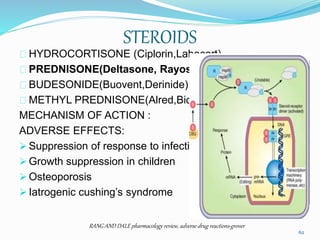
STEROIDS
HYDROCORTISONE (Ciplorin,Labocort)
PREDNISONE(Deltasone, Rayos)
BUDESONIDE(Buovent,Derinide)
METHYL PREDNISONE(Alred,Biolone)
MECHANISM OF ACTION :
ADVERSE EFFECTS:
 Suppression of response to infection
 Growth suppression in children
 Osteoporosis
 Iatrogenic cushing’s syndrome
RANG AND DALE pharmacology review, adverse drug reactions-grover
62
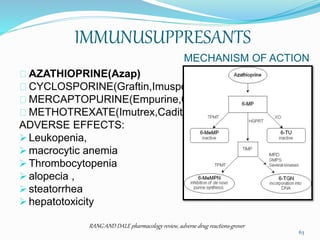
IMMUNUSUPPRESANTS
AZATHIOPRINE(Azap)
CYCLOSPORINE(Graftin,Imusporin)
MERCAPTOPURINE(Empurine,6MP)
METHOTREXATE(Imutrex,Caditrex)
ADVERSE EFFECTS:
 Leukopenia,
 macrocytic anemia
 Thrombocytopenia
 alopecia ,
 steatorrhea
 hepatotoxicity
MECHANISM OF ACTION
RANG AND DALE pharmacology review, adverse drug reactions-grover
63
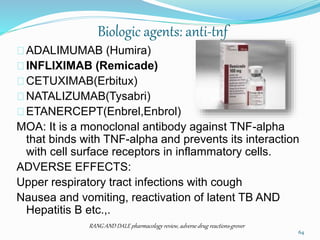
Biologic agents: anti-tnf
ADALIMUMAB (Humira)
INFLIXIMAB (Remicade)
CETUXIMAB(Erbitux)
NATALIZUMAB(Tysabri)
ETANERCEPT(Enbrel,Enbrol)
MOA: It is a monoclonal antibody against TNF-alpha
that binds with TNF-alpha and prevents its interaction
with cell surface receptors in inflammatory cells.
ADVERSE EFFECTS:
Upper respiratory tract infections with cough
Nausea and vomiting, reactivation of latent TB AND
Hepatitis B etc.,.
RANG AND DALE pharmacology review, adverse drug reactions-grover
64
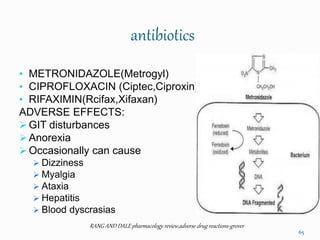
antibiotics
• METRONIDAZOLE(Metrogyl)
• CIPROFLOXACIN (Ciptec,Ciproxin)
• RIFAXIMIN(Rcifax,Xifaxan)
ADVERSE EFFECTS:
 GIT disturbances
 Anorexia
 Occasionally can cause
 Dizziness
 Myalgia
 Ataxia
 Hepatitis
 Blood dyscrasias
RANG AND DALE pharmacology review,adverse drug reactions-grover
65
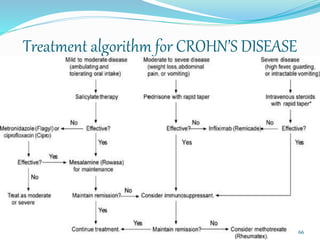
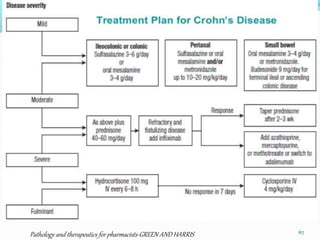
Treatment algorithm for CROHN’S DISEASE
66
Pathology and therapeutics for pharmacists-GREEN AND HARRIS 67
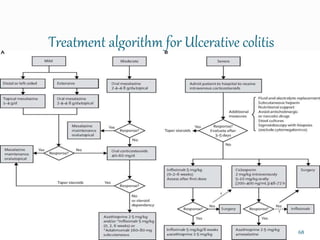
Treatment algorithm for Ulcerative colitis
68
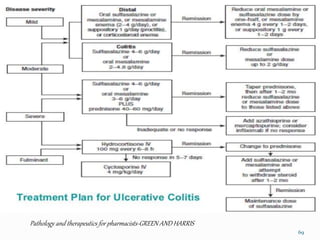
Pathology and therapeutics for pharmacists-GREEN AND HARRIS
69
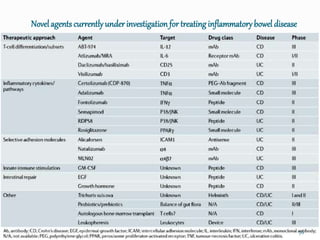
Novelagents currentlyunderinvestigation for treating inflammatorybowel disease
70
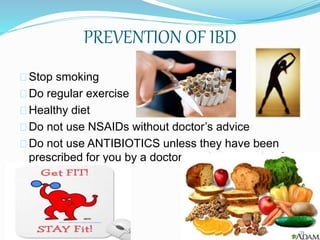
PREVENTION OF IBD
Stop smoking
Do regular exercise
Healthy diet
Do not use NSAIDs without doctor’s advice
Do not use ANTIBIOTICS unless they have been
prescribed for you by a doctor
71

Inflammatory Bowel Disease

  • 1.
  • 2.
    OVERVIEW Definition Epidemiology Etiology Pathophysiology Clinical presentations Extra intestinalmanifestations Complications Investigations Classification Treatment Prevention 2
  • 3.
    Inflammatory Bowel Disease(IBD) is commonly used to describe 2 idiopathic diseases of GIT with closely related presentations, these diseases are ULCERATIVE COLITIS(UC) and CROHN’S DISEASE(CD) Ulcerative colitis is a Chronic inflammation condition of GIT mucosa and is primarily found in rectum and colon where as Crohn’s Disease is a transmural inflammation of GI mucosa and can be found throughout the GIT from mouth to the anus and normally CD affects the small bowel and colon COMPREHENSIVE PHRARMACY REVIEW ,7TH EDITION , P g.no 1143 3
  • 4.
  • 5.
    Epidemiology Ulcerative colitis  Age:15-40yrs (Young adults)  Sex: No variation between men and women or between socioeconomic group  High incidence areas: USA and northern-western Europe Clinical medicine, kumar and clarks 5
  • 6.
    contd.. CROHN’s disease  Age:1stpeak 15-30 years of age, 2nd peak around 60 years  Sex Marginally more common in females  High incidence areas: North America, UK,northern Europe Clinical medicine, kumar and clarks 6
  • 7.
    etiology • DIET: • Fatintake • Fast food ingestion • Milk and fibre consumption • Total protein and energy intake • DRUGS: • NSAIDS: DICLOFENAC • Antibiotics: may precipitate the relapse • Oral contraceptives increase the risk of developing CD • Smoking is protective against UC but increases the risk of CD Clinical pharmacy and therapeutics, roger walker and cate whittlesea 7
  • 8.
    CONTD.. GENETICS: • If apatient has IBD, the lifetime risk that a first-degree relative will be affected is ~15%. • If two parents have IBD, each child has a 36% chance of being affected. • In twin studies , 58% of monozygotic twins are concordant for CD and 6% are concordant for UC, whereas 4% of dizygotic twins are concordant for CD and none are concordant for UC. • Mutations of gene CARD15/NOD2 on chromosome 16 is associated with SI CD 2 other genes – OCTN1, DLG5 ETHNIC: Jews are more prone to IBD than non jews. STRESS: Increase the relapse of IBD Clinical pharmacy and therapeutics, roger walker and cate whittlesea 8
  • 9.
    CONTD.. INFECTION: Mycobacterium paratuberculosis :CD Diarrhoea :Ulcerative colitis Clinical pharmacy and therapeutics, roger walker and cate whittlesea 9
  • 10.
  • 11.
  • 12.
    Davidson’s principle andpractice of medicine 12
  • 13.
  • 14.
    Bacterial antigens aretaken up by specialized M cells, pass between leaky epithelial cells or enter the lamina propria through ulcerated mucosa After processing they are presented on type 1 T-helper cells by antigen presenting cells (APC) in the lamina propria. T-cell activation and differentiation results in Th1 T cell mediated cytokine response With the secretion of cytokines including gamma interferon (IFNƴ) 14
  • 15.
    Further amplification ofT cells perpetuates the inflammatory process with activation of non immune cells and release of the important cytokines. Eg: IL-12, IL-23, IL-1, IL-6 and tumor necrosis factor (TNF) These pathways occur in all normal individual exposed to inflammatory insults and this is self limiting in healthy subjects In genetically predisposed persons, dysregulation of innate immunity may trigger inflammatory bowel disease. 15
  • 16.
  • 17.
  • 18.
    DISTINGUISHING CHARACTERISTICS OFCROHN’s disease AND Ulcerative colitis Characteristic Feature Ulcerative Colitis Crohn’s Disease Abdominal tenderness May be present Common Abdominal wall and internal fistulas Common Absent Abdominal pain Uncommon Common Fever , Malaise Uncommon Common Bloody Diarrheoa Frequent Occasional Location Only colon GIT Anatomic distribution Continuous, begins distally Skip lesions Weight loss Occasional Frequent ComprEhensive pharmacy review –LEON shargel, CLINICAL PHARMACY AND THERAPEUTICS- ROGER WALKER, pHARMACOTHERAPY a pathophysiologic appraoch josepht. dipiro 18
  • 19.
    Characteristic Feature Ulcerativecolitis Crohn’s disease Palpable mass Rare Common Intra-abdominal abscess Rare Common Bowel Obstruction Rare Common Antibiotic response Rare Frequent Skip lesions Rare Frequent Effect of smoking Often improves Often worsens Serologic markers ASCA + P-ANCA + 15% 70% 65% 20% Iron deficiency anaemia, raised CPR/ ESR, hypoalbuminaemia Common Common Recto vaginal fistula Rare Frequent Perianal Fistula Rare Frequent ComprEhensive pharmacy review –LEON shargel, CLINICAL PHARMACY AND THERAPEUTICS- ROGER WALKER, pHARMACOTHERAPY a pathophysiologic appraoch josepht. dipiro 19
  • 20.
    PATHOLOGIC FEATURES OFCD AND UC Characteristic feature Crohn’s disease Ulcerative colitis Transmural Inflammation Common Uncommon Granulomas Common Rare Fissures Common Rare Fibrosis Common No Sub mucosal inflammation Common Uncommon Rectal involvement Rare Common Ileal involvement Very Common Rare Strictures Common Rare Crypt abcess Rare Very common Linear clefts Common Rare Cobblestone appearance Common AbsentComprEhensive pharmacy review –LEON shargel, CLINICAL PHARMACY AND THERAPEUTICS- ROGER WALKER, pHARMACOTHERAPY a pathophysiologic appraochjosepht. dipiro 20
  • 21.
    RADIOLOGIC features ofibd Crohn’s disease Ulcerative colitis Nodularity Granularity Collar button ulcers 21
  • 22.
  • 23.
  • 24.
  • 25.
  • 26.
  • 27.
  • 28.
  • 29.
  • 30.
  • 31.
  • 32.
  • 33.
  • 34.
  • 35.
  • 36.
  • 37.
    INVESTIGATIONS Crohn’s disease Ulcerativecolitis Blood Test •CP with morphology: Normocytic normocromic anemia of CROHNic disease •Serum B12 level may be low. •Raised ESR, CRP and raised WBC count. •Hypo albuminaemia. •Blood culture in septicaemia. •Fe deficiency anemia •Raised white cell and platelet count •Raised ESR, CRP •Hypo albuminaemia Serological Test • Saccharomyces cerevisiae antibody is usually present •P-ANCA negative •P-ANCA may be positive Stool culture •Should always be performed in both to rule out infective cause ComprEhensive pharmacy review –LEON shargel, practicalmedicine- alagappan 37
  • 38.
    CONTD.. Crohn’s Disease UlcerativeColitis Radiography Plain ABD. X-ray: •Loss of haustral markings and shortening of bowel Is seen in sever lession. •Narrowing of bowel lumen is seen Ultrasound: •Thickened small bowel loops and mesentery or abscess •Thickening of colonic wall and presence of free fluid in abdominal cavity Barium Enema (contraindicated in toxic megacolon) •Skip lesions •Rose thorn appearance •String appearance •Cobble stone appearance •Omega sign are also seen •Ulcerations •Pseudopolyps •Loss of haustration •Shortening of bowel is seen ComprEhensive pharmacy review –LEON shargel, practical medicine- alagappan 38
  • 39.
    CONTD.. Crohns disease Ulcerativecolitis Instant Barium enema •Patchy sup. Ulceration to wide spread deep •Cobble stone appearance and narrowing •Superficial ulcers •Shortened and narrowed colon in long standing disease Colonoscopy •Fissures and fistulae •Pseudopolyps •Mucosal granularity and hyperemia High resolution USG. And spiral CT •Radionuclide scan with gallium labeled polymorphs or indium or technetium labeled leucocytes •Capsule imaging of the gut. •Radionuclide scan used to assess colonic inflammation Stricture evaluation and dilation complicated Lesser complicated ComprEhensive pharmacy review –LEON shargel, practical medicine- alagappan 39
  • 40.
  • 41.
  • 42.
  • 43.
    CLASSIFICATION OF ulcerativecolitis and CROHN’s disease 43
  • 44.
    Anatomical classification ofulcerative colitis and CROHN’s disease ULCERATIVE COLITIS CROHNS DISEASE Proctitis Proctosigmoiditis Left sided colitis Pancolitis Backwash ileitis Gastro duodenal Crohn’s disease( gastroduodenitis) Jejunoileitis Ileitis Ileocolitis Crohn’s (granulomatous) colitis ComprEhensive pharmacy review –LEON shargel 44
  • 45.
  • 46.
  • 47.
    a.Gastroduodenal Crohn’s disease (gastroduodenitis) b.Jejunoileitis c.Ileitis 47 d. Ileocolitis e.Crohn’s(granulomatous) colitis
  • 48.
    truelove and wittscriteria for assessing severity of ulcerative colitis FEATURE Mild Moderate Severe Stool frequency per day <4 4-6 >6 (mostly bloody) Pulse (beats/min) Normal Intermediate >90bpm Rectal bleeding Little Moderate Large amounts Heamoglobin Normal Intermeidiate <10.5g/ dL Weight Loss (%) None 1-10 >10 Temperature Apyrexial Intermediate 38.8 0C on 2 of 4 days ESR <20 mm/h 20-30 mm/h >30mm/h Albumin (g/dl) Normal 3-3.5 <3 Clinical pharmacy and therapeutics– roger walker 48
  • 49.
    Mild ulcerative colitis Gradualonset Infrequent diarrhoea (<4movements/day) Intermittent rectal bleeding Stool may be formed or too loose in consistency Fecal urgency ,tenesmus,left lower quadrant pain relieved by defecation NO significant abdominal tenderness ComprEhensive pharmacy review –LEON shargel 49
  • 50.
    Moderate ulcerative colitis Moresevere diarrhoea with frequent bleeding Abdominal pain & tenderness but not severe Mild fever , anemia & hypoalbuminemia, tachycardia. ComprEhensive pharmacy review –LEON shargel 50
  • 51.
    Severe ulcerative colitis Severediarrhoea with >6-10 bloody bowel movements per day Severe anemia , hypovolemia ,imparied nutrition & hypoalbuminemi,ELEVATED esr Abdominal pain & tenderness FULMINANT COLITIS: Subset of severe disease with rapidly worsening symptoms & signs of toxicity ComprEhensive pharmacy review –LEON shargel 51
  • 52.
    Classification of CROHN’sdisease ComprEhensive pharmacy review –LEON shargel 52
  • 53.
  • 54.
  • 55.
    TREATMENT Goals of therapy Induceand maintain remission. Ameliorate symptoms Improve patients quality of life Adequate nutrition Prevent complication of both the disease and medications ComprEhensive pharmacy review –LEON shargel 55
  • 56.
  • 57.
    NON PHARMACOLOGICAL THERAPY Nutritionand Diet Support : Patients with moderate to severe IBD are often malnourished. The nutritional needs of the majority of patients can be adequately addressed with enteral supplementation. Patients who have severe disease may require a course of parenteral nutrition. Probiotic formulas have been effective in maintaining remission in ulcerativecolitis. Supplemental fat soluble vitamins,medium supplemental triglycerides and parenteral vitamin B12 Avoid high fibre diet in presence of diarrhoea and dysentry. Pathology and therapeutics for pharmacists-GREEN AND HARRIS,practical medicine-alagappan 57
  • 58.
    Surgery: • For ulcerativecolitis, colectomy may be performed when the patient has disease uncontrolled by maximum medical therapy or when there are complications of the disease such as colonic perforation, toxic dilatation (megacolon), uncontrolled colonic hemorrhage, or colonic strictures. • The indications for surgery with Crohn’s disease are not as well established as they are for ulcerative colitis, and surgery is usually reserved for the complications of the disease. There is a high recurrence rate of Crohn’s disease after surgery. Pathology and therapeutics for pharmacists-GREEN AND HARRIS,practical medicine-alagappan 58
  • 59.
    Pharmacological therapy ofibd Agents used in IBD • AMINOSALICYLATES • STEROIDS • AZATHIOPRINE & 6-MERCAPTOPURINE • METHOTREXATE • CYCLOSPORINE & TACROLIMUS • BIOLOGIC AGENTS • ANTI TUMOUR NECROSIS FACTOR THERAPY • ANTIBIOTICS • METONIDAZOLE AND CIPROFLOXACIN • RIFAXIMIN • PROBIOTIC AND PREBIOTIC THERAPY • ANTI SPASMODICS AND ANTI DIARRHEALS • ANTIDPRESSANTS AND ANXIOLYTICS • ANALGESICS SURGERY ComprEhensive pharmacy review –LEON shargel 59
  • 60.
    Management of ibd Agentsused in IBD • AMINOSALICYLATES • STEROIDS • AZATHIOPRINE & 6-MERCAPTOPURINE • METHOTREXATE • CYCLOSPORINE & TACROLIMUS • BIOLOGIC AGENTS • ANTI TUMOUR NECROSIS FACTOR THERAPY • ANTIBIOTICS • METONIDAZOLE AND CIPROFLOXACIN • RIFAXIMIN • PROBIOTIC AND PREBIOTIC THERAPY • ANTI SPASMODICS AND ANTI DIARRHEALS • ANTIDPRESSANTS AND ANXIOLYTICS • ANALGESICS SURGERY 60
  • 61.
    AMINOSALICYLATES SULFASALAZINE(Salazar,Salazopyrin) MESALAZINE( Coolgut,Cosacol) OLSALAZINE(Dipentum) BALSALAZINE(Balacol, Colorex) MECHANISMOF ACTION: Salicylic acid moiety released is absorbed and has anti-inflammatory action. ADVERSE EFFECTS:  Nausea and vomiting  Headache  Rashes  Rarely bone marrow dyscrasias,  Liver dysfunction. RANG AND DALE pharmacology review, adverse drug reactions-grover 61
  • 62.
    STEROIDS HYDROCORTISONE (Ciplorin,Labocort) PREDNISONE(Deltasone, Rayos) BUDESONIDE(Buovent,Derinide) METHYLPREDNISONE(Alred,Biolone) MECHANISM OF ACTION : ADVERSE EFFECTS:  Suppression of response to infection  Growth suppression in children  Osteoporosis  Iatrogenic cushing’s syndrome RANG AND DALE pharmacology review, adverse drug reactions-grover 62
  • 63.
    IMMUNUSUPPRESANTS AZATHIOPRINE(Azap) CYCLOSPORINE(Graftin,Imusporin) MERCAPTOPURINE(Empurine,6MP) METHOTREXATE(Imutrex,Caditrex) ADVERSE EFFECTS:  Leukopenia, macrocytic anemia  Thrombocytopenia  alopecia ,  steatorrhea  hepatotoxicity MECHANISM OF ACTION RANG AND DALE pharmacology review, adverse drug reactions-grover 63
  • 64.
    Biologic agents: anti-tnf ADALIMUMAB(Humira) INFLIXIMAB (Remicade) CETUXIMAB(Erbitux) NATALIZUMAB(Tysabri) ETANERCEPT(Enbrel,Enbrol) MOA: It is a monoclonal antibody against TNF-alpha that binds with TNF-alpha and prevents its interaction with cell surface receptors in inflammatory cells. ADVERSE EFFECTS: Upper respiratory tract infections with cough Nausea and vomiting, reactivation of latent TB AND Hepatitis B etc.,. RANG AND DALE pharmacology review, adverse drug reactions-grover 64
  • 65.
    antibiotics • METRONIDAZOLE(Metrogyl) • CIPROFLOXACIN(Ciptec,Ciproxin) • RIFAXIMIN(Rcifax,Xifaxan) ADVERSE EFFECTS:  GIT disturbances  Anorexia  Occasionally can cause  Dizziness  Myalgia  Ataxia  Hepatitis  Blood dyscrasias RANG AND DALE pharmacology review,adverse drug reactions-grover 65
  • 66.
    Treatment algorithm forCROHN’S DISEASE 66
  • 67.
    Pathology and therapeuticsfor pharmacists-GREEN AND HARRIS 67
  • 68.
    Treatment algorithm forUlcerative colitis 68
  • 69.
    Pathology and therapeuticsfor pharmacists-GREEN AND HARRIS 69
  • 70.
    Novelagents currentlyunderinvestigation fortreating inflammatorybowel disease 70
  • 71.
    PREVENTION OF IBD Stopsmoking Do regular exercise Healthy diet Do not use NSAIDs without doctor’s advice Do not use ANTIBIOTICS unless they have been prescribed for you by a doctor 71