Ulcerative Colitis
Agenda
 Revising the digestive system
 Understanding Inflammatory Bowel Disease (IBD)
 Learning about Ulcerative Colitis
Digestive system
 IBD affects the digestive
system. Before we learn about
the disease lets revise the
parts of the digestive system
Large intestine
 One form of IBD, ulcerative colitis affects
only the large intestine
 The parts of the large intestine are important
to remember
 In order these are parts of the large intestine
 Ascending colon
 Transverse colon
 Descending colon
 Sigmoid colon
 Rectum
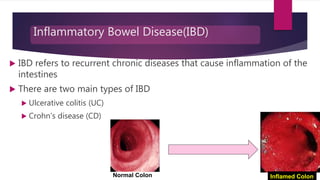
Inflammatory Bowel Disease(IBD)
 IBD refers to recurrent chronic diseases that cause inflammation of the
intestines
 There are two main types of IBD
 Ulcerative colitis (UC)
 Crohn’s disease (CD)
Normal Colon Inflamed Colon
Difference between CD and UC
 UC affects only the large intestine
 CD can affect any part of the gastrointestinal
tract. But most frequently attacks terminal
ileum and colon
 Approx. 15% of patients have signs that falls
between UC and CD (indeterminate colitis)
Ulcerative colitis (UC)
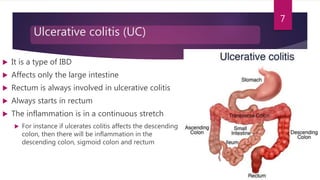
 It is a type of IBD
 Affects only the large intestine
 Rectum is always involved in ulcerative colitis
 Always starts in rectum
 The inflammation is in a continuous stretch
 For instance if ulcerates colitis affects the descending
colon, then there will be inflammation in the
descending colon, sigmoid colon and rectum
7
Ulcerative colitis (UC)
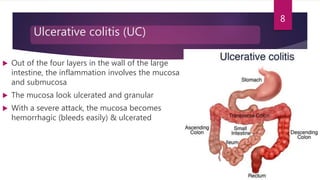
 Out of the four layers in the wall of the large
intestine, the inflammation involves the mucosa
and submucosa
 The mucosa look ulcerated and granular
 With a severe attack, the mucosa becomes
hemorrhagic (bleeds easily) & ulcerated
8
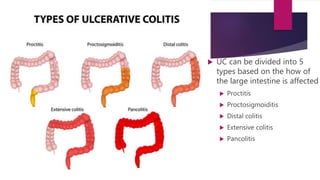
 UC can be divided into 5
types based on the how of
the large intestine is affected
 Proctitis
 Proctosigmoiditis
 Distal colitis
 Extensive colitis
 Pancolitis
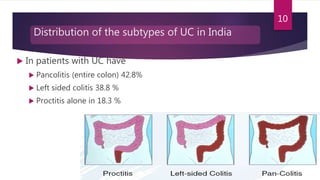
Distribution of the subtypes of UC in India
 In patients with UC have
 Pancolitis (entire colon) 42.8%
 Left sided colitis 38.8 %
 Proctitis alone in 18.3 %
10
What is the cause of UC? (Pathophysiology)
 UC is an autoimmune disease
 Meaning that the immune system is attacking the
body
 The exact cause is not yet known
 It is known that three factors interact to cause UC
 They include the immune system, certain genes and
some environmental factors
11
What are the symptoms of UC?
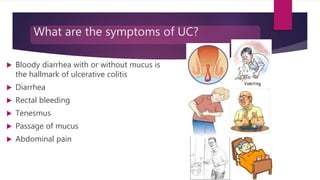
 Bloody diarrhea with or without mucus is
the hallmark of ulcerative colitis
 Diarrhea
 Rectal bleeding
 Tenesmus
 Passage of mucus
 Abdominal pain
How is ulcerative colitis diagnosed?
 Ulcerative colitis cannot be diagnosed by a single tests
 The diagnosis of UC involves the following
 History of the patient
 Physical examination
 Laboratory tests
 Endoscopy
 Tissue biopsy
 Based on the findings of all these investigations a diagnosis of UC
can be made
How is ulcerative colitis classified based
on severity?
 Ulcerative colitis can be classified on the basis of how severe the
symptoms are
 Based on this the severity is as follows;
 Mild
 Moderate
 Severe
 Fulminant
 The severity of UC is determined by certain clinical scores
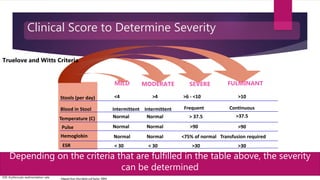
Clinical Score to Determine Severity
>30>30< 30ESR
Transfusion required<75% of normalNormalHemoglobin
>90>90NormalPulse
>37.5> 37.5NormalTemperature (C)
ContinuousFrequentIntermittentBlood in Stool
>10>6 - <10<4Stools (per day)
ESR :Erythrocyte sedimentation rate
MODERATE
>4
Intermittent
Normal
Normal
Normal
< 30
SEVERE FULMINANTMILD
Truelove and Witts Criteria
Depending on the criteria that are fulfilled in the table above, the severity
can be determined
Clinical Score to Determine Severity
 There are numerous clinical scores to determine the severity of UC
 It includes the
 Truelove and Witts Criteria
 Disease Activity Index
 Clinical Activity Index
 Endoscopic Index
 Histology Index
 Research papers often use one of these criteria's to determine the severity of
UC
ESR :Erythrocyte sedimentation rate
What is the pattern of UC
 UC follows a pattern of remission and flares
 Remission is a period in which there are no or few symptoms. In the period
the patient free from the disease.
 Flare is a period when the symptoms are presents. In the period the disease
is active and affects the patient
Goals of Therapy for Ulcerative Colitis
 Ulcerative Colitis cannot be cured by medicine
 Thus the goals of therapy includes
 Inducing remission (Reducing the symptoms of the disease)
 Maintaining remission (Maintaining a long symptoms free period)
 Restoring and maintaining nutrition
 Maintaining patient’s quality of life
What is used to treat UC?
 Clinical therapy
 Mesalazine/Mesalamine
 Corticosteroids
 Immunomodulators
 Ciclosporin
 Infliximab
 Surgery
What is the first line of treatment for UC?
 Flares
 In a flare the goal is to get the symptoms under control as soon as possible
 Hence corticosteroids are used along with mesalamine
 Remission
 In remission safe and effective drugs are used.
 Here, mesalamine is preferred and is used in most UC patients
 A patient will use other drugs only if they are not responding well to
mesalamine
What are the formulations of mesalamine?
 Oral Mesalamine
 Used for all types of UC
 Suppositories
 Used for proctitis
 Foam enema
 Used for proctitis and proctosigmoiditis
 Liquid enema
 Used for proctitis, proctosigmoiditis and left sided colitis
Learn through
videos…
Click play to start

Ulcerative Colitis (IBD)

  • 1.
  • 2.
    Agenda  Revising thedigestive system  Understanding Inflammatory Bowel Disease (IBD)  Learning about Ulcerative Colitis
  • 3.
    Digestive system  IBDaffects the digestive system. Before we learn about the disease lets revise the parts of the digestive system
  • 4.
    Large intestine  Oneform of IBD, ulcerative colitis affects only the large intestine  The parts of the large intestine are important to remember  In order these are parts of the large intestine  Ascending colon  Transverse colon  Descending colon  Sigmoid colon  Rectum
  • 5.
    Inflammatory Bowel Disease(IBD) IBD refers to recurrent chronic diseases that cause inflammation of the intestines  There are two main types of IBD  Ulcerative colitis (UC)  Crohn’s disease (CD) Normal Colon Inflamed Colon
  • 6.
    Difference between CDand UC  UC affects only the large intestine  CD can affect any part of the gastrointestinal tract. But most frequently attacks terminal ileum and colon  Approx. 15% of patients have signs that falls between UC and CD (indeterminate colitis)
  • 7.
    Ulcerative colitis (UC) It is a type of IBD  Affects only the large intestine  Rectum is always involved in ulcerative colitis  Always starts in rectum  The inflammation is in a continuous stretch  For instance if ulcerates colitis affects the descending colon, then there will be inflammation in the descending colon, sigmoid colon and rectum 7
  • 8.
    Ulcerative colitis (UC) Out of the four layers in the wall of the large intestine, the inflammation involves the mucosa and submucosa  The mucosa look ulcerated and granular  With a severe attack, the mucosa becomes hemorrhagic (bleeds easily) & ulcerated 8
  • 9.
     UC canbe divided into 5 types based on the how of the large intestine is affected  Proctitis  Proctosigmoiditis  Distal colitis  Extensive colitis  Pancolitis
  • 10.
    Distribution of thesubtypes of UC in India  In patients with UC have  Pancolitis (entire colon) 42.8%  Left sided colitis 38.8 %  Proctitis alone in 18.3 % 10
  • 11.
    What is thecause of UC? (Pathophysiology)  UC is an autoimmune disease  Meaning that the immune system is attacking the body  The exact cause is not yet known  It is known that three factors interact to cause UC  They include the immune system, certain genes and some environmental factors 11
  • 12.
    What are thesymptoms of UC?  Bloody diarrhea with or without mucus is the hallmark of ulcerative colitis  Diarrhea  Rectal bleeding  Tenesmus  Passage of mucus  Abdominal pain
  • 13.
    How is ulcerativecolitis diagnosed?  Ulcerative colitis cannot be diagnosed by a single tests  The diagnosis of UC involves the following  History of the patient  Physical examination  Laboratory tests  Endoscopy  Tissue biopsy  Based on the findings of all these investigations a diagnosis of UC can be made
  • 14.
    How is ulcerativecolitis classified based on severity?  Ulcerative colitis can be classified on the basis of how severe the symptoms are  Based on this the severity is as follows;  Mild  Moderate  Severe  Fulminant  The severity of UC is determined by certain clinical scores
  • 15.
    Clinical Score toDetermine Severity >30>30< 30ESR Transfusion required<75% of normalNormalHemoglobin >90>90NormalPulse >37.5> 37.5NormalTemperature (C) ContinuousFrequentIntermittentBlood in Stool >10>6 - <10<4Stools (per day) ESR :Erythrocyte sedimentation rate MODERATE >4 Intermittent Normal Normal Normal < 30 SEVERE FULMINANTMILD Truelove and Witts Criteria Depending on the criteria that are fulfilled in the table above, the severity can be determined
  • 16.
    Clinical Score toDetermine Severity  There are numerous clinical scores to determine the severity of UC  It includes the  Truelove and Witts Criteria  Disease Activity Index  Clinical Activity Index  Endoscopic Index  Histology Index  Research papers often use one of these criteria's to determine the severity of UC ESR :Erythrocyte sedimentation rate
  • 17.
    What is thepattern of UC  UC follows a pattern of remission and flares  Remission is a period in which there are no or few symptoms. In the period the patient free from the disease.  Flare is a period when the symptoms are presents. In the period the disease is active and affects the patient
  • 18.
    Goals of Therapyfor Ulcerative Colitis  Ulcerative Colitis cannot be cured by medicine  Thus the goals of therapy includes  Inducing remission (Reducing the symptoms of the disease)  Maintaining remission (Maintaining a long symptoms free period)  Restoring and maintaining nutrition  Maintaining patient’s quality of life
  • 19.
    What is usedto treat UC?  Clinical therapy  Mesalazine/Mesalamine  Corticosteroids  Immunomodulators  Ciclosporin  Infliximab  Surgery
  • 20.
    What is thefirst line of treatment for UC?  Flares  In a flare the goal is to get the symptoms under control as soon as possible  Hence corticosteroids are used along with mesalamine  Remission  In remission safe and effective drugs are used.  Here, mesalamine is preferred and is used in most UC patients  A patient will use other drugs only if they are not responding well to mesalamine
  • 21.
    What are theformulations of mesalamine?  Oral Mesalamine  Used for all types of UC  Suppositories  Used for proctitis  Foam enema  Used for proctitis and proctosigmoiditis  Liquid enema  Used for proctitis, proctosigmoiditis and left sided colitis
  • 22.