Abisha.S.J
FC&RI
Tuticorin
Inflammation is an important
protective process for the host.
Inflammation is a stereotyped
response in a living animal to
a variety of injuries that involves
the Vasculature, various
inflammatory cells, and potent
chemical mediators.
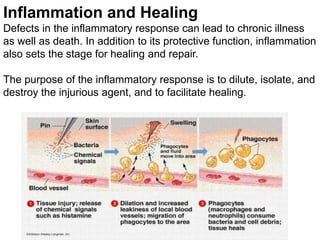
Inflammation and Healing
Defects in the inflammatory response can lead to chronic illness
as well as death. In addition to its protective function, inflammation
also sets the stage for healing and repair.
The purpose of the inflammatory response is to dilute, isolate, and
destroy the injurious agent, and to facilitate healing.
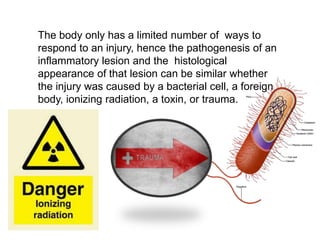
The body only has a limited number of ways to
respond to an injury, hence the pathogenesis of an
inflammatory lesion and the histological
appearance of that lesion can be similar whether
the injury was caused by a bacterial cell, a foreign
body, ionizing radiation, a toxin, or trauma.
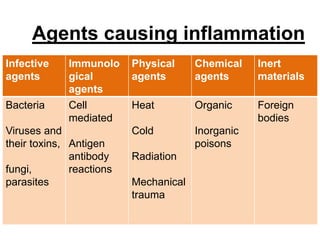
Agents causing inflammation
Infective
agents
Immunolo
gical
agents
Physical
agents
Chemical
agents
Inert
materials
Bacteria
Viruses and
their toxins,
fungi,
parasites
Cell
mediated
Antigen
antibody
reactions
Heat
Cold
Radiation
Mechanical
trauma
Organic
Inorganic
poisons
Foreign
bodies
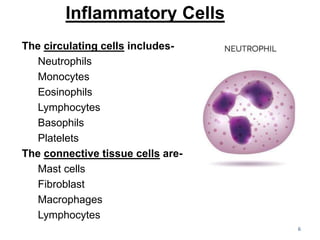
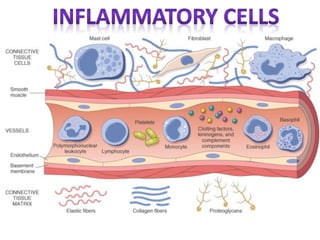
Inflammatory Cells
The circulating cells includes-
Neutrophils
Monocytes
Eosinophils
Lymphocytes
Basophils
Platelets
The connective tissue cells are-
Mast cells
Fibroblast
Macrophages
Lymphocytes
6
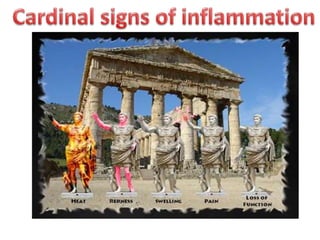
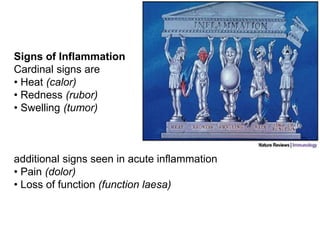
Signs of Inflammation
Cardinal signs are
• Heat (calor)
• Redness (rubor)
• Swelling (tumor)
additional signs seen in acute inflammation
• Pain (dolor)
• Loss of function (function laesa)
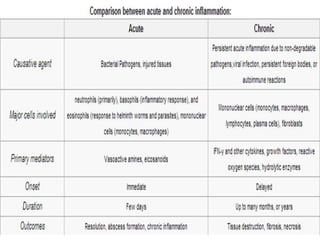
Types of inflammation
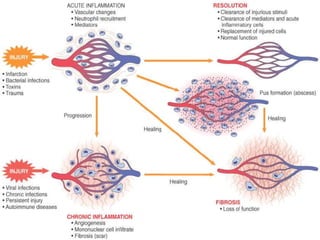
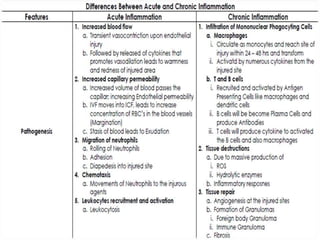
Inflammation can be divided into acute and
chronic forms which differ histologically as well
as in duration.
Acute inflammatory episodes, characterized by
vascular events and exudation, usually progress over a period of
3 to 10 days, then resolve as the injurious agent is eliminated.
Chronic inflammation, characterized by cellular proliferation,
can extend from weeks to months to the lifetime of the host,
continuing as long as the injurious agent persists.
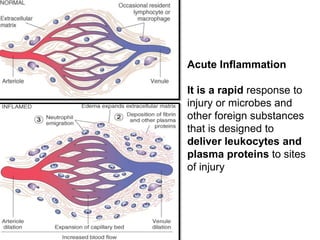
Acute Inflammation
It is a rapid response to
injury or microbes and
other foreign substances
that is designed to
deliver leukocytes and
plasma proteins to sites
of injury
Acute inflammation has two major components
• Vascular changes
• Cellular events
Vascular
• Changes in Vascular Caliber and Flow
• Increased Vascular Permeability
Vasodilation
which allow the largest serum protein molecules such as
fibrinogen and immunoglobulins, normally confined within the
circulation, to exude into the tissue.
Vasodilatation- increase blood flow
Increased intravascular hydrostatic pressure
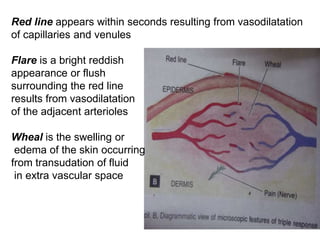
Red line appears within seconds resulting from vasodilatation
of capillaries and venules
Flare is a bright reddish
appearance or flush
surrounding the red line
results from vasodilatation
of the adjacent arterioles
Wheal is the swelling or
edema of the skin occurring
from transudation of fluid
in extra vascular space
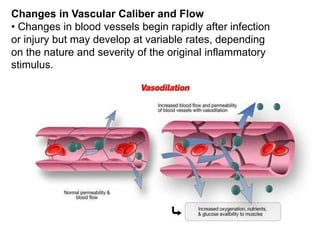
Changes in Vascular Caliber and Flow
• Changes in blood vessels begin rapidly after infection
or injury but may develop at variable rates, depending
on the nature and severity of the original inflammatory
stimulus.
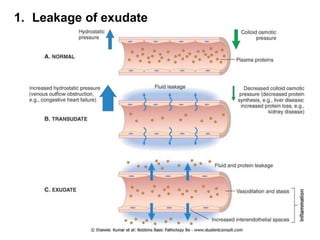
1. Leakage of exudate
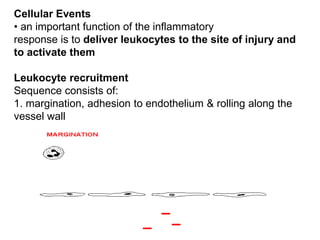
Cellular Events
• an important function of the inflammatory
response is to deliver leukocytes to the site of injury and
to activate them
Leukocyte recruitment
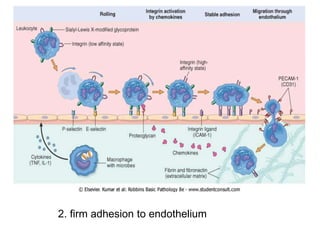
Sequence consists of:
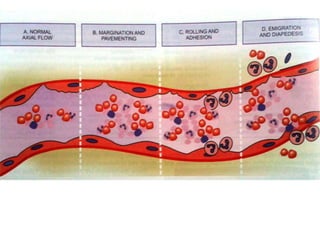
1. margination, adhesion to endothelium & rolling along the
vessel wall
2. firm adhesion to endothelium
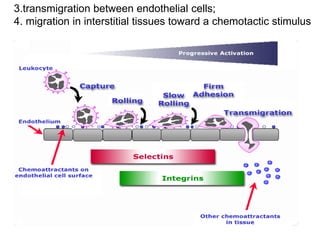
3.transmigration between endothelial cells;
4. migration in interstitial tissues toward a chemotactic stimulus
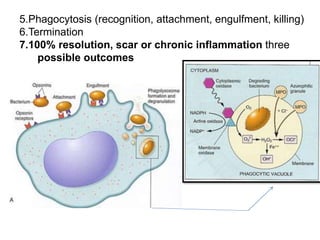
5.Phagocytosis (recognition, attachment, engulfment, killing)
6.Termination
7.100% resolution, scar or chronic inflammation three
possible outcomes
Patterns of acute inflammation
vascular and cellular reactions that characterize acute
inflammation are reflected in the morphologic
appearanceof the reaction
Grossly
• According to principle
constituent of exudates:-SEROUS
FIBRINOUS
NEUTROPHILIC
SUPPURATIVE
ACUTE
INFLAMMATION
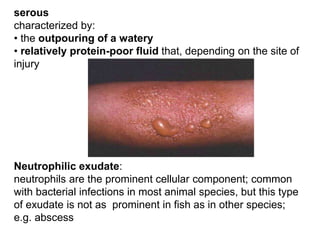
serous
characterized by:
• the outpouring of a watery
• relatively protein-poor fluid that, depending on the site of
injury
Neutrophilic exudate:
neutrophils are the prominent cellular component; common
with bacterial infections in most animal species, but this type
of exudate is not as prominent in fish as in other species;
e.g. abscess
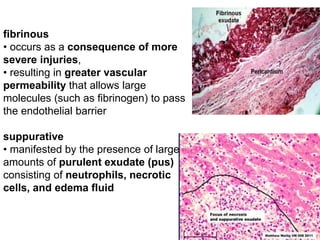
fibrinous
• occurs as a consequence of more
severe injuries,
• resulting in greater vascular
permeability that allows large
molecules (such as fibrinogen) to pass
the endothelial barrier
suppurative
• manifested by the presence of large
amounts of purulent exudate (pus)
consisting of neutrophils, necrotic
cells, and edema fluid
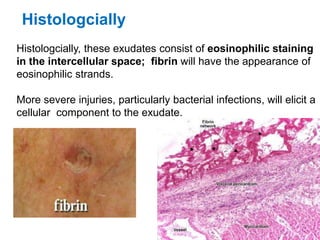
Histologcially, these exudates consist of eosinophilic staining
in the intercellular space; fibrin will have the appearance of
eosinophilic strands.
More severe injuries, particularly bacterial infections, will elicit a
cellular component to the exudate.
Histologcially
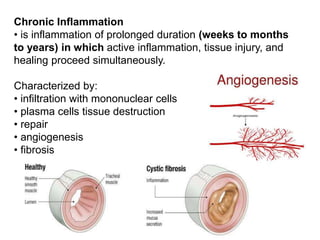
Chronic Inflammation
• is inflammation of prolonged duration (weeks to months
to years) in which active inflammation, tissue injury, and
healing proceed simultaneously.
Characterized by:
• infiltration with mononuclear cells
• plasma cells tissue destruction
• repair
• angiogenesis
• fibrosis
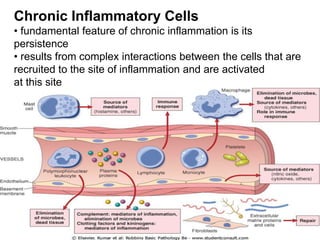
Chronic Inflammatory Cells
• fundamental feature of chronic inflammation is its
persistence
• results from complex interactions between the cells that are
recruited to the site of inflammation and are activated
at this site
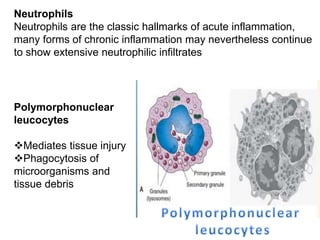
Neutrophils
Neutrophils are the classic hallmarks of acute inflammation,
many forms of chronic inflammation may nevertheless continue
to show extensive neutrophilic infiltrates
Polymorphonuclear
leucocytes
Mediates tissue injury
Phagocytosis of
microorganisms and
tissue debris
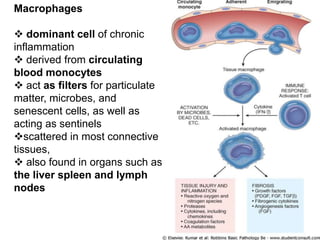
Macrophages
 dominant cell of chronic
inflammation
 derived from circulating
blood monocytes
 act as filters for particulate
matter, microbes, and
senescent cells, as well as
acting as sentinels
scattered in most connective
tissues,
 also found in organs such as
the liver spleen and lymph
nodes
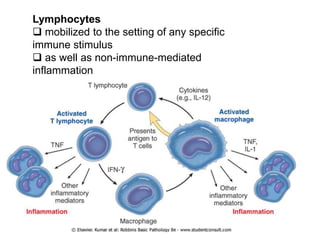
Lymphocytes
 mobilized to the setting of any specific
immune stimulus
 as well as non-immune-mediated
inflammation
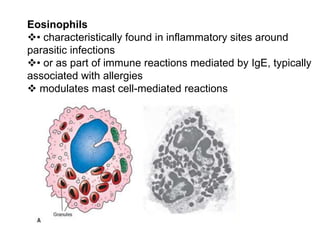
Eosinophils
• characteristically found in inflammatory sites around
parasitic infections
• or as part of immune reactions mediated by IgE, typically
associated with allergies
 modulates mast cell-mediated reactions
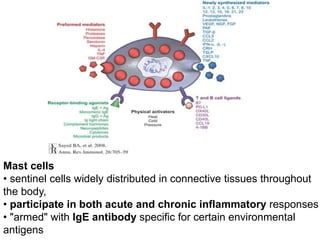
Mast cells
• sentinel cells widely distributed in connective tissues throughout
the body,
• participate in both acute and chronic inflammatory responses
• "armed" with IgE antibody specific for certain environmental
antigens
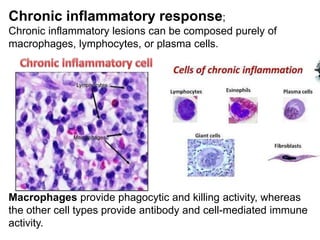
Chronic inflammatory response;
Chronic inflammatory lesions can be composed purely of
macrophages, lymphocytes, or plasma cells.
Macrophages provide phagocytic and killing activity, whereas
the other cell types provide antibody and cell-mediated immune
activity.
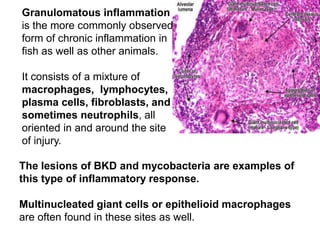
Granulomatous inflammation
is the more commonly observed
form of chronic inflammation in
fish as well as other animals.
It consists of a mixture of
macrophages, lymphocytes,
plasma cells, fibroblasts, and
sometimes neutrophils, all
oriented in and around the site
of injury.
The lesions of BKD and mycobacteria are examples of
this type of inflammatory response.
Multinucleated giant cells or epithelioid macrophages
are often found in these sites as well.
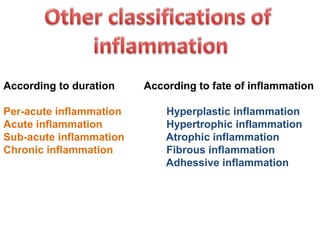
According to duration According to fate of inflammation
Per-acute inflammation Hyperplastic inflammation
Acute inflammation Hypertrophic inflammation
Sub-acute inflammation Atrophic inflammation
Chronic inflammation Fibrous inflammation
Adhessive inflammation
Healing
The inflammatory response sets the stage for healing.
Healing can occur by regeneration of the damaged tissue or
scar formation.
The form of healing that occurs is determined by the nature of
the injured tissue and its ability to regenerate as well as the
severity and duration of injury.
Tissues composed of cells that can readily divide (e.g.
epithelium) can easily regenerate, replacing cells lost to
inflammation and necrosis.
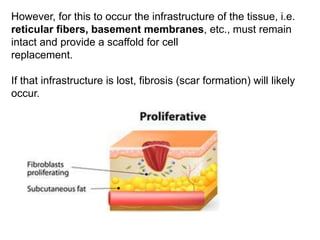
However, for this to occur the infrastructure of the tissue, i.e.
reticular fibers, basement membranes, etc., must remain
intact and provide a scaffold for cell
replacement.
If that infrastructure is lost, fibrosis (scar formation) will likely
occur.
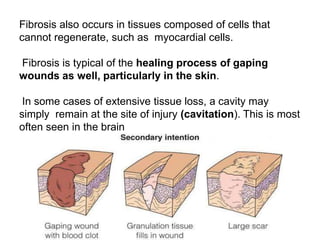
Fibrosis also occurs in tissues composed of cells that
cannot regenerate, such as myocardial cells.
Fibrosis is typical of the healing process of gaping
wounds as well, particularly in the skin.
In some cases of extensive tissue loss, a cavity may
simply remain at the site of injury (cavitation). This is most
often seen in the brain
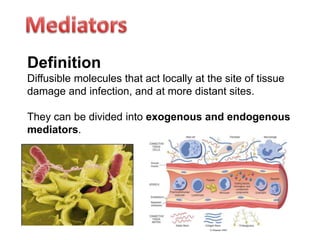
Definition
Diffusible molecules that act locally at the site of tissue
damage and infection, and at more distant sites.
They can be divided into exogenous and endogenous
mediators.
Inflammatory mediators
Inflammatory mediators can be classified into seven groups
according to their biochemical properties
• Vasoactive amines
• Vasoactive peptides
• Fragments of complement components
• Lipid mediators
• Cytokine
• Chemokines and proteolytic enzymes.
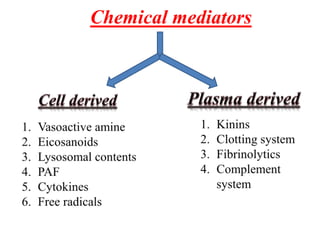
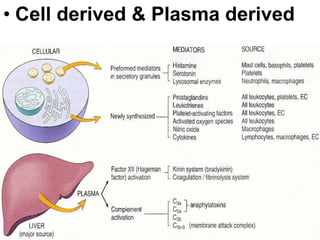
Chemical mediators are released from cells ,plasma, or
damaged tissue
Chemical mediators
• Cell derived & Plasma derived
43
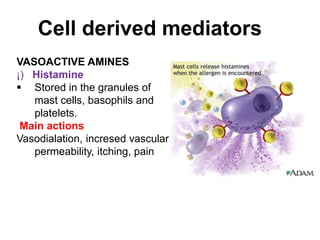
VASOACTIVE AMINES
¡) Histamine
 Stored in the granules of
mast cells, basophils and
platelets.
Main actions
Vasodialation, incresed vascular
permeability, itching, pain
Cell derived mediators
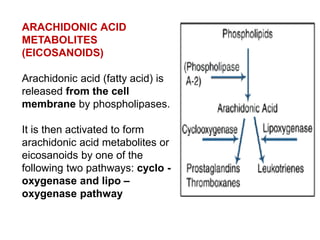
ARACHIDONIC ACID
METABOLITES
(EICOSANOIDS)
Arachidonic acid (fatty acid) is
released from the cell
membrane by phospholipases.
It is then activated to form
arachidonic acid metabolites or
eicosanoids by one of the
following two pathways: cyclo -
oxygenase and lipo –
oxygenase pathway
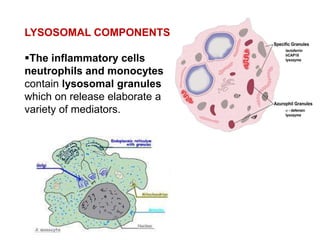
LYSOSOMAL COMPONENTS
The inflammatory cells
neutrophils and monocytes
contain lysosomal granules
which on release elaborate a
variety of mediators.
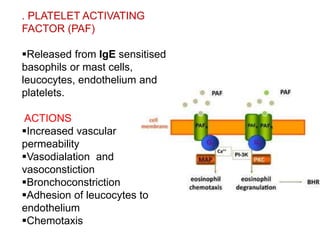
. PLATELET ACTIVATING
FACTOR (PAF)
Released from IgE sensitised
basophils or mast cells,
leucocytes, endothelium and
platelets.
ACTIONS
Increased vascular
permeability
Vasodialation and
vasoconstiction
Bronchoconstriction
Adhesion of leucocytes to
endothelium
Chemotaxis
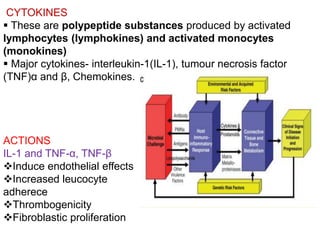
CYTOKINES
 These are polypeptide substances produced by activated
lymphocytes (lymphokines) and activated monocytes
(monokines)
 Major cytokines- interleukin-1(IL-1), tumour necrosis factor
(TNF)α and β, Chemokines.
ACTIONS
IL-1 and TNF-α, TNF-β
Induce endothelial effects
Increased leucocyte
adherece
Thrombogenicity
Fibroblastic proliferation
(1)derived from metabolism of phospholipids and arachidonic acid
(e.g., prostaglandins, thromboxanes, leukotrienes, lipoxins,
platelet-activating factor [PAF])
(2) preformed and stored in cytoplasmic granules (e.g.,histamine,
serotonin, lysosomal hydrolases),
(3) derived from altered production of normal regulators of vascular
function (e.g., nitric oxide and neurokinins).
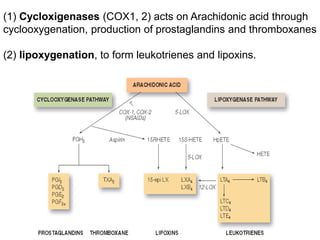
(1) Cycloxigenases (COX1, 2) acts on Arachidonic acid through
cyclooxygenation, production of prostaglandins and thromboxanes
(2) lipoxygenation, to form leukotrienes and lipoxins.
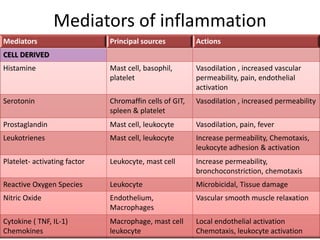
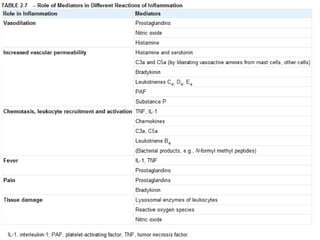
Mediators of inflammation
Mediators Principal sources Actions
CELL DERIVED
Histamine Mast cell, basophil,
platelet
Vasodilation , increased vascular
permeability, pain, endothelial
activation
Serotonin Chromaffin cells of GIT,
spleen & platelet
Vasodilation , increased permeability
Prostaglandin Mast cell, leukocyte Vasodilation, pain, fever
Leukotrienes Mast cell, leukocyte Increase permeability, Chemotaxis,
leukocyte adhesion & activation
Platelet- activating factor Leukocyte, mast cell Increase permeability,
bronchoconstriction, chemotaxis
Reactive Oxygen Species Leukocyte Microbicidal, Tissue damage
Nitric Oxide Endothelium,
Macrophages
Vascular smooth muscle relaxation
Cytokine ( TNF, IL-1)
Chemokines
Macrophage, mast cell
leukocyte
Local endothelial activation
Chemotaxis, leukocyte activation
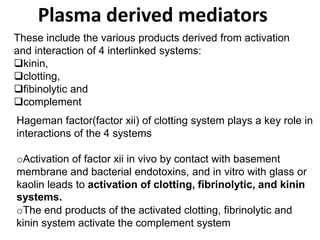
These include the various products derived from activation
and interaction of 4 interlinked systems:
kinin,
clotting,
fibinolytic and
complement
Plasma derived mediators
Hageman factor(factor xii) of clotting system plays a key role in
interactions of the 4 systems
oActivation of factor xii in vivo by contact with basement
membrane and bacterial endotoxins, and in vitro with glass or
kaolin leads to activation of clotting, fibrinolytic, and kinin
systems.
oThe end products of the activated clotting, fibrinolytic and
kinin system activate the complement system
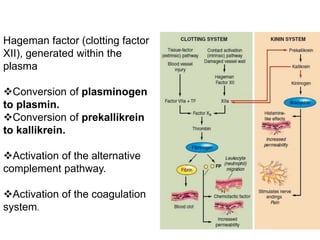
Hageman factor (clotting factor
XII), generated within the
plasma
Conversion of plasminogen
to plasmin.
Conversion of prekallikrein
to kallikrein.
Activation of the alternative
complement pathway.
Activation of the coagulation
system.
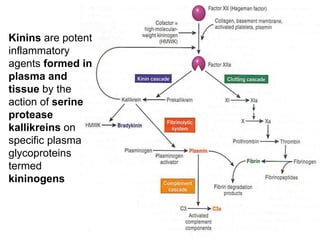
Kinins are potent
inflammatory
agents formed in
plasma and
tissue by the
action of serine
protease
kallikreins on
specific plasma
glycoproteins
termed
kininogens
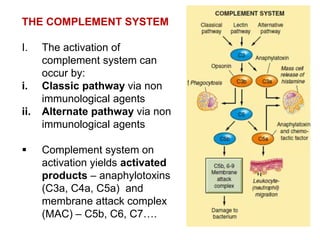
THE COMPLEMENT SYSTEM
I. The activation of
complement system can
occur by:
i. Classic pathway via non
immunological agents
ii. Alternate pathway via non
immunological agents
 Complement system on
activation yields activated
products – anaphylotoxins
(C3a, C4a, C5a) and
membrane attack complex
(MAC) – C5b, C6, C7….
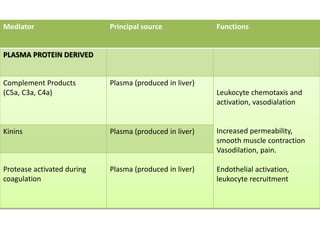
Mediator Principal source Functions
PLASMA PROTEIN DERIVED
Complement Products
(C5a, C3a, C4a)
Plasma (produced in liver)
Leukocyte chemotaxis and
activation, vasodialation
Increased permeability,
smooth muscle contraction
Vasodilation, pain.
Endothelial activation,
leukocyte recruitment
Kinins Plasma (produced in liver)
Protease activated during
coagulation
Plasma (produced in liver)
57
Inflammation in skin

Inflammation in skin

  • 1.
  • 2.
    Inflammation is animportant protective process for the host. Inflammation is a stereotyped response in a living animal to a variety of injuries that involves the Vasculature, various inflammatory cells, and potent chemical mediators.
  • 3.
    Inflammation and Healing Defectsin the inflammatory response can lead to chronic illness as well as death. In addition to its protective function, inflammation also sets the stage for healing and repair. The purpose of the inflammatory response is to dilute, isolate, and destroy the injurious agent, and to facilitate healing.
  • 4.
    The body onlyhas a limited number of ways to respond to an injury, hence the pathogenesis of an inflammatory lesion and the histological appearance of that lesion can be similar whether the injury was caused by a bacterial cell, a foreign body, ionizing radiation, a toxin, or trauma.
  • 5.
    Agents causing inflammation Infective agents Immunolo gical agents Physical agents Chemical agents Inert materials Bacteria Virusesand their toxins, fungi, parasites Cell mediated Antigen antibody reactions Heat Cold Radiation Mechanical trauma Organic Inorganic poisons Foreign bodies
  • 6.
    Inflammatory Cells The circulatingcells includes- Neutrophils Monocytes Eosinophils Lymphocytes Basophils Platelets The connective tissue cells are- Mast cells Fibroblast Macrophages Lymphocytes 6
  • 9.
    Signs of Inflammation Cardinalsigns are • Heat (calor) • Redness (rubor) • Swelling (tumor) additional signs seen in acute inflammation • Pain (dolor) • Loss of function (function laesa)
  • 10.
    Types of inflammation Inflammationcan be divided into acute and chronic forms which differ histologically as well as in duration. Acute inflammatory episodes, characterized by vascular events and exudation, usually progress over a period of 3 to 10 days, then resolve as the injurious agent is eliminated. Chronic inflammation, characterized by cellular proliferation, can extend from weeks to months to the lifetime of the host, continuing as long as the injurious agent persists.
  • 11.
    Acute Inflammation It isa rapid response to injury or microbes and other foreign substances that is designed to deliver leukocytes and plasma proteins to sites of injury
  • 12.
    Acute inflammation hastwo major components • Vascular changes • Cellular events Vascular • Changes in Vascular Caliber and Flow • Increased Vascular Permeability Vasodilation which allow the largest serum protein molecules such as fibrinogen and immunoglobulins, normally confined within the circulation, to exude into the tissue. Vasodilatation- increase blood flow Increased intravascular hydrostatic pressure
  • 13.
    Red line appearswithin seconds resulting from vasodilatation of capillaries and venules Flare is a bright reddish appearance or flush surrounding the red line results from vasodilatation of the adjacent arterioles Wheal is the swelling or edema of the skin occurring from transudation of fluid in extra vascular space
  • 14.
    Changes in VascularCaliber and Flow • Changes in blood vessels begin rapidly after infection or injury but may develop at variable rates, depending on the nature and severity of the original inflammatory stimulus.
  • 15.
  • 16.
    Cellular Events • animportant function of the inflammatory response is to deliver leukocytes to the site of injury and to activate them Leukocyte recruitment Sequence consists of: 1. margination, adhesion to endothelium & rolling along the vessel wall
  • 17.
    2. firm adhesionto endothelium
  • 18.
    3.transmigration between endothelialcells; 4. migration in interstitial tissues toward a chemotactic stimulus
  • 20.
    5.Phagocytosis (recognition, attachment,engulfment, killing) 6.Termination 7.100% resolution, scar or chronic inflammation three possible outcomes
  • 21.
    Patterns of acuteinflammation vascular and cellular reactions that characterize acute inflammation are reflected in the morphologic appearanceof the reaction Grossly • According to principle constituent of exudates:-SEROUS FIBRINOUS NEUTROPHILIC SUPPURATIVE ACUTE INFLAMMATION
  • 22.
    serous characterized by: • theoutpouring of a watery • relatively protein-poor fluid that, depending on the site of injury Neutrophilic exudate: neutrophils are the prominent cellular component; common with bacterial infections in most animal species, but this type of exudate is not as prominent in fish as in other species; e.g. abscess
  • 23.
    fibrinous • occurs asa consequence of more severe injuries, • resulting in greater vascular permeability that allows large molecules (such as fibrinogen) to pass the endothelial barrier suppurative • manifested by the presence of large amounts of purulent exudate (pus) consisting of neutrophils, necrotic cells, and edema fluid
  • 24.
    Histologcially, these exudatesconsist of eosinophilic staining in the intercellular space; fibrin will have the appearance of eosinophilic strands. More severe injuries, particularly bacterial infections, will elicit a cellular component to the exudate. Histologcially
  • 25.
    Chronic Inflammation • isinflammation of prolonged duration (weeks to months to years) in which active inflammation, tissue injury, and healing proceed simultaneously. Characterized by: • infiltration with mononuclear cells • plasma cells tissue destruction • repair • angiogenesis • fibrosis
  • 26.
    Chronic Inflammatory Cells •fundamental feature of chronic inflammation is its persistence • results from complex interactions between the cells that are recruited to the site of inflammation and are activated at this site
  • 27.
    Neutrophils Neutrophils are theclassic hallmarks of acute inflammation, many forms of chronic inflammation may nevertheless continue to show extensive neutrophilic infiltrates Polymorphonuclear leucocytes Mediates tissue injury Phagocytosis of microorganisms and tissue debris
  • 28.
    Macrophages  dominant cellof chronic inflammation  derived from circulating blood monocytes  act as filters for particulate matter, microbes, and senescent cells, as well as acting as sentinels scattered in most connective tissues,  also found in organs such as the liver spleen and lymph nodes
  • 29.
    Lymphocytes  mobilized tothe setting of any specific immune stimulus  as well as non-immune-mediated inflammation
  • 30.
    Eosinophils • characteristically foundin inflammatory sites around parasitic infections • or as part of immune reactions mediated by IgE, typically associated with allergies  modulates mast cell-mediated reactions
  • 31.
    Mast cells • sentinelcells widely distributed in connective tissues throughout the body, • participate in both acute and chronic inflammatory responses • "armed" with IgE antibody specific for certain environmental antigens
  • 32.
    Chronic inflammatory response; Chronicinflammatory lesions can be composed purely of macrophages, lymphocytes, or plasma cells. Macrophages provide phagocytic and killing activity, whereas the other cell types provide antibody and cell-mediated immune activity.
  • 33.
    Granulomatous inflammation is themore commonly observed form of chronic inflammation in fish as well as other animals. It consists of a mixture of macrophages, lymphocytes, plasma cells, fibroblasts, and sometimes neutrophils, all oriented in and around the site of injury. The lesions of BKD and mycobacteria are examples of this type of inflammatory response. Multinucleated giant cells or epithelioid macrophages are often found in these sites as well.
  • 36.
    According to durationAccording to fate of inflammation Per-acute inflammation Hyperplastic inflammation Acute inflammation Hypertrophic inflammation Sub-acute inflammation Atrophic inflammation Chronic inflammation Fibrous inflammation Adhessive inflammation
  • 37.
    Healing The inflammatory responsesets the stage for healing. Healing can occur by regeneration of the damaged tissue or scar formation. The form of healing that occurs is determined by the nature of the injured tissue and its ability to regenerate as well as the severity and duration of injury. Tissues composed of cells that can readily divide (e.g. epithelium) can easily regenerate, replacing cells lost to inflammation and necrosis.
  • 38.
    However, for thisto occur the infrastructure of the tissue, i.e. reticular fibers, basement membranes, etc., must remain intact and provide a scaffold for cell replacement. If that infrastructure is lost, fibrosis (scar formation) will likely occur.
  • 39.
    Fibrosis also occursin tissues composed of cells that cannot regenerate, such as myocardial cells. Fibrosis is typical of the healing process of gaping wounds as well, particularly in the skin. In some cases of extensive tissue loss, a cavity may simply remain at the site of injury (cavitation). This is most often seen in the brain
  • 40.
    Definition Diffusible molecules thatact locally at the site of tissue damage and infection, and at more distant sites. They can be divided into exogenous and endogenous mediators.
  • 41.
    Inflammatory mediators Inflammatory mediatorscan be classified into seven groups according to their biochemical properties • Vasoactive amines • Vasoactive peptides • Fragments of complement components • Lipid mediators • Cytokine • Chemokines and proteolytic enzymes. Chemical mediators are released from cells ,plasma, or damaged tissue
  • 42.
  • 43.
    • Cell derived& Plasma derived 43
  • 44.
    VASOACTIVE AMINES ¡) Histamine Stored in the granules of mast cells, basophils and platelets. Main actions Vasodialation, incresed vascular permeability, itching, pain Cell derived mediators
  • 45.
    ARACHIDONIC ACID METABOLITES (EICOSANOIDS) Arachidonic acid(fatty acid) is released from the cell membrane by phospholipases. It is then activated to form arachidonic acid metabolites or eicosanoids by one of the following two pathways: cyclo - oxygenase and lipo – oxygenase pathway
  • 46.
    LYSOSOMAL COMPONENTS The inflammatorycells neutrophils and monocytes contain lysosomal granules which on release elaborate a variety of mediators.
  • 47.
    . PLATELET ACTIVATING FACTOR(PAF) Released from IgE sensitised basophils or mast cells, leucocytes, endothelium and platelets. ACTIONS Increased vascular permeability Vasodialation and vasoconstiction Bronchoconstriction Adhesion of leucocytes to endothelium Chemotaxis
  • 48.
    CYTOKINES  These arepolypeptide substances produced by activated lymphocytes (lymphokines) and activated monocytes (monokines)  Major cytokines- interleukin-1(IL-1), tumour necrosis factor (TNF)α and β, Chemokines. ACTIONS IL-1 and TNF-α, TNF-β Induce endothelial effects Increased leucocyte adherece Thrombogenicity Fibroblastic proliferation
  • 49.
    (1)derived from metabolismof phospholipids and arachidonic acid (e.g., prostaglandins, thromboxanes, leukotrienes, lipoxins, platelet-activating factor [PAF]) (2) preformed and stored in cytoplasmic granules (e.g.,histamine, serotonin, lysosomal hydrolases), (3) derived from altered production of normal regulators of vascular function (e.g., nitric oxide and neurokinins).
  • 50.
    (1) Cycloxigenases (COX1,2) acts on Arachidonic acid through cyclooxygenation, production of prostaglandins and thromboxanes (2) lipoxygenation, to form leukotrienes and lipoxins.
  • 51.
    Mediators of inflammation MediatorsPrincipal sources Actions CELL DERIVED Histamine Mast cell, basophil, platelet Vasodilation , increased vascular permeability, pain, endothelial activation Serotonin Chromaffin cells of GIT, spleen & platelet Vasodilation , increased permeability Prostaglandin Mast cell, leukocyte Vasodilation, pain, fever Leukotrienes Mast cell, leukocyte Increase permeability, Chemotaxis, leukocyte adhesion & activation Platelet- activating factor Leukocyte, mast cell Increase permeability, bronchoconstriction, chemotaxis Reactive Oxygen Species Leukocyte Microbicidal, Tissue damage Nitric Oxide Endothelium, Macrophages Vascular smooth muscle relaxation Cytokine ( TNF, IL-1) Chemokines Macrophage, mast cell leukocyte Local endothelial activation Chemotaxis, leukocyte activation
  • 52.
    These include thevarious products derived from activation and interaction of 4 interlinked systems: kinin, clotting, fibinolytic and complement Plasma derived mediators Hageman factor(factor xii) of clotting system plays a key role in interactions of the 4 systems oActivation of factor xii in vivo by contact with basement membrane and bacterial endotoxins, and in vitro with glass or kaolin leads to activation of clotting, fibrinolytic, and kinin systems. oThe end products of the activated clotting, fibrinolytic and kinin system activate the complement system
  • 53.
    Hageman factor (clottingfactor XII), generated within the plasma Conversion of plasminogen to plasmin. Conversion of prekallikrein to kallikrein. Activation of the alternative complement pathway. Activation of the coagulation system.
  • 54.
    Kinins are potent inflammatory agentsformed in plasma and tissue by the action of serine protease kallikreins on specific plasma glycoproteins termed kininogens
  • 55.
    THE COMPLEMENT SYSTEM I.The activation of complement system can occur by: i. Classic pathway via non immunological agents ii. Alternate pathway via non immunological agents  Complement system on activation yields activated products – anaphylotoxins (C3a, C4a, C5a) and membrane attack complex (MAC) – C5b, C6, C7….
  • 56.
    Mediator Principal sourceFunctions PLASMA PROTEIN DERIVED Complement Products (C5a, C3a, C4a) Plasma (produced in liver) Leukocyte chemotaxis and activation, vasodialation Increased permeability, smooth muscle contraction Vasodilation, pain. Endothelial activation, leukocyte recruitment Kinins Plasma (produced in liver) Protease activated during coagulation Plasma (produced in liver)
  • 57.