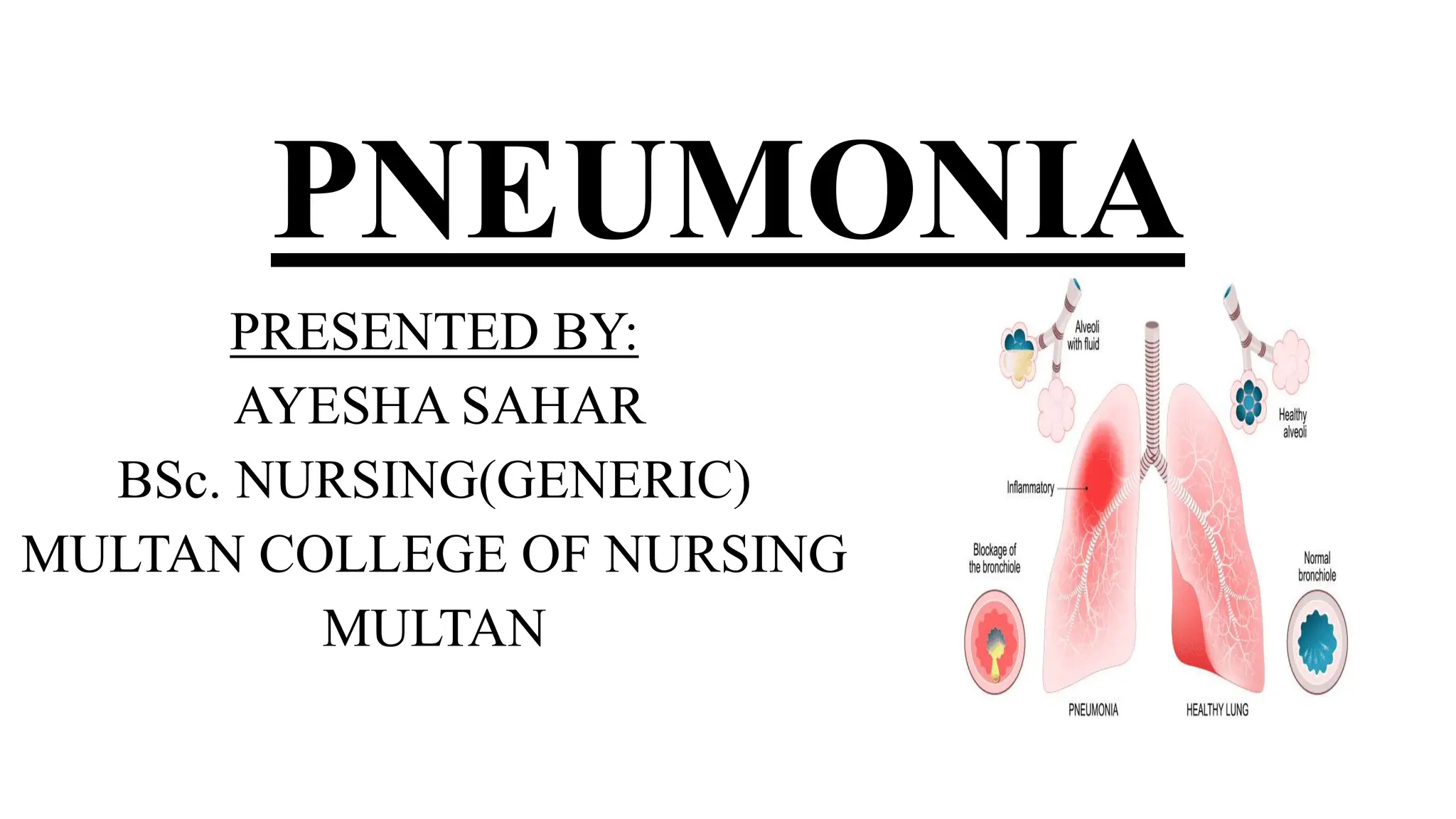
PNEUMONIA
PRESENTED BY:
AYESHA SAHAR
BSc. NURSING(GENERIC)
MULTAN COLLEGE OF NURSING
MULTAN
OBJECTIVES
At the end of the session , the students will be able to :
•Understand about pneumonia and its risk factors.
•Recognize the classification based on anatomical location,
etiology and clinical setting.
•Discuss about pathophysiology.
•Analyze the clinical manifestions, diagnosis and complications.
•Review preventive measures with their medical and nursing
management.
DEFINITION
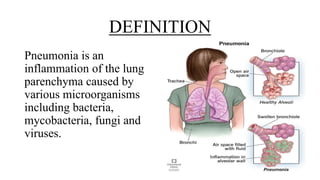
Pneumonia is an
inflammation of the lung
parenchyma caused by
various microorganisms
including bacteria,
mycobacteria, fungi and
viruses.
RISK FACTORS
• Cigarette smoking.
• prolonged immobility.
• Depressed cough reflex.
• Immunosuppressed patients.
• Pre-existing lung disease.
• Alcohol.
• Upper respiratory tract infections.
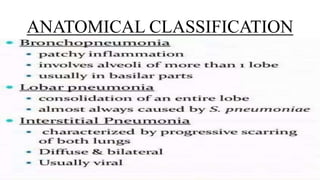
ANATOMICAL CLASSIFICATION
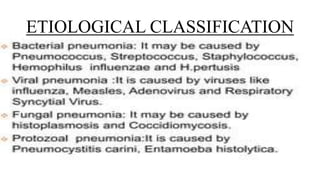
ETIOLOGICAL CLASSIFICATION
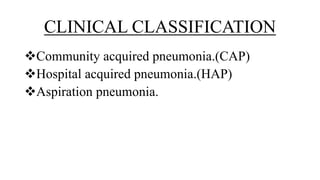
CLINICAL CLASSIFICATION
Community acquired pneumonia.(CAP)
Hospital acquired pneumonia.(HAP)
Aspiration pneumonia.
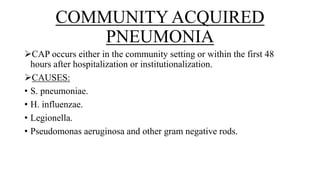
COMMUNITY ACQUIRED
PNEUMONIA
CAP occurs either in the community setting or within the first 48
hours after hospitalization or institutionalization.
CAUSES:
• S. pneumoniae.
• H. influenzae.
• Legionella.
• Pseudomonas aeruginosa and other gram negative rods.
HOSPITAL ACQUIRED
PNEUMONIA
It is also knowm as nosocomial pneumonia. it is defined as
the onset of pneumonia symptoms more than 48 hours after
the admission in patients with no evidence of infection at the
time of admission.
 Ventilator associated pneumonia is considered a type of
nosocomial pneumonia that is associated with endotracheal
intubation and mechanical ventilation. This type of
pneumonia is defined as bacterial pneumonia that develops in
patients with acute respiratory failure who have been
receiving mechanical ventilation for at least 48 hours.
ASPIRATION PNEUMONIA
• It refers to the pulmonary consequences resulting from entry of endogenous or
exogenous substances into the lower airway.
• The most common form of aspiration pneumonia is bacterial infection. Common
pathogens are:
S. aureus.
Streptococcus species.
Gram negative bacilli.
• Substances other than bacteria may be aspirated into the lung such as gastric
contents, exogenous chemical substances or irritating gases.
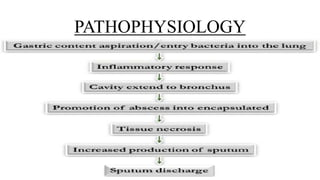
PATHOPHYSIOLOGY
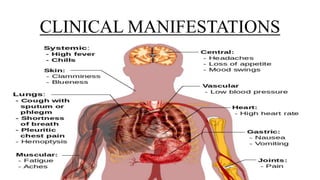
CLINICAL MANIFESTATIONS
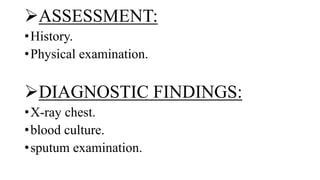
ASSESSMENT:
•History.
•Physical examination.
DIAGNOSTIC FINDINGS:
•X-ray chest.
•blood culture.
•sputum examination.
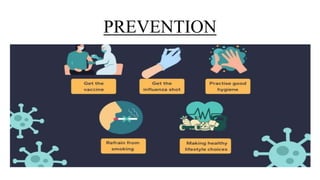
PREVENTION
MEDICAL MANAGEMENT
• Antibiotics: These medicines are used to treat bacterial pneumonia. It may take
time to identify the type of bacteria causing your pneumonia and to choose the
best antibiotic to treat it. If your symptoms don't improve, your doctor may
recommend a different antibiotic.
• Cough medicine: This medicine may be used to calm your cough so that you can
rest. Because coughing helps loosen and move fluid from your lungs, it's a good
idea not to eliminate your cough completely. In addition, you should know that
very few studies have looked at whether over-the-counter cough medicines lessen
coughing caused by pneumonia. If you want to try a cough suppressant, use the
lowest dose that helps you rest.
• Fever reducers/pain relievers: You may take these as needed for fever and
discomfort. These include drugs such as aspirin, ibuprofen and acetaminophen.
NURSING
MANAGEMENT
NURSING DIAGNOSIS
Ineffective airway clearance related to copious
tracheobronchial secretions.
Fatigue and activity intolerance related to impaired
respiratory function.
Risk for deficient fluid volume related to fever and rapid
respiratory rate.
Deficient knowledge about the treatment regimen and
preventive measures.
NURSING MANAGEMENT
• Administer oxygen as prescribed.
• Monitor respiratory status.
• Monitor for labored respirations, cyanosis, and cold and clammy skin.
• Encourage coughing and deep breathing and use of incentive spirometer.
• Position client in semi-Fowler position to facilitate breathing and lung
expansion.
• Change client’s position frequently and ambulate as tolerated to mobilize
secretions
• Monitor and record color, consistency, and amount of sputum.
• Provide a high-calorie, high protein diet with small frequent meals.
• Encourage fluids up to 3 L a day to thin secretions unless
contraindicated.
• Provide a balance of rest and activity, increasing activity gradually.
• Administer antibiotics as prescribed.
• Administer antipyretics, bronchodilators, cough suppressants,
mucolytic agents, and expectorants as prescribed.
• Prevent the spread of infection by hand washing and the proper
disposal of secretions.
COMPLICATIONS
• Respiratory failure, which requires a breathing machine or
ventilator
• Empyema or lung abscesses. These are infrequent, but
serious, complications of pneumonia. They occur when
pockets of pus form inside or around the lung. These may
sometimes need to be drained with surgery.
• Sepsis, a condition in which there is uncontrolled swelling
(inflammation) in the body, which may lead to organ failure
• Acute respiratory distress syndrome (ARDS).
pneumonia respiratory system disease for Nursing

pneumonia respiratory system disease for Nursing

  • 1.
    PNEUMONIA PRESENTED BY: AYESHA SAHAR BSc.NURSING(GENERIC) MULTAN COLLEGE OF NURSING MULTAN
  • 2.
    OBJECTIVES At the endof the session , the students will be able to : •Understand about pneumonia and its risk factors. •Recognize the classification based on anatomical location, etiology and clinical setting. •Discuss about pathophysiology. •Analyze the clinical manifestions, diagnosis and complications. •Review preventive measures with their medical and nursing management.
  • 3.
    DEFINITION Pneumonia is an inflammationof the lung parenchyma caused by various microorganisms including bacteria, mycobacteria, fungi and viruses.
  • 4.
    RISK FACTORS • Cigarettesmoking. • prolonged immobility. • Depressed cough reflex. • Immunosuppressed patients. • Pre-existing lung disease. • Alcohol. • Upper respiratory tract infections.
  • 5.
  • 6.
  • 7.
    CLINICAL CLASSIFICATION Community acquiredpneumonia.(CAP) Hospital acquired pneumonia.(HAP) Aspiration pneumonia.
  • 8.
    COMMUNITY ACQUIRED PNEUMONIA CAP occurseither in the community setting or within the first 48 hours after hospitalization or institutionalization. CAUSES: • S. pneumoniae. • H. influenzae. • Legionella. • Pseudomonas aeruginosa and other gram negative rods.
  • 9.
    HOSPITAL ACQUIRED PNEUMONIA It isalso knowm as nosocomial pneumonia. it is defined as the onset of pneumonia symptoms more than 48 hours after the admission in patients with no evidence of infection at the time of admission.  Ventilator associated pneumonia is considered a type of nosocomial pneumonia that is associated with endotracheal intubation and mechanical ventilation. This type of pneumonia is defined as bacterial pneumonia that develops in patients with acute respiratory failure who have been receiving mechanical ventilation for at least 48 hours.
  • 10.
    ASPIRATION PNEUMONIA • Itrefers to the pulmonary consequences resulting from entry of endogenous or exogenous substances into the lower airway. • The most common form of aspiration pneumonia is bacterial infection. Common pathogens are: S. aureus. Streptococcus species. Gram negative bacilli. • Substances other than bacteria may be aspirated into the lung such as gastric contents, exogenous chemical substances or irritating gases.
  • 11.
  • 12.
  • 13.
  • 14.
  • 15.
    MEDICAL MANAGEMENT • Antibiotics:These medicines are used to treat bacterial pneumonia. It may take time to identify the type of bacteria causing your pneumonia and to choose the best antibiotic to treat it. If your symptoms don't improve, your doctor may recommend a different antibiotic. • Cough medicine: This medicine may be used to calm your cough so that you can rest. Because coughing helps loosen and move fluid from your lungs, it's a good idea not to eliminate your cough completely. In addition, you should know that very few studies have looked at whether over-the-counter cough medicines lessen coughing caused by pneumonia. If you want to try a cough suppressant, use the lowest dose that helps you rest. • Fever reducers/pain relievers: You may take these as needed for fever and discomfort. These include drugs such as aspirin, ibuprofen and acetaminophen.
  • 16.
  • 17.
    NURSING DIAGNOSIS Ineffective airwayclearance related to copious tracheobronchial secretions. Fatigue and activity intolerance related to impaired respiratory function. Risk for deficient fluid volume related to fever and rapid respiratory rate. Deficient knowledge about the treatment regimen and preventive measures.
  • 18.
    NURSING MANAGEMENT • Administeroxygen as prescribed. • Monitor respiratory status. • Monitor for labored respirations, cyanosis, and cold and clammy skin. • Encourage coughing and deep breathing and use of incentive spirometer. • Position client in semi-Fowler position to facilitate breathing and lung expansion. • Change client’s position frequently and ambulate as tolerated to mobilize secretions
  • 19.
    • Monitor andrecord color, consistency, and amount of sputum. • Provide a high-calorie, high protein diet with small frequent meals. • Encourage fluids up to 3 L a day to thin secretions unless contraindicated. • Provide a balance of rest and activity, increasing activity gradually. • Administer antibiotics as prescribed. • Administer antipyretics, bronchodilators, cough suppressants, mucolytic agents, and expectorants as prescribed. • Prevent the spread of infection by hand washing and the proper disposal of secretions.
  • 20.
    COMPLICATIONS • Respiratory failure,which requires a breathing machine or ventilator • Empyema or lung abscesses. These are infrequent, but serious, complications of pneumonia. They occur when pockets of pus form inside or around the lung. These may sometimes need to be drained with surgery. • Sepsis, a condition in which there is uncontrolled swelling (inflammation) in the body, which may lead to organ failure • Acute respiratory distress syndrome (ARDS).