
 It was a series of events that occurred in 16th Century
England.
 There was a wider process of European Protestant
Reformation.
 Who started the reformation?
 Martin Luther in Germany.
 John Calvin in Geneva
 King Henry VIII in England.
Reformation across
Europe

 A split in the Christian Church.
 People were unhappy with the Catholic Church, the
protested and wanted to reform Christianity.
 What happened?
 Martin Luther
 John Calvin
 King Henry VIII
What was the
Reformation?

 It was a unique reformation.
 The change came by a King, not a reformer.
 There was no leader, like Luther or Calvin.
Reformation in England

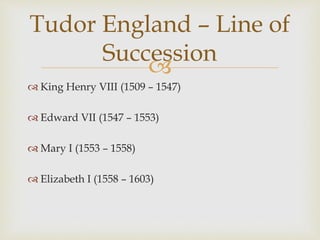
 King Henry VIII (1509 – 1547)
 Edward VII (1547 – 1553)
 Mary I (1553 – 1558)
 Elizabeth I (1558 – 1603)
Tudor England – Line of
Succession

 He brought the reformation to England.
 He married Catherine of Aragon in 1509.
 No male heir was produced.
 He wanted a divorce, to marry Anne Boylen (second
wife).
Reformation under King
Henry VIII (1509 – 1547)

 Divorce – difficult issue for King Henry, as he was a
Roman Catholic.
 Asked the Pope permission to divorce. The pope
denied his request.
 Archbishop of Canterbury granted his divorce.
 He knew of the Catholic Church’s unpopularity.
King Henry VIII and the
Pope

 The vast amount of the population were very angry
because they had to pay if:
 You wanted to get married.
 To get a child baptised.
 To bury someone.
 To sell indulgences.
 The Catholic Church was very wealthy while many
poor remained poor.
Unpopularity of Roman Catholic
Church in England

 Act of Supremacy – 1534
 Not all Englishmen were willing to submit to the Act
of Supremacy.
 They refused to acknowledge this.
 Little change under King Henry’s reign.
King Henry VIII – The
head of The Church.

 He was educated by the Archbishop of Canterbury,
Cranner, a protestant.
 Introduced the First Prayer Book (1549)
 Introduced the Second Prayer Book (1552)
 Edward VI died before the Protestant caused would
succeed.
Reformation under
Edward VI (1547 – 1553)

 She was a Roman Catholic.
 Aim to bring England back under the yoke of the Roman Church.
 She had the Archibishop jailed.
 She abolished ‘The Act of Supremacy’
 1554 England was back under papal authority.
 Many protestants were burnt at the stake – she was known as Bloody
Mary.
 She died hated by everyone.
Reformation under
Mary I (1553 – 1558)

 Sister of Mary, and educated under the Archibishop Cranner.
 She brought back the Act of Supremacy, and the Second Prayer
Book was adopted once more.
 Elizabeth brought a lasting religious settlement in England.
 Aware of the tension between Catholics and Protestants.
 Restored Protestantism as the official religion.
 Gave some rights to Catholics.
Reformation under
Elizabeth I (1558 – 1603)

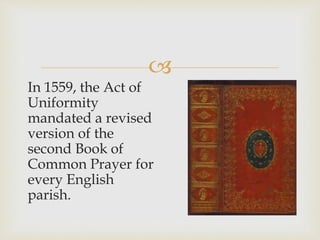
In 1559, the Act of
Uniformity
mandated a revised
version of the
second Book of
Common Prayer for
every English
parish.

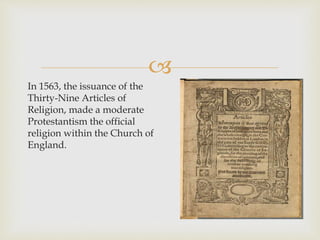
In 1563, the issuance of the
Thirty-Nine Articles of
Religion, made a moderate
Protestantism the official
religion within the Church of
England.

The Reformation in England

  • 2.
      It wasa series of events that occurred in 16th Century England.  There was a wider process of European Protestant Reformation.  Who started the reformation?  Martin Luther in Germany.  John Calvin in Geneva  King Henry VIII in England. Reformation across Europe
  • 3.
      A splitin the Christian Church.  People were unhappy with the Catholic Church, the protested and wanted to reform Christianity.  What happened?  Martin Luther  John Calvin  King Henry VIII What was the Reformation?
  • 4.
      It wasa unique reformation.  The change came by a King, not a reformer.  There was no leader, like Luther or Calvin. Reformation in England
  • 5.
      King HenryVIII (1509 – 1547)  Edward VII (1547 – 1553)  Mary I (1553 – 1558)  Elizabeth I (1558 – 1603) Tudor England – Line of Succession
  • 6.
      He broughtthe reformation to England.  He married Catherine of Aragon in 1509.  No male heir was produced.  He wanted a divorce, to marry Anne Boylen (second wife). Reformation under King Henry VIII (1509 – 1547)
  • 7.
      Divorce –difficult issue for King Henry, as he was a Roman Catholic.  Asked the Pope permission to divorce. The pope denied his request.  Archbishop of Canterbury granted his divorce.  He knew of the Catholic Church’s unpopularity. King Henry VIII and the Pope
  • 8.
      The vastamount of the population were very angry because they had to pay if:  You wanted to get married.  To get a child baptised.  To bury someone.  To sell indulgences.  The Catholic Church was very wealthy while many poor remained poor. Unpopularity of Roman Catholic Church in England
  • 9.
      Act ofSupremacy – 1534  Not all Englishmen were willing to submit to the Act of Supremacy.  They refused to acknowledge this.  Little change under King Henry’s reign. King Henry VIII – The head of The Church.
  • 10.
      He waseducated by the Archbishop of Canterbury, Cranner, a protestant.  Introduced the First Prayer Book (1549)  Introduced the Second Prayer Book (1552)  Edward VI died before the Protestant caused would succeed. Reformation under Edward VI (1547 – 1553)
  • 11.
      She wasa Roman Catholic.  Aim to bring England back under the yoke of the Roman Church.  She had the Archibishop jailed.  She abolished ‘The Act of Supremacy’  1554 England was back under papal authority.  Many protestants were burnt at the stake – she was known as Bloody Mary.  She died hated by everyone. Reformation under Mary I (1553 – 1558)
  • 12.
      Sister ofMary, and educated under the Archibishop Cranner.  She brought back the Act of Supremacy, and the Second Prayer Book was adopted once more.  Elizabeth brought a lasting religious settlement in England.  Aware of the tension between Catholics and Protestants.  Restored Protestantism as the official religion.  Gave some rights to Catholics. Reformation under Elizabeth I (1558 – 1603)
  • 13.
     In 1559, theAct of Uniformity mandated a revised version of the second Book of Common Prayer for every English parish.
  • 14.
     In 1563, theissuance of the Thirty-Nine Articles of Religion, made a moderate Protestantism the official religion within the Church of England.