
ENTREPRENEURSHIP 
MANAGEMENT 
PERSONALITY & INNOVATION OF AN 
ENTREPRENEUR 
PRESENTED BY – 
Bidyadhar Nayak (04) 
Prachi Jadhav (09) 
Rashmi Vaishya (14) 
Asha Rawat (19)
INTRODUCTION 
 Entrepreneur operates in an open 
world whereas an intrapreneur 
operates within an organization. 
 He fights with the bureaucratic hurdles 
& inertia which normally sets in an 
organization to keep the entrepreneur 
spirit alive
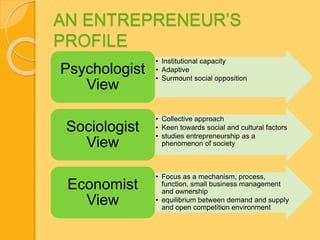
AN ENTREPRENEUR’S 
PROFILE 
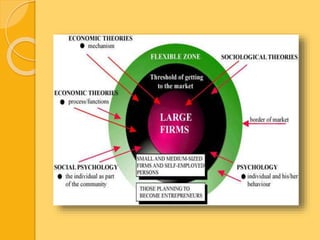
• Institutional capacity 
• Adaptive 
• Surmount social opposition 
Psychologist 
View 
• Collective approach 
• Keen towards social and cultural factors 
• studies entrepreneurship as a 
phenomenon of society 
Sociologist 
View 
• Focus as a mechanism, process, 
function, small business management 
and ownership 
• equilibrium between demand and supply 
and open competition environment 
Economist 
View
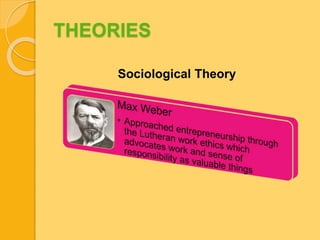
THEORIES 
Sociological Theory
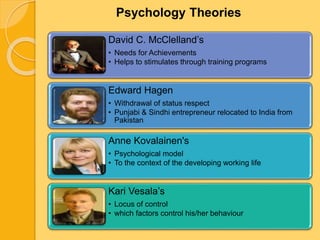
Psychology Theories 
David C. McClelland’s 
• Needs for Achievements 
• Helps to stimulates through training programs 
Edward Hagen 
• Withdrawal of status respect 
• Punjabi & Sindhi entrepreneur relocated to India from 
Pakistan 
Anne Kovalainen's 
• Psychological model 
• To the context of the developing working life 
Kari Vesala’s 
• Locus of control 
• which factors control his/her behaviour
WHAT IS INNOVATION? 
Innovation is investing of resources to create new 
wealth or investing of wealth to create new 
resources. It is measured by assessing its impact on 
environment, and therefore innovation should 
always be market focused. 
INNOVATION & ENTREPRENEURSHIP- LINK 
Innovation is the means by which the entrepreneur 
either creates new wealth-producing resources or 
endows existing resources with enhanced potential 
for creating wealth.
INNOVATIVE STRATEGY 
The motto of a strategy for the on going 
business is Better and More, however motto of a 
strategy for innovation is New and Different. 
Why does one need to innovate? 
• To face competition 
• To stand out in a clutter 
• To survive recession 
• To solve certain problems
Innovation & profit: 
joseph Schumpeter’s theory 
Innovation can be divided into 2 categories:- 
 Reduce the cost of production 
By introducing new machinery, new technique, new 
method of organizing the firm 
 Increase the demand for the product 
By introducing new product, new design, new 
method of advertisement
INSTILLING ATTITUDE FOR INNOVATION 
Top management has to start treating the 
innovation initiative as a critical one in which every 
level of employees must participate. Following are 
the ideas:- 
 Encourage creative conflict 
 Big ideas come from small teams 
 Learning happens away from desk 
 Failure sometimes produces innovation 
 Understand the product’s user
SOURCES OF INNOVATION 
Most innovations results from a conscious, purposeful 
search for Innovative opportunities, which are found 
only in a few situations. 
Within a company or industry, areas of opportunities 
can exist in the form:- 
 Unexpected occurrences 
 Incongruities 
 Process needs
UNEXPECTED OCCURRENCES 
Example:- 
Bajaj launched Sunny for rural and semi-urban 
markets to upgrade over Mopeds using modern 
technology(no gear)
INCONGRUITIES & DISAGREEMENTS 
An incongruity within the logic can give rise to 
Innovation opportunities. 
Example:- 
70% of two-wheelers were bought on finance 
provided by banks and FI. 
Bajaj started- “Bajaj Auto Finance” which 
provided finance to dealers. 
An incongruity between economic realities can 
also lead to innovations.
OUTSIDE THE COMPANY 
 Demographic changes 
 Changes in perception 
DEMOGRAPHIC CHANGES 
Innovation opportunities possible due to changes in 
the no. of people, their age distribution, education, 
geographical location etc. 
In 80’s, primary target of bike zi7 
Man aged25-40, income 5000pm 
In 90’s New audience 
Boy aged17-21, pocket money 5000pm
CHANGES IN PERCEPTION 
The glass is half-empty and half full are descriptions 
of the same phenomenon but have vastly different 
meanings. 
Changing a manager’s perception from half-empty 
to half-full opens big innovation opportunities.
Thank You..!

Personality & Innovation of an entrepreneur

  • 1.
    ENTREPRENEURSHIP MANAGEMENT PERSONALITY& INNOVATION OF AN ENTREPRENEUR PRESENTED BY – Bidyadhar Nayak (04) Prachi Jadhav (09) Rashmi Vaishya (14) Asha Rawat (19)
  • 2.
    INTRODUCTION  Entrepreneuroperates in an open world whereas an intrapreneur operates within an organization.  He fights with the bureaucratic hurdles & inertia which normally sets in an organization to keep the entrepreneur spirit alive
  • 3.
    AN ENTREPRENEUR’S PROFILE • Institutional capacity • Adaptive • Surmount social opposition Psychologist View • Collective approach • Keen towards social and cultural factors • studies entrepreneurship as a phenomenon of society Sociologist View • Focus as a mechanism, process, function, small business management and ownership • equilibrium between demand and supply and open competition environment Economist View
  • 5.
  • 6.
    Psychology Theories DavidC. McClelland’s • Needs for Achievements • Helps to stimulates through training programs Edward Hagen • Withdrawal of status respect • Punjabi & Sindhi entrepreneur relocated to India from Pakistan Anne Kovalainen's • Psychological model • To the context of the developing working life Kari Vesala’s • Locus of control • which factors control his/her behaviour
  • 7.
    WHAT IS INNOVATION? Innovation is investing of resources to create new wealth or investing of wealth to create new resources. It is measured by assessing its impact on environment, and therefore innovation should always be market focused. INNOVATION & ENTREPRENEURSHIP- LINK Innovation is the means by which the entrepreneur either creates new wealth-producing resources or endows existing resources with enhanced potential for creating wealth.
  • 8.
    INNOVATIVE STRATEGY Themotto of a strategy for the on going business is Better and More, however motto of a strategy for innovation is New and Different. Why does one need to innovate? • To face competition • To stand out in a clutter • To survive recession • To solve certain problems
  • 9.
    Innovation & profit: joseph Schumpeter’s theory Innovation can be divided into 2 categories:-  Reduce the cost of production By introducing new machinery, new technique, new method of organizing the firm  Increase the demand for the product By introducing new product, new design, new method of advertisement
  • 10.
    INSTILLING ATTITUDE FORINNOVATION Top management has to start treating the innovation initiative as a critical one in which every level of employees must participate. Following are the ideas:-  Encourage creative conflict  Big ideas come from small teams  Learning happens away from desk  Failure sometimes produces innovation  Understand the product’s user
  • 11.
    SOURCES OF INNOVATION Most innovations results from a conscious, purposeful search for Innovative opportunities, which are found only in a few situations. Within a company or industry, areas of opportunities can exist in the form:-  Unexpected occurrences  Incongruities  Process needs
  • 12.
    UNEXPECTED OCCURRENCES Example:- Bajaj launched Sunny for rural and semi-urban markets to upgrade over Mopeds using modern technology(no gear)
  • 13.
    INCONGRUITIES & DISAGREEMENTS An incongruity within the logic can give rise to Innovation opportunities. Example:- 70% of two-wheelers were bought on finance provided by banks and FI. Bajaj started- “Bajaj Auto Finance” which provided finance to dealers. An incongruity between economic realities can also lead to innovations.
  • 14.
    OUTSIDE THE COMPANY  Demographic changes  Changes in perception DEMOGRAPHIC CHANGES Innovation opportunities possible due to changes in the no. of people, their age distribution, education, geographical location etc. In 80’s, primary target of bike zi7 Man aged25-40, income 5000pm In 90’s New audience Boy aged17-21, pocket money 5000pm
  • 15.
    CHANGES IN PERCEPTION The glass is half-empty and half full are descriptions of the same phenomenon but have vastly different meanings. Changing a manager’s perception from half-empty to half-full opens big innovation opportunities.
  • 16.