SOURCES: http://220.227.161.86/16781Demand_n_Elasticity.pd 
1. Introductory Microeconomics and Macroeconomics - TR Jain, VK .Ohri 
2. Managerial Economics-Dominick Salvatore
By: Gaurav Wadhwa 
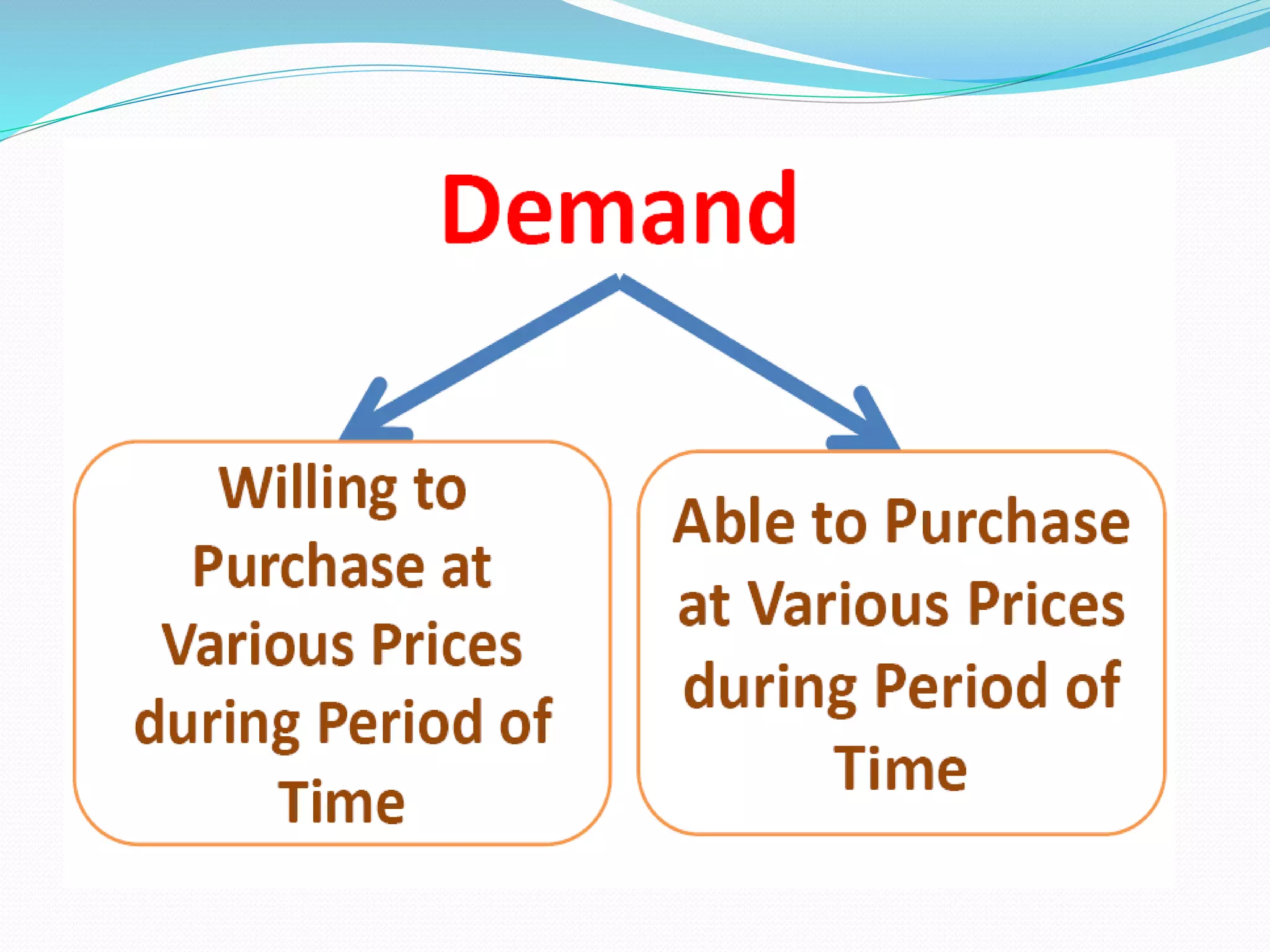
Definitions Of Demand 
 Demand refers to the Quantities of Commodity that the 
consumers are able to buy at each possible price during a 
given period of time, other things being equal. 
 Demand is the Ability and willingness to buy Specific 
Quantity of the good at Alternative Prices in given Time 
Period, Ceteris Paribus.
Determinants of Demand: 
 Price of the Commodity 
 Price of Related Commodities 
 Change in income of consumer 
Taste and Preferences of Consumers 
 Other Factors
Price of Related Commodities
Change in income of consumer 
 Demand for normal goods tend to increase with 
increase in income, and vice versa. 
 Demand for inferior goods like coarse grain tends 
to decrease with increase in income, and vice 
versa.
Law Of Demand 
 Law Of Demand states that people will buy more at lower 
price and by less at higher price, Ceteris paribus 
By: Samuelson 
 The Law Of Demand states that quantity demanded 
increases with fall in price and diminishes when Price 
Increases, other thing being equal. 
By: Marshall 
By: Probir Roy
Explanation 
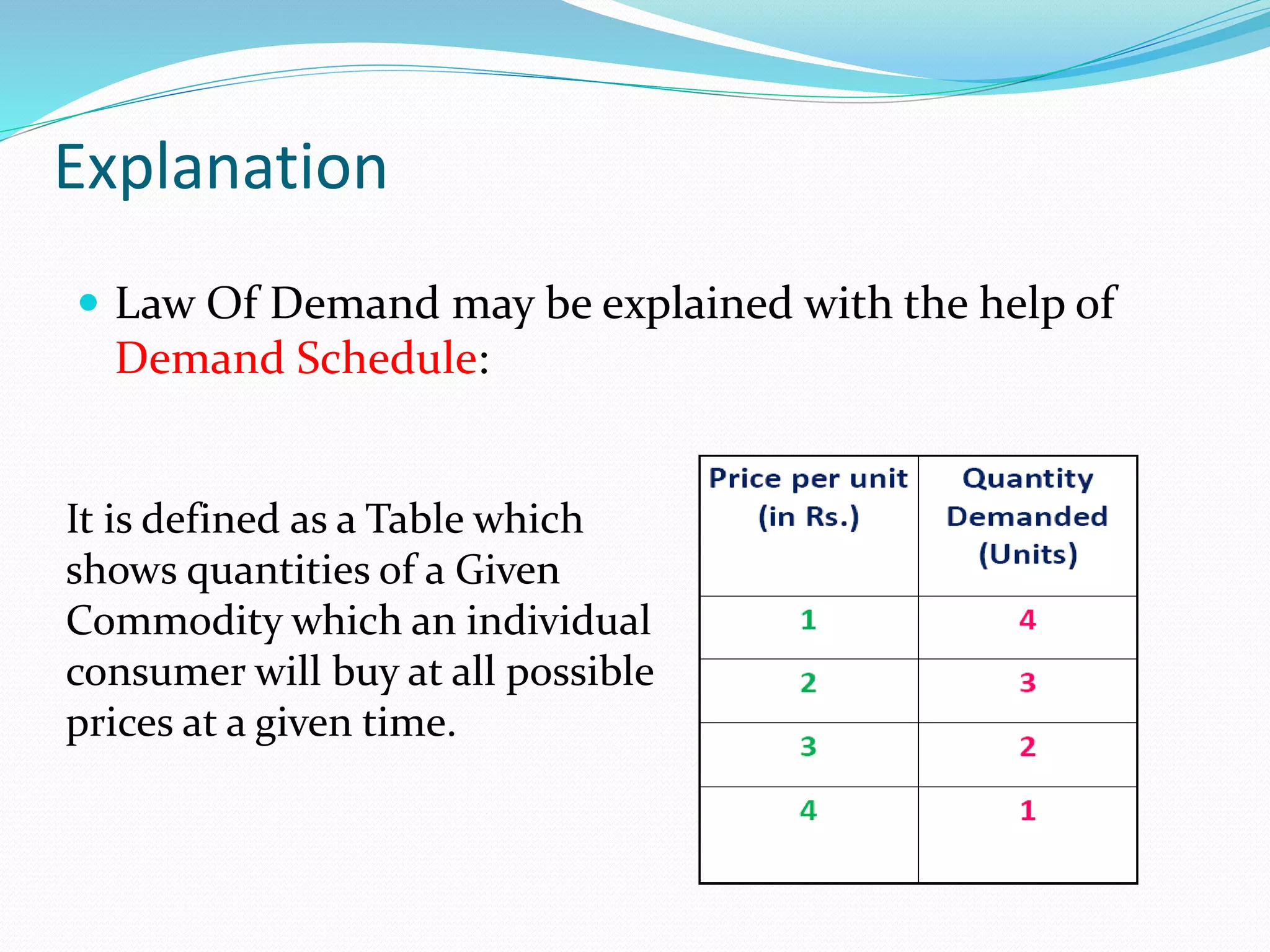
 Law Of Demand may be explained with the help of 
Demand Schedule: 
It is defined as a Table which 
shows quantities of a Given 
Commodity which an individual 
consumer will buy at all possible 
prices at a given time.
Demand Curve 
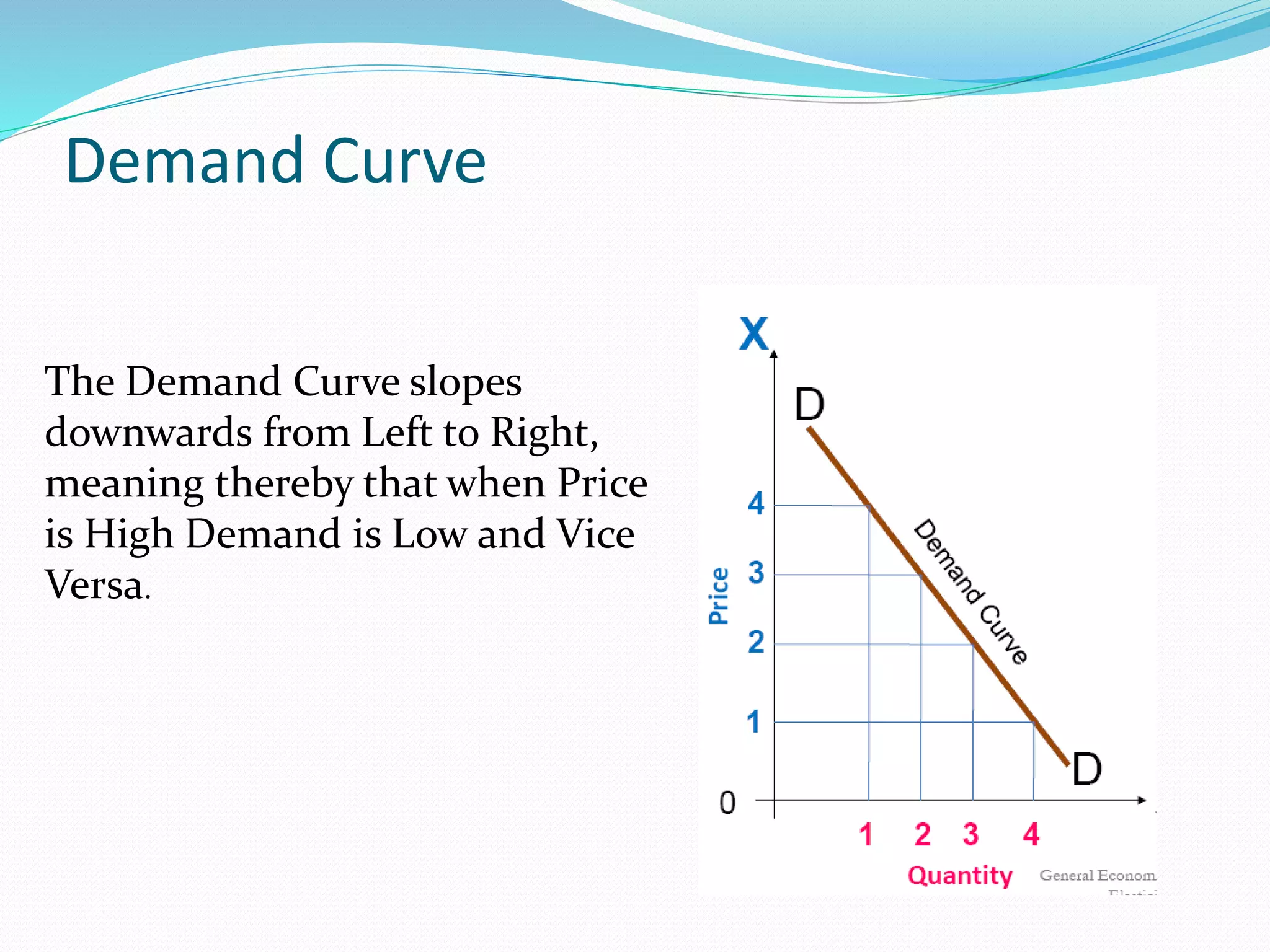
The Demand Curve slopes 
downwards from Left to Right, 
meaning thereby that when Price 
is High Demand is Low and Vice 
Versa.
Assumptions To Law 
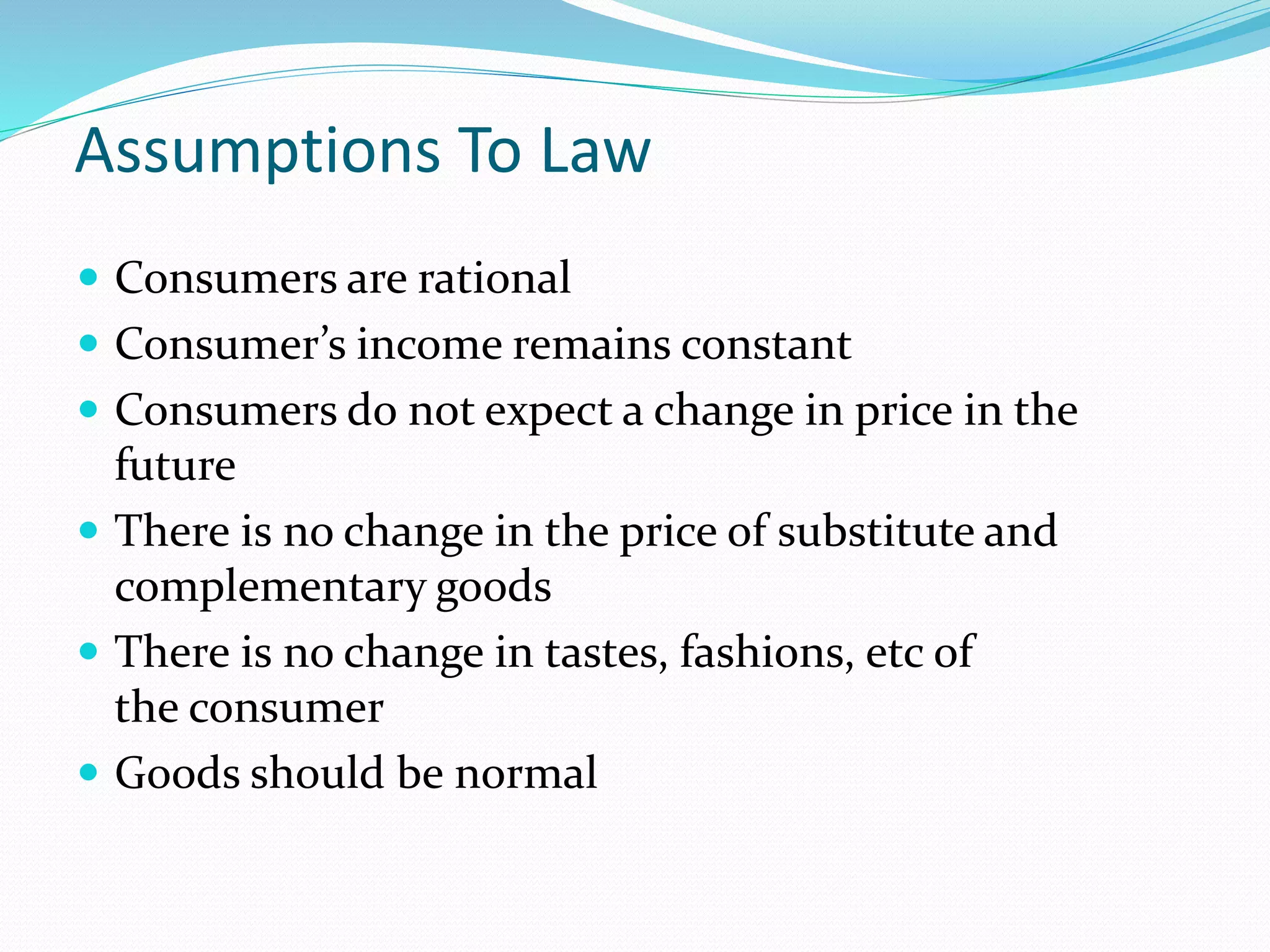
 Consumers are rational 
 Consumer’s income remains constant 
 Consumers do not expect a change in price in the 
future 
 There is no change in the price of substitute and 
complementary goods 
 There is no change in tastes, fashions, etc of 
the consumer 
 Goods should be normal
By: Mayank Sharma 
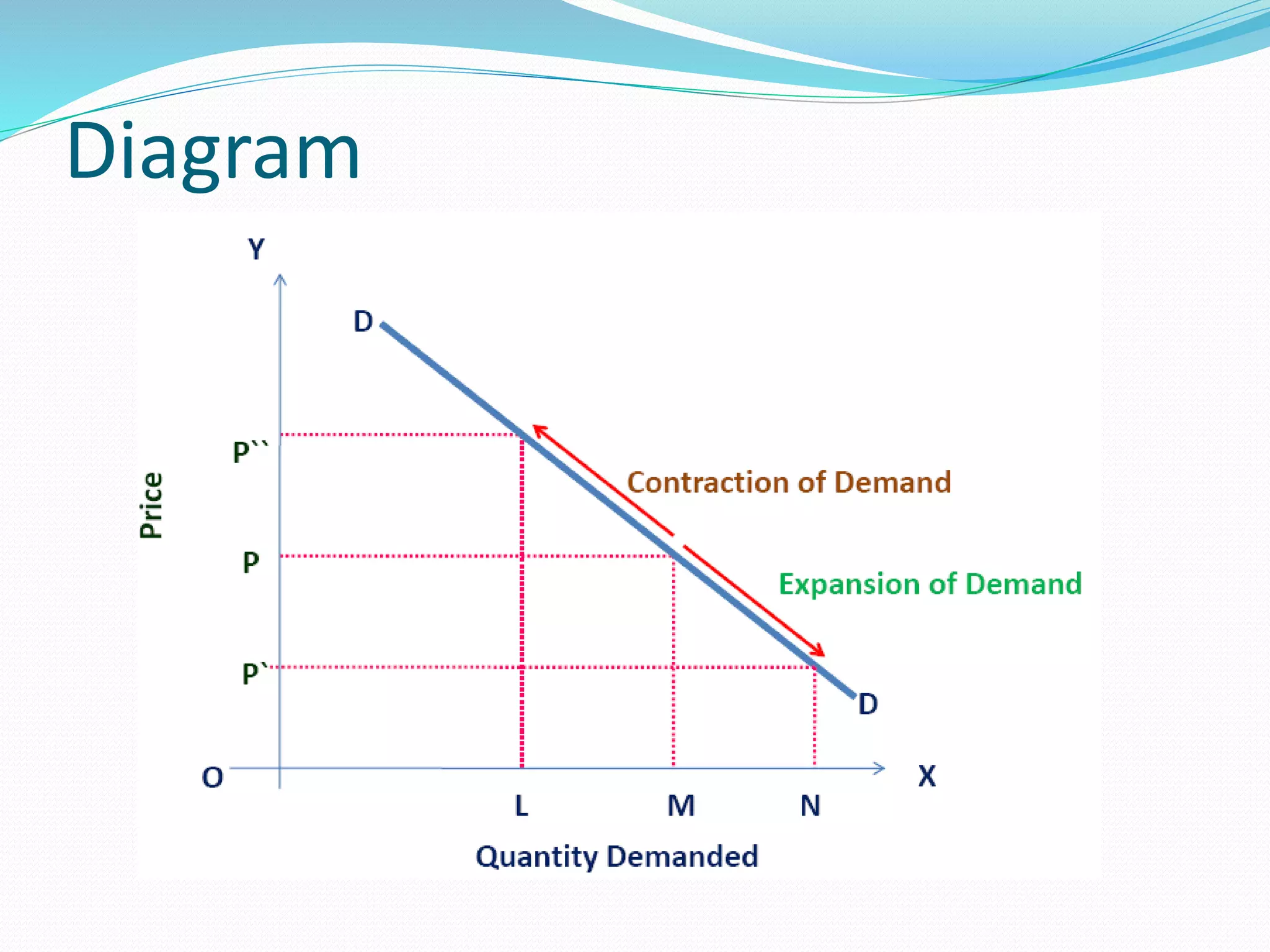
Expansion And Contraction Of Demand
Diagram
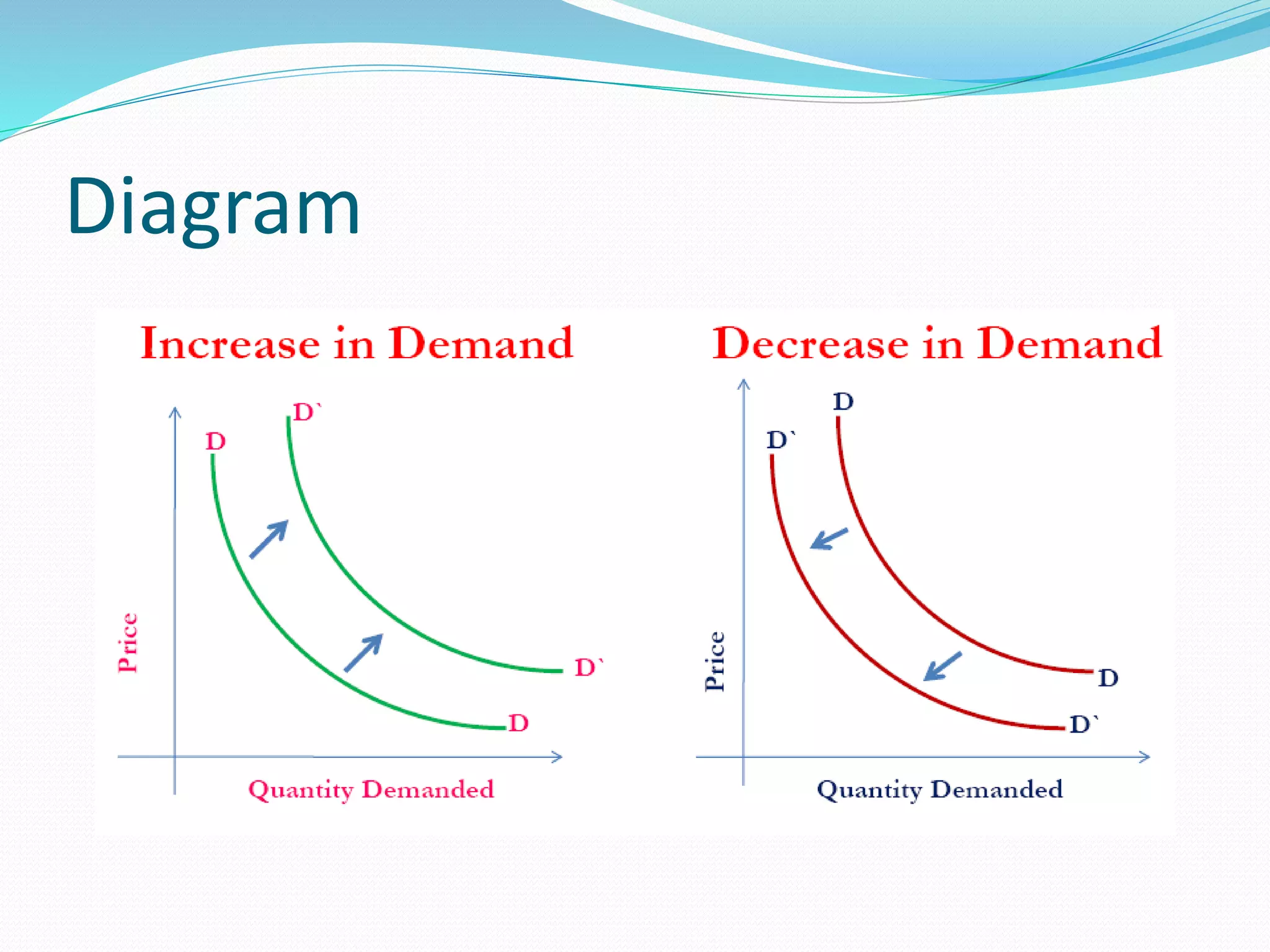
Increase And Decrease Of Demand
Diagram
By: Rohit Lamba 
Elasticity Of Demand 
 It Answers the “Question By How Much”? 
 Elasticity of Demand is defined as the responsiveness of the quantity 
demanded of a commodity to change on one of the variable on which 
demand depends.
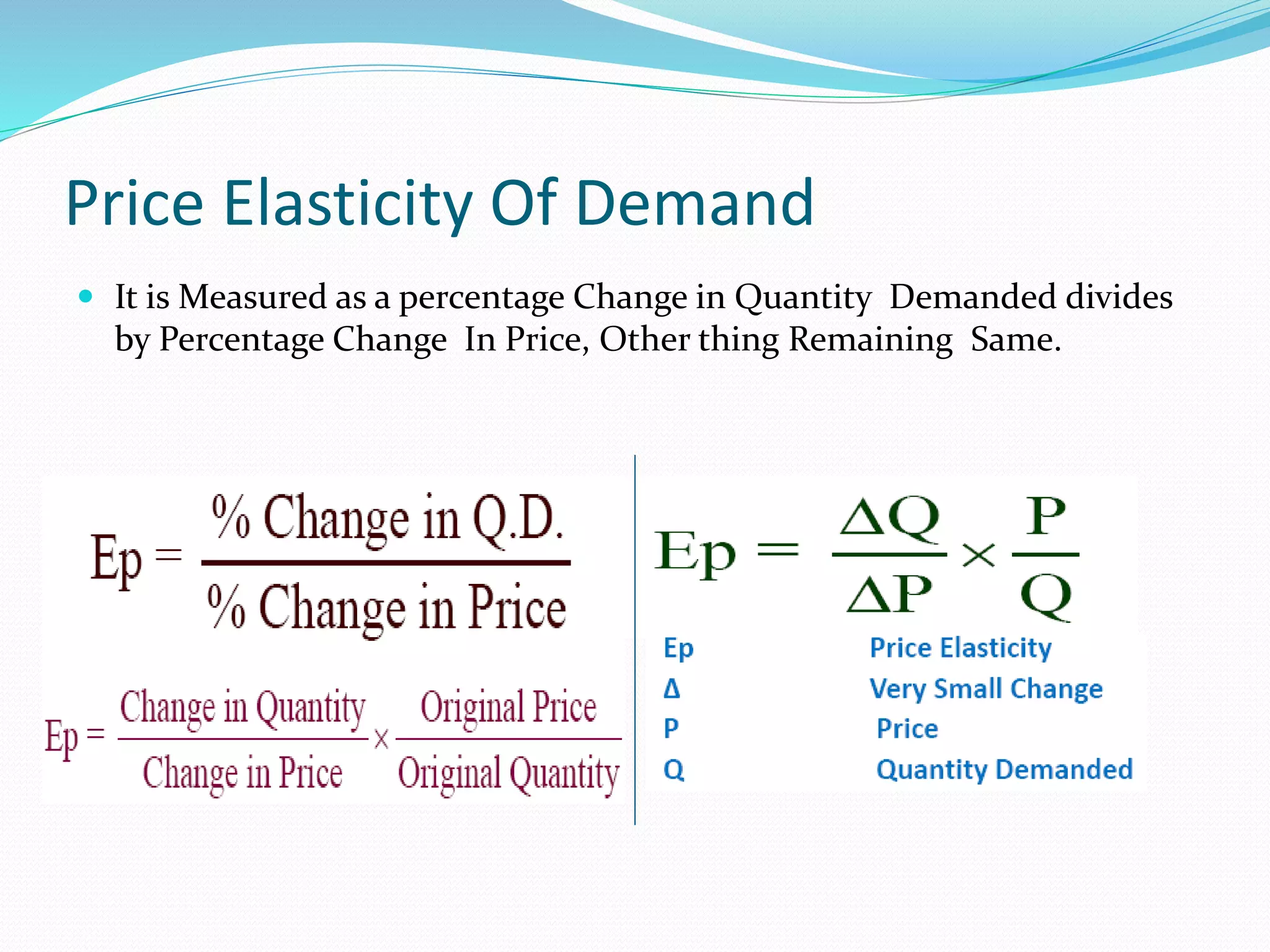
Price Elasticity Of Demand 
 It is Measured as a percentage Change in Quantity Demanded divides 
by Percentage Change In Price, Other thing Remaining Same.
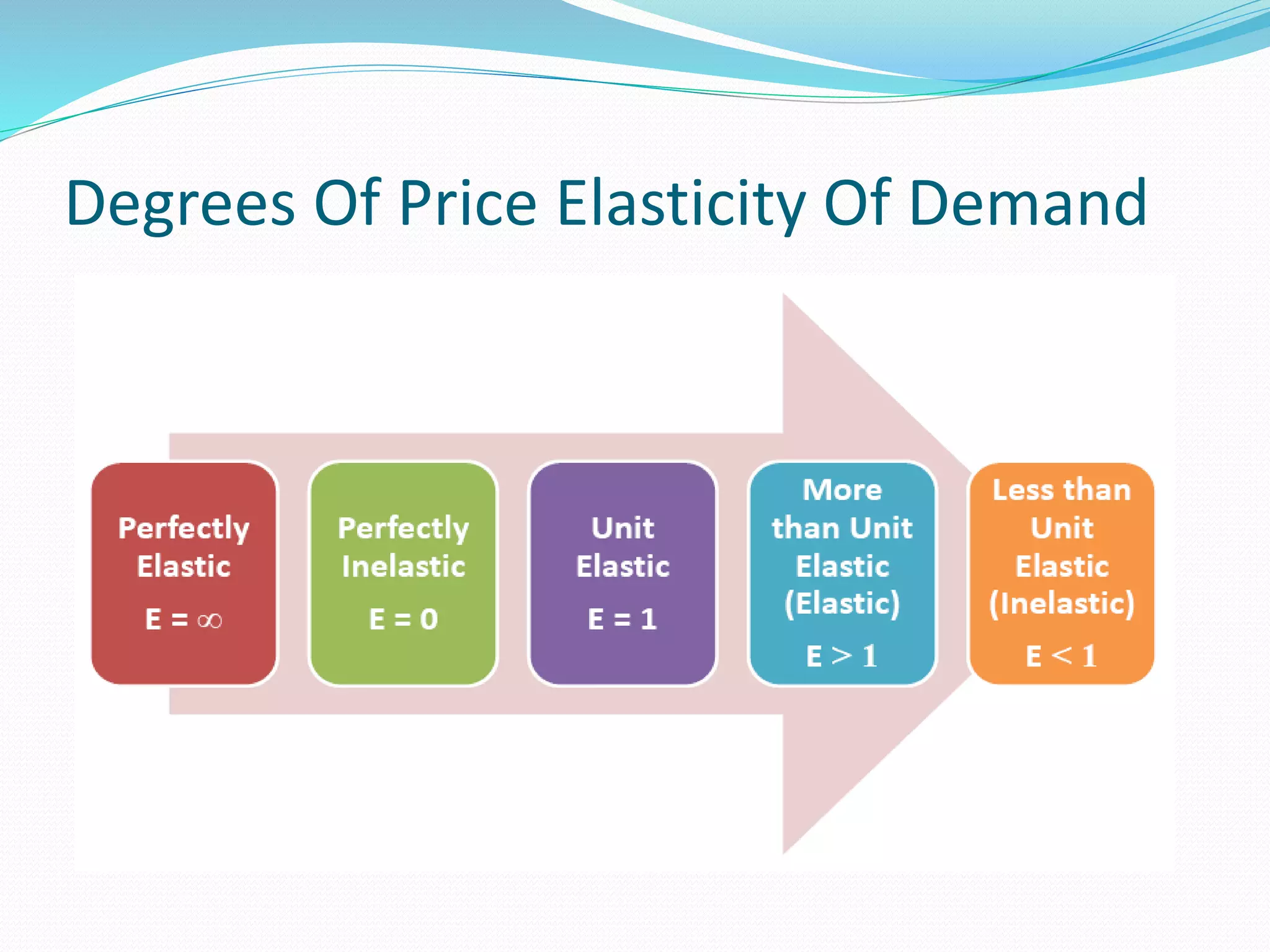
Degrees Of Price Elasticity Of Demand
Determinants 
 Availability of Substitutes 
 Position of Community in consumer’s Budget 
 Nature of need that a community satisfied 
 Number of uses to a community is put 
 Period 
 Consumer Habits
Any Questions Or Feedback ?

Demand & Elasticity Of Demand

  • 1.
    SOURCES: http://220.227.161.86/16781Demand_n_Elasticity.pd 1.Introductory Microeconomics and Macroeconomics - TR Jain, VK .Ohri 2. Managerial Economics-Dominick Salvatore
  • 2.
    By: Gaurav Wadhwa Definitions Of Demand  Demand refers to the Quantities of Commodity that the consumers are able to buy at each possible price during a given period of time, other things being equal.  Demand is the Ability and willingness to buy Specific Quantity of the good at Alternative Prices in given Time Period, Ceteris Paribus.
  • 4.
    Determinants of Demand:  Price of the Commodity  Price of Related Commodities  Change in income of consumer Taste and Preferences of Consumers  Other Factors
  • 5.
    Price of RelatedCommodities
  • 6.
    Change in incomeof consumer  Demand for normal goods tend to increase with increase in income, and vice versa.  Demand for inferior goods like coarse grain tends to decrease with increase in income, and vice versa.
  • 7.
    Law Of Demand  Law Of Demand states that people will buy more at lower price and by less at higher price, Ceteris paribus By: Samuelson  The Law Of Demand states that quantity demanded increases with fall in price and diminishes when Price Increases, other thing being equal. By: Marshall By: Probir Roy
  • 8.
    Explanation  LawOf Demand may be explained with the help of Demand Schedule: It is defined as a Table which shows quantities of a Given Commodity which an individual consumer will buy at all possible prices at a given time.
  • 9.
    Demand Curve TheDemand Curve slopes downwards from Left to Right, meaning thereby that when Price is High Demand is Low and Vice Versa.
  • 10.
    Assumptions To Law  Consumers are rational  Consumer’s income remains constant  Consumers do not expect a change in price in the future  There is no change in the price of substitute and complementary goods  There is no change in tastes, fashions, etc of the consumer  Goods should be normal
  • 11.
    By: Mayank Sharma Expansion And Contraction Of Demand
  • 12.
  • 13.
  • 14.
  • 15.
    By: Rohit Lamba Elasticity Of Demand  It Answers the “Question By How Much”?  Elasticity of Demand is defined as the responsiveness of the quantity demanded of a commodity to change on one of the variable on which demand depends.
  • 17.
    Price Elasticity OfDemand  It is Measured as a percentage Change in Quantity Demanded divides by Percentage Change In Price, Other thing Remaining Same.
  • 18.
    Degrees Of PriceElasticity Of Demand
  • 19.
    Determinants  Availabilityof Substitutes  Position of Community in consumer’s Budget  Nature of need that a community satisfied  Number of uses to a community is put  Period  Consumer Habits
  • 20.
    Any Questions OrFeedback ?

Editor's Notes

  • #2 Managerial economics Dominick Salvatore