
Impedance
Audiometry
DR SAFIKA ZAMAN
DEPT OF ENT
RKMSP
Advantage
 Objective test
 Quick
 Possible in paediatric patients
Uses
 Differential diagnosis in cases of conductive deafness
 Evaluation of ET function
 Identification of site of lesions in facial paralysis
Impedance
audiometry
 Tympanometry
 Stapedial test
 Eustachian tube function test
Impedance
 Impedance of the medium –Complex mixture of 3 parameters
stiffness, mass , friction .
 Middle ear acts as the impedance matching device
 All middle ear pathologies alter this impedance , results in lesser
sound energy being transmitted to the cochlear fluid.
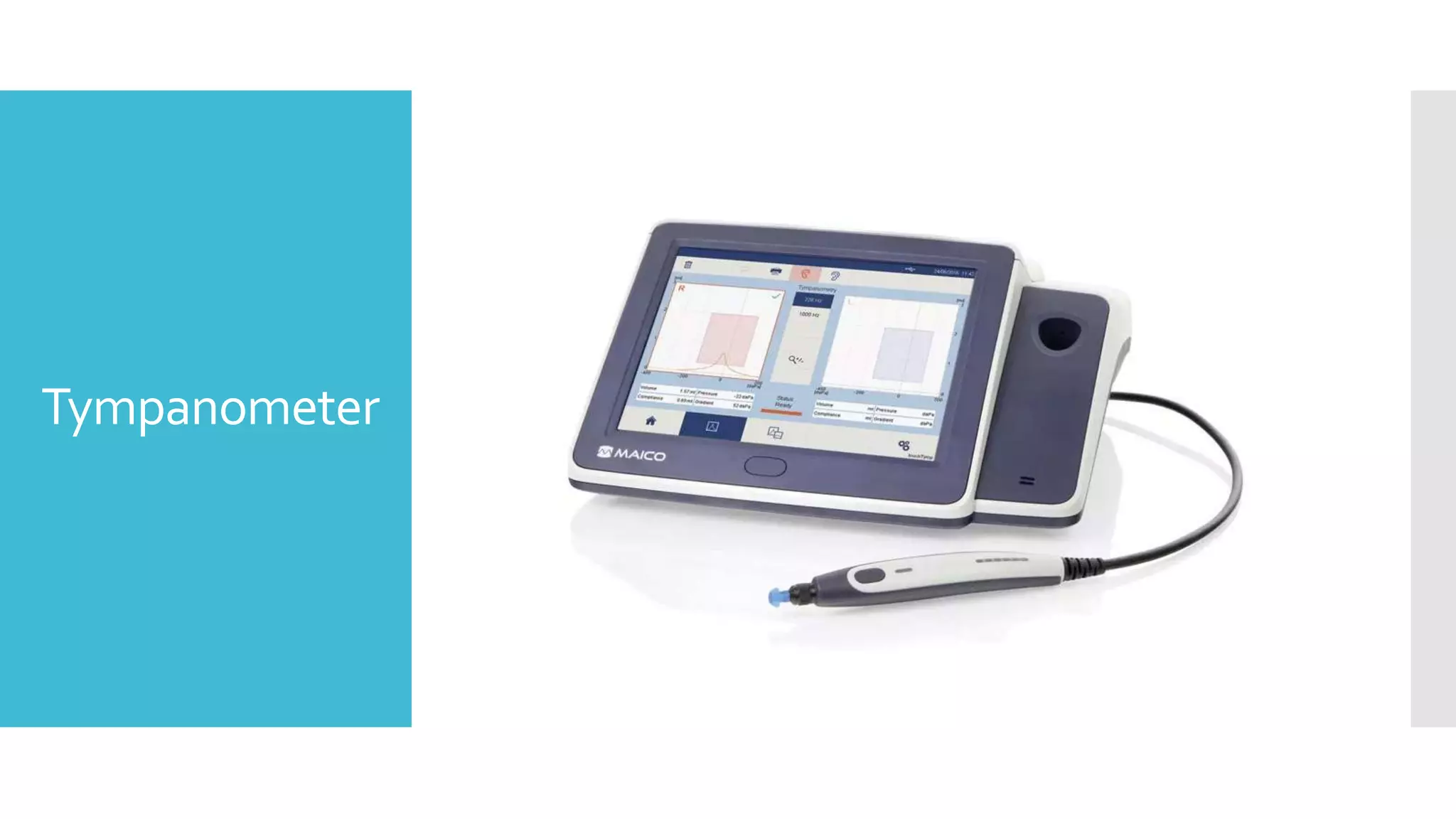
Tympanometer
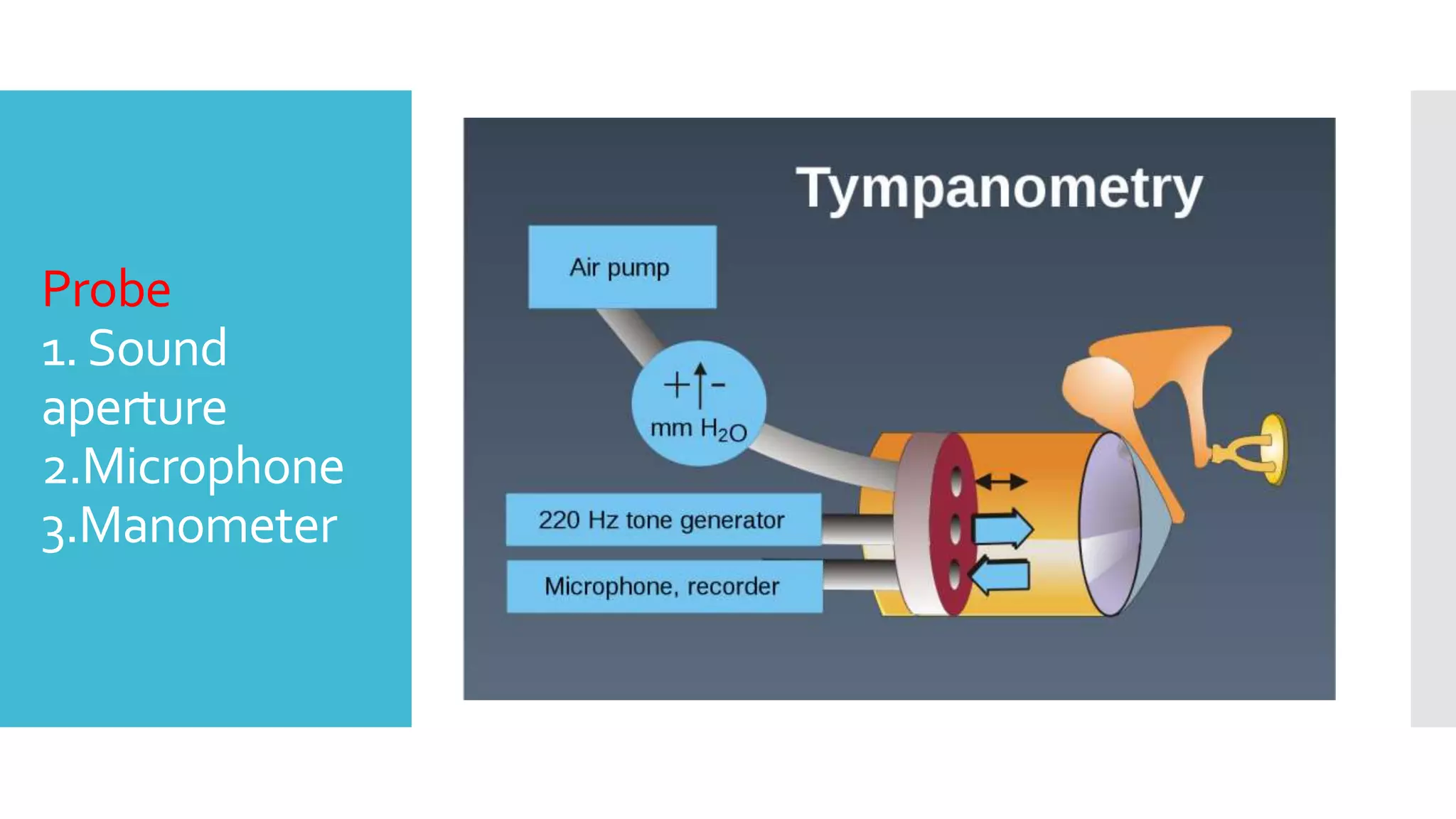
Probe
1.Sound
aperture
2.Microphone
3.Manometer
Definition of
Tympanometry
 Change in the impedance of the middle ear at the plane of the
tympanic membrane as a result of changes in air pressure in the
external auditory meatus.
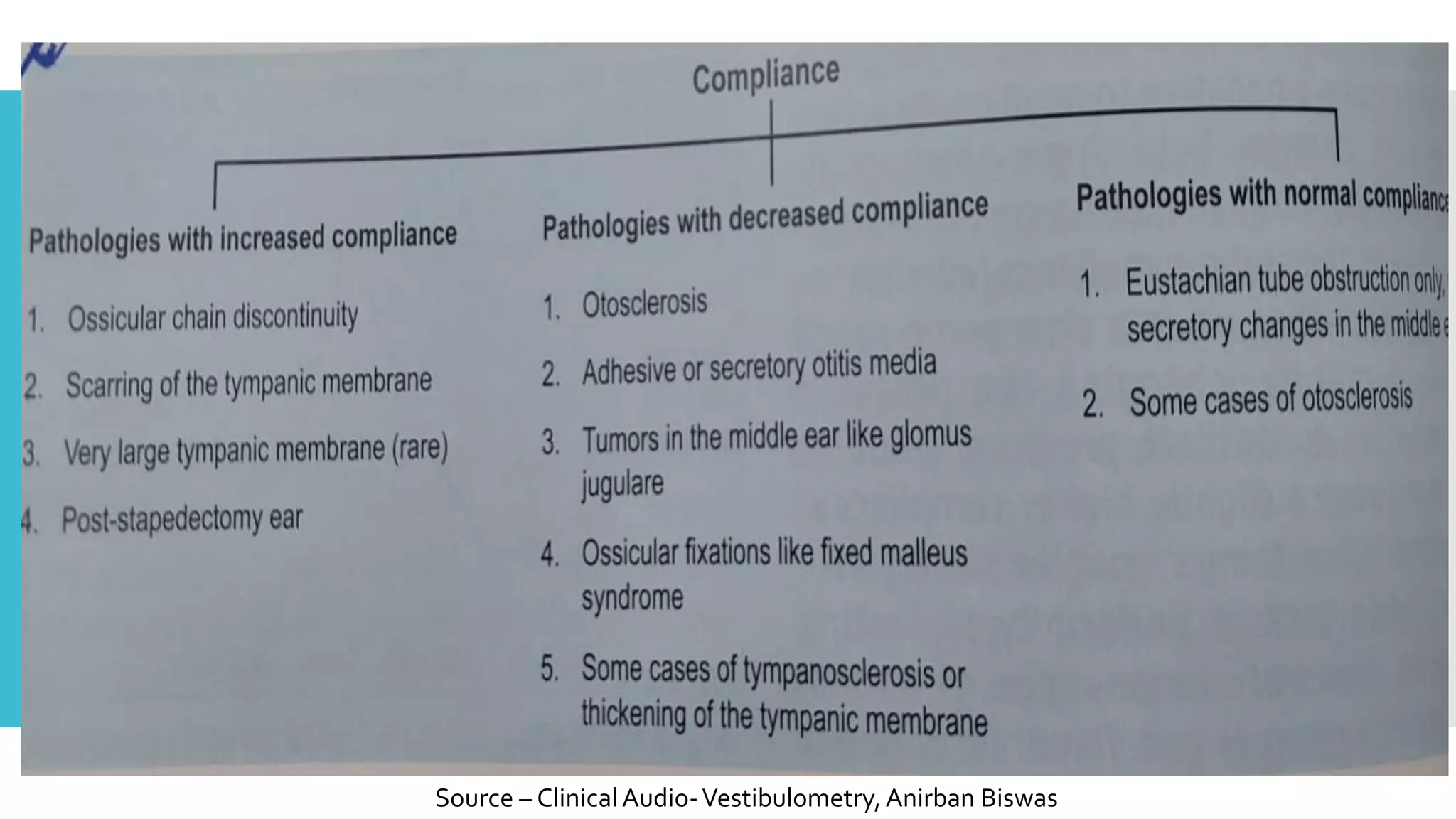
Source – ClinicalAudio-Vestibulometry,Anirban Biswas
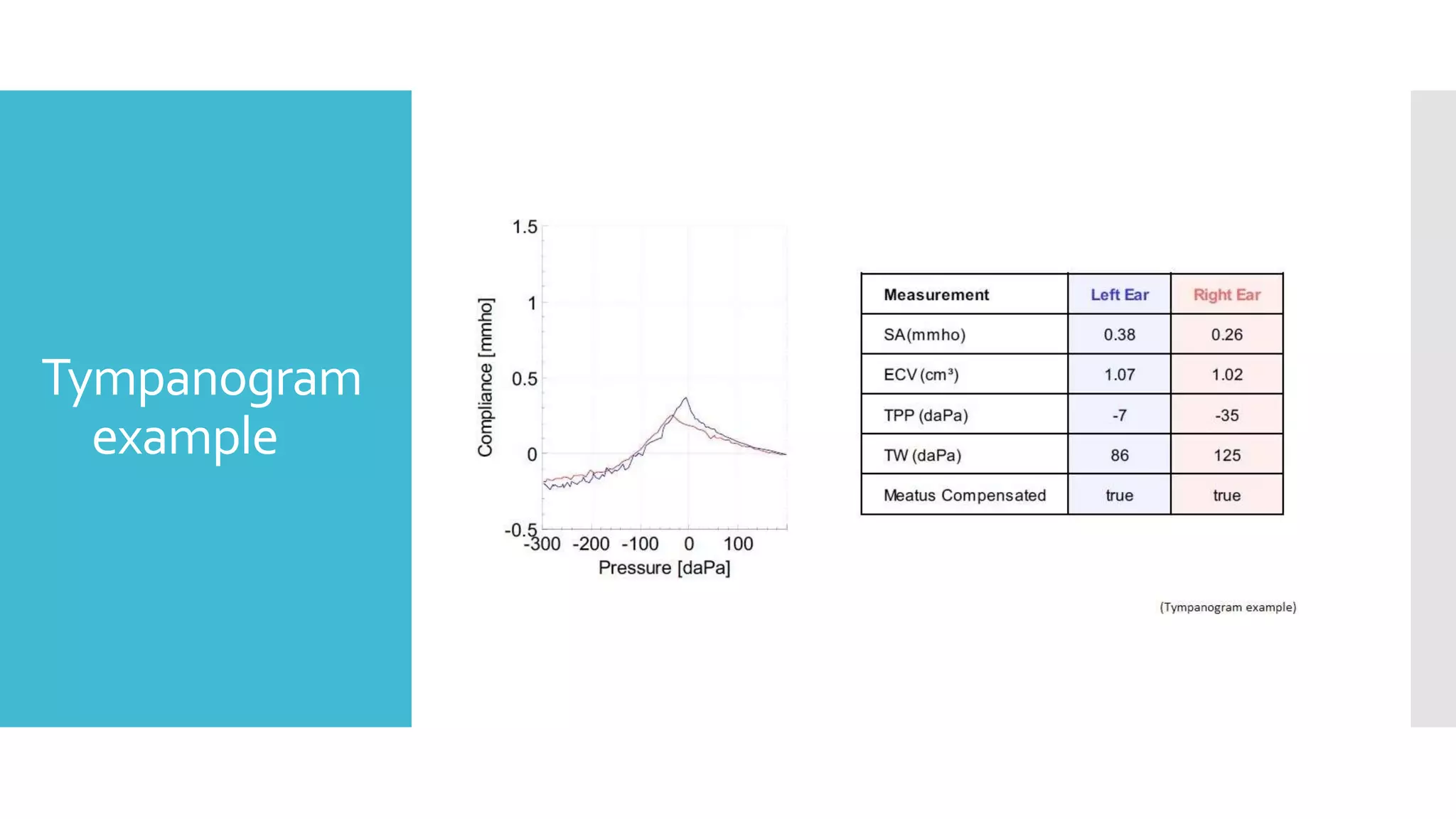
Tympanogram
example
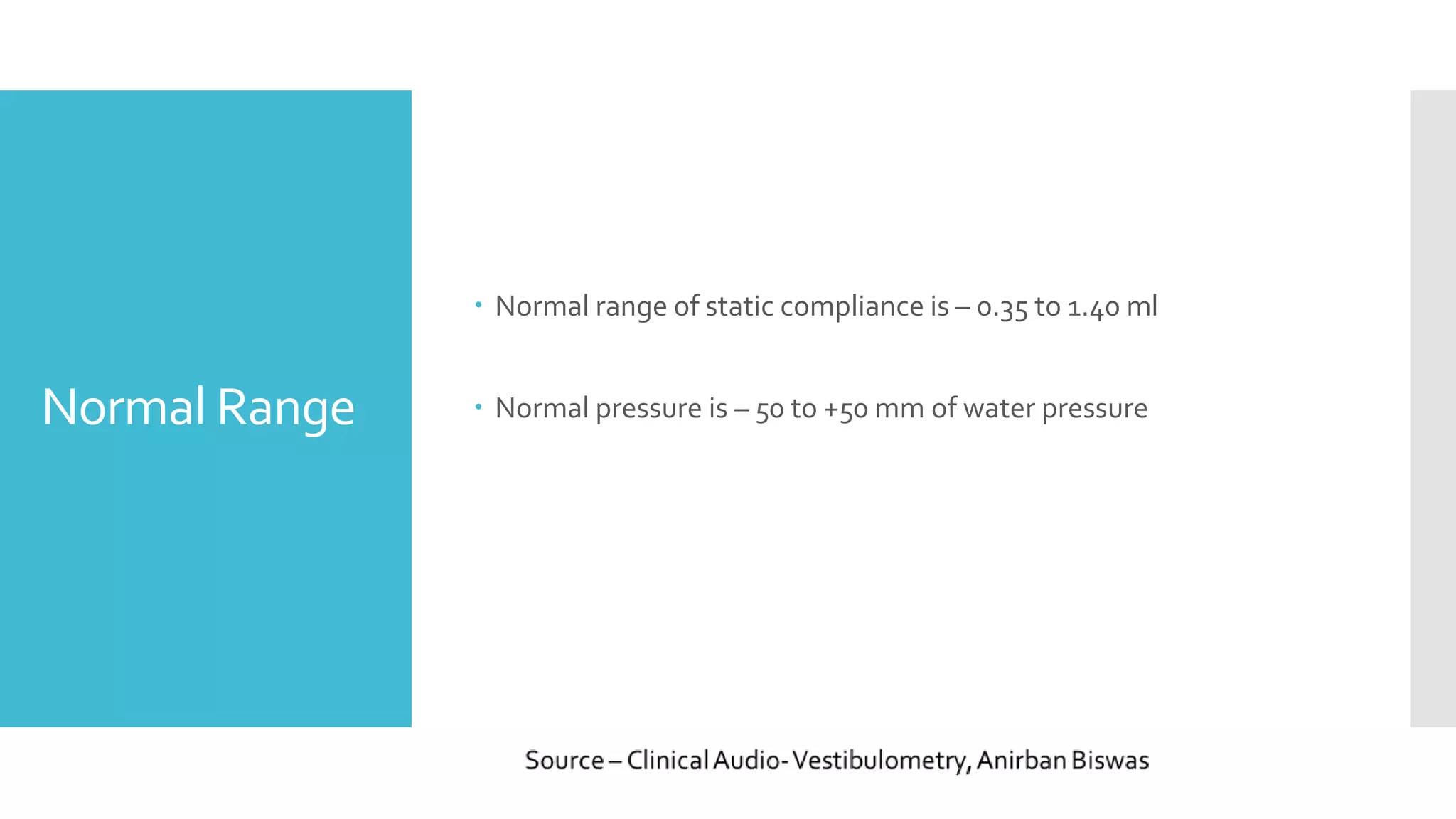
Normal Range
 Normal range of static compliance is – 0.35 to 1.40 ml
 Normal pressure is – 50 to +50 mm of water pressure
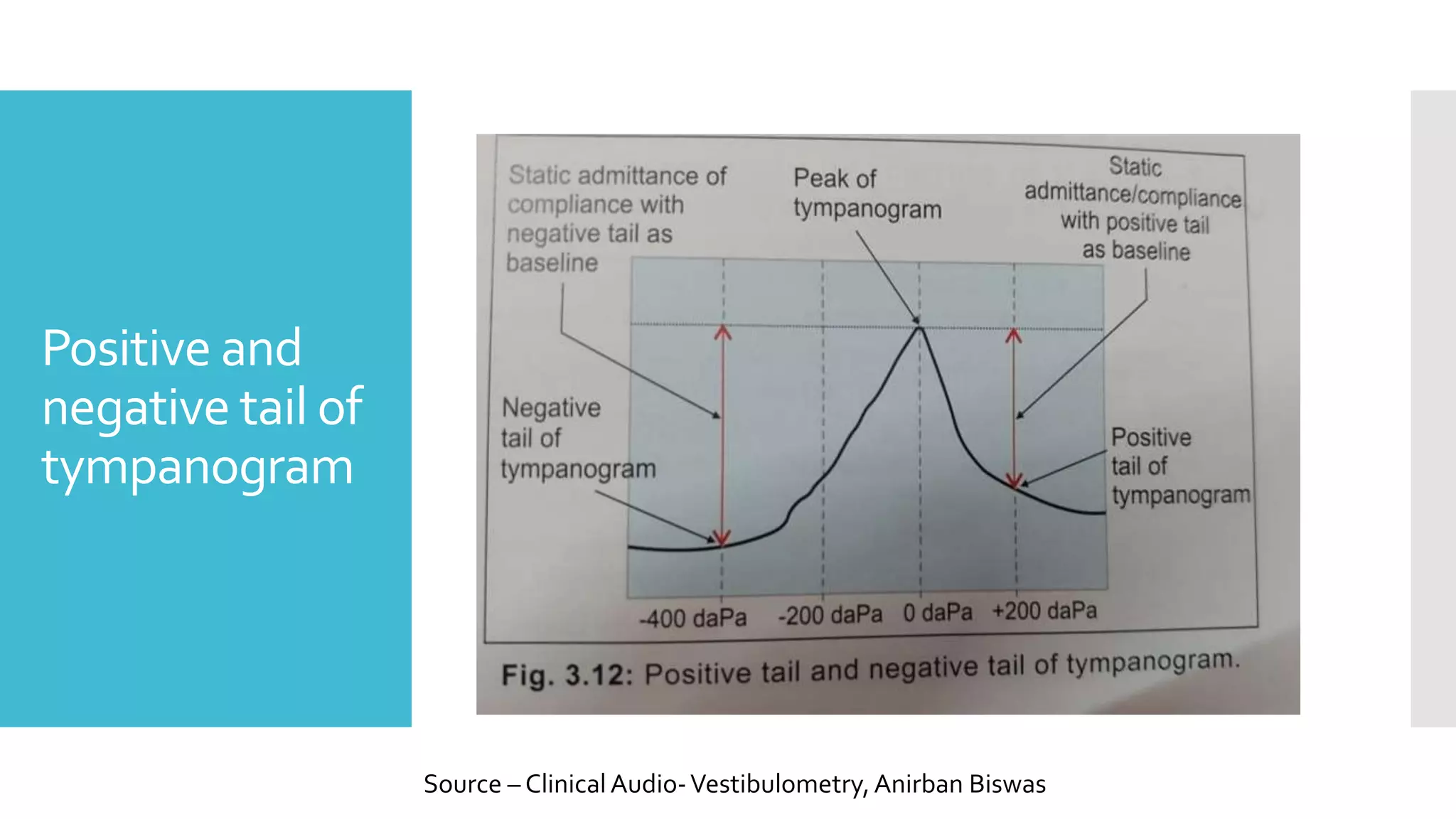
Positive and
negative tail of
tympanogram
Source – ClinicalAudio-Vestibulometry,Anirban Biswas
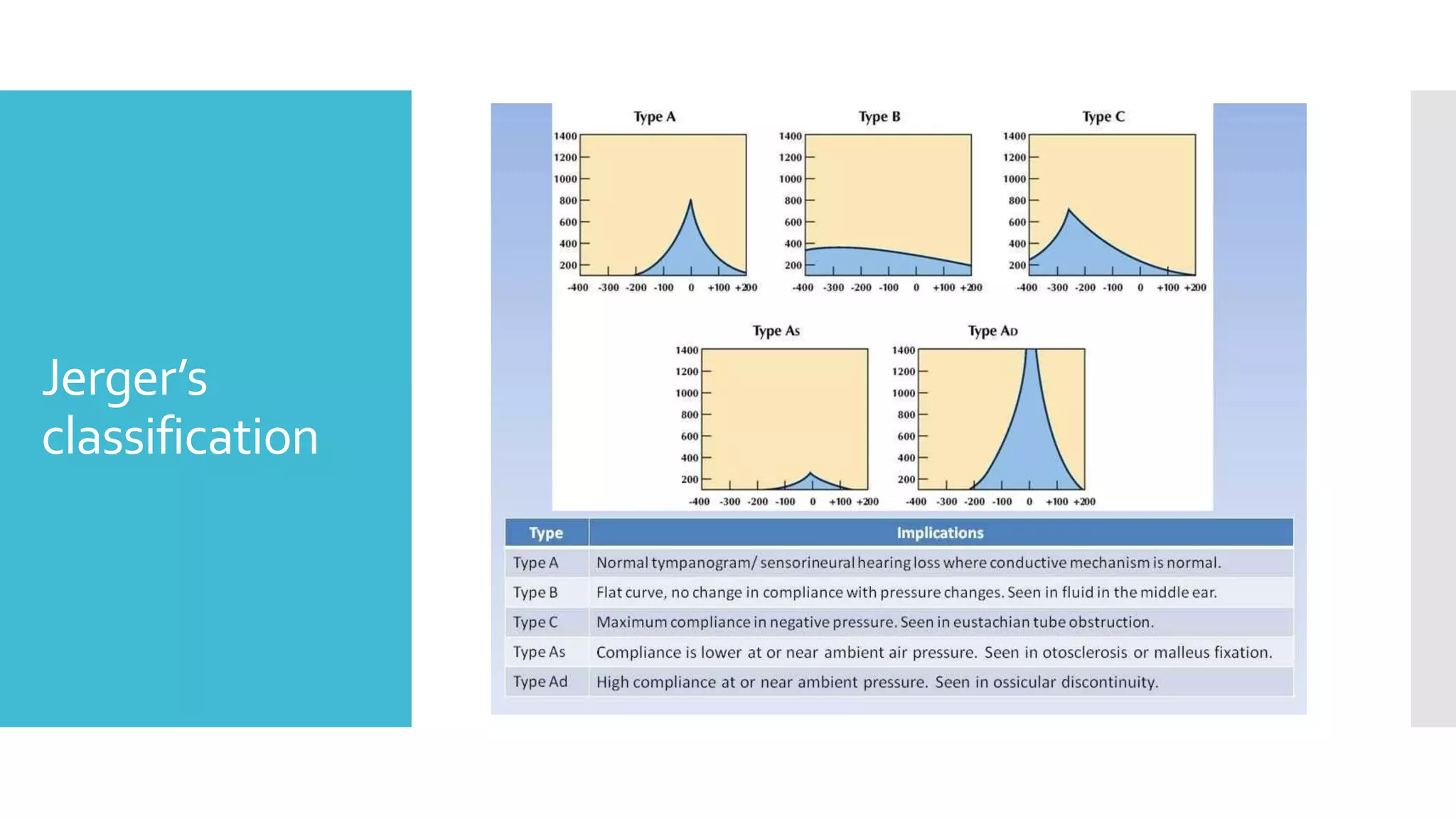
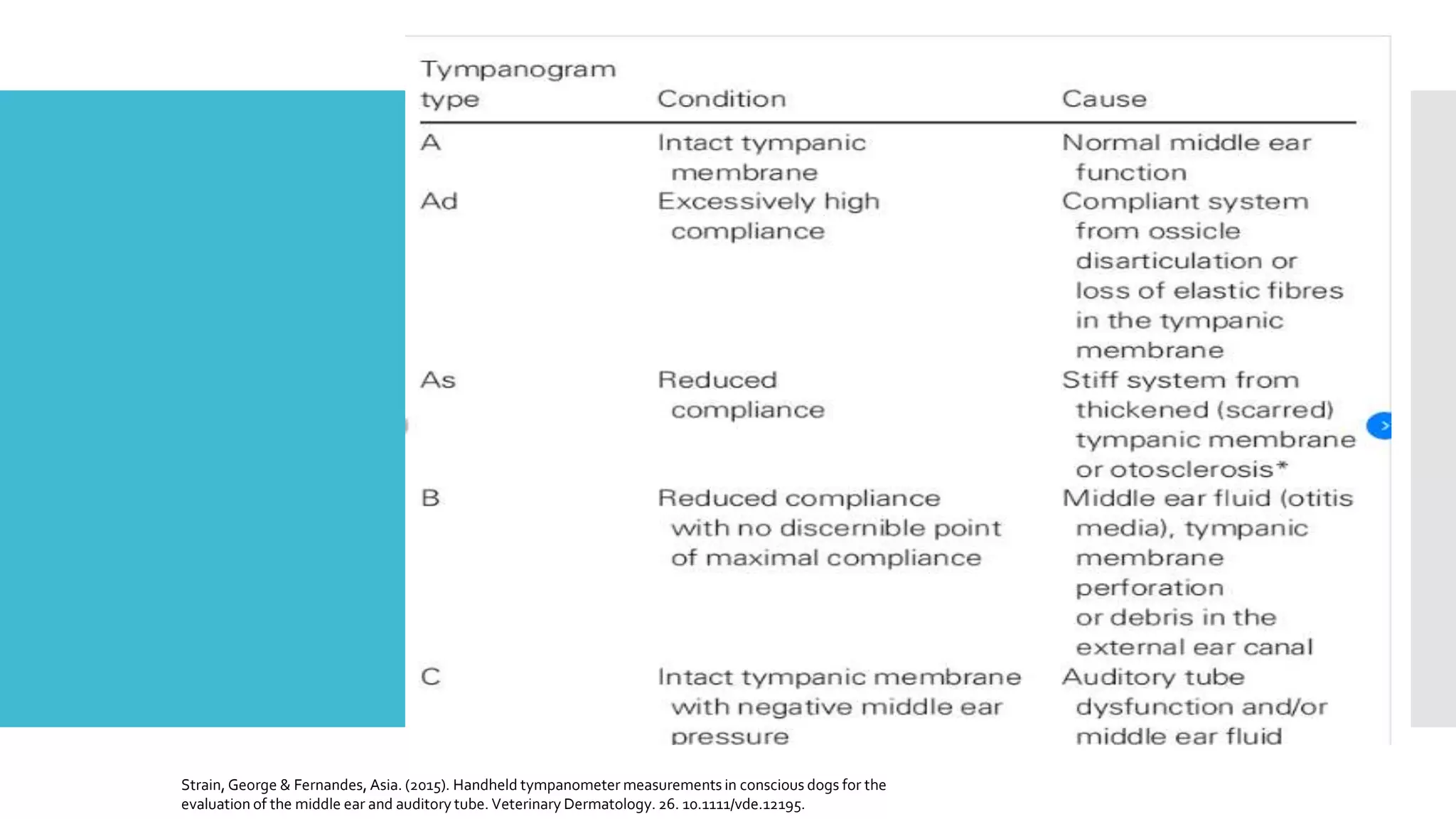
Jerger’s
classification
Strain, George & Fernandes, Asia. (2015). Handheld tympanometer measurements in conscious dogs for the
evaluation of the middle ear and auditory tube. Veterinary Dermatology. 26. 10.1111/vde.12195.
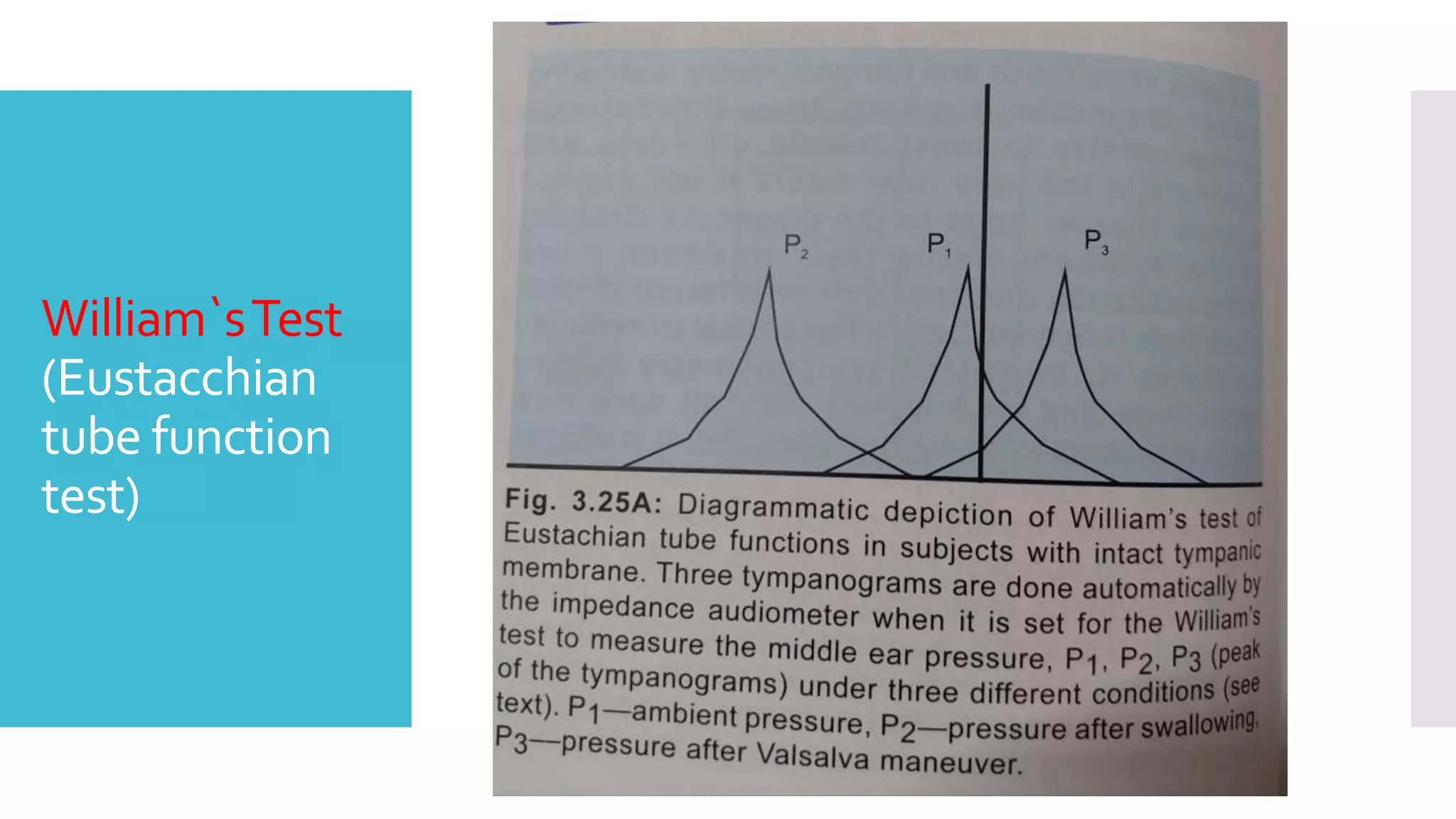
William`sTest
(Eustacchian
tube function
test)
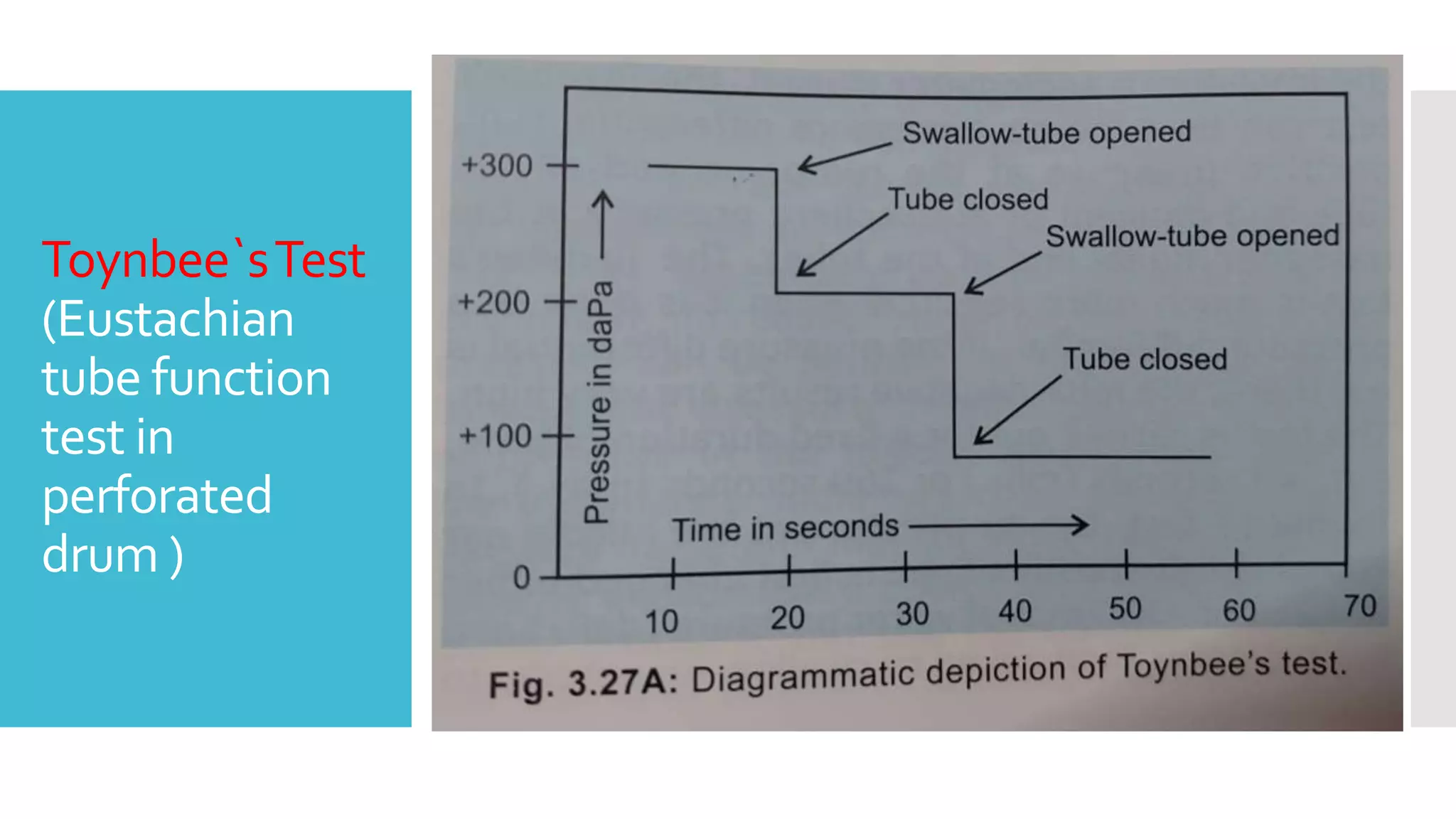
Toynbee`sTest
(Eustachian
tube function
test in
perforated
drum )
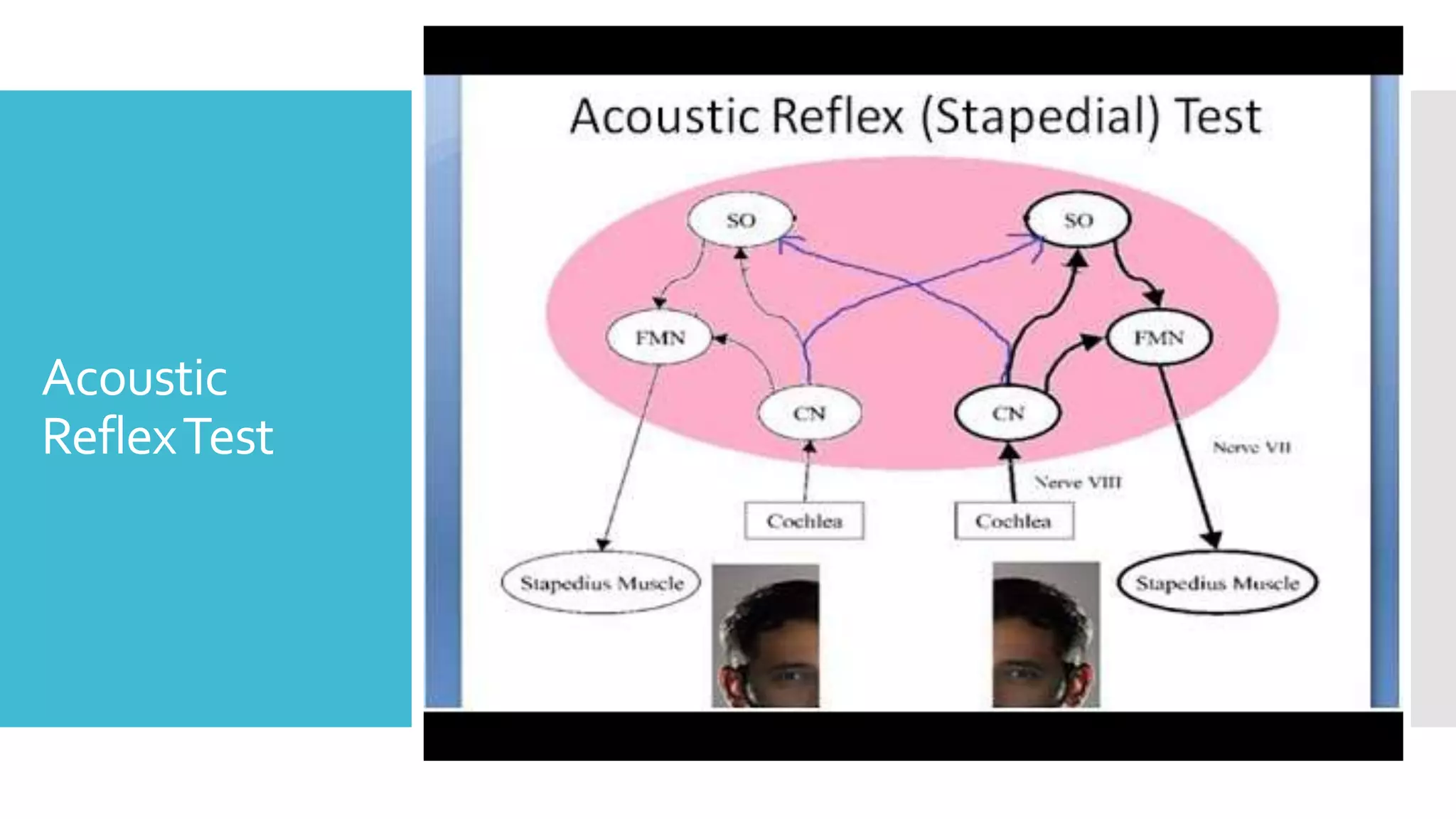
Acoustic
ReflexTest
Impedance audiometry.pptx

Impedance audiometry.pptx