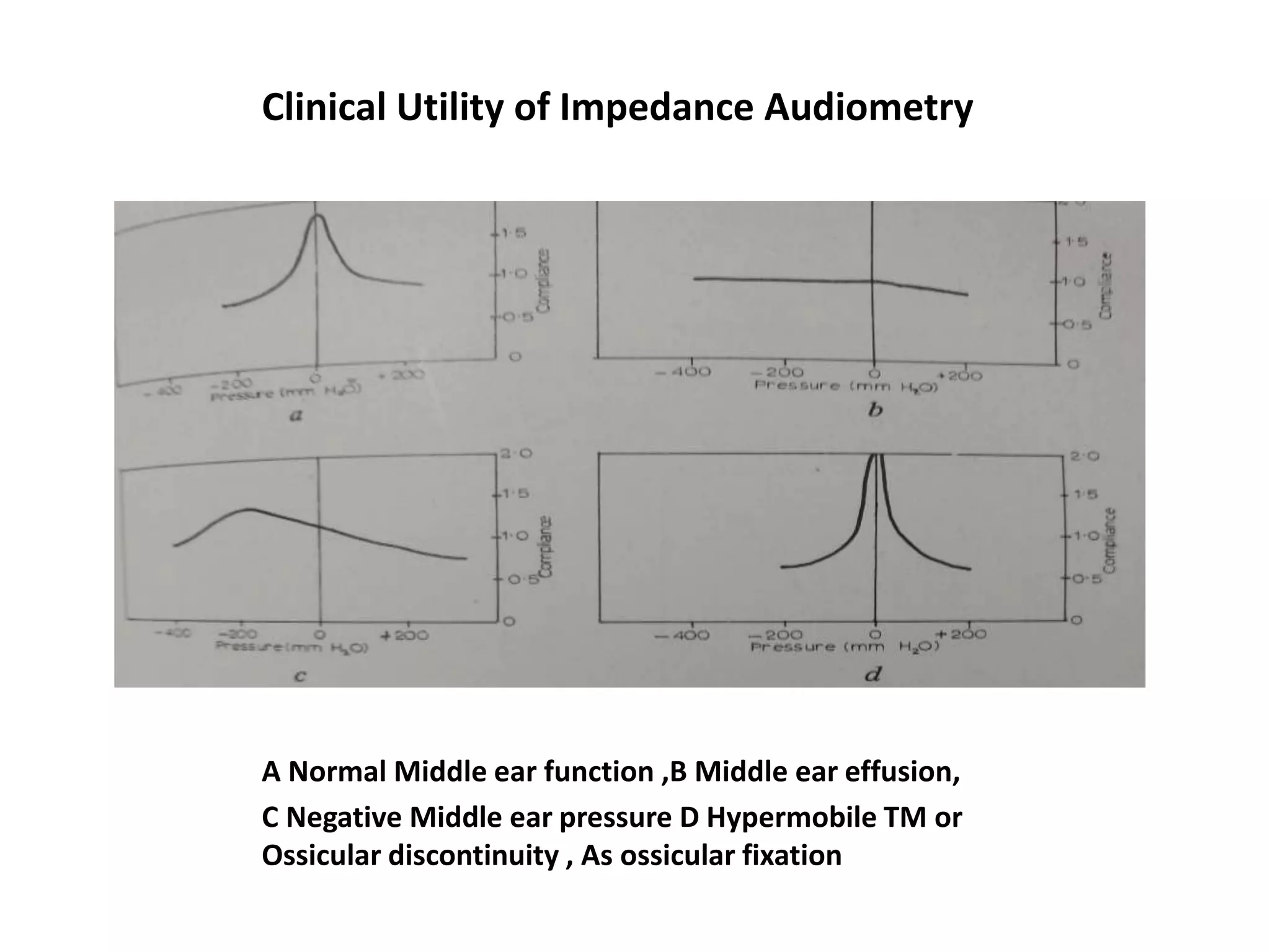
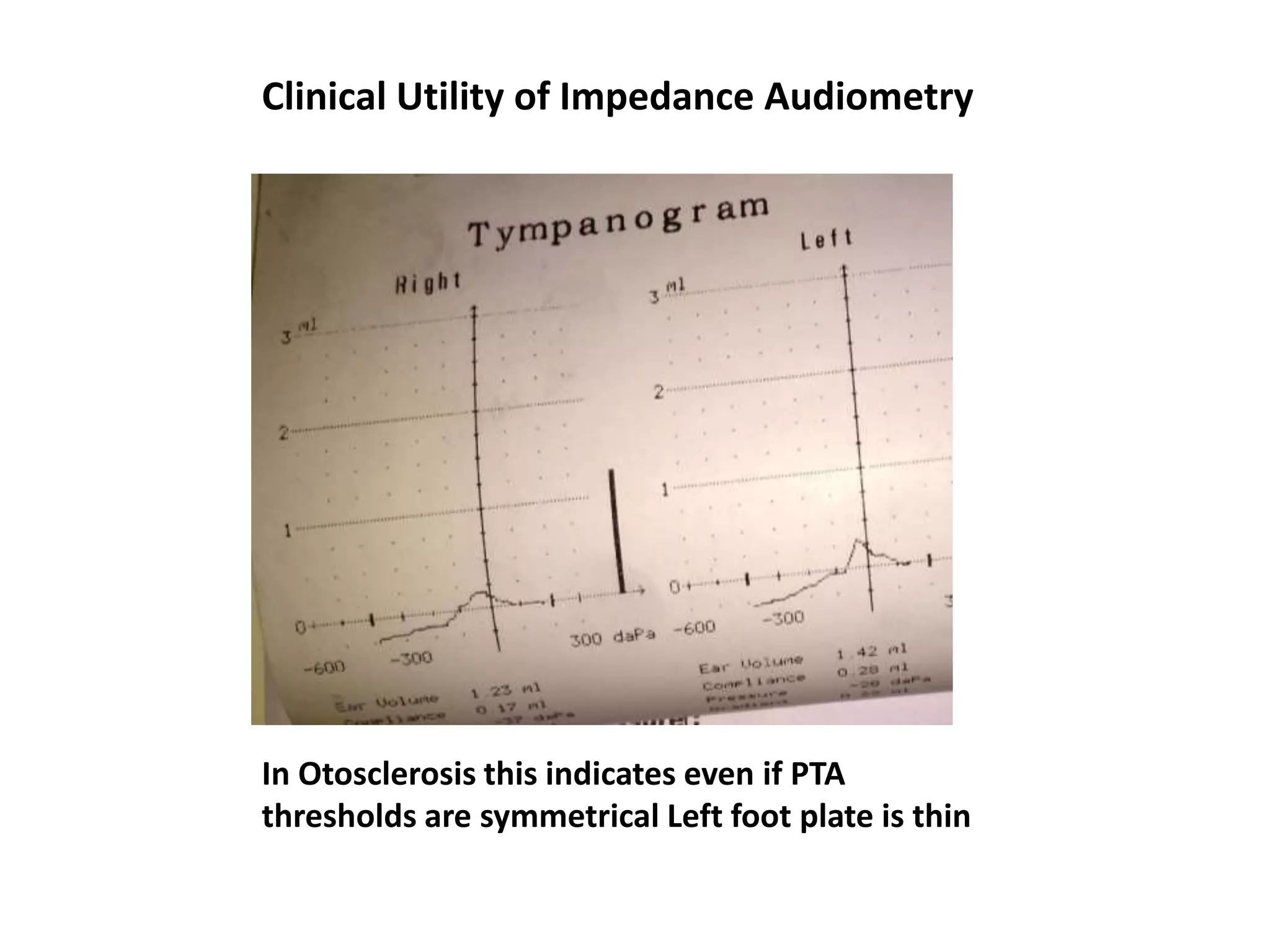
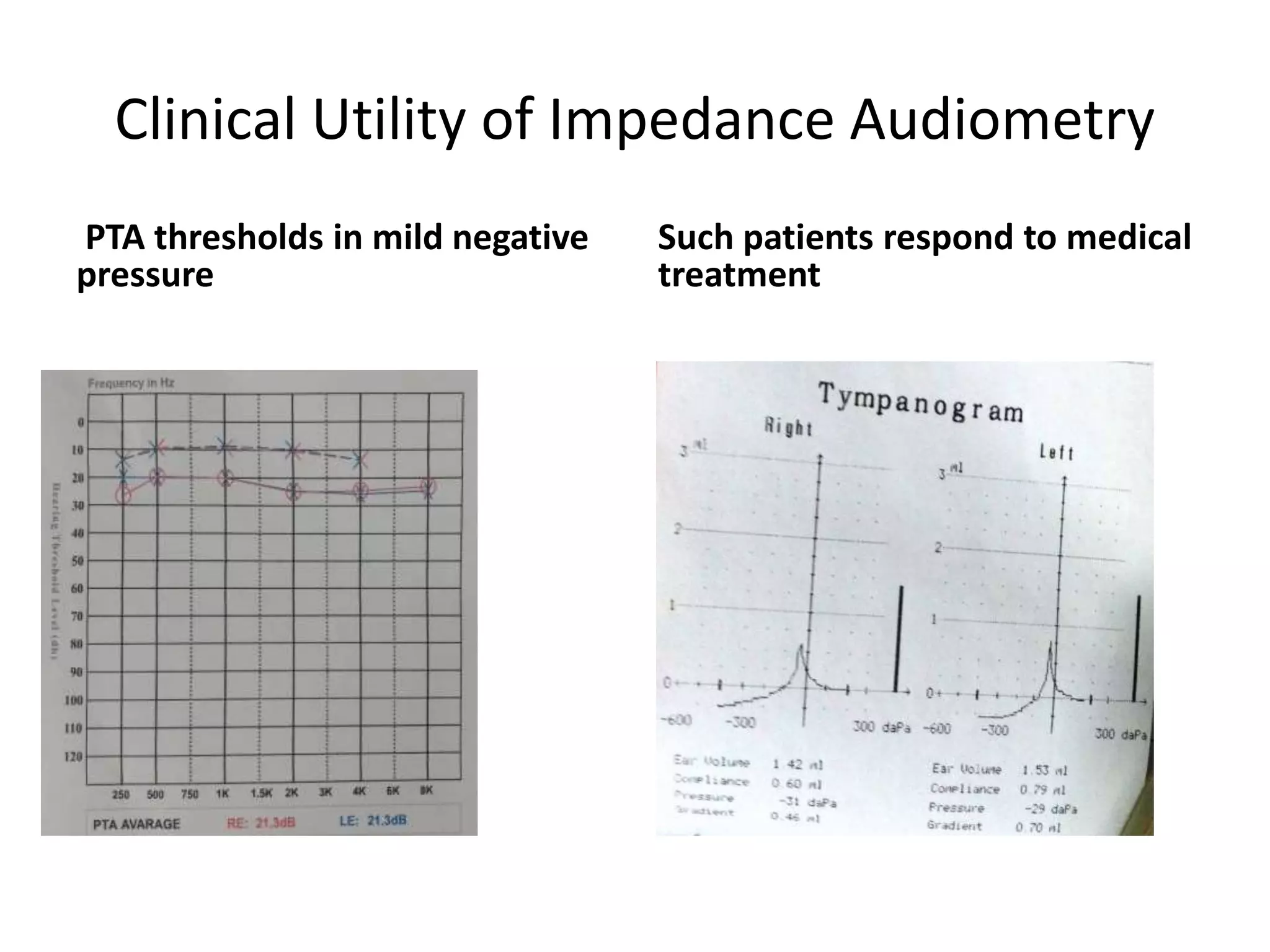
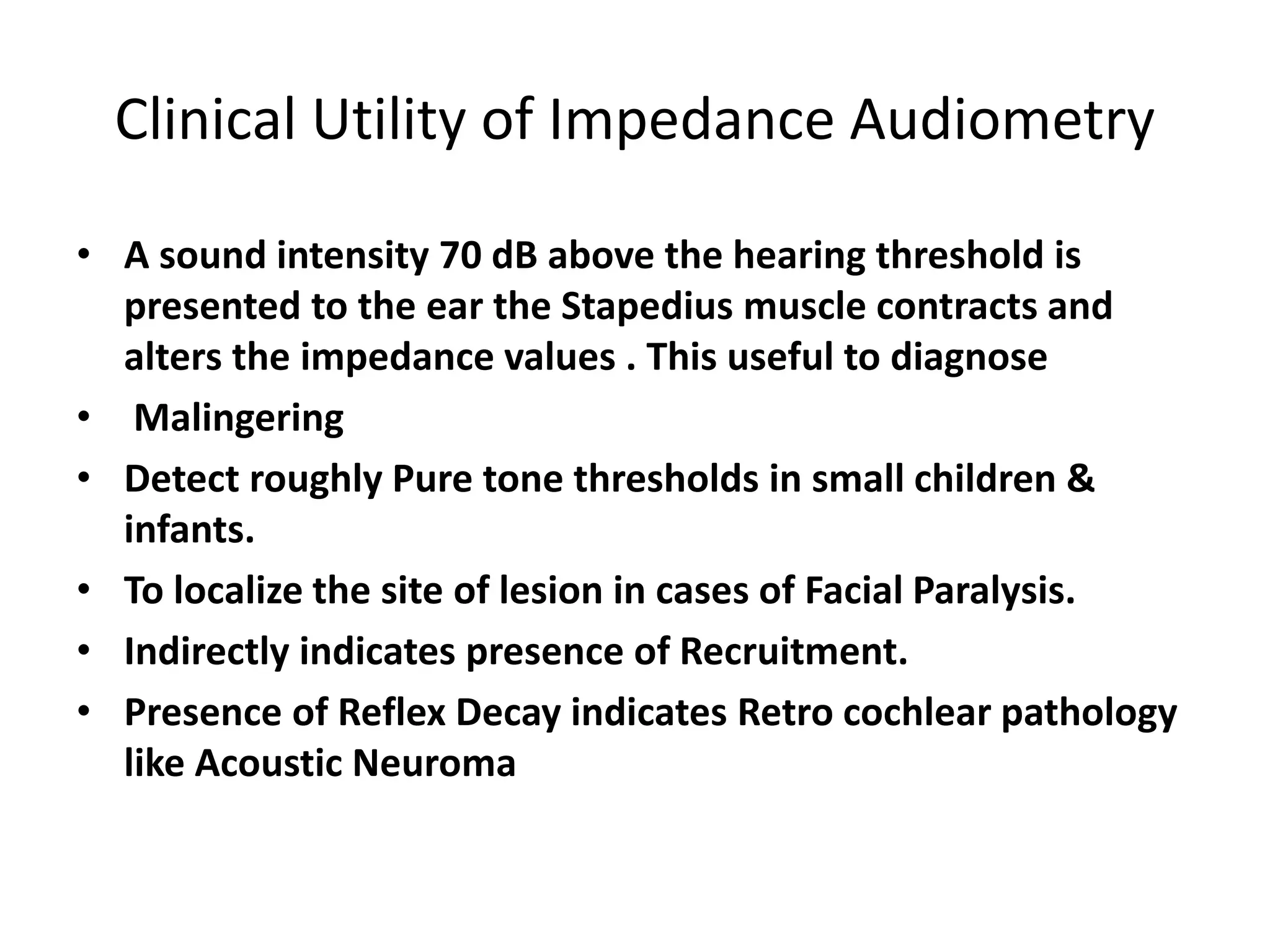
Impedance audiometry provides objective information about the state of the middle ear by delivering tones into the ear and measuring how much sound is absorbed and reflected by the tympanic membrane. Parameters like static compliance, external canal volume, and middle ear pressure are assessed to evaluate middle ear function. Abnormal results can indicate conditions like middle ear effusion, negative middle ear pressure, ossicular problems, or eustachian tube dysfunction. Impedance audiometry is useful for diagnosing issues like malingering, estimating pure tone thresholds in children, and localizing lesions in cases of facial paralysis.








![Apporach to lung biopsy [Auto-saved].pptx latest](https://cdn.slidesharecdn.com/ss_thumbnails/apporachtolungbiopsyauto-saved-251211225655-93258539-thumbnail.jpg?width=640&height=640&fit=bounds)


