SINONASAL MALIGNANCY
DR SAFIKA ZAMAN
DEPT OF ENT AND HEAD NECK SURGERY
VIMS, RKMSP
CONTENTS
 Introduction
 Surgical anatomy
 Epidemiology
 Histopathological classification
 TNM Classification
 Presentation
 Diagnosis
 Management and various approaches
INTRODUCTION
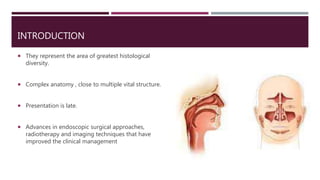
 They represent the area of greatest histological
diversity.
 Complex anatomy , close to multiple vital structure.
 Presentation is late.
 Advances in endoscopic surgical approaches,
radiotherapy and imaging techniques that have
improved the clinical management
SURGICAL ANATOMY
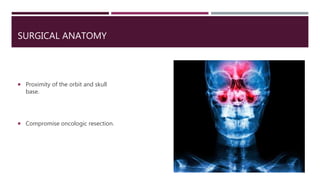
 Proximity of the orbit and skull
base.
 Compromise oncologic resection.
ETHMOID BONE
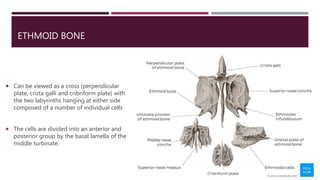
 Can be viewed as a cross (perpendicular
plate, crista galli and cribriform plate) with
the two labyrinths hanging at either side
composed of a number of individual cells
 The cells are divided into an anterior and
posterior group by the basal lamella of the
middle turbinate.
CONT…
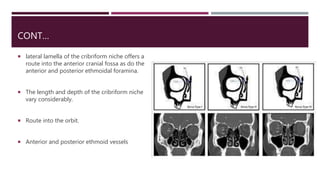
 lateral lamella of the cribriform niche offers a
route into the anterior cranial fossa as do the
anterior and posterior ethmoidal foramina.
 The length and depth of the cribriform niche
vary considerably.
 Route into the orbit.
 Anterior and posterior ethmoid vessels
SPHENOID BONE
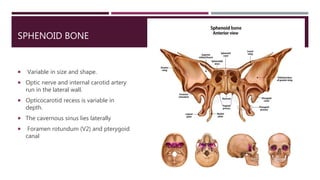
 Variable in size and shape.
 Optic nerve and internal carotid artery
run in the lateral wall.
 Opticocarotid recess is variable in
depth.
 The cavernous sinus lies laterally
 Foramen rotundum (V2) and pterygoid
canal
CONT ..
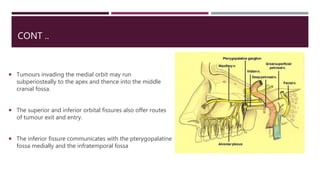
 Tumours invading the medial orbit may run
subperiosteally to the apex and thence into the middle
cranial fossa.
 The superior and inferior orbital fissures also offer routes
of tumour exit and entry.
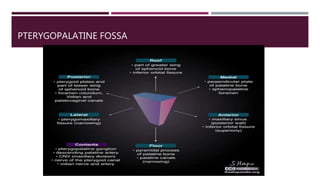
 The inferior fissure communicates with the pterygopalatine
fossa medially and the infratemporal fossa
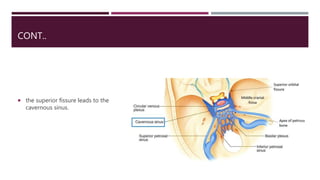
CONT..
 the superior fissure leads to the
cavernous sinus.
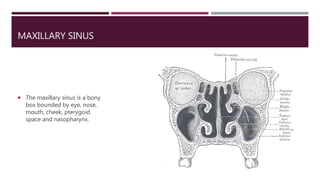
MAXILLARY SINUS
 The maxillary sinus is a bony
box bounded by eye, nose,
mouth, cheek, pterygoid
space and nasopharynx.
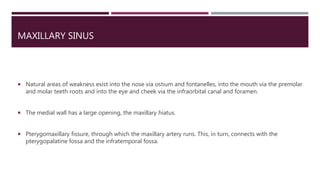
MAXILLARY SINUS
 Natural areas of weakness exist into the nose via ostium and fontanelles, into the mouth via the premolar
and molar teeth roots and into the eye and cheek via the infraorbital canal and foramen.
 The medial wall has a large opening, the maxillary hiatus.
 Pterygomaxillary fissure, through which the maxillary artery runs. This, in turn, connects with the
pterygopalatine fossa and the infratemporal fossa.
PTERYGOPALATINE FOSSA
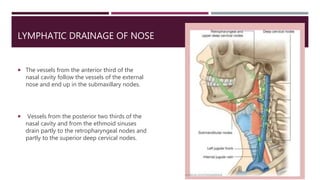
LYMPHATIC DRAINAGE OF NOSE
 The vessels from the anterior third of the
nasal cavity follow the vessels of the external
nose and end up in the submaxillary nodes.
 Vessels from the posterior two thirds of the
nasal cavity and from the ethmoid sinuses
drain partly to the retropharyngeal nodes and
partly to the superior deep cervical nodes.
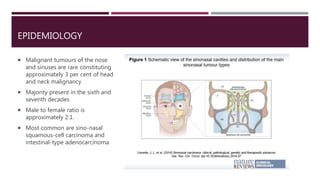
EPIDEMIOLOGY
 Malignant tumours of the nose
and sinuses are rare constituting
approximately 3 per cent of head
and neck malignancy
 Majority present in the sixth and
seventh decades
 Male to female ratio is
approximately 2:1.
 Most common are sino-nasal
squamous-cell carcinoma and
intestinal-type adenocarcinoma
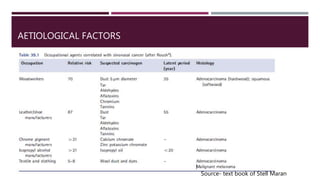
AETIOLOGICAL FACTORS
Source- text book of Stell Maran
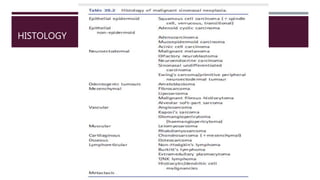
HISTOLOGY
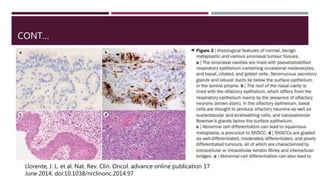
CONT…
Llorente, J. L. et al. Nat. Rev. Clin. Oncol. advance online publication 17
June 2014; doi:10.1038/nrclinonc.2014.97
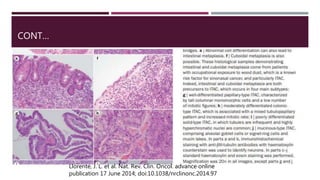
CONT…
Llorente, J. L. et al. Nat. Rev. Clin. Oncol. advance online
publication 17 June 2014; doi:10.1038/nrclinonc.2014.97
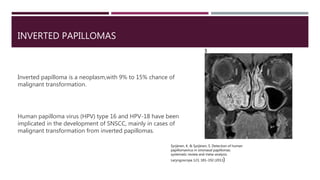
INVERTED PAPILLOMAS
Inverted papilloma is a neoplasm,with 9% to 15% chance of
malignant transformation.
Human papilloma virus (HPV) type 16 and HPV-18 have been
implicated in the development of SNSCC, mainly in cases of
malignant transformation from inverted papillomas.
Syrjänen, K. & Syrjänen, S. Detection of human
papillomavirus in sinonasal papillomas:
systematic review and meta-analysis.
Laryngoscope 123, 181–192 (2013)
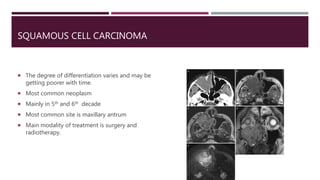
SQUAMOUS CELL CARCINOMA
 The degree of differentiation varies and may be
getting poorer with time.
 Most common neoplasm
 Mainly in 5th and 6th decade
 Most common site is maxillary antrum
 Main modality of treatment is surgery and
radiotherapy.
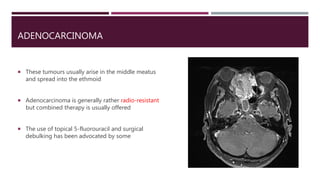
ADENOCARCINOMA
 These tumours usually arise in the middle meatus
and spread into the ethmoid
 Adenocarcinoma is generally rather radio-resistant
but combined therapy is usually offered
 The use of topical 5-fluorouracil and surgical
debulking has been advocated by some
ADENOID CYSTIC CARCINOMA
 Spread along peri-neural lymphatics which compromises attempts
at excision.
 Embolize along these routes and is known to produce blood-borne
metastases, classically to the lung.
 Lymphatic spread is rare.
 The natural history can be extensive, with good five year figures,
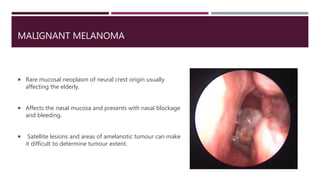
MALIGNANT MELANOMA
 Rare mucosal neoplasm of neural crest origin usually
affecting the elderly.
 Affects the nasal mucosa and presents with nasal blockage
and bleeding.
 Satellite lesions and areas of amelanotic tumour can make
it difficult to determine tumour extent.
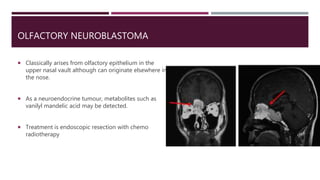
OLFACTORY NEUROBLASTOMA
 Classically arises from olfactory epithelium in the
upper nasal vault although can originate elsewhere in
the nose.
 As a neuroendocrine tumour, metabolites such as
vanilyl mandelic acid may be detected.
 Treatment is endoscopic resection with chemo
radiotherapy
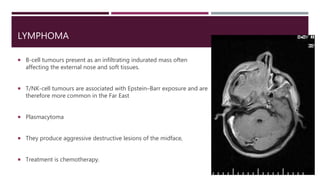
LYMPHOMA
 B-cell tumours present as an infiltrating indurated mass often
affecting the external nose and soft tissues.
 T/NK-cell tumours are associated with Epstein–Barr exposure and are
therefore more common in the Far East
 Plasmacytoma
 They produce aggressive destructive lesions of the midface,
 Treatment is chemotherapy.
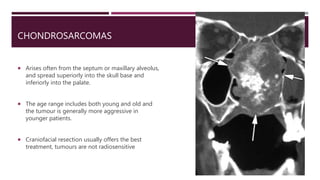
CHONDROSARCOMAS
 Arises often from the septum or maxillary alveolus,
and spread superiorly into the skull base and
inferiorly into the palate.
 The age range includes both young and old and
the tumour is generally more aggressive in
younger patients.
 Craniofacial resection usually offers the best
treatment, tumours are not radiosensitive
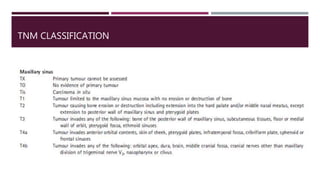
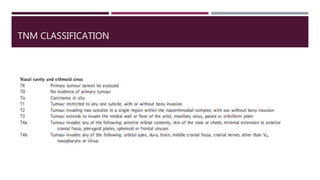
TNM CLASSIFICATION
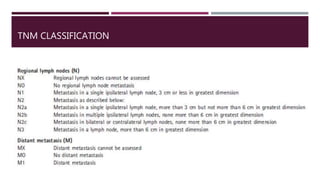
TNM CLASSIFICATION
TNM CLASSIFICATION
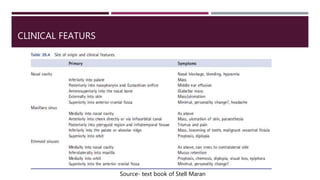
CLINICAL FEATURS
Source- text book of Stell Maran
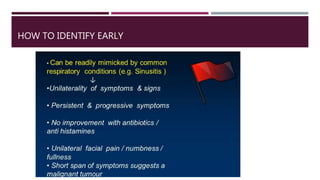
HOW TO IDENTIFY EARLY
EXAMINATION
 Examination of nasal cavity / endoscopic examination
 Examination of oral cavity – involvement of alveolus, palatal mobility,
 Oro-pharyngeal extension
 Neck examination for neck nodes
 Facial examination to see skin involvement, trismus , proptosis.
 Examination of eye – color vision , extra ocular muscle paralysis , vision acuity
 Cranial nerve examination
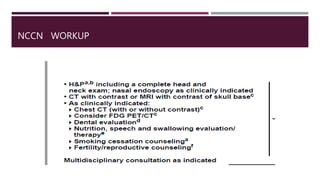
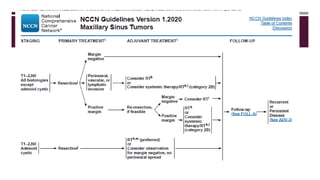
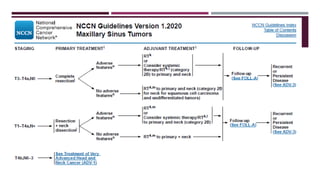
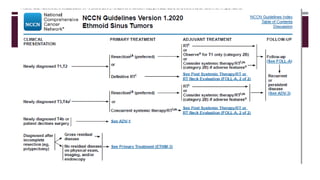
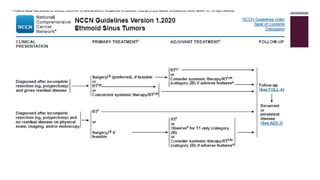
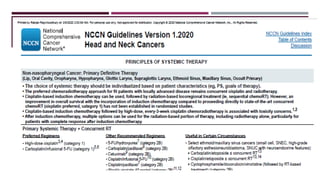
NCCN WORKUP
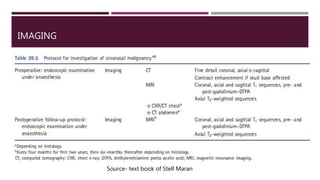
IMAGING
Source- text book of Stell Maran
CT SCAN
 CT imaging in axial and coronal sections, preferably with contrast enhancement.
 Bony details
 Bone erosion by the tumour
 Tumour extension into adjacent areas
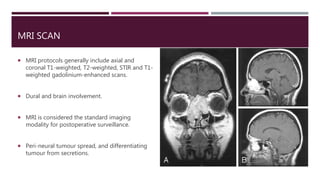
MRI SCAN
 MRI protocols generally include axial and
coronal T1-weighted, T2-weighted, STIR and T1-
weighted gadolinium-enhanced scans.
 Dural and brain involvement.
 MRI is considered the standard imaging
modality for postoperative surveillance.
 Peri-neural tumour spread, and differentiating
tumour from secretions.
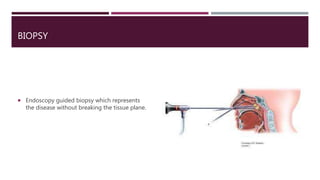
BIOPSY
 Endoscopy guided biopsy which represents
the disease without breaking the tissue plane.
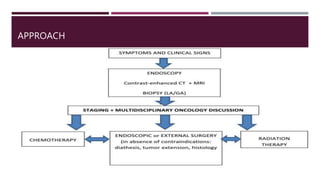
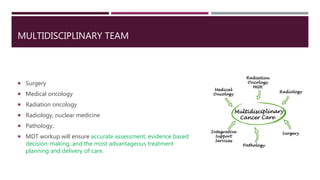
MULTIDISCIPLINARY TEAM
 Surgery
 Medical oncology
 Radiation oncology
 Radiology, nuclear medicine
 Pathology..
 MDT workup will ensure accurate assessment, evidence based
decision-making, and the most advantageous treatment
planning and delivery of care.
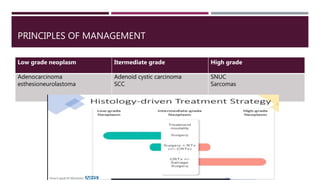
PRINCIPLES OF MANAGEMENT
Low grade neoplasm Itermediate grade High grade
Adenocarcinoma
esthesioneurolastoma
Adenoid cystic carcinoma
SCC
SNUC
Sarcomas
APPROACH
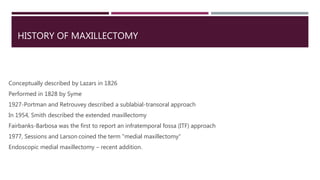
HISTORY OF MAXILLECTOMY
Conceptually described by Lazars in 1826
Performed in 1828 by Syme
1927-Portman and Retrouvey described a sublabial-transoral approach
In 1954, Smith described the extended maxillectomy
Fairbanks-Barbosa was the first to report an infratemporal fossa (ITF) approach
1977, Sessions and Larson coined the term "medial maxillectomy“
Endoscopic medial maxillectomy – recent addition.
ANAESTHESIA
 General anaesthesia in the reversed Trendelenburg position with 15–20 degree of head elevation.
 Nasal mucosal vasoconstriction is achieved by instilling 2–4mL of Moffat’s solution (10 per cent cocaine,
2 mL, 1:1000 adrenaline 2mL and 0.9 per cent sodium bicarbonate 1 mL)
 In the case of craniofacial resection, patients are started on phenytoin 200 mg/day 48 hours before
surgery
 A broad-spectrum antibiotic, e.g. co-amoxicillin clavulanate or a cephalosporin and metronidazole, is
generally administered with induction.
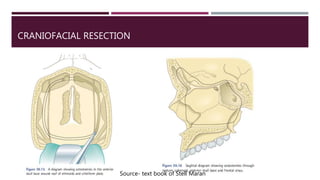
CRANIOFACIAL RESECTION
 INDICATIONS: Malignant tumours which require surgical
resection, involving the anterior skull base.
 CONTRAINDICATIONS: Extensive frontal lobe and/or middle
cranial fossa involvement or bilateral orbital invasion/optic
chiasm.
-mucosal malignant melanoma sino-nasal undifferentiated
carcinoma, lymphoma, plasmacytoma. distant metastasis
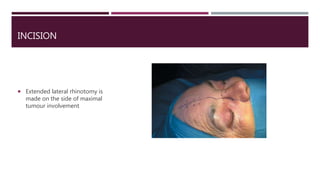
INCISION
 Extended lateral rhinotomy is
made on the side of maximal
tumour involvement
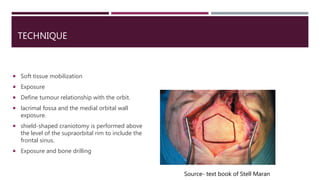
TECHNIQUE
 Soft tissue mobilization
 Exposure
 Define tumour relationship with the orbit.
 lacrimal fossa and the medial orbital wall
exposure.
 shield-shaped craniotomy is performed above
the level of the supraorbital rim to include the
frontal sinus.
 Exposure and bone drilling
Source- text book of Stell Maran
CRANIOFACIAL RESECTION
Source- text book of Stell Maran
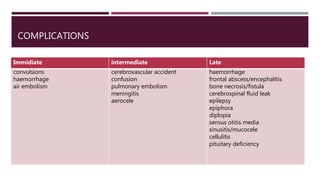
COMPLICATIONS
Immidiate intermediate Late
convulsions
haemorrhage
air embolism
cerebrovascular accident
confusion
pulmonary embolism
meningitis
aerocele
haemorrhage
frontal abscess/encephalitis
bone necrosis/fistula
cerebrospinal fluid leak
epilepsy
epiphora
diplopia
serous otitis media
sinusitis/mucocele
cellulitis
pituitary deficiency
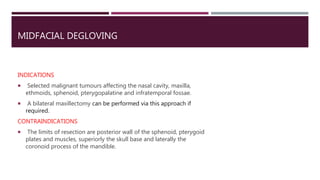
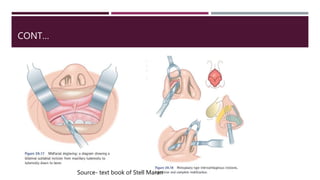
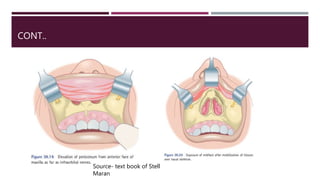
MIDFACIAL DEGLOVING
INDICATIONS
 Selected malignant tumours affecting the nasal cavity, maxilla,
ethmoids, sphenoid, pterygopalatine and infratemporal fossae.
 A bilateral maxillectomy can be performed via this approach if
required.
CONTRAINDICATIONS
 The limits of resection are posterior wall of the sphenoid, pterygoid
plates and muscles, superiorly the skull base and laterally the
coronoid process of the mandible.
CONT…
Source- text book of Stell Maran
CONT..
Source- text book of Stell
Maran
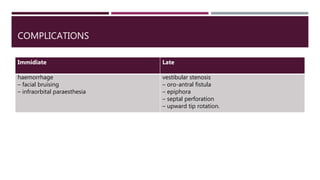
COMPLICATIONS
Immidiate Late
haemorrhage
– facial bruising
– infraorbital paraesthesia
vestibular stenosis
– oro-antral fistula
– epiphora
– septal perforation
– upward tip rotation.
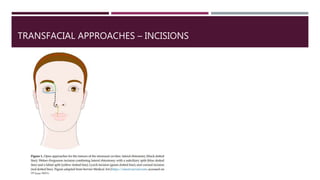
TRANSFACIAL APPROACHES – INCISIONS
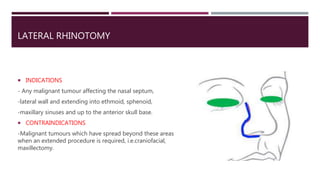
LATERAL RHINOTOMY
 INDICATIONS
- Any malignant tumour affecting the nasal septum,
-lateral wall and extending into ethmoid, sphenoid,
-maxillary sinuses and up to the anterior skull base.
 CONTRAINDICATIONS
-Malignant tumours which have spread beyond these areas
when an extended procedure is required, i.e.craniofacial,
maxillectomy.
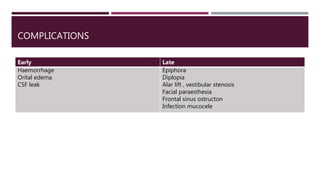
COMPLICATIONS
Early Late
Haemorrhage
Orital edema
CSF leak
Epiphora
Diplopia
Alar lift , vestibular stenosis
Facial paraesthesia
Frontal sinus ostructon
Infection mucocele
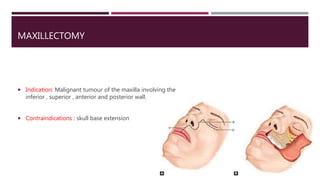
MAXILLECTOMY
 Indication: Malignant tumour of the maxilla involving the
inferior , superior , anterior and posterior wall.
 Contraindications : skull base extension
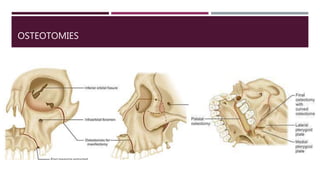
OSTEOTOMIES
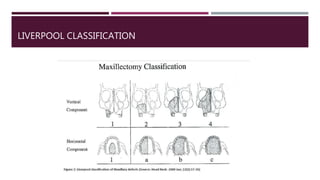
LIVERPOOL CLASSIFICATION
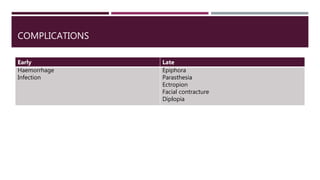
COMPLICATIONS
Early Late
Haemorrhage
Infection
Epiphora
Parasthesia
Ectropion
Facial contracture
Diplopia
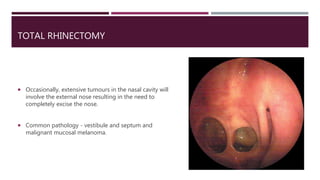
TOTAL RHINECTOMY
 Occasionally, extensive tumours in the nasal cavity will
involve the external nose resulting in the need to
completely excise the nose.
 Common pathology - vestibule and septum and
malignant mucosal melanoma.
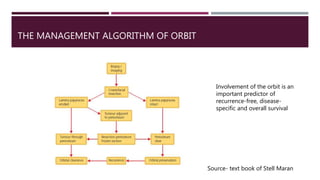
THE MANAGEMENT ALGORITHM OF ORBIT
Involvement of the orbit is an
important predictor of
recurrence-free, disease-
specific and overall survival
Source- text book of Stell Maran
ENDOSCOPIC APPROACH
 Lower morbidity,
 Better postoperative quality of life,
 Faster hospitalization days
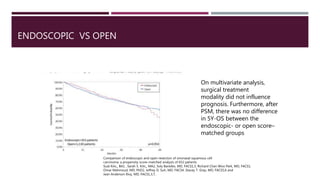
ENDOSCOPIC VS OPEN
On multivariate analysis,
surgical treatment
modality did not influence
prognosis. Furthermore, after
PSM, there was no difference
in 5Y-OS between the
endoscopic- or open score–
matched groups
Comparison of endoscopic and open resection of sinonasal squamous cell
carcinoma: a propensity score–matched analysis of 652 patients
Suat Kılıc¸, BA1 , Sarah S. Kılıc¸, MA2, Soly Baredes, MD, FACS1,3, Richard Chan Woo Park, MD, FACS1,
Omar Mahmoud, MD, PhD2, Jeffrey D. Suh, MD, FACS4, Stacey T. Gray, MD, FACS5,6 and
Jean Anderson Eloy, MD, FACS1,3,7,
ENDOSCOPIC APPROACH – PRINCIPLE
 “centripetal” tumor removal-starting at the periphery of the tumor attachment zone,
 Macroscopic margin of healthy tissue,
 Monobloc resection is rarely possible- complete resection of the tumor insertion zone is most important
requirement
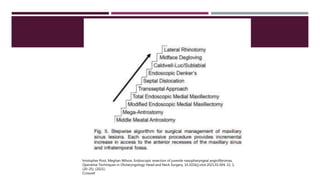
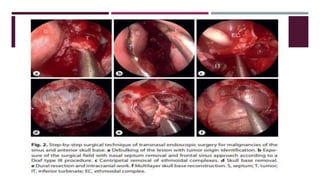
ENDOSCOPIC APPROACHES
 Medial maxillectomy with a frank section of the lacrimal duct
 Prelacrimal approach,
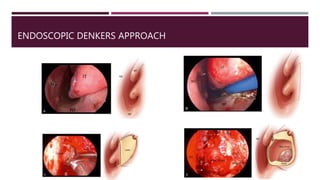
 Denker endoscopic approach for access to the maxillary sinus
 Frontal sinus -Draf I, II, or III
 Technique for septectomy – allow 4-handed surgery
hristopher Pool, Meghan Wilson, Endoscopic resection of juvenile nasopharyngeal angiofibromas,
Operative Techniques in Otolaryngology-Head and Neck Surgery, 10.1016/j.otot.2021.01.004, 32, 1,
(20-25), (2021).
Crossref
ENDOSCOPIC DENKERS APPROACH
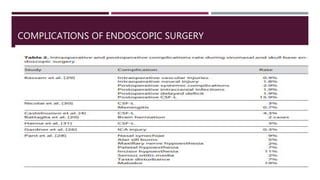
COMPLICATIONS OF ENDOSCOPIC SURGERY
ADJUVANT THERAPY
 Intensity‐modulated radiation therapy (IMRT) was a major advance in radiotherapy allowing for
improved targeting of the tumour while sparing the optic nerves, brainstem, and brain parenchyma.
 Charged particle therapy with protons or carbon ions are an additional modality
 Chemotherapy has been utilized in the neoadjuvant setting and concurrently with radiation either as
definitive therapy or in the adjuvant setting
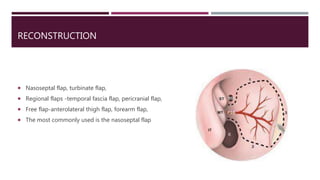
RECONSTRUCTION
 Nasoseptal flap, turbinate flap,
 Regional flaps -temporal fascia flap, pericranial flap,
 Free flap-anterolateral thigh flap, forearm flap,
 The most commonly used is the nasoseptal flap
COMBINED OPEN AND ENDOSCOPIC APPROACHES
 Tumors that are located in both the
intracranial and extracranial
compartments and for which the
intracranial invasion is too important
for a purely endoscopic approach
NECK DISSECTION
 Neck dissection in sinonasal cancers is usually recommended only if there is clinicoradiological lymph
node involvement.
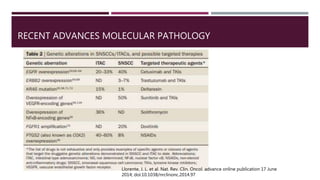
RECENT ADVANCES MOLECULAR PATHOLOGY
Llorente, J. L. et al. Nat. Rev. Clin. Oncol. advance online publication 17 June
2014; doi:10.1038/nrclinonc.2014.97
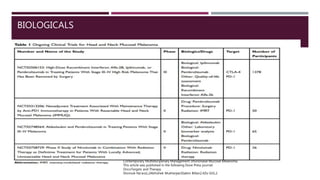
BIOLOGICALS
Contemporary Multidisciplinary Management ofSinonasal Mucosal Melanoma
This article was published in the following Dove Press journal:
OncoTargets and Therapy
Shorook Na’ara1,2Abhishek Mukherjee3Salem Billan2,4Ziv Gil1,2
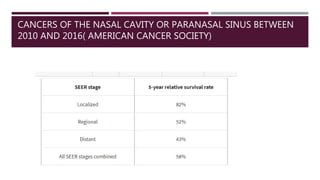
CANCERS OF THE NASAL CAVITY OR PARANASAL SINUS BETWEEN
2010 AND 2016( AMERICAN CANCER SOCIETY)
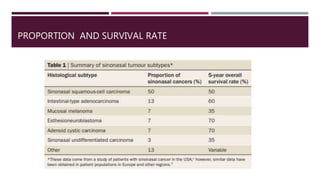
PROPORTION AND SURVIVAL RATE
THANK YOU

Sino-nasal malignancy

  • 1.
    SINONASAL MALIGNANCY DR SAFIKAZAMAN DEPT OF ENT AND HEAD NECK SURGERY VIMS, RKMSP
  • 2.
    CONTENTS  Introduction  Surgicalanatomy  Epidemiology  Histopathological classification  TNM Classification  Presentation  Diagnosis  Management and various approaches
  • 3.
    INTRODUCTION  They representthe area of greatest histological diversity.  Complex anatomy , close to multiple vital structure.  Presentation is late.  Advances in endoscopic surgical approaches, radiotherapy and imaging techniques that have improved the clinical management
  • 4.
    SURGICAL ANATOMY  Proximityof the orbit and skull base.  Compromise oncologic resection.
  • 5.
    ETHMOID BONE  Canbe viewed as a cross (perpendicular plate, crista galli and cribriform plate) with the two labyrinths hanging at either side composed of a number of individual cells  The cells are divided into an anterior and posterior group by the basal lamella of the middle turbinate.
  • 6.
    CONT…  lateral lamellaof the cribriform niche offers a route into the anterior cranial fossa as do the anterior and posterior ethmoidal foramina.  The length and depth of the cribriform niche vary considerably.  Route into the orbit.  Anterior and posterior ethmoid vessels
  • 7.
    SPHENOID BONE  Variablein size and shape.  Optic nerve and internal carotid artery run in the lateral wall.  Opticocarotid recess is variable in depth.  The cavernous sinus lies laterally  Foramen rotundum (V2) and pterygoid canal
  • 8.
    CONT ..  Tumoursinvading the medial orbit may run subperiosteally to the apex and thence into the middle cranial fossa.  The superior and inferior orbital fissures also offer routes of tumour exit and entry.  The inferior fissure communicates with the pterygopalatine fossa medially and the infratemporal fossa
  • 9.
    CONT..  the superiorfissure leads to the cavernous sinus.
  • 10.
    MAXILLARY SINUS  Themaxillary sinus is a bony box bounded by eye, nose, mouth, cheek, pterygoid space and nasopharynx.
  • 11.
    MAXILLARY SINUS  Naturalareas of weakness exist into the nose via ostium and fontanelles, into the mouth via the premolar and molar teeth roots and into the eye and cheek via the infraorbital canal and foramen.  The medial wall has a large opening, the maxillary hiatus.  Pterygomaxillary fissure, through which the maxillary artery runs. This, in turn, connects with the pterygopalatine fossa and the infratemporal fossa.
  • 12.
  • 13.
    LYMPHATIC DRAINAGE OFNOSE  The vessels from the anterior third of the nasal cavity follow the vessels of the external nose and end up in the submaxillary nodes.  Vessels from the posterior two thirds of the nasal cavity and from the ethmoid sinuses drain partly to the retropharyngeal nodes and partly to the superior deep cervical nodes.
  • 14.
    EPIDEMIOLOGY  Malignant tumoursof the nose and sinuses are rare constituting approximately 3 per cent of head and neck malignancy  Majority present in the sixth and seventh decades  Male to female ratio is approximately 2:1.  Most common are sino-nasal squamous-cell carcinoma and intestinal-type adenocarcinoma
  • 15.
  • 16.
  • 17.
    CONT… Llorente, J. L.et al. Nat. Rev. Clin. Oncol. advance online publication 17 June 2014; doi:10.1038/nrclinonc.2014.97
  • 18.
    CONT… Llorente, J. L.et al. Nat. Rev. Clin. Oncol. advance online publication 17 June 2014; doi:10.1038/nrclinonc.2014.97
  • 19.
    INVERTED PAPILLOMAS Inverted papillomais a neoplasm,with 9% to 15% chance of malignant transformation. Human papilloma virus (HPV) type 16 and HPV-18 have been implicated in the development of SNSCC, mainly in cases of malignant transformation from inverted papillomas. Syrjänen, K. & Syrjänen, S. Detection of human papillomavirus in sinonasal papillomas: systematic review and meta-analysis. Laryngoscope 123, 181–192 (2013)
  • 20.
    SQUAMOUS CELL CARCINOMA The degree of differentiation varies and may be getting poorer with time.  Most common neoplasm  Mainly in 5th and 6th decade  Most common site is maxillary antrum  Main modality of treatment is surgery and radiotherapy.
  • 21.
    ADENOCARCINOMA  These tumoursusually arise in the middle meatus and spread into the ethmoid  Adenocarcinoma is generally rather radio-resistant but combined therapy is usually offered  The use of topical 5-fluorouracil and surgical debulking has been advocated by some
  • 22.
    ADENOID CYSTIC CARCINOMA Spread along peri-neural lymphatics which compromises attempts at excision.  Embolize along these routes and is known to produce blood-borne metastases, classically to the lung.  Lymphatic spread is rare.  The natural history can be extensive, with good five year figures,
  • 23.
    MALIGNANT MELANOMA  Raremucosal neoplasm of neural crest origin usually affecting the elderly.  Affects the nasal mucosa and presents with nasal blockage and bleeding.  Satellite lesions and areas of amelanotic tumour can make it difficult to determine tumour extent.
  • 24.
    OLFACTORY NEUROBLASTOMA  Classicallyarises from olfactory epithelium in the upper nasal vault although can originate elsewhere in the nose.  As a neuroendocrine tumour, metabolites such as vanilyl mandelic acid may be detected.  Treatment is endoscopic resection with chemo radiotherapy
  • 25.
    LYMPHOMA  B-cell tumourspresent as an infiltrating indurated mass often affecting the external nose and soft tissues.  T/NK-cell tumours are associated with Epstein–Barr exposure and are therefore more common in the Far East  Plasmacytoma  They produce aggressive destructive lesions of the midface,  Treatment is chemotherapy.
  • 26.
    CHONDROSARCOMAS  Arises oftenfrom the septum or maxillary alveolus, and spread superiorly into the skull base and inferiorly into the palate.  The age range includes both young and old and the tumour is generally more aggressive in younger patients.  Craniofacial resection usually offers the best treatment, tumours are not radiosensitive
  • 27.
  • 28.
  • 29.
  • 30.
    CLINICAL FEATURS Source- textbook of Stell Maran
  • 31.
  • 32.
    EXAMINATION  Examination ofnasal cavity / endoscopic examination  Examination of oral cavity – involvement of alveolus, palatal mobility,  Oro-pharyngeal extension  Neck examination for neck nodes  Facial examination to see skin involvement, trismus , proptosis.  Examination of eye – color vision , extra ocular muscle paralysis , vision acuity  Cranial nerve examination
  • 33.
  • 34.
  • 35.
    CT SCAN  CTimaging in axial and coronal sections, preferably with contrast enhancement.  Bony details  Bone erosion by the tumour  Tumour extension into adjacent areas
  • 36.
    MRI SCAN  MRIprotocols generally include axial and coronal T1-weighted, T2-weighted, STIR and T1- weighted gadolinium-enhanced scans.  Dural and brain involvement.  MRI is considered the standard imaging modality for postoperative surveillance.  Peri-neural tumour spread, and differentiating tumour from secretions.
  • 37.
    BIOPSY  Endoscopy guidedbiopsy which represents the disease without breaking the tissue plane.
  • 38.
    MULTIDISCIPLINARY TEAM  Surgery Medical oncology  Radiation oncology  Radiology, nuclear medicine  Pathology..  MDT workup will ensure accurate assessment, evidence based decision-making, and the most advantageous treatment planning and delivery of care.
  • 39.
    PRINCIPLES OF MANAGEMENT Lowgrade neoplasm Itermediate grade High grade Adenocarcinoma esthesioneurolastoma Adenoid cystic carcinoma SCC SNUC Sarcomas
  • 40.
  • 45.
    HISTORY OF MAXILLECTOMY Conceptuallydescribed by Lazars in 1826 Performed in 1828 by Syme 1927-Portman and Retrouvey described a sublabial-transoral approach In 1954, Smith described the extended maxillectomy Fairbanks-Barbosa was the first to report an infratemporal fossa (ITF) approach 1977, Sessions and Larson coined the term "medial maxillectomy“ Endoscopic medial maxillectomy – recent addition.
  • 46.
    ANAESTHESIA  General anaesthesiain the reversed Trendelenburg position with 15–20 degree of head elevation.  Nasal mucosal vasoconstriction is achieved by instilling 2–4mL of Moffat’s solution (10 per cent cocaine, 2 mL, 1:1000 adrenaline 2mL and 0.9 per cent sodium bicarbonate 1 mL)  In the case of craniofacial resection, patients are started on phenytoin 200 mg/day 48 hours before surgery  A broad-spectrum antibiotic, e.g. co-amoxicillin clavulanate or a cephalosporin and metronidazole, is generally administered with induction.
  • 47.
    CRANIOFACIAL RESECTION  INDICATIONS:Malignant tumours which require surgical resection, involving the anterior skull base.  CONTRAINDICATIONS: Extensive frontal lobe and/or middle cranial fossa involvement or bilateral orbital invasion/optic chiasm. -mucosal malignant melanoma sino-nasal undifferentiated carcinoma, lymphoma, plasmacytoma. distant metastasis
  • 48.
    INCISION  Extended lateralrhinotomy is made on the side of maximal tumour involvement
  • 49.
    TECHNIQUE  Soft tissuemobilization  Exposure  Define tumour relationship with the orbit.  lacrimal fossa and the medial orbital wall exposure.  shield-shaped craniotomy is performed above the level of the supraorbital rim to include the frontal sinus.  Exposure and bone drilling Source- text book of Stell Maran
  • 50.
  • 51.
    COMPLICATIONS Immidiate intermediate Late convulsions haemorrhage airembolism cerebrovascular accident confusion pulmonary embolism meningitis aerocele haemorrhage frontal abscess/encephalitis bone necrosis/fistula cerebrospinal fluid leak epilepsy epiphora diplopia serous otitis media sinusitis/mucocele cellulitis pituitary deficiency
  • 52.
    MIDFACIAL DEGLOVING INDICATIONS  Selectedmalignant tumours affecting the nasal cavity, maxilla, ethmoids, sphenoid, pterygopalatine and infratemporal fossae.  A bilateral maxillectomy can be performed via this approach if required. CONTRAINDICATIONS  The limits of resection are posterior wall of the sphenoid, pterygoid plates and muscles, superiorly the skull base and laterally the coronoid process of the mandible.
  • 53.
  • 54.
  • 55.
    COMPLICATIONS Immidiate Late haemorrhage – facialbruising – infraorbital paraesthesia vestibular stenosis – oro-antral fistula – epiphora – septal perforation – upward tip rotation.
  • 56.
  • 57.
    LATERAL RHINOTOMY  INDICATIONS -Any malignant tumour affecting the nasal septum, -lateral wall and extending into ethmoid, sphenoid, -maxillary sinuses and up to the anterior skull base.  CONTRAINDICATIONS -Malignant tumours which have spread beyond these areas when an extended procedure is required, i.e.craniofacial, maxillectomy.
  • 58.
    COMPLICATIONS Early Late Haemorrhage Orital edema CSFleak Epiphora Diplopia Alar lift , vestibular stenosis Facial paraesthesia Frontal sinus ostructon Infection mucocele
  • 59.
    MAXILLECTOMY  Indication: Malignanttumour of the maxilla involving the inferior , superior , anterior and posterior wall.  Contraindications : skull base extension
  • 60.
  • 61.
  • 62.
  • 63.
    TOTAL RHINECTOMY  Occasionally,extensive tumours in the nasal cavity will involve the external nose resulting in the need to completely excise the nose.  Common pathology - vestibule and septum and malignant mucosal melanoma.
  • 64.
    THE MANAGEMENT ALGORITHMOF ORBIT Involvement of the orbit is an important predictor of recurrence-free, disease- specific and overall survival Source- text book of Stell Maran
  • 65.
    ENDOSCOPIC APPROACH  Lowermorbidity,  Better postoperative quality of life,  Faster hospitalization days
  • 66.
    ENDOSCOPIC VS OPEN Onmultivariate analysis, surgical treatment modality did not influence prognosis. Furthermore, after PSM, there was no difference in 5Y-OS between the endoscopic- or open score– matched groups Comparison of endoscopic and open resection of sinonasal squamous cell carcinoma: a propensity score–matched analysis of 652 patients Suat Kılıc¸, BA1 , Sarah S. Kılıc¸, MA2, Soly Baredes, MD, FACS1,3, Richard Chan Woo Park, MD, FACS1, Omar Mahmoud, MD, PhD2, Jeffrey D. Suh, MD, FACS4, Stacey T. Gray, MD, FACS5,6 and Jean Anderson Eloy, MD, FACS1,3,7,
  • 67.
    ENDOSCOPIC APPROACH –PRINCIPLE  “centripetal” tumor removal-starting at the periphery of the tumor attachment zone,  Macroscopic margin of healthy tissue,  Monobloc resection is rarely possible- complete resection of the tumor insertion zone is most important requirement
  • 68.
    ENDOSCOPIC APPROACHES  Medialmaxillectomy with a frank section of the lacrimal duct  Prelacrimal approach,  Denker endoscopic approach for access to the maxillary sinus  Frontal sinus -Draf I, II, or III  Technique for septectomy – allow 4-handed surgery
  • 69.
    hristopher Pool, MeghanWilson, Endoscopic resection of juvenile nasopharyngeal angiofibromas, Operative Techniques in Otolaryngology-Head and Neck Surgery, 10.1016/j.otot.2021.01.004, 32, 1, (20-25), (2021). Crossref
  • 70.
  • 72.
  • 73.
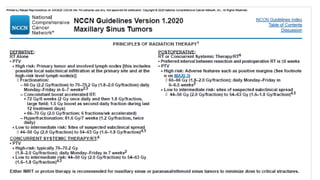
    ADJUVANT THERAPY  Intensity‐modulatedradiation therapy (IMRT) was a major advance in radiotherapy allowing for improved targeting of the tumour while sparing the optic nerves, brainstem, and brain parenchyma.  Charged particle therapy with protons or carbon ions are an additional modality  Chemotherapy has been utilized in the neoadjuvant setting and concurrently with radiation either as definitive therapy or in the adjuvant setting
  • 75.
    RECONSTRUCTION  Nasoseptal flap,turbinate flap,  Regional flaps -temporal fascia flap, pericranial flap,  Free flap-anterolateral thigh flap, forearm flap,  The most commonly used is the nasoseptal flap
  • 76.
    COMBINED OPEN ANDENDOSCOPIC APPROACHES  Tumors that are located in both the intracranial and extracranial compartments and for which the intracranial invasion is too important for a purely endoscopic approach
  • 77.
    NECK DISSECTION  Neckdissection in sinonasal cancers is usually recommended only if there is clinicoradiological lymph node involvement.
  • 79.
    RECENT ADVANCES MOLECULARPATHOLOGY Llorente, J. L. et al. Nat. Rev. Clin. Oncol. advance online publication 17 June 2014; doi:10.1038/nrclinonc.2014.97
  • 80.
    BIOLOGICALS Contemporary Multidisciplinary ManagementofSinonasal Mucosal Melanoma This article was published in the following Dove Press journal: OncoTargets and Therapy Shorook Na’ara1,2Abhishek Mukherjee3Salem Billan2,4Ziv Gil1,2
  • 81.
    CANCERS OF THENASAL CAVITY OR PARANASAL SINUS BETWEEN 2010 AND 2016( AMERICAN CANCER SOCIETY)
  • 82.
  • 83.