

This document provides an overview of the immune system, including its history, components, and functions. It discusses the types of immunity, including innate, humoral, and cell-mediated immunity. It describes the key players in the immune system like antigens, antibodies, and the complement system. It explains the mechanisms of the antigen-antibody reaction, including precipitation, agglutination, complement fixation, immunofluorescence, and radioimmunoassay. The immune system provides protection from infection through physical barriers, antimicrobial factors, inflammation, and adaptive immune responses mediated by antibodies and specialized immune cells.
Overview of immune system components and functions including antigen, antibody, immunity types, and diseases.
Impact of microbes on health and the immune system's role in combating infections, immunity definitions, and defense layers.
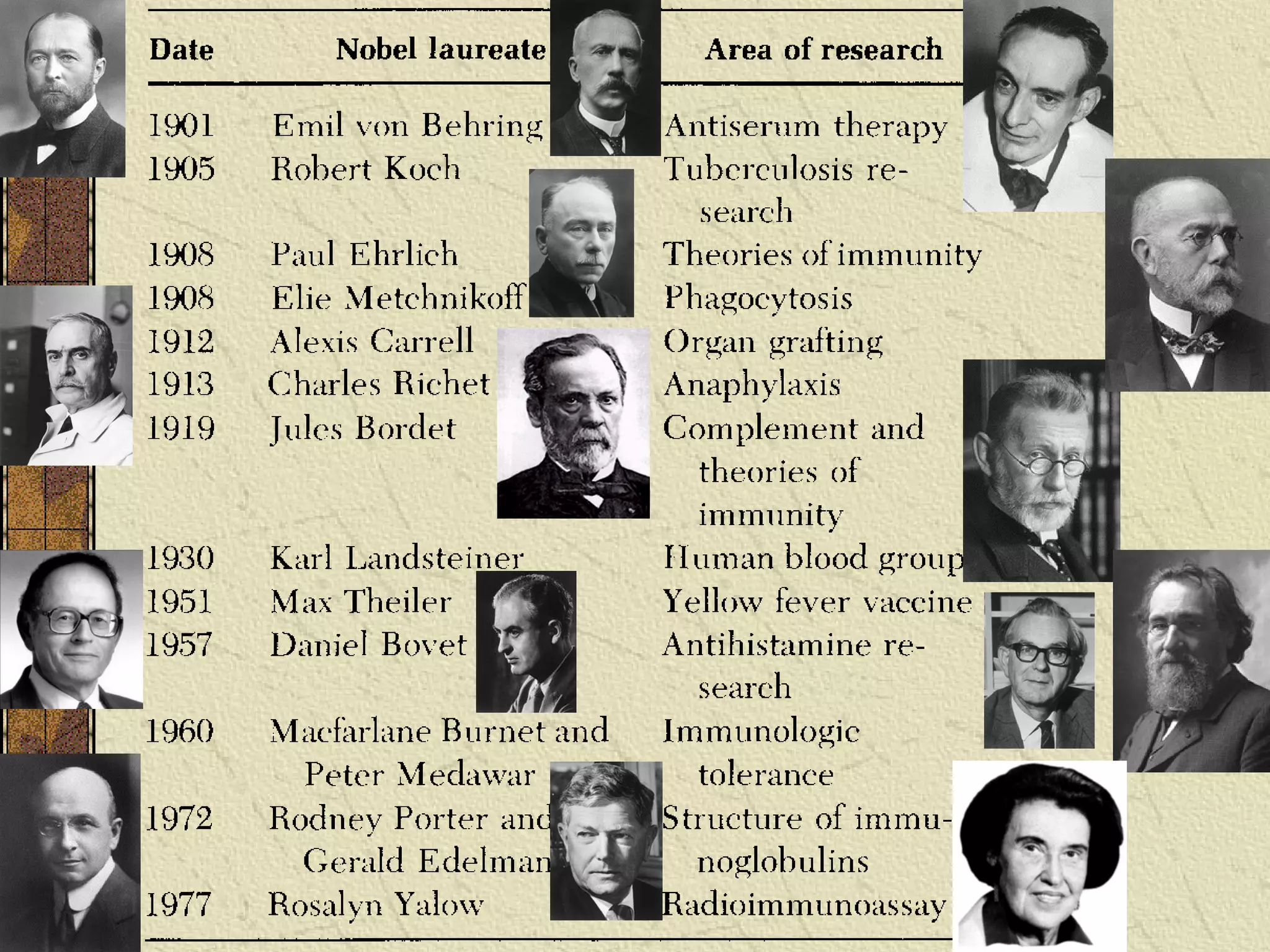
Influential scientists in immunology including Jenner, Pasteur, Koch, and their contributions to vaccine development.
Concept of immunity likened to an army's defense strategy, and detailing innate and various influencing factors.
First line defenses including epithelial surfaces, antimicrobial substances in blood, and cellular defenses in the immune system.
Description of inflammation as a defense mechanism and the role of fever in combating infections.
Details on humoral and cell-mediated immunity, including the differences between active and passive immunity.
Definition of antigens, antibody types, and structure of immunoglobulins, highlighting their functional importance.
Stages and features of antigen-antibody interactions including precipitations and agglutination applications.
The complement system's structure, activation, and regulatory mechanisms, including various pathways.
Overview of lymphoid organs, types of lymphocytes, and their roles in the immune response.
Characteristics and functions of phagocytic cells and their importance in innate immunity.
Introduction to cytokines, their types, and roles in mediating immune responses and inflammation.
Primary and secondary immunodeficiencies, their causes, and examples of disorders affecting immunity.
Description of autoimmune diseases, mechanisms like neoantigens, and features and classifications of autoimmune conditions.
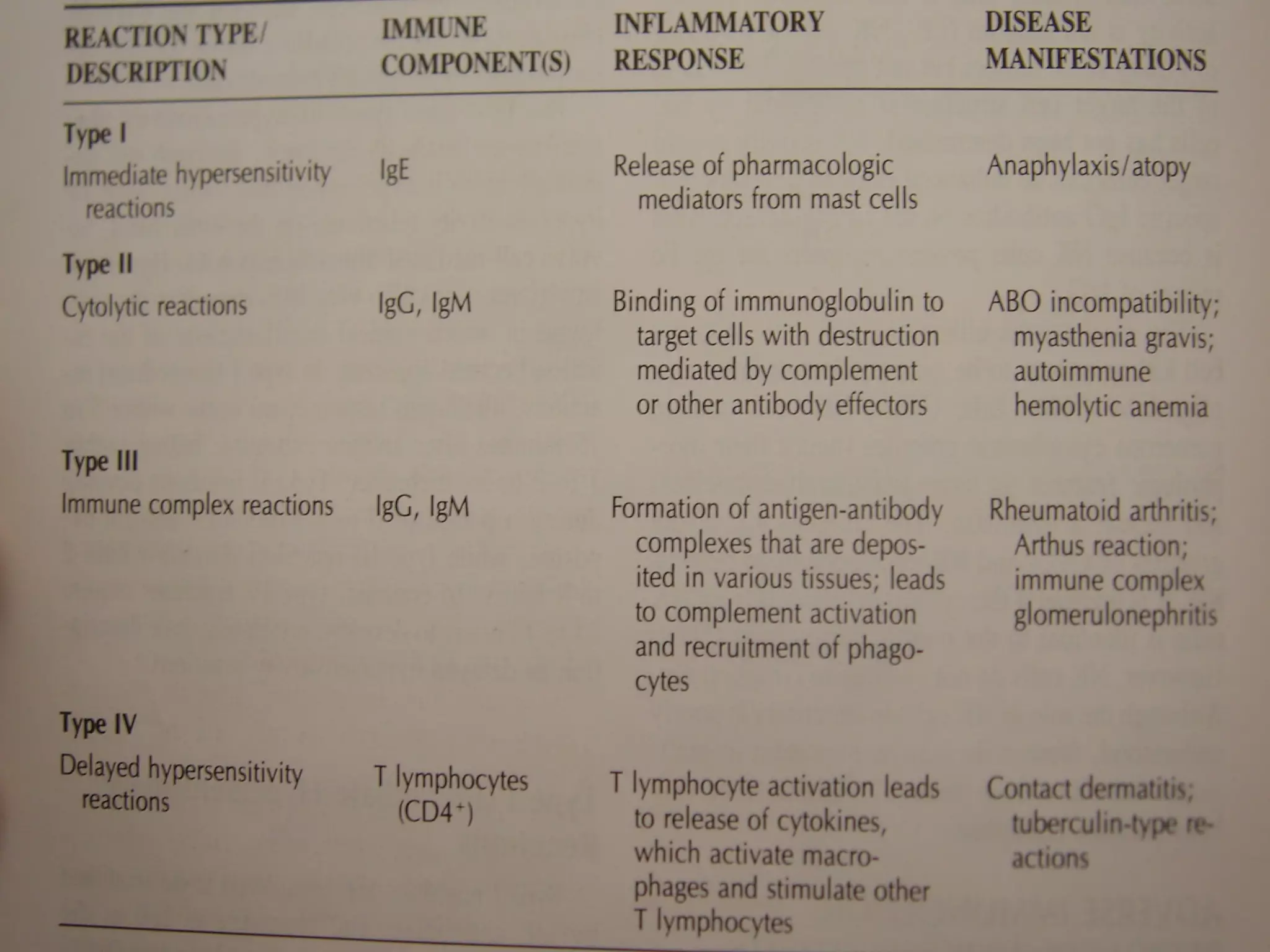
Definition and classification of hypersensitivity reactions including types of immune system responses that cause injury.Overview of salivary components in innate immunity, their roles in antibacterial action and overall oral health.
Emerging vaccine strategies for oral diseases, including methods of antigen administration and immune stimulation.
Immunological responses during periodontal disease progression and systemic effects including inflammation.
Summary of the immune system's protective roles and the importance of immunological knowledge in clinical practice.
List of key textbooks and research articles for continued learning on immunology and oral health.
Introduction to immunesystem
History and milestones
Immunology
Types
Antigen
Antibody
Antigen – antibody reaction
Compliment
Structure and function of immune system
Immune response
Immuno deficiency conditions
Auto immunity
Hypersensitivity
Oral immunology
Conclusion
References
4.
OUR ENVIRONMENT CONTAINSA
GREAT VARIETY OF INFECTIOUS MICROBES
— VIRUSES, FUNGI, PROTOZOA AND
MULTICELLULAR PARASITES. THESE CAN
CAUSE DISEASE, AND IF THEY MULTIPLY
UNCHECKED THEY WILL EVENTUALLY KILL
THEIR HOST.
MOST INFECTIONS IN NORMAL
INDIVIDUAL ARE SHORT LIVED AND LEAVE
LITTLE PERMANENT DAMAGE. THIS IS DUE
TO IMMUNE SYSTEM, WHICH COMBATS
INFECTIOUS AGENT.
5.
THE TERM IMMUNITY,DERIVED FROM THE
LATIN “IMMUNIS” (EXEMPT), WAS ADOPTED
TO DESIGNATE THIS NATURALLY ACQUIRED
PROTECTION AGAINST DISEASES SUCH AS
MEASLES OR SMALLPOX.
THE SCIENCE OF IMMUNOLOGY IS DYNAMIC IN
THE SENSE THAT IT ANALYSES THE BODY’S
RESPONSE TO SUBSTANCES THAT ARE
FORIEGN TO IT
6.
BROADLY DEFINED, THEFIELD
ENCOMPASSES MANY LAYERS OF DEFENSE,
INCLUDING PHYSICAL BARRIERS LIKE THE
SKIN, PROTECTIVE CHEMICAL SUBSTANCES
IN THE BLOOD AND TISSUE FLUIDS, AND THE
PHYSIOLOGIC REACTIONS OF TISSUES TO
INJURY OR INFECTION. BUT BY FOR THE
MOST ELABORATE, DYNAMIC AND
EFFECTIVE DEFENSE STRATEGIES ARE
CARRIED BY CELLS THAT HAVE INVOLVED IN
SPECIALIZED ABILITIES TO RECOGNIZE AND
ELIMINATE POTENTIALLY INJURIOUS
SUBSTANCES.
7.
IN THE MODERNVIEW, IMMUNOLOGIC
RESPONSES SERVE THREE FUNCTIONS:
•DEFENSE: IS THE RESISTANCE TO
INFECTION BY MICROORGANISMS
•HOMEOSTASIS: IS THE REMOVAL OF WORN
- OUT “SELF” COMPONENTS
•SURVEILLANCE: IS THE PERCEPTION AND
DESTRUCTION OF MUTANT CELLS.
8.
Immunology has becomea scene for many
scientific discoveries in the past few
decades. In the recent past immunology has
started to transcend its early boundaries
and become a more general biomedical
discipline
Today,the study of immunological defense
mechanisms is still an important area of
research,but immunologists are involved in
a much wider array of problems,such as
self-nonself discrimination,control of cell ,
transplantation,cancer immunotherapy, etc.
10.
JENNER TOOK PUSTULARMATERIAL FROM
A COWPOX LESION ON THE THUMB OF A
MILKMAID NAMED SARAH NELMES AND
USED IT TO INOCULATE A FARM BOY NAMED
JAMES PHIPPS.
11.
LOUIS PASTEURLOUIS PASTEUR
•Whocoined the termWho coined the term ‘vaccine‘‘vaccine‘ (1881)(1881)
•Father of immunologyFather of immunology
• He made many famous discoveries,He made many famous discoveries,
including theincluding the relationship of crystal structure torelationship of crystal structure to
optical isomerismoptical isomerism, the process of, the process of
pasteurization, thepasteurization, the attenuation of virulence ofattenuation of virulence of
infectious agentsinfectious agents, and his, and his rabies vaccinerabies vaccine
12.
ROBERT KOCH
• Discoveredthe tubercule bacillus and
developed studies of bacterial etiology of
infectious diseases.
ELIE METCHNIKOFF
•Elucidates the importance of
phagocytosis by leucocytes and
developed the first theory of cell
mediated immunity
13.
PAUL EHRLICH
• Proposedthe humoral theory of
antibody formation (1908)
KARL LANDSTEINER
•Discovered “ABO” blood groups and
individuality in humans and animals.
He formed the study of antigen-
antibody reactions on chemical basis
15.
It’s like anArmy...
IT’S LIKE AN ARMY! THE FIRST TIME AN ARMY ENCOUNTERS AN
ENEMY THEY DON’T KNOW WHAT TO EXPECT, BUT FIGHT IT OFF
AS BEST THEY CAN. THE SECOND TIME, THE ARMY IS BETTER
PREPARED AND KNOWS HOW THE ENEMY ATTACKS, KNOWS ITS
TRICKS, AND CAN BETTER DEFEND ITSELF
WHAT IS IMMUNITY ?
16.
The term ‘immunity’‘immunity’refers to the resistance exhibited
by the host towards injury caused by microorganisms
and their products
TYPES OFTYPES OF
IMMUNITYIMMUNITY
18.
•is the resistanceto infections which an individual
possesses by virtue of his genetic and
constitutional make up. It is not affected by prior
contact with microorganisms or immunization
•By birth
•There are various factors influence the level ofthe level of
innate immunityinnate immunity
19.
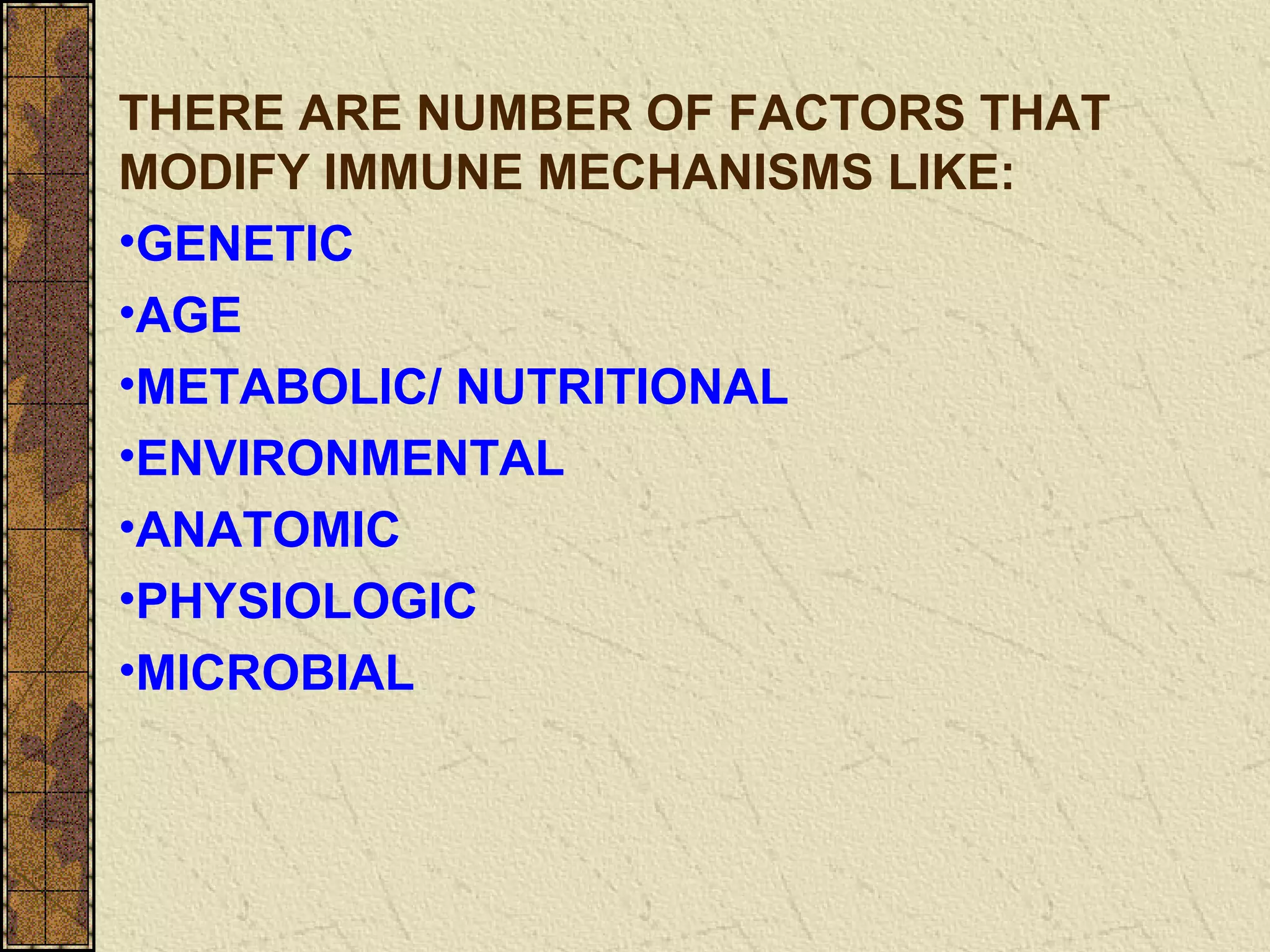
THERE ARE NUMBEROF FACTORS THAT
MODIFY IMMUNE MECHANISMS LIKE:
•GENETIC
•AGE
•METABOLIC/ NUTRITIONAL
•ENVIRONMENTAL
•ANATOMIC
•PHYSIOLOGIC
•MICROBIAL
20.
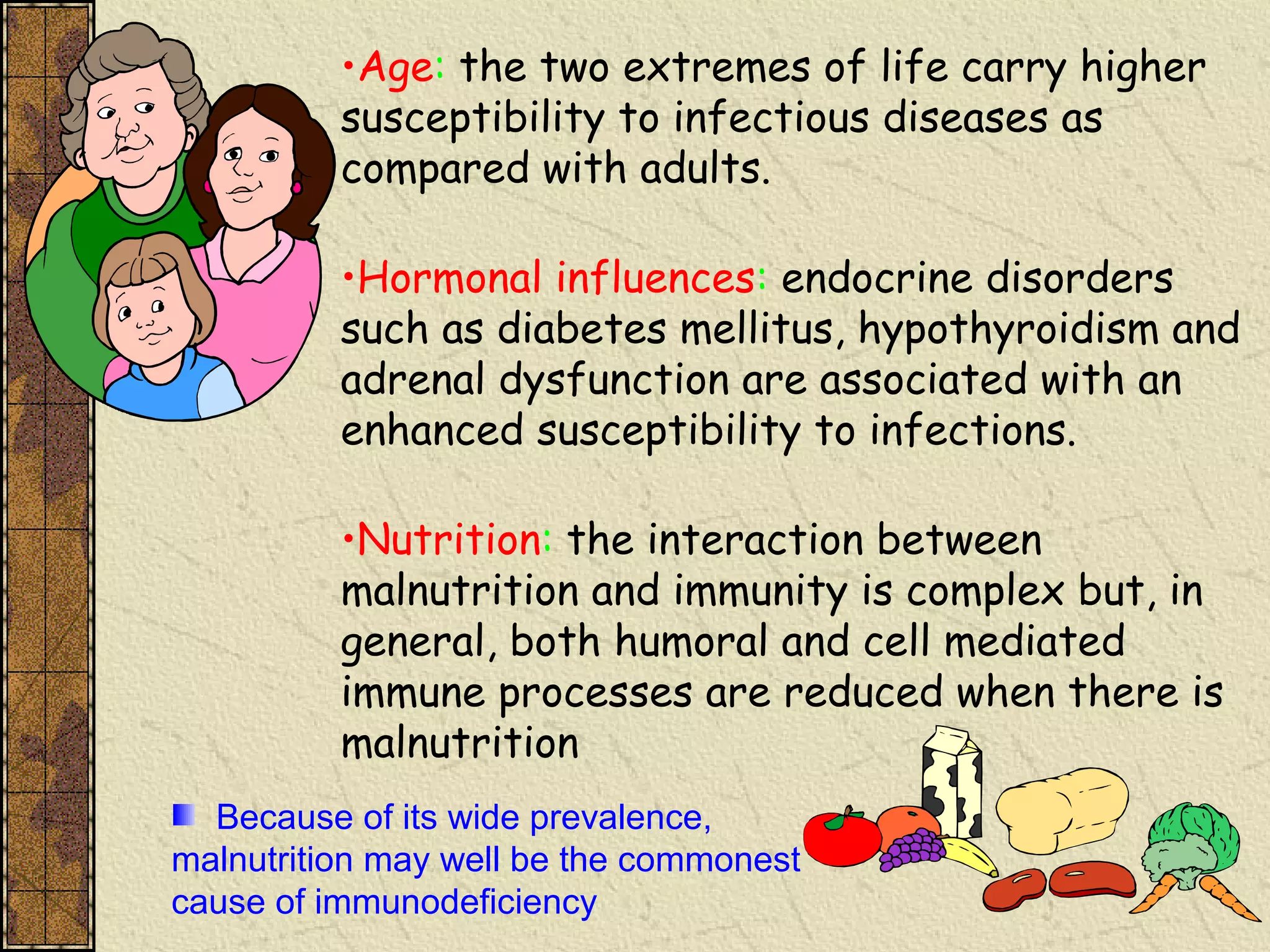
•Age: the twoextremes of life carry higher
susceptibility to infectious diseases as
compared with adults.
•Hormonal influences: endocrine disorders
such as diabetes mellitus, hypothyroidism and
adrenal dysfunction are associated with an
enhanced susceptibility to infections.
•Nutrition: the interaction between
malnutrition and immunity is complex but, in
general, both humoral and cell mediated
immune processes are reduced when there is
malnutrition
Because of its wide prevalence,
malnutrition may well be the commonest
cause of immunodeficiency
EPITHELIAL SURFACES
Protection byintact skin &
mucous membrane
Mucosa of the respiratory tract
The intestinal mucosa
Flushing action of urine
First line of defence
23.
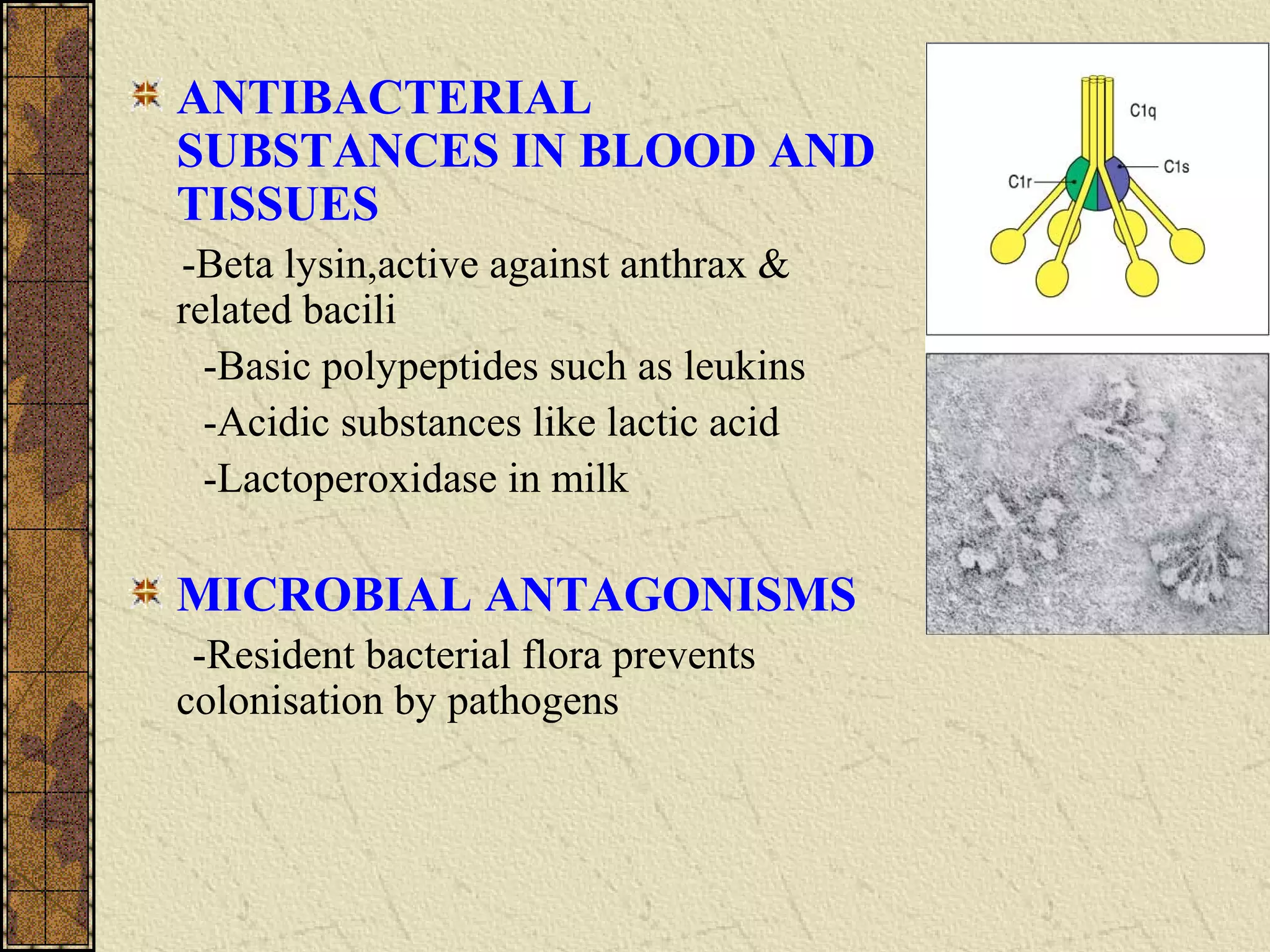
ANTIBACTERIAL
SUBSTANCES IN BLOODAND
TISSUES
-Beta lysin,active against anthrax &
related bacili
-Basic polypeptides such as leukins
-Acidic substances like lactic acid
-Lactoperoxidase in milk
MICROBIAL ANTAGONISMS
-Resident bacterial flora prevents
colonisation by pathogens
24.
CELLULAR FACTORS
Phagocytic cells(Metchinkoffin 1883)
Microphages:
PMN leucocytes
Macrophages:
Histiocytes, reticuloendothelial cells,
monocytes
Natural killer cells:
Class of lymphocytes (non specific viral
infections) activated by interferon.
25.
INFLAMMATION
Tissue injury orirritation, initiated by the entry of pathogens
or other irritants, leads to inflammation, which is an important
nonspecific defence mechanism
Tissue injury or irritation leads to inflamation.
•It is characterized by:
HEAT(CALOR)
SWELLING(TUMOR)
REDNESS(RUBOR)
PAIN(DOLOR)
LOSS OF FUNCTION
Second line of defence
FEVER
•A rise oftemperature following
infection is a natural defence
mechanism and not merely helps to
accelerate the physiological
processes but may, in some cases,
actually destroy the infecting
pathogens
•Therapeutic induction of fever in
syphilitic patients
•Pyrogens reset the hypothalamic
thermostat and raise body
temperature
•Pathogens, toxins, antigen-antibody
complexes can act as pyrogens
ACUTE PHASE PROTEINS
Increase in plasma concentration of
C reactive proteins,mannose binding
proteins,alpha 1 acid protein, serum
amyloid p protein
28.
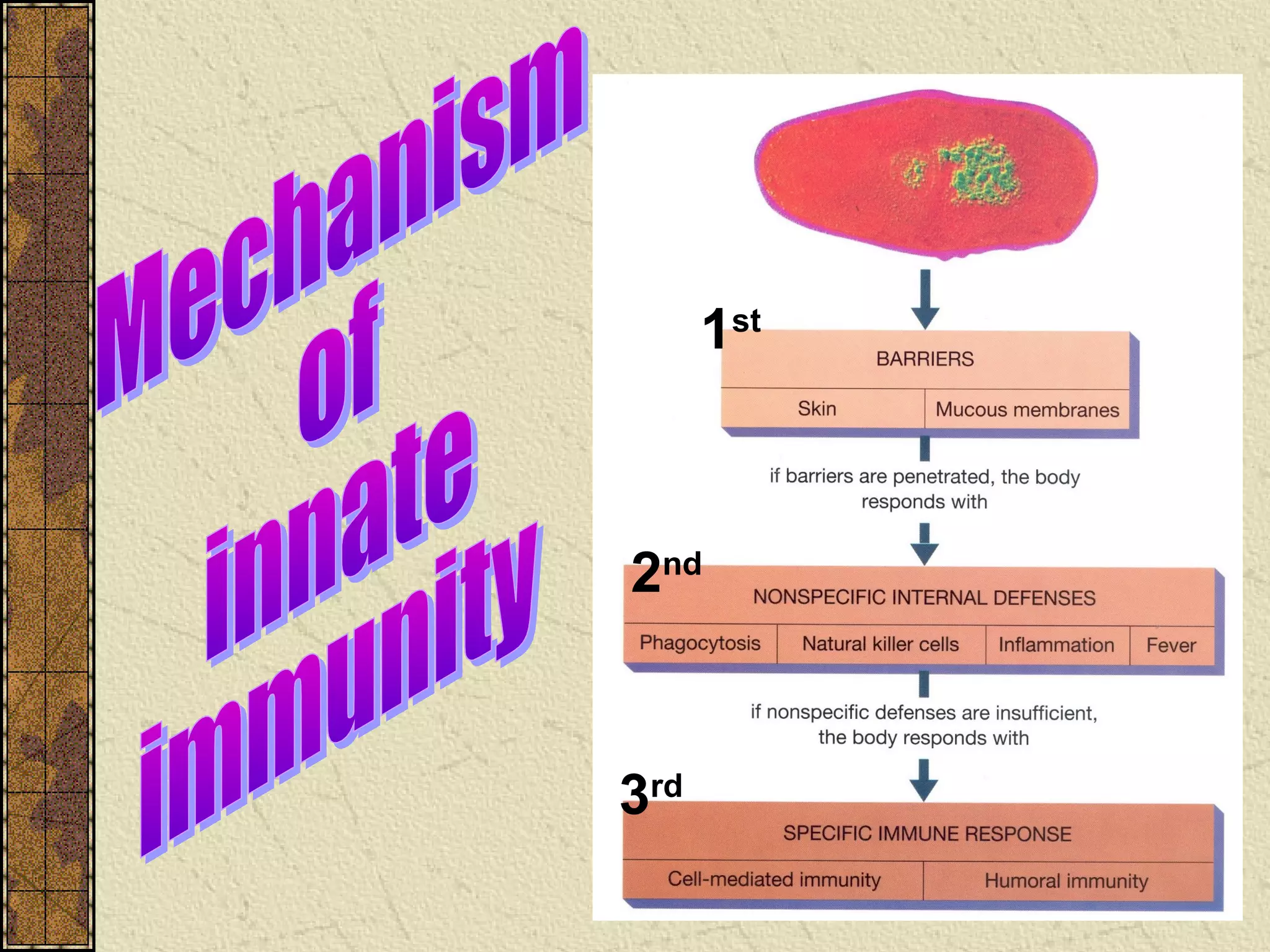
Third line ofdefence
Specific immune response
Humoral (blood) immunity
B cells label infecting and infected cells for
destruction by complement proteins, natural killer cells,
and macrophages
Cell- mediated immunity
Carried out by t cells, which mount an immediate
attack on infecting and infected cells, killing any that
present unusual surface antigens
29.
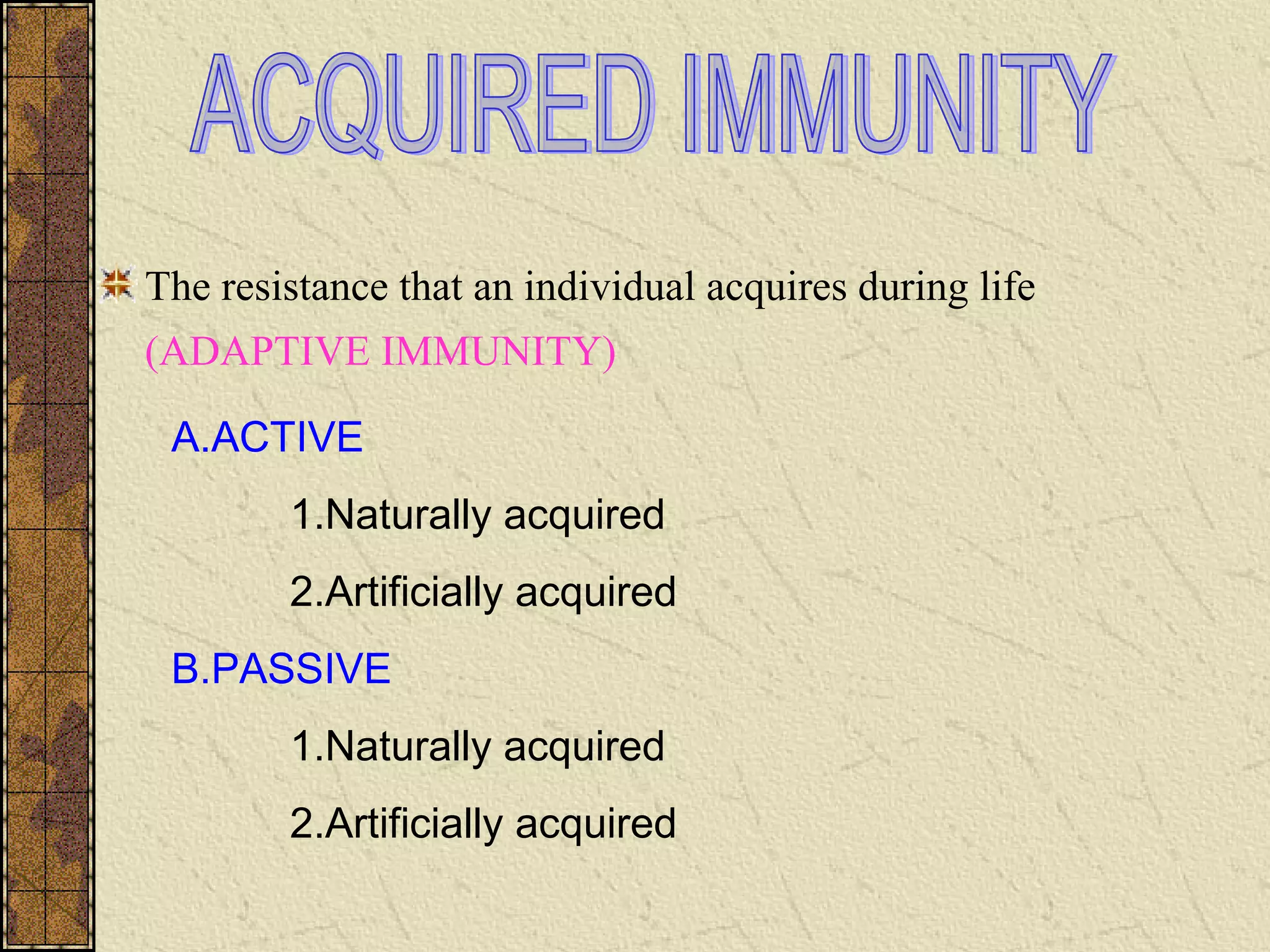
The resistance thatan individual acquires during life
(ADAPTIVE IMMUNITY)
A.ACTIVE
1.Naturally acquired
2.Artificially acquired
B.PASSIVE
1.Naturally acquired
2.Artificially acquired
30.
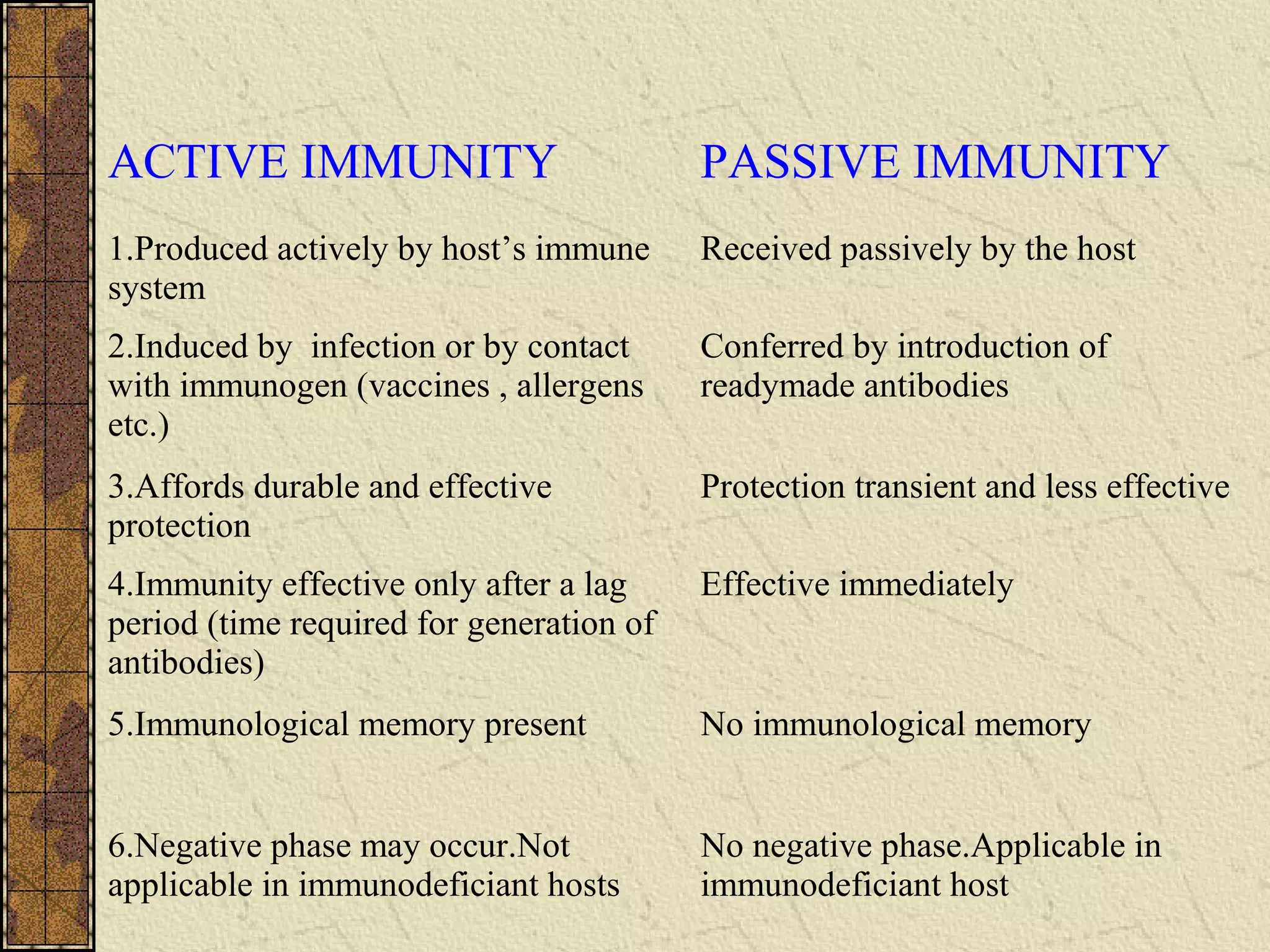
ACTIVE IMMUNITY PASSIVEIMMUNITY
1.Produced actively by host’s immune
system
Received passively by the host
2.Induced by infection or by contact
with immunogen (vaccines , allergens
etc.)
Conferred by introduction of
readymade antibodies
3.Affords durable and effective
protection
Protection transient and less effective
4.Immunity effective only after a lag
period (time required for generation of
antibodies)
Effective immediately
5.Immunological memory present No immunological memory
6.Negative phase may occur.Not
applicable in immunodeficiant hosts
No negative phase.Applicable in
immunodeficiant host
31.
NATURAL ACTIVE IMMUNITY
Resultsfrom either a clinical or in
apparent infection by a parasite,
polio
Usually long lasting but the
duration varies with the type of
pathogen
32.
ARTIFICIAL ACTIVE IMMUNITY
-Itis the resistance induced by the vaccines
1.Bacterial vaccines
a.Live-BCG for TB
b.Killed – TAB for enteric fever
c.Subunit – vi Polysaccharide for typhoid
d.Bacterial products – Toxoids for Diphtheria,Tetanus
2.Viral vaccines
a.Live – Oral Poliovaccine(sabin)
b.Killed – Injectable Poliovaccine(salk)
c.Subunit – Hepatitis B vaccine
33.
NATURAL PASSIVE IMMUNITY
-isthe resistance passively transferred from the mother to
the baby
-Maternal antibodies give passive protection to the infant
till then
ARTIFICIAL PASSIVE IMMUNITY
-is the resistance passively transferred to a recipient by
administration of antibodies
Eg:
Hyper immune sera of animal origin(ATS)
Human hyper immune globulin(TIG)
34.
ANTIGENS
Any substance which,whenintroduced
parenterally into the body,stimulates the
production of an antibody with which it reacts
specifically and in an observable manner
The two attributes of
antigenicity are
1.Induction of an immune
response(Immunogenicity)
2.Specific reaction with
antibodies or sensitized
cells(Immunological reactivity)
35.
TYPES:
COMPLETE ANTIGEN isable to induce antibody formation and
produce a specific and observable reaction with the antibody so
produced
HAPTENS (to fasten) are substances which are incapable of
inducing antibody formation by themselves but can react
specifically with antibodies
can become immunogenic on combining with a larger carrier molecule
Are of two types:
COMPLEX HAPTENS
SIMPLE HAPTENS
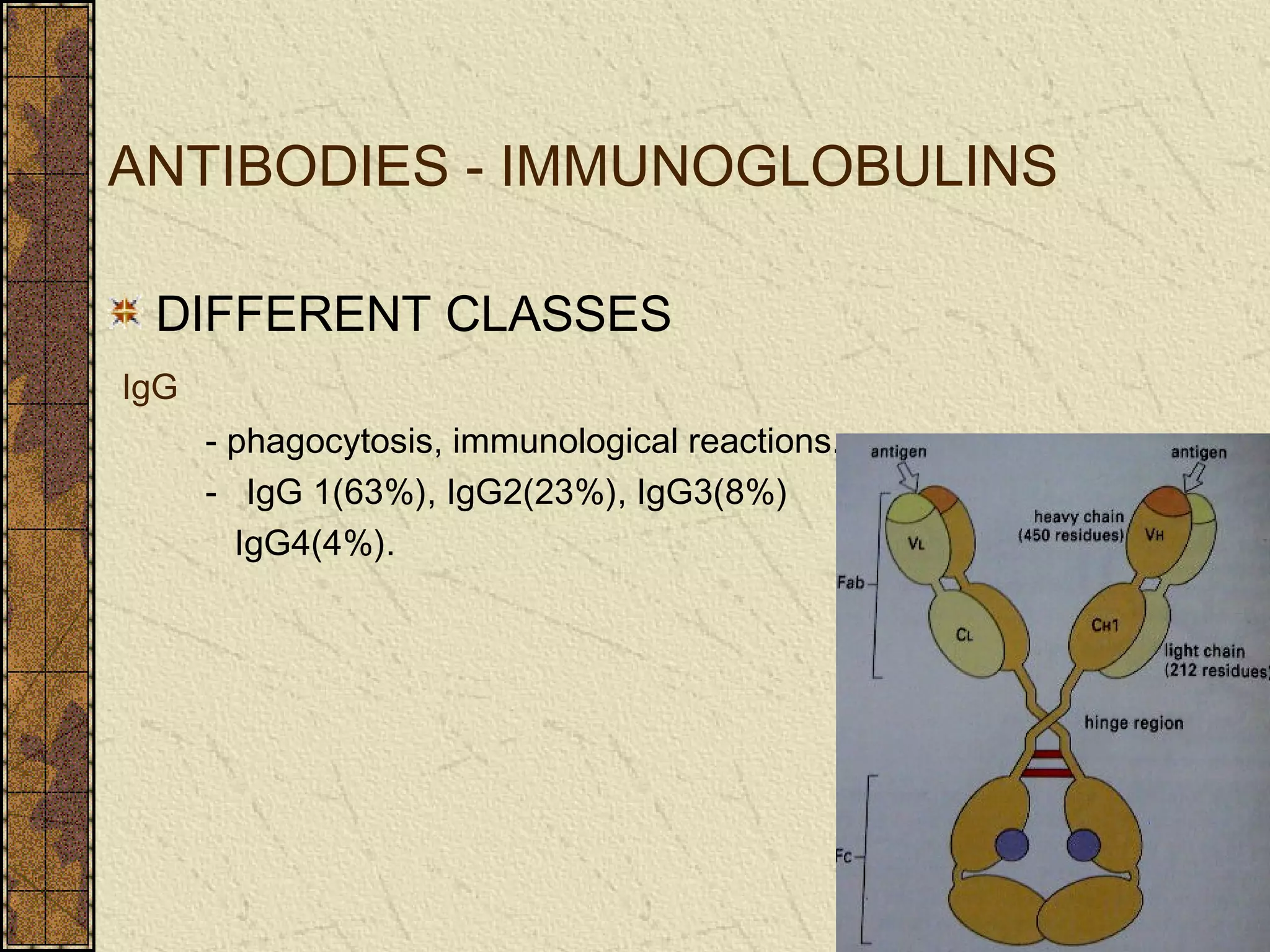
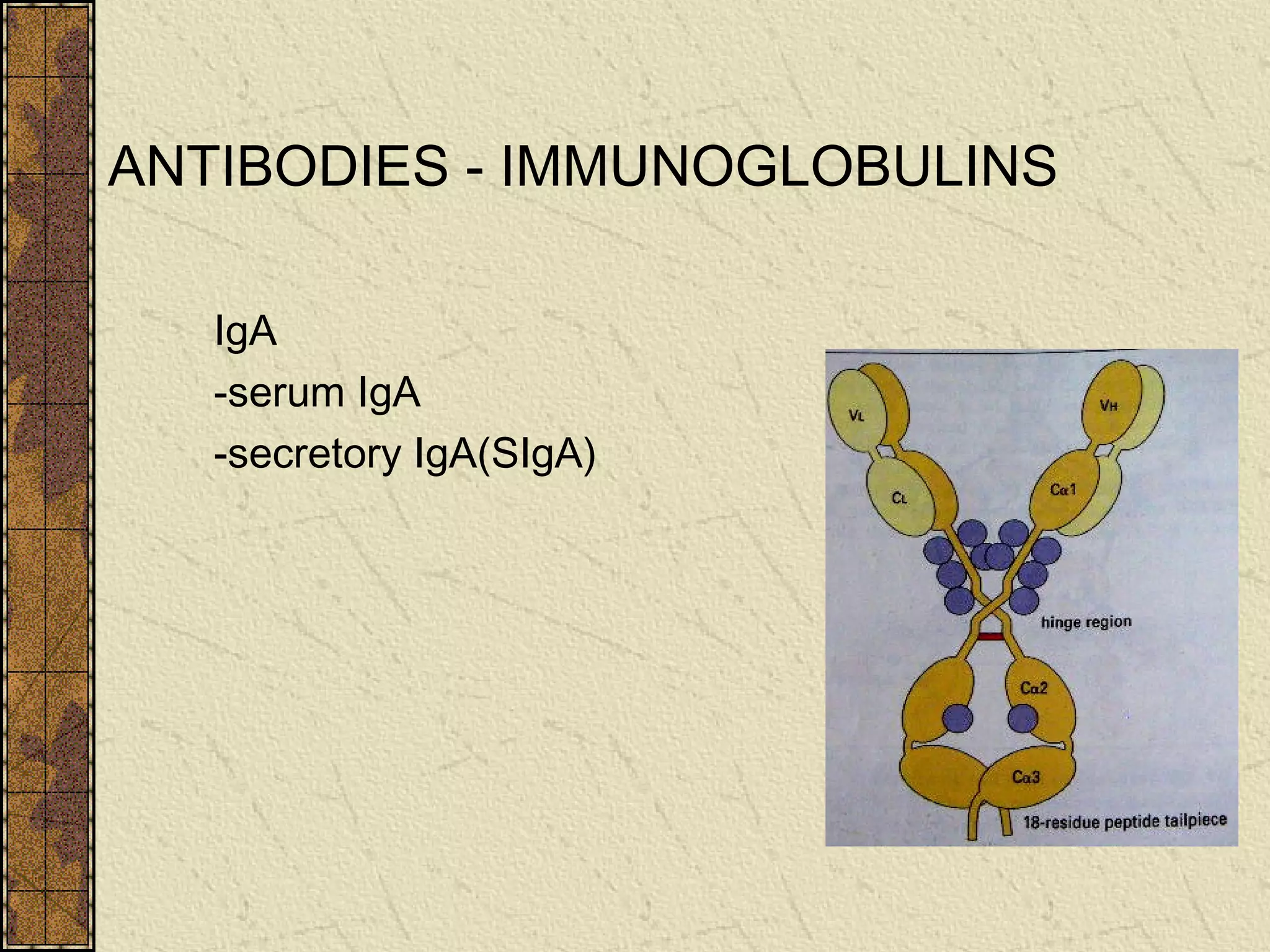
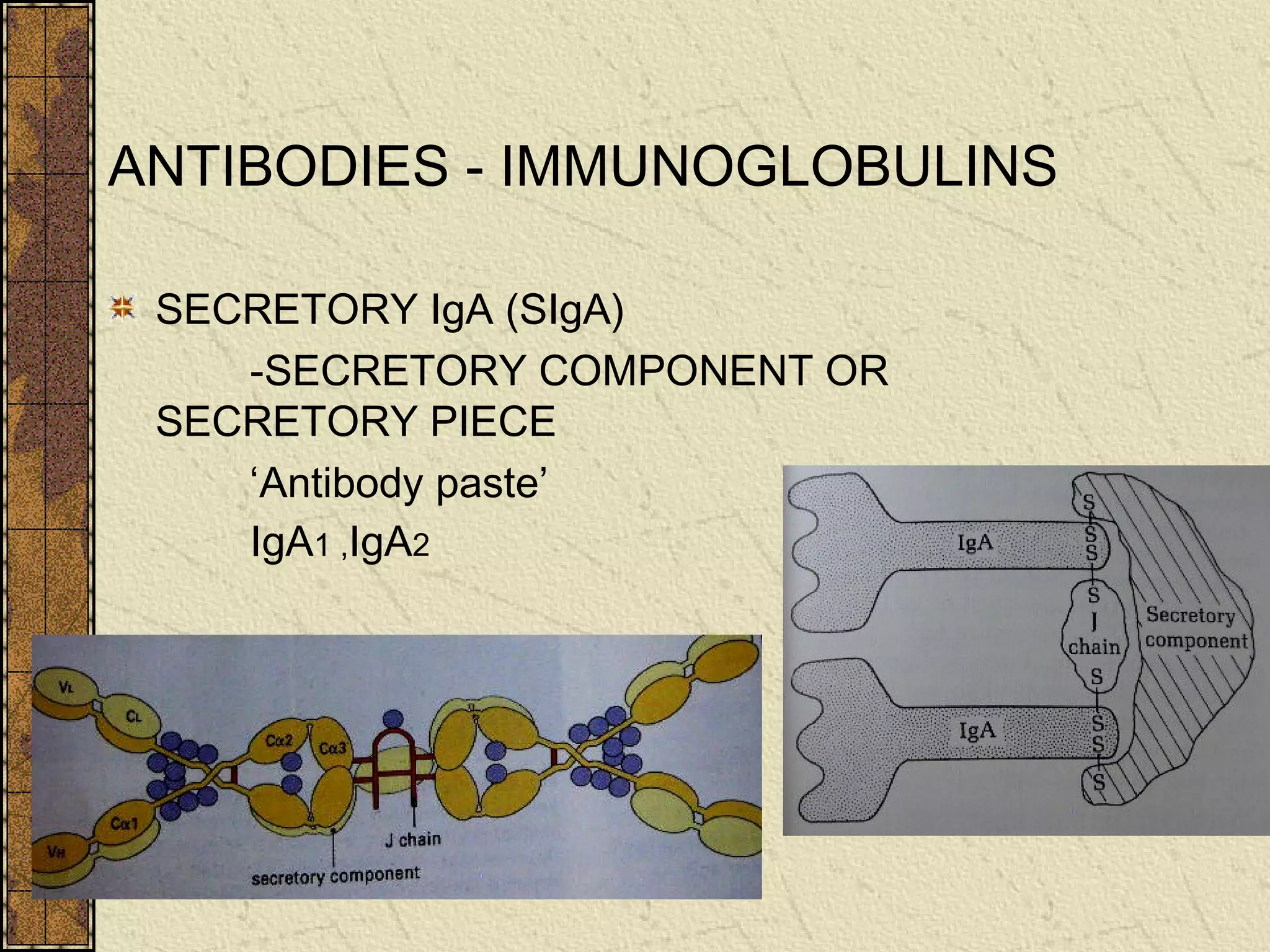
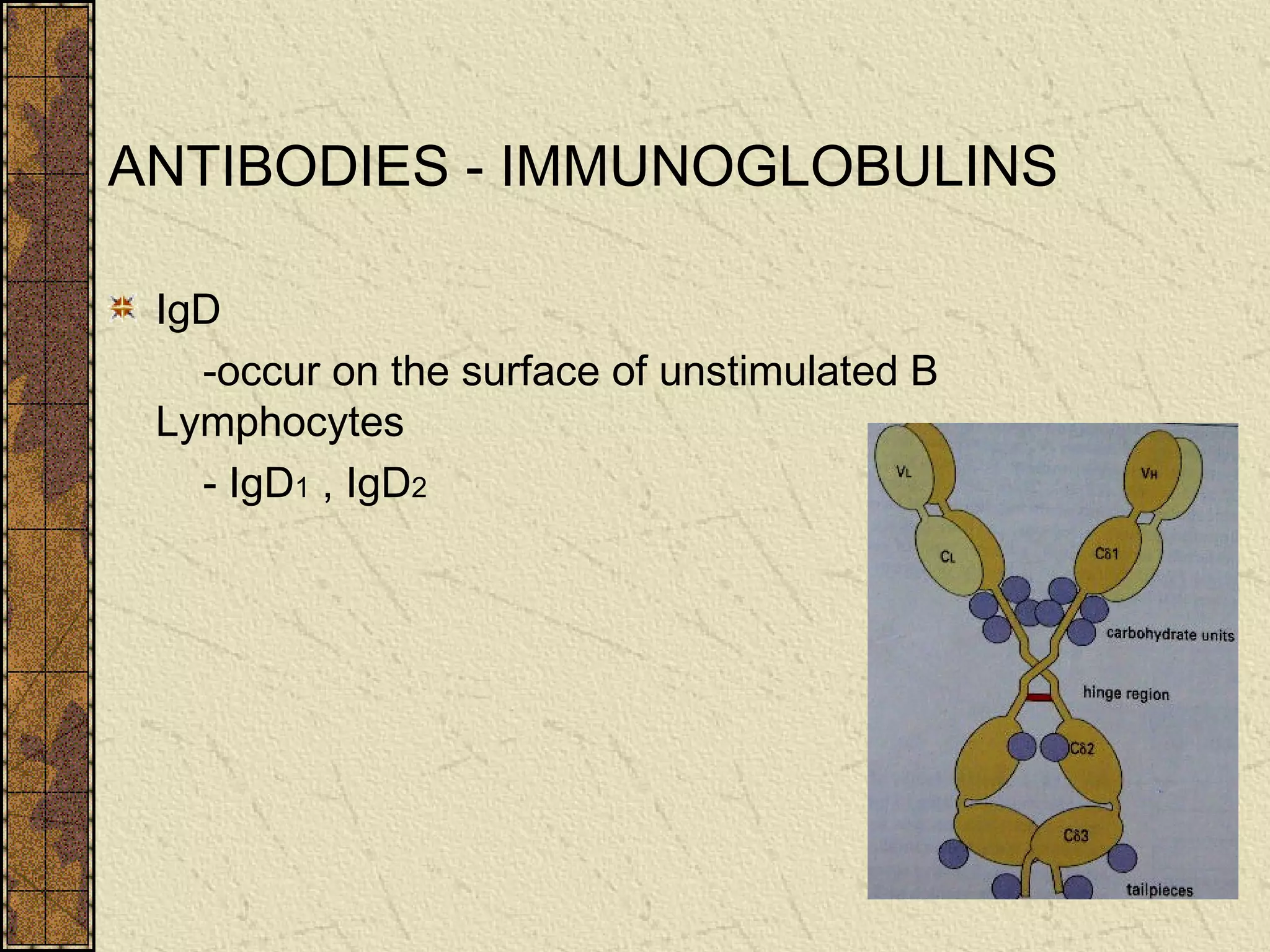
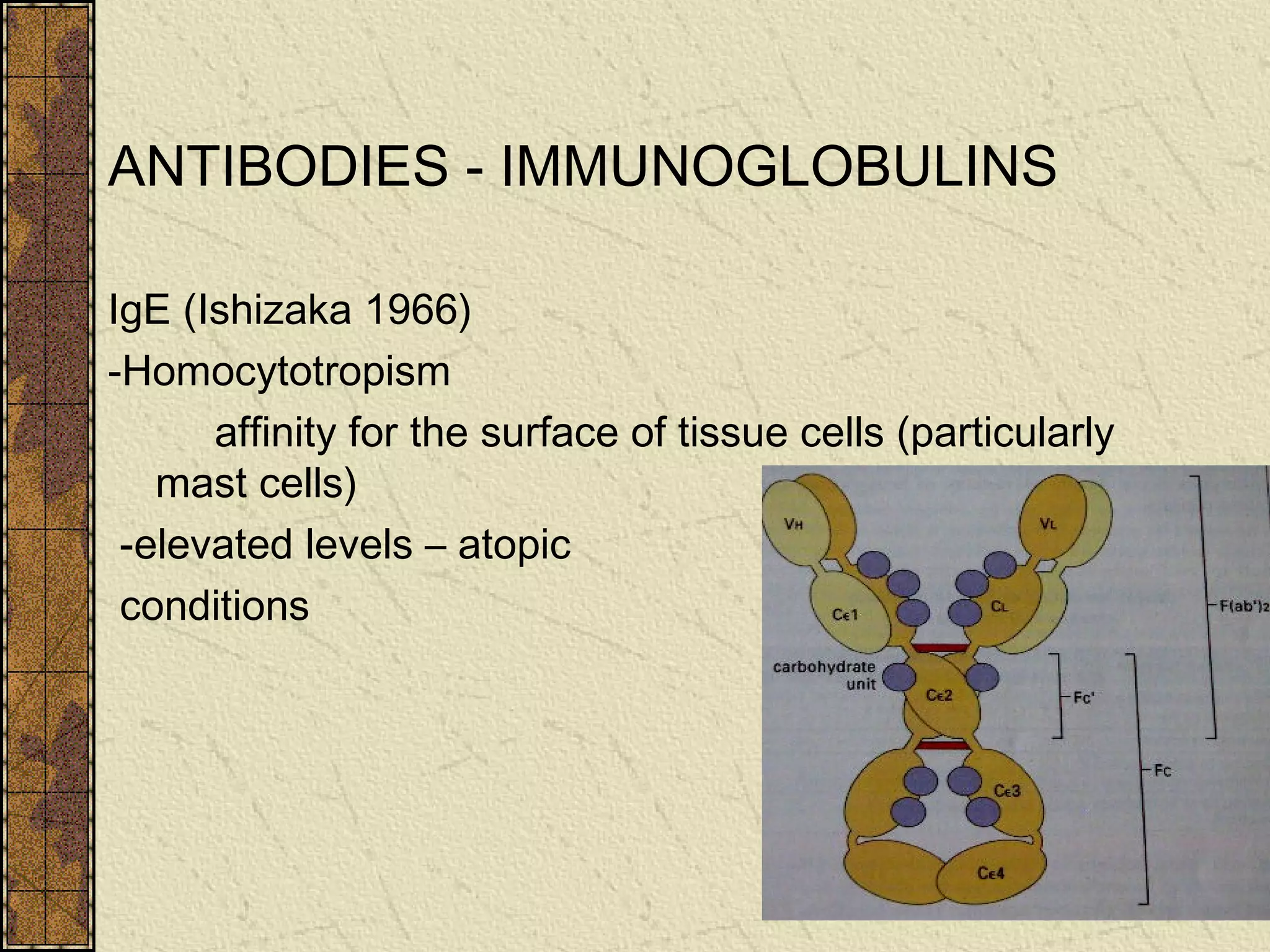
ANTIBODIES - IMMUNOGLOBULINS
IMMUNOGLOBULIN–’PROTEINS OF ANIMAL ORIGIN
ENDOWED WITH KNOWN ANTIBODY ACTIVITY AND FOR
CERTAIN OTHER PROTEINS RELATED TO THEM BY
CHEMICAL STRUCTURE’ – WHO (1964)
TYPES DEPENDING ON THE PHYSICOCHEMICAL AND
ANTIGENIC DIFFERENCES
-IgG , IgA, IgM , IgD , IgE
38.
ANTIBODIES - IMMUNOGLOBULINS
STRUCTUREOF IMMUNOGLOBULINS (porter,
Edelman, Nisonoff & colleagues)
ONE Fc Fragment
TWO Fab (antigen binding) Fragments
Ig Class H Chain
IgG γ
IgA α
IgM µ
IgD δ
IgE ε
ANTIGEN – ANTIBODYREACTIONS
Primary stage
-Initial interaction , without any
visible effects
Secondary stage
-Demonstrable events
Tertiary stage
-humoral immunity against
infections , clinical allergy & other
immunological diseases
48.
ANTIGEN – ANTIBODYREACTIONS
GENERAL FEATURES
1.The reaction is specific , however cross rections
occur
2.Entire molecules react and not fragments
3.No denaturation of antigen or the antibody during
the reaction
4.The combination occurs at the surface
5.The combination is firm but reversible , influenced
by affinity & avidity of the reaction
6.Both antigens and antibodies participate in
formation of agglutinates or precipitates
ANTIGEN – ANTIBODYREACTIONS
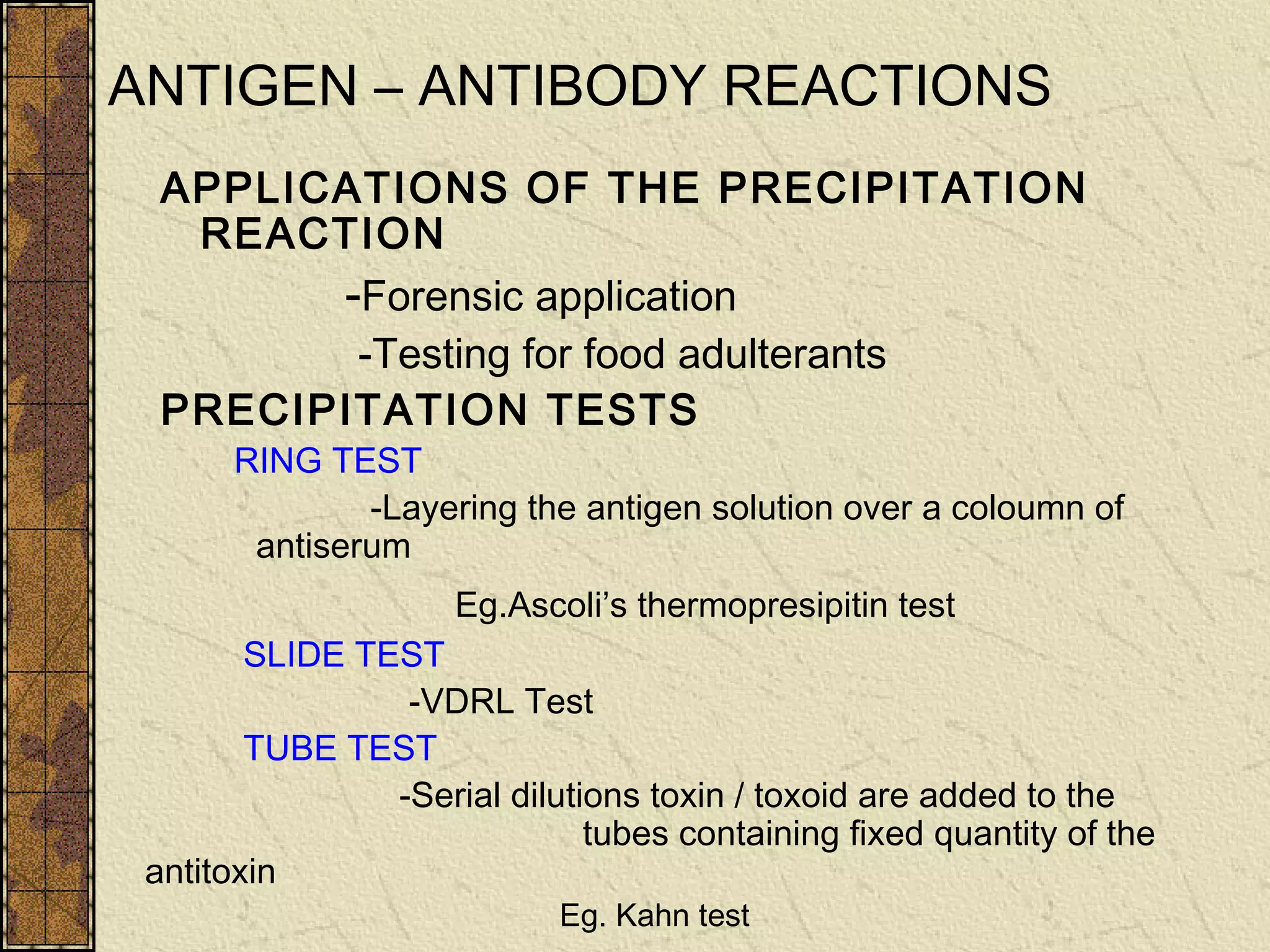
APPLICATIONS OF THE PRECIPITATION
REACTION
-Forensic application
-Testing for food adulterants
PRECIPITATION TESTS
RING TEST
-Layering the antigen solution over a coloumn of
antiserum
Eg.Ascoli’s thermopresipitin test
SLIDE TEST
-VDRL Test
TUBE TEST
-Serial dilutions toxin / toxoid are added to the
tubes containing fixed quantity of the
antitoxin
Eg. Kahn test
51.
PRECIPITATION TESTS
IMMUNODIFFUSION (PPTNIN GEL)(single diffusion)
OUDIN PROCEDURE
IMMUNO – DOUBLE- DIFFUSION II –OAKLEY FULTHORPE
PROCEDURE
IMMUNOELECTROPHRESIS
30 Different proteins are identified by this method and
is useful in testing normal and abnormal protein in serum and
urine
COUNTERCURRENT ELECTROPHORESIS
used for antigen detection in Cryptococcus and meningococcus
ROCKET ELECTROPHORESIS
used for quantative estimation of antigen
THE COMPLEMENT SYSTEM
Complementwas initially described as a
substance in peritoneal fluid and sera that
cooperated with antibodies in the lytic destruction
of bacteria (Bacteriolysis Pfeiffer’s
phenomenon)
DEFINITION
•Complement consists of more
than 20 proteins present in
plasma and on cell surfaces that
interact with each other to
produce biologically active
inflammatory mediators that
promote cell and tissue injury
59.
THE COMPLEMENT SYSTEM
GENERALFEATURES
Present in all normal mammalian sera
Thermal destruction
Consists of 14 proteins normally found in sera
Complement activation by antibody antigen is
possible only with IgM(CH4), IgG1, IgG3(CH2)
Classic activation pathway – cytolytic
destruction of membrane sensitive antigens
Alternate pathway (properdin pathway)
Species barrier are rare – normal guinea pig or
normal rabbit sera
60.
Complement
- System ofplasma
proteins
- Produced by: liver &
monocytes
- Heat Labile
- Part of the INNATE
immune system
61.
NOMENCLATURE:
THE FIRST COMPONENTOF COMPLEMENT IS
NAMED C 1 AND IT IS TILL C 9
OTHER COMPONENTS ARE DESIGNATED BY
CAPITAL LETTERS AND NAMES: FACTOR B,
PROPERIDIN
WHEN CLEAVED: FRAGMENTS OF
COMPLEMENT COMPONENTS ARE DESIGNATED
BY SMALL LETTERS (E.G. C3a AND C3b)
COMPONENTS WERE NAMED IN THE ORDER IN
WHICH THEY WERE DISCOVERED, THEREFORE,
THE ORDER DOES NOT NECESSARILY FOLLOW
A SEQUENTIAL PATTERN
62.
THE COMPLEMENT SYSTEM
NOMENCLATURE
C1q,C1r, C1s, C4, C2, C3, C5, C6, C7, C8, C9.
Enzymatically active form – C1rSuffix letters a , b etc
represents clevage products
Small intial clevage fragment – ‘a’ fragment
and the large - ‘b’ fragment
eg.C3a, C3b
63.
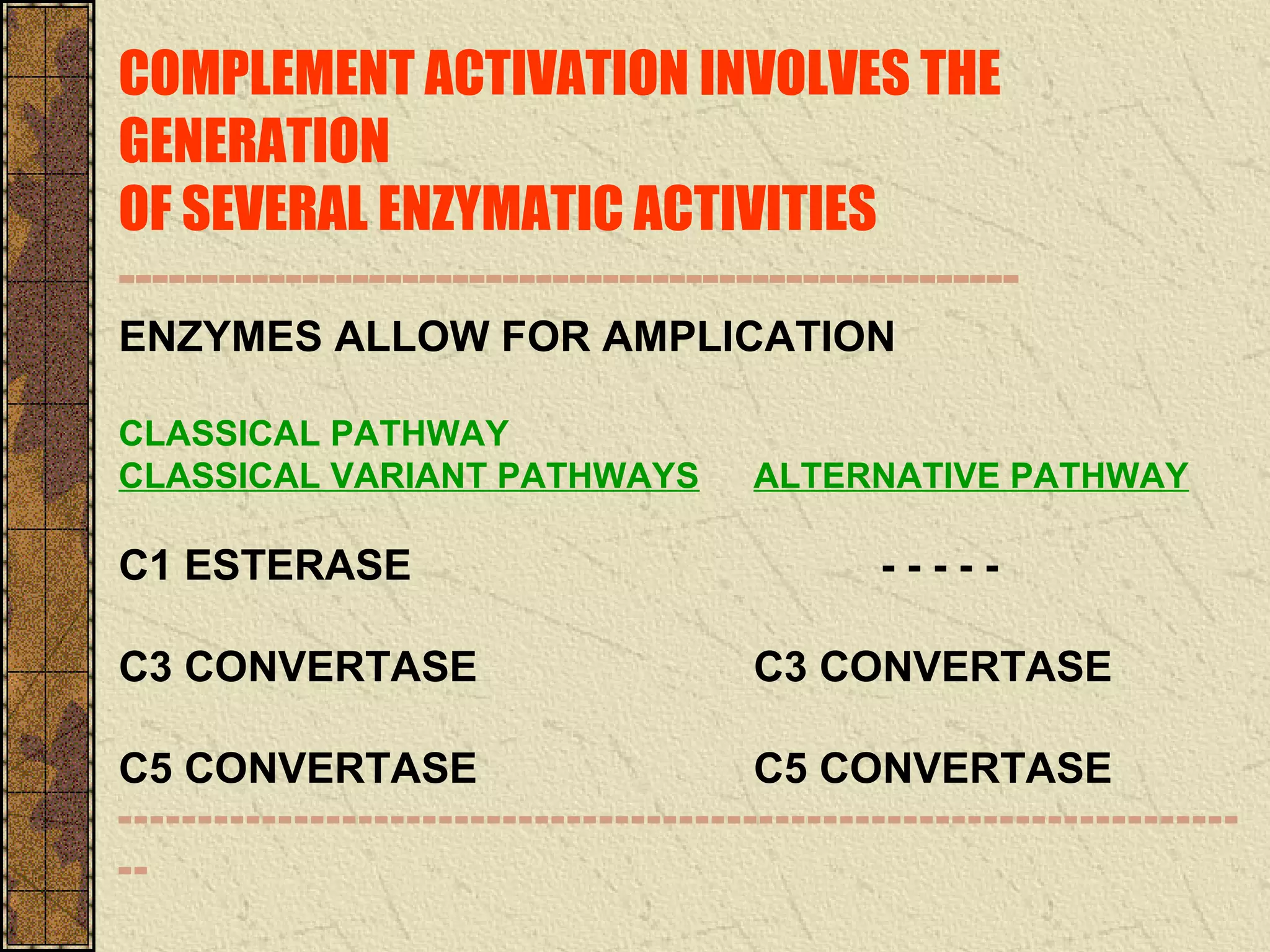
COMPLEMENT ACTIVATION INVOLVESTHE
GENERATION
OF SEVERAL ENZYMATIC ACTIVITIES
------------------------------------------------------
ENZYMES ALLOW FOR AMPLICATION
CLASSICAL PATHWAY
CLASSICAL VARIANT PATHWAYS ALTERNATIVE PATHWAY
C1 ESTERASE - - - - -
C3 CONVERTASE C3 CONVERTASE
C5 CONVERTASE C5 CONVERTASE
----------------------------------------------------------------------
--
64.
ACTIVATORS OF COMPLEMENT
THECOMPLEMENT SYSTEM
IMMUNO
GLOBULIN
S
VIRUSES BACTE
RIA
OTHER OTHER
CLASSICAL
PATHWAY
IgM,Ig1 ,g2,
g3
Murine
retrovirus,vesic
ular stomatitis
virus
_ mycoplasma polyanoins
ALTERNATI
VE
PATHWAY
IgG IgA IgE VIRUS
INFECTED
CELLS
Gm-ve,
Gm+ve
organis
ms
Trepanosome
s,Leishmania,
Fungi
Dextran
sulphate,CH
O
,HETEROLO
GUS
65.
THE COMPLEMENT SYSTEM
REGULATIONOF C ACTIVATION
INHIBITORS
-C1sINH Heat labile alpha neuramino glycoprotein
-S proteins
INACTIVATORS
-Factor I
-Factor H
-Anaphylatoxin inactivator
-C4binding proteins
66.
THE COMPLEMENT SYSTEM
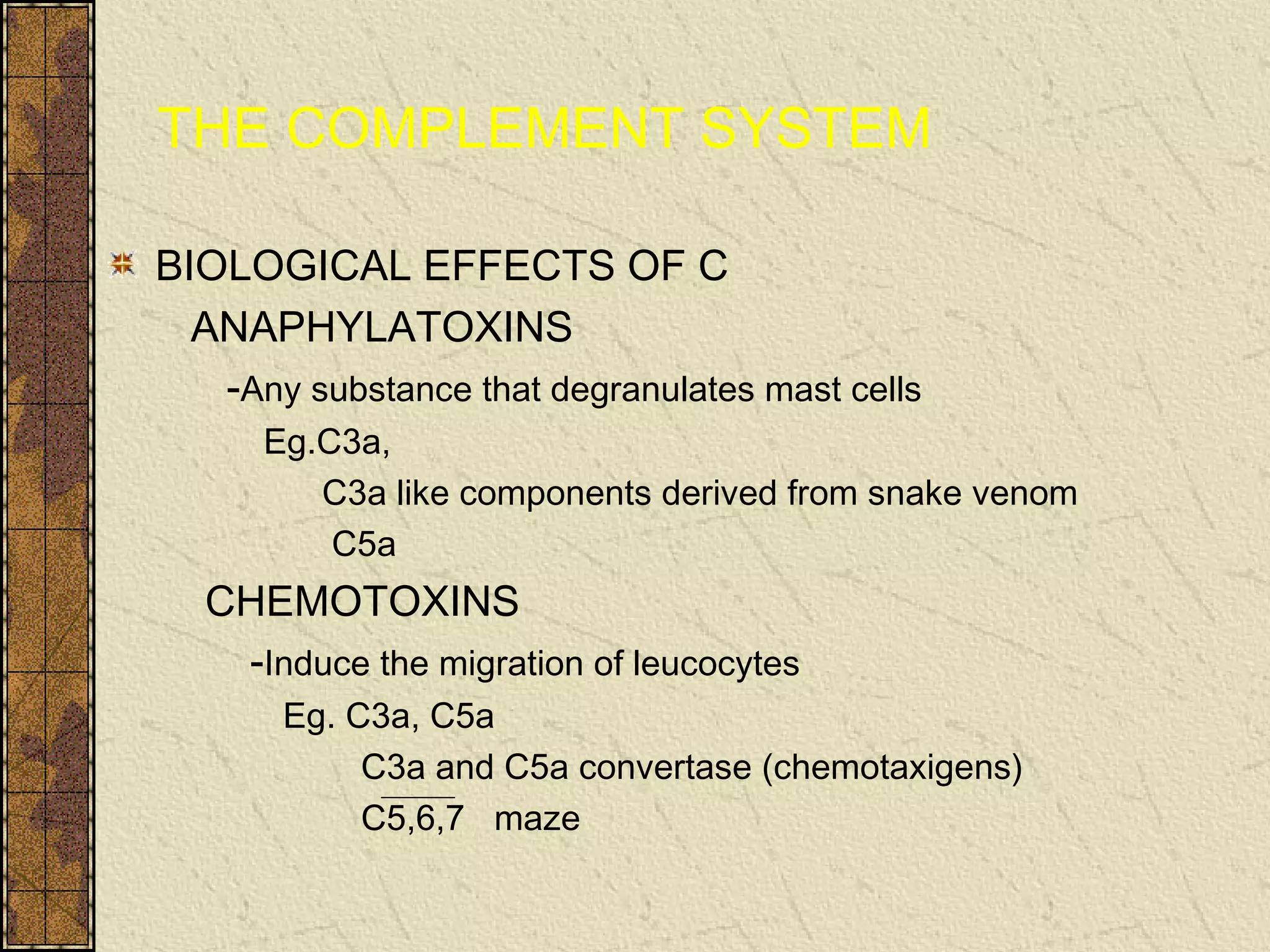
BIOLOGICALEFFECTS OF C
ANAPHYLATOXINS
-Any substance that degranulates mast cells
Eg.C3a,
C3a like components derived from snake venom
C5a
CHEMOTOXINS
-Induce the migration of leucocytes
Eg. C3a, C5a
C3a and C5a convertase (chemotaxigens)
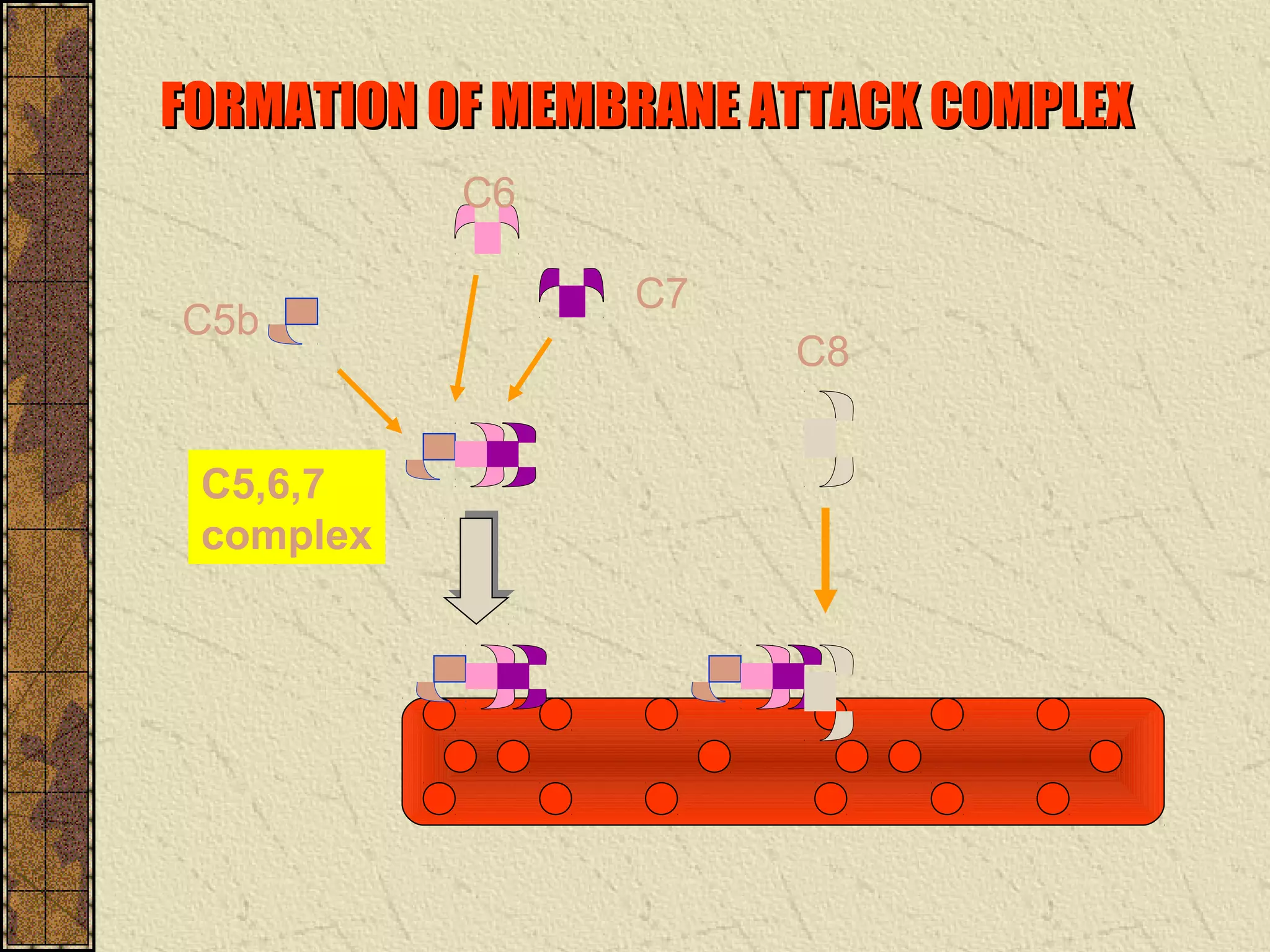
C5,6,7 maze
67.
THE COMPLEMENT SYSTEM
BIOLOGICALEFFECTS OF C
OPSONISATION – Modify the particles to be engulfed
IMMUNE ADHERANCE
-Indicator particles attach & cling to the antigen
68.
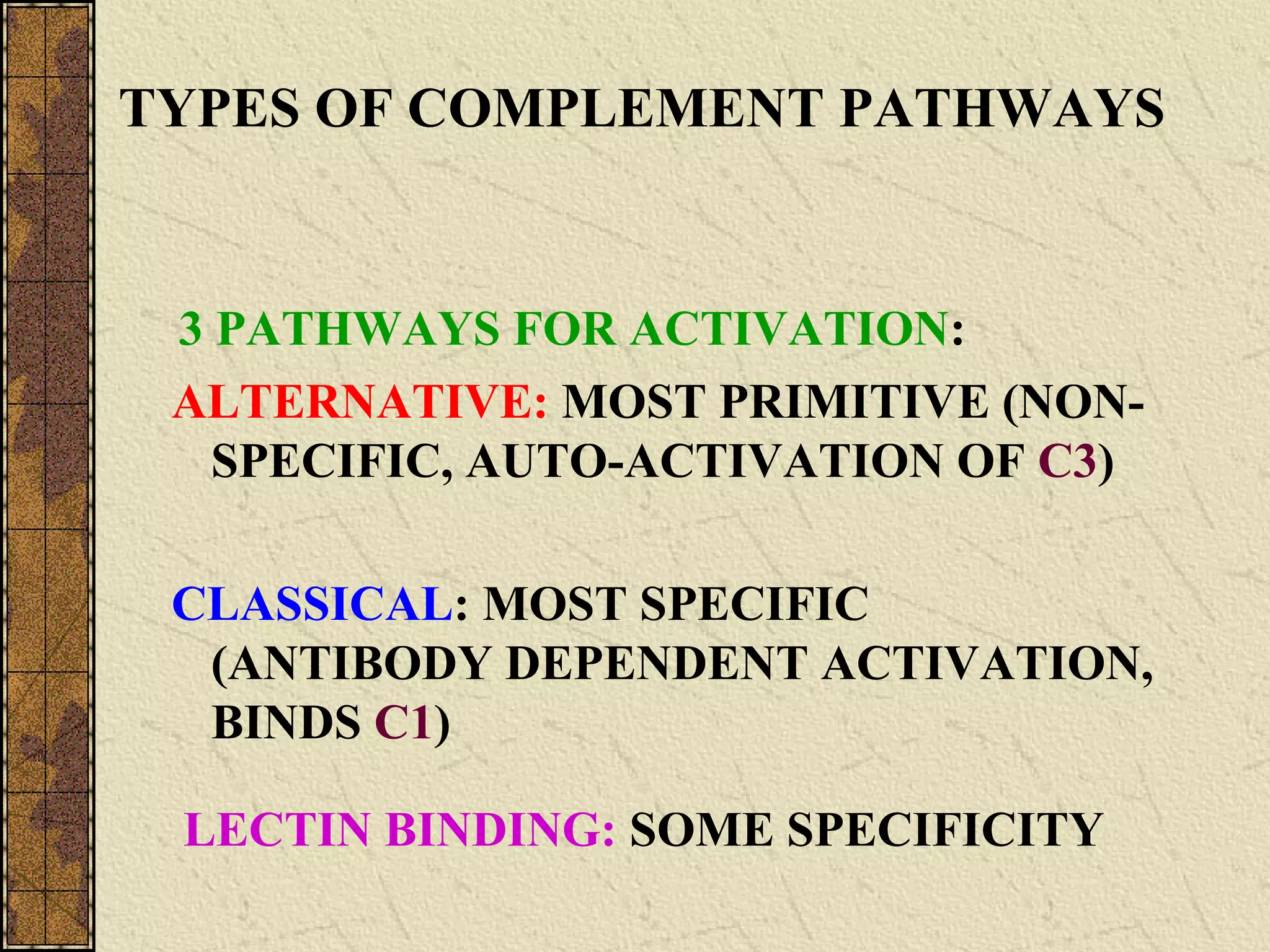
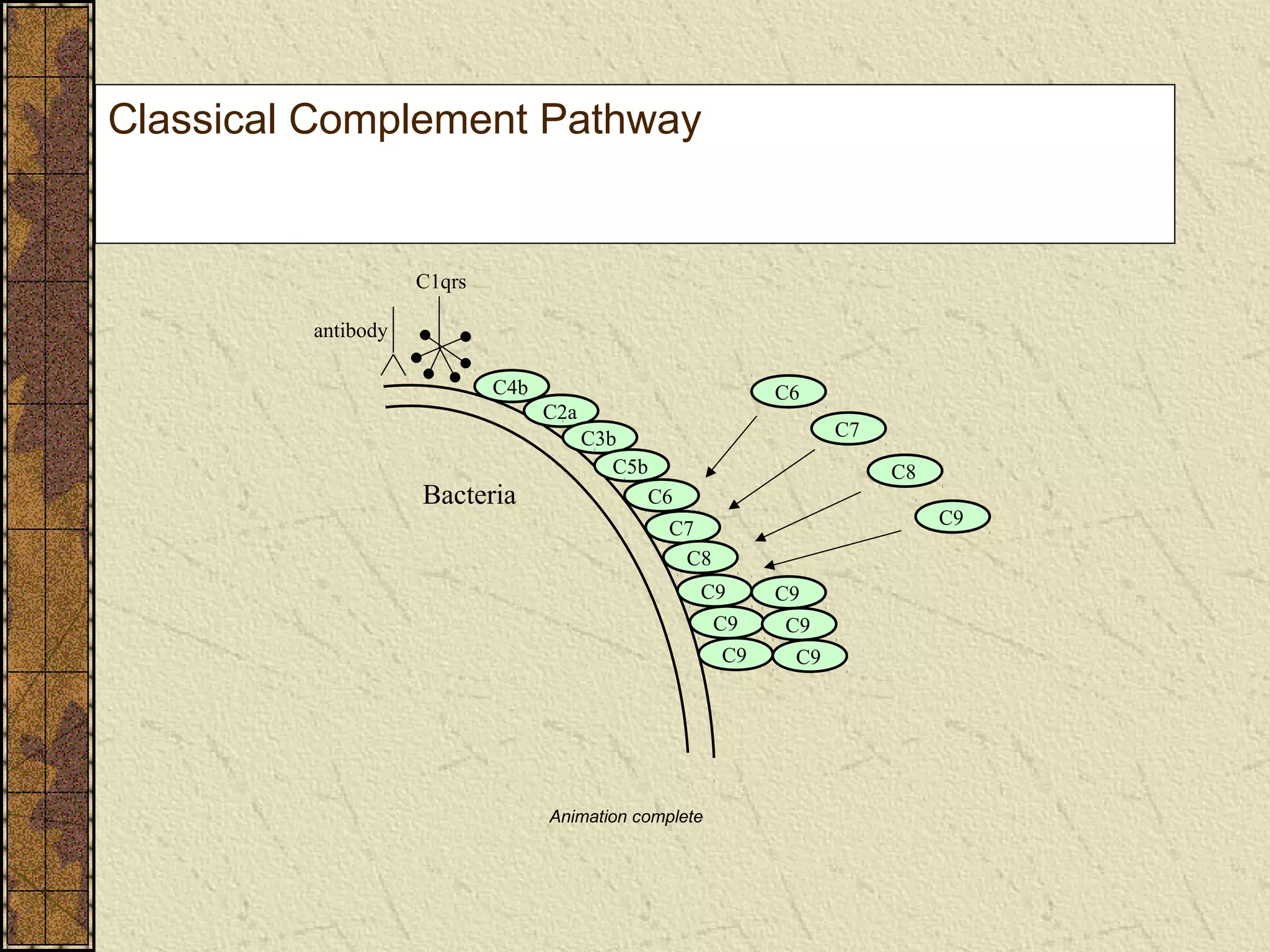
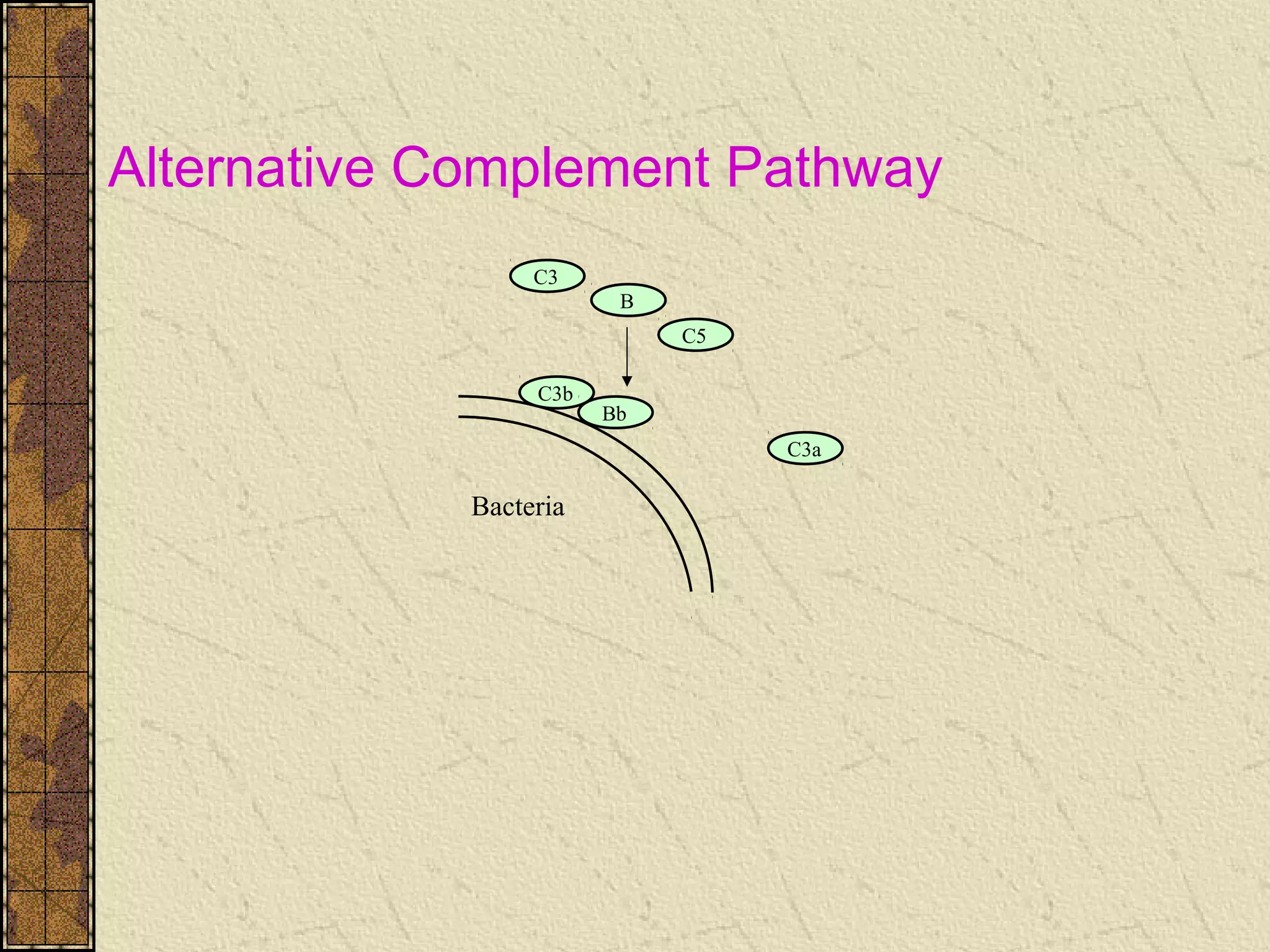
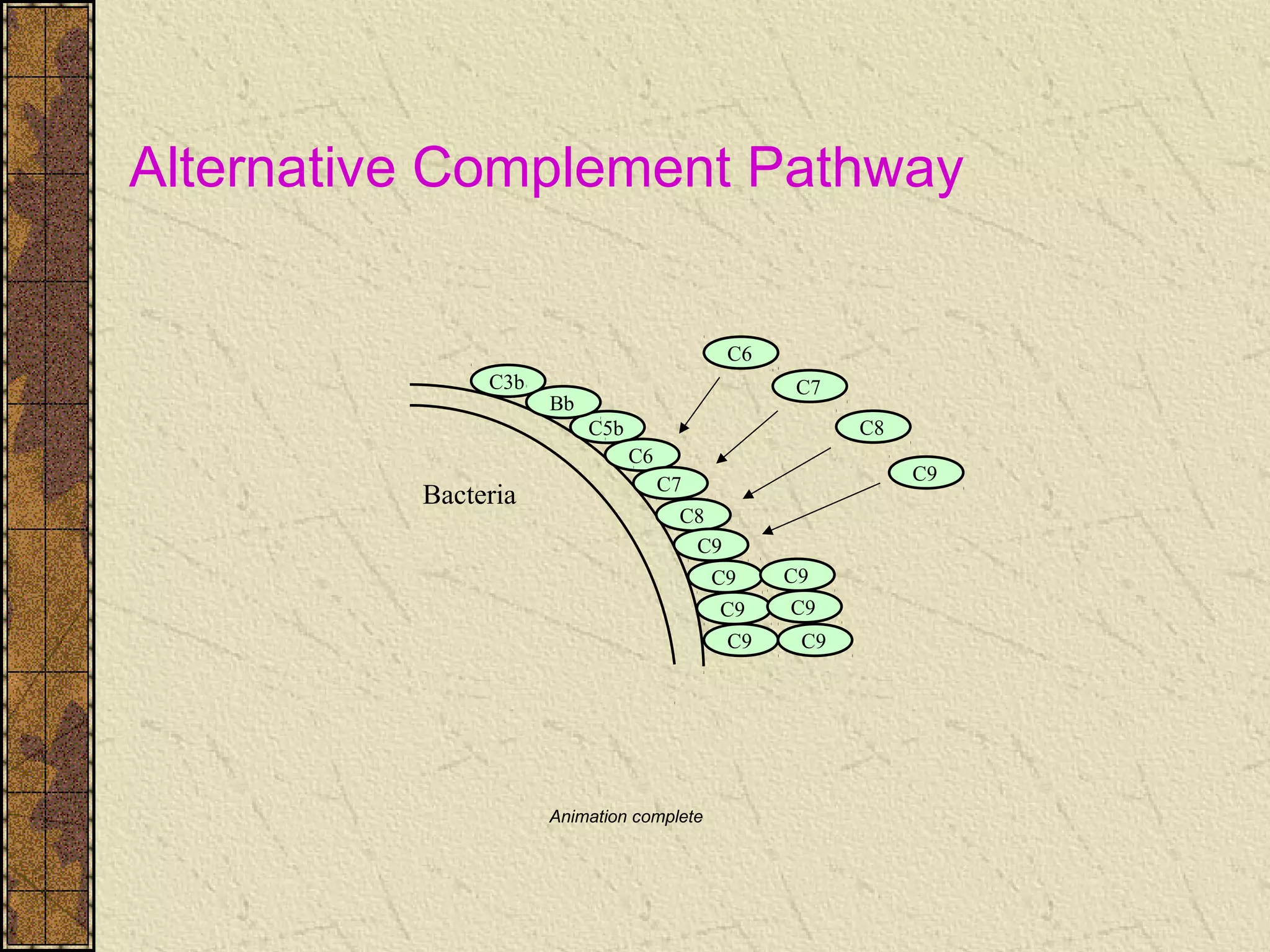
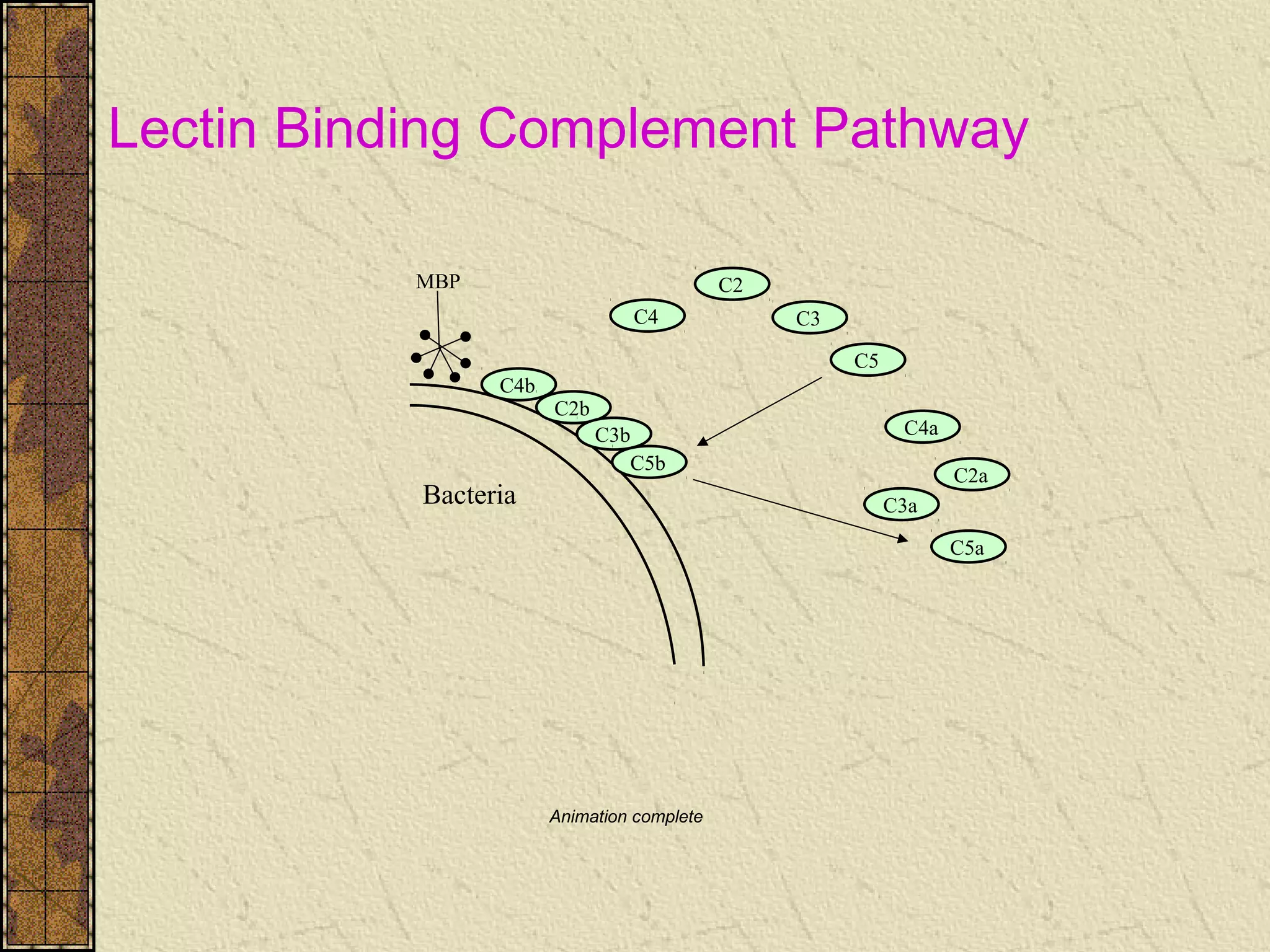
TYPES OF COMPLEMENTPATHWAYS
3 PATHWAYS FOR ACTIVATION:
ALTERNATIVE: MOST PRIMITIVE (NON-
SPECIFIC, AUTO-ACTIVATION OF C3)
CLASSICAL: MOST SPECIFIC
(ANTIBODY DEPENDENT ACTIVATION,
BINDS C1)
LECTIN BINDING: SOME SPECIFICITY
MAC:causes osmotic lysis
-especially important for the
destruction of Neisseria
pathogens
N. gonnorhea
N. meningitidis
Because bacterium has a higher
osmolarity than surroundings,
extracellular fluid enters
bacterium: bacterium lyses
bacterial lysis!bacterial lysis!
77.
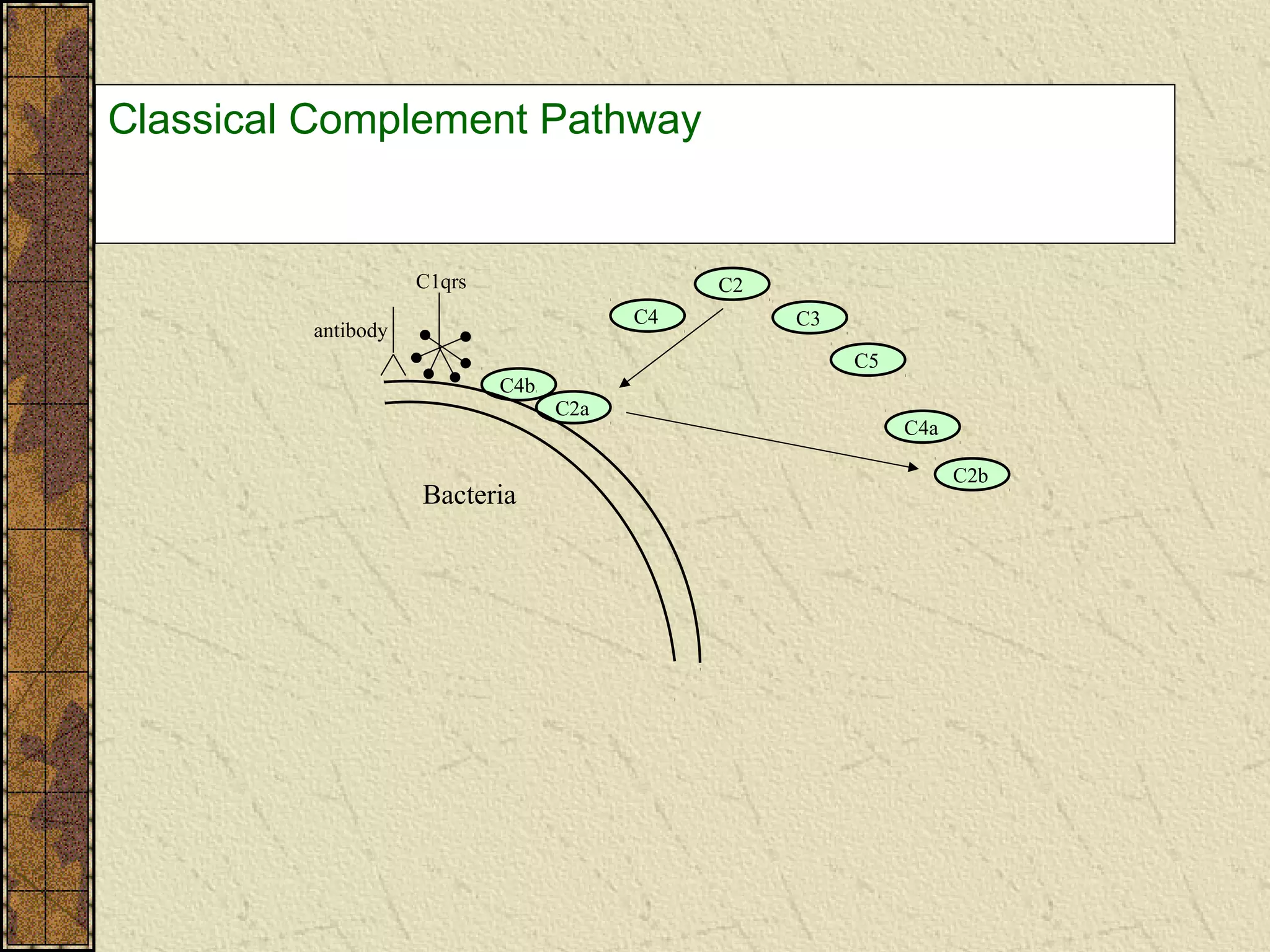
CLASSICAL PATHWAY: RECOGNITIONOF PATHOGENCLASSICAL PATHWAY: RECOGNITION OF PATHOGEN
VIA ANTIBODY:VIA ANTIBODY: IgG or IgM)
Pathogen Pathogen
Identification of non-self via Ig (IgG or IgM)
C1 esterase
C1 esterase
78.
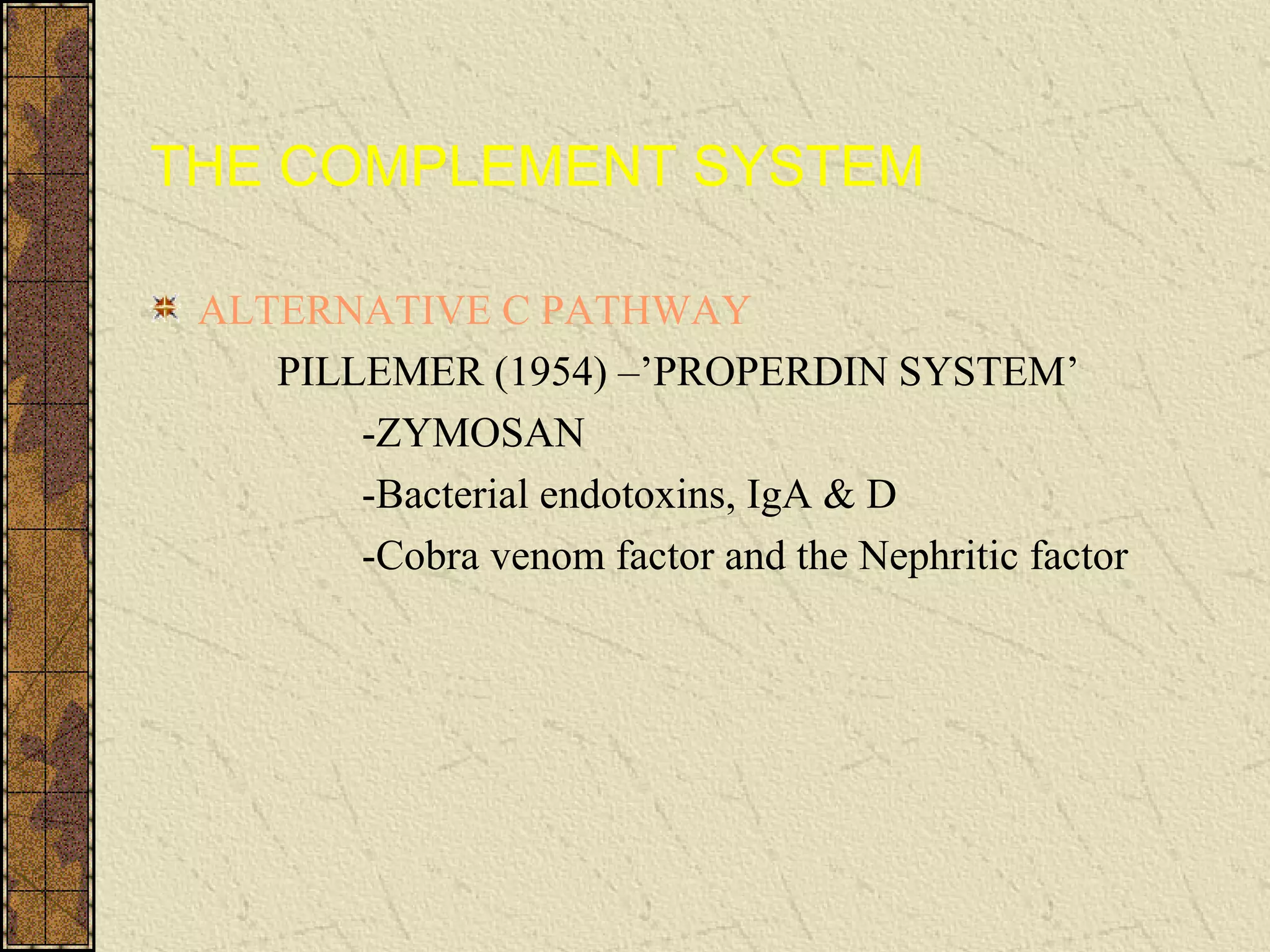
THE COMPLEMENT SYSTEM
ALTERNATIVEC PATHWAY
PILLEMER (1954) –’PROPERDIN SYSTEM’
-ZYMOSAN
-Bacterial endotoxins, IgA & D
-Cobra venom factor and the Nephritic factor
MAC:causes osmotic lysis
-especially important for the
destruction of Neisseria
pathogens
N. gonnorhea
N. meningitidis
Because bacterium has a higher
osmolarity than surroundings,
extracellular fluid enters
bacterium: bacterium lyses
bacterial lysis!bacterial lysis!
STRUCTURE AND FUNCTIONSOF THE
IMMUNE SYSTEM
THE LYMPHOID SYSTEM
Lymphoid cells (Lymphocytes &
plasma cells)
Lymphoid organs
Central Peripheral
Thymus, Bone marrow, Bursa of
fabricus
Spleen, Lymphnodes,
MALT
STRUCTURE AND FUNCTIONSOF THE
IMMUNE SYSTEM
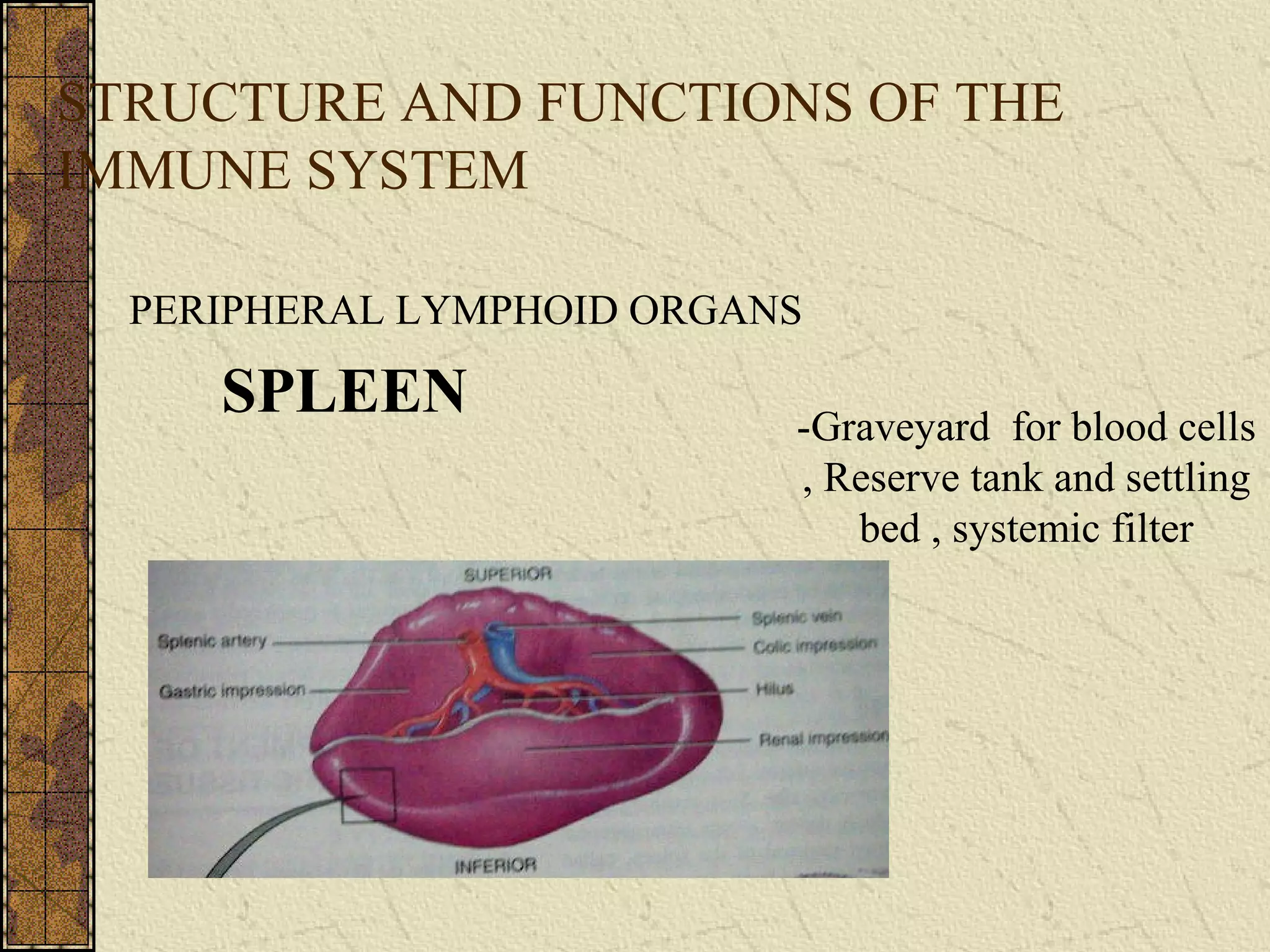
PERIPHERAL LYMPHOID ORGANS
SPLEEN -Graveyard for blood cells
, Reserve tank and settling
bed , systemic filter
97.
STRUCTURE AND FUNCTIONSOF THE
IMMUNE SYSTEM
PERIPHERAL LYMPHOID ORGANS
MUCOSA ASSOCIATED LYMPHOID
TISSUE(MALT)
-Peyer’s patches or Scatterd isolated lymphoid
follicles
98.
STRUCTURE AND FUNCTIONSOF THE
IMMUNE SYSTEM
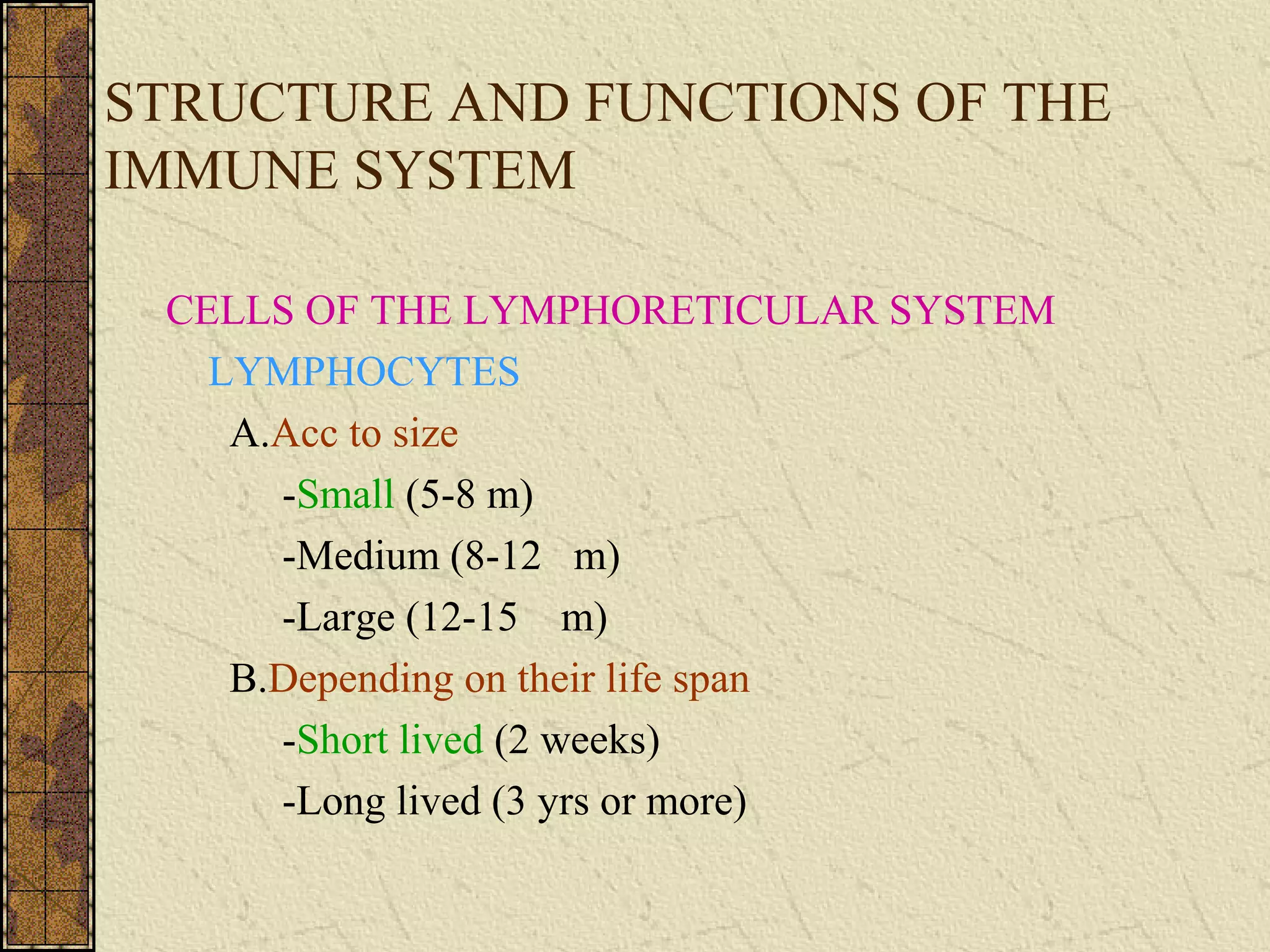
CELLS OF THE LYMPHORETICULAR SYSTEM
LYMPHOCYTES
A.Acc to size
-Small (5-8 m)
-Medium (8-12 m)
-Large (12-15 m)
B.Depending on their life span
-Short lived (2 weeks)
-Long lived (3 yrs or more)
99.
STRUCTURE AND FUNCTIONSOF THE
IMMUNE SYSTEM
LYMPHOCYTES
‘ Lymphocyte Recirculation’
‘Immunologically competent cells’
-Recognition of antigens
-Storage of immunological memory
-Immune response to specific antigens
100.
STRUCTURE AND FUNCTIONSOF THE
IMMUNE SYSTEM
LYMPHOCYTES
Surface antigens or ‘Markers’
-Reflect the stage of differentiation and functional
properties
- CD (Cluster of Differentiation) number
CD no. Cell type association
CD 1
CD 2
CD 3
CD 4
CD 8
CD19
Thymocytes, Lanerhans cells
T Cell SR BC receptor
T Cell antigen receptor complex
Helper T Cell (receptor for HIV)
Suppressor/Cytotoxic T Cells
B Cells
101.
STRUCTURE AND FUNCTIONSOF THE
IMMUNE SYSTEM
NULL CELLS (LARGE GRANULAR LYMPHOCYTES)
-Natural killer (NK) cells
-Antibody dependent cellular cytotoxic (ADCC)
lymphocytes
-Lymphokine activated killer (LAK) cells
102.
STRUCTURE AND FUNCTIONSOF THE
IMMUNE SYSTEM
NULL CELLS (LARGE GRANULAR LYMPHOCYTES)
NATURAL KILLER (NK) CELLS
-’Severe combined immunodeficiency diseases’
-CD16 , CD56
-Release cytolytic factors PERFORIN ADCC
- Lyse target cells sensitized with IgG
LAK CELLS
-NK Cells treated with IL – 2
-Cytotoxic to wide range of tumour cells
103.
STRUCTURE AND FUNCTIONSOF THE
IMMUNE SYSTEM
PHAGOCYTIC CELLS
MONOCYTES
-Originate in bone marrow from precursor cells and
become monocytes within 6 days
-Leave the circulation & reach various tissues to become
MACROPHAGES
-Traps the antigen , provides it to the lymphocytes
104.
STRUCTURE AND FUNCTIONSOF THE
IMMUNE SYSTEM
POLYMORPHONUCLEAR MICROPHAGES
Neutrophils
-Predominant cell type in Accute Inflammation
Eosinophils
-Allergic inflamation, Parasytic infection
-Granules contain Hydrolytic enzymes
Basophils
-Basophilic granules containing Heparin, Histamine,
Serotonin and other Hydrolytic enzymes
105.
STRUCTURE AND FUNCTIONSOF THE
IMMUNE SYSTEM
Dendritic cells
-Have central Body and long needle like processes
STRUCTURE AND FUNCTIONSOF THE
IMMUNE SYSTEM
MAJOR HISTOCOMPATIBILITY
COMPLEX
-’Self antigens’, ‘Human leucocyte antigens’
-Class I MHC (MHC I)
-Class II MHC (MHC II)
IMMUNE RESPONSE
The SpecificReactivity Induced in a Host by an Antigenic
Stimulus
A.HUMORAL (Antibody mediated)
-Defence against extracellular bacterial pathogens
-Viral infections through respiratory or intestinal
tract
-Pathogenesis of Immediate (types 1,2,3)
Hypersensivity and Autoimmune diseases
113.
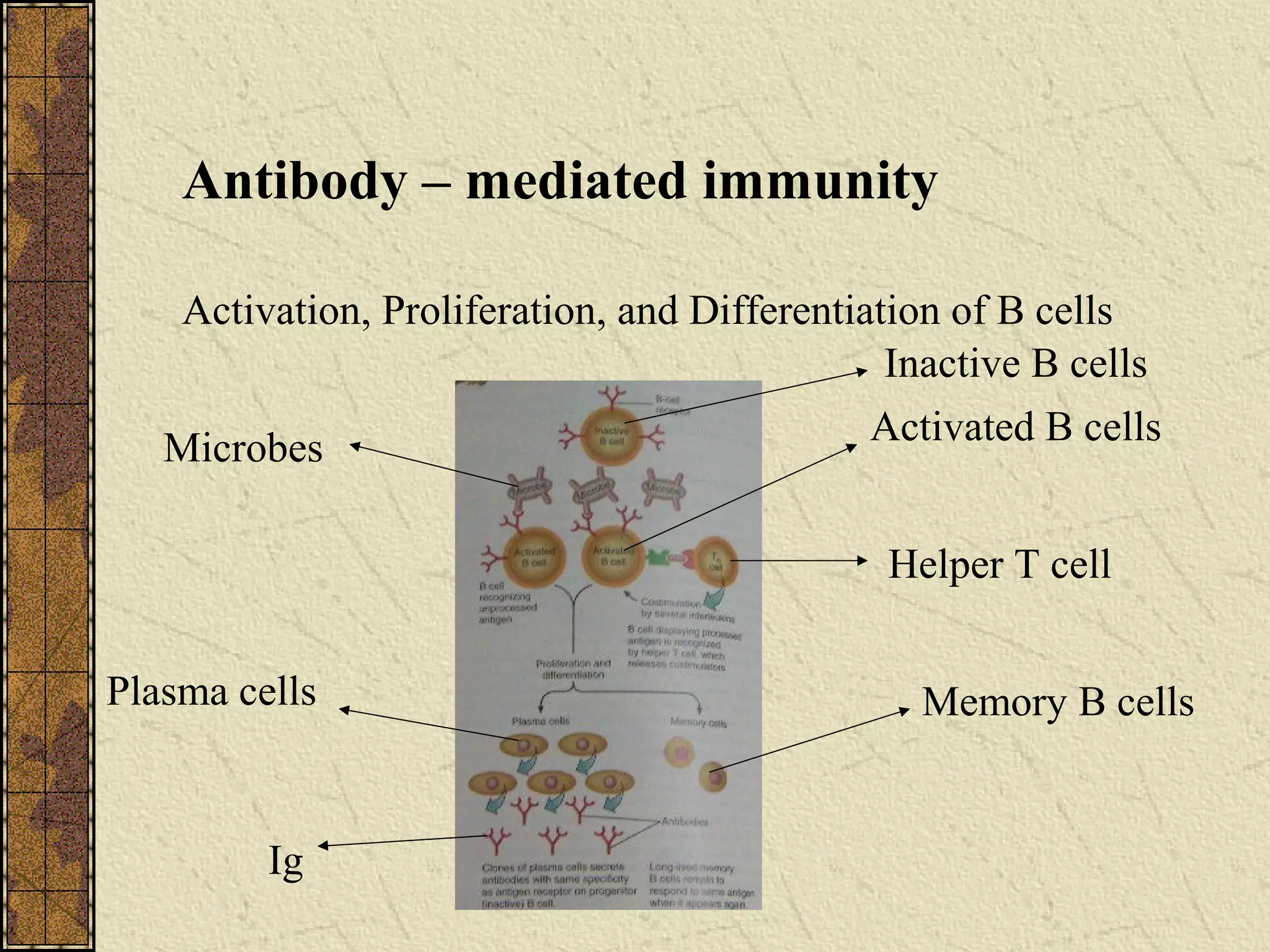
Antibody – mediatedimmunity
Activation, Proliferation, and Differentiation of B cells
Inactive B cells
Activated B cells
Helper T cell
Memory B cells
Ig
Plasma cells
Microbes
114.
IMMUNE RESPONSE
B.CELL MEDIATEDIMMUNITY (CMI)
- Protects against fungi, viruses and facultative
intracellular bacterial pathogens
-Participates in the rejection of homografts and graft v/s
host reactions
-Provides Immunological Surveillance & immunity
against cancer
-Mediates Pathogenesis of Delayed (Type 4)
Hypersensitivity & autoimmune diseases
115.
Activation, Proliferation, andDifferentiation of T cells
-Antigen Recognition by a TCR (First signal)
-Costimulation
IL – 2 , Plasma membrane molecules
-Anergy
TYPES:
-Helper T cells, Cytotoxic T cells, Memory T cells
Helper T cells, TH, CD4
- Recognise antigens associated with MHC II
-Produces IL – 2
CELL MEDIATED IMMUNITY (CMI)
116.
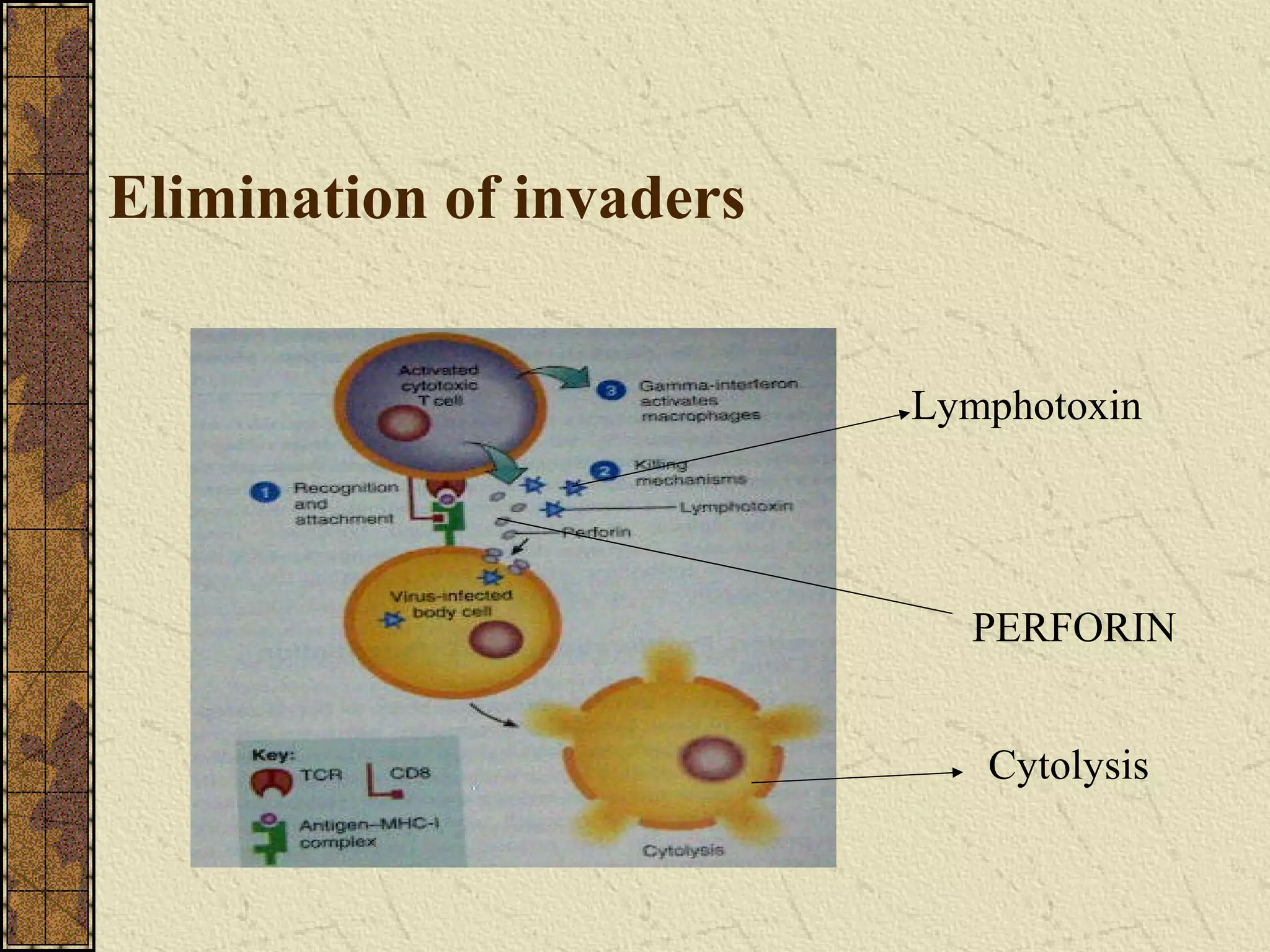
Cytotoxic T cells:Tc, CD 8
-Recognize Foreign antigens combined with MHC – I
-Costimulation by IL- 2, Cytokines produced by Helper T
cells
Memory T cells:
-T cells from a proliferated clone after cell mediated
immunity
Elimination of invaders:
- Perforin mediated Cytolysis
-Lymphotoxin
CELL MEDIATED IMMUNITY (CMI)
Immunodifficiency Diseases
- Conditionswhere the defence mechanisms of the body are
impaired, leading to repeated microbial infections of varying
severity and sometimes enhanced susceptibility to
malignancies
Classification :
a.Primary immunodeficiencies:
-Abnormalities in the development of the immune
mechanisms
b.Secondary immunodeficiencies:
-Diseases, drugs, Nutritional inadequacies
120.
Classification of primaryimmunodeficiency
syndrome
A.Disorders of specific immunity
I.Humoral immunodeficiencies(B cell defects)
a.X – linked agammaglobulinemia
b.Transient, hypogammaglobulinemia of infancy
c.Common variable immunodeficiency
d.Immunodeficiencies with hyper IgM
e.Selective immunoglobuin deficiency(IgA, IgM, IgG
f.Transcobalamine II deficiency
121.
Classification of primaryimmunodeficiency
syndrome
II.Cellular immuodeficiencies ( T cell defects)
a.Thymic hypoplasia (DiGeorge’s syndrome
b.Chronic mucocutaneus candidiasis
c.Purine ponucleoside phosphorylase (PNP)deficiency
III.Combined immunodeficiencies(B and T cell defects)
a.Cellular immunodeficiency with abnormal imunoglobulin
synthesis(Nezelof syndrome)
b.Ataxia telengictasia
c.Wiskott aldrich syndrome
d.Immunodeficiency with thymoma
e.Immunodeficiency with short- limbed dwarfism
f.Episodic lymphopenia with lymphocytotoxin
g.Severe combined immunodeficiencies
1.swiss type
2.Reticular dysgenesia of de vaal
3.Adenosine deaminase(ADA) deficiency
Humoral immunodeficiencies
X- Linkedagammaglobulinemia (Bruton 1952)
-All classes of Ig are depleted
-Recurrent serious infections with pyogenic bacteria,
pneumococci, streptococci, meningococci etc
-Tonsils and adenoids are atrophic
-Allograft rejection, arthritis, hemolytic anemia, atopic
manifestation
Treatment:
-300 mg of gammaglobulin / KG body wt., 3 doses
followed by monthly injections of 100 mg/ kg
Cellular immunodeficiencies
Thymic hypoplasia(Di George’s Syndrome)
-Intrauterine infections
-Associated with Fallot’s Tetrology and other
anomalies of heart & great vessels
-Charecteristic facial appearance, Neonatal tetany
-Transplantation of fetal thymus
Rx transplantation of fetal thymus
Chronic mucocutaneous Candidiasis:
abnormal response to candida albicans
infection of skin, nail and mucosa
Rx Amphoterecin B recommended
127.
Disorders of complement
Complementcomponent deficiency:
-Transmitted as autosomal recessive traits
-SLE, recurrent pyogenic infections are common
Complement inhibitor deficiencies:
-Hereditary angioneurotic edema is due to genetic
deficiency of c1 inhibitor
128.
AUTOIMMUNITY
Is a conditionin which structural and functional damage is
produced by the action of immunologically competent
cells or antibodies against the normal components of the
body
‘INJURY TO SELF ‘
Metalnikoff (1900)
-Guinea pigs produced sperm immobilising antibodies
Donath and landsteiner (1904)
-Circulating auto antibodies in paroxysmal cold
haemoglobinuria
Dameshek and Schwartz (1938)
-Auto immune basis of acute hemolytic anemia
129.
AUTOIMMUNITY
Neoantigen
-An altered formof some previously existing antigen
Sequestered antigen
-Hidden antigen that does not normally reach circulation
Eg: Lens proteins
Maturation antigen
-that develops after the maturation of the immune
response
Eg: Sperm & Spermatic fluid , Female reproductive
antigens, Milk casein
130.
AUTOIMMUNITY
Cross reactive antigen
-Anautoimmune response may be directed against a
foreign antigen and contribute to an autoimmune disease
through a cross reaction with normal antigens
Mutation
-Cellular mutation to create or release suppressed
immunologic information to allow a response a self
antigen
131.
AUTOIMMUNITY
Features;
-An elevated levelsof immunoglobulins
-Demonstrable autoantibodies
-Deposition of Ig or their derivatives at site of election , such
as renal glomeruli
-Accumulation of lymphocytes and plasma cells at the sites
of lesions
-Temporary or lasting benefit from corticosteroid or other
immunosuppressive therapy
-The occurrence of more than one type of autoimmune lesion
in an individual
-A genetic predisposition towards autoimmunity
132.
AUTOIMMUNITY
CLASSIFICATION:
A.Hemocytolytic
1.Autoimmune hemolytic anemias
2.Autoimmunethrombocytopenia
3.Autoimmune leucopenia
B.Localised (organ specific)
autoimmune disease
1.Autoimmune disease of the
thyroid gland
2.Addison’s disease
3.Autoimmune orchitis
4.Myasthenia gravis
5.Autoimmune disease of the eye
6.Pernicious anemia
7.Autoimmune disease of the
nervous system
8.Autoimmune disease of the skin
C.systemic auto immmune
diseases:
1. SLE
2. RA
133.
HYPERSENSITIVITY
What happens tothe HOST???
Injurious consequences in the sensitized host, following
contact with the specific antigen
‘ALLERGY’
-An altered state of reactivity to an antigen, and
included both types of immune responses, protective as
well as injurious (VON PIRQUET)
-All immune processes harmful to the host
134.
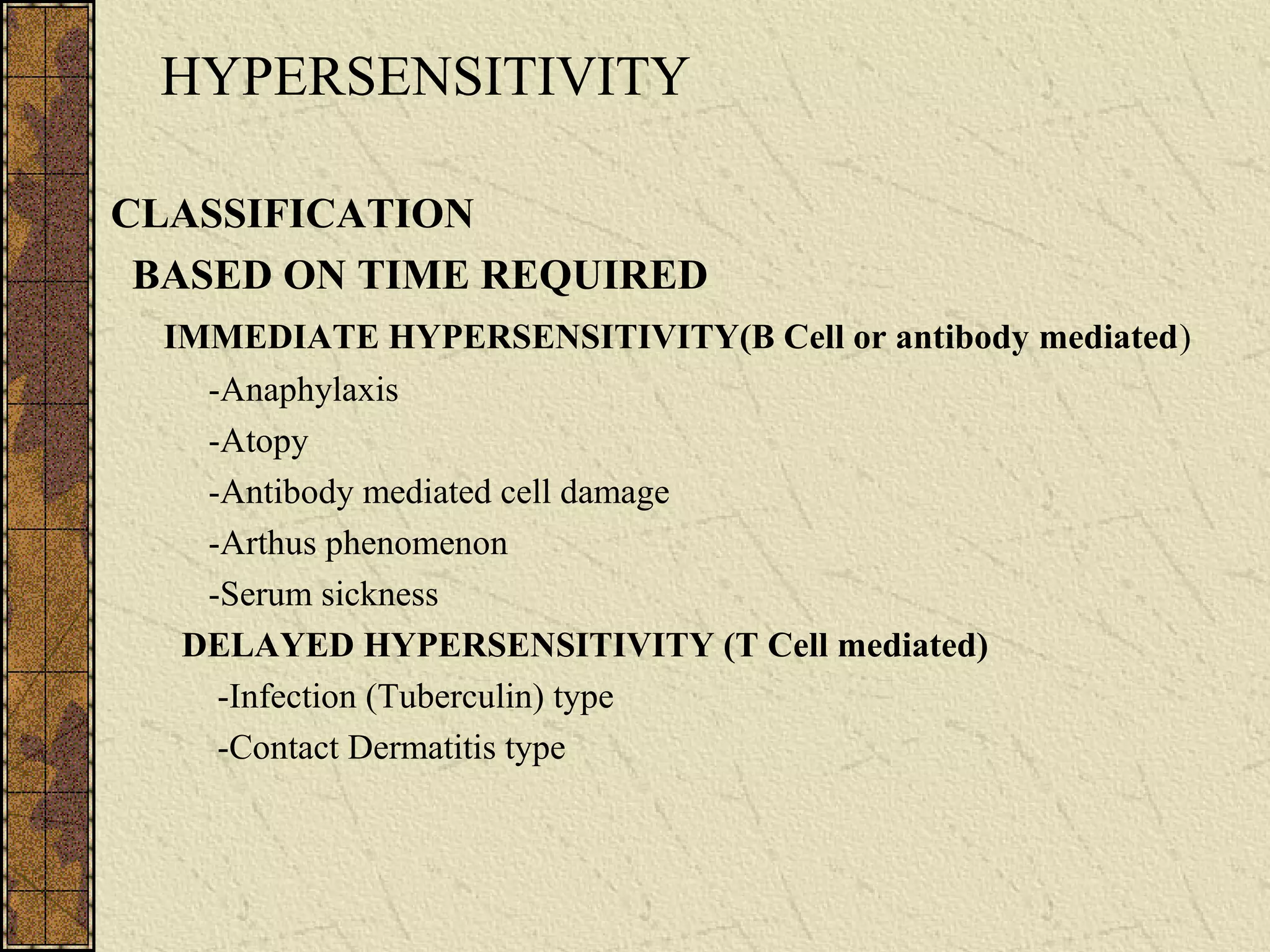
HYPERSENSITIVITY
CLASSIFICATION
BASED ON TIMEREQUIRED
IMMEDIATE HYPERSENSITIVITY(B Cell or antibody mediated)
-Anaphylaxis
-Atopy
-Antibody mediated cell damage
-Arthus phenomenon
-Serum sickness
DELAYED HYPERSENSITIVITY (T Cell mediated)
-Infection (Tuberculin) type
-Contact Dermatitis type
135.
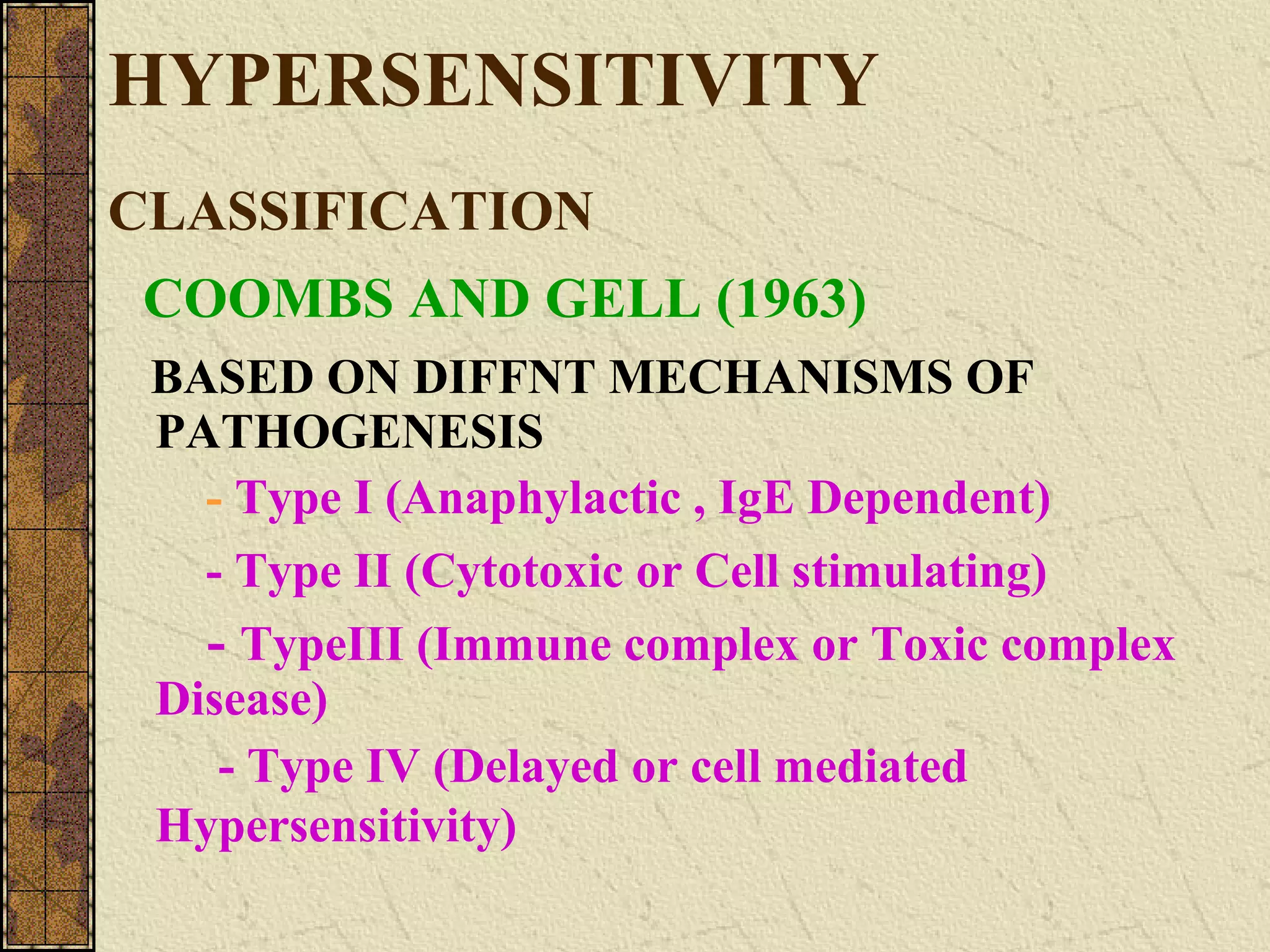
HYPERSENSITIVITY
CLASSIFICATION
COOMBS AND GELL(1963)
BASED ON DIFFNT MECHANISMS OF
PATHOGENESIS
- Type I (Anaphylactic , IgE Dependent)
- Type II (Cytotoxic or Cell stimulating)
- TypeIII (Immune complex or Toxic complex
Disease)
- Type IV (Delayed or cell mediated
Hypersensitivity)
138.
HYPERSENSITIVITY
Contact Dermatitis Type
-Metalssuch as Nickel, Chromium
-Chemicals like, Dyes, Picryl chloride
-Drugs like, penicilins and Toiletries
Clinical Features
-Macules & Papules to Vesicles , that break down,
leaving raw weeping areas
-’Patch Test ‘
139.
THE ORAL CAVITYAS AN
IMMUNOLOGICAL ENTITY
SALIVARY ENVIRONMENT
Components of Innate Immunity
MUCINS:
-Lubrication, prevents drying of mucosa
-Physical Barrier
-Antibacterial Effects complexing with IgA
-Complex Directly With Oral Bacteria
140.
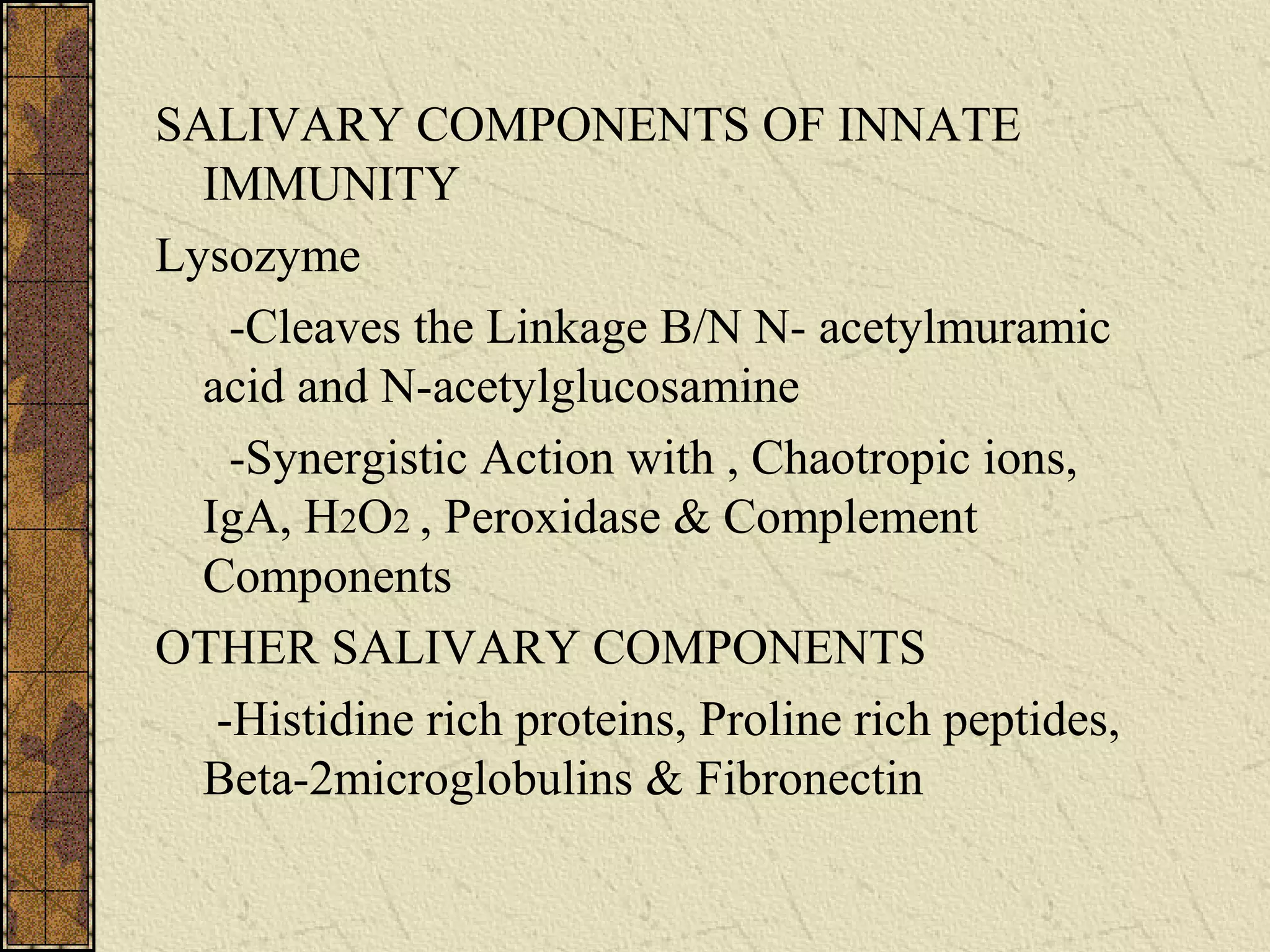
SALIVARY COMPONENTS OFINNATE
IMMUNITY
Lactoferrin
-High Affinity Towards IRON
-Direct Interaction
-Lactoferrin +SIgA
Salivary peroxidase
-Peroxide Enzyme+Cofactors of H2O2 &
Thiocyanate ion
HYPOTHIOCYANATE
141.
SALIVARY COMPONENTS OFINNATE
IMMUNITY
Lysozyme
-Cleaves the Linkage B/N N- acetylmuramic
acid and N-acetylglucosamine
-Synergistic Action with , Chaotropic ions,
IgA, H2O2 , Peroxidase & Complement
Components
OTHER SALIVARY COMPONENTS
-Histidine rich proteins, Proline rich peptides,
Beta-2microglobulins & Fibronectin
142.
COMPONENTS OF THEANTIBODY
MEDIATED IMMUNITY
Secretory IgA
-Stable complexes
-Associated Functions , Virus Neutralization, Immune
exclusion, ‘Disposal’ of bacteria
-Bacterial Enzyme Inhibition
GTF & Transport EnzymesIgM
- ‘IgM COMPENSATION’
-Opsonization, Complement mediated Lysis
IgG & IgD
-Occurs in low con.
GCF ENVIRONMENT
COMPOSITION
Soluble Components
Immunoglobulins:(IgG,IgA, IgM)
Complement:(C3, C4:Additional activated components
During disease)
Others:Components of serum (albumin, transferrin,
fibrinogen)
Components of Inflammation
Pgs, Lysozyme, Lymphokines
GCF ENVIRONMENT
IMMUNOGLOBULIN COMPONENTS
-IgG conc. IN PDL Diseases
-IgA, IgM Also Present
-Antibody activity against, Bacteroids gingivalis, A A
comitans, S mutans, A viscosus
145.
GCF ENVIRONMENT
COMPLEMENT
-In InflamationC3a, C3b, C5a appear
-Biologically active polypeptides
Increases vascular permeability
Creates a chemotactic gradient
CELLULAR COMPONENTS
Polymorhonuclear neutrophils
-Realeses Granules containing LYSOSOMAL ENZYMES
Lymphocytes
-B & T Lymphocytes (1%-2%)
Monocytes & Macrophages
-Supplement the antibacterial activity of PMN
Others
-Lipopolysaccharides
-Bacterial proteases
-Prostaglandins
146.
DENTAL CARIES
ROLE OFANTIBODIES
-Local secretary immunity may play a role
-IgA Conc. were related
-Elevated antibodies to Mutans streptococci
Serum antibody & Disease:
-Serum IgG Antibody to mutans streptococcal
antigens is associated with lower caries experience
Salivary antibody :
-Elevated salivary IgA antibodies
147.
Milk IgA:
-Breast fedbabies are less susceptible to
infection
-SIgA, Complement, PMN , Macrophages
Mucosa:
-Stimulates the Salivary antibodies to
appropriate antigen
Immunological protection:
-Whloe cells of S mutans as antigens
- Immunization of monkeys with antigen I, II&
A, C
148.
IMMUNOLOGICAL ASPECTS OFPULPAL
INFECTION
KAKEHASHI, STANLEY & FITZGERALD(1965)
--Bacteria are the etiology
OTHER STUDIES
-Gm-ve anaerobic organisms
PULPAL RESPONSES TO INFECTION:
-Mononuclear cell infilterate(lymphocytes,
Macrophages, Plasma cells)
-Lipopolysaccharides cause stimulation of B
lymphocytes
-PMN Infilteration due to complemnt activation,
Lymphocyte derived cytokine activation
149.
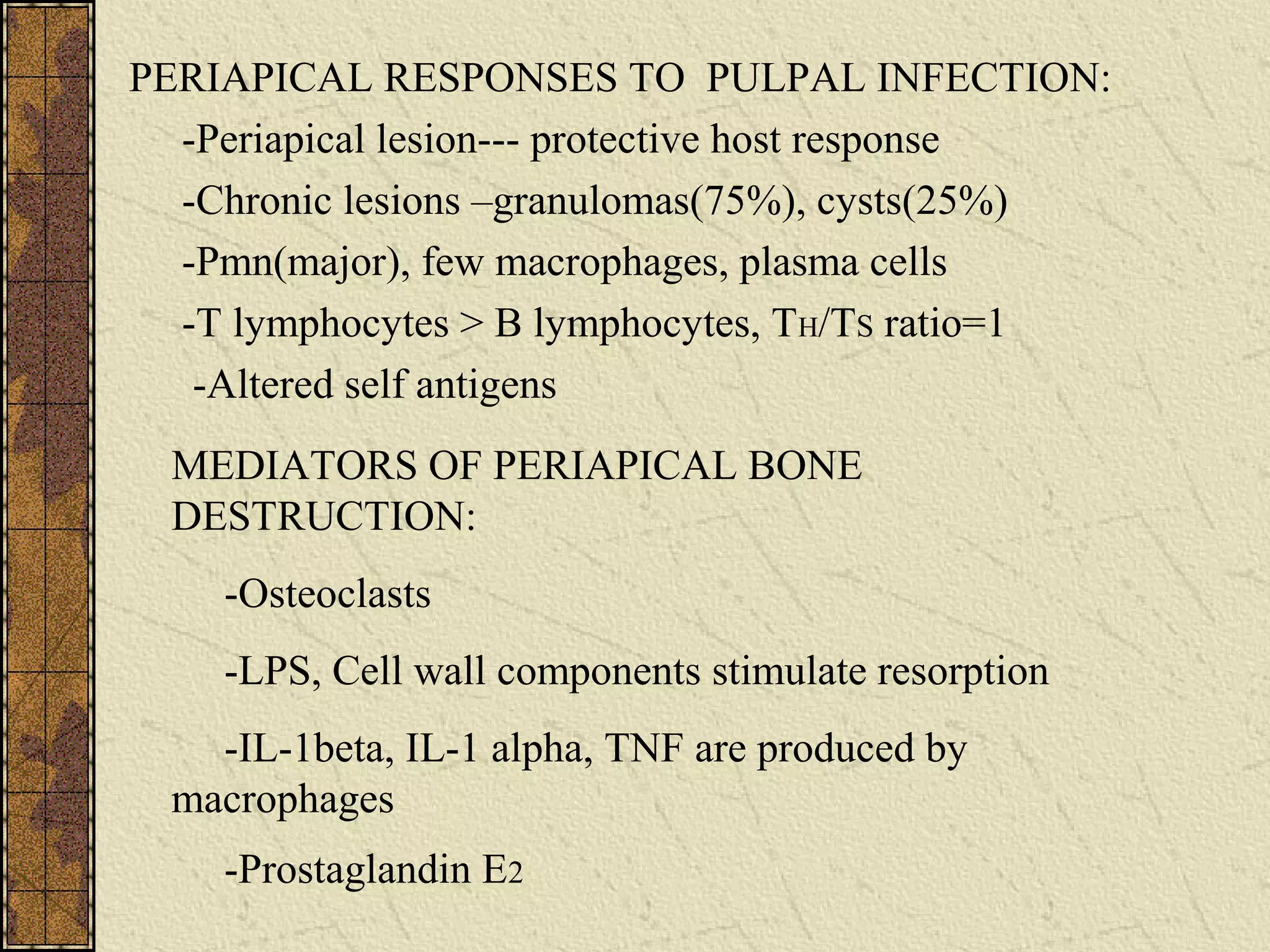
PERIAPICAL RESPONSES TOPULPAL INFECTION:
-Periapical lesion--- protective host response
-Chronic lesions –granulomas(75%), cysts(25%)
-Pmn(major), few macrophages, plasma cells
-T lymphocytes > B lymphocytes, TH/TS ratio=1
-Altered self antigens
MEDIATORS OF PERIAPICAL BONE
DESTRUCTION:
-Osteoclasts
-LPS, Cell wall components stimulate resorption
-IL-1beta, IL-1 alpha, TNF are produced by
macrophages
-Prostaglandin E2
150.
PROTECTIVE FUNCTION OFBONE RESORPTION:
-Prevents Osteomyelitis
-Creates space for protective inflamatory cells
SYSTEMIC EFFECTS:
-Bacteremia with fever, neutrophilia
-Elicit a purulent exudate, become more localized
HEALING:
-Disappearance of inflamatory cell infilterate
-Formation of reparative bone
-Regeneration of pdl
151.
VACCINE APROACHES INTHE ORAL CAVITY
NEW TYPES OF VACCINES:
-Internal image antiidiotype vaccines
-Recombinant regulatory molecules
-Synthetic peptide vaccine
-Subunit vaccine
-Recombinant vaccine
-Recombinant infection vectors
Anti idiotype vaccine
-The unique antibody combining site itself is an antigen or
IDIOTYPE
Idiotype Network Hypothesis (Jerne)
-Idiotype on one lymphocyte would react with anti idiotype on
another lymphocyte
152.
PRODUCTION OF REGULATORY
MOLECULES:
-Cytokinesare produced by Recombinant
technology
- Deleterious to the host
SYNTHETIC PEPTIDES :
-Chemically synthesized peptides can ellicit
antibodies that react with original protein
-Antigenicity Is an Intrensic Chareceristic of the
Peptide Region
-Immunogenicity
VACCINE APROACHES IN THE ORAL CAVITY
153.
Development of acaries vaccine:
-Direct stimulation of GALT by
ingestion of antigen.
Recombinant bacterial vector:
-Expression of S mutans
antigens on a virulent S
typhimurium
ANTIGEN PLACEMENT :
-Direct placement of antigens
Direct instillation to salivary
glands
Intramucosal injections
Topical application
154.
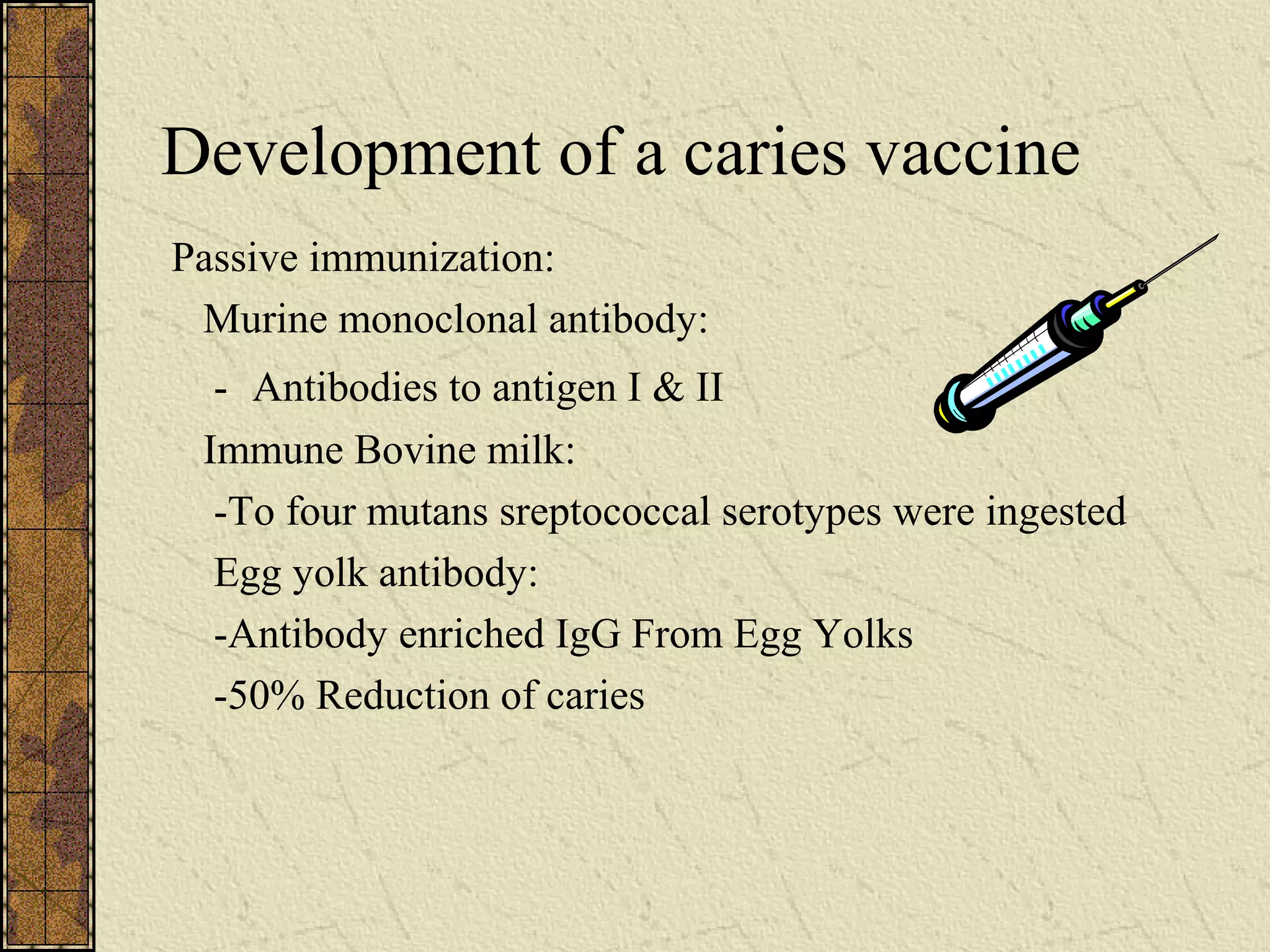
Development of acaries vaccine
Passive immunization:
Murine monoclonal antibody:
- Antibodies to antigen I & II
Immune Bovine milk:
-To four mutans sreptococcal serotypes were ingested
Egg yolk antibody:
-Antibody enriched IgG From Egg Yolks
-50% Reduction of caries
155.
IMUNOLOGICAL STUDIES OFMUTANS
STREPTOCOCCI IN HUMANS:
Oral immunization:
-Intact S mutans or S sobrinus cells as antigens
-Stimulation of GALT
Synthetic peptide:
-The 17 amino acid peptide (as a dimer) in dimethyl
sulfoxide
-Peptides from S.mutans PAc antigen coupled to cholera
toxin B sub unit (Intranasal)
156.
Immunology of periodontaldiseases
Local immunopathology of gingiva and periodontium and
systemic immune response
INITIAL LESION:
-Localized to gingival sulcus, JE
-Exudation of fluids , with Ig, complement, fibrin, PMNL
found in JE
-Is a response to the generation of chemotactic substances
to the plaque antigens
SYSTEMIC IMMUNITY:
-Serum antibodies to plaque antigens present, immune
complexes are formed
-Immune complexes activate the complement and
generate C3a, C5a (chemotactic for PMNL)
157.
Immunology of periodontaldiseases
EARLY LESION:
-Lymphocytes (75%), few plasma cells
-Adjacent fibroblasts show degenerative changes leading
to localized loss of collagen
-Exudation of serum Ig , complement, fibrinogen is
increased
SYTEMIC IMMUNITY:
-Lymphoid cells are seeded into the gingival focus of
inflamation
-Lymphocytes release mediators, Localization of
leucocytes and proliferation of lymphocyte
158.
Immunology of periodontaldiseases
ESTABLISHED LESION:
-Lesion is still confined to gingival sulcus
-clusters of plasma cells among blood vessels and
collagen fibers
- Junctional and oral epithelium may proliferate apically
into connective tissue and there is loss of collagen fibers
-Gingival sulcus deepens and leads to pocket formation
SYSTEMIC IMMUNITY:
-Polyclonal B-Cell mitogens and bacteria acts as potent
activators
- T AND B- Cells are stimulated
-Increase in serum IgA, IgG, IgM
159.
Immunology of periodontaldiseases
ADVANCED LESION:
-Recognized clinically as periodontitis, with pocket
formation, ulceration of pocket epithelium, destruction Pdl
-Dense infilteration of plasma cells, lymphocytes ,
macrophages
-High conc. Of IgA, IgG, IgM , complement, PMNL
160.
Immunopathology of AdultPeriodontitis:
Hypersenstivity reactions:
Type IV or cell mediated reactions:
-Lymphoproliferative responses , cytokine release
-Cellular infilteration found to be consistent with
delayed type hypersenstivity
-Correlation b/n the proliferative cells and
periodontal index of disease have not been
successful
-Immunological memory of plaque antigens has
been established
161.
Immunopathology of AdultPeriodontitis:
Type III or Immune complex mediated immunity:
-Immune complexes (IC) has been demonstarated
b/n Ig and C3
-Degradation of collagen due collagenase produced
by macrophages
-IC May activate the classical complement pathway
-Plaque, LPS, peptidoglycan can induce alternative
pathway
162.
Immunopathology of AdultPeriodontitis:
-CD4 count , CD4:CD8 Becomes 1:1
-Macrophages, Langerhans cells, B cells, and Plasma cells
-Imbalance in T cell regulation
-Cytokines are demonstrated
-IL 1, affects the collagenase production & bone
resorption
Immunopathology of Adult Periodontitis:
-CD4 count , CD4:CD8 Becomes 1:1
-Macrophages, Langerhans cells, B cells, and Plasma cells
-Imbalance in T cell regulation
-Cytokines are demonstrated
-IL 1, affects the collagenase production & bone
resorption
163.
Immunopathology of AdultPeriodontitis:
Type II or antibody mediated reaction:
-Anti- collagen antibodies
-Components of type II reactions might be involved
-Antibody, complement mediated phagocytosis
eliminate gm +ve organisms
- Complement dependent lysis without the aid of
phagocytosis eliminate gm – ve organisms
164.
Immunopathology of AdultPeriodontitis:
Type I or anaphylactic reactions
-Mast cells and IgE are found in normal gingivaI
165.
Pdl conditions andsalivary Ig in individual
with downs syndrome – J perio 1998
- Barr A, Dahlof G et al
•The Pdl conditions and salivary Ig and albumin levels
were quantified by ELISA
•It was found that gingival enlargement and pdl pockets
were more in Down’s syndrome cases.
•Also the Ig levels were unaltered but proportionally there
was an increase in IgG 1 as compared to IgG.
166.
Caries prevention inchildren during
orthodontic treatment Stomaldogia 2005
- Levents A A et al
It was found that there was an imbalance in the
immune system during orthodontic treatment
which follows 1 – 5 months after fixation of
appliance and during final stages of treatments.
It is necessary to make immune correction during
orthodontic treatment by using caries vaccine.
167.
Orthodontic force increasesTNF-alpha
in human gingival sulcus. AJODO 1995.
It was shown that Orthodontic force
increases TNF-alpha in human gingival
sulcus resulting in the increased production
of cytokines associated with biology of
tooth movement
168.
Inflammation of pdmin response to orthodontic
forces Arch immun. 2005
Orthodontic force produces a mechanical damage
and an inflammatory reaction in pdm, pulp, &
release of inflm
mediators
Aging also contributes to the severity of plm
disease .
During ortho Rx, level of inflammatory mediators
is elevated in the gingival sulcus.
To reduce inflammation, low level LASER
therapy is indicated.
169.
Characterization of nickelinduced allergy
contact stomatitis associated with fixed
orthodontic appliances. AJODO 2005
Corrosion products from orthodontic
appliances contains nickel which induces an
allergic condition called NiACS.
The study showed that younger individuals
(esp. females) has a greater predisposition
So previous allergic reactions should be
noted in medical history.
170.
CONCLUSION
The human immunesystem is like an
army……. With the task of protecting the
host against infection by potential
pathogens.
Through knowledge of the cellular and
molecular aspects of immune reactions is of
prime concern in our day to day clinical
treatment procedures.
171.
References:
Oral health anddiseases – Nisengard & Newman
Basic immunology and its medical applications – Barrot
Text book of microbiology – Ananthanarayan.R
Text book of pathology – Robbins
Text book of microbiology – Slots
Immunology – Ivan roitt
Immunology of oral diseases – Thomas lehner
• Pdl conditions and salivary Ig in individual with downs syndrome
J perio 1998 - Barr A, Dahlof G et al
• Caries prevention in children during orthodontic treatment
Stomaldogia 2005
Orthodontic force increases TNF-alpha in human gingival sulcus.
AJODO 1995
Characterization of nickel induced allergy contact stomatitis associated with
fixed orthodontic appliances
AJODO 2005
Inflammation of pdm in response to orthodontic forces
Arch immun. 2005
Editor's Notes
#44 -Constitutes 5-8 %, with a normal level of 0.5-2 mg/ml
#46 Responsible for mast cell degranulation & release of inflammatory mediators
#147 Siga increases wth past carious lesions ,cumulative caries xperiance , prevents adherence of bacteria siga abs induced in man capsules filled with 10 organisms