STRESS AND
PERIODONTIUM
SUBMITTED BY:
Fathimath Farhath.M
Final year Part-1
Reg No: 120020227
GUIDED BY:
Dr. Naveen Krishna
Dr. Akshatha Bhatt
Dr. Renjith Madhavan
CONTENTS
 Introduction
 Stress , stressor and coping
 Stress and periodontium
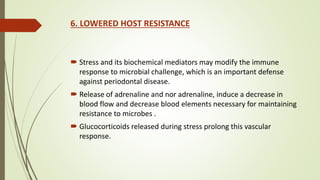
: stress induced immunosuppression
: health impairing behaviour
 Influence of stress on periodontal therapy outcomes.
 Stress and ANUG
 Stress and aggressive periodontitis
 Management of stress and periodontal disease
 Conclusion
 Reference
INTRODUCTION
Stress is an equated response to constant adverse stimuli. At one point or other,
everybody suffers from stress . Stress is compatible with good health, being necessary
to cope with challenges of everyday life. Prolonged stress is detrimental to the body
by diminishing its ability to respond to a perceived challenge. Prolonged stress can be
harmful to the body often resulting in depression. Psychological stress can
downregulate the cellular immune response. Communication between central
nervous system and the immune system occurs via a complex network of bidirectional
signals linking the nervous, endocrine and immune systems. Stress disrupts the
homeostasis of this network, which in turn alters the immune function. Psychosocial
stress have been implicated as risk determinant for periodontal disease. The most
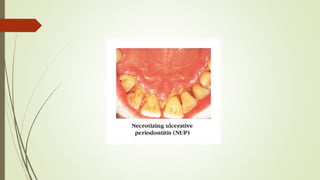
notable example is the relationship between stress and acute necrotizing ulcerative
gingivitis.
STRESS
STRESSOR
AND
COPING
STRESS
 Stress is defined as a total transaction from demand to resolution
in response to an environmental encounter that requires
appraisal,coping,and adaptation by the individual.
- Selye (1967)
 Stress is defined as a state of physiological or psychological strain
caused by an adverse stimuli , physical, mental, or emotional,
internal or external that tend to disturb the functioning of an
organism and which the organism naturally desires to avoid.
-GPT (4th Ed)
 Stress can be defined as the psychophysiological response of an
organism to a perceived threat or challenge.
- Breivik et al (1996)
 Stress originates from a Latin word "stringere " which means
"tight", "strained" and the concept was first introduced in life
science by Hans Selye in 1936.
 Selye proposed that the hypothalamus-pituitary-adrenal cortex axis
(HPA axis) response to stress was beneficial in short term; however
prolonged stress was detrimental to the body by diminishing its
ability to respond to a perceived challenge. This was defined as the
General Adaptation Syndrome (GAS; Selye,1936).
 The systemic reaction that affect the body or produce an interrelated non-specific tissue
change resulting from continued exposure to stress have been termed the general adaptation
syndrome.
 The system is thought to be group of psychological mechanism that represent an attempt by
the body to resist damaging effect of stress.
 Three stages of syndromes have been identified :
1. The initial response (the alarm reaction)
2. The adaptation of stress (the resistance stage)
3. The final stage marked by inability to maintain adaptation to stress (the exhaustion stage)
 Most recent studies have concluded that the prolonged stress can be harmful to the body,
often resulting in depression.
 In addition, it has been shown that individual variations in the way a person copes with a
stressful event may be more important to health than the stressor itself.
STRESSOR
 Stressor is defined as forces that had the potential to challenge the adaptive capacity
of the organism.
 Stressor is any stimuli , situation or circumstance with the potential to induce stress
reaction.
 Psychosocial stressors are generally classified as:
1. Major stressful life events.
2. Minor daily stressor or hassles.
CLASSIFICATION :
DEFINITION:
Life change
scale:
 Holme's (1967) developed a scale to measure stress in terms of life changes.
 In this scale, life events are ranked in order, from the most stressful life
(death of a spouse) to the least stressful (minor violations of the law).
 Individuals with stable lifestyles and minimal negative life events had less
periodontal disease destruction than individuals with less stable lifestyles.
 Type of the stress as well as the ability of the individual to cope with stress
correlate with destructive periodontal disease.
 The type of stress that lead to periodontal destruction appear to be more
chronic or long term.
COPING
 Coping is the response of the individual to stress (emotionally and physically).
 One of the most important aspects related to influence of stress on periodontal disease
destruction is the manner in which the individual copes with the stress.
 Emotional coping methods appears to render the host most susceptible to the destructive
effects of periodontal disease than do the practical coping methods.
 Chronic stress and adequate coping could lead to changes in daily habits, such as:
- poor oral hygiene
-clenching and grinding
- decreased salivary flow
- suppressed immunity
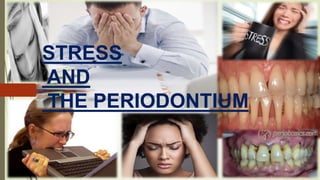
STRESS
AND
THE PERIODONTIUM
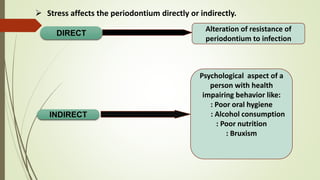
 Stress affects the periodontium directly or indirectly.
DIRECT
INDIRECT
Alteration of resistance of
periodontium to infection
Psychological aspect of a
person with health
impairing behavior like:
: Poor oral hygiene
: Alcohol consumption
: Poor nutrition
: Bruxism
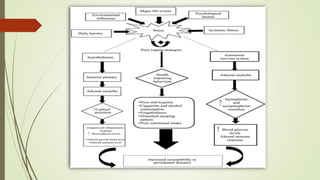
 Stress and psychosomatic disorders most likely impact the
periodontal health through changes in the individuals behaviour
and through complex interactions among the nervous, endocrine
and immune systems.
 Individuals under stress may have poorer oral hygiene, may start
or increase clenching and grinding of their teeth , and may smoke
more frequently. All these behavioural changes increase their
susceptibility to periodontal disease destruction.
 Likewise, individuals under stress may be less likely to seek
professional care.
STRESS-INDUCED IMMUNOSUPRESSION
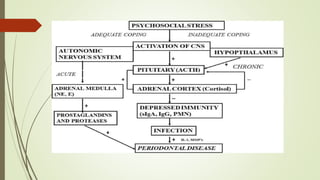
 Psychosocial stress impact the periodontal disease through alterations in immune
system.
 Stress related immune system changes clearly have the potential to affect the
pathogenesis of periodontal disease as well.
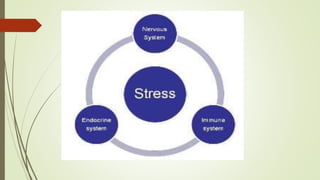
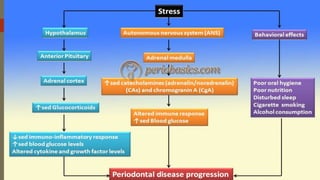
 Emotional stress can modulate the immune system through the neural and
endocrine systems through:
1. Production of cortisol.
2. Autonomic nervous system pathways.
3. Release of neuropeptides.
4. Alteration of Th1 / Th2 cells.
 Stress induced immunosuppression is a complex interaction among:
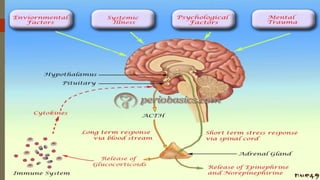
1. PRODUCTION OF CORTISOL / HPA AXIS
 Physiologically the HPA is stimulated in response to stress.
 The anterior hypothalamus secretes Corticotropin Releasing Factor and arginine
vasopressin which act on the anterior pituitary gland.
 The pituitary gland then releases ACTH hormone which acts on the adrenal cortex
and increases production of glucocorticoid hormones (predominantly cortisol) and
release them into blood stream.
2. Inhibiting the production of pro-inflammatory mediators: cytokines (interleukins: IL-1,
IL-2,IL-3, IL-6), tumor necrosis factor (TNF) and monocyte colony stimulating factor.
3. Inhibiting cascade of immune response by inhibiting macrophage antigen presentation,
lymphocyte proliferation to effector cell types such as helper lymphocytes, cytotoxic
lymphocytes, NK cells and antibody forming B cells.
There's suppression of IgG production and salivary IgA secretion.
 These glucocorticoids (cortisol) exerts its major suppressive effects by:
1. Reducing the number and activity (chemotaxis , secretion and degranulation) of
circulating inflammatory cells including neutrophils,lymphocytes,monocytes,
macrophages, eosinophils and mast cells.
2.AUTONOMIC NERVOUS SYSTEM PATHWAYS
 It is the second pathway to be activated by stress (sympathetic nervous
system).
 When the body is in an acute stress or alarm state, there is marked increase
of immune cells in plasma mobilized from lymphoid organs.
 Emotional stress results in release of adrenaline and nor adrenaline from cells
of adrenal medulla.
 Through interactions with adrenergic receptors, nor adrenaline and
adrenaline mediate cardiovascular and metabolic effects.
3. RELEASE OF
NEUROPEPTIDES / NEUROTRANSMITTERS
 Stress may affect the cellular immune response directly through an
increased level of neurotransmitters, including:
 Epinephrine
 Nor epinephrine
 Neurokinin
 Substance P
: which interacts with lymphocytes, neutrophils and monocytes via
receptors causing an increase in their tissue destructive function.
 Release of these neurotransmitters results in an upregulated immune
response that increases the potential for destruction by cellular response
to periodontal pathogens.
4. ALTERATION IN
T HELPER CELL 1 / T HELPER CELL 2 RATIO
 Helper T cell lymphocyte can be divided into two sub populations:
Th-1 cell and Th-2 cell based on their cytokine production.
 T- helper 1 cell: stimulate cellular immunity through production of
interferon and IL-2.
 T- helper 2 cell: stimulate humoral immunity through the release
of IL-4,5,10.
 Marshall et al demonstrated, a T helper 2 cell response in medical
students during stressful working periods.
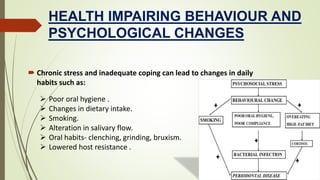
HEALTH IMPAIRING BEHAVIOUR AND
PSYCHOLOGICAL CHANGES
 Chronic stress and inadequate coping can lead to changes in daily
habits such as:
 Poor oral hygiene .
 Changes in dietary intake.
 Smoking.
 Alteration in salivary flow.
 Oral habits- clenching, grinding, bruxism.
 Lowered host resistance .
1.NEGLECT OF ORAL HYGIENE
‱ Proper oral hygiene is partially dependent on mental health status of the patient .
‱ Psychological disturbances can lead patients to neglect oral hygiene .
‱ This results in plaque accumulation which is detrimental to periodontal tissue.
‱ Academic stress was reported as a factor for gingival inflammation with increasing
crevicular interleukin – b levels and a diminution of quality of oral hygiene .
2.CHANGES IN DIETARY INTAKE
‱ Emotional conditions are thought to modify dietary intake ,thus indirectly affecting
periodontal status
‱ Psychological factors affect:-
1) Choice of foods
2) Physical consistency of diet
3) Quantities of food eaten
‱ This can involve consumption of excessive quantities of refined carbohydrates &
softer diets requiring less vigorous mastication predisposes to plaque
accumulation.
‱ Stress results in over- eating, especially a high fat diet that lead to
immunosuppression through increased cortisol production.
3.SMOKING AND OTHER HARMFUL HABITS
 Smoking worsens the periodontal conditions.
 Circulating nicotine results in:
1. Vasoconstriction,produced by the release of adrenaline and nor adrenaline
which is supposed to result in lack of nutrients for the periodontal tissue .
2. Suppression of in vitro secondary antibody responses.
3. Inhibition of oral neutrophil function.
4.ALTERATION IN SALIVARY FLOW AND COMPONENTS
 There is a decrease in salivary flow.
 Emotional distress may also produce changes in saliva pH and
chemical composition like IgA secretion.
5. ORAL HABITS
 Neurotic needs find oral expression.
 The mouth may be used to obtain satisfaction, to express dependency or
hostility and to inflict or receive pain.
 Sucking , biting, sensing and feeling may become habitual as in thumb sucking ,
tongue thrusting, infantile swallowing and biting of tongue , lip, cheek or finger
nail.
 These actions also figure in bruxism , clenching, tooth doodling, and smoking.
 Such habits may lead to tooth migration , occlusal traumatism and occlusal
wear.
BRUXISM:
 It has been considered as a multi factorial psychosomatic
phenomenon with individuals displaying aggressive,controlling
precise energetic personality type on one hand (non-stress bruxists)
and anxious tense type on the other (stress bruxists).
 Stress bruxists have more muscular symptoms,and seem to be
more emotionally disturbed.
 Bruxism has been considered of etiological importance in
inflammatory periodontal disease.
6. LOWERED HOST RESISTANCE
 Stress and its biochemical mediators may modify the immune
response to microbial challenge, which is an important defense
against periodontal disease.
 Release of adrenaline and nor adrenaline, induce a decrease in
blood flow and decrease blood elements necessary for maintaining
resistance to microbes .
 Glucocorticoids released during stress prolong this vascular
response.
INFLUENCE OF STRESS ON
PERIODONTAL THERAPY OUTCOMES:
 Depression have a negative effect on periodontal treatment outcomes.
 Stress impairs the inflammatory response and matrix degradation after surgery.
 Cellular response play a vital role in wound healing such as:
: protect the wound site from infection
: prepares wound for healing
: regulates wound repair.
- cytokines such as IL-1 , IL-8 , and TNF are extremely important in recruiting phagocytic
cells to clear away the damaged tissue and to regulate the rebuilding of fibroblasts
and epithelial cells.
 Greater psychological stress is significantly associated with lower levels of IL-2 and MMP-
9 as well as significantly more painful, poorer and slow recovery.
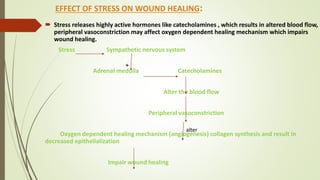
EFFECT OF STRESS ON WOUND HEALING:
 Stress releases highly active hormones like catecholamines , which results in altered blood flow,
peripheral vasoconstriction may affect oxygen dependent healing mechanism which impairs
wound healing.
Stress Sympathetic nervous system
Adrenal medulla Catecholamines
Alter the blood flow
Peripheral vasoconstriction
Oxygen dependent healing mechanism (angiogenesis) collagen synthesis and result in
decreased epithelialization
Impair wound healing
alter
+
 Hyperglycemia impairs initial phase of wound healing.
 Decreased level of growth factors may downregulate tissue repair system.
 Alters cytokine profile that may affect the recruitment of macrophages and
fibroblasts causing impaired wound remodelling.
 Decrease the MMP levels which impairs tissue turnover causing decrease
in wound healing.
STRESS AND ANUG
 Possibly because of its nature , ANUG is the most studied periodontal disorder
in relation to psychosocial predisposing factors.
 Psychogenic factors probably predispose to the disease by favoring bacterial
overgrowth/ and or weakening host resistance.
 Host tissue resistance may be changed by mechanisms acting through the ANS
and endocrine glands resulting in elevation of corticosteroids and
catecholamine levels.
 This may reduce gingival micro circulation and salivary flow and enhance
nutrition of Prevotella intermedia and at the same time depress neutrophil
and lymphocyte functions, which facilitates bacterial invasion and damage.
 ANUG patients presented:
1. Depressed polymorphonuclear leukocyte chemotaxis and phagocytosis
2. Reduced proliferation of lymphocytes
 The presence of ANUG in soldiers stressed by war time conditions in the
trenches led to one of the early diagnostic terms used to describe this
condition namely" trench mouth"
STRESS AND AGGRESSIVE PERIODONTITIS
 There is a link existing between aggressive periodontitis and psychosocial
factors and loss of appetite.
 A case control study on 1196 subjects showed people with aggressive
periodontitis were more depressed and socially isolated than people with
chronic periodontitis or control group.
 The clinical and microbiological status evaluation of patients with early onset
periodontitis who has received supportive periodontal care every 3-6 months
for a period of 5 years after active periodontal treatment showed stress as one
of the variables for progression of periodontal disease at few sites in few
patients.
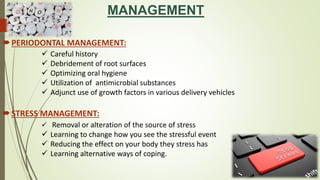
MANAGEMENT
PERIODONTAL MANAGEMENT:
STRESS MANAGEMENT:
 Careful history
 Debridement of root surfaces
 Optimizing oral hygiene
 Utilization of antimicrobial substances
 Adjunct use of growth factors in various delivery vehicles
 Removal or alteration of the source of stress
 Learning to change how you see the stressful event
 Reducing the effect on your body they stress has
 Learning alternative ways of coping.
CONCLUSION
 Stress could be a contributing factor in the process of periodontal destruction
in the presence of periodontal pathogens in susceptible individuals
 Stress can cause behaviour modifications and immunosuppressant effect
which may result in greater recurrence of periodontal disease as well as
delayed wound healing
 Stress is associated with more severe periodontal disease as well as delayed
healing response to traditional periodontal surgery
 Assessing a patient's stress level during periodontal treatment may be valuable
in providing another prognostic tool
REFERENCE
 Carranza's Clinical Periodontology – 11th edition.
 Jan Lindhe – Clinical Periodontology and Implant Dentistry – 4th edition.
 Shalu Chandna , Manish Bathla : Stress and Periodontium-A review of concept,
JOHCD 4:17-22, 2010.
 Malathi , Dhanesh Sabale : Stress And Periodontitis-A review , IOSR-JDMS 9:4, 2012.
 Sachin Goyal, Garima Gupta, Besty Thomas : Stress and Periodontal disease-The
link and logic, Industrial Psychiatry Journal 22:4-11, 2013.
 Satheesh Mannem , Vijay K Chava : The effect of stress on periodontitis, Journal of
Indian Society Of Periodontology 16:365-369, 2012.

stress and periodontium

  • 1.
    STRESS AND PERIODONTIUM SUBMITTED BY: FathimathFarhath.M Final year Part-1 Reg No: 120020227 GUIDED BY: Dr. Naveen Krishna Dr. Akshatha Bhatt Dr. Renjith Madhavan
  • 2.
    CONTENTS  Introduction  Stress, stressor and coping  Stress and periodontium : stress induced immunosuppression : health impairing behaviour  Influence of stress on periodontal therapy outcomes.  Stress and ANUG  Stress and aggressive periodontitis  Management of stress and periodontal disease  Conclusion  Reference
  • 3.
    INTRODUCTION Stress is anequated response to constant adverse stimuli. At one point or other, everybody suffers from stress . Stress is compatible with good health, being necessary to cope with challenges of everyday life. Prolonged stress is detrimental to the body by diminishing its ability to respond to a perceived challenge. Prolonged stress can be harmful to the body often resulting in depression. Psychological stress can downregulate the cellular immune response. Communication between central nervous system and the immune system occurs via a complex network of bidirectional signals linking the nervous, endocrine and immune systems. Stress disrupts the homeostasis of this network, which in turn alters the immune function. Psychosocial stress have been implicated as risk determinant for periodontal disease. The most notable example is the relationship between stress and acute necrotizing ulcerative gingivitis.
  • 4.
  • 5.
    STRESS  Stress isdefined as a total transaction from demand to resolution in response to an environmental encounter that requires appraisal,coping,and adaptation by the individual. - Selye (1967)  Stress is defined as a state of physiological or psychological strain caused by an adverse stimuli , physical, mental, or emotional, internal or external that tend to disturb the functioning of an organism and which the organism naturally desires to avoid. -GPT (4th Ed)  Stress can be defined as the psychophysiological response of an organism to a perceived threat or challenge. - Breivik et al (1996)
  • 6.
     Stress originatesfrom a Latin word "stringere " which means "tight", "strained" and the concept was first introduced in life science by Hans Selye in 1936.  Selye proposed that the hypothalamus-pituitary-adrenal cortex axis (HPA axis) response to stress was beneficial in short term; however prolonged stress was detrimental to the body by diminishing its ability to respond to a perceived challenge. This was defined as the General Adaptation Syndrome (GAS; Selye,1936).
  • 7.
     The systemicreaction that affect the body or produce an interrelated non-specific tissue change resulting from continued exposure to stress have been termed the general adaptation syndrome.  The system is thought to be group of psychological mechanism that represent an attempt by the body to resist damaging effect of stress.  Three stages of syndromes have been identified : 1. The initial response (the alarm reaction) 2. The adaptation of stress (the resistance stage) 3. The final stage marked by inability to maintain adaptation to stress (the exhaustion stage)  Most recent studies have concluded that the prolonged stress can be harmful to the body, often resulting in depression.  In addition, it has been shown that individual variations in the way a person copes with a stressful event may be more important to health than the stressor itself.
  • 8.
    STRESSOR  Stressor isdefined as forces that had the potential to challenge the adaptive capacity of the organism.  Stressor is any stimuli , situation or circumstance with the potential to induce stress reaction.  Psychosocial stressors are generally classified as: 1. Major stressful life events. 2. Minor daily stressor or hassles. CLASSIFICATION : DEFINITION:
  • 9.
    Life change scale:  Holme's(1967) developed a scale to measure stress in terms of life changes.  In this scale, life events are ranked in order, from the most stressful life (death of a spouse) to the least stressful (minor violations of the law).  Individuals with stable lifestyles and minimal negative life events had less periodontal disease destruction than individuals with less stable lifestyles.  Type of the stress as well as the ability of the individual to cope with stress correlate with destructive periodontal disease.  The type of stress that lead to periodontal destruction appear to be more chronic or long term.
  • 10.
    COPING  Coping isthe response of the individual to stress (emotionally and physically).  One of the most important aspects related to influence of stress on periodontal disease destruction is the manner in which the individual copes with the stress.  Emotional coping methods appears to render the host most susceptible to the destructive effects of periodontal disease than do the practical coping methods.  Chronic stress and adequate coping could lead to changes in daily habits, such as: - poor oral hygiene -clenching and grinding - decreased salivary flow - suppressed immunity
  • 11.
  • 12.
     Stress affectsthe periodontium directly or indirectly. DIRECT INDIRECT Alteration of resistance of periodontium to infection Psychological aspect of a person with health impairing behavior like: : Poor oral hygiene : Alcohol consumption : Poor nutrition : Bruxism
  • 13.
     Stress andpsychosomatic disorders most likely impact the periodontal health through changes in the individuals behaviour and through complex interactions among the nervous, endocrine and immune systems.  Individuals under stress may have poorer oral hygiene, may start or increase clenching and grinding of their teeth , and may smoke more frequently. All these behavioural changes increase their susceptibility to periodontal disease destruction.  Likewise, individuals under stress may be less likely to seek professional care.
  • 14.
    STRESS-INDUCED IMMUNOSUPRESSION  Psychosocialstress impact the periodontal disease through alterations in immune system.  Stress related immune system changes clearly have the potential to affect the pathogenesis of periodontal disease as well.  Emotional stress can modulate the immune system through the neural and endocrine systems through: 1. Production of cortisol. 2. Autonomic nervous system pathways. 3. Release of neuropeptides. 4. Alteration of Th1 / Th2 cells.  Stress induced immunosuppression is a complex interaction among:
  • 16.
    1. PRODUCTION OFCORTISOL / HPA AXIS  Physiologically the HPA is stimulated in response to stress.  The anterior hypothalamus secretes Corticotropin Releasing Factor and arginine vasopressin which act on the anterior pituitary gland.  The pituitary gland then releases ACTH hormone which acts on the adrenal cortex and increases production of glucocorticoid hormones (predominantly cortisol) and release them into blood stream.
  • 17.
    2. Inhibiting theproduction of pro-inflammatory mediators: cytokines (interleukins: IL-1, IL-2,IL-3, IL-6), tumor necrosis factor (TNF) and monocyte colony stimulating factor. 3. Inhibiting cascade of immune response by inhibiting macrophage antigen presentation, lymphocyte proliferation to effector cell types such as helper lymphocytes, cytotoxic lymphocytes, NK cells and antibody forming B cells. There's suppression of IgG production and salivary IgA secretion.  These glucocorticoids (cortisol) exerts its major suppressive effects by: 1. Reducing the number and activity (chemotaxis , secretion and degranulation) of circulating inflammatory cells including neutrophils,lymphocytes,monocytes, macrophages, eosinophils and mast cells.
  • 18.
    2.AUTONOMIC NERVOUS SYSTEMPATHWAYS  It is the second pathway to be activated by stress (sympathetic nervous system).  When the body is in an acute stress or alarm state, there is marked increase of immune cells in plasma mobilized from lymphoid organs.  Emotional stress results in release of adrenaline and nor adrenaline from cells of adrenal medulla.  Through interactions with adrenergic receptors, nor adrenaline and adrenaline mediate cardiovascular and metabolic effects.
  • 20.
    3. RELEASE OF NEUROPEPTIDES/ NEUROTRANSMITTERS  Stress may affect the cellular immune response directly through an increased level of neurotransmitters, including:  Epinephrine  Nor epinephrine  Neurokinin  Substance P : which interacts with lymphocytes, neutrophils and monocytes via receptors causing an increase in their tissue destructive function.  Release of these neurotransmitters results in an upregulated immune response that increases the potential for destruction by cellular response to periodontal pathogens.
  • 21.
    4. ALTERATION IN THELPER CELL 1 / T HELPER CELL 2 RATIO  Helper T cell lymphocyte can be divided into two sub populations: Th-1 cell and Th-2 cell based on their cytokine production.  T- helper 1 cell: stimulate cellular immunity through production of interferon and IL-2.  T- helper 2 cell: stimulate humoral immunity through the release of IL-4,5,10.  Marshall et al demonstrated, a T helper 2 cell response in medical students during stressful working periods.
  • 22.
    HEALTH IMPAIRING BEHAVIOURAND PSYCHOLOGICAL CHANGES  Chronic stress and inadequate coping can lead to changes in daily habits such as:  Poor oral hygiene .  Changes in dietary intake.  Smoking.  Alteration in salivary flow.  Oral habits- clenching, grinding, bruxism.  Lowered host resistance .
  • 23.
    1.NEGLECT OF ORALHYGIENE ‱ Proper oral hygiene is partially dependent on mental health status of the patient . ‱ Psychological disturbances can lead patients to neglect oral hygiene . ‱ This results in plaque accumulation which is detrimental to periodontal tissue. ‱ Academic stress was reported as a factor for gingival inflammation with increasing crevicular interleukin – b levels and a diminution of quality of oral hygiene .
  • 24.
    2.CHANGES IN DIETARYINTAKE ‱ Emotional conditions are thought to modify dietary intake ,thus indirectly affecting periodontal status ‱ Psychological factors affect:- 1) Choice of foods 2) Physical consistency of diet 3) Quantities of food eaten ‱ This can involve consumption of excessive quantities of refined carbohydrates & softer diets requiring less vigorous mastication predisposes to plaque accumulation. ‱ Stress results in over- eating, especially a high fat diet that lead to immunosuppression through increased cortisol production.
  • 25.
    3.SMOKING AND OTHERHARMFUL HABITS  Smoking worsens the periodontal conditions.  Circulating nicotine results in: 1. Vasoconstriction,produced by the release of adrenaline and nor adrenaline which is supposed to result in lack of nutrients for the periodontal tissue . 2. Suppression of in vitro secondary antibody responses. 3. Inhibition of oral neutrophil function.
  • 26.
    4.ALTERATION IN SALIVARYFLOW AND COMPONENTS  There is a decrease in salivary flow.  Emotional distress may also produce changes in saliva pH and chemical composition like IgA secretion.
  • 27.
    5. ORAL HABITS Neurotic needs find oral expression.  The mouth may be used to obtain satisfaction, to express dependency or hostility and to inflict or receive pain.  Sucking , biting, sensing and feeling may become habitual as in thumb sucking , tongue thrusting, infantile swallowing and biting of tongue , lip, cheek or finger nail.  These actions also figure in bruxism , clenching, tooth doodling, and smoking.  Such habits may lead to tooth migration , occlusal traumatism and occlusal wear.
  • 28.
    BRUXISM:  It hasbeen considered as a multi factorial psychosomatic phenomenon with individuals displaying aggressive,controlling precise energetic personality type on one hand (non-stress bruxists) and anxious tense type on the other (stress bruxists).  Stress bruxists have more muscular symptoms,and seem to be more emotionally disturbed.  Bruxism has been considered of etiological importance in inflammatory periodontal disease.
  • 29.
    6. LOWERED HOSTRESISTANCE  Stress and its biochemical mediators may modify the immune response to microbial challenge, which is an important defense against periodontal disease.  Release of adrenaline and nor adrenaline, induce a decrease in blood flow and decrease blood elements necessary for maintaining resistance to microbes .  Glucocorticoids released during stress prolong this vascular response.
  • 33.
    INFLUENCE OF STRESSON PERIODONTAL THERAPY OUTCOMES:  Depression have a negative effect on periodontal treatment outcomes.  Stress impairs the inflammatory response and matrix degradation after surgery.  Cellular response play a vital role in wound healing such as: : protect the wound site from infection : prepares wound for healing : regulates wound repair. - cytokines such as IL-1 , IL-8 , and TNF are extremely important in recruiting phagocytic cells to clear away the damaged tissue and to regulate the rebuilding of fibroblasts and epithelial cells.  Greater psychological stress is significantly associated with lower levels of IL-2 and MMP- 9 as well as significantly more painful, poorer and slow recovery.
  • 34.
    EFFECT OF STRESSON WOUND HEALING:  Stress releases highly active hormones like catecholamines , which results in altered blood flow, peripheral vasoconstriction may affect oxygen dependent healing mechanism which impairs wound healing. Stress Sympathetic nervous system Adrenal medulla Catecholamines Alter the blood flow Peripheral vasoconstriction Oxygen dependent healing mechanism (angiogenesis) collagen synthesis and result in decreased epithelialization Impair wound healing alter +
  • 35.
     Hyperglycemia impairsinitial phase of wound healing.  Decreased level of growth factors may downregulate tissue repair system.  Alters cytokine profile that may affect the recruitment of macrophages and fibroblasts causing impaired wound remodelling.  Decrease the MMP levels which impairs tissue turnover causing decrease in wound healing.
  • 36.
    STRESS AND ANUG Possibly because of its nature , ANUG is the most studied periodontal disorder in relation to psychosocial predisposing factors.  Psychogenic factors probably predispose to the disease by favoring bacterial overgrowth/ and or weakening host resistance.  Host tissue resistance may be changed by mechanisms acting through the ANS and endocrine glands resulting in elevation of corticosteroids and catecholamine levels.  This may reduce gingival micro circulation and salivary flow and enhance nutrition of Prevotella intermedia and at the same time depress neutrophil and lymphocyte functions, which facilitates bacterial invasion and damage.
  • 38.
     ANUG patientspresented: 1. Depressed polymorphonuclear leukocyte chemotaxis and phagocytosis 2. Reduced proliferation of lymphocytes  The presence of ANUG in soldiers stressed by war time conditions in the trenches led to one of the early diagnostic terms used to describe this condition namely" trench mouth"
  • 39.
    STRESS AND AGGRESSIVEPERIODONTITIS  There is a link existing between aggressive periodontitis and psychosocial factors and loss of appetite.  A case control study on 1196 subjects showed people with aggressive periodontitis were more depressed and socially isolated than people with chronic periodontitis or control group.  The clinical and microbiological status evaluation of patients with early onset periodontitis who has received supportive periodontal care every 3-6 months for a period of 5 years after active periodontal treatment showed stress as one of the variables for progression of periodontal disease at few sites in few patients.
  • 40.
    MANAGEMENT PERIODONTAL MANAGEMENT: STRESS MANAGEMENT: Careful history  Debridement of root surfaces  Optimizing oral hygiene  Utilization of antimicrobial substances  Adjunct use of growth factors in various delivery vehicles  Removal or alteration of the source of stress  Learning to change how you see the stressful event  Reducing the effect on your body they stress has  Learning alternative ways of coping.
  • 41.
    CONCLUSION  Stress couldbe a contributing factor in the process of periodontal destruction in the presence of periodontal pathogens in susceptible individuals  Stress can cause behaviour modifications and immunosuppressant effect which may result in greater recurrence of periodontal disease as well as delayed wound healing  Stress is associated with more severe periodontal disease as well as delayed healing response to traditional periodontal surgery  Assessing a patient's stress level during periodontal treatment may be valuable in providing another prognostic tool
  • 42.
    REFERENCE  Carranza's ClinicalPeriodontology – 11th edition.  Jan Lindhe – Clinical Periodontology and Implant Dentistry – 4th edition.  Shalu Chandna , Manish Bathla : Stress and Periodontium-A review of concept, JOHCD 4:17-22, 2010.  Malathi , Dhanesh Sabale : Stress And Periodontitis-A review , IOSR-JDMS 9:4, 2012.  Sachin Goyal, Garima Gupta, Besty Thomas : Stress and Periodontal disease-The link and logic, Industrial Psychiatry Journal 22:4-11, 2013.  Satheesh Mannem , Vijay K Chava : The effect of stress on periodontitis, Journal of Indian Society Of Periodontology 16:365-369, 2012.