Presented By:
RICHA SHARMA
Dept of Periodontology and Oral
Implantology
Outline
INFLAMMATION
• Definition
• Cardinal Signs
• Transendothelial Migration
• Leukocytes Functions- Chemotaxis
• Phagocytosis
• Cells of Inflammation
• Inflammatory Responses in Periodontium
• Pathogenesis
• Linking Pathogenesis to Clinical Signs of Disease
• Resolution of Inflammation
• Gingival Inflammation
Definition
• It is defined as the local response of living mammalian tissues
to injury due to any agent.
• It is the body defense mechanism in order to eliminate or limit
the spread of injurious agent.
• Causes:
1. Physical agents like heat, cold, radiation and mechanical
trauma.
2. Chemical agents like organic and inorganic poisons.
3. Infective agents like bacteria, viruses and parasites.
4. Immunological agents like cell mediated and antigen-antibody
reactions.
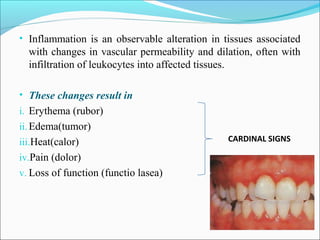
• Inflammation is an observable alteration in tissues associated
with changes in vascular permeability and dilation, often with
infiltration of leukocytes into affected tissues.
• These changes result in
i. Erythema (rubor)
ii.Edema(tumor)
iii.Heat(calor)
iv.Pain (dolor)
v. Loss of function (functio lasea)
CARDINAL SIGNS
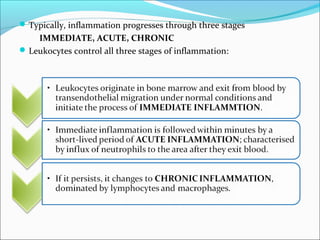
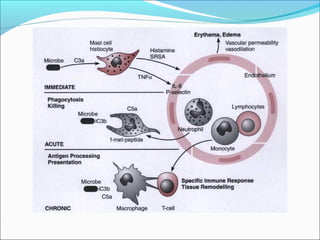
Typically, inflammation progresses through three stages
IMMEDIATE, ACUTE, CHRONIC
Leukocytes control all three stages of inflammation:
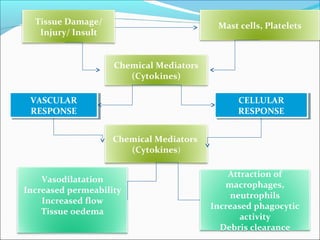
Tissue Damage/
Injury/ Insult
Mast cells, Platelets
Chemical Mediators
(Cytokines)
VASCULAR
RESPONSE
VASCULAR
RESPONSE
CELLULAR
RESPONSE
CELLULAR
RESPONSE
Chemical Mediators
(Cytokines)
Vasodilatation
Increased permeability
Increased flow
Tissue oedema
Attraction of
macrophages,
neutrophils
Increased phagocytic
activity
Debris clearance
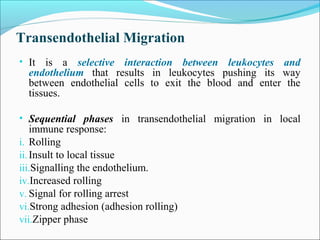
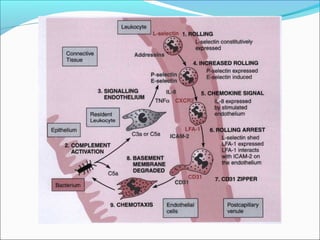
Transendothelial Migration
• It is a selective interaction between leukocytes and
endothelium that results in leukocytes pushing its way
between endothelial cells to exit the blood and enter the
tissues.
• Sequential phases in transendothelial migration in local
immune response:
i. Rolling
ii.Insult to local tissue
iii.Signalling the endothelium.
iv.Increased rolling
v. Signal for rolling arrest
vi.Strong adhesion (adhesion rolling)
vii.Zipper phase
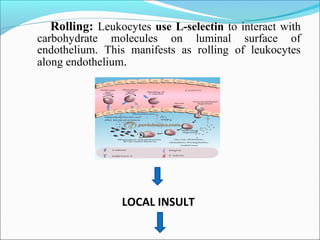
Rolling: Leukocytes use L-selectin to interact with
carbohydrate molecules on luminal surface of
endothelium. This manifests as rolling of leukocytes
along endothelium.
LOCAL INSULT
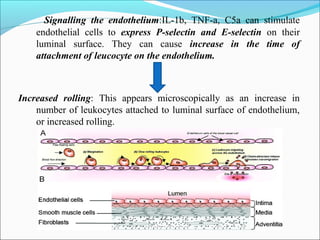
Signalling the endothelium:IL-1b, TNF-a, C5a can stimulate
endothelial cells to express P-selectin and E-selectin on their
luminal surface. They can cause increase in the time of
attachment of leucocyte on the endothelium.
Increased rolling: This appears microscopically as an increase in
number of leukocytes attached to luminal surface of endothelium,
or increased rolling.
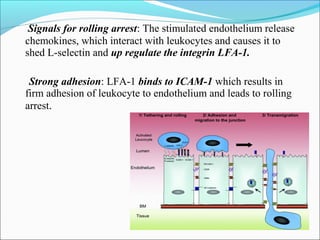
Signals for rolling arrest: The stimulated endothelium release
chemokines, which interact with leukocytes and causes it to
shed L-selectin and up regulate the integrin LFA-1.
Strong adhesion: LFA-1 binds to ICAM-1 which results in
firm adhesion of leukocyte to endothelium and leads to rolling
arrest.
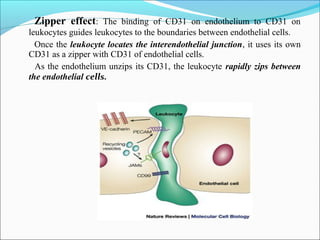
Zipper effect: The binding of CD31 on endothelium to CD31 on
leukocytes guides leukocytes to the boundaries between endothelial cells.
Once the leukocyte locates the interendothelial junction, it uses its own
CD31 as a zipper with CD31 of endothelial cells.
As the endothelium unzips its CD31, the leukocyte rapidly zips between
the endothelial cells.
LEUKOCYTE FUNCTIONS
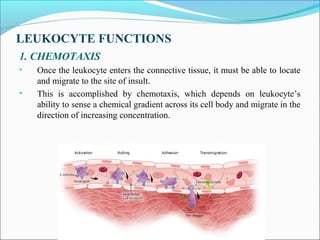
1. CHEMOTAXIS
• Once the leukocyte enters the connective tissue, it must be able to locate
and migrate to the site of insult.
• This is accomplished by chemotaxis, which depends on leukocyte’s
ability to sense a chemical gradient across its cell body and migrate in the
direction of increasing concentration.
Agents chemotactic for
• Neutrophils: LT B4, Products of complement system.
• Monocytes: Bacterial products, neutrophil cationic
products, lymphokines released from sensitized
lymphocytes, complement products( C567
complex,C3a,C5a)
• Eosinophils: Eosinophil Chemotactic Factor of
Anaphylaxis(ECF-A) released from lungs, products from
parasites like Ascaris.
• Basophils: not known
• Lymphocytes: do not show chemotactic movement
towards any attractant.
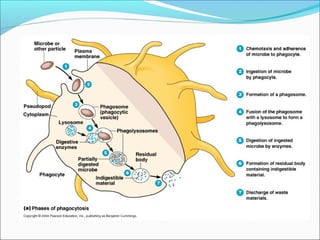
2.PHAGOCYTOSIS
• Defined as the process of engulfment of solid particulate
material by the cells (cell eating).
• There are two main types of phagocytes:
i. PMN’s which appear early in acute inflammatory response ,
also called as microphages.
ii.Circulating monocytes and fixed tissue mononuclear
phagocytes called as macrophages.
The process involves three following steps:
• Attachment stage( Opsonisation)
• Engulfment Stage
• Killing or degradation Stage
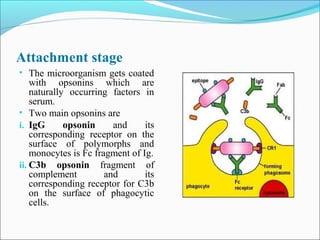
Attachment stage
• The microorganism gets coated
with opsonins which are
naturally occurring factors in
serum.
• Two main opsonins are
i. IgG opsonin and its
corresponding receptor on the
surface of polymorphs and
monocytes is Fc fragment of Ig.
ii. C3b opsonin fragment of
complement and its
corresponding receptor for C3b
on the surface of phagocytic
cells.
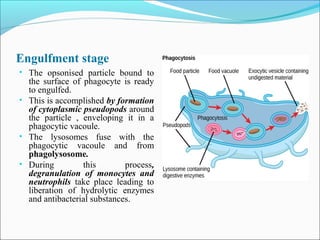
Engulfment stage
• The opsonised particle bound to
the surface of phagocyte is ready
to engulfed.
• This is accomplished by formation
of cytoplasmic pseudopods around
the particle , enveloping it in a
phagocytic vacoule.
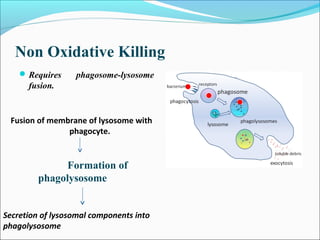
• The lysosomes fuse with the
phagocytic vacoule and from
phagolysosome.
• During this process,
degranulation of monocytes and
neutrophils take place leading to
liberation of hydrolytic enzymes
and antibacterial substances.
Killing or Degradation Stage
• The micro organisms being killed by antibacterial substances are
degraded by hydrolytic enzymes.
• The antimicrobial substances act by either of two mechanisms:
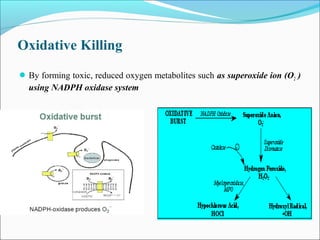
i. Oxygen dependent bactericidal mechanism: by production of
reactive oxygen metabolites.
ii. Oxygen independent bactericidal mechanism: Some agents donot
require oxygen like lysosomal hydrolases, defensins, cationic
proteins.
Oxidative Killing
By forming toxic, reduced oxygen metabolites such as superoxide ion (O2 )
using NADPH oxidase system
Non Oxidative Killing
Requires phagosome-lysosome
fusion.
Fusion of membrane of lysosome with
phagocyte.
Formation of
phagolysosome
Secretion of lysosomal components into
phagolysosome
• Lysosomal components:
Neutrophil granules elaborate agents like alkaline
phosphatase, lactoferrin, collagenase, myeloperoxidase,
cationic proteins, acid and neutral proteases.
Granules of monocytes and tissue macrophages release
mediators like acid proteases, collagenase, elastase and
plasminogen activator
• Because of highly anaerobic conditions in periodontal
environment, non oxidative mechanisms are of particular
importance.
CELLS OF INFLAMMATION
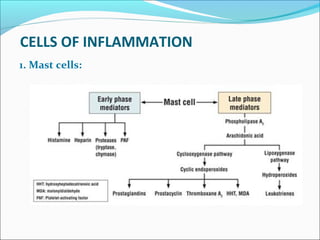
1. Mast cells:
2. Dermal Dendrocytes (Histiocytes) :
They possess receptors for C3a, by which they participate in immediate
inflammation.
They also express MMPs in response to bacterial challenge and thus
potentially contribute to periodontal tissue destruction.
3. Monocytes / Macrophages
• These are dominant cells of chronic inflammation.
• When monocytes reach the extravascular tissue, they undergo
transformation into macrophages, which are somewhat larger and
have a longer lifespan and a greater capacity for phagocytosis
than do blood monocytes.
• They are normally diffusely present in connective tissue and in
organs like liver, spleen, CNS and lungs.
Role of macrophages in inflammatory response
Ingest and eliminate microbes and dead tissue.
They initiate the process of tissue repair and are involved in
scar formation and fibrosis.
They secrete mediators of inflammation such as cytokines,
eicosanoids.
They display antigen to T cells and respond to signals from T
cells.
4. Lymphocytes
• These are major drivers of inflammation in autoimmune and
chronic diseases.
• Activation of B and T lymphocytes is a part of adaptive
immune response in infections and immunological diseases.
• In tissues, B cells may develop into plasma cells which secrete
antibodies and CD4 + T cells are activated to secrete cytokines.
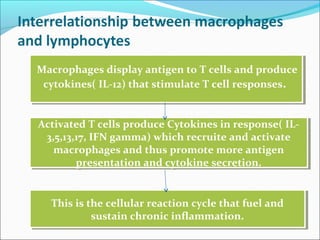
Macrophages display antigen to T cells and produce
cytokines( IL-12) that stimulate T cell responses.
Macrophages display antigen to T cells and produce
cytokines( IL-12) that stimulate T cell responses.
Activated T cells produce Cytokines in response( IL-
3,5,13,17, IFN gamma) which recruite and activate
macrophages and thus promote more antigen
presentation and cytokine secretion.
Activated T cells produce Cytokines in response( IL-
3,5,13,17, IFN gamma) which recruite and activate
macrophages and thus promote more antigen
presentation and cytokine secretion.
This is the cellular reaction cycle that fuel and
sustain chronic inflammation.
This is the cellular reaction cycle that fuel and
sustain chronic inflammation.
Inflammatory Responses in Periodontium
1. Microbial virulence Factors
• Subgingival biofilm initiates and perpetuates inflammatory
responses in gingival and periodontal tissues.
• They activate immune-inflammatory responses leading to tissue
damage.
i. Lipopolysaccharide: Large molecules composed of lipid A and
polysaccharides. Immune systems in animals have evolved to
recognize TLR’s.
TLR’s are cell surface receptors that recognize microbes associated
molecular patterns, which are conserved molecular structures
located on diverse pathogens.
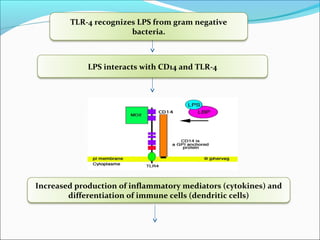
TLR-4 recognizes LPS from gram negative
bacteria.
LPS interacts with CD14 and TLR-4
Increased production of inflammatory mediators (cytokines) and
differentiation of immune cells (dendritic cells)
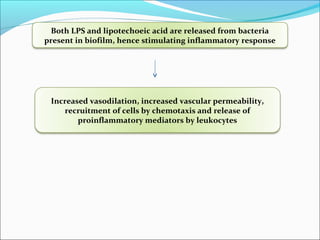
Increased vasodilation, increased vascular permeability,
recruitment of cells by chemotaxis and release of
proinflammatory mediators by leukocytes
Both LPS and lipotechoeic acid are released from bacteria
present in biofilm, hence stimulating inflammatory response
ii. Bacterial enzymes and noxious products
• Plaque bacteria produces noxious agents such as ammonia, hydrogen
sulfide and short chain fatty acids.
• They also influence cytokine secretion by immune cells and may potentiate
inflammatory response.
• Plaque bacteria also produces ‘proteases’, which are capable of breakdown
of structural portions of periodontium such as collagen, elastin and
fibronectin.
iii. Microbial Invasion
• P. gingivalis and A.actinomycetamcomitans invade gingival tissues.
• F.nucleatum invade oral epithelial tissues.
iv. Fimbriae (especially P.gingivalis)
• Stimulate immune response like IL-6 secretion.
• Also stimulate monocytes, secreting IL-6,8, TNF-a.
• Interact with complement receptor-3 to activate intracellular
signalling pathways.
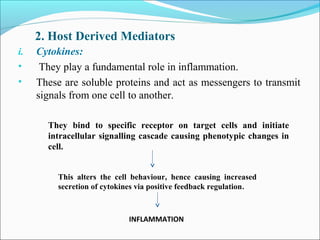
2. Host Derived Mediators
i. Cytokines:
• They play a fundamental role in inflammation.
• These are soluble proteins and act as messengers to transmit
signals from one cell to another.
They bind to specific receptor on target cells and initiate
intracellular signalling cascade causing phenotypic changes in
cell.
This alters the cell behaviour, hence causing increased
secretion of cytokines via positive feedback regulation.
INFLAMMATION
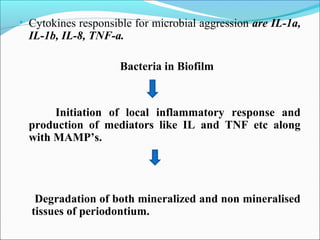
• Cytokines responsible for microbial aggression are IL-1a,
IL-1b, IL-8, TNF-a.
Bacteria in Biofilm
Initiation of local inflammatory response and
production of mediators like IL and TNF etc along
with MAMP’s.
Degradation of both mineralized and non mineralised
tissues of periodontium.
Role of Inflammatory Mediators in Periodontal
Disease
1. IL-1 Family Cytokines
a) IL-1b
• IL-1b stimulates the synthesis of PGE2, PAF, NO that
causes vascular changes associated with inflammation.
• IL-1b increases the expression of ICAM-1 on
endothelial cells and stimulate the secretion of
chemokines.
• IL-1b synergises with other proinflammatory cytokines
and PGE2 to induce bone resorption.
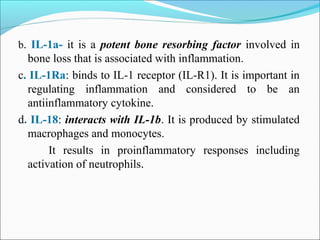
b. IL-1a- it is a potent bone resorbing factor involved in
bone loss that is associated with inflammation.
c. IL-1Ra: binds to IL-1 receptor (IL-R1). It is important in
regulating inflammation and considered to be an
antiinflammatory cytokine.
d. IL-18: interacts with IL-1b. It is produced by stimulated
macrophages and monocytes.
It results in proinflammatory responses including
activation of neutrophils.
e. TNF-a: it is secreted by activated macrophages,
particularly in response to bacterial LPS.
Proinflammatory effects:
• Stimulation of endothelial cells to express selectins that
facilitate leukocyte recruitment.
• Activation of IL-1b production.
• Induction of PGE2 by macrophages and fibroblasts.
• GCF levels of TNF-a increases as gingival inflammation
develops.
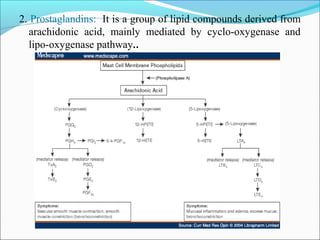
2. Prostaglandins: It is a group of lipid compounds derived from
arachidonic acid, mainly mediated by cyclo-oxygenase and
lipo-oxygenase pathway..
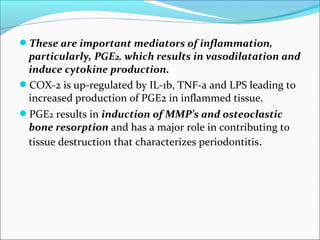
These are important mediators of inflammation,
particularly, PGE2, which results in vasodilatation and
induce cytokine production.
COX-2 is up-regulated by IL-1b, TNF-a and LPS leading to
increased production of PGE2 in inflammed tissue.
PGE2 results in induction of MMP’s and osteoclastic
bone resorption and has a major role in contributing to
tissue destruction that characterizes periodontitis.
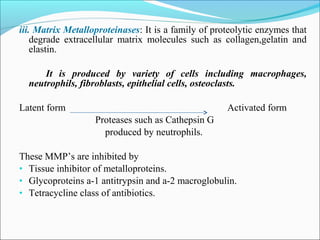
iii. Matrix Metalloproteinases: It is a family of proteolytic enzymes that
degrade extracellular matrix molecules such as collagen,gelatin and
elastin.
It is produced by variety of cells including macrophages,
neutrophils, fibroblasts, epithelial cells, osteoclasts.
Latent form Activated form
Proteases such as Cathepsin G
produced by neutrophils.
These MMP’s are inhibited by
• Tissue inhibitor of metalloproteins.
• Glycoproteins a-1 antitrypsin and a-2 macroglobulin.
• Tetracycline class of antibiotics.
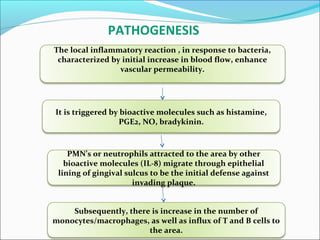
PATHOGENESIS
The local inflammatory reaction , in response to bacteria,
characterized by initial increase in blood flow, enhance
vascular permeability.
It is triggered by bioactive molecules such as histamine,
PGE2, NO, bradykinin.
PMN’s or neutrophils attracted to the area by other
bioactive molecules (IL-8) migrate through epithelial
lining of gingival sulcus to be the initial defense against
invading plaque.
Subsequently, there is increase in the number of
monocytes/macrophages, as well as influx of T and B cells to
the area.
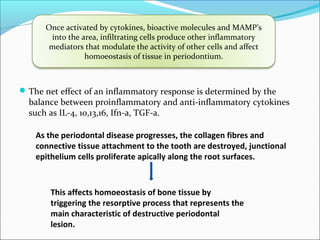
Once activated by cytokines, bioactive molecules and MAMP’s
into the area, infiltrating cells produce other inflammatory
mediators that modulate the activity of other cells and affect
homoeostasis of tissue in periodontium.
The net effect of an inflammatory response is determined by the
balance between proinflammatory and anti-inflammatory cytokines
such as IL-4, 10,13,16, Ifn-a, TGF-a.
As the periodontal disease progresses, the collagen fibres and
connective tissue attachment to the tooth are destroyed, junctional
epithelium cells proliferate apically along the root surfaces.
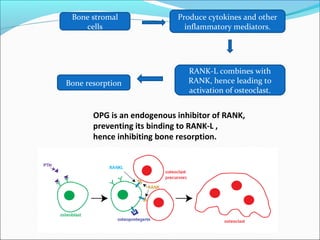
This affects homoeostasis of bone tissue by
triggering the resorptive process that represents the
main characteristic of destructive periodontal
lesion.
Bone stromal
cells
Produce cytokines and other
inflammatory mediators.
RANK-L combines with
RANK, hence leading to
activation of osteoclast.
Bone resorption
OPG is an endogenous inhibitor of RANK,
preventing its binding to RANK-L ,
hence inhibiting bone resorption.
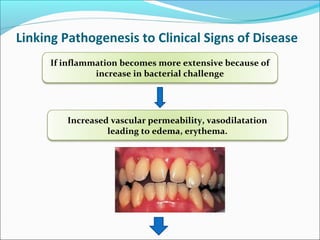
Linking Pathogenesis to Clinical Signs of Disease
If inflammation becomes more extensive because of
increase in bacterial challenge
Increased vascular permeability, vasodilatation
leading to edema, erythema.
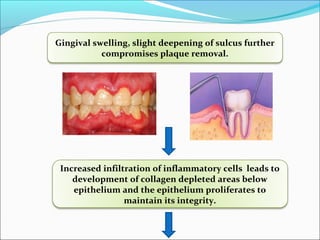
Gingival swelling, slight deepening of sulcus further
compromises plaque removal.
Increased infiltration of inflammatory cells leads to
development of collagen depleted areas below
epithelium and the epithelium proliferates to
maintain its integrity.
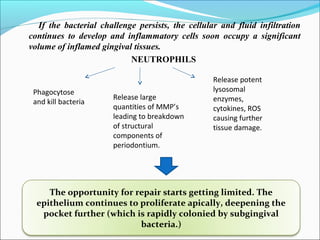
If the bacterial challenge persists, the cellular and fluid infiltration
continues to develop and inflammatory cells soon occupy a significant
volume of inflamed gingival tissues.
NEUTROPHILS
Phagocytose
and kill bacteria
Release large
quantities of MMP’s
leading to breakdown
of structural
components of
periodontium.
Release potent
lysosomal
enzymes,
cytokines, ROS
causing further
tissue damage.
The opportunity for repair starts getting limited. The
epithelium continues to proliferate apically, deepening the
pocket further (which is rapidly colonied by subgingival
bacteria.)
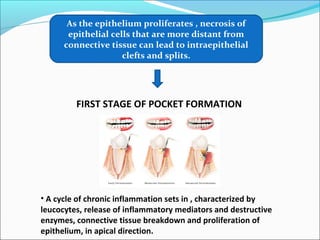
As the epithelium proliferates , necrosis of
epithelial cells that are more distant from
connective tissue can lead to intraepithelial
clefts and splits.
FIRST STAGE OF POCKET FORMATION
• A cycle of chronic inflammation sets in , characterized by
leucocytes, release of inflammatory mediators and destructive
enzymes, connective tissue breakdown and proliferation of
epithelium, in apical direction.
RESOLUTION OF INFLAMMATION
• It is an active process that results in a return to normal
hemostasis, and is mediated by specific molecules including a
class of endogenous lipid mediators, lipoxins, resolvins and
protectins.
i. Lipoxins: LX A4, B4. They also signal macrophages to
phagocytose the remnants of apoptotic cells at sites of
inflammation, without generating an inflammatory response.
ii.Resolvins: They inhibit neutrophilic infiltration and
transmigration, they inhibit production of inflammatory
mediators.
iii.Protectins: They reduce cytokine expression and also inhibit
neutrophilic infiltration.
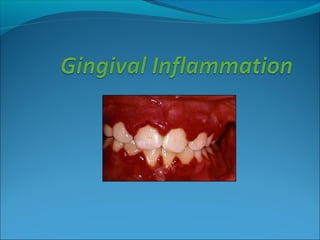
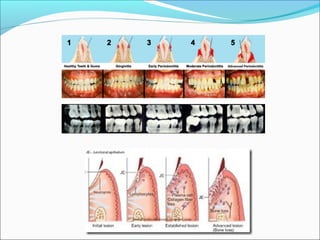
• The gingiva responds to an infection by developing an inflammatory
response; known as gingivitis.
• Gingival inflammation has two components:
Acute component with vasodilation, edema, PMN
infiltration.
Chronic component with B and T lymphocytes and
capillary proliferation forming granulomatous
response.
• The sequence of events cumulating in clinically apparent
gingivitis is categorized into Initial, Early, Established stages,
with periodontitis designated as Advanced stage.
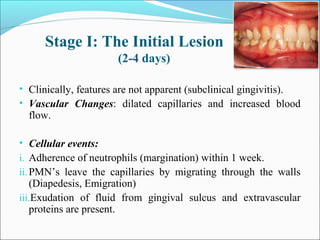
Stage I: The Initial Lesion
(2-4 days)
• Clinically, features are not apparent (subclinical gingivitis).
• Vascular Changes: dilated capillaries and increased blood
flow.
• Cellular events:
i. Adherence of neutrophils (margination) within 1 week.
ii.PMN’s leave the capillaries by migrating through the walls
(Diapedesis, Emigration)
iii.Exudation of fluid from gingival sulcus and extravascular
proteins are present.
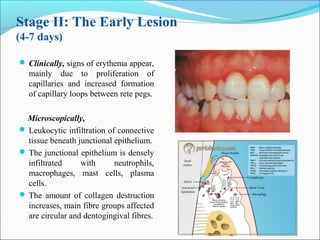
Stage II: The Early Lesion
(4-7 days)
 Clinically, signs of erythema appear,
mainly due to proliferation of
capillaries and increased formation
of capillary loops between rete pegs.
Microscopically,
 Leukocytic infiltration of connective
tissue beneath junctional epithelium.
 The junctional epithelium is densely
infiltrated with neutrophils,
macrophages, mast cells, plasma
cells.
 The amount of collagen destruction
increases, main fibre groups affected
are circular and dentogingival fibres.
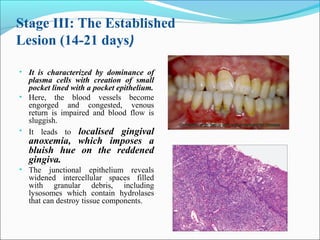
Stage III: The Established
Lesion (14-21 days)
• It is characterized by dominance of
plasma cells with creation of small
pocket lined with a pocket epithelium.
• Here, the blood vessels become
engorged and congested, venous
return is impaired and blood flow is
sluggish.
• It leads to localised gingival
anoxemia, which imposes a
bluish hue on the reddened
gingiva.
• The junctional epithelium reveals
widened intercellular spaces filled
with granular debris, including
lysosomes which contain hydrolases
that can destroy tissue components.
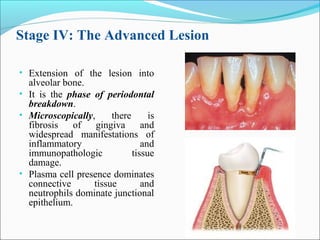
Stage IV: The Advanced Lesion
• Extension of the lesion into
alveolar bone.
• It is the phase of periodontal
breakdown.
• Microscopically, there is
fibrosis of gingiva and
widespread manifestations of
inflammatory and
immunopathologic tissue
damage.
• Plasma cell presence dominates
connective tissue and
neutrophils dominate junctional
epithelium.
REFERENCES
Harsh Mohan Essential Pathology for Dental students, 3rd
Edition
B.N.Datta Textbook of Pathology, 2nd
Edition
Robbin’s and Cotran Pathological Basis of Diseases, 6th
Edition
TenCate’s Oral histology Development, structure and
function, 6th
edition
Carranza’s Clinical Periodontology, 11th
Edition.
Inflammation: basic concepts

Inflammation: basic concepts

  • 1.
    Presented By: RICHA SHARMA Deptof Periodontology and Oral Implantology
  • 2.
    Outline INFLAMMATION • Definition • CardinalSigns • Transendothelial Migration • Leukocytes Functions- Chemotaxis • Phagocytosis • Cells of Inflammation • Inflammatory Responses in Periodontium • Pathogenesis • Linking Pathogenesis to Clinical Signs of Disease • Resolution of Inflammation • Gingival Inflammation
  • 4.
    Definition • It isdefined as the local response of living mammalian tissues to injury due to any agent. • It is the body defense mechanism in order to eliminate or limit the spread of injurious agent. • Causes: 1. Physical agents like heat, cold, radiation and mechanical trauma. 2. Chemical agents like organic and inorganic poisons. 3. Infective agents like bacteria, viruses and parasites. 4. Immunological agents like cell mediated and antigen-antibody reactions.
  • 5.
    • Inflammation isan observable alteration in tissues associated with changes in vascular permeability and dilation, often with infiltration of leukocytes into affected tissues. • These changes result in i. Erythema (rubor) ii.Edema(tumor) iii.Heat(calor) iv.Pain (dolor) v. Loss of function (functio lasea) CARDINAL SIGNS
  • 6.
    Typically, inflammation progressesthrough three stages IMMEDIATE, ACUTE, CHRONIC Leukocytes control all three stages of inflammation:
  • 8.
    Tissue Damage/ Injury/ Insult Mastcells, Platelets Chemical Mediators (Cytokines) VASCULAR RESPONSE VASCULAR RESPONSE CELLULAR RESPONSE CELLULAR RESPONSE Chemical Mediators (Cytokines) Vasodilatation Increased permeability Increased flow Tissue oedema Attraction of macrophages, neutrophils Increased phagocytic activity Debris clearance
  • 9.
    Transendothelial Migration • Itis a selective interaction between leukocytes and endothelium that results in leukocytes pushing its way between endothelial cells to exit the blood and enter the tissues. • Sequential phases in transendothelial migration in local immune response: i. Rolling ii.Insult to local tissue iii.Signalling the endothelium. iv.Increased rolling v. Signal for rolling arrest vi.Strong adhesion (adhesion rolling) vii.Zipper phase
  • 11.
    Rolling: Leukocytes useL-selectin to interact with carbohydrate molecules on luminal surface of endothelium. This manifests as rolling of leukocytes along endothelium. LOCAL INSULT
  • 12.
    Signalling the endothelium:IL-1b,TNF-a, C5a can stimulate endothelial cells to express P-selectin and E-selectin on their luminal surface. They can cause increase in the time of attachment of leucocyte on the endothelium. Increased rolling: This appears microscopically as an increase in number of leukocytes attached to luminal surface of endothelium, or increased rolling.
  • 13.
    Signals for rollingarrest: The stimulated endothelium release chemokines, which interact with leukocytes and causes it to shed L-selectin and up regulate the integrin LFA-1. Strong adhesion: LFA-1 binds to ICAM-1 which results in firm adhesion of leukocyte to endothelium and leads to rolling arrest.
  • 14.
    Zipper effect: Thebinding of CD31 on endothelium to CD31 on leukocytes guides leukocytes to the boundaries between endothelial cells. Once the leukocyte locates the interendothelial junction, it uses its own CD31 as a zipper with CD31 of endothelial cells. As the endothelium unzips its CD31, the leukocyte rapidly zips between the endothelial cells.
  • 15.
    LEUKOCYTE FUNCTIONS 1. CHEMOTAXIS •Once the leukocyte enters the connective tissue, it must be able to locate and migrate to the site of insult. • This is accomplished by chemotaxis, which depends on leukocyte’s ability to sense a chemical gradient across its cell body and migrate in the direction of increasing concentration.
  • 16.
    Agents chemotactic for •Neutrophils: LT B4, Products of complement system. • Monocytes: Bacterial products, neutrophil cationic products, lymphokines released from sensitized lymphocytes, complement products( C567 complex,C3a,C5a) • Eosinophils: Eosinophil Chemotactic Factor of Anaphylaxis(ECF-A) released from lungs, products from parasites like Ascaris. • Basophils: not known • Lymphocytes: do not show chemotactic movement towards any attractant.
  • 17.
    2.PHAGOCYTOSIS • Defined asthe process of engulfment of solid particulate material by the cells (cell eating). • There are two main types of phagocytes: i. PMN’s which appear early in acute inflammatory response , also called as microphages. ii.Circulating monocytes and fixed tissue mononuclear phagocytes called as macrophages. The process involves three following steps: • Attachment stage( Opsonisation) • Engulfment Stage • Killing or degradation Stage
  • 19.
    Attachment stage • Themicroorganism gets coated with opsonins which are naturally occurring factors in serum. • Two main opsonins are i. IgG opsonin and its corresponding receptor on the surface of polymorphs and monocytes is Fc fragment of Ig. ii. C3b opsonin fragment of complement and its corresponding receptor for C3b on the surface of phagocytic cells.
  • 20.
    Engulfment stage • Theopsonised particle bound to the surface of phagocyte is ready to engulfed. • This is accomplished by formation of cytoplasmic pseudopods around the particle , enveloping it in a phagocytic vacoule. • The lysosomes fuse with the phagocytic vacoule and from phagolysosome. • During this process, degranulation of monocytes and neutrophils take place leading to liberation of hydrolytic enzymes and antibacterial substances.
  • 21.
    Killing or DegradationStage • The micro organisms being killed by antibacterial substances are degraded by hydrolytic enzymes. • The antimicrobial substances act by either of two mechanisms: i. Oxygen dependent bactericidal mechanism: by production of reactive oxygen metabolites. ii. Oxygen independent bactericidal mechanism: Some agents donot require oxygen like lysosomal hydrolases, defensins, cationic proteins.
  • 22.
    Oxidative Killing By formingtoxic, reduced oxygen metabolites such as superoxide ion (O2 ) using NADPH oxidase system
  • 23.
    Non Oxidative Killing Requiresphagosome-lysosome fusion. Fusion of membrane of lysosome with phagocyte. Formation of phagolysosome Secretion of lysosomal components into phagolysosome
  • 24.
    • Lysosomal components: Neutrophilgranules elaborate agents like alkaline phosphatase, lactoferrin, collagenase, myeloperoxidase, cationic proteins, acid and neutral proteases. Granules of monocytes and tissue macrophages release mediators like acid proteases, collagenase, elastase and plasminogen activator • Because of highly anaerobic conditions in periodontal environment, non oxidative mechanisms are of particular importance.
  • 25.
  • 26.
    2. Dermal Dendrocytes(Histiocytes) : They possess receptors for C3a, by which they participate in immediate inflammation. They also express MMPs in response to bacterial challenge and thus potentially contribute to periodontal tissue destruction. 3. Monocytes / Macrophages • These are dominant cells of chronic inflammation. • When monocytes reach the extravascular tissue, they undergo transformation into macrophages, which are somewhat larger and have a longer lifespan and a greater capacity for phagocytosis than do blood monocytes. • They are normally diffusely present in connective tissue and in organs like liver, spleen, CNS and lungs.
  • 27.
    Role of macrophagesin inflammatory response Ingest and eliminate microbes and dead tissue. They initiate the process of tissue repair and are involved in scar formation and fibrosis. They secrete mediators of inflammation such as cytokines, eicosanoids. They display antigen to T cells and respond to signals from T cells.
  • 28.
    4. Lymphocytes • Theseare major drivers of inflammation in autoimmune and chronic diseases. • Activation of B and T lymphocytes is a part of adaptive immune response in infections and immunological diseases. • In tissues, B cells may develop into plasma cells which secrete antibodies and CD4 + T cells are activated to secrete cytokines.
  • 29.
    Macrophages display antigento T cells and produce cytokines( IL-12) that stimulate T cell responses. Macrophages display antigen to T cells and produce cytokines( IL-12) that stimulate T cell responses. Activated T cells produce Cytokines in response( IL- 3,5,13,17, IFN gamma) which recruite and activate macrophages and thus promote more antigen presentation and cytokine secretion. Activated T cells produce Cytokines in response( IL- 3,5,13,17, IFN gamma) which recruite and activate macrophages and thus promote more antigen presentation and cytokine secretion. This is the cellular reaction cycle that fuel and sustain chronic inflammation. This is the cellular reaction cycle that fuel and sustain chronic inflammation.
  • 30.
    Inflammatory Responses inPeriodontium 1. Microbial virulence Factors • Subgingival biofilm initiates and perpetuates inflammatory responses in gingival and periodontal tissues. • They activate immune-inflammatory responses leading to tissue damage. i. Lipopolysaccharide: Large molecules composed of lipid A and polysaccharides. Immune systems in animals have evolved to recognize TLR’s. TLR’s are cell surface receptors that recognize microbes associated molecular patterns, which are conserved molecular structures located on diverse pathogens.
  • 31.
    TLR-4 recognizes LPSfrom gram negative bacteria. LPS interacts with CD14 and TLR-4 Increased production of inflammatory mediators (cytokines) and differentiation of immune cells (dendritic cells)
  • 32.
    Increased vasodilation, increasedvascular permeability, recruitment of cells by chemotaxis and release of proinflammatory mediators by leukocytes Both LPS and lipotechoeic acid are released from bacteria present in biofilm, hence stimulating inflammatory response
  • 33.
    ii. Bacterial enzymesand noxious products • Plaque bacteria produces noxious agents such as ammonia, hydrogen sulfide and short chain fatty acids. • They also influence cytokine secretion by immune cells and may potentiate inflammatory response. • Plaque bacteria also produces ‘proteases’, which are capable of breakdown of structural portions of periodontium such as collagen, elastin and fibronectin.
  • 34.
    iii. Microbial Invasion •P. gingivalis and A.actinomycetamcomitans invade gingival tissues. • F.nucleatum invade oral epithelial tissues. iv. Fimbriae (especially P.gingivalis) • Stimulate immune response like IL-6 secretion. • Also stimulate monocytes, secreting IL-6,8, TNF-a. • Interact with complement receptor-3 to activate intracellular signalling pathways.
  • 35.
    2. Host DerivedMediators i. Cytokines: • They play a fundamental role in inflammation. • These are soluble proteins and act as messengers to transmit signals from one cell to another. They bind to specific receptor on target cells and initiate intracellular signalling cascade causing phenotypic changes in cell. This alters the cell behaviour, hence causing increased secretion of cytokines via positive feedback regulation. INFLAMMATION
  • 36.
    • Cytokines responsiblefor microbial aggression are IL-1a, IL-1b, IL-8, TNF-a. Bacteria in Biofilm Initiation of local inflammatory response and production of mediators like IL and TNF etc along with MAMP’s. Degradation of both mineralized and non mineralised tissues of periodontium.
  • 37.
    Role of InflammatoryMediators in Periodontal Disease 1. IL-1 Family Cytokines a) IL-1b • IL-1b stimulates the synthesis of PGE2, PAF, NO that causes vascular changes associated with inflammation. • IL-1b increases the expression of ICAM-1 on endothelial cells and stimulate the secretion of chemokines. • IL-1b synergises with other proinflammatory cytokines and PGE2 to induce bone resorption.
  • 38.
    b. IL-1a- itis a potent bone resorbing factor involved in bone loss that is associated with inflammation. c. IL-1Ra: binds to IL-1 receptor (IL-R1). It is important in regulating inflammation and considered to be an antiinflammatory cytokine. d. IL-18: interacts with IL-1b. It is produced by stimulated macrophages and monocytes. It results in proinflammatory responses including activation of neutrophils.
  • 39.
    e. TNF-a: itis secreted by activated macrophages, particularly in response to bacterial LPS. Proinflammatory effects: • Stimulation of endothelial cells to express selectins that facilitate leukocyte recruitment. • Activation of IL-1b production. • Induction of PGE2 by macrophages and fibroblasts. • GCF levels of TNF-a increases as gingival inflammation develops.
  • 40.
    2. Prostaglandins: Itis a group of lipid compounds derived from arachidonic acid, mainly mediated by cyclo-oxygenase and lipo-oxygenase pathway..
  • 41.
    These are importantmediators of inflammation, particularly, PGE2, which results in vasodilatation and induce cytokine production. COX-2 is up-regulated by IL-1b, TNF-a and LPS leading to increased production of PGE2 in inflammed tissue. PGE2 results in induction of MMP’s and osteoclastic bone resorption and has a major role in contributing to tissue destruction that characterizes periodontitis.
  • 42.
    iii. Matrix Metalloproteinases:It is a family of proteolytic enzymes that degrade extracellular matrix molecules such as collagen,gelatin and elastin. It is produced by variety of cells including macrophages, neutrophils, fibroblasts, epithelial cells, osteoclasts. Latent form Activated form Proteases such as Cathepsin G produced by neutrophils. These MMP’s are inhibited by • Tissue inhibitor of metalloproteins. • Glycoproteins a-1 antitrypsin and a-2 macroglobulin. • Tetracycline class of antibiotics.
  • 43.
    PATHOGENESIS The local inflammatoryreaction , in response to bacteria, characterized by initial increase in blood flow, enhance vascular permeability. It is triggered by bioactive molecules such as histamine, PGE2, NO, bradykinin. PMN’s or neutrophils attracted to the area by other bioactive molecules (IL-8) migrate through epithelial lining of gingival sulcus to be the initial defense against invading plaque. Subsequently, there is increase in the number of monocytes/macrophages, as well as influx of T and B cells to the area.
  • 44.
    Once activated bycytokines, bioactive molecules and MAMP’s into the area, infiltrating cells produce other inflammatory mediators that modulate the activity of other cells and affect homoeostasis of tissue in periodontium. The net effect of an inflammatory response is determined by the balance between proinflammatory and anti-inflammatory cytokines such as IL-4, 10,13,16, Ifn-a, TGF-a. As the periodontal disease progresses, the collagen fibres and connective tissue attachment to the tooth are destroyed, junctional epithelium cells proliferate apically along the root surfaces. This affects homoeostasis of bone tissue by triggering the resorptive process that represents the main characteristic of destructive periodontal lesion.
  • 45.
    Bone stromal cells Produce cytokinesand other inflammatory mediators. RANK-L combines with RANK, hence leading to activation of osteoclast. Bone resorption OPG is an endogenous inhibitor of RANK, preventing its binding to RANK-L , hence inhibiting bone resorption.
  • 46.
    Linking Pathogenesis toClinical Signs of Disease If inflammation becomes more extensive because of increase in bacterial challenge Increased vascular permeability, vasodilatation leading to edema, erythema.
  • 47.
    Gingival swelling, slightdeepening of sulcus further compromises plaque removal. Increased infiltration of inflammatory cells leads to development of collagen depleted areas below epithelium and the epithelium proliferates to maintain its integrity.
  • 48.
    If the bacterialchallenge persists, the cellular and fluid infiltration continues to develop and inflammatory cells soon occupy a significant volume of inflamed gingival tissues. NEUTROPHILS Phagocytose and kill bacteria Release large quantities of MMP’s leading to breakdown of structural components of periodontium. Release potent lysosomal enzymes, cytokines, ROS causing further tissue damage. The opportunity for repair starts getting limited. The epithelium continues to proliferate apically, deepening the pocket further (which is rapidly colonied by subgingival bacteria.)
  • 49.
    As the epitheliumproliferates , necrosis of epithelial cells that are more distant from connective tissue can lead to intraepithelial clefts and splits. FIRST STAGE OF POCKET FORMATION • A cycle of chronic inflammation sets in , characterized by leucocytes, release of inflammatory mediators and destructive enzymes, connective tissue breakdown and proliferation of epithelium, in apical direction.
  • 50.
    RESOLUTION OF INFLAMMATION •It is an active process that results in a return to normal hemostasis, and is mediated by specific molecules including a class of endogenous lipid mediators, lipoxins, resolvins and protectins. i. Lipoxins: LX A4, B4. They also signal macrophages to phagocytose the remnants of apoptotic cells at sites of inflammation, without generating an inflammatory response. ii.Resolvins: They inhibit neutrophilic infiltration and transmigration, they inhibit production of inflammatory mediators. iii.Protectins: They reduce cytokine expression and also inhibit neutrophilic infiltration.
  • 52.
    • The gingivaresponds to an infection by developing an inflammatory response; known as gingivitis. • Gingival inflammation has two components: Acute component with vasodilation, edema, PMN infiltration. Chronic component with B and T lymphocytes and capillary proliferation forming granulomatous response. • The sequence of events cumulating in clinically apparent gingivitis is categorized into Initial, Early, Established stages, with periodontitis designated as Advanced stage.
  • 54.
    Stage I: TheInitial Lesion (2-4 days) • Clinically, features are not apparent (subclinical gingivitis). • Vascular Changes: dilated capillaries and increased blood flow. • Cellular events: i. Adherence of neutrophils (margination) within 1 week. ii.PMN’s leave the capillaries by migrating through the walls (Diapedesis, Emigration) iii.Exudation of fluid from gingival sulcus and extravascular proteins are present.
  • 55.
    Stage II: TheEarly Lesion (4-7 days)  Clinically, signs of erythema appear, mainly due to proliferation of capillaries and increased formation of capillary loops between rete pegs. Microscopically,  Leukocytic infiltration of connective tissue beneath junctional epithelium.  The junctional epithelium is densely infiltrated with neutrophils, macrophages, mast cells, plasma cells.  The amount of collagen destruction increases, main fibre groups affected are circular and dentogingival fibres.
  • 56.
    Stage III: TheEstablished Lesion (14-21 days) • It is characterized by dominance of plasma cells with creation of small pocket lined with a pocket epithelium. • Here, the blood vessels become engorged and congested, venous return is impaired and blood flow is sluggish. • It leads to localised gingival anoxemia, which imposes a bluish hue on the reddened gingiva. • The junctional epithelium reveals widened intercellular spaces filled with granular debris, including lysosomes which contain hydrolases that can destroy tissue components.
  • 57.
    Stage IV: TheAdvanced Lesion • Extension of the lesion into alveolar bone. • It is the phase of periodontal breakdown. • Microscopically, there is fibrosis of gingiva and widespread manifestations of inflammatory and immunopathologic tissue damage. • Plasma cell presence dominates connective tissue and neutrophils dominate junctional epithelium.
  • 58.
    REFERENCES Harsh Mohan EssentialPathology for Dental students, 3rd Edition B.N.Datta Textbook of Pathology, 2nd Edition Robbin’s and Cotran Pathological Basis of Diseases, 6th Edition TenCate’s Oral histology Development, structure and function, 6th edition Carranza’s Clinical Periodontology, 11th Edition.