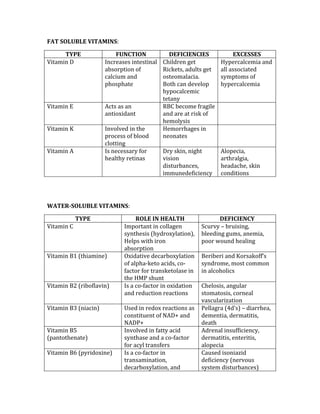
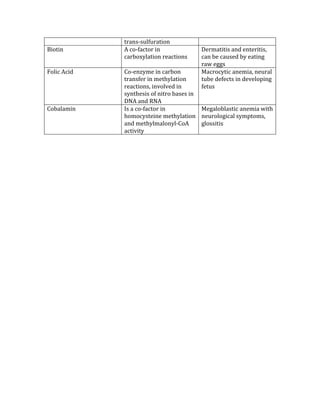
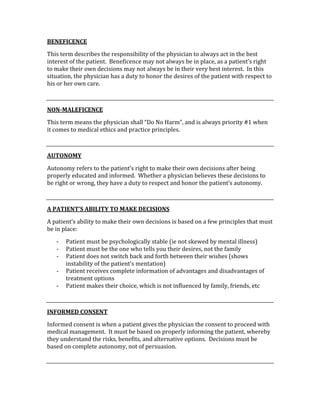
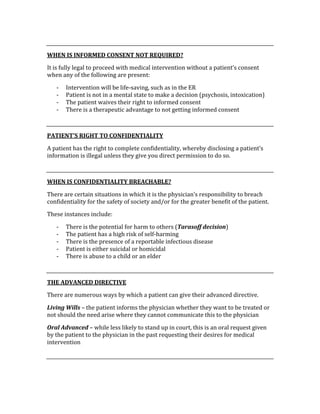
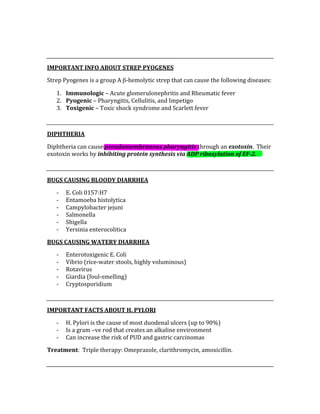
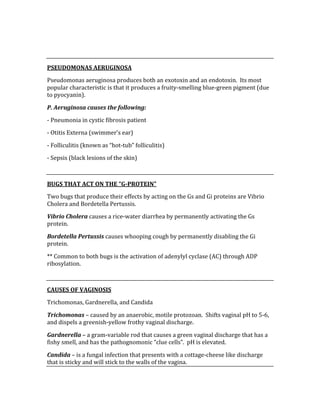
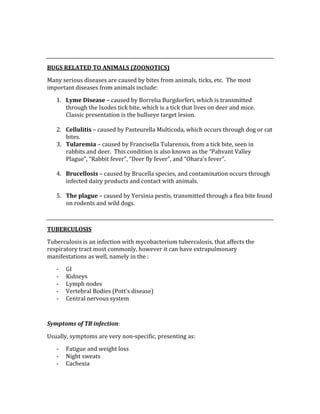
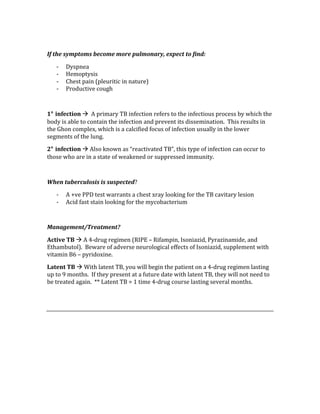
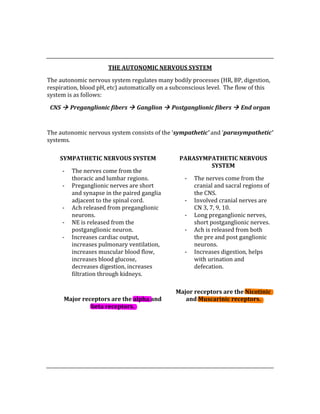
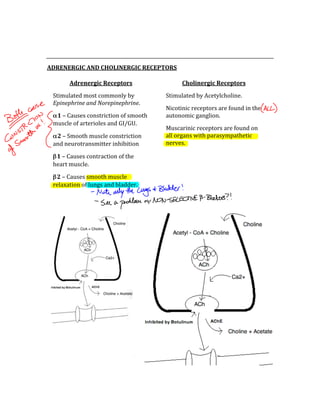
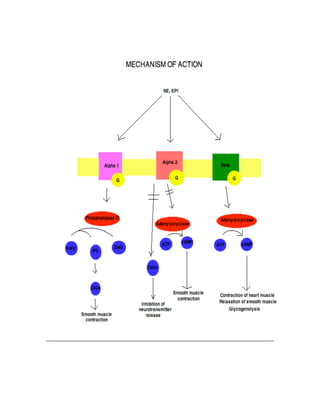
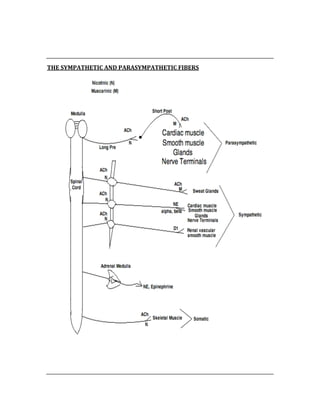
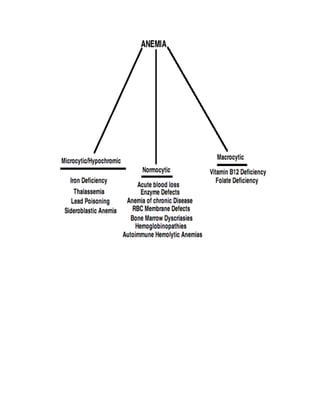
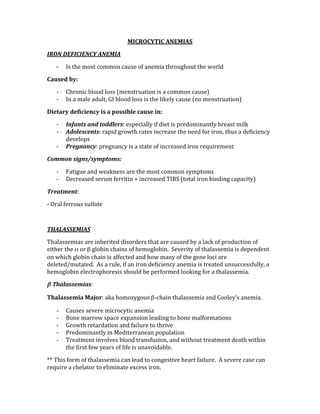
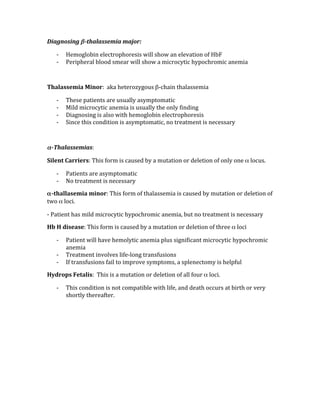
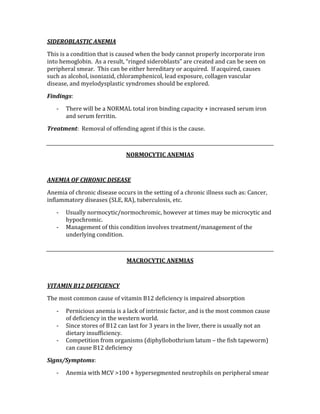
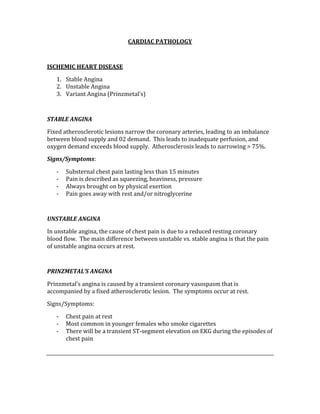
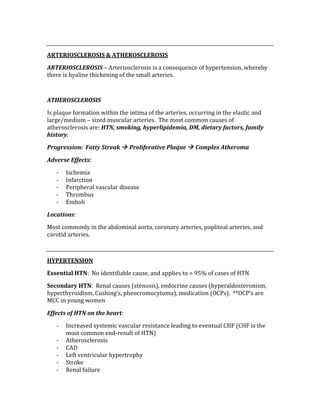
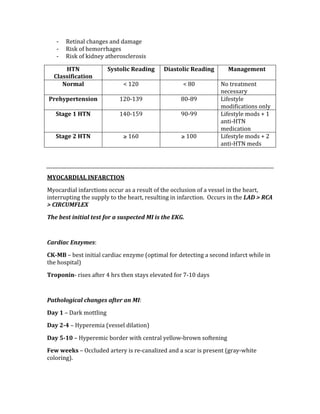
Jeffrey Anderson, M.D.
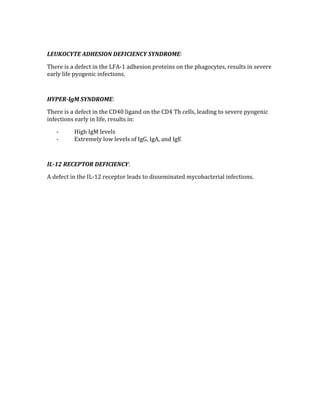
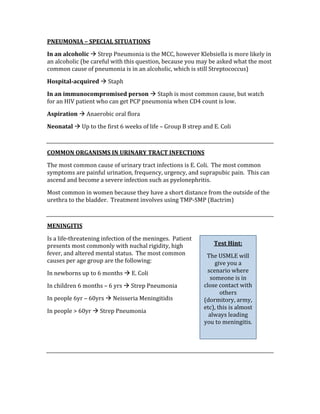
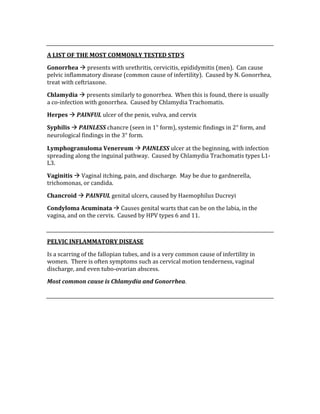
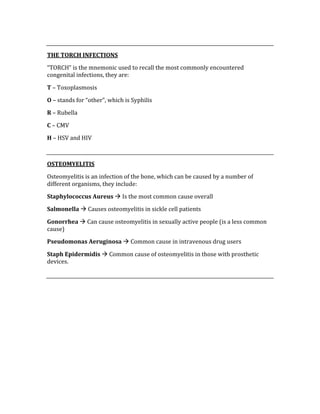
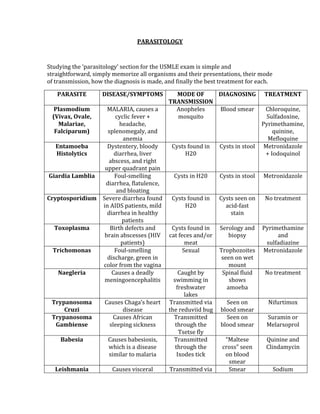
USMLE Step 1 BIBLE
2nd Edition
THE
USMLE STEP 1
BIBLE
The Ultimate USMLE Step 1 Preparation Guide
The USMLE Step 1 BIBLE™ 
Copyright © 2010 Jeffrey Anderson, M.D.  All right reserved.  No part of this book 
may be used or reproduced in any manner whatsoever without written permission 
except in the case of reprint in the context of review and personal education. 


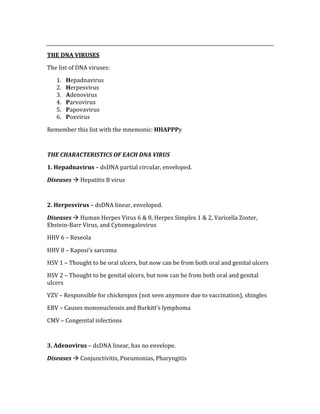
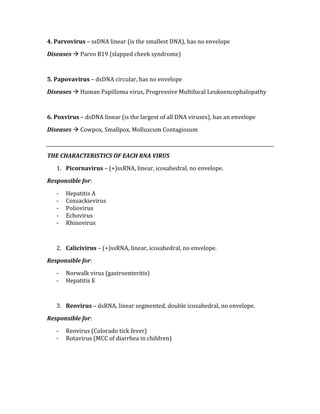
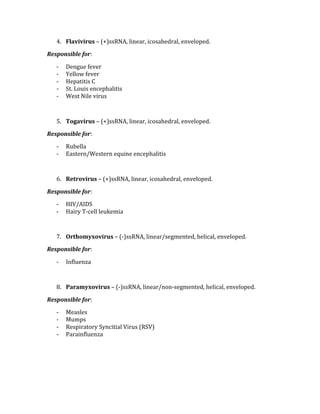
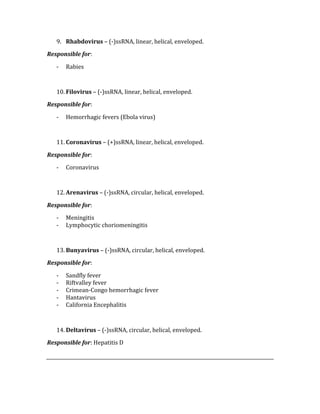
FOREWORD 
 
The USMLE Step 1 BIBLE was written for only one reason: To help you understand 
medicine as well as possible and elevate your Step 1 score as high as possible.   
The Step 1 BIBLE was created with the idea that high‐yield topics are extremely 
important, but simply looking at the superficial information relating to them is not 
the most effective way to prepare for this information‐rich test.  If we could gather 
all of the very high‐yield topics covered by the USMLE Step 1 exam, and then delve 
deeper and examine everything there is to know about them, then we are going to 
be adequately prepared to tackle this exam.  Not only will this prepare you for a 
passing score, but it will help to elevate your knowledge and understanding beyond 
any other preparation source available to you, which will ultimately help give you 
the chance of scoring very well on the Step 1 exam. 
The best way to use the USMLE Step 1 BIBLE is to combine it with a quality question 
bank geared to the Step 1 exam.  The information within this guide, when used in 
conjunction with a question bank, will adequately prepare you for ultimate success. 
Best of luck on the Step 1 exam,  
Jeffrey Anderson, M.D 


CONTENTS 


CHAPTER 1… GROSS ANATOMY 
CHAPTER 2… EMBRYOLOGY 
CHAPTER 3… HISTOLOGY 
CHAPTER 4… NEUROANATOMY 
CHAPTER 5… PHYSIOLOGY 
CHAPTER 6… BIOCHEMISTRY 
CHAPTER 7… ETHICS 
CHAPTER 8… BIOSTATISTICS 
CHAPTER 9… PSYCHIATRY 
CHAPTER 10… IMMUNOLOGY 
CHAPTER 11… MICROBIOLOGY 
CHAPTER 12… PHARMACOLOGY 
CHAPTER 13… PATHOLOGY 
CHAPTER 1 
 
GROSS ANATOMY 
 
Gross Anatomy is a very high­yield topic on the USMLE 
exam.  The questions you will encounter will require 
recognition and understanding of structures, and the ability 
to understand and identify their clinical significance. 


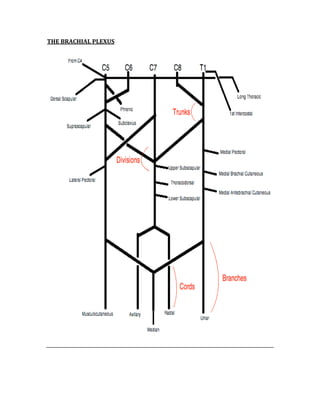
THE BRACHIAL PLEXUS 


UPPER LIMB NERVE INJURIES 
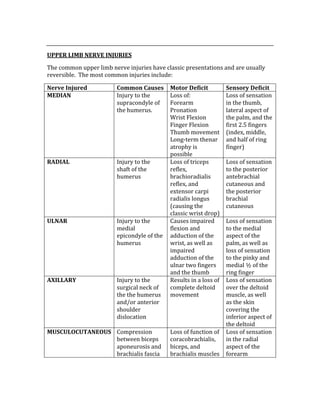
The common upper limb nerve injuries have classic presentations and are usually 
reversible.  The most common injuries include: 
Nerve Injured  Common Causes  Motor Deficit  Sensory Deficit 
MEDIAN  Injury to the 
supracondyle of 
the humerus. 
Loss of: 
Forearm 
Pronation 
Wrist Flexion 
Finger Flexion 
Thumb movement 
Long‐term thenar 
atrophy is 
possible 
Loss of sensation 
in the thumb, 
lateral aspect of 
the palm, and the 
first 2.5 fingers 
(index, middle, 
and half of ring 
finger) 
RADIAL  Injury to the 
shaft of the 
humerus 
Loss of triceps 
reflex, 
brachioradialis 
reflex, and 
extensor carpi 
radialis longus 
(causing the 
classic wrist drop) 
Loss of sensation 
to the posterior 
antebrachial 
cutaneous and 
the posterior 
brachial 
cutaneous 
ULNAR  Injury to the 
medial 
epicondyle of the 
humerus 
Causes impaired 
flexion and 
adduction of the 
wrist, as well as 
impaired 
adduction of the 
ulnar two fingers 
and the thumb 
Loss of sensation 
to the medial 
aspect of the 
palm, as well as 
loss of sensation 
to the pinky and 
medial ½ of the 
ring finger 
AXILLARY  Injury to the 
surgical neck of 
the the humerus 
and/or anterior 
shoulder 
dislocation 
Results in a loss of 
complete deltoid 
movement 
Loss of sensation 
over the deltoid 
muscle, as well 
as the skin 
covering the 
inferior aspect of 
the deltoid 
MUSCULOCUTANEOUS  Compression 
between biceps 
aponeurosis and 
brachialis fascia 
Loss of function of 
coracobrachialis, 
biceps, and 
brachialis muscles 
Loss of sensation 
in the radial 
aspect of the 
forearm 
 
 
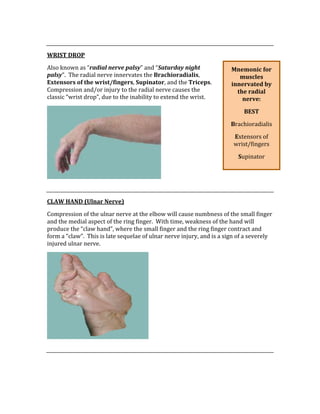
WRIST DROP 
Also known as “radial nerve palsy” and “Saturday night 
palsy”.  The radial nerve innervates the Brachioradialis, 
Extensors of the wrist/fingers, Supinator, and the Triceps.  
Compression and/or injury to the radial nerve causes the 
classic “wrist drop”, due to the inability to extend the wrist. 
 
 
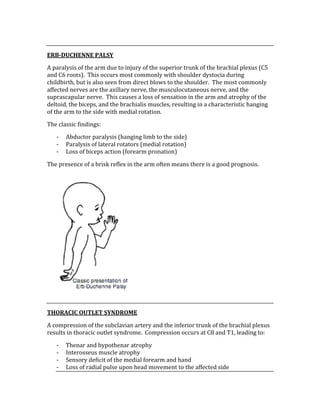
CLAW HAND (Ulnar Nerve) 
Compression of the ulnar nerve at the elbow will cause numbness of the small finger 
and the medial aspect of the ring finger.  With time, weakness of the hand will 
produce the “claw hand”, where the small finger and the ring finger contract and 
form a “claw”.  This is late sequelae of ulnar nerve injury, and is a sign of a severely 
injured ulnar nerve. 


Mnemonic for 
muscles 
innervated by 
the radial 
nerve: 
BEST 
Brachioradialis 
Extensors of 
wrist/fingers 
Supinator 
Triceps 
 
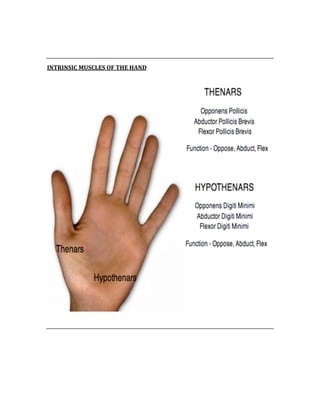
ERB­DUCHENNE PALSY 
A paralysis of the arm due to injury of the superior trunk of the brachial plexus (C5 
and C6 roots).  This occurs most commonly with shoulder dystocia during 
childbirth, but is also seen from direct blows to the shoulder.  The most commonly 
affected nerves are the axillary nerve, the musculocutaneous nerve, and the 
suprascapular nerve.  This causes a loss of sensation in the arm and atrophy of the 
deltoid, the biceps, and the brachialis muscles, resulting in a characteristic hanging 
of the arm to the side with medial rotation. 
The classic findings: 
‐ Abductor paralysis (hanging limb to the side) 
‐ Paralysis of lateral rotators (medial rotation) 
‐ Loss of biceps action (forearm pronation) 
The presence of a brisk reflex in the arm often means there is a good prognosis. 
 
 
THORACIC OUTLET SYNDROME 
A compression of the subclavian artery and the inferior trunk of the brachial plexus 
results in thoracic outlet syndrome.  Compression occurs at C8 and T1, leading to: 
‐ Thenar and hypothenar atrophy 
‐ Interosseus muscle atrophy 
‐ Sensory deficit of the medial forearm and hand 
‐ Loss of radial pulse upon head movement to the affected side 
 
 
INTRINSIC MUSCLES OF THE HAND 


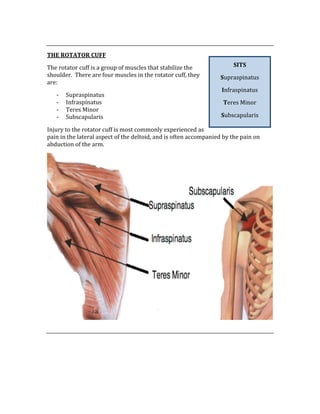
THE ROTATOR CUFF 
The rotator cuff is a group of muscles that stabilize the 
shoulder.  There are four muscles in the rotator cuff, they 
are: 
‐ Supraspinatus 
‐ Infraspinatus 
‐ Teres Minor 
‐ Subscapularis 
Injury to the rotator cuff is most commonly experienced as 
pain in the lateral aspect of the deltoid, and is often accompanied by the pain on 
abduction of the arm. 


SITS 
Supraspinatus 
Infraspinatus 
Teres Minor 
Subscapularis 
 
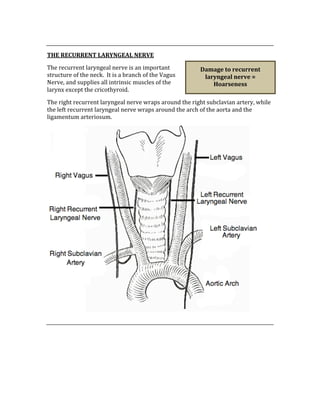
THE RECURRENT LARYNGEAL NERVE 
The recurrent laryngeal nerve is an important 
structure of the neck.  It is a branch of the Vagus 
Nerve, and supplies all intrinsic muscles of the 
larynx except the cricothyroid.  
The right recurrent laryngeal nerve wraps around the right subclavian artery, while 
the left recurrent laryngeal nerve wraps around the arch of the aorta and the 
ligamentum arteriosum.   


Damage to recurrent 
laryngeal nerve = 
Hoarseness 
 
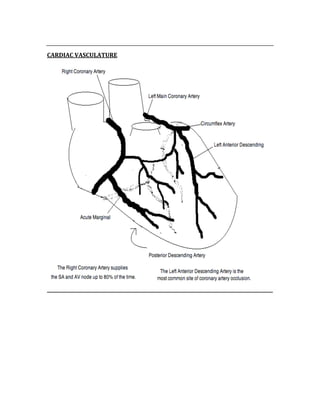
CARDIAC VASCULATURE 


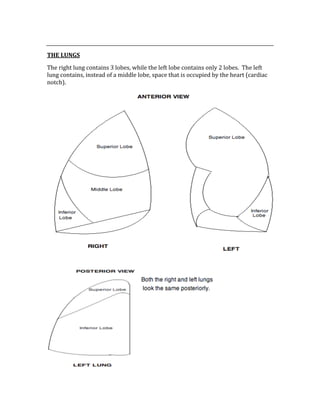
THE LUNGS 
The right lung contains 3 lobes, while the left lobe contains only 2 lobes.  The left 
lung contains, instead of a middle lobe, space that is occupied by the heart (cardiac 
notch).  
 
 
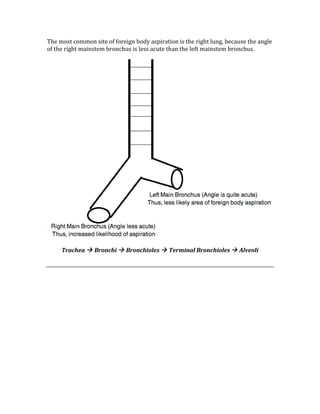
The most common site of foreign body aspiration is the right lung, because the angle 
of the right mainstem bronchus is less acute than the left mainstem bronchus. 
  
Trachea  Bronchi  Bronchioles  Terminal Bronchioles  Alveoli 


LYMPHATIC DRAINAGE 
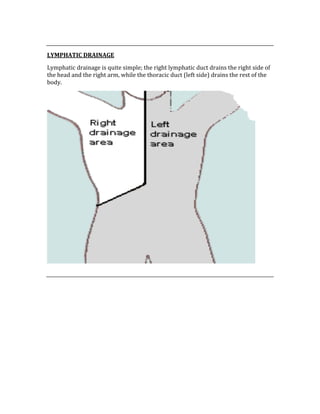
Lymphatic drainage is quite simple; the right lymphatic duct drains the right side of 
the head and the right arm, while the thoracic duct (left side) drains the rest of the 
body.   


THE CELIAC TRUNK 
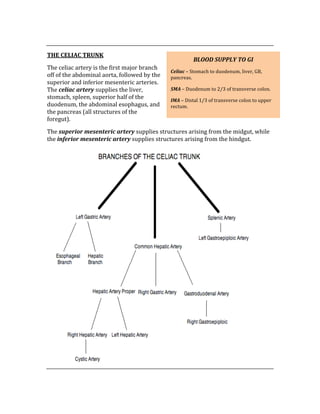
The celiac artery is the first major branch 
off of the abdominal aorta, followed by the 
superior and inferior mesenteric arteries.  
The celiac artery supplies the liver, 
stomach, spleen, superior half of the 
duodenum, the abdominal esophagus, and 
the pancreas (all structures of the 
foregut).   
The superior mesenteric artery supplies structures arising from the midgut, while 
the inferior mesenteric artery supplies structures arising from the hindgut. 
 
BLOOD SUPPLY TO GI 
Celiac – Stomach to duodenum, liver, GB, 
pancreas. 
SMA – Duodenum to 2/3 of transverse colon. 
IMA – Distal 1/3 of transverse colon to upper 
rectum. 
 
DIAPHRAGM STRUCTURE 
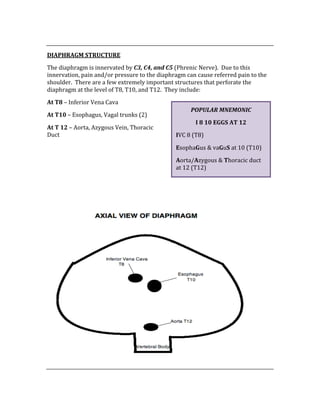
The diaphragm is innervated by C3, C4, and C5 (Phrenic Nerve).  Due to this 
innervation, pain and/or pressure to the diaphragm can cause referred pain to the 
shoulder.  There are a few extremely important structures that perforate the 
diaphragm at the level of T8, T10, and T12.  They include: 
At T8 – Inferior Vena Cava 
At T10 – Esophagus, Vagal trunks (2) 
At T 12 – Aorta, Azygous Vein, Thoracic 
Duct 


POPULAR MNEMONIC 
I 8 10 EGGS AT 12 
IVC 8 (T8) 
EsophaGus & vaGuS at 10 (T10) 
Aorta/Azygous & Thoracic duct 
at 12 (T12) 
 
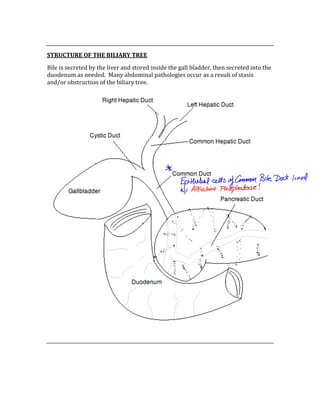
STRUCTURE OF THE BILIARY TREE 
Bile is secreted by the liver and stored inside the gall bladder, then secreted into the 
duodenum as needed.  Many abdominal pathologies occur as a result of stasis 
and/or obstruction of the biliary tree. 


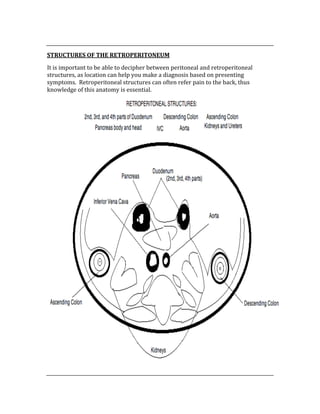
STRUCTURES OF THE RETROPERITONEUM 
It is important to be able to decipher between peritoneal and retroperitoneal 
structures, as location can help you make a diagnosis based on presenting 
symptoms.  Retroperitoneal structures can often refer pain to the back, thus 
knowledge of this anatomy is essential. 


THE INGUINAL CANAL 
The inguinal canal is an oblique structure that holds the spermatic cord and 
ilioinguinal nerve in males, and the round ligament of the uterus and ilioinguinal 
nerve in females.  The canal is formed by the aponeuroses of three flat abdominal 
muscles. 
Boundaries of the Inguinal Canal: 
1. Superficial Inguinal Ring – triangular defect in the external oblique 
aponeurosis 
2. Deep Inguinal Ring – in the transversalis fascia 
3. Anterior Wall – internal oblique muscle (laterally) and external oblique 
aponeurosis (medially) 
4. Roof – falx inguinalis (arching inferior fibers of internal oblique muscle) 
5. Floor – inguinal ligament and lacunar ligament (medially) 
6. Posterior Wall – transversalis fascia (weak fascia) laterally and conjoint 
tendon (medially) 
 
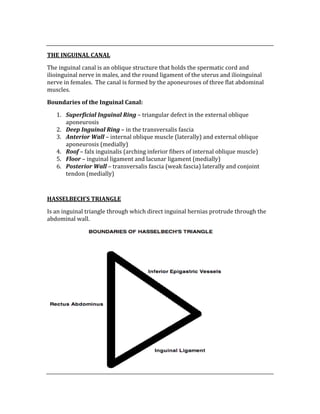
HASSELBECH’S TRIANGLE 
Is an inguinal triangle through which direct inguinal hernias protrude through the 
abdominal wall.   


HERNIAS 
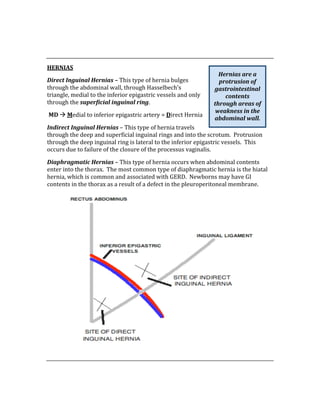
Direct Inguinal Hernias – This type of hernia bulges 
through the abdominal wall, through Hasselbech’s 
triangle, medial to the inferior epigastric vessels and only 
through the superficial inguinal ring. 
MD  Medial to inferior epigastric artery = Direct Hernia 
Indirect Inguinal Hernias – This type of hernia travels 
through the deep and superficial inguinal rings and into the scrotum.  Protrusion 
through the deep inguinal ring is lateral to the inferior epigastric vessels.  This 
occurs due to failure of the closure of the processus vaginalis. 
Diaphragmatic Hernias – This type of hernia occurs when abdominal contents 
enter into the thorax.  The most common type of diaphragmatic hernia is the hiatal 
hernia, which is common and associated with GERD.  Newborns may have GI 
contents in the thorax as a result of a defect in the pleuroperitoneal membrane. 


Hernias are a 
protrusion of 
gastrointestinal 
contents 
through areas of 
weakness in the 
abdominal wall. 
 
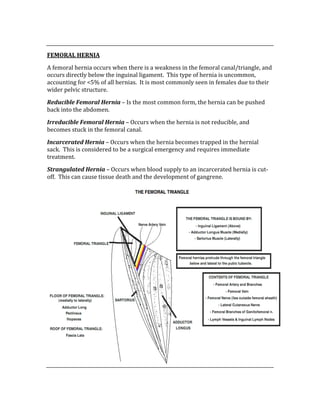
FEMORAL HERNIA 
A femoral hernia occurs when there is a weakness in the femoral canal/triangle, and 
occurs directly below the inguinal ligament.  This type of hernia is uncommon, 
accounting for <5% of all hernias.  It is most commonly seen in females due to their 
wider pelvic structure. 
Reducible Femoral Hernia – Is the most common form, the hernia can be pushed 
back into the abdomen. 
Irreducible Femoral Hernia – Occurs when the hernia is not reducible, and 
becomes stuck in the femoral canal. 
Incarcerated Hernia – Occurs when the hernia becomes trapped in the hernial 
sack.  This is considered to be a surgical emergency and requires immediate 
treatment. 
Strangulated Hernia – Occurs when blood supply to an incarcerated hernia is cut‐
off.  This can cause tissue death and the development of gangrene. 


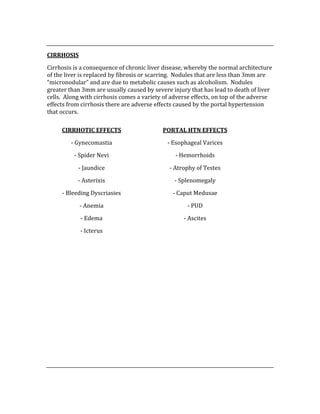
PORTAL­SYSTEMIC ANASTOMOSES 
These are anastomoses that occur between veins of the portal and systemic 
circulation.  These sites are important because several conditions may occur as a 
result of changes in pressure within each system.   
The most common conditions include: Hemorrhoids, Esophageal Varices, and Caput 
Medusae. 
CONDITION  SYSTEMIC CIRCULATION  PORTAL CIRCULATION 
Hemorrhoids  Middle Rectal and Inferior 
Rectal Veins 
Superior Rectal Veins 
Esophageal Varices  Azygous Veins  Left Gastric Vein 
Caput Medusae  Superficial Epigastric Vein  Paraumbilical Veins 
 
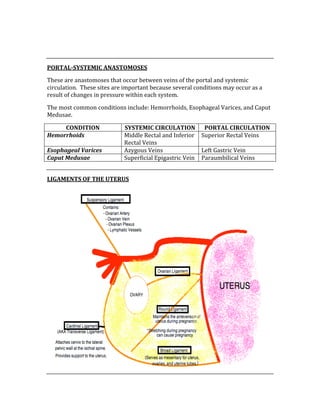
LIGAMENTS OF THE UTERUS 


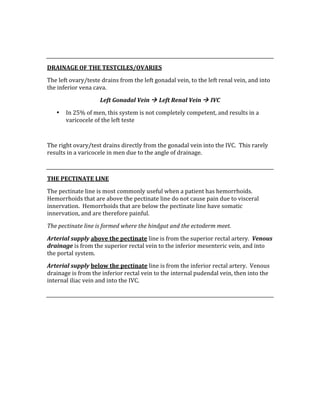
DRAINAGE OF THE TESTCILES/OVARIES 
The left ovary/teste drains from the left gonadal vein, to the left renal vein, and into 
the inferior vena cava.   
Left Gonadal Vein  Left Renal Vein  IVC 
• In 25% of men, this system is not completely competent, and results in a 
varicocele of the left teste 
 
The right ovary/test drains directly from the gonadal vein into the IVC.  This rarely 
results in a varicocele in men due to the angle of drainage. 
 
THE PECTINATE LINE 
The pectinate line is most commonly useful when a patient has hemorrhoids.  
Hemorrhoids that are above the pectinate line do not cause pain due to visceral 
innervation.  Hemorrhoids that are below the pectinate line have somatic 
innervation, and are therefore painful. 
The pectinate line is formed where the hindgut and the ectoderm meet. 
Arterial supply above the pectinate line is from the superior rectal artery.  Venous 
drainage is from the superior rectal vein to the inferior mesenteric vein, and into 
the portal system. 
Arterial supply below the pectinate line is from the inferior rectal artery.  Venous 
drainage is from the inferior rectal vein to the internal pudendal vein, then into the 
internal iliac vein and into the IVC. 


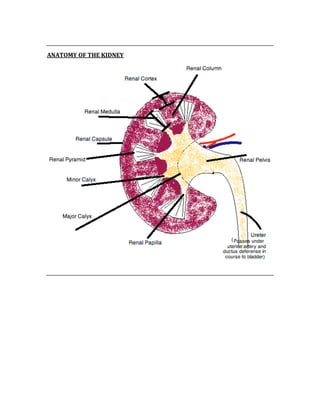
ANATOMY OF THE KIDNEY 


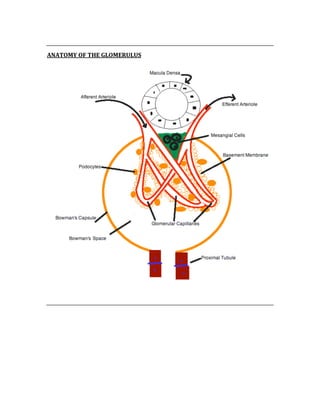
ANATOMY OF THE GLOMERULUS 


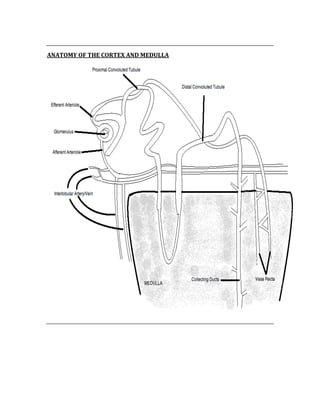
ANATOMY OF THE CORTEX AND MEDULLA 


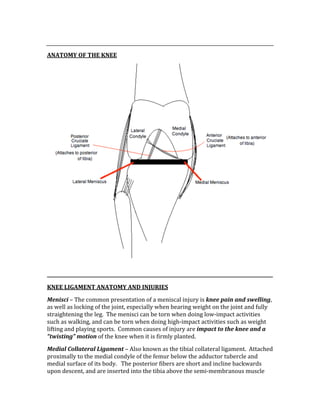
ANATOMY OF THE KNEE 
 
KNEE LIGAMENT ANATOMY AND INJURIES 
Menisci – The common presentation of a meniscal injury is knee pain and swelling, 
as well as locking of the joint, especially when bearing weight on the joint and fully 
straightening the leg.  The menisci can be torn when doing low‐impact activities 
such as walking, and can be torn when doing high‐impact activities such as weight 
lifting and playing sports.  Common causes of injury are impact to the knee and a 
“twisting” motion of the knee when it is firmly planted. 
Medial Collateral Ligament – Also known as the tibial collateral ligament.  Attached 
proximally to the medial condyle of the femur below the adductor tubercle and 
medial surface of its body.   The posterior fibers are short and incline backwards 
upon descent, and are inserted into the tibia above the semi‐membranous muscle 
groove.  It inserts into the medial surface of the tibial body about 2.5cm below the 
level of the condyle.  Injuries are common in skiing and in football when valgus 
stress is applied (this is “abduction stress” aka stress to the lateral aspect of the 
knee). 
Lateral Collateral Ligament – Also known as the “fibular collateral ligament”, is 
narrow and less broad that the medial collateral ligament.  The LCL travels obliquely 
from the lateral epicondyle of the femur to the head of the fibula.  The anatomy of 
the LCL gives it more flexibility than the MCL, and thus it is less commonly injured. 
Anterior Cruciate Ligament – The ACL gets the term “anterior” because it attaches 
to the anterior aspect of the tibia, with an origin from deep within the notch of the 
distal femur.  Injury to the anterior cruciate ligament is the most common knee 
injury, and is especially seen in athletes.  Lateral rotational moves such as those in 
soccer, basketball, and skiing are common causes of ACL strains and/or tears.  
Testing for ACL injury is done with the anterior drawer test, where the flexed 
knee is drawn forward in an attempt to identify an increased amount of anterior 
tibial translation as compared to the opposite joint.  The Lachman test is another 
diagnostic test that is similar in nature, but with the patient’s knee in 20‐30 degree 
flexion instead of the 90‐degree flexion used in the anterior drawer test. 
Posterior Cruciate Ligament – The posterior cruciate ligament gets its name 
because it attaches to the posterior aspect of the tibia.  It connects the posterior 
intercondylar area of the tibia to the medial condyle of the femur.  Injury to the PCL 
causes less pain and disability than those to the ACL, and often goes undiagnosed.  
The common cause of PCL injury is the “dashboard injury”, where something 
forcefully strikes the tibia and drives it posteriorly.  A common mechanism of injury 
during sporting events is a fall on a hyperflexed knee with the foot pointed 
downwards.  Patients often complain of a “pop” during the injury.  The PCL injury is 
diagnosed initially with the posterior drawer test, where the tibia is pushed 
backwards and a decreased resistance is experienced. 
The Unhappy Triad – This is a common knee injury seen in football, where a player 
is hit on the lateral aspect of the knee, causing damage to the ACL, MCL, and Medial 
Meniscus. 


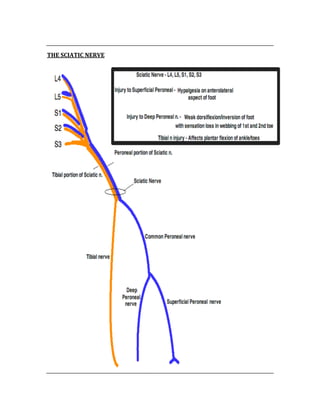
THE SCIATIC NERVE 
 
 
CHAPTER 2 
 
EMBRYOLOGY 
 
Most of the information from the embryology section is 
high­yield.  Memorization of the embryologic derivatives is 
important, as it is likely to show up on the exam, as is the 
majority of the information from this chapter. 


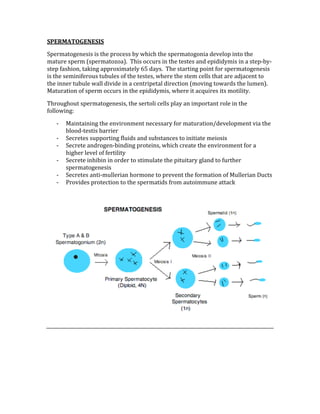
SPERMATOGENESIS 
Spermatogenesis is the process by which the spermatogonia develop into the 
mature sperm (spermatozoa).  This occurs in the testes and epididymis in a step‐by‐
step fashion, taking approximately 65 days.  The starting point for spermatogenesis 
is the seminiferous tubules of the testes, where the stem cells that are adjacent to 
the inner tubule wall divide in a centripetal direction (moving towards the lumen).  
Maturation of sperm occurs in the epididymis, where it acquires its motility. 
Throughout spermatogenesis, the sertoli cells play an important role in the 
following: 
‐ Maintaining the environment necessary for maturation/development via the 
blood‐testis barrier 
‐ Secretes supporting fluids and substances to initiate meiosis 
‐ Secrete androgen‐binding proteins, which create the environment for a 
higher level of fertility 
‐ Secrete inhibin in order to stimulate the pituitary gland to further 
spermatogenesis 
‐ Secretes anti‐mullerian hormone to prevent the formation of Mullerian Ducts 
‐ Provides protection to the spermatids from autoimmune attack 


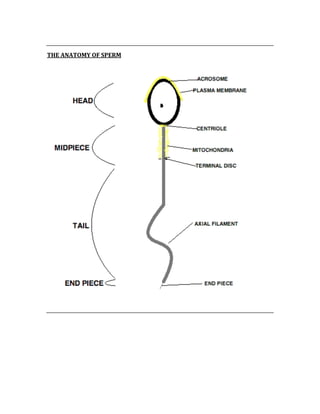
THE ANATOMY OF SPERM 


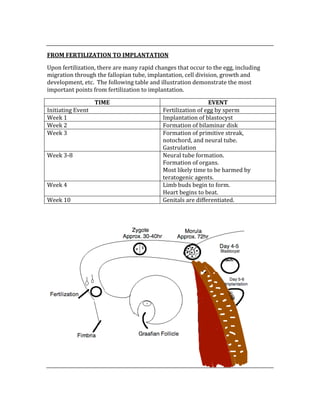
FROM FERTILIZATION TO IMPLANTATION 
Upon fertilization, there are many rapid changes that occur to the egg, including 
migration through the fallopian tube, implantation, cell division, growth and 
development, etc.  The following table and illustration demonstrate the most 
important points from fertilization to implantation. 
TIME  EVENT 
Initiating Event  Fertilization of egg by sperm 
Week 1  Implantation of blastocyst 
Week 2  Formation of bilaminar disk 
Week 3  Formation of primitive streak, 
notochord, and neural tube.   
Gastrulation 
Week 3‐8  Neural tube formation. 
Formation of organs. 
Most likely time to be harmed by 
teratogenic agents. 
Week 4  Limb buds begin to form. 
Heart begins to beat. 
Week 10  Genitals are differentiated. 


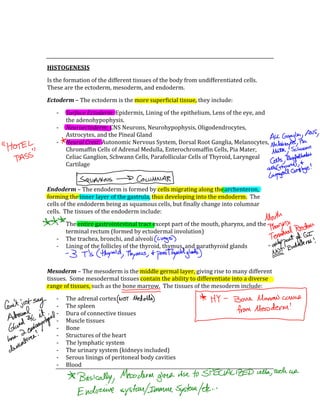
HISTOGENESIS 
Is the formation of the different tissues of the body from undifferentiated cells.  
These are the ectoderm, mesoderm, and endoderm. 
Ectoderm – The ectoderm is the more superficial tissue, they include: 
‐ Surface Ectoderm: Epidermis, Lining of the epithelium, Lens of the eye, and 
the adenohypophysis. 
‐ Neuroectoderm: CNS Neurons, Neurohypophysis, Oligodendrocytes, 
Astrocytes, and the Pineal Gland 
‐ Neural Crest: Autonomic Nervous System, Dorsal Root Ganglia, Melanocytes, 
Chromaffin Cells of Adrenal Medulla, Enterochromaffin Cells, Pia Mater, 
Celiac Ganglion, Schwann Cells, Parafollicular Cells of Thyroid, Laryngeal 
Cartilage 
 
Endoderm – The endoderm is formed by cells migrating along the archenteron, 
forming the inner layer of the gastrula, thus developing into the endoderm.  The 
cells of the endoderm being as squamous cells, but finally change into columnar 
cells.  The tissues of the endoderm include: 
‐ The entire gastrointestinal tract except part of the mouth, pharynx, and the 
terminal rectum (formed by ectodermal involution) 
‐ The trachea, bronchi, and alveoli 
‐ Lining of the follicles of the thyroid, thymus, and parathyroid glands 
 
Mesoderm – The mesoderm is the middle germal layer, giving rise to many different 
tissues.  Some mesodermal tissues contain the ability to differentiate into a diverse 
range of tissues, such as the bone marrow.  The tissues of the mesoderm include: 
‐ The adrenal cortex 
‐ The spleen 
‐ Dura of connective tissues 
‐ Muscle tissues 
‐ Bone 
‐ Structures of the heart 
‐ The lymphatic system 
‐ The urinary system (kidneys included) 
‐ Serous linings of peritoneal body cavities 
‐ Blood 
 
 
THE UMBILICAL CORD 
The umbilical cord is unique in that it contains TWO 
arteries and ONE vein.  The umbilical vein is 
responsible for supplying the fetus with oxygenated 
blood, while the arteries are responsible for carrying 
deoxygenated blood from the fetus. 
 
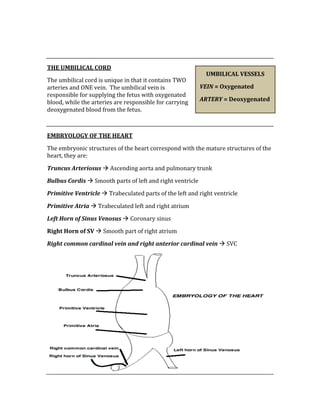
EMBRYOLOGY OF THE HEART 
The embryonic structures of the heart correspond with the mature structures of the 
heart, they are: 
Truncus Arteriosus  Ascending aorta and pulmonary trunk 
Bulbus Cordis  Smooth parts of left and right ventricle 
Primitive Ventricle  Trabeculated parts of the left and right ventricle 
Primitive Atria  Trabeculated left and right atrium 
Left Horn of Sinus Venosus  Coronary sinus 
Right Horn of SV  Smooth part of right atrium 
Right common cardinal vein and right anterior cardinal vein  SVC 
 
UMBILICAL VESSELS 
VEIN = Oxygenated 
ARTERY = Deoxygenated 
 
 
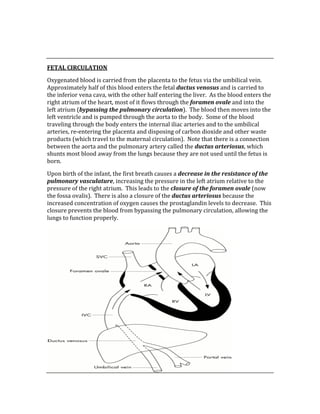
FETAL CIRCULATION 
Oxygenated blood is carried from the placenta to the fetus via the umbilical vein.  
Approximately half of this blood enters the fetal ductus venosus and is carried to 
the inferior vena cava, with the other half entering the liver.  As the blood enters the 
right atrium of the heart, most of it flows through the foramen ovale and into the 
left atrium (bypassing the pulmonary circulation).  The blood then moves into the 
left ventricle and is pumped through the aorta to the body.  Some of the blood 
traveling through the body enters the internal iliac arteries and to the umbilical 
arteries, re‐entering the placenta and disposing of carbon dioxide and other waste 
products (which travel to the maternal circulation).  Note that there is a connection 
between the aorta and the pulmonary artery called the ductus arteriosus, which 
shunts most blood away from the lungs because they are not used until the fetus is 
born. 
Upon birth of the infant, the first breath causes a decrease in the resistance of the 
pulmonary vasculature, increasing the pressure in the left atrium relative to the 
pressure of the right atrium.  This leads to the closure of the foramen ovale (now 
the fossa ovalis).  There is also a closure of the ductus arteriosus because the 
increased concentration of oxygen causes the prostaglandin levels to decrease.  This 
closure prevents the blood from bypassing the pulmonary circulation, allowing the 
lungs to function properly. 


TERATOGENIC AGENTS OF PREGNANCY 
Congenital anomalies occur in approximately 3% of all live births, with maternal 
exposure to teratogenic agents being responsible for 4%‐6% of those cases 
(approximately 1/400 liveborn infants). 
Timing is an important factor in a teratogen’s ill‐effect on the fetus, with the most 
susceptible time being between the 3rd and 8th weeks of pregnancy, which is the 
most active time of organogenesis. 
TERATOGENIC AGENT  EFFECT ON FETUS 
Androgenic Hormones  Clitoral enlargement, labioscrotal fusion 
when given before 13 weeks gestation. 
*OCP’s not shown to produce anomalies 
when used in 1st trimester of pregnancy. 
Warfarin and other coumadin‐derived 
anticoagulants 
Multiple anomalies, most commonly: 
Developmental delay, hydrocephalus, 
agenesis of corpus collosum, 
meningoencephalocele, midfacial 
hypoplasia. 
Various ocular, skeletal, and other birth 
defects. 
Antithyroid medications (PTU, 
Methimazole, Iodide) 
Occasionally produces transient fetal 
hypothyroidism and goiter. 
Diphenylhydantoin  Abnormal facies, microcephaly, growth 
deficiency, mental retardation, 
hypoplastic nails, hypoplastic phalanges. 
Valproate and Carbamazepine  Neural tube defects 
Lithium  Ebstein’s anomaly 
Diethylstilbestrol  Structural defects of the female genital 
tract, vaginal adenosis. 
Isotrenitoin  Microphthalmia, hydrocephalus, 
microtia, cleft palate, blindness, 
deafness, heart disease, thymic agenesis. 
Alcohol  Fetal alcohol syndrome 
Tobacco  Spontaneous abortion, increased risk of 
placental abruption or previa, preterm 
delivery, and premature rupture of 
membranes. 
Cocaine  Placental abruption 
Thalidomide  Limb defects 
ACE inhibitors  Renal damage 
 
FETAL ERYTHROPOIESIS 
The formation of red blood cells is carried out by four different structures 
throughout fetal development. 
From approximately 3­8 weeks, it is carried out by the YOLK SAC 
From approximately 6­30 weeks, it is carried out by the LIVER and SPLEEN 
From approximately 28 weeks and beyond, it is carried out by the BONE MARROW 
 
BRANCHIAL ARCH INNERVATION AND DERIVATIVES 
Arch 1 derivatives are supplied by CN V2 and V3 
Arch 2 derivatives supplied by CN VII 
Arch 3 derivatives supplied by CN IX 
Arch 4 and 6 derivatives are supplied by CN X 
ARCH 1  ARCH 2  ARCH 3   ARCH 4 & 6 
Meckel’s 
cartilage: 
Mandible 
Malleus 
Incus 
Sphenomandibular 
ligament 
Muscles of 
mastication: 
Masseter 
Lateral/Medial 
pterygoid 
Mylohyoid 
Anterior belly of 
digastric 
Tensor tympani 
Tensor veli palatini 
Nerve: CN V3 
Reiter’s Cartilage: 
Stapes 
Styloid process 
Lesser horn of 
hyoid 
Stylohyoid 
ligament 
Muscles: 
Stapedius 
Stylohyoid 
Posterior belly of 
digastric 
Nerve: CN VII 
Cartilage: 
Greater horn of 
hyoid 
Muscles: 
Stylopharyngeus 
Nerve: CN IX 
Cartilage: 
Thyroid 
Cricoid 
Arytenoids 
Corniculate 
Cuneiform 
Muscles of 4th 
arch: 
Most of the 
pharyngeal 
constrictors 
Cricothyroid 
Levator veli 
palatini 
Muscles of 6th 
arch: 
All intrinsic 
muscles of larynx 
except cricothyroid 
Nerve: 4th arch is 
CN X, 6th arch is CN 
X 


BRANCHIAL CLEFT DERIVATIVES 
1st branchial cleft  External auditory meatus 
2nd – 4th clefts  Formation of temporary cervical sinuses when the 2nd arch 
mesenchyme is obliterated 
 
BRANCHIAL POUCH DERIVATIVES 
1st pouch  middle ear cavity, Eustachian tube, mastoid air cells 
2nd pouch  epithelial lining of the palatine tonsil 
3rd pouch (dorsal wings)  inferior parathyroids 
3rd pouch (ventral wings)  thymus 
4th pouch superior parathyroids 
 
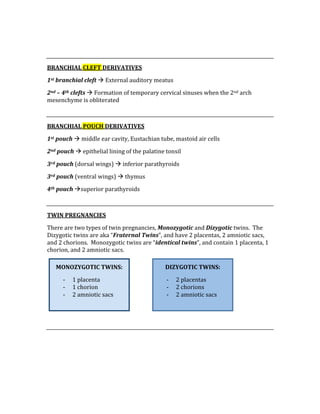
TWIN PREGNANCIES 
There are two types of twin pregnancies, Monozygotic and Dizygotic twins.  The 
Dizygotic twins are aka “Fraternal Twins”, and have 2 placentas, 2 amniotic sacs, 
and 2 chorions.  Monozygotic twins are “identical twins”, and contain 1 placenta, 1 
chorion, and 2 amniotic sacs. 


MONOZYGOTIC TWINS: 
‐ 1 placenta 
‐ 1 chorion 
‐ 2 amniotic sacs 
DIZYGOTIC TWINS: 
‐ 2 placentas 
‐ 2 chorions 
‐ 2 amniotic sacs 
 
EMBRYOLOGY OF THE EAR 
The bones, muscles, and other structures of the ear all have embryologic derivates.  
These structures and their derivatives are: 
Ear Structure  Embryologic Derivative 
Tympanic Membrane  1st pharyngeal membrane 
Eustachian Tube  1st pharyngeal membrane 
External Auditory Meatus  1st cleft 
Incus  1st arch 
Malleus  1st arch 
Stapes  2nd arch 
Tensor Tympani (V3)  1st arch 
Stapedius (VII)  2nd arch 
 
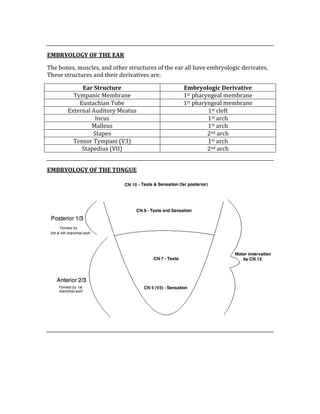
EMBRYOLOGY OF THE TONGUE 


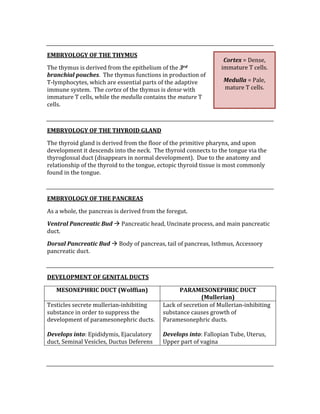
EMBRYOLOGY OF THE THYMUS 
The thymus is derived from the epithelium of the 3rd 
branchial pouches.  The thymus functions in production of 
T‐lymphocytes, which are essential parts of the adaptive 
immune system.  The cortex of the thymus is dense with 
immature T cells, while the medulla contains the mature T 
cells. 
 
EMBRYOLOGY OF THE THYROID GLAND 
The thyroid gland is derived from the floor of the primitive pharynx, and upon 
development it descends into the neck.  The thyroid connects to the tongue via the 
thyroglossal duct (disappears in normal development).  Due to the anatomy and 
relationship of the thyroid to the tongue, ectopic thyroid tissue is most commonly 
found in the tongue. 
 
EMBRYOLOGY OF THE PANCREAS 
As a whole, the pancreas is derived from the foregut. 
Ventral Pancreatic Bud  Pancreatic head, Uncinate process, and main pancreatic 
duct. 
Dorsal Pancreatic Bud  Body of pancreas, tail of pancreas, Isthmus, Accessory 
pancreatic duct. 
 
DEVELOPMENT OF GENITAL DUCTS 
MESONEPHRIC DUCT (Wolffian)  PARAMESONEPHRIC DUCT 
(Mullerian) 
Testicles secrete mullerian‐inhibiting 
substance in order to suppress the 
development of paramesonephric ducts. 
 
Develops into: Epididymis, Ejaculatory 
duct, Seminal Vesicles, Ductus Deferens 
Lack of secretion of Mullerian‐inhibiting 
substance causes growth of 
Paramesonephric ducts. 
 
Develops into: Fallopian Tube, Uterus, 
Upper part of vagina 
 
 
Cortex = Dense, 
immature T cells. 
Medulla = Pale, 
mature T cells. 
 
 
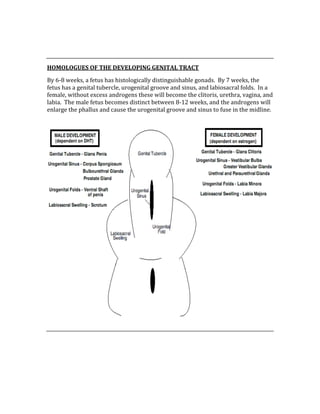
HOMOLOGUES OF THE DEVELOPING GENITAL TRACT 
By 6‐8 weeks, a fetus has histologically distinguishable gonads.  By 7 weeks, the 
fetus has a genital tubercle, urogenital groove and sinus, and labiosacral folds.  In a 
female, without excess androgens these will become the clitoris, urethra, vagina, and 
labia.  The male fetus becomes distinct between 8‐12 weeks, and the androgens will 
enlarge the phallus and cause the urogenital groove and sinus to fuse in the midline. 


EMBRYOLOGY OF THE DIAPHRAGM 
During initial development, the diaphragm is innervated by nerves C3, C4, and C5.  
As the diaphragm descends, it maintains this innervation.  
The diaphragm is derived from the following embryologic structures: 
‐ Septum Transversum 
‐ Pleuroperitoneal Folds 
‐ Body Wall 
‐ Dorsal Mesentary of the Esophagus 
 
FORMATION OF BONE 
There are two main types of bone development, those being “intramembranous” 
bone and “endochondral” bone.  Intramembranous bone is formed spontaneously 
without the presence or need of any pre‐existing cartilage.  On the other hand, 
endochondral bone (long bones) requires the presence of cartilaginous molds in 
order to form its bony structure.  The cartilaginous mold ossifies and produces the 
endochondral bone. 
 
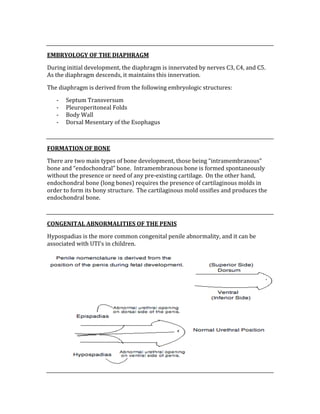
CONGENITAL ABNORMALITIES OF THE PENIS 
Hypospadias is the more common congenital penile abnormality, and it can be 
associated with UTI’s in children.   
 
 
CHAPTER 3 
 
HISTOLOGY 
 
Histology is not traditionally a very high­yield component of 
the Step 1 exam, but it is important to know which type of 
epithelium makes up all of the structures of the body, as 
well as all pathologies that are linked to histological 
changes. 


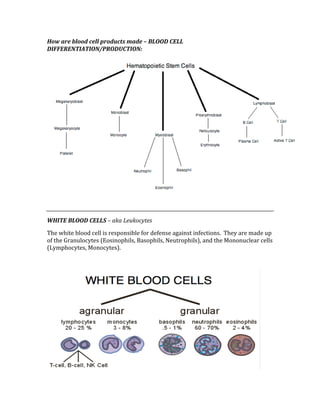
How are blood cell products made – BLOOD CELL 
DIFFERENTIATION/PRODUCTION: 
 
 
WHITE BLOOD CELLS – aka Leukocytes 
The white blood cell is responsible for defense against infections.  They are made up 
of the Granulocytes (Eosinophils, Basophils, Neutrophils), and the Mononuclear cells 
(Lymphocytes, Monocytes). 


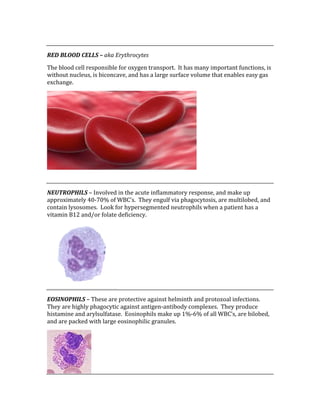
RED BLOOD CELLS – aka Erythrocytes 
The blood cell responsible for oxygen transport.  It has many important functions, is 
without nucleus, is biconcave, and has a large surface volume that enables easy gas 
exchange. 
 
 
NEUTROPHILS – Involved in the acute inflammatory response, and make up 
approximately 40‐70% of WBC’s.  They engulf via phagocytosis, are multilobed, and 
contain lysosomes.  Look for hypersegmented neutrophils when a patient has a 
vitamin B12 and/or folate deficiency. 
 
EOSINOPHILS – These are protective against helminth and protozoal infections.  
They are highly phagocytic against antigen‐antibody complexes.  They produce 
histamine and arylsulfatase.  Eosinophils make up 1%‐6% of all WBC’s, are bilobed, 
and are packed with large eosinophilic granules. 
 
 
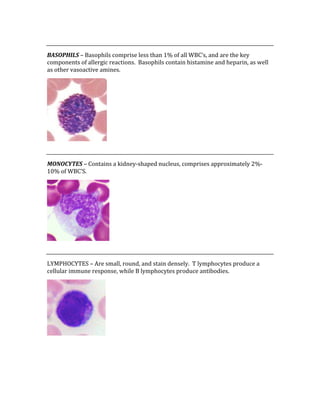
BASOPHILS – Basophils comprise less than 1% of all WBC’s, and are the key 
components of allergic reactions.  Basophils contain histamine and heparin, as well 
as other vasoactive amines.   
 
 
MONOCYTES – Contains a kidney‐shaped nucleus, comprises approximately 2%‐
10% of WBC’S. 
 
 
LYMPHOCYTES – Are small, round, and stain densely.  T lymphocytes produce a 
cellular immune response, while B lymphocytes produce antibodies. 


NEUROHISTOLOGY 
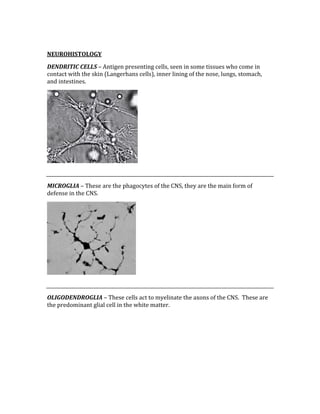
DENDRITIC CELLS – Antigen presenting cells, seen in some tissues who come in 
contact with the skin (Langerhans cells), inner lining of the nose, lungs, stomach, 
and intestines. 
 
 
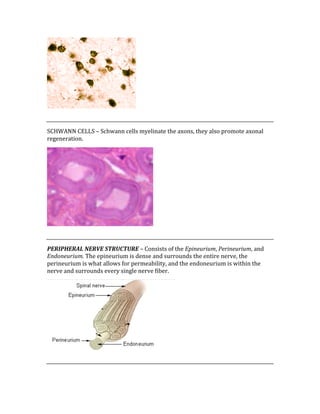
MICROGLIA – These are the phagocytes of the CNS, they are the main form of 
defense in the CNS. 
 
 
OLIGODENDROGLIA – These cells act to myelinate the axons of the CNS.  These are 
the predominant glial cell in the white matter. 
 
 
SCHWANN CELLS – Schwann cells myelinate the axons, they also promote axonal 
regeneration. 
 
 
PERIPHERAL NERVE STRUCTURE – Consists of the Epineurium, Perineurium, and 
Endoneurium. The epineurium is dense and surrounds the entire nerve, the 
perineurium is what allows for permeability, and the endoneurium is within the 
nerve and surrounds every single nerve fiber. 


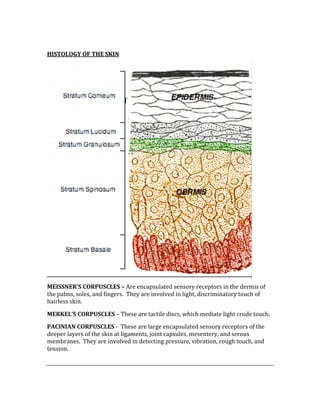
HISTOLOGY OF THE SKIN 
 
MEISSNER’S CORPUSCLES – Are encapsulated sensory receptors in the dermis of 
the palms, soles, and fingers.  They are involved in light, discriminatory touch of 
hairless skin. 
MERKEL’S CORPUSCLES – These are tactile discs, which mediate light crude touch. 
PACINIAN CORPUSCLES ‐  These are large encapsulated sensory receptors of the 
deeper layers of the skin at ligaments, joint capsules, mesentery, and serous 
membranes.  They are involved in detecting pressure, vibration, rough touch, and 
tension. 


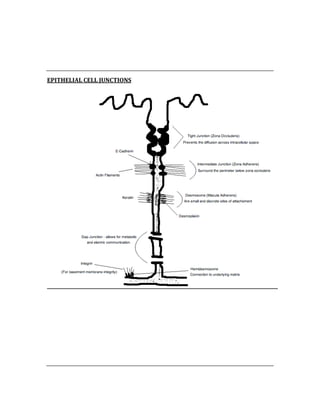
EPITHELIAL CELL JUNCTIONS 


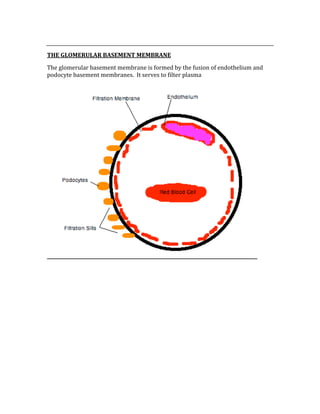
THE GLOMERULAR BASEMENT MEMBRANE 
The glomerular basement membrane is formed by the fusion of endothelium and 
podocyte basement membranes.  It serves to filter plasma 


THE GOLGI APPARATUS 
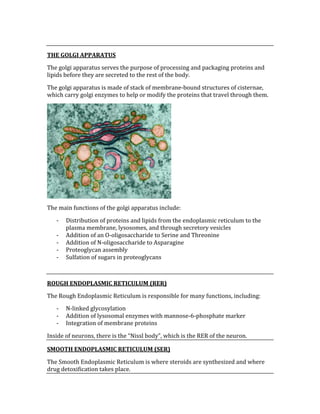
The golgi apparatus serves the purpose of processing and packaging proteins and 
lipids before they are secreted to the rest of the body. 
The golgi apparatus is made of stack of membrane‐bound structures of cisternae, 
which carry golgi enzymes to help or modify the proteins that travel through them. 
 
The main functions of the golgi apparatus include:  
‐ Distribution of proteins and lipids from the endoplasmic reticulum to the 
plasma membrane, lysosomes, and through secretory vesicles 
‐ Addition of an O‐oligosaccharide to Serine and Threonine 
‐ Addition of N‐oligosaccharide to Asparagine 
‐ Proteoglycan assembly 
‐ Sulfation of sugars in proteoglycans 
 
ROUGH ENDOPLASMIC RETICULUM (RER) 
The Rough Endoplasmic Reticulum is responsible for many functions, including: 
‐ N‐linked glycosylation 
‐ Addition of lysosomal enzymes with mannose‐6‐phosphate marker 
‐ Integration of membrane proteins 
Inside of neurons, there is the “Nissl body”, which is the RER of the neuron. 
SMOOTH ENDOPLASMIC RETICULUM (SER) 
The Smooth Endoplasmic Reticulum is where steroids are synthesized and where 
drug detoxification takes place. 
 
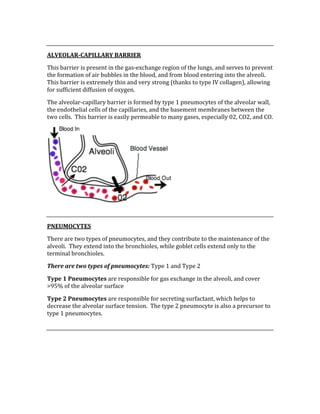
ALVEOLAR­CAPILLARY BARRIER 
This barrier is present in the gas‐exchange region of the lungs, and serves to prevent 
the formation of air bubbles in the blood, and from blood entering into the alveoli.  
This barrier is extremely thin and very strong (thanks to type IV collagen), allowing 
for sufficient diffusion of oxygen. 
The alveolar‐capillary barrier is formed by type 1 pneumocytes of the alveolar wall, 
the endothelial cells of the capillaries, and the basement membranes between the 
two cells.  This barrier is easily permeable to many gases, especially 02, CO2, and CO. 
 
 
PNEUMOCYTES 
There are two types of pneumocytes, and they contribute to the maintenance of the 
alveoli.  They extend into the bronchioles, while goblet cells extend only to the 
terminal bronchioles. 
There are two types of pneumocytes: Type 1 and Type 2 
Type 1 Pneumocytes are responsible for gas exchange in the alveoli, and cover 
>95% of the alveolar surface 
Type 2 Pneumocytes are responsible for secreting surfactant, which helps to 
decrease the alveolar surface tension.  The type 2 pneumocyte is also a precursor to 
type 1 pneumocytes. 


THE DIGESTIVE TRACT 
The histology/anatomy of the digestive tract is complex, consisting of supportive 
structures, muscular structures, and glandular structures.  The GI tract is also an 
important part of the immune system. 
The upper GI tract consists of the esophagus, stomach, and duodenum. 
The lower GI tract includes most of the small intestine, the large intestine, and the 
anus. 
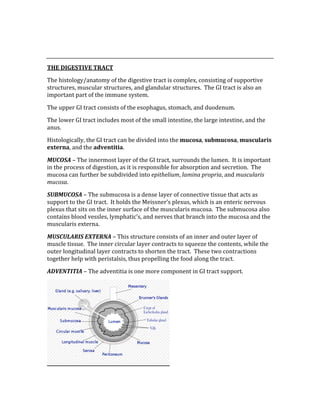
Histologically, the GI tract can be divided into the mucosa, submucosa, muscularis 
externa, and the adventitia. 
MUCOSA – The innermost layer of the GI tract, surrounds the lumen.  It is important 
in the process of digestion, as it is responsible for absorption and secretion.  The 
mucosa can further be subdivided into epithelium, lamina propria, and muscularis 
mucosa.  
SUBMUCOSA – The submucosa is a dense layer of connective tissue that acts as 
support to the GI tract.  It holds the Meissner’s plexus, which is an enteric nervous 
plexus that sits on the inner surface of the muscularis mucosa.  The submucosa also 
contains blood vessles, lymphatic’s, and nerves that branch into the mucosa and the 
muscularis externa. 
MUSCULARIS EXTERNA – This structure consists of an inner and outer layer of 
muscle tissue.  The inner circular layer contracts to squeeze the contents, while the 
outer longitudinal layer contracts to shorten the tract.  These two contractions 
together help with peristalsis, thus propelling the food along the tract.   
ADVENTITIA – The adventitia is one more component in GI tract support. 
 
There are two enteric plexuses that help co‐ordinate all of the functions of the GI 
tract. 
The Myenteric Plexus – Co‐ordination of motility along the entire gut wall.  This 
plexus is located between the longitudinal and circular smooth muscle of the GI 
tract, and is also known as Auerbach’s plexus. 
The Submucosal Plexus – This plexus regulates secretions, blood flow, and 
absorption.  Located between the mucosa and the inner layer of smooth muscle, it is 
also known as Meissner’s plexus. 
*Both plexuses contain parasympathetic terminal effector neurons. 
 
BRUNNER’S GLANDS 
Brunner’s glands are the only glands in the GI submucosa.  They are responsible for 
secreting alkaline mucus, and may hypertrophy in the case of a duodenal ulcer. 
 
PEYER’S PATCHES 
Peyer’s patches are aggregations of lymphoid tissue that are found in the ileum.  
They are ovally‐shaped lymphoid follicles in the lamina propria layer of the mucosa, 
extending into the submucosa of the ileum. 
These patches are unencapsulated, covered by a single layer of cuboidal enterocytes 
with specialized M cells interspersed.  These M cells are responsible for taking up 
antigens. 
Stimulated B cells travel from the Peyer’s patches, going through the lymph and 
blood to the lamina propria of the intestine, where they differentiate into IgA‐
secreting plasma cells.  The IgA is protective, traveling across the epithelium to the 
gut to deal with the intraluminal antigen. 


LYMPH NODES 
Lymph nodes are secondary lymphoid organs that function as non‐specific filtration 
by macrophages, antibody production, and storage or B and T cells.  The lymph node 
contains many afferents, and at least one or more efferent.   
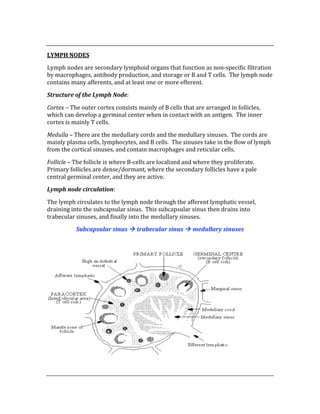
Structure of the Lymph Node: 
Cortex – The outer cortex consists mainly of B cells that are arranged in follicles, 
which can develop a germinal center when in contact with an antigen.  The inner 
cortex is mainly T cells. 
Medulla – There are the medullary cords and the medullary sinuses.  The cords are 
mainly plasma cells, lymphocytes, and B cells.  The sinuses take in the flow of lymph 
from the cortical sinuses, and contain macrophages and reticular cells. 
Follicle – The follicle is where B‐cells are localized and where they proliferate.  
Primary follicles are dense/dormant, where the secondary follicles have a pale 
central germinal center, and they are active. 
Lymph node circulation: 
The lymph circulates to the lymph node through the afferent lymphatic vessel, 
draining into the subcapsular sinus.  This subcapsular sinus then drains into 
trabecular sinuses, and finally into the medullary sinuses. 
Subcapsular sinus  trabecular sinus  medullary sinuses 


ADRENAL CORTEX & MEDULLA 
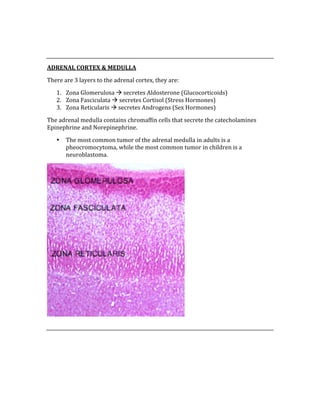
There are 3 layers to the adrenal cortex, they are: 
1. Zona Glomerulosa  secretes Aldosterone (Glucocorticoids) 
2. Zona Fasciculata  secretes Cortisol (Stress Hormones) 
3. Zona Reticularis  secretes Androgens (Sex Hormones) 
The adrenal medulla contains chromaffin cells that secrete the catecholamines 
Epinephrine and Norepinephrine. 
• The most common tumor of the adrenal medulla in adults is a 
pheocromocytoma, while the most common tumor in children is a 
neuroblastoma. 


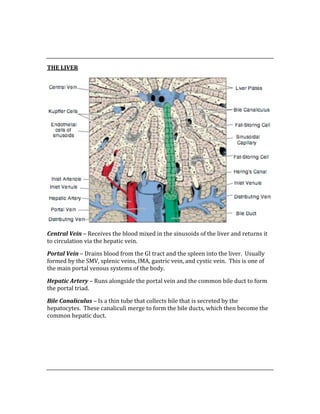
THE LIVER 
 
Central Vein – Receives the blood mixed in the sinusoids of the liver and returns it 
to circulation via the hepatic vein. 
Portal Vein – Drains blood from the GI tract and the spleen into the liver.  Usually 
formed by the SMV, splenic veins, IMA, gastric vein, and cystic vein.  This is one of 
the main portal venous systems of the body. 
Hepatic Artery – Runs alongside the portal vein and the common bile duct to form 
the portal triad. 
Bile Canaliculus – Is a thin tube that collects bile that is secreted by the 
hepatocytes.  These canaliculi merge to form the bile ducts, which then become the 
common hepatic duct. 


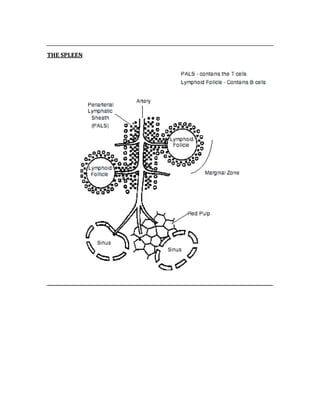
THE SPLEEN 


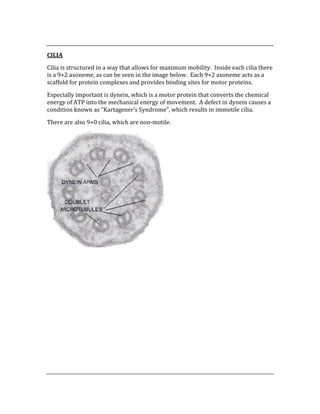
CILIA 
Cilia is structured in a way that allows for maximum mobility.  Inside each cilia there 
is a 9+2 axoneme, as can be seen in the image below.  Each 9+2 axoneme acts as a 
scaffold for protein complexes and provides binding sites for motor proteins.   
Especially important is dynein, which is a motor protein that converts the chemical 
energy of ATP into the mechanical energy of movement.  A defect in dynein causes a 
condition known as “Kartagener’s Syndrome”, which results in immotile cilia. 
There are also 9+0 cilia, which are non‐motile. 


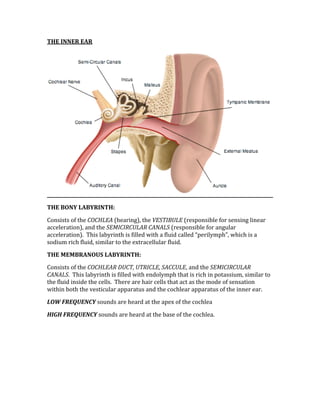
THE INNER EAR 
 
THE BONY LABYRINTH: 
Consists of the COCHLEA (hearing), the VESTIBULE (responsible for sensing linear 
acceleration), and the SEMICIRCULAR CANALS (responsible for angular 
acceleration).  This labyrinth is filled with a fluid called “perilymph”, which is a 
sodium rich fluid, similar to the extracellular fluid. 
THE MEMBRANOUS LABYRINTH: 
Consists of the COCHLEAR DUCT, UTRICLE, SACCULE, and the SEMICIRCULAR 
CANALS.  This labyrinth is filled with endolymph that is rich in potassium, similar to 
the fluid inside the cells.  There are hair cells that act as the mode of sensation 
within both the vesticular apparatus and the cochlear apparatus of the inner ear. 
LOW FREQUENCY sounds are heard at the apex of the cochlea 
HIGH FREQUENCY sounds are heard at the base of the cochlea. 


CHAPTER 4 
 
NEUROANATOMY 
 
Neuroanatomy is a high­yield section of the USMLE exam.  
Focus on basic neuroanatomy (blood supply, nerve supply), 
as well the associated neuropathology and 
neurophysiology. 


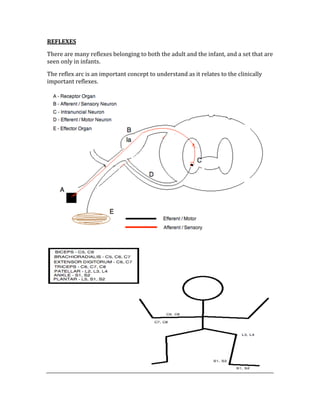
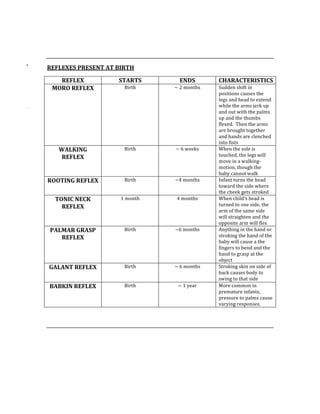
REFLEXES 
There are many reflexes belonging to both the adult and the infant, and a set that are 
seen only in infants. 
The reflex arc is an important concept to understand as it relates to the clinically 
important reflexes. 


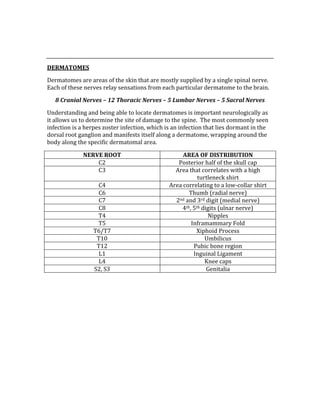
DERMATOMES 
Dermatomes are areas of the skin that are mostly supplied by a single spinal nerve.  
Each of these nerves relay sensations from each particular dermatome to the brain.   
8 Cranial Nerves – 12 Thoracic Nerves – 5 Lumbar Nerves – 5 Sacral Nerves 
Understanding and being able to locate dermatomes is important neurologically as 
it allows us to determine the site of damage to the spine.  The most commonly seen 
infection is a herpes zoster infection, which is an infection that lies dormant in the 
dorsal root ganglion and manifests itself along a dermatome, wrapping around the 
body along the specific dermatomal area. 
NERVE ROOT  AREA OF DISTRIBUTION 
C2  Posterior half of the skull cap 
C3  Area that correlates with a high 
turtleneck shirt 
C4  Area correlating to a low‐collar shirt 
C6  Thumb (radial nerve) 
C7  2nd and 3rd digit (medial nerve) 
C8  4th, 5th digits (ulnar nerve) 
T4  Nipples 
T5  Inframammary Fold 
T6/T7  Xiphoid Process 
T10  Umbilicus 
T12  Pubic bone region 
L1  Inguinal Ligament 
L4  Knee caps 
S2, S3  Genitalia 


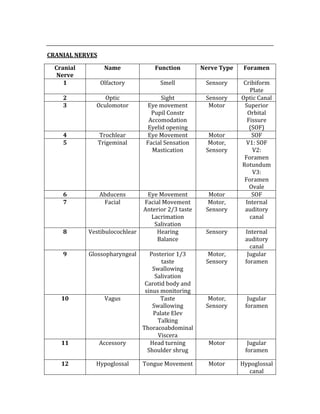
CRANIAL NERVES 
Cranial 
Nerve 
Name  Function  Nerve Type  Foramen 
1  Olfactory  Smell  Sensory  Cribiform 
Plate 
2  Optic  Sight  Sensory  Optic Canal 
3  Oculomotor  Eye movement 
Pupil Constr 
Accomodation 
Eyelid opening 
Motor  Superior 
Orbital 
Fissure 
(SOF) 
4  Trochlear  Eye Movement  Motor  SOF 
5  Trigeminal  Facial Sensation 
Mastication 
Motor, 
Sensory 
V1: SOF 
V2: 
Foramen 
Rotundum 
V3: 
Foramen 
Ovale 
6  Abducens  Eye Movement  Motor  SOF 
7  Facial  Facial Movement 
Anterior 2/3 taste 
Lacrimation 
Salivation 
Motor, 
Sensory 
Internal 
auditory 
canal 
8  Vestibulocochlear  Hearing 
Balance 
Sensory  Internal 
auditory 
canal 
9  Glossopharyngeal  Posterior 1/3 
taste 
Swallowing 
Salivation 
Carotid body and 
sinus monitoring 
Motor, 
Sensory 
Jugular 
foramen 
10  Vagus  Taste 
Swallowing 
Palate Elev 
Talking 
Thoracoabdominal 
Viscera 
Motor, 
Sensory 
Jugular 
foramen 
11  Accessory  Head turning 
Shoulder shrug 
Motor  Jugular 
foramen 
12  Hypoglossal  Tongue Movement  Motor  Hypoglossal 
canal 
 
Mnemonic for the Cranial nerves: 
On Old Olympus’ Towering Tops A Friendly Viking Grew Vines And Hops 
 
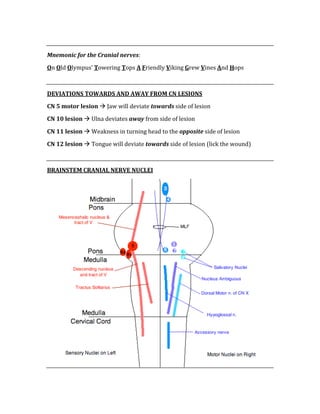
DEVIATIONS TOWARDS AND AWAY FROM CN LESIONS 
CN 5 motor lesion  Jaw will deviate towards side of lesion 
CN 10 lesion  Ulna deviates away from side of lesion 
CN 11 lesion  Weakness in turning head to the opposite side of lesion 
CN 12 lesion  Tongue will deviate towards side of lesion (lick the wound) 
 
BRAINSTEM CRANIAL NERVE NUCLEI 


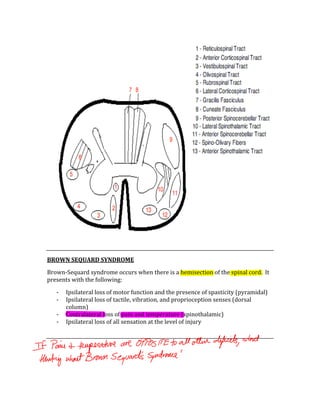
THE TRACTS OF THE SPINAL CORD 
Memorization of the functions of different areas of the spinal cord is essential to 
being able to identify where a particular spinal cord lesion may be located. 
Pyrimidal: 
Lateral Corticospinal – Controls movement of ipsilateral limbs 
Anterior Corticospinal – Conduction of voluntary motor impulses from precentral 
gyrus to the motor center of the cord 
Extrapyrimidal: 
Rubrospinal – Main route for mediation of voluntary movement (large muscles and 
fine motor control) 
Reticulospinal – Co‐ordinates automatic movement of locomotion and posture, 
influences muscle tone, mediates autonomic functions, and modulates pain impulses 
Vestibulospinal – Lateral: Ipsilateral descent to paravertebral and proximal limb 
extension.  Medial: Bilateral descent, controls eye movement, neck position, gaze 
Dorsal Column Medial Lemniscus System: 
Gracile Faciculus – Fine touch, vibration, proprioception to lower body 
Cuneate Fasciculus – Fine touch, vibration, and proprioception to upper body 
Spinocerebellar Tract: 
Posterior Spinocerebellar Tract – Limb and joint position 
Anterior Spinocerebellar Tract – Limb and joint position 
Anterolateral System: 
Lateral Spinothalamic Tract – Pain and temperature  
Anterior Spinothalamic Tract – Soft nocioception 
Spino­Olivary Tract: Proprioception from muscles and tendons as well as 
cutaneous impulses to the olivary nucleus 


BROWN SEQUARD SYNDROME 
Brown‐Sequard syndrome occurs when there is a hemisection of the spinal cord.  It 
presents with the following: 
‐ Ipsilateral loss of motor function and the presence of spasticity (pyramidal) 
‐ Ipsilateral loss of tactile, vibration, and proprioception senses (dorsal 
column) 
‐ Contralateral loss of pain and temperature (spinothalamic) 
‐ Ipsilateral loss of all sensation at the level of injury 


UMN & LMN LESIONS 
SIGN  UMN LESION  LMN LESION 
Weakness  Present  Present 
Atrophy  Absent  Present 
Reflexes  Increased  Decreased 
Tone  Increased  Decreased 
Fasciculations  Absent  Present 
Babinski  Present  Absent 
 
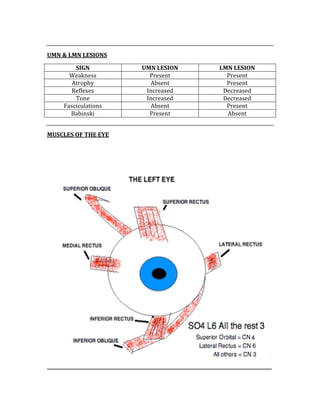
MUSCLES OF THE EYE 


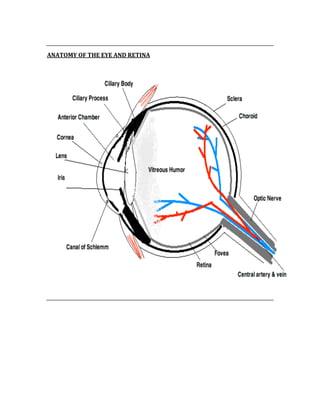
ANATOMY OF THE EYE AND RETINA 


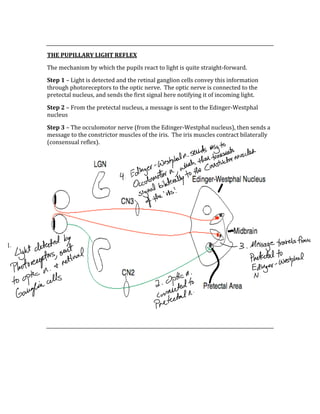
THE PUPILLARY LIGHT REFLEX 
The mechanism by which the pupils react to light is quite straight‐forward.  
Step 1 – Light is detected and the retinal ganglion cells convey this information 
through photoreceptors to the optic nerve.  The optic nerve is connected to the 
pretectal nucleus, and sends the first signal here notifying it of incoming light.   
Step 2 – From the pretectal nucleus, a message is sent to the Edinger‐Westphal 
nucleus 
Step 3 – The occulomotor nerve (from the Edinger‐Westphal nucleus), then sends a 
message to the constrictor muscles of the iris.  The iris muscles contract bilaterally 
(consensual reflex). 


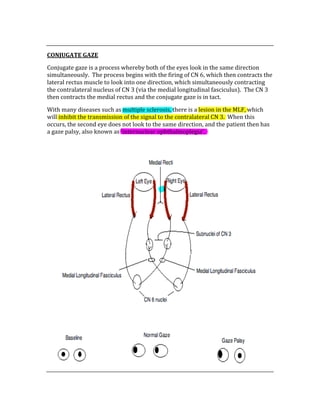
CONJUGATE GAZE 
Conjugate gaze is a process whereby both of the eyes look in the same direction 
simultaneously.  The process begins with the firing of CN 6, which then contracts the 
lateral rectus muscle to look into one direction, which simultaneously contracting 
the contralateral nucleus of CN 3 (via the medial longitudinal fasciculus).  The CN 3 
then contracts the medial rectus and the conjugate gaze is in tact.   
With many diseases such as multiple sclerosis, there is a lesion in the MLF, which 
will inhibit the transmission of the signal to the contralateral CN 3.  When this 
occurs, the second eye does not look to the same direction, and the patient then has 
a gaze palsy, also known as ‘internuclear ophthalmoplegia’. 
 
 
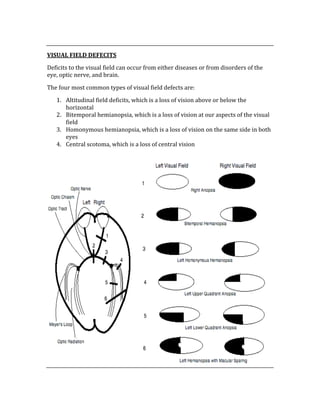
VISUAL FIELD DEFECITS 
Deficits to the visual field can occur from either diseases or from disorders of the 
eye, optic nerve, and brain.   
The four most common types of visual field defects are: 
1. Altitudinal field deficits, which is a loss of vision above or below the 
horizontal 
2. Bitemporal hemianopsia, which is a loss of vision at our aspects of the visual 
field 
3. Homonymous hemianopsia, which is a loss of vision on the same side in both 
eyes 
4. Central scotoma, which is a loss of central vision 


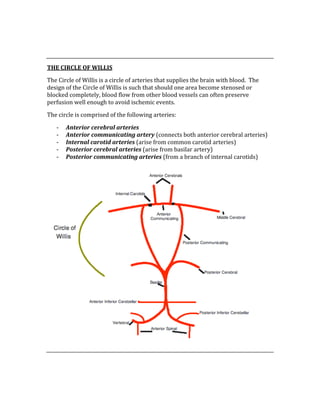
THE CIRCLE OF WILLIS 
The Circle of Willis is a circle of arteries that supplies the brain with blood.  The 
design of the Circle of Willis is such that should one area become stenosed or 
blocked completely, blood flow from other blood vessels can often preserve 
perfusion well enough to avoid ischemic events. 
The circle is comprised of the following arteries: 
‐ Anterior cerebral arteries 
‐ Anterior communicating artery (connects both anterior cerebral arteries) 
‐ Internal carotid arteries (arise from common carotid arteries) 
‐ Posterior cerebral arteries (arise from basilar artery) 
‐ Posterior communicating arteries (from a branch of internal carotids) 


BLOOD SUPPLY TO THE BRAIN 
Anterior Cerebral Artery – supplies the medial surface of the brain, and the leg‐foot 
area of the motor and sensory cortices. 
Middle Cerebral Artery – supplies the lateral aspect of the brain, the trunk‐arm‐
face area of the motor and sensory cortices, as well as Broca’s and Wernicke’s 
speech areas. 
Anterior Communicating Artery – connects the anterior cerebral arteries, and is 
the most common site of Circle of Willis aneurysm. 
Posterior Communicating Artery – connects three cerebral arteries on each side, is 
another common site of aneurysm, and can cause cranial nerve 3 palsies. 
 
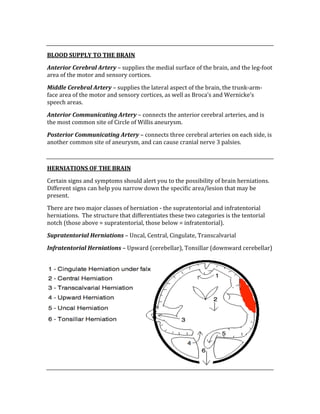
HERNIATIONS OF THE BRAIN 
Certain signs and symptoms should alert you to the possibility of brain herniations.  
Different signs can help you narrow down the specific area/lesion that may be 
present. 
There are two major classes of herniation ‐ the supratentorial and infratentorial 
herniations.  The structure that differentiates these two categories is the tentorial 
notch (those above = supratentorial, those below = infratentorial). 
Supratentorial Herniations – Uncal, Central, Cingulate, Transcalvarial 
Infratentorial Herniations – Upward (cerebellar), Tonsillar (downward cerebellar) 


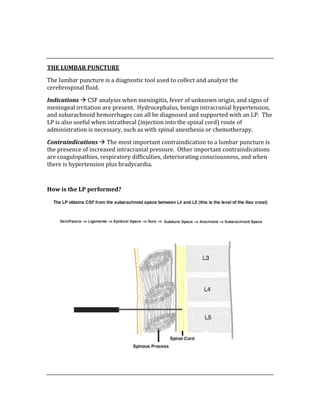
THE LUMBAR PUNCTURE 
The lumbar puncture is a diagnostic tool used to collect and analyze the 
cerebrospinal fluid. 
Indications  CSF analysis when meningitis, fever of unknown origin, and signs of 
meningeal irritation are present.  Hydrocephalus, benign intracranial hypertension, 
and subarachnoid hemorrhages can all be diagnosed and supported with an LP.  The 
LP is also useful when intrathecal (injection into the spinal cord) route of 
administration is necessary, such as with spinal anesthesia or chemotherapy. 
Contraindications  The most important contraindication to a lumbar puncture is 
the presence of increased intracranial pressure.  Other important contraindications 
are coagulopathies, respiratory difficulties, deteriorating consciousness, and when 
there is hypertension plus bradycardia. 
 
How is the LP performed? 


UPPER MOTOR NEURONS 
Upper motor neurons are motor neurons that originate in the motor region of the 
cortex or brain stem.  They carry information down specific areas on the spinal cord, 
at which point they send signals to the lower motor neurons (via glutaminergic 
receptors).  The main effector neurons are within layer 5 of the primary motor 
cortex, and these are some of the largest cells in the brain. 
 
Upper motor neurons tracts: 
The UMN’s travel via several different tract, including: 
‐ Corticospinal 
‐ Corticobulbar 
‐ Tectospinal 
‐ Rubrospinal 
‐ Vestibulospinal 
‐ Reticulospinal 
 
UMN Lesions: 
There are a set of common symptoms that occur with an UMN lesions, including: 
‐ Spasticity 
‐ Decreased muscle tone 
‐ Positive Babinski Sign 
‐ Pyramidal weakness 
‐ Hyperreflexia 
‐ Increased DTR’s 


LOWER MOTOR NEURONS 
Lower motor neurons are the motor neurons that connect the brainstem and the 
spinal cord to the muscle fibers (ie their axon ends in the effector muscle). 
The LMN’s are classified based on the muscle fiber types that they each innervate, 
these are the alpha‐motor neurons and the gamma‐motor neurons. 
Alpha­motor neurons – Are the most numerous type of neurons of muscle fiber, are 
involved in muscle contraction, and innervate extrafusal muscle fibers. 
Gamma­motor neurons – Are components of the muscle spindles, involved in 
proprioception, and innervate the intrafusal muscle fibers. 
 
LMN lesions: 
There are a set of common symptoms with LMN lesions, including: 
‐ Decreased muscle tone 
‐ Muscular weakness 
‐ Hyporeflexia 
‐ Fasciculations 
‐ Atrophy of skeletal muscle 
‐ Paralysis 
 
IMPORTANT CLINICAL CONDITIONS INVOLVING UMN & LMN LESIONS 
Amyotrophic Lateral Sclerosis – Both UMN and LMN signs.  Is a slowly developing 
disease that is ultimately fatal.  Patient experiences weakness and wasting of the 
bulbar muscles (speech, swallowing, chewing), as well as the arms, legs, and torso.  
Muscle weakness and wasting develops proportionally on both sides.  Sensation and 
mentation remain intact. 
Progressive Bulbar Palsy – LMN  
Pseudobulbar Palsy – UMN 
Primary Lateral Sclerosis (PLS) – UMN, males > females 
Progressive Muscular Atrophy – slow degeneration of LMN’s 
Spinal Muscular Atrophy (SMA) – LMN, degeneration of anterior horn cells 
Poliomyelitis – LMN destruction 
 
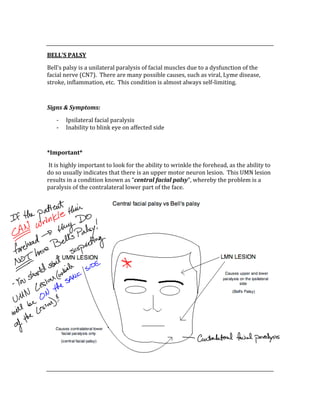
BELL’S PALSY 
Bell’s palsy is a unilateral paralysis of facial muscles due to a dysfunction of the 
facial nerve (CN7).  There are many possible causes, such as viral, Lyme disease, 
stroke, inflammation, etc.  This condition is almost always self‐limiting. 
 
Signs & Symptoms: 
‐ Ipsilateral facial paralysis 
‐ Inability to blink eye on affected side 
 
*Important* 
 It is highly important to look for the ability to wrinkle the forehead, as the ability to 
do so usually indicates that there is an upper motor neuron lesion.  This UMN lesion 
results in a condition known as “central facial palsy”, whereby the problem is a 
paralysis of the contralateral lower part of the face. 


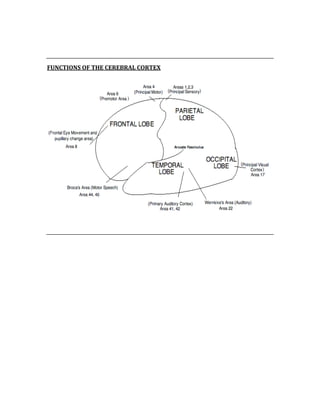
FUNCTIONS OF THE CEREBRAL CORTEX 


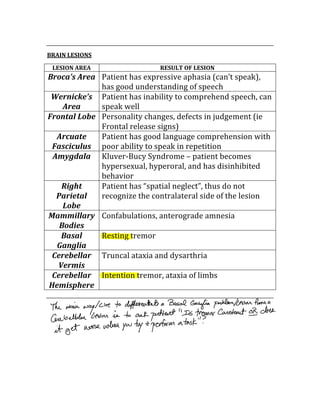
BRAIN LESIONS 
LESION AREA  RESULT OF LESION 
Broca’s Area  Patient has expressive aphasia (can’t speak), 
has good understanding of speech 
Wernicke’s 
Area 
Patient has inability to comprehend speech, can 
speak well 
Frontal Lobe  Personality changes, defects in judgement (ie 
Frontal release signs) 
Arcuate 
Fasciculus 
Patient has good language comprehension with 
poor ability to speak in repetition 
Amygdala  Kluver‐Bucy Syndrome – patient becomes 
hypersexual, hyperoral, and has disinhibited 
behavior 
Right 
Parietal 
Lobe 
Patient has “spatial neglect”, thus do not 
recognize the contralateral side of the lesion 
Mammillary 
Bodies 
Confabulations, anterograde amnesia 
Basal 
Ganglia 
Resting tremor 
Cerebellar 
Vermis 
Truncal ataxia and dysarthria 
Cerebellar 
Hemisphere 
Intention tremor, ataxia of limbs 


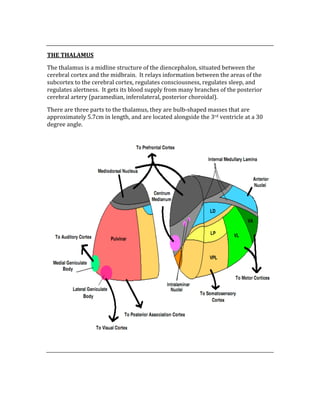
THE THALAMUS 
The thalamus is a midline structure of the diencephalon, situated between the 
cerebral cortex and the midbrain.  It relays information between the areas of the 
subcortex to the cerebral cortex, regulates consciousness, regulates sleep, and 
regulates alertness.  It gets its blood supply from many branches of the posterior 
cerebral artery (paramedian, inferolateral, posterior choroidal). 
There are three parts to the thalamus, they are bulb‐shaped masses that are 
approximately 5.7cm in length, and are located alongside the 3rd ventricle at a 30 
degree angle. 


THE HYPOTHALAMUS 
The hypothalamus is a structure within the brain with many key important 
functions.  The easiest way to remember the functions of the hypothalamus is with 
the mnemonic “TAN HATS”.   
T – Thirst (Water balance, as regulated by thirst) 
A – Adenohypophysis (This structure is controlled via releasing factors) 
N – Neurohypophysis (Releases hormones synthesized in the hypothalamic nuclei) 
 
H – Hunger and Satiety (Controlled by the ventromedial nucleus) 
A – Autonomic regulation (Parasympathetic activity via anterior hypothalamus, 
circadian rhythm via suprachiasmatic nucleus) 
T – Temperature (Posterior hypothalamus – conserves heat when cold, Anterior 
hypothalamus – coordinates cooling when hot) 
S – Sexual Regulation (The septate nucleus controls sexual emotions and urges) 
 
THE POSTERIOR PITUITARY 
The posterior pituitary consists of axons that extend from the supraoptic and 
paraventricular nuclei of the hypothalamus.  The neurohypophysis secretes two 
very important hormones: Oxytocin and Vasopressin. 
Vasopressin – Stimulates water retention, thus raising blood pressure by arterial 
contraction. 
Oxytocin – Stimulates contraction of the uterus and lactation 


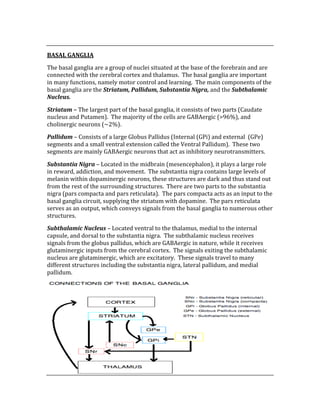
BASAL GANGLIA 
The basal ganglia are a group of nuclei situated at the base of the forebrain and are 
connected with the cerebral cortex and thalamus.  The basal ganglia are important 
in many functions, namely motor control and learning.  The main components of the 
basal ganglia are the Striatum, Pallidum, Substantia Nigra, and the Subthalamic 
Nucleus. 
Striatum – The largest part of the basal ganglia, it consists of two parts (Caudate 
nucleus and Putamen).  The majority of the cells are GABAergic (>96%), and 
cholinergic neurons (~2%). 
Pallidum – Consists of a large Globus Pallidus (Internal (GPi) and external  (GPe) 
segments and a small ventral extension called the Ventral Pallidum).  These two 
segments are mainly GABAergic neurons that act as inhibitory neurotransmitters. 
Substantia Nigra – Located in the midbrain (mesencephalon), it plays a large role 
in reward, addiction, and movement.  The substantia nigra contains large levels of 
melanin within dopaminergic neurons, these structures are dark and thus stand out 
from the rest of the surrounding structures.  There are two parts to the substantia 
nigra (pars compacta and pars reticulata).  The pars compacta acts as an input to the 
basal ganglia circuit, supplying the striatum with dopamine.  The pars reticulata 
serves as an output, which conveys signals from the basal ganglia to numerous other 
structures. 
Subthalamic Nucleus – Located ventral to the thalamus, medial to the internal 
capsule, and dorsal to the substantia nigra.  The subthalamic nucleus receives 
signals from the globus pallidus, which are GABAergic in nature, while it receives 
glutaminergic inputs from the cerebral cortex.  The signals exiting the subthalamic 
nucleus are glutaminergic, which are excitatory.  These signals travel to many 
different structures including the substantia nigra, lateral pallidum, and medial 
pallidum.   


CELLS THAT SUPPORT AND NOURISH THE CNS & PNS 
SUPPORTIVE CELL  ROLE IN CNS/PNS SUPPORT 
Oligodendroglia  Produces myelin centrally 
Schwann Cells  Produces myelin peripherally 
Astrocytes  Provide physical support, potassium 
metabolism, and physical repair 
Microglia  Is the phagocytic cell of the nervous 
system 
Ependymal Cells  Responsible for the inner lining of the 
ventricles 
 
 
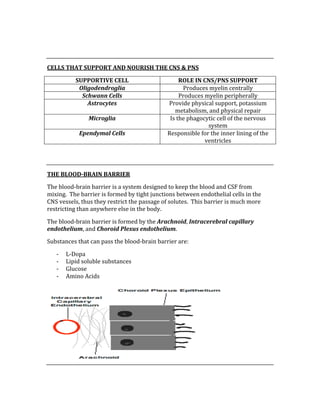
THE BLOOD­BRAIN BARRIER 
The blood‐brain barrier is a system designed to keep the blood and CSF from 
mixing.  The barrier is formed by tight junctions between endothelial cells in the 
CNS vessels, thus they restrict the passage of solutes.  This barrier is much more 
restricting than anywhere else in the body. 
The blood‐brain barrier is formed by the Arachnoid, Intracerebral capillary 
endothelium, and Choroid Plexus endothelium. 
Substances that can pass the blood‐brain barrier are: 
‐ L‐Dopa 
‐ Lipid soluble substances 
‐ Glucose 
‐ Amino Acids 


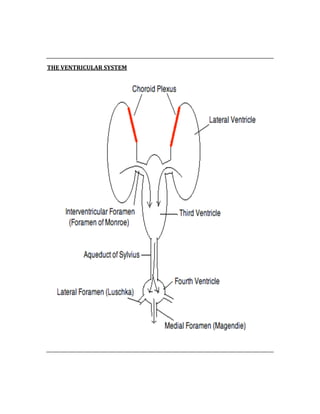
THE VENTRICULAR SYSTEM 


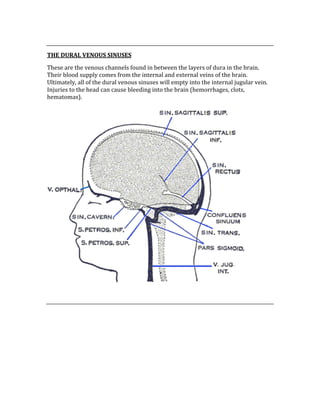
THE DURAL VENOUS SINUSES 
These are the venous channels found in between the layers of dura in the brain.  
Their blood supply comes from the internal and external veins of the brain.  
Ultimately, all of the dural venous sinuses will empty into the internal jugular vein.  
Injuries to the head can cause bleeding into the brain (hemorrhages, clots, 
hematomas). 


CHAPTER 5 
 
PHYSIOLOGY 
 
Physiology fits into many aspects of the USMLE exam.  It is a 
highly conceptual topic, and full understanding of these 
concepts is essential to success on the Step 1 exam. 


RENAL PHYSIOLOGY 
 
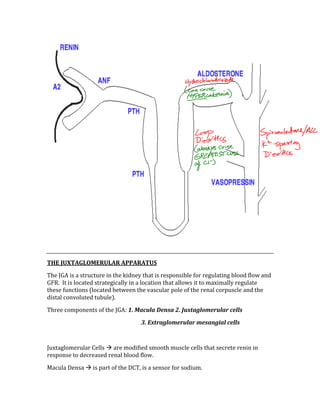
THE HORMONES ACTING ON THE KIDNEY 
1. Aldosterone 
2. Angiotensin 2 
3. Atrial Natriuretic Factor (ANF) 
4. Renin 
5. Parathyroid Hormone 
6. Vasopressin (ADH) 
 
ALDOSTERONE  secreted in response to a decrease in blood volume and the 
subsequent production of angiotensin 2.  Causes an increase in sodium 
reabsorption, increase in potassium secretion, and increase in hydrogen secretion. 
ANGIOTENSIN 2  causes efferent arteriole constriction, which causes an increase 
of GFR and subsequently increases sodium and bicarbonate reabsorption. 
ATRIAL NATRIURETIC FACTOR  secreted when there is an increase in atrial 
pressure, which causes an increase in GFR and thus increased sodium excretion. 
RENIN  secreted in response to decreased blood volume/flow, subsequently gets 
converted to AT 1 and then AT2, which causes aldosterone secretion eventually to 
increase blood volume. 
PARATHYROID HORMONE  acts on proximal convoluted tubule, secreted in 
response to a low plasma level of calcium, causing calcium reabsorption in the distal 
convoluted tubule. 
VASOPRESSIN/ADH  is secreted when the plasma osmolarity is high and volume 
is low.  Causes water reabsorption in the collecting ducts. 
 
 
THE JUXTAGLOMERULAR APPARATUS 
The JGA is a structure in the kidney that is responsible for regulating blood flow and 
GFR.  It is located strategically in a location that allows it to maximally regulate 
these functions (located between the vascular pole of the renal corpuscle and the 
distal convoluted tubule). 
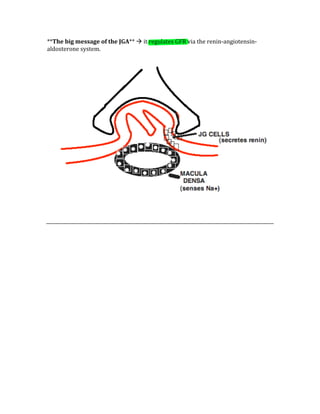
Three components of the JGA: 1. Macula Densa 2. Juxtaglomerular cells  
3. Extraglomerular mesangial cells 
 
Juxtaglomerular Cells  are modified smooth muscle cells that secrete renin in 
response to decreased renal blood flow. 
Macula Densa  is part of the DCT, is a sensor for sodium. 
**The big message of the JGA**  it regulates GFR via the renin‐angiotensin‐
aldosterone system. 


IMPORTANT EQUATIONS IN RENAL PHYSIOLOGY 
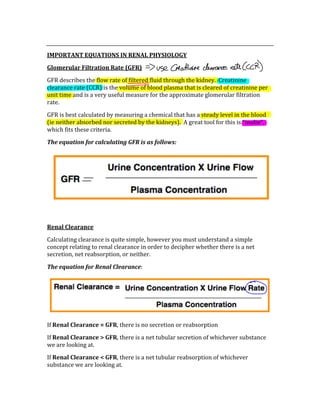
Glomerular Filtration Rate (GFR) 
GFR describes the flow rate of filtered fluid through the kidney.  Creatinine 
clearance rate (CCR) is the volume of blood plasma that is cleared of creatinine per 
unit time and is a very useful measure for the approximate glomerular filtration 
rate. 
GFR is best calculated by measuring a chemical that has a steady level in the blood 
(ie neither absorbed nor secreted by the kidneys).  A great tool for this is “inulin”, 
which fits these criteria. 
The equation for calculating GFR is as follows: 
 
 
Renal Clearance 
Calculating clearance is quite simple, however you must understand a simple 
concept relating to renal clearance in order to decipher whether there is a net 
secretion, net reabsorption, or neither. 
The equation for Renal Clearance: 
 
If Renal Clearance = GFR, there is no secretion or reabsorption 
If Renal Clearance > GFR, there is a net tubular secretion of whichever substance 
we are looking at. 
If Renal Clearance < GFR, there is a net tubular reabsorption of whichever 
substance we are looking at. 
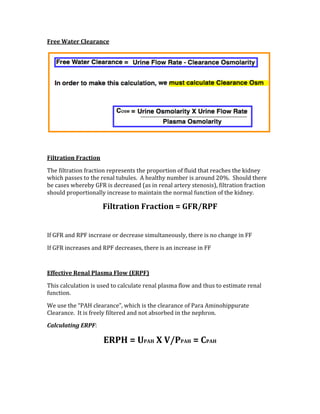
Free Water Clearance 
 
 
Filtration Fraction 
The filtration fraction represents the proportion of fluid that reaches the kidney 
which passes to the renal tubules.  A healthy number is around 20%.  Should there 
be cases whereby GFR is decreased (as in renal artery stenosis), filtration fraction 
should proportionally increase to maintain the normal function of the kidney. 
Filtration Fraction = GFR/RPF 
 
If GFR and RPF increase or decrease simultaneously, there is no change in FF 
If GFR increases and RPF decreases, there is an increase in FF 
 
Effective Renal Plasma Flow (ERPF) 
This calculation is used to calculate renal plasma flow and thus to estimate renal 
function. 
We use the “PAH clearance”, which is the clearance of Para Aminohippurate 
Clearance.  It is freely filtered and not absorbed in the nephron. 
Calculating ERPF: 
ERPH = UPAH X V/PPAH = CPAH 
 
 
Glucose Clearance 
Important in diabetes, it should simply be known that glucosuria occurs when 
plasma glucose reaches 200mg/dL, because the PCT cannot reabsorb once these 
levels are reached. 
 
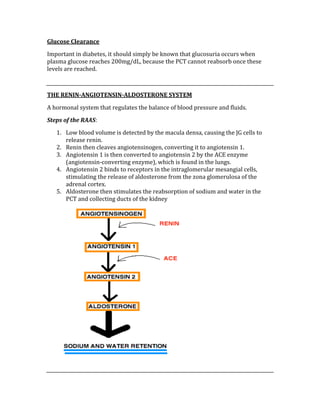
THE RENIN­ANGIOTENSIN­ALDOSTERONE SYSTEM 
A hormonal system that regulates the balance of blood pressure and fluids. 
Steps of the RAAS: 
1. Low blood volume is detected by the macula densa, causing the JG cells to 
release renin. 
2. Renin then cleaves angiotensinogen, converting it to angiotensin 1. 
3. Angiotensin 1 is then converted to angiotensin 2 by the ACE enzyme 
(angiotensin‐converting enzyme), which is found in the lungs. 
4. Angiotensin 2 binds to receptors in the intraglomerular mesangial cells, 
stimulating the release of aldosterone from the zona glomerulosa of the 
adrenal cortex. 
5. Aldosterone then stimulates the reabsorption of sodium and water in the 
PCT and collecting ducts of the kidney 


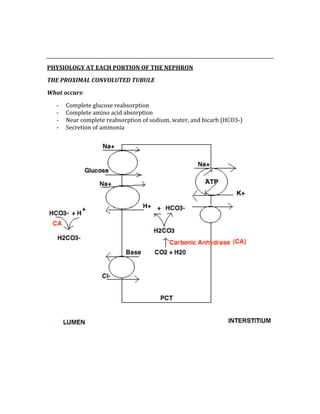
PHYSIOLOGY AT EACH PORTION OF THE NEPHRON 
THE PROXIMAL CONVOLUTED TUBULE 
What occurs: 
‐ Complete glucose reabsorption 
‐ Complete amino acid absorption 
‐ Near complete reabsorption of sodium, water, and bicarb (HCO3‐) 
‐ Secretion of ammonia 


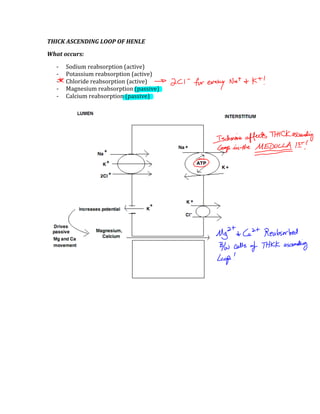
THICK ASCENDING LOOP OF HENLE 
What occurs: 
‐ Sodium reabsorption (active) 
‐ Potassium reabsorption (active) 
‐ Chloride reabsorption (active) 
‐ Magnesium reabsorption (passive) 
‐ Calcium reabsorption (passive) 


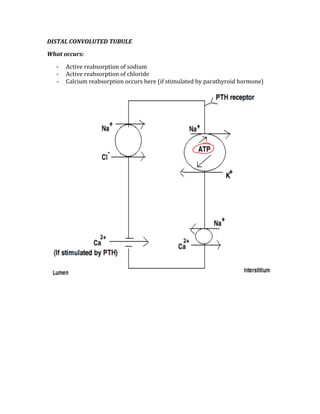
DISTAL CONVOLUTED TUBULE 
What occurs: 
‐ Active reabsorption of sodium 
‐ Active reabsorption of chloride 
‐ Calcium reabsorption occurs here (if stimulated by parathyroid hormone) 


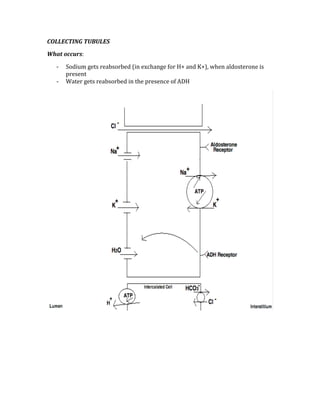
COLLECTING TUBULES 
What occurs: 
‐ Sodium gets reabsorbed (in exchange for H+ and K+), when aldosterone is 
present 
‐ Water gets reabsorbed in the presence of ADH 


GASTROINTESTINAL PHYSIOLOGY 
 
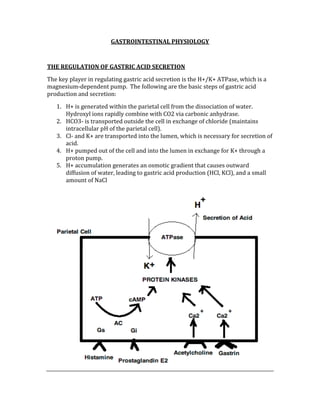
THE REGULATION OF GASTRIC ACID SECRETION 
The key player in regulating gastric acid secretion is the H+/K+ ATPase, which is a 
magnesium‐dependent pump.  The following are the basic steps of gastric acid 
production and secretion: 
1. H+ is generated within the parietal cell from the dissociation of water.  
Hydroxyl ions rapidly combine with CO2 via carbonic anhydrase. 
2. HCO3‐ is transported outside the cell in exchange of chloride (maintains 
intracellular pH of the parietal cell). 
3. Cl‐ and K+ are transported into the lumen, which is necessary for secretion of 
acid. 
4. H+ pumped out of the cell and into the lumen in exchange for K+ through a 
proton pump. 
5. H+ accumulation generates an osmotic gradient that causes outward 
diffusion of water, leading to gastric acid production (HCl, KCl), and a small 
amount of NaCl 


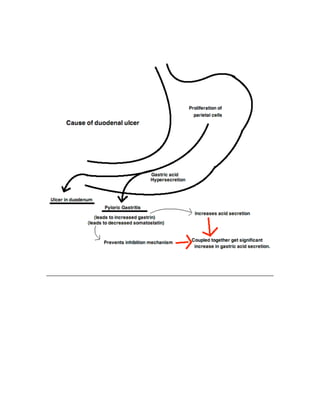
HORMONES OF THE GI 
GASTRIN: 
‐ Secreted from the G cells in the antrum of the stomach 
‐ Cause stimulation of H+ secretion 
‐ Increased when there is stomach distention, vagal stimulation, and the 
presence of amino acids in the stomach 
‐ Decreased when there is a stomach acid <1.5 
‐ Overstimulation can lead to PUD, gastritis, Zollinger‐Ellison syndrome 
CHOLECYSTOKININ: 
‐ Secreted from the I cells of the duodenum and jejunum 
‐ Causes an increase in pancreatic secretion 
‐ Stimulates gallbladder contraction 
‐ Inhibits the emptying of gastric contents 
‐ Inhibited by secretin and a stomach pH <1.5 
‐ Stimulated by the presence of fats and proteins in the stomach 
SECRETIN: 
‐ Secreted from the S cells of the duodenum 
‐ Causes an increase in pancreatic bicarbonate secretion 
‐ Inhibits the secretion of gastric acids 
‐ Stimulated by the presence of acids and fatty acids in the lumen of the 
duodenum 
SOMATOSTATIN: 
‐ Secreted from the D cells in the pancreatic islet cells 
‐ Causes inhibition of gastric acid and pepsinogen secretion 
‐ Causes inhibition of fluid secreted from the pancreas and small intestine 
‐ Inhibits gallbladder contraction 
‐ Inhibits the release of insulin and glucagon 
‐ Secretion is stimulated by increased acid and inhibited by vagal stimulation 
GASTRIC INHIBITORY PEPTIDE: 
‐ Secreted by the K cells in the duodenum and jejunum 
‐ Decreases the amount of gastric acid that is secreted 
‐ Increases insulin release 


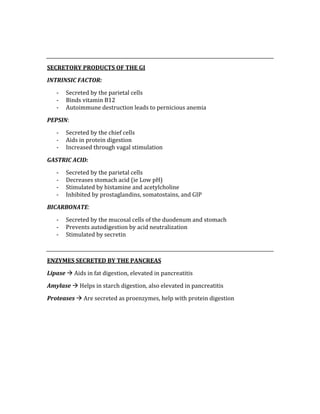
SECRETORY PRODUCTS OF THE GI 
INTRINSIC FACTOR: 
‐ Secreted by the parietal cells 
‐ Binds vitamin B12 
‐ Autoimmune destruction leads to pernicious anemia 
PEPSIN: 
‐ Secreted by the chief cells 
‐ Aids in protein digestion 
‐ Increased through vagal stimulation 
GASTRIC ACID: 
‐ Secreted by the parietal cells 
‐ Decreases stomach acid (ie Low pH) 
‐ Stimulated by histamine and acetylcholine 
‐ Inhibited by prostaglandins, somatostains, and GIP 
BICARBONATE: 
‐ Secreted by the mucosal cells of the duodenum and stomach 
‐ Prevents autodigestion by acid neutralization 
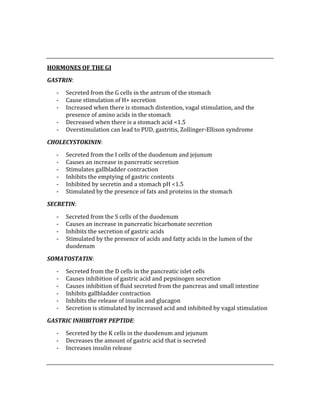
‐ Stimulated by secretin 
 
ENZYMES SECRETED BY THE PANCREAS 
Lipase  Aids in fat digestion, elevated in pancreatitis 
Amylase  Helps in starch digestion, also elevated in pancreatitis 
Proteases  Are secreted as proenzymes, help with protein digestion 


ENDOCRINE PHYSIOLOGY 
 
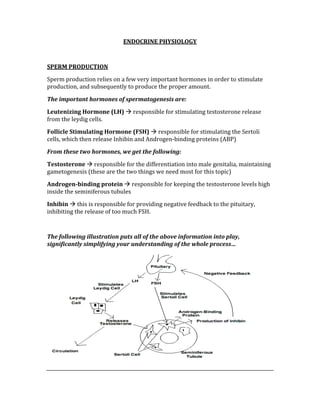
SPERM PRODUCTION 
Sperm production relies on a few very important hormones in order to stimulate 
production, and subsequently to produce the proper amount.  
The important hormones of spermatogenesis are: 
Leutenizing Hormone (LH)  responsible for stimulating testosterone release 
from the leydig cells. 
Follicle Stimulating Hormone (FSH)  responsible for stimulating the Sertoli 
cells, which then release Inhibin and Androgen‐binding proteins (ABP) 
From these two hormones, we get the following: 
Testosterone  responsible for the differentiation into male genitalia, maintaining 
gametogenesis (these are the two things we need most for this topic) 
Androgen­binding protein  responsible for keeping the testosterone levels high 
inside the seminiferous tubules 
Inhibin  this is responsible for providing negative feedback to the pituitary, 
inhibiting the release of too much FSH. 
 
The following illustration puts all of the above information into play, 
significantly simplifying your understanding of the whole process… 


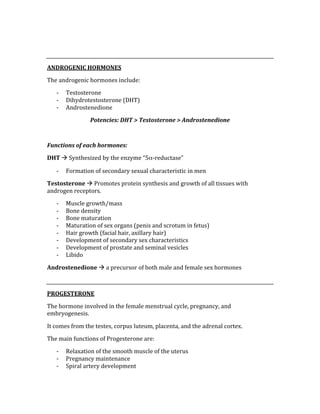
ANDROGENIC HORMONES 
The androgenic hormones include: 
‐ Testosterone 
‐ Dihydrotestosterone (DHT) 
‐ Androstenedione 
Potencies: DHT > Testosterone > Androstenedione 
 
Functions of each hormones: 
DHT  Synthesized by the enzyme “5α‐reductase” 
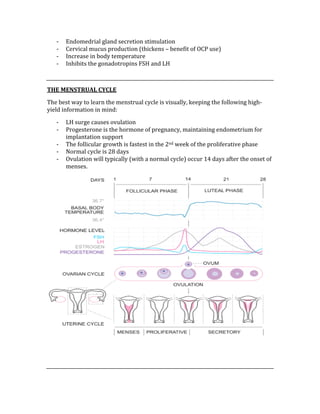
‐ Formation of secondary sexual characteristic in men 
Testosterone  Promotes protein synthesis and growth of all tissues with 
androgen receptors. 
‐ Muscle growth/mass 
‐ Bone density 
‐ Bone maturation 
‐ Maturation of sex organs (penis and scrotum in fetus) 
‐ Hair growth (facial hair, axillary hair) 
‐ Development of secondary sex characteristics 
‐ Development of prostate and seminal vesicles 
‐ Libido 
Androstenedione  a precursor of both male and female sex hormones 
 
PROGESTERONE 
The hormone involved in the female menstrual cycle, pregnancy, and 
embryogenesis. 
It comes from the testes, corpus luteum, placenta, and the adrenal cortex. 
The main functions of Progesterone are: 
‐ Relaxation of the smooth muscle of the uterus 
‐ Pregnancy maintenance 
‐ Spiral artery development 
‐ Endomedrial gland secretion stimulation 
‐ Cervical mucus production (thickens – benefit of OCP use) 
‐ Increase in body temperature 
‐ Inhibits the gonadotropins FSH and LH 
 
THE MENSTRUAL CYCLE 
The best way to learn the menstrual cycle is visually, keeping the following high‐
yield information in mind: 
‐ LH surge causes ovulation 
‐ Progesterone is the hormone of pregnancy, maintaining endometrium for 
implantation support 
‐ The follicular growth is fastest in the 2nd week of the proliferative phase 
‐ Normal cycle is 28 days 
‐ Ovulation will typically (with a normal cycle) occur 14 days after the onset of 
menses. 


MENOPAUSE 
Menopause is indicative of the cessation of ovarian function, resulting in the 
cessation of ovulation and menstruation. 
The following are the hormonal changes that occur with menopause: 
‐ Estrogen decreases 
‐ Gonodotropin‐releasing hormone increases 
‐ LH increases 
‐ FSH increases significantly 
The following are the most common symptoms associated with menopause: 
‐ Hot flashes 
‐ Vaginal atrophy 
‐ Osteoporosis 
‐ Coronary artery disease (estrogen is said to be a protective factor against 
this) 
 
HUMAN CHORIONIC GONODOTROPIN (hCG) 
hCG is secreted from the placental syncytiotrophoblast, and is responsible for the 
following functions: 
‐ Is the #1 indicator of pregnancy 
‐ Helps to maintain the corpus luteum during the 1st trimester of pregnancy 
‐ Helps in diagnosing reproductive pathologies such as choriocarcinoma and 
hydatiform moles (discussed in pathology section) 
 
REGULATION OF PROLACTIN 
Prolactin is a hormone secreted from the anterior pituitary and is responsible for 
some important functions, as well it is responsible for certain pathologies 
(prolactinoma, infertility). 
Important functions  Lactation, orgasm, oligodendrocyte precursor cell 
proliferation. 
Inhibited by  Dopamine 


THE HYPOTHALAMUS AND PITUITARY 


THE THYROID HORMONE 
Thyroid hormone is an extremely important and versatile hormone, controlling a 
wide‐range of functions and important for proper growth. 
Functions of thyroid hormone: 
‐ CNS maturation 
‐ Bone growth 
‐ β‐adrenergic effects 
‐ Increases BMR (via increasing the Na+/K+ pump) 
‐ Lipolysis (increases) 
‐ Gluconeogenesis (increases) 
‐ Glycogenolysis (increases) 
Production of thyroid hormone: 
1. Follicular cells synthesize enzymes and thyroglobulin for colloid. 
2. Iodine is co‐transported into the cell with Na+ and transported into colloid. 
3. Enzymes add iodine to thyroglobulin to make T3 and T4. 
4. Thyroglobulin is taken back into the cell. 
5. Intracellular enzymes separate T3 and T4 from the protein 
6. Free T3 and T4 enter the circulation 
*T3 provides negative feedback to the anterior pituitary. 


PARATHYROID HORMONE (PTH) 
PTH comes from the chief cells of the parathyroid glands.  In response to low serum 
calcium, PTH is released and performs the following: 
‐ Increases bone resorption which increases Ca2+ and PO4‐ 
‐ Increases the reabsorption of calcium from the kidneys (distal convoluted 
tubules) 
‐ Decreases the reabsorption of phosphate from the kidneys 
‐ Stimulates the enzyme 1α‐hydroxylase in the kidney, which increases 1,25‐
(OH)2 vitamin D (ie cholecalciferol) 
 
CALCITONIN 
Calcitonin works opposite of PTH by recognizing an increase in serum Ca2+ and 
thus decreasing the bone resorption of calcium.  Calcitonin is secreted from the 
parafollicular (c cells) of the thyroid gland. 
 
LINKING PATHOLOGY TO Ca2+, PO4­, and ALKALINE PHOSPHATASE 
The following list of conditions alter these levels in the following ways… 
Disesase  Calcium Level  Phosphate Level  Alk Phosph 
Level 
Vitamin D Intox  Increases  Increases  Increases 
Osteoporosis  No change  No change  No change 
Hyperparathyroidism  Increases  Decreases  Increases 
Paget’s bone disease  Normal‐increased  Normal  Large increase 
Renal Insufficiency  Decreased  Increased  No change 


CARDIAC PHYSIOLOGY 
 
NOTE: Cardiac physiology is unique in that almost everything is conceptual in 
nature, which means that there are many graphs/charts, etc.  By completely 
understanding the concept behind all of this information, you will not have to 
memorize anything, rather you will be able to apply it to any question the USMLE 
exam throws your way. 
 
THE CARDIAC CYCLE 
The cardiac cycle refers simply to the steps that are undertaken by the heart as it 
goes from filling, to pumping the blood systematically, to filling once again. 
The phases of the cardiac cycle: 
1. Isovolumetric Contraction  
This is the point between the closure of the mitral valve and the opening of the 
aortic valve.  The heart is contracted but valves are closed. 
2. Systolic Ejection 
The heart squeezes and blood is ejected through the aortic valve.  This phase can be 
considered the phase between the time the aortic valve opens and closes. 
3. Isovolumetric Relaxation 
This is the period of time between the closure of the aortic valve and the opening of 
the mitral valve. 
4. Rapid filling phase 
After the opening of the mitral valve, blood pools rapidly into the left ventricle. 
5. Slow filling phase 
At this point, blood flows into the LV slowly as the mitral valve is about to close. 


Important heart sounds that occur during the cardiac cycle: 
S1 – this is the 1st heart sound and represents the closing of the tricuspid and mitral 
valves 
S2 – this is the 2nd heart sound and represents the closing of the pulmonary and 
aortic valves 
S3 – this is the 3rd heart sound and represents the end of the rapid ventricular filling 
(can be associated with congestive heart failure) 
S4 – this is a heart sound heard only if there is a stiff ventricle (is associated with 
ventricular hypertrophy) 
 
The following graph represents the phases of the cardiac cycle: 


WIGGER’S DIAGRAM: 
This diagram is used in cardiac physiology to illustrate the relationships between 
several different events that are occurring simultaneously.  For the USMLE exam, it 
is important to recognize the relationships on the graph as well as to recognize 
where the major events are located graphically. 


ACTION POTENTIAL OF THE PACEMAKER 
 
THE SA NODE: 
The cells of the AV node depolarize spontaneously, resulting in approximately 100 
contractions per minute.  This rate does not create a ventricular rate of 100 because 
the sympathetic and parasympathetic fibers have the ability to control how much 
gets through. 
THE AV NODE: 
This node discharges approximately 40‐60bpm.  There are branches that come from 
the AV node (Purkinje fibers), that also produce spontaneous action potentials at a 
rate of approximately 30‐40bpm (keep conduction if the nodes are not working 
efficiently). 
 
THE PHASES OF THE ACTION POTENTIAL: 
Phase 4 – “Slow Diastolic Depolarization” 
With a Na+ conductance increase, the membrane potential spontaneously 
depolarizes, accounting for the automaticity of the SA and AV nodes.  In the chart 
below, the slope of phase 4 in the SA node is the determining factor in heart rate.  
This can be increased with catecholamines (NE, Epi) and decreased with 
acetylcholine.   
 
 
Phase 0 – “Upstroke” 
Caused by a slow influx of calcium because there are no fast sodium channels.  This 
results in a slow conduction velocity that helps to prolong transmission from the 
atria to the ventricles. 
Phase 3 – “Repolarization” 
A rapid inactivation of the calcium channels and a decrease in potassium 
permeability slowly repolarizes the cell (ie there is a loss of positive ions). 


VENTRICULAR ACTION POTENTIAL 
The ventricular action potential is best explained through the use of visual aids.  
Each phase of the action potential is caused by an influx or efflux of certain ions, 
thus knowing which ions work where is vital to understanding the events and 
getting as many points as possible on the USMLE. 
 
 
Phase 0  Voltage‐Gated Na+ channels are open, resulting in a rapid upstroke. 
Phase 1  Na+ channels are inactivated and voltage‐gated K+ channels begin to 
open.  This results in the initial repolarization. 
Phase 2  A plateau phase where a voltage‐gated Ca2+ channel results in balancing 
off of the K+ efflux.  This triggers Ca2+ release from the SR and thus myocyte 
contraction. 
Phase 3  A massive efflux of K+ due to opening of slow voltage‐gated K+ channels 
and closure of voltage‐gated Ca2+ channels leads to rapid repolarization. 
Phase 4  A high K+ permeability results in return to resting potential. 


CARDIAC OUTPUT 
Cardiac output is a measure of the stroke volume X the heart rate.  Acutely, cardiac 
output will increase due to stroke volume increases, whereas chronically cardiac 
output is a result of an increase in heart rate. 
CARDIAC OUTPUT = STROKE VOLUME X HEART RATE 
 
VARIABLES OF CARDIAC OUTPUT: 
Contractility increases with the following (as does stroke volume): 
‐ Increase in intracellular calcium 
‐ Increase in catecholamines 
‐ Decreased extracellular sodium 
‐ Use of digitalis 
Contractility decreases with the following (as does stroke volume): 
‐ Heart Failure 
‐ Hypoxia 
‐ Blockade of the β1 receptor 
‐ Acidosis 
 
A FEW IMPORTANT EQUATIONS IN CARDIAC PHYSIOLOGY 


PRELOAD AND AFTERLOAD 
Preload  Preload is the stretching pressure in the ventricles of the heart after 
filling is completed.  Preload is increased when there is an increase in blood volume, 
sympathetic stimulation, and even exercise. 
Therefore, PRELOAD = END­DIASTOLIC VOLUME 
 
Afterload  Afterload is the term that measures the tension produced in the 
ventricle in order for contraction to occur. 
Therefore, AFTERLOAD = DIASTOLIC ARTERIAL PRESSURE 
 
Venous dilators will decrease the preload, this includes most commonly 
nitroglycerine. 
Vasodilators will decrease the afterload, this includes most commonly drugs like 
hydralazine. 
 
THE FRANK­STARLING LAW 
This law states that with a greater volume of blood entering the heart during 
diastole, the greater volume of blood is ejected during systole.  This law explains 
that synchronization of cardiac output and venous return occurs without needing 
external factors to come into play. 


THE EKG 
 
 
P wave  Represents atrial depolarization 
PR segment  Represents the conduction delay through the AV node 
QRS complex  Represents ventricular depolarization 
QT interval  Represents mechanical contraction of the ventricles 
T wave  Represents the ventricular repolarizations 
ST segment  Is an isoelectric point where the ventricles are depolarized 


ABNORMALITIES OF THE EKG 
ATRIAL FLUTTER:  A supraventricular tachycardia that presents with a series of 
rapid back‐to‐back depolarizations.  This may occur in those with heart diseases 
(CHF, CAD, etc), but can also occur in a perfectly normal heart.  The classic 
presentation is the “sawtooth” pattern, which occurs as a result of identical back‐to‐
back depolarizations. 
 
 
ATRIAL FIBRILLATION:  Is a very common cardiac arrhythmia whereby there is a 
quivering of the chamber instead of a coordinated contraction.  The classic findings 
are a chaotic and erratic baseline with the absence of P waves in between regularly 
spaced QRS complexes. 
 
 
ATRIOVENTRICULAR BLOCKS 
1ST DEGREE BLOCK:  An asymptomatic condition with a PR interval prolongation 
>200msec. 
 
2ND DEGREE MOBITZ TYPE 1 (Wenckebach):  Is a condition that is often 
asymptomatic, but if symptomatic will require a pacemaker.  The presentation is a 
progressive lengthening of the PR interval until a P wave is not followed by a QRS 
complex. 
 
 
2ND DEGREE MOBITZ TYPE 2: Presents with acutely dropped beats that are not 
preceeded by a change in the PR length.  The most common presentation is 2 P 
waves per 1 QRS complex. 
 
 
3RD DEGREE (COMPLETE) HEART BLOCK:  There is independent beating of the atria 
and the ventricles. 
 
 
VENTRICULAR TACHYCARDIA:  A tachycardia resulting in a heartbeat > 100bpm.  
This may be non‐pathologic, but may also lead to ventricular fibrillation. 
 
 
VENTRICULAR FIBRILLATION:  This is a condition where there is a erratic rhythm 
and no identifiable waves on EKG.  This arrhythmia is fatal without prompt 
defibrillation. 


PHYSIOLOGY OF THE CARDIAC MYOCYTE 
1. A depolarization travels down the T‐tubule, stimulating the release of 
calcium from the SR (goes through the dihydropyridine receptor and 
Ryanodine receptor). 
2. Calcium is released and binds to troponin C, which leads to the 
conformational change (moving tropomyosin out of the myosin‐binding 
groove on actin filament) 
3. Power Stroke  myosin hydrolyzes the bound ATP and is displaced on the 
actin filament 
4. Contraction occurs 


COMPARING SMOOTH MUSCLE CONTRACTION AND SKELETAL MUSCLE 
CONTRACTION 
Smooth Muscle Contraction: 
 
 
Skeletal Muscle Contraction: 
1. ATP binds to the myosin head, releasing the actin filament 
2. Cross‐bridge cycling and shortening occur 
3. Calcium binds troponin C and a conformational change occur 
4. Tropomyosin moves allowing actin/myosin cycling 


BARORECEPTORS AND CHEMORECEPTORS 
Baroreceptors  Respond to pressure 
Chemoreceptors  Respond to chemical changes 
 
Location of Baroreceptors: 
The aortic arch  responds to blood pressure, and transmits a signal to the 
medulla (via the vagus nerve).   
The carotid sinus  the baroreceptor here transmits its signal to the medulla via 
the glossopharyngeal nerve. 
 
Location of chemoreceptors: 
Central chemoreceptors  respond to pH and PC02 changes of the interstitial fluid 
in the brain (these are not influenced by P02) 
Peripheral chemoreceptors  respond to a P02 < 60mmHg, respond to increased 
PC02, and respond to a decrease in pH (ie increase in H+) 
 
HOW IS HYPOTENSION REVERSED BY THE BARORECEPTORS? 
1. Arterial pressure is decreased, resulting in… 
2. Decreased stretch, which leads to… 
3. Decreased afferent baroreceptor firing, this causes…. 
4. Increases in efferent sympathetic activity and decreased efferent 
parasympathetic stimulation, leading to… 
5. Vasoconstriction, which… 
6. Increases heart rate, contractility, and blood pressure 
HOW DOES CAROTID MASSAGE WORK? 
1. Massaging the carotid artery gives the sense of increased pressure, which… 
2. Increases the stretch detected from the baroreceptor, this in turn… 
3. Decreases the heart rate 


EXCHANGE OF CAPILLARY FLUIDS 
Forces inside and outside of the capillaries are what can move fluids back and forth.  
There are different methods by which fluid is moved, it can either be pushed out of 
the capillary (capillary pressure), or it can be moved via osmotic pressure, where it 
is pulled. 
The forces are called “Starling” forces, and they are the following: 
1. Capillary Pressure (Cp) – this pressure usually causes a movement of fluid 
out of the capillary 
2. Interstitial Pressure (Pi) – this is pressure the pushes on the capillaries and 
moves fluid into the capillary. 
3. Plasma colloid osmotic pressure (πc) – usually moves fluid into the capillary 
4. Interstitial fluid colloid osmotic pressure (πi) – usually moves fluid out of the 
capillary. 
Determining whether fluid will move into or out of the capillary is based on the net 
filtration pressure.  By having all of the values of the pressures above, we can 
determine this figure: 
Net Filtration Pressure = (Pc‐Pi) – (πc ‐ πi) 
 
LINKING THE ABOVE TO EDEMATOUS STATES: 
Edema is caused by excess fluids outside of the capillaries, thus states in which this 
is favorable will likely lead to edema.  The following will likely lead to edematous 
states: 
1. Increased interstitial fluid colloid osmotic pressure 
2. Increased capillary pressure 
3. Increased capillary permeability 
4. Decreased quantities of plasma proteins 


RESPIRATORY PHYSIOLOGY 
 
THE OXYGEN­HEMOGLOBIN DISSOCIATION CURVE 
 
A shift to the right = decreased affinity of hemoglobin for oxygen 
A shift to the left = increased affinity of hemoglobin for oxygen 


PULMONARY RESPONSES TO HIGH ALTITUDE 
When in higher altitudes the P02 decreases significantly, thus the body must adapt 
and find ways to maintain oxygenation to the tissues of the body.  The following are 
the major responses that help us maintain adequate oxygenation: 
‐ Ventilation increases 
‐ Erythropoietin increases (from kidneys) 
‐ Increases in 2,3‐Diphosphoglycerate (helps make 02 release easier) 
‐ Respiratory alkalosis stimulates HCO3‐ excretion from the kidneys 
‐ Chronic high altitude can cause a chronically higher rate of ventilation 
 
PERFUSION LIMITED vs DIFFUSION LIMITED CIRCULATION 
Perfusion limited  means that gas equilibrates early along the capillary’s length, 
thus the only way to increase diffusion is to increase blood flow. 
Diffusion limited  means that gas doesn’t equilibrate by the time it reaches the 
end of the capillary. 
Perfusion limited is seen in healthy people, whereas diffusion limited occurs in 
those with emphysema, fibrosis, or when exercising. 
 
LUNG VOLUME 
There is a list of important definitions you should know for the USMLE exam, as 
there is almost always at least 1 question dealing with this.  The question may come 
in the form of a definition, but it will most likely come in the form of a chart where 
you will have to calculate. 
 
 
Calculating lung volumes: 
Total Lung Capacity = RV + IRV + TV + ERV 
Vital Capacity = TV + IRV + ERV 
Functional Reserve Capacity = ERV + RV 
Inspiratory Capacity = IRV + TV 
 
VENTILATION/PERFUSION (V/Q) MISMATCH 
When there is normal gas exchange (ie healthy individual), the V/Q is approximately 
1, meaning an ideal ventilation to perfusion ratio.  If there is a mismatch, this 
indicates that there is a shunt and some degree of dead space in the same lung. 
A V/Q of 0 is indicative of a shunt (ie airway obstruction) 
A V/Q of ∞ is indicative of an obstruction of blood flow (ie physiological dead space). 
‐ Ventilation and perfusion are greater at the base of the lung than in the apex 
‐ V/Q at the apex of the lung is higher, meaning wasted ventilation 
‐ V/Q at the base of the lung is lower, meaning wasted perfusion 
 
LUNG PRODUCTS 
There are a few very important products made inside the lungs, they include: 
1. Angiotensin‐Converting Enzyme 
2. Surfactant (type 2 pneumocytes) 
3. Prostaglandins 
4. Histamine 
5. Kallikrein 


CARBON DIOXIDE TRANSPORT 
There are three methods by which carbon dioxide are carried from the tissues of the 
body back to the lungs, they include: 
1. In the form of bicarbonate (this is the majority)  ~90% 
2. As dissolved carbon dioxide ~5% 
3. Bound to hemoglobin as carbaminohemoglobin ~5% 


CHAPTER 6 
 
BIOCHEMISTRY 
 
This section is very high­yield, and includes many sub­
categories.  The metabolic pathways are very important; 
paying special attention to regulatory steps is crucial.  
While the details of biochemistry are not high­yield, the big 
picture as a whole is very high­yield material. 


GENETICS 
The Hardy‐Weinberg law of genetics states that both the allele and the genotype 
frequencies of a population remain constant from generation to generation, unless 
there is a specific disturbance(s) introduced into the population. 
The law of Hardy­Weinberg assumes: 
1. No mutations occur  
2. There is no selection for any of the specific genotypes 
3. Mating is random 
4. There is no migration into or out of the population 
 
The frequency of different alleles in a population can be determines with the 
Punnett square, which can be linked mathematically to the ‘Hardy‐Weinberg 
equation for equilibrium’. 


HIGH­YIELD GENETIC TERMINOLOGY 
Gene – is the section of a chromosome that carries information for specific traits 
Alleles – are alternate forms of a gene 
Phenotype – the physical appearance of an organisms, usually determined by the 
dominant gene. 
Genotype – the genetic makeup of an organism. 
Dominant – is the gene or train that appears or expresses itself, represented with a 
capital letter (ie Aa). 
Recessive – is the gene/trait that gets hidden in the presence of a dominant gene, 
represented with a lower‐case letter (ie Aa) 
Variable Expression – is the variance is phenotype from one individual to another. 
Incomplete Penetrance – this occurs when not all individuals who carry mutant 
genotype actually show the mutant phenotype. 
Anticipation – occurs when the severity of a disease gets worse at younger and 
younger ages, classic example is Huntington’s disease. 
Pleiotropy – occurs when one gene has more than one effect on an individual’s 
phenotype. 
Imprinting – is a difference in phenotype that depends solely on whether the 
mutation is of maternal or paternal origin. 
Mosaicism – the cells of the body have different genetic makeups. 
Loss of Heterozygosity – this means that a complementary allele must be either 
deleted or mutated before the other allele can show expressitivity.  This does not 
apply to oncogenes. 


MODES OF INHERITANCE 


LABORATORY TECHNIQUES USED IN BIOCHEMISTRY 
The Polymerase Chain Reaction (PCR) 
This technique is used when a large number of DNA copies are needed.  The steps to 
creating multiple copies of DNA fragments through the PCR are as follows: 
1. DNA is heated and denatured, this causes the separation of the strands. 
2. The denatured DNA is cooled, and DNA primers are added to the mix, these 
adhere to each individual strand of DNA at the location that will be amplified. 
3. DNA polymerase then replicates the desired DNA strands. 
4. This process is repeated until the desired number of DNA is achieved. 


ELISA (Enzyme­Linked Immunoabsorbent Assay) 
This technique is used as a means of detecting the presence of an antibody or an 
antigen in a sample.  The antibody or antigen that is added is linked to an enzyme, 
then a test solution is added to see if an intense color illuminates, indicating that 
there is a positive result.   
‐ This test is most commonly used when looking for HIV. 
‐ Sensitivity and specificity for the ELISA are extremely high, both approaching 
100%, however they are not perfect, and false results do occur. 
 
SOUTHERN BLOT TECHNIQUE 
This technique is used to detect specific sequences of DNA.  The technique combines 
the transfer of electrophoresis‐separated DNA fragments and membrane filtration, 
and then fragments are detected by probe hybridization. 
 
WESTERN BLOT TECHNIQUE 
This is a technique used to detect specific proteins, separating native or denatured 
proteins by the length of the polypeptide.  These proteins are then transferred to a 
membrane where they are probed using antibodies specific to the target protein. 
 
NORTHERN BLOT TECHNIQUE 
Is a technique used to study gene expression by RNA detection in a sample.  This 
technique allows for the detection of cellular control by determination of gene 
expression levels during differentiation and morphogenesis. 


DNA, RNA, AND PROTEINS 
 
­ Adenine binds to thymine with two hydrogen bonds, whereas guanine binds to 
cytosine with three hydrogen bonds, making it a stronger bond and more resistant 
to increased temperatures. 
‐ In RNA, uracil is present instead of thymine. 


THE BASIC STRUCTURE OF THE NUCLEOTIDES 
Pyrimidines – Are heterocyclic organic compounds consisting of two nitrogen 
atoms at positions 1 and 3 of a six‐membered ring.  The nucleotides belonging to the 
pyrimidine group are: Cytosine, Uracil, and Thymine. 
 
 
Purines – Are heterocyclic aromatic organic compounds consisting of a pyrimidine 
ring bound to an imidazole ring.  The nucleotides belonging to the purine group are: 
Adenine and Guanine. 


CHROMATIN 
Chromatin is the structure that is made up of DNA and proteins, which then makes 
up the chromosome.  It is found within the nuclei of eukaryotic cells only.  There are 
two types of chromatin, there is “heterochromatin”, which is condensed and 
transcriptionally inactive, and there is euchromatin, which is looser and 
transcriptionally active. 
The main function of chromatin is to package large amounts of DNA into smaller 
areas, allowing more to fit into cells and thus provide for more genetic material 
overall. 


DNA REPLICATION 
In prokaryotes, there is a single origin of replication, whereas in eukaryotes there 
are multiple origins of replication. 
Some important facts: 
‐ DNA polymerase 3 proofreads in the 3’ 5’ direction, synthesizing in the 
5’ 3’ direction. 
‐ Primase produces an RNA primer, on which DNA polymerase 3 initiates 
replication. 
‐ DNA polymerase 3 elongates the chain through the addition of 
deoxynucleotides to the 3’ end. 
‐ DNA polymerase 1 degrades RNA primer once it is no longer needed. 
‐ Okazaki fragments help elongate the chain on the lagging strand. 
‐ DNA ligase seals on the lagging strand. 
‐ DNA gyrase unwinds the strand before replication can begin. 
‐ DNA topoisomerase relieves supercoils by nicking the strand. 


DNA DAMAGE 
The two types of DNA damage are ‘Endogenous’ and ‘Exogenous’. 
Types of Endogenous damage: 
1. Oxidation – reactive oxygen species causes interruptions to the DNA strand. 
2. Alkylation – alkylation of bases by formation of compounds such as 7‐
methylguanine. 
3. Hydrolysis – base hydrolysis causes deamination, depurination, and 
depyrimidination. 
4. Bulky adduct formation 
5. Base mismatches 
Types of Exogenous damage: 
1. UV­B damage – causes cross‐linking between cytosine and thymine bases, 
creating ‘pyrimidine dimers’. 
2. UV­A damage – creates most free radicals, caused indirect DNA damage. 
3. Ionizing radiation – causing radioactive decay and breaks in DNA strands. 
4. Thermal disruption – causes depurination and single strand breaks 
5. Industrial chemical damage – compounds such as vinyl chloride and hydrogen 
peroxide, smoke, soot, and tar can cause severe damage to DNA.  It causes oxidation, 
alkylation, and cross‐linking of DNA. 
 
DNA REPAIR 
Single strand damage: 
Damage to a single strand is repaired via one of three mechanisms. 
Base Excision Repair – This type of repair helps to fix damage to a single base, 
which is removed by a DNA glycosylase.  The missing base is then recognized by AP 
endonuclease and resynthesis occurs via DNA polymerase, with DNA ligase sealing 
the new strand. 
Nucleotide Excision Repair – This mechanism recognizes bulky helix‐distorting 
damage and is fixed with transcription‐coupled repair which emits NER enzymes 
that are actively being transcribed. 
Mismatch Repair – This repair mechanism corrects errors of DNA replication and 
recombination that resulted from mispaired nucleotides. 
 
Double­Strand Damage: 
Three mechanisms exist to repair double‐stranded damage, they are: 
1. Non‐homologous end joining (NHEJ) 
2. Microhomology‐mediated end joining (MMEJ) 
3. Homologous recombination 
 
Non­Homologous End Joining – This form of repair is mediated by a specialized 
form of DNA ligase (DNA ligase IV), which works by forming a complex with a 
cofactor (XRCC4) and then directly joining the two non‐damaged ends. 
Microhomology­Mediated End Joining – This type of repair mechanism works by 
using a 5‐25 base pair homologous sequence to align broken strands before joining 
them.  It uses a “Ku protein” and DNA‐PK independent repair mechanism and then 
repair occurs during the S phase of the cell cycle. 
Homologous Recombination – This type of repair requires the presence of an 
identical sequence that is used as a template for repair of the break. 
 
DEFECTS TO THE DNA REPAIR MECHANISM 
When the repair mechanisms fail, there is an expression of improper DNA, and this 
can result in conditions that are severe and/or lethal.  Three conditions that result 
from failed DNA repair are: 
Xeroderma Pigmentosum – This condition occurs when there is a defect in one of 
the seven genes required for DNA repair.  Those afflicted with this disease are 
extremely sensitive to sunlight and have a significantly high risk for skin cancer.  
This patient will only live to be middle‐aged at best. 
Trichothiodystrophy – This condition is caused by defects that result in reduced 
RNA transcription of proteins.  Symptoms include: photosensitivity, brittle hair and 
nails, scaly skin, protruding ears, physical and mental retardation, and a receding 
chin.  * The problem ultimately lies in the fact that the hair lacks sulfur‐containing 
proteins. 
Cockayne Syndrome – This condition results from an inability to repair DNA 
damage that is detected during transcription.  The patient suffers from sensitivity to 
sunlight, have short‐stature, and age prematurely. 


FROM DNA TO PROTEIN 
The process of obtaining usable proteins involves creating RNA from DNA, then 
proteins from that RNA.   
DNA  RNA (transcription) 
RNA  PROTEIN (translation) 
The basic overview of the whole process is as follows: 


TYPES OF RNA 
Transcription is the process by which RNA is made from each strand of DNA. 
There are 3 types of RNA: rRNA, mRNA, and tRNA 
rRNA – Is made via RNA polymerase I, and is the most abundant type of RNA.  
Ribosomal RNA combines with protein in the cytoplasm to form a ribosome, which 
serves as the site and carries all of the necessary enzymes required for protein 
synthesis. 
mRNA – Is made via RNA polymerase II, and is the largest type of RNA.  Messenger 
RNA is the RNA that is created from a gene segment of DNA .  The mRNA then 
carries the code it receives from DNA into the cytoplasm where protein synthesis 
will occur 
tRNA – Is made via RNA polyerase III, and is the smallest type of RNA.  Transfer 
RNA is the type of RNA that reads the code from the mRNA and carries the amino 
acid to be incorporated into the developing proteins.  There are more than 20 
different tRNA’s, meaning there is one for each amino acid.  tRNA contains 
approximately 75 nucleotides, three of these are “anticodons”. 
* Prokaryotes have only one RNA polymerase that makes all of the RNA sub‐types. 


TRANSCRIPTION 
Transcription is the process whereby DNA is used as a template to produce mRNA.  
DNA must be in the form of euchromatin in order for this process to occur, and it 
occurs in the nucleus of the cell because DNA would otherwise be exposed to 
dangerous enzymes in the cytoplasm that would cause its degradation.  
There is no proofreading function, RNA polymerase II will open a DNA sequence at 
the promoter site, which is a TATA box (A‐T rich sequence that is upstream).  mRNA 
is synthesized in the 5’  3’ direction. 


PROCESSING OF mRNA 
After transcription, while the mRNA is still in the nucleus, there are three important 
steps taken to ensure stabilization of the newly synthesized material. 
1. Addition of a 5’ cap 
The addition of the cap is done through the following: 
‐ Phosphorylase removes the gamma phosphate from the 5’ end of the 
transcribed pre‐mRNA. 
‐ Guanylyl transferase catalyzes the condensation of GTP with the 5’ end of the 
pre‐mRNA. 
‐ The terminal guanosine nucleotide is methylated by guanine‐7‐methyl 
transferase, using S‐adenosyl‐methionine (SAM) as a co‐factor. 
 
2. Addition of a 3’ poly A tail (polyadenylation) 
The addition of approximately 200 adenine units to the 3’ end of the mRNA help to 
provide protection, as without this poly A tail the mRNA would be quickly degraded. 
‐ A cleavage factor recognizes and binds to the specific polyadenylation 
sequence (AAUAAA). 
‐ Endonucleases cleave the RNA 
‐ Poly A polymerase catalyses the addition of approximately 200 adenine 
nucleotides to the 3’ end of the cleaved mRNA. 
‐ An addition protein (cleavage stimulation factor), helps stabilize the 
complex. 
‐ Once assembled, mRNA is cleaved 10‐35 nucleotides downstream of the 
AAUAAA sequence by the endonuclease and approximately 20 adenine 
nucleotides are added by the poly A polymerase. 
‐ The poly A tails are then bound by poly A binding proteins, which help to 
shift the processive mode of synthesis and this results in the addition of up to 
250 nucleotides. 
 
3. Splicing 
Splicing is a modification of mRNA whereby introns are spliced out and exons are 
joined together.  This step is required before RNA can move out of the nucleus and 
go through transcription. 
 
Steps to mRNA splicing: 
1. The primary transcript contains both introns and exons 
2. Spliceosomes mediate the splicing 
3. The 1st splice site is at the 5’ end of an intron 
4. The 2nd splice site is at the 3’ end of that same intron 
5. Intron, once spliced at both sites, is removed and the exons are combined, 
forming a mature mRNA strand that is prepared for translation 


STRUCTURE OF tRNA 
Transfer RNA (tRNA) is an RNA molecule (the smallest) whose purpose is to 
transfer an active amino acid to the polypeptide chain during translation.  There is a 
3’ terminal site, at which the amino acid attaches covalently through an aminoacyl 
tRNA synthetase.  The other important structure is at the base, and is known as the 
‘anticodon’, which carries a 3 nucleotide code that pairs to the corresponding three 
base codon region of the mRNA. 
 
Aminoacylation ‐ The amino acid becomes linked to the tRNA via ‘Aminoacyl tRNA 
synthetase’, using ATP to attach the amino acid.  The amino acid is bound to the 3’ 
end covalently.  This leaves the tRNA molecule in a charged state. 
tRNA Wobble – is the concept that only the first 2 nucleotide positions of the mRNA 
codon must match in order for the process to proceed correctly, the third position 
does not have to be the exact correct nucleotide since its difference can still code for 
the same amino acid. 
 
TRANSLATION 
Translation is the process by which mRNA is used to create proteins. 
There are three steps to translation, they are: 
1. Initiation 
2. Elongation 
3. Termination 
 
Initiation: 
Initiation begins when the small ribosomal subunit attaches to the 5’ cap of mRNA 
and moves to the translation initiation site. 
 
Elongation: 
‐ tRNA has a complementary anticodon to mRNA start codon (AUG), where 
methionine is the corresponding amino acid. 
‐ The large ribosomal subunit joins to form the P and A sites (1st tRNA is in the 
P site, 2nd enters the A site and complements the 2nd mRNA codon). 
‐ Methionine then transfers to the AA in the A site, the 1st tRNA exits, the 
ribosome moves along mRNA and the next tRNA enters. 
‐ The growing peptide is continually transferred to the A site tRNA 
 
Termination: 
‐ A stop codon (UAG) is eventually encountered, at which point a “release 
factor” enters the A site, and translation is terminated. 
‐ The ribosome dissociated and the newly formed protein is released. 


METABOLISM 
 
High­Yield disorders of metabolism: 
Glycogen storage diseases: 
Type 1 – von Gierke disease (Hepatorenal Glycogenosis) 
‐ Caused by glucose‐6‐phosphatase deficiency. 
Patient may experience: 
‐ Hypoglycemia 
‐ Chronic hunger 
‐ Delayed puberty and/or underdevelopment 
‐ Hepatomegaly 
‐ Fatigue 
 
Type 2 – Pompe’s disease 
‐ Caused by a lysosomal α‐1,4‐glucosidase deficiency. 
Patient may experience: 
‐ Muscle weakness, especially in the heart 
‐ Most commonly seen in newborn children OR those in their 30’s and 40’s 
‐ Fatigue as a result of weakening of the heart and liver 
‐ Curvature of the spine is a progressive symptoms 
‐ Difficulty breathing, such as labored breathing, and infections of the 
respiratory tract 
‐ Dizziness and syncope 
 
Type 3 – Cori’s disease 
‐ Caused by a deficiency of the debranching enzyme α‐1,6‐glucosidase 
Patient may experience: 
‐ Symptoms similar to von Gierke’s disease, but milder 
‐ Young children typically have massive hepatomegaly that diminishes with 
increasing age 
 
Type 4 – Andersen disease 
‐ The main clinical features of Anderson disease are insufficiency of the liver 
and abnormalities of the heart and nervous system 
‐ This disease is rare and will lead to early death 
 
Type 5 – McArdle’s disease 
‐ Caused by a deficiency of skeletal muscle glycogen phosphorylase  
Patient experiences: 
‐ Increased glycogen found within the muscle 
‐ Painful cramps and myoglobinuria when activity is increased 
 
Type 6 – Hers disease 
‐ Caused by a hepatic phosphorylase deficiency 
‐ Patient may have the inability to maintain blood‐glucose levels during 
periods of fasting. 
‐ Urine and serum ketones are elevated proportionally to the level of fasting 
‐ Mild to moderate hyperlipidemia may be present 
‐ Prominent hepatomegaly and growth retardation are common findings of 
Hers disease 
 
Type 7 – Tarui disease 
‐ Caused by a deficiency of phosphofructokinase (PFK) in glycolysis 
‐ Patient will experience increased muscle glycogen that cannot be broken 
down 
‐ Cramping  
‐ Higher levels of myoglobin in the urine when there is increased physical 
activity 


PHENYLKETONURIA (PKU) 
PKU is an autosomal recessive disease characterized by a deficiency of 
phenylalanine hydroxylase, which inhibits the formation of tyrosine from its 
precursor phenylalanine.  Because of this enzyme deficiency, two things occur: 
1. The amino acid Tyrosine becomes an essential amino acid. 
2. Phenylalanine builds up causing a myriad of severe symptoms 
The increase in phenylalanine leads to an increase in phenylketones 
(phenylpyruvate, phenylacetate, and phenyllactate) in the urine. 
Signs and Symptoms: 
‐ Patients are normal at birth, but screening is now essential 
‐ Failure of early milestone development 
‐ Characteristic “musty or mousy” body odor 
‐ Microcephaly and mental retardation 
‐ Hyperactivity 
‐ Hypopigmentation and eczema 
 
ALBINISM 
A condition where there is a complete lack of pigment throughout the body.  This is 
an autosomal recessive condition, where the patient cannot produce melanin from 
tyrosine (tyrosinase deficiency) or from a defect in the tyrosine transporters.  There 
is an increase in the risk of skin cancer due to the lack of protective melanin in the 
skin. 
 
MAPLE SYRUP URINE DISEASE 
Maple syrup urine disease is characterized by the sweet smell of the patients urine 
(ie maple syrup).  The cause is a defect in the ability to break down the branched 
chain amino acids Leucine, Isoleucine, and Valine.  The reason for this is a deficiency 
of the enzyme α‐ ketoacid dehydrogenase.  The patient will suffer from severe 
mental retardation, CNS defects, and finally death. 


ALKAPTONURIA 
Another condition involving tyrosine, alkaptonuria results from a deficiency of 
homogentisate 1,2‐dioxygenase in the pathway of tyrosine degradation.  
Homogentisic acid (alkapton) thus accumulates in the blood and is excreted in the 
urine in large amounts, leading to blackening of the urine upon standing.  Excessive 
amounts of homogentisic acid cause damage the cartilage, leading to severe 
arthralgias. 
 
HOMOCYSTEINURIA 
Also referred to as Cystathionine beta synthase deficiency (CBS deficiency), it is an 
autosomal recessive disorder. 
In the case of deficiency, patient will have excessive homocysteine in the urine.  In 
this case, cysteine will be essential and should be increased in the diet, while 
simultaneously decreasing the amount of methionine in the diet. 
Signs and symptoms include: 
‐ Mental retardation 
‐ Seizure 
‐ Musculoskeletal abnormalities (tall build, long limbs, pectus excavatum, pes 
cavus, and genu valgum) 
‐ Abnormalities of the eyes (glaucoma, subluxation of lens) 
‐ Vascular conditions (early thromboses) 
 
CYSTINURIA 
Cystinuria is a condition whereby there is a defect in the transport of tubular amino 
acids for the following amino acids: Cystine, Ornithine, Lysine, and Arginine.  This 
results in an excess of cystine in the urine, which can predispose the patient to 
kidney stones.  Management is to alkalinize the urine with acetazolamide. 


RESPIRATORY BURST 
This reaction is important in degrading bacteria that are phagocytized.  The 
respiratory burst reduces oxygen (via NADPH) to produce a free‐radical, then 
producing H202, which is further combined with Chloride to produce HOCl‐, which 
ultimately destroys the engulfed bacteria. 
 
 
THE ANATOMY OF ADENOSINE TRIPHOSPHATE (ATP) 


GLYCOGENOLYSIS 
Glycogenolysis is the process whereby glycogen polymer is converted to glucose, 
which can then go through glycolysis.  Glycogenolysis occurs in the liver and muscle, 
and is stimulated by epinephrine and/or glucagon in response to low blood glucose 
levels. 


GLYCOLYSIS 
Glycolysis is the process whereby glucose is converted to pyruvate.  Glycolysis 
consists of ten reactions with FOUR irreversible steps/enzymes. 
The Prepatory Phase – Consists of the first five steps, also known as the investment 
phase.  This phase consumes energy that is used to convert glucose into two 3‐C 
sugar phosphates (G3P).  In this phase, the net ATP is (‐2). 
The Pay­Off Phase – Consists of five steps that produce a net gain of 2 ATP and 2 
NADH molecules (per glucose molecule that goes through the pathway).  Pyruvate is 
also the end product of the glycolytic pathway. 


The total ATP generated from anaerobic glycolysis is 2 ATP’s.  When compared to 
ATP produced with the malate shuttle and glucose­3­phosphate shuttle, which 
create 38 ATP’s and 36 ATP’s respectively. 


REGULATION OF GLYCOLYSIS 
There are FOUR steps in glycolyisis that are considered to be irreversible, thus once 
they have occurred, glycolysis must progress in the forward direction.  The four 
regulatory enzymes are: 
1. Hexokinase 
2. Phosphofructokinase 
3. Pyruvate kinase 
4. Pyruvate dehydrogenase 
 
Hexokinase: 
‐ Hexokinase is responsible for the first step of glycolysis in the muscles and 
brain. 
‐ It is inhibited by the presence of glucose‐6‐phosphate, which is the product 
of its activity. 
‐ This step is important because it prevents the consumption of too much 
cellular ATP in the formation of glucose–6–phosphate when glucose is not 
limiting. 
‐ Hexokinase has a low affinity to glucose, thus it permits glycolysis initiation 
even if blood glucose levels are low. 
 
Phosphofructokinase: 
‐ PFK is the rate‐limiting step of glycolysis, thus it is the most important 
control point throughout the whole process. 
‐ Regulation is by both alloesteric effectors and by covalent modifications (ie 
phosphorylation). 
‐ It is stimulated by the presence of AMP and fructose‐2,6‐bisphosphate. 
‐ Even if ATP is high, the presence of AMP can overcome its inhibitory effects 
due to the ability to allosterically activate PFK. 
‐ It is inhibited by the presence of ATP and citrate 
 
Pyruvate Kinase: 
‐ Similar to PFK, is regulated by allosteric effectors and by phosphorylation. 
‐ PK is activated by fructose‐1,6‐bisphosphate and inhibited by ATP and 
alanine. 
 
 
PYRUVATE DEHYDROGENASE COMPLEX 
The pyruvate dehydrogenase complex regulates the entry of glycolytic products 
into the citric acid cycle.  This complex consists of three enzymes that transform 
pyruvate (from glycolysis) into acetyl‐CoA, through the process of pyruvate 
decarboxylation. 
 
 
DEFICIENCY OF PYRUVATE DEHYDROGENASE 
A deficiency of pyruvate dehydrogenase is a condition that is most commonly 
seen in alcoholics, due to the deficiency of thiamine that is an inevitable result of 
this disease.  The lack of pyruvate DH results in an accumulation of pyruvate, 
which results in lactic acidosis.  There will be neurologic findings that can be 
managed by giving the patient amino acids that are purely ketogenic, such as 
Leucine and Lysine. 


METABOLISM OF PYRUVATE 
Understanding how pyruvate is metabolized will aid in understanding why 
certain adverse effects occur when there is a malfunctioning pyruvate DH 
and/or other problems with the pathway.  In yeast, pyruvate is converted to 
ethanol in anaerobic conditions, in eukaryotes it is converted to lactate.  In 
optimal conditions (ie. Aerobic), pyruvate is converted to Acetyl CoA. 


THE CITRIC ACID CYCLE (TCA) 
The citric acid cycle is an essential metabolic process that is essential for completing 
the oxidative degradation of monosaccharides, fatty acids, and amino acids. 


Serves 2 main purpose: 
1. To increase the cell’s ATP producing potential by generating reduced 
electron carriers such as NADH and reduced ubiquinone. ( QH2). 
2. To provide the cell with precursors that can be used to build a variety of 
molecules, depending on the cell’s needs. 
 
Under aerobic conditions, the following quantities of ATP are generated: 
Glycolysis = 2 ATP (net), 2 NADH (equaling 6 ATP)  
Pyruvate  ACoA = 2 NADH = 6ATP 
Citric Acid Cycle = 2 GTP (2 ATP), 6 NADH (~ 18 ATP), 2 QH2 (4 ATP) 


THE ELECTRON TRANSPORT CHAIN 
The ETC couple reactions between electron donors and electron acceptors (ie. 
Between NADH and oxygen), to the transfer of hydrogen ions across a membrane.  
These hydrogen ions are used to produce ATP to be used as energy as they move 
back across the membranes. 
The conversion of oxygen to water, NADH to NAD+, and succinate to fumarate is 
what will ultimately drive the transfer of hydrogen ions. 
There are four complexes that are embedded in the inner membrane, which are 
electrically connected by lipid‐soluble electron carriers and water‐soluble electron 
carriers.  Three of these complexes serve as proton pumps. 
Complex 1 – Is a proton pump.  Is ‘NADH dehydrogenase’, which removes two 
electrons from NADH and transfers them to ubiquinone (Q).  Once ubiquinone is 
reduced to QH2, it can freely diffuse within the membrane, translocating four 
hydrogen ions across the membrane, producing a proton gradient.   
• premature electron leakage occurs in Complex 1, which is a main site of 
superoxide production. 
Complex 2 – Is ‘Succinate dehydrogenase’, in this complex there is the additional 
delivery of electrons into the quinone pool which originate from succinate and are 
transferred to ubiquinone.  Complex 2 consists of four protein subunits. 
Complex 3 – Is a proton pump.  Is the ‘Cytochrome bc1 complex”, where two 
electrons are removed from QH2 and transferred to cytochrome c.  Two other 
electrons are passed across the protein reducing ubiquinone to quinol, and four 
protons are released from two ubiquinol molecules.  This pump builds the gradient 
by an absorption/release of protons.  Superoxide is formed through electron 
leakage in this complex. 
Complex 4 – Is a proton pump.  Is ‘Cytochrome C oxidase’, where four electrons are 
removed from four molecules of cytochrome c, and thus transferred to oxygen, thus 
producing two water molecules.  Four more protons are transferred across the 
membrane, further contributing to the gradient. 
Complex 5 – “ATP Synthase”.  Once a sufficient proton gradient has been made by 
complexes I, III, and IV, an FoF1 ATP synthase complex uses this gradient to make 
ATP via oxidative phosphorylation.  The protons influx back into the mitochondrial 
matrix, releasing free energy which is used to drive the ATP synthesis.  Coupling 
with oxidative phosphorylation is important in producing ATP, as they provide in 
some circumstances the ability for protons to flow back into the mitochondrial 
matrix (occurs in brown adipose tissue), and helps in thermogenesis. 


GLUCONEOGENESIS 
This is the process by which new glucose is formed from carbon skeletons such as 
pyruvate, lactate, glycerol, alanine, and glutamate.  The major site of 
gluconeogenesis is the liver.  The process of creating glucose from pyruvate is quite 
costly compared to the amount of energy created by one molecule of glucose.  
Activated when the body is in a state of hunger and/or starvation.  Ketone bodies 
are also produced from acetyl‐CoA. 
The basic process of gluconeogenesis is as follows: 


INSULIN 
Insulin is a hormone produced by the β‐cells of the 
pancreas, its prime role is to drive glucose from the 
blood into the cells of the muscles, brain, red blood 
cells, intestines, liver, cornea, and kidney. 
Specific effects of insulin: 
‐ Anabolic effects (synthesis of fats, proteins, 
and glycogen) 
‐ Retention of sodium by the kidneys 
‐ Inhibition of the release of glucagon from the 
α‐cells of the pancreas 


C‐peptide is a marker 
of insulin secretion.  
When a patient has 
extreme hypoglycemia, 
differentiate between 
insulinoma and 
exogenous 
administration by 
looking for the 
presence or absence of 
C‐peptide. 
 
GLUCAGON AND INSULIN IN REGULATING HOMEOSTASIS 
The regulation of blood glucose is delicately balanced by two important hormones, 
insulin and glucagon.  Insulin is secreted by the β‐cells of the pancreas in response 
to an elevated blood‐glucose level.  On the other side, glucagon is secreted by the α‐
cells of the pancreas in response to low levels of blood‐glucose.  Glucagon causes the 
liver to release glycogen which is broken down into glucose, and used to increase 
the amount of glucose running through the blood. 


THE SYNTHESIS OF CHOLESTEROL 
Cholesterol is important in the body for various reasons, namely: 
‐ Plays a role in membrane structure and fluidity 
‐ Helps with hormone production 
‐ Helps with vitamin D metabolism 
‐ Plays a role in the CNS  
The highest‐yield information relating to cholesterol is knowing its rate‐limiting 
enzyme, which is: Hydroxy Methyl Glutaryl Coa Reductase (HMG CoA reductase).  
The pharmacological basis of lowering cholesterol (statin drugs), is designed around 
the inhibition of this enzyme. 
The most important steps in cholesterol synthesis are: 


FATTY ACID SYNTHESIS 
Some important points must be understood regarding fatty acid synthesis, these 
being the basics of FA synthesis. 
The rate limiting enzyme is Acetyl­CoA Carboxylase, which does the following: 
Acetyl­CoA    Malonyl CoA 
‐ This step is positively effected by ‘citrate’, and negatively effected by 
‘palmitoyl CoA’. 
‐ Biotin is a required co‐factor to this reaction. 
‐ Synthesis of fatty acids moves in the direction of “methylcarboxyl end”, 
thus C15 and C16 are produced first, C2 and C1 are produced last. 


APOLIPOPROTEINS and LIPOPROTEINS 
Apolipoproteins: 
Apolipoproteins are proteins that bind to lipids and help transport them throughout 
the body.  Once bound to lipids, the structure is known as a lipoprotein.  Other 
functions of apolipoproteins include acting as co‐enzymes and as ligands between 
the lipoproteins and the tissues they supply.  They are synthesized in the intestines 
and their “rate regulation” is determined by the content of fat available through a 
person’s dietary intake. 
There are six classes of apolipoproteins: 
A – includes the sub‐groups: A­I, A­II, A­IV, A­V) 
B – includes the sub‐groups: B48, B100 
C – includes the sub‐groups: C­I, C­II, C­III, C­IV 
Classes D, E, and H have no important sub‐groups. 
 
Lipoproteins: 
Because fatty acids alone have trouble being transported through aqueous 
compartments inside the cells, a mechanism must be in place to allow them to get to 
where they need to be, thus enters the lipoproteins. 
The basic structure of the lipoprotein is below: 
 
 
Lipoproteins are different based on the ratio of protein:lipids, as well as the 
particular apoproteins and lipids that they contain.  Thus, lipids can be classified 
based on their densitites: 
HDL (high­density lipoprotein):  Has the highest protein:lipid ratio of all 
lipoproteins, is also the lipoprotein with the highest overall density.  Responsible for 
transportation of cholesterol from the peripheral tissues back to the liver. 
IDL (intermediate density protein):  IDL is formed when VLDL gets degraded.  
Transports and delivers both triglycerides and cholesterol to the liver, where they 
get degraded to low‐density lipoproteins. 
LDL (low­density lipoproteins):  Are a low‐density lipoprotein which contain the 
highest density of cholesteryl esters.  LDL is engulfed by target cells, and is a very 
dangerous lipoprotein that can lead to hardening of the arteries and subsequently 
vascular pathologies. 
VLDL (very low­density lipoproteins):  Contain the second highest density of 
triacylglycerols.  Its role is to deliver triglycerides from the liver to the peripheral 
tissues. 
CHYLOMICRONS:  Are the largest of all the lipoproteins, but have the lowest density 
due to a high ratio of lipids to proteins.  Also contain the highest content of 
triacylglycerols by density.  Has a dual role as it supplies the peripheral tissues with 
triglycerides and supplies cholesterol to the liver. 
 
THE STRUCTURE OF 
HEME


HEME SYNTHESIS 


DISORDERS OF HEME SYNTHESIS 
Porphobilinogen Deaminase – Acute Intermittent Porphyria 
Acute intermittent porphyria is caused by a deficiency in the enzyme 
porpobilinogen deaminase, thus preventing the conversion of porphobilinogen to 
hydroxymethylbilane.  This leads to an accumulation of porphobilinogen in the 
cytosol, which causes a myriad of symptoms. 
Symptoms of acute intermittent porphyria: 
‐ Muscle weakness 
‐ Abdominal pain 
‐ Constipation 
‐ Nausea / vomiting 
‐ Hypertension 
‐ Diaphoresis 
‐ Tachycardia 
Treatment of acute intermittent porphyria: 
‐ May require hospitalization for severe symptoms 
‐ Avoidance of precipitating drugs 
‐ Avoidance of alcohol 
‐ Proper diet 
 
Uroporphyrinogen Decarboxylase – Porphyria Cutanea Tarda 
This is the most common type of porphyria, resulting from low levels of 
uroporphyrinogen decarboxylase. 
Signs and Symptoms of Porphyria Cutanea Tarda: 
‐ Blistering of the skin in areas exposed to sun 
‐ Photosensitivities 
‐ Hyperpigmentation and hypertrichosis 
‐ Chronic liver disease (fibrosis, cirrhosis, inflammation) 
Treatment of Porphyria Cutanea Tarda: 
Since it is a chronic condition, a multi‐dimensional approach is required to control 
the group of possible symptoms. 
‐ Avoidance of excess exposure to sunlight, iron, and alcohol 
 
DISORDERS OF PURINE AND PYRIMIDINE METABOLISM 
Purines are a key component of cellular energy (ATP, NAD), signaling (GTP, cAMP, 
cGMP), and in conjunction with pyrimidines, the production of DNA and RNA. 
When there are problems with salvage, synthesis, catabolism, and metabolism of 
purines and pyrimidines, certain disorders present themselves. 
 
DISORDERS OF PURINE SALVAGE: 
Lesch­Nyhan syndrome, 
Adenine Phosphoribosyltransferase deficiency 
 
Lesch­Nyhan Syndrome:  An x‐linked recessive disorder, is due to the absence of 
the enzyme ‘hypoxanthine‐guanine phosphoribosyl transferase (HPRT), which is 
responsible for converting hypoxanthine to inosine monophosphate and guanine to 
guanosine monophosphate.  This results in the production of excess uric acid. 
Symptoms:  Mental retardation, self‐mutilation, aggression, hyperuricemia, gout, and 
choreoathetosis. 
Adenine Phosphoribosyltransferase deficiency:  A rare AT disorder resulting in 
the inability to salvage adenine for purine synthesis.  This results in an accumulation 
of adenine, which is oxidized to 2,8‐dihydroxyadenine, which precipitates in the 
urinary tract, and causes problem identical to those of uric acid nephropathy (ie. 
Renal colic, infections, and renal failure).  This must be managed with a high fluid 
intake and purine restriction. 
 
DISORDERS OF PURINE NUCLEOTIDE SYNTHESIS: 
Adenylsuccinase deficiency:  Is an AR disorder that causes significant mental 
disabilities, seizures, and autistic behaviors.  There are increased levels of 
succinylaminoimidazole carboxamide riboside and succinyladenosine in the urine 
and CSF. 


DISORDERS OF PURINE CATABOLISM: 
Adenosine deaminase deficiency, 
Myoadenylate deaminase deficiency 
Adenosine Deaminase Deficiency:  This deficiency causes severe combined 
immunodeficiency disease.  The increased dATP results in inhibition of 
ribonucleotide reductase and underproduction of other deoxyribonucleotides.   This 
causes the compromise of DNA replication.  Patient will have low RBC’s and WBC 
enzyme activity.  Stem cell transplant and enzyme replacement is essential to 
therapy. 
Purine Nucleoside Phosphorylase deficiency:  A rare AR disorder with severe T‐
cell dysfunction and the presence of neurological symptoms.  Patient will develop 
lymphopenia, thymic deficiency, recurrent infection, and hypouricemia.  These will 
cause developmental delays, spasticity, and ataxia (ie. CNS disorders) 
Xanthine Oxidase deficiency:  Prevents the production of uric acid from xanthine 
and hypoxanthine.  The buildup of xanthine can precipitate in the urine, causing 
stones, urinary colic, and UTI’s.  Patients should be managed by maintaining a high 
fluid intake and taking allopurinol. 
 
DISORDERS OF PYRIMIDINE METABOLISM: 
Uridine Monophosphate Synthase deficiency (Hereditary orotic aciduria):  This 
deficiency prevents orotate phosphoribosyltransferase and orotidine‐5’‐
monophosphate decarboxylase reactions.  The accumulation of orotic acid causes 
megaloblastic anemia, orotic crystalluria, nephropathy, cardiac malformations, 
strabismus, and recurring infections.  Treatment involves uridine supplementation. 


LACTOSE INTOLERANCE 
Lactose Metabolism: 
Lactose is metabolized by the enzyme ‘lactase’, which when deficient causes GI 
disturbances such as bloating, diarrhea, etc.  The reason for this is that lactose is a 
disaccharides, which cannot be absorbed through the wall of the small intestine.  
When it remains undigested, it passes through the GI system and causes large 
amount of gas, cramps, bloating, etc.  The process by which lactose is converted to 
gaseous products (fermentation) will ultimately raise the osmotic pressure of the 
colon. 


FRUCTOSE METABOLISM AND DISORDERS 
Essential Fructosuria – A defect of fructokinase, is a benign condition where the 
only symptoms is high levels of fructose in blood and urine. 
Fructose Intolerance – Is a hereditary deficiency on aldolase B.  There is a resulting 
inhibition of both glycogenolysis and gluconeogenesis because fructose‐1‐
phosphate accumulation decreases the amount of available phosphate. 


GALACTOSE METABOLISM AND DISORDERS 
There are two problems that result from the absence/deficiency of enzymes 
involved in galactose metabolism. 
Galaktokinase Deficiency:  A deficiency of the enzyme ‘galaktokinase’, preventing 
the conversion of galactose  galactose‐1‐phosphate.  Causes galactosemia and 
galactosuria. 
Galactosemia: Caused by a uridyl transferase deficiency.  Can cause symptoms such 
as cataracts, mental retardation, hepatosplenomegaly, all due to the accumulation of 
toxic substances that result from the deficiency. 
 
 
ETHANOL AND HYPOGLYCEMIA 
When ethanol is metabolized, there is an increased ratio of NADH:NAD+, which 
causes a shunting of pyruvate to lactate and oxaloacetate to malate.  This causes an 
inhibition of gluconeogenesis and thus causes hypoglycemia.  Because there is a 
shunt away from gluconeogenesis and towards fatty acid synthesis, the liver 
develops fatty changes as well. 


THE UREA CYCLE 
The urea cycle is responsible for the degradation of amino acids into amino groups.  
This cycle produces approximately 90% of all the urea found in the urine.  The 
location of the urea cycle is the cytosol of the liver, with the incorporation of the 
carbamoyl phosphate being integrated inside the mitochondria. 


THE CORI CYCLE (LACTATE TRANSPORT) 
Is a metabolic pathway by which lactate that is produced through anaerobic 
glycolysis is transported from the muscle to the liver and re‐converted to glucose.  
This cycle produces a net ATP of 2 


THE PENTOSE PHOSPHATE PATHWAY 
Also known as the HMP shunt, this pathway is necessary to the production of ribose‐
5‐phosphate from glucose‐6‐phosphate for the synthesis of nucleotides, the 
production of NADPH from NADP+ for the synthesis of fatty acids and steroids, and 
for the maintenance of reduced glutathione.   The rate limiting enzyme for this 
pathway is “glucose‐6‐phosphate dehydrogenase”. 


THIS PATHWAY IS 
NECESSARY TO 
PRODUCE 
REDUCED 
GLUTATHIONE, 
WHICH IS USED TO 
DETOXIFY FREE 
RADICALS.  A 
DEFICIENCY WILL 
LEAD TO 
HEMOLYTIC 
ANEMIA DUE TO 
LACK OF DEFENCE. 
 
 
IMPORTANT DERIVATIVES OF AMINO ACIDS 


AMINO ACIDS:  ESSENTIAL vs. NON­ESSENTIAL 
Amino acids are biochemical molecules containing an amine group, a carboxylic acid 
group, and a side chain that varies between each amino acid.  They contain nitrogen, 
carbon, oxygen, and hydrogen. 
Basic Structure: 


VITAMINS 
 
Breakdown of vitamin categories: 
Fat Soluble Vitamins: 
‐ Vitamin D 
‐ Vitamin E 
‐ Vitamin K 
‐ Vitamin A 
Water Soluble Vitamins: 
‐ Vitamin C 
‐ Vitamins B1, B2, B3, Biotin, Pantothenic Acid 
‐ Pyridoxine 
‐ Folic Acid 
‐ Cobalamin 
 
FAT SOLUBLE VITAMINS: 
TYPE  FUNCTION  DEFICIENCIES  EXCESSES 
Vitamin D  Increases intestinal 
absorption of 
calcium and 
phosphate 
Children get 
Rickets, adults get 
osteomalacia. 
Both can develop 
hypocalcemic 
tetany 
Hypercalcemia and 
all associated 
symptoms of 
hypercalcemia 
Vitamin E  Acts as an 
antioxidant 
RBC become fragile 
and are at risk of 
hemolysis 
 
Vitamin K  Involved in the 
process of blood 
clotting 
Hemorrhages in 
neonates 
 
Vitamin A  Is necessary for 
healthy retinas 
Dry skin, night 
vision 
disturbances, 
immunedeficiency 
Alopecia, 
arthralgia, 
headache, skin 
conditions 
 
 
WATER­SOLUBLE VITAMINS: 
TYPE  ROLE IN HEALTH  DEFICIENCY 
Vitamin C  Important in collagen 
synthesis (hydroxylation), 
Helps with iron 
absorption 
Scurvy – bruising, 
bleeding gums, anemia, 
poor wound healing 
Vitamin B1 (thiamine)  Oxidative decarboxylation 
of alpha‐keto acids, co‐
factor for transketolase in 
the HMP shunt 
Beriberi and Korsakoff’s 
syndrome, most common 
in alcoholics 
Vitamin B2 (riboflavin)  Is a co‐factor in oxidation 
and reduction reactions 
Chelosis, angular 
stomatosis, corneal 
vascularization 
Vitamin B3 (niacin)  Used in redox reactions as 
constituent of NAD+ and 
NADP+ 
Pellagra (4d’s) – diarrhea, 
dementia, dermatitis, 
death 
Vitamin B5 
(pantothenate) 
Involved in fatty acid 
synthase and a co‐factor 
for acyl transfers 
Adrenal insufficiency, 
dermatitis, enteritis, 
alopecia 
Vitamin B6 (pyridoxine)  Is a co‐factor in 
transamination, 
decarboxylation, and 
Caused isoniazid 
deficiency (nervous 
system disturbances) 
trans‐sulfuration 
Biotin  A co‐factor in 
carboxylation reactions 
Dermatitis and enteritis, 
can be caused by eating 
raw eggs 
Folic Acid  Co‐enzyme in carbon 
transfer in methylation 
reactions, involved in 
synthesis of nitro bases in 
DNA and RNA 
Macrocytic anemia, neural 
tube defects in developing 
fetus 
Cobalamin  Is a co‐factor in 
homocysteine methylation 
and methylmalonyl‐CoA 
activity 
Megaloblastic anemia with 
neurological symptoms, 
glossitis 


CHAPTER 7 
 
ETHICS 
 
This topic is important as there are usually a handful of 
ethics questions on the exam.  Understanding definitions 
and being able to apply them to tricky situations is essential 
for picking up a handful of easy points on the exam. 


BENEFICENCE 
This term describes the responsibility of the physician to always act in the best 
interest of the patient.  Beneficence may not always be in place, as a patient’s right 
to make their own decisions may not always be in their very best interest.  In this 
situation, the physician has a duty to honor the desires of the patient with respect to 
his or her own care. 
 
NON­MALEFICENCE 
This term means the physician shall “Do No Harm”, and is always priority #1 when 
it comes to medical ethics and practice principles.   
 
AUTONOMY 
Autonomy refers to the patient’s right to make their own decisions after being 
properly educated and informed.  Whether a physician believes these decisions to 
be right or wrong, they have a duty to respect and honor the patient’s autonomy. 
 
A PATIENT’S ABILITY TO MAKE DECISIONS 
A patient’s ability to make their own decisions is based on a few principles that must 
be in place: 
‐ Patient must be psychologically stable (ie not skewed by mental illness) 
‐ Patient must be the one who tells you their desires, not the family 
‐ Patient does not switch back and forth between their wishes (shows 
instability of the patient’s mentation) 
‐ Patient receives complete information of advantages and disadvantages of 
treatment options 
‐ Patient makes their choice, which is not influenced by family, friends, etc 
 
INFORMED CONSENT 
Informed consent is when a patient gives the physician the consent to proceed with 
medical management.  It must be based on properly informing the patient, whereby 
they understand the risks, benefits, and alternative options.  Decisions must be 
based on complete autonomy, not of persuasion.   


WHEN IS INFORMED CONSENT NOT REQUIRED? 
It is fully legal to proceed with medical intervention without a patient’s consent 
when any of the following are present: 
‐ Intervention will be life‐saving, such as in the ER 
‐ Patient is not in a mental state to make a decision (psychosis, intoxication) 
‐ The patient waives their right to informed consent 
‐ There is a therapeutic advantage to not getting informed consent 
 
PATIENT’S RIGHT TO CONFIDENTIALITY 
A patient has the right to complete confidentiality, whereby disclosing a patient’s 
information is illegal unless they give you direct permission to do so. 
 
WHEN IS CONFIDENTIALITY BREACHABLE? 
There are certain situations in which it is the physician’s responsibility to breach 
confidentiality for the safety of society and/or for the greater benefit of the patient. 
These instances include: 
‐ There is the potential for harm to others (Tarasoff decision) 
‐ The patient has a high risk of self‐harming 
‐ There is the presence of a reportable infectious disease 
‐ Patient is either suicidal or homicidal 
‐ There is abuse to a child or an elder 
 
THE ADVANCED DIRECTIVE 
There are numerous ways by which a patient can give their advanced directive.   
Living Wills – the patient informs the physician whether they want to be treated or 
not should the need arise where they cannot communicate this to the physician 
Oral Advanced – while less likely to stand up in court, this is an oral request given 
by the patient to the physician in the past requesting their desires for medical 
intervention 


DURABLE POWER OF ATTORNEY 
The durable Power of Attorney is a person designated by the patient to make their 
medical decisions in the event that they are unable to do so for themselves. 
 
NEGLIGENCE/MALPRACTICE 
There are four criteria that must be met in order for a malpractice suit to be 
warranted, they are: 
Duty  This implies that there is a physician‐patient relationship that is 
established. 
Dereliction  When the physician fails to comply with the standards of care for the 
patient 
Direct Cause  Where a patient incurs injury/damage that resulted from the 
physician’s breach of duty, where there are no other circumstances that may have 
caused the injury 
Damages  The injuries suffered by the client 
** It should be noted that the absolute most common reason for a medical lawsuit is 
a lack of communication or poor communication between the physician and patient.  
Establishing a strong physician‐patient relationship is the best way to prevent a 
lawsuit. 


CHAPTER 8 
 
BIOSTATISTICS 
 
Application of the biostatistical equations as well as fully 
understanding the types of studies and types of bias is 
essential “must­know” information.  While it is tempting to 
forego studying biostatistics, it is easy to grab plenty of easy 
points by simply spending a few hours on this topic. 


TYPES OF STUDIES  
Case­Control/Experimental ‐ This test is the gold standard of epidemiological 
testing, where two equal groups are compared where one group has a changed 
variable 
Prospective ‐ This is also known as a Cohort, Observational, and Incidence study.  A 
sample is taken and divided into two groups based on the presence or absence of a 
risk factor.  The groups are then followed over time to see what should develop.  
These tests are very time consuming and expensive, thus less used. 
Retrospective ‐ This study chooses a population of samples based on either the 
presence or absence of a certain risk factor.  The sample is chosen after a disease 
has occurred, not before it has occurred.  This test is cheaper and much faster to 
perform than the others. 
Case Series ‐ This simply describes what the clinical presentation looks like in 
people who have a certain disease. 
Cross­Sectional/Prevalence ‐ This study takes a sample of population at one point 
in time, and looks at the prevalence of disease and the prevalence of risk factors.  
This test is optimal for comparing two different cultures, looking for associations 
between lifestyle choices and prevalence of diseases. 
 
EPIDEMIC vs. PANDEMIC 
An epidemic is seen when there is an observed incidence of a particular disease that 
greatly exceeds the expected incidence, whereas a pandemic is an epidemic that is 
seen over a wide geographical area. 
 
TEST METHODS 
Two­Sample T­test ‐ This test is used to compare the means of two groups of 
subjects. 
ANOVA – This test is the “analysis of variance”, and is used to compare three or 
more variables. 
Chi­Squared – This test compares the proportions of a categorized outcome (2x2 
table).  With a large difference between the observed and expected values, there is 
assumed to be an association between the exposure and the outcome. 
Meta­Analysis – This test is done by pooling data from several studies, which gives 
the test a big statistical power. 


TYPES OF BIAS 
Selection Bias – This type of bias results from the manner by which people are 
selected and/or from selective losses from follow‐up studies. 
Observer and Measurement Bias – This bias results from the distortion of 
measurement of association by misclassification of the exposed/unexposed and/or 
diseased/non‐diseased study subjects. 
Recall Bias – Bias due to inaccuracies in recall of past exposure by people in the 
study. 
Hawthorne Effect – This bias occurs when a patient deliberately changes their 
behavior because they know they are being studied. 
Confounding – This bias occurs as a result of the addition of extraneous factors.  For 
example if a study is looking for cirrhosis, they find an association between smoking 
and cirrhosis, and find there to be a strong association.  Then subsequently, the 
study shows that some smokers are also heavy drinkers while some are not.  In this 
instance, alcohol is the confounding factor.  An effective way of controlling 
confounding is Matching. 
Lead Time Bias – This bias has to do with the time frame by which diagnoses and 
treatments are examined. 
Admission Rate Bias – This bias type is due to the differences in hospital admission 
rates, which distorts the risk ratio. 
Unacceptability Bias – This type of bias occurs when the participants purposely 
give desirable responses, which then lead to the underestimation of risk factors. 


SENSITIVY, SPECIFICITY, PPV, NPV, OR, RR, and ATTRIBUTABLE RISK 
The following table will be the basis for all calculations relating to the above topics: 
 
Sensitivity = a/a + c      
Sensitivity determines the # of true positives divided by all those who truly have the 
disease.  Screening tests with high sensitivity are best. 
Specificity = d/d + b 
Specificity determines the # of true negative divided by all those who truly do not have 
the disease.  Confirmatory tests with high specificity are best. 
Positive Predictive Value = a/a + b 
The PPV test is used to determine the probability of having an actual condition when 
there is a positive test result. Related to prevalence in a direct manner, thus with an 
increased prevalence there is an increase in the PPV. 
 
 
Negative Predictive Value = d/d + c 
The NPV is used to determine the probability of not having a condition when the test 
result is negative.   
Odds Ratio = (a/b)/ (c/d) 
The OR determines the incidence of disease in people in the exposed groups divided 
by those in an unexposed group. 
OR > 1 = States that the factor being studied is a risk factor for the outcome 
OR<1 = States that the factor being studied is a protective factor in respect to the 
outcome 
OR = 1, States that no significant difference in outcome in either exposed or 
unexposed group 
Relative Risk = [a/(a+b) / d/(c+d)] 
Relative risk compares the disease risk in people exposed to a certain factor with 
disease risk in people who have not been exposed 
Attributable Risk = [a/(a+b) – d/(c+d)] 
The attributable risk is the number of cases that can be attributed to one risk factor 
 
INCIDENCE vs. PREVALENCE 
Incidence is the number of new cases of a disease over a unit time, whereas 
prevalence is the total number of cases of a disease (both new and old) at a certain 
point in time.  Any disease treated with the sole purpose of prolonging life (ie 
terminal cancers), the incidence stays the same but prevalence will increase. 
Short­term diseases: Incidence > Prevalence 
Long­term diseases: Prevalence > Incidence 
 
VALIDITY vs. RELIABILITY 
Validity is simply a test’s ability to measure what it claims to measure, whereas the 
reliability of a test determines its ability to consistent results on repeated attempts. 


STANDARD DEVIATION 
Standard deviation is a term that measures the variability of results. 
 
 
1 Standard Deviation – 68% of results fall within 1SD 
2 Standard Deviations – 95% of results fall within 2SD 
3 Standard Deviations – 99.7% of results fall within 3SD 


MEAN, MEDIAN, MODE 
Mean – The average value 
Median – The middle value 
Mode – The most common value 
 
Normal Bell Curve: Mean = Median = Mode 
 
 
Positively skewed graph indicates that: Mean > Median > Mode 
 
 
Negatively skewed graph indicates that: Mean < Median < Mode 


CUTOFF POINTS FOR SENSITIVITY AND SPECIFICITY 
 
 
Should the cutoff point for a disease be moved from false positive to false negative, 
there is an increase in the number of positive results.  This will increase the 
sensitivity of the results.  This will also increase the true positive and false positive 
numbers, while decreasing the number of false negatives and decreasing the positive 
predictive value. 
Should the cutoff point be raised from being false negative to false positive, there 
will be an increase in specificity, increasing the number of true negatives and false 
positives. 
 
CONFIDENCE INTERVAL AND p­VALUE 
These values strengthen the results of a study.  For statistical significance, the CI 
mustn’t contain the null value (RR = 1), and the closer the two numbers are 
together, the more confident you can be that the results are statistically significant.  
As far as the significance of the p‐value goes, a statistically significant result has a p‐
value of <0.05 (this means there is <5% chance that the results obtained were due 
to chance alone). 
 
CORRELATION CO­EFFICIENT 
Two numbers that are between ‐1 and +1, it measures to what degree the variables 
are related. 
‐ A number of zero (0) means there is no correlation between variables. 
‐ A number of +1 means there is a perfect correlation (both variables increase 
or decrease proportionally) 
‐ A number of ‐1 means there is a perfect negative correlation (variables move 
in opposite directions proportionally)  
 
ATTRIBUTABLE RISK PERCENT (ARP) 
The ARP measures the impact of the particular risk factor being studied on a 
particular population.  It represents excess risk that can be explained by exposure to 
a particular risk factor.   
Calculate the ARP:  ARP = [(RR ‐1)/RR] 
 
STATISTICAL HYPOTHESES 
The statistical hypotheses are used to determine whether or not there is an 
association between risk factors and disease in a population.  They are the ‘null 
hypothesis’ and the ‘alternative’ hypothesis. 
Null Hypothesis (Ho) – This hypothesis is the ‘hypothesis of no difference’, meaning 
there is not an association between the disease and the risk factor. 
Alternative Hypothesis (H1) – This hypothesis is the ‘hypothesis of some 
difference’, meaning there is an association between the disease and the risk factor. 
 
 
POWER 
The power of a statistical test is the probability that a test will reject a false null 
hypothesis, meaning it will not make a Type 2 error.  With increased sample size 
there is increased power and there is a decreased chances of seeing a type 2 error. 
 
ERRORS 
Type 1 Error (α) – A type 1 error mistakenly accepts the experimental hypothesis 
and rejects the null hypothesis.  This error means that something statistically is seen 
that in fact is not there. 
Type 2 Error (β) – This type of error occurs when you fail to reject the null 
hypothesis when it is in fact false.  This error means you essentially something that 
is statistically present was in fact missed. 


CHAPTER 9 
 
PSYCHIATRY/PSYCHOLOGY 
 
The questions asked on this topic can range from a 
straightforward simple question to a question that expects 
you to combine many aspects of medicine in making the best 
choice.  The highest­yield information includes psychiatric 
pharmacology as well as all of the personality disorders. 


SUBSTANCE DEPENDENCE AND ABUSE 
There is a big difference between substance dependence and substance abuse.   
Substance dependence is a pattern of substance use that involves at least 3 out of 7 
criteria, they are: 
‐ There are decreased social, occupational, or recreational activities because of 
the substance use 
‐ Patient has developed tolerance to substance 
‐ Patient experiences withdrawal symptoms when refraining from use 
‐ There is a chronic desire to cut back or stop use 
‐ Patient will spend excess time and energy in trying to attain their substance 
‐ The substance is taken in amounts much larger than intended 
‐ Continuation of use despite the knowledge of its harmful effects 
When any three of the previous points are present, the patient is diagnosed with 
substance dependence. 
Substance abuse is a pattern of substance use that causes significant social 
impairment and/or distress.  The diagnosis of substance abuse is made when there 
are any of the following: 
‐ Excess and recurrent use that causes failure to fulfill major obligations such 
as going to work, taking care of kids, etc 
‐ Chronic and recurrent use of substance in situations that are hazardous 
‐ Recurrent problems with the law due to the drug abuse 
‐ Persistent use despite the knowledge of its dangerous effects 
 
THE MOST COMMON TYPES OF SUBSTANCE ABUSE 
There are many different types of drugs, and they all have different kinds of 
signs/symptoms and different degrees of withdrawal severity.  The drugs and 
substances most commonly used and abused include: 
‐ Alcohol 
‐ Amphetamines 
‐ Barbiturates and Benzodiazepines 
‐ Caffeine 
‐ Cocaine 
‐ LSD 
‐ Marijuana 
‐ Nicotine 
‐ Opioids (heroin, oxycodone, morphine, etc) 
 
The following is a list of the most common drugs, their primary signs/symptoms, 
and the common findings of withdrawal 
SUBSTANCE  SIGNS OF INTOXICATION  WITHDRAWAL 
SYMPTOMS 
ALCOHOL  Disinhibition, slurred 
speech 
Tremor, tachycardia, 
seizure, DT’s 
AMPHETAMINES  Psychomotor agitation, 
mydriasis 
Depression, lethargy, 
excessive sleep 
BARBITURATES  Sedation, respiratory 
depression 
Anxiety, cardiovascular 
collapse 
BENZODIAZEPINES  Sedation, respiratory 
depression (not as severe 
as barbiturates) 
Anxiety, seizure, tremor 
COCAINE  Psychomotor agitation, 
miosis, paranoya, MI 
Fatigue, depression, 
excessive sleep 
LYTHERGIC ACID 
DIETHYLAMIDE (LSD) 
Visual and auditory 
hallucinations 
No withdrawal symptoms 
MARIJUANA  Euphoria, increased 
hunger, delayed response 
time 
No withdrawal symptoms 
OPIOIDS  CNS depression, miosis, 
seizure 
Nausea, vomiting, GI 
disturbances, piloerection 
PHENCYCLIDINE  Psychomotor agitation, 
nystagmus, belligerence 
Depression, memory loss 
 
THE DANGERS OF ALCOHOL WITHDRAWAL 
Alcohol withdrawal is a potentially life‐threatening event, and requires medical 
supervision and hospitalization.  Management of alcohol withdrawal involves 
benzodiazepines that are tapered gradually over a few days as the symptoms 
resolve and the patient stabilizes. 
The stages of alcohol withdrawal are: 
Acute Withdrawal Syndrome – Occurs from 24‐48hr after the patient’s last drink, 
symptoms include: Tremors, diaphoresis, seizures, hyperreflexia. 
Alcoholic Hallucinations – Occurs from 24‐72hr after patient’s last drink, 
symptoms include: Hallucinations (both auditory and visual). 
Delerium Tremens – Occurs 2‐7 days after patient’s last drink, symptoms include: 
Hallucinations, illusions, diaphoresis, tachycardia, hyperthermia.  This stage of 
alcohol withdrawal carries the possibility of being fatal. 


MANAGEMENT OF OPIOID INTOXICATION 
Many drugs fall under the category of ‘opioids’.  Drugs such as morphine, heroin, 
oxycodone, and many others.  Symptoms are very similar in that they cause 
sedation, constipation, etc.   
Management of intoxication/overdose is as follows: 
Naloxone/Naltrexone – This is a medication given in the ER when patient is 
suspected of opioid intoxication, it acts by competitively inhibiting the opioid 
receptors. 
Methadone – A controversial drug, methadone is used to manage patients who are 
undergoing heroin detoxification because it is long lasting and is good for long‐term 
management. 
 
MAJOR DEPRESSIVE DISORDER 
Major depressive disorder is a serious condition characterized by several specific 
signs and symptoms.  In general, the best treatment for an episode of major 
depression is an SSRI anti‐depressant medication.  If a patient is experiencing their 
first bout of depression, it is advised to keep them on their medication for at least 6 
months.  If it is their second or more bout of depression, they should be kept on 
their anti‐depressant on an ongoing basis.  Diagnosis requires that there are 
symptom‐free periods of at least two months in between each episode. 
The diagnosis of depression is made when any of the following FIVE are present for 
at least TWO weeks: 
‐ Sleep Disturbances (patient may sleep too little or too much) 
‐ Loss of Interest (interest lost in things that they previously enjoyed) 
‐ Feeling of Guilt (these guilty feelings are usually unwarranted) 
‐ Energy (loss of energy, which results in a loss of drive to do other things they 
previously enjoyed) 
‐ Loss of Concentration 
‐ Appetite Changes (most of the time the patient has a LOSS of appetite, but 
they may also get an increase in appetite) 
‐ Psychomotor Retardation (results in slowed mentation, related to loss of 
concentration) 
‐ Suicidal Ideation (always inquire about suicide, it is not going to increase 
the patient’s risk of committing suicide) 
The popular mnemonic for factors of depression is: SIG E CAPS.  Females > Males 
* For depression that isn’t helped with SSRI or other anti­depressants, ECT 
should be tried.  ECT is also the management of choice for major depression in a 
pregnant patient. 
SUICIDE 
Suicide is a big concern in depressed patients, and any patient who seems to have a 
depressed mood should be asked about suicide.  It is important to ask if they have 
thought about it, if they have thought of how they would do it, and if they have a 
plan.  It is highly important to inquire about this, as asking WILL NOT increase the 
risk of them killing themselves. 
Women attempt suicide more often than men, however men are more likely to 
succeed.  The reason for this is because women often use less violent measures such 
as pills, while men take more violent measures such as guns and hanging. 
Risk factors for suicide: 
‐ Prior attempts 
‐ Presence of plan/lethality of plan (gun vs. pills, etc) 
‐ Current medical illness 
‐ Alcohol or drug dependence 
‐ Currently taking three or more prescription drugs 
‐ Lack of a social circle (few friends, no family, no spouse) 
 
DYSTHYMIA 
Dysthymia is a chronic mood disorder that is similar to depression, however it is an 
ongoing, less severe type of depression.  It has fewer symptoms than major 
depression, but is much longer lasting.  At least 75% of those with dysthymia have a 
co‐morbid psychiatric disorder such as anxiety, alcoholism, etc. 
 
DELERIUM vs. DEMENTIA 
These are two terms often confused in medicine, and especially on the USMLE 
exams. 
Delerium is a state of decreased attention span, hallucinations and illusions, and 
cognitive dysfunctions.  The key to making the diagnosis of delirium is that levels of 
functionality go in and out (waxing and waning), and has an acute onset.  On the 
other hand, dementia is a disease with multiple cognitive defects that develop 
slowly over time.  The key to diagnosing dementia is that the patient is fully 
conscious but has cognitive defects. 
 
 
BIPOLAR DISORDER 
Bipolar disorder is a mood disorder where a patient experiences both mania and 
depression.  There are two types of bipolar disorder (types 1 and 2), where type 1 is 
mania and type 2 is hypomania.  Regardless of type, in order to make a diagnosis of 
a manic episode the patient must have certain symptoms present for at least 1 
WEEK. 
The criteria for a manic episode are: 
‐ Easy distractibility 
‐ Insomnia (the patient can go for days without sleeping) 
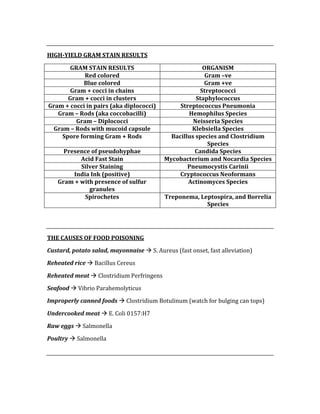
‐ Grandiosity (the patient has an unusually exaggerated sense of self‐esteem) 
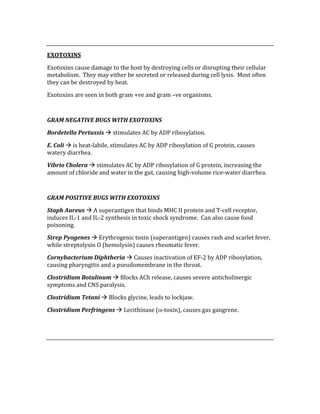
‐ Flight of Ideas 
‐ Increased activity (patient will do numerous activities in one day) 
‐ Pressured speech (fast, non‐sensical, etc) 
‐ Thoughtlessness (patient will do things without fully thinking about what 
they are doing first) 
At least 3 of these must be present to make a diagnosis of a manic episode. 
Mania causes severe social impairment and occupational dysfunction.  Hypomania is 
similar to a manic episode except there is no impairment to the patient in any of 
their day‐to‐day functioning. 
The drug of choice for Bipolar disorder management is LITHIUM. 
 
PERSONALITY DISORDERS 
These are pervasive, fixed, and inappropriate patterns of relating to others, causing 
social and occupational impairment.  Patients with personality disorders do not 
seek help for their disorder because they are not aware that they are the cause of 
their own problems. 
There are three categories of personality disorders: Cluster A, Cluster B, Cluster C 
Cluster A disorders: Paranoid, Schizoid, Schizotypal 
Cluster B disorders: Histrionic, Narcissistic, Antisocial, Borderline 
Cluster C disorders: Avoidant, Obsessive‐Compulsive, Dependent, Passive‐
Aggressive 
 
 
CLUSTER A PERSONALITY DISORDERS 
Paranoid – This patient does not trust others, is suspicious of everything, and 
believes all of their problems are caused by others. 
Schizoid – This patient will have a long history of voluntarily avoiding social 
situations.  There is no psychosis associated with the schizoid personality disorder. 
Schizotypal – This patient has an odd/peculiar appearance, has magical thoughts 
and an odd pattern of behavior.  There is no pscyhosis with the schizotypal 
personality disorder. 
 
CLUSTER B PERSONALITY DISORDERS 
Histrionic – This patient is an extrovert, is sexually provocative, and very emotional. 
Narcissistic – This patient has a sense of entitlement and lacks empathy for others. 
Antisocial – This patient refuses to accept the rules of society, shows no concern for 
their own actions, and shows no remorse for bad behavior.  This disorder is 
associated with conduct disorder in childhood. 
Borderline – This patient has erratic behavior, impulsiveness, and mini psychotic 
episodes.  Look for self‐mutilation and other mood disorders. 
 
CLUSTER C PERSONALITY DISORDERS 
Avoidant – This patient is sensitive to rejection and timid, thus socially withdrawn.  
They also feel inferior to others for no apparent reason. 
Obsessive­Compulsive – This patient is a perfectionist, orderly, stubborn, and 
indecisive.  This is not the same as obsessive‐compulsive disorder (OCD). 
Dependent – This patient allows and wants others to make decisions for them, 
related to a lack of self‐confidence. 
Passive­Aggressive – This patient has “outward compliance with inner defiance”.   


ANXIETY DISORDERS 
Anxiety disorders are characterized by subjective and physical manifestations of 
fear.  The symptoms are similar: Tremor, Palpitations, Diaphoresis, Dizziness, GI 
disturbances, Urinary symptoms. 
 
The common anxiety disorders are: 
‐ Panic Disorder 
‐ Phobias 
‐ Obsessive‐Compulsive Disorder (OCD) 
‐ Generalized Anxiety Disorder 
‐ Post‐traumatic Stress Disorder (PTSD) 
 
Panic Disorder – Panic attacks that occur approximately twice per week, last 
approximately 30 minutes, and present with symptoms similar to an MI.  Patients 
often have a fear of another attack in‐between each episode.  Management of panic 
disorder is SSRI’s, with possible benzodiazepines for acute treatment. 
Phobias – Specific phobias an irrational fear of specific objects, such as spiders, 
snakes, etc.  A social phobia is an exaggerated fear of social or environmental 
situations (the most common social phobia is public speaking).  Management is 
desensitization, can use beta‐blockers for short‐term control of autonomic 
symptoms. 
Obsessive­Compulsive Disorder (OCD) – Patient experiences recurring intrusive 
feelings, thoughts, and images which cause anxiety that is relieved in part by 
performing repetitive actions (compulsions).  Patients realize that their actions are 
irrational and desire to be helped.  SSRI’s are mainstay of management. 
Generalized Anxiety Disorder – Patient experiences persistent symptoms of 
anxiety for at least 6 months.  The symptoms are unrelated to any specific person or 
situation.  Seen in women > men. 
Post­Traumatic Stress Disorder – Is a condition that affects someone who has been 
through a catastrophic event (classically a war veteran).  The patient experiences 
hyperarousal (anxiety, sleeplessness, intrusive memories) and withdrawal 
(flattened affect, numbing, survivor’s guilt).  These symptoms must be present for 
at least 1 month for a diagnosis of PTSD, if symptoms are less than 1 month, the 
diagnosis is Acute Stress Disorder (ASD). 


SCHIZOPHRENIA 
Schizophrenia is characterized by periods of psychotic features and disturbing 
behavior that lasts a minimum of 6 months.   
Types of schizophrenia include: 
‐ Paranoid 
‐ Disorganized 
‐ Catatonic 
‐ Undifferentiated 
‐ Residual 
 
Patients experience: 
‐ Hallucinations (auditory, visual) 
‐ Uncertainty 
‐ Blunted affect 
‐ Loose associations 
 
Positive symptoms (things that are added) include: 
‐ Hallucinations 
‐ Delusions 
‐ Behavioral changes 
‐ Loose associations 
Negative symptoms (things that are removed from the person) include: 
‐ Affect 
‐ Motivation 
‐ Appropriate thought patterns 
‐ Socially withdrawn 


SOMATOFORM, FACTITIOUS, AND MALINGERING DISORDERS 
 
Somatoform Disorders 
Somatoform disorders are characterized by physical symptoms without any organic 
cause.  Those with this condition are not malingering, are not delusional, and truly 
believe they have a physical problem. 
Somatoform Disorders include: 
‐ Somatization disorder 
‐ Conversion disorder 
‐ Hypochondriasis 
‐ Body Dysmorphic disorder 
‐ Pain disorder 
‐ Undifferentiated Somatoform disorder 
 
Somatization Disorder – Patient with history of multiple somatic complaints over 
several years, they must include: 4 pain symptoms, 2 GI symptoms, 1 sexual 
symptom, and 1 pseudoneurologic symptom. 
Conversion Disorder – Patient experiences an abrupt, dramatic loss of motor or 
sensory function.  Most commonly the patient experiences paralysis, seizures, 
paresthesias, anesthesias, and visual problems. 
Hypochondriasis – These patients have an exaggerated concern that they have 
illnesses despite being told repeatedly that there is no cause for concern.  Must 
occur for at least a 6‐month period for this diagnosis. 
Body Dysmorphic Disorder – The patient has an excessive and possibly obsessive 
focus on a minor or possibly imagined physical defect. 
Pain Disorder – Pain that is not explained by any physical problem, often co‐exists 
with another medical problem.  If lasting < 6 months, it is an acute pain disorder, if 
lasting > 6 months it is a chronic pain disorder. 
Undifferentiated Somatoform Disorder – This is the diagnosis when the persistent 
physical symptoms don’t meet criteria for any of the other disorders.  The most 
common problems falling under this umbrella are: Fatigue, GI/GU symptoms, 
appetite changes. 
 
 
Factitious Disorders 
A patient with factitious disorder consciously creates their symptoms in order to 
assume the role of the sick patient so they can get medical attention (the motivation 
however is unconscious).  There are two categories of factitious disorder, they are: 
Munchausen’s Syndrome and Munchausen’s Syndrome by Proxy. 
Munchausen’s Syndrome – Patient will have a chronic history of multiple hospital 
admissions, as well as a history of willingness to receive invasive procedures, even 
when not warranted. 
Munchausen’s by Proxy – This is when a child is ill because of the parent. 
 
Malingering Disorders 
Patients with malingering disorder consciously simulate or exaggerate a physical or 
mental illness for an obvious gain (Money, Care, Avoidance of work).  This patient 
will avoid treatment, as opposed to those with factitious disorder.  Once the patient 
receives the gain they are seeking, the symptoms will resolve. 
 
SLEEP 
Understanding wave patterns and activities during each stage of sleep are important 
aspects of understanding the sleep cycle. 
Awake with eyes open– Beta waves, serotonin stimulates the rape nuclei to induce 
sleep 
Awake with eyes closed – Alpha waves 
Stage 1 – This is the stage of “light sleep”.  This stage is short, lasting approximately 
5% of all sleep time, Theta waves are predominant. 
Stage 2 – This is deeper sleep, lasting approximately 45% of all sleep time.  
Predominantly see sleep spindles and K complexes. 
Stage 3 – This is the deepest sleep, but is non‐REM.  Lasts approximately 25% of all 
sleep time, and is characterized by Delta waves.  *This is the stage at which children 
will experience enuresis and bed‐wetting. 
Stage 4 – This is REM sleep.  The patient will be dreaming and lose all muscle tone.  
There are predominantly Beta waves during the REM sleep cycle. 


AMNESIA 
Amnesia can occur for many reasons, including anesthesia, drug use, old age, head 
injuries, alcoholism, etc.  The two forms of amnesia are: Anterograde and 
Retrograde. 
Anterograde – This person will be unable to remember anything after occurring 
after the incident that caused their amnesia, therefore they cannot form any new 
memories. 
Retrograde – This person will be unable to remember things that occurred before 
the causative factor of their amnesia. 
 
SLEEP APNEA 
Sleep apnea is a serious condition where a person has periods of cessation of 
breathing while asleep.  This may last from a few seconds to minutes, and may occur 
up to 30 times per hour.  The two types of sleep apnea are “Central” and 
“Obstructive”. 
Central sleep apnea – this type of apnea occurs due to a lack of respiratory drive 
from the CNS. 
Obstructive sleep apnea – this type of apnea is usually caused by excessive weight, 
which causes obstruction and physical blockage of breathing.  Management is 
weight loss and CPAP machine.  If these fail surgery may be required. 
In obstructive sleep apnea, a patient will often complain of excessive daytime 
sleepiness, and the spouse will complain of very loud snoring. 
 
NARCOLEPSY 
A condition where someone falls asleep suddenly without warning, and may 
experience cataplexy (sudden collapse while they are still awake).  They fall into 
REM sleep upon falling asleep.  Manage these patients first with scheduled daytime 
naps, and if that doesn’t work use a stimulant such as methylphenidate. 


EATING DISORDERS 
The two common eating disorders are anorexia nervosa and bulimia nervosa. 
Anorexia Nervosa – This is a dangerous disease where patients diet excessively in 
an attempt to lose weight and stay skinny.  They have a distortion to their body 
image, which is a driving force behind the excessive dieting.  Common adverse 
effects that occur include: Amenorrhea, Electrolyte disturbances, and severe cases 
can result in cardiac etiologies.  Management is weight gain and if patient’s weight 
is too low, hospitalization may be required.  A BMI of less than 19 is worrisome of 
anorexia. 
Bulimia Nervosa – These patients have a normal body weight, with the main 
problem being overeating (bingeing) and then purging (laxatives, vomiting, etc).  
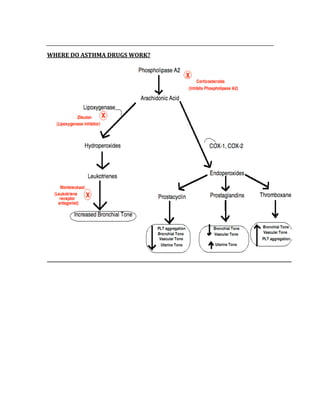
Common findings include enlarged parotid glands, enamel erosion, bruised fingers 
(from sticking them in the mouth), esophageal varices caused by the pressure of 
vomiting.   
 
STRUCTURAL THEORY OF THE MIND 
This is a concept developed by Freud, and it describes the three theories that 
encompass the human mind.  These three theories are the: Id, Superego, and Ego. 
These structures have different functions, they are: 
Id – The Id is responsible for sexual urges, aggression, and other primal urges. 
Superego – The superego encompasses the part of your mind that tells you to 
control your primal urges, it acts as your conscience. 
Ego – The ego is the theory that helps the mind deal with the conflict between the 
‘wants’ of the Id, and the conscience of the superego. 
 
TYPES OF CONDITIONING 
The two types of conditioning we must know for the USMLE are ‘Classical 
Conditioning’ and ‘Operant Conditioning’. 
Classic Conditioning – This is a type of conditioning that elicits a response because 
the stimulus is paired with the unconditioned stimulus.  The classic example is 
Pavlov’s dog, who learned to link the sound of a bell with a treat, thus each time the 
bell rang the dog would salivate as a result of this conditioning. 
Operant Conditioning – This is a type of conditioning that occurs because there was 
a reward given for performing a certain act.  The two types of operant conditioning 
are Positive Reinforcement and Negative Reinforcement. 
Positive Reinforcement – A reward produces an action  
Negative Reinforcement – Removing a negative stimulus will elicit action  


DEVELOPMENTAL MILESTONES IN INFANTS 
Age  Gross Motor  Fine Motor  Language  Social/Cognition 
Newborn  Moro reflex, 
grasp reflex 
     
2 months  Holds head up  Swipes at 
objects 
Coos  Social smile 
4 months  Rolls front to 
back 
Grasps 
Objects 
Orients to 
voice 
Laughs 
6 months  Rolls from 
back to front, 
sits upright 
Transfers 
objects 
Babbles  Develops 
stranger 
anxiety, sleeps 
all night 
9 months  Crawls, pulls 
to a stand 
Pincer grasp, 
eats with 
fingers 
Non­specific 
words 
Waves goodbye, 
responds to name 
12 months  Stands on 
own 
Mature 
pincer grasp 
Specific 
words 
“mama” 
Recognizes 
pictures in a 
book/magazine 
15 months  Walks  Uses a cup  Speaks 4‐6 
words 
Throws temper 
tantrum 
18 months  Throws a ball, 
walks up the 
stairs 
Uses spoon 
for solid foods 
Names 
common 
objects 
Begins toilet 
training 
24 months  Starts 
running, can 
go up and 
down stairs 
Uses spoon 
for semi‐
solids 
Speaks 2­
word 
sentence 
Can follow a 2‐
step command 
36 months  Can ride a 
tricycle 
Can eat neatly 
with utensils 
Speaks 3­
word 
sentence 
Knows first and 
last names 
 
 
PUBERTAL CHANGES 
MALES  FEMALES 
Testicular enlargement – 11.5 yrs  Breast buds – 10.5 yrs 
Genitals increase in size  Pubic Hair Growth Begins 
Pubic Hair Growth Begins  Linear Growth Spurt – 12 yrs 
Peak Growth Spurt – 13.5 yrs  Menarche – 12.5 yrs 


REFLEXES PRESENT AT BIRTH 
REFLEX  STARTS  ENDS  CHARACTERISTICS 
MORO REFLEX  Birth  ~ 2 months  Sudden shift in 
positions causes the 
legs and head to extend 
while the arms jerk up 
and out with the palms 
up and the thumbs 
flexed.  Then the arms 
are brought together 
and hands are clenched 
into fists 
WALKING 
REFLEX 
Birth  ~ 6 weeks  When the sole is 
touched, the legs will 
move in a walking‐
motion, though the 
baby cannot walk 
ROOTING REFLEX  Birth  ~4 months  Infant turns the head 
toward the side where 
the cheek gets stroked 
TONIC NECK 
REFLEX 
1 month  4 months  When child’s head is 
turned to one side, the 
arm of the same side 
will straighten and the 
opposite arm will flex 
PALMAR GRASP 
REFLEX 
Birth  ~6 months  Anything in the hand or 
stroking the hand of the 
baby will cause a the 
fingers to bend and the 
hand to grasp at the 
object 
GALANT REFLEX  Birth  ~ 6 months  Stroking skin on side of 
back causes body to 
swing to that side 
BABKIN REFLEX  Birth  ~ 1 year  More common in 
premature infants, 
pressure to palms cause 
varying responses. 


THE STAGES OF DEALING WITH DEATH 
There are FIVE stages of dealing with death, they can be remembered with the 
mnemonic “DABDA”. 
Denial, Anger, Bargaining, Depression, Acceptance 
 
CHANGES SEEN IN THE ELDERLY 
There are a few changes that occur with advanced age that are seen almost 
uniformly across the geriatric population, they include: 
‐ Change in sleep patterns, namely less need for sleep, decreased REM sleep, 
more frequent awakening throughout the night. 
‐ Sexual changes such as longer refractory period, delayed ejaculation, slower 
onset of erection (in men).  Females frequently experience thinning and 
dryness of the vagina. 
‐ Medical conditions such as degenerative diseases are quite common 


CHAPTER 10 
 
IMMUNOLOGY 
 
A sub­category of microbiology, immunology is very high­
yield.  There are important concepts you must know, and all 
of the immunologic disorders are fair game on the Step 1 
exam. 


IMMUNOLOGY 
 
PASSIVE vs. ACTIVE IMMUNITY 
Passive Immunity  This form of immunity occurs when there is a transfer of 
active humoral immunity in the form of preformed anitbodies from one host to 
another.  This form of immunization is used when there is a risk of infection and not 
enough time for the body to develop an ample immune response.  This provides fast 
but short‐lived protection. 
Examples: Maternal Ig’s passed to baby, patient given rabies vaccine when bitten by 
a bat. 
Active Immunity  This form of immunity develops through its own production of 
antibodies in response to exposure to an antigen, pathogen, or vaccine.  This gives 
the organism slow‐onset but long‐term protection.   
 
THE COMLEMENT PATHWAY 
Designed to protect against gram negative bacteria, is activated by immunoglobulin 
G or M in the classic pathway, and activated by surface microbes in the alternate 
pathway. 
 
FUNCTION OF THE COMPLEMENT FACTORS: 
C1, C2, C3, C4  Neutralization of viral particles 
C3b  Opsonization 
C3a, C5a  Anaphylaxis 
C5a  Neutrophil Chemotaxis 
C5b­C9  MAC cytolysis 
 
DEFICIENCIES OF THE COMPLEMENT PATHWAY: 
C1 Esterase Inhibitor deficiency  get overactive complement pathway and this 
leads to hereditary angioedema 
C3 deficiency  respiratory tract infections + recurrent pyogenic infections 
C6­C8 deficiency  causes Neisseria bacteremia 
Decay Accelerating Factor deficiency  causes paroxysmal nocturnal dyspnea  
 
THE MAJOR HISTOCOMPATIBILITY COMPLEX (MHC) 
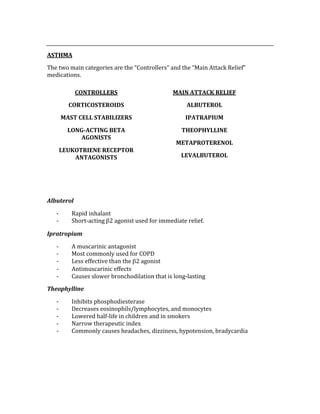
The MHC is genomic region found in vertebrates that encodes MHC molecules, and 
these molecules play a very important role in immune function.  There are two types 
of MHC (ie MHC 1 and MHC 2). 
The MHC I  Contains 1 polypeptide + a β2‐microglobulin, and contains 3 genes 
(gene A, B, and C). 


The MHC II  Contains 2 polypeptides, and an alpha and a beta chain.  Has 3 genes 
(DP, DQ, and DR).  This MHC II is the main component in organ rejection. 
 
 
ANTIBODY FUNCTIONS 


FUNCTION OF THE ANTIBODY 
The variable parts (VH, VL) will recognize different antigens, while the constant 
parts (“C”) will fix the complement. 
Fc Fragment  This fragment is constant, has a carbohydrate side‐chain, is 
complement binding (IgG and IgM only), and has a carboxy terminal. 
Antibody aids in: 
1. Complement activation via the membrane attack complex 
2. Opsonization (ie aids in phagocytosis) 
3. Neutralization (by preventing the adherence of bacteria) 
 
SUBTYPES OF IMMUNOGLOBULINS 
Use the mnemonic “GAMED” to remember and keep all of the immunoglobulin 
information organized. 
Immunoglobulin G (IgG): 
‐ Is the most abundant of all the immunoglobulin’s 
‐ Is the main antibody responsible for the secondary antibody response 
‐ Only Ig that can cross the placenta 
‐ Fixes complement, opsonizes bacteria, and neutralizes toxins 
Immunoglobulin A (IgA): 
‐ Found in bodily secretions 
‐ Prevents bacterial attachment to mucous membranes 
Immunoglobulin M (IgM): 
‐ Responsible for the primary antibody response 
‐ Is the antigen receptor on B cell surfaces 
Immunoglobulin E (IgE): 
‐ Has the lowest concentration of all Ig’s 
‐ Responsible for protection against worms 
‐ Responsible for mast cell and basophil granule release in type 1 
hypersensitivities 
 
Immunoglobulin D (IgD): 
‐ Found on B cell surfaces 
 
ANTIBODY PRODUCTION 


T­CELL ACTIVATION 
The following steps are required for helper T‐cell activation: 
1. The antigen‐presenting cell engulfs the viral particle 
2. The viral particle is then presented on the surface of the MHC II and is then 
recognized by the T‐cell receptor on the surface of the helper T‐cell 
3. A “co‐stimulatory” signal is made when the B7 on the APC and the CD28 on 
the helper T‐cell bind. 
4. The combination of #2 and #3 cause the secretion of IL‐2 and γ‐IFN 
 
After the helper T‐cell is activated, the next step is the activation of the cytotoxic T‐
cell, these steps are: 
1. IL‐2 from the helper T‐cell connects with the cytotoxic T‐cell, thus activating 
it to destroy the infected cell. 
2. Proteins presented on the MHC I (ie viral‐recognition) attracts the cytotoxic 
T‐cell, gets recognized, and is killed 
The following demonstrates these steps visually… 
 
 
DIFFERENTIATION/PRODUCTION OF T AND B CELLS 


CELL MEDIATED IMMUNITY (T 
CELLS) 
T CELLS 
Allergies 
Graft Rejection 
Antibody response 
Defense against Fungi, 
Mycobacterium, TB, and virus­
infected cells. 
ANTIBODY­MEDIATED IMMUNITY 
B CELLS 
Allergies 
Autoimmunity 
Defense against Bacteria, Toxins, 
and Viruses 
 
CYTOKINE FUNCTION 
There is a great mnemonic that can help you remember the first five cytokines, it is: 
“Hot T‐bone stEAk”  
IL – 1  Hot = FEVER 
IL – 2  stimulation of T‐cells 
IL – 3  stimulation of BONE marrow 
IL – 4  IgE production stimulation 
IL – 5  IgA production stimulation 
 
Now the rest of the cytokines are responsible for the following: 
IL – 8  PMN chemotactic factor 
TNF α  Increases IL‐2 receptor synthesis by helper T cells, increases B cell 
proliferation, and attracts and stimulates PMNs.  This is secreted by macrophages. 
TNF β  This is secreted by activated T lymphocytes, and performs the same 
functions as the TNF α 
γ ­ Interferon  Stimulates macrophages, secreted by helper T cells 
 
INTERFERONS 
Interferons play an essential role in preventing the proliferation and production of a 
virus by acting in certain ways to prevent it from infecting other cells. 
The three major functions of the interferons are: 
1. Activation of natural killer (NK) cells which act by directly killing virus‐
infected cells. 
2. α and β interferon act by inhibition of viral protein synthesis 
3. γ ­ Interferon works by increasing the expression of the MHC I and MHC II as 
well as antigen presentation in all cells 
Big picture MOA of interferons: 
 Interferons stimulate the production of a protein that degrades viral mRNA.  
When this occurs, the virus cannot infect a cell since the proper genetic materials for 
this function are absent. 
 
 
TRANSPLANT REJECTION 
Graft­vs­Host Rejection: 
Occurs when the grafted T cells proliferate and reject the host cells that contain 
foreign proteins.  As this occurs, severe organ dysfunction ensues, causing damage 
to the liver, skin, mucosa, and gastrointestinal tract.  This condition also affects the 
bone marrow and the lungs. 
Hyperacute Rejection: 
Occurs almost immediately after transplant, whereby preformed anti‐donor 
antibodies cause a response. 
Acute Rejection: 
This is a cell‐mediated reaction that occurs via cytotoxic T lymphocytes that react 
against foreign MHCs, occurring weeks post‐transplant. 
Chronic Rejection: 
Occurring months‐years post‐transplant, is caused by antibody‐mediated vascular 
damage. 


TYPES OF HYPERSENSITIVITY REACTIONS 
 
TYPE 1 HYPERSENSITIVITY:  Anaphylactic/Atopic 
A very rapid reaction that occurs in response to antigen 
exposure.  Antigens trigger the release of histamine by 
binding to basophils and mast cells. 
Examples  Hives, asthma, anaphylaxis 
 
TYPE 2 HYPERSENSITIVITY:  Cytotoxic 
Is a cytotoxic reaction whereby IgM and/or IgG bind to 
cells leading to lysis by complement activation or phagocytosis. 
Examples  Autoimmune hemolytic anemia, Goodpasture’s disease, rheumatic 
fever, Rh disease, Grave’s disease. 
 
TYPE 3 HYPERSENSITIVITY: Antigen­Antibody Mediated 
The formation of antigen‐antibody complexes leads to complement activation, 
attracting PMN’s and ultimately leading to the release of lysosomal enzymes. 
Examples  Glomerulonephritis, Lupus, Rheumatoid Arthritis 
 
TYPE 4 HYPERSENSITIVITY: Cell­Mediated 
Is a delayed response, whereby T cells become sensitized and encounter antigens, 
thus releasing cytokines. 
Examples  Contact Dermatitis, Transplant Rejections, TB Skin Test 


REMEMBERING THE 
HYPERSENSITIVITIES: 
Mnemonic: ACID 
A – Anaphylaxis 
C – Cytotoxic 
I – Immune Complex 
D ­ Delayed 
 
DISEASE CAUSED BY IMMUNE DEFICIENCIES 


B­CELL DEFICIENCIES 
BRUTON’S 
AGAMMAGLOBULINEMIA 
SELECTIVE 
IMMUNOGLOBULIN 
DEFICIENCY 
T­CELL DEFICIENCIES 
THYMIC APLASIA 
(DiGeorge) 
CHRONIC 
MUCOCUTANEOUS 
CANDIDIASIS 
B AND T CELL 
DEFICIENCIES 
SCID 
WISKOTT‐
ALDRICH 
ATAXIA‐
TELANGIECTASIA 
PHAGOCYTIC DEFICIENCIES 
CHRONIC GRANULOMATOUS 
DISEASE 
CHEDIAK‐HIGASHI 
JOB’S SYNDROME 
LEUKOCYTE ADHESION 
DEFICIENCY 
HYPER‐IgM SYNDROME 
IL‐12 RECEPTOR DEFICIENCY 
B­CELL DEFICIENCIES 
 
BRUTON’S AGAMMAGLOBULINEMIA: 
An x‐linked recessive defect in tyrosine kinase gene.  results in: 
‐ All Ig classes are decreased 
‐ Get recurrent bacterial infections (after 6 months of age) 
‐ Only in boys 
 
SELECTIVE IMMUNOGLOBULIN DEFICIENCY: 
A deficiency of a specific Ig class resulting in defect I isotype switching, results in: 
‐ Sinus infection 
‐ Lung infections 
‐ Most commonly the deficient Ig is IgA 
 
 
T­CELL DEFICIENCIES: 
 
THYMIC APLASIA: 
There is a failure of the development in the thymus and parathyroid’s, due to failure 
of development of the 3rd and 4th pharyngeal pouch, results in: 
‐ Tetany 
‐ Viral and fungal infections (recurrent) 
‐ Heart defects 
 
CHRONIC MUCOCUTANEOUS CANDIDIASIS: 
A T‐cell dysfunction against Candida, results in: 
‐ Candidal infections of the skin and mucous membranes 


B AND T CELL DEFICIENCIES 
SEVERE COMBINED IMMUNODEFICIENCY (SCID): 
This condition leads to a defect in differentiation of the early stem‐cells, results in: 
‐ Recurrent infections (viral, bacterial, fungal, and protozoal) 
 
WISKOTT­ALDRICH SYNDROME: 
Is an x‐linked defect in the ability to mount an IgM response to the capsular 
polysaccharides of bacteria, results in: 
‐ Low IgM levels 
‐ High IgA levels 
‐ Normal IgE levels 
‐ Classic triad of symptoms: Infections, Eczema, and Thrombocytopenic 
Purpura. 
 
 
PHAGOCYTIC DEFICIENCIES 
CHRONIC GRANULOMATOUS DISEASE: 
A lack of NADPH leads to a defect in neutrophil phagocytosis, results in: 
‐ Succeptibility to opportunitic bacterial infections 
‐ Diagnosis based on negative nitroblue tetrazolium dye reduction test 
(CLASSIC USMLE QUESTION) 
 
CHEDIAK­HIGASHI DISEASE: 
A defect in microtubular function and lysosomal emptying of the phagocytic cells, 
results in: 
‐ Recurrent pyogenic infections due to staph and strep 
 
JOB’S SYNDROME: 
T‐cells fail to produce γ‐interferon, thus PMN’s fail to respond, results in: 
‐ Eczema, staph abscesses, and elevated IgE 
 
LEUKOCYTE ADHESION DEFICIENCY SYNDROME: 
There is a defect in the LFA‐1 adhesion proteins on the phagocytes, results in severe 
early life pyogenic infections. 
 
HYPER­IgM SYNDROME: 
There is a defect in the CD40 ligand on the CD4 Th cells, leading to severe pyogenic 
infections early in life, results in: 
‐ High IgM levels 
‐ Extremely low levels of IgG, IgA, and IgE 
 
IL­12 RECEPTOR DEFICIENCY: 
A defect in the IL‐12 receptor leads to disseminated mycobacterial infections. 


CHAPTER 11 
 
MICROBIOLOGY 
 
Historically, bacteriology occupies the majority of the 
microbiology questions on the Step 1 exam.  After bacteria, 
virology is very important, both conceptually and in detail.  
Pay very special attention to HIV and all that it entails, as 
this is one of the highest­yielding topics on the exam.  When 
it comes to parasites and helminths, your strategy should be 
memorization of modes of transmission, signs and 
symptoms, and treatments. 


BACTERIOLOGY 
 
THE GRAM POSITIVE BREAKDOWN 
 
 
GRAM POSITIVE CELL WALL STRUCTURE 
 
 
PEPTIDOGLYCAN – Provides support and protects against osmotic pressures. 
CAPSULE – Protects the organism from phagocytosis. 
FLAGELLUM – Helps propel the organism. 
PILUS – Used for adhering to a cell’s surface and forms an attachment between two 
backteria for sex. 
PLASMIDS – Contain genes for enzymes, toxins, and for the development of 
antibotic resistance. 
GLYCOCALYX – Helps mediate adherence to surfaces. 
 
THE GRAM NEGATIVE BREAKDOWN 


GRAM NEGATIVE CELL WALL STRUCTURE 
 
** Unique to the gram –ve bacteria, the endotoxin contains lipopolysaccharide 
that induces TNF and IL­1. 


HIGH­YIELD GRAM STAIN RESULTS 
GRAM STAIN RESULTS  ORGANISM 
Red colored  Gram –ve 
Blue colored  Gram +ve 
Gram + cocci in chains  Streptococci 
Gram + cocci in clusters  Staphylococcus 
Gram + cocci in pairs (aka diplococci)  Streptococcus Pneumonia 
Gram – Rods (aka coccobacilli)  Hemophilus Species 
Gram – Diplococci  Neisseria Species 
Gram – Rods with mucoid capsule  Klebsiella Species 
Spore forming Gram + Rods  Bacillus species and Clostridium 
Species 
Presence of pseudohyphae  Candida Species 
Acid Fast Stain  Mycobacterium and Nocardia Species 
Silver Staining  Pneumocystis Carinii 
India Ink (positive)  Cryptococcus Neoformans 
Gram + with presence of sulfur 
granules 
Actinomyces Species 
Spirochetes  Treponema, Leptospira, and Borrelia 
Species 
 
 
THE CAUSES OF FOOD POISONING 
Custard, potato salad, mayonnaise  S. Aureus (fast onset, fast alleviation) 
Reheated rice  Bacillus Cereus 
Reheated meat  Clostridium Perfringens 
Seafood  Vibrio Parahemolyticus 
Improperly canned foods  Clostridium Botulinum (watch for bulging can tops) 
Undercooked meat  E. Coli 0157:H7 
Raw eggs  Salmonella 
Poultry  Salmonella 


EXOTOXINS 
Exotoxins cause damage to the host by destroying cells or disrupting their cellular 
metabolism.  They may either be secreted or released during cell lysis.  Most often 
they can be destroyed by heat. 
Exotoxins are seen in both gram +ve and gram –ve organisms. 
 
GRAM NEGATIVE BUGS WITH EXOTOXINS 
Bordetella Pertussis  stimulates AC by ADP ribosylation. 
E. Coli  is heat‐labile, stimulates AC by ADP ribosylation of G protein, causes 
watery diarrhea. 
Vibrio Cholera  stimulates AC by ADP ribosylation of G protein, increasing the 
amount of chloride and water in the gut, causing high‐volume rice‐water diarrhea. 
 
GRAM POSITIVE BUGS WITH EXOTOXINS 
Staph Aureus  A superantigen that binds MHC II protein and T‐cell receptor, 
induces IL‐1 and IL‐2 synthesis in toxic shock syndrome.  Can also cause food 
poisoning. 
Strep Pyogenes  Erythrogenic toxin (superantigen) causes rash and scarlet fever, 
while streptolysin O (hemolysin) causes rheumatic fever. 
Cornybacterium Diphtheria  Causes inactivation of EF‐2 by ADP ribosylation, 
causing pharyngitis and a pseudomembrane in the throat. 
Clostridium Botulinum  Blocks ACh release, causes severe anticholinergic 
symptoms and CNS paralysis.   
Clostridium Tetani  Blocks glycine, leads to lockjaw. 
Clostridium Perfringens  Lecithinase (α‐toxin), causes gas gangrene. 


ENDOTOXINS 
Endotoxins are lipopolysaccharides that are found in the cell walls of gram negative 
bacteria.  Endotoxins cause a wide range of problems through the activation of 
macrophages and the complement pathway. 
Macrophage activation leads to: 
‐ Hypotension through nitric oxide 
‐ Fever through IL‐1 activation 
‐ Hemorrhagic tissue necrosis through tumor necrosis factor 
The complement pathway leads to: 
‐ Hypotension and edema through C3a activation 
‐ Causes PMN chemotaxis through C5a activation 
** DIC can be caused when the endotoxins activates the Hageman factor. 
 
TYPES OF STAINS 
There are a few different stains that are used in order to isolate certain bacteria, 
they include: 
Silver Stain  Pneumocystic Carinii Pneumonia, Fungi 
Congo Red Stain  Amyloid 
Giemsa Stain  Chlamydia, Borrelia, Plasmodium 
PAS  Whipple’s disease 
Ziehl­Neelsen  Acid‐fast bacteria’s 
India Ink  Cryptococcus Neoformans 


CONJUGATION, TRANSDUCTION, TRANSFORMATION 
PROCEDURE  PROCESS  CELL TYPES  TYPE OF DNA 
TRANSFERRED 
Conjugation  Transfer of DNA 
from bacteria to 
bacteria 
Prokaryotes  Chromosomal or 
plasmid 
Transduction  Transfer from 
virus to another 
cell 
Prokaryotes  All types 
Transformation  Purified DNA is 
taken up by a cell 
Both prokaryotes 
and eukaryotes 
All types 
 
 
SPECIFIC REQUIREMENTS 
Some bugs require certain environments in order to survive, they fall under the 
following: 
OBLIGATE AEROBES/ANAEROBES, AND INTRACELLULAR 
 
Obligate Aerobes:  require 02 to create ATP.  Includes: 
‐ Nocardia 
‐ Pseudomonas Aeruginosa 
‐ Mycobacterium TB 
‐ Bacillus 
Obligate Anaerobes: are susceptible to oxidative damage due to their lack of SOD 
and catalase.  Includes: 
‐ Actinomyces 
‐ Clostridium 
‐ Bacteroides 
Intracellular:  these bugs must remain inside the cell in order to survive, include: 
Obligates – Rickettsia and Chlamydia 
Facultative – Salmonella, Brucella, Mycobacterium, Listeria, Francisella, Legionella, 
Yersinia 


IMPORTANT INFO ABOUT STAPH AUREUS 
Staph aureus is a very common organism both in the board exams and in clinical 
practice.  Staph aureus causes their destruction based on the following two 
methods: 
1. Toxin­Mediated – Includes toxic‐shock syndrome, scalded skin syndrome, 
and rapid‐onset food poisoning. 
2. Inflammatory – Includes infections of the skin, abscesses, and pneumonias. 
 
Toxic­Shock Syndrome – A superantigen binds to MHC II and T‐cell receptors, 
which causes polyclonal T‐cell activation. 
Food poisoning from staph aureus is caused by the ingestion of a preformed toxin. 
** Staph Aureus contains a virulence factors (known as Protein A), that binds to the 
Fc portion of IgG.  This inhibits complement fixation and inhibits phagocytosis. 
 
ENCAPSULATED BACTERIA 
Some bacteria have a polysaccharide capsule that acts as an anti‐phagocytic factor.  
This makes them less susceptible to being engulfed by phagocytes.  These bugs are: 
‐ Strep Pneumonia 
‐ H. Influenza 
‐ N. Meningitidis 
‐ Klebsiella Pneumonia 
 
THE EXOTOXINS OF CLOSTRIDIA SPECIES 
C. Difficile  produces a cytotoxin (exotoxin) that kills erythrocytes, and thus 
causes a pseudomembranous colitis.  ** Often occurs secondary to antibiotic use. 
C. Tetani  produces an exotoxin that results in tetanus. 
C. Perfringens  produces an α‐toxin that causes myonecrosis, gas gangrene, or 
hemolysis. 
C. Botulinum  a preformed, heat‐labile toxin is produced that inhibits the release 
of ACh, which causes botulism. 
 
 
IMPORTANT INFO ABOUT STREP PYOGENES 
Strep Pyogenes is a group A β‐hemolytic strep that can cause the following diseases: 
1. Immunologic – Acute glomerulonephritis and Rheumatic fever 
2. Pyogenic – Pharyngitis, Cellulitis, and Impetigo 
3. Toxigenic – Toxic shock syndrome and Scarlett fever 
 
DIPHTHERIA 
Diphtheria can cause pseudomembranous pharyngitis through an exotoxin.  Their 
exotoxin works by inhibiting protein synthesis via ADP ribosylation of EF­2. 
 
BUGS CAUSING BLOODY DIARRHEA 
‐ E. Coli 0157:H7 
‐ Entamoeba histolytica 
‐ Campylobacter jejuni 
‐ Salmonella 
‐ Shigella 
‐ Yersinia enterocolitica 
BUGS CAUSING WATERY DIARRHEA 
‐ Enterotoxigenic E. Coli 
‐ Vibrio (rice‐water stools, highly voluminous) 
‐ Rotavirus 
‐ Giardia (foul‐smelling) 
‐ Cryptosporidium 
 
IMPORTANT FACTS ABOUT H. PYLORI 
‐ H. Pylori is the cause of most duodenal ulcers (up to 90%) 
‐ Is a gram –ve rod that creates an alkaline environment 
‐ Can increase the risk of PUD and gastric carcinomas 
Treatment:  Triple therapy: Omeprazole, clarithromycin, amoxicillin. 


PSEUDOMONAS AERUGINOSA 
Pseudomonas aeruginosa produces both an exotoxin and an endotoxin.  Its most 
popular characteristic is that it produces a fruity‐smelling blue‐green pigment (due 
to pyocyanin). 
P. Aeruginosa causes the following: 
‐ Pneumonia in cystic fibrosis patient 
‐ Otitis Externa (swimmer’s ear) 
‐ Folliculitis (known as “hot‐tub” folliculitis) 
‐ Sepsis (black lesions of the skin) 
 
BUGS THAT ACT ON THE “G­PROTEIN” 
Two bugs that produce their effects by acting on the Gs and Gi proteins are Vibrio 
Cholera and Bordetella Pertussis. 
Vibrio Cholera causes a rice‐water diarrhea by permanently activating the Gs 
protein. 
Bordetella Pertussis causes whooping cough by permanently disabling the Gi 
protein. 
** Common to both bugs is the activation of adenylyl cyclase (AC) through ADP 
ribosylation. 
 
CAUSES OF VAGINOSIS 
Trichomonas, Gardnerella, and Candida 
Trichomonas – caused by an anaerobic, motile protozoan.  Shifts vaginal pH to 5‐6, 
and dispels a greenish‐yellow frothy vaginal discharge. 
Gardnerella – a gram‐variable rod that causes a green vaginal discharge that has a 
fishy smell, and has the pathognomonic “clue cells”.  pH is elevated. 
Candida – is a fungal infection that presents with a cottage‐cheese like discharge 
that is sticky and will stick to the walls of the vagina. 
 
 
BUGS RELATED TO ANIMALS (ZOONOTICS) 
Many serious diseases are caused by bites from animals, ticks, etc.  The most 
important diseases from animals include: 
1. Lyme Disease – caused by Borrelia Burgdorferi, which is transmitted 
through the Ixodes tick bite, which is a tick that lives on deer and mice.  
Classic presentation is the bullseye target lesion. 
 
2. Cellulitis – caused by Pasteurella Multicoda, which occurs through dog or cat 
bites. 
3. Tularemia – caused by Francisella Tularensis, from a tick bite, seen in 
rabbits and deer.  This condition is also known as the “Pahvant Valley 
Plague”, “Rabbit fever”, “Deer fly fever”, and “Ohara’s fever”. 
 
4. Brucellosis – caused by Brucella species, and contamination occurs through 
infected dairy products and contact with animals. 
 
5. The plague – caused by Yersinia pestis, transmitted through a flea bite found 
on rodents and wild dogs. 
 
TUBERCULOSIS 
Tuberculosis is an infection with mycobacterium tuberculosis, that affects the 
respiratory tract most commonly, however it can have extrapulmonary 
manifestations as well, namely in the : 
‐ GI 
‐ Kidneys 
‐ Lymph nodes 
‐ Vertebral Bodies (Pott’s disease) 
‐ Central nervous system 
 
Symptoms of TB infection: 
Usually, symptoms are very non‐specific, presenting as: 
‐ Fatigue and weight loss 
‐ Night sweats 
‐ Cachexia 
 
If the symptoms become more pulmonary, expect to find: 
‐ Dyspnea 
‐ Hemoptysis 
‐ Chest pain (pleuritic in nature) 
‐ Productive cough 
 
1° infection   A primary TB infection refers to the infectious process by which the 
body is able to contain the infection and prevent its dissemination.  This results in 
the Ghon complex, which is a calcified focus of infection usually in the lower 
segments of the lung. 
2° infection  Also known as “reactivated TB”, this type of infection can occur to 
those who are in a state of weakened or suppressed immunity. 
 
When tuberculosis is suspected? 
‐ A +ve PPD test warrants a chest xray looking for the TB cavitary lesion 
‐ Acid fast stain looking for the mycobacterium 
 
Management/Treatment? 
Active TB  A 4‐drug regimen (RIPE – Rifampin, Isoniazid, Pyrazinamide, and 
Ethambutol).  Beware of adverse neurological effects of Isoniazid, supplement with 
vitamin B6 – pyridoxine. 
Latent TB  With latent TB, you will begin the patient on a 4‐drug regimen lasting 
up to 9 months.  If they present at a future date with latent TB, they will not need to 
be treated again.  ** Latent TB = 1 time 4‐drug course lasting several months. 


RICKETTSIAL INFECTIONS AND VECTORS 
Rickettsial infections are those infections that are responsible for causing Rocky 
Mountain Spotted Fever, Typhus, and Q fever. 
Rickettsial infections usually lead to a similar presentation, which is: 
‐ Fever 
‐ Headache  
‐ Rash 
ROCKY MOUNTAIN SPOTTED FEVER 
Caused by Rickettsia Rickettsii, which causes a rash that starts on the palms and 
soles and moves inward.  Treat with tetracycline. 
Two forms of Typhus’ are: 
ENDEMIC TYPHUS – caused by Rickettsia Typhi, which is a flea.  Treat with 
tetracycline. 
EPIDEMIC TYPHUS – caused by Rickettsia Prowazekii, a body louse.  Treat with 
tetracycline. 
And finally,  
Q FEVER – caused by Coxiella Burnetti, which caused infection via aerosolized 
particles.  Treat with tetracycline. 
 
SPIROCHETES 
Spirochetes are “spiral‐shaped” bacterial elements containing axial filaments.  The 
most commonly tested spirochete‐related infection is syphilis (treponema).  The 
other two types of spirochetes are Borrelia and Leptospira, which are stainable with 
light microscopy, whereas treponema is visualized only with dark‐field microscopy. 
With that said, there are three forms of Syphilis: 
1° syphilis  Patient will get a painless chancre, treat with IM pen G 
2° syphilis  Patient has disseminated disease + constitutional symptoms, includes 
a maculopapular rash on the palms and soles.  Treat with IM pen G 
3° syphilis  Patient has neurological problems (neurosyphilis, Argyll Robertson 
pupil), aortic disorders (aortitis), and gummas.  Treat with IV penicillin. 
 
 
TESTING FOR SYPHILIS 
VDRL and FTA­ABS: 
VDRL – this test is used for nonspecific antibody detection, however due to its high 
rate of false‐positives is not the primary test used for syphilis detection.  This test 
will be positive when there are a few other diseases present, including: SLE, RA, RF, 
and a few other viral infections like mononucleosis. 
FTA­ABS – is a test specific for the treponema bacteria, and has the best 
combination of benefits in finding syphilis, including high specificity, very early 
positivity, and remains positive the longest. 


VIROLOGY 
 
DNA AND RNA VIRAL GENOMES 
All DNA viruses are double stranded and linear, with the exception of parvovirus (is 
single‐stranded), and hepadnavirus/papovavirus (circular).  All RNA viruses are 
single‐stranded, except the reovirus (double stranded). 
DNA is double, RNA is single. 
 
HOW DO VIRUSES REPRODUCE 
Recombination  is the exchange of genetic material between 2 chromosomes by 
cross‐over of certain regions that have important base sequence homology. 
Reassortment  is the exchange of viral segments (from segmented viral 
genomes).  This occurs at high frequency and is responsible for worldwide illnesses 
(pandemics). 
Complementation  occurs when one functional virus helps another non‐
functional virus become functional. 
Phenotypic Mixing  occurs when a certain virus has the surface coating from 
another virus’ protein, which will then determine the infectivity of this virus 
particle. 
 
VIRAL PLOIDY 
Retroviruses contain 2 identical single‐stranded RNA molecules, making them 
“diploid”, while all other viruses contain a single copy of both DNA and RNA, making 
them “haploid”. 
DNA Viruses  all replicate in the nucleus, except for the poxvirus. 
RNA Viruses  all replicate in the cytoplasm, except for retroviruses and the 
influenza virus. 


THE IMPORTANT CHARACTERISTICS OF VIRAL DNA 
The following are important characteristics that fit for almost all of the DNA viruses: 
Nuclear replication  all DNA viruses replicate in the nucleus except for the 
Poxvirus, which has its own DNA‐dependent RNA polymerase. 
Are linear  all DNA viruses are linear, except for the Papovavirus and the 
Hepadna virus.  Papovavirus is circular/supercoiled, and the Hepadna virus is 
circular/incomplete. 
Are double stranded (dsDNA)  all DNA viruses are double‐stranded except for 
the Parvovirus, which is single‐stranded (ssDNA). 
Are icosahedral in shape  all DNA viruses are icosahedral except for the 
Poxvirus, which is complete in capsid shape. 
 
GENETIC SHIFT vs. GENETIC DRIFT 
Genetic Shift  Is the process by which there is a re‐assortment of different viral 
strains, which combine to form new forms/subtypes that contain a mixture of the 
surface antigens of the strains involved.  Genetic shift is very important because it 
creates new viral pathogens, and is responsible for the emergence of new viruses. 
Genetic Drift  Is a process of natural mutations over a period of time.  This leads 
to loss of immunity and the inability of vaccines to cure illnesses. 


THE DNA VIRUSES 
The list of DNA viruses: 
1. Hepadnavirus 
2. Herpesvirus 
3. Adenovirus 
4. Parvovirus 
5. Papovavirus 
6. Poxvirus 
Remember this list with the mnemonic: HHAPPPy 
 
THE CHARACTERISTICS OF EACH DNA VIRUS 
1. Hepadnavirus – dsDNA partial circular, enveloped. 
Diseases  Hepatitis B virus 
 
2. Herpesvirus – dsDNA linear, enveloped. 
Diseases  Human Herpes Virus 6 & 8, Herpes Simplex 1 & 2, Varicella Zoster, 
Ebstein‐Barr Virus, and Cytomegalovirus 
HHV 6 – Reseola 
HHV 8 – Kaposi’s sarcoma 
HSV 1 – Thought to be oral ulcers, but now can be from both oral and genital ulcers 
HSV 2 – Thought to be genital ulcers, but now can be from both oral and genital 
ulcers  
VZV – Responsible for chickenpox (not seen anymore due to vaccination), shingles 
EBV – Causes mononucleosis and Burkitt’s lymphoma 
CMV – Congenital infections  
 
3. Adenovirus – dsDNA linear, has no envelope. 
Diseases  Conjunctivitis, Pneumonias, Pharyngitis 
 
4. Parvovirus – ssDNA linear (is the smallest DNA), has no envelope 
Diseases  Parvo B19 (slapped cheek syndrome) 
 
5. Papovavirus – dsDNA circular, has no envelope 
Diseases  Human Papilloma virus, Progressive Multifocal Leukoencephalopathy 
 
6. Poxvirus – dsDNA linear (is the largest of all DNA viruses), has an envelope 
Diseases  Cowpox, Smallpox, Molluscum Contagiosum 
 
THE CHARACTERISTICS OF EACH RNA VIRUS 
1. Picornavirus – (+)ssRNA, linear, icosahedral, no envelope. 
Responsible for: 
‐ Hepatitis A 
‐ Coxsackievirus 
‐ Poliovirus 
‐ Echovirus 
‐ Rhinovirus 
 
2. Calicivirus – (+)ssRNA, linear, icosahedral, no envelope. 
Responsible for: 
‐ Norwalk virus (gastroenteritis) 
‐ Hepatitis E 
 
3. Reovirus – dsRNA, linear segmented, double icosahedral, no envelope. 
Responsible for: 
‐ Reovirus (Colorado tick fever) 
‐ Rotavirus (MCC of diarrhea in children) 


4. Flavivirus – (+)ssRNA, linear, icosahedral, enveloped. 
Responsible for: 
‐ Dengue fever 
‐ Yellow fever 
‐ Hepatitis C 
‐ St. Louis encephalitis 
‐ West Nile virus 
 
5. Togavirus – (+)ssRNA, linear, icosahedral, enveloped. 
Responsible for: 
‐ Rubella 
‐ Eastern/Western equine encephalitis 
 
6. Retrovirus – (+)ssRNA, linear, icosahedral, enveloped. 
Responsible for: 
‐ HIV/AIDS 
‐ Hairy T‐cell leukemia 
 
7. Orthomyxovirus – (‐)ssRNA, linear/segmented, helical, enveloped. 
Responsible for: 
‐ Influenza 
 
8. Paramyxovirus – (‐)ssRNA, linear/non‐segmented, helical, enveloped. 
Responsible for: 
‐ Measles 
‐ Mumps 
‐ Respiratory Syncitial Virus (RSV) 
‐ Parainfluenza 


9. Rhabdovirus – (‐)ssRNA, linear, helical, enveloped. 
Responsible for: 
‐ Rabies 
 
10. Filovirus – (‐)ssRNA, linear, helical, enveloped. 
Responsible for: 
‐ Hemorrhagic fevers (Ebola virus) 
 
11. Coronavirus – (+)ssRNA, linear, helical, enveloped. 
Responsible for: 
‐ Coronavirus 
 
12. Arenavirus – (‐)ssRNA, circular, helical, enveloped. 
Responsible for: 
‐ Meningitis 
‐ Lymphocytic choriomeningitis 
 
13. Bunyavirus – (‐)ssRNA, circular, helical, enveloped. 
Responsible for: 
‐ Sandfly fever 
‐ Riftvalley fever 
‐ Crimean‐Congo hemorrhagic fever 
‐ Hantavirus 
‐ California Encephalitis 
 
14. Deltavirus – (‐)ssRNA, circular, helical, enveloped. 
Responsible for: Hepatitis D 


LIVE­ATTENUATED vs. KILLED VACCINES 
Live­Attenuated Vaccines  these types of vaccines induce both humoral and cell‐
mediated immunity. 
Killed Vaccines  these types of vaccines induce humoral immunity only. 
 
Examples of Live­Attenuated Vaccines: 
‐ Measles 
‐ Mumps 
‐ Rubella 
‐ Smallpox 
‐ Polio (Sabin) 
‐ VZV 
‐ Yellow Fever 
** Remember there is danger in giving a live‐attenuated vaccine to someone who is 
immunocompromised. 
 
Examples of Killed Vaccines: 
‐ Rabies 
‐ Influenza 
‐ Polio (Salk) 
‐ Hepatitis A 


SUPER HIGH­YIELD MICROBIOLOGY INFORMATION 
 
HERPRES VIRUSES 
There are quite a few different forms of “herpes viruses”, they are all high‐yield 
USMLE information.  The most common herpes viruses and their common findings 
include: 
HSV­1 – this is known to be responsible for the oral lesions of herpes, however due 
to different sexual practices, it may be seen in the genital region as well.  HSV‐1 is 
also a cause of keratoconjunctivitis and temporal lobe encephalitis (HSV is the most 
common cause of adult onset altered mental status).   
HSV‐1 is transmitted via respiratory secretions and/or saliva.  For HSV diagnosis, 
use the Tzanck test (smear the open vesicle, looking for multinucleated giant cells). 
 
HSV­2 – HSV‐2 is most commonly seen as herpes of the genitals (herpes labialis), as 
well as neonatal herpes. 
HSV‐2 is transmitted via perinatal transmission as well as through sexual contact. 
 
EBV – causes Burkitt’s lymphoma and infectious mononucleosis (causes severe 
fatigue, sore throat, usually in teenagers).  Transmitted through saliva and 
respiratory secretions. 
 
CMV – Causes congenital infections as well as some types of pneumonia.  
Transmitted congenitally, through sexual contact, through saliva, and through 
transfusion. 
HHV – Human Herpes Virus, is the cause of Kaposi’s sarcoma in AIDS patients.  
Transmission is sexually. 


MONONUCLEOSIS 
Mononucleosis is always encountered on the USMLE exams, thus be sure to know as 
much as possible about this condition. 
Presentation: 
‐ Young adult (16‐20yr) 
‐ Fever 
‐ Hepatosplenomegaly 
‐ Pharyngitis 
‐ Lymphadenopathy 
Cause:  
‐ Ebstein‐Barr Virus (EBV) 
‐ “kissing disease”, because it is easily transmitted through saliva 
‐ There are abnormal circulating cytotoxic T cells 
Diagnosis: 
The best diagnostic test is the “Monospot test”, which detects heterophil antibodies 
through sheep RBC agglutination. 
What to tell the patient: 
‐ The most important thing for patient safety is to AVOID CONTACT SPORTS, 
because the spleen is enlarged and if it experiences blunt trauma, it may 
rupture and cause severe adverse effects such as hypotension, shock, and 
sepsis. 


HIV/AIDS 
A retrovirus, the HIV disease uses the reverse transcriptase enzyme to replicate.  
HIV infection can be transmitted through sexual contact/fluids, blood, and breast 
milk.  The helper T‐cells (CD4+ T cells), macrophages, and dendritic cells are 
affected. 
DIAGNOSING HIV: 
Diagnosis of HIV is made with the ELISA test because of its high sensitivity.  When a 
test is positive, a Western Blot is performed, which is very specific.   
After confirmation, a viral load can be done to measure the quantity of the virus in 
the blood, which allows you to measure the effect of medical treatment. 
** False negatives with the ELISA test and the Western Blot are common in the first 
few months of HIV infection. 
 
IMMUNITY TO HIV: 
Certain mutations in our genes can give us immunity to HIV, can give us partial 
immunity to HIV, and can even cause us to deteriorate rapidly from an HIV infection.  
The mutations responsible for this include: 
Mutation causing immunity  CCR5 mutation (homozygous) 
Mutation causing partial immunity  CCR5 mutation (heterozygous) 
Mutation causing rapid progression/deterioration  CXCR1 mutation 
 
AIDS – OPPORTUNISTIC INFECTIONS: 
The most commonly encountered opportunistic infection are: 
FUNGAL – Candida (thrush), Cryptococcal Meningitis (Cryptococcus), Pneumocystis 
Pneumonia (PCP, when CD4<200), Histoplasmosis. 
VIRAL – PML (caused by JC virus), HSV, VZV, CMV 
BACTERIAL – TB, Mycobacterium Avium‐Intracellular complex (MAC) 
PROTOZOA – Cryptosporidium, Toxoplasmosis 
 
 
TREATMENT: 
Treatment involves the use of antiretroviral medications, given to symptomatic 
patients regardless of their CD4 counts and/or to asymptomatic patients with CD4 
counts <500.  
Triple‐drug regimens (2 nucleoside reverse transcriptase inhibitors and either: 1 
non‐nucleoside reverse transcriptase inhibitor OR 1 protease inhibitor) are used, 
these are known as HAART, which target and prevent HIV replication at three 
different points along the virus’ replication process.   
 
OTHER MANIFESTATIONS OF HIV INFECTION: 
Pulmonary: Community‐acquired pneumonia, PCP, TB, CMV, MAC, Histoplasmosis. 
CNS: Toxoplasmosis, AIDS‐dementia, Cryptococcal Meningitis, Lymphoma, HSV, 
Neurosyphilis, PML 
GI: Diarrhea, Oral lesions (thrush, ulcerations, oral hairy leukoplakia), Candida 
esophagitis, Proctitis 
Dermatological: HSV, Shingles, Molluscum Contagiosum, Kaposi’s sarcoma 


HEPATITIS 
Is inflammation of the liver, characterized by the presence of inflammation of the 
tissue of the liver.  There is a wide range of routes of infection, there is a wide range 
of symptoms and prognosis, which can range from self‐limited diseases to cirrhosis 
and death.   
There are FIVE common forms of hepatitis, they are: 
Hepatitis A, B, C, D, and E 
 
Hepatitis A (HAV) – Is usually asymptomatic, is transmitted via fecal‐oral route.  
Usually a very short incubation period (~ 3 weeks).  Is a RNA picornavirus. 
Hepatitis B (HBV) – Often presents with mild symptoms such as: loss of appetite 
N/V, myalgias, fever, and jaundice.  Hep B is usually self‐limited, but can progress 
and cause cirrhosis, hepatic failure, and death.  Transmission is usually sexual, 
through sharing dirty needles (parenteral), and from the mother to fetus (vertical 
transmission).  Is a DNA hepadnavirus. 
Hepatitis C (HCV) – Hepatitis C usually carries the same symptoms as does 
hepatitis B, and is transmitted through blood products (sex, dirty needles).  
Hepatitis C is often a chronic illness that leads to carcinoma and/or cirrhosis.  
People infected will usually become carriers of hep C.  Is an RNA flavivirus. 
Hepatitis D (HDV) – Alone, hepatitis D cannot infect, and requires a co‐infection 
with hepatitis B in order to infect (requires HBsAg as its envelope).  Is a deltavirus. 
Hepatitis E (HEV) – Has a fecal‐oral transmission route, and has the tendency to 
cause water‐borne epidemics.  Very similar symptomatically to hepatitis A.  HEV can 
cause significant illness and even death in pregnant women.  Is an RNA calicivirus. 
** Hep B and C  chronic, cause cirrhosis, and hepatocellular carcinoma. 
** Hep A and E  affect the GI tract. 


HEPATITIS SEROLOGY 
The hepatitis serology is very high‐yield for the Step 1, memorize all of this 
information. 
HBsAg  Is the antigen found on the surface of HBV, when it is present, there is a 
carrier state. 
HBsAb  Is the antibody to HBsAg, its presence indicates immunity to Hep B 
HBcAg  Is the antigen associated with the HBV core 
HBcAb  Is the antibody to HBcAg, and when present indicates the “window 
period” of infection.  When there is an IgM HBcAb, there has been a recent infection. 
HBeAg  This is an indicator of hep B transmittability, and is the 2nd determinant of 
the hepatitis B core. 
HBeAb  Is the hepatitis E antigen, indicating low transmittability of the disease. 
 
THE HEPATITIS VIRAL PARTICLE 


A GRAPHICAL LOOK AT A HEPATITIS INFECTION 
 
 
PNEUMONIA – COMMON CAUSES PER AGE GROUP 
Up to 18yr old  #1 – RSV  #2 – Mycoplasma  #3 – Chlamydia  #4 – Strep 
18­40yr old  #1 – Strep  
** Atypical/walking pneumonia  Mycoplasma  
40­65yr old  #1 – Strep  #2 – H. Influenza 
>60yr old  #1 Strep  #2 – Viral etiologies 
 
PNEUMONIA – SPECIAL SITUATIONS 
In an alcoholic  Strep Pneumonia is the MCC, however Klebsiella is more likely in 
an alcoholic (be careful with this question, because you may be asked what the most 
common cause of pneumonia is in an alcoholic, which is still Streptococcus) 
Hospital­acquired  Staph 
In an immunocompromised person  Staph is most common cause, but watch 
for an HIV patient who can get PCP pneumonia when CD4 count is low. 
Aspiration  Anaerobic oral flora 
Neonatal  Up to the first 6 weeks of life – Group B strep and E. Coli 
 
COMMON ORGANISMS IN URINARY TRACT INFECTIONS 
The most common cause of urinary tract infections is E. Coli.  The most common 
symptoms are painful urination, frequency, urgency, and suprapubic pain.  This can 
ascend and become a severe infection such as pyelonephritis.   
Most common in women because they have a short distance from the outside of the 
urethra to the bladder.  Treatment involves using TMP‐SMP (Bactrim) 
 
MENINGITIS 
Is a life‐threatening infection of the meninges.  Patient 
presents most commonly with nuchal rigidity, high 
fever, and altered mental status.  The most common 
causes per age group are the following: 
In newborns up to 6 months  E. Coli 
In children 6 months – 6 yrs  Strep Pneumonia 
In people 6yr – 60yrs  Neisseria Meningitidis 
In people > 60yr  Strep Pneumonia 


Test Hint: 
The USMLE will 
give you a 
scenario where 
someone is in 
close contact with 
others 
(dormitory, army, 
etc), this is almost 
always leading 
you to meningitis. 
 
A LIST OF THE MOST COMMONLY TESTED STD’S 
Gonorrhea  presents with urethritis, cervicitis, epididymitis (men).  Can cause 
pelvic inflammatory disease (common cause of infertility).  Caused by N. Gonorrhea, 
treat with ceftriaxone. 
Chlamydia  presents similarly to gonorrhea.  When this is found, there is usually 
a co‐infection with gonorrhea.  Caused by Chlamydia Trachomatis. 
Herpes  PAINFUL ulcer of the penis, vulva, and cervix 
Syphilis  PAINLESS chancre (seen in 1° form), systemic findings in 2° form, and 
neurological findings in the 3° form. 
Lymphogranuloma Venereum  PAINLESS ulcer at the beginning, with infection 
spreading along the inguinal pathway.  Caused by Chlamydia Trachomatis types L1‐
L3. 
Vaginitis  Vaginal itching, pain, and discharge.  May be due to gardnerella, 
trichomonas, or candida.   
Chancroid  PAINFUL genital ulcers, caused by Haemophilus Ducreyi 
Condyloma Acuminata  Causes genital warts that can be on the labia, in the 
vagina, and on the cervix.  Caused by HPV types 6 and 11. 
 
PELVIC INFLAMMATORY DISEASE 
Is a scarring of the fallopian tubes, and is a very common cause of infertility in 
women.  There is often symptoms such as cervical motion tenderness, vaginal 
discharge, and even tubo‐ovarian abscess.  
Most common cause is Chlamydia and Gonorrhea. 


THE TORCH INFECTIONS 
“TORCH” is the mnemonic used to recall the most commonly encountered 
congenital infections, they are: 
T – Toxoplasmosis 
O – stands for “other”, which is Syphilis 
R – Rubella 
C – CMV 
H – HSV and HIV 
 
OSTEOMYELITIS 
Osteomyelitis is an infection of the bone, which can be caused by a number of 
different organisms, they include: 
Staphylococcus Aureus  Is the most common cause overall 
Salmonella  Causes osteomyelitis in sickle cell patients 
Gonorrhea  Can cause osteomyelitis in sexually active people (is a less common 
cause) 
Pseudomonas Aeruginosa  Common cause in intravenous drug users 
Staph Epidermidis  Common cause of osteomyelitis in those with prosthetic 
devices. 


PARASITOLOGY 
 
Studying the ‘parasitology’ section for the USMLE exam is simple and 
straightforward, simply memorize all organisms and their presentations, their mode 
of transmission, how the diagnosis is made, and finally the best treatment for each.   
PARASITE  DISEASE/SYMPTOMS  MODE OF 
TRANSMISSION 
DIAGNOSING  TREATMENT 
Plasmodium 
(Vivax, Ovale, 
Malariae, 
Falciparum) 
MALARIA, causes a 
cyclic fever + 
headache, 
splenomegaly, and 
anemia 
Anopheles 
mosquito 
 
Blood smear  Chloroquine, 
Sulfadoxine, 
Pyrimethamine, 
quinine, 
Mefloquine 
Entamoeba 
Histolytics 
Dystentery, bloody 
diarrhea, liver 
abscess, and right 
upper quadrant pain 
Cysts found in 
H20 
Cysts in stool  Metronidazole 
+ Iodoquinol 
Giardia Lamblia  Foul‐smelling 
diarrhea, flatulence, 
and bloating 
Cysts in H20  Cysts in stool  Metronidazole 
Cryptosporidium  Severe diarrhea found 
in AIDS patients, mild 
diarrhea in healthy 
patients 
Cysts found in 
H20 
Cysts seen on 
acid‐fast 
stain 
No treatment 
Toxoplasma  Birth defects and 
brain abscesses (HIV 
patients) 
Cysts found in 
cat feces and/or 
meat 
Serology and 
biopsy 
Pyrimethamine 
and 
sulfadiazine 
Trichomonas  Foul‐smelling 
discharge, green in 
color from the vagina 
Sexual  Trophozoites 
seen on wet 
mount 
Metronidazole 
Naegleria  Causes a deadly 
meningoencephalitis 
Caught by 
swimming in 
freshwater 
lakes 
Spinal fluid 
shows 
amoeba 
No treatment 
Trypanosoma 
Cruzi 
Causes Chaga’s heart 
disease 
Transmitted via 
the reduviid bug 
Seen on 
blood smear 
Nifurtimox 
Trypanosoma 
Gambiense 
Causes African 
sleeping sickness 
Transmitted 
through the 
Tsetse fly 
Seen on 
blood smear 
Suramin or 
Melarsoprol 
Babesia  Causes babesiosis, 
which is a disease 
similar to malaria 
Transmitted 
through the 
Ixodes tick 
“Maltese 
cross” seen 
on blood 
smear 
Quinine and 
Clindamycin 
Leishmania  Causes visceral  Transmitted via  Smear  Sodium 
Donovani  Leishmaniasis  the sandfly  showing 
macrocytes 
that contain 
amastigotes 
stibogluconate 


HELMINTHS (Worms) 
 
Just as with parasites, memorizing all of the different helminthes as well as their 
presentation, transmission, and treatment is high‐yield as well as easy points on the 
USMLE exam. 
HELMINTH  TRANSMISSION  PRESENTATION  TREATMENT 
       
TAPEWORMS       
       
Echinococcus  From eggs within 
dog feces 
Cysts in liver cause 
anaphylaxis if 
antigens are 
released from the 
cyst 
Albendazole 
Taenia Solium  Undercooked pork  Mass lesion in the 
brain caused by 
larvae 
Albendazole 
       
FLUKES       
       
Schistosoma  Snails  Spleen and liver 
are affected, get 
granuloma, 
fibrosis, and 
inflammation 
Prizaquintel 
Paragonimus 
Westermani 
From undercooked 
crab meat 
Bacterial infection 
and thus 
inflammation of 
the lungs 
Prizaquintel 
Clonorchis 
Sinensis 
From undercooked 
fish 
Biliary tract 
inflammation 
Prizaquintel 
       
ROUNDWORMS       
       
Loa Loa  From deer fly  Inflammation and 
swelling of skin, 
can see this worm 
in the conjunctiva 
Diethylcarbamazine 
Ancylostoma 
Duodenale 
(hookworm) 
Larval penetration 
of skin 
Anemia is caused 
by intestinal 
infection 
Mebendazole and 
pyrantel pamoate 
Ascaris 
Lumbricoides 
Eggs in feces  Intestinal infection  Mebendazole and 
pyrantel pamoate 
(Giant 
roundworm) 
Enterobius 
Vermicularis 
(Pinworm) 
Infected food (with 
eggs) 
Intestinal 
infection, also get 
anal itching 
Mebendazole and 
pyrantel pamoate 
Trichinella 
Spiralis 
Undercooked pork  Causes periorbital 
edema and muscle 
inflammation 
Thiabendazole 
Strongyloides 
Stercoralis 
Larva from soil get 
in through the skin 
Causes an 
intestinal infection 
Ivermectin and 
thiabendazole 
Dracunculus 
Medinensis 
Infected water  Inflammation and 
ulceration of the 
skin 
Niridazole 
Toxocara Canis  Contaminated food  Causes granulomas 
in the retina, may 
lead to blindness 
Diethylcarbamazine 
Wuchereria 
Bancrofti 
From the female 
mosquito 
Blocks lymph 
drainage leading to 
elephantitis 
Diethylcarbamazine 
Onchocerca 
Volvulus 
Female blackflies  Causes “river 
blindness” 
Ivermectin 


MYCOLOGY 
 
Mycology (fungi) play a very important role in medical pathology, as there are a few 
very important conditions that are seen on a very regular basis clinically.  
Everything in this section is SUPER HIGH­YIELD, thus be sure to know this section 
cold. 
 
CANDIDA ALBICANS 
Candida albicans is seen widely in many different clinical 
situations.  It can cause a wide variety of conditions, and can 
be seen both superficially (on the skin), and systemically 
(anywhere else). 
Characteristics of Candida: 
‐ Diploid fungus 
‐ Budding yeast with pseudohyphae around 20°C 
‐ Budding yeast with germ tube formation around 37°C 
Common problems caused by Candida: 
‐ Vaginitis (yeast infection) 
‐ Oral thrush 
‐ Esophagitis 
‐ Endocarditis (IV drug use) 
Treating Candida: 
‐ For superficial infections (including oral thrush), Nystatin is the treatment of 
choice. 
‐ For systemic infections, amphotericin B is commonly used. 


TEST TIP: 
You will be given 
images of fungi 
on the USMLE 
exam.  Be sure to 
understand their 
anatomy and how 
they look 
microscopically. 
 
COMMON CUTANEOUS FUNGAL INFECTIONS 
Tinea Pedis – “Athlete’s Foot”, presents with itching, flaking, and scaling of the 
affected areas, caused by Trychophyton.  Treat with a topical azole. 
Tinea Capitis – Ringworm of the hair, caused by Trichophyton and MIcrosporum.  
Invasion of the hair shaft leads to hair loss that occurs in patches.  Treat with a topic 
azole. 
Tinea Cruris – “Jock Itch”, is a fungal infection of the groin region. 
Tinea Corporis – “Ringworm”, is a skin infection of the arms and legs most 
commonly, however it can occur anywhere.  The classic appearance is a circular 
rash that clears centrally with elevated edges. 
Tinea Versicolor – Is a rash of the trunk and proximal extremities, caused by 
Malassezia Furfur.  Classic presentation is hypopigmentation of the skin with sharp 
borders and fine scaling.  Seen most commonly in hot and humid climates/weather.  
Topical miconazole and selenium sulfide are effective treatments. 
Tinea Nigra – Affects the keratinized layer of the skin, producing brown pigments.  
Is caused by Hortaea Werneckii, is treated with topical antifungals. 
 
ENDEMIC SYSTEMIC MYCOSES 
HISTOPLASMOSIS: 
‐ Is endemic to the Mississippi and Ohio river valleys. 
‐ Acute phase presents with non‐specific respiratory symptoms 
‐ Chronic condition may resemble tuberculosis, that if left untreated can lead 
to death 
BLASTOMYCOSIS: 
‐ Endemic to states east of the Mississippi river and to Central America 
Has many ways of potentially presenting: 
‐ Mild “flu‐like” illness 
‐ Pneumonia‐like illness 
‐ Chronic illness that mimics TB or lung cancer 
‐ Aggressive disease that causes significant respiratory distress 
‐ May cause skin lesions and bone pain 
‐ Is a large yeast with broad‐based budding 
 
COCCIDIOIDOMYCOSIS: aka Valley Fever 
‐ Is endemic to the Southwestern parts of the USA 
‐ Is found in the soil 
‐ Commonly it is a mild disease (flu‐like) 
‐ Can be severe and lead to severe complications such as pneumonia, lung 
nodules, and systemic findings throughout the body 
‐ Also known as “Valley Fever” 
PARACOCCIDIOIDOMYCOSIS: 
‐ Is endemic to Rural Latin America 
‐ Involves the mucous membranes, LN’s, bones, and lungs 
‐ May be asymptomatic in some 
‐ Juvenile forms are often more severe and hold a worse prognosis 
‐ Painful lesions of the lips and oral mucosa 
‐ Pulmonary involvement usually begins as lobar pneumonia that fails to 
resolve 
 
OPPORTUNISTIC FUNGAL INFECTIONS 
Candida Albicans – Vaginitis in diabetics and those using antibiotics, thrush in 
those with immunocompromised conditions. 
Pseudohyphae and Budding Yeast 
 
Mucor/Rhizopus – causes mucormycosis, affects patients with leukemia and affects 
those with diabetes/DKA. 
Non‐septate hyphae, with wide‐angled branching. 
Cryptococcus Neoformans – Causes cryptococcal meningitis.  Is a very heavily 
encapsulated yeast that is found in soil and in pigeon droppings. 
Heavily encapsulated yeast (~5‐10um in diameter) 
 
Aspergillus Fumigatus – Causes a “fungus ball” cavity in the lungs. 
Branching septate hyphae at 45° 
 
SPOROTHRIX SCHENCKII 
This topic is added because it has come up over and over on all USMLE exams.  This 
is a dimorphic fungus that lives on vegetation.  The spread is through being pricked 
with a thorn, thus the name “Rose Gardener’s disease” is given.  It causes local 
ulcerations in addition to nodules that follow the lymphatic drainage. 


CHAPTER 12 
 
PHARMACOLOGY 
 
Pharmacology is a very high­yield topic on the USMLE Step 1 
exam.  Focus should be made on the following: Mechanisms 
of Action, clinical use/applications, side effects.  
Pharmacokinetics, pharmacodynamics, and the autonomic 
nervous system are also very high­yield information. 


THE EC 50 
The EC50 is the concentration of agonist that provides a response halfway between 
the baseline and the maximum response.  The EC50 is the most common statistic 
used to measure the potency of an agonist (it however is not used to directly 
measure affinity). 
 
 
COMPETITIVE & IRRIVERSIBLE ANTAGONISTS 
Antagonists are drugs that will partially or completely block a response.  
Competitive antagonists bind reversibly to the same receptor as the agonist, while 
the irreversible antagonist binds irreversibly.  The presence of an antagonist will 
increase the EC50 by a factor known as the ‘dose‐ratio’.   
Below, the graph will demonstrate how concentration ‘X’ gives a certain response in 
the absence of an antagonist, but concentration ‘X1’ is needed in order to achieve 
the same response when there is a presence of a competitive antagonist, the dose 
then equals X1/X.  Using different concentration of antagonist will produce a 
different dose ratio. 
 
In the presence of an irreversible antagonist on the other hand, the irreversibly 
bound antagonist results in depression of the maximal response of the agonist dose‐
response curve and a right shift also occurs where there is a receptor reserve 
similar to non‐competitive antagonists. 
 
 
FULL AGONIST vs. PARTIAL AGONIST 
In comparing a full vs. partial agonist, they act on the same receptors however the 
partial agonist has a lower maximal efficacy, thus even with increased dosages, it 
cannot reach the same efficacy as that of the full agonist. 


DRUG ELIMINATION 
There are two types of drug elimination: Zero Order and 1st Order  
Drug Clearance = Rate of elimination / Plasma Drug Concentration 
1st Order Elimination – In 1st order elimination, the rate of drug elimination is 
proportional to the plasma concentration (Cp) of drug.  Thus with more drug 
concentration there is more drug elimination, if there is less drug concentration 
there is less drug elimination.  Most drugs are eliminated by 1st order elimination.  
 
Zero Order Elimination – In Zero order elimination, the fraction of drug 
elimination remains constant, no matter how high the drug concentration.  There 
are less drugs eliminated with zero‐order elimination, two examples are alcohol and 
aspirin. 


IMPORTANT EQUATIONS IN PHARMACOLOGY 
 
 
PHASE 1 vs. PHASE 2 DRUG METABOLISM 
Phase 1 metabolism – Produces water‐soluble metabolites through reduction, 
oxidation, and hydrolysis of the drug molecules.  These metabolites are slightly 
polar.  Uses the CYP450 metabolism. 
Phase 2 metabolism – Produces inactive metabolites that are very polar, occurs 
through acetylation, glucuronidation, and sulfation. 
 
 
THE AUTONOMIC NERVOUS SYSTEM 
The autonomic nervous system regulates many bodily processes (HR, BP, digestion, 
respiration, blood pH, etc) automatically on a subconscious level.  The flow of this 
system is as follows: 
CNS  Preganglionic fibers  Ganglion  Postganglionic fibers  End organ 
 
The autonomic nervous system consists of the ‘sympathetic’ and ‘parasympathetic’ 
systems. 
 
 
SYMPATHETIC NERVOUS SYSTEM 
‐ The nerves come from the 
thoracic and lumbar regions. 
‐ Preganglionic nerves are short 
and synapse in the paired ganglia 
adjacent to the spinal cord. 
‐ Ach released from preganglionic 
neurons. 
‐ NE is released from the 
postganglionic neuron. 
‐ Increases cardiac output, 
increases pulmonary ventilation, 
increases muscular blood flow, 
increases blood glucose, 
decreases digestion, increases 
filtration through kidneys. 
 
Major receptors are the alpha and 
beta receptors. 
PARASYMPATHETIC NERVOUS 
SYSTEM 
‐ The nerves come from the 
cranial and sacral regions of 
the CNS. 
‐ Involved cranial nerves are 
CN 3, 7, 9, 10. 
‐ Long preganglionic nerves, 
short postganglionic nerves. 
‐ Ach is released from both 
the pre and post ganglionic 
neurons. 
‐ Increases digestion, helps 
with urination and 
defecation. 
 
Major receptors are the Nicotinic 
and Muscarinic receptors. 
 
 
ADRENERGIC AND CHOLINERGIC RECEPTORS 


Adrenergic Receptors 
Stimulated most commonly by 
Epinephrine and Norepinephrine. 
α1 – Causes constriction of smooth 
muscle of arterioles and GI/GU. 
α2 – Smooth muscle constriction 
and neurotransmitter inhibition 
β1 – Causes contraction of the 
heart muscle.  
β2 – Causes smooth muscle 
relaxation of lungs and bladder. 
Cholinergic Receptors 
Stimulated by Acetylcholine. 
Nicotinic receptors are found in the 
autonomic ganglion. 
Muscarinic receptors are found on 
all organs with parasympathetic 
nerves. 


THE SYMPATHETIC AND PARASYMPATHETIC FIBERS 


THE α1 RECEPTOR 
AGONISTS  ANTAGONISTS  AGONIST 
POTENCY 
MECHANISM OF 
ACTION 
Norepinephrine 
Phenylephrine 
Methoxamine 
Xylometazoline 
Prazosin 
Terazosin 
Doxazosin 
Alfuzosin 
Phenoxybenzamine 
Phentolamine 
NE > EPI  Gq: Phospholipase 
C activated, IP3 
and Calcium. 
 
THE α2 RECEPTOR 
AGONISTS  ANTAGONISTS  AGONIST 
POTENCY 
MECHANISM OF 
ACTION 
Clonidine 
Brimonidine 
Phentolamine 
Yohimbine 
Atipamezole 
EPI > NE  Gi: AC inactivated, 
cAMP 
 
THE β1 RECEPTOR 
AGONISTS  ANTAGONISTS  AGONIST 
POTENCY 
MECHANISM OF 
ACTION 
Dobutamine  Metoprolol 
Atenolol 
Isoprenaline > EPI 
= NE 
Gs: AC activated, 
cAMP 
 
THE β2 RECEPTOR 
AGONISTS  ANTAGONISTS  AGONIST 
POTENCY 
MECHANISM OF 
ACTION 
Albuterol 
Isoprenaline 
Metaproterenol 
Salmetrol 
Terbutaline 
Propranolol  Isoprenaline > EPI 
>> NE 
Gs: AC activated, 
cAMP 


CHOLINERGIC DRUGS 
Cholinergic drugs stimulate the action of acetylcholine, which plays a large role in 
the “rest and digest” portion of autonomic functioning.  These drugs help us digest 
and propel food through the GI, help with urination, secretion of salivary fluids, and 
many more functions. 
 
CHOLINOMIMETICS 
Direct Agonists 
AGENT  CLINICAL USE  MECHANISM OF ACTION 
Carbachol/Pilocarpine  Glaucoma relief  Activates the ciliary 
muscles of the eye 
Bethanecol  Urinary retention  Activates the smooth 
muscle of the bowel and 
bladder 
 
Indirect Agonists (ie Anticholinesterases) 
AGENT  CLINICAL USE  MECHANISM OF ACTION 
Neostigmine  Reversal of post‐op NM 
junction blockade, ileus, 
urinary retention, 
myasthenia gravis 
Increases endogenous 
release of acetylcholine 
Pyridostigmine  Myasthenia gravis  Increases endogenous 
release of acetylcholine 
Edrophonium  Is very short‐acting and 
used in the diagnosis of 
myasthenia gravis 
Increases endogenous 
release of acetylcholine 
Physostigmine  Useful for glaucoma and 
reverses an atropine 
overdose 
Increases endogenous 
release of acetylcholine 
Echothiophate  Glaucoma  Increases endogenous 
release of acetylcholine 


ANTICHOLINERGICS 
AGENT  CLINICAL USE  MECHANISM OF ACTION 
Atropine  Produces mydriasis and 
cycloplegia for eye exams 
Competitive antagonist at 
cholinergic receptor 
Benztropine  Used in Parkinson’s 
disease 
Muscarinic receptor 
blocker 
Scopolamine   Prevents and/or treats 
motion sickness 
Muscarinic receptor 
blocker 
Ipratropium  Mainstay of COPD 
management 
Muscarinic receptor 
blocker 
 
CHOLINESTERASE INHIBITOR POISONING 
Cholinergic intoxication is most commonly seen with poisoning from a 
cholinesterase inhibitor.  This is classically seen in farmers or anyone working with 
organophosphates, and in snake venoms.  The signs and symptoms of cholinesterase 
inhibitor poisoning can be remembered with the mnemonic “SLUDD” 
There will be excessive: 
S – Salivation 
L – Lacrimation 
U – Urination 
D – Digestion 
D – Defecation 
 
CYTOCHROME P450 METABOLISM 


INDUCERS 
Quinidine 
Barbiturates 
Phenytoin 
Rifampin 
Griseofulvin 
Carbamazepine 
INHIBITORS 
Isoniazid 
Sulfonamides 
Cimetidine 
Ketakonazole 
Erythromycin 
Grapefruit Juice 
St. John’s Wart 
 
HIGH­YIELD SYMPATHOMIMETIC FACTS 
Dopamine – Increases BP in patients with shock by maintaining renal blood flow. 
Dobutamine (β1) – Stimulates the heart without causing excess tachycardia. 
Isoproterenol (β1, β2) – Used for refractory AV block and bradycardia. 
Clonidine (α2) – Primary use is systemic hypertension, suppresses SNS outflow 
from the CNS.  Stimulates PNS outflow, thus slows HR and decreases sympathetic 
drive.  Adverse effects are sedation, dry mouth. 
Albuterol (β2) – Primary treatment of asthma. 
Terbutaline ((β2) – Used for bronchospasm, asthma. 
Amphetamines – Release NE, cross the blood‐brain barrier, increase BP with a 
reflex decrease in HR.  Toxicity: Dizziness, tremor, talkative, tense, irritable, 
insomnia, fever, confusion, increased libido, paranoia, panic, suicidal tendencies. 
 
HIGH­YIELD SYMPATHOLYTIC FACTS 
Prazosin – Used for BPH, has a 1st dose phenomenon where patient gets 
pronounced adverse effects with their first dose (most commonly get orthostatic 
hypotension – a drop in systolic BP of at least 20mmHg, or drop in diastolic BP of at 
least 10mmHg). 
Phentolamine – Causes greater increase in HR than prazosin (reflex), and is used 
for diagnosing pheocromocytoma. 
Labetalol ‐ α & β blockade, useful in hypertensive emergencies, one of two drugs 
used in pregnant patients with hypertension. 
Propranolol – is the prototypical β‐blocker, has greater lipophilicity than others, 
useful for hypertension, angina, acute MI, stage freight, and pheocromocytomas.  
Prevents exercise‐induced tachycardia and oxygen demand. 
Timolol – Useful for migraines, used in open‐angle glaucoma to decrease aqueous 
humor formation. 
Pindolol – Has the greatest ISA (prevents excess bradycardia). 
Major effects of β­blockers on the cardiac system – Decrease contractility, 
decrease HR, decrease BP, increase exercise tolerance. 
Major effect on the eye – Decrease formation of aqueous humor. 
Major metabolic effects – Don’t use in diabetics as it blocks symptoms of 
hypoglycemia (ie inhibits tremor, diaphoresis, tachycardia, and inhibits 
glycogenolysis).  Block symptoms of hyperthyroidism. 
 
ANTIHYPERTENSIVE PHARMACOLOGY 
There are SIX categories of antihypertensive medications: 
1. Diuretics 
2. Sympatholytics (β‐blockers) 
3. Ace Inhibitors 
4. Angiotensin Receptor Blockers 
5. Vasodilators 
6. Calcium Channel Blockers 
 
DIURETICS 
In addition to learning all of the diuretics used for hypertension, it is very important 
to understand where and how they work in the kidney.  Below is a list of the 
commonly used diuretics, their mechanism of action, their clinical uses, and their 
toxicities.  Following that is an image of the kidney and its physiology as it related to 
diuretics. 
 
ACETAZOLAMIDE:  Is a carbonic anhydrase inhibitor, which causes diuresis of 
NaHCO3 and reduces the total‐body HCO3‐ stores.  Its site of action is the proximal 
convoluted tubule. 
USES – Altitude sickness, glaucoma, alkalinization of the urine, metabolic alkalosis. 
TOXICITIES – NH3 toxicity, hyperchloremic metabolic acidosis, neuropathy. 
 
MANNITOL:  An osmotic diuretic that acts by increasing the tubular fluid 
osmolarity, which then causes water to move into the tubules, increasing the 
amount of urine. 
USES – To decrease intracranial pressure, to decrease intraocular pressure, drug 
overdose. 
TOXICITIES – Dehydration, pulmonary edema. 
 
LOOP DIURETICS:  Loop diuretics inhibit the Na/K/2Cl co‐transport system of the 
thick ascending limb of the loop of Henle. 
USES – For states of excessive edema, such as CHF, cirrhosis, pulmonary edema, 
nephritic syndrome.  Also used to decrease total body calcium levels. 
TOXICITIES – The famous mnemonic “OH DANG” can be used to remember the 
toxicities of loop diuretics.   
Ototoxicity Hypokalemia  Dehydration Allergy Nephritis Gout 
 
THIAZIDES:  Thiazide diuretics work by inhibiting the NaCl reabsorption in the 
early distal tubule, which decreases the diluting capacity of the nephron. 
USES – Is a first‐line drug for hypertension.  Also used for cases of idiopathic 
hypercalciuria, CHF, and nephrogenic diabetes insipidus. 
TOXICITIES – Use the mnemonic hyperGLUC to remember the most common 
toxicities of thiazide diuretics. 
Hyper: Glycemia, Lipidemia, Uricemia, Calcemia 
 
K+ SPARING:  The most commonly used drug is Spironolactone, acts as a 
competitive aldosterone receptor antagonist in the cortical collecting tubule. 
USES – CHF, potassium depletion, and hyperaldosteronism (K+ and aldosterone 
move in the opposite direction in the tubule). 
TOXICITIES – Hyperkalemia, gynecomastia, antiandrogen effects. 
 
ACE INHIBITORS:  Captopril, Enalapril, and Lisinopril.  Act by inhibiting the enzyme 
angiotensin‐converting enzyme, which reduces the levels of angiotensin 2 (from 
Renin) and prevents the inactivation of bradykinin.   
USES – Hypertension, CHF, and renal disease caused by diabetes. 
TOXICITY – The mnemonic “CAPTOPRIL” can help remember all of the ACEI 
toxicities. 
Cough, Angioedema, Proteinuria, Taste Change, hypOtension, Pregnancy issues, 
Rash, Increased renin, Lower Angiotensin 2. 
 
 
CALCIUM CHANNEL BLOCKERS:  Block the voltage‐dependent L‐type channel in 
cardiac and smooth muscle, thus reducing muscle contractility. 
Dihydropyridines – Amlodipine, Nicardapine, Nifedipine 
Non­dihydropiridines – Verapamil, Diltiazem 
USES – Hypertension, angina, arrhythmias 
TOXICITY – Flushing, dizziness, peripheral edema, and cardiac depression. 
 
NITROGLYCERINE:  Causes vasodilation via release of nitric oxide in the smooth 
muscle, this increases cAMP levels and thus smooth muscle relaxation.  It causes 
much more dilation of veins than arteries. 
USES – Angina, pulmonary edema. 
TOXICITY – Tachycardia, hypotension, and headache.  Be alert for something called 
“Monday Disease”, whereby someone exposed to nitroglycerine throughout the 
workweek develops tolerance, then loses tolerance over the weekend, resulting in 
tachycardia, headache, and dizziness. 
 
SYMPATHOLYTICS:  α‐blockers, α2‐agonists, β‐blockers 
α­blockers – Increase blood vessel dilation (Prazosin, Terazosin, Doxazosin) 
α2­agonists – Clonidine (Decreases PVR, thus decrease BP), Methyldopa (Decreases 
PVR and BP in pregnant patients) 
β­blockers – Selectives (Metoprolol, Atenolol, Betaxolol), Non‐Selectives (Pindolol, 
Acetabulol, Labetolol) 


SITES OF DIURETIC ACTION 


ANTIANGINALS 
Angina presents with severe chest pain, during activity (stable) and without activity 
(unstable).  Prinzmetal’s angina occurs via spasm of coronary artery, and is most 
common in younger females who smoke. 
Goal of therapy – Reduce myocardial oxygen consumption by decreasing either: 
End‐Diastolic Volume, blood pressure, heart rate, contractility, and ejection time. 
Nitrates and β‐blockers can alter the components that affect myocardial 02 
consumption in the following ways: 
  NITRATES (alter 
preload) 
β­BLOCKERS 
(alter afterload) 
NITRATES +          
β­blockers 
Blood Pressure  Decrease  Decrease  Decrease 
End diastolic 
volume 
Decrease  Increase  Small effect 
Contractility  Increase  Decrease  Small effect 
Heart rate  Increase  Decrease  Decrease 
Ejection time  Decrease  Increase  Small effect 
Myocardial 02 
consumptions 
Decrease  Decrease  Large decrease 
 
LOCATION OF CARDIAC DRUG ACTIVITY 
 
 
ANTI­ARRHYTHMIC DRUGS 
CLASS 1A – This class of anti‐arrhythmic drugs has affinity for the open state of Na+ 
channels with slow recovery rate. 
Drugs – Quinidine, Amiodarone, Procainamide, Disopyramide 
Toxicities – Quinidine causes cinchonism (a combination of headache, tinnitus, 
torsades des pointes).  Procainamide can cause a reversible SLE‐like syndrome. 
 
CLASS 1B – Decreases AP duration, affects ischemic or depolarized Purkinje and 
ventricular tissue.  Excellent when used for post‐MI ventricular arrhythmias and 
digitalis‐induced arrhythmias. 
Drugs – Lidocaine 
Toxicities – Lidocaine can cause CNS stimulation or depression as well as cardiac 
depression 
 
CLASS 1C – Slows conduction through the heart, especially in the Purkinje fibers.  
Good for supraventricular arrhythmias and life‐threatening ventricular arrhythmias.  
Is a last resort medication. 
Drugs – Flecainide, Encainide, Propafenone 
Toxicities – Is contraindicated in post‐MI patients because it is a proarrhythmic 


CLASS 2 (β­blockers) – Decrease cAMP, decrease Ca2+, decrease phase 4 slope, 
increase PR‐interval. 
Drugs – Metoprolol, Esmolol, Atenolol, Propranolol 
Toxicities – Impotence, Asthma exacerbations, CNS effects, cardiovascular effects 
(bradycardia, AV block, CHF), hypoglycemia. 
 
CLASS 3 (K+ channel blockers) – Increase AP duration, increase ERP, increase QT‐
interval.  Amiodarone blocks the K+ rectifier channel that repolarizes the heart 
during phase 3. 
Drugs – Sotolol, Amiodarone 
Toxicities – Sotolol (Torsades des Pointes), Amiodarone (prolongs AP duration, 
elongates QRS, pulmonary/liver/thyroid toxicities, thus check PFT, LFT, TFT’s) 
 
CLASS 4 (Ca2+ channel blockers) – Decrease conduction velocity in AV nodes, 
increases ERP, increases PR interval, prevents nodal arrhythmias. 
Drugs – Verapamil, Diltiazem 
Toxicities – Constipation, Flushing, Edema 
 
OTHER – Adenosine 
Causes hyperpolarization by blocking the Ca2+ influx and preventing K+ outward 
flow. 
Is the drug of choice for diagnosing and abolishing AV nodal arrhythmias (is a 
substitute used between cardioversions, has a half‐life of 10s. 


CHF DRUGS 
 
Stages of CHF: 
Class 1 (Asymptomatic) – No limits on activity, only affects patient with normal 
exercise. 
Class 2 (Symptoms with moderate exercise) – Slightly limits ordinary activity 
(fatigue, palpitations) 
Class 3 (Symptoms with mild exercise) – No symptoms at rest, but occur with less 
than ordinary activities. 
Class 4 (Symptomatic at rest) – Severe physical limitations, symptoms at rest 
(when sitting) 
 
Symptoms of CHF: 
‐ Tachycardia 
‐ Weakness 
‐ Fatigue 
‐ Orthopnea 
‐ Peripheral edema 
‐ Pulmonary congestion 
‐ Hyperreninemia and hyperaldosterone 
‐ Ventricular hypertrophy and remodeling 
‐ Increased filling pressure/increased end‐diastolic volume 
 
Drugs used for CHF: 
IONOTROPES – These drugs increase strength of contraction, thus increase stroke 
volume. 
DIURETICS – Move fluids out of the body thus decreasing congestion. 
VASODILATORS – Decrease venous pressure, congestion, and edema. 
CHRONOTROPES – Increase the speed of heart contractions. 
ACE INHIBITORS – Decrease mortality in heart failure patients, decreases 
ventricular remodeling. 
 
IONOTROPES 
Cardiac Glycoside   Beta­Agonists  Phosphodiesterase 
Inhibitors 
DIGOXIN 
 
Blocks the Na/K pump, thus 
increasing the intracellular Ca2+. 
 
Is a positive ionotrope because of 
the increased Ca2+. 
 
Increased vagal tone, decreased 
QT interval. 
 
ST segment depression (hockey 
stick configuration). 
 
T‐wave inversion. 
 
Adverse Effects: 
‐ Nausea/Vomiting/Diarrhea 
‐ Effect is potentiated by 
hypokalemia 
‐ Quinidine will displace 
digoxin from binding sites 
 
Antidote is Digoxin Immune Fab 
or moderate increase in K+ 
 
Contraindicated use when 
patient is using a K+ sparing 
diuretic 
DOBUTAMINE 
(Beta1 agonist) 
 
Stimulates heart in 
CHF and in 
cardiogenic shock. 
 
 
DOPAMINE 
 
For acute CHF and 
shock, increases BP 
and maintains renal 
bloodflow. 
MALRINONE, 
INAMRINONE 
 
Increases contractility 
and relaxes smooth 
muscle. 
 
Adverse Effects: 
‐ Long‐term use 
may cause 
thrombocytopen
ia and 
ventricular 
arrhythmias. 


LIPID LOWERING AGENTS 
The goals of lipid lowering agents is to either decrease LDL, increase HDL, or lower 
triglycerides.  Some of the drugs are more specific to an individual change, while 
some provide a little bit of everything. 
AGENTS  Triglycerides  LDL effects  HDL effects  Adverse 
Effects 
Statins (HMG­
CoA reductase 
inhibitors) 
Mild decrease  Significant 
decrease 
Mild increase  Muscle 
breakdown 
(check 
myoglobin 
levels, 
increased 
LFTs) 
Bile acid binding 
resins 
(Cholestyramine) 
Very small 
increase 
Moderate 
decrease 
No effect  GI symptoms, 
terrible 
tasting. 
Cholesterol 
absorption 
blockers 
(Ezetimibe) 
No effect  Moderate 
decrease 
No effect  Increased 
LFTs 
Niacin  Mild decrease  Moderate 
decrease 
No effect  Flushing (can 
treat by 
giving 
aspirin) 
Fibrate drugs 
(Gemfibrozil) 
Significant 
decrease 
Mild decrease  Mild increase  Muscle 
breakdown, 
increased 
LFTs. 


ANTI­HISTAMINES 
1st generation antihistamines: 
‐ Competitively block the H1 receptor. 
‐ Are lipophilic and thus cross the blood‐brain barrier, causing sedation. 
‐ Have increased anti‐cholinergic effects that last 4‐6hrs. 
‐ Diphenhydramine and Promethazine block the Na+ channel, thus have 
anesthetic activity. 
 
2nd generation antihistamines: 
‐ Less sedating 
‐ Less anticholinergic effects 
‐ Longer lasting 
‐ Less lipophilic 
‐ Uses CYP450 metabolism 
Cetrizine (Zyrtec) – inhibits mast cell release 
Fexofenadine (Allegra)  
Loratidine (Claritin) 


WHERE DO ASTHMA DRUGS WORK? 


ASTHMA 
The two main categories are the “Controllers” and the “Main Attack Relief” 
medications. 


Albuterol 
‐ Rapid inhalant 
‐ Short‐acting β2 agonist used for immediate relief. 
Ipratropium 
‐ A muscarinic antagonist 
‐ Most commonly used for COPD 
‐ Less effective than the β2 agonist 
‐ Antimuscarinic effects 
‐ Causes slower bronchodilation that is long‐lasting 
Theophylline 
‐ Inhibits phosphodiesterase  
‐ Decreases eosinophils/lymphocytes, and monocytes 
‐ Lowered half‐life in children and in smokers 
‐ Narrow therapeutic index 
‐ Commonly causes headaches, dizziness, hypotension, bradycardia 


CONTROLLERS 
CORTICOSTEROIDS 
MAST CELL STABILIZERS 
LONG­ACTING BETA 
AGONISTS 
LEUKOTRIENE RECEPTOR 
ANTAGONISTS 
MAIN ATTACK RELIEF 
ALBUTEROL 
IPATRAPIUM 
THEOPHYLLINE 
METAPROTERENOL 
LEVALBUTEROL 
Corticosteroids 
Inhaled – Beclomethasone, Triamclinolone, Budesonide, Fluticasone  
Oral – Prednisone, Prednisolone 
‐ Inhibit phopholipase A2 
‐ Are the cornerstone of asthma management 
‐ Decreases arachidonic acid through phospholipase A2, inhibiting the COX2 
pathway. 
‐ Oral corticosteroids can cause oral thrush 
‐ Long‐term use can cause osteoporosis, hypertension, diabetes, suppression 
of the pituitary‐adrenal axis, obesity, thinning of the skin, and muscle 
weakness. 
 
Mast Cell Stabilizers 
‐ Cromolyn and Nedocromil 
‐ Prevent mast cell degranulation 
‐ Used as prophylaxis 
‐ Are safer to use in kids 
 
Long­Acting Beta Agonists 
‐ Salmetrol is the prototype 
‐ Prevents nocturnal asthmatic effects 
 
Leukotriene Receptor Antagonists 
‐ Monteleukast and Zafirlukast 
‐ Antagonizes leukotrienes thus preventing an increase in bronchial tone 
 
Treating Status Asthmaticus 
The cornerstone of management is epinephrine or prednisone. 


PARKINSON’S DISEASE 
Parkinson’s disease results from the degeneration of dopamine (DA) neurons in the 
substantia nigra.  Symptoms are resting tremor, rigidity, and bradykinesia. 
 
Dopamine cannot cross the blood‐brain barrier, thus it is converted to levedopa in 
order to get across the BBB.  There are certain drugs that can be used in order to 
prevent the conversion of levedopa to other things that cannot cross. 
Drugs that increase Dopamine levels: 


LEVEDOPA 
When used alone it 
usually causes nausea 
and vomiting 
Long‐term use causes 
involuntary movement 
Avoid in psychotic 
patients 
CARBIDOPA 
Inhibits peripheral 
conversion of LD to 
DA 
Won’t cross the 
BBB 
Can cause GI and 
cardiac problems 
AMANTADINE 
An antiviral that 
increases DA 
release from 
nigrostriatum. 
Decreases DA 
reuptake. 
Can cause 
Levido 
Reticularis 
(Red‐blue skin). 


Dopamine Receptor Agonists: 
Bromocriptine – An ergot alkaloid, a D2 agonist and D1 antagonist. 
Pergolide – D1 and D2 antagonist, can cause neurological symptoms. 
Ropinorole – The drug of choice for restless leg syndrome. 
 
ALCOHOLS 
 
Effects of abuse:  
‐ CNS sedation 
‐ Decreased viscosity of cell membranes 
Wernicke­Korsakoff: 
‐ Caused by a thiamine deficiency 
‐ Ataxia/Nystagmus/Confabulations 
 
SELEGELINE 
An MAO‐B inhibitor 
that blocks the 
conversion of DA to 
DOPAC. 
TOLCAPONE 
A COMT inhibitor that blocks 
the conversion of LD to 3OMT. 
Increases LD bioavailability. 
Causes an on/off effect due to 
its competition with LD for 
entry into BBB. 
METHANOL 
Also known as “methyl alcohol” or “wood alcohol”.   
‐ Used in commercial solvents 
‐ Causes visual disturbances (Snowstorm pattern) 
‐ Treatment with IV fomepizole or IV ethanol 


ETHYLENE GLYCOL 
‐ Antifreeze, has a sweet smell. 
‐ Causes CNS excitation followed by CNS depression, followed by metabolic 
acidosis, then causes the blockade of renal tubules by oxalate crystals 
‐ Treat with IV fomepizole (inhibits alcohol dehydrogenase) 
‐ Characterized by oxalate crystals in the urine, metabolic acidosis, and an 
absence of visual disturbances 
 
 
DISULFIRAM – Is a prescription medication taken by alcoholics that inhibits the 
alcohol dehydrogenase enzymes.  This causes an accumulation of acetaldehyde, 
which makes the patient very sick. 


ANTI­SEIZURE DRUGS 


1st line treatment of absence seizures: 
‐ Ethosuxamide (children) 
‐ Valproate 
‐ These block the T‐type Ca2+ channels 
1st line treatment of Partial/General Tonic Clonic seizures: 
‐ Carbamazepine 
‐ Phenytoin 
‐ Valproate 
1st line treatment of Status Epilepticus: 
‐ IV Diazepam 
 
Na+ channel 
inhibitors: 
Carbamazepine 
Phenytoin 
Valproate 
Lamotrigine 
 
GABA 
Enhancers: 
Clonazepam 
Gabapentin 
Diazepate 
Chlorazepate 
Phenobarbitol 
Vigabatrin 
Mixed Action: 
Topiramate 
Felbamate 
ADVERSE EFFECTS OF ANTI­SEIZURE MEDICATIONS: 
Carbamazepine – sedation 
Phenytoin – gingival hyperplasia/hirsutism/facial coarsening/fetal hydantoin     
syndrome 
Lamotrigine – Steven‐Johnson syndrome 
 
SKELETAL MUSCLE RELAXANTS 


SKELETAL MUSCLE SPASMOLYTICS 
 
 
NSAIDS, ACETAMINOPHEN, COX2­INHIBITORS 
NSAIDS 
Include Ibuprofen, Naproxen, Indomethacin 
MOA: Reversible inhibition of both COX1 and COX2, which then blocks the synthesis 
of prostaglandins. 
USES:  Used as an anti‐inflammatory, antipyretic, and analgesic.  Indomethacin is 
used in infants to close a patent ductus arteriosus. 
ADVERSE EFFECTS: Ulcers, renal toxicity, aplastic anemia. 
 
 
ACETAMINOPHEN 
Also known as Tylenol 
MOA: Causes reversible inhibition of the COX pathway. 
USES: Is used for its analgesic and antipyretic properties, but lacks the anti‐
inflammatory properties seen in NSAIDS. 
ADVERSE EFFECTS:  An overdose is deadly, because of hepatic necrosis due to toxic 
metabolites which deplete glutathione in the liver, causing the formation of toxic 
NAPQI in the liver. 
 
COX­2 INHIBITORS 
Include Celecoxib, Rofecoxib 
MOA: Selective inhibition of COX‐2 
USES: Excellent for inflammation and pain, but helps to maintain gastric mucosa 
because it doesn’t use the COX‐1.  Main clinical uses are arthritis (osteo and RA). 
ADVERSE EFFECTS: Renal toxicity, same as other NSAIDS with less risk of gastric 
ulcerations 
 
ANESTHETICS  
MAC (Minimum Alveolar Concentration) is a concept used in anesthesiology to 
compare the potency of anesthetic agents.  Anesthetics with a higher MAC are cause 
faster induction but have much lower potency, while those with lower MAC value 
are slower to induce anesthesia but have a higher potency. 
Example: 
MAC of nitrous oxide is ‘104’, thus it acts fast and has weaker potency (has increased 
blood and lipid solubility). 
MAC of halothane is ‘0.75’, thus is acts slower but has a stronger potency (has 
decreased blood and lipid solubility). 


The Ideal Anesthetic: 
‐ Immediate onset of action 
‐ Has reversible properties 
‐ Lasts for an appropriate duration of time 
‐ Has a wide therapeutic range 
‐ Causes no tissue damage or irritation 
 
 
How they work: 
‐ Prevention of Na+ influx across nerve membranes 
‐ Significant anesthesia prevents firing threshold from being obtained 
No action potential = No impulse = Conduction blockade 


LOCAL ANESTHETICS 
Blockage of Na+ channels, inactivation is by hydrolysis. 


GENERAL ANESTHETICS 
 
 
OPIOIDS 
µ ‐ Receptor responsible for supraspinal and spinal anesthesia, respiratory 
depression, physical dependence. 
κ ‐ Receptor responsible for spinal anesthesia and dysphoria. 


SEDATIVE/HYPNOTICS 
Sedatives – decrease anxiety 
Hypnotics – induces/maintains sleep 
 
Benzodiazepines (end with –pam) 
‐ Diazepam 
‐ Lorazepam 
‐ Midazolam 
‐ Triazolam 
 
MOA:  Bind GABA channels, increasing the frequency of channel opening. 
SPECIAL USES: 
Alcohol withdrawal – Chlordiazepoxide 
Panic disorder – Alpralozam 
Muscle spasms – Lorazepam 
Status epilepticus – Diazepam 
For benzodiazepine overdose – Flumazenil 
 
Barbiturates (end with –al) 
‐ Phenobarbital 
‐ Pentobarbital 
‐ Secobarbital 
‐ Thiopental 
MOA:  Bind to non‐GABA, non‐Benzo sites, increases the duration of channel 
opening. 
Pattern of barbiturate distribution: 1st – Brain  2nd – Viscera  3rd – Lean tissue 4th – 
fat 
USES:  Anticonvulsant, preoperative sedation, coma induction   
 
 
ANTI­DEPRESSANTS 
Tricyclic Antidepressants: Block the reuptake of 5‐HT and NE 
DRUG  CHEMICAL AFFECTED  IMPORTANT FACTS 
Amitryptiline  5‐HT  Highly sedative, can cause 
orthostatic hypotension. 
Clomipramine  5‐HT  Is the TCA DOC for OCD. 
Desipramine  NE  Low sedation. 
Nortryptaline  NE  Least sedative. 
Imipramine  NE = 5‐HT  Moderate sedation, 
orthostatic hypotension. 
 
2nd Generation Anti­Depressants:  
DRUG  CHEMICAL AFFECTED  IMPORTANT FACTS 
Amoxapine  DA  Also used for psychosis, 
can cause tardive 
dyskinesia. 
Bupropion  DA, NE, 5‐HT  Can cause weight loss and 
is also used for smoking 
cessation. 
Maprotiline  NE   
Trazadone  5‐HT  Can cause priapism, CNS 
depression, and 
orthostatic hypotension. 
 
SSRI’s:  Are the safest group of anti­depressants. 
DRUG  USES  ADVERSE EFFECTS 
Fluoxetine (Prozac)  Depression, panic 
disorder, anorexia. 
High inhibition of CYP450, 
can alter blood glucose, 
can cause SIADH. 
Fluvoxamine (Luvox)  OCD, Panic disorder.   
Paroxetine (Paxil)  Depression, panic 
disorder. 
Highest bioavailability, 
highest sedation of SSRI’s, 
weight gain. 
Sertraline (Zoloft)  Depression, panic 
disorder. 
Very little CYP450 effect, 
preferred in the elderly 
because it doesn’t affect 
metabolism. 
MAOI’s:  Use with extreme caution as the MAOI’s can cause serious reactions with 
certain foods and/or drugs.  Cheese, wine, etc, can cause crisis. 
MAOAI – 5HT and NE 
MAOBI ‐ DA 
1st Generation MAOI’s:   
‐ Phenelzine and Tranylcypromide 
‐ Provide non‐selective inhibition 
‐ Affects 5‐HT > NE 
‐ Its effect is due to downregulation of pre‐synaptic regulation, thus increasing 5‐HT 
neurons 
2nd Generation MAOI’s: 
Meclobemide 
MAOAI 
3rd Generation MAOI’s: 
Selegeline 
‐ MAOBI for Parkinson’s disease 
 
Adverse Effects of MAOI’s: 
Sleep disturbances 
‐ Weight gain 
‐ Orthostatic hypotension 
MAOI Intoxication: 
‐ Agitation 
‐ Delerium 
‐ Neuromuscular excitation 
‐ Loss of consciousness 
‐ Seizure 
‐ Shock 
‐ Hyperthermia 


Mood Stabilizers: 
Lithium ­  Is the DOC for mood stabilization in bipolar disease. 
‐ Calms mania 
‐ Can cause hypothyroidism 
Adverse Effects: 
‐ Drowsiness 
‐ Weight Gain 
‐ Low safety margin 
‐ The earliest sign of an overdose is nausea and vomiting 
 
ANTI­PSYCHOTICS 
MOA – D2 receptor antagonists used to decrease the levels of dopamine (DA) 
USE ‐  Alleviation of psychosis and symptoms of psychosis. 


ANTI­MICROBIALS 


Drugs contraindicated in renal 
impairment: 
Sulfonamides 
Tetracyclines 
Nitrofurantoin 
Itraconazole 
Cidofovir 
Ribavirin 
Nalidixic Acid 
Drugs that require adjuncts in 
patients with hepatic 
insufficiency: 
Clindamycin 
Chloramphenicol 
Erythromycin 
Metronidazole 
Indinavir 
Ramantadine 
Variconazole 
Caspofungin 
Antivirals: 
Acyclovir – Used for herpes, can cause GI disturbances, phlebitis, rash, and 
headache. 
Ganciclovir – Is first line for CMV, can cause myelosuppression and CNS toxicities. 
Foscarnet – First line for CMV retinitis, CMV colitis, CMV esophagitis, and acyclovir 
resistant HIV/VZV.  May cause nephrotoxicity, penile ulcerations, and CNS toxicities. 
 
Bacterial Resistance: 
1. Transferable Resistance (transfer of plasmids) 
2. Transformation (uptake of DNA) 
3. Bacterial Conjugation 
 
HIGH­YIELD ANTIMICROBIAL INFORMATION 
Penicillin:  
‐ Used against gram +ve cocci, rods, gram –ve cocci, and spirochetes 
(treponema) 
‐ Binds to PCN‐binding proteins 
‐ Blocks the cross‐linking of cell walls (via transpeptidase blockage) 
Aminoglycosides: 
‐ Include streptomycin, gentamycin, tobramycin, neomycin, amikacin, 
spectinomycin.   
‐ Causes misreading of mRNA via the inhibition of formation of the initiation 
complex 
‐ Used for severe gram –ve rod infections 
‐ Can cause nephrotoxicity and ototoxicity 
‐ Shows a concentration dependent kill rate (CDKR) and  a post‐antibiotic 
effect (PAE). 
Chloramphenicol: 
‐ Is bacteriostatic, inhibiting the 50s ribosomal subunit’s peptidyltransferase 
‐ Used for neisseria meningitides, strep pneumonia, and haemophilus 
influenza 
‐ Can cause ‘grey baby syndrome’ and aplastic anemia. 
 
 
Macrolides: 
‐ Include erythromycin and clarithromycin 
‐ Work by blocking translocation 
‐ Used for upper respiratory infections, Chlamydia, neisseria 
‐ Can cause GI symptoms, rashes, eosinophilia, and cholestatic hepatitis 
Tetracycline: 
‐ Doxycycline and minocycline 
‐ Works by binding to the 30S subunit and preventing attachment of 
aminoacyl‐tRNA. 
‐ Should avoid certain foods which limit its absorption, such as milk products 
and products high in Fe2+ 
Sulfonamides: 
‐ Include sulfamethoxazole, sulfadiazine, and other sulfas 
‐ Works by inhibiting the enzyme dihydrofolate reductase 
‐ Used for UTI’s, and both gram +/‐ organisms 
Fluoroquinolones: 
‐ Include ciprofloxacin, norfloxacin, ofloxacin, moxifloxacin, gatifloxacin 
‐ Inhibits DNA gyrase 
‐ Used for gram –ve rods in the GU and GI tracts 
‐ Commonly causes GI disturbances, headache, rashes, dizziness 
Cephalosporins: 
‐ Are beta‐lactams that work by inhibiting cell wall synthesis 
‐ 1st generation: Proteus, E.Coli, and Klebsiella 
‐ 2nd generation: Haemophilus, Enterobacter, Neisseria, Proteus, E.Coli, 
Klebsiella, and Serratia 
‐ 3rd generation: Serious gram –ve infections that are resistant to other beta‐
lactam drugs.  Used for meningitis. 
‐ 4th generation: Pseudomonas and gram +ve organisms 
‐ Commonly cause hypersensitivity reactions, with cross‐hypersensitivity with 
penicillin 
‐ Can cause a disulfiram‐like reaction when combined with alcohol 
Vancomycin: 
‐ Binds to the D‐ala D‐ala portion of cell walls, thus inhibiting cell wall 
mucopeptide formation 
‐ Used in serious gram + infections, such as MRSA 
‐ Can cause nephrotoxicity, ototoxicity, thrombophlebitis, and ‘red‐man 
syndrome’, where the body gets flushed. 
Metronidazole: 
‐ Works by forming toxic metabolites inside the cell 
‐ Used for giardia, entamoeba, and trichomonas 
‐ Has a disulfiram‐like reaction when combined with alcohol 
RIPE (TB drugs): 
‐ Rifampin 
‐ Isoniazid 
‐ Pyrazinamide 
‐ Ethambutol 
‐ Can cause hemolysis in G6PD deficient patients 
‐ Can cause an SLE‐like syndrome 
‐ Vitamin B6 (pyridoxine) deficiency from pyrazinamide 
Amphotericin B: 
‐ Works by forming pores in the cell membrane 
‐ Used for systemic mycoses 
‐ Can cause fevers and chills, arrhythmias, hypotension, and nephrotoxicity 
 
Antiviral Activity 
 
CHEMOTHERAPEUTICS 
Drugs classifications are based on their MOA’s: 
Folate antagonists (Methotrexate) 
Purine antagonists (6‐mercaptopurine) 
Pyrimidine antagonists (5‐fluorouracil) 
Ribonucleic reductase inhibitors (Hydroxyurea) 
 
Drug Resistance: 
Innate – Primary resistance develops due to exposure. 
Acquired – Caused by genomic mutations that may be to a single drug or to multiple 
drugs. 
 
MOA of tumor cell resistance: 
‐ Decreased drug accumulation 
‐ Altered affinity of target enzymes 
‐ Loss of drug‐activating enzymes 
‐ Increased function of tumor cell repair mechanisms 
 
High­yield chemotherapeutic toxicities: 
Common chemotherapy drug toxicities – myelosuppression, nausea/vomiting, 
leucopenia. 
Neurotoxicity – Vincristine, Paclitaxel 
Pulmonary Toxicity – Bleomycin, Busulfan 
Renal Toxicity – Cisplatin 
Hemorrhagic Cystitis – Cyclophosphamide 
Cardiac Toxicity – Doxorubicin 


Drug­specific toxicities: 
Carmustine – produces leukocyte suppression 
Cisplatin, Carmustine – most emetic anti‐neoplastics 
5HT3 antagonists – prevent emesis 
Metochlopromide – useful in preventing chemotherapy‐related nausea and 
vomiting. 
 
DIABETES PHARMACOLOGY 
INSULIN TYPE  ONSET OF 
ACTION 
PEAK OF 
DRUG 
DURATION 
OF ACTION 
TYPICAL USE 
Ultrashort 
Acting(Lispro) 
5 minutes  1hr  3hr  Before meals 
Short­Acting 
(Regular) 
30 minutes  3‐4hr  6‐8hr  Morning and 
night 
Intermediate 
Acting (Lente) 
30 minutes  12hr  24hr  qid 
Long­Acting 
(Ultralente) 
2hr  12hr  24hr  qid 
 
• There is a risk of hypoglycemic crisis if proper regulation of insulin not used 
Sulfonylureas: 
Glyburide, Tolbutamide 
MOA:  Causes depolarization of beta cells of the pancreas, thus increasing the 
release of insulin. 
 
GASTROINTESTINAL PHARMACOLOGY 
H2 antagonists: Cimetidine, Ranitidine. 
‐ Lowers acid secretion 
‐ Not used as 1st line drug for GERD, PUD, etc. 
Proton Pump Inhibitors: Omeprazole 
‐ Is diagnostic and therapeutic drug of choice for GERD and PUD 
‐ Also used in cases of Zollinger‐Ellison syndrome 
Mucosal Protectants: Sucralfate 
‐ Works by adhering to proteinaceous lesions on the surface 
‐ Is as effective as an H2 receptor antagonist would be in 4‐8 weeks 
Prostaglandins:  Misoprostal 
‐ Can be given when patient is using high‐dose NSAID therapy 
‐ Blocks cAMP 
‐ Also caused abortion in pregnant women 
‐ Can cause watery diarrhea 
Anti­emetics: 5HT3 receptor antagonists 
‐ Ondasetron 
Prokinetics:  Alosetron 
‐ Can be used for treatment of IBS, but is last line after conservative therapies 
fail 
Irritable Bowel Disease: 
‐ 1st line treatment of ulcerative colitis is Sulfasalazine 
‐ 1st line treatment of Crohn’s disease is Budesonide 
 
CALCIUM AND BONE HOMEOSTASIS 
PTH – for bone resorption, and is stimulated when serum calcium decreases. 
Calcitonin – performs all opposite action of PTH (parathyroid hormone). 
1,25 – dihydroxy vitamin D3 – produced in the kidney 
Osteoporosis – 1st line pharmacological treatment is alendronate (bisphosphonate) 
Paget’s Disease – Treatment involves bisphosphonate medication such as 
alendronate. 
 
THYROID PHARMACOLOGY 
Levothyroxine (T4) – is the drug of choice for all types of hypothyroidism. 
Liothyronine (T3) – more potent than levothyroxine, has a shorter half‐life, is not 
used as a therapeutic agent in thyroid problems. 
Methimazole and Propylthiouracil – two drugs used for hyperthyroidism. 
Propylthiouracil (PTU) – Inhibits the peripheral conversion of T4T3 
Grave’s Disease – Methimazole or PTU is used to induce remission or to control 
symptoms prior to surgery or radioiodine ablation. 
Iodide Salts – inhibit the release of thyroid hormone from the thyroid gland. 
Potassium Iodide solution – is used to control the symptoms of acute 
thyrotoxicosis, decreases the vascularity and size of the thyroid, and inhibits thyroid 
hormone release following RAI treatment. 
RAI (I­131) – is used in the treatment of Grave’s disease, works by emitting 
chemicals that kill tissue of the thyroid. 
 
PHARMACOLOGY OF PITUITARY AND HYPOTHALAMUS 
Cosyntropin – is a synthetic corticosyntropin analog, is used to diagnose adrenal 
insufficiency. 
Octreotide – is a synthetic somatostatin that inhibits GH secretion, is used to treat 
acromegaly. 
Menotropins – induces ovulation in infertile women. 
Gonadorelin – is a GnRH that is administered in a pulsatile form, this induces 
ovulation in women with amenorrhea due to hypothalamic dysfunction. 
Leuprolide – used in kids with precocious puberty, it acts by suppressing 
gonadotropin secretion from the pituitary. 
Bromocriptine – is given to those with prolactinomas, used to shrink then mass so 
the symptoms will cease.  Is a DA antagonist. 
Oxytocin – used to induce and/or augment labor in women who have trouble with 
delivery, also stimulates milk letdown in nursing women. 
Desmopressin – is a synthetic analog of vasopressin, treatment for diabetes 
insipidus. 


NSAIDS 
Acetaminophen – anti‐pyretic, analgesia, reversible COX inhibition.  Lacks anti‐
inflammatory properties.  Overdose is treated with N‐Acetylcysteine. 
Aspirin – Has analgesic and anti‐inflammatory properties, inhibits the COX2 
pathways.  Causes GI irritation by inhibiting prostaglandins, which are protective to 
GI mucosa. 
Indomethacin – is a non‐selective COX1 inhibitor, inhibitor of phospholipase A and 
C.  Used to close a PDA, also used in gout and for management of ankylosing 
spondylitis. 
Ibuprofen – provides analgesia without anti‐pyretic properties, has less GI irritation 
than does aspirin. 
 
ANTI­COAGULATION 


REPRODUCTIVE PHARMACOLOGY 
There are a few very common medications used to induce ovulation and thus 
increase the chances of pregnancy. 
CLOMIPHENE:  The agent of choice for ovulation induction, it acts by increasing 
GnRH secretion from the hypothalamus, which then increases the levels of FSH, 
increasing the fertility.  This all happens via the blocking of the estrogen receptors, 
thus tricking the body into believing that the levels of estrogen are much lower than 
they actually are. 
HUMAN MENOPAUSAL GONADOTROPIN (Menotropin):  Is extracted from the 
urine of menopausal women.  It is high in LH and FSH, which increases fertility. 


CHAPTER 13 
 
PATHOLOGY 
 
Due to sheer volume, the pathology section of the Step 1 
exam is by far the most challenging.  The USMLE exam is 
moving more and more towards being a clinical exam, thus 
it is extremely important to recognize the signs, symptoms, 
common presentations, uncommon presentations, and 
pathophysiology of pathological conditions. 
Special attention should be paid to disease entities that are 
more common in the United States, as opposed to those that 
are more prevalent in other areas of the world. 


GASTROINTESTINAL 
 
CONDITIONS OF THE ESOPHAGUS: 
‐ Barrett’s esophagus 
‐ Achalasia 
‐ Esophageal cancer 
 
BARRETT’S ESOPHAGUS 
Barrett’s esophagus is a condition whereby a chronic exposure to acidic contents 
from the stomach cause metaplasia of the epithelium at the squamocolumnar 
junction in the esophagus.  The metasplasia changes from squamous epithelium 
(non‐keratinized) to columnar epithelium.  The reason for this is that squamous 
epithelium is not very protective against acidic contents, while the columnar 
epithelium is designed specifically for this purpose. 


ACHALASIA 
Achalasia is a condition whereby the lower esophageal sphincter fails to relax.  This 
is an esophageal motility disorder that involves the smooth muscle layer of the 
esophagus and the lower esophageal sphincter.  Characterized by an incomplete 
relaxation of the lower esophageal sphincter, increased lower esophageal sphincter 
tone, and a lack of peristalsis in the esophagus. 
Characteristics: 
‐ Dysphagia 
‐ Regurgitation 
‐ Chest pain 
 There are a few reasons why this may happen, they include: 
‐ Chaga’s disease 
‐ Loss of myenteric plexus 
‐ Esophageal carcinoma 
The best diagnostic tool for this condition is a barium swallow. 


ESOPHAGEAL CANCER 
The two types of esophageal cancer are: Adenocarcinoma and Squamous Cell 
carcinoma. 
Adenocarcinoma – this type of cancer is often secondary to Barrett’s esophagus. 
Squamous Cell Carcinoma – this type of cancer is often caused by exposure to 
alcohol and cigarette smoke (on a chronic basis). 
The popular mnemonic “ABCDEF” is excellent for remembering the common causes 
of esophageal cancer. 
A – Alcohol 
B – Barrett’s esophagus 
C – Cigarette smoke 
D – Diverticula (especially Zenker’s) 
E – Esophageal Webs 
F – Family history of esophageal cancer 
 
GASTRITIS 
Gastritis is caused by an inflammation of the stomach lining.  The most common 
cause of gastritis is prolonged use of NSAIDs (ie Aspirin), which blocks the synthesis 
of prostaglandins, thus decreasing the protection of the stomach lining.  Other 
common causes are alcohol consumption and H. Pylori.   
Symptoms include: 
‐ Pain in the epigastric region (most common presentation) 
‐ Weight loss 
‐ Loss of appetite 
Acute Gastritis – also known as erosive gastritis, this form of gastritis is caused 
most commonly by damages to the stomach’s mucosal defense system.  NSAIDs and 
alcohol are most common causes of acute gastritis. 
Chronic Gastritis – this is the result of an H. Pylori infection. 
Types of chronic gastritis: 
Type A ‐  Occurs in the fundus of the stomach, is of autoimmune nature. 
Type B – Occurs in the antrum of the stomach, is caused by an H. Pylori infection. 
 
PEPTIC ULCER DISEASE 
There are two types of PUD, one is gastric and one is duodenal. 
The gastric PUD: 
‐ Patient usually has an associated weight loss as there is increased pain with 
eating. 
‐ The cause of a gastric PUD is decreases in mucosal protection, thus caused 
commonly by NSAIDs. 
The duodenal PUD: 
‐ Patient will usually have weight gain and the pain will decrease with eating. 
‐ This is almost always linked to an H. Pylori infection. 
‐ The main cause is an increase in gastric acid secretion in conjunction with 
decreased mucosal protection. 
‐ There will be hypertrophy of Brunner’s glands (submucosal glands of the 
duodenum who produce a mucus‐rich alkaline secretion). 


INFLAMMATORY BOWEL DISEASE 
The two types of IBD are Crohn’s disease and Ulcerative Colitis 
  CROHN’S DISEASE  ULCERATIVE COLITIS 
ILEUM INVOLVEMENT  Commonly involves ileum  Rarely involves ileum 
COLONIC INVOLVEMENT  Colonic involvement often  Colonic involvement 
always 
RECTAL INVOLVEMENT  Rarely  Almost always 
BILE DUCT 
INVOLVEMENT 
None  Sometimes 
DISEASE DISTRIBUTION  Patchy, skip lesions  Continuous inflammation 
ENDOSCOPIC VIEW  Ulcers are linear, 
serpiginous 
Ulceration is continuous 
INFLAMMATION DEPTH  Transmural, deep  Shallow and mucosal 
FISTULA FORMATION  Often  Rarely 
ASSOCIATION WITH 
SMOKING 
High risk in smokers  Low risk in smokers 
SURGICAL 
INTERVENTION 
Returns following surgical 
intervention 
Cured often by surgical 
removal 
AUTOIMMUNE CAUSES?  Seen as autoimmune  Not seen as autoimmune 
RISK OF CANCER IN 
ASSOCIATION 
Low compared to colitis  Cancer risk higher than in 
Crohn’s 
BIOPSY REVEALS  Granulomatous  Non‐granulomatous 
 
IRRITABLE BOWEL SYNDROME (IBS) 
Is a diagnosis of exclusion.  IBS presents most commonly in a young female in her 
twenties, who presents with abdominal pain/bloating, altered bowel habits in the 
absence of any organic cause.  Symptoms are relieved after a bowel movement.  
Management of IBS is increased fluid intake + increased dietary fiber intake (ie. 
Fiber supplementation).  If this does not work, certain medications can be explored, 
but this is usually a curative approach. 


SYNDROMES OF MALABSORPTION 
The commonly tested syndromes of malabsorption are Celiac Sprue, Tropical Sprue, 
and Whipple’s disease.  Symptoms of these conditions are: Weight loss, cramping, 
diarrhea, steatorrhea, indigestion, and fatigue. 
Celiac Sprue – Caused by autoantibodies (antigliadin, antiendomysial, anti‐tissue 
transglutaminase) against gluten, which causes villous blunting and infiltration of 
lymphocytes.  Treatment is to consume a gluten‐free diet. 
Tropical Sprue – This is an infectious condition commonly found in tropical regions, 
and is market by abnormal flattening of the villi in the small intestine.   
Whipple’s Disease – This is rarer than the other two malabsorption syndrome.  It is 
caused by an infection with the bacterium Tropheryma Whipplei, and can cause 
malabsorption in conjunction with many systemic problems (cardiac, respiratory, 
neurological, rheumatologic, and visual). 
 
HEPATITIS 
Hepatitis is a general term to describe the inflammation of the liver.  There are many 
possible causes of hepatitis, such as alcohol, drugs, viral, and disease‐related. 
Causes of Viral Hepatitis: 
Five main types of viral hepatitis are: Hep A, B, C, D, and E.  Hepatitis can also be 
caused by Epstein‐Barr virus, cytomegalovirus, and herpes simplex virus. 
Transmission of viral hepatitis: 
Hepatitis A & E – fecal‐oral transmission, higher in developing countries 
Hepatitis B – transmission is parenteral or sexual 
Hepatitis D – requires co‐infection with hepatitis B (requires the outer envelope of 
the HbsAg) 
Hepatitic C – transmitted parenterally and is thus more common in IV drug users 
* Only hepatitis B, C, and D can progress to chronic hepatitis. 


CIRRHOSIS 
Cirrhosis is a consequence of chronic liver disease, whereby the normal architecture 
of the liver is replaced by fibrosis or scarring.  Nodules that are less than 3mm are 
“micronodular” and are due to metabolic causes such as alcoholism.  Nodules 
greater than 3mm are usually caused by severe injury that has lead to death of liver 
cells.  Along with cirrhosis comes a variety of adverse effects, on top of the adverse 
effects from cirrhosis there are adverse effects caused by the portal hypertension 
that occurs. 


CIRRHOTIC EFFECTS 
‐ Gynecomastia 
‐ Spider Nevi 
‐ Jaundice 
‐ Asterixis 
‐ Bleeding Dyscriasies 
‐ Anemia 
‐ Edema 
‐ Icterus 
PORTAL HTN EFFECTS 
‐ Esophageal Varices 
‐ Hemorrhoids 
‐ Atrophy of Testes 
‐ Splenomegaly 
‐ Caput Medusae 
‐ PUD 
‐ Ascites 
 
PANCREATITIS 
Pancreatitis is an inflammation of the pancreas that causes very characteristic set of 
symptoms.  The patient will almost always present with severe epigastric pain that 
radiates to the back.  The two most common causes of pancreatitis are alcohol and 
gallstones, but there are other possible causes, such as: 
‐ Trauma 
‐ Steroids 
‐ Mumps 
‐ Hyperlipidemia 
‐ Autoimmune conditions 
‐ Sting from a scorpion 
In pancreatitis, lipase and amylase will always be elevated (lipase is more specific). 
 
PANCREATIC ADENOCARINOMA 
Pancreatic cancer is a grave diagnosis and often causes death within 6 months of 
diagnosis.  It is often asymptomatic and therefore highly metastasized by the time of 
diagnosis.  The most common site of the cancer is in the head of the pancreas, which 
is why the only presenting symptoms is often painless jaundice and significant 
weight loss. 
Other commonly presenting symptoms of pancreatic cancer include: 
‐ Abdominal pain 
‐ Migratory thrombophlebitis 
‐ Palpable gallbladder (Courvoisier’s sign) and obstructive jaundice 
Possible causes of pancreatic cancer: 
‐ Increased age 
‐ Male sex 
‐ Cigarette smoking 
‐ Obesity 
‐ Diabetes mellitus 
‐ Chronic pancreatitis 
‐ H. pylori infection 
‐ Family history 
** Alcohol has not been proven to cause pancreatic cancer, however alcohol 
consumption can lead to chronic pancreatitis which may lead to pancreatic 
cancer.  Therefore the possibility cannot be ruled out. 
 
APPENDICITIS 
Appendicitis is a relatively common condition and is the most common indication 
for emergency abdominal surgery in children. 
Presentation is diffuse abdominal pain in the peri‐umbilical region, followed by 
localization of pain to McBurney’s point.  Patient will also have nausea, vomiting, 
and overall look ill. 
** A complication of appendicitis is perforation, which can lead to sepsis. 


INTUSSUSCEPTION 
This is a condition of the bowel whereby one segment “invaginates” or “telescopes” 
into another segment of bowel.  The intussusception always moves into a distal 
segment.  Early symptoms include nausea, vomiting, and pulling of the legs into the 
chest (for pain relief).  The most common association with this condition is “currant 
jelly stools”, which is a mixture of blood and mucus.  As well, there is a palpable 
sausage‐shaped mass felt in the abdomen. 
Treatment involves using an enema, which often fixes the problem. 


VOLVULUS 
A volvulus is a twisting of the bowel around its mesentery, which can lead to 
obstruction.  This is an emergency and requires an emergent laparotomy to relieve 
the twisting/obstruction and prevent ischemia of the bowel. 


DIVERTICULAR DISORDERS 
A diverticulum is any pouch that leads off of the digestive tract.  A true diverticula 
includes the mucosa, the muscularis, and the serosa.  Many diverticula are false 
since they do not include all of the layers of the tract. 
The most common types of diverticula: 
‐ Zenker’s diverticulum 
‐ Meckel’s diverticulum 
‐ Diverticulosis 
‐ Diverticulitis 
 
ZENKER’S DIVERTICULUM 
A Zenker’s diverticulum is an outpouching found in the pharynx, above the 
cricopharyngeal muscle.  It presents common with a patient who has terrible breath 
(due to food accumulation in the diverticula).  This occurs 1/3 distance from 
oropharynx to lower esophagus.  Diagnosis is made with a  barium swallow. 
 
MECKEL’S DIVERTICULUM 
This is a congenital diverticulum that is located in the distal ileum.  It presents 
commonly with painless blood in the stool of a newborn.  It is a remnant of the 
omphalomesenteric duct, and is the most frequently encountered malformation of 
the GI tract of the newborn.  Diagnosis can be made with a technetium‐99 scan, 
which detects the location of bleeding along the GI tract. 
 
DIVERTICULOSIS 
Diverticulosis is a condition where there are many diverticula in the colon.  With 
increasing age there is an increased risk of having diverticulosis.  Diverticulosis is 
the most common cause of rectal bleeding in someone over 50yr of age.  Increased 
luminal pressure and colonic wall weakness causes the actual outpouching of the 
serosa, where a low‐fiber diet is the most common cause of this condition. 
 
DIVERTICULITIS 
This is simply an inflammation of the diverticula.  It presents with severe LLQ pain 
and poses the risk of perforation, peritonitis, and stenosis of the bowel lumen. 


HIRSCHPRUNG’S DISEASE 
A congenital ‘megacolon’ caused by a lack of migration of the neural crest cells to the 
lower segment of the colon (known as the transition zone),  (Auerbach’s and 
Meissner’s plexus are absent on biopsy).  An infant will present with chronic 
constipation, but this can also present at any point in life.  There is a portion of the 
colon that is dilated proximal to the aganglionic segment. 
 
 
BUDD­CHIARI SYNDROME 
Budd‐Chiari syndrome causes obstruction of the inferior vena cava.  As a result of 
this obstruction, hepatic veins become congested (centrilobar) and this can cause 
necrosis.  This will eventually lead to congestion of the liver and 
ultimately/eventually lead to failure of the liver.  This condition is especially 
common in pregnancy, in those with hepatocellular carcinoma, and in those with 
polycythemia vera. 


HEMOCHROMATOSIS 
This is a very common condition that is caused by a defect in iron metabolism, 
which leads to an iron overload in vital organs, joints, and tissues.  Early diagnosis 
can help prevent adverse effects of the iron overload.   
Hemochromatosis presents with a class triad of: 
1. Micronodular cirrhosis 
2. Pancreatic fibrosis 
3. Skin pigmentation 
This condition is classically known as bronze diabetes due to the fact that it tints the 
skin “bronze” and also affects the pancreas.  Total body iron levels may reach 
upwards of 50g, and this must be managed with repeated phlebotomy.  This 
condition can lead to congestive heart failure and can increase the risk of 
hepatocellular carcinoma. 
LABS:  In those with hemochromatosis, labs will show ↑Iron and Ferritin, with a ↓ 
total iron binding capacity. 
 
WILSON’S DISEASE 
Is an autosomal recessive disorder where there is a failure of copper’s ability to 
enter circulation in the form of ceruloplasmin.  This leads to copper accumulation in 
certain tissues (liver, brain, cornea), and is treated with penicillamine (chelation of 
copper).   
The most common signs and symptoms of Wilson’s disease are: 
‐ Cornea deposits (Kayser‐Fleischer rings), very common in Wilson’s disease 
‐ Asterixis 
‐ Parkinson­like symptoms due to accumulation in basal ganglia 
‐ Carcinoma  
‐ Dementia 


HEPATOCELLULAR CARCINOMA HCC) 
Hepatocellular carcinoma is a very common cause of metastasis, and spreads by 
hematogenous route.  Most cases of hepatocellular carcinoma are due to hepatitis B 
and/or C, as well as cirrhosis.  Other causes of HCC include Wilson’s disease, 
hemochromatosis, alcoholic cirrhosis, and α‐1 antitrypsin deficiency. 
The outcome is usually poor, however 1‐2 out of 10 cases are treatable with surgical 
removal of cancers. 
 
HYPERBILIRUBINEMIAS (HEREDITARY) 
There are three commonly testes and encountered hereditary hyperbilirubinemias, 
they are: 
1. Gilbert’s syndrome 
2. Crigler‐Najjar syndrome 
3. Dubin‐Johnson syndrome 
 
Gilbert’s Syndrome: 
Gilbert’s syndrome is a benign condition where there is a mild decrease in the UDP‐
glucuronyl transferase enzymes.  This leads to an elevation of unconjugated 
bilirubin. 
Crigler­Najjar Syndrome: 
This  is  a  severe  condition  that  leads  to  death  early  in  life.  There  is  a  complete 
absence  of  UDP‐glucuronyl  transferase,  which  leads  to  significant  increases  in 
unconjugated bilirubin and causes it to deposit in the brain (kernicterus), as well as 
jaundice.  There is a less severe version of Crigler‐Najjar called “type 2”, and it can 
be managed with Phenobarbital. 
Dubin­Johnson Syndrome: 
This  syndrome  occurs  as  a  result  of  a  defect  in  the  liver’s  ability  to  excrete 
conjugated bilirubin.  It is benign but there is a change in color of the liver to black.  
A different form of this syndrome is “Rotor’s syndrome”, which is even milder and 
causes no change in the color of the liver. 


GALLSTONES 
Gallstones  are  formed  as  a  result  of  increased  cholesterol  or  bilirubin.    They  can 
occur  anywhere  in  the  biliary  tree  (including  inside  the  gallbladder  and  in  the 
common bile duct).  When a stone becomes lodged inside the common bile duct, this 
is  known  as  choledocholithiasis.    Pain  can  result  when  the  gallbladder  contracts 
against the stone and it does not get propelled forward. 
Four risk factors are:  FOUR F’s: FEMALE, FERTILE, FAT, FORTY 
Three types of stones: 
1. Cholesterol – are radiolucent with some being opaque from calcification. 
2. Mixed – this is the most common type, and is radiolucent. 
3. Pigment stones – this is seen in patients who have chronic red blood cell 
hemolysis, alcoholic cirrhosis, biliary infection.  This is radiopaque. 


BILIARY CIRRHOSIS 
There are two types of biliary cirrhosis: Primary and Secondary 
Primary Biliary Cirrhosis:  
‐ Is an autoimmune disorder caused by antimitochondrial antibodies 
‐ Causes a severe case of obstructive jaundice with all of the adverse effects 
associated with severe jaundice (pruritis, hypercholesterolemia) 
Secondary Biliary Cirrhosis: 
‐ This biliary cirrhosis is due to obstruction outside of the liver (extrahepatic) 
‐ Causes a buildup of pressure within the ducts of the liver, and we get 
bacterial infections, ascending cholangitis, bile stasis. 
 
PRIMARY SCLEROSING CHOLANGITIS 
Another autoimmune disease of the liver, where there is a slowly progressing 
destruction of the bile canaliculi.  Destruction leads to cholestasis and therefore 
damage, inflammation, and fibrosis of the bile ducts.  The classic presentation of the 
bile ducts is the “beading”, whereby there is alternating dilation and stricture of the 
duct as seen on endoscopic retrograde cholangiopancreatography (ERCP). 
 
CONGENITAL PATHOLOGY 
 
There are a group of common congenital pathologies that are high‐yield for the 
USMLE Step 1 exam, they include: 
‐ Defects of the heart 
‐ Spina bifida 
‐ Hypospadias 
‐ Cleft lip 
‐ Pyloric stenosis 
‐ Anencephaly 
 
CONGENITAL HEART DEFECTS 
The most common congenital heart defects include: 
‐ Ventricular septal defects 
‐ Atrial septal defects 
‐ Patent ductus arteriosus 
‐ Tetralogy of fallot 
‐ Truncus arteriosus 
‐ Transposition of the great vessels 
‐ Coarctation of the aorta 
 
DEFECTS CAUSING A RIGHT TO LEFT SHUNT 
These defects cause defects that force blood from the right side of the heart to the 
left side of the heart due to pressure, resulting in early cyanosis because systemic 
blood is lacking oxygen.  The babies are often blue in color because they do not 
receive adequate oxygen.  
The three common congenital malformations causing a RL shunt are: 
1. Tetralogy of fallot 
2. Transposition of the great vessels 
3. Truncus arteriosus 


TETRALOGY OF FALLOT: 
This condition results in a group of problems, that ultimately lead to early cyanosis 
due to shunting of blood from the right to the left through the ventricular septal 
defect.  This is caused by an anteriosuperior displacement of the infundibular 
septum. 
The 4 pathologies of tetralogy of Fallot are: 
1. Pulmonary stenosis 
2. Right ventricular hypertrophy 
3. Overriding aorta 
4. Ventricular septal defect (provides area for shunting) 
 
TRANSPOSITION OF THE GREAT VESSELS: 
This condition results in the aorta connected from the right ventricle while the 
pulmonary trunk leaves from the left ventricle.  This results in a separation of the 
systemic and pulmonary circulations.  Since there is no oxygenated blood being 
pumped systemically, this condition is incompatible with life (unless there is the 
presence of a shunt).  Transposition of the great vessels warrants immediate 
surgical correction for survival.  The condition is caused by failure of the 
aorticopulmonary septum to spiral. 
 
TRUNCUS ARTERIOSUS: 
Truncus arteriosus occurs when there is an incomplete or failed septation of the 
embryonic truncus arteriosus.  This results in a single arterial trunk that arises from 
two normally formed ventricles.  The pulmonary arteries can arise from the 
common trunk in a myriad of patterns, thus giving this condition several different 
subtypes. 
 
DEFECTS CAUSING A LEFT TO RIGHT SHUNT 
There are three conditions that cause a LR shunt, they include: 
1. Ventricular septal defects 
2. Atrial septal defects 
3. Patent ductus arteriosus 
 
 
VENTRICULAR SEPTAL DEFECT 
This is the most common of all cardiac congenital anomalies.  This defect does not 
result is cyanosis because the LR shunt doesn’t put non‐oxygenated blood back 
into the systemic circulation.  This can be detected by hearing a pansystolic murmur 
on auscultation.  There is usually no detection at birth, but within a few weeks it will 
be detectable.   
 
ATRIAL SEPTAL DEFECT 
This is a condition where there is a communication between both the right and left 
atria of the heart.  The ASD is the most common congenital heart defect seen in 
adults. 
 
PATENT DUCTUS ARTERIOSUS 
The ductus arteriosus is a vascular connection between the pulmonary artery and 
the aortic arch in the developing fetus.  Upon a newborn’s first breath, the process of 
PD closure should occur, however it sometimes does not.  If closure fails to occur, 
the neonate will experience persistent respiratory problems.  The PDA can be closed 
by giving indomethacin, and can be kept opened with prostaglandin E. 
 
COARCTATION OF THE AORTA 
This is a narrowing of the aorta that can occur in two different places.  The 
‘preductal’ form occurs proximal to the ductus arteriosus, the ‘postductal’ form 
occurs distal to the ductus arteriosus.  The post‐ductal form is associated with rib 
notching, upper extremity hypertension, and weak pulses in the lower extremities.  
Coarctation of the aorta is seen in males much more than in females. 


NEURAL TUBE DEFECTS 
Neural tube defects occur most commonly when there is a lack of adequate folic acid 
intake during pregnancy.  Upon testing, there is often an elevation in α‐fetoprotein 
in the amniotic fluid. 
There are three presentations of neural tube defects, they include: 
1. Spina bifida occulta – which results when there is an incomplete closure of 
the spinal canal.  There is no actual herniation of any spinal tissue.  This often 
presents with a tuft of hair on the skin above the problem. 
2. Meningocele – results when the spinal meninges herniated through the 
opening in the vertebra. 
3. Meningomyelocele – results when both the meninges and the spinal cord 
herniated through the bony defect of the vertebra. 


TRISOMY DISORDERS 
The three most commonly encountered autosomal trisomy disorders are: 
1. Patau’s syndrome 
2. Edward’s syndrome 
3. Down’s syndrome 
 
Patau’s Syndrome: 
‐ Caused by trisomy 13 
‐ Cleft lip and palate 
‐ Severe mental retardation 
‐ Microphthalmia 
‐ Microcephaly 
‐ Death usually within 1st year of birth 
Edward’s Syndrome: 
‐ Caused by trisomy 18 
‐ Rocker bottom feet 
‐ Low‐set ears 
‐ Clenched hands 
‐ Prominent occiput 
‐ Death usually within 1st year of birth 
Down’s Syndrome: 
‐ The most common chromosomal disorder 
‐ The most common cause of congenital mental retardation 
‐ Caused by trisomy 21 
‐ Prominent epicanthal folds 
‐ Simian crease 
‐ Increased risk of ALL 
‐ Congenital heart disease (ASD most commonly) 
‐ Caused most commonly by meiotic non‐disjunction of homologous 
chromosomes 


SEX CHROMOSOME DISORDERS   
1. XYY Syndrome 
2. Turner’s syndrome 
3. Klinefelter’s syndrome 
 
XYY Syndrome: 
Patients are phenotypically normal but are unusually tall, have severe acne, and are 
prone to anti‐social behaviors. 
 
Turner’s Syndrome (XO): 
Patients are female, have short stature, webbed necks, widely spaced nipples, 
ovarian dysgenesis, and experience primary amenorrhea.  This patient is also prone 
to having coarctation of the aorta. 
 
Klinefelter’s Syndrome (XXY): 
Male patient’s who are tall, have long/thin extremities, female body hair patterns, 
testicular atrophy, and gynecomastia. 
 
FRAGILE X SYNDROME 
Fragile X syndrome is an x‐linked disorder, and is the 2nd most common cause of 
mental retardation.  Is a triplet‐repeat disorder that can show anticipation.  Patients 
have large testicles, long faces with large jaw, and large ears. 


HERMAPHRODITISM 
True Hermaphrodite – patient is either 46 xx or 47 xxy, having both testes and 
ovaries present, with ambiguous genitalia.  This is a rare syndrome. 
Pseudohermaphroditism – Female and Male types: 
Female – ovaries are present but the external genitalia are virilized or ambiguous.  
Caused by excessive exposure to androgens during gestation. 
Male – testes are present but the external genitalia are female or ambiguous.  The 
most common form is the androgen insensitivity syndrome. 
 
ANDROGEN INSENSITIVITY SYNDROME 
This patient is genetically male, however they have androgen receptors that are 
insensitive to the effects of androgens, making them appear female.  There are 
normal appearing external genitalia but the vaginal canal is not developed (blind 
vagina).  There are no uterine tubes or uterus.  Because there is no secretion of male 
hormones by the testes (which are present in the labia but often removed), there is 
no negative feedback and thus testosterone, estrogen, and LH will remain elevated. 
 
MUSCULAR DYSTROPHY 
The two types of muscular dystrophy are: Duchenne’s and Becker’s muscular 
dystrophy. 
Duchenne’s – This is the more severe form of muscular dystrophy, whereby a 
deletion of the dystrophin gene causes an acceleration of muscle breakdown.  
Patient will experience weaknesses of the pelvic girdle and overall progressive 
weakness.  Commonly found is pseudohypertrophy of the calf (fatty replacement of 
the muscle).  Patients commonly use the “Gower’s maneuver”, where they use their 
arms to climb up the legs and achieve a standing posture, which is characteristic of 
muscular dystrophy. 
Becker’s – This is a less severe version of muscular dystrophy whereby there is a 
mutation of the dystrophin gene, rather than a complete deletion. 
Diagnosing muscular dystrophy is done by finding elevated creatine kinase levels 
and muscle biopsy showing these gene manipulations. 


5­α­REDUCTASE DEFICIENCY 
This enzyme is responsible for converting testosterone to DHT.  When this condition 
occurs in developing fetus, they will have ambiguous genitalia until puberty when 
levels of testosterone increase, causing a masculinization of the genitalia. 
 
22q11 SYNDROMES 
CATCH 22 is the common mnemonic used to remember this series of syndromes 
that commonly occur together. 
C – cleft palate 
A – abnormal facies 
T – thymic aplasia 
C – cardiac defects 
H – hypocalcemia 
22 – Microdeletion at the 22nd chromosome at loci 11 


COMMON AD, AR, AND X­LINKED DISORDERS 
The most common autosomal dominant disorders include: 
‐ Neurofibromatosis 1 and 2 
‐ Huntington’s disease 
‐ Familial hypercholesterolemia 
‐ Polycystic kidney disease 
‐ Hereditary spherocytosis 
‐ Marfan syndrome 
The most common autosomal recessive disorders include: 
‐ Sickle cell anemia 
‐ Cystic fibrosis 
‐ Tay‐Sachs disease 
‐ Phenylketonuria 
‐ Albinism 
‐ Thalassemias 
‐ Mucopolysaccharidoses 
‐ Galactosemia 
‐ Glycogen storage diseases 
The most common x­linked dominant disorders: 
‐ Vitamin D resistant rickets 
‐ Rett’s syndrome 
The most common x­linked recessive disorders: 
‐ Duchenne’s muscular dystrophy 
‐ Hemophilia A and B 
‐ Glucose‐6‐phosphate deficiency 
‐ Bruton’s agammaglobulinemia 
‐ Wiskott‐Aldrich syndrome 


MICROCYTIC ANEMIAS 
IRON DEFICIENCY ANEMIA 
‐ Is the most common cause of anemia throughout the world 
Caused by: 
‐ Chronic blood loss (menstruation is a common cause) 
‐ In a male adult, GI blood loss is the likely cause (no menstruation) 
Dietary deficiency is a possible cause in: 
‐ Infants and toddlers: especially if diet is predominantly breast milk 
‐ Adolescents: rapid growth rates increase the need for iron, thus a deficiency 
develops 
‐ Pregnancy: pregnancy is a state of increased iron requirement 
Common signs/symptoms: 
‐ Fatigue and weakness are the most common symptoms 
‐ Decreased serum ferritin + increased TIBS (total iron binding capacity) 
Treatment: 
‐ Oral ferrous sulfate 
 
THALASSEMIAS 
Thalassemias are inherited disorders that are caused by a lack of production of 
either the α or β globin chains of hemoglobin.  Severity of thalassemia is dependent 
on which globin chain is affected and how many of the gene loci are 
deleted/mutated.  As a rule, if an iron deficiency anemia is treated unsuccessfully, a 
hemoglobin electrophoresis should be performed looking for a thalassemia. 
β Thalassemias: 
Thalassemia Major: aka homozygous β‐chain thalassemia and Cooley’s anemia. 
‐ Causes severe microcytic anemia 
‐ Bone marrow space expansion leading to bone malformations 
‐ Growth retardation and failure to thrive 
‐ Predominantly in Mediterranean population 
‐ Treatment involves blood transfusion, and without treatment death within 
the first few years of life is unavoidable. 
** This form of thalassemia can lead to congestive heart failure.  A severe case can 
require a chelator to eliminate excess iron. 
Diagnosing β­thalassemia major: 
‐ Hemoglobin electrophoresis will show an elevation of HbF 
‐ Peripheral blood smear will show a microcytic hypochromic anemia 
 
Thalassemia Minor:  aka heterozygous β‐chain thalassemia 
‐ These patients are usually asymptomatic  
‐ Mild microcytic anemia is usually the only finding 
‐ Diagnosing is also with hemoglobin electrophoresis 
‐ Since this condition is asymptomatic, no treatment is necessary 
 
α­Thalassemias: 
Silent Carriers: This form is caused by a mutation or deletion of only one α locus. 
‐ Patients are asymptomatic  
‐ No treatment is necessary 
α­thallasemia minor: This form of thalassemia is caused by mutation or deletion of 
two α loci. 
‐ Patient has mild microcytic hypochromic anemia, but no treatment is necessary 
Hb H disease: This form is caused by a mutation or deletion of three α loci 
‐ Patient will have hemolytic anemia plus significant microcytic hypochromic 
anemia 
‐ Treatment involves life‐long transfusions 
‐ If transfusions fail to improve symptoms, a splenectomy is helpful 
Hydrops Fetalis:  This is a mutation or deletion of all four α loci. 
‐ This condition is not compatible with life, and death occurs at birth or very 
shortly thereafter. 


SIDEROBLASTIC ANEMIA 
This is a condition that is caused when the body cannot properly incorporate iron 
into hemoglobin.  As a result, “ringed sideroblasts” are created and can be seen on 
peripheral smear.  This can be either hereditary or acquired.  If acquired, causes 
such as alcohol, isoniazid, chloramphenicol, lead exposure, collagen vascular 
disease, and myelodysplastic syndromes should be explored.   
Findings: 
‐ There will be a NORMAL total iron binding capacity + increased serum iron 
and serum ferritin. 
Treatment:  Removal of offending agent if this is the cause. 
 
NORMOCYTIC ANEMIAS 
 
ANEMIA OF CHRONIC DISEASE 
Anemia of chronic disease occurs in the setting of a chronic illness such as: Cancer, 
inflammatory diseases (SLE, RA), tuberculosis, etc. 
‐ Usually normocytic/normochromic, however at times may be microcytic and 
hypochromic. 
‐ Management of this condition involves treatment/management of the 
underlying condition. 
 
MACROCYTIC ANEMIAS 
 
VITAMIN B12 DEFICIENCY 
The most common cause of vitamin B12 deficiency is impaired absorption 
‐ Pernicious anemia is a lack of intrinsic factor, and is the most common cause 
of deficiency in the western world. 
‐ Since stores of B12 can last for 3 years in the liver, there is usually not an 
dietary insufficiency. 
‐ Competition from organisms (diphyllobothrium latum – the fish tapeworm) 
can cause B12 deficiency 
Signs/Symptoms: 
‐ Anemia with MCV >100 + hypersegmented neutrophils on peripheral smear 
‐ Neurological manifestations such as loss of vibration/position sense, ataxia, 
and UMN signs (+ve Babinski, spasticity, increased DTR’s) 
‐ Glossitis 
‐ Increased serum levels of methylmalonic acid and homocysteine (B12 is a co‐
factor in conversion of these two molecules into succinyl CoA and 
methionine, respectively) 
Treatment: Intramuscular administration of vitamin B12 one time per month. 
 
FOLIC ACID DEFICIENCY 
Symptoms similar to vitamin B12 deficiency without any neurological signs or 
symptoms. 
‐ Dietary deficiency is the most common cause, as stores run out in 3 months.  
Commonly the patient eats the “tea and toast” diet 
‐ The best sources for folate are green leafy vegetables 
‐ Other common causes aside from dietary insufficiency are: alcoholism, 
pregnancy, folate antagonists, hemolysis, hemodialysis. 
Treatment: Daily folic acid supplementation 
 
HEMOLYTIC ANEMIA 
 
Is a destruction of red blood cells before their programmed time of death. 
‐ There will be an increased reticulocyte count as the bone marrow responds 
to the increased need for RBC’s 
‐ An anemia will result when the bone marrow cannot keep up with the new 
demand for RBC’s. 
There are four kinds of hemolytic anemia, they are: 
1. Intrinsic – these are factors that are hereditary in nature, including: Sickle 
cell disease, thalassemias, hemoglobin C disease 
2. Extrinsic – there are acquired factors causing hemolysis, including: Immune 
regulated hemolysis, mechanical hemolysis (prosthetic heart valves), toxic 
insults (drugs, poisons, etc). 
3. Membrane defects – defects of the membrane can result in RBC hemolysis, 
they include: Hereditary spherocytosis, PNH 
4. Defects of the enzymes – G6PD deficiency, pyruvate kinase deficiency 
 
If the hemolysis occurs within the circulation, “intravascular hemolysis” occurs. 
If the hemolysis occurs within the reticuloendothelial system, “extravascular 
hemolysis” occurs. 
 
Main features of hemolytic anemia: 
‐ Jaundice 
‐ Fatigue/pallor 
‐ Dark urine (caused by hemoglobin) 
‐ Hepatosplenomegaly 
 
Diagnosing: 
‐ Hemoglobin and hematocrit levels 
‐ Peripheral smear to differentiate between different types of hemolysis 
• Heinz bodies  G6PD deficiency 
• Schistocytes  intravascular hemolysis 
• Sickled RBC  sickle cell anemia 
• Spherocytes/helmet cells  extravascular hemolysis 
 
SICKLE CELL DISEASE 
Is caused by a hemoglobin S (HbS) mutation.  There is a single amino acid 
replacement in the β‐chain.   
‐ Valine replaces glutamic acid 
‐ A low oxygen state caused “sickling” of the red blood cells 
‐ Sickle cell “trait” is a heterozygote 
‐ Sickle cell trait patients are usually malaria‐resistant 
Adverse Effects: 
‐ Aplastic crisis caused by Parvovirus B19 infection 
‐ Increased risk of infection by encapsulated bacteria (H. Infl, S. Pneumo, 
Neisseria)  Give patient pneumococcal vaccine, Hib vaccine, meningococcal 
vaccine. 
‐ Vaso‐occlusive crisis causing severe pain (due to microcirculation 
obstruction by sickled red blood cells) 
‐ Splenic sequestration crisis  
 
 
What is a splenic sequestration crisis? 
This is a potentially fatal complication of the sickle cell disease.  Blood pools into the 
spleen, resulting in splenomegaly and the subsequent development of hypovolemic 
shock.  This condition often warrants a splenectomy. 
 
HbC defect 
‐ Milder disease (HbC or HbSC) 
Treatment:  Hydroxyurea to increase HbF levels (prevents the sickling process), 
bone marrow transplant, prophylactic penicillin for children from 4 months of age 
to 6 years of age. 
 
THE COOMB’S TEST 
The direct Coombs test is used to detect antibodies bound to the surface of the RBC.  
This is the test used to detect immune‐mediated hemolytic anemia.  The Coombs 
test is based on the idea that the addition of anti‐human antibodies will bind to 
human antibodies that are bound to the RBC membrane.  These antibodies are most 
commonly IgG and IgM.  If these antibodies agglutinate, the RBC’s will clump and 
this is a positive test result.  If they do not agglutinate and clump, we have a negative 
test result. 


HEREDITARY SPHEROCYTOSIS 
This is an AD disorder where there is a defect in the gene that codes for spectrin, 
resulting in a decreased content of spectrin.  This causes a loss of the membrane 
surface area with no decrease in volume.  These two cause the shape to shift from 
circular to spherical. 
‐ The osmotic fragility test is a way to test the RBC’s ability to withstand 
hypotonic saline.  The spherical shape will tolerate the solution less than the 
regular RBC shape, thus causing it to rupture faster. 
‐ Peripheral smear would show spherocytes 
‐ Coombs test is negative 
 
GLUCOSE­6­PHOSPHATE DEHYDROGENASE DEFICIENCY 
This is an x‐linked recessive disorder that is usually precipitated by infections, fava 
beans, primaquine, dimercaptol, sulfonamides, and nitrofurantoin. 
‐ Patient gets episodes of hemolytic anemia that is often precipitated by an 
aggravating factor 
‐ Patient will get jaundice and have dark urine 
‐ Peripheral smear will show bite cells (caused by macrophages) and Heinz 
bodies (hemoglobin precipitation inside RBCs) 
‐ Diagnose by measuring G6PD levels. 
Treatment:  Avoid precipitating factors, transfuse as necessary 
 
AUTOIMMUNE HEMOLYTIC ANEMIA 
Autoantibodies against the RBC membrane cause destruction of RBC’s.  There are 
two possible causes for this, IgG antibodies or IgM antibodies 
IgG causes  “warm” autoimmune hemolytic anemia.  This means that binding of 
IgG to the RBC membrane occurs optimally at 37°C. This causes extravascular 
hemolysis where the primary site of sequestration is the spleen. 
IgM causes  “cold” autoimmune hemolytic anemia.  Binding of IgM to the RBC 
membrane occurs optimally at 0°C to 5°C. This causes intravascular hemolysis and 
complement activation, where the primary site of sequestration is the liver. 
Diagnosing: 
‐ Direct Coombs test:  If +ve = warm, if –ve = cold 
Treatment:  If mild , no treatment is necessary.  If warm and moderate, give 
glucocorticoids (do splenectomy if no GC response). 
 
PAROXYSMAL NOCTURNAL HEMOGLOBINURIA (PHN) 
Is a condition whereby there is chronic intravascular hemolysis. 
‐ Normochromic normocytic anemia 
‐ Pancytopenia (affects hematopoietic stem cells) 
‐ Thrombosis of venous system may occur 
‐ May cause more severe conditions such as aplastic anemia’s, myelodysplasia, 
and acute leukemia’s 
‐ Patient can experience musculoskeletal and GI pains 
Treatment:  Prednisone or BM transplant if no response to treatment. 
 
PLATELET DISORDERS 
 
 
THROMBOCYTOPENIA 
This is when the platelet count falls below 150,000 
Causes: 
‐ Decreased production due to: BM injury, suppression, invasions 
‐ Increased destruction due to: DIC, TTP, infection, drugs, ITP, HIV 
‐ Sequestration 
‐ Pregnancy: usually not a major concern 
‐ Dilutional effects from transfusion 
‐ Determination of cause can be made with CBC, peripheral smear, and bone 
marrow biopsy. 
 
Signs/Symptoms: 
‐ Petechial bleeding (pinpoint bleeding) 
‐ Mucosal bleeding (ie epistaxis, menorrhagia, hemoptysis) 
‐ Excessive bleeds after injury and/or surgical procedures 
 
THROMBOTIC THROMBOCYTOPENIC PURPURA (TTP) 
A condition whereby there is excessive platelet consumption, leading to an 
emergency situation that can lead to death rather quickly (few months). 
Signs/Symptoms: 
‐ Altered mental status 
‐ Hemolytic anemia 
‐ Thrombocytopenia 
Treatment: Plasmapharesis is required to maintain life, corticosteroids and 
splenectomy may also be required. 
 
IDIOPATHIC THROMBOCYTOPENIC PURPUA (ITP) 
Is an autoimmune formation of antibodies against platelets.  IgG antibodies adhere 
to and destroy the platelets which are then removed by splenic macrophages. 
Acutely  Is a self‐limited condition seen in children, where the condition is almost 
always preceeded by a viral infection. 
Chronically  Is a spontaneous form of ITP seen most commonly in middle‐aged 
females.  Is self‐limited. 
 
 
GLANZMANN’S THROMBASTHENIA 
This is an AR disorder where there is a deficiency in platelet aggregation due to a 
deficiency of glycoprotein GPIIb‐IIIa.  The only altered test is increased bleeding 
time. 
 
BERNARD­SOULIER SYNDROME 
Is an AR disorder of platelet adhesion due to a deficiency of glycoprotein GPIb‐IX.  
The platelet count will be low with abnormally large platelets on peripheral smear. 
 
DISORDERS OF COAGULATION 
 
1. von Willebrand’s Disease (vWD) 
2. Hemophilia A 
3. Hemophilia B 
4. Disseminated Intravascular Coagulation (DIC) 
5. Vitamin K deficiency 
6. Coagulopathy of liver disease 
7. Inherited hypercoagulable states 
 
VON WILLEBRAND’S DISEASE 
Is an AD disorder that is caused by a deficiency or defect of the vWF (factor 8‐
related antigen).  vWF is required for the first step of platelet aggregation in clot 
formation. 
* vWF is the most common inherited bleeding disorder, affecting up to 3% of 
the population. 
Signs/Symptoms: 
‐ Cutaneous bleeding 
‐ Mucosal bleeding 
‐ Menorrhagia seen in more than half of females with vWD 
‐ Many patients won’t show anything sign or symptoms until they undergo a 
surgical procedure and have excessive bleeding 
‐ Bleeding time will be prolonged, platelet count is normal 
‐ PTT may be prolonged, vWF is decreased, factor 8 activity is decreased 
‐ Ristocetin levels should be checked in diagnosing vWD 
Treatment:  Desmopressin to induce endothelial cells to secrete von Willebrand 
factor (not effective in type 3 vWD).  Factor 8 concentrates is recommended for type 
3 vWD.  Patient should avoid NSAIDs. 
 
HEMOPHILIA A 
Is an x‐linked recessive disorder that affects male patients, and is caused by a 
deficiency or defect of factor 8. 
Signs/Symptoms: 
‐ Bleeding into joints (hemarthroses) 
‐ Intramuscular bleeds 
‐ Intracranial bleeds (therefore head trauma must be taken very seriously in 
these patients) 
Diagnosing: 
‐ Low factor 8 levels + normal vWF 
‐ PTT is prolonged 
Treatment:  Replace clotting factors, desmopressin may be helpful in some patients. 
 
HEMOPHILIA B 
Is an x‐linked recessive disorder caused by a deficiency of factor 9, and is much less 
common than hemophilia A.  Management involves replacing missing factors. 
 
DISSEMINATED INTRAVASCULAR COAGULATION (DIC) 
DIC is a disorder characterized by an abnormal activation of the coagulation 
sequence, which leads to widespread formation of microthrombi throughout the 
microcirculation.  This leads to the consumption of clotting factors, platelets, and 
fibrin.  There is also an activation of fibrinolytic mechanisms, thus leading to 
hemorrhages.  BLEEDS + THROMBOSIS 
Common causes: 
‐ The most common cause is infection (Gram –ve sepsis is MCC) 
‐ Pregnancy complications 
‐ Trauma 
‐ Malignancy 
‐ Shock 
Signs/Symptoms: 
‐ Oozing from procedure sites 
‐ Ecchymoses 
‐ Petechia 
‐ Purpura 
‐ Thromboses seen more often in chronic cases of DIC 
Treatment:  Correct underlying conditions and apply supportive measures. 
 
VITAMIN K DEFICIENCY 
There are many clotting factors that require vitamin K as a cofactor in synthesis, 
including: Protein C & S, and factors 2, 7, 9, 10.  Vitamin K deficiency is seen in very 
ill patients who are being fed through a tube, as well as those who are using oral 
warfarin as an anti‐coagulant. 
Signs/Symptoms: 
‐ Significant hemorrhages 
‐ PT prolongation (is the first finding), then PTT prolongation. 
Treatment:  Vitamin K replacement. 
• If patient has a severe bleed, fresh frozen plasma should be given as it 
contains all of the clotting factors. 
 
COAGULOPATHY OF LIVER DISEASE 
Since the liver synthesizes all clotting factors, any disease of the liver can cause 
coagulopathies (abnormal bleeding, prolongation of PT/PTT). 
Treatment:  Fresh frozen plasma if PT/PTT are altered or there is significant 
bleeding. 


INHERITED HYPERCOAGULOPATHIES 
‐ Antithrombin 3 deficiency (increased thrombosis) 
‐ Antiphospholipid antibody syndrome (arterial or venous thrombosis) 
‐ Protein C deficiency (unregulated fibrin synthesis) 
‐ Protein S deficiency (leads to a deficiency of protein C activity) 
‐ Factor V leiden (unregulated prothrombin activation – increased 
thromboembolic events) 
‐ Prothrombin gene mutation 
 
PLASMA CELL DISORDERS 
 
1. Multiple Myeloma 
2. Waldenstrom’s Macroglobulinemia 
3. Monoclonal Gammopathy of Undetermined Significant (MGUS) 
 
MULTIPLE MYELOMA 
Is a cancer of the bone marrow that produces large amounts of IgG or IgA.  This is 
the most common tumor arising in adults 
It causes: 
‐ Bone lesions 
‐ Hypercalcemia 
‐ Anemia 
‐ Infections 
Signs/Symptoms: 
‐ Skeletal manifestations (bone pain, fractures, vertebral collapse) 
‐ Normocytic normochromic anemia (due to BM infiltration and renal failure) 
‐ Renal failure  
‐ Infections (secondary to deprivation of normal Ig’s affects humoral 
immunity, and is the MCC of death) 
‐ Amyloidosis 
Characteristic Findings: 
‐ Bence Jones proteins in urine (are Ig light chains) 
‐ M‐spike (is a monoclonal Ig spike seen on serum electrophoresis) 
‐ Rouleau formation (peripheral smear showing RBCs stacked like poker 
chips) 
 
WALDENSTROM’S MACROGLOBULINEMIA 
Is a condition that causes hyperviscosity of the blood due to malignant proliferation 
of plasmacytoid lymphocytes (IgM).  Should be managed with chemotherapy and 
plasmapharesis 
 
MONOCLONAL GAMMOPATHY OF UNDETERMINED SIGNIFICANCE 
Is a condition that is usually asymptomatic and seen in the elderly population.   


LYMPHOMAS 
 
HODGKIN’S vs. NON­HODGKIN’S 
HODGKIN’S  NON­HODGKIN’S 
Reed‐Sternberg cells present. 
 
Only single group of LN’s affected. 
 
Low‐grade fever, weight loss, night 
sweats. 
 
Associated with Epstein Barr Virus. 
 
Prognosis dependent on amount of 
lymphocytes and Reed‐Sternberg cells 
(best when increased lymphocytes and 
decreased Reed‐Sternberg cells). 
Is associated with states of 
immunosuppression. 
 
Many LN’s involved with extranodal 
involvement. 
 
B cells are of the majority. 
 
Very few constitutional symptoms 
Occurs from 20‐40yr of age. 


CARDIAC PATHOLOGY 
 
ISCHEMIC HEART DISEASE 
1. Stable Angina 
2. Unstable Angina 
3. Variant Angina (Prinzmetal’s) 
 
STABLE ANGINA 
Fixed atherosclerotic lesions narrow the coronary arteries, leading to an imbalance 
between blood supply and 02 demand.  This leads to inadequate perfusion, and 
oxygen demand exceeds blood supply.  Atherosclerosis leads to narrowing > 75%. 
Signs/Symptoms: 
‐ Substernal chest pain lasting less than 15 minutes 
‐ Pain is described as squeezing, heaviness, pressure 
‐ Always brought on by physical exertion 
‐ Pain goes away with rest and/or nitroglycerine 
 
UNSTABLE ANGINA 
In unstable angina, the cause of chest pain is due to a reduced resting coronary 
blood flow.  The main difference between unstable vs. stable angina is that the pain 
of unstable angina occurs at rest. 
 
PRINZMETAL’S ANGINA 
Prinzmetal’s angina is caused by a transient coronary vasospasm that is 
accompanied by a fixed atherosclerotic lesion.  The symptoms occur at rest. 
Signs/Symptoms: 
‐ Chest pain at rest 
‐ Most common in younger females who smoke cigarettes 
‐ There will be a transient ST‐segment elevation on EKG during the episodes of 
chest pain 


ARTERIOSCLEROSIS & ATHEROSCLEROSIS 
ARTERIOSCLEROSIS – Arteriosclerosis is a consequence of hypertension, whereby 
there is hyaline thickening of the small arteries. 
 
ATHEROSCLEROSIS 
Is plaque formation within the intima of the arteries, occurring in the elastic and 
large/medium – sized muscular arteries.  The most common causes of 
atherosclerosis are: HTN, smoking, hyperlipidemia, DM, dietary factors, family 
history. 
Progression:  Fatty Streak  Proliferative Plaque  Complex Atheroma 
Adverse Effects: 
‐ Ischemia 
‐ Infarction 
‐ Peripheral vascular disease 
‐ Thrombus 
‐ Emboli 
Locations: 
Most commonly in the abdominal aorta, coronary arteries, popliteal arteries, and 
carotid arteries. 
 
HYPERTENSION 
Essential HTN:  No identifiable cause, and applies to > 95% of cases of HTN 
Secondary HTN:  Renal causes (stenosis), endocrine causes (hyperaldosteronism, 
hyperthyroidism, Cushing’s, pheocromocytoma), medication (OCPs).  **OCP’s are 
MCC in young women 
Effects of HTN on the heart: 
‐ Increased systemic vascular resistance leading to eventual CHF (CHF is the 
most common end‐result of HTN) 
‐ Atherosclerosis 
‐ CAD 
‐ Left ventricular hypertrophy 
‐ Stroke 
‐ Renal failure 
‐ Retinal changes and damage 
‐ Risk of hemorrhages 
‐ Risk of kidney atherosclerosis 
HTN 
Classification 
Systolic Reading  Diastolic Reading  Management 
Normal  < 120  < 80  No treatment 
necessary 
Prehypertension  120‐139  80‐89  Lifestyle 
modifications only 
Stage 1 HTN  140‐159  90‐99  Lifestyle mods + 1 
anti‐HTN 
medication 
Stage 2 HTN  ≥ 160  ≥ 100  Lifestyle mods + 2 
anti‐HTN meds 
 
 
MYOCARDIAL INFARCTION 
Myocardial infarctions occur as a result of the occlusion of a vessel in the heart, 
interrupting the supply to the heart, resulting in infarction.  Occurs in the LAD > RCA 
> CIRCUMFLEX  
The best initial test for a suspected MI is the EKG. 
 
Cardiac Enzymes: 
CK­MB – best initial cardiac enzyme (optimal for detecting a second infarct while in 
the hospital) 
Troponin‐ rises after 4 hrs then stays elevated for 7‐10 days 
 
Pathological changes after an MI: 
Day 1 – Dark mottling 
Day 2­4 – Hyperemia (vessel dilation) 
Day 5­10 – Hyperemic border with central yellow‐brown softening 
Few weeks – Occluded artery is re‐canalized and a scar is present (gray‐white 
coloring). 
 
Complications of a myocardial infarction: 
1. Left ventricular failure  
2. Pulmonary edema 
3. Cardiac arrhythmia (most common cause of death before reaching the 
hospital) 
4. Cardiogenic shock 
5. Rupture of ventricular free wall, papillary muscles, and/or interventricular 
septum (occurs 4‐10 days post‐MI) 
6. Mural thrombus causing thromboembolism 
7. Pericarditis (3‐5 days post‐MI) 
 
 
CARDIAC TUMORS 
In adults, the most common tumor is the “Myxoma”.  This occurs most of the time in 
the left atrium.  They cause a “ball‐valve obstruction” that obstructs the left atrium. 
In children, the most common tumor is the “Rhabdomyoma” and is associated with 
tuberous sclerosis. 


CONGESTIVE HEART FAILURE 
A condition whereby the heart’s pumping ability cannot meet the body’s circulatory 
demands under normal conditions. 


THE FRANK­STARLING RELATIONSHIP 
Says that in normal functioning hearts, an increase in preload should result in 
greater contractility.  Based on this principle, with exertion a heart in CHF produces 
less contractility and this is when symptoms occur. 
 
 
Signs/Symptoms: 
LEFT­SIDED HF 
‐ Dyspnea (secondary to pulmonary congestion) 
‐ Orthopnea (difficulty sleeping in the recumbent position) 
‐ Paroxysmal nocturnal dyspnea (patient awakes shortly after falling asleep 
due to SOB) 
‐ PMI is displaced to the left due to cardiomegaly 
‐ S3 (ventricular gallop) 
‐ S4 (atrial systole into a non‐compliant left ventricle) 
‐ Rales/crackles (an indication of pulmonary edema) 
‐ Dullness on percussion 
RIGHT­SIDED HF 
‐ Peripheral edema (pitting) 
‐ Jugular venous distention 
‐ Ascites 
‐ Hepatomegaly 
‐ Right ventricular heave 
 
VALVULAR HEART DISEASE (MURMURS) 
1. Mitral Regurgitation 
2. Aortic Stenosis 
3. Ventricular Septal Defect 
4. Mitral Prolapse 
5. Aortic Regurgitation 
6. Mitral Stenosis 
7. Patent Ductus Arteriosus 
8. Hypertrophic obstructive cardiomyopathy (HOCM) 
 
All valvular heart diseases present with shortness of breath initially.  In young 
people, the most commonly encountered valve disorders are: Mitral prolapse, mitral 
stenosis, or bicuspid aortic valves. 
Murmur Intensity: 
I/VI – Only heard with specific maneuvers (ie Valsalva) 
II/VI and III/VI – This is where the majority of murmurs lie. 
IV/VI – Palpable thrill is present 
V/VI – Murmur can be heard with the stethoscope partially off the chest 
VI/VI – Murmur can be heard without a stethoscope 
 
MITRAL REGURGITATION – A holosystolic “blowing murmur” that is best heard at 
the apex of the heart. 
AORTIC STENOSIS – The “crescendo‐decrescendo” systolic ejection murmur 
following an ejection click. 
VSD – A holosystolic murmur 
MITRAL PROLAPSE – A late systolic murmur with a midsystolic click 
AORTIC REGURGITATION – High‐pitched blowing diastolic murmur 
MITRAL STENOSIS – A late rumbling diastolic murmur following an opening snap 
PDA – A machine‐like murmur 
HYPERTROPHIC OBSTRUCTIVE CARDIOMYOPATHY – An autosomal dominant trait 
that can result in sudden death in young athletes.  The walls of the LV and 
interventricular septum hypertrophy, creating a “banana shape” in the ventricle. 
 
CARDIAC ARRHYTHMIAS 
Tachyarrhythmias: 
‐ Atrial Fibrillation 
‐ Atrial Flutter 
‐ Multifocal Atrial Tachycardia 
‐ Paroxysmal Supraventricular Tachycardia 
‐ Wolff‐Parkinson‐White Syndrome 
‐ Ventricular Tachycardia 
‐ Ventricular Fibrillation 
Bradyarrhythmias: 
‐ Sinus Bradycardia 
‐ Sick Sinus Syndrome 
‐ AV Blocks (1st, 2nd, and 3rd degree blocks) 
 
ATRIAL FIBRILLATION 
An irregular, rapid ventricular rate is caused by multiple foci in the atria that fire 
erratically.  The atrial rate is as high as 400bpm. 
Patient will experience: 
‐ Palpitations 
‐ Dizziness 
‐ Exertional dyspnea 
‐ Irregularly irregular pulse 
Goals of treatment are: 
1. Ventricular rate control 
2. Restoration of normal sinus rhythm 
3. Give anticoagulation (if needed) 
 
 
ATRIAL FLUTTER 
One foci in the atrium fires automatically, causing an atrial rate of 250‐350bpm, 
with only 1 out of 3 of these contractions making it to the ventricle.  The EKG will 
show with the classic “sawtooth” pattern. 
 
MULTIFOCAL ATRIAL TACHYCARDIA 
This is a condition that occurs most commonly in those with COPD.  There will be at 
least three different P‐wave morphologies with variable PR and RR intervals. 
Can diagnose with vagal maneuvers and/or adenosine administration to show the 
an AV block without disrupting the atrial tachycardia. 
 
PAROXYSMAL SUPRAVENTRICULAR TACHYCARDIA 
Is due to a reentrant circuit within the AV node.  There will be narrow QRS 
complexes with no discernable P waves on EKG.  This condition may be caused by 
the following: 
‐ Digoxin toxicity 
‐ Ischemic heart disease 
‐ Atrial flutter 
‐ Presence of accessory pathways 
‐ Excessive consumption of alcohol or caffeine 
 
WOLFF­PARKINSON­WHITE SYNDROME 
There is an accessory pathway from the atria to the ventricles that cause premature 
ventricular excitations due to a lack of delay in the AV node.   
There are two mechanisms by which this condition can cause a paroxysmal 
tachycardia: 
1. Supraventricular Tachycardias – All impulses get through to the ventricle 
in this condition, whereas in normal circumstances only one Atrial impulse 
gets through. 
2. Orthodromic Reciprocation Tachycardia – creates a re‐entry loop that 
causes multiple depolarizations of the atria. 
 
 
VENTRICULAR TACHYCARDIA 
This condition is defined as a rapid and repetitive firing of three or more premature 
ventricular contractions in a row, at a rate of 100‐250bpm.  Is responsible fro up to 
75% of cardiac arrest. 
The most common causes of ventricular tachycardia are: 
‐ Cardiomyopathies 
‐ Hypotension 
‐ CAD 
‐ Prolonged QT syndrome 
‐ Drug toxicities 
Signs/Symptoms: 
‐ Palpitations 
‐ Dyspnea 
‐ Angina 
‐ Syncope 
‐ Widened and erratic QRS complex on EKG 
** A rapid, polymorphic form of ventricular tachycardia can lead to a condition 
known as “Torsades des Pointes”. 
 
VENTRICULAR FIBRILLATION 
Occurs when there are multiple foci within the ventricles that fire rapidly, which 
leads to a chaotic quivering of the ventricles.  Most cases of VFib occur as a result of 
ventricular tachycardia.  This condition is fatal when untreated. 
** Association of VFib with an MI creates a favorable long‐term prognosis, whereas 
no association between the two gives a high rate of recurrence. 
Signs/Symptoms: 
‐ Lack of pulse, heart sounds, and BP 
‐ Patient loses consciousness and will die without intervention 
** Immediate defibrillation and CPR should be performed to prevent sudden death.  
There are no medications that can convert this condition to normal rhythm. 
** Note that all narrow complex tachycardias will originate from above the 
ventricle, whereas wide complex tachycardias originate within the ventricles. 
 
 
Bradyarrhythmias: 
 
SINUS BRADYCARDIA 
Is a sinus rate of < 60 bpm, and becomes dangerous when the rate drops below 45 
bpm.  Common causes of sinus bradycardia are: Ischemia, Increased Vagal Tone, 
Anti‐arrhythmics 
** Patients are usually symptomatic and may present with only fatigue 
** Atropine will block vagal stimulation and thus elevate the sinus rate. 
 
SICK SINUS SYNDROME 
This is a dysfunction of the sinus node that causes persistent  spontaneous bouts of 
sinus bradycardia.  Patient will experience dizziness, confusion, fatigue, and CHF. 
 
AV BLOCKS 
1st degree – A benign condition where the PR interval is prolonged to >0.20 seconds 
2nd degree – There are Mobitz type 1 and Mobitz type 2 
Mobitz Type 1 – progressive prolongation of PR interval until there is an absent P 
wave.  Does not require treatment. 
Mobitz Type 2 – there is a missing P wave without any changes in the preceding PR 
interval, causing the dropping of a QRS complex all of a sudden.  May progress and 
become a complete heart block.  Requires pacemaker implant. 
3rd degree (Complete heart block) – there is an absence of atrial impulses to the 
ventricle, thus there is no relationship between P waves and QRS complexes.  
Requires pacemaker. 


CARDIOMYOPATHIES 
 
HYPERTROPHIC CARDIOMYOPATHY 
Asymmetric cardiomyopathy that involves the interventricular septum results in 
diastolic dysfunction.  The walls of the left ventricle become thickened.  A banana 
shape occurs in the LV, can result in sudden death in young athletes. 
DILATED CARDIOMYOPATHY 
Dilation of the heart that is most commonly caused by: Alcohol, Adriamycin, 
Radiation, Chaga’s disease, Coxsackie B virus.  This condition result in systolic 
dysfunction. 
RESTRICTIVE CARDIOMYOPATHY 
Myocardial infiltration results in impaired diastolic filling of the ventricular due to a 
decrease in ventricular compliance.  Common causes are: Amyloidosis, Sarcoidosis, 
Hemochromatosis, Scleroderma. 
 
PERICARDIAL DISORDERS 
1. Acute Pericarditis 
2. Constrictive Pericarditis 
3. Pericardial Effusion 
4. Cardiac Tamponade 
 
ACUTE PERICARDITIS 
Is an acute condition that results in chest pain, diffuse ST‐elevations and PR 
depression on EKG, a pericardial friction rub, and possible pericardial effusion. 
May be caused by any of the following: 
‐ Most cases occur after a viral illness (most commonly an URI) 
‐ Infectious (Coxsackie virus, hepatitis, HIV, TB, toxoplasmosis, or fungal 
infections) 
‐ Collagen vascular disease 
‐ Post‐surgery 
‐ Amyloidosis 
‐ Lupus 
‐ Post‐MI (known as Dressler’s syndrome) 
** Recovery occurs within 1‐3 weeks and requires only NSAIDs for management. 
Complications may include: 
‐ Effusion  
‐ Tamponade occurs in 10%‐20% of patients 
 
CONSTRICTIVE PERICARDITIS 
Occurs secondary to fibrous scarring of the pericardium, leading to rigidity and 
thickening of the pericardium.  There are a few possible causes, including: 
‐ Connective tissue disorders 
‐ Chronic pericardial effusion 
‐ Radiation therapy 
‐ Uremia 
‐ Prior heart surgeries 
Signs/Symptoms: 
‐ Symptoms of hepatic congestion (edema, ascites) 
‐ Pulmonary congestion 
‐ JVD 
‐ Pericardial knock 
 
PERICARDIAL EFFUSION 
Occurs when pericardial space becomes occupied with fluid.  Occurs when there is 
ascites and pleural effusion present.  Often occurs when the patient has CHF, 
nephrotic conditions, and/or cirrhosis. 
Signs/Symptoms: 
‐ Pericardial friction rub 
‐ Muffled heart sounds 
‐ Point of maximal impulse (PMI) is softened 


CARDIAC TAMPONADE 
Is a pericardial effusion that impairs diastolic filling of the heart.  Pressure of all 
chambers, the pulmonary artery, and pericardium are equal in pressure, thus 
ventricular filling is impaired. 
Common causes: 
‐ Free‐wall rupture after an MI 
‐ Medical errors causing puncture to heart 
‐ Penetrating injuries 
Signs/Symptoms: 
‐ Hypotension 
‐ JVD 
‐ Muffled heart sounds 
** Known as “Beck’s Triad” 
‐ Narrowed pulse pressure 
‐ Pulsus paradoxus (exaggerated decrease in arterial pressure during 
inspiration > 10mmHg) 
‐ Muffled heart sounds 
‐ Cardiogenic shock 
 
RHEUMATIC HEART DISEASE 
Rheumatic fever/heart disease is a condition that occurs as a consequence of 
pharyngitis from a group A strep infection.  The mitral valve is the most common 
valve affected.  The progression to a heart disease is an immune‐mediated process, 
not a result of the bacterial infection. 
Diagnosing is made with the JONES criteria, and require the presence of two major 
criteria OR one major and one minor criteria: 


MAJOR CRITERIA 
Migratory Polyarthritis 
Erythema Marginatum 
Chorea 
Cardiac Involvement 
Subcutaneous Nodules 
MINOR CRITERIA 
Fever 
ESR elevation 
Polyarthralgias 
PR interval prolongation 
Prior history of RF infection 
Evidence of preceeding strep 
infection 
 
ENDOCARDITIS 
Is an infection of the endocardium that can be classified as either acute or subacute.  
Most often, the mitral valve is involved, whereas an infection of the tricuspid valve is 
usually due to IV drug abuse. 
Acute Endocarditis – Caused by Staph Aureus and creates large vegetations on a 
previously healthy/normal valve. 
Subacute Endocarditis – Caused by Viridians group Strep and creates small 
vegetations on an abnormal/diseased valve.  ** Occurs with dental procedures 
The symptoms of bacterial endocarditic can be remembered with the mnemonic 
“FROM JANE”. 
F – Fever 
R – Roth’s spots (retinal hemorrhages) 
O – Osler’s nodes (painful, raised red lesions on hands and feet) 
M – Murmur 
J – Jane way lesions  (non‐tender lesions on palms and soles) 
A – Anemia 
N – Nail‐bed hemorrhage 
E – Emboli 
 
** Libman­Sacks Endocarditis – is a form of endocarditis seen in patients with 
Lupus, where there are vegetations found on both sides of the valve, leading to 
stenosis. 


EMBOLI 
Emboli are things that travel through the circulation an get lodged in the pulmonary 
vasculature, leading to a pulmonary embolus (PE). 
The most commonly encountered types of emboli are: Fat (due to long bone breaks 
and liposuction), Air (can occur as a result of injection of air into the circulatory 
system), Thrombus (breaks of from a deep vein thrombosus), Amniotic Fluid 
(from pregnancy complications). 
** NOTE: Thrombi causing a pulmonary embolism will present with chest pain and 
shortness of breath in the patient. 
DVT 
A deep vein thrombosis (DVT) is the precursor to an emboli, and is caused by 
patients who have the following: 
1. Stasis (they don’t move enough – classically they took a long flight) 
2. Hypercoagulability (due to disease states or familial) 
3. Endothelial Damage 


SKIN CANCER 
The three types of skin cancer include: Squamous cell, basal cell carcinoma, and 
melanoma. 
Squamous Cell Carcinoma: 
Is a very common form of skin cancer, and is associated with excess exposure to 
sunlight.  Is most commonly seen on the hands and face, actinic keratosis is a 
precursor to SCC.  Is locally invasive but rarely will it metastasize. 
 
Basal Cell Carcinoma: 
Presents as “pearly papules”, and is most commonly seen in sun‐exposed areas of 
the body. 


Melanoma: 
Melanoma poses the greatest risk of metastasis.  Those with fair skin are at highest 
risk.  There is a direct correlation between the depth of the lesion and the degree of 
metastasis. 
 
 
BRAIN CANCERS 
Childhood brain cancers: 
1. Astrocytoma 
2. Medulloblastoma 
3. Ependymoma 
4. Hemangioma 
5. Craniopharyngioma 
 
Astrocytoma – This type of brain cancer is usually found in the posterior fossa, and 
it comes with a good prognosis. 
Medulloblastoma – This can cause hydrocephalus as it often presses on the fourth 
ventricle.  The cells arrange in a ‘Rosette’ and/or ‘Pseudorosette” pattern.  It is a 
highly malignant cerebellar tumor. 
Ependymoma – Usually found in the fourth ventricle, it derives from ependymal 
cells and can also cause hydrocephalus due to its location. 
Hemangioblastoma – Can lead to polycythemia because it produces erythropoietin.  
It is usually cerebellar, but can be associated with a retinal angioma (which gives it 
an association to Von Hippel Lindau syndrome) 
Craniopharyngioma – Is a supratentorial tumor that is benign and often confused 
with a pituitary adenoma.  Is derived from the remnants of Rathke’s pouch. 
Adulthood brain cancers: 
Pituitary adenoma – Most commonly as prolactin‐secreting form, the most 
common presentation is bitemporal hemianopsia. 
Glioblastoma Multiforme – Is the most common primary brain tumor, has a terrible 
prognosis.  This is found in the hemispheres and often crosses the corpus callosum 
(giving it the term ‘butterfly glioma’). 
Meningioma – Comes from arachnoid cells, making it external to the brain.  Is the 
2nd most common brain tumor in adults. 
Oligodendroglioma – Is a slow growing and rare tumor, seen usually in the frontal 
lobe of the brain. 
Schwannoma – Is the 3rd most common adult brain tumor, originating from 
Schwann cells.  When located near the 8th cranial nerve can cause an acoustic 
schwannoma. 
 
TUMORS OF THE BONE 


BENING TUMORS OF BONE 
Enchondroma 
Is a cartilaginous tumor found in 
the intramedullary bone, most 
often in distal extremities. 
Osteochondroma 
In men <25yr of age, is the most 
common benign tumor of bone.  
Origination is from the long 
metaphyseal bone. 
Giant Cell Tumor 
Occurs from 20‐40yr of age.  
Usually found in distal 
femur/proximal tibia.  Has the 
classic “double bubble” sign on 
xray. 
MALIGNANT TUMORS OF BONE 
Osteosarcoma 
The most common malignant bone 
tumor, occurring in 10‐20yr olds.  
Is most commonly seen in the 
metaphysis of long bones. 
Ewing’s Sarcoma 
In males <15yr of age, has the 
11;22 translocation.  Is likely to 
metastasize early, and has the 
characteristic ‘onion skinning on 
xray.  Seen in diaphysis of long 
bones, ribs, pelvis, and scapula. 
Chondrosarcoma 
A malignant tumor of cartilaginous 
bone, seen in males >30yr of age.  
Not seen in the long bones. 
 
 
WHICH TUMORS METASTASIZE TO THE BRAIN, BONE, AND LIVER 


TUMOR MARKERS 
The following list are the common markers that are used to either make a diagnosis 
of a certain cancer, or to monitor the effectiveness of therapy. 
TUMOR MARKER  WHAT IS WATCHES 
Carcinoembryonic Antigen (CEA)  Colorectal and pancreatic cancers 
Prostatic Specific Antigen (PSA)  Used for screening of prostatic cancer 
CA‐125  Detects ovarian cancer and malignant 
epithelial tumors. 
Alkaline Phosphatase  Bone metastasis, bile duct obstruction, 
Paget’s bone disease 
β‐hCG  Hydatiform moles, GTD’s, and 
choriocarcinomas 
α‐feto protein  Non‐seminomatous germ cell tumors of 
the testicles 
Tartrate‐resitant acid phosphatase  Hairy cell leukemia 


TO BRAIN 
Lung 
Skin 
Kidney 
GI tract 
TO BONE 
Breast 
Lung 
Thyroid 
Tested 
Kidney 
Prostate 
TO LIVER 
Colon 
Stomach 
Pancreas 
Breast 
Lung 
 
TUMOR SUPPRESSORS 
Tumor suppressors work by suppressing the growth of certain tumors, when there 
is a loss of function, both alleles of the gene have been changed (ie mutation, 
deletion, etc) 
TUMOR SUPPRESSOR  TUMOR IT SUPPRESSES 
Rb   Retinoblastoma 
BRCA 1 and 2  Breast cancer, ovarian cancer 
p53  Helps screen/follow almost all cancers 
APC  Colorectal cancer 
NF1 and NF2  Neurofibromatosis 1 and 2 
WT1  Wilm’s tumor 
 
 
ONCOGENES 
ONCOGENE  ASSOCIATED TUMOR 
Ret  MEN syndromes type 2 and 3 
c‐myc  Burkitt’s lymphoma 
L‐myc  Lung tumors 
N‐myc  Neuroblastoma 
Bcl‐2  Follicular lymphomas 
Erb‐B2  Breast, ovary, gastric  
Ras  Colon  


RESPIRATORY 
 
CANCER OF THE LUNG 
CENTRALLY ARISING  PERIPHERALLY ARISING 
 
Small Cell Carcinoma – linked to 
smoking, can produce ACTH and ADH, 
may be linked to Lambert‐Eaton 
syndrome 
 
Squamous Cell Carcinoma – linked to 
smoking and the production of ectopic  
PTrP. 
 
Adenocarcinoma – is the most common 
peripherally arising cancer of the lung. 
 
Large Cell Carcinoma – is an 
undifferentiated carcinoma of the lung. 
 
Bronchioalveolar Carcinoma – this is 
the lung cancer that is not thought to be 
related to smoking 
 
Lung cancer can cause a wide array of symptoms (aside from cough, hemoptysis, 
wheezing, bronchial obstruction).  The most common symptoms that can arise from 
lung cancer are: 
‐ Pancoast’s tumor (a carcinoma that originates in the apex of the lung and 
can compress the cervical sympathetic plexus, resulting in Horner’s 
syndrome) 
‐ Superior vena cava syndrome 
‐ Horner’s syndrome (Ptosis, Anhydrosis, Miosis) 
‐ Paraneoplastic disorders (PTrP, ADH, ACTH) 
‐ Recurrent laryngeal nerve symptoms (hoarseness) 
 
OBSTRUCTIVE AND RESTRICTIVE LUNG DISEASE 
OBSTRUCTIVE – this condition causes an obstruction of air ‐low that results in air‐
trapping in the lungs.  There will always be an increased in total lung volume with a 
FEV1/FVC of <80%. 
The categories of obstructive lung disorders are: 
1. Chronic Bronchitis:  This condition is characterized by the presence of a 
productive cough for at least 3 consecutive months for 2 or more years.  
There is a hypertrophy of the mucus‐secreting glands of the bronchioles, 
giving a Reid index of > 50%.  Patient will have wheezing, crackles, and 
cyanosis on physical exam. *This patient is a “blue bloater” because they 
become cyanotic. 
2. Emphysema:  This condition results in a destruction of alveolar recoil 
resulting in the enlargement of air spaces due to smoking and/or an α1‐
antitrypsin deficiency (causes increase in elastase activity).  Patient will have 
dyspnea, tachycardia, decreased breath sounds. 
3. Asthma:  This results in constriction of the bronchioles due to 
hyperresponsiveness.  This condition is reversible.  Triggered often by 
activity, but also triggered by illness and/or allergens.  Findings include 
cough, wheezing, hypoxemia, and dyspnea. 
4. Bronchiectasis:  A condition that results in dilated airways, recurrent 
infections, hemoptysis, and purulent sputum.  Caused by a chronic 
necrotizing infection of the bronchi.  This condition is related to cystic 
fibrosis, Kartagener’s syndrome, and bronchial obstruction. 


RESTRICTIVE – Restrictive lung disease prevent the expansion of the lungs, 
resulting in lowered lung volumes and a FEV1/FVC > 80%. 
The categories of restrictive lung diseases are: 
1. Extrapulmonary: This means conditions that affect the breathing mechanics 
and the support of the lungs.  Conditions that weaken the muscles such as 
myasthenia gravis, and conditions that alter the supportive structure of the 
lungs such as scoliosis and ankylosing spondylitis. 
2. Interstitial:  Anything that alters the interstitium can cause a restrictive lung 
disease.  Examples: ARDS, pneumoconioses, sarcoidosis, Goodpasture’s 
syndrome, Wegener’s granulomatosis. 


PNEUMONIA 
Pneumonia presents in many different ways, such as: lobar, interstitial, and as 
bronchopneumonia. 
Lobar Pneumonia:  Consolidation of infection to one area of the lobe, often the 
lower lobe.  The most common cause is Strep Pneumonia.  Patient develops 
symptoms acutely (shaking chills, fever, chest pain). 
Bronchopneumonia:  There is patchy infiltration in more than one lung.  The MCC 
is Staph Aureus. 
Atypical Pneumonia:  Also known as interstitial pneumonia, presents with diffuse 
patchy infiltration localized to interstitial areas at the alveolar walls.  Presentation is 
atypical in that the patient is less sick and slower to develop symptoms than with 
lobar pneumonia. 
 
THE CHEST EXAM 
A few terms must be understood in order to be able to differentiate between the 
different pathologies of the respiratory system. 
Fremitus – Is a vibration that is felt when the patient speaks.  It is elevated when a 
patient has pneumonia, decreased in effusion and obstruction, and completely 
absent in pneumothorax.  Vibration is felt as a result of fluid accumulation. 
Resonance – The same sound as made by a drum.  When there is nothing in the lung 
cavity, such as with a pneumothorax, there is “hyperresonance”.  When there is fluid 
accumulation, such as when there is a pneumonia or effusion, there is decreased 
resonance (ie Dullness).  Think of a drum with and without water inside to visualize 
what is inside the lung. 
Breath Sounds – This can be figured out with common sense.  When there is an 
obstruction, there will be no breath sound.  When there is a pneumothorax, there 
will be decreased breath sounds.   
Tracheal Deviation – Pay close attention to the trachea during the pulmonary 
examination.  A deviation can indicate a pneumothorax.  A pneumothorax will push 
the trachea away from the affected side, while a bronchial obstruction will pull the 
trachea towards the side of the lesion. 


GOODPASTURE’S SYNDROME 
A condition that affects both the lungs and the kidneys.  Leads to hemoptysis as the 
primary lung finding, with hematuria/anemia/ and crescentic glomerulonephritis as 
the kidney findings.  Seen most commonly in males from 20‐40yr of age. 
Caused by anti‐glomerular basement membrane antibodies, which produce linear 
staining on immunofluorescence. 


NEUROLOGY 


DEGENERATIVE DISEASES 
ALZHEIMER’S DISEASE 
‐ Is a very common cause of death 
‐ Prevalence increases with age 
‐ Family history is a big contributing factor to the possible development. 
‐ Diffuse cerebral atrophy occurs secondary to neuronal loss 
‐ Neurofibrillary tangles are classically found 
Signs/Symptoms: 
‐ Develops slowly over time 
‐ Death usually occurs within 5‐10 years from onset 
‐ The advanced stages will require the patient to have dependence on others 
Stages: 
Early – mild forgetfulness, patient will have difficulties learning new information 
Intermediate – progressive impairment in memory 
Late – patient will require assistance in their activities of daily living 
Advanced – patient will experience complete debilitation and depends completely 
on others 


PICKS DISEASE 
‐ Frontal and temporal lobe dysfunction caused by degeneration 
‐ Accumulation of tau proteins 
‐ Pick bodies are characteristic 
‐ Memory impairment + impulsive behavior + behavioral changes 
 
MOTOR NEURON DEGENERATIVE DISORDERS 
 
AMYOTROPHIC LATERAL SCLEROSIS 
ALS is also known as Lou Gehrig’s disease, which is a fatal neurodegenerative 
disease of both the upper and lower motor neurons. 
POLIOMYELITIS 
Polio is a virus that affects the anterior horn cells and motor neurons of the spinal 
cord and brainstem 
‐ Causes LMN symptoms 
Features of Polio: 
‐ Asymmetric muscle weakness (most commonly the legs) 
‐ Muscle atrophy 
‐ Absent of DTR’s 
‐ Flaccidity 
*Sensation is intact * 
 
WERDNIG­HOFFMAN DISEASE 
A genetic condition that presents in infancy and/or early childhood. 
‐ Progressive skeletal muscle atrophy due to anterior horn cell degeneration 
‐ Often presents with floppy baby at birth (congenital hypotonia) 
‐ Lack of sucking ability 
‐ Tongue fasciculation’s 
‐ Death occurs at a young age due to respiratory muscle failure 


BASAL GANGLIA DEGENERATION 
 
PARKINSON’S DISEASE 
‐ Loss of dopaminergic neurons from the substantia nigra 
‐ Usually presents in mid‐late life (ie >50yr) 
‐ Diagnosis is completely clinical and based on symptoms 
Signs/Symptoms: 
‐ Resting tremor (pill rolling) 
‐ Cogwheel rigidity 
‐ Bradykinesia 
‐ Difficulty in initiating movement 
‐ Mask‐like facies 
‐ Brain biopsy will show Lewy bodies 
• certain medications can cause Parkinsonism: Reserpine, Metoclopramide, 
Haloperidol, Perphenazine, MPTP 
 
HUNTINGTON’S CHOREA 
‐ Is a genetic condition (AD) where there is atrophy of the caudate nucleus 
‐ Disease onset is between 30‐50yr with a steady worsening of symptoms and 
death within 15 years of onset. 
Signs/Symptoms: 
‐ Progressive dementia 
‐ Chorea of the limbs, face, head/neck, and trunk 
‐ Behavior disturbances such as: Depression, aggression, psychosis, changes in 
personality. 
‐ Depression occurs and suicide is somewhat common because patients are 
aware of their deterioration 
• There is no treatment, only symptomatic management. 


SPINOCEREBELLAR DISEASES 
 
FRIEDREICH’S ATAXIA 
‐ Is an autosomal recessive condition that begins by young adulthood. 
Impaired:  Proprioception, vibratory sense, ataxia, and nystagmus 
 
DIFFERENT TYPES OF INTRACRANIAL HEMORRHAGE 
 
1. Epidural Hematoma 
2. Subdural Hematoma 
3. Subarachnoid Hemorrhage 
4. Parenchymal Hematoma 
 
EPIDURAL HEMATOMA 
‐ Blood accumulates above the dura 
‐ Rupture of middle meningeal arteries 
‐ Patient usually experiences a lucid interval 
‐ Lens shaped bleed 
‐ Usually caused by a fracture of the temporal bone 


SUBDURAL HEMATOMA 
‐ Symptoms occur gradually 
‐ Tearing of the bridging veins 
‐ Seen in elders and alcoholics experiencing blunt trauma 
‐ Crescent shaped 
 
 
SUBARACHNOID HEMORRHAGE 
‐ Aneurysm rupture and/or AVM rupture 
‐ Classic presentation is “worst headache of patients life” 
‐ LP will show xanthochromia 
 
BERRY ANEURYSM 
Aneurysms are focal weaknesses in the vasculature that result in outpouchings.  The 
Berry aneurysm is seen at the bifurcation of the anterior communicating artery. 
‐ Rupture leads to hemorrhagic stroke 
‐ Creates the “worst headache of my life” 
‐ Associated with Ehler’s danlos, Marfan’s, and APKD 
‐ Is a surgical emergency 


DISEASES OF DEMYELINATION 
 
The most common demyelinating diseases are Multiple Sclerosis and Progressive 
Multifocal Leukoencephalopathy, Guillain­Barre syndrome, Metachromatic 
Leukodystrophy, and Post­Infectious Encephalomyelitis. 
 
MULTIPLE SCLEROSIS 
‐ Multifocal zones of demyelination scattered throughout the white matter 
‐ Commonly involves the pyramidal and cerebellar pathways, medial 
longitudinal fasciculus, optic nerve, and the posterior columns 
‐ Presents with transient sensory deficits, fatigue, weakness, and spasticity 
‐ Visual disturbances (monocular vision loss, ipsilateral medial rectus palsy on 
lateral gaze) 
‐ Usually presents in the 20s and 30s in a relapsing fashion 
‐ Diagnosing is made mostly with MRI 
‐ Management/treatment is with corticosteroids 
Classic Triad: Scanning Speech, Intention Tremor, Nystagmus 
 
PROGRESSIVE MULTIFOCAL LEUKOENCEPHALOPATHY 
‐ Is the reactivation of a latent viral infection 
‐ Seen in approximately 4% of AIDS patients 
‐ Associated with JC Virus 
 
GUILLAIN­BARRE SYNDROME 
‐ Is an ascending inflammation and demyelination of the peripheral nerves 
and motor fibers of ventral roots 
‐ Presents in an ascending fashion 
‐ Causes symmetrical muscle weakness that starts in the lower extremities 
‐ Presents most commonly following an upper respiratory infection 
‐ The most common cause of death is due to paralysis of respiratory muscles 
(thus monitoring respiratory function is essential to safety of the patient) 
 
 
METACHROMATIC LEUKODYSTROPHY 
‐ A lysosomal storage disease that affects the growth and development of 
myelin 
‐ Due to deficiency of the enzyme arylsulfatase A, which causes accumulation 
of sulfatides in the tissues and thus destroys myelin sheath 
‐ Affects both CNS and PNS 
‐ Children with the “late infantile form” may have difficulty in walking after the 
first year of life 
‐ Muscle wasting, weakness, muscle rigidity, developmental delays, and 
progressive loss of vision, odynophagia, paralysis, and dementia are all 
possible complications 
‐ Juvenile form (3‐10yrs) get mental deterioration and can develop dementia 
‐ Adult form (>16yr) presents as a psychiatric disorder or progressive 
dementia 
‐ No cure for this condition 
 
POST­INFECTIOUS ENCEPHALOMYELITIS 
‐ An immune‐mediated disease of the brain 
‐ Occurs following a viral infection most commonly 
‐ Is similar to multiple sclerosis in that it involves autoimmune demyelination 
‐ Symptoms begin 1‐3 weeks post‐infection 
‐ Fever, headache, drowsiness, seizure, and coma 


SEIZURES 


SIMPLE PARTIAL 
‐ Affects a small region of the brain (temporal lobe and/or hippocampi) 
‐ Patient remains awake, seizure is very sudden and brief 
‐ Patient may experience feelings of fear, nausea, unusual feelings/sensations, 
altered sense of hearing, smell, taste, vision, and tactile perception. 
‐ Sense of spatial disorientation is often seen 
‐ Patient may experience the inability to speak 
‐ The seizure is usually remembered in detail 
 
COMPLEX PARTIAL 
‐ Limited to one cerebral hemisphere and causing impairment of awareness 
‐ Often preceded by an aura 
 
ABSENCE SEIZURE 
‐ Also known as “petit mal” seizure 
‐ Patient will stare blankly for a few seconds 
‐ Post‐seizure, the patient will return to whichever activity they were doing 
prior to the onset of the seizure 
** Classic USMLE question, treatment is with Ethosuxamide 
 
TONIC­CLONIC SEIZURE 
‐ “Grand‐mal” seizure, it affects the entire brain 
‐ Is the most well‐known type of seizure that occurs with epilepsy 
‐ Associated with an aura 
Tonic Phase – Patient loses consciousness, tension of skeletal muscles occurs.  Lasts 
only a few seconds. 
Clonic Phase – Rapid contraction/relaxation of muscles, eyes roll to the back of the 
head, tongue is often bitten due to jaw contractions.  Incontinence may occur at this 
phase. 
‐ Patient will be confused and will have no memory of the seizure 
‐ Initial management is with a benzodiazepine given IV 
 
MYOCLONIC 
‐ Is a brief and involuntary twitching of the muscles 
‐ Presents with abnormal movements on both sides of the body at the same 
time 
‐ Occurs commonly while patient is falling asleep 
‐ Is not an actual disorder, rather is a sign of other potential nervous system 
disorders 
 
 
APHASIA 
 
Aphasias are acquired language disorders whereby there is an impairment of either 
difficulty producing or comprehending spoken or written language.  The two types 
clinically encountered are Expressive Aphasia (Broca’s), and Receptive Aphasia 
(Wernicke’s). 
Expressive Aphasia – Patient has complete intact comprehension with the inability 
to speak in an understanding fashion.  The site of pathology is the inferior frontal 
gyrus.     Expressive = Inferior frontal gyrus.  E=I (two vowels) 
Receptive Aphasia – Patient has complete intact ability to speak understandable 
with the inability to comprehend language.  The site of pathology is the superior 
temporal gyrus.    Receptive = Superior Temporal gyrus.   RST 


CENTRAL SLEEP APNEA 
 
During central sleep apnea, the brain’s respiratory control centers are imbalanced 
during sleep.  The neurological feedback mechanism does not respond to levels of 
CO2 and thus cannot react to drive the respiratory rate.  Following this pathology, 
breathing rate will increase and excess CO2 will be expelled from the body.   
 
BELL’S PALSY 
 
Is a condition of hemifacial weakness/paralysis of the muscle that are innervated by 
CN7, due to inflammation of the nerve. 
‐ Patient will experience an acute onset of unilateral facial weakness and 
paralysis, affecting both upper and lower face. 
‐ Idiopathic, Lyme disease, AIDS, sarcoidosis, and diabetes are all possible 
causes 
Comparing to UMN and LMN lesions: 
UMN lesion – will affect the lower half of the contralateral face 
LMN lesion – will affect the upper and lower face on the ipsilateral sides 
 
HORNER’S SYNDROME 
 
Horner’s syndrome is a clinical syndrome caused by damage to the sympathetic 
nervous system.  On most occasions, Horner’s syndrome is a benign condition, but it 
can occur as a result of more serious conditions such as Pancoast tumor or 
thyrocervical venous dilatation.  These conditions cause compression of the thoracic 
sympathetic chain, which leads to the symptoms of Horner’s syndrome: 
Ptosis – drooping of the eyelid 
Anhydrosis – the absence of sweating 
Miosis – constriction of the pupil 


NEUROTRANSMITTERS AFFECTED IN DISEASE 
 
Many neurotransmitters are affected during different diseases, they include: 
DOPAMINE – Increased in Schizophrenia, decreased in Parkinson’s disease 
NOREPINEPHRINE – Increased in anxiety, decreased in depression 
ACETYLCHOLINE – Increased in organophosphate poisoning, decreased in 
Alzheimer’s and Huntington’s disease 
GABA – Decreased in Huntington’s, decreased in anxiety 
SERETONIN (5­HT) – Decreased in both anxiety and depression 
 
TABES DORSALIS 
 
Tabes dorsalis is a condition whereby there is degeneration of the dorsal columns 
and dorsal roots of the spinal cord.  This occurs as a result of tertiary syphilis.  
Patient will experience all symptoms associated with dorsal column malfunction 
(lack of proprioception, ataxia during locomotion).  Patient will develop malformed 
joints (Charcot’s joints) due to lack of pain receptors, shooting pains, absence of 
deep tendon reflexes, and Argyll Robertson pupil that results from reaction to 
accommodation but not to light. 


SYRINGOMYELIA 
 
There is a cavity that forms within the spinal cord that may expand and elongate as 
time passes, thus destroying the spinal cord.  This causes damage to the 
spinothalamic tract, which then results in a bilateral loss of pain and temperature 
sensation in the upper extremities in a “cape‐like” distribution.  Associated with an 
Arnold‐Chiari malformation. 


RENAL PATHOLOGY 
 
PATHOLOGY OF THE GLOMERULUS 
 
 
NEPHRITIC SYNDROMES 
ACUTE POST­STREP GLOMERULONEPHRITIS 
‐ The most common cause of nephritic syndrome 
‐ Occurs after a group A β‐hemolytic strep infection (develops 10‐14 days after 
infection) 
‐ Affects children between 2‐6 years of age 
‐ Is  self‐limited condition 
‐ Patient gets hematuria, edema, hypertension, and low complement levels 
‐ Some cases may progress to rapidly progressive glomerulonephritis 


NEPHRITIC SYNDROMES 
Present with: Hematuria, 
Hypertension, Oliguria, Azotemia 
ACUTE POST‐STREP 
GLOMERULONEPHRITIS 
RAPIDLY PROGRESSIVE 
GLOMERULONEPHRITIS 
GOODPASTURE’S SYNDROME 
MEMBRANOPROLIFERATIVE 
GLOMERULONEPHRITIS 
BERGER’S DISEASE (IgA 
NEPHROPATHY) 
ALPORT’S SYNDROME 
NEPHROTIC SYNDROMES 
Present with: Massive Proteinuria, 
Hyperlipidemia, Hypoalbuminemia, 
and Peripheral/Periorbital Edema. 
MEMBRANOUS 
GLOMERULONEPHRITIS 
MINIMAL CHANGE DISEASE 
FOCAL SEGMENTAL GLOMERULAR 
SCLEROSIS 
DIABETIC NEPHROPATHY 
SYSTEMIC LUPUS ERYTHEMATOUS 
RAPIDLY PROGRESSIVE GLOMERULONEPHROPATHY 
‐ Is “crescent‐moon” shaped on light microscopy 
 
GOODPASTURE’S SYNDROME 
‐ There is a triad of IgG anti‐glomerular basement membrane antibodies, 
pulmonary hemorrhage, and crescentic glomerulonephritis 
‐ The lung findings will occur before the renal findings 
‐ Patient will have hemoptysis, rapidly progressive renal failure, fever, and 
myalgias 
 
MEMBRANOPROLIFERATIVE GLOMERULONEPHRITIS 
‐ On electron microscopy, there are the classic “tram‐track” subendothelial 
humps 
‐ Has a slow progression to renal failure 
 
BERGER’S DISEASE (IgA nephropathy) 
‐ Mesangial deposits of IgA 
‐ Is a very mild disease  
‐ Occurs after an infection 
 
ALPORT’S SYNDROME 
‐ A mutation of type 4 collagen 
‐ Patient can have nerve deafness and ocular disorders 
‐ There are split basement membranes 
 
 
NEPHROTIC SYNDROMES 
MEMBRANOUS GLOMERULONEPHRITIS 
‐ Very common cause of adult nephrotic syndrome 
‐ Light microscope shows basement membrane thickening 
 
MINIMAL CHANGE DISEASE 
‐ Is the most common cause of nephrotic syndrome in children 
‐ Electron microscopy shows foot process effacement 
‐ This condition response exceptionally well to steroids 
 
FOCAL SEGMENTAL GLOMERULAR SCLEROSIS 
‐ More common in patients with HIV 
‐ Light microscope shows segmental sclerosis and hyalinosis 
 
DIABETIC NEPHROPATHY 
‐ Occurs in diabetics 
‐ There is basement membrane thickening and Kimmelstiel‐Wilson lesions on 
light microscopy 
 
SYSTEMIC LUPUS ERYTHEMATOUS 
‐ There are 5 patterns of renal involvement 
‐ Light microscope will show “wire‐loop” appearance with granular 
subendothelial BM deposits in membranous glomerulonephritis pattern 


RENAL CELL CARCINOMA 
Renal cell carcinoma is the most common of all renal malignancies, occurring most 
commonly in men between 50‐70yr of age, and is more common in smokers. 
‐ Associated with von Hippel‐Lindau 
‐ Originates in renal tubule cells 
Manifests as: 
‐ Hematuria 
‐ Palpable flank mass 
‐ Secondary polycythemia (due to production of erythropoietin from kidney) 
‐ Many paraneoplasias are common due to production of Prolactin, PTHrP, and 
ACTH) 


WILM’S TUMOR 
This is the most common malignancy seen in young children between 2‐4yr of age. 
The following are important regarding a Wilm’s tumor: 
‐ There is a deletion of the WT1 gene that is found on chromosome 11 
‐ Presents with a huge, palpable flank mass 
Wilm’s tumor is often seen in conjunction with the WAGR complex: 
W – Wilm’s tumor 
A – Aniridia (absence of the iris) 
G – Genitorurinary malformations 
R – Retardation (both mental and motor) 
 
TRANSITIONAL CELL CARCINOMA 
Is a common cancer seen in the urinary tract (bladder, ureters, renal pelvis, and 
renal calyces).  The most common causes include: Smoking, Alanine Dyes, 
Cyclophosphamide. 
 
PYELONEPHRITIS 
An ascending infection that spreads from the bladder to the kidneys.  The most 
common cause of pyelonephritis is an E. Coli infection. 
Signs/Symptoms: 
‐ Flank pains (CVA tenderness) 
‐ Fever 
‐ Nausea/vomiting 
‐ Patient will appear quite ill 
** Patients with vesicoureteral reflux have an increased tendency to getting 
pyelonephritis. 


ACUTE TUBULAR NECROSIS (ATN) 
Acute tubular necrosis occurs when there is an insult to the renal tubules.  Anything 
that can harm the kidneys can cause ATN, things such as: Ischemia due to shock, 
increased myoglobins due to muscle breakdown, drugs, toxins.   
** Is the most common cause of acute renal failure. 
 
ACUTE RENAL FAILURE 
Acute renal failure occurs most commonly from ATN (mentioned above), and occurs 
when a decline in renal function causes an increase in the levels of BUN and 
Creatinine. 
The causes of renal failure: 
Pre­renal Azotemia  is when there is a decrease in renal blood flow, which leads 
to a decrease in the glomerular filtration, and thus retention of water and sodium in 
the kidneys.  BUN>Cr is > 20 
Post­renal Azotemia  this condition only occurs if there is bilateral obstruction, 
things such as prostatic hyperplasia, neoplasia, and stone (less likely) will cause a 
post‐renal azotemia.  BUN/Cr is > 15 
Intrinsic  this is due to ATN (usually), and the urine will give this cause away by 
having granular casts or epithelial casts.  BUN/Cr is < 15 
 
WHAT HAPPENS WHEN RENAL FAILURE IS PRESENT? 
Renal failure leads to a build‐up of toxins and leads to the inability to excrete 
nitrogenous bases. 
Acute renal failure is usually due to hypoxemia, while chronic renal failure is 
usually caused by either hypertension or diabetes. 
When there is a build‐up of BUN and Creatinine, uremia develops.  When uremia 
develops, the following symptoms may be present: 
‐ Anemia due to failure of EPO production by the kidneys 
‐ CHF/Pulmonary edema due to sodium and water excess 
‐ Metabolic acidosis 
‐ Hyperkalemia 
‐ Osteodystrophy due to failure of vitamin D production by the kidneys 
 
KIDNEY STONES 
There are a few different forms of kidney stones, they are: 
1. CALCIUM STONES  the most common form of kidney stone, which may be 
either calcium oxalate or calcium phosphate.  Any disease or disorder that 
leads to hypercalcemia can cause a calcium stone. 
 
2. STRUVITE STONES  these are made of ammonium, magnesium, and 
phosphate, and they are the 2nd most common type of kidney stone.  They are 
produced by urease‐positive bugs such as Proteus Vulgaris.  These have a 
tendency to form “staghorn calculi” and get stuck in the urinary system. 
3. URIC ACID STONES  produced as a result of states of hyperuricemia, such 
as with gout.  These stones are also produced when there are conditions of 
increased cell turnover, such as with leukemia. 
4. CYSTINE STONES  these occur secondary to cystinuria. 
Radiopaque stones  Calcium and Struvite stones 
Radiolucent stones  Uric acid and cystein stones 


ACID/BASE PHYSIOLOGY 
 
 
Problem  pH  PCO2  [HCO3­]  Compensation  Causes 
Metabolic 
Acidosis 
⇓  ⇓  ⇓⇓  Patient will 
hyperventilate 
to blow off CO2 
DKA, ASA 
overdose, 
lactic 
acidosis 
Respiratory 
Acidosis 
⇓  ⇑⇑  ⇑  Bicarb 
absorption in 
kidney 
Obstruction 
of airway 
Respiratory 
Alkalosis 
⇑  ⇑⇑  ⇓  Kidney 
secretes bicarb 
Hypervent, 
high alt. 
Metabolic 
Acidosis 
⇑  ⇓  ⇑⇑  Pt will 
hypoventilate 
vomiting 
 
HOW DO WE COMPENSATE FOR ACID­BASE DISURBANCES? 
The following numbers describe the appropriate compensation dependent on each 
metabolic disturbance. 
If patient has metabolic acidosis: 
PCO2 = 1.5(HCO3‐) + 8 +/‐ 2 
 
If patient has metabolic alkalosis: 
For every 1mEq/L increase in HCO3‐, the PCO2 increases 0.7mmHg 
 
If patient has acute respiratory acidosis: 
An increase of 1mEq/L of HCO3‐ for every 10mmHg increase in PCO2 
 
If patient has chronic respiratory acidosis: 
An increase of 3.5mEq/L of HCO3‐ for every 10mmHg increase in PCO2 
 
If patient has acute respiratory alkalosis: 
A decrease of 2mEq/L HCO3‐ for every 10mmHg decrease in PCO2 
 
If patient has chronic respiratory alkalosis: 
A decrease of 5mEq/L HCO3‐ for every 10mmHg decrease in PCO2 


RHEUMATOLOGY 
 
Types of Arthritis: 
1. Osteoarthritis 
2. Rheumatoid Arthritis 
3. Gout  
4. Pseudogout 
 
OSTEOARTHRITIS 
Osteoarthritis is the most common type of arthritis that is caused by the wear and 
tear of joints, which leads to the destruction of the articular cartilage and the 
subchondral bone formation.  This leads to the formation of osteophytes, as well as 
Heberden’s and Bouchard’s nodes. 
Heberden’s Nodes – malformations of the distal interphalangeal joints 
Bouchard’s Nodes – malformations of the proximal interphalangeal joints 
Presentation of Osteoarthritis: 
‐ Pain in weight bearing joints 
‐ Asymmetric involvement 
‐ Pain worse at the end of the day (improves with rest) 


RHEUMATOID ARTHRITIS 
Is an autoimmune condition that attacks the synovial joints of the body. 
‐ Pannus formation in joints leads to deformities of the metacarpophalangeal 
joints and proximal interphalangeal joints. 
‐ Formation of subcutaneous nodules 
‐ Ulnar deviation at the wrist joint 
‐ Seen in females >>> males 
Presentation of Rheumatoid Arthritis: 
‐ Stiffness in the morning that improves with use 
‐ Symmetric involvement 
‐ Systemic symptoms are present (fever, fatigue, cardiac conditions, 
pulmonary conditions) 
 
GOUT 
A condition whereby monosodium urate crystals precipitate and accumulate 
inside the joints, most commonly seen in the big toe, which is known as 
“podagra”.  Ultimately this is a condition that occurs as a result of purine 
metabolism disorder. 
Causes: 
‐ Lesch‐Nyhan syndrome  
‐ PRPP excess 
‐ Hyperuricemia 
‐ Glucose‐6‐phosphate deficiency 
Precipitating factors: 
‐ Diet high in protein 
‐ Alcohol use 
‐ Excess coffee consumption 
‐ Consumption of dairy products 
Diagnosis is based on joint aspiration and finding of negatively birefringent needle‐
shaped crystals in the aspirate.  NSAIDs are best for acute management, while drugs 
that decrease uric acid in the system will help prevent recurrences. 


PSEUDOGOUT 
A condition similar to gout, pseudogout is caused by the deposition of calcium 
pyrophosphate crystals inside the joint space.  The crystals formed are rhomboid‐
shaped and basophilic.  The large joints are most commonly affected. 


SERONEGATIVE SPONDYLOARTHROPATHIES 
 
The group of seronegative spondyloarthropathies include: 
1. Ankylosing Spondylitis 
2. Reiter’s Syndrome (Reactive Arthritis) 
3. Psoriatic Arthritis 
4. IBD Arthropathy 
5. Undifferentiated Spondyloarthropathy 
This groups of arthritis types has the following in common: 
‐ They are rheumatic factor negative 
‐ They have extra‐articular symptoms (visual, pulmonary, cardiac, etc) 
‐ Association with HLA‐B27 antigen 
‐ Inflammatory processes 
‐ Asymmetrical presentation 
‐ Familial 
 
ANKYLOSING SPONDYLITIS 
‐ Low back pain and stiffness (patient is bent over at the hips) 
‐ C‐spine motion is limited due to neck pains 
‐ Diminished chest expansion 
‐ Most common extra‐articular involvement is in the eyes (anterior uveitis) 
‐ Best diagnostic modality is xray of lumbar spine and pelvis 
‐ Management is with NSAIDs and physical therapy 
 
REITER’S SYNDROME 
‐ Is a clinical diagnosis based on the presentation of arthritic symptoms that is 
preceded by an infection (salmonella, shigella, campylobacter, Chlamydia, 
and yersinia) 
‐ Classic triad is Arthritis, Urethritis, and Uveitis (can’t see, can’t pee, can’t 
climb a tree) 
‐ There is a sequential involvement of new joints 
‐ Patient often has an accompanying set of symptoms such as fatigue, weight 
loss, and overall sense of malaise 
 
PSORIATIC ARTHRITIS 
‐ Develops in patients who have arthritis 
‐ Onset is gradual and seen long after patient develops arthritis 
‐ Is similar in presentation to rheumatoid arthritis 
‐ Management is with NSAIDs 
 
POLYARTICULAR JOINT INVOLVEMENT:  RA, REITER’S  
MONOARTICULAR JOINT INVOLVEMENT: OSTEOARTHRITIS, GOUT, 
PSEUDOGOUT 
 
SYSTEMIC LUPUS ERYTHEMATOUS 
 
An autoimmune disorder whereby there is multi‐system and multi‐organ 
inflammation and tissue damage. 
Types: 
‐ SLE 
‐ Discoid Lupus (skin manifestation without systemic disease) 
‐ Drug‐Induced 
‐ ANA‐negative Lupus 
 
Who gets it? 
‐ 90% of cases are females of childbearing age 
‐ African‐American’s are affected more than Caucasians 
‐ Severity tends to be less in older patients, and more in younger patients 
Findings: 
‐ Butterfly rash 
‐ Photosensitivity 
‐ Discoid rash 
‐ Alopecia 
‐ Raynaud’s phenomenon 
‐ Joints pain/arthralgias/myalgias 
‐ Pericarditis/endocarditis/myocarditis 
‐ Pleuritis/pleural effusion/pneumonitis 
‐ Hemolytic anemia/leucopenia/thrombocytopenia/lymphopenia 
‐ Proteinuria >0.5g/day, glomerulonephritis/pyuria/azotemia/uremia/HTN 
‐ Abnormal T cell function, lymphocyte autoantibodies 
‐ Nausea/vomiting/PUD/dyspepsia 
‐ Seizures/psychosis/depression/TIA/headaches/CVA 
‐ Fever, malaise, conjunctivitis 
Diagnostic Criteria: 
‐ Positive ANA is seen in almost all SLE patients 
‐ Anti‐ds DNA is seen in approximately 40% of SLE patients 
‐ Anti‐Sm antibodies is seen in approximately 30% of SLE patients 
  
SARCOIDOSIS 
 
Is a condition characterized by immune‐mediated, widespread noncaseating 
granulomas.  The classic finding is bilateral hilar adenopathy. 
There is also the incidence of: 
‐ Increased levels of ACE 
‐ Rheumatoid arthritis 
‐ Interstitial fibrosis 
‐ Gammaglobulinemia 
‐ Restrictive lung diseases 
‐ Erythema nodosum 
‐ Hypercalcemia 
 
AUTOIMMUNE CONDITIONS OF THE SKIN 
 
PSORIASIS 
Autoimmune condition where the skin develops red, scaly patches on the skin.  The 
plaques that develop are known as “psoriatic plaques”, and are caused by excessive 
production of skin and a faster skin cycle than normal skin. 
‐ Skin appears silvery‐white in color 
‐ Most commonly present on extensor surfaces of the body (knees, elbows), 
but may be seen on the hands, feet, genitals, and the scalp. 
This condition is not contagious* 
Psoriasis is associated with the B27 haplotype (HLA‐B27), HLA‐13, and HLA‐17. 
Psoriatic Plaque 
 
PEMPHIGUS VULGARIS 
Is a potentially fatal condition that involves the oral mucosa and the skin.  It is 
caused by IgG antibodies against the epidermal cell surface, causes breakdown of 
the cellular junction of the epithelial cell.  Patient will develop bullae on the skin and 
oral mucosa. 
IgG antibodies can be seen on immunofluorescence. 


BULLOUS PEMPHIGOID 
Is a skin disorder whereby IgG antibodies work against the epidermal basement 
membrane.  This condition is very similar to Pemphigus Vulgaris but is much less 
severe. 
 
 
SCLERODERMA 
 
Scleroderma or “Progressive Systemic Sclerosis” is an excessive deposition of 
collagen and subsequently fibrosis throughout the body.  The most common site of 
presentation is the skin, however it may affect the kidneys, cardiac, and 
gastrointestinal systems. 
 
CREST SYNDROME – Associated with the anticentromere antibody 
A syndrome comprising of 5 different conditions that generally lack any skin 
involvement. 
C – Calcinosis 
R ‐ Raynaud’s phenomenon 
E – Esophageal dysmotility 
S – Sclerodactyly 
T – Telangiectasias 
 
DIFFUSE SCLERODERMA 
This condition is associated with the anti‐Scl‐70 antibody, whereby there is 
widespread skin involvement, visceral involvement relatively early, and a rapid 
course of action and progression. 


VASCULITIS CONDITIONS 
 
Large vessel conditions – Temporal arteritis,  
CONDITION  FEATURES  DIAGNOSIS  TREATMENT 
Temporal 
Arteritis 
Severe headache 
 
Visual impairment 
in 25%‐50% 
 
Jaw pains 
 
Temporal 
tenderness 
Age >50yr 
 
New onset 
headache 
 
Elevated ESR 
 
Temporal artery 
biopsy 
High‐dose steroids 
 
ESR follow‐ups 
during 
management 
Takayasu’s 
Arteritis 
Usually seen in 
young Asian 
females 
 
Decreased and/or 
absent peripheral 
pulses 
 
Blood pressure 
differences in arm 
vs legs 
 
Many 
complications like 
limb ischemia, 
aneurysms, stroke, 
HTN from renal 
artery stenosis 
Based on clinical 
symptoms 
Steroids 
 
HTN management 
Churg­Strauss  A vasculitis 
affecting many 
different organ 
systems 
 
Fatigue, weight 
loss, fever 
 
Respiratory 
Biopsy of lung 
tissue 
 
Biopsy of skin 
tissue (shows high 
eosinophils) 
 
p‐ANCA will be 
found 
Poor prognosis  
 
5‐yr survival is 
only 25% 
 
Steroids can 
prolong treatment 
symptoms and skin 
findings are 
primary findings 
 
 
Wegener’s 
Granulomatosis 
A vasculitis of the 
kidneys and 
respiratory tract 
 
Upper respiratory 
symptoms 
 
Painful oral ulcers 
 
Eye disease 
(scleritis, 
conjunctivitis) 
 
Musculoskeletal 
findings (myalgia, 
arthralgia) 
 
Tracheal stenosis 
CXR (nodules or 
infiltrates are 
present) 
 
Elevated ESR 
 
Anemia 
 
p‐ANCA seen in 
most patients 
 
Confirmatory test 
is an open lung 
biopsy 
Steroids + 
cyclophosphamide 
can help patients 
into remission 
 
With renal failure, 
a transplant is 
curative 
Polyarteritis 
Nodosa 
Is a medium‐vessel 
vasculitis that 
involves the 
nervous system 
and GI tract 
 
Causes intimal 
proliferation which 
causes a decrease 
in the luminal area, 
resulting in 
ischemia, 
infarction, and then 
aneurysm 
 
Livedo reticularis 
 
Hypertension 
 
Fever/wt 
loss/arthralgia/abd 
pain 
Biopsy 
 
ESR 
 
p‐ANCA 
 
Fecal occult blood 
Steroids can 
improve prognosis, 
which is poor 
without treatment 


Behcet’s 
Syndrome 
 
A multi‐system 
vasculitis of 
unknown etiology 
 
Recurrent oral and 
genital ulcerations 
 
Arthritis 
 
Visual impairment 
 
CNS involvement 
 
Fever/weight loss 
 
Biopsy of all 
involved tissues 
 
Steroids 
 
Buerger’s Disease  Seen in young 
males who smoke 
 
Small and medium 
sized veins and 
arteries 
 
Affects arms and 
legs 
 
Claudication occurs 
 
Smoking is 
imperative in fixing 
the problem 
Clinically based  Smoking cessation 
Hypersensitivity 
Vasculitis 
Is a 
hypersensitivity 
reaction that 
occurs in response 
to certain 
medications 
(sulfas, PCN) 
 
Causes skin 
problems (purpura, 
macules, vesicles) 
Tissue biopsy of 
affected tissues 
Stop offending 
agent(s) 
 
Remission is often 
spontaneous 
ENDOCRINE PATHOLOGY 


ADRENAL PATHOLOGY 
1. Hyperaldosteronism 
2. Addison’s disease 
3. Cushing’s disease 
 
HYPERALDOSTERONISM 
Primary – Conn’s Syndrome 
Caused by an aldosterone­secreting tumor that causes hypertension and 
hypokalemia (remember when aldosterone increases, potassium decreases), 
metabolic alkalosis (remember hypokalemia = alkalosis, hyperkalemia = acidosis), 
and low plasma renin. 
Secondary hyperaldosteronism 
Caused by renal artery stenosis most commonly.  May also be due to renal failure, 
cirrhosis, nephrotic syndrome, and congestive heart failure.  These conditions 
trigger the activation of the RAAS, which stimulates the kidneys eventually to hold 
onto more water and sodium.  As opposed to the primary cause, this condition has 
high plasma renin.   
Treating hyperaldosteronism – Aldosterone antagonist spironolactone can inhibit 
the activity of aldosterone on the kidney. 
 
ADDISON’S DISEASE 
Caused by primary adrenal insufficiency.  The most common cause is autoimmune, 
infectious, and as a result of metastatic disease. 
Features of Addison’s disease: 
‐ Postural hypertension 
‐ Hypoglycemia 
‐ Weight loss 
‐ Weakness  
‐ Anorexia 
‐ Nausea  
‐ Hyperpigmentation (only seen in primary adrenal insufficiency) 
‐ Low aldosterone levels (low sodium, high potassium) 
Diagnosing: 
‐ Plasma cortisol levels 
‐ Plasma ACTH levels 
‐ Imaging of pituitary (if diagnosis is secondary adrenal insufficiency) 
 
CUSHING’S SYNDROME/DISEASE 
Cushing’s Syndrome – the “syndrome” results from an excessively high level of 
glucocorticoids (cortisol is the primary GC). 
Cushing’s Disease – the “disease” occurs as a result of a pituitary adenoma. 
 
Causes of Cushing’s: 
1. Iatrogenic – this is the most common cause, and is due to the administration 
of corticosteroids. 
2. ACTH‐secreting adenoma of the pituitary, this is the 2nd most common cause, 
leading to bilateral adrenal hyperplasia. 
3. Adenoma of the adrenal 
4. Ectopic ACTH production – can be caused by carcinoma of the lung (small‐
cell). 
Features: 
There are classic features of Cushing’s, they are: 
‐ Central obesity 
‐ Buffalo hump 
‐ Hirsutism 
‐ Striae on abdomen 
‐ Acne 
In addition, there is a presence of: 
‐ Hypertension 
‐ Diabetes (⇓ glucose tolerance) 
‐ Hypogonadism – causing infertility 
‐ Excess androgen (masculinizes females) 
‐ Musculoskeletal abnormalities (muscle wasting, osteoporosis, femoral head 
osteonecrosis) 
‐ Psychiatric disturbances such as depression 
‐ Impaired immunity leading to increased chances of infection 
 
 
TUMORS OF THE ADRENAL GLAND 
PHEOCROMOCYTOMA 
The most common tumor of the adrenal medulla in adults.  It is derived from the 
chromaffin cells. 
Signs/Symptoms: 
‐ Palpitations 
‐ Anxiety 
‐ Headache 
‐ Diaphoresis 
‐ Significant hypertension 
‐ Tachycardia 
Diagnosis is based on checking urine metanephrines, and treatment is surgical 
removal after adequate management of the hypertension. 
 
NEUROBLASTOMA 
Is the most common adrenal tumor in children, and is the most common intracranial 
tumor in children as well.  While most commonly found in the adrenal medulla, it 
can be found anywhere along the sympathetic chain. 
 
CONGENITAL ADRENAL HYPERPLASIA 
A congenital condition whereby there are excessive or deficient production of sex 
steroids from the adrenal gland. 
The most common cause of CAH is due to 21‐hydroxylase deficiency.  This condition 
will cause an excess of androgens and a decrease in mineralocorticoids.  There is an 
accumulation of the substrate 17‐hydroxyprogesterone.  This condition, whereby 
there are increased androgens, will cause masculinization of the female external 
genitalia (internal female sexual organs are intact since no mullerian inhibiting 
factor is present – no testicles), and/or ambiguous genitalia. 


THYROID GLAND PATHOLOGY 
 
CANCERS 
PAPILLARY CARCINOMA 
‐ Presence of ground‐glass nuclei and psammoma bodies 
‐ Is the most common type of thyroid cancer and holds the best prognosis 
FOLLICULAR CARCINOMA 
‐ There is a presence of uniform follicles  
‐ Holds a good prognosis (better than medullary but worse than papillary) 
MEDULLARY CARCINOMA 
‐ Derived from the parafollicular “C cells”, thus produces calcitonin.   
‐ Is a member of the MENII and MEN III syndromes 
‐ Has a bad prognosis 
ANAPLASTIC CARCINOMA 
‐ This thyroid carcinoma occurs in older patients 
‐ Holds a terrible prognosis and the worst of all thyroid carcinomas 
 
HYPERTHYROIDISM 
There will be a low TSH (due to feedback inhibition), with a high T3/T4 
Patient will have the following: 
‐ Heat intolerance 
‐ Weight loss  
‐ Palpitations 
‐ Warm/moist skin 
‐ Arrhythmias 


HYPOTHYROIDISM 
There will be a high TSH and low T3/T4 
Patient will have the following: 
‐ Cold intolerance 
‐ Weight gain 
‐ Fatigue 
‐ Lethargy 
‐ Weakness 
‐ Decreased reflexes  
‐ Dry/cool skin 
‐ Coarse/brittle hair 
‐ Myxedema 
 
GRAVES DISEASE 
Grave’s disease is the most common cause of hyperthyroidism, accounting for up to 
80% of all cases. 
‐ Is an autoimmune disorder whereby a thyroid‐stimulating immunoglobulin G 
antibody binds to the TSH receptors on the thyroid cells, triggering the 
synthesis of excess thyroid hormone 
‐ Diffuse radioiodide uptake on scan 
 
PLUMMER’S DISEASE 
Also known as “toxic multinodular goiter), accounting for approximately 15% of all 
cases. 
‐ There are areas of hyperfunctioning thyroid tissue that produce excess T3 
and T4 
‐ More common in older patients 
‐ Elderly patients with hyperthyroidism may present simply with unexplained 
weight loss, weakness, and/or atrial fibrillation 
 
HASHIMOTO’S THYROIDITIS 
An autoimmune condition that causes hypothyroidism. 
‐ Presents with a moderately enlarged, but non‐tender thyroid gland 
‐ There is lymphocytic infiltration with germinal centers 
‐ Anti‐microsomal antibodies are responsible for the condition 
SUBACUTE THYROIDITIS (de Quervain’s) 
This is a transient thyrotoxic phase lasting 2‐5 months that is usually self‐limited. 
‐ Absence of pain/tenderness of thyroid gland 
‐ Often follows a flu‐like syndrome 
‐ Low radioactive iodine uptake 
 
HYPERCALCEMIA 
There are many causes of hypercalcemia, they can be remembered with the 
mnemonic “CHIMPANZEES” 
C – Calcium Ingestion 
H – Hyperparathyroidism/hyperthyroidism 
I – Iatrogenic causes (such as thiazide diuretics) 
M – Multiple myeloma 
P – Paget’s disease 
A – Addison’s disease 
N – Neoplasms 
Z – Zollinger‐Ellison syndrome 
E – Excessive vitamin A intake 
E – Excessive vitamin D intake 
S – Sarcoidosis 
 
Signs/Symptoms – Stones, Bones, Moans, Groans, and Psychiatric overtones 
Stones – kidney stones 
Bones – bone pain, especially with an increased PTH 
Moans – psychiatric noise 
Groans – constipation 
Psychiatric Overtones – confusion, depression, etc 
 
 
HYPERPARATHYROIDISM 
There are primary and secondary forms of hyperparathyroidism. 
Primary – The primary form of hyperPTH is usually caused by an adenoma in the 
gland.  Most of the time there are no symptoms of this condition, however lab 
findings will show the following:  HyperCa2+, hypercalciuria, hypophosphatemia, 
increased parathyroid hormone, and increase cAMP in the urine. 
Secondary – The secondary form of hyperparathyroidism is caused by a low serum 
calcium, and is seen most commonly in someone with chronic renal disease.  There 
will be hypocalcemia, hyperphosphatemia, and increased levels of PTH. 
 
HYPOPARATHYROIDISM 
Hypoparathyroidism is usually due to either accidental removal during a thyroid 
procedure or from DiGeorge syndrome.  Patient will have hypocalcemia and tetany. 
The ease by which tetany occurs can be tested by certain maneuvers that cause 
muscular spasms. 
Trousseau’s Sign is a test that looks for carpal spasm, and is done by occluding the 
brachial artery by pumping up a blood pressure cuff. 
Chvostek’s Sign is a test that attempts to cause a spasm of the facial muscles, and is 
done by tapping on the facial nerve. 
 
ACROMEGALY 
Known as “gigantism” in children, this is a condition where there is excess GH 
secreted from the pituitary gland.  Patient will have enlargement of hands, feet, 
facial features, deepening of voice, etc.  These patients die earlier than the normal 
lifespan. 
Normally, giving glucose would suppress GH levels, thus if giving glucose does NOT 
suppress the level of GH, a diagnosis of acromegaly can be made. 
 
CRETINISM 
Cretinism is a condition that occur when there is a lack of dietary iodine (endemic 
cretinism).  A defect in T4 formation or the failure of thyroid development during 
development causes sporatic cretinism.  Patients are puffy‐faced, pale, pot‐bellied 
with protruding umbilicus and a protruding tongue. 
 
DIABETES MELLITUS 
Comparing DM types 1 and 2 


Initial Presentation of DM1: 
The classic presentation is polyuria, polydypsia, polyphagia, and weight loss. 
DKA, the adverse effect of DM1 leads to increased plasma glucose, dehydration, 
acidosis, and if left untreated will lead to coma and death. 
Chronic Effects of DM1: 
Small Vessel Disease – thickening of small vessels leads to a myriad of problems 
throughout the body.  Retinopathy, nephropathy. 
Large Vessel Disease – will lead to atherosclerosis, coronary artery disease, CVA, 
PVD. 
Neurological – widespread loss of sensation throughout the body. 
Cataracts – occur as a result of sorbitol accumulation. 


TYPE 1 DIABETES 
β‐cell destruction (autoimmune) 
Lifelong insulin is required 
DKA is common 
Starts in childhood (usually) 
Body is skinny 
TYPE 2 DIABETES 
Insulin resistance 
Diet/exercise is primary 
treatment 
Associated with obesity 
DKA is rare 
DIABETIC KETOACIDOSIS (DKA) 
DKA is a life‐threatening adverse reaction of DM1.  There is an increased need for 
insulin that doesn’t get met, and is usually caused by an illness/infection that 
increases the stress level of the person.  This leads to an increase in ketogenesis and 
thus production of ketone bodies. 
Signs/Symptoms: 
‐ Nausea and vomiting 
‐ Kussmaul breathing (attempts to correct metabolic acidosis) 
‐ GI pains 
‐ Dehydration 
‐ Psychosis and dementia 
‐ Hyperglycemia 
‐ Increased anion gap metabolic acidosis 
‐ Increase ketone levels 
‐ Hyperkalemia with depleted intracellular potassium 
Complications: 
‐ Cerebral edema 
‐ Arrhythmia 
‐ Heart failure 
‐ Murcomycosis (caused by the fungus Rhizopus) 
How is DKA managed? 
‐ Lots of fluids 
‐ Insulin (give glucose if levels start to drop) 
‐ Potassium (when K+ levels normalize) 
 
DIABETES INSIPIDUS (DI) 
A lack of anti‐diuretic hormone (ADH), due to either a central cause or a 
nephrogenic cause. 
Central DI – is caused by a tumor in the pituitary, trauma, surgery 
Nephrogenic DI – is caused by a lack of renal response to ADH 
 
Patient will have intense need for fluids coupled with polyuria, with dilute urine that 
is not concentrated due to lack of ADH. 
Management:  Central DI: Desmopressin (intranasal)  Nephrogenic DI: 
hydrochlorothiazide (increases Na+ and H20 absorption in distal nephron). 
 
SYNDROME OF INAPPROPRIATE ANTI­DIURETIC HORMONE (SIADH) 
Too much ADH due to any of the following causes: 
‐ Ectopic production of ADH (commonly from small‐cell carcinoma of the lung) 
‐ Trauma to the head and/or CNS disorders that release excess ADH 
‐ Drugs such as cyclophosphamide 
An excess in ADH will cause the following problems: 
1. Extreme/excess water retention 
2. Hyponatremia due to dilutional effects (can cause seizure) 
3. Concentrated urine (urine osmolarity > serum osmolarity) 
 
OSTEOPOROSIS 
Osteoporosis is the reduction in the bone mass where there is normal 
mineralization.  There are two types: 
Type 1 – Occurs in post‐menopausal women due to decreased estrogen levels.  
There is an increase in bone resorption. 
Type 2 – “Senile” osteoporosis affects those who are older than 70yr of age, 
affecting both men and women. 
Common problems: 
‐ Vertebral crush fractures 
‐ Pelvic fractures 
‐ Fractures of the distal radius 
‐ Vertebral wedge fractures 
Management:  Bisphosphonates are recommended, whereas estrogen replacement 
works well but comes with side effects that are concerning. 


MULTIPLE ENDOCRINE NEOPLASIA (MEN SYNDROME) 
MEN syndromes are the categories of syndrome that comprise of certain neoplasias.  
These groups of neoplasias have a tendency to present simultaneously. 
MEN I – Pancreas (Zollinger‐Ellison, insulinomas, VIPomas), Pituitary, Parathyroid 
MEN II – Medullary carcinoma of thyroid, Pheocromocytoma, Parathyroid adenoma 
MEN III – Medullary carcinoma of thyroid, Pheocromocytoma, Mucosal Neuromas 
 
ZOLLINGER­ELLISON SYNDROME 
ZES is a gastrin‐secreting tumor of the pancreas or duodenum.  This condition is 
suspected whenever there are recurring ulcers that are not treated conservatively.  
Suspect ZES whenever there is a pituitary and/or parathyroid adenoma as they are 
all together in the MEN I syndrome category. 


BREAST DISEASES 
 
FIBROCYSTIC DISEASE 
Fibrocystic breast disease/changes affects between 30%‐60% of women.  
Characterized by benign lesions and diffuse breast pain that is often related to 
hormonal changes associated with her menstrual cycle. 
There is a fibrous, lumpy texture to the lesions of the breast.  Mammogram is not 
required to make this diagnosis, but fine‐needle aspiration is commonly done to 
check the characteristics of the fluid. 
Treatment is not necessary, however pain relief should be done 
**There is no increased risk of breast cancer in fibrocystic disease. 
  
BREAST CANCER 
Risk Factors: 
‐ Family history of a 1st degree relative with breast cancer at a young age 
‐ Age and gender 
‐ Menarche (<12yr) is shown to increase risk 
‐ Pregnancy (>30) can increase risk 
‐ Late menopause (>50) 


INVASIVE BREAST CARCINOMAS 
 
Are divided into two major categories based on their cytoarchitectural features: 


Intraductal Papillomas are tumors of the lactiferous ducts, they present with 
nipple discharge.  Arising from mammary duct epithelium or lobular glands, and 
overexpression of estrogen/progesterone receptors. 
Ductal Carcinoma in Situ (DCIS) – is early malignancy without basement 
membrane penetration 
Invasive Ductal Carcinoma – presents as a firm/fibrous mass 
Comedocarcinoma – is ductal with cheesy consistency due to central necrosis 
Inflammatory – has lymphatic involvement and carries a poor prognosis 
Invasive Lobular Carcinoma – presents bilaterally with multiple lesions 
Medullary Carcinoma – carries a good prognosis, is fleshy with lymphocytic 
infiltration 
INVASIVE DUCTAL CARCINOMA 
Tubular Carcinoma 
Sebaceous Carcinoma 
Secretory Breast Carcinoma 
Neuroendocrine Carcinoma 
Mucinous Carcinoma 
Micropapillary Carcinoma 
Acinic Cell Carcinoma 
Adenoid Cystic Carcinoma 
Apocrine Carcinoma 
Cribriform Carcinoma 
Glycogen‐Rich/Clear Cell 
Inflammatory Carcinoma 
Lipid‐Rich Carcinoma 
 
LOBULAR CARCINOMA 
Pleomorphic 
Signet Ring Cell 
Paget’s Disease of the Breast – eczematous patch on the nipple 
 
POLYCYSTIC OVARIAN SYNDROME 
Is a common disorder and one of the most common causes of infertility in women. 
An increase in LH production leads to anovulation and hyperandrogenism due to 
altered steroid synthesis. 
Signs/Symptoms: 
‐ Obesity 
‐ Hirsutism 
‐ Amenorrhea 
‐ Infertility 
This condition should be managed with weight loss and oral contraceptive pills 
(OCP’s). 
 
OVARIAN CYSTS 


GERM CELL TUMORS OF THE OVARY 
TERATOMA – up to 90% of germ cell tumors of the ovary.  Contains all three germ 
layers (ectoderm, endoderm, mesoderm).  The immature teratoma is very 
aggressive and malignant. 
DYSGERMINOMA – is the most common type of malignant germ cell ovarian tumor, 
usually occurring in adolescence and early life.  Is analogous to the male seminoma. 
YOLK SAC TUMOR – produces α‐fetoprotein 
CHORIOCARCINOMA – is the same as the testicular version of the germ cell tumor, 
causes an increase in hCG. 
 
NON­GERM CELL TUMORS OF THE OVARY 
SEROUS CYSTADENOMA – is benign, comprises 20% of ovarian tumors and is 
frequently bilateral.  Is lined with fallopian tube‐like epithelium. 
SEROUS CYSTADENOCARCINOMA – comprises 50% of ovarian tumors, is frequently 
bilateral and is malignant. 
MUCINOUS CYSTADENOMA – is benign, and is a multilocular cyst lined by mucus‐
secreting epithelium. 
MUCINOUS CYSTADENOCARCINOMA – is malignant, with intraperitoneal 
accumulation of mucinous material from ovarian or appendiceal tumor. 
BRENNER TUMOR – is a benign tumor resembling bladder epithelium. 
OVARIAN FIBROMA – contains bundles of spindle‐shaped fibroblasts.  “Meig’s 
syndrome” is a triad of ovarian fibroma, ascites, and hydrothorax. 
GRANULOSA CELL TUMOR – secretes estrogen causing precocious puberty in 
children, while in adults it can cause endometrial hyperplasia or carcinoma.  
Contains “Call‐Exner bodies”, which are small follicles filled with eosinophilic 
secretions. 


UTERINE PATHOLOGY 
 
ENDOMETRIAL CARCINOMA 
Is the most common gynecological malignancy that peaks between 55‐65yr of age.  
The most common initial presentation is vaginal bleeding. 
Risk Factors – Prolonged use of estrogen, DM, hypertension, and obesity. 
 
ENDOMETRIOSIS 
Occurs when endometrial glands are present in locations outside of the uterus.  
Presents with severe pain related to menstruation and produces chocolate cysts 
(blood in the ovary).  May cause infertility. 
 
ADENOMYOSIS 
Is endometriosis within the myometrium of the uterus 
 
LEIOMYOMA 
Is the most common tumor seen in women, where tumor size increases with 
pregnancy and decreases with menopause.  Often presenting with multiple tumors 
at once.  Rare progression to cancer. 
 
LEIOMYOSARCOMA 
Is a bulky tumor with areas of necrosis and hemorrhage.  Does not arise from a 
leiomyoma.  Tendency to protrude from cervix, is highly aggressive and has a 
tendency to recur.  


CERVICAL PATHOLOGY 
 
DYSPLASIA 
Is disordered epithelial growth that starts at the basal layer and extends outward.  
Carcinoma in situ (CIN) is classified based on the extent of dysplasia.  There is an 
association with human papilloma virus. 
INVASIVE CARCINOMA 
Most commonly this is squamous cell carcinoma.  Pap smear is an essential tool to 
catch this before it becomes too advanced. 
 
COMPLICATIONS OF PREGNANCY 
 
Four common conditions associated with pregnancy include: 
1. Placental abruption (abruptio placenta) 
2. Placenta accreta 
3. Placenta previa 
4. Ectopic pregnancy 
 
PLACENTAL ABRUPTION 
Painful uterine bleeding that is a result of premature separation of the placenta.  Is 
an emergency condition that can result in fetal death. 
PLACENTA ACCRETA 
Placenta attaches directly to the myometrium, and is caused by a defective decidual 
layer.   
PLACENTA PREVIA 
Placental attachment to the lower uterine segment with may occlude the cervical os.  
Presents with painless vaginal bleeding. 
ECTOPIC PREGNANCY 
Most common site is the fallopian tube, is seen most commonly in a patient with 
history of pelvic inflammatory disease.  Diagnose with ultrasound. 
 
 
PREGNANCY INDUCED HYPERTENSION (Pre­eclampsia) 
 
Pre­eclampsia = Hypertension, proteinuria, and edema. 
Eclampsia = Triad above + seizure 
* If pre‐eclampsia is present, patient requires bedrest, salt‐restriction, and 
monitoring. 
Associated with HELLP syndrome, which is an emergency situation that requires 
immediate delivery of the baby. 
H – Hemolysis 
EL – Elevated LFTs 
LP – Low Platelets 
 
HYDATIFORM MOLE 
 
Is an ovum without any DNA, which results in swelling of the chorionic villi and 
proliferation of chorionic epithelium.  There will be elevation of β‐hCG and the 
appearance of a “cluster of grapes”. 
Complete Mole – 46,XX that is of complete paternal origin with no identifiable 
embryonic or fetal tissue. 
Partial Mole – 69,XXY or 92, XXXY, where a normal egg is fertilized by two or three 
sperm.   
* May develop into choriocarcinoma 


BENIGN PROSTATIC HYPERPLASIA 
BPH is a condition that is quite common in men over the age of 50yr.  Characterized 
by nodular enlargement of the lateral and middle lobes (ie periurethral), which 
compresses the urethra into  a vertical slit. 
Signs/Symptoms: 
‐ Urinary frequency 
‐ Frequent nighttime urinary 
‐ Difficulty in starting/stopping urination 
‐ Complications may be hydronephrosis, hypertrophy of bladder, and 
UTI. 
 
PROSTATIC ADENOCARCINOMA 
Most commonly seen in men over 50yr of age.  The most common site of 
adenocarcinoma is the posterior lobe (aka peripheral zone).  Digital rectal exam is 
the best way to detect the cancer, as hard nodules can be detected on exam.  PSA is 
used as a way to detect an adenocarcinoma, as levels >4.0 are worrisome.  The most 
worrisome adverse effect is osteoblastic metastasis (detect by increased alkaline 
phosphatase). 


Usmle Step 1 Bible