Immunopathology
• Immune system protects the body against
exogenous substances, microbial invasion &
tumors.
•Immunity defends the body from anything that
tries to cause abnormalities in the body
• Sometimes immune response damages the host
tissue, which forms the basis of autoimmune
diseases.
Immunity
• It is classified as :
1. Innate (natural, nonadaptive, or nonspecific)
immunity.
2. Adaptive (acquired, or specific) immunity.
 Occurs after exposure to antigen ( a new molecule)
 Is mediated by either antibodies(Humeral immunity)
or lymphoid cells(Cellular immunity).
 It can be:
A- Passive
B- Active
Terms used
• Antigen(Ag)- a protein, when introduced into
tissues stimulates antibody production.
• Antibody(Ab)- a protein substance produced as a
result of antigenic stimulation.
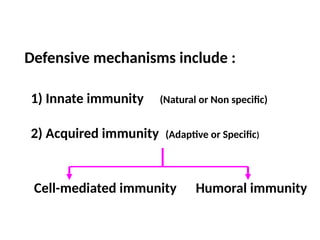
Defensive mechanisms include :
1) Innate immunity (Natural or Non specific)
2) Acquired immunity (Adaptive or Specific)
Cell-mediated immunity Humoral immunity
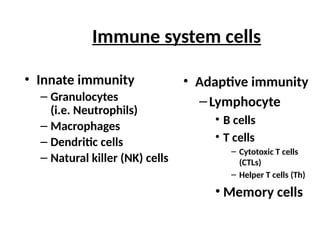
• Innate immunity
– Granulocytes
(i.e. Neutrophils)
– Macrophages
– Dendritic cells
– Natural killer (NK) cells
• Adaptive immunity
–Lymphocyte
• B cells
• T cells
– Cytotoxic T cells
(CTLs)
– Helper T cells (Th)
• Memory cells
Immune system cells
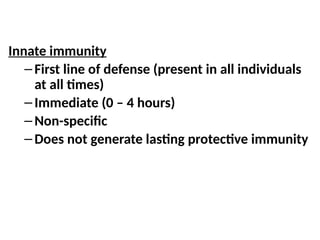
Innate immunity
– First line of defense (present in all individuals
at all times)
– Immediate (0 – 4 hours)
– Non-specific
– Does not generate lasting protective immunity
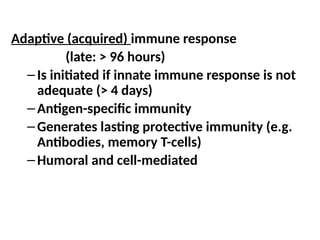
Adaptive (acquired) immune response
(late: > 96 hours)
–Is initiated if innate immune response is not
adequate (> 4 days)
–Antigen-specific immunity
–Generates lasting protective immunity (e.g.
Antibodies, memory T-cells)
–Humoral and cell-mediated
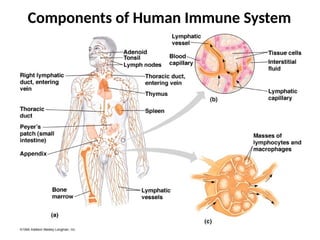
Components of Human Immune System
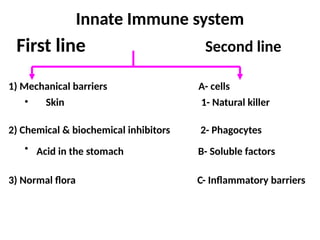
Innate Immune system
First line Second line
1) Mechanical barriers A- cells
• Skin 1- Natural killer
2) Chemical & biochemical inhibitors 2- Phagocytes
• Acid in the stomach B- Soluble factors
3) Normal flora C- Inflammatory barriers
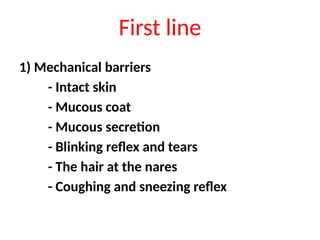
1) Mechanical barriers
- Intact skin
- Mucous coat
- Mucous secretion
- Blinking reflex and tears
- The hair at the nares
- Coughing and sneezing reflex
First line
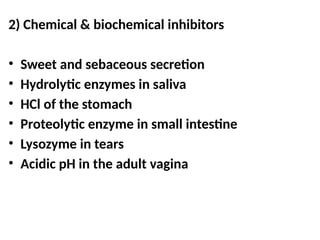
2) Chemical & biochemical inhibitors
• Sweet and sebaceous secretion
• Hydrolytic enzymes in saliva
• HCl of the stomach
• Proteolytic enzyme in small intestine
• Lysozyme in tears
• Acidic pH in the adult vagina
3) Normal bacterial flora
Normal flora refers to different species of
bacteria that live in some areas of the human
body without causing disease. They protect
from infection by
- Competition for essential nutrients
- Production of inhibitory substances
A) cells
1- Natural killer (NK)
Definition: Large granular lymphocytes
Innate cytotoxic lymphocytes
Source : Bone marrow precursors
Location : 10% or 15% of lymphocytes in peripheral blood
1% or 2% of lymphocytes in spleen
Function :Cytotoxic for tumor cells, viral infected cells
• Responsible for antibody–dependent cell mediated cytotoxicity
(ADCC) of bacterial, fungal, parasitic infections
Second line
2-Phagocytes
• Specialized cells for capture, Ingestion and
destruction of invading microorganisms
• Neutrophils
• Mononuclear cells (macrophages)
- Monocytes (in blood)
- Histocytes (in connective tissues)
- Fixed reticuloendothelial cells
(in liver spleen, lymph nods, bon marrow )
B- Soluble factors
1- Acute phase protein -(Plasma protein, CRP=C
reactive protein, Fibrin.)
2- Complement -(proteins in serum, body fluids)
2- Interferons -(Proteins against viral infections)
3- Properdin -(Complement activation)
4- Beta lysine -(Antibacterial protein from Platelets)
5- Lactoferrrin,Transferrin -(Iron binding protein)
6- Lactoperoxidase -(Saliva & Milk)
7- Lysozyme -(Hydrolyze cell wall)
Proteins usually produced by virally infected cells
* Types of interferons:
1- Alpha interferon - Secreted by Macrophages
- Induced by Viruses or Polynucleotide
2- Beta interferon - Secreted by Fibroblasts, Viruses
3- Gamma interferon T- lymphocytes, Specific antigens
Interferon
Protective action of interferons:
1) Activate T-cells
2) Activate macrophages
3) Activate NK
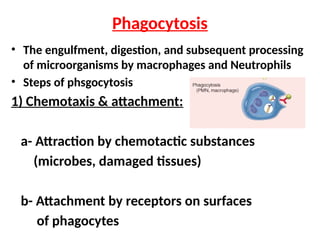
• The engulfment, digestion, and subsequent processing
of microorganisms by macrophages and Neutrophils
• Steps of phsgocytosis
1) Chemotaxis & attachment:
a- Attraction by chemotactic substances
(microbes, damaged tissues)
b- Attachment by receptors on surfaces
of phagocytes
Phagocytosis
2) Ingestion:
* Phagocyte pseudopodia surround
organism forming phagosome
* Fusion with phagocyte granules and release
digestive, toxic contents
3- Killing (two microbicidial routes)
 a. Oxygen depended system
(powerful microbicidial agents)
Oxygen converted to superoxide, anion,
hydrogen peroxide, activated oxygen and
hydroxyl radicals.
 b. Oxygen-independent system
(anaerobic conditions)
 Digestion and killing by Lysozyme.
Lactoferrin, low pH, cationic proteins and hydrolytic
and
 proteolytic enzymes
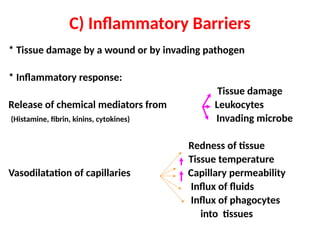
* Tissue damage by a wound or by invading pathogen
* Inflammatory response:
Tissue damage
Release of chemical mediators from Leukocytes
(Histamine, fibrin, kinins, cytokines) Invading microbe
Redness of tissue
Tissue temperature
Vasodilatation of capillaries Capillary permeability
Influx of fluids
Influx of phagocytes
into tissues
C) Inflammatory Barriers
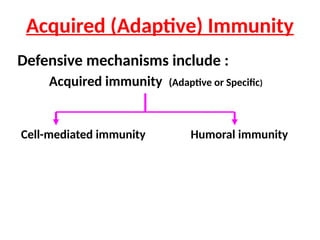
Acquired (Adaptive) Immunity
Defensive mechanisms include :
Acquired immunity (Adaptive or Specific)
Cell-mediated immunity Humoral immunity
* It is more specialized than innate immune response
* It involves a combination of two mechanisms :
1) Humoral immune response
2) cell mediated immune response
* They interact with one another to destroy foreign
body
(microorganisms, infected cells, tumor cells)
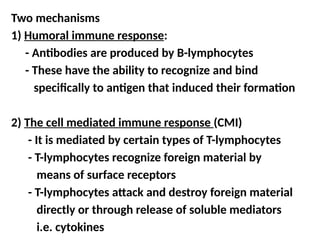
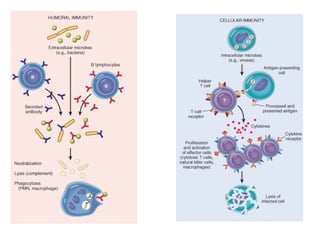
Two mechanisms
1) Humoral immune response:
- Antibodies are produced by B-lymphocytes
- These have the ability to recognize and bind
specifically to antigen that induced their formation
2) The cell mediated immune response (CMI)
- It is mediated by certain types of T-lymphocytes
- T-lymphocytes recognize foreign material by
means of surface receptors
- T-lymphocytes attack and destroy foreign material
directly or through release of soluble mediators
i.e. cytokines
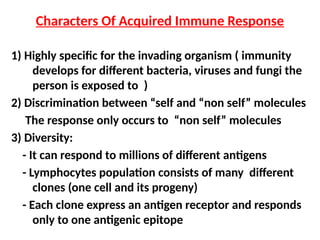
1) Highly specific for the invading organism ( immunity
develops for different bacteria, viruses and fungi the
person is exposed to )
2) Discrimination between “self and “non self” molecules
The response only occurs to “non self” molecules
3) Diversity:
- It can respond to millions of different antigens
- Lymphocytes population consists of many different
clones (one cell and its progeny)
- Each clone express an antigen receptor and responds
only to one antigenic epitope
Characters Of Acquired Immune Response
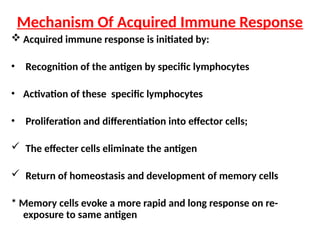
 Acquired immune response is initiated by:
• Recognition of the antigen by specific lymphocytes
• Activation of these specific lymphocytes
• Proliferation and differentiation into effector cells;
 The effecter cells eliminate the antigen
 Return of homeostasis and development of memory cells
* Memory cells evoke a more rapid and long response on re-
exposure to same antigen
Mechanism Of Acquired Immune Response
I- Passive acquired immunity
a-Naturally passive acquired immunity
Antibodies are passed through placenta
to the fetus
b- Artificially passive acquired immunity
The injection of already prepared antibodies,
such as gamma globulin
(short-term immunization)
a-Natural active acquired immunity :
- Following clinical or subclinical infections
- measles or mumps, in which immunity is
long lasting
b- Artificial active acquired immunity :
- Following vaccination with live or killed
infectious agents or their products
II- Active acquired immunity
I. Humoral (Antibody-Mediated) Immunity
–Involves production of antibodies against
foreign antigens.
–Antibodies are produced by a subset of
lymphocytes called B cells.
–B cells that are stimulated will actively secrete
antibodies and are called plasma cells.
–Antibodies are found in extracellular fluids
(blood plasma, lymph, mucus, etc.) and the
surface of B cells.
–Defense against bacteria, bacterial toxins,
and viruses that circulate freely in body
fluids, before they enter cells.
–Also cause certain reactions against
transplanted tissue.
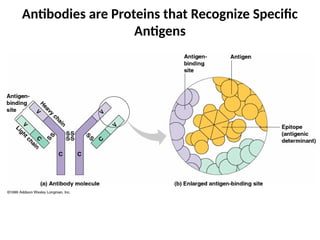
Antibodies are Proteins that Recognize Specific
Antigens
II. Cell Mediated Immunity
–Involves specialized set of lymphocytes
called T cells that recognize foreign
antigens on the surface of cells,
organisms, or tissues:
• Helper T cells
• Cytotoxic T cells
–T cells regulate proliferation and activity of
other cells of the immune system: B cells,
macrophages, Neutrophils, etc.
–Defense against:
• Bacteria and viruses that are inside host cells and
are inaccessible to antibodies.
• Fungi, protozoa, and helminthes
• Cancer cells
• Transplanted tissue
Antigens
 are proteins or large polysaccharides from
a foreign organism.
– Microbes: Capsules, cell walls, toxins, viral
capsids, flagella, etc.
– Nonmicrobes: Pollen, egg white , red blood
cell surface molecules, serum proteins, and
surface molecules from transplanted tissue.
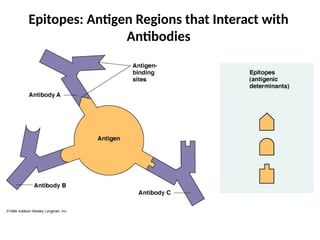
Epitopes: Antigen Regions that Interact with
Antibodies
Antibodies
 Proteins that recognize and bind to a particular antigen
with very high specificity.
 Made in response to exposure to the antigen.
 One virus or microbe may have several antigenic
determinant sites, to which different antibodies may
bind.
 Belong to a group of serum proteins called
immunoglobulin (Igs).
Antibody Structure
 Monomer: A flexible Y-shaped molecule with four
protein chains:
– 2 identical light chains
– 2 identical heavy chains
 Variable Regions: Two sections at the end of Y’s arms.
Contain the antigen binding sites. Identical on the
same antibody, but vary from one antibody to another.
Immunoglobulin Classes
I. IgG
 Percentage serum antibodies: 80%
 Location: Blood, lymph, intestine
 Half-life in serum: 23 days
 Placental Transfer: Yes
 Known Functions: Enhances phagocytosis, neutralizes
toxins and viruses, protects fetus and newborn.
II. IgM
 Percentage serum antibodies: 5-10%
 Location: Blood, lymph, B cell surface (monomer)
 Half-life in serum: 5 days
 Placental Transfer: No
 Known Functions: First antibodies produced during an
infection. Effective against microbes and agglutinating
antigens.
III. IgA
 Percentage serum antibodies: 10-15%
 Location: Secretions (tears, saliva, intestine, milk),
blood and lymph.
 Half-life in serum: 6 days
 Placental Transfer: No
 Known Functions: Localized protection of mucosal
surfaces. Provides immunity to infant digestive tract.
IV. IgD
 Percentage serum antibodies: 0.2%
 Location: B-cell surface, blood, and lymph
 Half-life in serum: 3 days
 Placental Transfer: No
 Known Functions: In serum function is unknown. On B
cell surface, initiate immune response.
V. IgE
 Percentage serum antibodies: 0.002%
 Location: Bound to mast cells and basophils
throughout body. Blood.
 Half-life in serum: 2 days
 Placental Transfer: No
 Known Functions: Allergic reactions. Possibly lysis of
worms.
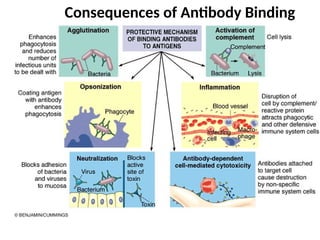
Consequences of Antigen-Antibody Binding
Antigen-Antibody Complex: Formed when an antibody
binds to an antigen it recognizes.
Affinity: A measure of binding strength.
1. Agglutination: Antibodies cause antigens (microbes)
to clump together.
• IgM (decavalent) is more effective that IgG (bivalent).
• Hemagglutination: Agglutination of red blood cells. Used
to determine ABO blood types and to detect influenza and
measles viruses.
2. Opsonization:
• Antigen (microbe) is covered with antibodies that
enhances its ingestion and lysis by Phagocytic
cells.
3. Neutralization:
• IgG inactivates viruses by binding to their surface
and neutralize toxins by blocking their active
sites.
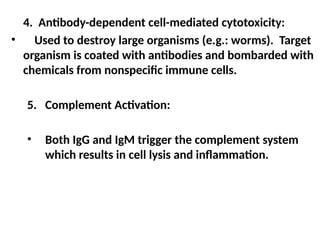
Consequences of Antibody Binding
4. Antibody-dependent cell-mediated cytotoxicity:
• Used to destroy large organisms (e.g.: worms). Target
organism is coated with antibodies and bombarded with
chemicals from nonspecific immune cells.
5. Complement Activation:
• Both IgG and IgM trigger the complement system
which results in cell lysis and inflammation.

for nursing aa Immunopathology intro.pptx

  • 1.
  • 2.
    • Immune systemprotects the body against exogenous substances, microbial invasion & tumors. •Immunity defends the body from anything that tries to cause abnormalities in the body • Sometimes immune response damages the host tissue, which forms the basis of autoimmune diseases. Immunity
  • 3.
    • It isclassified as : 1. Innate (natural, nonadaptive, or nonspecific) immunity. 2. Adaptive (acquired, or specific) immunity.  Occurs after exposure to antigen ( a new molecule)  Is mediated by either antibodies(Humeral immunity) or lymphoid cells(Cellular immunity).  It can be: A- Passive B- Active
  • 4.
    Terms used • Antigen(Ag)-a protein, when introduced into tissues stimulates antibody production. • Antibody(Ab)- a protein substance produced as a result of antigenic stimulation.
  • 5.
    Defensive mechanisms include: 1) Innate immunity (Natural or Non specific) 2) Acquired immunity (Adaptive or Specific) Cell-mediated immunity Humoral immunity
  • 6.
    • Innate immunity –Granulocytes (i.e. Neutrophils) – Macrophages – Dendritic cells – Natural killer (NK) cells • Adaptive immunity –Lymphocyte • B cells • T cells – Cytotoxic T cells (CTLs) – Helper T cells (Th) • Memory cells Immune system cells
  • 7.
    Innate immunity – Firstline of defense (present in all individuals at all times) – Immediate (0 – 4 hours) – Non-specific – Does not generate lasting protective immunity
  • 8.
    Adaptive (acquired) immuneresponse (late: > 96 hours) –Is initiated if innate immune response is not adequate (> 4 days) –Antigen-specific immunity –Generates lasting protective immunity (e.g. Antibodies, memory T-cells) –Humoral and cell-mediated
  • 9.
    Components of HumanImmune System
  • 10.
    Innate Immune system Firstline Second line 1) Mechanical barriers A- cells • Skin 1- Natural killer 2) Chemical & biochemical inhibitors 2- Phagocytes • Acid in the stomach B- Soluble factors 3) Normal flora C- Inflammatory barriers
  • 11.
    1) Mechanical barriers -Intact skin - Mucous coat - Mucous secretion - Blinking reflex and tears - The hair at the nares - Coughing and sneezing reflex First line
  • 12.
    2) Chemical &biochemical inhibitors • Sweet and sebaceous secretion • Hydrolytic enzymes in saliva • HCl of the stomach • Proteolytic enzyme in small intestine • Lysozyme in tears • Acidic pH in the adult vagina
  • 13.
    3) Normal bacterialflora Normal flora refers to different species of bacteria that live in some areas of the human body without causing disease. They protect from infection by - Competition for essential nutrients - Production of inhibitory substances
  • 14.
    A) cells 1- Naturalkiller (NK) Definition: Large granular lymphocytes Innate cytotoxic lymphocytes Source : Bone marrow precursors Location : 10% or 15% of lymphocytes in peripheral blood 1% or 2% of lymphocytes in spleen Function :Cytotoxic for tumor cells, viral infected cells • Responsible for antibody–dependent cell mediated cytotoxicity (ADCC) of bacterial, fungal, parasitic infections Second line
  • 15.
    2-Phagocytes • Specialized cellsfor capture, Ingestion and destruction of invading microorganisms • Neutrophils • Mononuclear cells (macrophages) - Monocytes (in blood) - Histocytes (in connective tissues) - Fixed reticuloendothelial cells (in liver spleen, lymph nods, bon marrow )
  • 16.
    B- Soluble factors 1-Acute phase protein -(Plasma protein, CRP=C reactive protein, Fibrin.) 2- Complement -(proteins in serum, body fluids) 2- Interferons -(Proteins against viral infections) 3- Properdin -(Complement activation) 4- Beta lysine -(Antibacterial protein from Platelets) 5- Lactoferrrin,Transferrin -(Iron binding protein) 6- Lactoperoxidase -(Saliva & Milk) 7- Lysozyme -(Hydrolyze cell wall)
  • 17.
    Proteins usually producedby virally infected cells * Types of interferons: 1- Alpha interferon - Secreted by Macrophages - Induced by Viruses or Polynucleotide 2- Beta interferon - Secreted by Fibroblasts, Viruses 3- Gamma interferon T- lymphocytes, Specific antigens Interferon
  • 18.
    Protective action ofinterferons: 1) Activate T-cells 2) Activate macrophages 3) Activate NK
  • 19.
    • The engulfment,digestion, and subsequent processing of microorganisms by macrophages and Neutrophils • Steps of phsgocytosis 1) Chemotaxis & attachment: a- Attraction by chemotactic substances (microbes, damaged tissues) b- Attachment by receptors on surfaces of phagocytes Phagocytosis
  • 20.
    2) Ingestion: * Phagocytepseudopodia surround organism forming phagosome * Fusion with phagocyte granules and release digestive, toxic contents
  • 21.
    3- Killing (twomicrobicidial routes)  a. Oxygen depended system (powerful microbicidial agents) Oxygen converted to superoxide, anion, hydrogen peroxide, activated oxygen and hydroxyl radicals.  b. Oxygen-independent system (anaerobic conditions)  Digestion and killing by Lysozyme. Lactoferrin, low pH, cationic proteins and hydrolytic and  proteolytic enzymes
  • 22.
    * Tissue damageby a wound or by invading pathogen * Inflammatory response: Tissue damage Release of chemical mediators from Leukocytes (Histamine, fibrin, kinins, cytokines) Invading microbe Redness of tissue Tissue temperature Vasodilatation of capillaries Capillary permeability Influx of fluids Influx of phagocytes into tissues C) Inflammatory Barriers
  • 23.
    Acquired (Adaptive) Immunity Defensivemechanisms include : Acquired immunity (Adaptive or Specific) Cell-mediated immunity Humoral immunity
  • 24.
    * It ismore specialized than innate immune response * It involves a combination of two mechanisms : 1) Humoral immune response 2) cell mediated immune response * They interact with one another to destroy foreign body (microorganisms, infected cells, tumor cells)
  • 25.
    Two mechanisms 1) Humoralimmune response: - Antibodies are produced by B-lymphocytes - These have the ability to recognize and bind specifically to antigen that induced their formation 2) The cell mediated immune response (CMI) - It is mediated by certain types of T-lymphocytes - T-lymphocytes recognize foreign material by means of surface receptors - T-lymphocytes attack and destroy foreign material directly or through release of soluble mediators i.e. cytokines
  • 27.
    1) Highly specificfor the invading organism ( immunity develops for different bacteria, viruses and fungi the person is exposed to ) 2) Discrimination between “self and “non self” molecules The response only occurs to “non self” molecules 3) Diversity: - It can respond to millions of different antigens - Lymphocytes population consists of many different clones (one cell and its progeny) - Each clone express an antigen receptor and responds only to one antigenic epitope Characters Of Acquired Immune Response
  • 28.
     Acquired immuneresponse is initiated by: • Recognition of the antigen by specific lymphocytes • Activation of these specific lymphocytes • Proliferation and differentiation into effector cells;  The effecter cells eliminate the antigen  Return of homeostasis and development of memory cells * Memory cells evoke a more rapid and long response on re- exposure to same antigen Mechanism Of Acquired Immune Response
  • 29.
    I- Passive acquiredimmunity a-Naturally passive acquired immunity Antibodies are passed through placenta to the fetus b- Artificially passive acquired immunity The injection of already prepared antibodies, such as gamma globulin (short-term immunization)
  • 30.
    a-Natural active acquiredimmunity : - Following clinical or subclinical infections - measles or mumps, in which immunity is long lasting b- Artificial active acquired immunity : - Following vaccination with live or killed infectious agents or their products II- Active acquired immunity
  • 31.
    I. Humoral (Antibody-Mediated)Immunity –Involves production of antibodies against foreign antigens. –Antibodies are produced by a subset of lymphocytes called B cells. –B cells that are stimulated will actively secrete antibodies and are called plasma cells.
  • 32.
    –Antibodies are foundin extracellular fluids (blood plasma, lymph, mucus, etc.) and the surface of B cells. –Defense against bacteria, bacterial toxins, and viruses that circulate freely in body fluids, before they enter cells. –Also cause certain reactions against transplanted tissue.
  • 33.
    Antibodies are Proteinsthat Recognize Specific Antigens
  • 34.
    II. Cell MediatedImmunity –Involves specialized set of lymphocytes called T cells that recognize foreign antigens on the surface of cells, organisms, or tissues: • Helper T cells • Cytotoxic T cells
  • 35.
    –T cells regulateproliferation and activity of other cells of the immune system: B cells, macrophages, Neutrophils, etc. –Defense against: • Bacteria and viruses that are inside host cells and are inaccessible to antibodies. • Fungi, protozoa, and helminthes • Cancer cells • Transplanted tissue
  • 36.
    Antigens  are proteinsor large polysaccharides from a foreign organism. – Microbes: Capsules, cell walls, toxins, viral capsids, flagella, etc. – Nonmicrobes: Pollen, egg white , red blood cell surface molecules, serum proteins, and surface molecules from transplanted tissue.
  • 37.
    Epitopes: Antigen Regionsthat Interact with Antibodies
  • 38.
    Antibodies  Proteins thatrecognize and bind to a particular antigen with very high specificity.  Made in response to exposure to the antigen.  One virus or microbe may have several antigenic determinant sites, to which different antibodies may bind.  Belong to a group of serum proteins called immunoglobulin (Igs).
  • 39.
    Antibody Structure  Monomer:A flexible Y-shaped molecule with four protein chains: – 2 identical light chains – 2 identical heavy chains  Variable Regions: Two sections at the end of Y’s arms. Contain the antigen binding sites. Identical on the same antibody, but vary from one antibody to another.
  • 40.
    Immunoglobulin Classes I. IgG Percentage serum antibodies: 80%  Location: Blood, lymph, intestine  Half-life in serum: 23 days  Placental Transfer: Yes  Known Functions: Enhances phagocytosis, neutralizes toxins and viruses, protects fetus and newborn.
  • 41.
    II. IgM  Percentageserum antibodies: 5-10%  Location: Blood, lymph, B cell surface (monomer)  Half-life in serum: 5 days  Placental Transfer: No  Known Functions: First antibodies produced during an infection. Effective against microbes and agglutinating antigens.
  • 42.
    III. IgA  Percentageserum antibodies: 10-15%  Location: Secretions (tears, saliva, intestine, milk), blood and lymph.  Half-life in serum: 6 days  Placental Transfer: No  Known Functions: Localized protection of mucosal surfaces. Provides immunity to infant digestive tract.
  • 43.
    IV. IgD  Percentageserum antibodies: 0.2%  Location: B-cell surface, blood, and lymph  Half-life in serum: 3 days  Placental Transfer: No  Known Functions: In serum function is unknown. On B cell surface, initiate immune response.
  • 44.
    V. IgE  Percentageserum antibodies: 0.002%  Location: Bound to mast cells and basophils throughout body. Blood.  Half-life in serum: 2 days  Placental Transfer: No  Known Functions: Allergic reactions. Possibly lysis of worms.
  • 45.
    Consequences of Antigen-AntibodyBinding Antigen-Antibody Complex: Formed when an antibody binds to an antigen it recognizes. Affinity: A measure of binding strength. 1. Agglutination: Antibodies cause antigens (microbes) to clump together. • IgM (decavalent) is more effective that IgG (bivalent). • Hemagglutination: Agglutination of red blood cells. Used to determine ABO blood types and to detect influenza and measles viruses.
  • 46.
    2. Opsonization: • Antigen(microbe) is covered with antibodies that enhances its ingestion and lysis by Phagocytic cells. 3. Neutralization: • IgG inactivates viruses by binding to their surface and neutralize toxins by blocking their active sites.
  • 47.
  • 48.
    4. Antibody-dependent cell-mediatedcytotoxicity: • Used to destroy large organisms (e.g.: worms). Target organism is coated with antibodies and bombarded with chemicals from nonspecific immune cells. 5. Complement Activation: • Both IgG and IgM trigger the complement system which results in cell lysis and inflammation.