“ Immunity is
                           Immunity involves both         Other components of
basically a biological
                           specific and non-specific      the immune system
term that describes a
                         components. The non-specific     adapt themselves to
   state of having
                           components act either as        each new disease
sufficient biological
                          barriers or as eliminators of   encountered and are
  defenses to avoid
                           wide range of pathogens          able to generate
infection, disease, or
                            irrespective of antigenic      pathogen-specific
   other unwanted
                                   specificity                 immunity
biological invasion ”
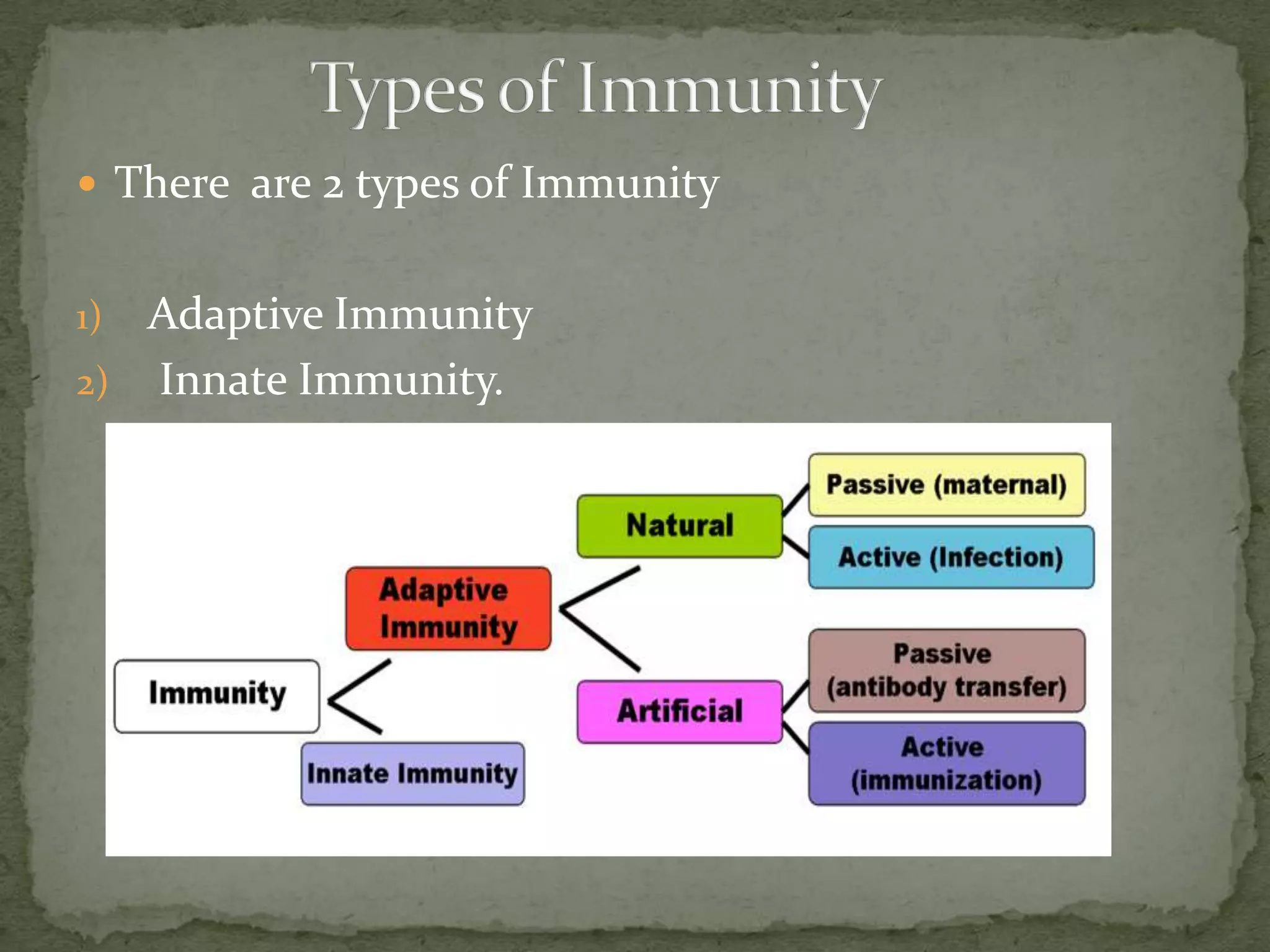
 There are 2 types of Immunity


1) Adaptive Immunity
2) Innate Immunity.
 Cell-mediated immunity is an immune response
 that does not involve antibodies or complement but
 rather involves the activation of macrophages, natural
 killer cells (NK), antigen-specific cytotoxic T-
 lymphocytes, and the release of various cytokines in
 response to an antigen.

 The second arm of the immune response is refered to
 as Cell Mediated Immunity (CMIR). As the name
 implies, the functional "effectors" of this response are
 various immune cells.
These functions include:

 Phagocytosis and killing of intracellular pathogens


 Direct cell killing by cytotoxic T cells


 Direct cell killing by NK and K cells
While the production of antibody through the humoral
 immune response can effectively lead to the elimination of
 a variety of pathogens, bacteria that have evolved to invade
 and multiply within phagocytic cells of the immune
 response pose a different threat.
The following will aid in its Explanation :

1)   Extracellular microorganisms

 Non-encapsulated microorganisms are easily phagocytosed
  and killed within macrophages.
 Encapsulated microorganisms require the production of
  antibody in order to be effectively phagocytosed. Once
  engulfed, however, they are easily killed.
2) Intracellular microorganisms
 Intracellular microorganisms elicit the production of
  antibody, which allows effective phagocytosis. Once
  engulfed, however, they survive within the phagocyte
  and eventually kill it.

 Intracellular microorganisms also activate specific T-
 cells, which then release lymphokines (e.g. IFN, TNF)
 that cause macrophage activation. Activated ("killer")
 macrophages are then very effective at destroying the
 intracellular pathogens.
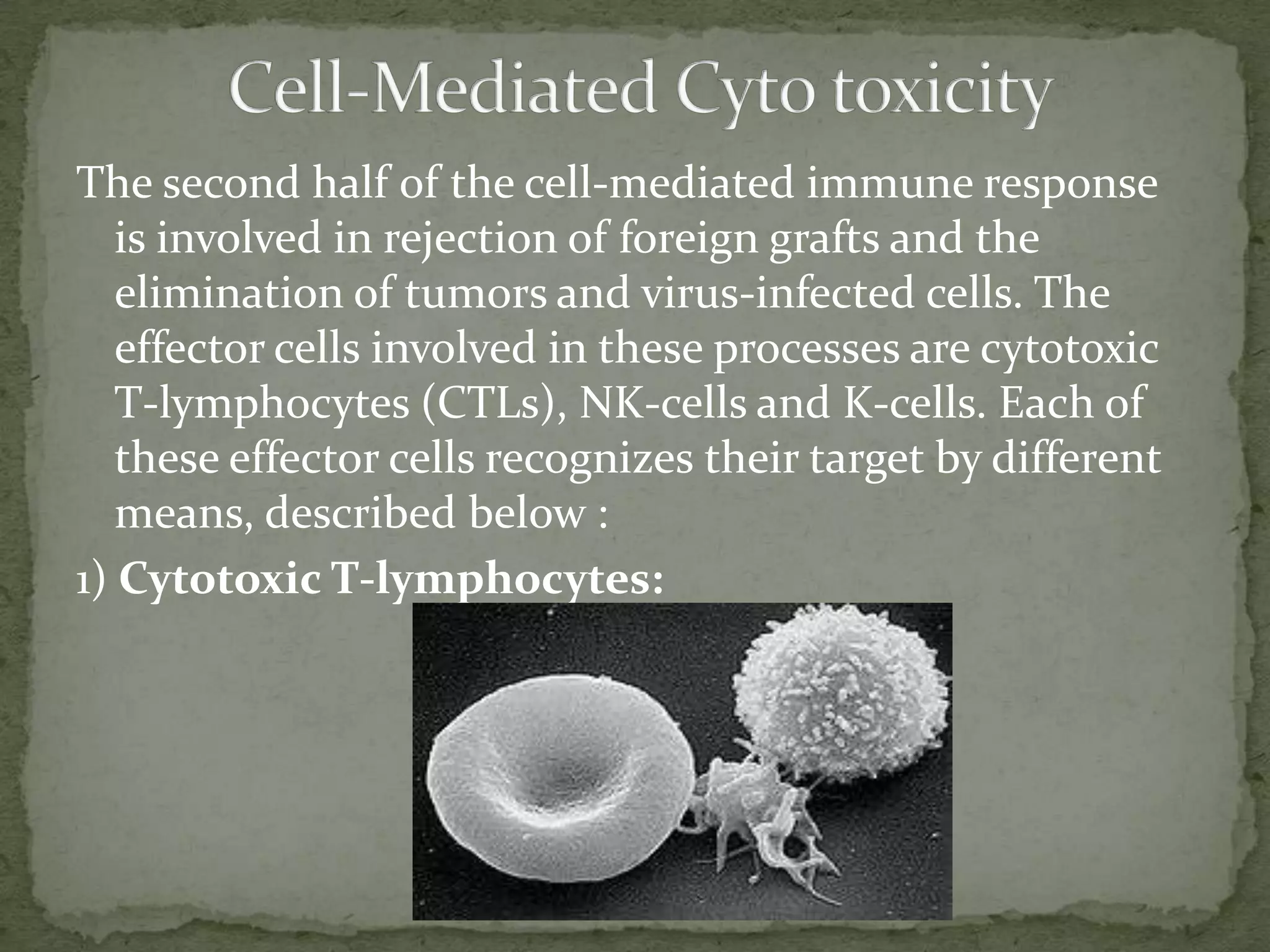
The second half of the cell-mediated immune response
   is involved in rejection of foreign grafts and the
   elimination of tumors and virus-infected cells. The
   effector cells involved in these processes are cytotoxic
   T-lymphocytes (CTLs), NK-cells and K-cells. Each of
   these effector cells recognizes their target by different
   means, described below :
1) Cytotoxic T-lymphocytes:
 1) T Helper cells (TH cells)

 2) Cytotoxic cells (Tc cells or CTLs)

 3) Memory T Cells.

 4 Regulatory T cells


 .
 1) T helper cell(TH cells) assist other white blood
 cells in immunologic processes, including
 maturation of B cells into plasma cells and
 activation of cytotoxic T cells and
 macrophages, among other functions.


 2)Cytotoxic T cells (TC cells, or CTLs) destroy
 virally infected cells and tumor cells, and are also
 implicated in transplant rejection
3) Memory T cells are a subset of antigen-specific T
  cells that persist long-term after an infection has
  resolved. They quickly expand to large numbers of
  effector T cells upon re-exposure to their cognate
  antigen, thus providing the immune system with
  "memory" against past infections. Memory T cells
  comprise two subtypes: central memory T cells
  (TCM cells) and effector memory T cells (TEM cells
  Regulator).
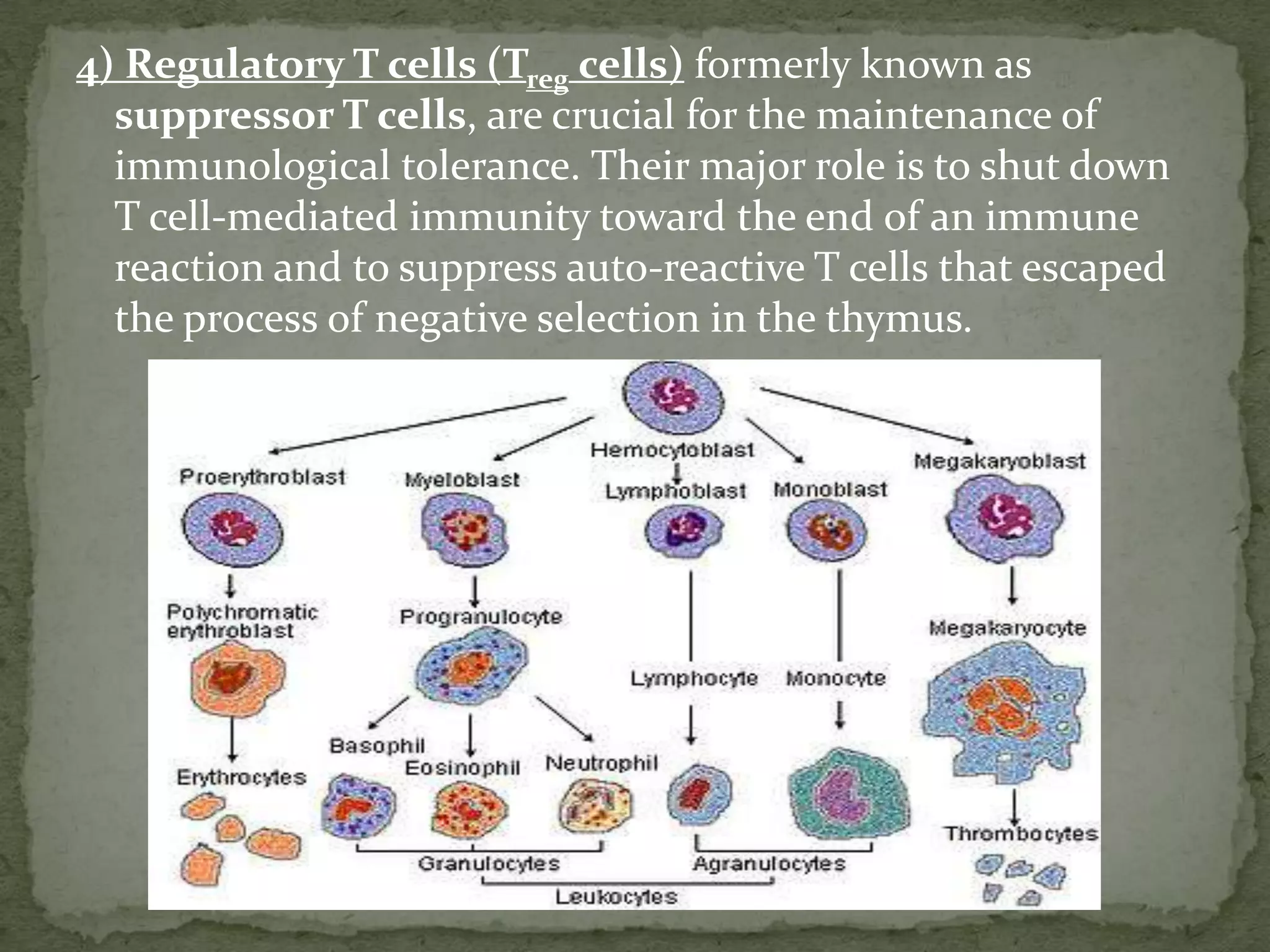
4) Regulatory T cells (Treg cells) formerly known as
  suppressor T cells, are crucial for the maintenance of
  immunological tolerance. Their major role is to shut down
  T cell-mediated immunity toward the end of an immune
  reaction and to suppress auto-reactive T cells that escaped
  the process of negative selection in the thymus.
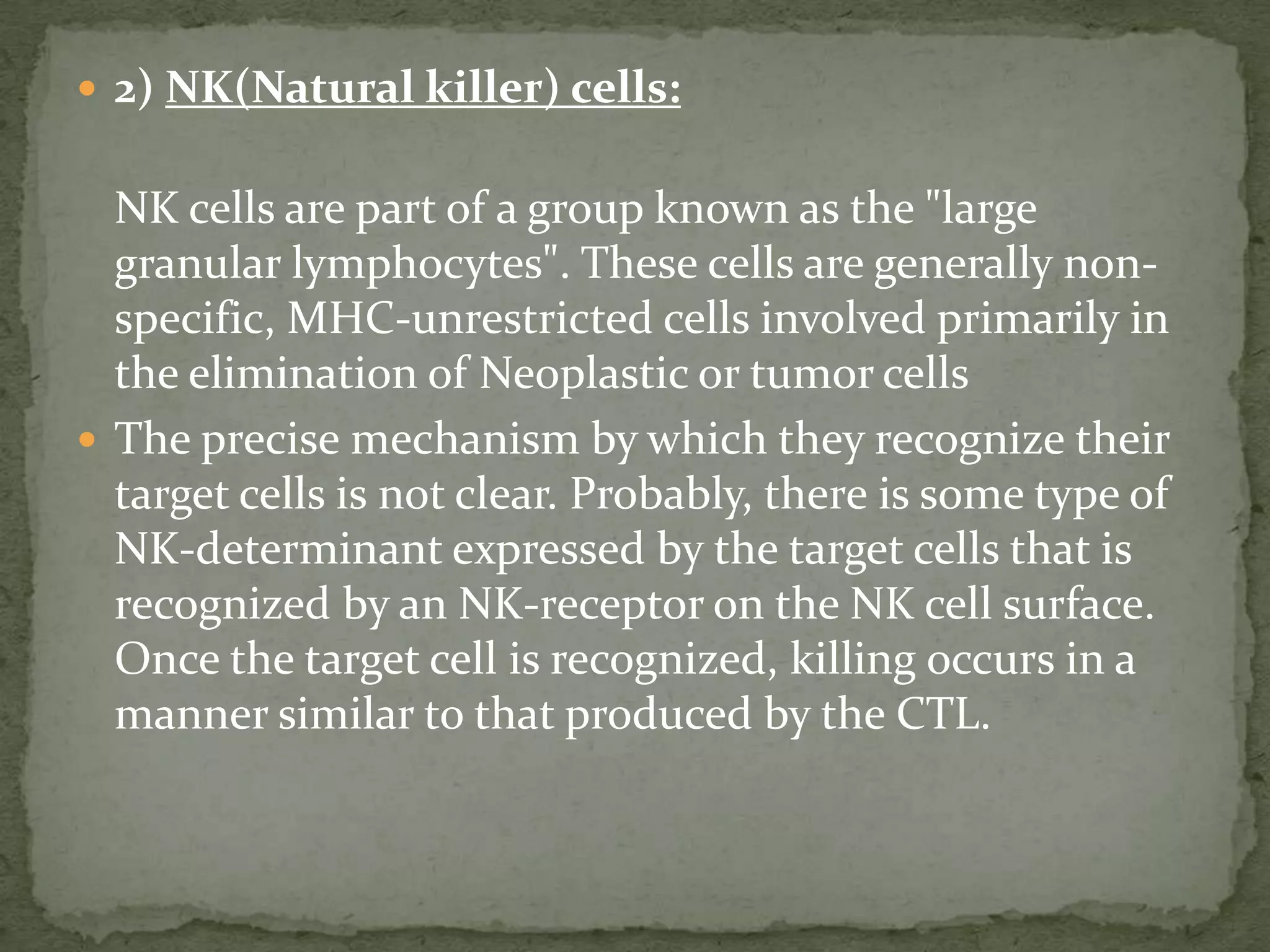
 2) NK(Natural killer) cells:


  NK cells are part of a group known as the "large
  granular lymphocytes". These cells are generally non-
  specific, MHC-unrestricted cells involved primarily in
  the elimination of Neoplastic or tumor cells
 The precise mechanism by which they recognize their
  target cells is not clear. Probably, there is some type of
  NK-determinant expressed by the target cells that is
  recognized by an NK-receptor on the NK cell surface.
  Once the target cell is recognized, killing occurs in a
  manner similar to that produced by the CTL.
 3) K-cells:


  K-cells are probably not a separate cell type but rather
  a separate function of the NK group. K-cells contain
  immunoglobulin Fc receptors on their surface and are
  involved in a process known as Antibody-dependent
  Cell-mediated Cytotoxicity (ADCC). ADCC occurs as a
  consequence of antibody being bound to a target cell
  surface via specific antigenic determinants expressed
  by the target cell. Once bound, the Fc portion of the
  immunoglobulin can be recognized by the K-cell.
  Killing then ensues by a mechanism similar to that
  employed by CTLs. This type of CMIR can also result
  in Type II hypersensitivities.
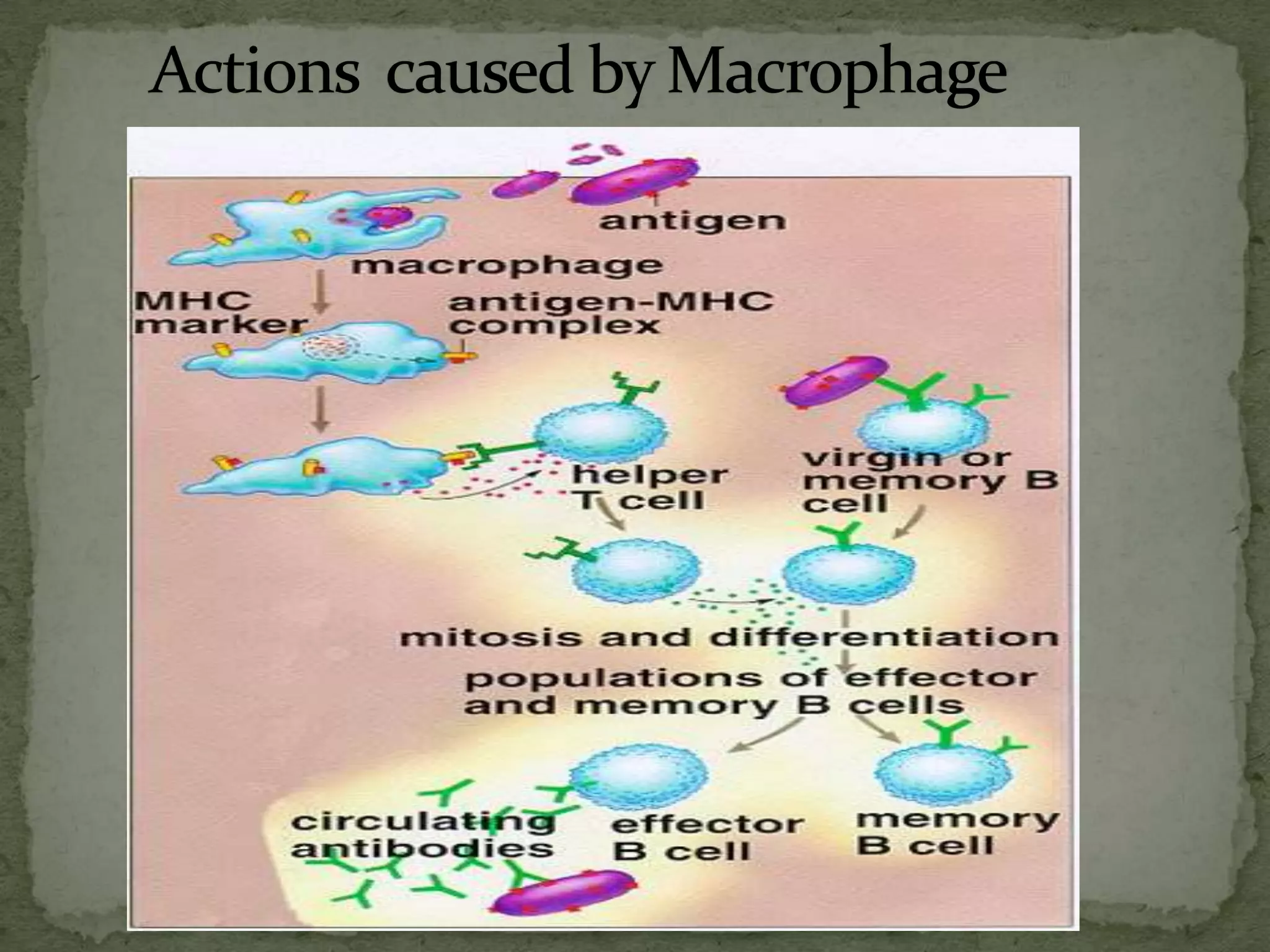
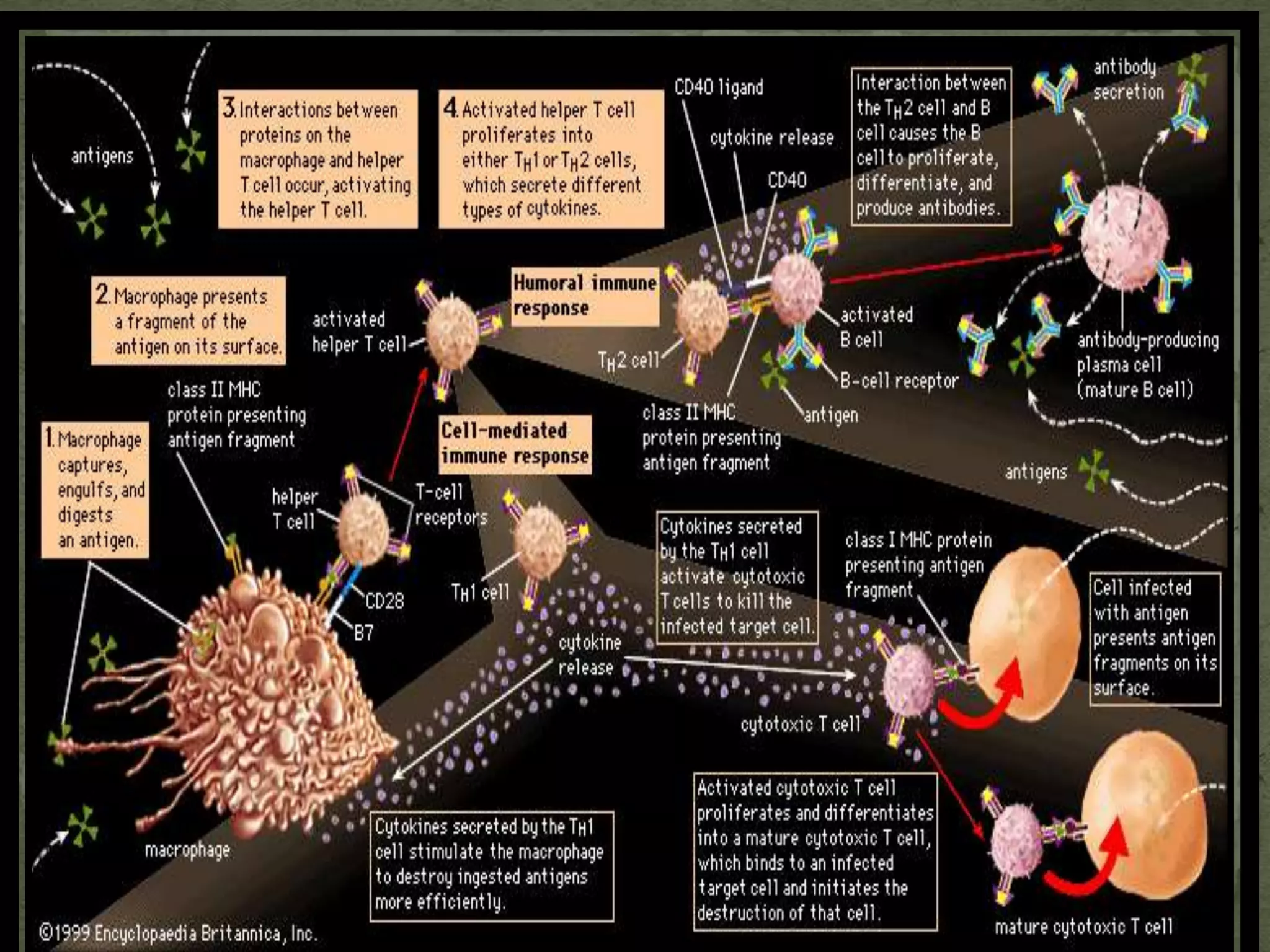
Explanation of above Diagram

 Stimulation of immune response by activated
 helper T cells activated by complex interaction with
 molecules on the surface of a macrophage or some
 other antigen-presenting cell, a helper T cell
 proliferates into two general subtypes, TH1 and TH2.
 These in turn stimulate the complex pathways of the
 cell-mediated immune response and the humoral
 immune response, respectively.
 COMPONENTS AND FUNCTIONS OF THE
  COMPLEMENT SYSTEM
 The complement system found in the blood of mammals is
  composed of heat labile substances (proteins) that
  combine with antibodies or cell surfaces. This complex,
  multicomponent system is composed of about 26 proteins.
  The "complement cascade" is constitutive and non-specific
  but it must be activated in order to function. The functions
  of complement include:

 Making bacteria more susceptible to phagocytosis
 Directly lysing some bacteria and foreign cells
 Producing chemotactic substances
 Increasing vascular permeability
 Causing smooth muscle contraction promoting mast
 cell degranulation .


              Hypersensitivity

Hypersensitivity (also called hypersensitivity reaction)
 refers to undesirable (damaging, discomfort-
 producing and sometimes fatal) reactions produced by
 the normal immune system. Hypersensitivity
 reactions require a pre-sensitized (immune) state of
 the host.
It is classified into five different types
1) Allergy
2) CytoToxic Anti-Body dependent
3 )Immune complex Disease
4) Delayed type Hypersensitivity Response
5) Auto-Immune Disease.


Only type IV of Hyper Sensitivity is related to this topic
 . . Because its chemical mediators are T-cells
Cell-Mediated Immunity
Prepared by : Farrukh Nadeem
Yasir Yaqoob : Talha Ahmed : Arnold Raffique.

Cell mediated immunity (presentation)

  • 2.
    “ Immunity is Immunity involves both Other components of basically a biological specific and non-specific the immune system term that describes a components. The non-specific adapt themselves to state of having components act either as each new disease sufficient biological barriers or as eliminators of encountered and are defenses to avoid wide range of pathogens able to generate infection, disease, or irrespective of antigenic pathogen-specific other unwanted specificity immunity biological invasion ”
  • 3.
     There are2 types of Immunity 1) Adaptive Immunity 2) Innate Immunity.
  • 4.
     Cell-mediated immunityis an immune response that does not involve antibodies or complement but rather involves the activation of macrophages, natural killer cells (NK), antigen-specific cytotoxic T- lymphocytes, and the release of various cytokines in response to an antigen.  The second arm of the immune response is refered to as Cell Mediated Immunity (CMIR). As the name implies, the functional "effectors" of this response are various immune cells.
  • 5.
    These functions include: Phagocytosis and killing of intracellular pathogens  Direct cell killing by cytotoxic T cells  Direct cell killing by NK and K cells
  • 6.
    While the productionof antibody through the humoral immune response can effectively lead to the elimination of a variety of pathogens, bacteria that have evolved to invade and multiply within phagocytic cells of the immune response pose a different threat. The following will aid in its Explanation : 1) Extracellular microorganisms  Non-encapsulated microorganisms are easily phagocytosed and killed within macrophages.  Encapsulated microorganisms require the production of antibody in order to be effectively phagocytosed. Once engulfed, however, they are easily killed.
  • 7.
    2) Intracellular microorganisms Intracellular microorganisms elicit the production of antibody, which allows effective phagocytosis. Once engulfed, however, they survive within the phagocyte and eventually kill it.  Intracellular microorganisms also activate specific T- cells, which then release lymphokines (e.g. IFN, TNF) that cause macrophage activation. Activated ("killer") macrophages are then very effective at destroying the intracellular pathogens.
  • 9.
    The second halfof the cell-mediated immune response is involved in rejection of foreign grafts and the elimination of tumors and virus-infected cells. The effector cells involved in these processes are cytotoxic T-lymphocytes (CTLs), NK-cells and K-cells. Each of these effector cells recognizes their target by different means, described below : 1) Cytotoxic T-lymphocytes:
  • 10.
     1) THelper cells (TH cells)  2) Cytotoxic cells (Tc cells or CTLs)  3) Memory T Cells.  4 Regulatory T cells  .
  • 11.
     1) Thelper cell(TH cells) assist other white blood cells in immunologic processes, including maturation of B cells into plasma cells and activation of cytotoxic T cells and macrophages, among other functions.  2)Cytotoxic T cells (TC cells, or CTLs) destroy virally infected cells and tumor cells, and are also implicated in transplant rejection
  • 12.
    3) Memory Tcells are a subset of antigen-specific T cells that persist long-term after an infection has resolved. They quickly expand to large numbers of effector T cells upon re-exposure to their cognate antigen, thus providing the immune system with "memory" against past infections. Memory T cells comprise two subtypes: central memory T cells (TCM cells) and effector memory T cells (TEM cells Regulator).
  • 13.
    4) Regulatory Tcells (Treg cells) formerly known as suppressor T cells, are crucial for the maintenance of immunological tolerance. Their major role is to shut down T cell-mediated immunity toward the end of an immune reaction and to suppress auto-reactive T cells that escaped the process of negative selection in the thymus.
  • 14.
     2) NK(Naturalkiller) cells: NK cells are part of a group known as the "large granular lymphocytes". These cells are generally non- specific, MHC-unrestricted cells involved primarily in the elimination of Neoplastic or tumor cells  The precise mechanism by which they recognize their target cells is not clear. Probably, there is some type of NK-determinant expressed by the target cells that is recognized by an NK-receptor on the NK cell surface. Once the target cell is recognized, killing occurs in a manner similar to that produced by the CTL.
  • 15.
     3) K-cells: K-cells are probably not a separate cell type but rather a separate function of the NK group. K-cells contain immunoglobulin Fc receptors on their surface and are involved in a process known as Antibody-dependent Cell-mediated Cytotoxicity (ADCC). ADCC occurs as a consequence of antibody being bound to a target cell surface via specific antigenic determinants expressed by the target cell. Once bound, the Fc portion of the immunoglobulin can be recognized by the K-cell. Killing then ensues by a mechanism similar to that employed by CTLs. This type of CMIR can also result in Type II hypersensitivities.
  • 17.
    Explanation of aboveDiagram  Stimulation of immune response by activated helper T cells activated by complex interaction with molecules on the surface of a macrophage or some other antigen-presenting cell, a helper T cell proliferates into two general subtypes, TH1 and TH2. These in turn stimulate the complex pathways of the cell-mediated immune response and the humoral immune response, respectively.
  • 18.
     COMPONENTS ANDFUNCTIONS OF THE COMPLEMENT SYSTEM  The complement system found in the blood of mammals is composed of heat labile substances (proteins) that combine with antibodies or cell surfaces. This complex, multicomponent system is composed of about 26 proteins. The "complement cascade" is constitutive and non-specific but it must be activated in order to function. The functions of complement include:  Making bacteria more susceptible to phagocytosis  Directly lysing some bacteria and foreign cells  Producing chemotactic substances
  • 19.
     Increasing vascularpermeability  Causing smooth muscle contraction promoting mast cell degranulation . Hypersensitivity Hypersensitivity (also called hypersensitivity reaction) refers to undesirable (damaging, discomfort- producing and sometimes fatal) reactions produced by the normal immune system. Hypersensitivity reactions require a pre-sensitized (immune) state of the host.
  • 20.
    It is classifiedinto five different types 1) Allergy 2) CytoToxic Anti-Body dependent 3 )Immune complex Disease 4) Delayed type Hypersensitivity Response 5) Auto-Immune Disease. Only type IV of Hyper Sensitivity is related to this topic . . Because its chemical mediators are T-cells
  • 21.
    Cell-Mediated Immunity Prepared by: Farrukh Nadeem Yasir Yaqoob : Talha Ahmed : Arnold Raffique.