Dr Ambika Jawalkar
Architecture of Immune System 
1. Mononuclear-Phagocytic System 
(MPS) 
2. Lymphoid Component
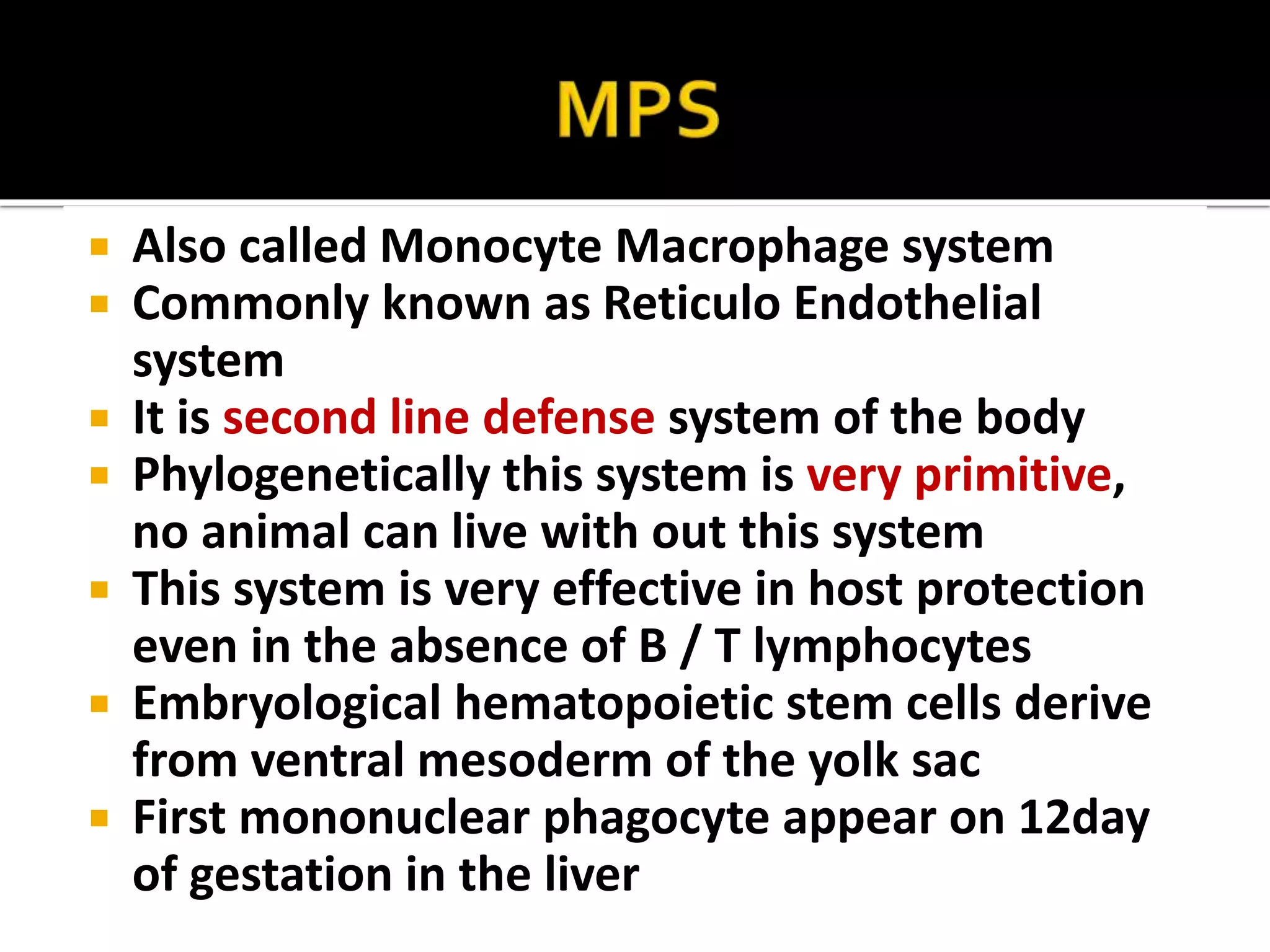
 Also called Monocyte Macrophage system 
 Commonly known as Reticulo Endothelial 
system 
 It is second line defense system of the body 
 Phylogenetically this system is very primitive, 
no animal can live with out this system 
 This system is very effective in host protection 
even in the absence of B / T lymphocytes 
 Embryological hematopoietic stem cells derive 
from ventral mesoderm of the yolk sac 
 First mononuclear phagocyte appear on 12day 
of gestation in the liver
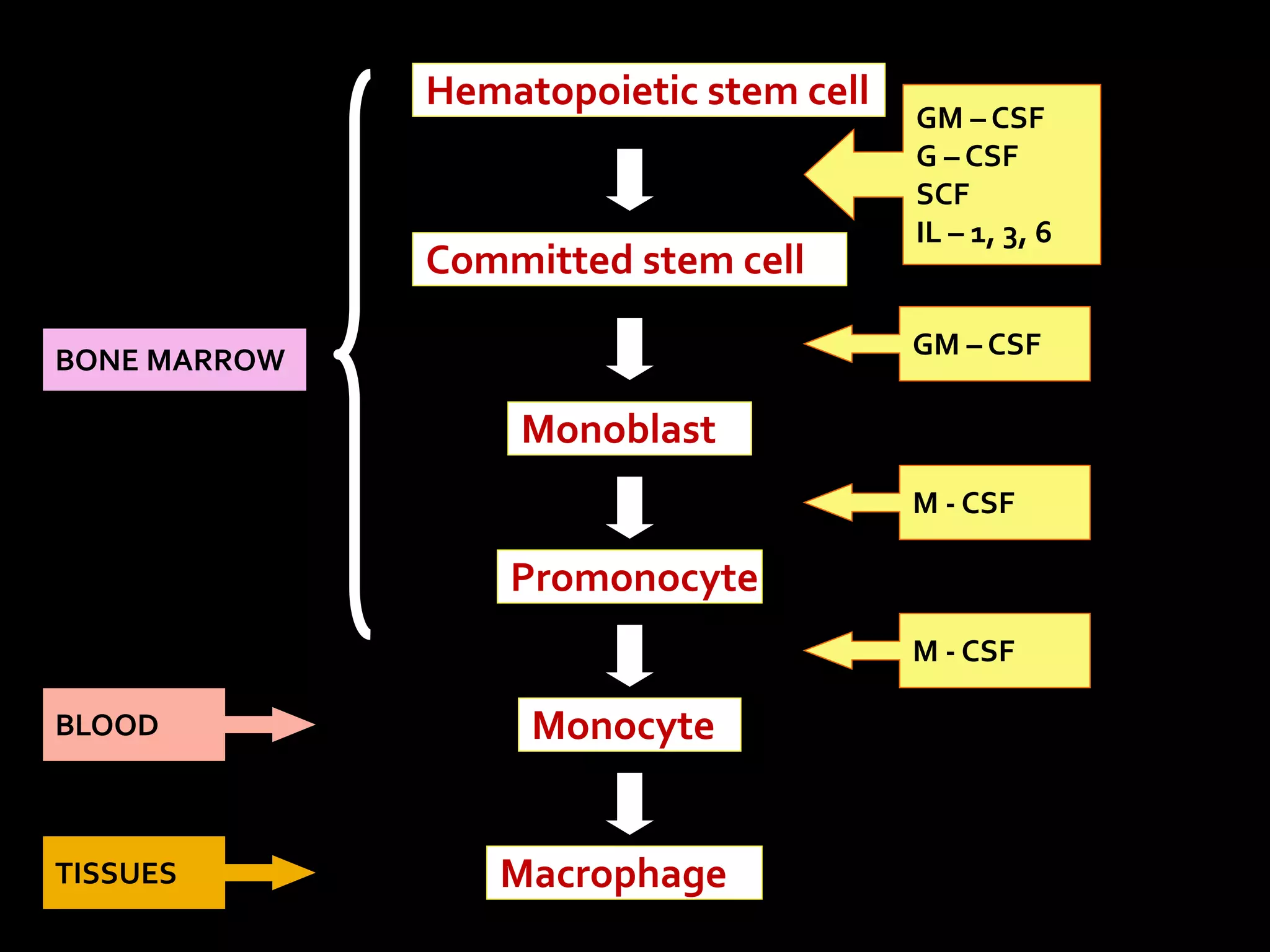
Hematopoietic stem cell 
Committed stem cell 
Monoblast 
Promonocyte 
Monocyte 
Macrophage 
GM – CSF 
G – CSF 
SCF 
IL – 1, 3, 6 
GM – CSF 
M - CSF 
M - CSF 
BONE MARROW 
BLOOD 
TISSUES
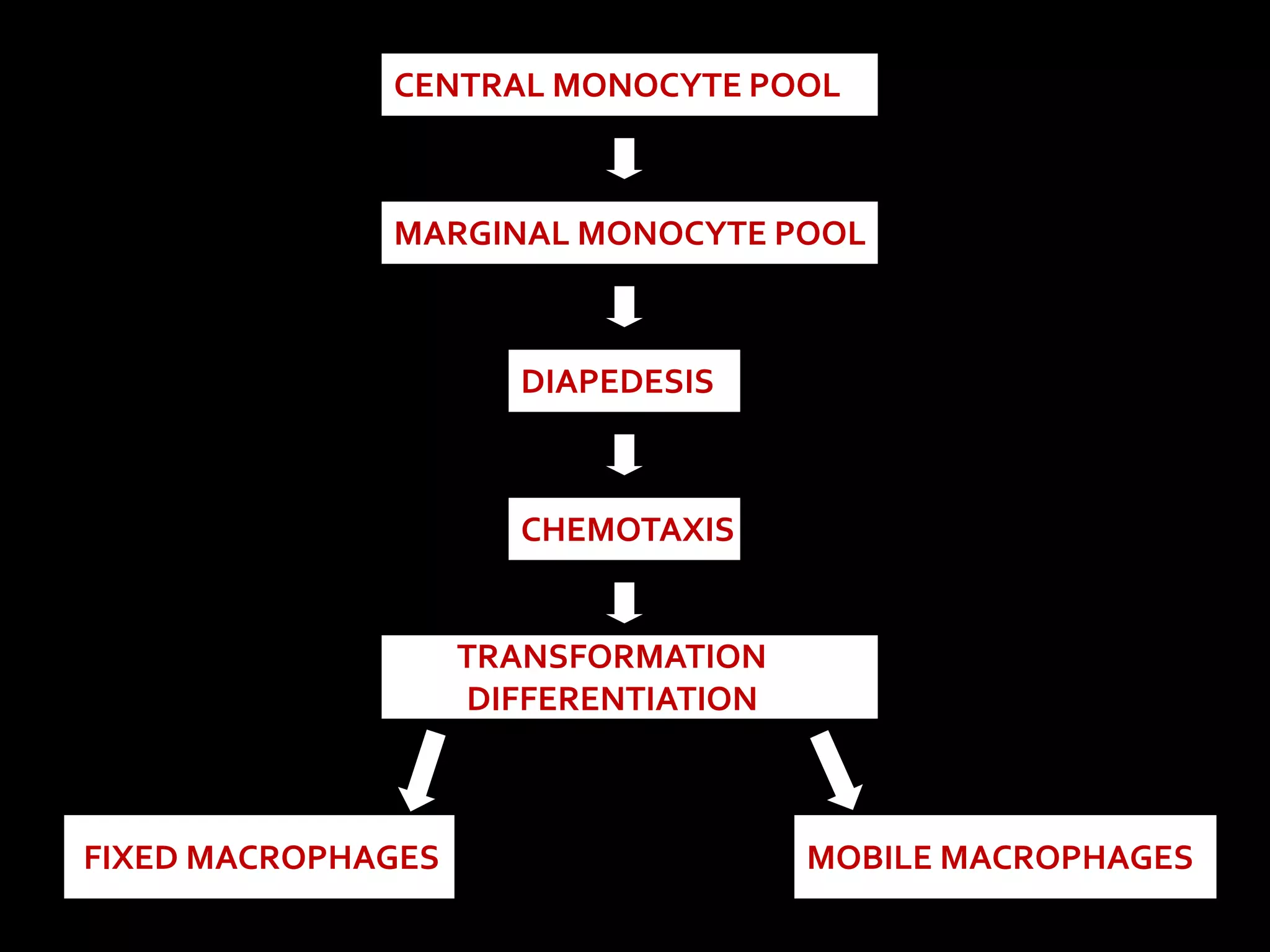
CENTRAL MONOCYTE POOL 
MARGINAL MONOCYTE POOL 
DIAPEDESIS 
CHEMOTAXIS 
TRANSFORMATION 
DIFFERENTIATION 
FIXED MACROPHAGES MOBILE MACROPHAGES
Different sites of distribution: 
- Liver [Kupffer cells] 
- CNS [Microglial cells] 
- Connective tissue [Histiocytes] 
- Lung [Dust cells] 
- Skin [Langerhan cells] 
- Bone [Osteoclasts] 
- Kidney [Mesangial cells] 
- Spleen 
- Lymph node 
- viscera etc.
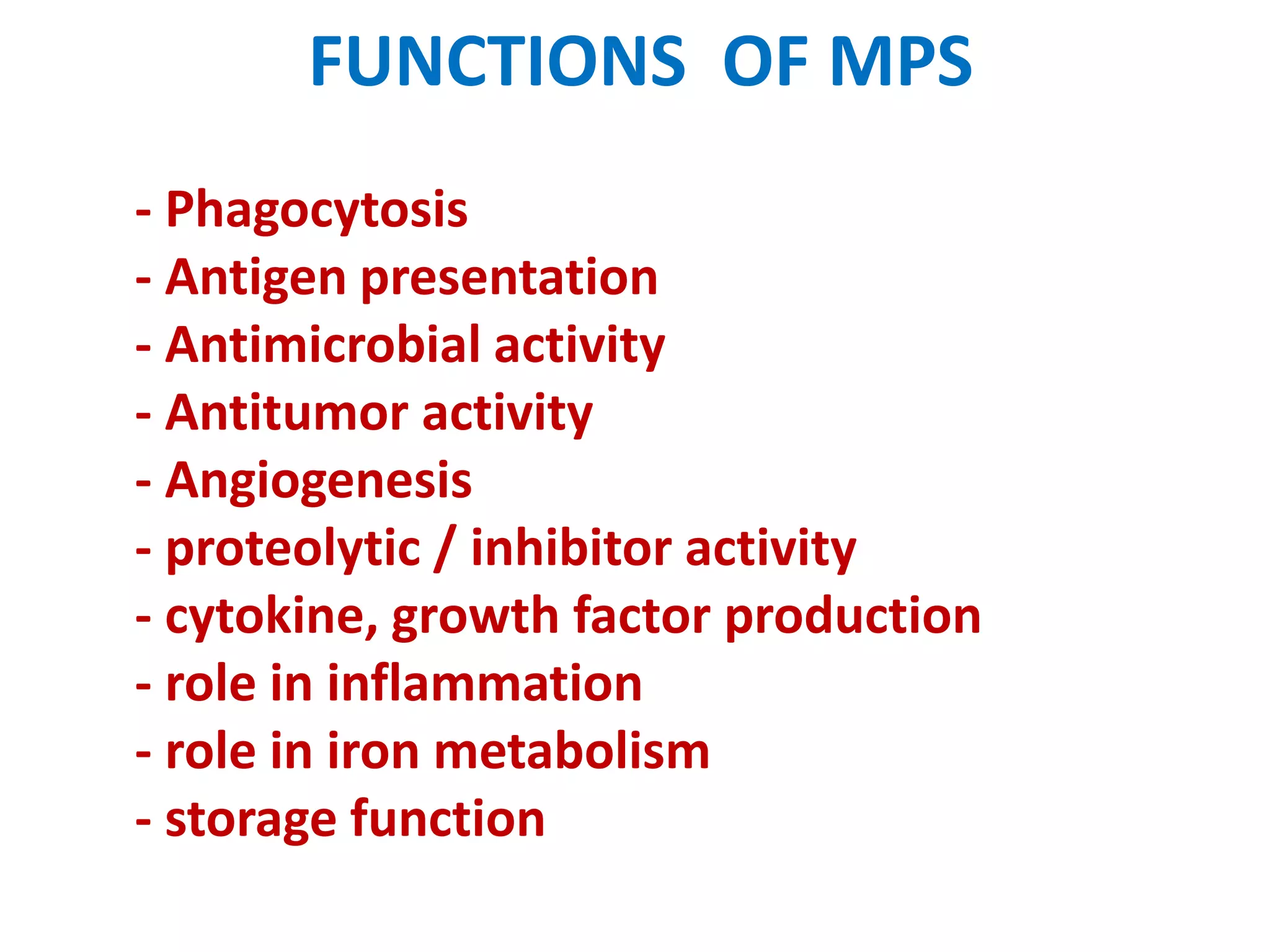
FUNCTIONS OF MPS 
- Phagocytosis 
- Antigen presentation 
- Antimicrobial activity 
- Antitumor activity 
- Angiogenesis 
- proteolytic / inhibitor activity 
- cytokine, growth factor production 
- role in inflammation 
- role in iron metabolism 
- storage function
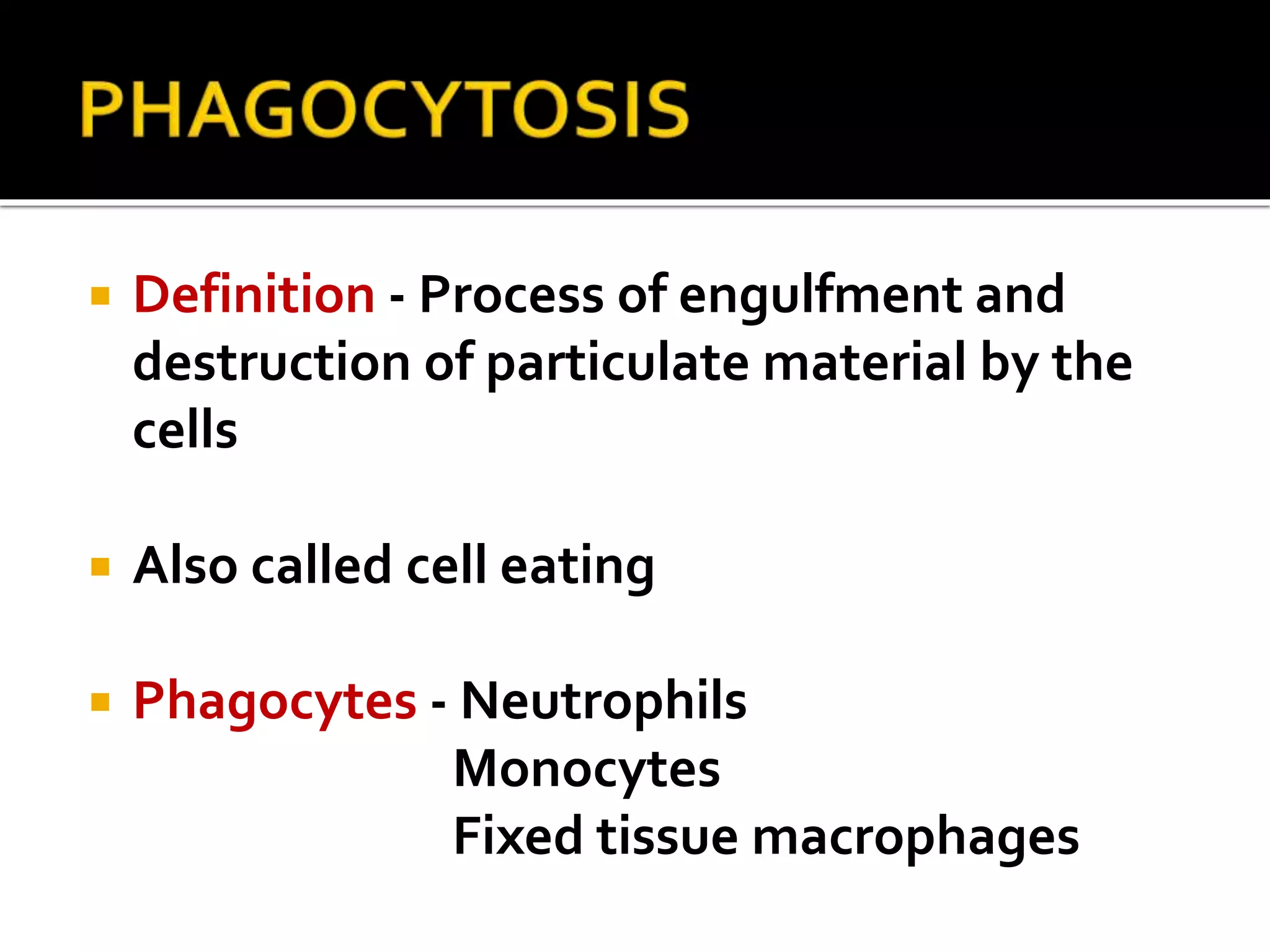
 Definition - Process of engulfment and 
destruction of particulate material by the 
cells 
 Also called cell eating 
 Phagocytes - Neutrophils 
Monocytes 
Fixed tissue macrophages
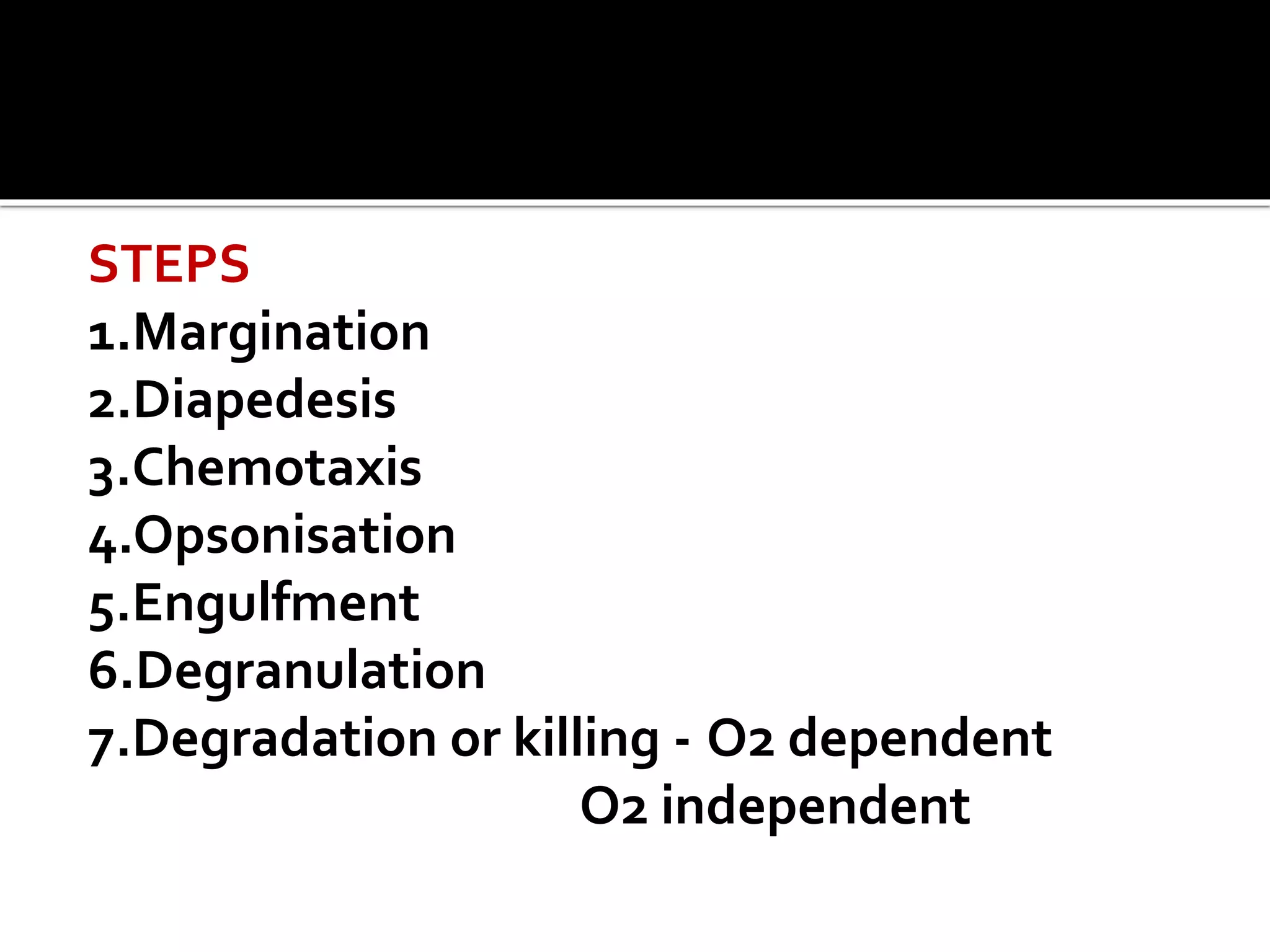
STEPS 
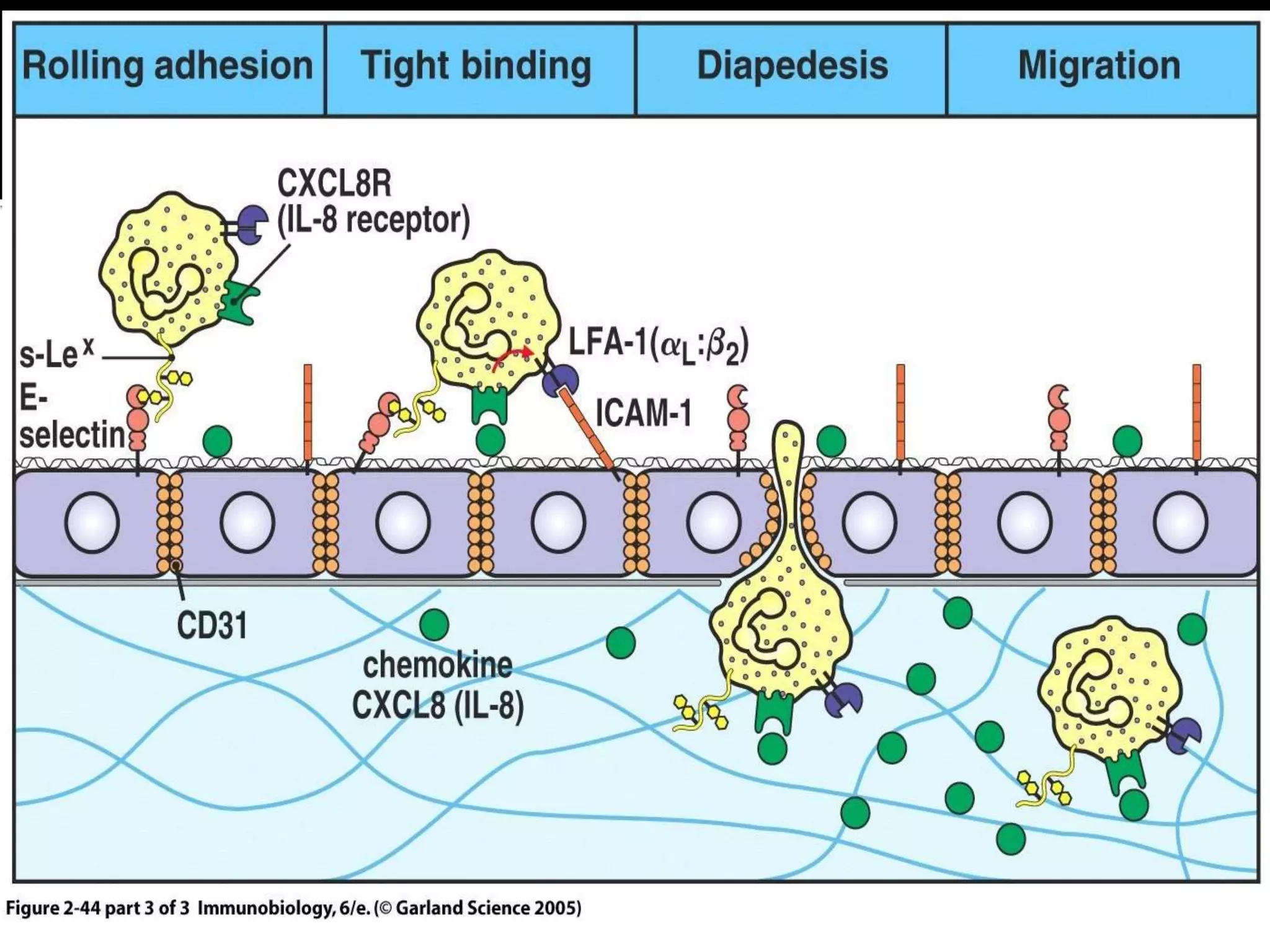
1.Margination 
2.Diapedesis 
3.Chemotaxis 
4.Opsonisation 
5.Engulfment 
6.Degranulation 
7.Degradation or killing - O2 dependent 
O2 independent
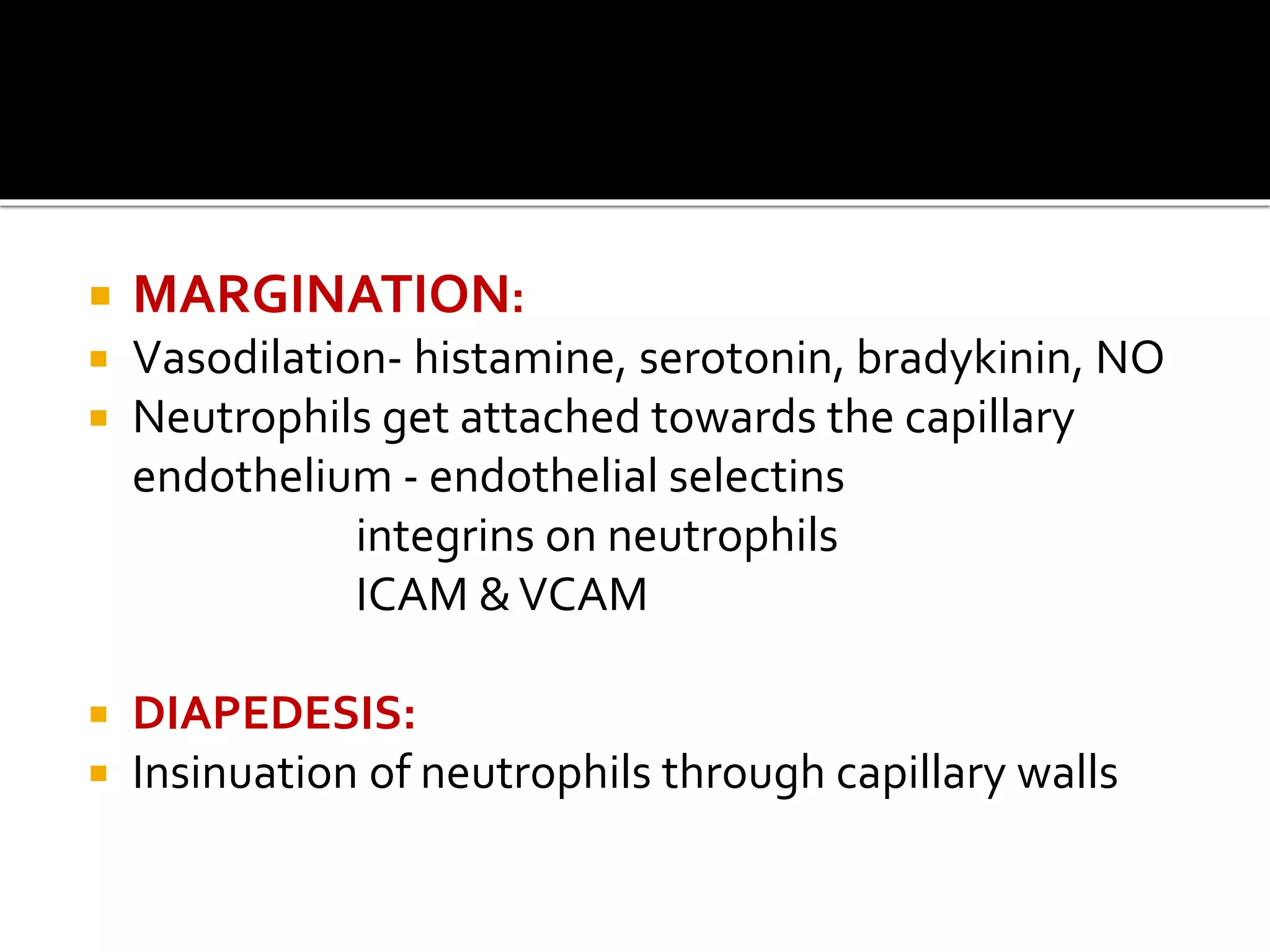
 MARGINATION: 
 Vasodilation- histamine, serotonin, bradykinin, NO 
 Neutrophils get attached towards the capillary 
endothelium - endothelial selectins 
integrins on neutrophils 
ICAM & VCAM 
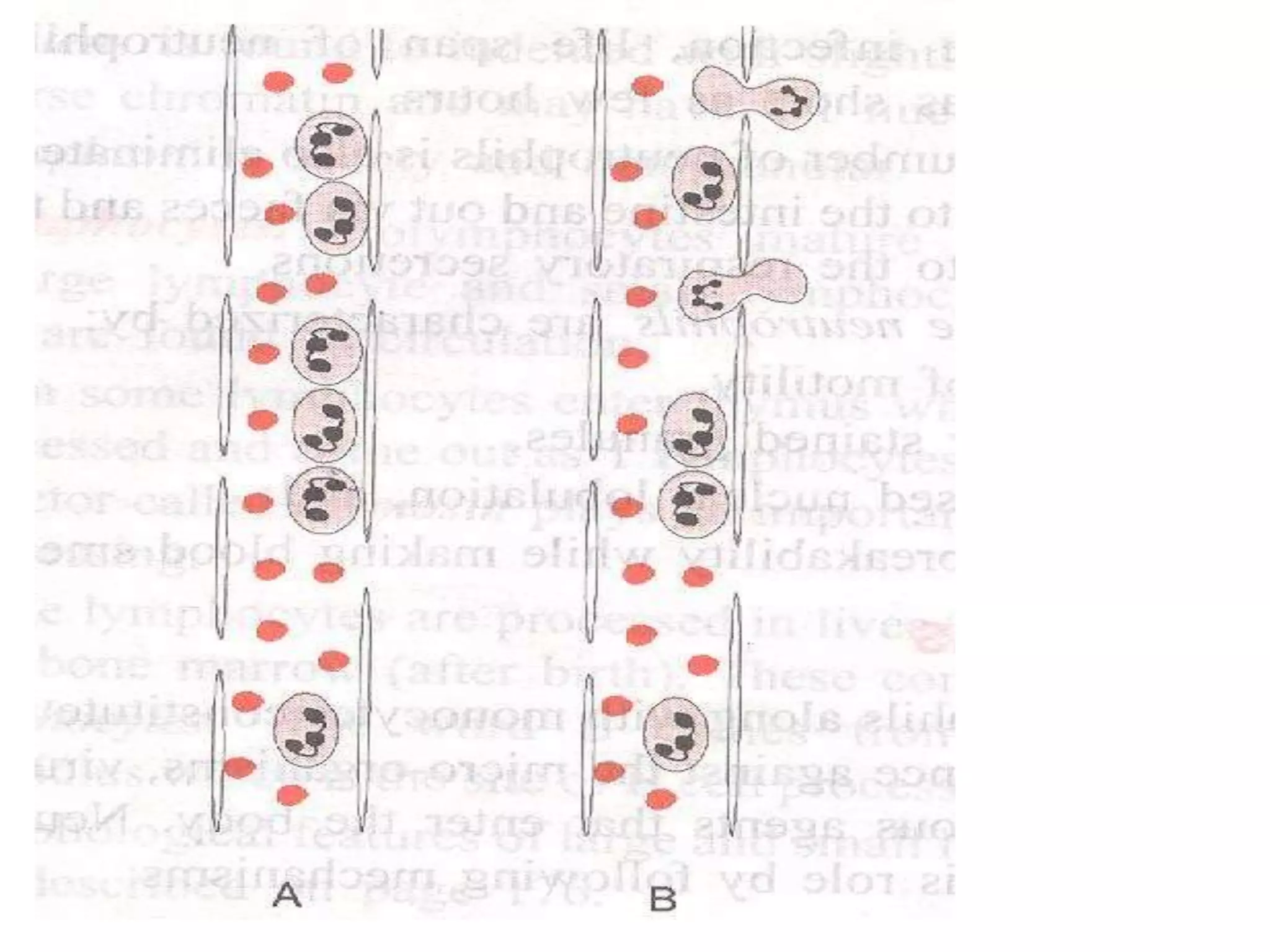
 DIAPEDESIS: 
 Insinuation of neutrophils through capillary walls
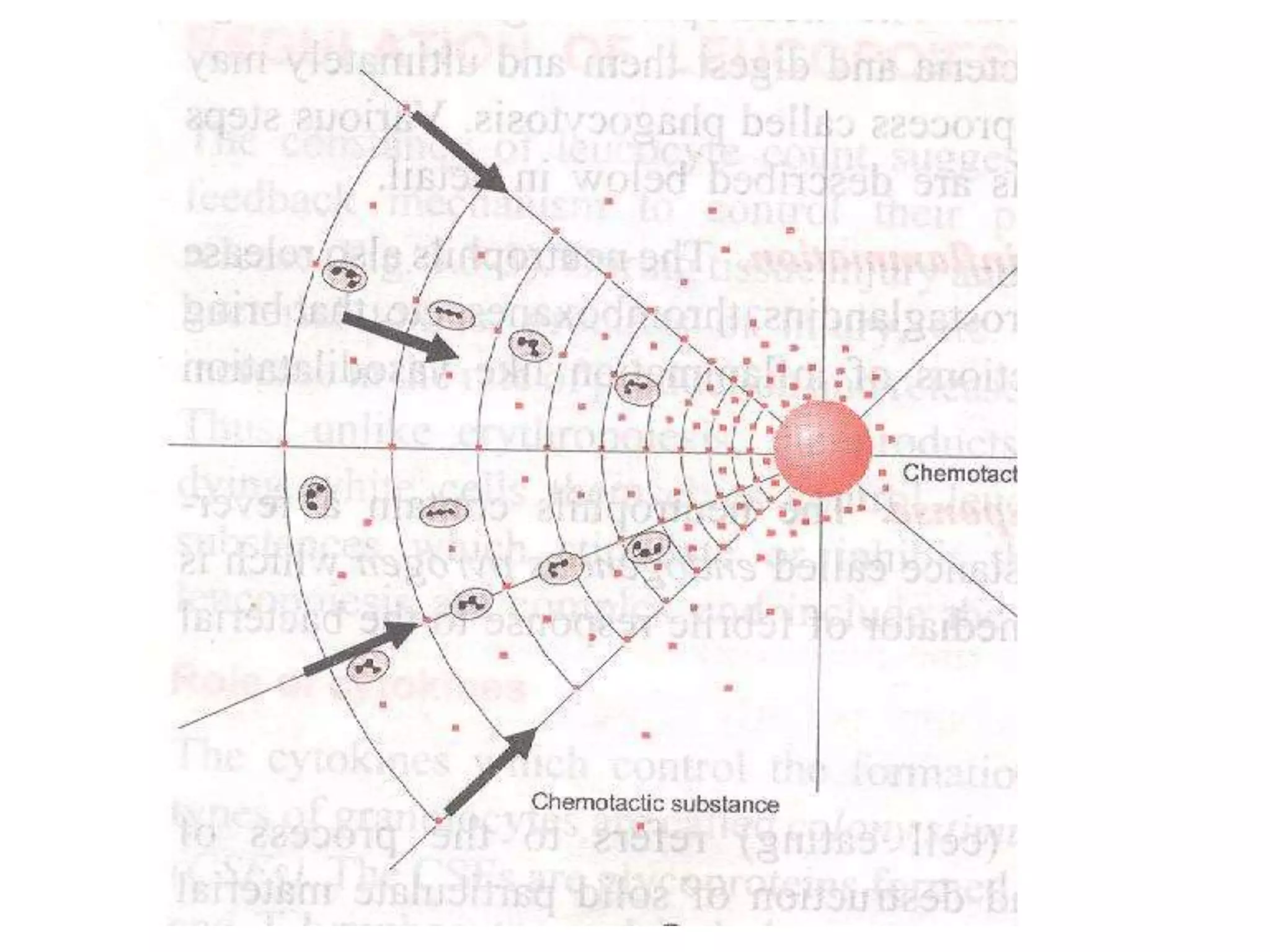
CHEMOTAXIS: 
 Neutrophils are attracted towards bacteria at the 
site of inflammation 
 Chemotactic agents are- 
C5a 
Leukotriene B4 
Cytokines 
IL-8
OPSONIZATION: 
 Coating of bacteria by opsonins - IgG 
C3b 
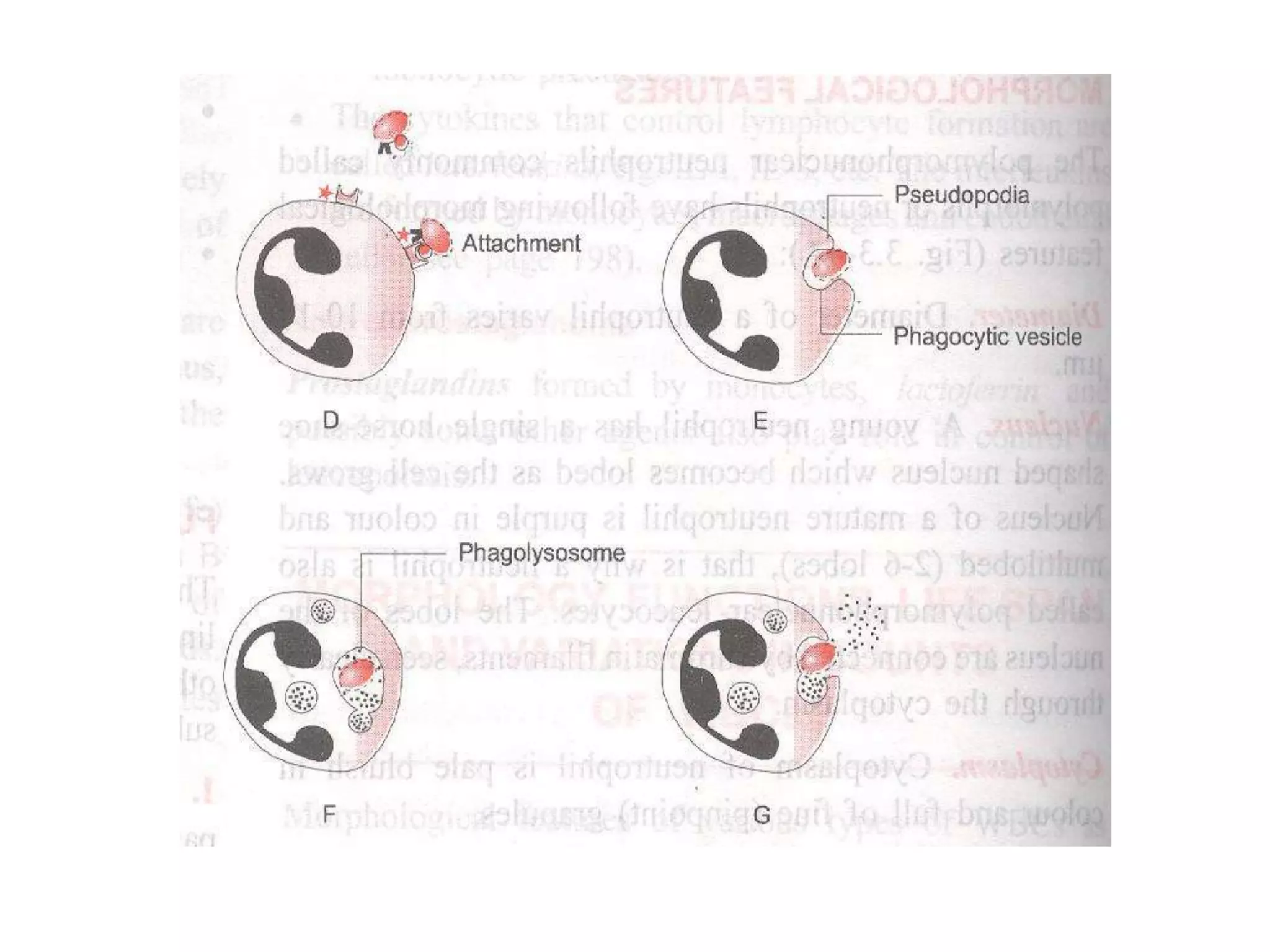
ENGULFMENT: 
By forming phagocytic vesicle 
DEGRANULATION:
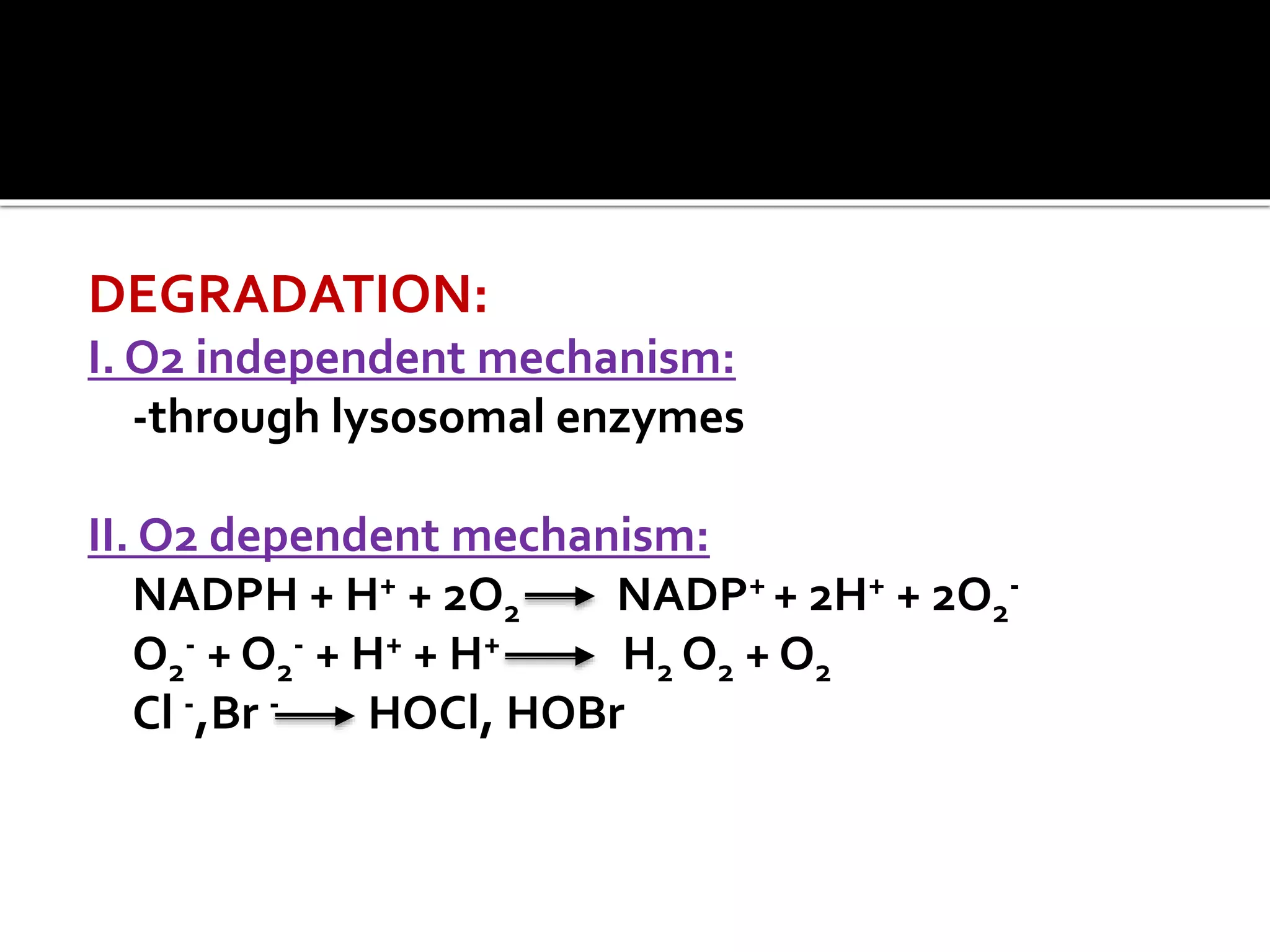
DEGRADATION: 
I. O2 independent mechanism: 
-through lysosomal enzymes 
II. O2 dependent mechanism: 
NADPH + H+ + 2O2 NADP+ + 2H+ + 2O2 
- 
O2 
- + O2 
- + H+ + H+ H2O2 + O2 
Cl -,Br - HOCl, HOBr
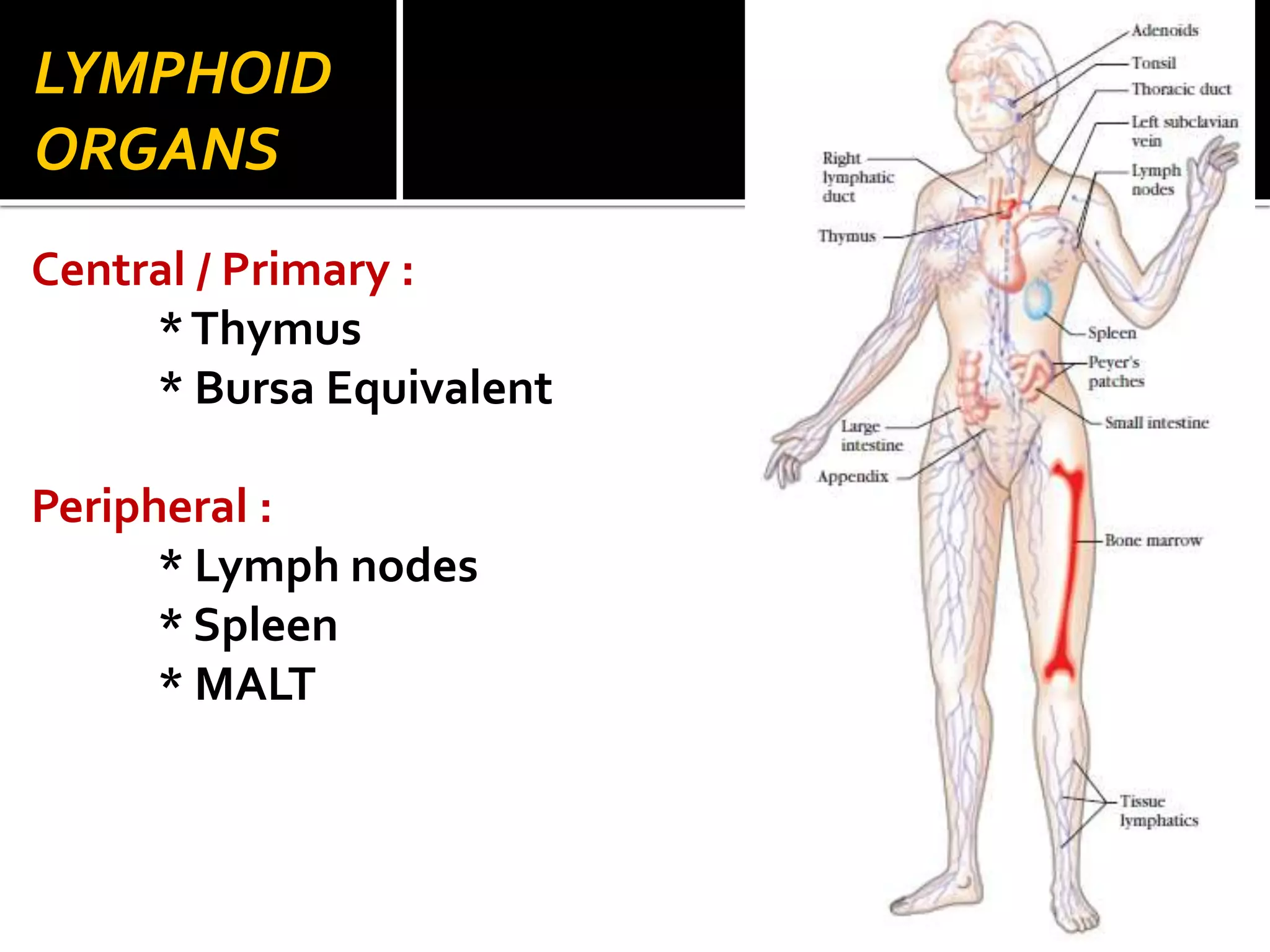
LYMPHOID 
ORGANS 
Central / Primary : 
* Thymus 
* Bursa Equivalent 
Peripheral : 
* Lymph nodes 
* Spleen 
* MALT
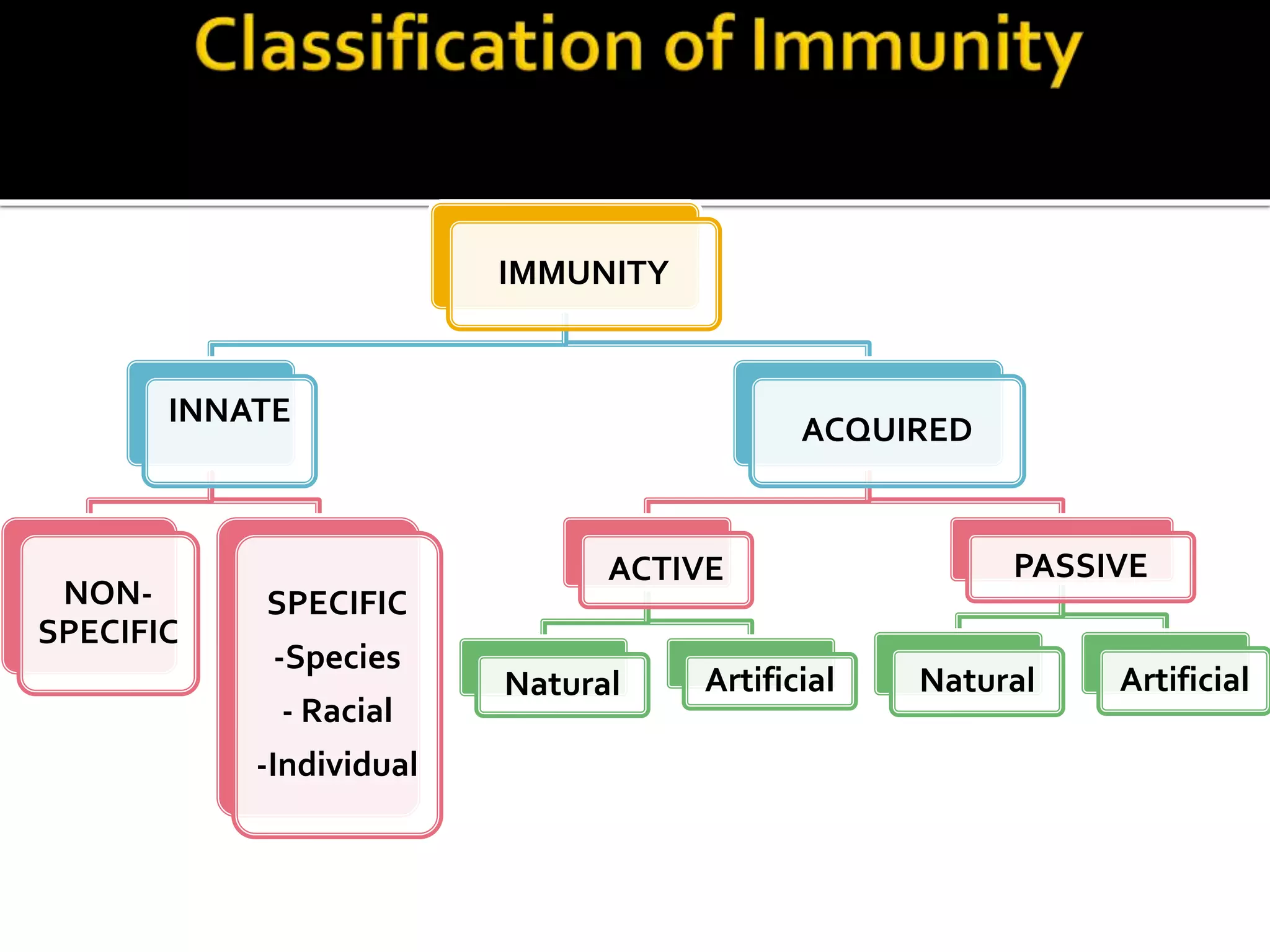
IMMUNITY 
INNATE 
NON-SPECIFIC 
SPECIFIC 
-Species 
- Racial 
-Individual 
ACQUIRED 
ACTIVE 
Natural Artificial 
PASSIVE 
Natural Artificial
Immune mechanisms
Immune mechanisms

Immune mechanisms

  • 1.
  • 2.
    Architecture of ImmuneSystem 1. Mononuclear-Phagocytic System (MPS) 2. Lymphoid Component
  • 3.
     Also calledMonocyte Macrophage system  Commonly known as Reticulo Endothelial system  It is second line defense system of the body  Phylogenetically this system is very primitive, no animal can live with out this system  This system is very effective in host protection even in the absence of B / T lymphocytes  Embryological hematopoietic stem cells derive from ventral mesoderm of the yolk sac  First mononuclear phagocyte appear on 12day of gestation in the liver
  • 4.
    Hematopoietic stem cell Committed stem cell Monoblast Promonocyte Monocyte Macrophage GM – CSF G – CSF SCF IL – 1, 3, 6 GM – CSF M - CSF M - CSF BONE MARROW BLOOD TISSUES
  • 5.
    CENTRAL MONOCYTE POOL MARGINAL MONOCYTE POOL DIAPEDESIS CHEMOTAXIS TRANSFORMATION DIFFERENTIATION FIXED MACROPHAGES MOBILE MACROPHAGES
  • 7.
    Different sites ofdistribution: - Liver [Kupffer cells] - CNS [Microglial cells] - Connective tissue [Histiocytes] - Lung [Dust cells] - Skin [Langerhan cells] - Bone [Osteoclasts] - Kidney [Mesangial cells] - Spleen - Lymph node - viscera etc.
  • 8.
    FUNCTIONS OF MPS - Phagocytosis - Antigen presentation - Antimicrobial activity - Antitumor activity - Angiogenesis - proteolytic / inhibitor activity - cytokine, growth factor production - role in inflammation - role in iron metabolism - storage function
  • 9.
     Definition -Process of engulfment and destruction of particulate material by the cells  Also called cell eating  Phagocytes - Neutrophils Monocytes Fixed tissue macrophages
  • 10.
    STEPS 1.Margination 2.Diapedesis 3.Chemotaxis 4.Opsonisation 5.Engulfment 6.Degranulation 7.Degradation or killing - O2 dependent O2 independent
  • 11.
     MARGINATION: Vasodilation- histamine, serotonin, bradykinin, NO  Neutrophils get attached towards the capillary endothelium - endothelial selectins integrins on neutrophils ICAM & VCAM  DIAPEDESIS:  Insinuation of neutrophils through capillary walls
  • 13.
    CHEMOTAXIS:  Neutrophilsare attracted towards bacteria at the site of inflammation  Chemotactic agents are- C5a Leukotriene B4 Cytokines IL-8
  • 15.
    OPSONIZATION:  Coatingof bacteria by opsonins - IgG C3b ENGULFMENT: By forming phagocytic vesicle DEGRANULATION:
  • 17.
    DEGRADATION: I. O2independent mechanism: -through lysosomal enzymes II. O2 dependent mechanism: NADPH + H+ + 2O2 NADP+ + 2H+ + 2O2 - O2 - + O2 - + H+ + H+ H2O2 + O2 Cl -,Br - HOCl, HOBr
  • 18.
    LYMPHOID ORGANS Central/ Primary : * Thymus * Bursa Equivalent Peripheral : * Lymph nodes * Spleen * MALT
  • 20.
    IMMUNITY INNATE NON-SPECIFIC SPECIFIC -Species - Racial -Individual ACQUIRED ACTIVE Natural Artificial PASSIVE Natural Artificial