International 
OPEN ACCESS Journal 
Of Modern Engineering Research (IJMER) 
| IJMER | ISSN: 2249–6645 | www.ijmer.com | Vol. 4 | Iss.7| July. 2014 | 1| 
Voltage Support and Reactive Power Control in Micro-grid using DG Nagashree. J. R1, Vasantha Kumara. T. M2, Narasimhegowda3 1 4th sem, M.Tech,Power system engineering, Dept. of E&E Engg., Adichunchanagiri Institute of Technology, Chickmaglur, Karnataka 2 M.Tech,LMISTE,Asst. Prof., Dept. of E&E Engg., Adichunchanagiri Institute of Technology, Chickmaglur, Karnanataka 3 M.Tech,PGDCA,LMISTE Associate.Prof., Dept. of E&E Engg., Adichunchanagiri Institute of Technology, Chickmaglur, Karnataka 
I. Introduction 
The distribution system is an important part of an electric power system. As stated in[1], the capital investment in the distribution system constitutes a significant portionof the total amount spent in theentire power system. Due to the recent marketderegulation, this portion may become even larger. Furthermore, since the distributionsystems operate at the low voltage levels, the losses are usually higher compared tothose in other parts of the syste. Thus, the distribution system rates high ineconomic importance, which makes careful planning and design most worthwhile. Flexible operation of distributed generation (DG) units is a major objective in future smart power grids. The majority of DG units are interfaced to grid/load via power electronics converters. Current-controlled voltage-sourced inverters (VSIs) are commonly used for grid connection. Under the smart grid environment, DG units should be included in the system operational control framework, where they can be used to enhance system reliability by providing backup generation in isolated mode, and to provide ancillary services (e.g. voltage support and reactive power control) in the grid-connected mode. These operational control actions are dynamic in nature as they depend on the load/generation profile, demand-side management control, and overall network optimization controllers (e.g., grid reconfiguration and supervisory control actions) [4]. To achieve this vision, the DG interface should offer high flexibility and robustness in meeting a wide range of control functions, such as seamless transfer between grid-connected operation and islanded mode; seamless transfer between active/reactive power (PQ) and active power/voltage (PV) modes of operation in the grid connected mode; robustness against islanding detection delays; offering minimal control- function switching during mode transition; and maintaining a hierarchical control structure. Several control system improvements have been made to the hierarchical control structure to enhance the control performance of DG units either in grid- connected or isolated micro-grid systems [5]–[11]. However, subsequent to an islanding event, changing the controlling strategy from current to voltage control, in a hierarchical control framework, may result in serious voltage deviations especially when the islanding detection is delayed [12]. 
Abstract: Distribution Generators(DGs) are the renewable energy resource which can be connected to the grid. When it is connected to the grid it should be operated with controlled voltage and reactive power control. And in autonomous mode(i.e disconnected mode) it should operate in backup generation mode. These DGs are connected towards the micro grid operation. The proposed control system facilitates flexible and robust DG operational characteristics such as active/reactive power (PQ) or active power/voltage (PV) bus operation in the grid- connected mode, regulated power control in autonomous micro-grid mode, smooth transition between autonomous mode and PV or PQ grid connected modes and vice versa, reduced voltage distortion under heavily nonlinear loading conditions, and robust control performance under islanding detection delays. Evaluation results are presented to demonstrate the flexibility and effectiveness of the proposed controller. 
Keywords: Distributed generation (DG), flexible control,micro-grids, smart distribution systems.
Voltage Support and Reactive Power Control in Micro-grid using DG 
| IJMER | ISSN: 2249–6645 | www.ijmer.com | Vol. 4 | Iss.7| July. 2014 | 2| 
II. System Configuration 
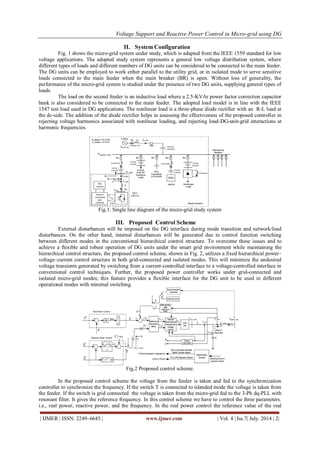
Fig. 1 shows the micro-grid system under study, which is adapted from the IEEE 1559 standard for low 
voltage applications. The adopted study system represents a general low voltage distribution system, where 
different types of loads and different numbers of DG units can be considered to be connected to the main feeder. 
The DG units can be employed to work either parallel to the utility grid, or in isolated mode to serve sensitive 
loads connected to the main feeder when the main breaker (BR) is open. Without loss of generality, the 
performance of the micro-grid system is studied under the presence of two DG units, supplying general types of 
loads. 
The load on the second feeder is an inductive load where a 2.5-KVAr power factor correction capacitor 
bank is also considered to be connected to the main feeder. The adopted load model is in line with the IEEE 
1547 test load used in DG applications. The nonlinear load is a three-phase diode rectifier with an R-L load at 
the dc-side. The addition of the diode rectifier helps in assessing the effectiveness of the proposed controller in 
rejecting voltage harmonics associated with nonlinear loading, and rejecting load-DG-unit-grid interactions at 
harmonic frequencies. 
Fig.1. Single line diagram of the micro-grid study system 
III. Proposed Control Scheme 
External disturbances will be imposed on the DG interface during mode transition and network/load 
disturbances. On the other hand, internal disturbances will be generated due to control function switching 
between different modes in the conventional hierarchical control structure. To overcome these issues and to 
achieve a flexible and robust operation of DG units under the smart grid environment while maintaining the 
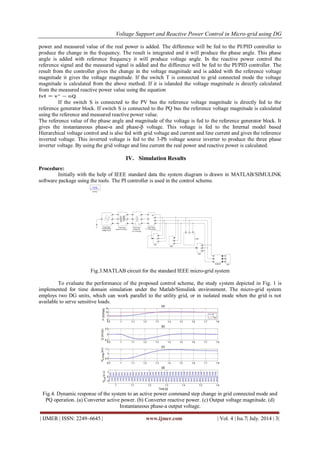
hierarchical control structure, the proposed control scheme, shown in Fig. 2, utilizes a fixed hierarchical power– 
voltage–current control structure in both grid-connected and isolated modes. This will minimize the undesired 
voltage transients generated by switching from a current-controlled interface to a voltage-controlled interface in 
conventional control techniques. Further, the proposed power controller works under grid-connected and 
isolated micro-grid modes; this feature provides a flexible interface for the DG unit to be used in different 
operational modes with minimal switching. 
Fig.2 Proposed control scheme. 
In the proposed control scheme the voltage from the feeder is taken and fed to the synchronization 
controller to synchronize the frequency. If the switch T is connected to islanded mode the voltage is taken from 
the feeder. If the switch is grid connected the voltage is taken from the micro-grid fed to the 3-Ph dq-PLL with 
resonant filter. It gives the reference frequency. In this control scheme we have to control the three parameters. 
i.e., real power, reactive power, and the frequency. In the real power control the reference value of the real
Voltage Support and Reactive Power Control in Micro-grid using DG 
| IJMER | ISSN: 2249–6645 | www.ijmer.com | Vol. 4 | Iss.7| July. 2014 | 3| 
power and measured value of the real power is added. The difference will be fed to the PI/PID controller to 
produce the change in the frequency. The result is integrated and it will produce the phase angle. This phase 
angle is added with reference frequency it will produce voltage angle. In the reactive power control the 
reference signal and the measured signal is added and the difference will be fed to the PI/PID controller. The 
result from the controller gives the change in the voltage magnitude and is added with the reference voltage 
magnitude it gives the voltage magnitude. If the switch T is connected to grid connected mode the voltage 
magnitude is calculated from the above method. If it is islanded the voltage magnitude is directly calculated 
from the measured reactive power value using the equation 
If the switch S is connected to the PV bus the reference voltage magnitude is directly fed to the 
reference generator block. If switch S is connected to the PQ bus the reference voltage magnitude is calculated 
using the reference and measured reactive power value. 
The reference value of the phase angle and magnitude of the voltage is fed to the reference generator block. It 
gives the instantaneous phase-α and phase-β voltage. This voltage is fed to the Internal model based 
Hierarchical voltage control and is also fed with grid voltage and current and line current and gives the reference 
inverted voltage. This inverted voltage is fed to the 3-Ph voltage source inverter to produce the three phase 
inverter voltage. By using the grid voltage and line current the real power and reactive power is calculated. 
IV. Simulation Results 
Procedure: 
Initially with the help of IEEE standard data the system diagram is drawn in MATLAB/SIMULINK 
software package using the tools. The PI controller is used in the control scheme. 
Fig.3.MATLAB circuit for the standard IEEE micro-grid system 
To evaluate the performance of the proposed control scheme, the study system depicted in Fig. 1 is 
implemented for time domain simulation under the Matlab/Simulink environment. The micro-grid system 
employs two DG units, which can work parallel to the utility grid, or in isolated mode when the grid is not 
available to serve sensitive loads. 
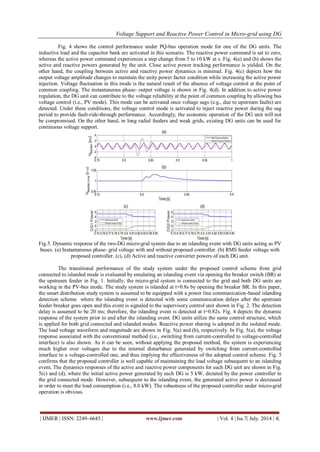
Fig.4. Dynamic response of the system to an active power command step change in grid connected mode and 
PQ operation. (a) Converter active power. (b) Converter reactive power. (c) Output voltage magnitude. (d) 
Instantaneous phase-a output voltage.
Voltage Support and Reactive Power Control in Micro-grid using DG 
| IJMER | ISSN: 2249–6645 | www.ijmer.com | Vol. 4 | Iss.7| July. 2014 | 4| 
Fig. 4 shows the control performance under PQ-bus operation mode for one of the DG units. The 
inductive load and the capacitor bank are activated in this scenario. The reactive power command is set to zero, 
whereas the active power command experiences a step change from 5 to 10 kW at s. Fig. 4(a) and (b) shows the 
active and reactive powers generated by the unit. Close active power tracking performance is yielded. On the 
other hand, the coupling between active and reactive power dynamics is minimal. Fig. 4(c) depicts how the 
output voltage amplitude changes to maintain the unity power factor condition while increasing the active power 
injection. Voltage fluctuation in this mode is the natural result of the absence of voltage control at the point of 
common coupling. The instantaneous phase- output voltage is shown in Fig. 4(d). In addition to active power 
regulation, the DG unit can contribute to the voltage reliability at the point of common coupling by allowing bus 
voltage control (i.e., PV mode). This mode can be activated once voltage sags (e.g., due to upstream faults) are 
detected. Under these conditions, the voltage control mode is activated to inject reactive power during the sag 
period to provide fault-ride-through performance. Accordingly, the economic operation of the DG unit will not 
be compromised. On the other hand, in long radial feeders and weak grids, existing DG units can be used for 
continuous voltage support. 
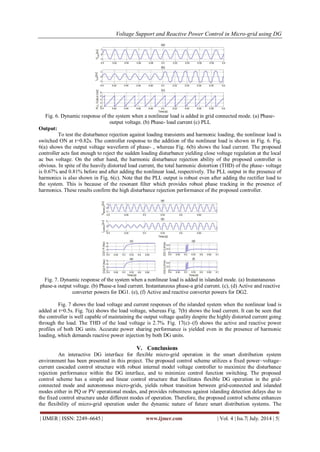
Fig.5. Dynamic response of the two-DG micro-grid system due to an islanding event with DG units acting as PV 
buses. (a) Instantaneous phase- grid voltage with and without proposed controller. (b) RMS feeder voltage with 
proposed controller. (c), (d) Active and reactive converter powers of each DG unit. 
The transitional performance of the study system under the proposed control scheme from grid 
connected to islanded mode is evaluated by emulating an islanding event via opening the breaker switch (BR) at 
the upstream feeder in Fig. 1. Initially, the micro-grid system is connected to the grid and both DG units are 
working in the PV-bus mode. The study system is islanded at t=0.8s by opening the breaker BR. In this paper, 
the smart distribution study system is assumed to be equipped with a power line communication-based islanding 
detection scheme where the islanding event is detected with some communication delays after the upstream 
feeder breaker goes open and this event is signaled to the supervisory control unit shown in Fig. 2. The detection 
delay is assumed to be 20 ms; therefore, the islanding event is detected at t=0.82s. Fig. 4 depicts the dynamic 
response of the system prior to and after the islanding event. DG units utilize the same control structure, which 
is applied for both grid connected and islanded modes. Reactive power sharing is adopted in the isolated mode. 
The load voltage waveform and magnitude are shown in Fig. 5(a) and (b), respectively. In Fig. 5(a), the voltage 
response associated with the conventional method (i.e., switching from current-controlled to voltage-controlled 
interface) is also shown. As it can be seen, without applying the proposed method, the system is experiencing 
much higher over voltages due to the internal disturbance generated by switching from current-controlled 
interface to a voltage-controlled one, and thus implying the effectiveness of the adopted control scheme. Fig. 5 
confirms that the proposed controller is well capable of maintaining the load voltage subsequent to an islanding 
event. The dynamics responses of the active and reactive power components for each DG unit are shown in Fig. 
5(c) and (d), where the initial active power generated by each DG is 5 kW, dictated by the power controller in 
the grid connected mode. However, subsequent to the islanding event, the generated active power is decreased 
in order to meet the load consumption (i.e., 8.0 kW). The robustness of the proposed controller under micro-grid 
operation is obvious.
Voltage Support and Reactive Power Control in Micro-grid using DG 
| IJMER | ISSN: 2249–6645 | www.ijmer.com | Vol. 4 | Iss.7| July. 2014 | 5| 
Fig. 6. Dynamic response of the system when a nonlinear load is added in grid connected mode. (a) Phase-output 
voltage. (b) Phase- load current (c) PLL 
Output: 
To test the disturbance rejection against loading transients and harmonic loading, the nonlinear load is 
switched ON at t=0.82s. The controller response to the addition of the nonlinear load is shown in Fig. 6. Fig. 
6(a) shows the output voltage waveform of phase- , whereas Fig. 6(b) shows the load current. The proposed 
controller acts fast enough to reject the sudden loading disturbance yielding close voltage regulation at the local 
ac bus voltage. On the other hand, the harmonic disturbance rejection ability of the proposed controller is 
obvious. In spite of the heavily distorted load current, the total harmonic distortion (THD) of the phase- voltage 
is 0.67% and 0.81% before and after adding the nonlinear load, respectively. The PLL output in the presence of 
harmonics is also shown in Fig. 6(c). Note that the PLL output is robust even after adding the rectifier load to 
the system. This is because of the resonant filter which provides robust phase tracking in the presence of 
harmonics. These results confirm the high disturbance rejection performance of the proposed controller. 
Fig. 7. Dynamic response of the system when a nonlinear load is added in islanded mode. (a) Instantaneous 
phase-a output voltage. (b) Phase-a load current. Instantaneous phase-a grid current. (c), (d) Active and reactive 
converter powers for DG1. (e), (f) Active and reactive converter powers for DG2. 
Fig. 7 shows the load voltage and current responses of the islanded system when the nonlinear load is 
added at t=0.5s. Fig. 7(a) shows the load voltage, whereas Fig. 7(b) shows the load current. It can be seen that 
the controller is well capable of maintaining the output voltage quality despite the highly distorted current going 
through the load. The THD of the load voltage is 2.7%. Fig. 17(c)–(f) shows the active and reactive power 
profiles of both DG units. Accurate power sharing performance is yielded even in the presence of harmonic 
loading, which demands reactive power injection by both DG units. 
V. Conclusions 
An interactive DG interface for flexible micro-grid operation in the smart distribution system 
environment has been presented in this project. The proposed control scheme utilizes a fixed power–voltage– 
current cascaded control structure with robust internal model voltage controller to maximize the disturbance 
rejection performance within the DG interface, and to minimize control function switching. The proposed 
control scheme has a simple and linear control structure that facilitates flexible DG operation in the grid-connected 
mode and autonomous micro-grids, yields robust transition between grid-connected and islanded 
modes either in PQ or PV operational modes, and provides robustness against islanding detection delays due to 
the fixed control structure under different modes of operation. Therefore, the proposed control scheme enhances 
the flexibility of micro-grid operation under the dynamic nature of future smart distribution systems. The
Voltage Support and Reactive Power Control in Micro-grid using DG 
| IJMER | ISSN: 2249–6645 | www.ijmer.com | Vol. 4 | Iss.7| July. 2014 | 6| 
proposed control scheme uses the PI and PID controller and compares the results. The results of both will be the same but response time of the PI controller is more compare to the PID controller and also the system will be more stable in the PID controller compare to the PI controller. So the use of PID controller in control scheme is more beneficial than the use of PI controller. REFERENCES 
[1]. Smart Grid: An Introduction U.S. Department of Energy, 2009. 
[2]. E. M. Lightner and S. E. Widergren, ―An orderly transition to a trans-formed electricity systems,‖ IEEE Trans. Smart Grid, vol. 1, no. 1, pp. 3–10, Jun. 2010. 
[3]. K. Moslehi and R. Kumar, ―A reliability perspective of smart grid,‖IEEE Trans. Smart Grid, vol. 1, no. 1, pp. 57–64, Jun. 2010. 
[4]. G. T. Heydt, ―The next generation of power distribution systems,‖ IEEE Trans. Smart Grid, vol. 1, no. 3, pp. 225– 235, Nov. 2010. 
[5]. A. Timbus, M. Liserre, R. Teodorescu, P. Rodriquez, and F. Blaabjerg, ―Evaluation of current controllers for distributed power generation systems,‖ IEEE Trans. Power Electron., vol. 24, no. 3, pp. 654–664, Mar.2009. 
[6]. J. M. Guerrero, J. C. Vasquez, J. Matas, K. Vicuna, and M. Castilla, ―Hi-erarchical control of droop-controlled ac and dc microgrids—A general approach towards standardization,‖ IEEE Trans. Ind. Electron., to be published. 
[7]. M. Liserre, R. Teodorescu, and F. Blaabjerg, ―Multiple harmonics control for three-phase grid converter systems with the use of PI-RES current controller in a rotating frame,‖ IEEE Trans. Power Electron., vol.21, no. 3, pp. 836– 841, May 2006. 
[8]. Y. A.-R. I. Mohamed, ―Mitigation of dynamic, unbalanced and harmonic voltage disturbances using grid-connected inverters with LCL filter,‖ IEEE Trans. Ind. Electron., vol. 58, no. 9, pp. 3914–3924, Sep.2011. 
[9]. S. Ahn, ―Power-sharing method of multiple distributed generators considering modes and configurations of a microgrid,‖ IEEE Trans. Power Del., vol. 25, no. 3, pp. 2007–2016, Jul. 2010.

Voltage Support and Reactive Power Control in Micro-grid using DG

  • 1.
    International OPEN ACCESSJournal Of Modern Engineering Research (IJMER) | IJMER | ISSN: 2249–6645 | www.ijmer.com | Vol. 4 | Iss.7| July. 2014 | 1| Voltage Support and Reactive Power Control in Micro-grid using DG Nagashree. J. R1, Vasantha Kumara. T. M2, Narasimhegowda3 1 4th sem, M.Tech,Power system engineering, Dept. of E&E Engg., Adichunchanagiri Institute of Technology, Chickmaglur, Karnataka 2 M.Tech,LMISTE,Asst. Prof., Dept. of E&E Engg., Adichunchanagiri Institute of Technology, Chickmaglur, Karnanataka 3 M.Tech,PGDCA,LMISTE Associate.Prof., Dept. of E&E Engg., Adichunchanagiri Institute of Technology, Chickmaglur, Karnataka I. Introduction The distribution system is an important part of an electric power system. As stated in[1], the capital investment in the distribution system constitutes a significant portionof the total amount spent in theentire power system. Due to the recent marketderegulation, this portion may become even larger. Furthermore, since the distributionsystems operate at the low voltage levels, the losses are usually higher compared tothose in other parts of the syste. Thus, the distribution system rates high ineconomic importance, which makes careful planning and design most worthwhile. Flexible operation of distributed generation (DG) units is a major objective in future smart power grids. The majority of DG units are interfaced to grid/load via power electronics converters. Current-controlled voltage-sourced inverters (VSIs) are commonly used for grid connection. Under the smart grid environment, DG units should be included in the system operational control framework, where they can be used to enhance system reliability by providing backup generation in isolated mode, and to provide ancillary services (e.g. voltage support and reactive power control) in the grid-connected mode. These operational control actions are dynamic in nature as they depend on the load/generation profile, demand-side management control, and overall network optimization controllers (e.g., grid reconfiguration and supervisory control actions) [4]. To achieve this vision, the DG interface should offer high flexibility and robustness in meeting a wide range of control functions, such as seamless transfer between grid-connected operation and islanded mode; seamless transfer between active/reactive power (PQ) and active power/voltage (PV) modes of operation in the grid connected mode; robustness against islanding detection delays; offering minimal control- function switching during mode transition; and maintaining a hierarchical control structure. Several control system improvements have been made to the hierarchical control structure to enhance the control performance of DG units either in grid- connected or isolated micro-grid systems [5]–[11]. However, subsequent to an islanding event, changing the controlling strategy from current to voltage control, in a hierarchical control framework, may result in serious voltage deviations especially when the islanding detection is delayed [12]. Abstract: Distribution Generators(DGs) are the renewable energy resource which can be connected to the grid. When it is connected to the grid it should be operated with controlled voltage and reactive power control. And in autonomous mode(i.e disconnected mode) it should operate in backup generation mode. These DGs are connected towards the micro grid operation. The proposed control system facilitates flexible and robust DG operational characteristics such as active/reactive power (PQ) or active power/voltage (PV) bus operation in the grid- connected mode, regulated power control in autonomous micro-grid mode, smooth transition between autonomous mode and PV or PQ grid connected modes and vice versa, reduced voltage distortion under heavily nonlinear loading conditions, and robust control performance under islanding detection delays. Evaluation results are presented to demonstrate the flexibility and effectiveness of the proposed controller. Keywords: Distributed generation (DG), flexible control,micro-grids, smart distribution systems.
  • 2.
    Voltage Support andReactive Power Control in Micro-grid using DG | IJMER | ISSN: 2249–6645 | www.ijmer.com | Vol. 4 | Iss.7| July. 2014 | 2| II. System Configuration Fig. 1 shows the micro-grid system under study, which is adapted from the IEEE 1559 standard for low voltage applications. The adopted study system represents a general low voltage distribution system, where different types of loads and different numbers of DG units can be considered to be connected to the main feeder. The DG units can be employed to work either parallel to the utility grid, or in isolated mode to serve sensitive loads connected to the main feeder when the main breaker (BR) is open. Without loss of generality, the performance of the micro-grid system is studied under the presence of two DG units, supplying general types of loads. The load on the second feeder is an inductive load where a 2.5-KVAr power factor correction capacitor bank is also considered to be connected to the main feeder. The adopted load model is in line with the IEEE 1547 test load used in DG applications. The nonlinear load is a three-phase diode rectifier with an R-L load at the dc-side. The addition of the diode rectifier helps in assessing the effectiveness of the proposed controller in rejecting voltage harmonics associated with nonlinear loading, and rejecting load-DG-unit-grid interactions at harmonic frequencies. Fig.1. Single line diagram of the micro-grid study system III. Proposed Control Scheme External disturbances will be imposed on the DG interface during mode transition and network/load disturbances. On the other hand, internal disturbances will be generated due to control function switching between different modes in the conventional hierarchical control structure. To overcome these issues and to achieve a flexible and robust operation of DG units under the smart grid environment while maintaining the hierarchical control structure, the proposed control scheme, shown in Fig. 2, utilizes a fixed hierarchical power– voltage–current control structure in both grid-connected and isolated modes. This will minimize the undesired voltage transients generated by switching from a current-controlled interface to a voltage-controlled interface in conventional control techniques. Further, the proposed power controller works under grid-connected and isolated micro-grid modes; this feature provides a flexible interface for the DG unit to be used in different operational modes with minimal switching. Fig.2 Proposed control scheme. In the proposed control scheme the voltage from the feeder is taken and fed to the synchronization controller to synchronize the frequency. If the switch T is connected to islanded mode the voltage is taken from the feeder. If the switch is grid connected the voltage is taken from the micro-grid fed to the 3-Ph dq-PLL with resonant filter. It gives the reference frequency. In this control scheme we have to control the three parameters. i.e., real power, reactive power, and the frequency. In the real power control the reference value of the real
  • 3.
    Voltage Support andReactive Power Control in Micro-grid using DG | IJMER | ISSN: 2249–6645 | www.ijmer.com | Vol. 4 | Iss.7| July. 2014 | 3| power and measured value of the real power is added. The difference will be fed to the PI/PID controller to produce the change in the frequency. The result is integrated and it will produce the phase angle. This phase angle is added with reference frequency it will produce voltage angle. In the reactive power control the reference signal and the measured signal is added and the difference will be fed to the PI/PID controller. The result from the controller gives the change in the voltage magnitude and is added with the reference voltage magnitude it gives the voltage magnitude. If the switch T is connected to grid connected mode the voltage magnitude is calculated from the above method. If it is islanded the voltage magnitude is directly calculated from the measured reactive power value using the equation If the switch S is connected to the PV bus the reference voltage magnitude is directly fed to the reference generator block. If switch S is connected to the PQ bus the reference voltage magnitude is calculated using the reference and measured reactive power value. The reference value of the phase angle and magnitude of the voltage is fed to the reference generator block. It gives the instantaneous phase-α and phase-β voltage. This voltage is fed to the Internal model based Hierarchical voltage control and is also fed with grid voltage and current and line current and gives the reference inverted voltage. This inverted voltage is fed to the 3-Ph voltage source inverter to produce the three phase inverter voltage. By using the grid voltage and line current the real power and reactive power is calculated. IV. Simulation Results Procedure: Initially with the help of IEEE standard data the system diagram is drawn in MATLAB/SIMULINK software package using the tools. The PI controller is used in the control scheme. Fig.3.MATLAB circuit for the standard IEEE micro-grid system To evaluate the performance of the proposed control scheme, the study system depicted in Fig. 1 is implemented for time domain simulation under the Matlab/Simulink environment. The micro-grid system employs two DG units, which can work parallel to the utility grid, or in isolated mode when the grid is not available to serve sensitive loads. Fig.4. Dynamic response of the system to an active power command step change in grid connected mode and PQ operation. (a) Converter active power. (b) Converter reactive power. (c) Output voltage magnitude. (d) Instantaneous phase-a output voltage.
  • 4.
    Voltage Support andReactive Power Control in Micro-grid using DG | IJMER | ISSN: 2249–6645 | www.ijmer.com | Vol. 4 | Iss.7| July. 2014 | 4| Fig. 4 shows the control performance under PQ-bus operation mode for one of the DG units. The inductive load and the capacitor bank are activated in this scenario. The reactive power command is set to zero, whereas the active power command experiences a step change from 5 to 10 kW at s. Fig. 4(a) and (b) shows the active and reactive powers generated by the unit. Close active power tracking performance is yielded. On the other hand, the coupling between active and reactive power dynamics is minimal. Fig. 4(c) depicts how the output voltage amplitude changes to maintain the unity power factor condition while increasing the active power injection. Voltage fluctuation in this mode is the natural result of the absence of voltage control at the point of common coupling. The instantaneous phase- output voltage is shown in Fig. 4(d). In addition to active power regulation, the DG unit can contribute to the voltage reliability at the point of common coupling by allowing bus voltage control (i.e., PV mode). This mode can be activated once voltage sags (e.g., due to upstream faults) are detected. Under these conditions, the voltage control mode is activated to inject reactive power during the sag period to provide fault-ride-through performance. Accordingly, the economic operation of the DG unit will not be compromised. On the other hand, in long radial feeders and weak grids, existing DG units can be used for continuous voltage support. Fig.5. Dynamic response of the two-DG micro-grid system due to an islanding event with DG units acting as PV buses. (a) Instantaneous phase- grid voltage with and without proposed controller. (b) RMS feeder voltage with proposed controller. (c), (d) Active and reactive converter powers of each DG unit. The transitional performance of the study system under the proposed control scheme from grid connected to islanded mode is evaluated by emulating an islanding event via opening the breaker switch (BR) at the upstream feeder in Fig. 1. Initially, the micro-grid system is connected to the grid and both DG units are working in the PV-bus mode. The study system is islanded at t=0.8s by opening the breaker BR. In this paper, the smart distribution study system is assumed to be equipped with a power line communication-based islanding detection scheme where the islanding event is detected with some communication delays after the upstream feeder breaker goes open and this event is signaled to the supervisory control unit shown in Fig. 2. The detection delay is assumed to be 20 ms; therefore, the islanding event is detected at t=0.82s. Fig. 4 depicts the dynamic response of the system prior to and after the islanding event. DG units utilize the same control structure, which is applied for both grid connected and islanded modes. Reactive power sharing is adopted in the isolated mode. The load voltage waveform and magnitude are shown in Fig. 5(a) and (b), respectively. In Fig. 5(a), the voltage response associated with the conventional method (i.e., switching from current-controlled to voltage-controlled interface) is also shown. As it can be seen, without applying the proposed method, the system is experiencing much higher over voltages due to the internal disturbance generated by switching from current-controlled interface to a voltage-controlled one, and thus implying the effectiveness of the adopted control scheme. Fig. 5 confirms that the proposed controller is well capable of maintaining the load voltage subsequent to an islanding event. The dynamics responses of the active and reactive power components for each DG unit are shown in Fig. 5(c) and (d), where the initial active power generated by each DG is 5 kW, dictated by the power controller in the grid connected mode. However, subsequent to the islanding event, the generated active power is decreased in order to meet the load consumption (i.e., 8.0 kW). The robustness of the proposed controller under micro-grid operation is obvious.
  • 5.
    Voltage Support andReactive Power Control in Micro-grid using DG | IJMER | ISSN: 2249–6645 | www.ijmer.com | Vol. 4 | Iss.7| July. 2014 | 5| Fig. 6. Dynamic response of the system when a nonlinear load is added in grid connected mode. (a) Phase-output voltage. (b) Phase- load current (c) PLL Output: To test the disturbance rejection against loading transients and harmonic loading, the nonlinear load is switched ON at t=0.82s. The controller response to the addition of the nonlinear load is shown in Fig. 6. Fig. 6(a) shows the output voltage waveform of phase- , whereas Fig. 6(b) shows the load current. The proposed controller acts fast enough to reject the sudden loading disturbance yielding close voltage regulation at the local ac bus voltage. On the other hand, the harmonic disturbance rejection ability of the proposed controller is obvious. In spite of the heavily distorted load current, the total harmonic distortion (THD) of the phase- voltage is 0.67% and 0.81% before and after adding the nonlinear load, respectively. The PLL output in the presence of harmonics is also shown in Fig. 6(c). Note that the PLL output is robust even after adding the rectifier load to the system. This is because of the resonant filter which provides robust phase tracking in the presence of harmonics. These results confirm the high disturbance rejection performance of the proposed controller. Fig. 7. Dynamic response of the system when a nonlinear load is added in islanded mode. (a) Instantaneous phase-a output voltage. (b) Phase-a load current. Instantaneous phase-a grid current. (c), (d) Active and reactive converter powers for DG1. (e), (f) Active and reactive converter powers for DG2. Fig. 7 shows the load voltage and current responses of the islanded system when the nonlinear load is added at t=0.5s. Fig. 7(a) shows the load voltage, whereas Fig. 7(b) shows the load current. It can be seen that the controller is well capable of maintaining the output voltage quality despite the highly distorted current going through the load. The THD of the load voltage is 2.7%. Fig. 17(c)–(f) shows the active and reactive power profiles of both DG units. Accurate power sharing performance is yielded even in the presence of harmonic loading, which demands reactive power injection by both DG units. V. Conclusions An interactive DG interface for flexible micro-grid operation in the smart distribution system environment has been presented in this project. The proposed control scheme utilizes a fixed power–voltage– current cascaded control structure with robust internal model voltage controller to maximize the disturbance rejection performance within the DG interface, and to minimize control function switching. The proposed control scheme has a simple and linear control structure that facilitates flexible DG operation in the grid-connected mode and autonomous micro-grids, yields robust transition between grid-connected and islanded modes either in PQ or PV operational modes, and provides robustness against islanding detection delays due to the fixed control structure under different modes of operation. Therefore, the proposed control scheme enhances the flexibility of micro-grid operation under the dynamic nature of future smart distribution systems. The
  • 6.
    Voltage Support andReactive Power Control in Micro-grid using DG | IJMER | ISSN: 2249–6645 | www.ijmer.com | Vol. 4 | Iss.7| July. 2014 | 6| proposed control scheme uses the PI and PID controller and compares the results. The results of both will be the same but response time of the PI controller is more compare to the PID controller and also the system will be more stable in the PID controller compare to the PI controller. So the use of PID controller in control scheme is more beneficial than the use of PI controller. REFERENCES [1]. Smart Grid: An Introduction U.S. Department of Energy, 2009. [2]. E. M. Lightner and S. E. Widergren, ―An orderly transition to a trans-formed electricity systems,‖ IEEE Trans. Smart Grid, vol. 1, no. 1, pp. 3–10, Jun. 2010. [3]. K. Moslehi and R. Kumar, ―A reliability perspective of smart grid,‖IEEE Trans. Smart Grid, vol. 1, no. 1, pp. 57–64, Jun. 2010. [4]. G. T. Heydt, ―The next generation of power distribution systems,‖ IEEE Trans. Smart Grid, vol. 1, no. 3, pp. 225– 235, Nov. 2010. [5]. A. Timbus, M. Liserre, R. Teodorescu, P. Rodriquez, and F. Blaabjerg, ―Evaluation of current controllers for distributed power generation systems,‖ IEEE Trans. Power Electron., vol. 24, no. 3, pp. 654–664, Mar.2009. [6]. J. M. Guerrero, J. C. Vasquez, J. Matas, K. Vicuna, and M. Castilla, ―Hi-erarchical control of droop-controlled ac and dc microgrids—A general approach towards standardization,‖ IEEE Trans. Ind. Electron., to be published. [7]. M. Liserre, R. Teodorescu, and F. Blaabjerg, ―Multiple harmonics control for three-phase grid converter systems with the use of PI-RES current controller in a rotating frame,‖ IEEE Trans. Power Electron., vol.21, no. 3, pp. 836– 841, May 2006. [8]. Y. A.-R. I. Mohamed, ―Mitigation of dynamic, unbalanced and harmonic voltage disturbances using grid-connected inverters with LCL filter,‖ IEEE Trans. Ind. Electron., vol. 58, no. 9, pp. 3914–3924, Sep.2011. [9]. S. Ahn, ―Power-sharing method of multiple distributed generators considering modes and configurations of a microgrid,‖ IEEE Trans. Power Del., vol. 25, no. 3, pp. 2007–2016, Jul. 2010.