USING NEW TECHNOLOGIES
TO VALIDATING CROP
CUTTING EXPERIMENTS
Prof. Michael Mann
Dept. Geography
George Washington U
michaelmann.i234.me/wordpress
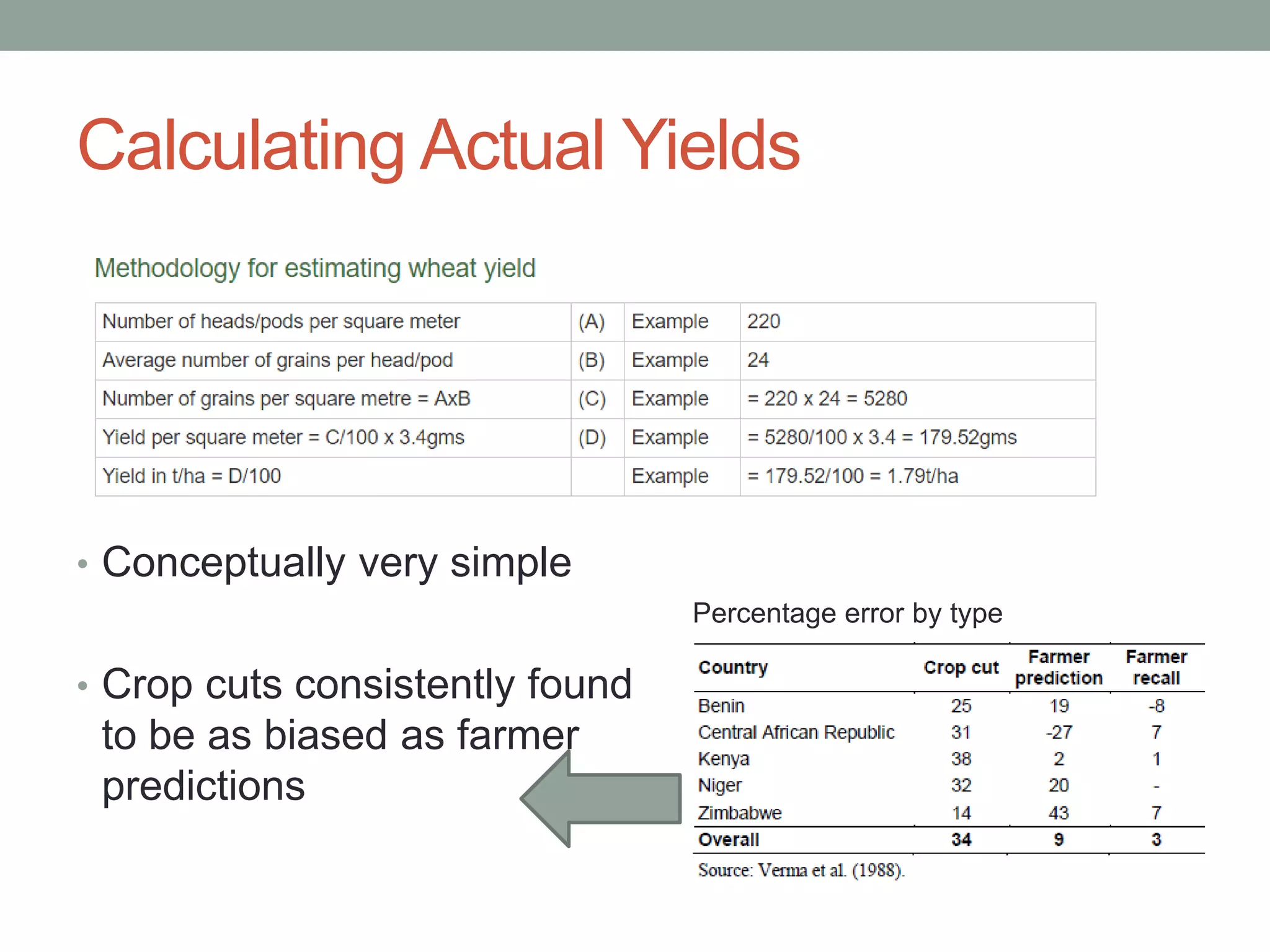
Calculating Actual Yields
• Conceptually very simple
• Crop cuts consistently found
to be as biased as farmer
predictions
Percentage error by type
Satellite Platforms
New moderate to high
resolution satellite data
are available:
• New microsatellites 3-5m
resolution
• New 30m resolution
satellites
• Collect wide range of
properties
• Visible light
• Infrared
• Thermal
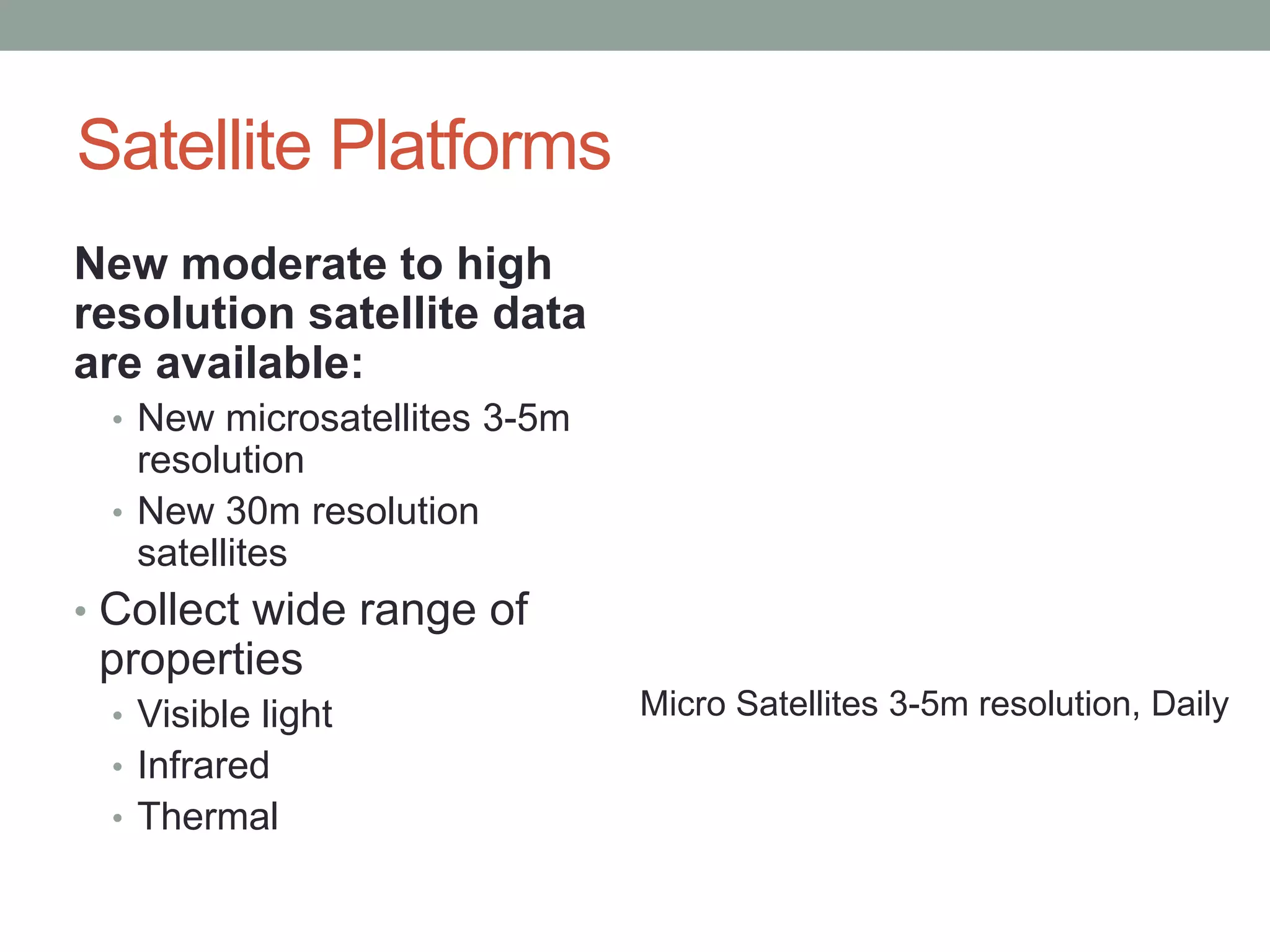
Micro Satellites 3-5m resolution, Daily
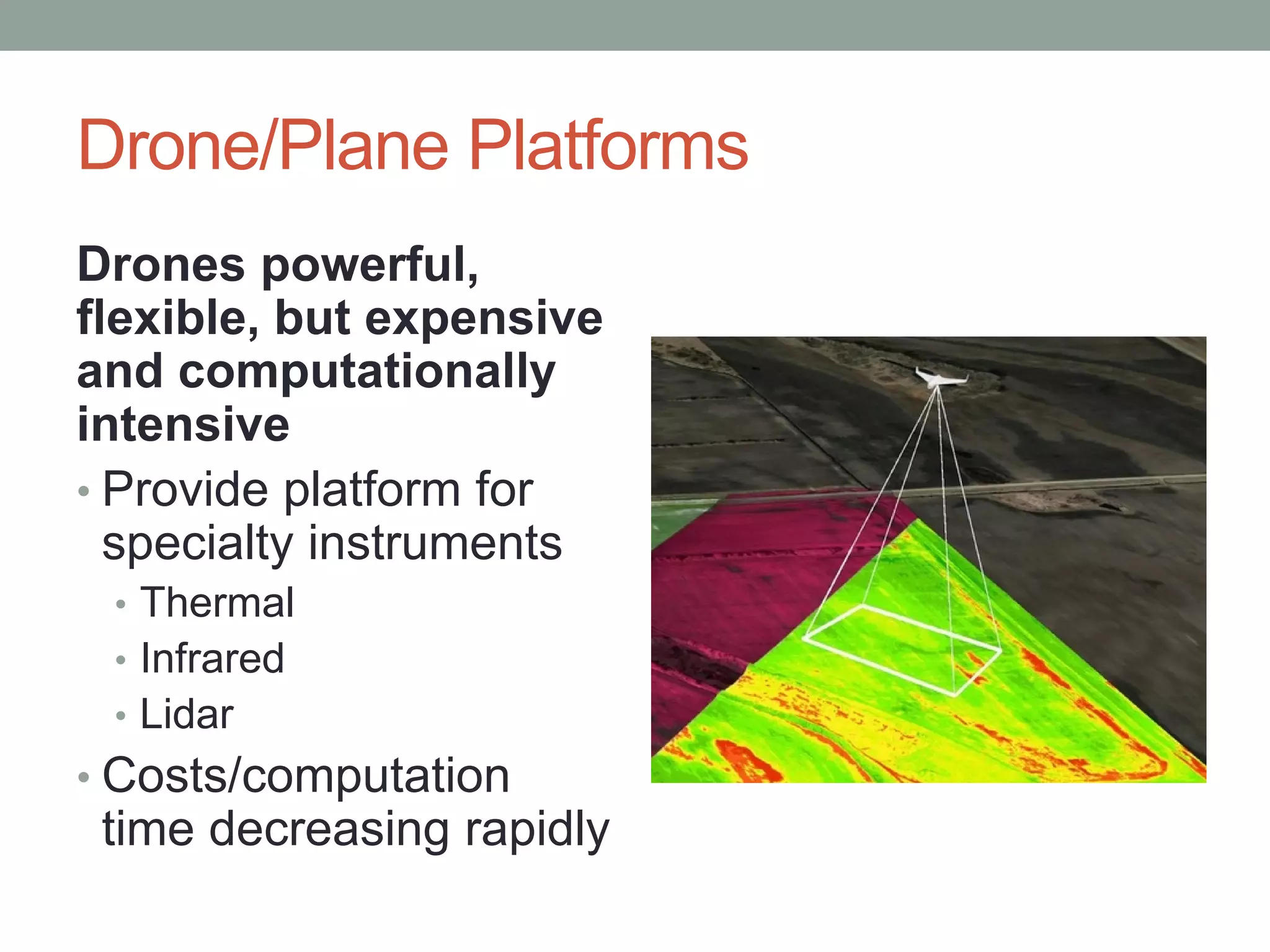
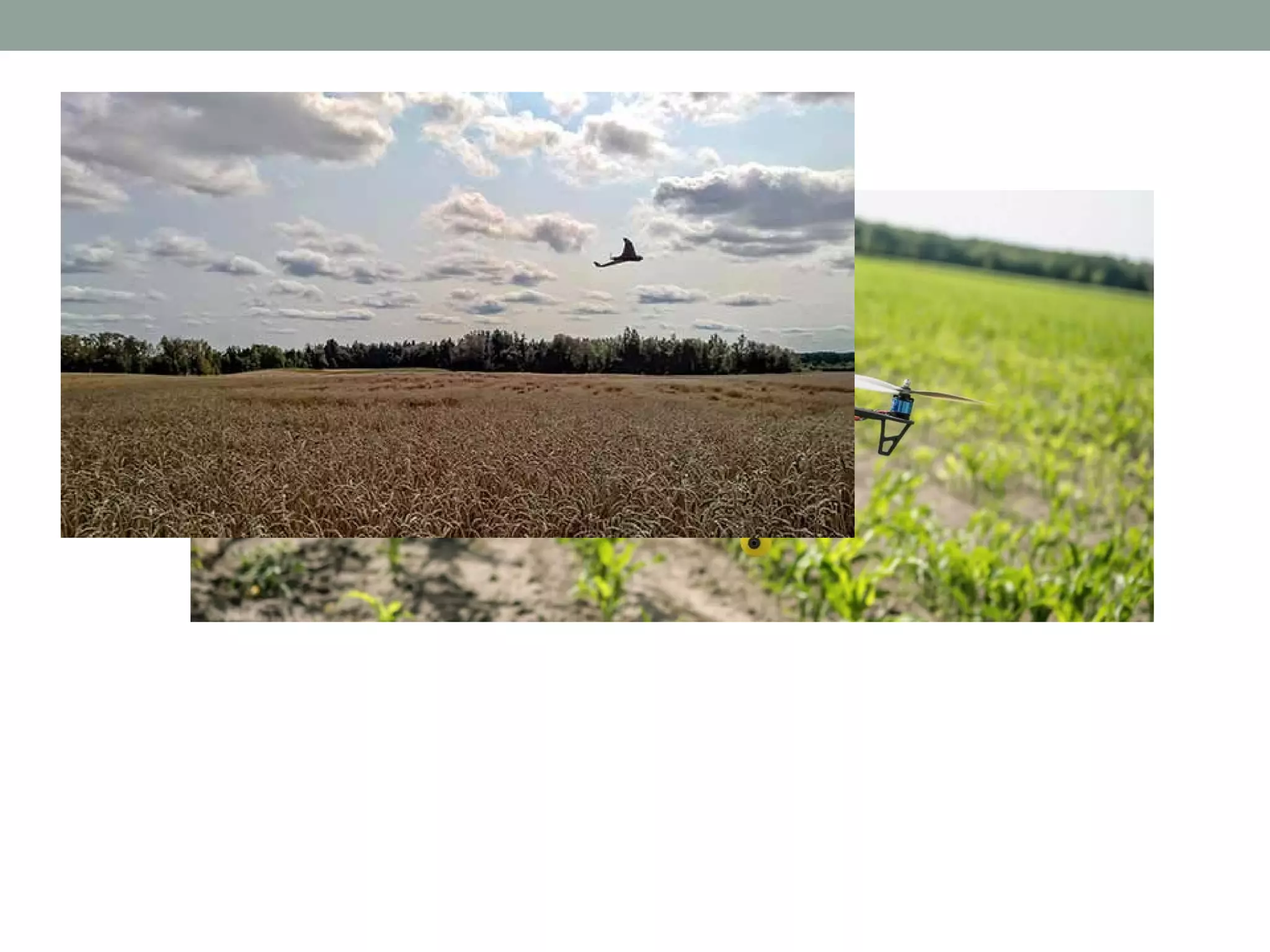
Drone/Plane Platforms
Drones powerful,
flexible, but expensive
and computationally
intensive
• Provide platform for
specialty instruments
• Thermal
• Infrared
• Lidar
• Costs/computation
time decreasing rapidly
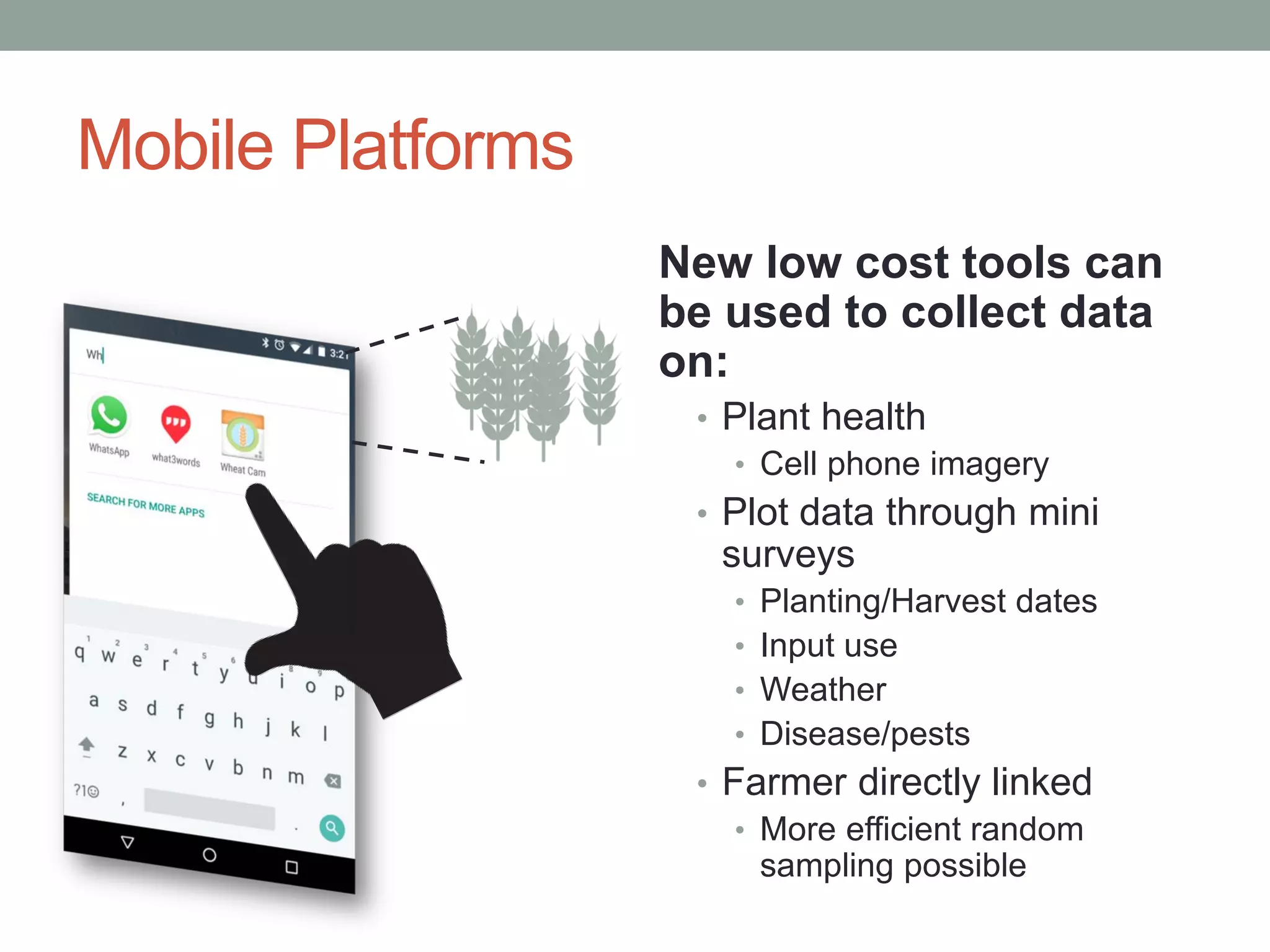
Mobile Platforms
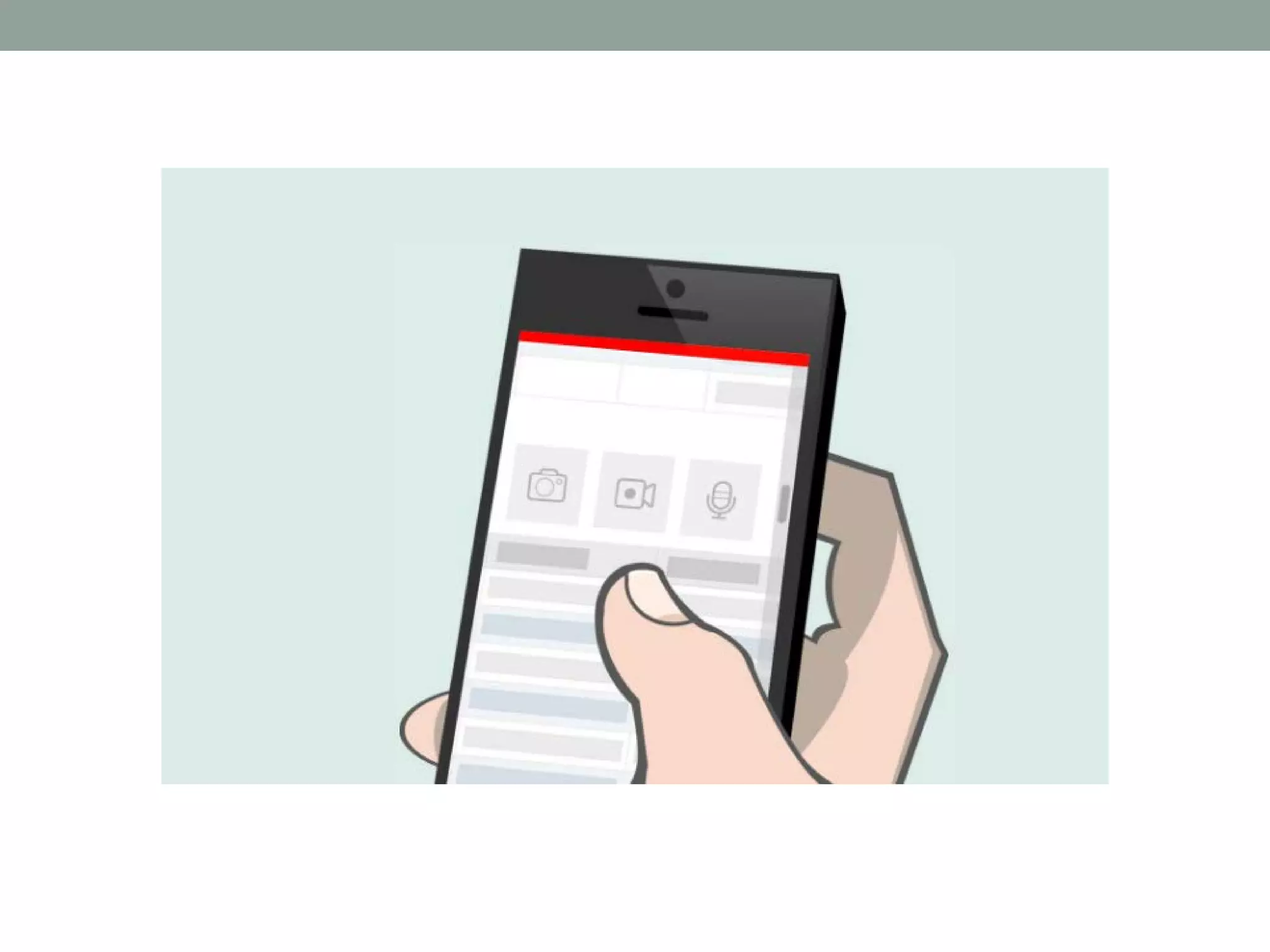
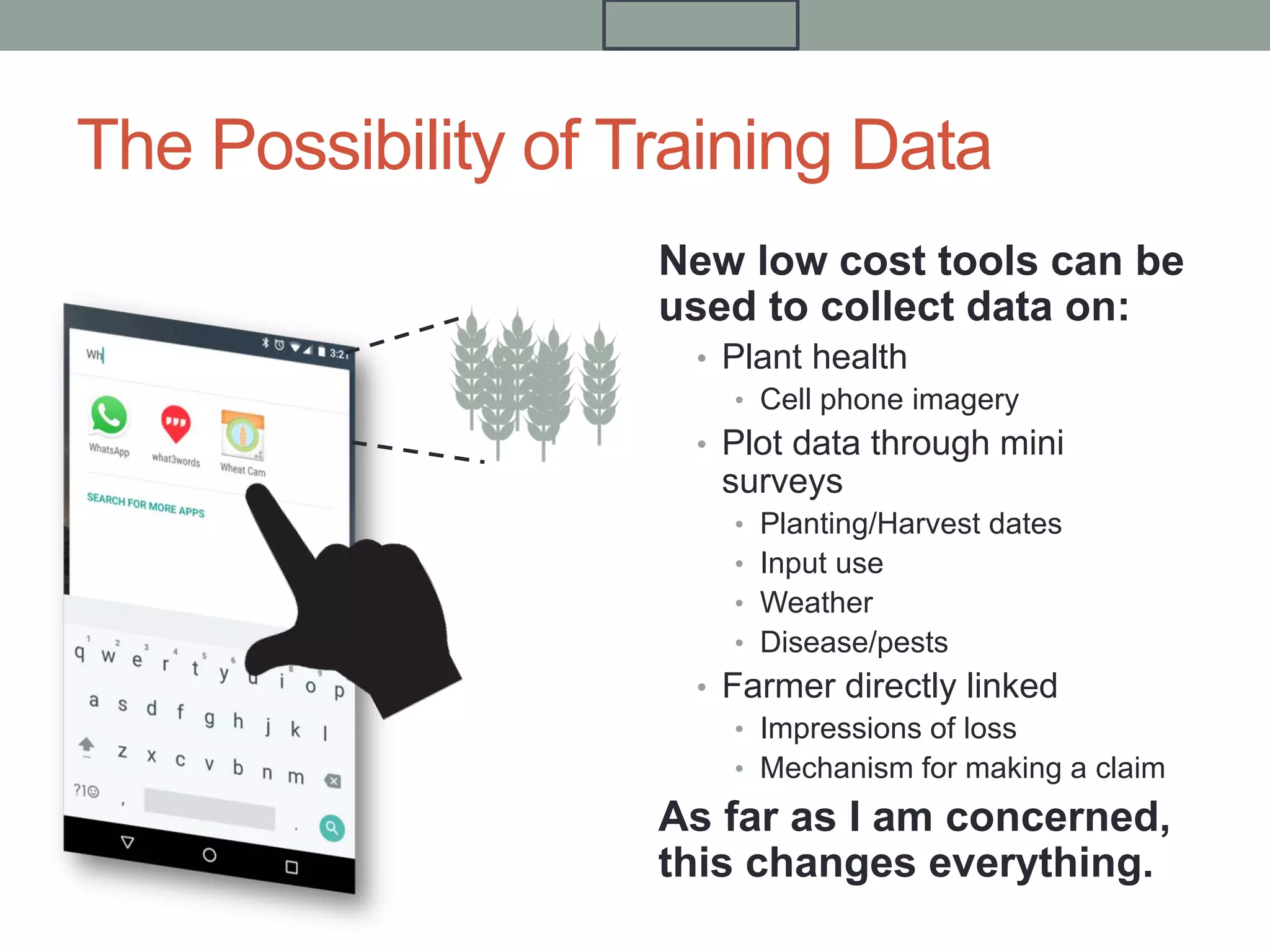
New low cost tools can
be used to collect data
on:
• Plant health
• Cell phone imagery
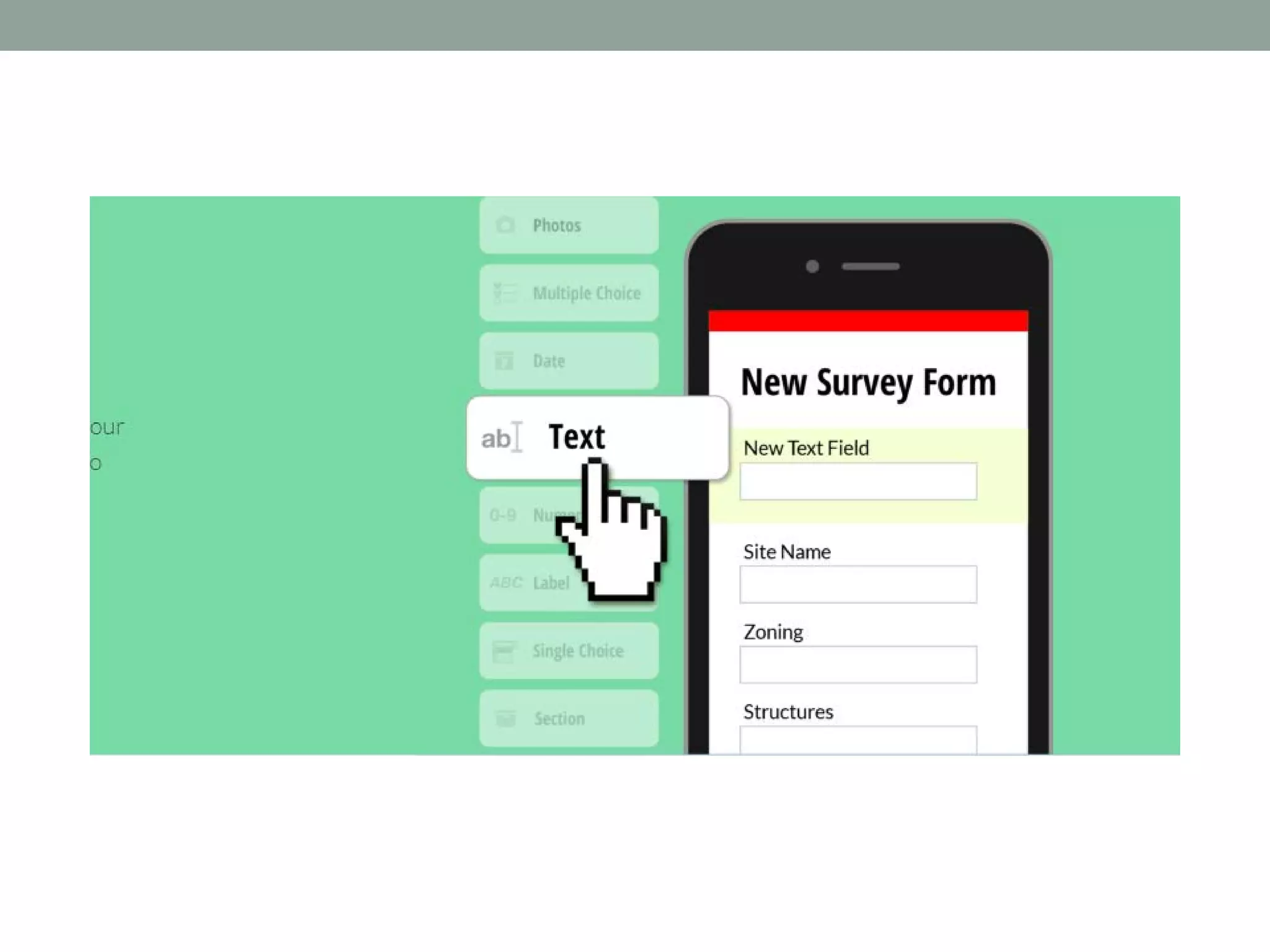
• Plot data through mini
surveys
• Planting/Harvest dates
• Input use
• Weather
• Disease/pests
• Farmer directly linked
• More efficient random
sampling possible
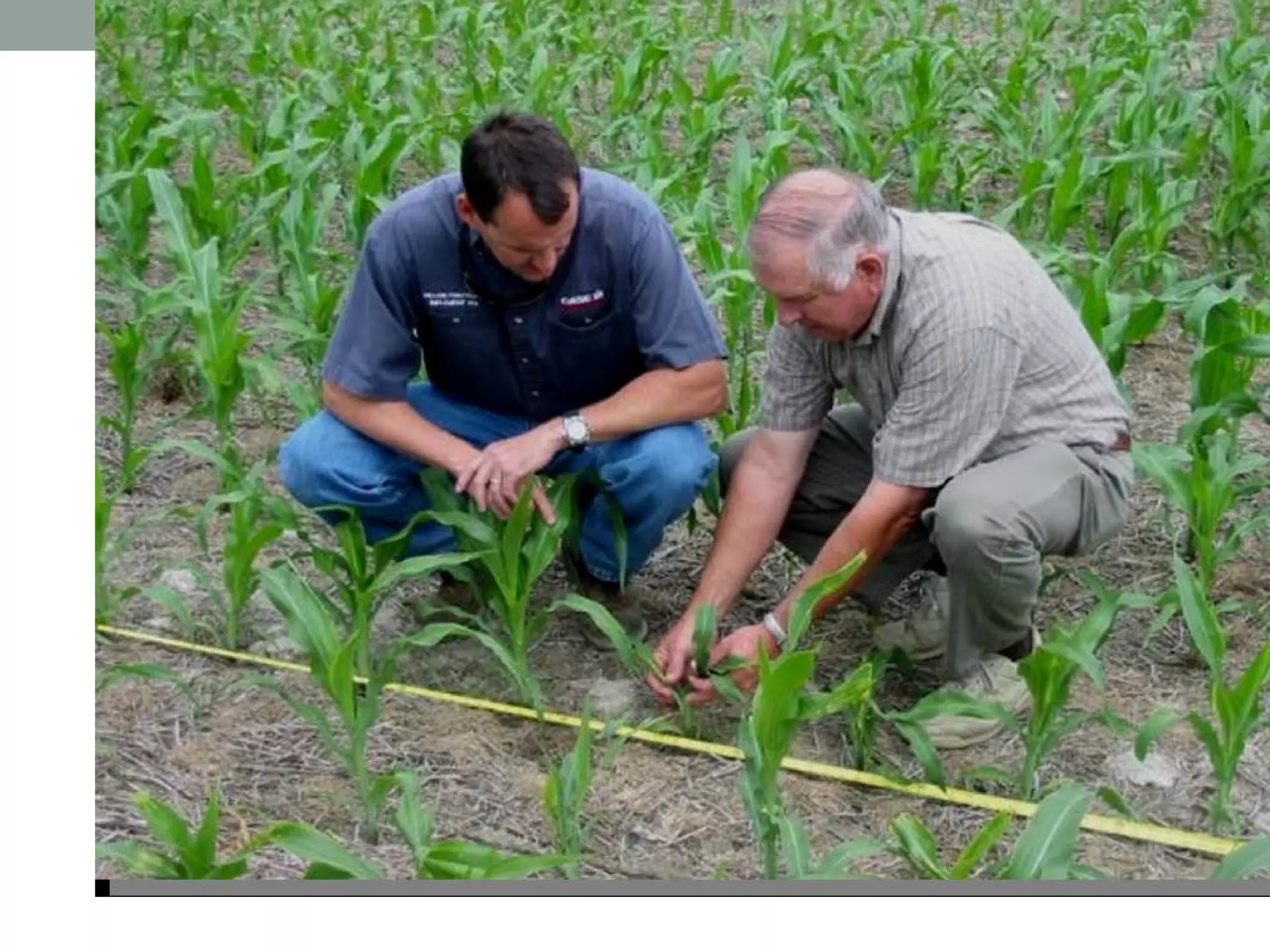
Sources of Crop Cut Bias
There are a variety of sources of bias introduced into crop
cuts by enumerators
Measurement problems
1. Inappropriate use of tools (scales, poor records etc)
2. Failure to account for disease that make unharvestable
3. Non-random or biased location of test plots
• Enumerators avoid low-yield areas
4. Failure to account for ripening or harvest over time
5. Lack of accountability for enumerators
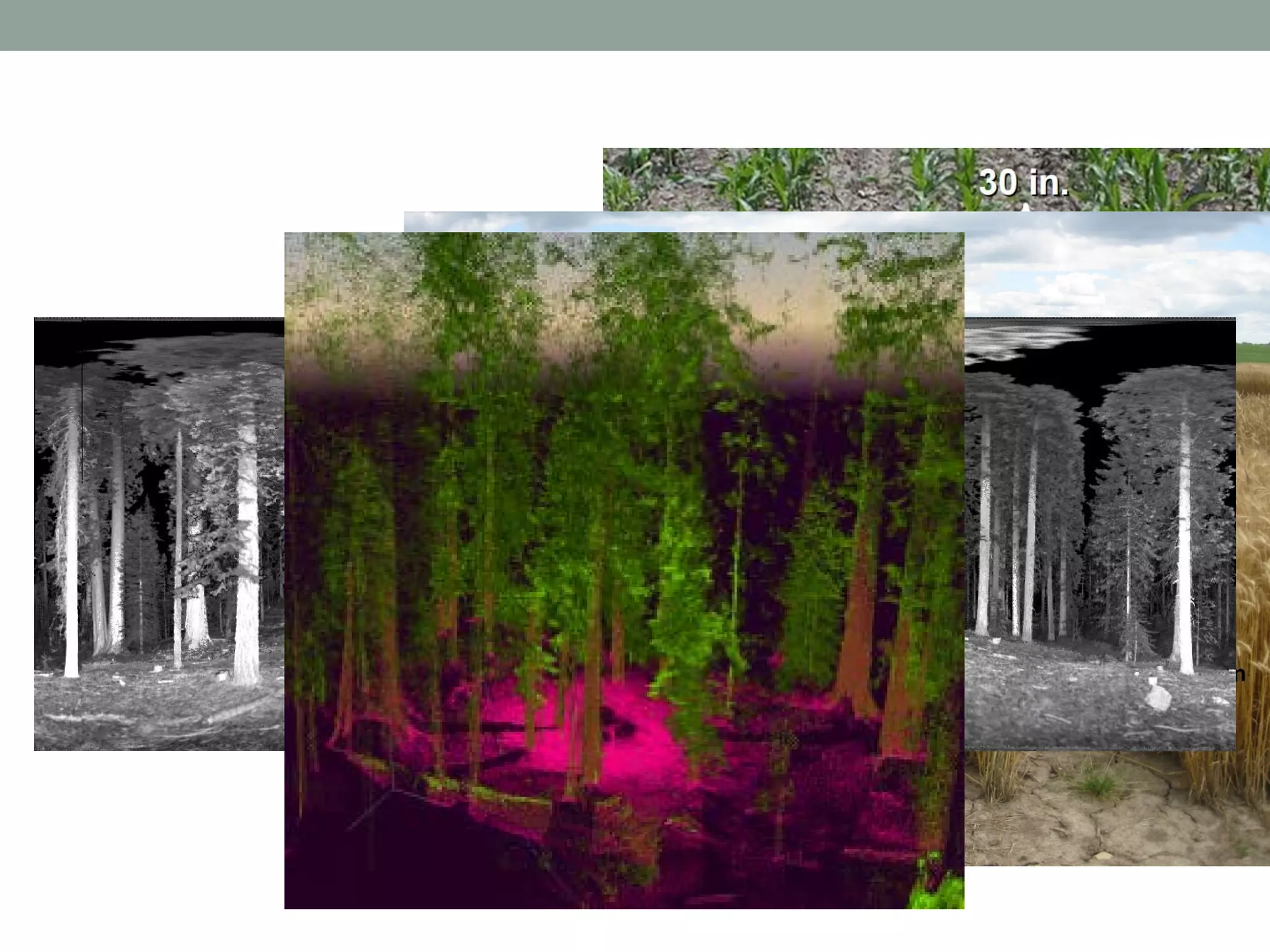
Problem: Measurement Error
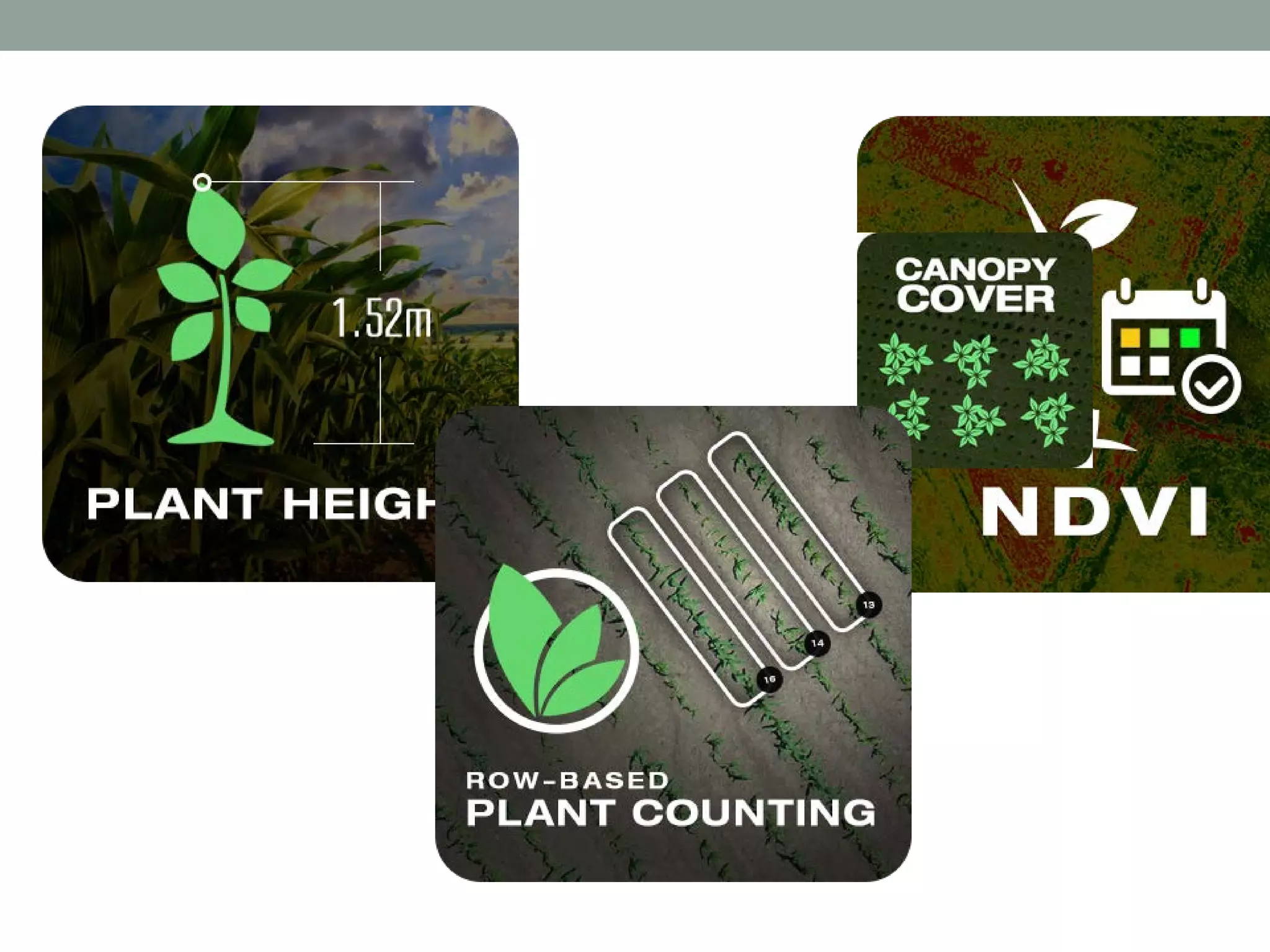
Plant Characteristics
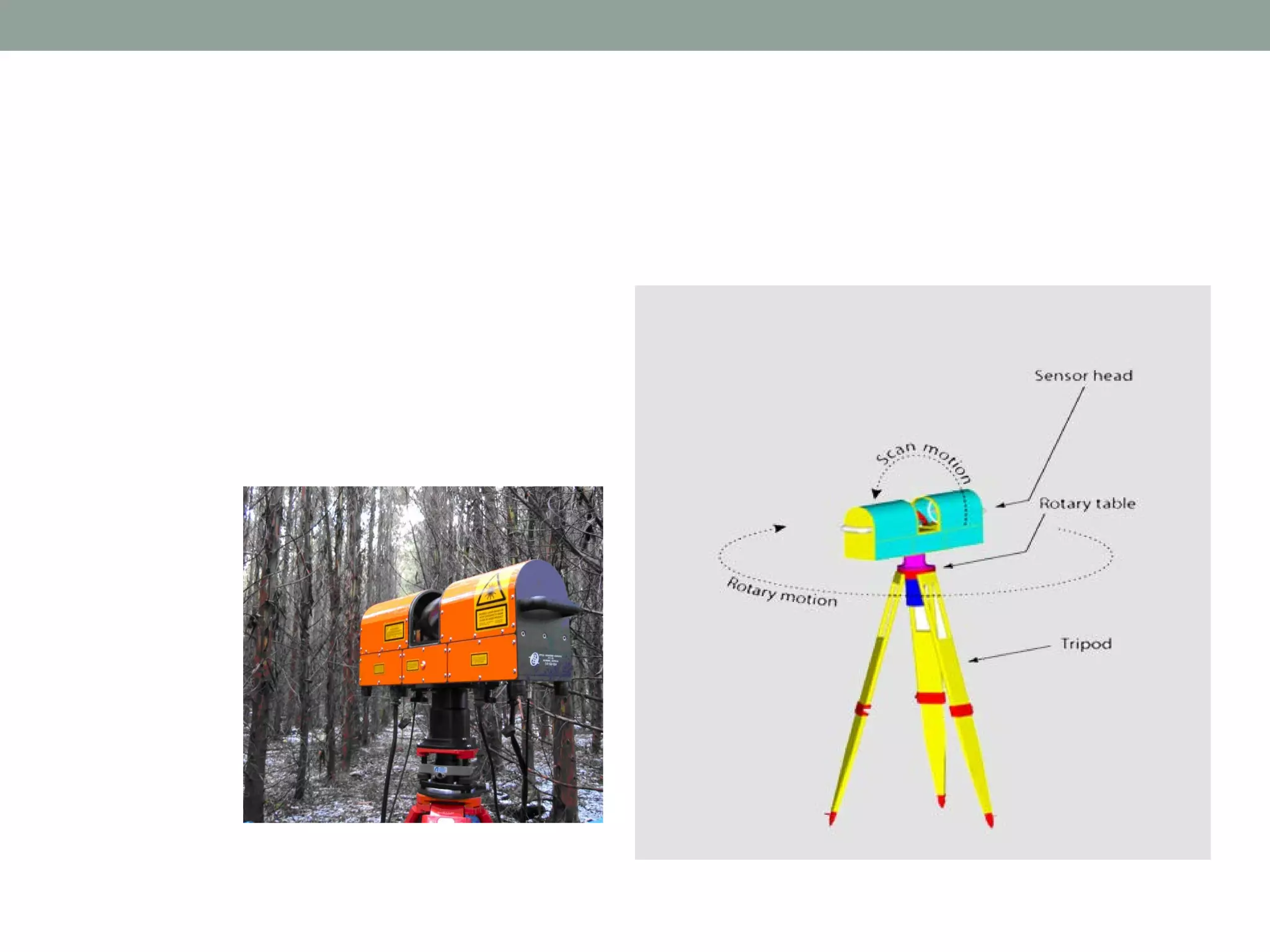
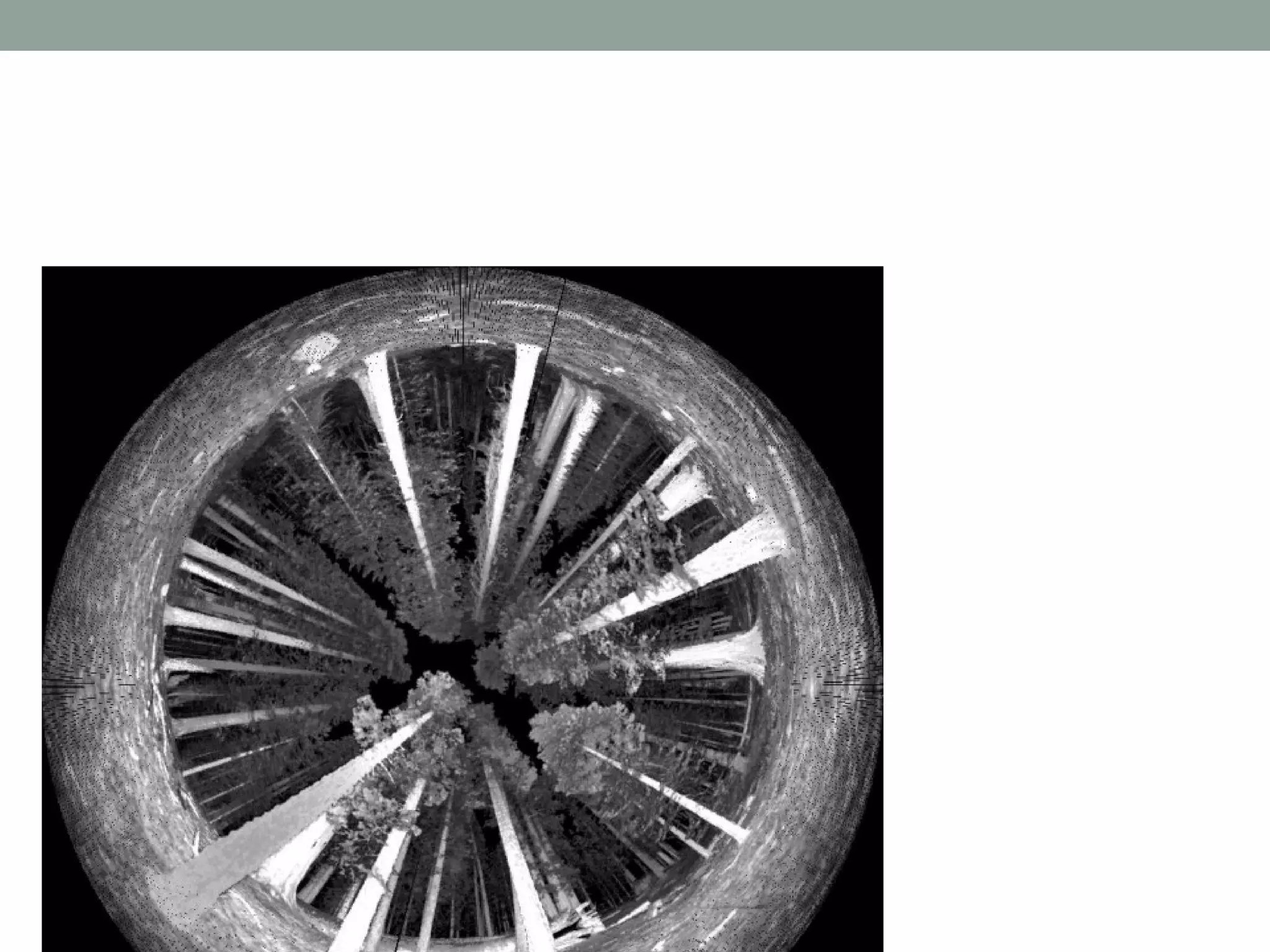
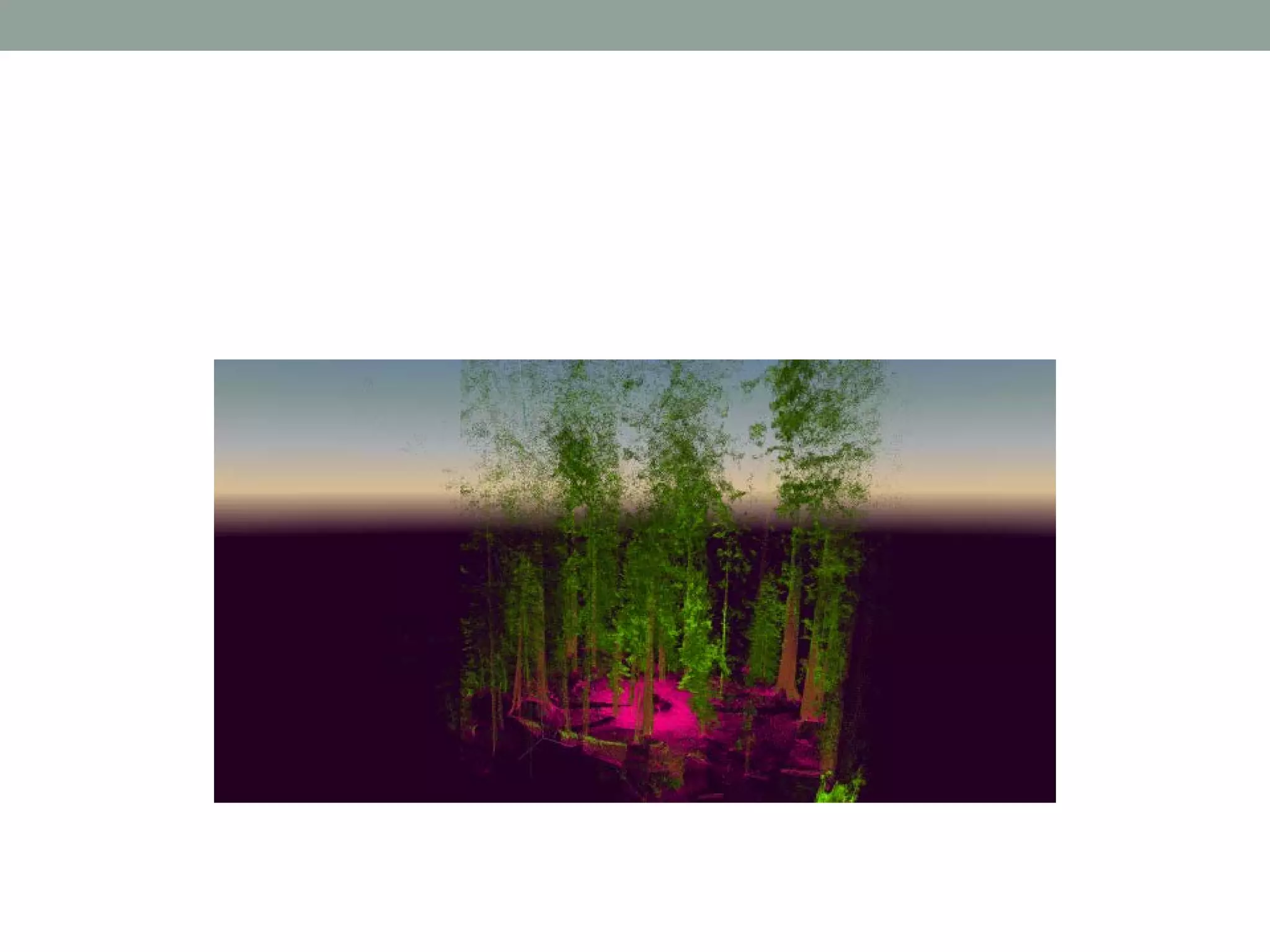
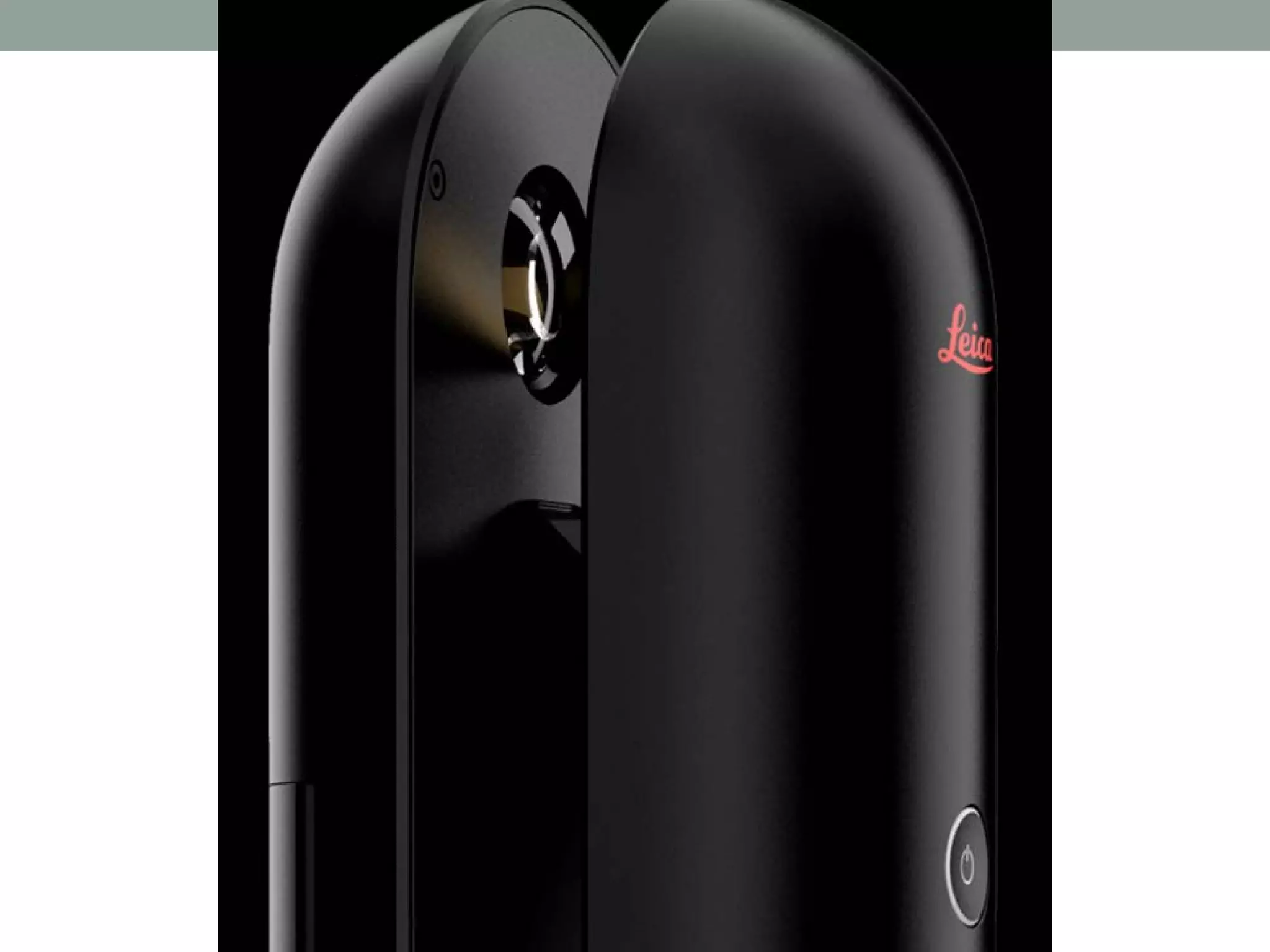
New (and cheap) ground
based LIDAR can quickly
estimate:
• Row spacing
• Plant density
• Plant height / biomass
• Lodging
• Sowing method
Importantly measurements
could be taken rapidly in
multiple locations in field
Ground based LIDAR examples:
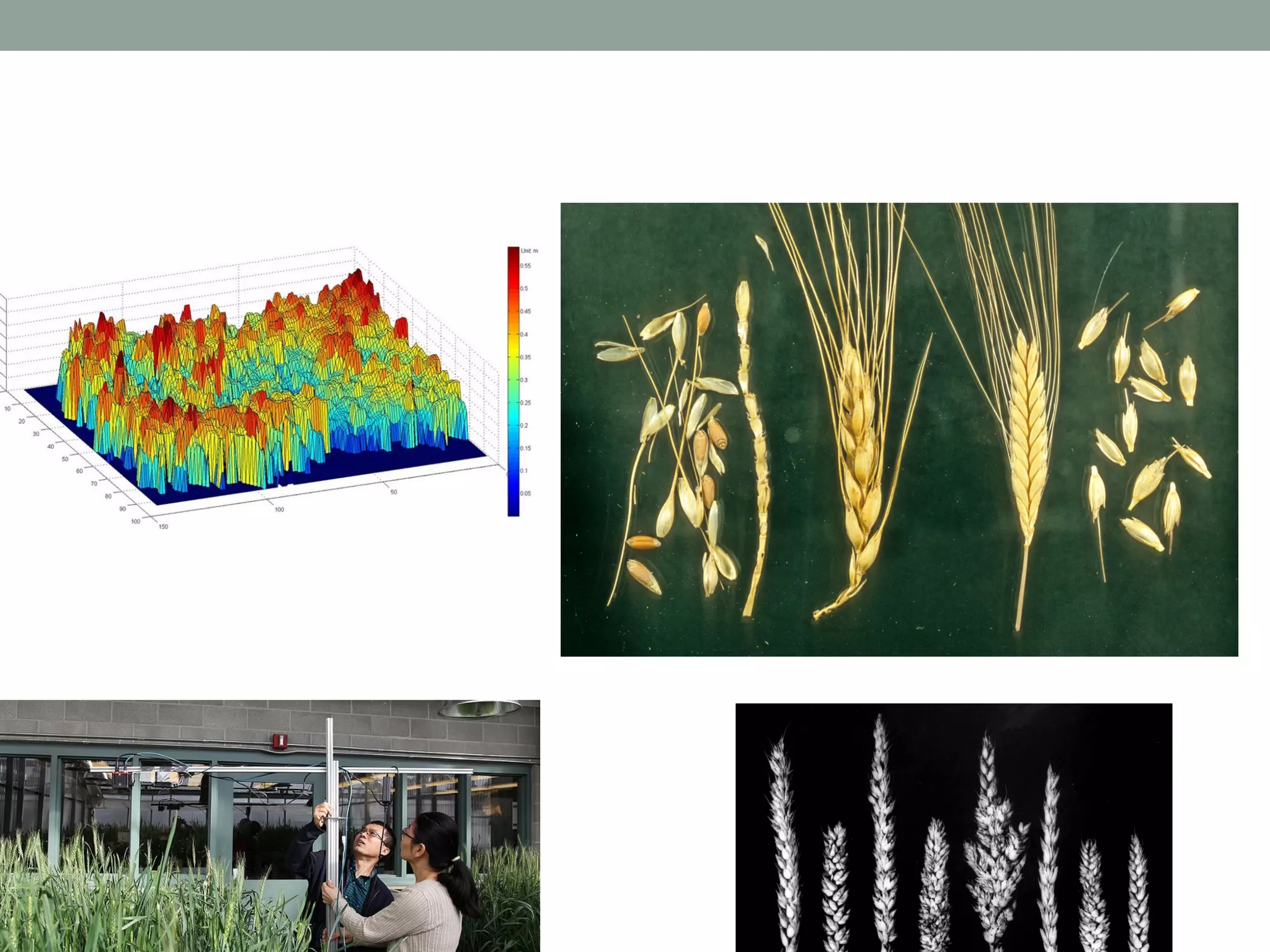
Problem: Measurement Error
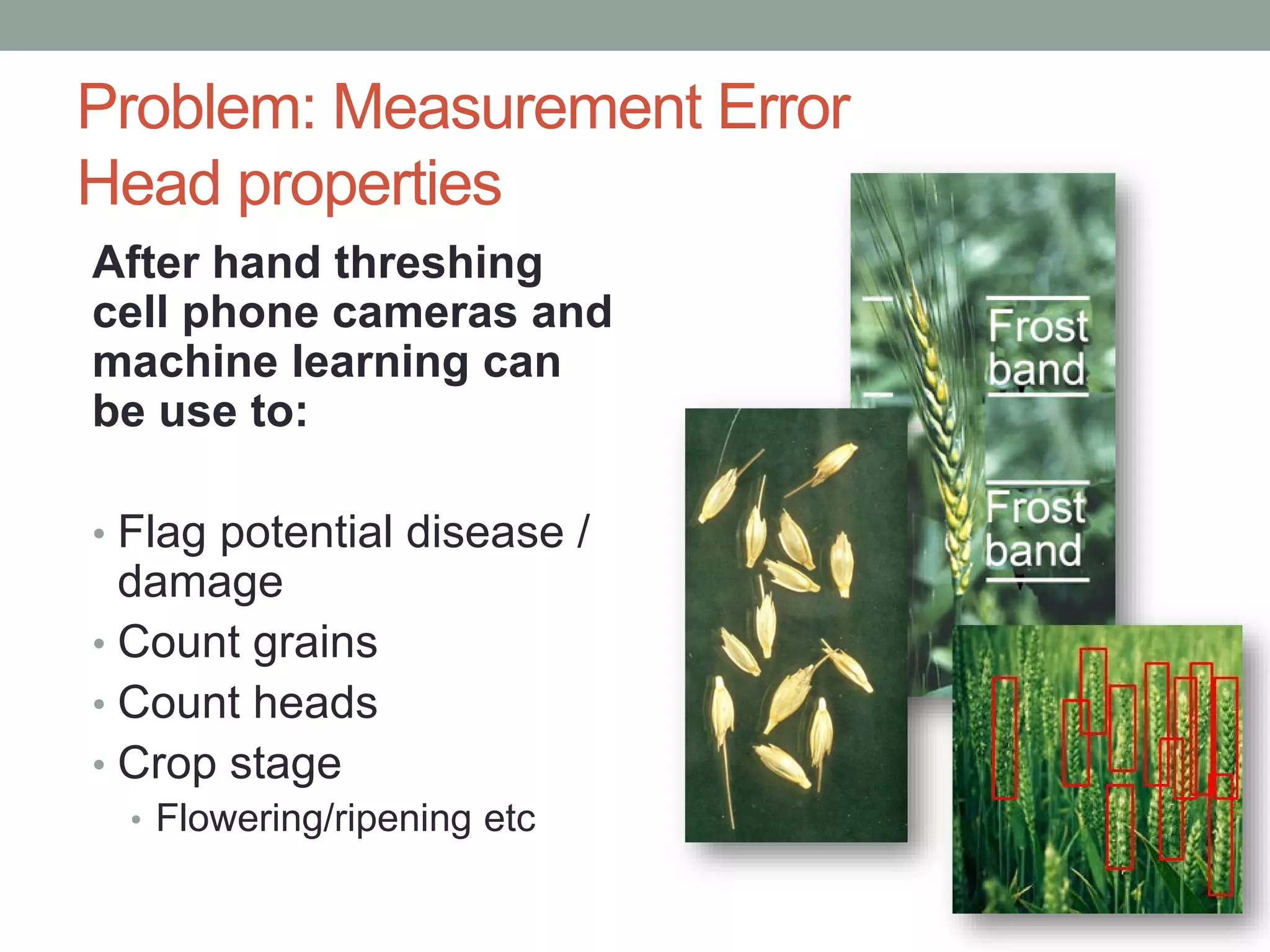
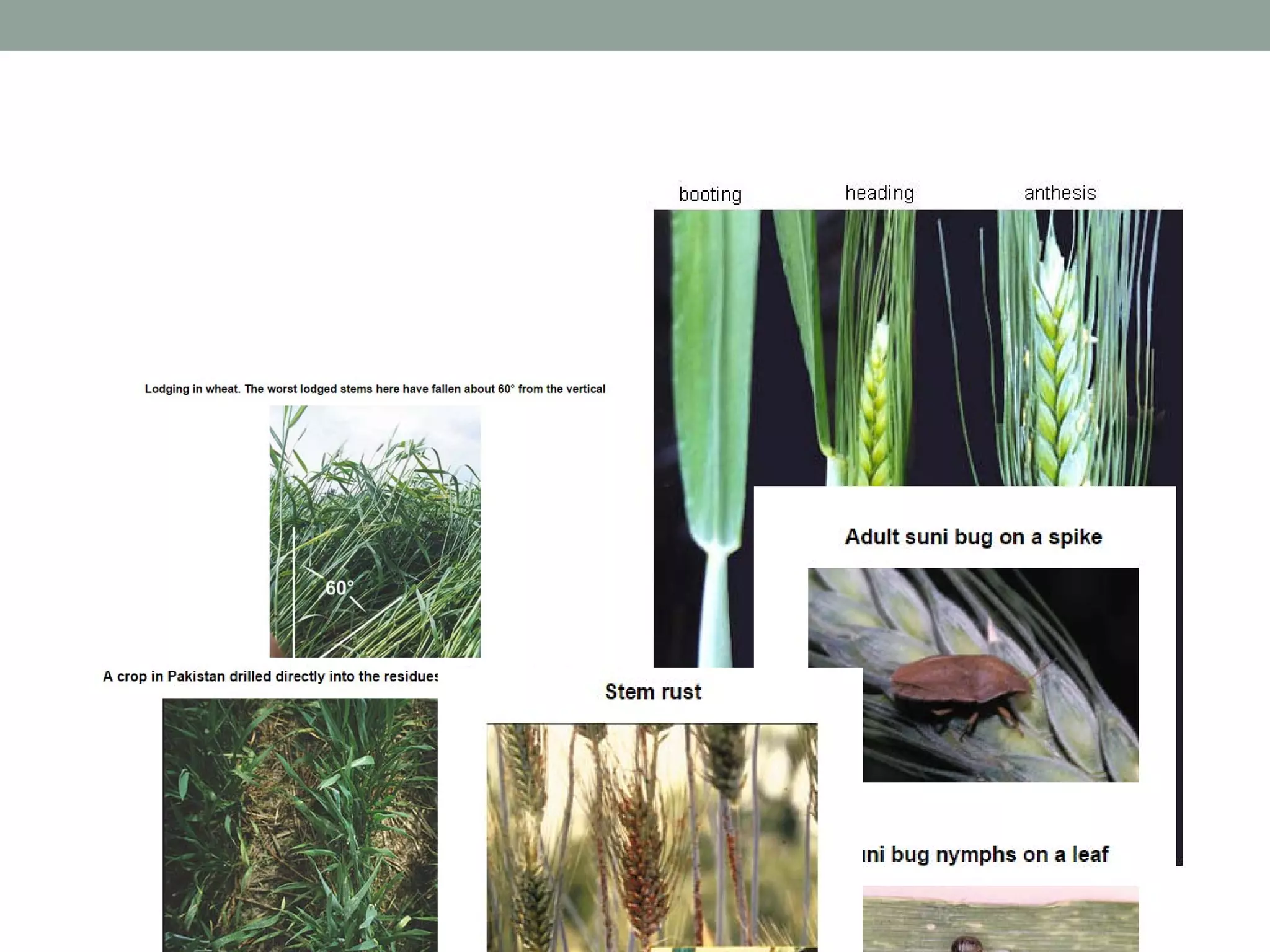
Head properties
After hand threshing
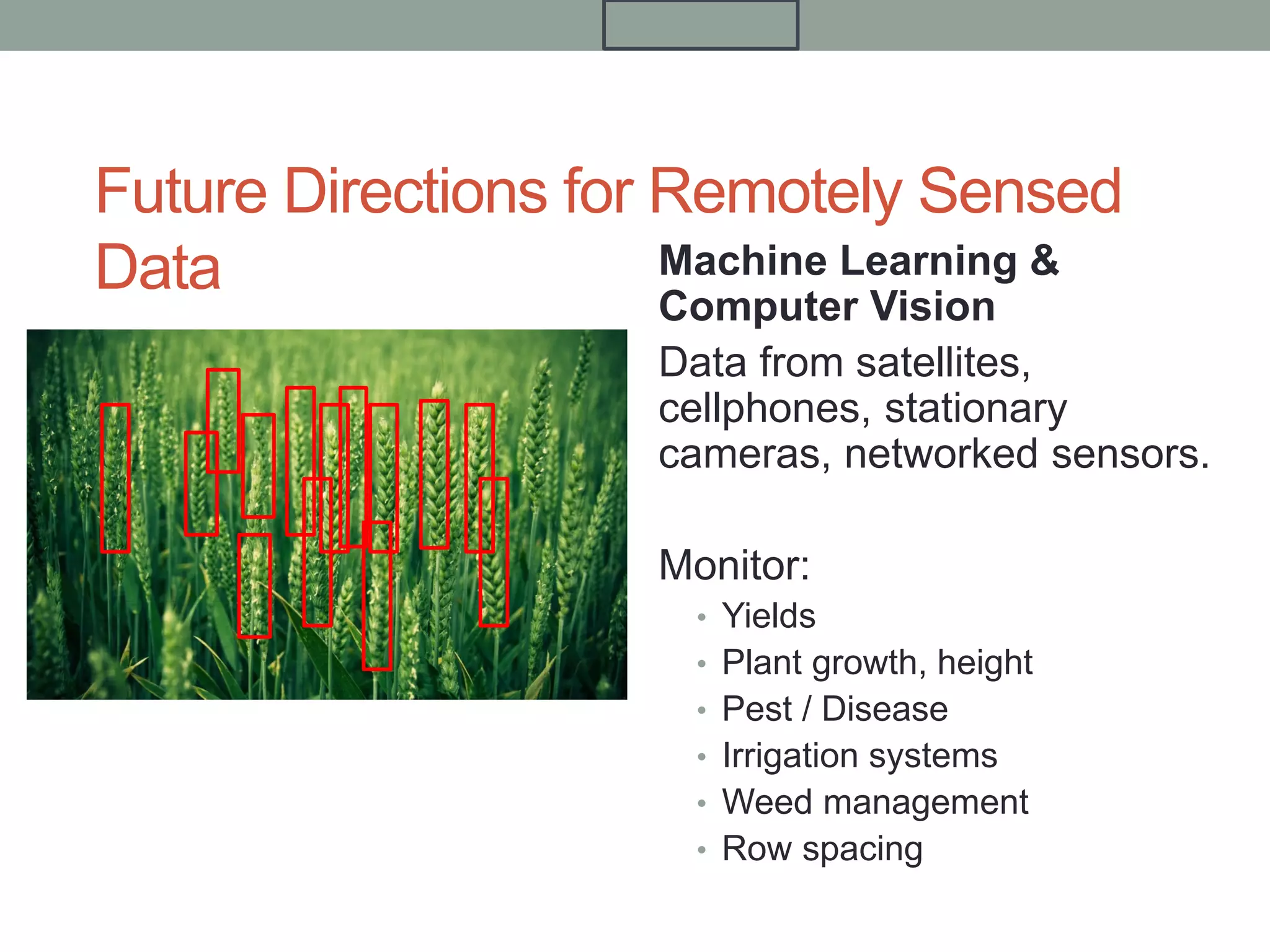
cell phone cameras and
machine learning can
be use to:
• Flag potential disease /
damage
• Count grains
• Count heads
• Crop stage
• Flowering/ripening etc
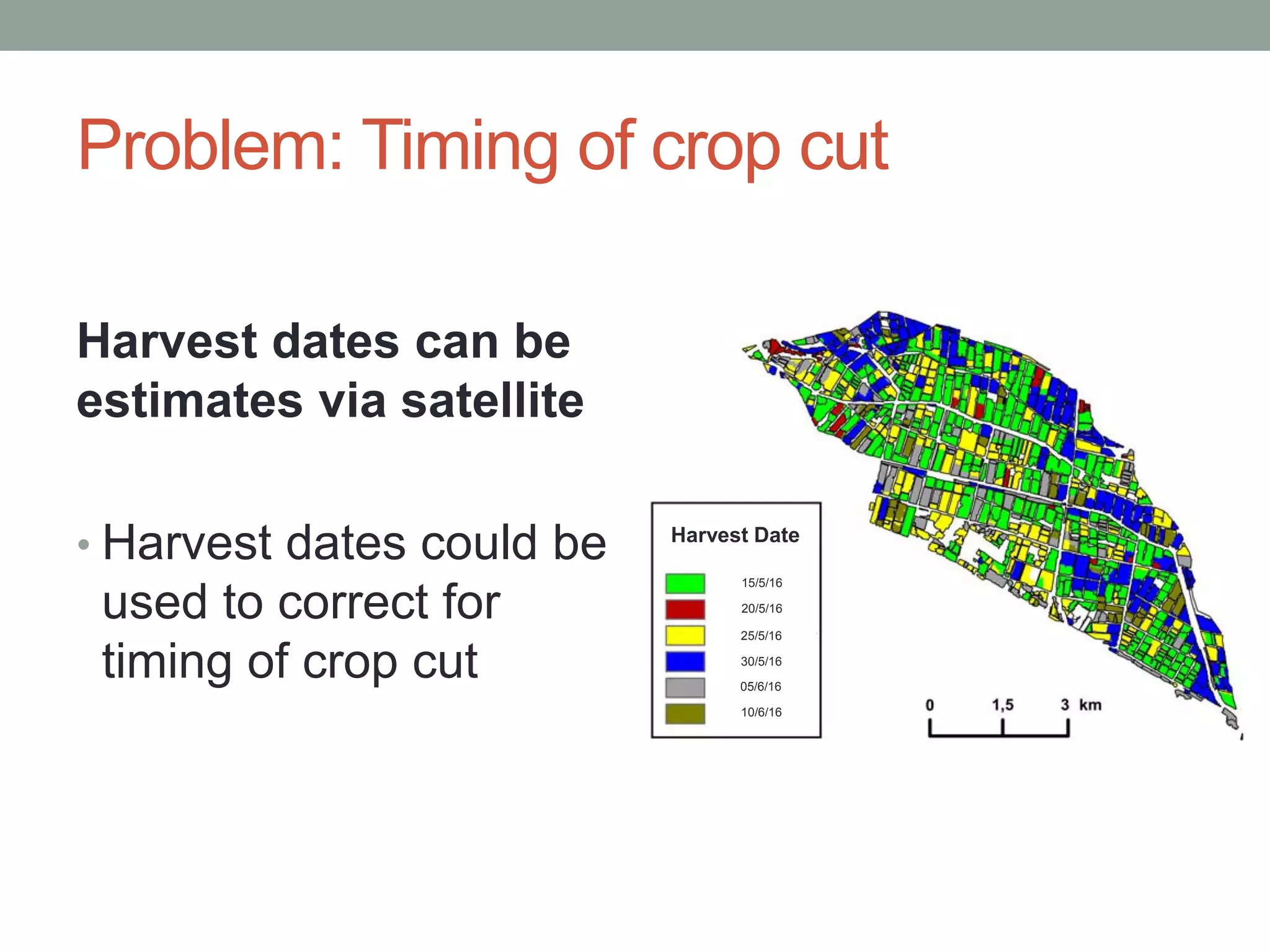
Problem: Timing of crop cut
Harvest dates can be
estimates via satellite
• Harvest dates could be
used to correct for
timing of crop cut
Harvest Date
15/5/16
20/5/16
25/5/16
30/5/16
05/6/16
10/6/16
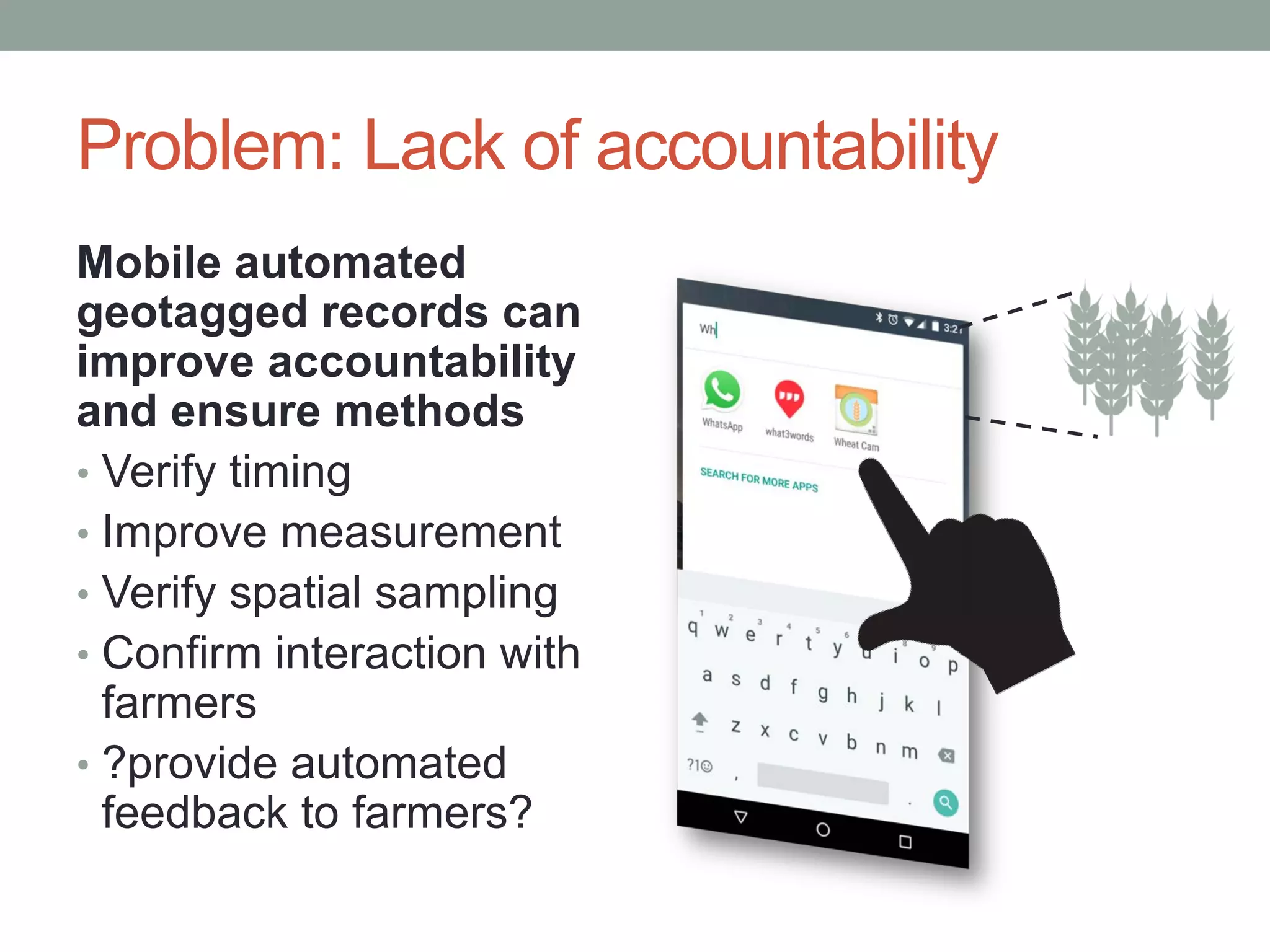
Problem: Lack of accountability
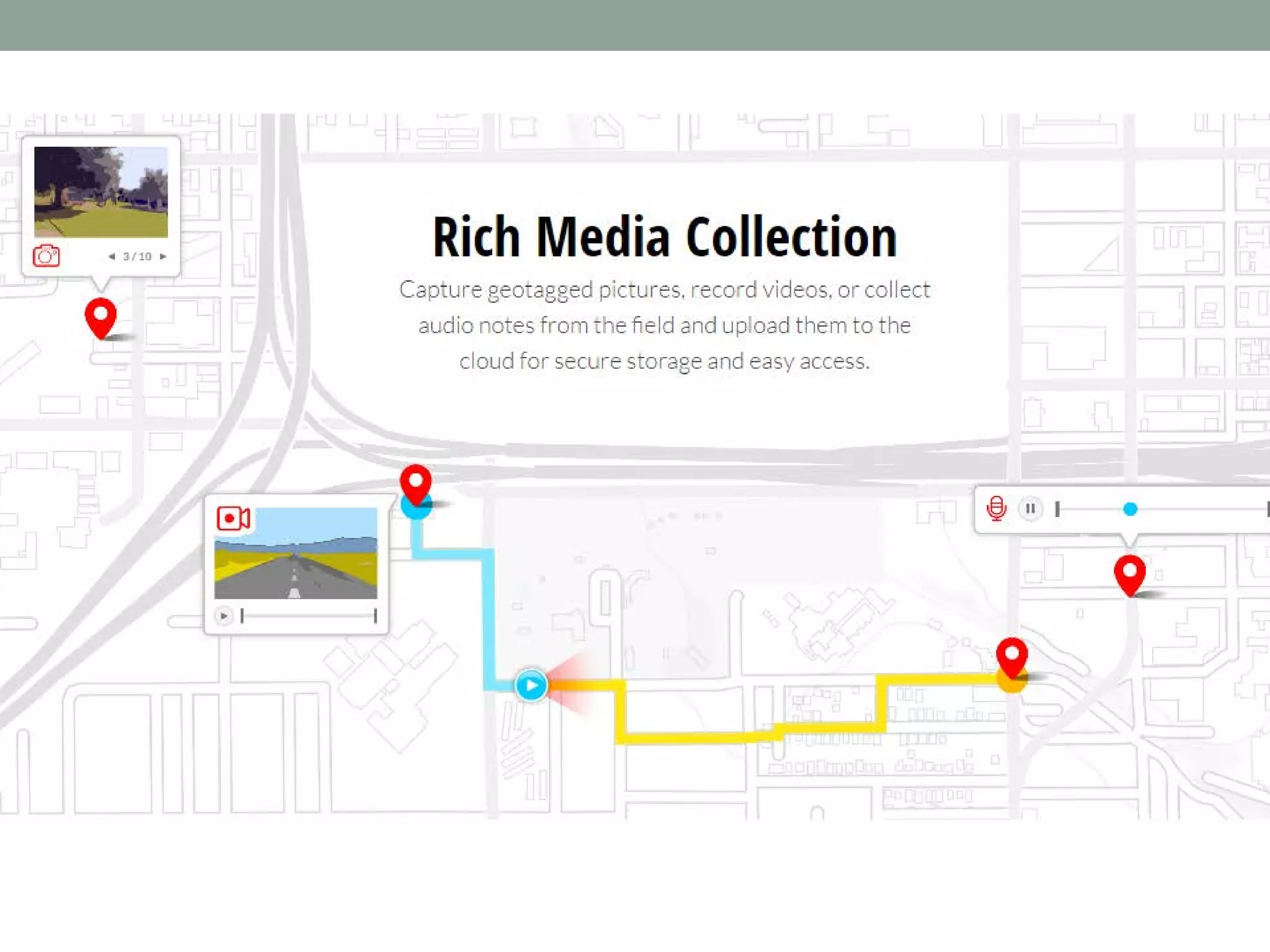
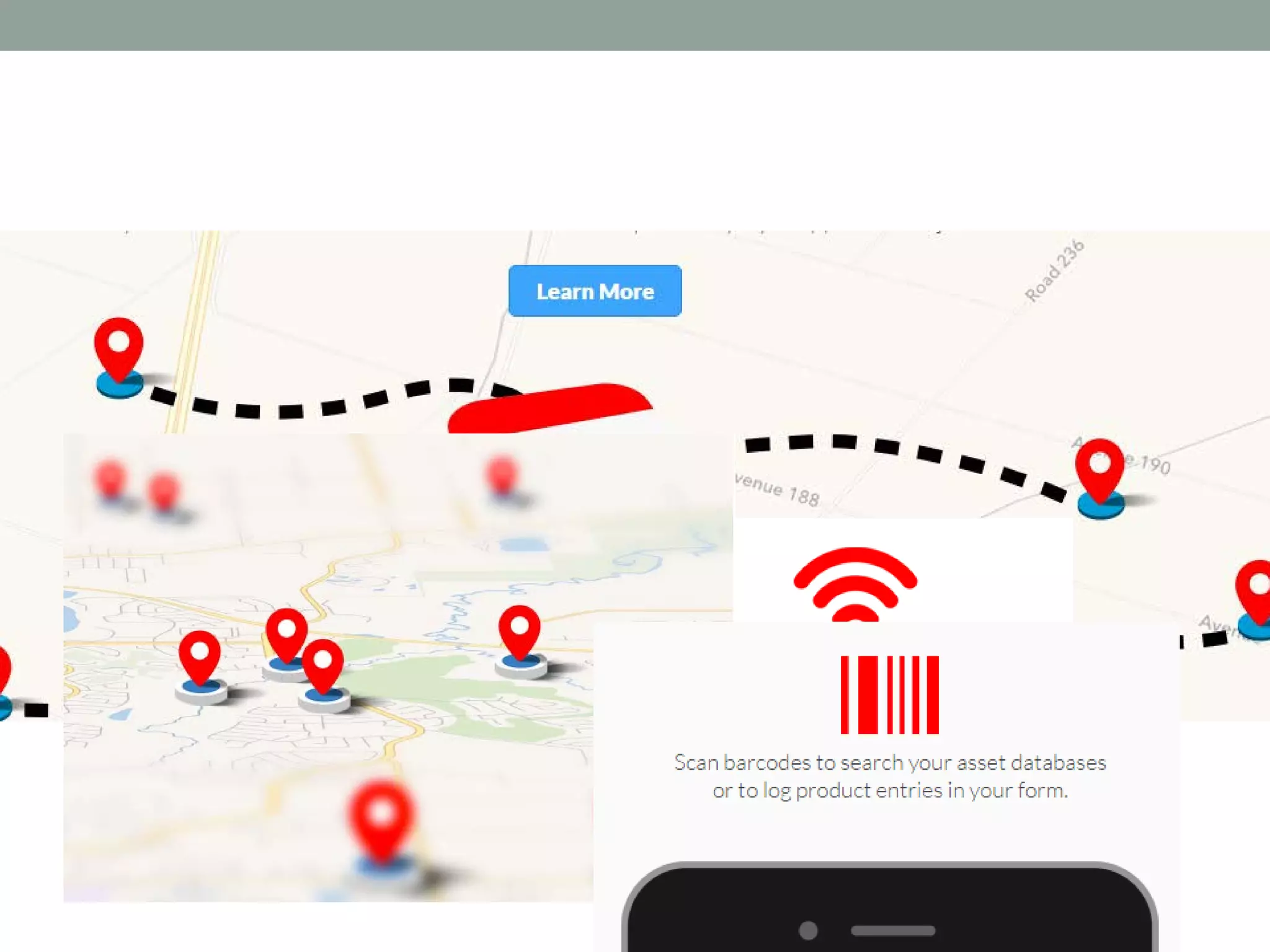
Mobile automated
geotagged records can
improve accountability
and ensure methods
• Verify timing
• Improve measurement
• Verify spatial sampling
• Confirm interaction with
farmers
• ?provide automated
feedback to farmers?
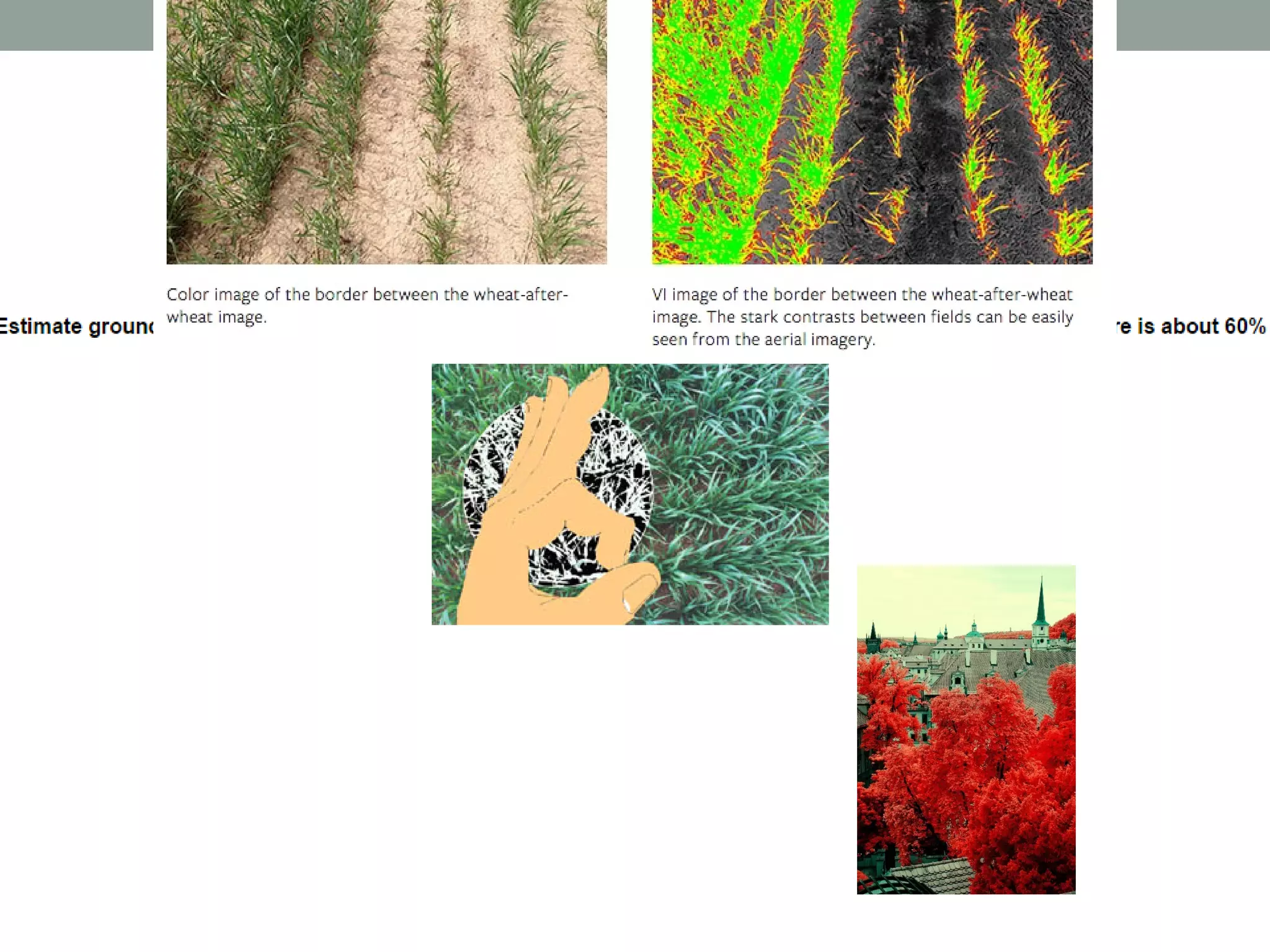
Vegetation Indices
NDVI and EVI
• “Greenness Indexes”
• Vegetation indices are
used to monitor
vegetation conditions,
land cover, land cover
changes, and primary
production. These data
may be used as input to
model global
biogeochemical and
hydrologic processes and
global and regional
climate.
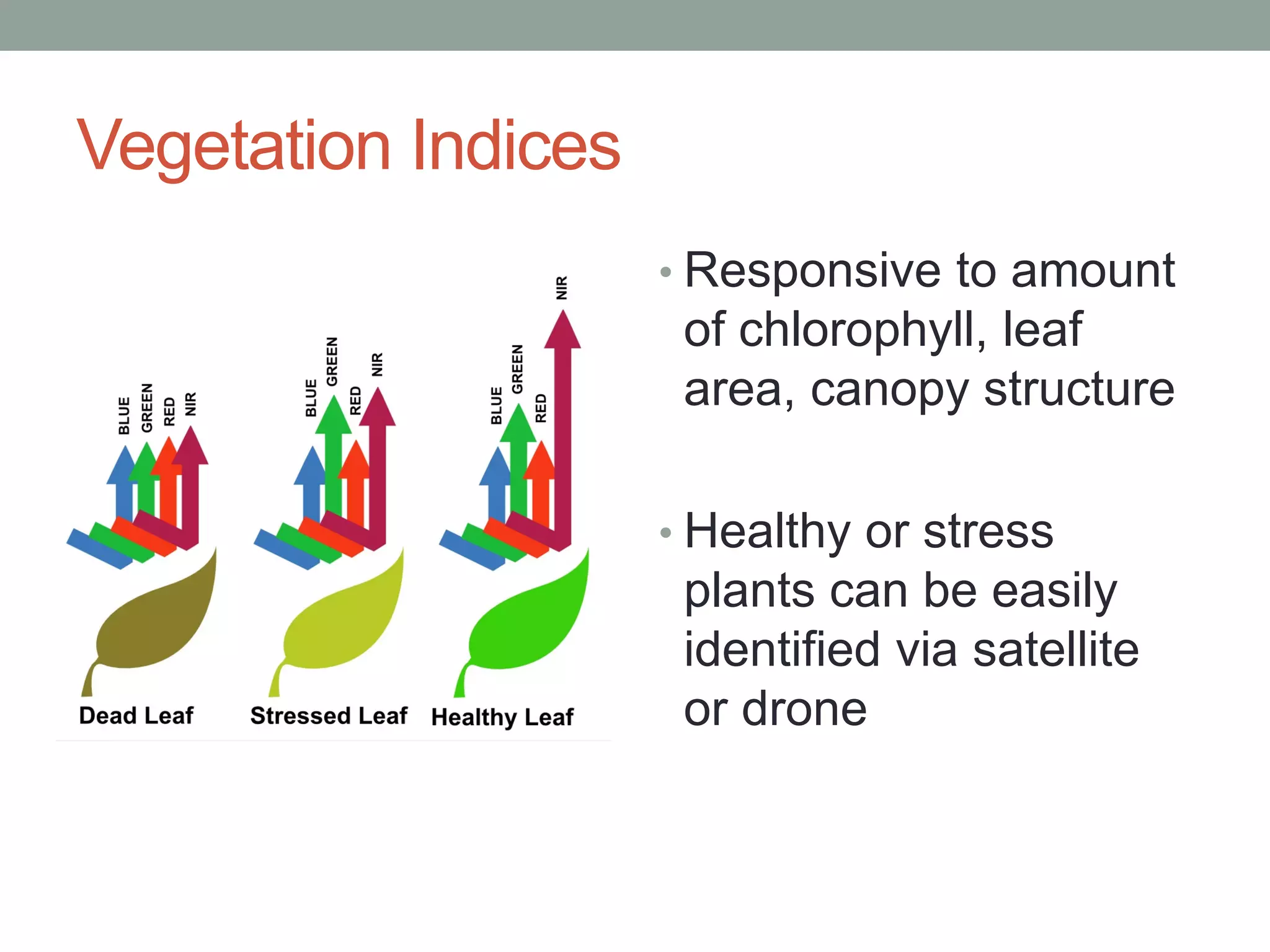
Vegetation Indices
• Responsive to amount
of chlorophyll, leaf
area, canopy structure
• Healthy or stress
plants can be easily
identified via satellite
or drone
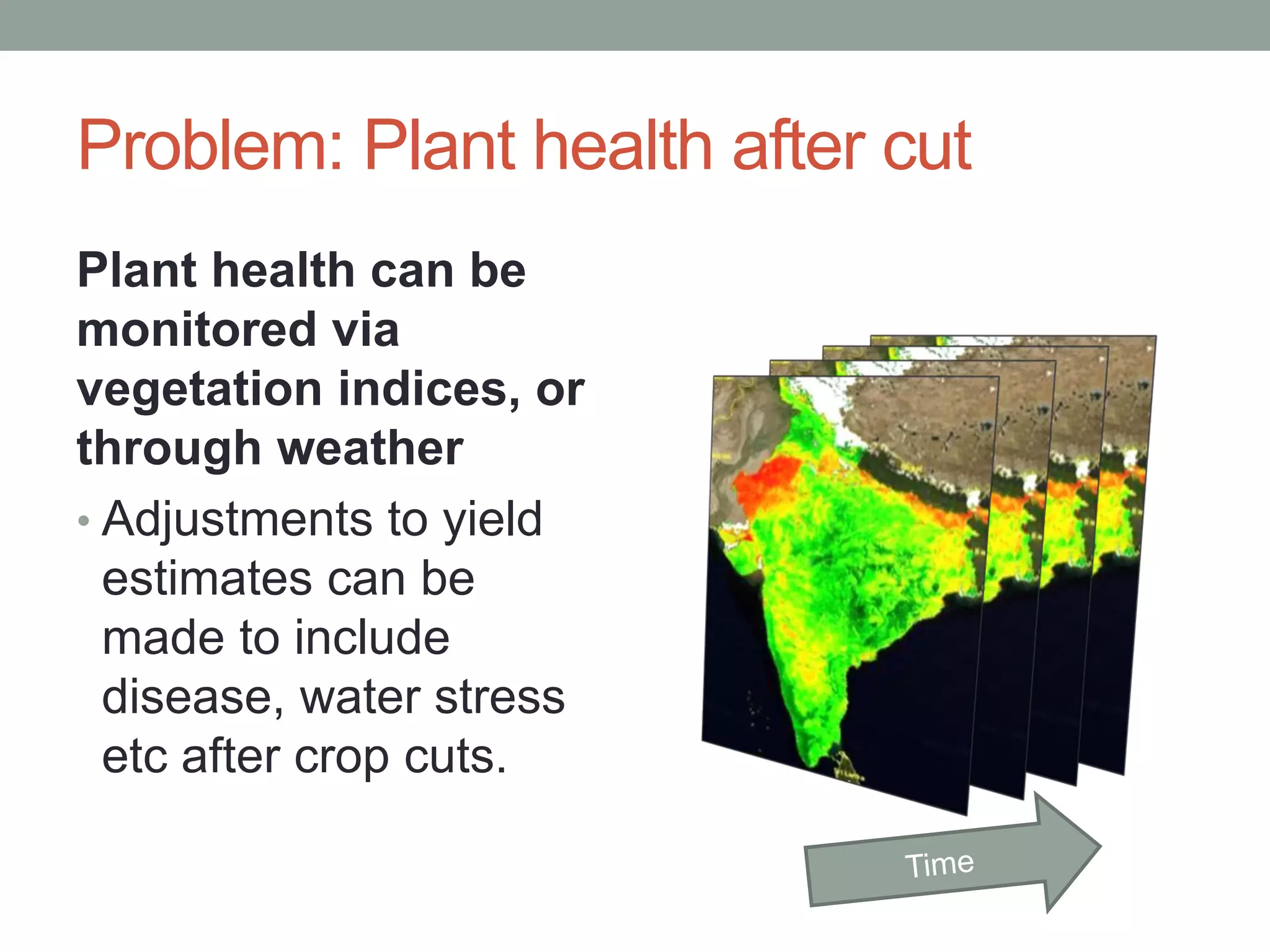
Problem: Plant health after cut
Plant health can be
monitored via
vegetation indices, or
through weather
• Adjustments to yield
estimates can be
made to include
disease, water stress
etc after crop cuts.
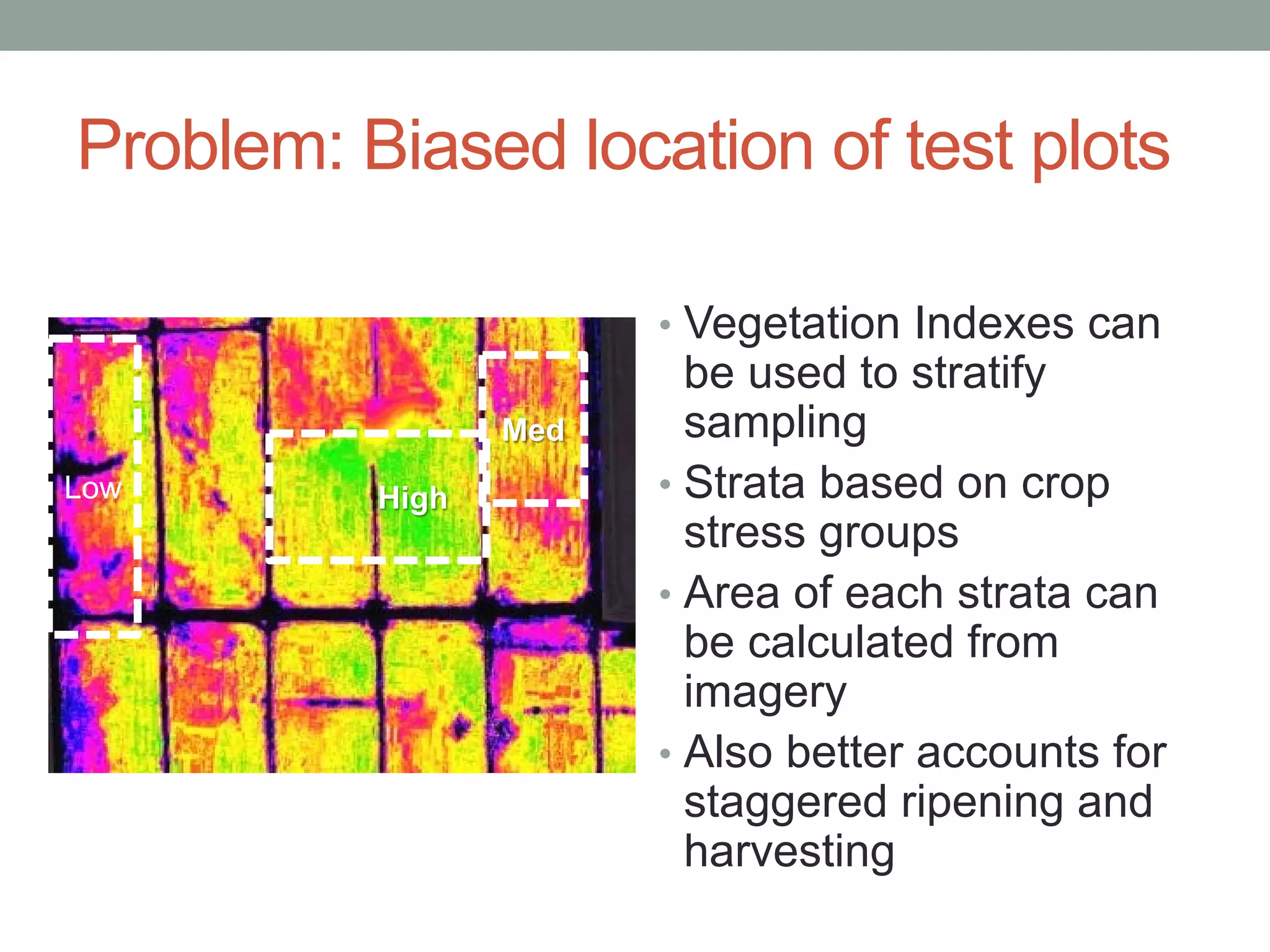
Problem: Biased location of test plots
• Vegetation Indexes can
be used to stratify
sampling
• Strata based on crop
stress groups
• Area of each strata can
be calculated from
imagery
• Also better accounts for
staggered ripening and
harvesting
Low High
Med
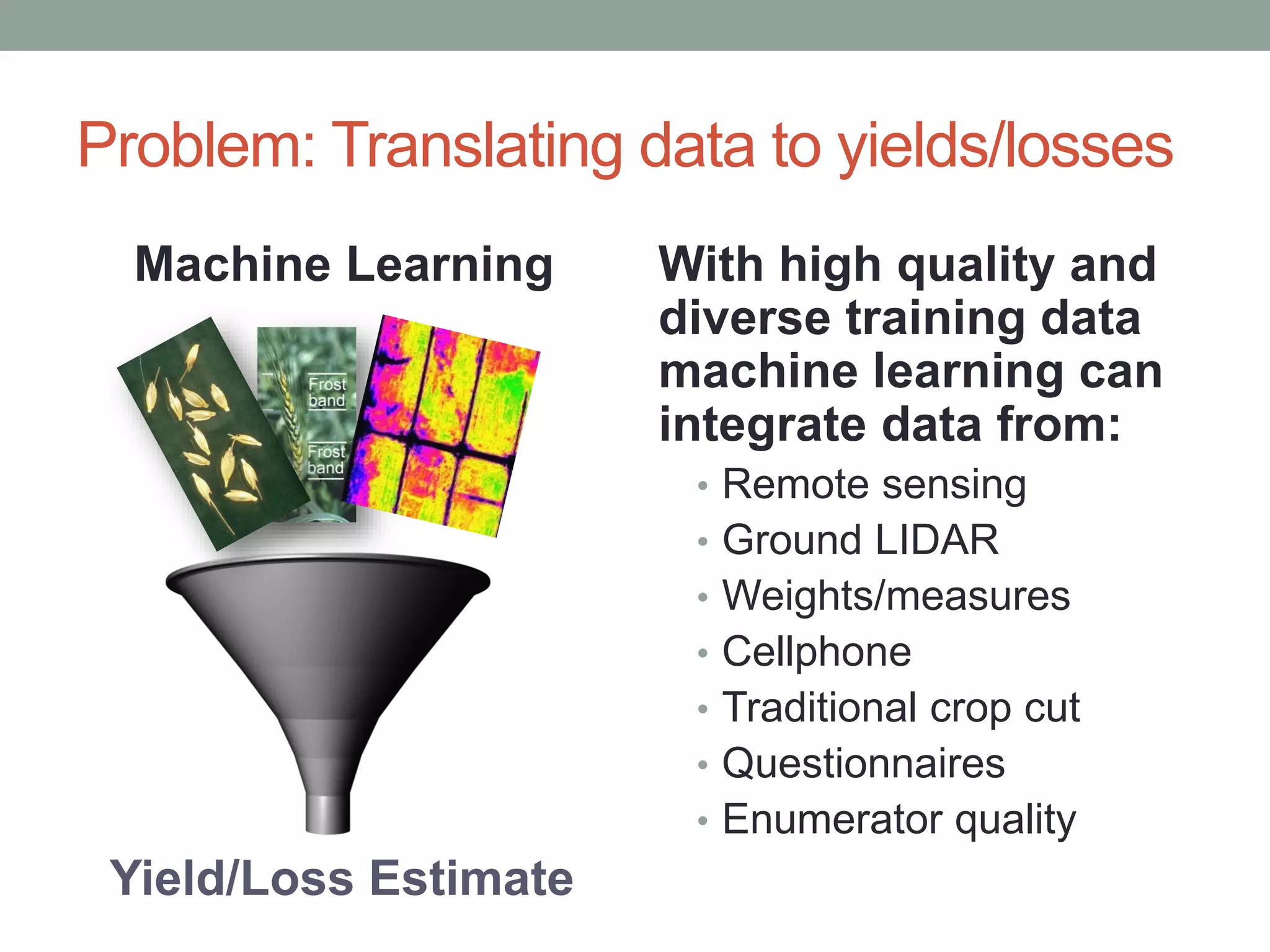
Problem: Translating data to yields/losses
Machine Learning With high quality and
diverse training data
machine learning can
integrate data from:
• Remote sensing
• Ground LIDAR
• Weights/measures
• Cellphone
• Traditional crop cut
• Questionnaires
• Enumerator quality
Yield/Loss Estimate
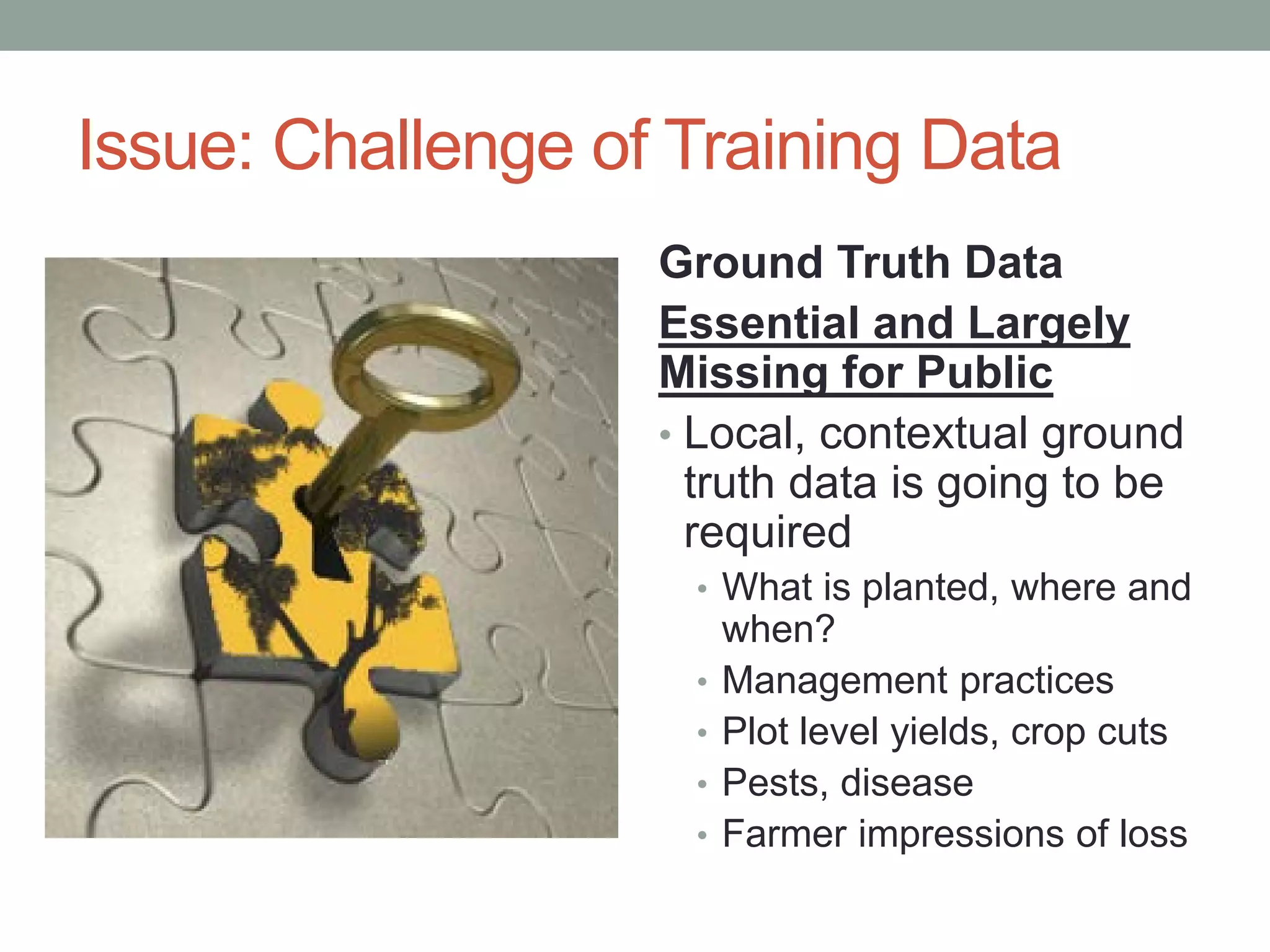
Issue: Challenge of Training Data
• Ground Truth Data
Essential and Largely
Missing for Public
• Local, contextual ground
truth data is going to be
required
• What is planted, where and
when?
• Management practices
• Plot level yields, crop cuts
• Pests, disease
• Farmer impressions of loss
Other Data of Interest
In-the-field capture of
tenure rights by
communities and
individuals using
mobile devices.
Existing tenure data,
aerial and satellite
imagery can be cached
on the device to support
data capture in areas with
no internet connectivity.
Other Data of Interest
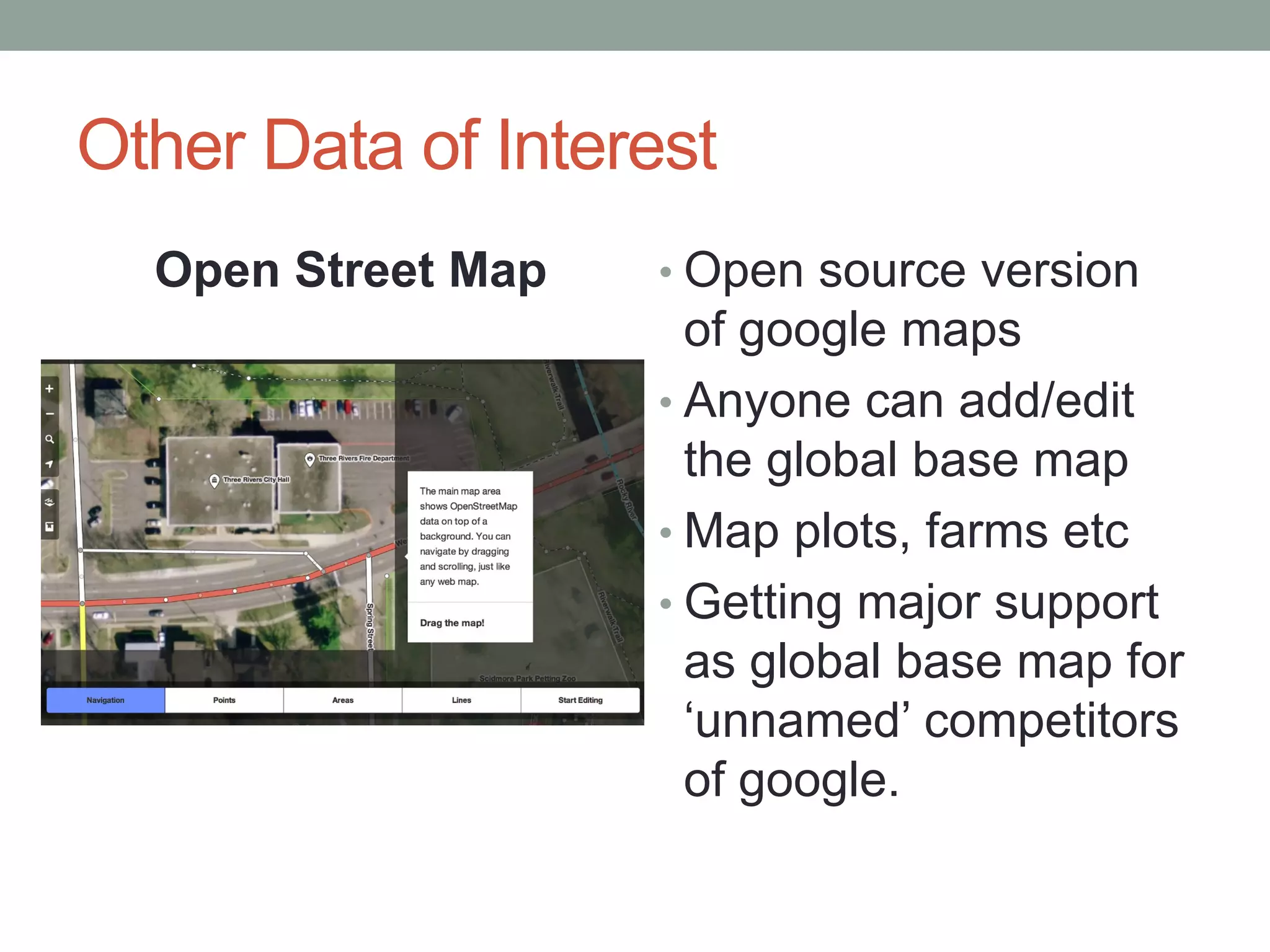
• Open source version
of google maps
• Anyone can add/edit
the global base map
• Map plots, farms etc
• Getting major support
as global base map for
‘unnamed’ competitors
of google.
Open Street Map
Other Data of Interest
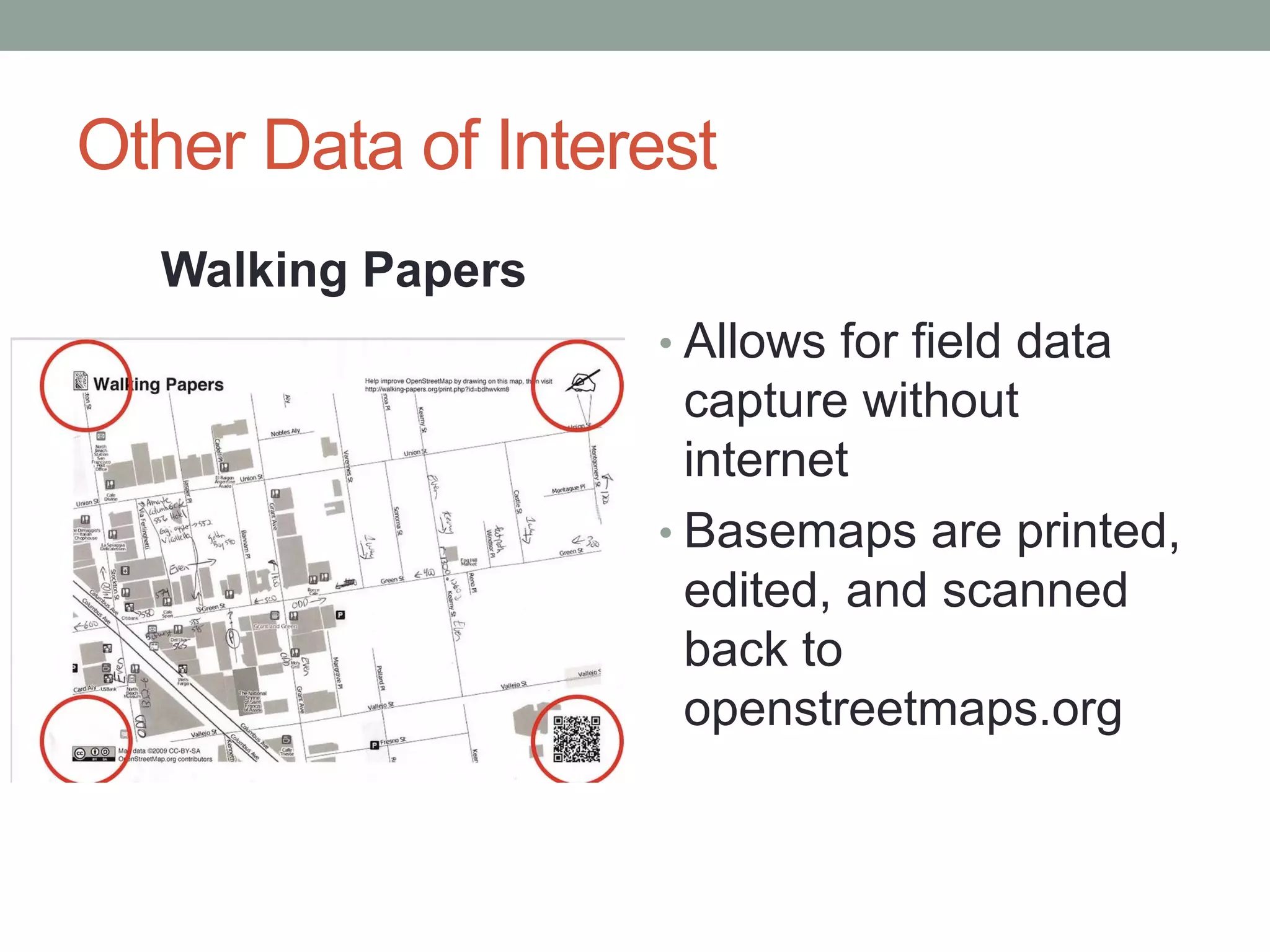
• Allows for field data
capture without
internet
• Basemaps are printed,
edited, and scanned
back to
openstreetmaps.org
Walking Papers
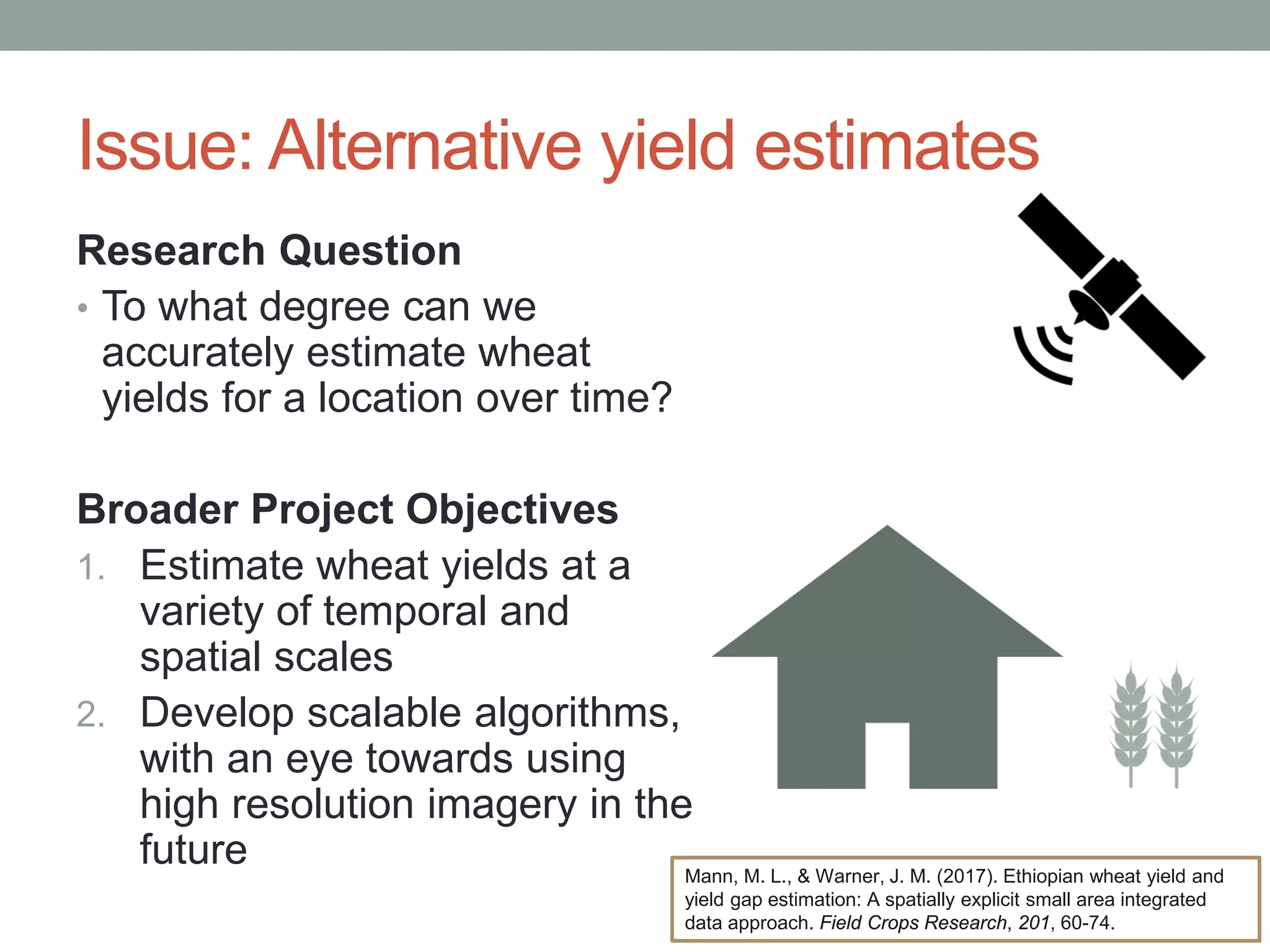
Issue: Alternative yield estimates
Research Question
• To what degree can we
accurately estimate wheat
yields for a location over time?
Broader Project Objectives
1. Estimate wheat yields at a
variety of temporal and
spatial scales
2. Develop scalable algorithms,
with an eye towards using
high resolution imagery in the
future Mann, M. L., & Warner, J. M. (2017). Ethiopian wheat yield and
yield gap estimation: A spatially explicit small area integrated
data approach. Field Crops Research, 201, 60-74.
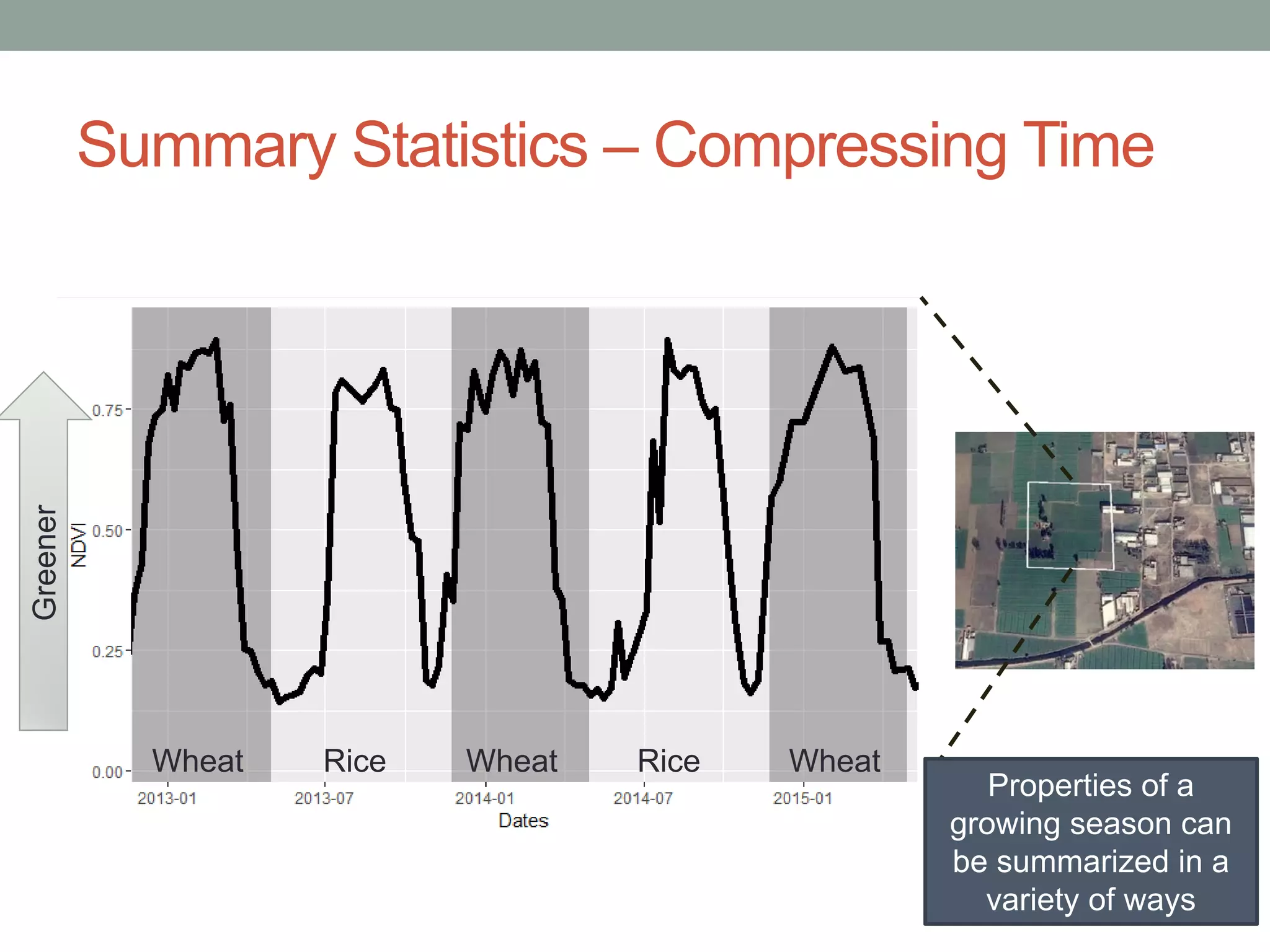
Summary Statistics – Compressing Time
Properties of a
growing season can
be summarized in a
variety of ways
Greener
Wheat Rice Wheat Rice Wheat
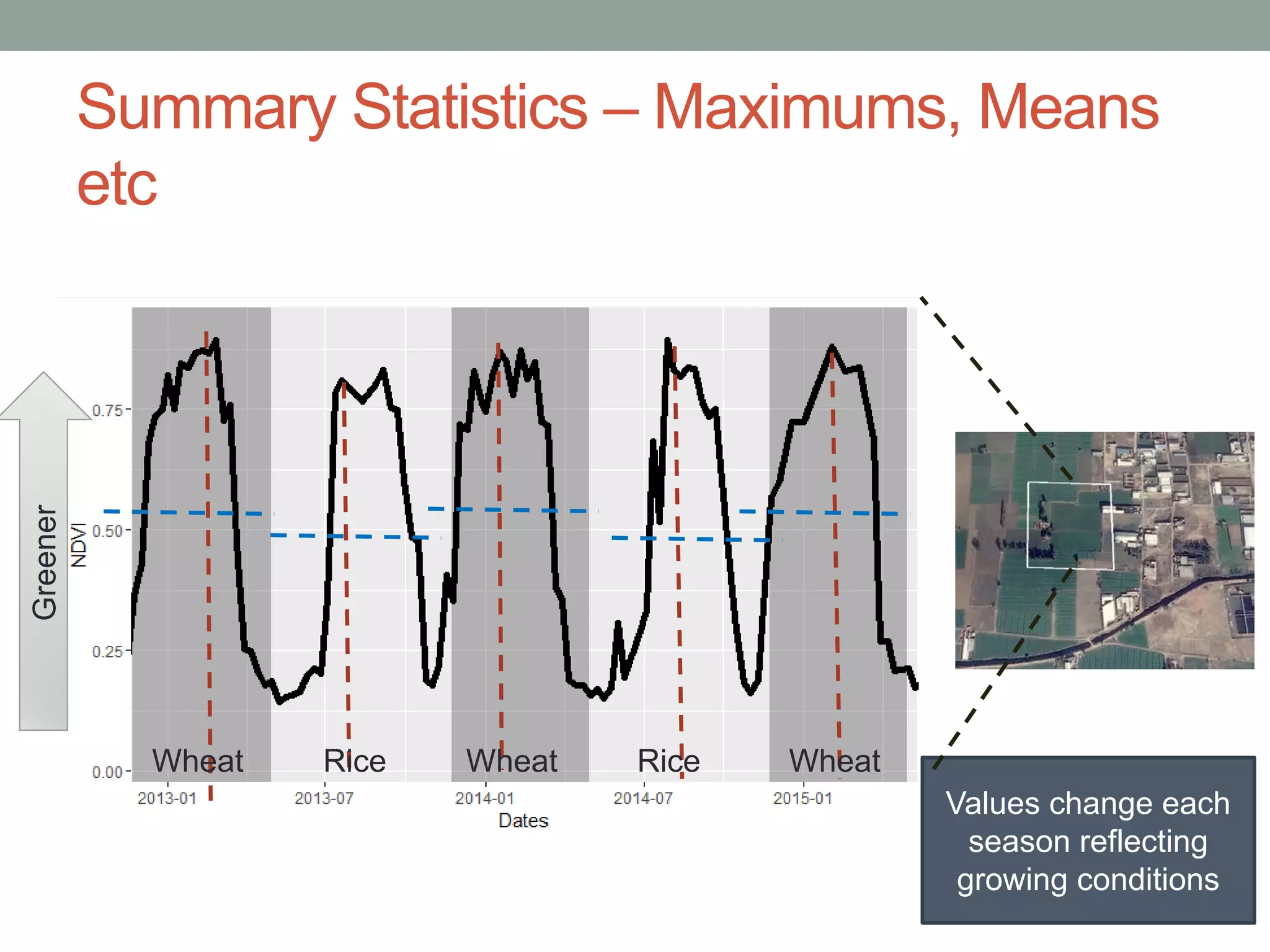
Summary Statistics – Maximums, Means
etc
Values change each
season reflecting
growing conditions
Greener
Wheat Rice Wheat Rice Wheat
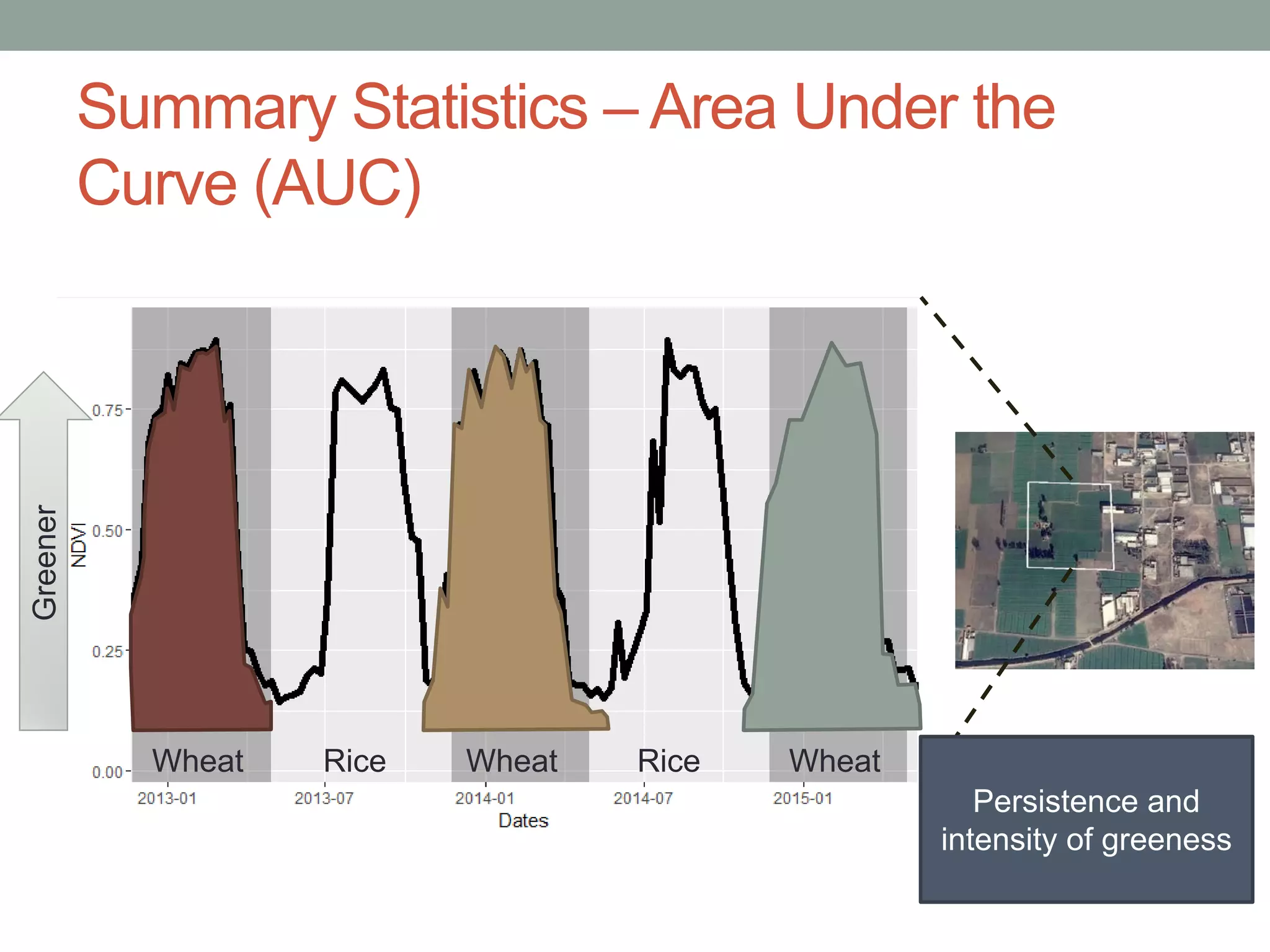
Greener
Summary Statistics – Area Under the
Curve (AUC)
Persistence and
intensity of greeness
Wheat Rice Wheat Rice Wheat
Greener
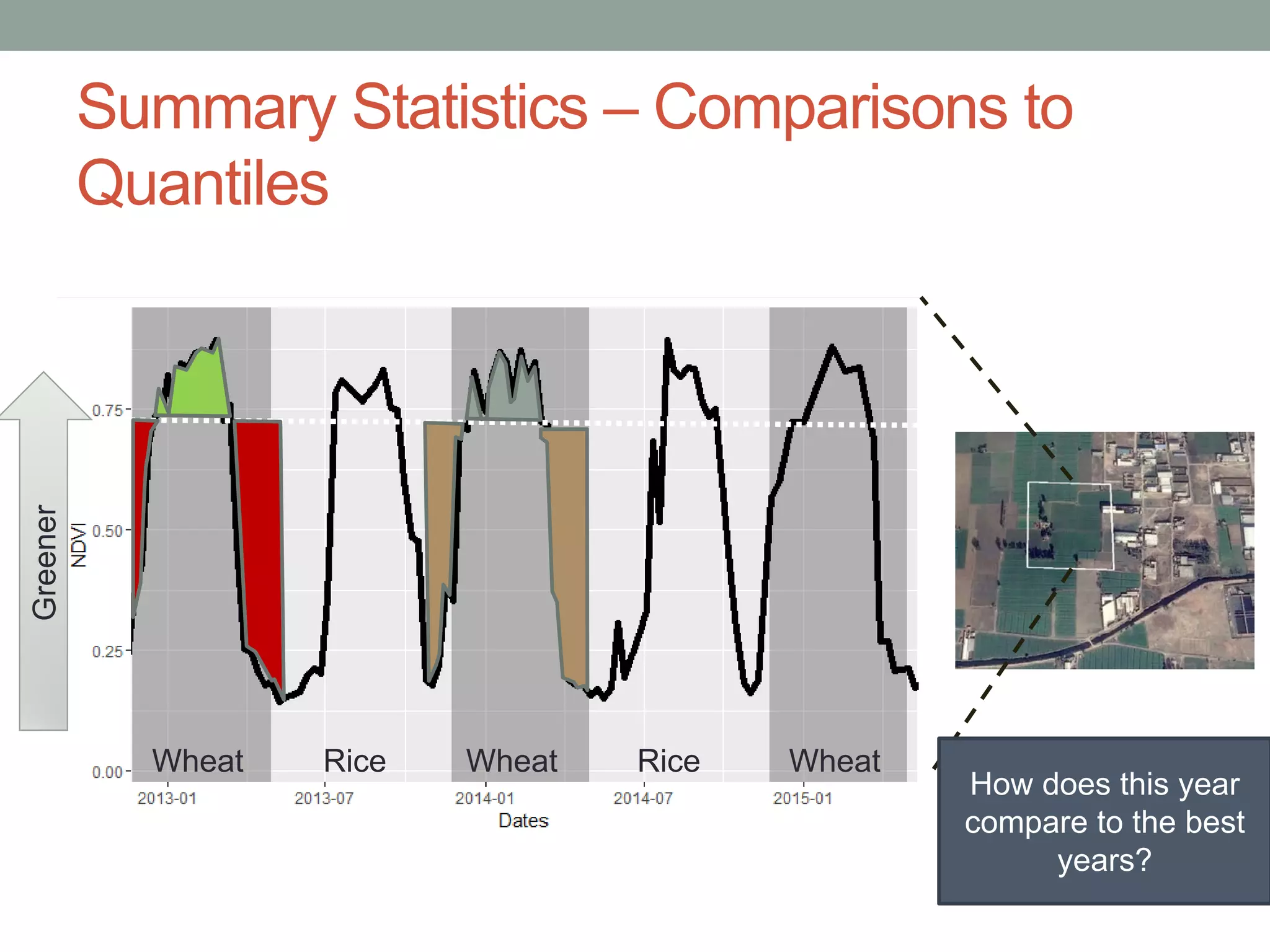
Summary Statistics – Comparisons to
Quantiles
How does this year
compare to the best
years?
Wheat Rice Wheat Rice Wheat
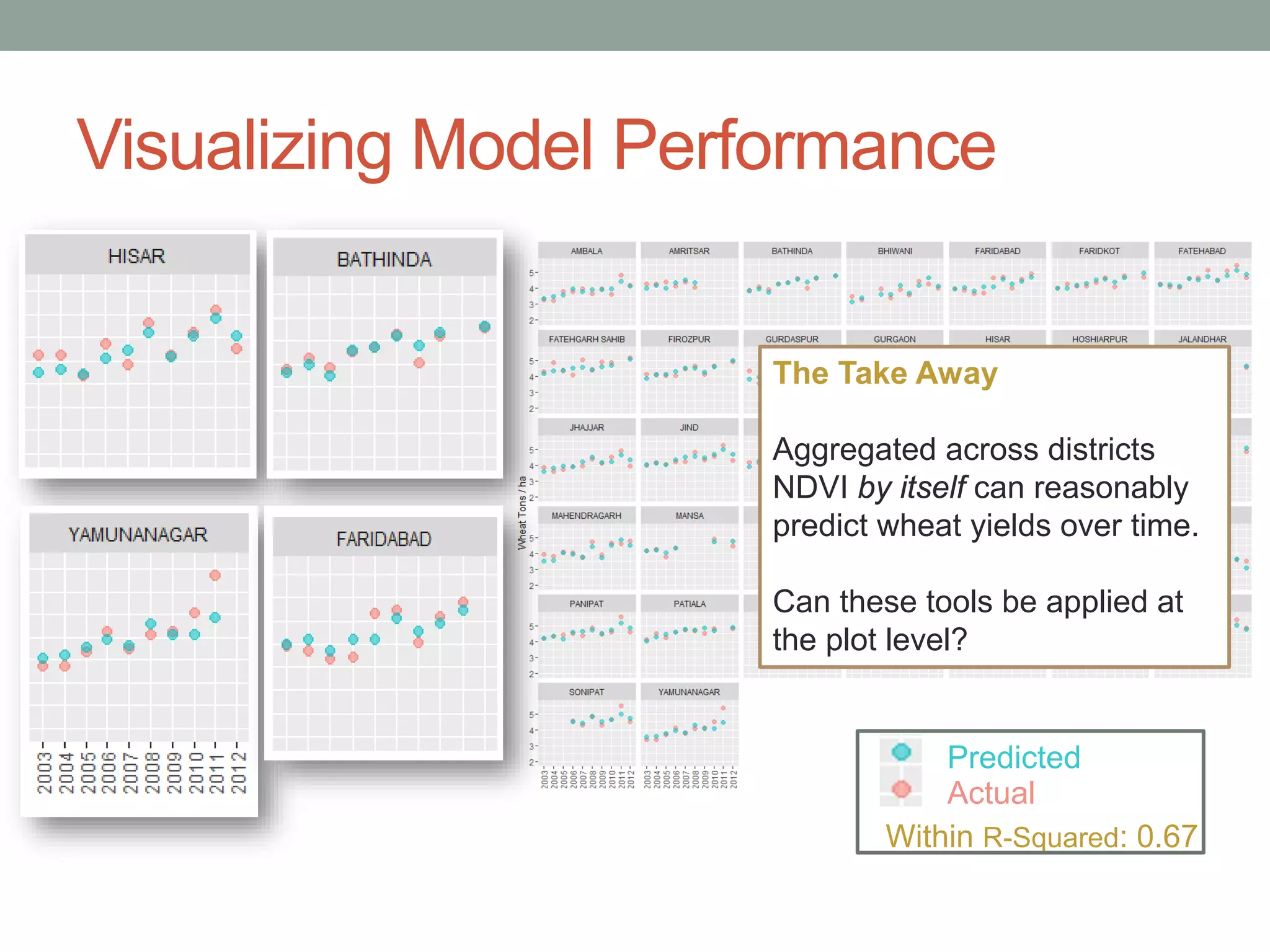
Visualizing Model Performance
Within R-Squared: 0.67
Predicted
Actual
The Take Away
Aggregated across districts
NDVI by itself can reasonably
predict wheat yields over time.
Can these tools be applied at
the plot level?
• Plant density
• plant spacing
• Evenness of the field X
• Number of heads
• Area measurements
• Head length
• # grains per head
• Grain weight / size
• Crop maturity
• Assess soil moisture immature crops
• Satellite can calculate days until harvested
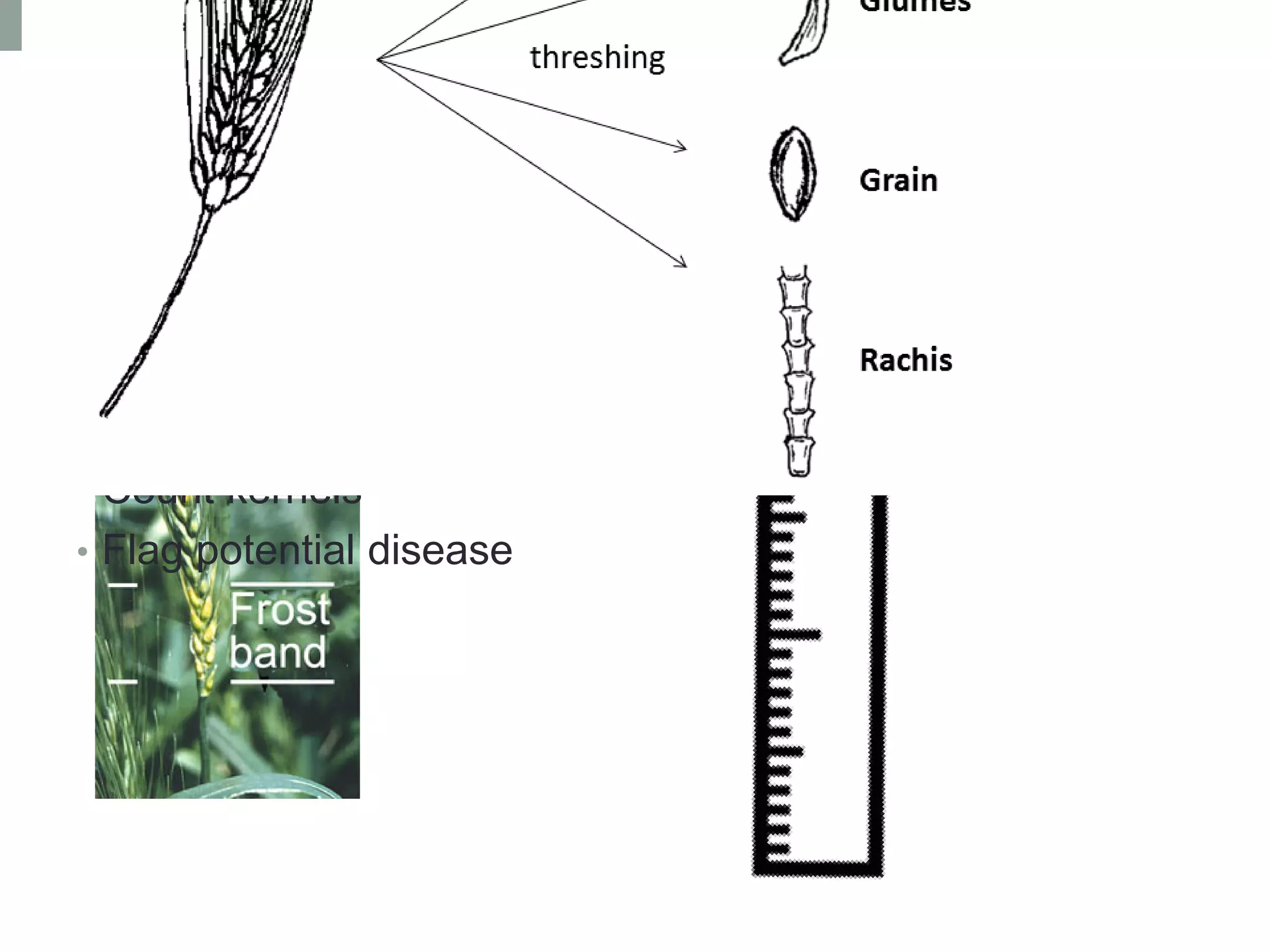
After hand threshing,
cellphone cameras with
machine learning can:
• Count kernels
• Flag potential disease
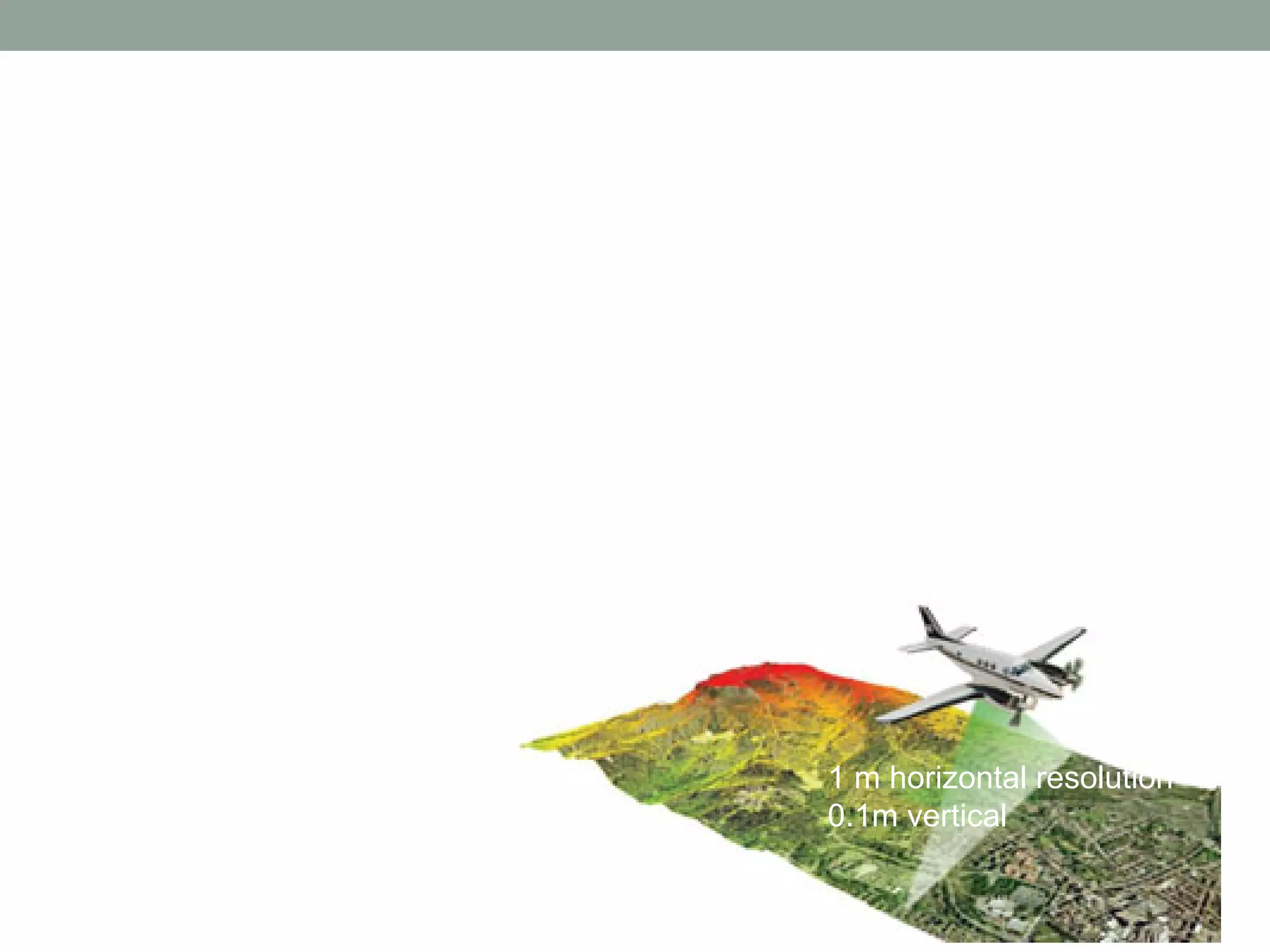
1 m horizontal resolution
0.1m vertical
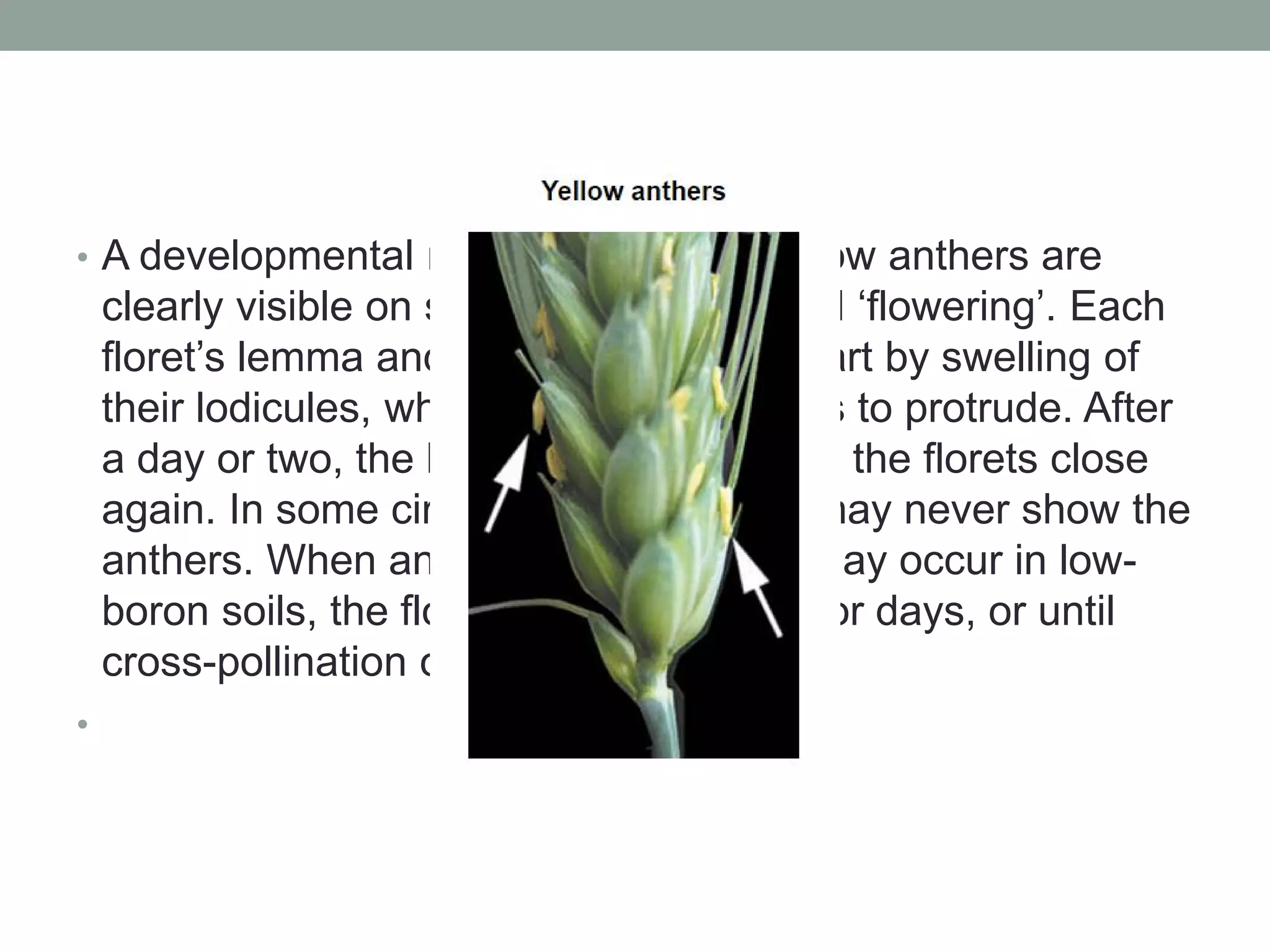
• A developmental main stage when yellow anthers are
clearly visible on spikes. It is also called ‘flowering’. Each
floret’s lemma and palea are forced apart by swelling of
their lodicules, which allows the anthers to protrude. After
a day or two, the lodicules collapse and the florets close
again. In some circumstances, florets may never show the
anthers. When anthers are sterile, as may occur in low-
boron soils, the florets may stay open for days, or until
cross-pollination occurs.
•
The Possibility of Training Data
New low cost tools can be
used to collect data on:
• Plant health
• Cell phone imagery
• Plot data through mini
surveys
• Planting/Harvest dates
• Input use
• Weather
• Disease/pests
• Farmer directly linked
• Impressions of loss
• Mechanism for making a claim
As far as I am concerned,
this changes everything.
Future Directions for Remotely Sensed
Data Machine Learning &
Computer Vision
Data from satellites,
cellphones, stationary
cameras, networked sensors.
Monitor:
• Yields
• Plant growth, height
• Pest / Disease
• Irrigation systems
• Weed management
• Row spacing
Vegetation Indices
NDVI and EVI
• Responsive to amount of
chlorophyll, leaf area,
canopy structure
• Vegetation indices are used
to monitor vegetation
conditions, land cover, land
cover changes, and primary
production. These data may
be used as input to model
global biogeochemical and
hydrologic processes and
global and regional climate.
IFPRI-Using new technologies to validating Crop-Cutting Experiments-Michael Mann

IFPRI-Using new technologies to validating Crop-Cutting Experiments-Michael Mann

  • 1.
    USING NEW TECHNOLOGIES TOVALIDATING CROP CUTTING EXPERIMENTS Prof. Michael Mann Dept. Geography George Washington U michaelmann.i234.me/wordpress
  • 2.
    Calculating Actual Yields •Conceptually very simple • Crop cuts consistently found to be as biased as farmer predictions Percentage error by type
  • 3.
    Satellite Platforms New moderateto high resolution satellite data are available: • New microsatellites 3-5m resolution • New 30m resolution satellites • Collect wide range of properties • Visible light • Infrared • Thermal Micro Satellites 3-5m resolution, Daily
  • 4.
    Drone/Plane Platforms Drones powerful, flexible,but expensive and computationally intensive • Provide platform for specialty instruments • Thermal • Infrared • Lidar • Costs/computation time decreasing rapidly
  • 5.
    Mobile Platforms New lowcost tools can be used to collect data on: • Plant health • Cell phone imagery • Plot data through mini surveys • Planting/Harvest dates • Input use • Weather • Disease/pests • Farmer directly linked • More efficient random sampling possible
  • 6.
    Sources of CropCut Bias There are a variety of sources of bias introduced into crop cuts by enumerators Measurement problems 1. Inappropriate use of tools (scales, poor records etc) 2. Failure to account for disease that make unharvestable 3. Non-random or biased location of test plots • Enumerators avoid low-yield areas 4. Failure to account for ripening or harvest over time 5. Lack of accountability for enumerators
  • 7.
    Problem: Measurement Error PlantCharacteristics New (and cheap) ground based LIDAR can quickly estimate: • Row spacing • Plant density • Plant height / biomass • Lodging • Sowing method Importantly measurements could be taken rapidly in multiple locations in field
  • 8.
  • 9.
    Problem: Measurement Error Headproperties After hand threshing cell phone cameras and machine learning can be use to: • Flag potential disease / damage • Count grains • Count heads • Crop stage • Flowering/ripening etc
  • 10.
    Problem: Timing ofcrop cut Harvest dates can be estimates via satellite • Harvest dates could be used to correct for timing of crop cut Harvest Date 15/5/16 20/5/16 25/5/16 30/5/16 05/6/16 10/6/16
  • 11.
    Problem: Lack ofaccountability Mobile automated geotagged records can improve accountability and ensure methods • Verify timing • Improve measurement • Verify spatial sampling • Confirm interaction with farmers • ?provide automated feedback to farmers?
  • 12.
    Vegetation Indices NDVI andEVI • “Greenness Indexes” • Vegetation indices are used to monitor vegetation conditions, land cover, land cover changes, and primary production. These data may be used as input to model global biogeochemical and hydrologic processes and global and regional climate.
  • 13.
    Vegetation Indices • Responsiveto amount of chlorophyll, leaf area, canopy structure • Healthy or stress plants can be easily identified via satellite or drone
  • 14.
    Problem: Plant healthafter cut Plant health can be monitored via vegetation indices, or through weather • Adjustments to yield estimates can be made to include disease, water stress etc after crop cuts.
  • 15.
    Problem: Biased locationof test plots • Vegetation Indexes can be used to stratify sampling • Strata based on crop stress groups • Area of each strata can be calculated from imagery • Also better accounts for staggered ripening and harvesting Low High Med
  • 16.
    Problem: Translating datato yields/losses Machine Learning With high quality and diverse training data machine learning can integrate data from: • Remote sensing • Ground LIDAR • Weights/measures • Cellphone • Traditional crop cut • Questionnaires • Enumerator quality Yield/Loss Estimate
  • 17.
    Issue: Challenge ofTraining Data • Ground Truth Data Essential and Largely Missing for Public • Local, contextual ground truth data is going to be required • What is planted, where and when? • Management practices • Plot level yields, crop cuts • Pests, disease • Farmer impressions of loss
  • 18.
    Other Data ofInterest In-the-field capture of tenure rights by communities and individuals using mobile devices. Existing tenure data, aerial and satellite imagery can be cached on the device to support data capture in areas with no internet connectivity.
  • 19.
    Other Data ofInterest • Open source version of google maps • Anyone can add/edit the global base map • Map plots, farms etc • Getting major support as global base map for ‘unnamed’ competitors of google. Open Street Map
  • 20.
    Other Data ofInterest • Allows for field data capture without internet • Basemaps are printed, edited, and scanned back to openstreetmaps.org Walking Papers
  • 21.
    Issue: Alternative yieldestimates Research Question • To what degree can we accurately estimate wheat yields for a location over time? Broader Project Objectives 1. Estimate wheat yields at a variety of temporal and spatial scales 2. Develop scalable algorithms, with an eye towards using high resolution imagery in the future Mann, M. L., & Warner, J. M. (2017). Ethiopian wheat yield and yield gap estimation: A spatially explicit small area integrated data approach. Field Crops Research, 201, 60-74.
  • 22.
    Summary Statistics –Compressing Time Properties of a growing season can be summarized in a variety of ways Greener Wheat Rice Wheat Rice Wheat
  • 23.
    Summary Statistics –Maximums, Means etc Values change each season reflecting growing conditions Greener Wheat Rice Wheat Rice Wheat
  • 24.
    Greener Summary Statistics –Area Under the Curve (AUC) Persistence and intensity of greeness Wheat Rice Wheat Rice Wheat
  • 25.
    Greener Summary Statistics –Comparisons to Quantiles How does this year compare to the best years? Wheat Rice Wheat Rice Wheat
  • 26.
    Visualizing Model Performance WithinR-Squared: 0.67 Predicted Actual The Take Away Aggregated across districts NDVI by itself can reasonably predict wheat yields over time. Can these tools be applied at the plot level?
  • 30.
    • Plant density •plant spacing • Evenness of the field X • Number of heads • Area measurements • Head length • # grains per head • Grain weight / size • Crop maturity • Assess soil moisture immature crops • Satellite can calculate days until harvested
  • 31.
    After hand threshing, cellphonecameras with machine learning can: • Count kernels • Flag potential disease
  • 32.
    1 m horizontalresolution 0.1m vertical
  • 33.
    • A developmentalmain stage when yellow anthers are clearly visible on spikes. It is also called ‘flowering’. Each floret’s lemma and palea are forced apart by swelling of their lodicules, which allows the anthers to protrude. After a day or two, the lodicules collapse and the florets close again. In some circumstances, florets may never show the anthers. When anthers are sterile, as may occur in low- boron soils, the florets may stay open for days, or until cross-pollination occurs. •
  • 49.
    The Possibility ofTraining Data New low cost tools can be used to collect data on: • Plant health • Cell phone imagery • Plot data through mini surveys • Planting/Harvest dates • Input use • Weather • Disease/pests • Farmer directly linked • Impressions of loss • Mechanism for making a claim As far as I am concerned, this changes everything.
  • 50.
    Future Directions forRemotely Sensed Data Machine Learning & Computer Vision Data from satellites, cellphones, stationary cameras, networked sensors. Monitor: • Yields • Plant growth, height • Pest / Disease • Irrigation systems • Weed management • Row spacing
  • 51.
    Vegetation Indices NDVI andEVI • Responsive to amount of chlorophyll, leaf area, canopy structure • Vegetation indices are used to monitor vegetation conditions, land cover, land cover changes, and primary production. These data may be used as input to model global biogeochemical and hydrologic processes and global and regional climate.