Sustainable Land Management
Choney Zangmo
Department of Agriculture
Ministry of Agriculture and Livestock
Bhutan
What is SLM
The efficient utilization of agriculture land for the production of food, feed
and fibre to meet the needs of the growing population, while
simultaneously ensuring the long term productive potential of the land,
and continuous ecosystem Services-NSSC
1. Maintain and enhance production (productivity)
2. Reduce the level of production risk, and enhance soil capacity to buffer
against degradation processes (stability/resilience)
3. Protect the potential of natural resources and prevent degradation of soil
and water quality (protection)
4. Be economically viable (viability)
5. Be socially acceptable, and assure access to the benefits from improved
land management (acceptability/equity)
Basic Principles
Structural measures
Vegetative measure
Agronomic measures
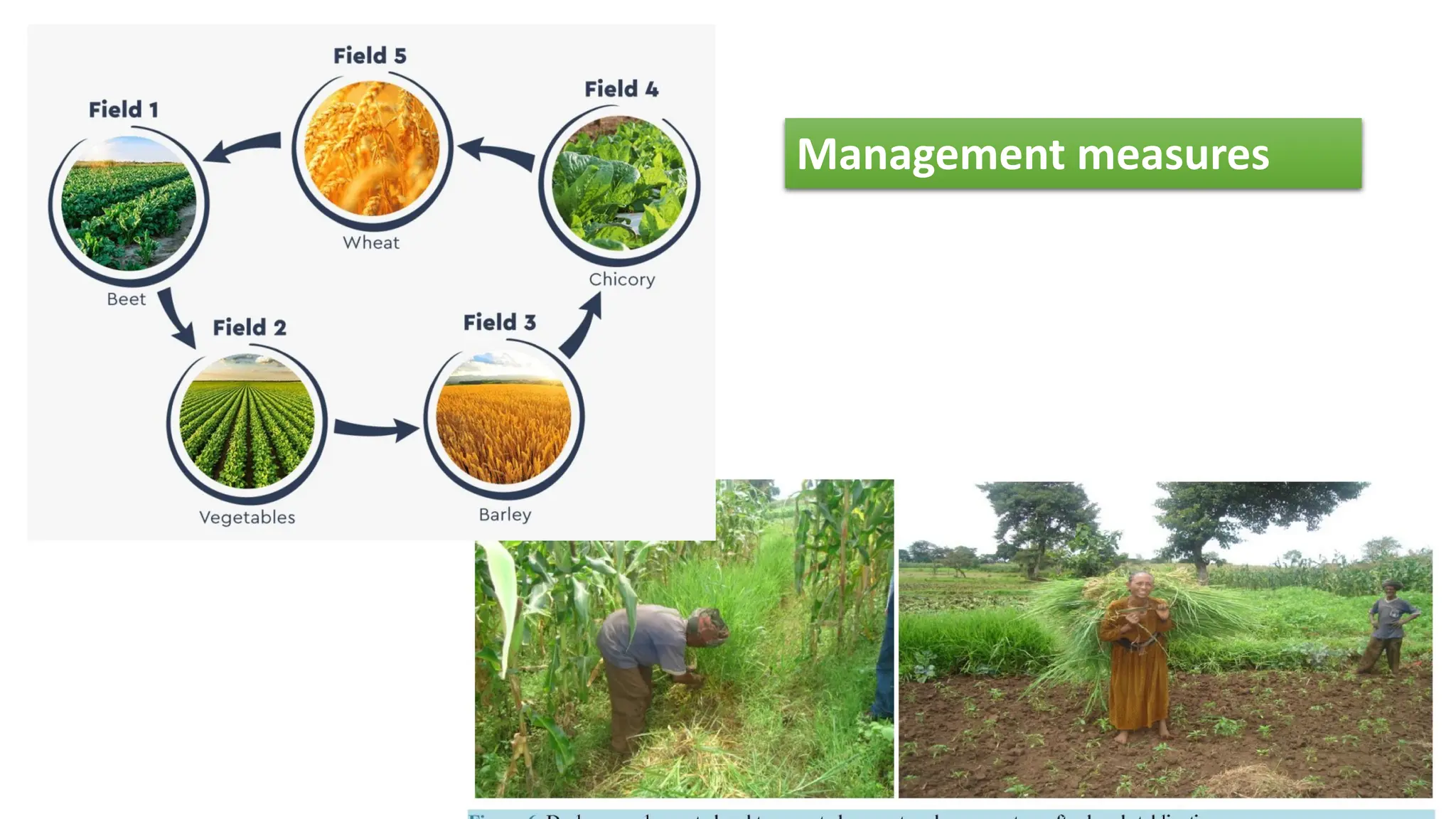
Management measures
8
Why invest in SLM?
Types of soil erosion
Splash
Sheet erosion (Uniform removal
of top soil)
Rill erosion (Channeling)
Enlarged rill erosion
Gully erosion
Ravine/Canyon
Steps for terracing
Technical specifications
Benefits of terracing
• The runoff is reduced by over 41.9%
• Can increase soil moisture content by 4.24%–12.9%
• Terraces with ridges, have shown to retain 18% more runoff than terraces without ridges
• Erosion rates on terraced fields not more than 1 t ha−1 y−1,
• Case study from Tanzania, the average yield of maize was 270% higher in fertile terraced
fields than in bare slope fields
• At the Longji terraces in China, for example, income from tourism accounts for 70.8% of the
total income for local families ( aesthetic value and productive, pleasing, neat, and
sustainable landscapes)
• Well maintained terraces can increase soil moisture to 37.71%, and increase SOC
sequestration by 32.4% compared to that of the sloping lands.
• Improvement of grain yields by 44.8%
https://www.sciencedirect.com/science/article/pii/S2095633921000228
Terracing errors
Undulating terrace Wastage of land
Steep riser
Crop cut results of Paddy(kg/Ac) Nubi gewog
1814
0
1511
1660
1900 1971
0
500
1000
1500
2000
2500
2016 2019 2020 2021 2022 2023
Paddy
yield
(Kg/Ac)
Paddy yield after terracing at Nubi (Kg/Ac)
Year
Baseline
Crop cut results of Potato (kg/Ac) before and after terracing
5700
4500
5217
5515 5757
7104
0
1000
2000
3000
4000
5000
6000
7000
8000
2016 2019 2020 2021 2022 2023
Yield
in
kgs
Year
Potato
Baseline
Terrace consolidation
Wider terrace interval (12-15m)
High riser (8-10m)
More water requirement
Irregular terraces & fallow
Exposure of sub soils/parent materials on surface
Recommended practices
Maintaining the terrace width & riser height
Plantation of Napier slips along riser
Improving soil fertility through tethering practices
Cultivate legumes or dry land crops in first two years
Encourage leaving crop residues/cover crops
Surface stone removal
Benefits
Hedgerow Establishment
Punakha: Poor maintenance of hedge at
Talo
Time series for Napier hedgerows
2014 ( without hedge)
2021
• Hedgerow: control soil erosion
25
SLM (hedgerows) reduces soil erosion by about 47%
2008 - 2010
Steps for stone bunds
Vegetative measures
• Plants perform two main
functions
• Hydrological functions
• Mechanical functions
• Because of these two
functions the plants help to
stabilise the slope
How to construct log check dam?
• Should be constructed from 15-20 cm in diameter logs
• Dig 30-50 cm into each side slopes of the gully
• Drive in two vertical posts on either side of the spillway
• Allow 2-3 logs to sink into the trench
• Then place the horizontal members starting from the bottom.
• As placement progresses, prepare spill way
• Plant cuttings on the downstream side of check dam
• Apron should be provided at the base
How to construct stone check dam ?
• Excavate the foundation across the gully (45cm width)
• Stack the stones from the ground level to the required
effective height is achieved
• Provide adequate spill way
• Provide apron
• Dam should not be constructed at neck point
31
Benefits of check dam? • Prevents channel vertical and lateral
erosion
• Conveys the runoff safely
• Decreases the velocity of water flow
• Reduces the gradient of a gully
• Traps the silt from going downstream
• Promotes water percolation
Check dam errors
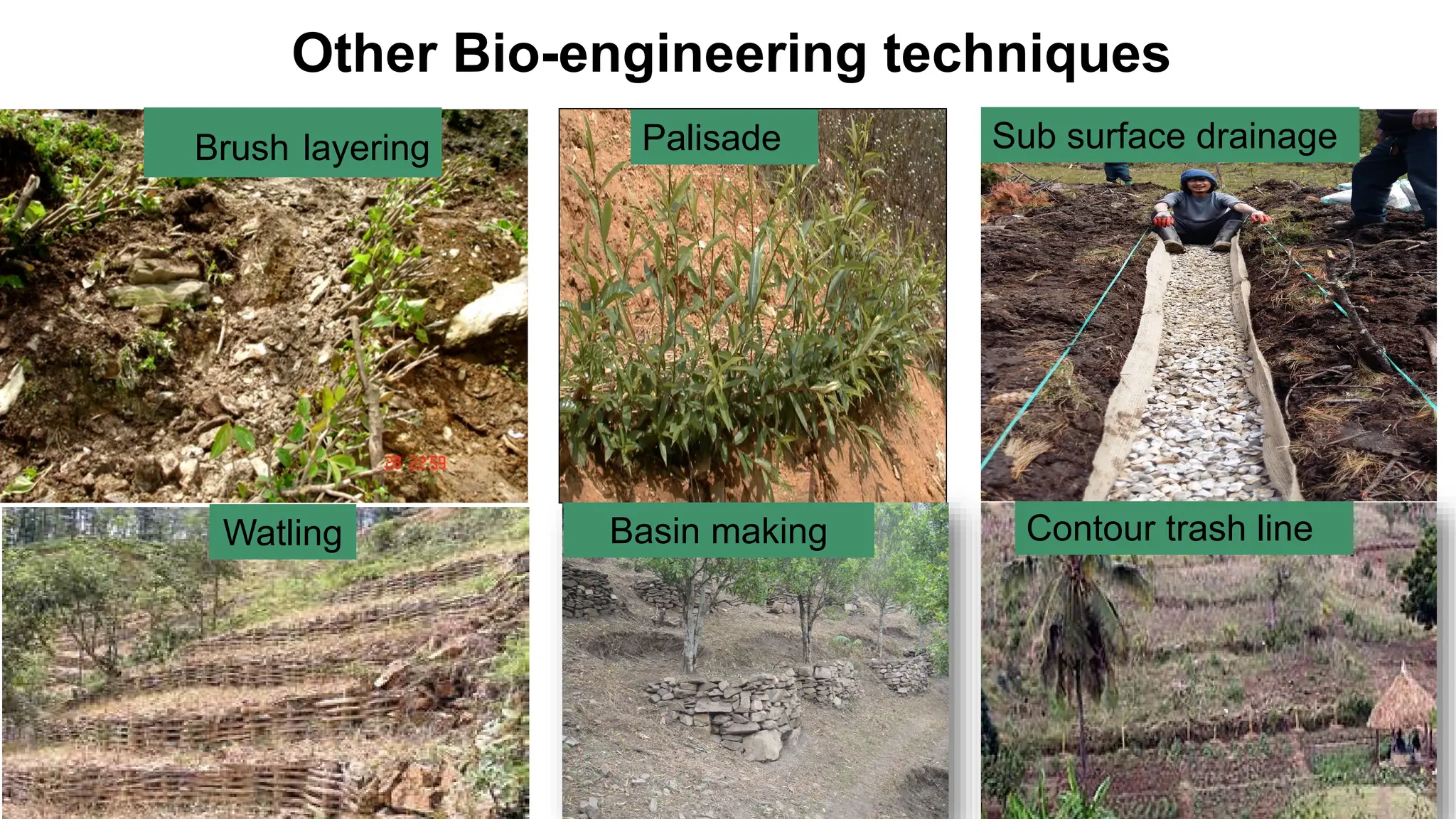
Other Bio-engineering techniques
Brush layering Palisade
Contour trash line
Basin making
Watling
Sub surface drainage
Suggestions on the SLM Manual
What
Avoid the word etc
Saves time…
Not just water but top soil is conserved
Application
Also include Mountainous regions
Suitable crop
Any crop that is suitable to the agro-climatic zone
Suitable slope
Terracing: above 30 degree is incorrect
Best for slopes below 30 degree
Thank you for the attention!!!

Sustainable Land Management - Climate Smart Agriculture

  • 1.
    Sustainable Land Management ChoneyZangmo Department of Agriculture Ministry of Agriculture and Livestock Bhutan
  • 2.
    What is SLM Theefficient utilization of agriculture land for the production of food, feed and fibre to meet the needs of the growing population, while simultaneously ensuring the long term productive potential of the land, and continuous ecosystem Services-NSSC
  • 3.
    1. Maintain andenhance production (productivity) 2. Reduce the level of production risk, and enhance soil capacity to buffer against degradation processes (stability/resilience) 3. Protect the potential of natural resources and prevent degradation of soil and water quality (protection) 4. Be economically viable (viability) 5. Be socially acceptable, and assure access to the benefits from improved land management (acceptability/equity) Basic Principles
  • 4.
  • 5.
  • 6.
  • 7.
  • 8.
  • 9.
    Types of soilerosion Splash Sheet erosion (Uniform removal of top soil) Rill erosion (Channeling) Enlarged rill erosion Gully erosion Ravine/Canyon
  • 10.
  • 11.
  • 12.
    Benefits of terracing •The runoff is reduced by over 41.9% • Can increase soil moisture content by 4.24%–12.9% • Terraces with ridges, have shown to retain 18% more runoff than terraces without ridges • Erosion rates on terraced fields not more than 1 t ha−1 y−1, • Case study from Tanzania, the average yield of maize was 270% higher in fertile terraced fields than in bare slope fields • At the Longji terraces in China, for example, income from tourism accounts for 70.8% of the total income for local families ( aesthetic value and productive, pleasing, neat, and sustainable landscapes) • Well maintained terraces can increase soil moisture to 37.71%, and increase SOC sequestration by 32.4% compared to that of the sloping lands. • Improvement of grain yields by 44.8% https://www.sciencedirect.com/science/article/pii/S2095633921000228
  • 13.
    Terracing errors Undulating terraceWastage of land Steep riser
  • 14.
    Crop cut resultsof Paddy(kg/Ac) Nubi gewog 1814 0 1511 1660 1900 1971 0 500 1000 1500 2000 2500 2016 2019 2020 2021 2022 2023 Paddy yield (Kg/Ac) Paddy yield after terracing at Nubi (Kg/Ac) Year Baseline
  • 15.
    Crop cut resultsof Potato (kg/Ac) before and after terracing 5700 4500 5217 5515 5757 7104 0 1000 2000 3000 4000 5000 6000 7000 8000 2016 2019 2020 2021 2022 2023 Yield in kgs Year Potato Baseline
  • 16.
  • 17.
    Wider terrace interval(12-15m) High riser (8-10m) More water requirement Irregular terraces & fallow Exposure of sub soils/parent materials on surface
  • 19.
    Recommended practices Maintaining theterrace width & riser height Plantation of Napier slips along riser Improving soil fertility through tethering practices Cultivate legumes or dry land crops in first two years Encourage leaving crop residues/cover crops
  • 20.
  • 22.
  • 23.
    Hedgerow Establishment Punakha: Poormaintenance of hedge at Talo
  • 24.
    Time series forNapier hedgerows 2014 ( without hedge) 2021
  • 25.
    • Hedgerow: controlsoil erosion 25 SLM (hedgerows) reduces soil erosion by about 47% 2008 - 2010
  • 26.
  • 28.
    Vegetative measures • Plantsperform two main functions • Hydrological functions • Mechanical functions • Because of these two functions the plants help to stabilise the slope
  • 29.
    How to constructlog check dam? • Should be constructed from 15-20 cm in diameter logs • Dig 30-50 cm into each side slopes of the gully • Drive in two vertical posts on either side of the spillway • Allow 2-3 logs to sink into the trench • Then place the horizontal members starting from the bottom. • As placement progresses, prepare spill way • Plant cuttings on the downstream side of check dam • Apron should be provided at the base
  • 30.
    How to constructstone check dam ? • Excavate the foundation across the gully (45cm width) • Stack the stones from the ground level to the required effective height is achieved • Provide adequate spill way • Provide apron • Dam should not be constructed at neck point
  • 31.
  • 32.
    Benefits of checkdam? • Prevents channel vertical and lateral erosion • Conveys the runoff safely • Decreases the velocity of water flow • Reduces the gradient of a gully • Traps the silt from going downstream • Promotes water percolation
  • 33.
  • 34.
    Other Bio-engineering techniques Brushlayering Palisade Contour trash line Basin making Watling Sub surface drainage
  • 35.
    Suggestions on theSLM Manual What Avoid the word etc Saves time… Not just water but top soil is conserved Application Also include Mountainous regions Suitable crop Any crop that is suitable to the agro-climatic zone Suitable slope Terracing: above 30 degree is incorrect Best for slopes below 30 degree
  • 36.
    Thank you forthe attention!!!