Approach To Acute Dyspnea
Dr Wail Eldukali
Case
• 25 year old man , was brought to ER complaining of
severe breathlessness which happened suddenly
during sport activity, when you evaluated him you
noticed the patient is tall, thin build, has long
hyperflexible joints of hands and has high arched
palate, his BP80/40 mmHg, PR 120B/M, cyanosed and
his chest exam showed hyperresonant percussion not
over right side with absent air entry and his wind pipe
deviated to the left side
1. What is the diagnosis?
2. What is the next step in the management?
Definition
• Subjective sensation of shortness of breath
• Could be acute or chronic
• Signs: tachypnea,apnea, hypoxia, low SPO2,
hypercapnia
• a common presenting symptom in ER
• Try to categorize it by the cause:
– Cardiac
– Respiratory
– Anatomical
– Metabolic
– other
Common Causes Of Acute Dyspnea
• Pulmonary edema
• Massive pulmonary embolism
• Acute severe asthma
• Acute exacerbation of COPD
• Pneumonia
• Pneumothorax
• Metabolic acidosis
• psychogenic
Presentation1
• Acute presentation (minutes to hours) has
distinct DDX from chronic causes of chronic
breathlessness, eg PE, tension pneumothorax
• Associated CVS symptoms (chest pain,
palpations, sweating) point toward cardiac
cause
• Associated respiratory symptoms(cough,
wheeze, hemoptysis, stridor) narrow ddx
Presentation2
• Previous history of left ventricular dysfunction,
asthma, COPD help in diagnosis
• In critically ill patient obtain history from
accompanying person
• In children consider foreign body and epiglotitis
• Kussmaul breathing is a deep and
labored breathing pattern often associated with
severe metabolic acidosis, particularly
diabetic ketoacidosis (DKA) but also kidney
failure.
Assessment 1
• Life threatening conditions require immediate
management , eg anaphylaxis , tension pneumothorax
• The following should be assessed:
– Level of consciousness
– Degree of central cyanosis
– Work of breathing(rate, depth, pattern, use of accessory
muscles)
– Adequacy of oxygenation (SPO2)
– ability to speak (in single words or sentences)
– cardiovascular status (heart rate and rhythm, blood
pressure (BP) and peripheral perfusion).
Assessment 2
• Pulmonary edema; suggested by raised JVP
and bi-basal crackles
• COPD and Asthma suggested by wheezing and
prolonged expiration
• Hyper-resonant percussion and absent air
sounds suggest pneumothorax
• Severe breathlessness and normal breath
sounds suggest Pulmonary embolism
• Unilateral leg swelling indicate DVT and PE
Assessment 3
• Cardiac asthma
• Any arrhythmia can cause breathlessness with
specially valve diseases (listen for murmurs)
• Myocardial ischemia my produce dyspnea (LV
dysfunction)
• When the dyspnea is the prominent or the
sole feature of myocardial ischemia, it is
known as (Angina equivalent)
Initial Investigations
• A thorough history and physical examination with CXR,
ECG and ABG will usually reveal the primary cause of
breathlessness
• Peak expiratory flow: measure severity of
bronchospasm along with SPO2
• ABG:
– Specially in cases of (drowsiness, delirium and asterixis) in
suspected hypercapnia (type2 respiratory failure)
– Smoke inhalation
– Metabolic disorders (acidosis in DKA , renal failure)
– Psychogenic hyperventilation
Initial Investigations 2
• To differentiate cardiac from respiratory
causes of dyspnea (angina equivalent):
– Echo
– Cardiac enzymes
– B TYPE Natriuretric peptide
Case
• 25 year old man , was brought to ER complaing of
severe breathlessness which happened suddenly
during sport activity when you evaluate him you
noticed the patient is tall, thin build, has long
hyperflexible joints of hands and has high arched
palate, his BP80/40 mmHg, PR 120B/M, cyanosed
and his chest exam showed hyperresonant
percussion not over right side with absent air
entry and his wind pipe deviated to the left side
1. What is the diagnosis?
2. What is the next step in the management?
Answers
1. Tension pneumothorax (marfan syndrome)
2. Aspiration/chest drain
Thank you
Cardiogenic pulmonary edema
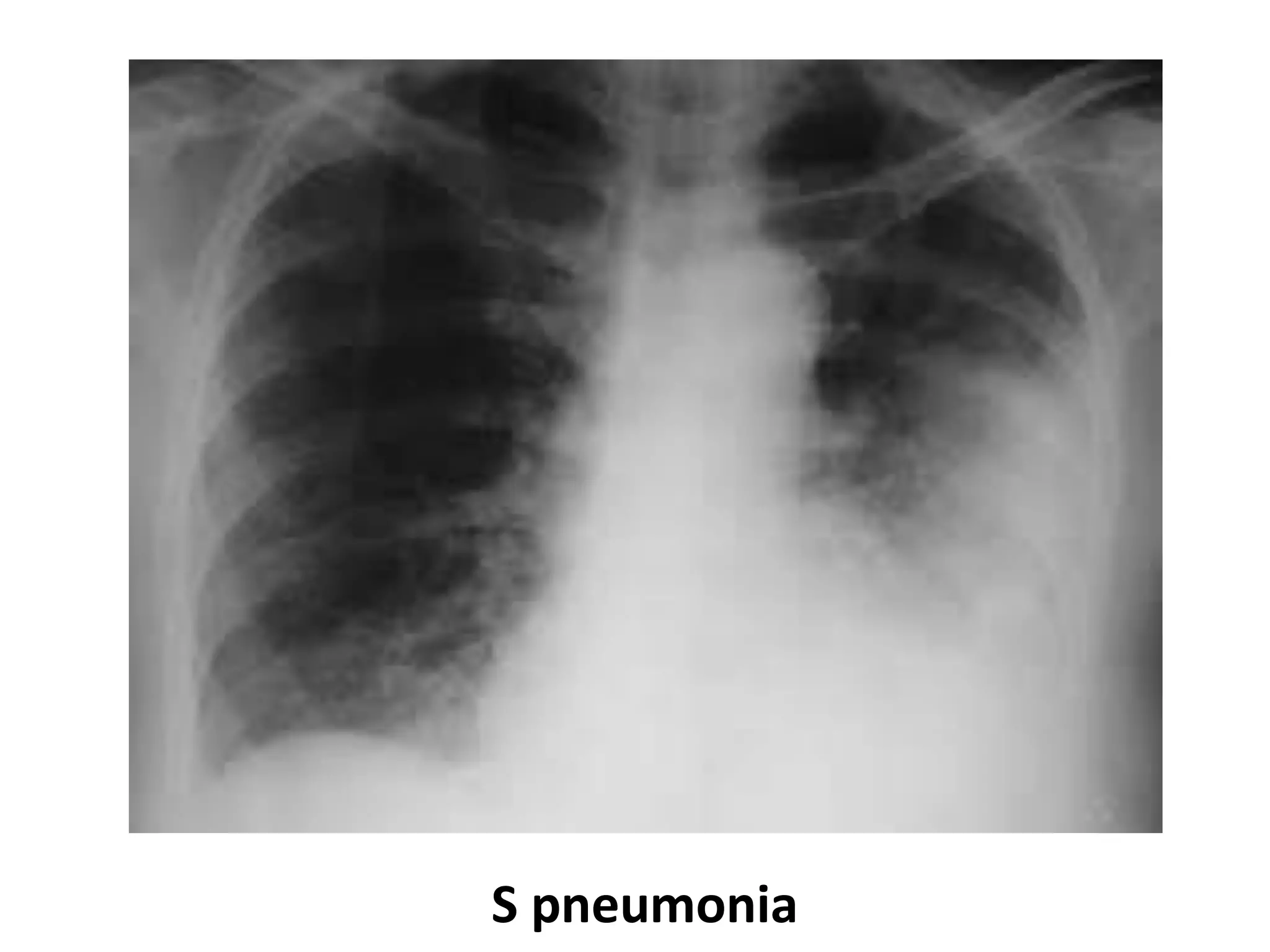
S pneumonia

clinical approach to Acute Dyspnea

  • 1.
    Approach To AcuteDyspnea Dr Wail Eldukali
  • 2.
    Case • 25 yearold man , was brought to ER complaining of severe breathlessness which happened suddenly during sport activity, when you evaluated him you noticed the patient is tall, thin build, has long hyperflexible joints of hands and has high arched palate, his BP80/40 mmHg, PR 120B/M, cyanosed and his chest exam showed hyperresonant percussion not over right side with absent air entry and his wind pipe deviated to the left side 1. What is the diagnosis? 2. What is the next step in the management?
  • 3.
    Definition • Subjective sensationof shortness of breath • Could be acute or chronic • Signs: tachypnea,apnea, hypoxia, low SPO2, hypercapnia • a common presenting symptom in ER • Try to categorize it by the cause: – Cardiac – Respiratory – Anatomical – Metabolic – other
  • 4.
    Common Causes OfAcute Dyspnea • Pulmonary edema • Massive pulmonary embolism • Acute severe asthma • Acute exacerbation of COPD • Pneumonia • Pneumothorax • Metabolic acidosis • psychogenic
  • 5.
    Presentation1 • Acute presentation(minutes to hours) has distinct DDX from chronic causes of chronic breathlessness, eg PE, tension pneumothorax • Associated CVS symptoms (chest pain, palpations, sweating) point toward cardiac cause • Associated respiratory symptoms(cough, wheeze, hemoptysis, stridor) narrow ddx
  • 6.
    Presentation2 • Previous historyof left ventricular dysfunction, asthma, COPD help in diagnosis • In critically ill patient obtain history from accompanying person • In children consider foreign body and epiglotitis • Kussmaul breathing is a deep and labored breathing pattern often associated with severe metabolic acidosis, particularly diabetic ketoacidosis (DKA) but also kidney failure.
  • 7.
    Assessment 1 • Lifethreatening conditions require immediate management , eg anaphylaxis , tension pneumothorax • The following should be assessed: – Level of consciousness – Degree of central cyanosis – Work of breathing(rate, depth, pattern, use of accessory muscles) – Adequacy of oxygenation (SPO2) – ability to speak (in single words or sentences) – cardiovascular status (heart rate and rhythm, blood pressure (BP) and peripheral perfusion).
  • 8.
    Assessment 2 • Pulmonaryedema; suggested by raised JVP and bi-basal crackles • COPD and Asthma suggested by wheezing and prolonged expiration • Hyper-resonant percussion and absent air sounds suggest pneumothorax • Severe breathlessness and normal breath sounds suggest Pulmonary embolism • Unilateral leg swelling indicate DVT and PE
  • 9.
    Assessment 3 • Cardiacasthma • Any arrhythmia can cause breathlessness with specially valve diseases (listen for murmurs) • Myocardial ischemia my produce dyspnea (LV dysfunction) • When the dyspnea is the prominent or the sole feature of myocardial ischemia, it is known as (Angina equivalent)
  • 10.
    Initial Investigations • Athorough history and physical examination with CXR, ECG and ABG will usually reveal the primary cause of breathlessness • Peak expiratory flow: measure severity of bronchospasm along with SPO2 • ABG: – Specially in cases of (drowsiness, delirium and asterixis) in suspected hypercapnia (type2 respiratory failure) – Smoke inhalation – Metabolic disorders (acidosis in DKA , renal failure) – Psychogenic hyperventilation
  • 11.
    Initial Investigations 2 •To differentiate cardiac from respiratory causes of dyspnea (angina equivalent): – Echo – Cardiac enzymes – B TYPE Natriuretric peptide
  • 12.
    Case • 25 yearold man , was brought to ER complaing of severe breathlessness which happened suddenly during sport activity when you evaluate him you noticed the patient is tall, thin build, has long hyperflexible joints of hands and has high arched palate, his BP80/40 mmHg, PR 120B/M, cyanosed and his chest exam showed hyperresonant percussion not over right side with absent air entry and his wind pipe deviated to the left side 1. What is the diagnosis? 2. What is the next step in the management?
  • 13.
    Answers 1. Tension pneumothorax(marfan syndrome) 2. Aspiration/chest drain
  • 14.
  • 16.
  • 17.