Hyperthyroidism
BY.HARITH RYADH
Introduction
• What is Hyperthyroidism?
• “Hyperthyroidism” refers to overactivity of the
thyroid gland leading to excessive synthesis of
thyroid hormones and accelerated metabolism
in the peripheral tissues. The secretion of
thyroid hormone is no longer under the
regulatory control of the hypothalamic-
pituitary center.
Other causes of
hyperthyroidism can include:
• excess iodine, a key ingredient in T4 and T3
• inflammation of the thyroid (thyroiditis) that causes T4
and T3 to leak out of the gland
• benign tumors of the thyroid or pituitary gland
• large amounts of tetraiodothyronine taken through dietary
supplements or medication
Causes
• Graves’ disease - the most common cause
• A toxic nodular goitre (a goitre is an enlarged thyroid
gland)
• A solitary toxic thyroid adenoma (an adenoma is a clump
of cells)
• Thyroiditis (infection or inflammation of the thyroid
gland) which is temporary
Clinical Statistics
• Graves Disease is the most common cause of
hyperthyroidism (60-80%) of all cases.
• Females are affected more frequently than men
10:1.5
• Monozygotic twins show 50% concordance rates
• Incidence peaks from ages 20-40
• Incidence is similar in whites and Asians, but is
somewhat decreased for African Americans
Symptoms of hyperthyroidism
If you have hyperthyroidism, you may experience
some of the following symptoms:
•hyperactivity
•mood swings – such as anxiety, irritability and
nervousness
•difficulty sleeping (insomnia)
•feeling tired all the time (fatigue)
•muscle weakness needing to pass stools (faeces) or
urine more frequently
• excess fats in your stools – which can make them
greasy and difficult to flush down the toilet
(steatorrhoea)
• sensitivity to heat and excess sweating
• unexplained or unexpected weight loss – despite
having an increased appetite (though in a small
number of cases, the increase in appetite can lead
to weight gain)
• very infrequent or light periods, or periods
stopping altogether
• Infertility
• loss of interest in sex
• If you have diabetes, your diabetic symptoms,
such as extreme thirst and tiredness, may be made
worse by hyperthyroidism.
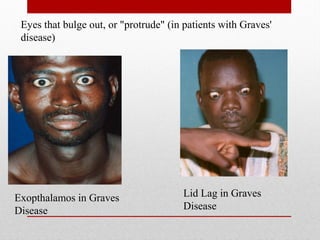
Exopthalamos in Graves
Disease
Lid Lag in Graves
Disease
Eyes that bulge out, or "protrude" (in patients with Graves'
disease)
How To Diagnose
Hyperthyroidism
• Hyperthyroidism is diagnosed based on symptoms,
physical exam, and blood tests to measure levels of
thyroid stimulating hormone (TSH) and a high thyroxine
(T4) level indicate hyperthyroidism. Your doctor may
also decide to order either an ultrasound or a nuclear
medicine scan of your thyroid to see if it has nodules, or
whether it is inflamed or overactive
• Anti-thyroperoxidase antibody levels
• TSH-receptor stimulating autoantibody levels (TSI
levels)
Treatments for Hyperthyroidism
References
• Hyperthyroidism:
www.emedicine.com/med/topic1109.htm
• Hyperthyroidism:
www.emedicine.com/ped/topic1099.htm
• Pictures from: www.thachers.org/ images/Graves.jpg

Hyperthyroidism 130929054018-phpapp01

  • 1.
  • 2.
    Introduction • What isHyperthyroidism? • “Hyperthyroidism” refers to overactivity of the thyroid gland leading to excessive synthesis of thyroid hormones and accelerated metabolism in the peripheral tissues. The secretion of thyroid hormone is no longer under the regulatory control of the hypothalamic- pituitary center.
  • 3.
    Other causes of hyperthyroidismcan include: • excess iodine, a key ingredient in T4 and T3 • inflammation of the thyroid (thyroiditis) that causes T4 and T3 to leak out of the gland • benign tumors of the thyroid or pituitary gland • large amounts of tetraiodothyronine taken through dietary supplements or medication
  • 4.
    Causes • Graves’ disease- the most common cause • A toxic nodular goitre (a goitre is an enlarged thyroid gland) • A solitary toxic thyroid adenoma (an adenoma is a clump of cells) • Thyroiditis (infection or inflammation of the thyroid gland) which is temporary
  • 5.
    Clinical Statistics • GravesDisease is the most common cause of hyperthyroidism (60-80%) of all cases. • Females are affected more frequently than men 10:1.5 • Monozygotic twins show 50% concordance rates • Incidence peaks from ages 20-40 • Incidence is similar in whites and Asians, but is somewhat decreased for African Americans
  • 6.
    Symptoms of hyperthyroidism Ifyou have hyperthyroidism, you may experience some of the following symptoms: •hyperactivity •mood swings – such as anxiety, irritability and nervousness •difficulty sleeping (insomnia) •feeling tired all the time (fatigue) •muscle weakness needing to pass stools (faeces) or urine more frequently • excess fats in your stools – which can make them greasy and difficult to flush down the toilet (steatorrhoea)
  • 7.
    • sensitivity toheat and excess sweating • unexplained or unexpected weight loss – despite having an increased appetite (though in a small number of cases, the increase in appetite can lead to weight gain) • very infrequent or light periods, or periods stopping altogether • Infertility • loss of interest in sex • If you have diabetes, your diabetic symptoms, such as extreme thirst and tiredness, may be made worse by hyperthyroidism.
  • 8.
    Exopthalamos in Graves Disease LidLag in Graves Disease Eyes that bulge out, or "protrude" (in patients with Graves' disease)
  • 9.
    How To Diagnose Hyperthyroidism •Hyperthyroidism is diagnosed based on symptoms, physical exam, and blood tests to measure levels of thyroid stimulating hormone (TSH) and a high thyroxine (T4) level indicate hyperthyroidism. Your doctor may also decide to order either an ultrasound or a nuclear medicine scan of your thyroid to see if it has nodules, or whether it is inflamed or overactive • Anti-thyroperoxidase antibody levels • TSH-receptor stimulating autoantibody levels (TSI levels)
  • 10.
  • 11.