
HYPERTHYROIDISM


             By,
             Pranav Khawale,
             BNYS(2nd Year)
CONTENTS
•   Definition
•   Etiopathogenesis
•   Clinical features
•   Risk Factors
•   Signs and Symptoms
•   Differential Diagnosis
•   Diagnosis
DEFINITION

• Hyperthyroidism occurs when the thyroid
  gland produces excessive amounts of thyroid
  hormone
ETIOPATHOGENESIS
• Hyperthyroidism may be caused by many diseases but
  three most common causes are:
        1. Grave’s disease
        2. Toxic multinodular goitre
        3. Toxic adenoma
• Hypersecretion of pituitary TSH by a pituitary tumor
• THR hypersecrection
• Thyroiditis
• Metastatic tumor of thyroid
CLINICAL FEATURES
•   Emotional instability
•   Nervousness
•   Palpitation
•   Fatigue
•   Weight loss
•   Perspiration
•   Menstrual disturbances
•   Skin is warm
•   Weakness of skeletal muscles
•   Osteoporosis is common
RISK FACTORS
•   Age between 20 and 40 years
•   Stress
•   Pregnancy
•   In newborns, a mother with Graves' disease
•   Intestinal dysbiosis
•   Antibiotic overusage
•   Family history
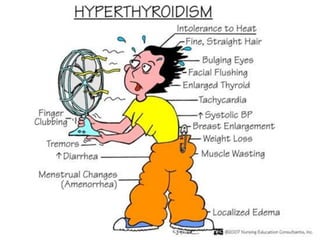
SIGNS AND SYMPTOMS
•   Tachycardia
•   Tachyarhythmia/palpitations
•   Bruit over thyroid gland
•   Hypertension
•   Swelling at the base of the neck
•   Moist skin and increased perspiration
•   Shakiness and tremor
•   Nervousness
• Confusion
• Increased appetite accompanied by weight loss
• Difficulty in sleeping
• Swollen, reddened, and bulging eyes
• Constant stare (infrequent blinking, lid lag)
• Sensitivity of eyes to light
• In thyroid storm: fever, very rapid pulse,
  agitation, and possibly delirium
• Altered menses
DIFFERENTIAL DIAGNOSIS
•   Depression
•   Anxiety
•   Hyperactivity
•   Neurologic disease with resultant tremor
•   Heart disease
•   Drugs
DIAGNOSIS
• Physical Examination
• Laboratory Tests
  o Serum thyroxine (T4) assay
  o Serum triiodothyronine (T3) assay
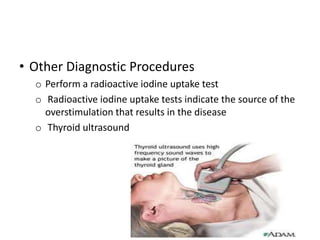
• Other Diagnostic Procedures
  o Perform a radioactive iodine uptake test
  o Radioactive iodine uptake tests indicate the source of the
    overstimulation that results in the disease
  o Thyroid ultrasound
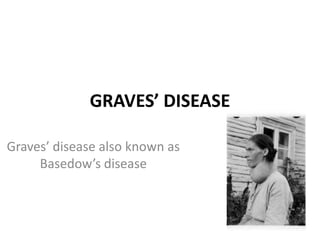
GRAVES’ DISEASE

Graves’ disease also known as
     Basedow’s disease
GRAVES’ DISEASE
• Most common cause of thyrotoxicosis
• TSH-R antibody (stim)
• Goitre, Orbitopathy, Dermopathy
• This disease is more frequently between the
  age of 30 and 40 years
• and has increased prevalence in females
ETIOPATHOGENESIS
• Graves’ disease is an autoimmune disease
• HLA association- graves’ disease has genetic
   predisposition
• Autoimmune disease association-graves’
   disease may be found in association with
   other organ-specific autoimmune diseases
• Other factor-emotional stress and smoking
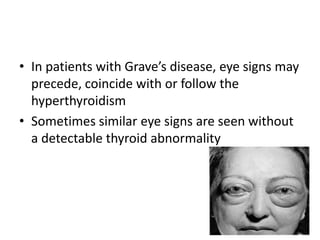
• In patients with Grave’s disease, eye signs may
  precede, coincide with or follow the
  hyperthyroidism
• Sometimes similar eye signs are seen without
  a detectable thyroid abnormality
Pathology
Activated T cells infiltrate orbital contents
and stimulate fibroblasts, leading to:
1. Enlargement of extraocular muscles
2. Cellular infiltration of interstitial tissues
3. Proliferation of orbital fat and connective
   tissue
PATHOLOGICAL CHANGES
• Grossly-
     • The thyroid is moderately, diffusely and symmetrically
       enlarged
     • Weight upto 70-90 gm


•Histologically-
     •Considerable epithelial hyperplasia and hypertrophy
     •The colloid is markedly diminished and is lightly staning
CLINICAL FEARTURES
• Slowly and insidiously
• Ophthalmopathy and dermatopathy
• Ocular abnormalities
REFERENCES
• Bartram T. Encyclopedia of Herbal Medicine.
  Dorset, England: Grace Publishers; 1995:422
• Text book of pathology
                  • (Harsh Mohan), 5th edition
THANK YOU…

Hyperthyriodism and graves disease

  • 1.
    HYPERTHYROIDISM By, Pranav Khawale, BNYS(2nd Year)
  • 2.
    CONTENTS • Definition • Etiopathogenesis • Clinical features • Risk Factors • Signs and Symptoms • Differential Diagnosis • Diagnosis
  • 3.
    DEFINITION • Hyperthyroidism occurswhen the thyroid gland produces excessive amounts of thyroid hormone
  • 4.
    ETIOPATHOGENESIS • Hyperthyroidism maybe caused by many diseases but three most common causes are: 1. Grave’s disease 2. Toxic multinodular goitre 3. Toxic adenoma • Hypersecretion of pituitary TSH by a pituitary tumor • THR hypersecrection • Thyroiditis • Metastatic tumor of thyroid
  • 5.
    CLINICAL FEATURES • Emotional instability • Nervousness • Palpitation • Fatigue • Weight loss • Perspiration • Menstrual disturbances • Skin is warm • Weakness of skeletal muscles • Osteoporosis is common
  • 6.
    RISK FACTORS • Age between 20 and 40 years • Stress • Pregnancy • In newborns, a mother with Graves' disease • Intestinal dysbiosis • Antibiotic overusage • Family history
  • 8.
    SIGNS AND SYMPTOMS • Tachycardia • Tachyarhythmia/palpitations • Bruit over thyroid gland • Hypertension • Swelling at the base of the neck • Moist skin and increased perspiration • Shakiness and tremor • Nervousness
  • 9.
    • Confusion • Increasedappetite accompanied by weight loss • Difficulty in sleeping • Swollen, reddened, and bulging eyes • Constant stare (infrequent blinking, lid lag) • Sensitivity of eyes to light • In thyroid storm: fever, very rapid pulse, agitation, and possibly delirium • Altered menses
  • 10.
    DIFFERENTIAL DIAGNOSIS • Depression • Anxiety • Hyperactivity • Neurologic disease with resultant tremor • Heart disease • Drugs
  • 11.
    DIAGNOSIS • Physical Examination •Laboratory Tests o Serum thyroxine (T4) assay o Serum triiodothyronine (T3) assay
  • 12.
    • Other DiagnosticProcedures o Perform a radioactive iodine uptake test o Radioactive iodine uptake tests indicate the source of the overstimulation that results in the disease o Thyroid ultrasound
  • 13.
    GRAVES’ DISEASE Graves’ diseasealso known as Basedow’s disease
  • 14.
    GRAVES’ DISEASE • Mostcommon cause of thyrotoxicosis • TSH-R antibody (stim) • Goitre, Orbitopathy, Dermopathy • This disease is more frequently between the age of 30 and 40 years • and has increased prevalence in females
  • 15.
    ETIOPATHOGENESIS • Graves’ diseaseis an autoimmune disease • HLA association- graves’ disease has genetic predisposition • Autoimmune disease association-graves’ disease may be found in association with other organ-specific autoimmune diseases • Other factor-emotional stress and smoking
  • 16.
    • In patientswith Grave’s disease, eye signs may precede, coincide with or follow the hyperthyroidism • Sometimes similar eye signs are seen without a detectable thyroid abnormality
  • 17.
    Pathology Activated T cellsinfiltrate orbital contents and stimulate fibroblasts, leading to: 1. Enlargement of extraocular muscles 2. Cellular infiltration of interstitial tissues 3. Proliferation of orbital fat and connective tissue
  • 18.
    PATHOLOGICAL CHANGES • Grossly- • The thyroid is moderately, diffusely and symmetrically enlarged • Weight upto 70-90 gm •Histologically- •Considerable epithelial hyperplasia and hypertrophy •The colloid is markedly diminished and is lightly staning
  • 19.
    CLINICAL FEARTURES • Slowlyand insidiously • Ophthalmopathy and dermatopathy • Ocular abnormalities
  • 20.
    REFERENCES • Bartram T.Encyclopedia of Herbal Medicine. Dorset, England: Grace Publishers; 1995:422 • Text book of pathology • (Harsh Mohan), 5th edition
  • 21.