CONTROL OF THYROID
GLAND
HARITH RIYADH
Thyroid gland: overview
• What is a thyroid gland?
• The thyroid gland is an endocrine gland in your neck. It
makes two hormones that are secreted into the blood:
thyroxine (T4) and triiodothyronine (T3). These hormones
are necessary for all the cells in your body to work
normally
• A gland that makes and stores hormones that help
regulate the heart rate, blood pressure, body temperature,
and the rate at which food is converted into energy.
Thyroid hormones are essential for the function of every
cell in the body. They help regulate growth and the rate of
chemical reactions (metabolism) in the body. Thyroid
hormones also help children grow and develop.
Control of thyroid gland
• The chief stimulator of thyroid hormone
synthesis is thyroid-stimulating hormone
from the anterior pituitary. Binding of TSH
to receptors on thyroid epithelial cells
seems to enhance all of the processes
necessary for synthesis of thyroid
hormones, including synthesis of the iodide
transporter, thyroid peroxidase and
thyroglobulin.
•The magnitude of the TSH signal also
sets the rate of endocytosis of colloid -
high concentrations of TSH lead to
faster rates of endocytosis, and hence,
thyroid hormone release into the
circulation. Conversely, when TSH
levels are low, rates of thyroid
hormone synthesis and release
diminish.
Control of thyroid gland
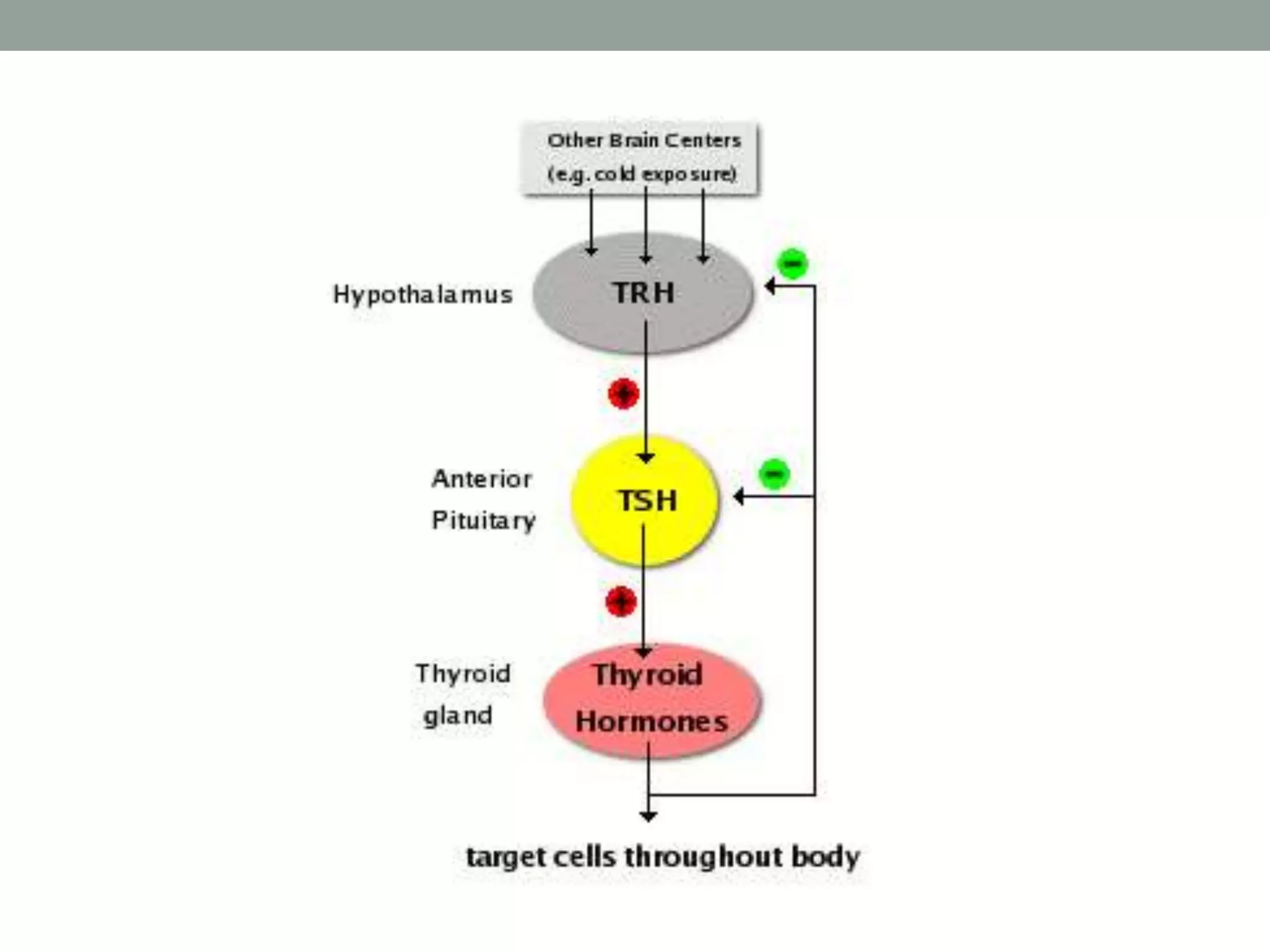
• The thyroid gland is part of the hypothalamic-pituitary-
thyroid axis, and control of thyroid hormone secretion is
exerted by classical negative feedback, as depicted in the
diagram. Thyroid-releasing hormone (TRH) from the
hypothalamus stimulates TSH from the pituitary, which
stimulates thyroid hormone release. As blood
concentrations of thyroid hormones increase, they inhibit
both TSH and TRH, leading to "shutdown" of thyroid
epithelial cells. Later, when blood levels of thyroid
hormone have decayed, the negative feedback signal
fades, and the system wakes up again.
• A number of other factors have been shown
to influence thyroid hormone secretion. In
rodents and young children, exposure to a
cold environment triggers TRH secretion,
leading to enhanced thyroid hormone
release. This makes sense considering the
known ability of thyroid hormones to spark
body heat production.
THANKS
ANY QUESTION

THYROID GLAND AND CONTROL IT

  • 1.
  • 2.
    Thyroid gland: overview •What is a thyroid gland? • The thyroid gland is an endocrine gland in your neck. It makes two hormones that are secreted into the blood: thyroxine (T4) and triiodothyronine (T3). These hormones are necessary for all the cells in your body to work normally • A gland that makes and stores hormones that help regulate the heart rate, blood pressure, body temperature, and the rate at which food is converted into energy. Thyroid hormones are essential for the function of every cell in the body. They help regulate growth and the rate of chemical reactions (metabolism) in the body. Thyroid hormones also help children grow and develop.
  • 3.
    Control of thyroidgland • The chief stimulator of thyroid hormone synthesis is thyroid-stimulating hormone from the anterior pituitary. Binding of TSH to receptors on thyroid epithelial cells seems to enhance all of the processes necessary for synthesis of thyroid hormones, including synthesis of the iodide transporter, thyroid peroxidase and thyroglobulin.
  • 4.
    •The magnitude ofthe TSH signal also sets the rate of endocytosis of colloid - high concentrations of TSH lead to faster rates of endocytosis, and hence, thyroid hormone release into the circulation. Conversely, when TSH levels are low, rates of thyroid hormone synthesis and release diminish.
  • 5.
    Control of thyroidgland • The thyroid gland is part of the hypothalamic-pituitary- thyroid axis, and control of thyroid hormone secretion is exerted by classical negative feedback, as depicted in the diagram. Thyroid-releasing hormone (TRH) from the hypothalamus stimulates TSH from the pituitary, which stimulates thyroid hormone release. As blood concentrations of thyroid hormones increase, they inhibit both TSH and TRH, leading to "shutdown" of thyroid epithelial cells. Later, when blood levels of thyroid hormone have decayed, the negative feedback signal fades, and the system wakes up again.
  • 7.
    • A numberof other factors have been shown to influence thyroid hormone secretion. In rodents and young children, exposure to a cold environment triggers TRH secretion, leading to enhanced thyroid hormone release. This makes sense considering the known ability of thyroid hormones to spark body heat production.
  • 8.