Hypersensitivity
AMIR RAJAEY
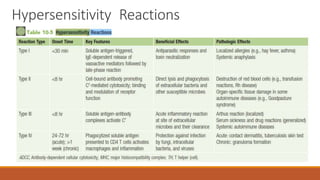
Hypersensitivity
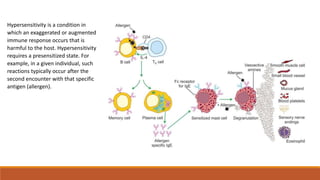
Hypersensitivity is a condition in
which an exaggerated or augmented
immune response occurs that is
harmful to the host. Hypersensitivity
requires a presensitized state. For
example, in a given individual, such
reactions typically occur after the
second encounter with that specific
antigen (allergen).
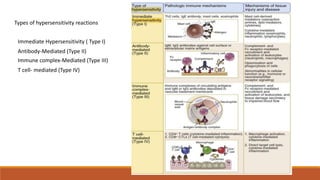
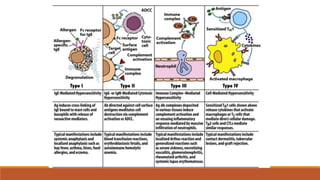
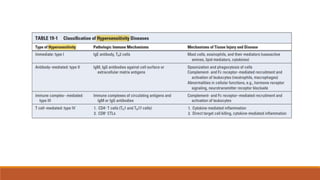
Types of hypersensitivity reactions
Immediate Hypersensitivity ( Type I)
Antibody-Mediated (Type II)
Immune complex-Mediated (Type III)
T cell- mediated (Type IV)
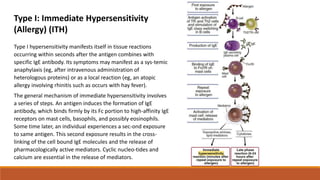
Type I hypersensitivity manifests itself in tissue reactions
occurring within seconds after the antigen combines with
specific IgE antibody. Its symptoms may manifest as a sys-temic
anaphylaxis (eg, after intravenous administration of
heterologous proteins) or as a local reaction (eg, an atopic
allergy involving rhinitis such as occurs with hay fever).
The general mechanism of immediate hypersensitivity involves
a series of steps. An antigen induces the formation of IgE
antibody, which binds firmly by its Fc portion to high-affinity IgE
receptors on mast cells, basophils, and possibly eosinophils.
Some time later, an individual experiences a sec-ond exposure
to same antigen. This second exposure results in the cross-
linking of the cell bound IgE molecules and the release of
pharmacologically active mediators. Cyclic nucleo-tides and
calcium are essential in the release of mediators.
Type I: Immediate Hypersensitivity
(Allergy) (ITH)
Type II: Hypersensitivity
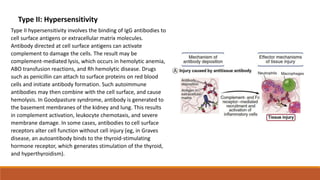
Type II hypersensitivity involves the binding of IgG antibodies to
cell surface antigens or extracellular matrix molecules.
Antibody directed at cell surface antigens can activate
complement to damage the cells. The result may be
complement-mediated lysis, which occurs in hemolytic anemia,
ABO transfusion reactions, and Rh hemolytic disease. Drugs
such as penicillin can attach to surface proteins on red blood
cells and initiate antibody formation. Such autoimmune
antibodies may then combine with the cell surface, and cause
hemolysis. In Goodpasture syndrome, antibody is generated to
the basement membranes of the kidney and lung. This results
in complement activation, leukocyte chemotaxis, and severe
membrane damage. In some cases, antibodies to cell surface
receptors alter cell function without cell injury (eg, in Graves
disease, an autoantibody binds to the thyroid-stimulating
hormone receptor, which generates stimulation of the thyroid,
and hyperthyroidism).
Type III: Immune Complex Hypersensitivity
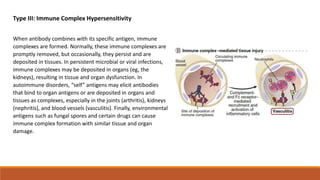
When antibody combines with its specific antigen, immune
complexes are formed. Normally, these immune complexes are
promptly removed, but occasionally, they persist and are
deposited in tissues. In persistent microbial or viral infections,
immune complexes may be deposited in organs (eg, the
kidneys), resulting in tissue and organ dysfunction. In
autoimmune disorders, “self” antigens may elicit antibodies
that bind to organ antigens or are deposited in organs and
tissues as complexes, especially in the joints (arthritis), kidneys
(nephritis), and blood vessels (vasculitis). Finally, environmental
antigens such as fungal spores and certain drugs can cause
immune complex formation with similar tissue and organ
damage.
Type IV: Cell-Mediated (Delayed
type) Hypersensitivity (DTH)
Cell-mediated hypersensitivity is a T cell–
mediated response. The interaction of an
antigen with specifically sensitized T cells
results in T cell proliferation, release of potent
inflammatory cytokines (IFN-γ and IL-2), and
activation of macrophages. This inflammatory
response most often begins 2 or 3 days after
contact with the antigen and typically lasts for
several days.
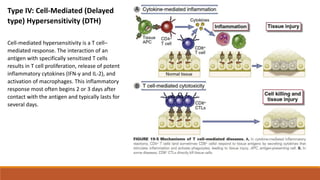
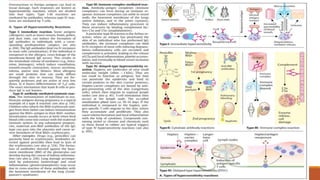
Type IV hypersensitivity: delayed-type hypersensitivity (DTH) mediated by CD4 T cells (TH1). In this case, chemically
modified self-proteins are processed, and peptides are presented to CD4 memory T cells cycling through the skin,
which release cytokines (including interferon-γ [IFN-γ]) that promote inflammation. Other examples of DTH are the
tuberculin response (purified protein derivative test) and reaction to metals such as nickel. APC, Antigen-presenting
cell; TCR, T-cell receptor.
Hypersensitivity Reactions
Hypersensitivity
Hypersensitivity
Hypersensitivity

Hypersensitivity

  • 1.
  • 2.
    Hypersensitivity is acondition in which an exaggerated or augmented immune response occurs that is harmful to the host. Hypersensitivity requires a presensitized state. For example, in a given individual, such reactions typically occur after the second encounter with that specific antigen (allergen).
  • 3.
    Types of hypersensitivityreactions Immediate Hypersensitivity ( Type I) Antibody-Mediated (Type II) Immune complex-Mediated (Type III) T cell- mediated (Type IV)
  • 4.
    Type I hypersensitivitymanifests itself in tissue reactions occurring within seconds after the antigen combines with specific IgE antibody. Its symptoms may manifest as a sys-temic anaphylaxis (eg, after intravenous administration of heterologous proteins) or as a local reaction (eg, an atopic allergy involving rhinitis such as occurs with hay fever). The general mechanism of immediate hypersensitivity involves a series of steps. An antigen induces the formation of IgE antibody, which binds firmly by its Fc portion to high-affinity IgE receptors on mast cells, basophils, and possibly eosinophils. Some time later, an individual experiences a sec-ond exposure to same antigen. This second exposure results in the cross- linking of the cell bound IgE molecules and the release of pharmacologically active mediators. Cyclic nucleo-tides and calcium are essential in the release of mediators. Type I: Immediate Hypersensitivity (Allergy) (ITH)
  • 5.
    Type II: Hypersensitivity TypeII hypersensitivity involves the binding of IgG antibodies to cell surface antigens or extracellular matrix molecules. Antibody directed at cell surface antigens can activate complement to damage the cells. The result may be complement-mediated lysis, which occurs in hemolytic anemia, ABO transfusion reactions, and Rh hemolytic disease. Drugs such as penicillin can attach to surface proteins on red blood cells and initiate antibody formation. Such autoimmune antibodies may then combine with the cell surface, and cause hemolysis. In Goodpasture syndrome, antibody is generated to the basement membranes of the kidney and lung. This results in complement activation, leukocyte chemotaxis, and severe membrane damage. In some cases, antibodies to cell surface receptors alter cell function without cell injury (eg, in Graves disease, an autoantibody binds to the thyroid-stimulating hormone receptor, which generates stimulation of the thyroid, and hyperthyroidism).
  • 6.
    Type III: ImmuneComplex Hypersensitivity When antibody combines with its specific antigen, immune complexes are formed. Normally, these immune complexes are promptly removed, but occasionally, they persist and are deposited in tissues. In persistent microbial or viral infections, immune complexes may be deposited in organs (eg, the kidneys), resulting in tissue and organ dysfunction. In autoimmune disorders, “self” antigens may elicit antibodies that bind to organ antigens or are deposited in organs and tissues as complexes, especially in the joints (arthritis), kidneys (nephritis), and blood vessels (vasculitis). Finally, environmental antigens such as fungal spores and certain drugs can cause immune complex formation with similar tissue and organ damage.
  • 7.
    Type IV: Cell-Mediated(Delayed type) Hypersensitivity (DTH) Cell-mediated hypersensitivity is a T cell– mediated response. The interaction of an antigen with specifically sensitized T cells results in T cell proliferation, release of potent inflammatory cytokines (IFN-γ and IL-2), and activation of macrophages. This inflammatory response most often begins 2 or 3 days after contact with the antigen and typically lasts for several days.
  • 8.
    Type IV hypersensitivity:delayed-type hypersensitivity (DTH) mediated by CD4 T cells (TH1). In this case, chemically modified self-proteins are processed, and peptides are presented to CD4 memory T cells cycling through the skin, which release cytokines (including interferon-γ [IFN-γ]) that promote inflammation. Other examples of DTH are the tuberculin response (purified protein derivative test) and reaction to metals such as nickel. APC, Antigen-presenting cell; TCR, T-cell receptor.
  • 9.