SLIDESMANIA.COM
SLIDESMANIA.COM
Types of hypersensitivity reaction
Types Of
Hypersensitivity
Reaction
SLIDESMANIA.COM
SLIDESMANIA.COM
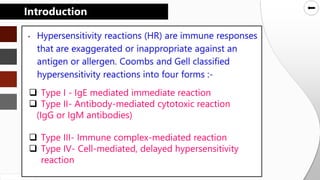
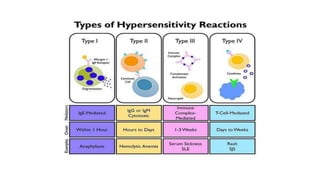
 Type I - IgE mediated immediate reaction
 Type II- Antibody-mediated cytotoxic reaction
(IgG or IgM antibodies)
 Type III- Immune complex-mediated reaction
 Type IV- Cell-mediated, delayed hypersensitivity
reaction
Introduction
SLIDESMANIA.COM
SLIDESMANIA.COM
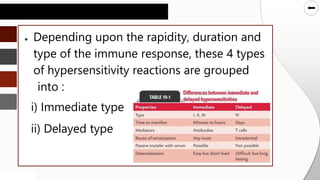
● Depending upon the rapidity, duration and
type of the immune response, these 4 types
of hypersensitivity reactions are grouped
into :
i) Immediate type
ii) Delayed type
SLIDESMANIA.COM
SLIDESMANIA.COM
● Type I hypersensitivities include atopic diseases, which are
an exaggerated IgE mediated immune responses (i.e.,
allergic: asthma), and allergic diseases, which are immune
responses to foreign allergens (i.e., anaphylaxis).
● The allergens that result in a type I hypersensitivity may be
harmless (i.e., pollen, mites, etc.) or more hazardous such
as insect venoms.
Type I Anaphylactic Reaction
SLIDESMANIA.COM
SLIDESMANIA.COM
SLIDESMANIA.COM
SLIDESMANIA.COM
Type I Anaphylactic REACTION
Etiology
&
Pathogenesis
Signs
&
symptoms
Examples of
reaction type
Treatment
SLIDESMANIA.COM
SLIDESMANIA.COM
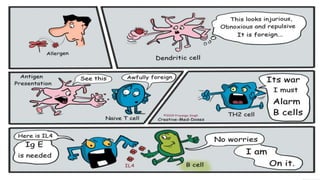
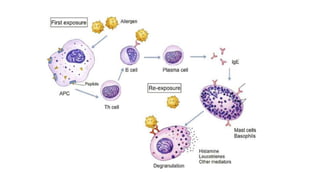
 Type I hypersensitivity occurs as a result of exposure
to an antigen. The response to the antigen occurs
in two stages: the sensitization and the effect stage.
 In the sensitization stage, the host experiences an
asymptomatic contact with the antigen.
 In the "effect" period, the pre-sensitized host is re-
introduced to the antigen, which then leads to a type I
anaphylactic or atopic immune response .
Etiology & Pathogenesis
SLIDESMANIA.COM
SLIDESMANIA.COM
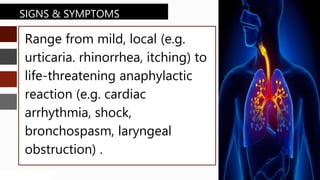
Range from mild, local (e.g.
urticaria. rhinorrhea, itching) to
life-threatening anaphylactic
reaction (e.g. cardiac
arrhythmia, shock,
bronchospasm, laryngeal
obstruction) .
SIGNS & SYMPTOMS
Examples
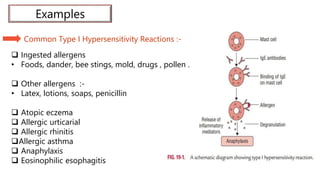
Common Type I Hypersensitivity Reactions :-
 Ingested allergens
• Foods, dander, bee stings, mold, drugs , pollen .
 Other allergens :-
• Latex, lotions, soaps, penicillin
 Atopic eczema
 Allergic urticarial
 Allergic rhinitis
Allergic asthma
 Anaphylaxis
 Eosinophilic esophagitis
Medications :-
 Symptom-based
● Antihistamines (e.g. H1 blockers),
corticosteroids , epinephrine .
 Other interventions
● Hypo /de-sensitization
Escalating doses of allergen
subcutaneously injected over course
of years.
Treatment
SLIDESMANIA.COM
SLIDESMANIA.COM
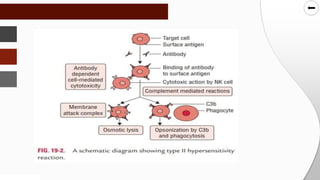
Type II hypersensitivity reaction refers to an antibody-
mediated immune reaction in which antibodies (IgG or IgM)
are directed against cellular or extracellular matrix antigens
with the resultant cellular destruction, functional loss, or
damage to tissues.
TYPE II Cytotoxic Reaction
SLIDESMANIA.COM
SLIDESMANIA.COM
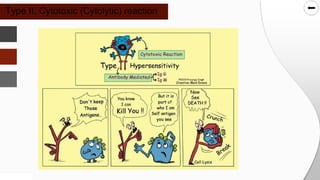
Type II: Cytotoxic (Cytolytic) reaction
SLIDESMANIA.COM
SLIDESMANIA.COM
TYPE II Cytotoxic reaction
Signs
&
symptoms
Examples of
reaction type II
Treatment
Etiology
&
Pathology
SLIDESMANIA.COM
SLIDESMANIA.COM
 The type II hypersensitivity immune reaction develops
in response to modifications of cell surface or matrix-
associated antigens generating antigenic epitopes that are
regarded as foreign by the immune system.
 The most common causes include medications like
penicillin, thiazides, cephalosporin , and methyldopa.
 The drug molecule either binds to the surface of cells
resulting in a neoantigen or alter the epitopes of the
existing self-antigen on the cell surface.
Etiology
SLIDESMANIA.COM
SLIDESMANIA.COM
● In type II hypersensitivity, following exposure to the
inciting agent, autoantibodies are produced (IgG & IgM)
to the host cells (sensitization phase), promoting a series of
pathogenic outcomes (effector phase).
● The pathophysiology of type II hypersensitivity
reactions can be broadly classified into three types :-
1. Cell depletion or destruction without inflammation.
2. Inflammation mediated by complement or Fc receptor.
3. Cellular dysfunction by antibodies.
Pathology
SLIDESMANIA.COM
SLIDESMANIA.COM
SLIDESMANIA.COM
SLIDESMANIA.COM
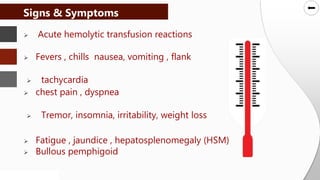
 Acute hemolytic transfusion reactions
 Fevers , chills nausea, vomiting , flank
 tachycardia
 chest pain , dyspnea
 Tremor, insomnia, irritability, weight loss
 Fatigue , jaundice , hepatosplenomegaly (HSM)
 Bullous pemphigoid
Signs & Symptoms
SLIDESMANIA.COM
SLIDESMANIA.COM
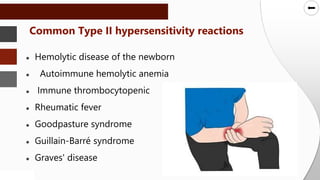
● Hemolytic disease of the newborn
● Autoimmune hemolytic anemia C
● Immune thrombocytopenic
● Rheumatic fever
● Goodpasture syndrome
● Guillain-Barré syndrome
● Graves' disease
Common Type II hypersensitivity reactions
Medications
• Corticosteroids
 Severe reactions
may require :-
• plasmapheresis
• immunosuppressant
Treatment
SLIDESMANIA.COM
SLIDESMANIA.COM
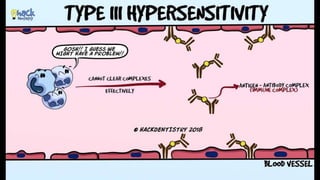
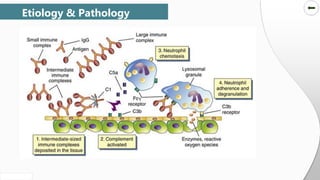
An abnormal immune response is mediated by the formation
of antigen-antibody aggregates called "immune complexes.“
They can precipitate in various tissues and trigger the
classical complement pathway.
Complement activation leads to the recruitment
of inflammatory cells that release lysosomal enzymes and free
radicals at the site of immune complexes, causing tissue
damage.
Type III Hypersensitivity Reaction
Immune complex-mediated reaction
LogoType
The principle feature that
separates type III reactions from
other hypersensitivity reactions
is that in type III the antigen-
antibody complexes are pre-
formed in the circulation before
their deposition in tissues .
SLIDESMANIA.COM
SLIDESMANIA.COM
SLIDESMANIA.COM
SLIDESMANIA.COM
Type III Hypersensitivity Reaction
Etiology
&
Pathology
Signs
&
Symptoms
Examples of
reaction type III
Treatment
SLIDESMANIA.COM
SLIDESMANIA.COM
Etiology & Pathology
SLIDESMANIA.COM
SLIDESMANIA.COM
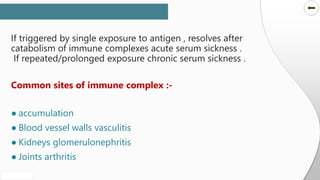
If triggered by single exposure to antigen , resolves after
catabolism of immune complexes acute serum sickness .
If repeated/prolonged exposure chronic serum sickness .
Common sites of immune complex :-
● accumulation
● Blood vessel walls vasculitis
● Kidneys glomerulonephritis
● Joints arthritis
SLIDESMANIA.COM
SLIDESMANIA.COM
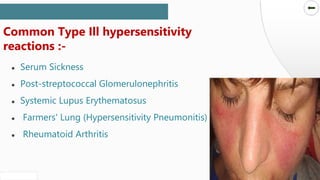
● Serum Sickness
● Post-streptococcal Glomerulonephritis
● Systemic Lupus Erythematosus
● Farmers' Lung (Hypersensitivity Pneumonitis)
● Rheumatoid Arthritis
Common Type Ill hypersensitivity
reactions :-
SLIDESMANIA.COM
SLIDESMANIA.COM
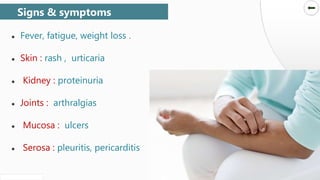
● Fever, fatigue, weight loss .
● Skin : rash , urticaria
● Kidney : proteinuria
● Joints : arthralgias
● Mucosa : ulcers
● Serosa : pleuritis, pericarditis
Signs & symptoms
Treatment
Medications
• Systemic lupus erythematosus
(SLE) :-
Administration of anti- inflammatory,
corticosteroids, cytotoxic medications
to decrease inflammatory activity.
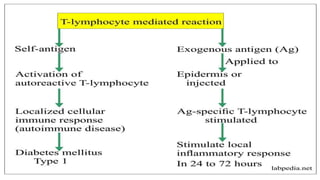
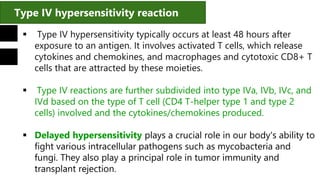
Type IV hypersensitivity reaction
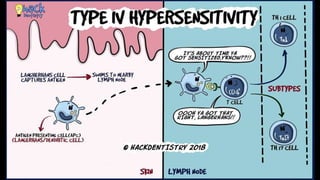
 Type IV hypersensitivity typically occurs at least 48 hours after
exposure to an antigen. It involves activated T cells, which release
cytokines and chemokines, and macrophages and cytotoxic CD8+ T
cells that are attracted by these moieties.
 Type IV reactions are further subdivided into type IVa, IVb, IVc, and
IVd based on the type of T cell (CD4 T-helper type 1 and type 2
cells) involved and the cytokines/chemokines produced.
 Delayed hypersensitivity plays a crucial role in our body's ability to
fight various intracellular pathogens such as mycobacteria and
fungi. They also play a principal role in tumor immunity and
transplant rejection.
SLIDESMANIA.COM
SLIDESMANIA.COM
Etiology
&
Pathology
Signs
&
symptoms
Examples of
reaction type II
Treatment
Type IV Hypersensitivity Reaction
Etiology & Pathology
Type IV hypersensitivity reaction are, to some extent, normal
physiological events that aid in the fight against infections, and
disruption in this system can predispose to a variety of opportunistic
illnesses.
• Exposure to poison ivy resulting in contact dermatitis is a
classic example.
• Several drugs (antibiotics, anticonvulsants) can
trigger type IV hypersensitivity reactions .Certain viral infections,
when exposed to certain drugs, can trigger a reaction, such as
cytomegalovirus with antibiotics, Epstein Barr virus with
amoxicillin.
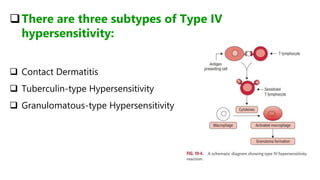
There are three subtypes of Type IV
hypersensitivity:
 Contact Dermatitis
 Tuberculin-type Hypersensitivity
 Granulomatous-type Hypersensitivity
SLIDESMANIA.COM
SLIDESMANIA.COM
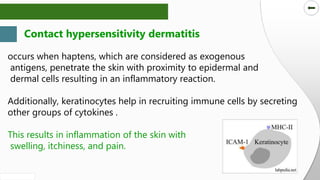
Contact hypersensitivity dermatitis
occurs when haptens, which are considered as exogenous
antigens, penetrate the skin with proximity to epidermal and
dermal cells resulting in an inflammatory reaction.
Additionally, keratinocytes help in recruiting immune cells by secreting
other groups of cytokines .
This results in inflammation of the skin with
swelling, itchiness, and pain.
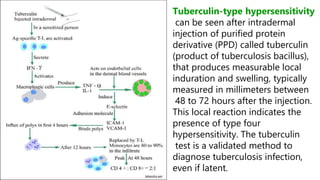
Tuberculin-type hypersensitivity
can be seen after intradermal
injection of purified protein
derivative (PPD) called tuberculin
(product of tuberculosis bacillus),
that produces measurable local
induration and swelling, typically
measured in millimeters between
48 to 72 hours after the injection.
This local reaction indicates the
presence of type four
hypersensitivity. The tuberculin
test is a validated method to
diagnose tuberculosis infection,
even if latent.
SLIDESMANIA.COM
SLIDESMANIA.COM
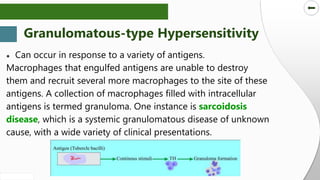
● Can occur in response to a variety of antigens.
Macrophages that engulfed antigens are unable to destroy
them and recruit several more macrophages to the site of these
antigens. A collection of macrophages filled with intracellular
antigens is termed granuloma. One instance is sarcoidosis
disease, which is a systemic granulomatous disease of unknown
cause, with a wide variety of clinical presentations.
Granulomatous-type Hypersensitivity
Signs & symptoms
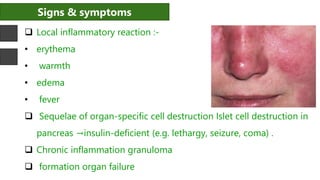
 Local inflammatory reaction :-
• erythema
• warmth
• edema
• fever
 Sequelae of organ-specific cell destruction Islet cell destruction in
pancreas →insulin-deficient (e.g. lethargy, seizure, coma) .
 Chronic inflammation granuloma
 formation organ failure (e.g. lethargy, seizure, coma) Chronic inflammation granuloma formation organ failure
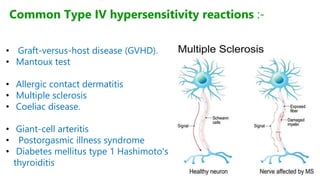
• Graft-versus-host disease (GVHD).
• Mantoux test
• Allergic contact dermatitis
• Multiple sclerosis
• Coeliac disease.
• Giant-cell arteritis
• Postorgasmic illness syndrome
• Diabetes mellitus type 1 Hashimoto's
thyroiditis
Common Type IV hypersensitivity reactions :-
Medications
• Corticosteroids for inflammatory
control Systemic for severe,
generalized reactions.
• site-specific (e.g. topical for
contact dermatitis; inhaled for
hypersensitivity pneumonitis).
Treatment
Summary in video
References
 Justiz VaillaAA, Vashisht R, Zito PM. Immediate Hypersensitivity Reactions.
[Updated 2021 Nov 15]. In: StatPearls [Internet]. Treasure Island (FL):
StatPearls Publishing; 2022 Jan-. Available from:
https://www.ncbi.nlm.nih.gov/books/NBK513315/
 https://www.osmosis.org/
 Marwa K, Kondamudi NP. Type IV Hypersensitivity Reaction. [Updated 2021
Nov 7]. In: StatPearls [Internet]. Treasure Island (FL): StatPearls Publishing;
2022 Jan-. Available from:
https://www.ncbi.nlm.nih.gov/books/NBK562228/
References
 Bajwa SF, Mohammed RHA. Type II Hypersensitivity Reaction. [Updated
2021 Sep 20]. In: StatPearls [Internet]. Treasure Island (FL): StatPearls
Publishing; 2022 Jan-. Available from:
https://www.ncbi.nlm.nih.gov/books/NBK563264
 Usman N, Annamaraju P. Type III Hypersensitivity Reaction. [Updated 2021
Aug 22]. In: StatPearls [Internet]. Treasure Island (FL): StatPearls Publishing;
2022 Jan-. Available from:
https://www.ncbi.nlm.nih.gov/books/NBK559122/
 Essential Pathology For Dental Students ; Authors, Harsh Mohan,
Sugandha Mohan ; Edition, illustrated ; Publisher, JP Medical Ltd, 2011.
Types of  Inflammation  ppt.pptx

Types of Inflammation ppt.pptx

  • 1.
    SLIDESMANIA.COM SLIDESMANIA.COM Types of hypersensitivityreaction Types Of Hypersensitivity Reaction
  • 2.
    SLIDESMANIA.COM SLIDESMANIA.COM  Type I- IgE mediated immediate reaction  Type II- Antibody-mediated cytotoxic reaction (IgG or IgM antibodies)  Type III- Immune complex-mediated reaction  Type IV- Cell-mediated, delayed hypersensitivity reaction Introduction
  • 4.
    SLIDESMANIA.COM SLIDESMANIA.COM ● Depending uponthe rapidity, duration and type of the immune response, these 4 types of hypersensitivity reactions are grouped into : i) Immediate type ii) Delayed type
  • 5.
    SLIDESMANIA.COM SLIDESMANIA.COM ● Type Ihypersensitivities include atopic diseases, which are an exaggerated IgE mediated immune responses (i.e., allergic: asthma), and allergic diseases, which are immune responses to foreign allergens (i.e., anaphylaxis). ● The allergens that result in a type I hypersensitivity may be harmless (i.e., pollen, mites, etc.) or more hazardous such as insect venoms. Type I Anaphylactic Reaction
  • 6.
  • 7.
    SLIDESMANIA.COM SLIDESMANIA.COM Type I AnaphylacticREACTION Etiology & Pathogenesis Signs & symptoms Examples of reaction type Treatment
  • 8.
    SLIDESMANIA.COM SLIDESMANIA.COM  Type Ihypersensitivity occurs as a result of exposure to an antigen. The response to the antigen occurs in two stages: the sensitization and the effect stage.  In the sensitization stage, the host experiences an asymptomatic contact with the antigen.  In the "effect" period, the pre-sensitized host is re- introduced to the antigen, which then leads to a type I anaphylactic or atopic immune response . Etiology & Pathogenesis
  • 10.
    SLIDESMANIA.COM SLIDESMANIA.COM Range from mild,local (e.g. urticaria. rhinorrhea, itching) to life-threatening anaphylactic reaction (e.g. cardiac arrhythmia, shock, bronchospasm, laryngeal obstruction) . SIGNS & SYMPTOMS
  • 11.
    Examples Common Type IHypersensitivity Reactions :-  Ingested allergens • Foods, dander, bee stings, mold, drugs , pollen .  Other allergens :- • Latex, lotions, soaps, penicillin  Atopic eczema  Allergic urticarial  Allergic rhinitis Allergic asthma  Anaphylaxis  Eosinophilic esophagitis
  • 12.
    Medications :-  Symptom-based ●Antihistamines (e.g. H1 blockers), corticosteroids , epinephrine .  Other interventions ● Hypo /de-sensitization Escalating doses of allergen subcutaneously injected over course of years. Treatment
  • 13.
    SLIDESMANIA.COM SLIDESMANIA.COM Type II hypersensitivityreaction refers to an antibody- mediated immune reaction in which antibodies (IgG or IgM) are directed against cellular or extracellular matrix antigens with the resultant cellular destruction, functional loss, or damage to tissues. TYPE II Cytotoxic Reaction
  • 14.
  • 15.
    SLIDESMANIA.COM SLIDESMANIA.COM TYPE II Cytotoxicreaction Signs & symptoms Examples of reaction type II Treatment Etiology & Pathology
  • 16.
    SLIDESMANIA.COM SLIDESMANIA.COM  The typeII hypersensitivity immune reaction develops in response to modifications of cell surface or matrix- associated antigens generating antigenic epitopes that are regarded as foreign by the immune system.  The most common causes include medications like penicillin, thiazides, cephalosporin , and methyldopa.  The drug molecule either binds to the surface of cells resulting in a neoantigen or alter the epitopes of the existing self-antigen on the cell surface. Etiology
  • 17.
    SLIDESMANIA.COM SLIDESMANIA.COM ● In typeII hypersensitivity, following exposure to the inciting agent, autoantibodies are produced (IgG & IgM) to the host cells (sensitization phase), promoting a series of pathogenic outcomes (effector phase). ● The pathophysiology of type II hypersensitivity reactions can be broadly classified into three types :- 1. Cell depletion or destruction without inflammation. 2. Inflammation mediated by complement or Fc receptor. 3. Cellular dysfunction by antibodies. Pathology
  • 18.
  • 19.
    SLIDESMANIA.COM SLIDESMANIA.COM  Acute hemolytictransfusion reactions  Fevers , chills nausea, vomiting , flank  tachycardia  chest pain , dyspnea  Tremor, insomnia, irritability, weight loss  Fatigue , jaundice , hepatosplenomegaly (HSM)  Bullous pemphigoid Signs & Symptoms
  • 20.
    SLIDESMANIA.COM SLIDESMANIA.COM ● Hemolytic diseaseof the newborn ● Autoimmune hemolytic anemia C ● Immune thrombocytopenic ● Rheumatic fever ● Goodpasture syndrome ● Guillain-Barré syndrome ● Graves' disease Common Type II hypersensitivity reactions
  • 21.
    Medications • Corticosteroids  Severereactions may require :- • plasmapheresis • immunosuppressant Treatment
  • 22.
    SLIDESMANIA.COM SLIDESMANIA.COM An abnormal immuneresponse is mediated by the formation of antigen-antibody aggregates called "immune complexes.“ They can precipitate in various tissues and trigger the classical complement pathway. Complement activation leads to the recruitment of inflammatory cells that release lysosomal enzymes and free radicals at the site of immune complexes, causing tissue damage. Type III Hypersensitivity Reaction Immune complex-mediated reaction
  • 23.
    LogoType The principle featurethat separates type III reactions from other hypersensitivity reactions is that in type III the antigen- antibody complexes are pre- formed in the circulation before their deposition in tissues .
  • 24.
  • 25.
    SLIDESMANIA.COM SLIDESMANIA.COM Type III HypersensitivityReaction Etiology & Pathology Signs & Symptoms Examples of reaction type III Treatment
  • 26.
  • 27.
    SLIDESMANIA.COM SLIDESMANIA.COM If triggered bysingle exposure to antigen , resolves after catabolism of immune complexes acute serum sickness . If repeated/prolonged exposure chronic serum sickness . Common sites of immune complex :- ● accumulation ● Blood vessel walls vasculitis ● Kidneys glomerulonephritis ● Joints arthritis
  • 28.
    SLIDESMANIA.COM SLIDESMANIA.COM ● Serum Sickness ●Post-streptococcal Glomerulonephritis ● Systemic Lupus Erythematosus ● Farmers' Lung (Hypersensitivity Pneumonitis) ● Rheumatoid Arthritis Common Type Ill hypersensitivity reactions :-
  • 29.
    SLIDESMANIA.COM SLIDESMANIA.COM ● Fever, fatigue,weight loss . ● Skin : rash , urticaria ● Kidney : proteinuria ● Joints : arthralgias ● Mucosa : ulcers ● Serosa : pleuritis, pericarditis Signs & symptoms
  • 30.
    Treatment Medications • Systemic lupuserythematosus (SLE) :- Administration of anti- inflammatory, corticosteroids, cytotoxic medications to decrease inflammatory activity.
  • 31.
    Type IV hypersensitivityreaction  Type IV hypersensitivity typically occurs at least 48 hours after exposure to an antigen. It involves activated T cells, which release cytokines and chemokines, and macrophages and cytotoxic CD8+ T cells that are attracted by these moieties.  Type IV reactions are further subdivided into type IVa, IVb, IVc, and IVd based on the type of T cell (CD4 T-helper type 1 and type 2 cells) involved and the cytokines/chemokines produced.  Delayed hypersensitivity plays a crucial role in our body's ability to fight various intracellular pathogens such as mycobacteria and fungi. They also play a principal role in tumor immunity and transplant rejection.
  • 33.
  • 34.
    Etiology & Pathology TypeIV hypersensitivity reaction are, to some extent, normal physiological events that aid in the fight against infections, and disruption in this system can predispose to a variety of opportunistic illnesses. • Exposure to poison ivy resulting in contact dermatitis is a classic example. • Several drugs (antibiotics, anticonvulsants) can trigger type IV hypersensitivity reactions .Certain viral infections, when exposed to certain drugs, can trigger a reaction, such as cytomegalovirus with antibiotics, Epstein Barr virus with amoxicillin.
  • 36.
    There are threesubtypes of Type IV hypersensitivity:  Contact Dermatitis  Tuberculin-type Hypersensitivity  Granulomatous-type Hypersensitivity
  • 37.
    SLIDESMANIA.COM SLIDESMANIA.COM Contact hypersensitivity dermatitis occurswhen haptens, which are considered as exogenous antigens, penetrate the skin with proximity to epidermal and dermal cells resulting in an inflammatory reaction. Additionally, keratinocytes help in recruiting immune cells by secreting other groups of cytokines . This results in inflammation of the skin with swelling, itchiness, and pain.
  • 38.
    Tuberculin-type hypersensitivity can beseen after intradermal injection of purified protein derivative (PPD) called tuberculin (product of tuberculosis bacillus), that produces measurable local induration and swelling, typically measured in millimeters between 48 to 72 hours after the injection. This local reaction indicates the presence of type four hypersensitivity. The tuberculin test is a validated method to diagnose tuberculosis infection, even if latent.
  • 39.
    SLIDESMANIA.COM SLIDESMANIA.COM ● Can occurin response to a variety of antigens. Macrophages that engulfed antigens are unable to destroy them and recruit several more macrophages to the site of these antigens. A collection of macrophages filled with intracellular antigens is termed granuloma. One instance is sarcoidosis disease, which is a systemic granulomatous disease of unknown cause, with a wide variety of clinical presentations. Granulomatous-type Hypersensitivity
  • 40.
    Signs & symptoms Local inflammatory reaction :- • erythema • warmth • edema • fever  Sequelae of organ-specific cell destruction Islet cell destruction in pancreas →insulin-deficient (e.g. lethargy, seizure, coma) .  Chronic inflammation granuloma  formation organ failure (e.g. lethargy, seizure, coma) Chronic inflammation granuloma formation organ failure
  • 41.
    • Graft-versus-host disease(GVHD). • Mantoux test • Allergic contact dermatitis • Multiple sclerosis • Coeliac disease. • Giant-cell arteritis • Postorgasmic illness syndrome • Diabetes mellitus type 1 Hashimoto's thyroiditis Common Type IV hypersensitivity reactions :-
  • 42.
    Medications • Corticosteroids forinflammatory control Systemic for severe, generalized reactions. • site-specific (e.g. topical for contact dermatitis; inhaled for hypersensitivity pneumonitis). Treatment
  • 43.
  • 44.
    References  Justiz VaillaAA,Vashisht R, Zito PM. Immediate Hypersensitivity Reactions. [Updated 2021 Nov 15]. In: StatPearls [Internet]. Treasure Island (FL): StatPearls Publishing; 2022 Jan-. Available from: https://www.ncbi.nlm.nih.gov/books/NBK513315/  https://www.osmosis.org/  Marwa K, Kondamudi NP. Type IV Hypersensitivity Reaction. [Updated 2021 Nov 7]. In: StatPearls [Internet]. Treasure Island (FL): StatPearls Publishing; 2022 Jan-. Available from: https://www.ncbi.nlm.nih.gov/books/NBK562228/
  • 45.
    References  Bajwa SF,Mohammed RHA. Type II Hypersensitivity Reaction. [Updated 2021 Sep 20]. In: StatPearls [Internet]. Treasure Island (FL): StatPearls Publishing; 2022 Jan-. Available from: https://www.ncbi.nlm.nih.gov/books/NBK563264  Usman N, Annamaraju P. Type III Hypersensitivity Reaction. [Updated 2021 Aug 22]. In: StatPearls [Internet]. Treasure Island (FL): StatPearls Publishing; 2022 Jan-. Available from: https://www.ncbi.nlm.nih.gov/books/NBK559122/  Essential Pathology For Dental Students ; Authors, Harsh Mohan, Sugandha Mohan ; Edition, illustrated ; Publisher, JP Medical Ltd, 2011.