S U B M I T T E D T O :
E R . V I K A S B A N S A L
S U B M I T T E D B Y :
A A K R I T I S I N G H
S U 1 3 1 4 7
WATER ACTIVITY
WATER IN FOOD
 All foods contain at least some water
 Free water
 Held inside cells
 Maintains properties of free water
 May be removed by pressure
 Bound water
 Is part of molecule structure
 Reduced mobility
 Does not retain properties of free water
WATER ACTIVITY
 water activity is the amount of free or available
water in a product as opposed to bound water.
 water activity is the measure of the energy status
of the water in a system.
 Ratio of the vapor pressure of water in a food at a
specified temperature to the vapor pressure of
pure water at same temperature.
WHY WATER ACTIVITY IS IMPORTANT
 Water activity (aw) is one of the most critical factors
in determining quality and safety of foods. Water
activity affects the shelf life, safety, texture, flavour,
and smell of foods.
 While temperature, pH and several other factors can
influence if and how fast organisms will grow in a
product, water activity may be the most important
factor in controlling spoilage.
 Most bacteria, for example, do not grow at water
activities below 0.91, and most molds cease to grow
at water activities below 0.80.
Contd..
 By measuring water activity, it is possible to predict
which microorganisms will and will not be potential
sources of spoilage.
 Water activity--not water content--determines the
lower limit of available water for microbial growth.
 In addition to influencing microbial spoilage, water
activity can play a significant role in determining the
activity of enzymes and vitamins in foods and can
have a major impact their color, taste, and aroma.
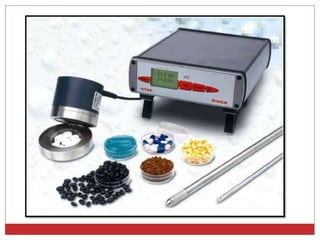
WATER ACTIVITY MEASUREMENT
 Resistive Electrolytic Hygrometers
 Capacitance Hygrometers
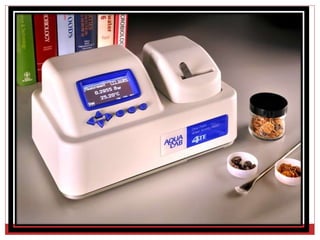
 Dew Point Hygrometers
Resistive electrolytic hygrometers
 Consist of potentiometer, sample holder, and sensor
with immobilized electrolyte (e.g., lithium chloride);
 Changes in ERH are reflected in changes in
conductance of current through sensor (Beckman,
Rotronic);
 Typically slow and requires routine calibration with
standards
Capacitance hygrometers
 Capacitance hygrometers consist of two charged
plates separated by a polymer membrane
dielectric. As the membrane adsorbs water, its
ability to hold a charge increases and the
capacitance is measured.
 This value is roughly proportional to the water
activity as determined by a sensor-
specific calibration.
 Capacitance hygrometers are not affected by
most volatile chemicals. They do not require
cleaning, but are less accurate than dew point
hygrometers (+/- 0.015 aw).
Dew point hygrometers
 Use a cooled mirror as condensing surface; mirror
is cooled
 Condensation occurs
 Temperature = dew point;
 ERH is derived from psychrometric chart
(automatically)
 Very fast and accurate
 Calibration is not needed
FACTORS EFFECTING
 Drying: Water activity is decreased by physically
removing water (Ex: beef jerky).
 Solutes: Water activity is decreased by adding
solutes such as salt or sugar (Ex: jams, cured meats).
 Freezing: Water activity is decreased by
freezing (Ex: water is removed in the form of ice).
 Combination: One or more of the above can be
combined for a greater influence on water activity
(Ex: salting and drying fish).
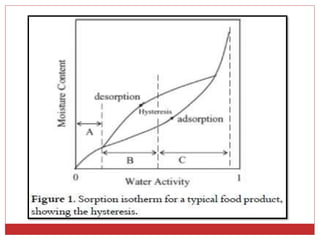
Moisture Content
 Water content or moisture content is the
quantity of water contained in a material.
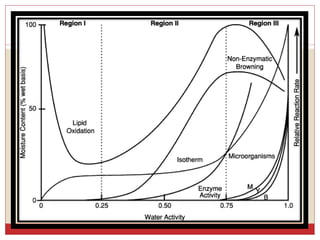
 Water activity is related to water content in a non-
linear relationship known as a moisture sorption
isotherm curve.
 These isotherms are substance and temperature-
specific. Isotherms can be used to help predict
product stability over time in different storage
conditions.
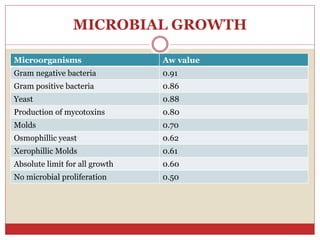
MICROBIAL GROWTH
Microorganisms Aw value
Gram negative bacteria 0.91
Gram positive bacteria 0.86
Yeast 0.88
Production of mycotoxins 0.80
Molds 0.70
Osmophillic yeast 0.62
Xerophillic Molds 0.61
Absolute limit for all growth 0.60
No microbial proliferation 0.50
Minimum aw for some microorganisms
BACTERIA
Staphylococcus aureus halophilic
bacteria
0.86
Halobacterium spp. 0.75
MOLDS
Aspergillus flavus 0.78
Chrysosporium fastidium 0.69
Xeromyces bisporrus 0.61
YEASTS
Debaryomyces hansenii 0.83
Torulopsis spp. 0.70
Zygosaccharomyces bailii 0.80
Zygosaccharomyces rouxii 0.62
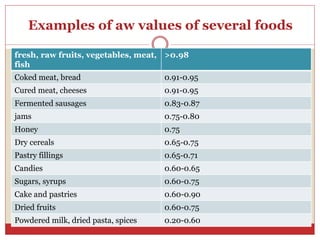
Examples of aw values of several foods
fresh, raw fruits, vegetables, meat,
fish
>0.98
Coked meat, bread 0.91-0.95
Cured meat, cheeses 0.91-0.95
Fermented sausages 0.83-0.87
jams 0.75-0.80
Honey 0.75
Dry cereals 0.65-0.75
Pastry fillings 0.65-0.71
Candies 0.60-0.65
Sugars, syrups 0.60-0.75
Cake and pastries 0.60-0.90
Dried fruits 0.60-0.75
Powdered milk, dried pasta, spices 0.20-0.60
THANK YOU

Water activity

  • 1.
    S U BM I T T E D T O : E R . V I K A S B A N S A L S U B M I T T E D B Y : A A K R I T I S I N G H S U 1 3 1 4 7 WATER ACTIVITY
  • 2.
    WATER IN FOOD All foods contain at least some water  Free water  Held inside cells  Maintains properties of free water  May be removed by pressure  Bound water  Is part of molecule structure  Reduced mobility  Does not retain properties of free water
  • 3.
    WATER ACTIVITY  wateractivity is the amount of free or available water in a product as opposed to bound water.  water activity is the measure of the energy status of the water in a system.  Ratio of the vapor pressure of water in a food at a specified temperature to the vapor pressure of pure water at same temperature.
  • 4.
    WHY WATER ACTIVITYIS IMPORTANT  Water activity (aw) is one of the most critical factors in determining quality and safety of foods. Water activity affects the shelf life, safety, texture, flavour, and smell of foods.  While temperature, pH and several other factors can influence if and how fast organisms will grow in a product, water activity may be the most important factor in controlling spoilage.  Most bacteria, for example, do not grow at water activities below 0.91, and most molds cease to grow at water activities below 0.80.
  • 5.
    Contd..  By measuringwater activity, it is possible to predict which microorganisms will and will not be potential sources of spoilage.  Water activity--not water content--determines the lower limit of available water for microbial growth.  In addition to influencing microbial spoilage, water activity can play a significant role in determining the activity of enzymes and vitamins in foods and can have a major impact their color, taste, and aroma.
  • 7.
    WATER ACTIVITY MEASUREMENT Resistive Electrolytic Hygrometers  Capacitance Hygrometers  Dew Point Hygrometers
  • 8.
    Resistive electrolytic hygrometers Consist of potentiometer, sample holder, and sensor with immobilized electrolyte (e.g., lithium chloride);  Changes in ERH are reflected in changes in conductance of current through sensor (Beckman, Rotronic);  Typically slow and requires routine calibration with standards
  • 10.
    Capacitance hygrometers  Capacitancehygrometers consist of two charged plates separated by a polymer membrane dielectric. As the membrane adsorbs water, its ability to hold a charge increases and the capacitance is measured.  This value is roughly proportional to the water activity as determined by a sensor- specific calibration.  Capacitance hygrometers are not affected by most volatile chemicals. They do not require cleaning, but are less accurate than dew point hygrometers (+/- 0.015 aw).
  • 11.
    Dew point hygrometers Use a cooled mirror as condensing surface; mirror is cooled  Condensation occurs  Temperature = dew point;  ERH is derived from psychrometric chart (automatically)  Very fast and accurate  Calibration is not needed
  • 13.
    FACTORS EFFECTING  Drying:Water activity is decreased by physically removing water (Ex: beef jerky).  Solutes: Water activity is decreased by adding solutes such as salt or sugar (Ex: jams, cured meats).  Freezing: Water activity is decreased by freezing (Ex: water is removed in the form of ice).  Combination: One or more of the above can be combined for a greater influence on water activity (Ex: salting and drying fish).
  • 14.
    Moisture Content  Watercontent or moisture content is the quantity of water contained in a material.  Water activity is related to water content in a non- linear relationship known as a moisture sorption isotherm curve.  These isotherms are substance and temperature- specific. Isotherms can be used to help predict product stability over time in different storage conditions.
  • 16.
    MICROBIAL GROWTH Microorganisms Awvalue Gram negative bacteria 0.91 Gram positive bacteria 0.86 Yeast 0.88 Production of mycotoxins 0.80 Molds 0.70 Osmophillic yeast 0.62 Xerophillic Molds 0.61 Absolute limit for all growth 0.60 No microbial proliferation 0.50
  • 17.
    Minimum aw forsome microorganisms BACTERIA Staphylococcus aureus halophilic bacteria 0.86 Halobacterium spp. 0.75 MOLDS Aspergillus flavus 0.78 Chrysosporium fastidium 0.69 Xeromyces bisporrus 0.61 YEASTS Debaryomyces hansenii 0.83 Torulopsis spp. 0.70 Zygosaccharomyces bailii 0.80 Zygosaccharomyces rouxii 0.62
  • 18.
    Examples of awvalues of several foods fresh, raw fruits, vegetables, meat, fish >0.98 Coked meat, bread 0.91-0.95 Cured meat, cheeses 0.91-0.95 Fermented sausages 0.83-0.87 jams 0.75-0.80 Honey 0.75 Dry cereals 0.65-0.75 Pastry fillings 0.65-0.71 Candies 0.60-0.65 Sugars, syrups 0.60-0.75 Cake and pastries 0.60-0.90 Dried fruits 0.60-0.75 Powdered milk, dried pasta, spices 0.20-0.60
  • 19.