BY
DR.VEENA
INTERNEE
 Symptomatic anal cushions.
 Haemorrhoidal venous cushions are normal structures
of anorectum and universally present in all persons
unless previous intervention has taken place.
 It is a common anal pathology but many patients are
embarrassed to seek medical attention.
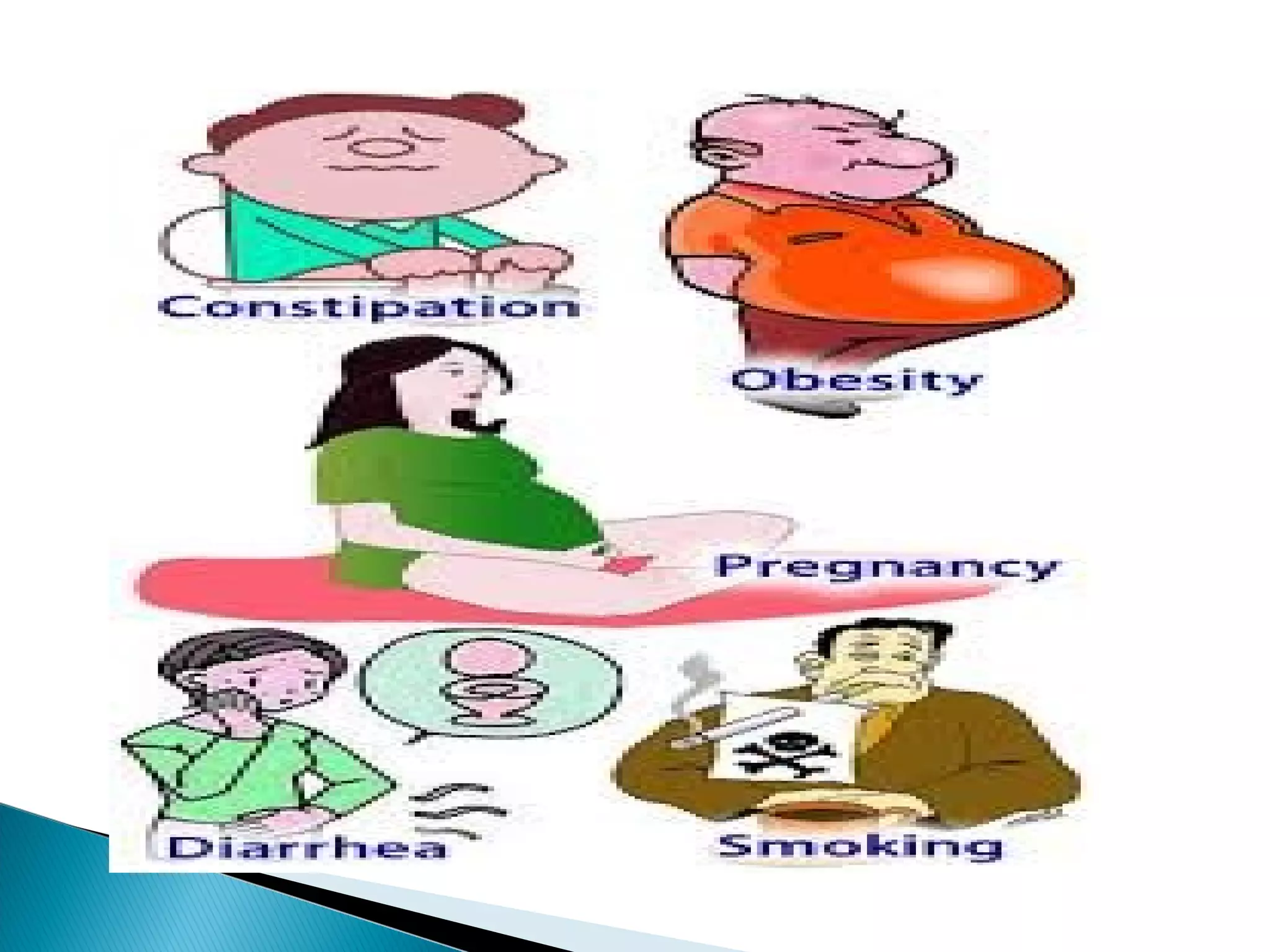
 Straining and constipation.
 Pregnancy.
 Obesity.
 Prolonged sitting.
 Portal hypertension and anorectal varices.
 Chronic diarrhea.
 familial
 Colon malignancy.
 Loss of rectal muscle tone.
 Spinal cord injury.
 Rectal surgery.
 High socioeconomic status.
 Episiotomy.
 Anal intercourse.
 IBD
STRAINING AND CONSTIPATION
Low fibre diet
Less bulky stools
Straining at defecation
Increased intraanal pressure
Decreased venous return
Enlarged hemorrhoidal venous cushions
 They are clusters of vascular tissue, smooth muscle and
connective tissue lined by normal epithelium of anal
canal.
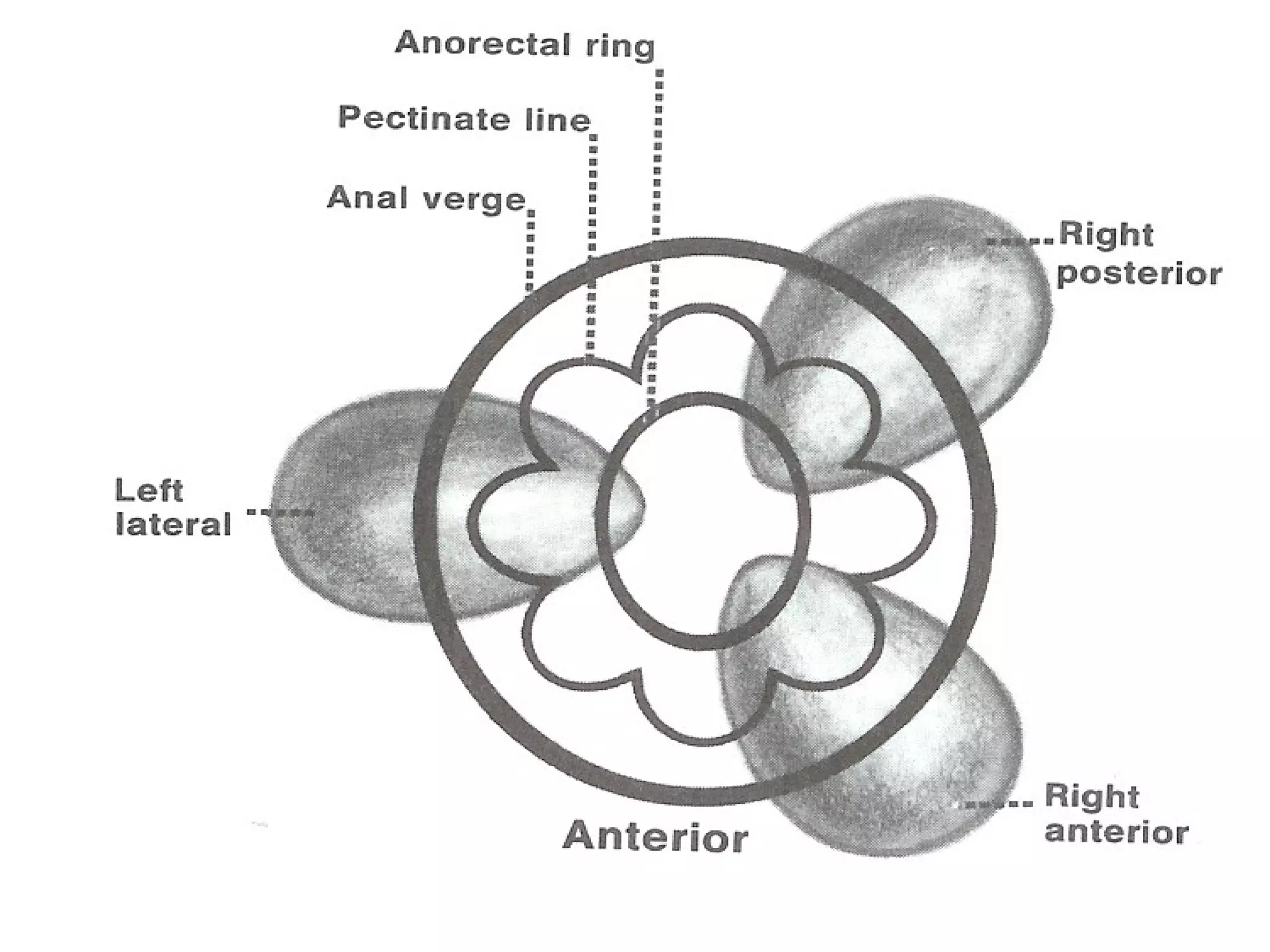
 They are commonly seen in left lateral, right anterior
and right posterior(3,7,11’o clock) position with patient
in lithotomy position.
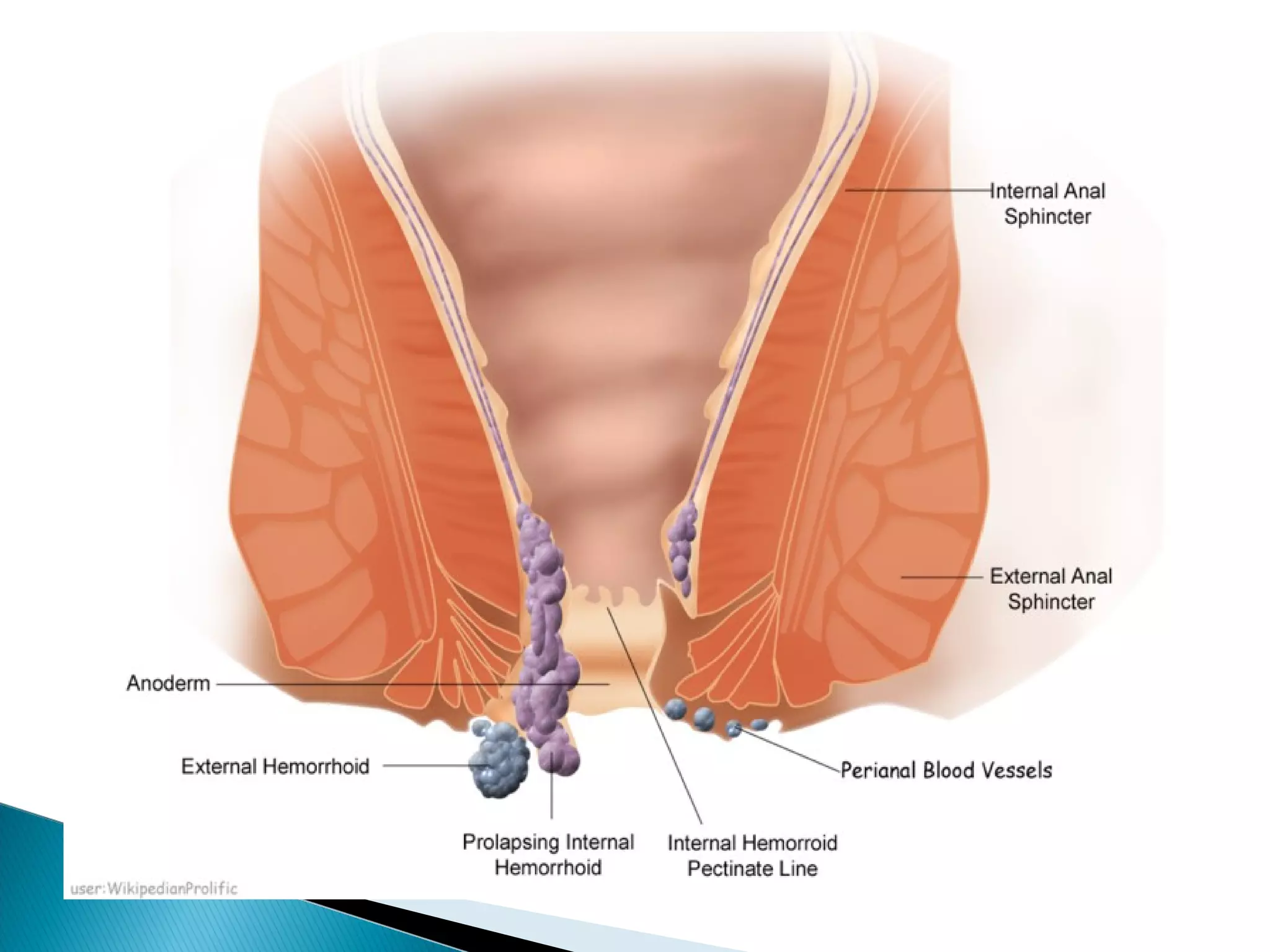
 Depending on anal origin within analcanal and relation
to dentate line haemorrhoids divided in to
I. internal haemorroids.
II. external haemorrhoids.
III. mixed haemorrhoids.
INTERNAL
 Lie above dentate line.
 Develops from
embryonic endoderm.
 Covered by columnar
epithelium of anal canal.
 Not supplied by somatic
sensory nerves.so cannot
cause pain.
EXTERNAL
 Lie below dentate line.
 Develops from
embryonic ectoderm.
 Covered by sqamous
epithelium.
 Innervated by cutaneous
nerves that supply
perianal area.
 GRADE I painless bleeding, no prolapse.
 GRADE II prolapse on defecation that reduces
spontaneously.
 GRADE III prolapse that has to be reduced mannually.
 GRADE IV permanent prolapse.
 Painless bleeding- color, timing, quantity.
 Prolapse.
 Perianal pruritus and irritation.
 Discomfort.
 Acute pain when incarcerated/strangulated.
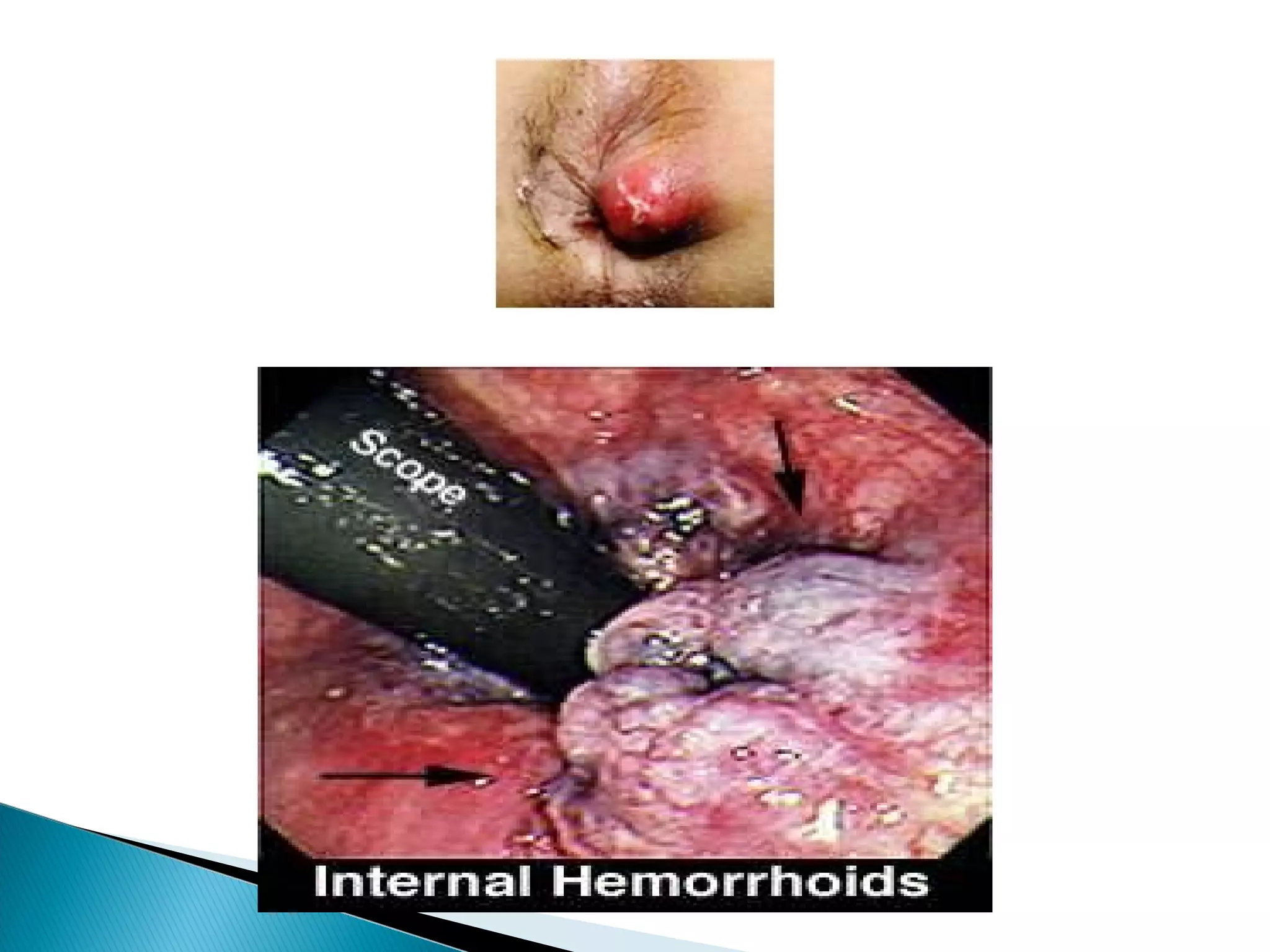
 Thrombosed external hemorrhoid may present with
acutely painful mass at rectum.
 Skin tags.
 P/R-done in Sim’s position.
 Anoscopy.
 Proctosigmoidoscopy.
 Anoscopy.
 Flexible sigmoidoscopy.
 Colonoscopy.
 CBP.
 Proctoscopy.
 Coagulation profile.
 Treat only symptomatic haemorrhoids
I. Conservative
II. Nonsurgical
III. surgical
 TOC in grade I internal and nonthrombosed external
haemorrhoids.
 Warm baths(sitz bath)-bid/tid.
 High fibre diet.
 Adequate fluid intake.
 Stool softeners.
 Topical analgesics.
 Proper anal hygiene.
 To destroy internal haemorrhoids.
 Rubber band ligation.
 Sclerotherapy.
 Coagulation.
 Electrocautery, electrotherapy.
 Cryotherapy.
 Laser therapy and radio wave ablation.
 GRADE I,II haemorrhoids not improved by
conservative procedures.
 Pt. kept in left lateral position.
 5ml of sclerosant is injected submucosally
in to apex of pile pedicle.
 5% phenol in arachis oil/almond oil.
 Patient is reassessed after 8weeks.
 Too deep injection has disastrous
consequences like pelvic
sepsis,prostatitis,impotence,rectovaginal
fistula.
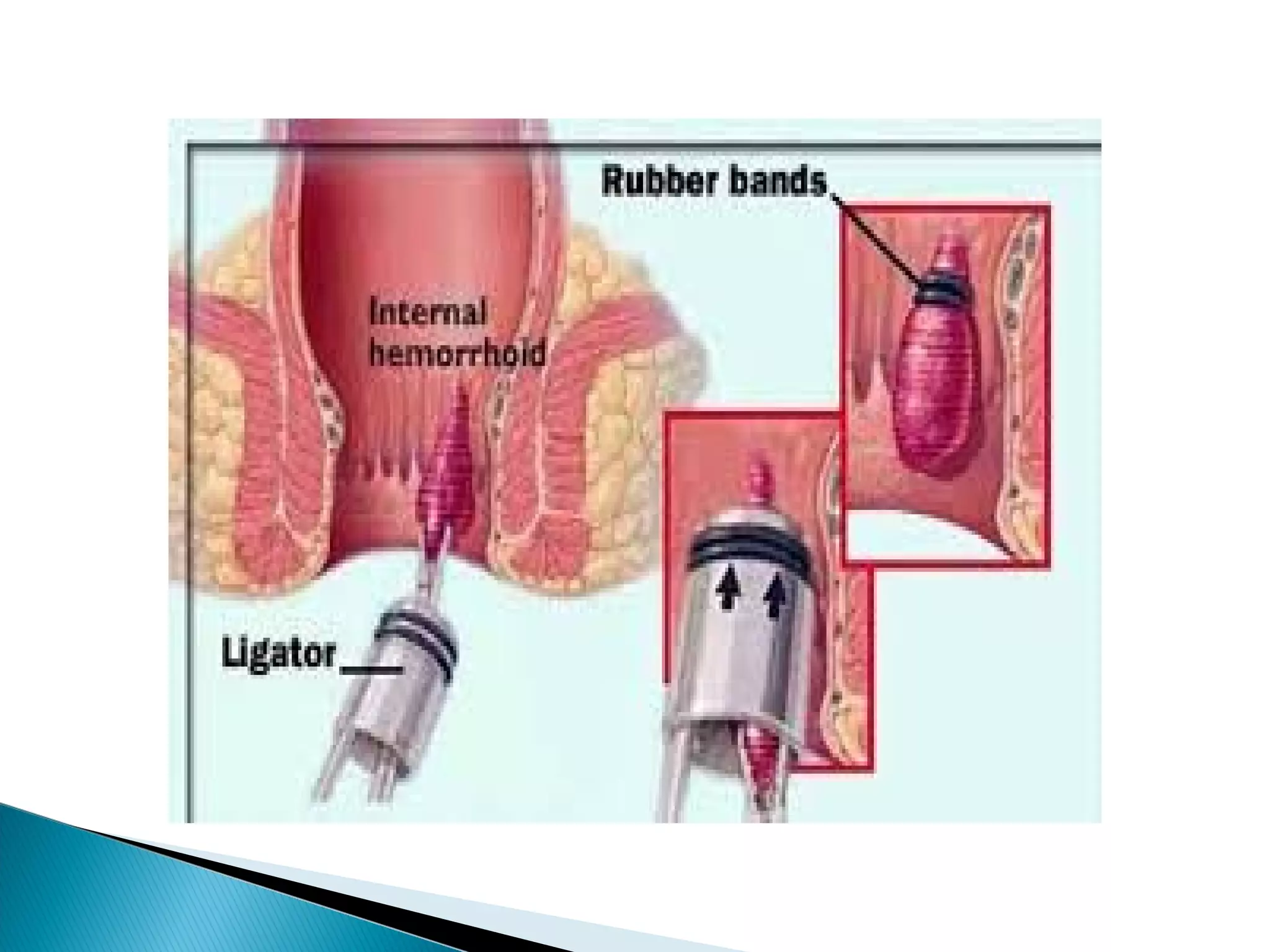
 Barron's bander is used to slip tight
elastic bands on to base of pedicle of
each haemorrhoid.
 Bands cause ischemic necrosis of
piles,which slough off in 10days.
 Side effect is bleeding.
HAEMORRHOIDECTOMY
 INDICATIONS-
 Grade III,IV haemorrhoids with severe symptoms.
 Conservative or nonsurgical treatment fails.
 Patient preference.
 Presence of anorectal conditions requiring surgery.
(fistula,fissure,large skin tags).
 Fibrosed haemorrhoids.
 Intero-external haemorrhoids when external
haemorrhoid is well defined.
 Open and closed techniques.
 Open technique also called milligan-
morgan operation.
 Both involve ligation and excision of the
haemorrhoid but in open technique the
anal mucosa and skin are left open to heal
by secondary intention,and in closed
technique the wound is sutured.
 Stapled haemorrhoidopexy.
EARLY
 Pain.
 Acute retension of urine.
 Reactionary hemorrhage.
LATE
 Secondary hemorrhage.
 Anal fissure.
 Anal stricture.
 Incontinence.
THROMBOSED EXTERNAL HAEMORRHOIDS
 Safely exiced when patient present within 48 to 72
hours of symptoms onset.
 If present after 72 hours from symptom onset,
conservative therapy preferred.
SKIN TAGS excision when hygiene problem exists
 Strangulation and thrombosis.
 Ulceration.
 Gangrene.
 Portal pyemia.
 Fibrosis.
 Rectal prolapse.
 Colorectal cancer.
 Condylomata acuminata.
 Proctitis.
 Pruritus ani.
 IBD.
 Pedunculated polyps.
 Perianal abcess.
 Anal fissure,fistula.
 Varicosities.
Hemorrhoids

Hemorrhoids

  • 1.
  • 2.
     Symptomatic analcushions.  Haemorrhoidal venous cushions are normal structures of anorectum and universally present in all persons unless previous intervention has taken place.  It is a common anal pathology but many patients are embarrassed to seek medical attention.

  • 3.
     Straining andconstipation.  Pregnancy.  Obesity.  Prolonged sitting.  Portal hypertension and anorectal varices.  Chronic diarrhea.  familial
  • 4.
     Colon malignancy. Loss of rectal muscle tone.  Spinal cord injury.  Rectal surgery.  High socioeconomic status.  Episiotomy.  Anal intercourse.  IBD
  • 6.
    STRAINING AND CONSTIPATION Lowfibre diet Less bulky stools Straining at defecation Increased intraanal pressure Decreased venous return Enlarged hemorrhoidal venous cushions
  • 7.
     They areclusters of vascular tissue, smooth muscle and connective tissue lined by normal epithelium of anal canal.  They are commonly seen in left lateral, right anterior and right posterior(3,7,11’o clock) position with patient in lithotomy position.
  • 9.
     Depending onanal origin within analcanal and relation to dentate line haemorrhoids divided in to I. internal haemorroids. II. external haemorrhoids. III. mixed haemorrhoids.
  • 11.
    INTERNAL  Lie abovedentate line.  Develops from embryonic endoderm.  Covered by columnar epithelium of anal canal.  Not supplied by somatic sensory nerves.so cannot cause pain. EXTERNAL  Lie below dentate line.  Develops from embryonic ectoderm.  Covered by sqamous epithelium.  Innervated by cutaneous nerves that supply perianal area.
  • 12.
     GRADE Ipainless bleeding, no prolapse.  GRADE II prolapse on defecation that reduces spontaneously.  GRADE III prolapse that has to be reduced mannually.  GRADE IV permanent prolapse.
  • 15.
     Painless bleeding-color, timing, quantity.  Prolapse.  Perianal pruritus and irritation.  Discomfort.  Acute pain when incarcerated/strangulated.
  • 16.
     Thrombosed externalhemorrhoid may present with acutely painful mass at rectum.  Skin tags.
  • 17.
     P/R-done inSim’s position.  Anoscopy.  Proctosigmoidoscopy.
  • 18.
     Anoscopy.  Flexiblesigmoidoscopy.  Colonoscopy.  CBP.  Proctoscopy.  Coagulation profile.
  • 19.
     Treat onlysymptomatic haemorrhoids I. Conservative II. Nonsurgical III. surgical
  • 20.
     TOC ingrade I internal and nonthrombosed external haemorrhoids.  Warm baths(sitz bath)-bid/tid.  High fibre diet.  Adequate fluid intake.  Stool softeners.  Topical analgesics.  Proper anal hygiene.
  • 21.
     To destroyinternal haemorrhoids.  Rubber band ligation.  Sclerotherapy.  Coagulation.  Electrocautery, electrotherapy.  Cryotherapy.  Laser therapy and radio wave ablation.
  • 22.
     GRADE I,IIhaemorrhoids not improved by conservative procedures.  Pt. kept in left lateral position.  5ml of sclerosant is injected submucosally in to apex of pile pedicle.  5% phenol in arachis oil/almond oil.  Patient is reassessed after 8weeks.  Too deep injection has disastrous consequences like pelvic sepsis,prostatitis,impotence,rectovaginal fistula.
  • 23.
     Barron's banderis used to slip tight elastic bands on to base of pedicle of each haemorrhoid.  Bands cause ischemic necrosis of piles,which slough off in 10days.  Side effect is bleeding.
  • 26.
    HAEMORRHOIDECTOMY  INDICATIONS-  GradeIII,IV haemorrhoids with severe symptoms.  Conservative or nonsurgical treatment fails.  Patient preference.  Presence of anorectal conditions requiring surgery. (fistula,fissure,large skin tags).  Fibrosed haemorrhoids.  Intero-external haemorrhoids when external haemorrhoid is well defined.
  • 27.
     Open andclosed techniques.  Open technique also called milligan- morgan operation.  Both involve ligation and excision of the haemorrhoid but in open technique the anal mucosa and skin are left open to heal by secondary intention,and in closed technique the wound is sutured.  Stapled haemorrhoidopexy.
  • 30.
    EARLY  Pain.  Acuteretension of urine.  Reactionary hemorrhage. LATE  Secondary hemorrhage.  Anal fissure.  Anal stricture.  Incontinence.
  • 31.
    THROMBOSED EXTERNAL HAEMORRHOIDS Safely exiced when patient present within 48 to 72 hours of symptoms onset.  If present after 72 hours from symptom onset, conservative therapy preferred. SKIN TAGS excision when hygiene problem exists
  • 33.
     Strangulation andthrombosis.  Ulceration.  Gangrene.  Portal pyemia.  Fibrosis.
  • 35.
     Rectal prolapse. Colorectal cancer.  Condylomata acuminata.  Proctitis.  Pruritus ani.  IBD.  Pedunculated polyps.  Perianal abcess.  Anal fissure,fistula.  Varicosities.