Human Resource Management   TENTH EDITON Recruiting in Labor Markets © 2003 Southwestern College Publishing. All rights reserved. PowerPoint Presentation  by Charlie Cook Chapter 7 SECTION 2 Staffing the Organization Robert L. Mathis     John H. Jackson
Learning Objectives After you have read this chapter, you should be able to: Identify different ways that labor markets can be identified and approached. Describe the phases in strategic recruiting and the decisions made in each phase. Discuss the advantages and disadvantages of internal versus external recruiting. Identify three internal sources for recruiting and issues associated with their use.
Learning Objectives (cont’d) Discuss why Internet recruiting has grown and how employers are conducting it. List and briefly discuss five external recruiting sources. Discuss three factors to consider when evaluating recruiting efforts.
Recruiting and Labor Markets: Key Terms Recruiting The process of generating a pool of qualified applicants for organizational jobs Labor Markets The external supply pool from which organizations attract their employees Labor Force Population All individuals who are available for selection if all possible recruitment strategies are used. Applicant Population
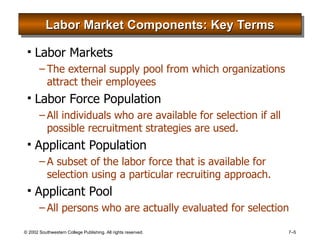
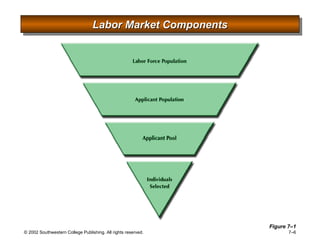
Labor Market Components: Key Terms Labor Markets The external supply pool from which organizations attract their employees Labor Force Population All individuals who are available for selection if all possible recruitment strategies are used. Applicant Population A subset of the labor force that is available for selection using a particular recruiting approach. Applicant Pool All persons who are actually evaluated for selection
Labor Market Components Figure 7 –1
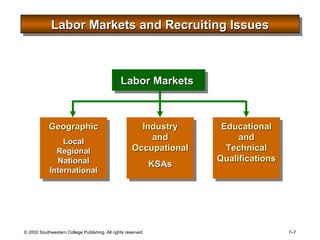
Labor Markets and Recruiting Issues Labor Markets Industry and Occupational KSAs Geographic Local Regional National International Educational and Technical Qualifications
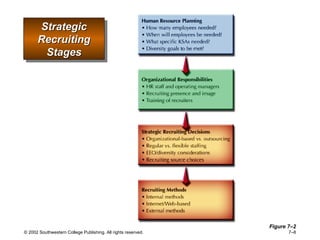
Strategic Recruiting Stages Figure 7 –2
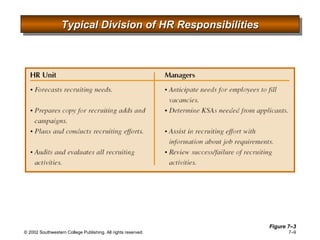
Typical Division of HR Responsibilities Figure 7 –3
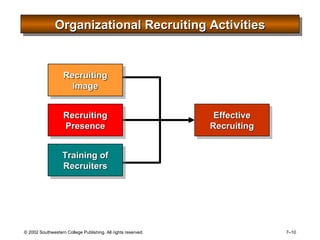
Organizational Recruiting Activities Effective Recruiting Recruiting Image Recruiting Presence Training of Recruiters
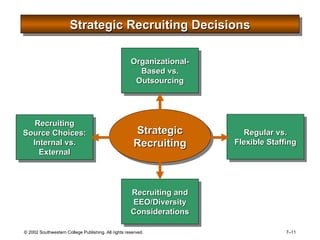
Strategic Recruiting Decisions Strategic Recruiting Recruiting Source Choices: Internal vs. External Organizational-Based vs. Outsourcing Regular vs. Flexible Staffing Recruiting and EEO/Diversity Considerations
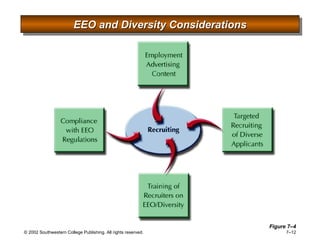
EEO and Diversity Considerations Figure 7 –4
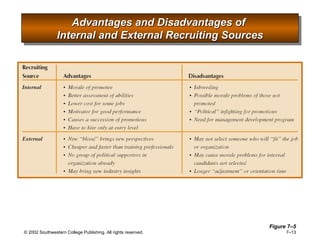
Advantages and Disadvantages of  Internal and External Recruiting Sources Figure 7 –5
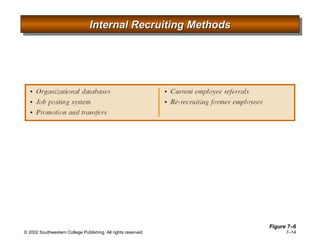
Internal Recruiting Methods Figure 7 –6
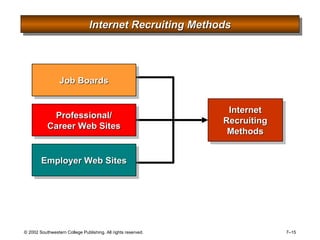
Internet Recruiting Methods Internet Recruiting Methods Job Boards Professional/ Career Web Sites Employer Web Sites
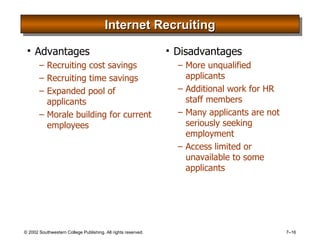
Internet Recruiting Advantages Recruiting cost savings Recruiting time savings Expanded pool of applicants Morale building for current employees Disadvantages More unqualified applicants Additional work for HR staff members Many applicants are not seriously seeking employment Access limited or unavailable to some applicants
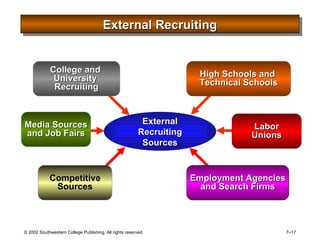
External Recruiting Employment Agencies and Search Firms College and  University  Recruiting High Schools and  Technical Schools Labor Unions External Recruiting Sources Media Sources and Job Fairs Competitive Sources
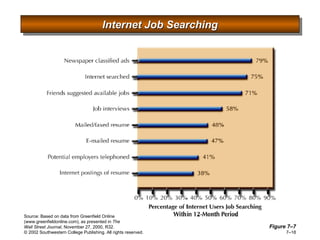
Internet Job Searching Figure 7 –7 Source: Based on data from Greenfield Online (www.greenfieldonline.com), as presented in  The Wall Street Journal , November 27, 2000, R32.
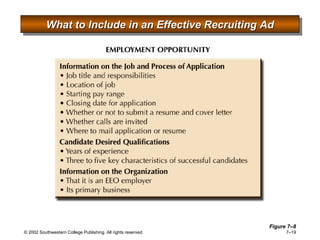
What to Include in an Effective Recruiting Ad Figure 7 –8
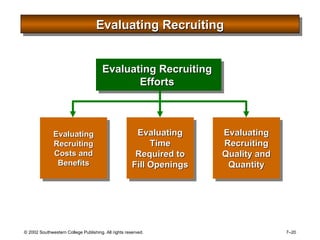
Evaluating Recruiting Evaluating Recruiting Efforts Evaluating Time Required to Fill Openings Evaluating Recruiting Costs and Benefits Evaluating Recruiting Quality and Quantity
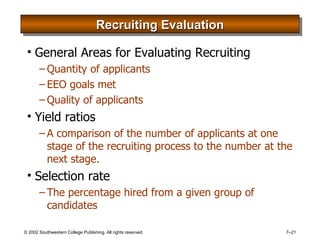
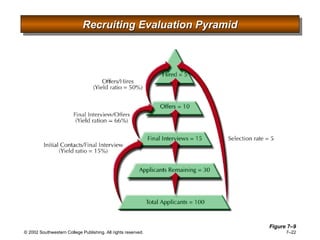
Recruiting Evaluation General Areas for Evaluating Recruiting Quantity of applicants EEO goals met Quality of applicants Yield ratios A comparison of the number of applicants at one stage of the recruiting process to the number at the next stage. Selection rate The percentage hired from a given group of candidates
Recruiting Evaluation Pyramid Figure 7 –9
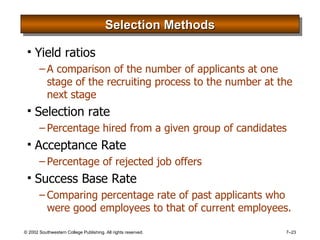
Selection Methods Yield ratios A comparison of the number of applicants at one stage of the recruiting process to the number at the next stage Selection rate Percentage hired from a given group of candidates Acceptance Rate Percentage of rejected job offers Success Base Rate Comparing percentage rate of past applicants who were good employees to that of current employees.

Hrm10e Chap07

  • 1.
    Human Resource Management TENTH EDITON Recruiting in Labor Markets © 2003 Southwestern College Publishing. All rights reserved. PowerPoint Presentation by Charlie Cook Chapter 7 SECTION 2 Staffing the Organization Robert L. Mathis  John H. Jackson
  • 2.
    Learning Objectives Afteryou have read this chapter, you should be able to: Identify different ways that labor markets can be identified and approached. Describe the phases in strategic recruiting and the decisions made in each phase. Discuss the advantages and disadvantages of internal versus external recruiting. Identify three internal sources for recruiting and issues associated with their use.
  • 3.
    Learning Objectives (cont’d)Discuss why Internet recruiting has grown and how employers are conducting it. List and briefly discuss five external recruiting sources. Discuss three factors to consider when evaluating recruiting efforts.
  • 4.
    Recruiting and LaborMarkets: Key Terms Recruiting The process of generating a pool of qualified applicants for organizational jobs Labor Markets The external supply pool from which organizations attract their employees Labor Force Population All individuals who are available for selection if all possible recruitment strategies are used. Applicant Population
  • 5.
    Labor Market Components:Key Terms Labor Markets The external supply pool from which organizations attract their employees Labor Force Population All individuals who are available for selection if all possible recruitment strategies are used. Applicant Population A subset of the labor force that is available for selection using a particular recruiting approach. Applicant Pool All persons who are actually evaluated for selection
  • 6.
  • 7.
    Labor Markets andRecruiting Issues Labor Markets Industry and Occupational KSAs Geographic Local Regional National International Educational and Technical Qualifications
  • 8.
  • 9.
    Typical Division ofHR Responsibilities Figure 7 –3
  • 10.
    Organizational Recruiting ActivitiesEffective Recruiting Recruiting Image Recruiting Presence Training of Recruiters
  • 11.
    Strategic Recruiting DecisionsStrategic Recruiting Recruiting Source Choices: Internal vs. External Organizational-Based vs. Outsourcing Regular vs. Flexible Staffing Recruiting and EEO/Diversity Considerations
  • 12.
    EEO and DiversityConsiderations Figure 7 –4
  • 13.
    Advantages and Disadvantagesof Internal and External Recruiting Sources Figure 7 –5
  • 14.
  • 15.
    Internet Recruiting MethodsInternet Recruiting Methods Job Boards Professional/ Career Web Sites Employer Web Sites
  • 16.
    Internet Recruiting AdvantagesRecruiting cost savings Recruiting time savings Expanded pool of applicants Morale building for current employees Disadvantages More unqualified applicants Additional work for HR staff members Many applicants are not seriously seeking employment Access limited or unavailable to some applicants
  • 17.
    External Recruiting EmploymentAgencies and Search Firms College and University Recruiting High Schools and Technical Schools Labor Unions External Recruiting Sources Media Sources and Job Fairs Competitive Sources
  • 18.
    Internet Job SearchingFigure 7 –7 Source: Based on data from Greenfield Online (www.greenfieldonline.com), as presented in The Wall Street Journal , November 27, 2000, R32.
  • 19.
    What to Includein an Effective Recruiting Ad Figure 7 –8
  • 20.
    Evaluating Recruiting EvaluatingRecruiting Efforts Evaluating Time Required to Fill Openings Evaluating Recruiting Costs and Benefits Evaluating Recruiting Quality and Quantity
  • 21.
    Recruiting Evaluation GeneralAreas for Evaluating Recruiting Quantity of applicants EEO goals met Quality of applicants Yield ratios A comparison of the number of applicants at one stage of the recruiting process to the number at the next stage. Selection rate The percentage hired from a given group of candidates
  • 22.
  • 23.
    Selection Methods Yieldratios A comparison of the number of applicants at one stage of the recruiting process to the number at the next stage Selection rate Percentage hired from a given group of candidates Acceptance Rate Percentage of rejected job offers Success Base Rate Comparing percentage rate of past applicants who were good employees to that of current employees.