External Recruitment
&
Internal Recruitment
Staffing Activities:Staffing Activities:
RecruitmentRecruitment
Staffing Activities:Staffing Activities:
External RecruitmentExternal Recruitment
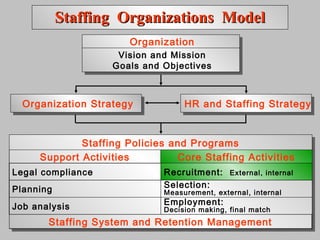
Organization StrategyOrganization Strategy HR and Staffing StrategyHR and Staffing Strategy
Staffing Policies and Programs
Staffing System and Retention Management
Support Activities
Legal compliance
Planning
Job analysis
Core Staffing Activities
Recruitment: External, internal
Selection:
Measurement, external, internal
Employment:
Decision making, final match
Organization
Vision and Mission
Goals and Objectives
Staffing Organizations ModelStaffing Organizations Model
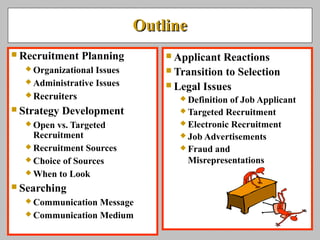
OutlineOutline
 Recruitment Planning
 Organizational Issues
 Administrative Issues
 Recruiters
 Strategy Development
 Open vs. Targeted
Recruitment
 Recruitment Sources
 Choice of Sources
 When to Look
 Searching
 Communication Message
 Communication Medium
 Applicant Reactions
 Transition to Selection
 Legal Issues
 Definition of Job Applicant
 Targeted Recruitment
 Electronic Recruitment
 Job Advertisements
 Fraud and
Misrepresentations
Recruitment PlanningRecruitment Planning
 Organizational issues
 Administrative issues
Recruitment Planning: Organizational IssuesRecruitment Planning: Organizational Issues
 In-house vs. external recruitment agency
Many companies do recruiting in-house
 Recommended approach for large companies
Smaller companies may rely
on external recruitment agencies
 Individual vs. cooperative recruitment alliances
Cooperative alliances involve arrangements to share
recruitment resources
 Centralized vs. decentralized recruitment
Recruitment Planning: Administrative IssuesRecruitment Planning: Administrative Issues
 Requisitions
Personnel Requisition
 Number of contacts
Yield ratio - Relationship of applicant inputs to
outputs at various decision points
 Types of contacts
Qualifications to perform job must be clearly
established
Consideration must be given to job search and choice
process used by applicants
Recruitment Planning: Administrative IssuesRecruitment Planning: Administrative Issues
(continued)(continued)
 Recruitment budget
Example of a Recruitment Budget for 500 New Hires
 Development of a recruitment guide
Recruitment Guide for Director of Claims
 Process flow and record keeping
 Selecting recruiters
 Training recruiters
 Rewarding recruiters
Considerations Related to Recruiters:Considerations Related to Recruiters:
SelectionSelection
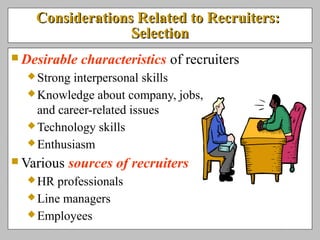
 Desirable characteristics of recruiters
Strong interpersonal skills
Knowledge about company, jobs,
and career-related issues
Technology skills
Enthusiasm
 Various sources of recruiters
HR professionals
Line managers
Employees
Considerations Related to Recruiters:Considerations Related to Recruiters:
Training and RewardsTraining and Rewards
 Training
Traditional areas of training
 Interviewing skills, job analysis, interpersonal skills, laws,
forms and reports, company and job characteristics, and
recruitment targets
Nontraditional areas of training
 Technology skills, marketing skills, working with other
departments, and ethics
 Rewards
Performance must be monitored and rewarded
 Effective recruiter behaviors
 End results
Recruitment SourcesRecruitment Sources
 Unsolicited
 Employee referrals and
networks
 Advertisements
 Recruiting online
 Colleges and placement
offices
 Employment agencies
 Executive search firms
 Professional associations
and meetings
 State Employment
services
 Outplacement services
 Community agencies
 Job fairs
 Co-ops and internships
Approaches to Recruiting OnlineApproaches to Recruiting Online
 Job postings on Internet job boards
 Searching Web-based databases
List of Recruiting Web Sites
 Job postings on organization’s Web site
 Mining databases
Innovative Recruitment SourcesInnovative Recruitment Sources
 Religious organizations
 Interest groups
 Realtors
 Senior networks
Strategy Development:Strategy Development:
Criteria Affecting Choice of SourcesCriteria Affecting Choice of Sources
 Sufficient quantity and quality
 Cost
 Past experience with source
 Impact on HR outcomes
Satisfaction
Performance
Retention
Effectiveness of Recruitment SourcesEffectiveness of Recruitment Sources
 Effectiveness
Involves assessing impact of sources on increased
employee satisfaction, performance, and retention
 Research results
Most effective
 Referrals, job postings, rehiring of
former employees
Least effective
 Newspaper ads, employment agencies
Strategy Development:Strategy Development:
When to LookWhen to Look
 Lead time concerns
Goal -- Minimize delay in filling vacancies
Effective planning requirements
 Establishment of priorities for job openings
 Prepared recruiters
 Time sequence concerns
Staffing flowchart
Time-lapse statistics
Searching: Communication MessageSearching: Communication Message
 Job requirements and rewards matrices
 Type of messages
Realistic recruitment message -- RJP
RJP for Elementary School Teachers
Branding
Targeted messages
 Choice of messages
Nature of labor market
Vacancy characteristics
Applicant characteristics
Searching: Communication MediumSearching: Communication Medium
 Recruitment brochures
 Videos and
videoconferencing
 Advertisements
 Types of ads
 Classified ad
 Classified display ad
 Display ad
 Online ad
 Telephone messages
 Organizational Web sites
 Radio
 E-mail
Applicant ReactionsApplicant Reactions
 Reactions to recruiters
 Influence of recruiter vs. job characteristics
 Influence of recruiter on attitudes and behaviors
 Demographics of recruiters
 Influential recruiter behaviors
 Reactions to recruitment process
 Relationship of screening devices to job
 Delay times in recruitment process
 Funding of recruitment process
 Credibility of recruiter during recruitment process
Transition to SelectionTransition to Selection
 Involves making applicants aware of
Next steps in hiring process
 Selection methods used and instructions
Expectations and requirements

Recruitment online

  • 1.
    External Recruitment & Internal Recruitment StaffingActivities:Staffing Activities: RecruitmentRecruitment
  • 2.
  • 3.
    Organization StrategyOrganization StrategyHR and Staffing StrategyHR and Staffing Strategy Staffing Policies and Programs Staffing System and Retention Management Support Activities Legal compliance Planning Job analysis Core Staffing Activities Recruitment: External, internal Selection: Measurement, external, internal Employment: Decision making, final match Organization Vision and Mission Goals and Objectives Staffing Organizations ModelStaffing Organizations Model
  • 4.
    OutlineOutline  Recruitment Planning Organizational Issues  Administrative Issues  Recruiters  Strategy Development  Open vs. Targeted Recruitment  Recruitment Sources  Choice of Sources  When to Look  Searching  Communication Message  Communication Medium  Applicant Reactions  Transition to Selection  Legal Issues  Definition of Job Applicant  Targeted Recruitment  Electronic Recruitment  Job Advertisements  Fraud and Misrepresentations
  • 5.
    Recruitment PlanningRecruitment Planning Organizational issues  Administrative issues
  • 6.
    Recruitment Planning: OrganizationalIssuesRecruitment Planning: Organizational Issues  In-house vs. external recruitment agency Many companies do recruiting in-house  Recommended approach for large companies Smaller companies may rely on external recruitment agencies  Individual vs. cooperative recruitment alliances Cooperative alliances involve arrangements to share recruitment resources  Centralized vs. decentralized recruitment
  • 7.
    Recruitment Planning: AdministrativeIssuesRecruitment Planning: Administrative Issues  Requisitions Personnel Requisition  Number of contacts Yield ratio - Relationship of applicant inputs to outputs at various decision points  Types of contacts Qualifications to perform job must be clearly established Consideration must be given to job search and choice process used by applicants
  • 8.
    Recruitment Planning: AdministrativeIssuesRecruitment Planning: Administrative Issues (continued)(continued)  Recruitment budget Example of a Recruitment Budget for 500 New Hires  Development of a recruitment guide Recruitment Guide for Director of Claims  Process flow and record keeping  Selecting recruiters  Training recruiters  Rewarding recruiters
  • 9.
    Considerations Related toRecruiters:Considerations Related to Recruiters: SelectionSelection  Desirable characteristics of recruiters Strong interpersonal skills Knowledge about company, jobs, and career-related issues Technology skills Enthusiasm  Various sources of recruiters HR professionals Line managers Employees
  • 10.
    Considerations Related toRecruiters:Considerations Related to Recruiters: Training and RewardsTraining and Rewards  Training Traditional areas of training  Interviewing skills, job analysis, interpersonal skills, laws, forms and reports, company and job characteristics, and recruitment targets Nontraditional areas of training  Technology skills, marketing skills, working with other departments, and ethics  Rewards Performance must be monitored and rewarded  Effective recruiter behaviors  End results
  • 11.
    Recruitment SourcesRecruitment Sources Unsolicited  Employee referrals and networks  Advertisements  Recruiting online  Colleges and placement offices  Employment agencies  Executive search firms  Professional associations and meetings  State Employment services  Outplacement services  Community agencies  Job fairs  Co-ops and internships
  • 12.
    Approaches to RecruitingOnlineApproaches to Recruiting Online  Job postings on Internet job boards  Searching Web-based databases List of Recruiting Web Sites  Job postings on organization’s Web site  Mining databases
  • 13.
    Innovative Recruitment SourcesInnovativeRecruitment Sources  Religious organizations  Interest groups  Realtors  Senior networks
  • 14.
    Strategy Development:Strategy Development: CriteriaAffecting Choice of SourcesCriteria Affecting Choice of Sources  Sufficient quantity and quality  Cost  Past experience with source  Impact on HR outcomes Satisfaction Performance Retention
  • 15.
    Effectiveness of RecruitmentSourcesEffectiveness of Recruitment Sources  Effectiveness Involves assessing impact of sources on increased employee satisfaction, performance, and retention  Research results Most effective  Referrals, job postings, rehiring of former employees Least effective  Newspaper ads, employment agencies
  • 16.
    Strategy Development:Strategy Development: Whento LookWhen to Look  Lead time concerns Goal -- Minimize delay in filling vacancies Effective planning requirements  Establishment of priorities for job openings  Prepared recruiters  Time sequence concerns Staffing flowchart Time-lapse statistics
  • 17.
    Searching: Communication MessageSearching:Communication Message  Job requirements and rewards matrices  Type of messages Realistic recruitment message -- RJP RJP for Elementary School Teachers Branding Targeted messages  Choice of messages Nature of labor market Vacancy characteristics Applicant characteristics
  • 18.
    Searching: Communication MediumSearching:Communication Medium  Recruitment brochures  Videos and videoconferencing  Advertisements  Types of ads  Classified ad  Classified display ad  Display ad  Online ad  Telephone messages  Organizational Web sites  Radio  E-mail
  • 19.
    Applicant ReactionsApplicant Reactions Reactions to recruiters  Influence of recruiter vs. job characteristics  Influence of recruiter on attitudes and behaviors  Demographics of recruiters  Influential recruiter behaviors  Reactions to recruitment process  Relationship of screening devices to job  Delay times in recruitment process  Funding of recruitment process  Credibility of recruiter during recruitment process
  • 20.
    Transition to SelectionTransitionto Selection  Involves making applicants aware of Next steps in hiring process  Selection methods used and instructions Expectations and requirements

Editor's Notes

  • #18 Traditional message Job applicant may be given relatively little concrete or accurate info. Unlimited growth opportunities Realistic recruitment message RJP - Job applicants are given a “vaccination” by being told what the actual job is really like Tells it like it is Great deal of research has been conducted on effectiveness of RJPs