Employee Testing and Selection Chapter 6 Part 2  |  Recruitment and Placement
After studying this chapter, you should be able to: Explain what is meant by reliability and validity. Explain how you would go about validating a test. Cite and illustrate our testing guidelines.  Give examples of some of the ethical and legal considerations in testing. List eight tests you could use for employee selection, and how you would use them. Explain the key points to remember in conducting background investigations.
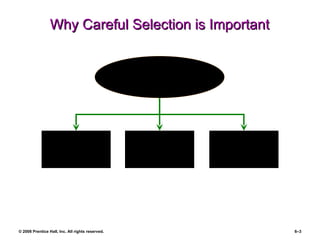
Why Careful Selection is Important Organizational Performance Legal  Obligations and Liability The Importance of Selecting the Right Employees Costs of Recruiting and Hiring
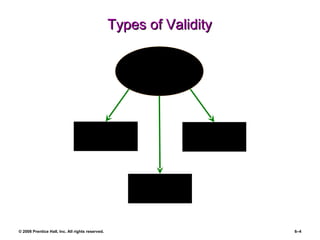
Types of Validity Criterion Validity Content Validity Test Validity Face  Validity
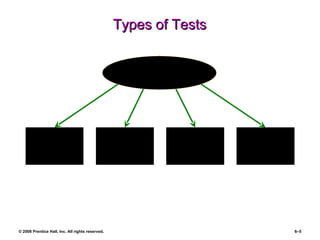
Types of Tests Cognitive (Mental) Abilities Achievement Motor and Physical Abilities Personality and  Interests What Tests Measure
The “Big Five” Extraversion Emotional Stability/ Neuroticism Agreeableness Openness to Experience Conscientiousness
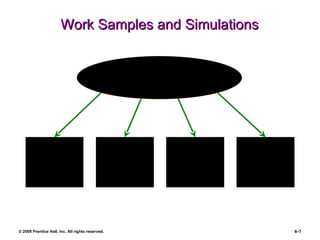
Work Samples and Simulations Work Samples Miniature Job Training and Evaluation Management Assessment Centers Video-Based Situational Testing Measuring Work Performance Directly
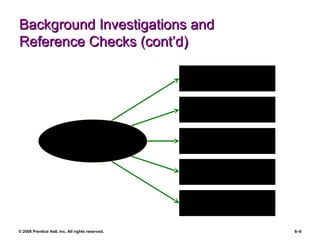
Background Investigations and Reference Checks (cont’d) Former Employers Current Supervisors Written References Social Networking Sites Commercial Credit  Rating Companies Sources of  Information
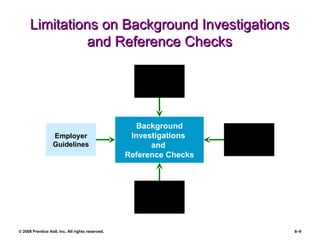
Limitations on Background Investigations and Reference Checks Background Investigations  and  Reference Checks Supervisor Reluctance Employer Guidelines Legal Issues: Privacy Legal Issues: Defamation
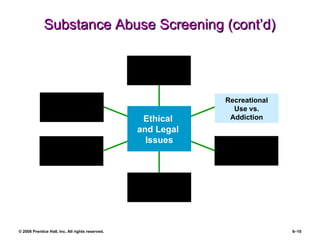
Substance Abuse Screening (cont’d) Safety: Impairment vs. Presence Recreational Use vs. Addiction Americans with Disabilities Act Drug Free Workplace Act of 1988 Intrusiveness of Procedures Accuracy of Tests Ethical  and Legal  Issues
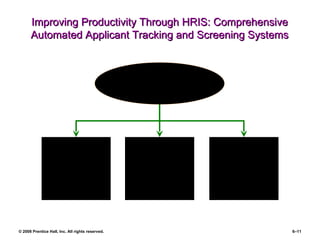
Improving Productivity Through HRIS: Comprehensive Automated Applicant Tracking and Screening Systems “ Knock out” applicants who  do not meet job requirements Can match “hidden talents” of applicants to available openings Benefits of Applicant Tracking Systems  Allow employers to extensively test and screen applicants online
K E Y  T E R M S negligent hiring reliability test validity criterion validity content validity expectancy chart interest inventory work samples work sampling technique management assessment center situational test video-based simulation miniature job training and evaluation

Dessler 06

  • 1.
    Employee Testing andSelection Chapter 6 Part 2 | Recruitment and Placement
  • 2.
    After studying thischapter, you should be able to: Explain what is meant by reliability and validity. Explain how you would go about validating a test. Cite and illustrate our testing guidelines. Give examples of some of the ethical and legal considerations in testing. List eight tests you could use for employee selection, and how you would use them. Explain the key points to remember in conducting background investigations.
  • 3.
    Why Careful Selectionis Important Organizational Performance Legal Obligations and Liability The Importance of Selecting the Right Employees Costs of Recruiting and Hiring
  • 4.
    Types of ValidityCriterion Validity Content Validity Test Validity Face Validity
  • 5.
    Types of TestsCognitive (Mental) Abilities Achievement Motor and Physical Abilities Personality and Interests What Tests Measure
  • 6.
    The “Big Five”Extraversion Emotional Stability/ Neuroticism Agreeableness Openness to Experience Conscientiousness
  • 7.
    Work Samples andSimulations Work Samples Miniature Job Training and Evaluation Management Assessment Centers Video-Based Situational Testing Measuring Work Performance Directly
  • 8.
    Background Investigations andReference Checks (cont’d) Former Employers Current Supervisors Written References Social Networking Sites Commercial Credit Rating Companies Sources of Information
  • 9.
    Limitations on BackgroundInvestigations and Reference Checks Background Investigations and Reference Checks Supervisor Reluctance Employer Guidelines Legal Issues: Privacy Legal Issues: Defamation
  • 10.
    Substance Abuse Screening(cont’d) Safety: Impairment vs. Presence Recreational Use vs. Addiction Americans with Disabilities Act Drug Free Workplace Act of 1988 Intrusiveness of Procedures Accuracy of Tests Ethical and Legal Issues
  • 11.
    Improving Productivity ThroughHRIS: Comprehensive Automated Applicant Tracking and Screening Systems “ Knock out” applicants who do not meet job requirements Can match “hidden talents” of applicants to available openings Benefits of Applicant Tracking Systems Allow employers to extensively test and screen applicants online
  • 12.
    K E Y T E R M S negligent hiring reliability test validity criterion validity content validity expectancy chart interest inventory work samples work sampling technique management assessment center situational test video-based simulation miniature job training and evaluation