
WRITING SCRIPT FOR FILMS
J.Janardhan
HOW TO WRITE SCRIPT?
 Music would be noise without a story
 A Painting would be just a collage with out a story
 Across the art forms, story is as variable
 Its not just a collection of words
 But compilation of conceptual elements that tell a story
 These elements bring together with audiovisual elements
 That create good films
HOW TO WRITE SCRIPT?
 Every film or fiction tells a story
 The story and its structure make the difference
 Film story too has three broad structural elements.
 A beginning
 A middle
 An end

THE BEGINNING
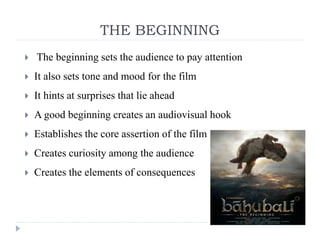
 The beginning sets the audience to pay attention
 It also sets tone and mood for the film
 It hints at surprises that lie ahead
 A good beginning creates an audiovisual hook
 Establishes the core assertion of the film
 Creates curiosity among the audience
 Creates the elements of consequences
THE MIDDLE
 Script writers focus on the dramatic beginning and ending
 The middle part of the film is big challenge
 The key to a good middle is structure
 Make sure to presents a chain of logics to prove its core
assertion.
 Each event or action must keeping with the subject and tone of
the film
 The tight structure will result in dynamic and interesting
middle
THE MIDDLE
 The middle it helps to divide it further into independent parts
 Which come together to form a whole and tell story
 A good middle consists of good sequences
 Which also have their own beginnings, middles and ends
 Within the sequences, the flow of events determines these
parameters
 S.W must allot a particular message for each sequence
 Ensure that each sequence has an impact on its own
THE MIDDLE
 The script writer can unify the followings
 Concept
 Action
 Setting
 Character
 Mood
 The Elements of pacing-Rhythm and Tempo
 Beats are useful technique in creating pace for the film
 Linear Vs Non-linear time
THE END
 The ending must be both inevitable and unexpected
 End of the film is what the audience takes home with them
 It is the primary factor that determines audience opinion
 Broadly speaking, there are two types of film endings
Closed end
Open end
Thank You

How to write script

  • 1.
    WRITING SCRIPT FORFILMS J.Janardhan
  • 2.
    HOW TO WRITESCRIPT?  Music would be noise without a story  A Painting would be just a collage with out a story  Across the art forms, story is as variable  Its not just a collection of words  But compilation of conceptual elements that tell a story  These elements bring together with audiovisual elements  That create good films
  • 3.
    HOW TO WRITESCRIPT?  Every film or fiction tells a story  The story and its structure make the difference  Film story too has three broad structural elements.  A beginning  A middle  An end 
  • 4.
    THE BEGINNING  Thebeginning sets the audience to pay attention  It also sets tone and mood for the film  It hints at surprises that lie ahead  A good beginning creates an audiovisual hook  Establishes the core assertion of the film  Creates curiosity among the audience  Creates the elements of consequences
  • 5.
    THE MIDDLE  Scriptwriters focus on the dramatic beginning and ending  The middle part of the film is big challenge  The key to a good middle is structure  Make sure to presents a chain of logics to prove its core assertion.  Each event or action must keeping with the subject and tone of the film  The tight structure will result in dynamic and interesting middle
  • 6.
    THE MIDDLE  Themiddle it helps to divide it further into independent parts  Which come together to form a whole and tell story  A good middle consists of good sequences  Which also have their own beginnings, middles and ends  Within the sequences, the flow of events determines these parameters  S.W must allot a particular message for each sequence  Ensure that each sequence has an impact on its own
  • 7.
    THE MIDDLE  Thescript writer can unify the followings  Concept  Action  Setting  Character  Mood  The Elements of pacing-Rhythm and Tempo  Beats are useful technique in creating pace for the film  Linear Vs Non-linear time
  • 8.
    THE END  Theending must be both inevitable and unexpected  End of the film is what the audience takes home with them  It is the primary factor that determines audience opinion  Broadly speaking, there are two types of film endings Closed end Open end
  • 9.