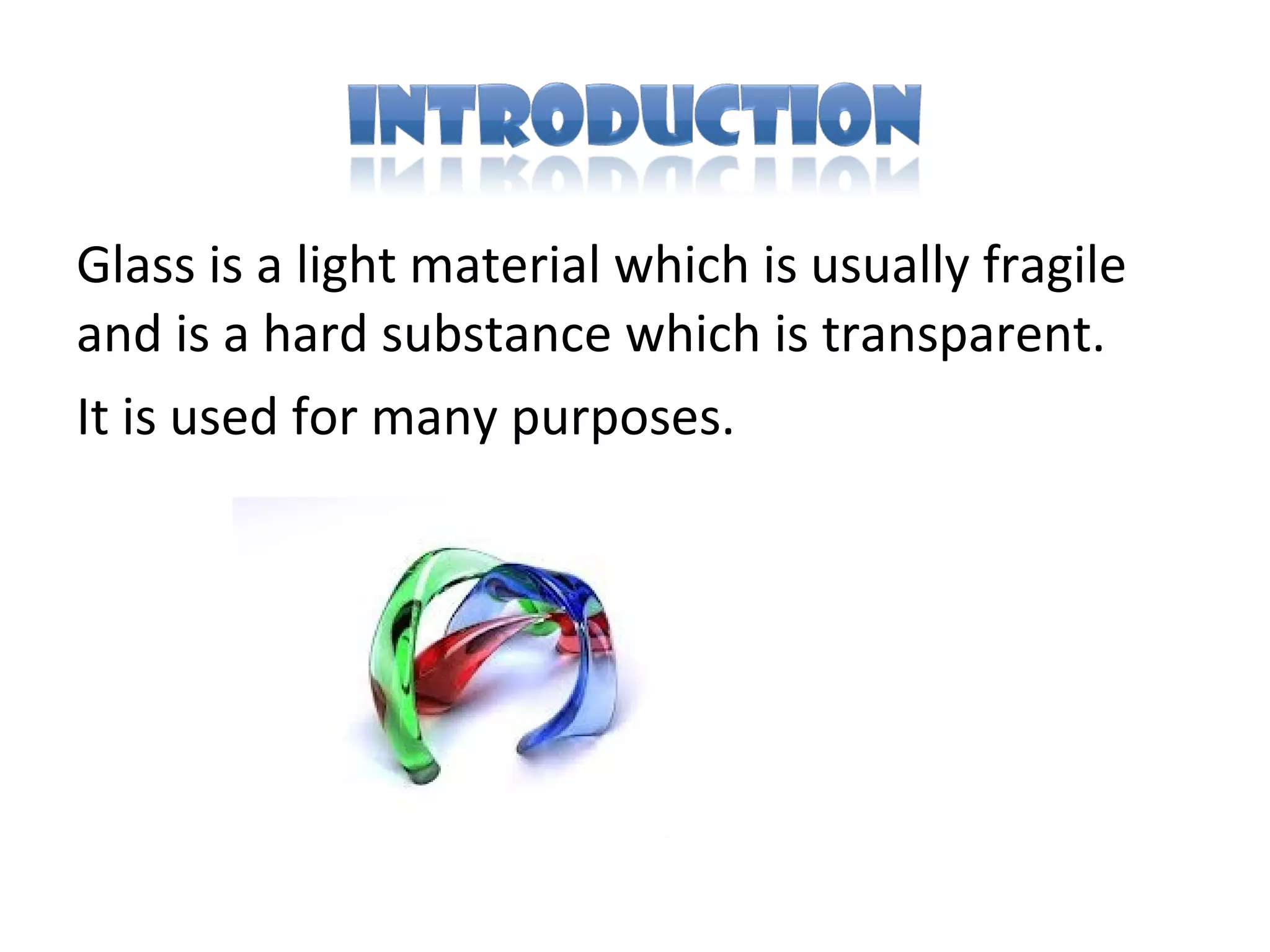

Glass is a light material which is usually fragile
and is a hard substance which is transparent.
It is used for many purposes.
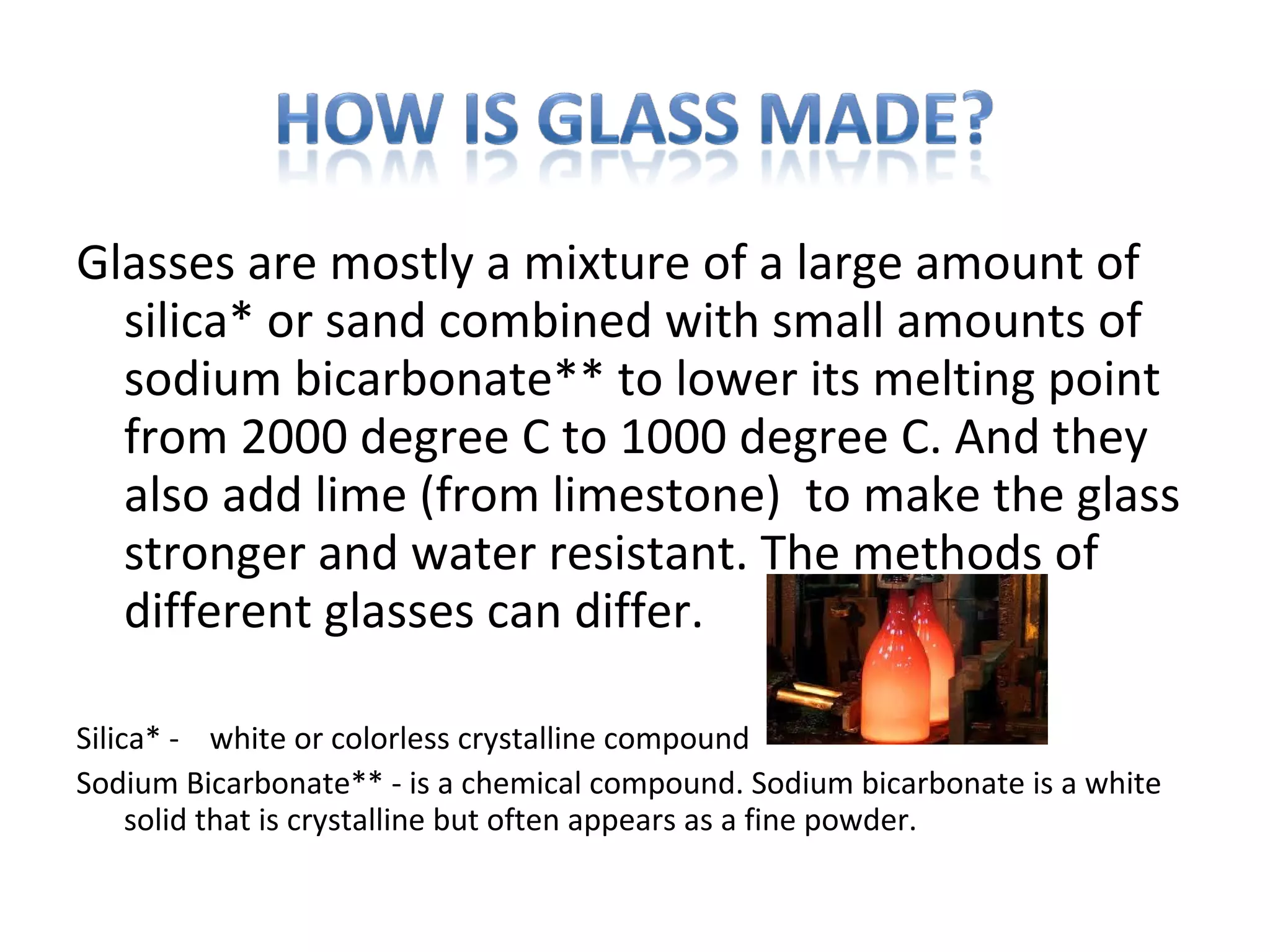
Glasses are mostly a mixture of a large amount of
silica* or sand combined with small amounts of
sodium bicarbonate** to lower its melting point
from 2000 degree C to 1000 degree C. And they
also add lime (from limestone) to make the glass
stronger and water resistant. The methods of
different glasses can differ.
Silica* - white or colorless crystalline compound
Sodium Bicarbonate** - is a chemical compound. Sodium bicarbonate is a white
solid that is crystalline but often appears as a fine powder.
Coloured glasses are made by simple changes
like :
• temperature
• Amount of any substance
• Temperature of reheating
• Duration
• Type of colourant
• Concentration of colourant.
Iron - is a very useful and powerful colouring substance even though it can impurity in
making glass. it gives a reddish-blue glass.
Manganese - Some of the oldest compounds used in the colouring glass are
manganese compounds(a mix of two chemical substance) Evidence is found in early
Egyptian purple glass that manganese is present.
Chromium – chromium is one of the most powerful of all colouring compound used in
the glassmaking industry and is used in the production of dark green glass.
Copper - chromium is a very powerful and also a versatile colouring compound when
used in colouring glass and its use can be traced back many years. The now famous
Egyptian Blue Glass, which was so popular during the time of the Roman Empire.
Cobalt – cobalt is the most powerful blue colorant used in glassmaking producing rich
blues it can also give shades of pink when used in a boro-silicate mix(a compound of
boric and silicic acid)and green if added iodides(a compound of iodine and another
element).
Nickel – nickel is not a very important colouring substance. Although it is used to make
a smoky coloured glass. It is made with cobalt for decolorizing lead crystal. When it is
introduced into lead crystal it gives a purplish colour, which gives a yellow tint
produced by other elements.
Uranium produces a yellow coloured glass. This type of Uranium Glass is termed
'Vaseline Glass‘.
The main types
• Borosilicate glass
• Commercial glass
• Fiber glass
• Lead glass
Special types of glasses
• Alkali-barium silicate glass
• Aluminisilicate glass
• Ceramic glass
• Optical glass
• Sealing glass
• Technical glass
• Vitreous glass
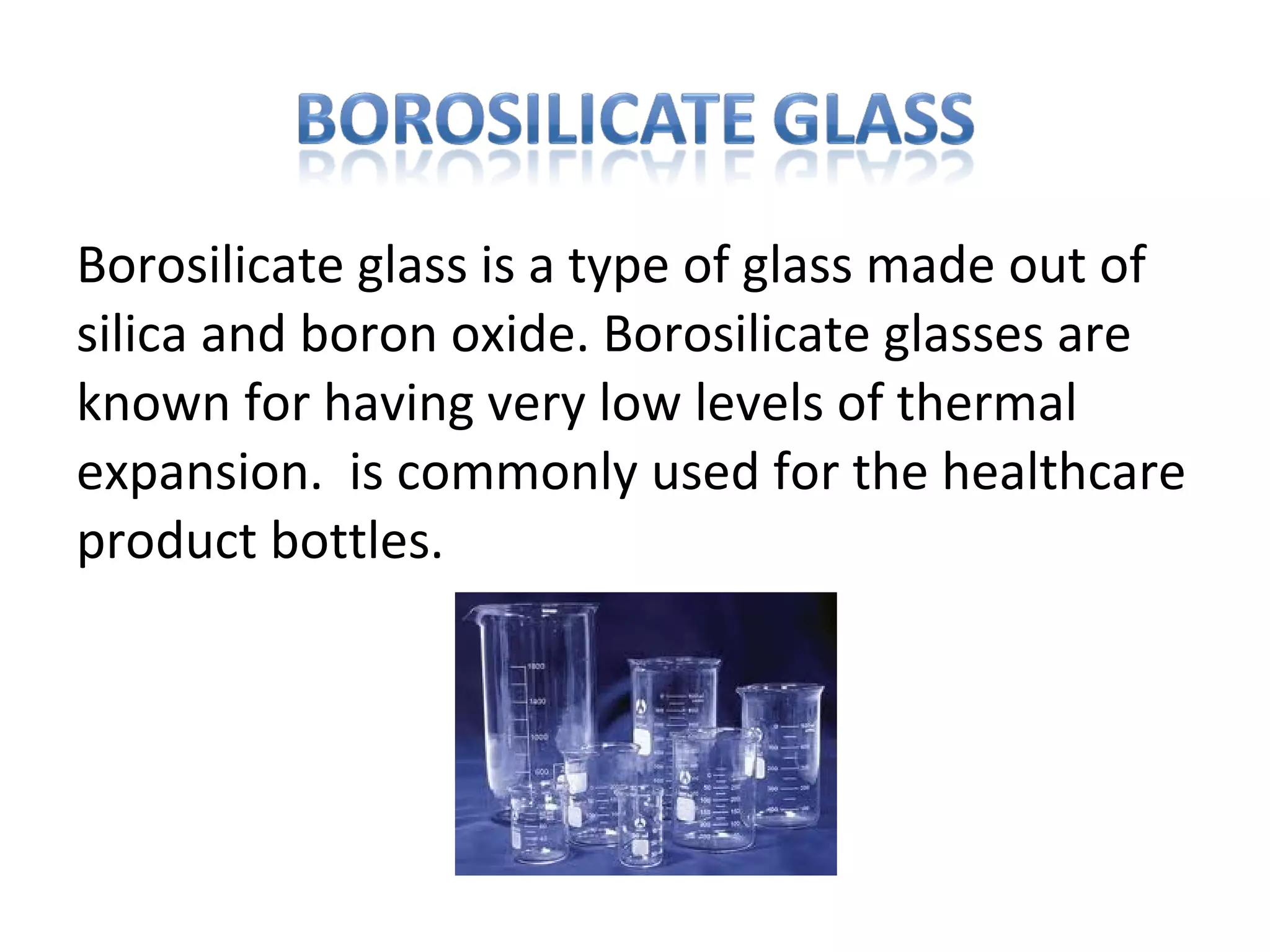
Borosilicate glass is a type of glass made out of
silica and boron oxide. Borosilicate glasses are
known for having very low levels of thermal
expansion. is commonly used for the healthcare
product bottles.
The main substance of all commercial glass is
sand. The addition of sodium carbonate, known
as soda ash, in a quantity to produce a fused
mixture of 75% silica and 25% of sodium oxide,
will reduce the melting point to about 800° C.
This glass is used for glass doors, windows and
etc…
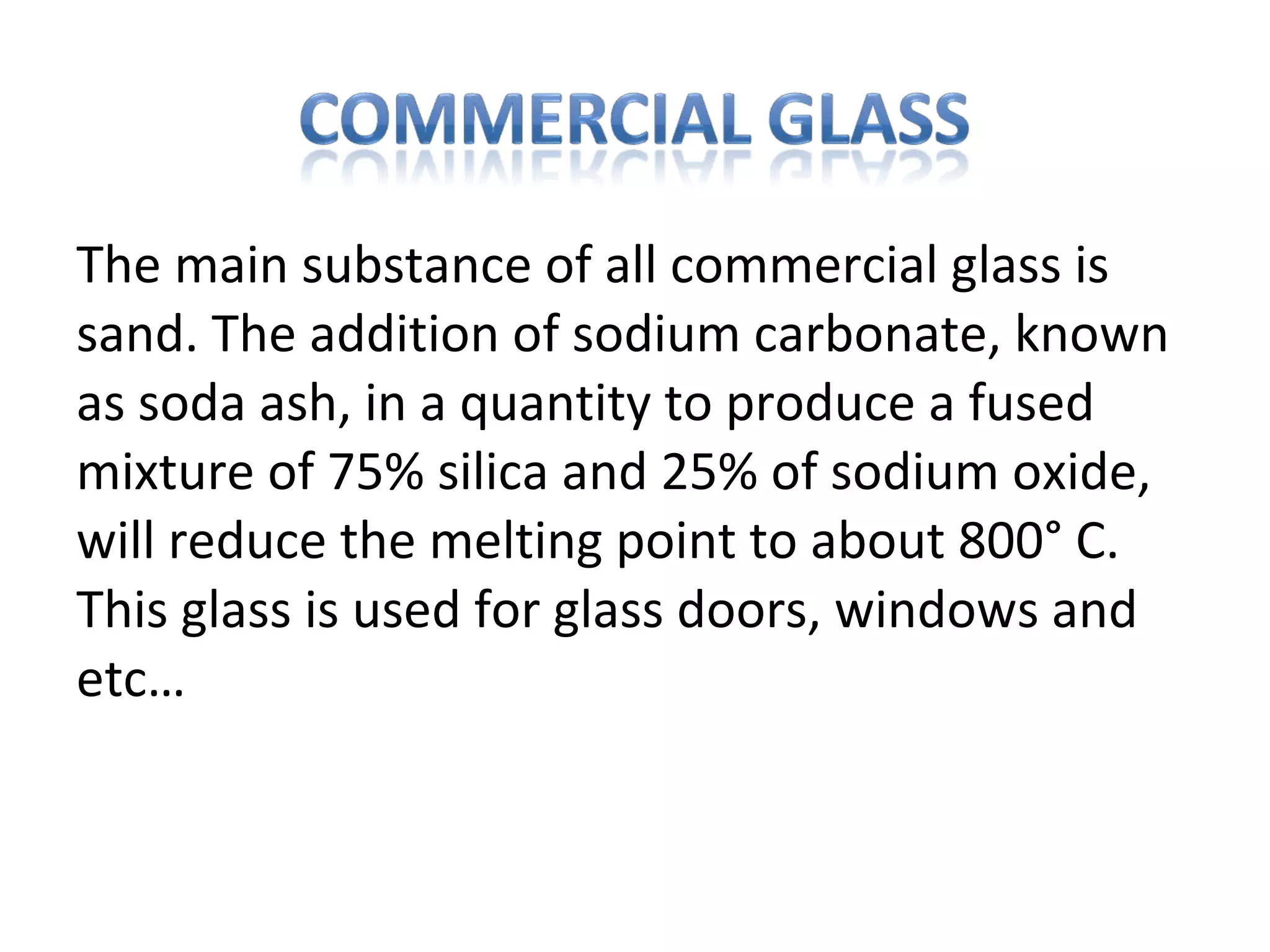
Glass fiber is a material consisting of numerous
extremely fine fibers of glass. Glassmakers
throughout history have experimented with
fiber glass.
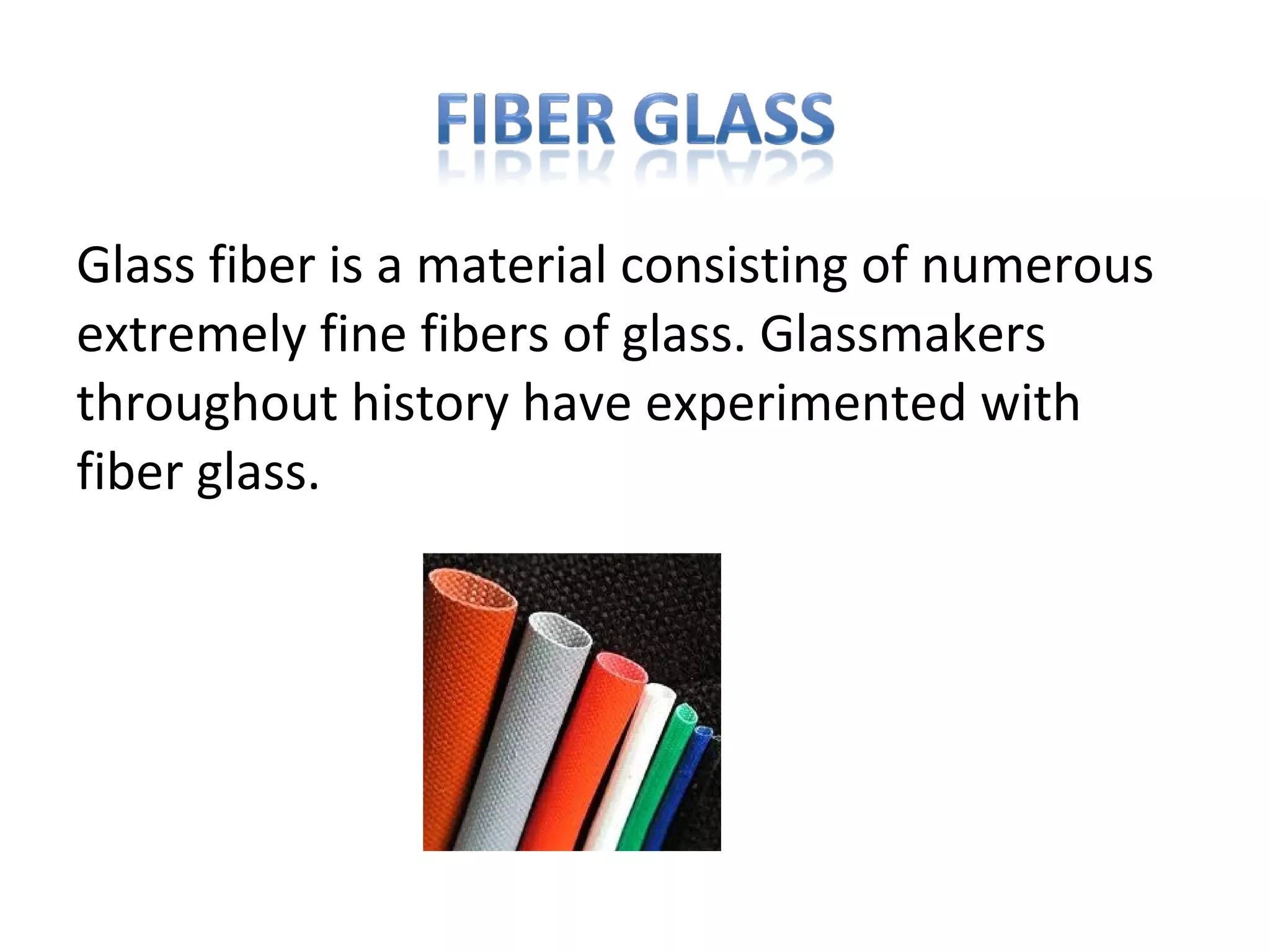
Lead glass is a variety of glass. Lead glass is
typically a modern crystallized glass, historically
also known as flint glass because of the original
silica.
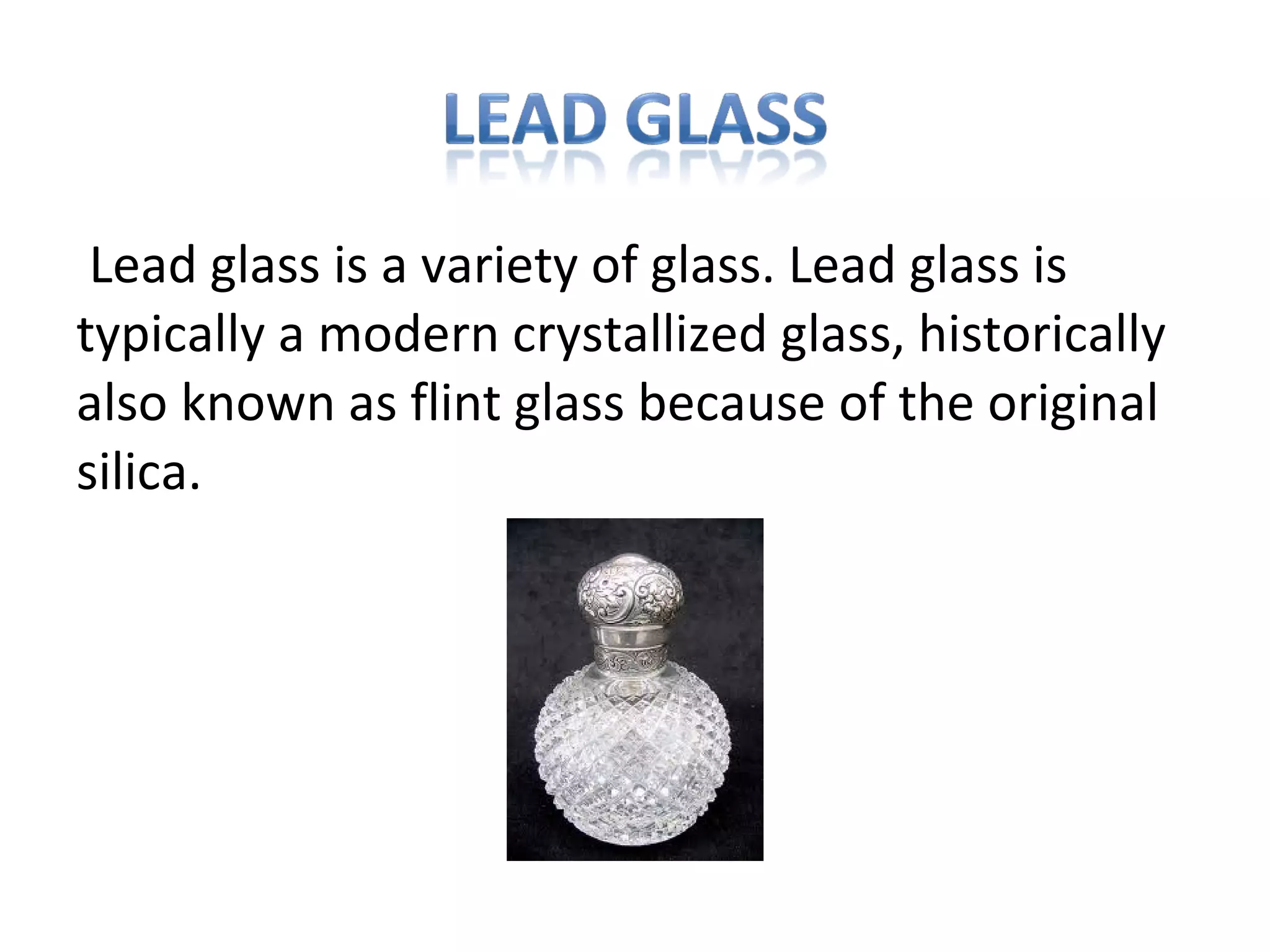
Do you know what type of glass is used on the
television screens?
Well it is alkali-barium glass. The T.V produces X
-rays that must be absorbed, otherwise they could
cause health problems. The X-rays are absorbed by
glass with minimum amounts of heavy oxides. Lead
glass is commonly used for the funnel and neck of
the TV tube, while glass containing barium is used
for the screen
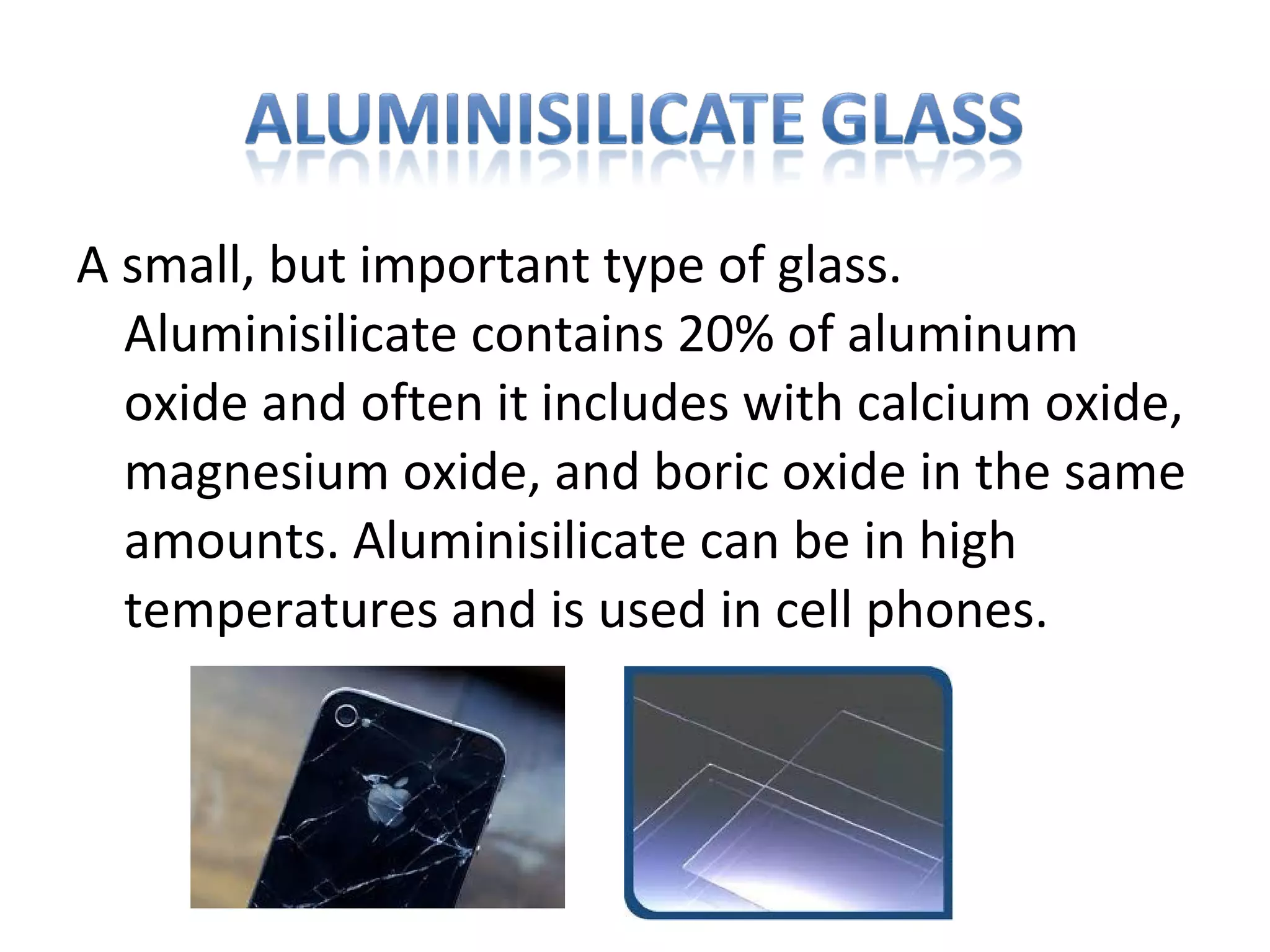
A small, but important type of glass.
Aluminisilicate contains 20% of aluminum
oxide and often it includes with calcium oxide,
magnesium oxide, and boric oxide in the same
amounts. Aluminisilicate can be in high
temperatures and is used in cell phones.
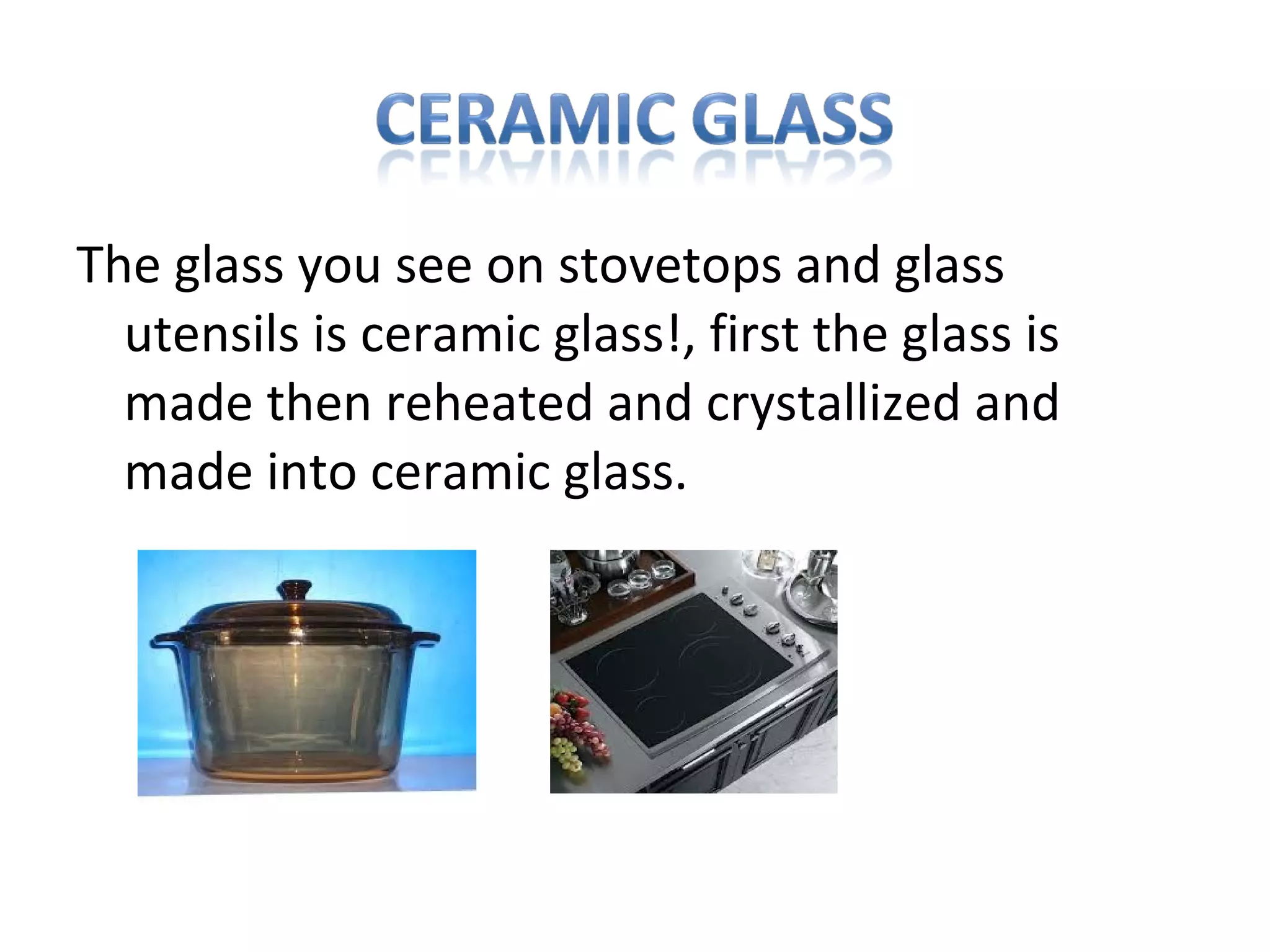
The glass you see on stovetops and glass
utensils is ceramic glass!, first the glass is
made then reheated and crystallized and
made into ceramic glass.
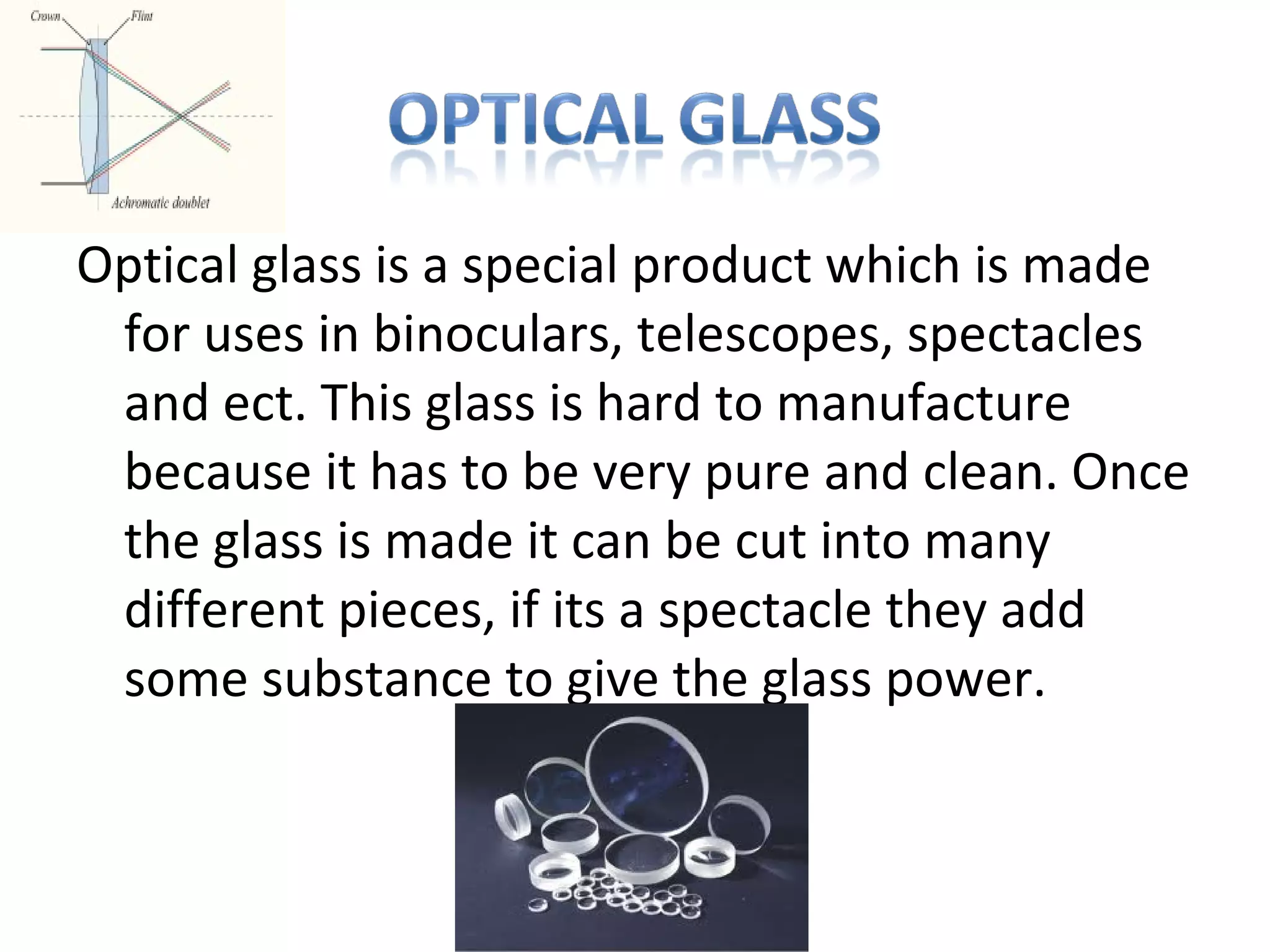
Optical glass is a special product which is made
for uses in binoculars, telescopes, spectacles
and ect. This glass is hard to manufacture
because it has to be very pure and clean. Once
the glass is made it can be cut into many
different pieces, if its a spectacle they add
some substance to give the glass power.
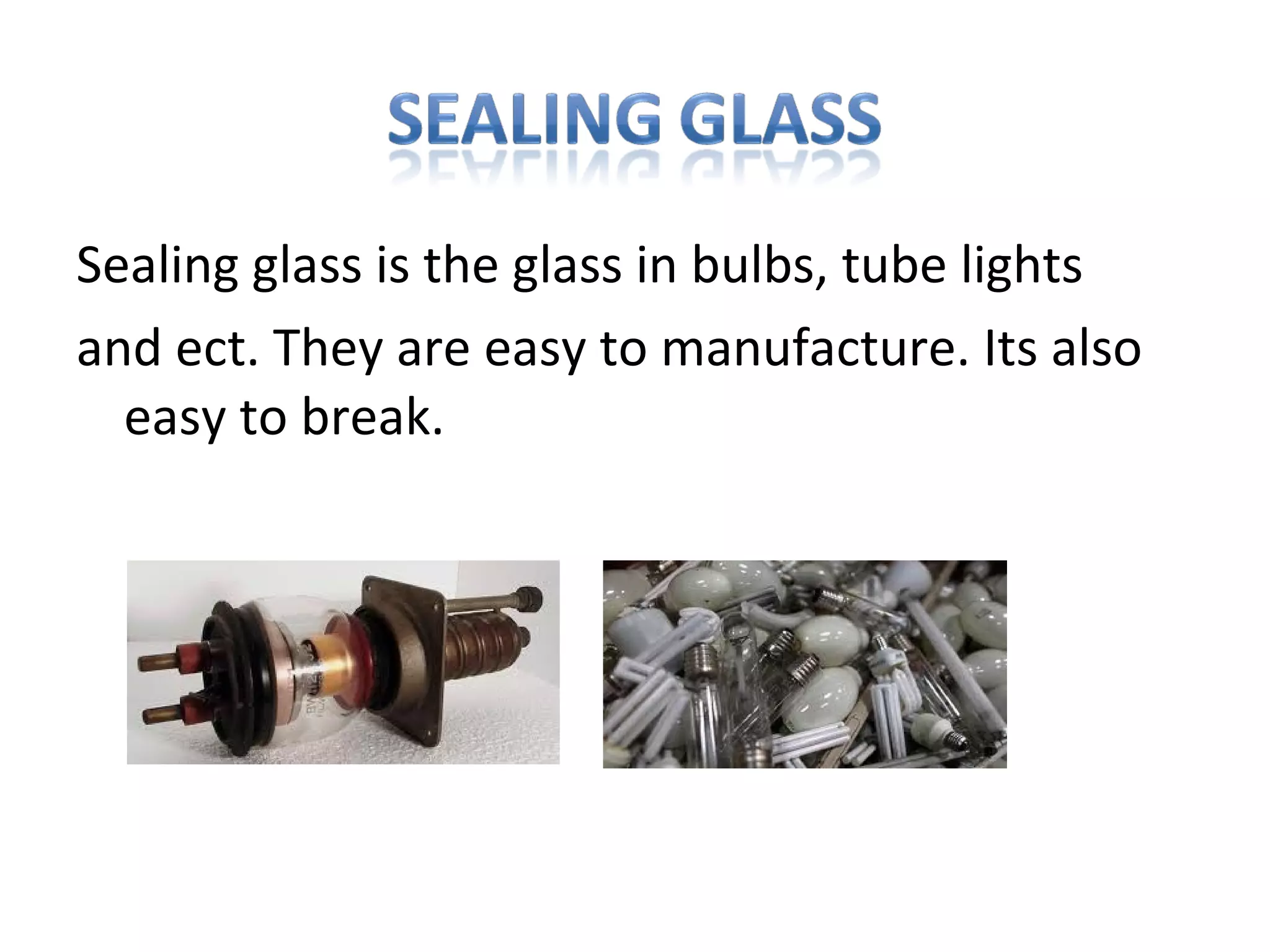
Sealing glass is the glass in bulbs, tube lights
and ect. They are easy to manufacture. Its also
easy to break.
Technical glass is made into four categories,
they are:
1.Borate glass – borate glass is the main part of
a computer!, this glass contains a little
amount of silica and sometimes silica is not
even added!!!.
2.Passivation glass – passivation glass has a
slight difference from borate. It is a part of the
silicon chips in computer.
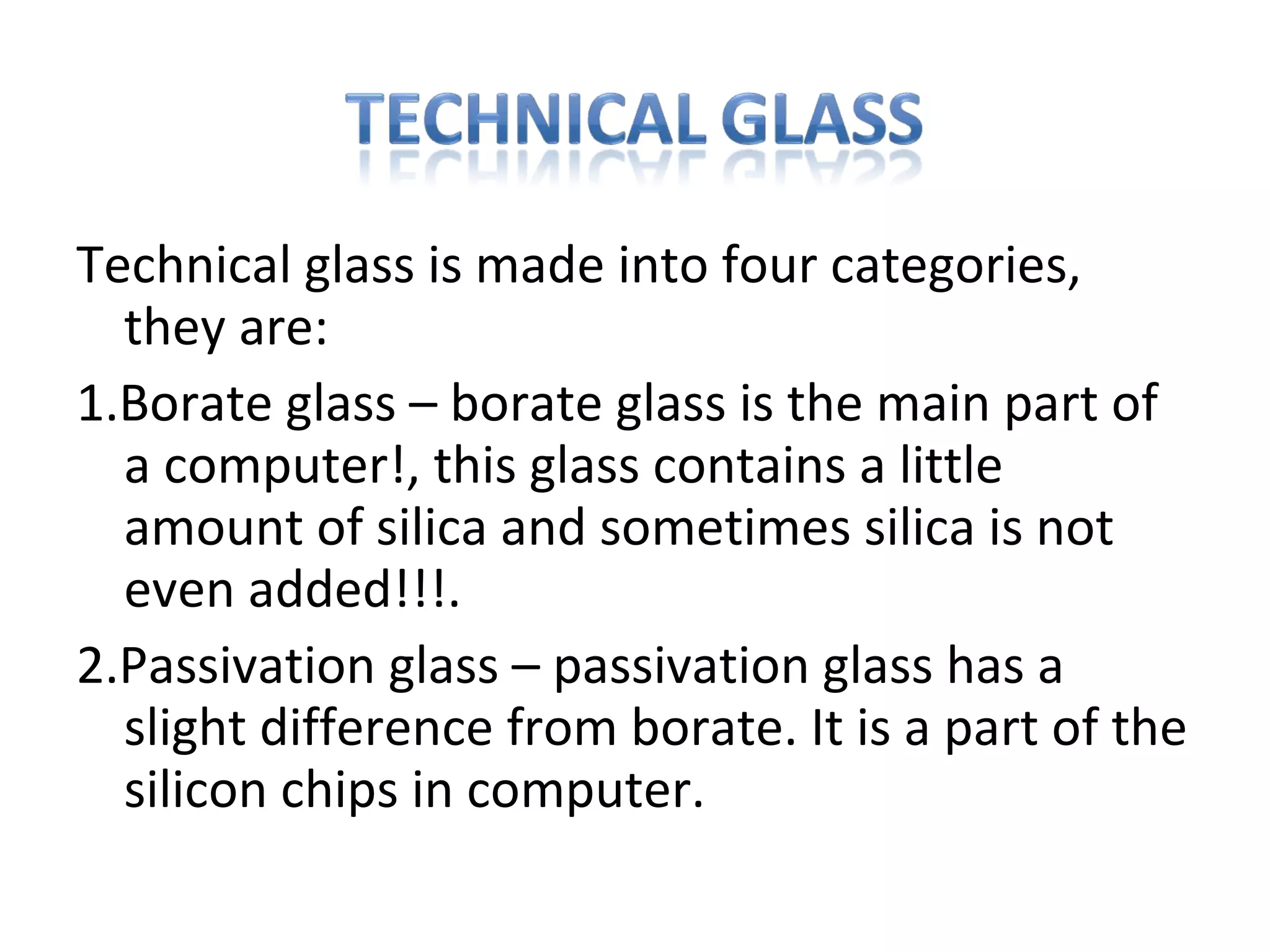
3.Phosphate glass – phosphate glass is used in
secondary electron multipliers.
4.Chalogenide Glass - Chalogenide Glass is a
type of glass that can be made without the
presence of oxygen. They are olso used in
computers.
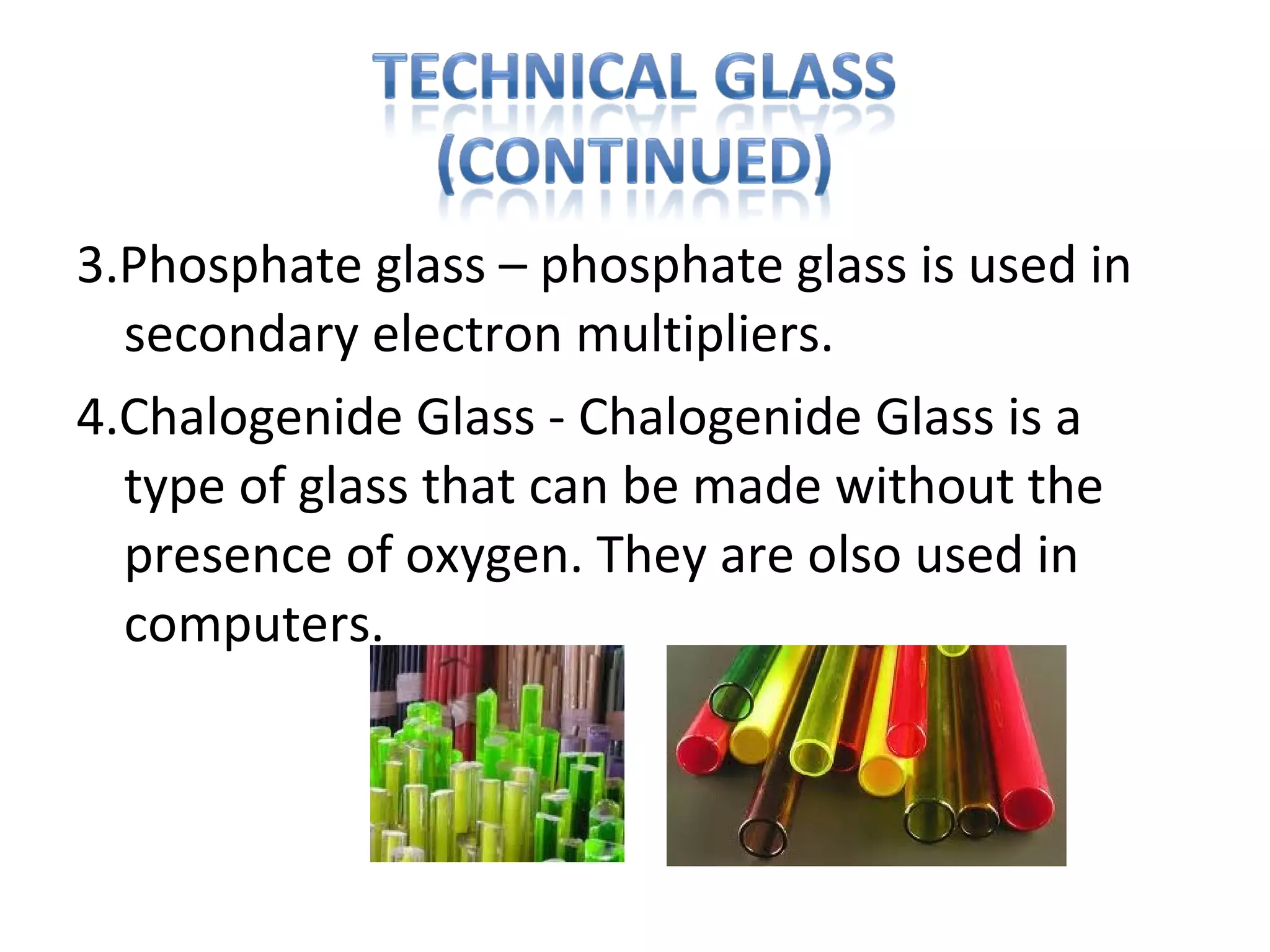
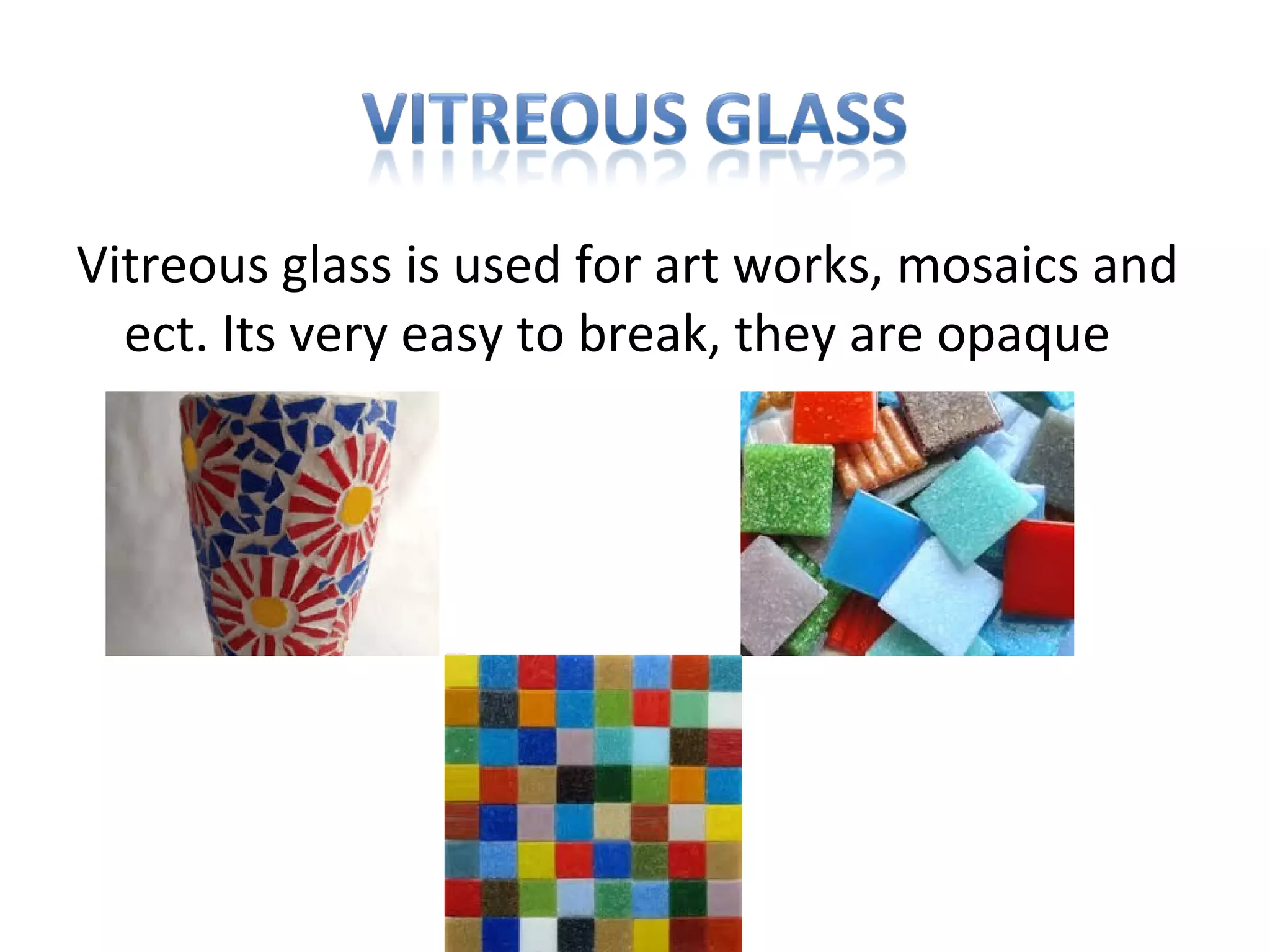
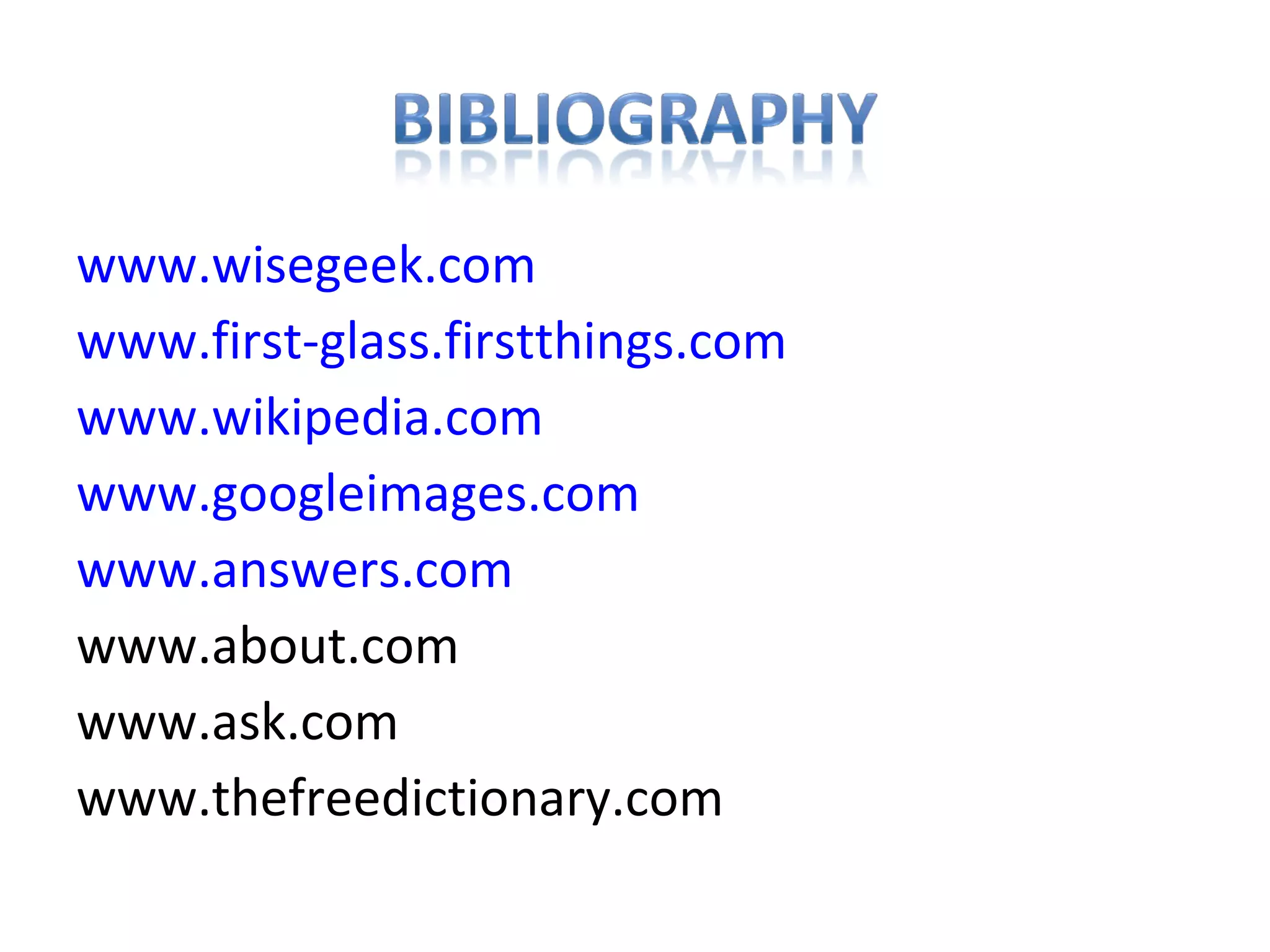
Vitreous glass is used for art works, mosaics and
ect. Its very easy to break, they are opaque
www.wisegeek.com
www.first-glass.firstthings.com
www.wikipedia.com
www.googleimages.com
www.answers.com
www.about.com
www.ask.com
www.thefreedictionary.com
www.yahoo.answers.com
www.google.com
www.scientificamerican.com
www.britglass.co.uk
www.howdoestuffwork.com
www.brainyquotes.com
Project by Saliha 
Thank you so much for viewing my project, hope
you learned something new 
I definitely wouldn’t like it if you copy 

How is glass made

  • 2.
    Glass is alight material which is usually fragile and is a hard substance which is transparent. It is used for many purposes.
  • 3.
    Glasses are mostlya mixture of a large amount of silica* or sand combined with small amounts of sodium bicarbonate** to lower its melting point from 2000 degree C to 1000 degree C. And they also add lime (from limestone) to make the glass stronger and water resistant. The methods of different glasses can differ. Silica* - white or colorless crystalline compound Sodium Bicarbonate** - is a chemical compound. Sodium bicarbonate is a white solid that is crystalline but often appears as a fine powder.
  • 4.
    Coloured glasses aremade by simple changes like : • temperature • Amount of any substance • Temperature of reheating • Duration • Type of colourant • Concentration of colourant.
  • 5.
    Iron - isa very useful and powerful colouring substance even though it can impurity in making glass. it gives a reddish-blue glass. Manganese - Some of the oldest compounds used in the colouring glass are manganese compounds(a mix of two chemical substance) Evidence is found in early Egyptian purple glass that manganese is present. Chromium – chromium is one of the most powerful of all colouring compound used in the glassmaking industry and is used in the production of dark green glass. Copper - chromium is a very powerful and also a versatile colouring compound when used in colouring glass and its use can be traced back many years. The now famous Egyptian Blue Glass, which was so popular during the time of the Roman Empire.
  • 6.
    Cobalt – cobaltis the most powerful blue colorant used in glassmaking producing rich blues it can also give shades of pink when used in a boro-silicate mix(a compound of boric and silicic acid)and green if added iodides(a compound of iodine and another element). Nickel – nickel is not a very important colouring substance. Although it is used to make a smoky coloured glass. It is made with cobalt for decolorizing lead crystal. When it is introduced into lead crystal it gives a purplish colour, which gives a yellow tint produced by other elements. Uranium produces a yellow coloured glass. This type of Uranium Glass is termed 'Vaseline Glass‘.
  • 7.
    The main types •Borosilicate glass • Commercial glass • Fiber glass • Lead glass Special types of glasses • Alkali-barium silicate glass • Aluminisilicate glass • Ceramic glass • Optical glass • Sealing glass • Technical glass • Vitreous glass
  • 8.
    Borosilicate glass isa type of glass made out of silica and boron oxide. Borosilicate glasses are known for having very low levels of thermal expansion. is commonly used for the healthcare product bottles.
  • 9.
    The main substanceof all commercial glass is sand. The addition of sodium carbonate, known as soda ash, in a quantity to produce a fused mixture of 75% silica and 25% of sodium oxide, will reduce the melting point to about 800° C. This glass is used for glass doors, windows and etc…
  • 10.
    Glass fiber isa material consisting of numerous extremely fine fibers of glass. Glassmakers throughout history have experimented with fiber glass.
  • 11.
    Lead glass isa variety of glass. Lead glass is typically a modern crystallized glass, historically also known as flint glass because of the original silica.
  • 12.
    Do you knowwhat type of glass is used on the television screens? Well it is alkali-barium glass. The T.V produces X -rays that must be absorbed, otherwise they could cause health problems. The X-rays are absorbed by glass with minimum amounts of heavy oxides. Lead glass is commonly used for the funnel and neck of the TV tube, while glass containing barium is used for the screen
  • 13.
    A small, butimportant type of glass. Aluminisilicate contains 20% of aluminum oxide and often it includes with calcium oxide, magnesium oxide, and boric oxide in the same amounts. Aluminisilicate can be in high temperatures and is used in cell phones.
  • 14.
    The glass yousee on stovetops and glass utensils is ceramic glass!, first the glass is made then reheated and crystallized and made into ceramic glass.
  • 15.
    Optical glass isa special product which is made for uses in binoculars, telescopes, spectacles and ect. This glass is hard to manufacture because it has to be very pure and clean. Once the glass is made it can be cut into many different pieces, if its a spectacle they add some substance to give the glass power.
  • 16.
    Sealing glass isthe glass in bulbs, tube lights and ect. They are easy to manufacture. Its also easy to break.
  • 17.
    Technical glass ismade into four categories, they are: 1.Borate glass – borate glass is the main part of a computer!, this glass contains a little amount of silica and sometimes silica is not even added!!!. 2.Passivation glass – passivation glass has a slight difference from borate. It is a part of the silicon chips in computer.
  • 18.
    3.Phosphate glass –phosphate glass is used in secondary electron multipliers. 4.Chalogenide Glass - Chalogenide Glass is a type of glass that can be made without the presence of oxygen. They are olso used in computers.
  • 19.
    Vitreous glass isused for art works, mosaics and ect. Its very easy to break, they are opaque
  • 20.
  • 21.
  • 22.
    Project by Saliha Thank you so much for viewing my project, hope you learned something new  I definitely wouldn’t like it if you copy 