GLASS
“ As blowing and making bottles” Have you ever hear this expression? WELCOME! Here we will found out if this sentence is really true!
How they do it? Uses Diferents types  Advantages Colouring Glass  Recycling Glass in architecture What is the glass? History Properties of galss
Introduction The term  glass  developed in the late Roman Empire. It was in the Roman glassmaking center at Trier, Germany, that the late-Latin term  glesum  originated, probably from a Germanic word for a transparent, lustrous substance.   Nowadays, Glass plays an essential role in various scientific fields and in industry.
What is the glass? Glass is a hard material, normally fragile and transparent that is obtained by melting at about 1500 Â ° C Salice sand (SiO2), sodium carbonate (Na2CO3) and limestone (CaCO3).  The noun "glass" is used frequently as a synonym of crystal, but is incorrect because the glass is an amorphous solid and not a crystal itself.
Properties of glass The thermal, optical, electrical and chemical properties of glass vary with its composition.
Properties of glass Glass is a  good thermal conductor . Glass is an electrically  insulating   material: it does not conduct electricity.
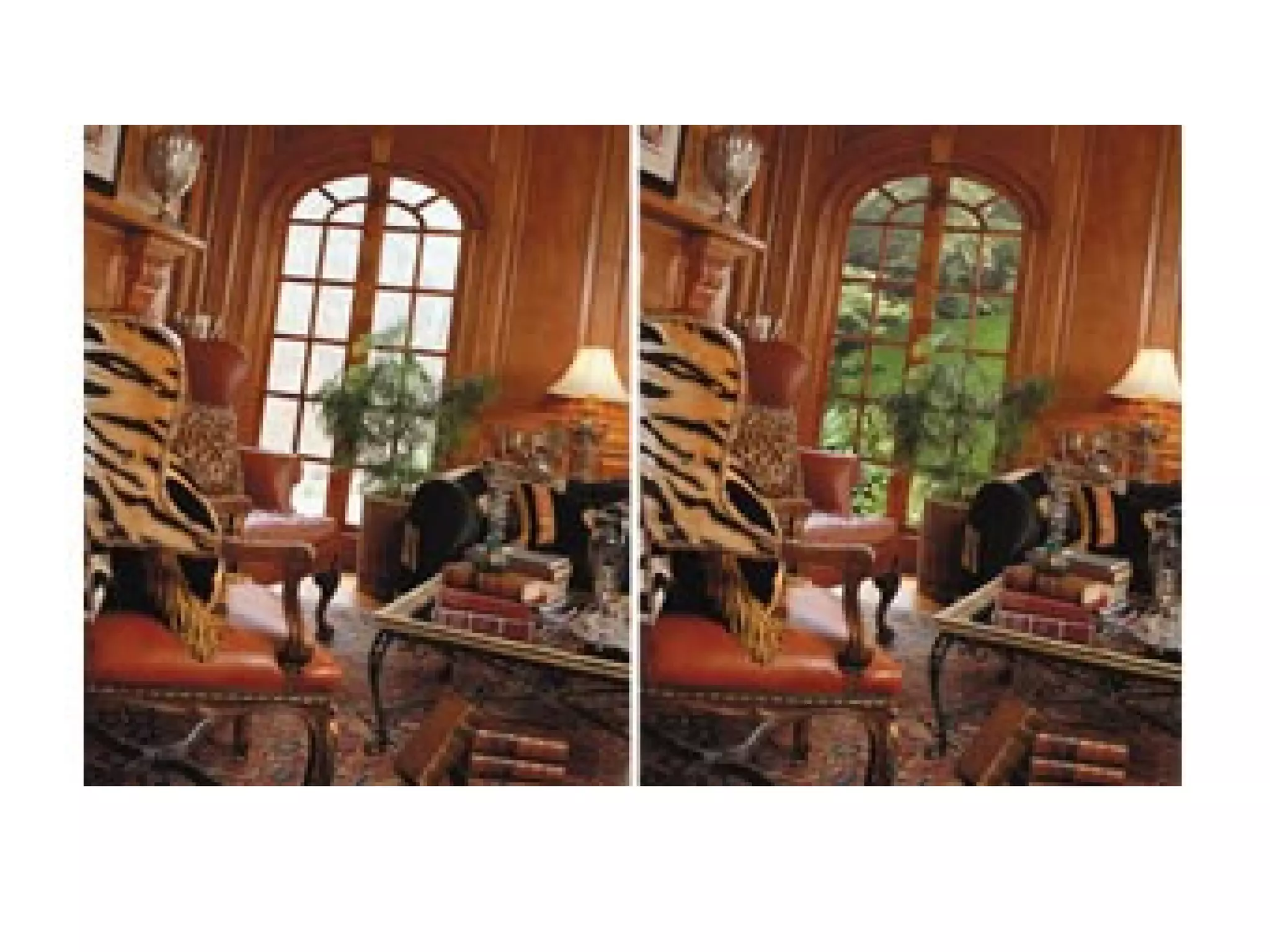
Properties of galss When light falls on glass, part of the light is  reflected   at the surface, part of the light is  absorbed   in the glass, and part of the light is  transmitted .  If most of the light is transmitted, the glass is  transparent . By colouring the glass or changing its composition, it is possible to transmit selectively some wavelengths of the spectrum.
 
 
Properties of glass Common glass  does not transmit   ultra-violet radiation  (short wavelengths): you will not get a tan behind a window!  However it  does transmit   infrared radiation  (long wavelengths): this is why it is always hot behind a glass window.
 
History Glass was first used for items of jewelery, in Ancient Times. Crafters would add different minerals to glass when it melt, to have a wide range of colors!  Later on, the Romans invented the blowing technique, that allowed the production of glass containers. However, it was a very primitive and inefficient technique  In the Middle Ages, glass was used in Cathedrals in different colors! They also started to be manufacture for optical instruments.  It developed as a very popular material, using it in bottles, glasses, mirrors and other devices, with consequent improvement in quality of life.
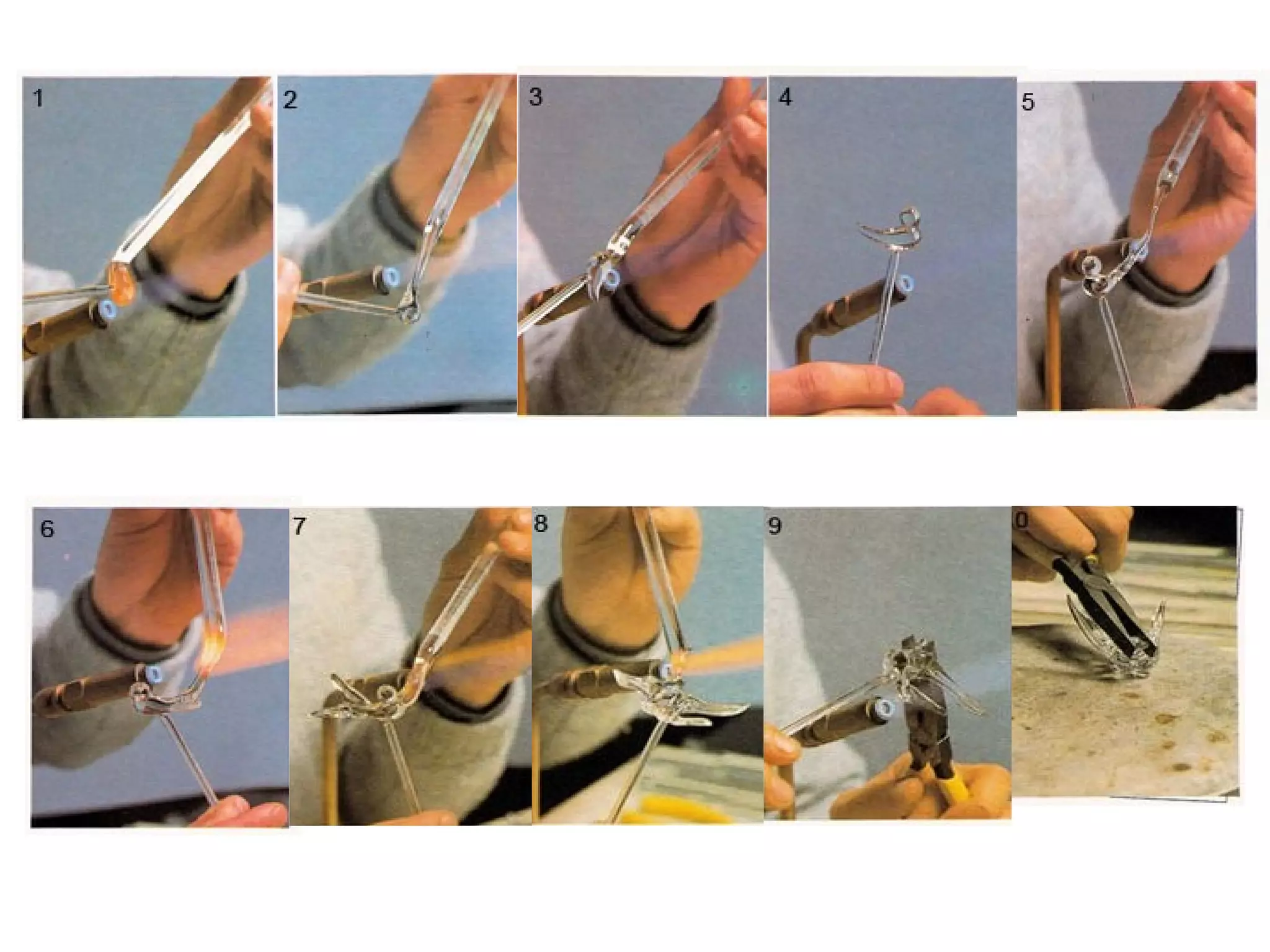
How they do it? Answer: through melting, shaping and Glassblowing Glassblowing is the process of creating artistic glass works through the manipulation of molten glass.


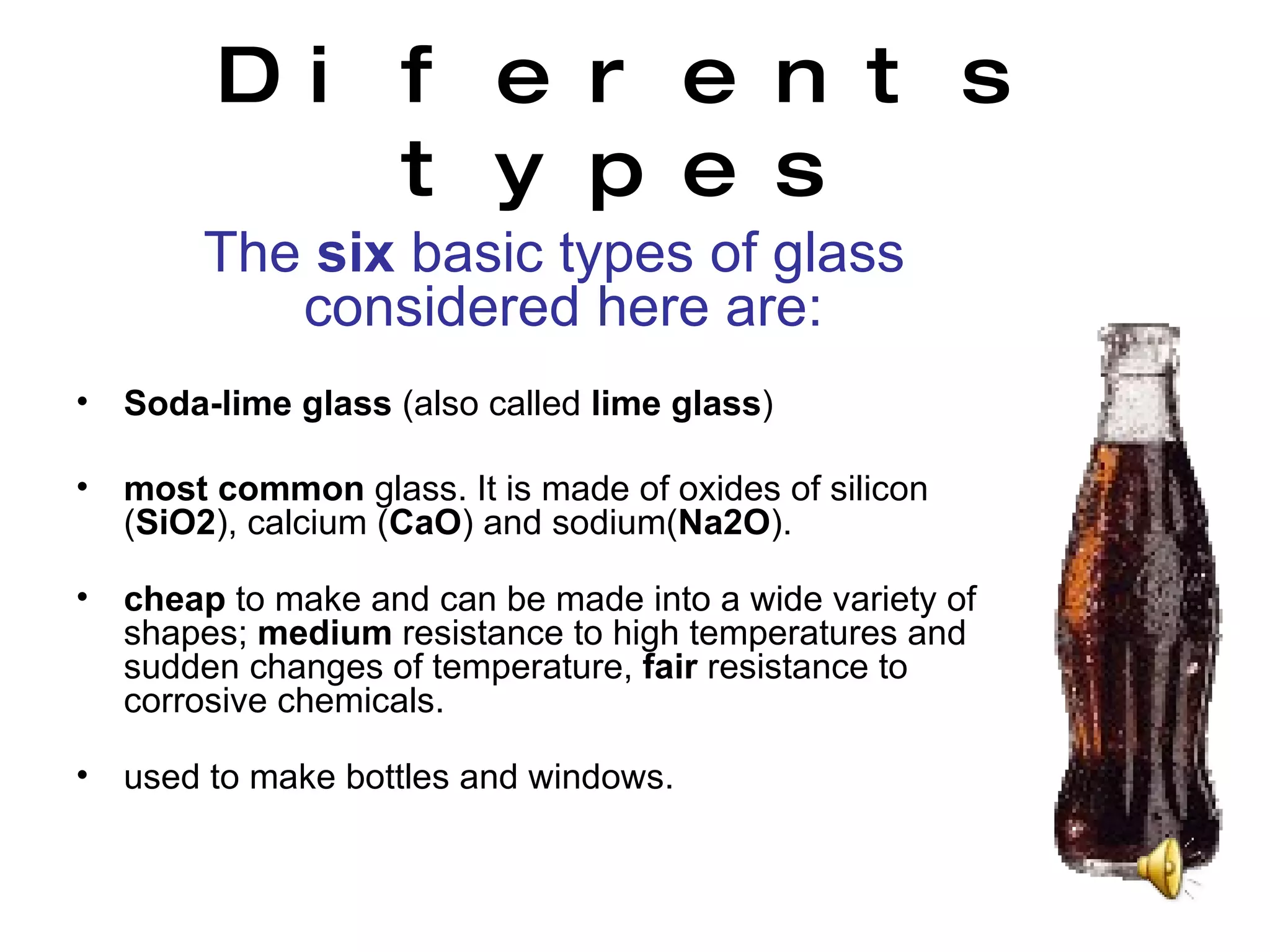
Diferents types The  six  basic types of glass considered here are:   Soda-lime glass  (also called  lime glass )  most common  glass. It is made of oxides of silicon ( SiO2 ), calcium ( CaO ) and sodium( Na2O ).  cheap  to make and can be made into a wide variety of shapes;  medium  resistance to high temperatures and sudden changes of temperature,  fair  resistance to corrosive chemicals.  used to make bottles and windows.
Lead-alkali glass  (also called  lead glass )  lead oxide  ( PbO ) is used in place of calcium oxide.  more expensive  than soda-lime glass;  excellent  electrical insulating properties;  poor  resistance to high temperatures and sudden changes of temperature.  used for electrical applications.  Borosilicate glass   appreciable  resistance to high temperature or sudden changes in temperature;  medium  resistance to chemical attack.  Moderate  cost to make.  used for light bulbs, photochromic glasses, sealed-beam headlights, laboratory ware, and some bake ware products.  Diferents types
Alumino-silicate glass   alumina  ( Al2O3 ) is added to the glass batch to improve the properties of the glass.  good  resistance to high temperature or sudden changes in temperature;  difficult  to make.  used in electronics.  Diferents types
Ninety-six percent silica glass   special type of glass made by a proprietary  method, at temperatures up to 900°C.  used to furnace sight glasses, for outer  windows on space vehicles.  Fused silica glass   only  made of silicon dioxide ( SiO2 ) in the  noncrystalline  state.  expensive  and  difficult  to make;  maximum  resistance to high temperature (900°C for extended periods, 1200°C for short periods).  used in special applications such as optical waveguides, crucibles for growing crystals .  Diferents types
Advantages Strength of Glass Glass is a  strong  material. Like most materials, glass can be bent until a certain limit.  Imagine bending a long rod of glass. If you release the tension before this limit, the rod returns to its original shape: the deformation is  elastic . If you pass the limit,  the   glass  breaks .  Why does glass shatter?  The strength of glass is only slightly affected by composition but is highly dependent on the  surface condition . If stress is applied on the damaged surface, the stress at the damaged points will be increased and the glass will shatter. Glass  does not age  quickly: glass windows remain clear and undamaged after many years of exposure to the elements.
Colouring Glass   Unless the raw materials are very pure, glass is normally  green . In order to change the colour of glass, one can decolourise the glass by adding colorants which produce the complementary colour to green.  The colour depends on the  state of oxidation  of the colorant, the  composition  of the glass and the  thermal treatment .
Colouring Glass   dark blue  cobalt  light blue  copper  amber  iron and sulfur  purple manganese  green and aqua  iron  GLASS COLOUR/S  COLORANT
 
 
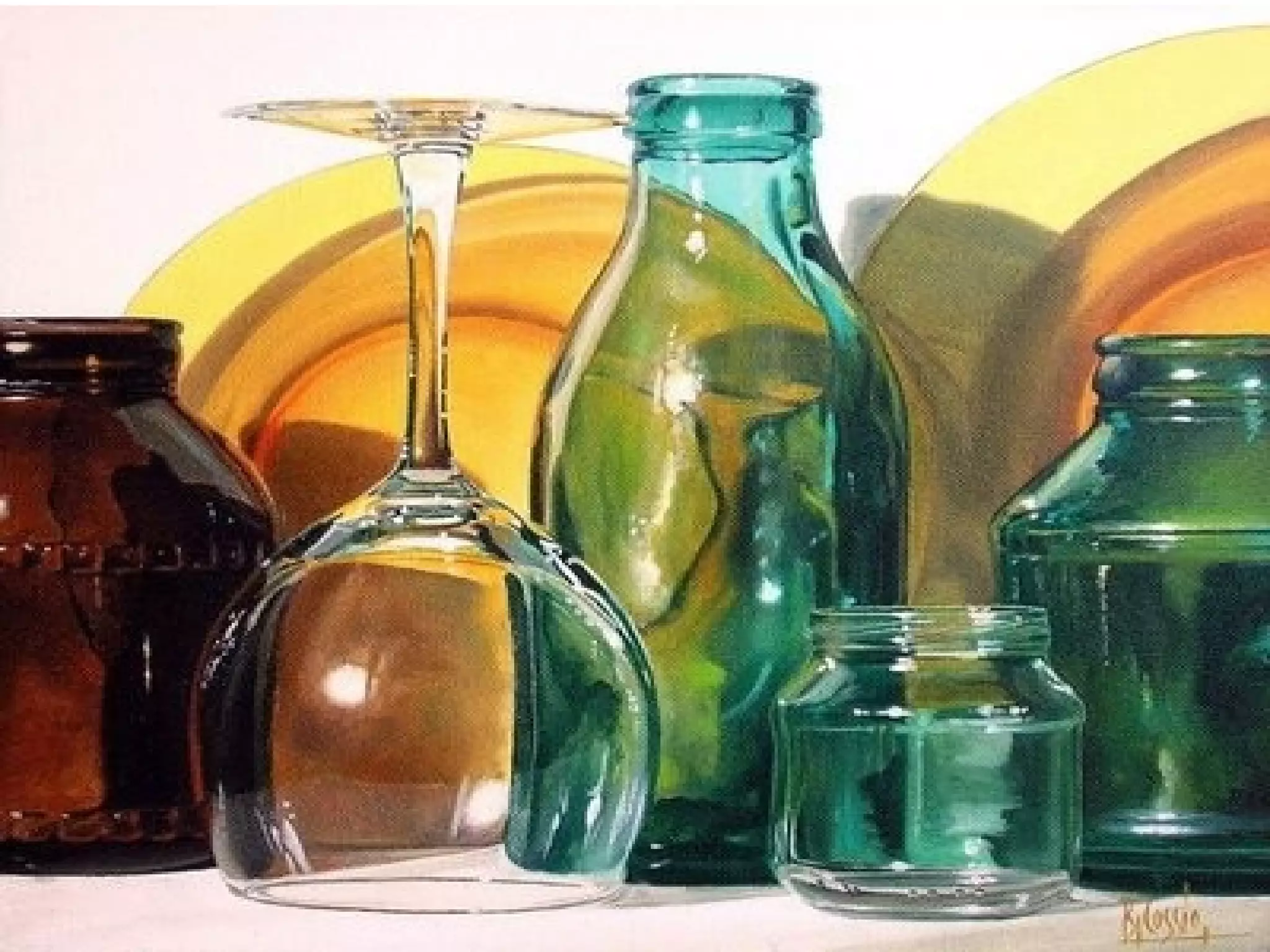
Uses From a natural mineral created by the volcanic furnaces to a luxury material, glass has now become a commodity.  We use glass every day of our lives; we are surrounded by glass...


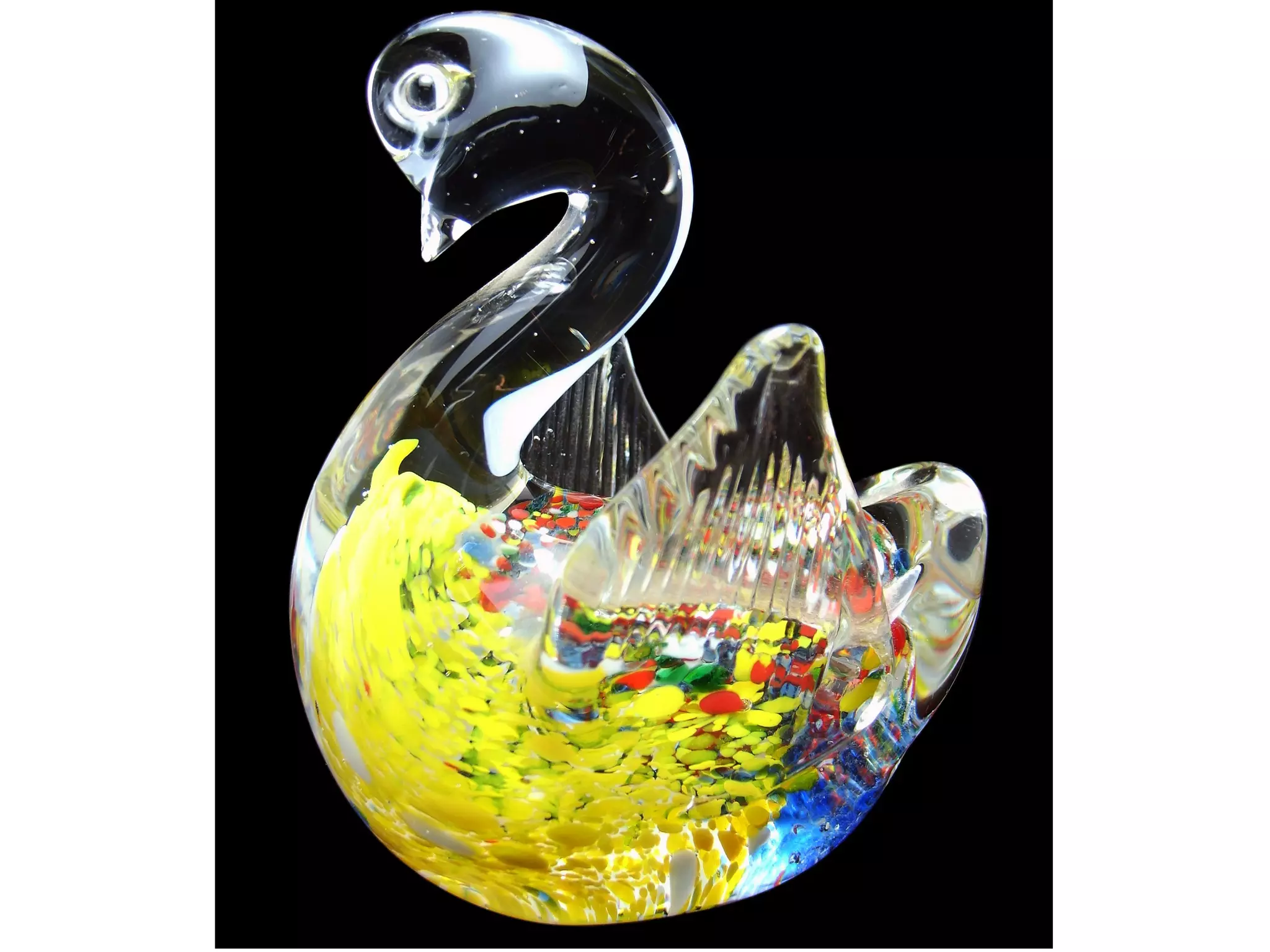
Glass is also used to create objects of art
 
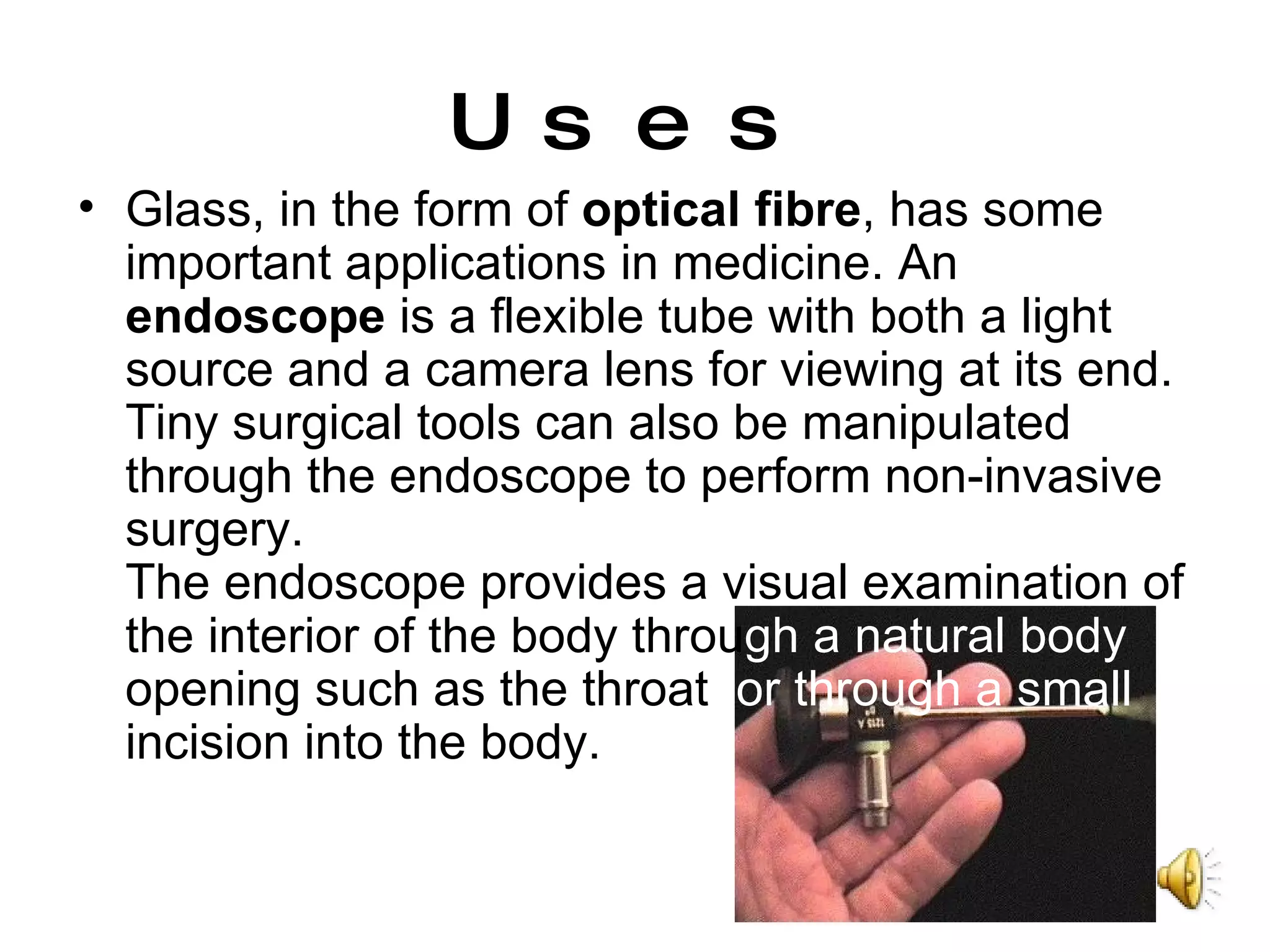
Uses Glass, in the form of  optical fibre , has some important applications in medicine. An  endoscope  is a flexible tube with both a light source and a camera lens for viewing at its end. Tiny surgical tools can also be manipulated through the endoscope to perform non-invasive surgery. The endoscope provides a visual examination of the interior of the body throu gh a natural body  opening such as the throat  or through a small  incision into the body.
Recycling First, glass items are distributed and used. Glass is present everywhere! Once the glass item has been used and deposited for recycling, a process that will make a new glass item from the old one begins! The glass is separated from dirt or any strange matter. The product of this operation is transported to glass treatment plants for the development of new glass.  Finally, it’s mixed with sand, soda, lime and melted at 1500 degrees centigrade. After the glass is homogenized to liquid state, it is dropped in a Mold, which will shape the new item exactly as the original


Glass in architecture “ If we want our culture to rise to a higher level, we are obligated for better or for worse, to change our architecture. And this only becomes possible if we take away the closed character from the rooms in which we live. We can only do that by introducing glass architecture, which lets in the light of the sun, the moon, and the stars” .  Bruno Taut
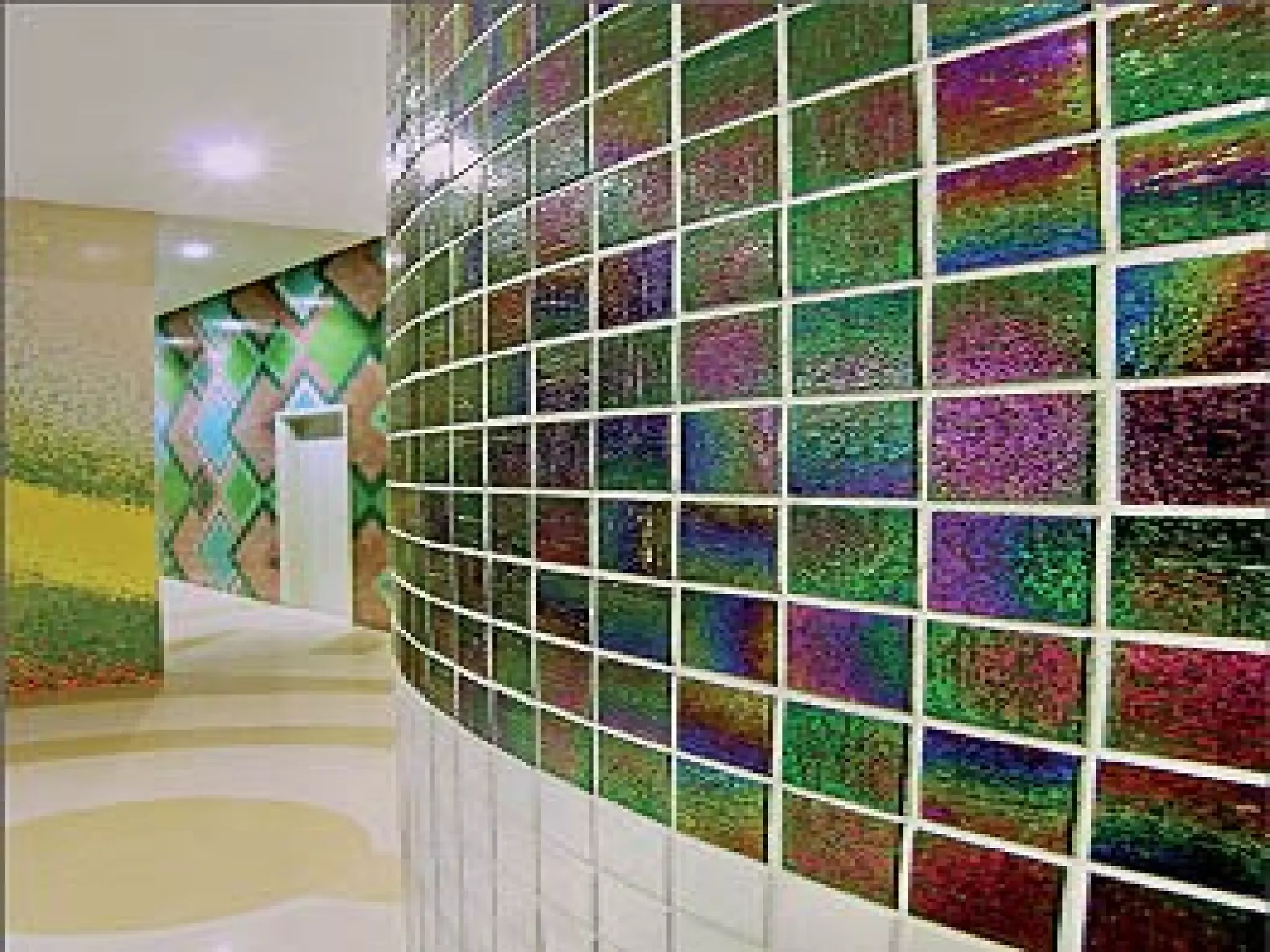
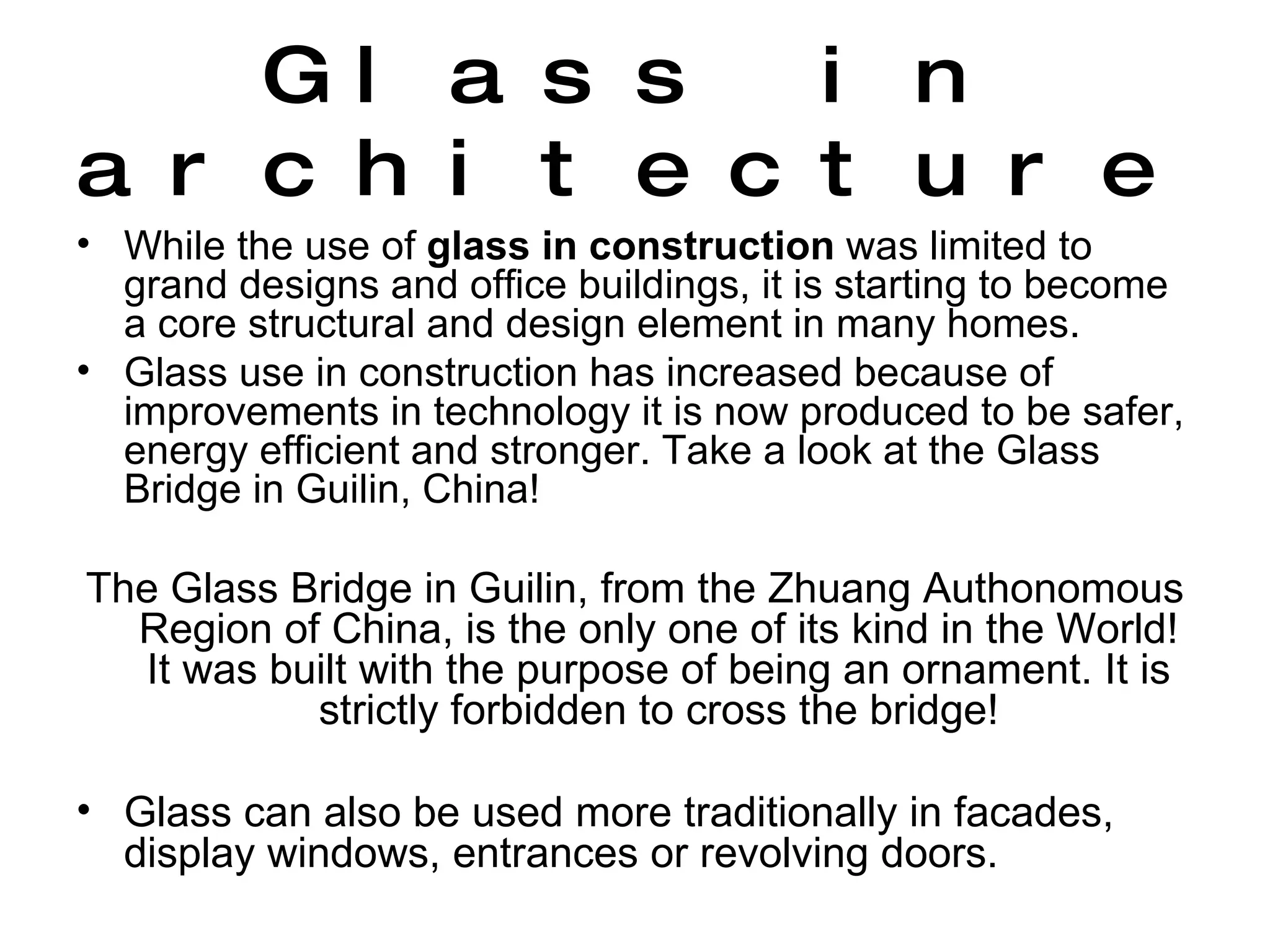
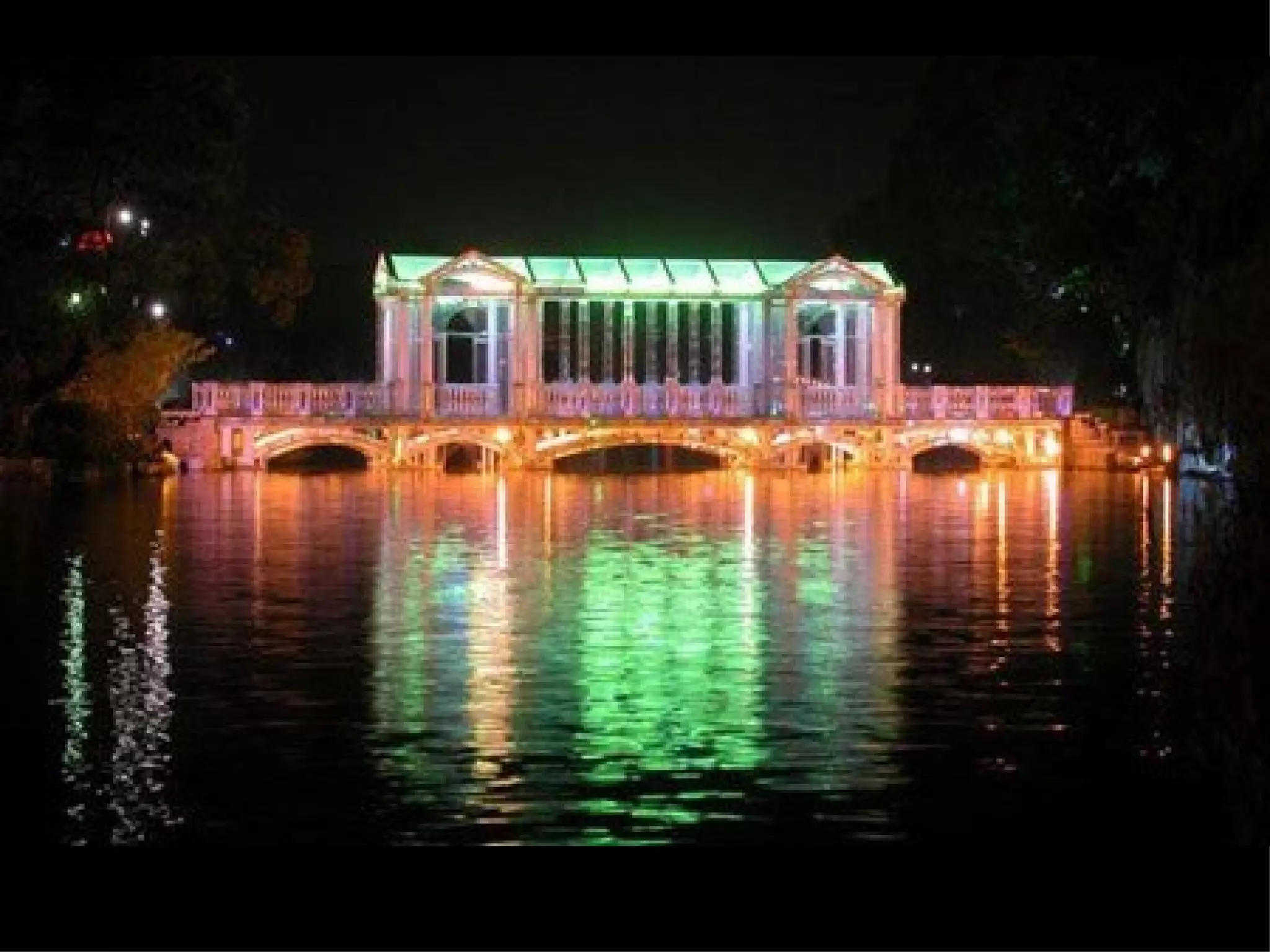
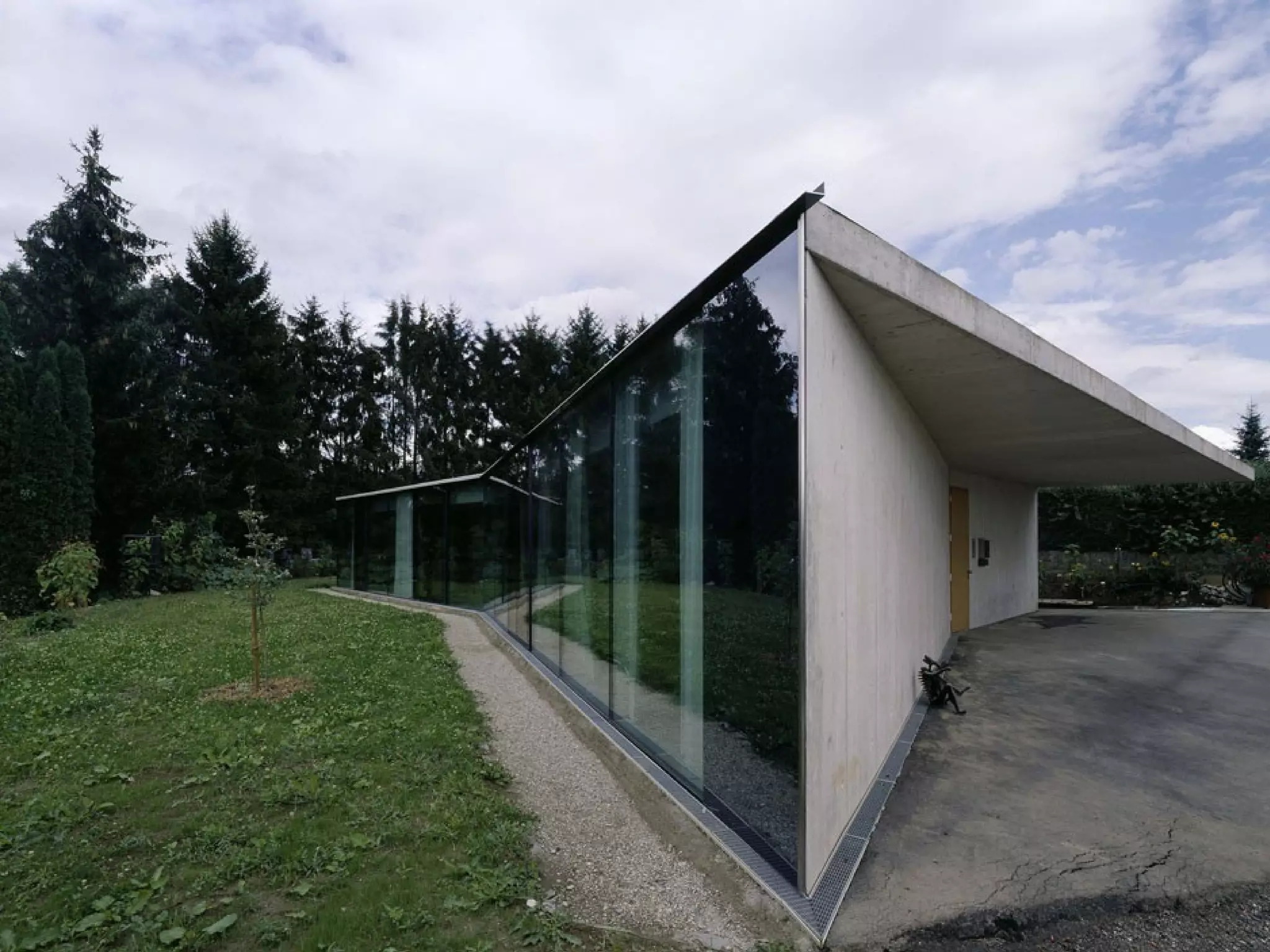
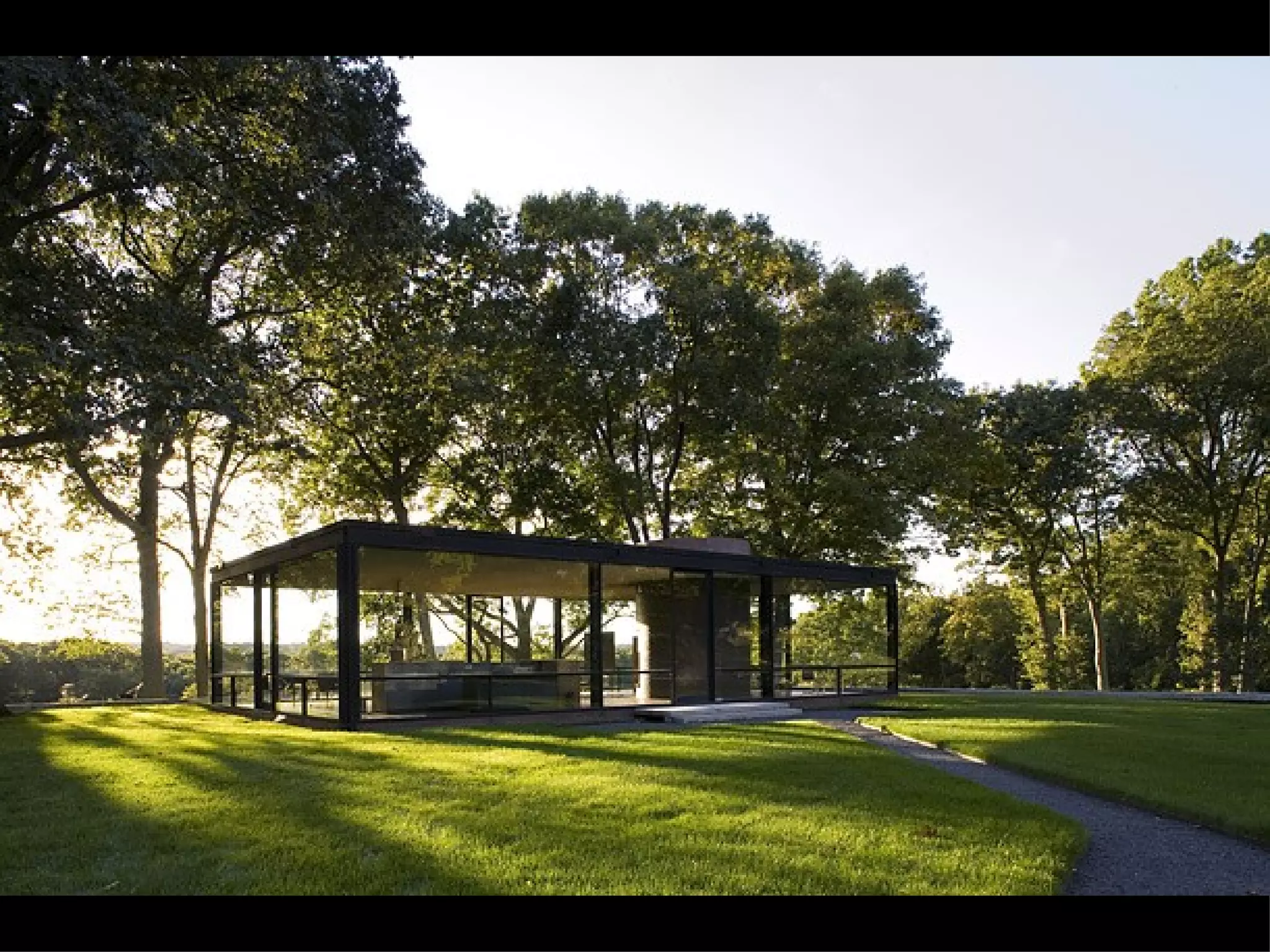
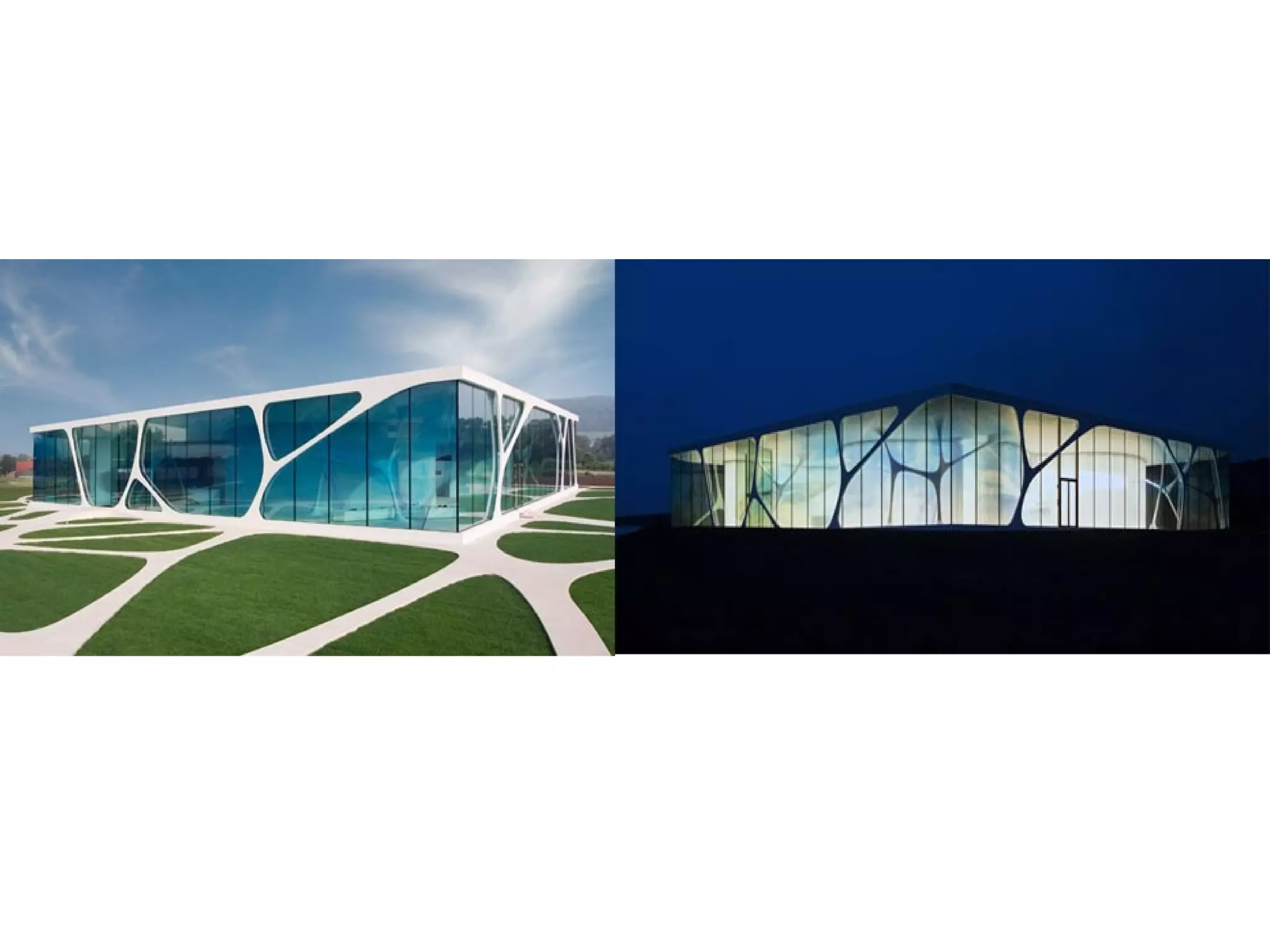
Glass in architecture While the use of  glass in construction  was limited to grand designs and office buildings, it is starting to become a core structural and design element in many homes.  Glass use in construction has increased because of improvements in technology it is now produced to be safer, energy efficient and stronger. Take a look at the Glass Bridge in Guilin, China! The Glass Bridge in Guilin, from the Zhuang Authonomous Region of China, is the only one of its kind in the World! It was built with the purpose of being an ornament. It is strictly forbidden to cross the bridge! Glass can also be used more traditionally in facades, display windows, entrances or revolving doors.


Hope you enjoyed our presentation!

Glass Isabel piscitelli

  • 1.
  • 2.
    “ As blowingand making bottles” Have you ever hear this expression? WELCOME! Here we will found out if this sentence is really true!
  • 3.
    How they doit? Uses Diferents types Advantages Colouring Glass Recycling Glass in architecture What is the glass? History Properties of galss
  • 4.
    Introduction The term glass developed in the late Roman Empire. It was in the Roman glassmaking center at Trier, Germany, that the late-Latin term glesum originated, probably from a Germanic word for a transparent, lustrous substance. Nowadays, Glass plays an essential role in various scientific fields and in industry.
  • 5.
    What is theglass? Glass is a hard material, normally fragile and transparent that is obtained by melting at about 1500 Â ° C Salice sand (SiO2), sodium carbonate (Na2CO3) and limestone (CaCO3). The noun "glass" is used frequently as a synonym of crystal, but is incorrect because the glass is an amorphous solid and not a crystal itself.
  • 6.
    Properties of glassThe thermal, optical, electrical and chemical properties of glass vary with its composition.
  • 7.
    Properties of glassGlass is a good thermal conductor . Glass is an electrically insulating material: it does not conduct electricity.
  • 8.
    Properties of galssWhen light falls on glass, part of the light is reflected at the surface, part of the light is absorbed in the glass, and part of the light is transmitted . If most of the light is transmitted, the glass is transparent . By colouring the glass or changing its composition, it is possible to transmit selectively some wavelengths of the spectrum.
  • 9.
  • 10.
  • 11.
    Properties of glassCommon glass does not transmit ultra-violet radiation (short wavelengths): you will not get a tan behind a window! However it does transmit infrared radiation (long wavelengths): this is why it is always hot behind a glass window.
  • 12.
  • 13.
    History Glass wasfirst used for items of jewelery, in Ancient Times. Crafters would add different minerals to glass when it melt, to have a wide range of colors! Later on, the Romans invented the blowing technique, that allowed the production of glass containers. However, it was a very primitive and inefficient technique In the Middle Ages, glass was used in Cathedrals in different colors! They also started to be manufacture for optical instruments. It developed as a very popular material, using it in bottles, glasses, mirrors and other devices, with consequent improvement in quality of life.
  • 14.
    How they doit? Answer: through melting, shaping and Glassblowing Glassblowing is the process of creating artistic glass works through the manipulation of molten glass.
  • 15.
  • 16.
  • 17.
  • 18.
  • 19.
    Diferents types The six basic types of glass considered here are: Soda-lime glass (also called lime glass ) most common glass. It is made of oxides of silicon ( SiO2 ), calcium ( CaO ) and sodium( Na2O ). cheap to make and can be made into a wide variety of shapes; medium resistance to high temperatures and sudden changes of temperature, fair resistance to corrosive chemicals. used to make bottles and windows.
  • 20.
    Lead-alkali glass (also called lead glass ) lead oxide ( PbO ) is used in place of calcium oxide. more expensive than soda-lime glass; excellent electrical insulating properties; poor resistance to high temperatures and sudden changes of temperature. used for electrical applications. Borosilicate glass appreciable resistance to high temperature or sudden changes in temperature; medium resistance to chemical attack. Moderate cost to make. used for light bulbs, photochromic glasses, sealed-beam headlights, laboratory ware, and some bake ware products. Diferents types
  • 21.
    Alumino-silicate glass alumina ( Al2O3 ) is added to the glass batch to improve the properties of the glass. good resistance to high temperature or sudden changes in temperature; difficult to make. used in electronics. Diferents types
  • 22.
    Ninety-six percent silicaglass special type of glass made by a proprietary method, at temperatures up to 900°C. used to furnace sight glasses, for outer windows on space vehicles. Fused silica glass only made of silicon dioxide ( SiO2 ) in the noncrystalline state. expensive and difficult to make; maximum resistance to high temperature (900°C for extended periods, 1200°C for short periods). used in special applications such as optical waveguides, crucibles for growing crystals . Diferents types
  • 23.
    Advantages Strength ofGlass Glass is a strong material. Like most materials, glass can be bent until a certain limit. Imagine bending a long rod of glass. If you release the tension before this limit, the rod returns to its original shape: the deformation is elastic . If you pass the limit, the glass breaks . Why does glass shatter? The strength of glass is only slightly affected by composition but is highly dependent on the surface condition . If stress is applied on the damaged surface, the stress at the damaged points will be increased and the glass will shatter. Glass does not age quickly: glass windows remain clear and undamaged after many years of exposure to the elements.
  • 24.
    Colouring Glass Unless the raw materials are very pure, glass is normally green . In order to change the colour of glass, one can decolourise the glass by adding colorants which produce the complementary colour to green. The colour depends on the state of oxidation of the colorant, the composition of the glass and the thermal treatment .
  • 25.
    Colouring Glass dark blue cobalt light blue copper amber iron and sulfur purple manganese green and aqua iron GLASS COLOUR/S COLORANT
  • 26.
  • 27.
  • 28.
    Uses From anatural mineral created by the volcanic furnaces to a luxury material, glass has now become a commodity. We use glass every day of our lives; we are surrounded by glass...
  • 29.
  • 30.
  • 31.
  • 32.
    Glass is alsoused to create objects of art
  • 33.
  • 34.
    Uses Glass, inthe form of optical fibre , has some important applications in medicine. An endoscope is a flexible tube with both a light source and a camera lens for viewing at its end. Tiny surgical tools can also be manipulated through the endoscope to perform non-invasive surgery. The endoscope provides a visual examination of the interior of the body throu gh a natural body opening such as the throat or through a small incision into the body.
  • 35.
    Recycling First, glassitems are distributed and used. Glass is present everywhere! Once the glass item has been used and deposited for recycling, a process that will make a new glass item from the old one begins! The glass is separated from dirt or any strange matter. The product of this operation is transported to glass treatment plants for the development of new glass. Finally, it’s mixed with sand, soda, lime and melted at 1500 degrees centigrade. After the glass is homogenized to liquid state, it is dropped in a Mold, which will shape the new item exactly as the original
  • 36.
  • 37.
  • 38.
  • 39.
    Glass in architecture“ If we want our culture to rise to a higher level, we are obligated for better or for worse, to change our architecture. And this only becomes possible if we take away the closed character from the rooms in which we live. We can only do that by introducing glass architecture, which lets in the light of the sun, the moon, and the stars” . Bruno Taut
  • 40.
    Glass in architectureWhile the use of glass in construction was limited to grand designs and office buildings, it is starting to become a core structural and design element in many homes. Glass use in construction has increased because of improvements in technology it is now produced to be safer, energy efficient and stronger. Take a look at the Glass Bridge in Guilin, China! The Glass Bridge in Guilin, from the Zhuang Authonomous Region of China, is the only one of its kind in the World! It was built with the purpose of being an ornament. It is strictly forbidden to cross the bridge! Glass can also be used more traditionally in facades, display windows, entrances or revolving doors.
  • 41.
  • 42.
  • 43.
  • 44.
  • 45.
  • 46.
  • 47.
  • 48.
  • 49.
  • 50.
    Hope you enjoyedour presentation!