ELEMENTS OF DESIGN
Elements of design are
“tools”. Just like the
carpenter has a hammer and
saw, the designer has the
elements.
There are 4 elements of
design: Line, Form, Color, &
TEXTURE.
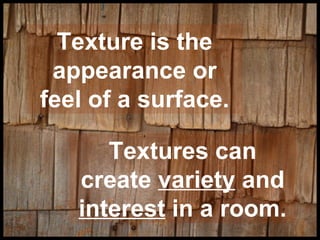
Texture is the
appearance or
feel of a surface.
Textures can
create variety and
interest in a room.
There are two types
of texture:
1. tactile
2. visual
Tactile Texture:
Texture you can
“feel” by rubbing
your hand over it
Visual Texture:
Texture that you
can see, but you
cannot feel.
Texture can
communicate different
feelings in a room:
Rough, hard, or coarse textures can create
a more casual feeling in a room.
Smooth, soft, or fine textures can create a
more formal feeling in a room.
Too many different kinds of texture in
one room may cause confusion.
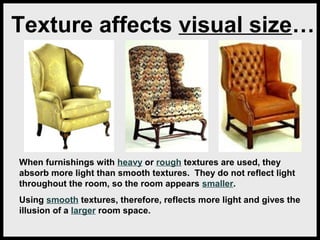
Texture affects visual size…

When furnishings with heavy or rough textures are used, they
absorb more light than smooth textures. They do not reflect light
throughout the room, so the room appears smaller.
Using smooth textures, therefore, reflects more light and gives the
illusion of a larger room space.
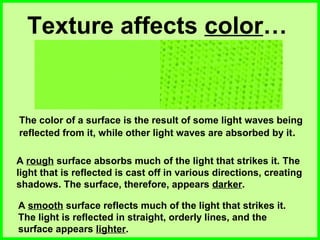
Texture affects color…

The color of a surface is the result of some light waves being
reflected from it, while other light waves are absorbed by it.
A rough surface absorbs much of the light that strikes it. The
light that is reflected is cast off in various directions, creating
shadows. The surface, therefore, appears darker.
A smooth surface reflects much of the light that strikes it.
The light is reflected in straight, orderly lines, and the
surface appears lighter.
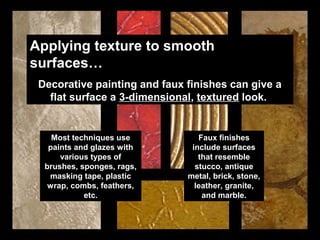
Applying texture to smooth
surfaces…
Decorative painting and faux finishes can give a
flat surface a 3-dimensional, textured look.

Most techniques use
paints and glazes with
various types of
brushes, sponges, rags,
masking tape, plastic
wrap, combs, feathers,
etc.

Faux finishes
include surfaces
that resemble
stucco, antique
metal, brick, stone,
leather, granite,
and marble.
Terms used to describe textures:
Can you think of words that accurately
describe texture? Imagine you are trying to
describe the following items to someone who
cannot see or touch them…
Sandpaper

Bricks

Velvet

A knitted blanket

Glass
Satin
A pleated lamp shade
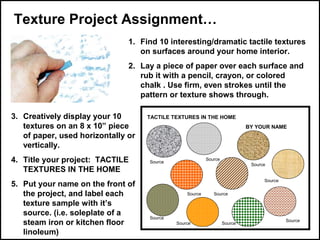
Texture Project Assignment…
1. Find 10 interesting/dramatic tactile textures
on surfaces around your home interior.
2. Lay a piece of paper over each surface and
rub it with a pencil, crayon, or colored
chalk . Use firm, even strokes until the
pattern or texture shows through.
3. Creatively display your 10
textures on an 8 x 10” piece
of paper, used horizontally or
vertically.
4. Title your project: TACTILE
TEXTURES IN THE HOME
5. Put your name on the front of
the project, and label each
texture sample with it’s
source. (i.e. soleplate of a
steam iron or kitchen floor
linoleum)

TACTILE TEXTURES IN THE HOME
BY YOUR NAME

Source

Source

Source
Source
Source

Source

Source
Source

Source

Source

Housing - Texture

  • 2.
    ELEMENTS OF DESIGN Elementsof design are “tools”. Just like the carpenter has a hammer and saw, the designer has the elements. There are 4 elements of design: Line, Form, Color, & TEXTURE.
  • 3.
    Texture is the appearanceor feel of a surface. Textures can create variety and interest in a room.
  • 4.
    There are twotypes of texture: 1. tactile 2. visual
  • 5.
    Tactile Texture: Texture youcan “feel” by rubbing your hand over it
  • 6.
    Visual Texture: Texture thatyou can see, but you cannot feel.
  • 7.
    Texture can communicate different feelingsin a room: Rough, hard, or coarse textures can create a more casual feeling in a room. Smooth, soft, or fine textures can create a more formal feeling in a room. Too many different kinds of texture in one room may cause confusion.
  • 8.
    Texture affects visualsize… When furnishings with heavy or rough textures are used, they absorb more light than smooth textures. They do not reflect light throughout the room, so the room appears smaller. Using smooth textures, therefore, reflects more light and gives the illusion of a larger room space.
  • 9.
    Texture affects color… Thecolor of a surface is the result of some light waves being reflected from it, while other light waves are absorbed by it. A rough surface absorbs much of the light that strikes it. The light that is reflected is cast off in various directions, creating shadows. The surface, therefore, appears darker. A smooth surface reflects much of the light that strikes it. The light is reflected in straight, orderly lines, and the surface appears lighter.
  • 10.
    Applying texture tosmooth surfaces… Decorative painting and faux finishes can give a flat surface a 3-dimensional, textured look. Most techniques use paints and glazes with various types of brushes, sponges, rags, masking tape, plastic wrap, combs, feathers, etc. Faux finishes include surfaces that resemble stucco, antique metal, brick, stone, leather, granite, and marble.
  • 11.
    Terms used todescribe textures: Can you think of words that accurately describe texture? Imagine you are trying to describe the following items to someone who cannot see or touch them… Sandpaper Bricks Velvet A knitted blanket Glass Satin A pleated lamp shade
  • 13.
    Texture Project Assignment… 1.Find 10 interesting/dramatic tactile textures on surfaces around your home interior. 2. Lay a piece of paper over each surface and rub it with a pencil, crayon, or colored chalk . Use firm, even strokes until the pattern or texture shows through. 3. Creatively display your 10 textures on an 8 x 10” piece of paper, used horizontally or vertically. 4. Title your project: TACTILE TEXTURES IN THE HOME 5. Put your name on the front of the project, and label each texture sample with it’s source. (i.e. soleplate of a steam iron or kitchen floor linoleum) TACTILE TEXTURES IN THE HOME BY YOUR NAME Source Source Source Source Source Source Source Source Source Source